Hari Om

Menu

Teachings

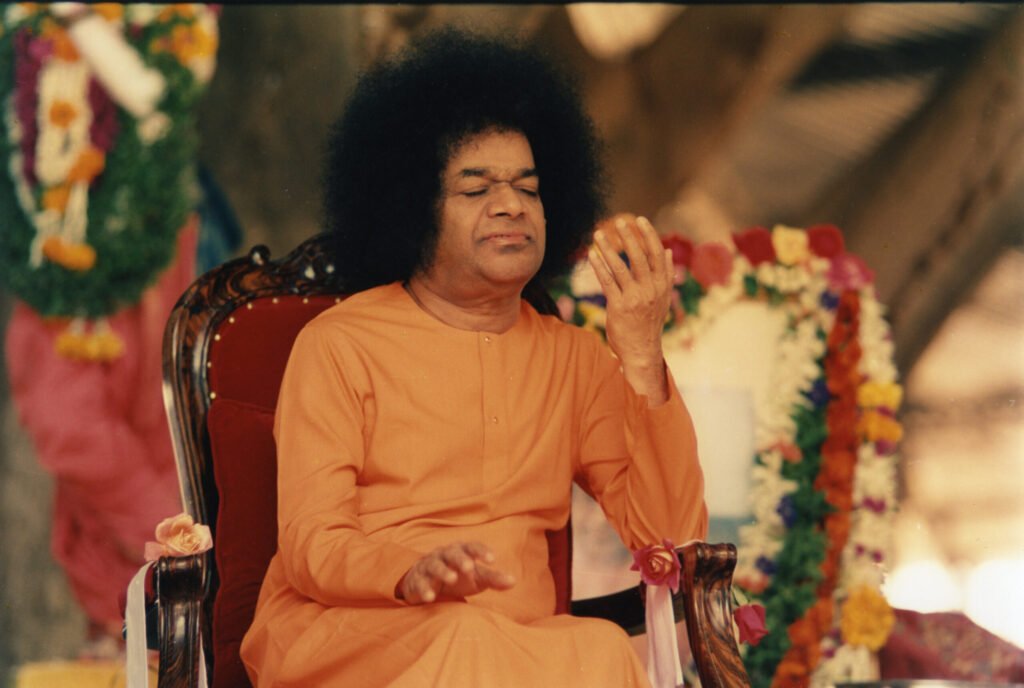
shri sathya sai baba Close-up of man with curly hair wearing orange robe image
Teachings

Summer Showers in (2000)

Summer Showers in (2000) Summer Showers in Brindavan 2000: Divine Discourses is a collection of 15 lectures delivered by Bhagawan Sri Sathya Sai Baba during the Summer Course on Indian Culture & Spirituality, Brindavan, commencing on 15 May 2000. These discourses address the inner life of the student, the nature of true education, virtues, and how one can steadily walk the spiritual path in daily living. The book is structured so that each discourse builds awareness: of the body, mind, devotion, and the virtues necessary for spiritual growth. The first lecture, “Seek Educare Instead Of Just Education”, distinguishes between education in the conventional sense — the mere accumulation of information or qualifications — and educare, which is education that cultivates the character, soul, moral vision, and inner strength of the individual. Baba stresses that true education should produce more than professionals; it should produce good human beings who are compassionate, truthful, humble, righteous. Other important discourses include “The Sanctity of the Five Elements”, where Baba reminds that Earth, Water, Fire, Air, Ether are not inert and external, but sacred supports of life. Respecting, protecting, and understanding them is part of one’s spiritual duty. In “The Human Body And Its Importance”, he highlights that the body is a temple; it must be treated with respect (cleanliness, discipline, moderation). If one abuses the body, one damages the instrument through which spiritual progress is made. In “Preyas and Sreyas – What We Seek And What We Ought To Seek”, Sai Baba examines two paths: one of immediate pleasure and gratification (Preyas) and the other of higher good and lasting bliss (Sreyas). He urges students to choose what leads to permanent welfare and spiritual fulfilment. Also, “Kshama, The Grandest And Noblest Virtue” is a discourse dwelling on forbearance: forgiveness, patience, letting go of anger, forgiving wrongs, and cultivating peace in the heart. Devotion figures prominently: in “The Exalted Nature of Devotion”, “How To Become Dear To The Lord”, and “Always Chant The Name Of The Lord”, Baba emphasizes that love and remembrance of God are powerful sadhanas (spiritual practices). He gives instruction on how daily chanting or the remembrance of the Divine Name purifies the heart and draws one closer to God.

Summer Showers in (2000) Read Post »

shri sathya sai baba in orange robe seated and raising hand in blessing image
shri sathya sai, Teachings

shri sathya sai Jyoti Meditation

Jyoti Meditation “As regards the technique of meditation, different teachers and trainers give different forms of advice. But I shall give you now the most universal and the most effective form “Let it be in the hours before dawn. This is preferable because the body is refreshed after sleep, and the dealings of daytime will not yet have impinged on you. Have a lamp or a candle before you with an open, steady, and straight flame. Sit in front of the candle in the lotus posture or any other comfortable sitting position. Look on the flame steadily for some time, and closing your eyes try to feel the flame inside you between your eyebrows. Let it slide down into the lotus of your heart, illuminating the path. When it enters the heart, imagine that the petals of the lotus open out by one, bathing every thought, feeling, and emotion in the light and so removing darkness from them. There is no space for darkness to hide. The light of the flame becomes wider and brighter. Let it pervade your limbs. Now those limbs can never indulge in dark, suspicious, and wicked activities; they have become instruments of light and love. As the light reaches up to the tongue, falsehood vanishes from it. Let it rise up to the eyes and the ears and destroy all the dark desires that infest them and which lead you to perverse sights and childish conversation. Let your head be surcharged with light and all wicked thoughts will flee there from. Imagine that the light is in you more and more intensely. Let it shine all around you and let it spread from you in ever widening circles, taking in your loved ones, your kith and kin, your friends and companions, your enemies and rivals, strangers, all living beings, the entire world. “Since the light illumines all the senses every day so deeply and so systematically, a time will soon come when you can no more relish dark and evil sights, yearn for dark and sinister tales, crave for base, harmful, deadening toxic food and drink, handle dirty demeaning things, approach places of ill-fame and injury, or frame evil designs against anyone at any time. Stay on in that thrill of witnessing the light everywhere. If you are adoring God in any form now, try to visualize that form in the all-pervasive light. For Light is God; God is Light. “Practice this meditation as I have advised regularly every day. At other times repeat the name of God (any Name fragrant with any of His many Majesties), always taking care to be conscious of His might, mercy, and munificence.” Jyothi Meditation Based on Bhagavan’s step-by-step directions. Jyothi (flame) Meditation is the foremost spiritual discipline geared towards gaining inner peace. 1) We should have a fixed time and place every day where we sit for meditation either in the morning and/or evening. 2) We should sit on a thin mattress for this exercise.  The sitting pose or asana should be comfortable both for our mind and body. 3) We should then chant Omkar, the Universal Mantra glorified as ‘Nada Brahma’ at least 3 times but preferably 21 times.  The mind under the influence of this divine sound slowly loses momentum and becomes more and more tranquil and steady. 4) The next step is to put the breath in rhythm.  The easiest and the most effortless method is to watch the breath, thereby the process becomes normal, that is, longer and calmer.  When we inhale, the breath sounds ‘So’ and when we exhale, it sounds ‘Humm’ which means ‘He’ i.e. “God” and ‘I’ respectively or “God am I”. 5) Accordingly, synchronizing with these two breaths, imagine that the flame ‘Jyot’ is within us.  Feel that the light of the flame is in our heart, right in the centre of the Lotus.  Gently move the light to other parts of your body — the stomach, the limbs, the eyes, the ears and the tongue.  Feel that the entire body is illumined thereby. Rejoice that the light is the light of love; it removes hatred; it dispels darkness and doubt; it reveals that all are Divine. 6) As the light fills the eyes, you must feel that they have been purified.  They shall no longer seek to look upon evil sights.  When the light lights the tongue with love, decide that there is no more scope for uttering harsh words.  Similarly, once the radiance of the divine light bathes the arms, they can no longer delight in performing harmful deeds while the feet can no longer move into polluting areas and places. 7) Now visualize the light as surrounding our physical body and spreading far out to family members, neighbours and even those whom we do not like.  Every object is enveloped in that divine effulgence.  Isavaasyam Idam Sarvam.  All this is illumined by God.  This is the stage of bliss. 8) In this manner, the ONE flame on which we concentrate can cleanse our mind and body and spread its light and radiance to include our entire environment. 9) Finally, take the Jyot on to the figure of our Ishta Devta or the Deity of you choice and/or fix our vision on the Jyot, and commence meditation or silent sitting for a few minutes, followed by Japa of our chosen Mantra with the full understanding of its meaning and firm faith in its power and benefits.  It should be inter-woven with our breathing process of inhaling and exhaling. Exercise on Jyoti Meditation. Instructions compiled from Sri Sathya Sai Discourses 1. Let us close the eyes and chant Omkar (OM) 3 times To make the mind become tranquil and steady.  2. Keeping the eyes closed, let us put the breath in rhythm To make it normal and calmer. In our mind (mentally) repeat “SOHUM’. (1-2 mins.) As we inhale mentally repeat “SO” As we exhale mentally repeat “HUM”.   (1-2 mins.)  3. Let us mentally bathe the senses in

shri sathya sai Jyoti Meditation Read Post »

shri sathya sai baba in orange robe waving from balcony under blue sky image
Teachings

shri sathya sai Food for Healthy Body and Mind

Food for Healthy Body and Mind These are excerpts taken from a discourse given by Baba at the  Sri Sathya Sai Institute of Higher Learning in July 1996 ( the excerpts are taken from the book Sai Prescriptions, published by the Sri Sathya Sai Health and Education Trust, Sri Sathya Sai General Hospital Hospital in Whitefield, Bangalore). Food for Healthy Body and Mind “Right food must essentially contain Sathwic food. It means that the food must not contain mutton, fish, onions and the like. In your hostel, there is of course no mutton and fish! But, onions are used extensively. This is because it does not get spoilt. It also has its advantages. It improves your digestion power. There is a popular saying in Telugu, “the good done by the onion (ulli) is not done by your own mother (thalli)!” You must also take care to avoid excess of spice, chilli and salt. May people think that Sathwic food means fruits and milk. These can also be thamasic! For example, eating two bananas is correct. If you eat four bananas, it becomes thamasic. Do not take a cup of thick milk. Comparatively, it is hence said ” One cup of wine is better than a cup of milk.”Thick milk contains plenty of fat and calcium. It is also liberally laced with glucose. When the blood is saturated with too much of glucose, it turns the residual glucose into acid. The result is that you develop boils. This acid and the blood combines to form stones in the gall bladder. Ensure that you take at least seven to eight cups of water daily. Water cleanses your internals. This also ensures that stones do not form inside your kidneys because water goes to the kidneys and constantly keeps itflushed.Eat rice and vegetables well. Green leafy vegetables are the best of the lot. This is because under the skin lies a very light secondary layer, It is this layer that protects the skin. Green leaves strengthen this layer, apart from having other benefits. It is very good for heart patients too because green vegetables are totally free of oils. Vegetables contribute to some extent to the cholesterol. What must you do when you have excess cholesterol? Cholesterol is essential to some extent. The limit prescribed is about 10%. But if it crosses 20% or 30% your nerves and veins will harden like rusted pipes. This consequently thickens the blood making the heart pump less and less blood. The heart pumps the blood and sends it to the lungs which purifies the blood and distributes it to the entire body. When the heart pumps less, more and more cholesterol accumulates there, which is dangerous for the heart. Hence it is advisable to take a white onion daily. Garlic pills can also be taken daily, a daily intake of one pill after lunch will get rid of the cholesterol problem. Green leafy vegetables and drumsticks are very healthy for the body. Drumsticks are good for the brain. Do not take too much of potatoes.  Potatoes contain 80 % starch that will only make you slightly fat, but also give you very little in terms of health.Tomatoes are also good. The seeds of the tomatoes may be removed and a curry made of the tomato. This is because the seeds of the tomato do not get digested easily. They remain in the digestive canal and gradually become stones, when they combine with glucose. These stones go down to the stomach and remain a mass, giving frequent trouble. We must also ensure that eating must always be in a limited quantity. You  must be able to get up from your plate with the same ease and lightness  with which you sat down to eat. This is the correct limit. You come quite easily to eat. But when you get up you need a support ! Many people develop a paunch like that. Proportion is very important as it confers health to the body. Never take meat, cigarettes, or other intoxicants and drugs. Habitual cigarette smokers develop cancer. You can perform this test on smokers. Take a white cloth and put it across the mouth after the person has smoked. You will see bright red dots on the cloth. When the external cloth has itself been so noticeably spoilt, you can well imagine how much destruction it is causing to the veins and lungs. The two fingers that hold the cigarette will develop a yellow colouration. White spots develop on the lips. The skin around the lips turn dark. You must avoid taking curds. It is better to take the two cups of buttermilk. Curds have too much of protein.”

shri sathya sai Food for Healthy Body and Mind Read Post »

WhatsApp Image 2025 09 12 at 17.41.46 68a9fa95
Teachings

Cleverness and Wisdom

Cleverness and Wisdom The human mind has two distinct capabilities. They are (1) the capacity to acquire worldly skills, and (2) the capacity for Spiritual Discrimination. These two faculties are called Medha Shakti and Buddhi respectively. People do not have a clear idea of the difference between (worldly) cleverness and (spiritual) Wisdom, and often mistake Buddhi to mean cleverness. This is not correct. Being exclusively related to the phenomenal world, Medha Shakti would help a person to be shrewd in worldly matters and achieve success in Society. However, this is no blessing. A clever man is restless, does not enjoy peace, and often goes through mental conflicts. He is a slave to his ego, which casts a veil over the Self and renders Buddhi ineffective. Cleverness is not an attribute of the Wise but unfortunately in this Kali age a clever person alone is regarded as great and accorded much respect. Modern education lays great stress on the sharpening of the brain and can certainly help people to become clever. But it has no positive effect on Buddhi or the spiritual intellect. Our ancients, on the other hand, were unanimously of the view that Buddhi is superior to Medha Shakti and is any day to be preferred. Buddhi is essentially the combination of Shradda (earnestness), Sathyam (Truth), Yoga (power of control), and Mahat Shakti (Divine Power). Shradda is the product of yearning and steadfastness. The Sathyam aspect implies a proper judgement and perspective, with Truth as the central focus. The third aspect Yoga connotes a mastery over the senses. One cannot speak of a person being with blessed with Buddhi, if he lacks sense and mind control. Shradda, Sathyam and Yoga together manifest as Mahat Shakti, the power of the Divine. In short, all the aspects of Buddhi are verily Divine.Students should understand clearly the difference between Medha Shakti and Buddhi. Cleverness would help one in securing good grades in examinations, and in scoring victory in debates. It is associated exclusively with worldly skills. Buddhi, on the other hand, is spiritual in nature and close to the Atma. Thus, one must never confuse a Wise person (Buddhiman) with a clever person.The hierarchical relationship of the various entities related to Medha Shakti and Buddhi is as follows: At the bottom of the totem pole is the physical plane. Above it are the senses; then comes the mind or Manas. Buddhi comes above the mind and last of all is the Atma or the Self. Buddhi is thus just a “stone’s throw” away from the Atma and is verily a reflection of the latter. It is thus the height of ignorance to equate Wisdom (Buddhi) with cleverness (Medha Shakti). The latter is associated to the senses and is thus intimately related to the phenomenal world. It promotes ego, and as long as ego dominates you cannot understand anything about the Self. A clever person would never be able to achieve Self-realisation; only a Wise person can.Excerpts from a Divine Discourse of Bhagawan Sri Sathya Sai

Cleverness and Wisdom Read Post »

shri sathya sai baba in orange robe writing in notebook while seated
Teachings

Ceiling on desires

Ceiling on desires Discourse by Bhagavan Sri Sathya Sai Baba on January 1983 MEMBERS appear to be confused about the true meaning of this programme of “Ceiling on Desires” decided on at the Tenth All India Conference of Sathya Sai Organisations. There are four components in the term “Ceiling on Desires.” They are, respectively; curb on excessive talk, curb on excessive desires and expenditure, control of consumption of food, check on waste of energy. Man needs some essential commodities for his sustenance and he should not aspire for more. We can learn a lesson in this respect from Nature. Only if air is available in sufficient quantity will it be comfortable and good. If it is excessive and there is a gale you will feel uncomfortable. When you are thirsty; you can consume only a limited quantity of water. You can’t consume the entire water of the Ganga! We take only as much as is needed for the sustenance of the body. Doctors know that the body temperature is normally 98.4. If this goes up to 99 they say fever has set in due to some disorder in the body. We inhale and exhale at a normal rate. If there is a slight increase or decrease in the rate it indicates disorder in the body. Changes in the pulse rate or blood pressure also indicate disorder. So you find that if you cross the limits even to a little extent it is dangerous or harmful to the body. There is a limit for everything to function in a normal way. When your eyes happen to see a flash of lightning or a flash light while taking photographs, they automatically close because they can’t withstand such high illumination. Ear drums also cannot tolerate hearing beyond a certain volume and we close our ears or keep cotton inside the ears. From these we see that our life is a limited company! Misuse of money is a great evil Similarly our desires also should be limited. Women are usually desirous of adding to their wardrobe any number of sarees when they go to a shop or an exhibition. You should have a reasonable number of sarees, but not a huge collection for pomp or show. Misuse of money is a great evil. Even men will have to do their own bit in controlling the expenditure on unwanted and unnecessary things. Money is Dhaivaswaroopam (embodiment of Divinity). When you talk of wealth you should be careful to avoid avaricious accumulation and extravagant expenditure. Even in the preparation of food, you should be careful in avoiding wastage. We are only doing a disservice by consuming more food than what is necessary for the body. Thirdly, you should be careful about ‘ time’ , which is the yardstick of life. Seconds become hours, hours become years, years make yugas (ages) and so on. You should not waste this most valuable ‘time’. Time lost in wasteful pursuits can’ t be got back by any means. All our activities should be planned for utilising the available time to maximum advantage. So, we should not waste food, money, time and energy. Even in purchase of garlands, you need not waste money. What God wants is the flower of your heart that is filled with humility and devotion. Eight types of flowers can be offered to God, viz, (1) Ahimsa (Non-violence), (2) Indhriya Nigraha (Control of senses), (3) Sarvabhootha Dhaya (Compassion towards all beings), (4) Sathyam (Truth), (5) Dhyaanam (Meditation), (6) Shaanthi (Peace), (7) Vinaya (Humility), (8) Bhakthi (Devotion). God appreciates only your motive I feel very much concerned about the excessive money that is spent y the Trust and Samithi on the expensive huge garlands offered to Me on every occasion and also the use of flowers for decorating the path. No doubt you are doing this as an expression of your Aanandha (Divine bliss). But I won’ t call this Bhakthi (devotion), though you may not own this. We should realise our defects and rectify them. You may show your affection y just handing over one flower and spend the money wasted on garlands for helping the poor people in distress. People may think that Baba will not like it if flower paths are not provided and huge garlands are not offered. You must understand that God appreciates only your motive and not the external things. By indulging in such exhibitionism, you will only spoil the name of the organisation. As a member of Sathya Sai Organisation you should have no sense of ego or pride. As I have often said you should have your “Hands in society and heads in the forest”. This should be your guiding principle. What little you do you must do with a good and pure heart. In the Bhagavathgeetha, Krishna has referred to “Pathram, Phalam, Pushpam, Thoyam” (that is, leaf, fruit, flower or water) that can be offered to God. I am pleased with any of these provided it is offered with sincere devotion. What is ‘pathram‘? It is not the ‘ leaf’ that you see around you. The inner meaning is that your body itself is the leaf. Flower is not the one in the plants but it is the flower of your heart, “Hridhaya Pushpam“. ‘Phalam‘ is not the ordinary fruit but ‘Manophalam‘ (the fruit of your mind). ‘Thoyam‘ means water but what is referred to here is not the water from the river or tap. It refers to the tears of joy welling up within you from a sincereand prayerful heart. Transform yourselves into better individuals Moreover you should not only practise yourself but teach others also about this ceiling on desires. Though Naaraayana is in everyone, the one in the poor people is referred to as “Dharidhra Naaraayana“. When this Naaraayana begs for food, you refuse to give him food while you offer food to another person who is already well-fed. You place before God’ s pictures a lot of food of rich variety as ‘Naivedhyam‘ (offering). You do this because you know very well that this is coming back to you. So, here too it is ‘Swaartham‘ (self-interest) and not ‘Thyaagam‘ (sacrifice) The amrithathwa (immortality) or Moksha (Liberation) will

Ceiling on desires Read Post »

shri sathya sai baba in orange robe raising both hands upward image
Teachings

Swami clarifies our common doubts

Swami clarifies our common doubts (Compiled from various meetings with Sri Sathya Sai Baba)  The mind of man is as a blank sheet of white paper when he is born. As soon as thinking, feeling and acting start, then the process of tarnishing the mind also starts.– Sri Sathya Sai Baba Q: Why are some people born more beautiful, or more intelligent, than others are? Why does not God give everyone equal beauty, abilities and talents? Swami: It is not God’s partiality or fault. It is the human being who is responsible. His actions, thoughts and words are responsible for all good and bad. It is the mind that creates the differences. Pleasure is an interval between two pains.  It is the way you look at things that matters. There is a vast ocean of talents and qualities.  All human beings have vessels to fill. Some people, through their actions, are able to fill the vessels to the brim; some fill only half; others can fill only a quarter, or less. They possess intelligence, beauty, talents, and etceteras, according to how much they can fill their vessels. You even judge beauty these days, as in Miss India, Miss World. But, that is all physical beauty, which is transient. What is important is the beauty of the Atma (Self). Q: How are good or bad actions carried into the next birth? Swami: Swaasha (breath) carries the actions, for the breath stops when a person dies. The body is still there after death and we call it a corpse and burn it as useless.  So, the body cannot carry anything with it, just as a flower cannot carry its fragrance. It is a breeze that wafts the scent of the flower and makes its fragrance reach you. Similarly, imagine a municipal lorry, the breeze carries the bad odour to you again! In the same manner, good and bad actions are carried by the breath and surround you in the next birth like an invisible garland. The pattern of your life is then governed by what the garland has good or bad scent. That is why man must understand that everything he does has a reaction, a reverberation and a reflection. It is he who writes his own destiny by his actions. It is essential for man to live a good life with good thoughts and good actions. Only through such a life can he realise the divinity in him. The concept Aham Brahmasmi (I am Brahma  = God) is also incorrect, since it indicates duality. Aham (I) and Brahma (God) become separate. The statement ought to he Aham Aham (I am I). Q: Many people feel that Hindus worship countless gods. How did this happen? Swami: India has a wonderful religious tradition. It has something for everyone, to suit everyone’s needs. Many people do not understand this excellent idea and make derisory comments on our having too many gods. This tradition has evolved to suit the needs of different people, just as we have shirts of varying types and sizes to fit different people. With the ideal of One God, there is only one shirt and, if it does not fit or if it is unsuitable, people turn away from God. But, here, if someone likes Krishna, they can worship Krishna; others can worship Rama, or Narayana, or Shiva, or even snakes and lions! What more do you need to propagate the idea that God is in everything everywhere? That is why I often say don’t worship God as a picture, but worship the picture as God. This will slowly lead to the realisation of God in you. That is where the Hindu spiritual path is practical and good. Q:  Why does not God prevent cruelties in the world? Swami:: God is  only a witness (saakshibhoota). He does not act. Man acts according to the dictates of his intellect (Buddhi) and himself suffers the consequences of his actions (karma). There is neither good nor bad for God. Take the knife as an example. A murderer uses a knife to kill another man, a slaughterer uses a knife to slay animals, a surgeon uses a knife to amputate, and a cook uses a knife to chop vegetables. If a magnet is placed among all these knives, it will attract them all equally and not according to the kind of tasks they perform. God is like this magnet. All knives are the same to Him.  However, the hands that wield the knives have to bear the consequences of their actions, dependent on right and wrong. Q: When we have troubles and are in difficulties and we pray to God, why does He not take them away’? Swami:: Troubles and difficulties are part and parcel of human  life. They are the results of your karmas. There is no point in praying to God to wipe away all such troubles and difficulties. The right type of prayer would be to ask God for courage and strength to bear all the difficulties, problems and tragedy with equanimity. Q: What is the difference between the politics of yesterday and those of today? Swami: The present state of affairs can be described as the state of jumps and bumps. Now, take the example of your body and limbs. Each limb is important in forming the composite whole. All the limbs joined together make up the body, which is the Deha (body, person). Similarly, in the Desha (country, nation), every aspect should be tended to, just as one takes care of every part of the body. Q: The view that women should not take ups Brahma vidya (spiritual knowledge), nor chants the Omkara. Is this correct? Also, in ancient times, were spiritual sadhanas (endeavors) forbidden to women? Swami:: Brahma  vidya and chitta shuddhi (spiritual  knowledge and purity of  consciousness) do not depend on whether a person is a  man or a woman. All have an equal right to benefit from Brahma vidya provided only they are able to take it up with discipline and dedication. At no time have there been any taboos against women. Lord Vishnu (the Preserver) taught Bhu Devi (the Goddess Earth) the glory of the Bhagavad- Gita. Parameswara (Shiva) taught Parvati the Brahma tatva (divine essence) through the Guru Gita. Iswara (Shiva) initiated Parvati into Yoga Shastras and mantra Shastras (science of yoga and science of mantra). The Brihadaranyak Upanishad mentions Yajnavalkya teaching Maitreyi the Brahma vidya. So, women in ancient times were not denied the pursuit of spirituality. The Brihadaranyak Upanishad mentions Ciargi and Maitreyi basking in the splendour of Sanyasa (renunciation) and Brahmacharya (celibacy, chastity). Madaalasa Chudaala and others were able to receive Brahma Jnana (divine wisdom) while in the Grahastha (householder, i.e. married) stage of life. Even today, there are many that belong to this vast category. It is sheer

Swami clarifies our common doubts Read Post »

IMG 20250924 WA0219
Teachings

Swami explains the twin evils – Jealousy and Hatred

Swami explains the twin evils – Jealousy and Hatred Jealousy and Hatred Jealousy and hatred are twin thieves. The one cannot live without the company of the other. There is an inextricable relationship between them; they will always take shelter within each other. Hatred may be compared to an underground pest and jealousy may be compared to an above-ground pest. Together they can destroy a tree. Consider a tree which is very green, which is flowering and producing fruit, which is very attractive to look at. When pests enter this tree the tree will become dry within days. One of the pests will go to the branches and leaves above while the other strikes at the roots below. While the one spoils the beauty of the tree the other will try to destroy the very life of the tree. They will always accompany each other. So it is also with jealousy and hatred. Wherever there is jealousy there will also be hatred, and whenever hatred is visible you will find jealousy lurking invisibly behind. Hatred takes on a particular form. It manifests itself in various ways. For jealousy there is no form; it remains hidden under the surface. It has been said that there is no person in the world who does not suffer from some jealousy; there will be at least a small tendency towards jealousy in every person. To make sure that this jealousy and hatred do not enter your system you have to develop selfless love. Where there is selfless love there is no place for jealousy and hatred to enter and take hold. When jealousy and hatred are kept out, you can have the experience of divine bliss. Conquer Jealousy and you can Conquer Anything There is an ancient story of a devout woman who had a reputation of being completely equanimous and free of jealousy. Even her name meant ‘without jealousy’. When the three aspects of divinity, Brahma, Vishnu and Shiva, which are the creative, the preservative and the destructive principles of divinity, came to test her, her extreme purity of heart was able to win them over and turn them into little babies. She became like a mother to them. In her presence, they remained happily nestled in her arms. The three aspects of divinity also represent the three qualities in nature, the active, the passive, and the cyclical, which govern all phenomenal life in the world. These three qualities make up our experiences in the world, and the three aspects of divinity are the substratum of these qualities. Therefore, the deeper meaning of this story is that when you are free of jealousy, everything in the world will be like a babe in your arms. You will be its mother, it will look up to you and follow you. Truly, once you are free of jealousy you will be able to conquer anything. But it cannot be emphasized too strongly that when you have jealousy, it will destroy all your good qualities. You may think that it will destroy others but in fact it will destroy you, not the others. It will make you sick. You will not be able to sleep well. You will not be able to eat well. Even if you are totally healthy, once jealousy takes hold of you it will cause all kinds of physical ailments to sprout up in you. It is like an inner consumption. Just as tuberculosis creeps in and consumes, so also jealousy weakens you without your realizing it. It can get into you in any number of ways and will ultimately destroy you. Jealousy is a vicious disease which must not be permitted to gain a foothold. You must feel that God will always bless you with his grace. Even if you are in a lesser position than you think you deserve, you should enjoy the happiness of others. You should be glad to hear of their accomplishments and not feel sad just because they have things which you do not have. Jealousy is all-pervasive in this immoral age. It is prevalent in all types of people, be they worldly or spiritually inclined. It is mostly because of jealousy that people lose their peace of mind and waste their lives. Along with jealousy, backbiting and hatred soon make their ugly appearance. If you are the target of these evil qualities in others, your best protection is the great virtue of forbearance. Here is a small story. Forbearance will Overcome Hatred Buddha was walking along the country-side begging for alms. He was approaching a village. Many people in that village had a great affection for Buddha. But just before he reached the outskirts of the village, some young rowdies loitering along the road began to jeer at him. A little surprised at this reception, Buddha stopped and sat down on a rock. He said to them, “Well, gentlemen, what pleasure do you derive from criticizing me?” Without giving any reason, they increased their denunciation of Buddha. Buddha said, “Continue as long as you want.” They berated and reviled him to a point where they got tired of their own invective. Buddha’s forbearance was so well developed that their hatred could not touch him. At first they were having a good time, but finally, having exhausted themselves without getting the reaction they wanted, they decided to go away. As they were walking away, Buddha called out to them, “Children, I want to tell you something. In the village just beyond here, there are many people who love me very much. If they were to hear that you have been denouncing me in this vile way, they would cut you to pieces. In order to save you from that danger, I have stayed here on this rock and allowed you to criticize me. In that way I have given you a gift. Without spending a single cent, without making any effort, I have been able to give you so much enjoyment by allowing you to

Swami explains the twin evils – Jealousy and Hatred Read Post »

shri sathya sai baba in orange robe sitting with eyes closed in meditation image
Teachings

Swami’s Answers

Swami’s Answers Q: How we should lead our life, Swami? A: Form small Satsanghas and meet regularly for Bhajans and mutual consultation about spiritual matters. Read some fine spiritual classics like Bhagavata. Fill your eyes with the beauty of His form, your ears with the story of His Leelas, and your hearts with the sweetness of His Glory; inspire yourselves by seeing Him everywhere. Think of His immanence in every hill and dale, every man and beast, every tree and insect. You will be really thrilled by the joy of that vision. Q: What is principle of living, Swami? A: One of the first principles of straight living is – Practice silence, for the voice of God can be heard in the region of your heart only when the tongue is stilled and the storm is stilled and the waves are calm. There will be no temptation for the others to shout, when you talk to them in whispers. Set the level of the tone yourself; as low as possible, as high as necessary to reach the boundary of the circle you are addressing. Conserve sound, since it is the treasure of the element Akaasa, an emanation from God Himself. You must all study the Gita daily. Read a few slokas and meditate on the meaning yourself; it will dawn on you in the silence of your heart. You need not read elaborate commentaries. Each word in the Gita is a gem. No more do you need gemstones for the ear, the nose and the neck; have the gem of the Gita slokas in your heart; let them activate your intellect and your hands. We shall act ever as if we are in the presence of God, as if God is watching and weighing every thought, word and deed. See yourselves in all; see all in yourselves; that is the road to lasting peace and joy. Let us not seek the outer empire; let us become the rulers of the inner empire. Let us not try to defy the outer enemy, leaving the inner foe to grow in striking power. We have Krishna with us, and so, who can defeatus? We shall win through his Grace. Q: What is significance of your Avatar, Swami? A: My task is not merely to cure and console and remove individual misery. It is something far more important. The important task of the mango tree is to produce mango fruit. The leaves, the branches, and the trunk of the tree are useful in their own way, no doubt, but the main aim is the fruit. So also from the plantain tree, the fruit is the main gain. The leaves and the edible core of the stem are all incidental. So too, the removal of misery and distress is incidental to My Mission. My main task is the re-establishment of Veda and Shastra in the heart of Bharatavarsha and the revival of knowledge about them in the people. This task will succeed. A strong will is the best tonic: The will becomes strong when you know that you are a child of immortality or a person who has earned the Grace of the Lord. Medicine and hospitalization are for these who hesitate and argue about this doctor being more efficient than the other and this drug being more powerful than the rest. For these who rely on the Supreme Doctor, His Name is the drug that cures. The Vital Difference Between Human Beings and Animals: “Human beings have the power and also the authority to conquer maya and totally free themselves from delusion. If man takes the trouble and makes the effort, he will be able to directly experience the atma and, thereby, know himself as the divinity that he truly is. With the help of spiritual exercises he can reach nirvana and be immersed in supreme bliss. God is your only true friend Taking God as your friend, your heart as the teacher and the world as the great book, acquire all the knowledge you wish to. You should master this Pusthaka (book) using your Masthaka (head)! Books printed on paper are not so important as this book composed and written by God himself. It is available everywhere, to everyone at all times and is absolutely free. So even as you pore over your regular textbooks, remember your Guru, the heart; and make sure you always have your true friend God near you! The Divine lives in the Hearts of All. Character is Power. Even the acquisition of knowledge demands a good character. Without character, wealth, education, social status, all these are of no avail. Among the qualities that make up a flawless character, love, patience, forbearance, steadfastness, and charity ? these are the highest; these have to be revered. So everyone must yearn to attain flawless character without any trace of evil

Swami’s Answers Read Post »

shri sathya sai baba in orange robe raising both hands in gentle gesture image
Teachings

Swami’s letters to Devotees and Students

Swami’s letters to Devotees and Students AN ELDERLY WOMAN An elderly woman grieving her husband’s passing received a surprise letter of comfort from Bhagawan, expressing: Wedding binds two persons together as husband and wife. What were they to each other minutes before? The one would not have worried for the other if the wedding had not happened! Where were the son, and the brother before they were conceived and born? Life is an interlude between what was and what will be. This interlude should be used not to lament over what cannot be helped or set right, but to seek God, see Him and take refuge in Him. Your husband lived such a life in the light of Truth he had glimpsed. He did no wrong to anyone; he loved and served the suffering and the illiterate. He salvaged many families from penury and infamy. He helped many young people to go through college. Many sick persons were saved by his timely donations. He was ever cheerful and spread cheer wherever he went. And, at last, God willed that he cast away the body that limited him. Of what profit is it now to calculate what might have happened, had he not gone to Madras that day? Your duty from now on is to sustain the fame he earned, to follow the ideals he had placed before himself. Your husband is here, in MY presence now, and he will be there forever as he had wished to be when alive. Swami will not allow him to be separated from the Presence. He is now free from bonds and boundaries. You are indeed fortunate that destiny drew you to him and gave you so many years of loving companionship with such a fine person. His thoughts were pure; there was no blemish of envy, hatred, or greed in him. So his place is with Me, forever. I am writing this letter to you in order to shower on you the cool rain of love. That rain will scotch the flames of grief that are now raging in you. Your husband is at Prasanthi Nilayam, in the presence of Sairam, having attained that climax by his spiritual attainments. Baba LOVE HAS NO DISTANCE During Bhagawan’s absence from Prasanthi Nilayam in earlier years, He used to send letters to be read out loud for all the residents; to bring them joy and make them aware that He was thinking of them, and knew of their whereabouts—no matter the distance between: Blessings to all at the Mandir! Tell them to fulfill the duties assigned and carry out the responsibilities fixed. The daily schedule of Pooja, Dhyana, Bhajan, Sankeertan and study should be followed punctually and with faithful devotion. People should move along with others with love and reverence. Of what benefit is Sadhana if it is done without controlling jealousy, envy, pride, anger, and malice? However long you may live in the Ashram, these vices will yet undermine whatever merit you acquire. The proof of the rain is the wetness of the ground. The proof of Sadhana is the subjugation of the senses. Give up irrelevant and impertinent talks and activity; cultivate self-examination, self-discovery; develop the inner eye, the inner discipline. Make the best of this chance acquired as a result of the good done many previous lives. Of course, Swami’s Sadhana Baba DISCLOSING HIS OMNISCIENCE AND DIVINE QUALITIES: DEAR CHILD VEERBHADRAM Dear child Veerbhadram! You are Badhram (meaning: happy, full of confidence and joy). Aren’t you? You might answer, “What kind of bhadram is this?” Of course, that answer is natural. When life flows clear and smooth with no hurdles to cross, to feel that it is all because of one’s own choice and to forget God, and when that flow encounters obstacles and obstructions at every turn, to lament and lose heart—are these not signs of the intellectual frailty inherent in man? You, too, are human, dear Bhadram; therefore, it is no wonder that you are overcome by depression and despair when troubles bother you at every step. Bangaroo! Man only is the target of trouble; trees are not. Even when they are, they have no capacity to express how deep they are hurt. And though the life of man is basically a manifestation of Immortality and an unbroken stream of Ananda, he strays away from the awareness of the Atman, the spring of that Ananda, slavishly yielding to the ravishing tactics of the mind, the reason, and the vagaries of the ego. Sinking and floating, rising and falling on the turbid waves of the sea of delusion, he is tossed between anxiety and calm, grief and joy, pain and pleasure. He is afflicted with the evanescence of the world and the unreality of his plans and passions. Why are you confound and confused by this false panorama? Remember, you are thereby despising and denying your own Atmic identity. You have stored in your brain the Vedas, the Sastras, the Puranas, the Ithihasas and the Upanishads, but you behave like dull boor; you bewail your lot and weep at your plight, as it is not worthy of the learning you have accumulated. You have to draw strength and courage therefrom and further the blossoming of holy, heartening thoughts. Should this one single trouble—want of money—make you stoop in weakness and fear? You have with you, and you know its efficacy, the Name, which is Dhanvanthari for the ills and anxieties of man. Instead of letting the name dance merrily on the tongue, why are you paying attention to what you call ‘loss,’ ‘grief,’ and ‘worry’? You are the repository of so many branches of scriptural scholarship; but you have neither realized their value nor attempted to experience the joy they can give you. This must be your goal. On the other hand, you are spending your days contentedly and with vast self-satisfaction, as if the biggest purpose to which you can devote your learning is exhibiting it in speech and demonstrating


Swami’s letters to Devotees and Students Read Post »