


















Hari Om

Menu

Summer Showers

shri sathya sai baba in orange robe raising hand in blessing gesture image
Summer Showers

Summer Showers in (1979)

Summer Showers in (1979) Summer Showers in Brindavan 1979 is a compilation of discourses given by Sri Sathya Sai Baba during the Summer Course on Indian Culture and Spirituality held at Brindavan (Whitefield, near Bangalore) in May 1979. This year’s theme was centered on the Bhagavad Gita, one of the most sacred scriptures of Indian spirituality, which is a dialogue between Lord Krishna and Arjuna discussing righteousness (dharma), duty, the nature of action, knowledge, devotion, and selfless living. Baba emphasizes nishkama karma — action without desire for the fruits — as central to spiritual life. Those who act with attachment to outcomes are bound by their desires, while those who act for duty, truth and service free themselves. Among the discourses are also reflections on control of the mind, the role of different yogas (Karma Yoga, Jnana Yoga, Bhakti Yoga, Dhyana Yoga, Buddhi Yoga) and how these paths help the seeker steady the intellect, purify the heart, calm the senses, and finally attain union with the Divine. The teachings include the qualities of a person of “steady wisdom” (sthitha‑prajna) — someone who remains unmoved by pleasure or pain, who maintains equanimity, yet fulfils his duties with sincerity. There are discourses titled like “The Messenger of God” in which Sai Baba describes the Gita itself as a messenger, a universal guide for seekers; an infallible map for human behaviour and spiritual progress. Another key discourse is “Work, Worship and Wisdom,” where Baba explains that impurities in the mind (such as aversion, craving, ignorance) can be purified by the right kind of action (work), devotion (worship), and insight (wisdom). He teaches that without these three – work, worship, wisdom – spiritual growth remains incomplete. The discourses insist that spirituality is not just theory; living those teachings in daily life matters — being truthful, doing one’s duty without selfish motive, controlling one’s senses, fostering love for others, compassion, humility. The Gita is repeatedly presented not just as scripture, but as lived reality; one is encouraged not just to read or discuss it but to internalize its message so that every action reflects its principles. Summer Showers 1979 thus stands as a guide for transforming the aspirant into one who is grounded, active in duty, yet inwardly free, someone who acts in the world but is not of it. The essence is that spiritual maturity lies not in renouncing action but in performing it with inner detachment, in aligning one’s life with truth, wisdom, and devotion — then the light of the Gita dawns within, dispelling ignorance and leading to peace.

Summer Showers in (1979) Read Post »
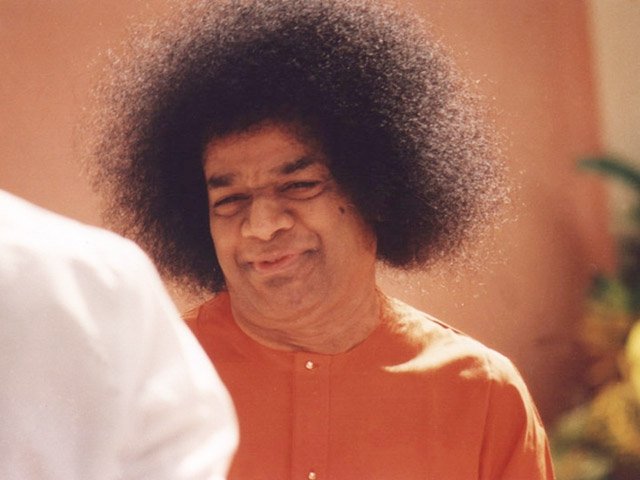
shri sathya sai baba in orange robe smiling gently with curly hair image
Summer Showers

summer showers in (1995)

summer showers in (1995) Summer Showers 1995 is a collection of twelve discourses delivered during the Summer Course on Indian Culture & Spirituality in Brindavan, focused on the Srimad Bhagavatam, one of the great Puranic texts of India. The themes weave together mythic narrative, spiritual ideals, ethics, and education so as to guide students toward realizing their inner divinity and living lives grounded in value. The volume opens with “Mother and Motherland Are Greater Than Heaven,” in which Sai Baba elevates love for one’s land and culture almost to sacred duty, urging youth to recognise that homeland is like a mother, culture like a father, and that without this foundational respect, other achievements lose their grounding. From there the discourses explore “Science and Spirituality,” where Baba reconciles the pursuit of scientific knowledge with spiritual wisdom, pointing out that visible phenomena depend on invisible principles, and that a truly educated person is one who can perceive not only what is seen, but also the roots, causes, and unseen values that underlie reality. As the Bhagavatam stories unfold — with narrations of Krishna’s birth, the devotion of Dhruva, the steadfastness of Prahlada, the innocence of Gopikas and the playful love of Gopalas, and the youthful years of Krishna and Balarama — each story is spun out not merely as myth, but as archetype and teaching: the surrender of ego, courage in adversity, compassion, truth, humility. For instance, the discourse on Prahlada emphasizes that unwavering faith even in face of trials ennobles character; the narrative of Dhruva shows how aspiration toward God gives strength to overcome worldly limitations. Interspersed with these divine tales is “The Essence of Education,” a closing discourse that brings together all the earlier lessons into practical life: education is not mere accumulation of facts but the cultivation of human values — truth, righteousness, peace, love, non‑violence — which reflect the essence of the Self (Atma). Sai Baba repeatedly pleads with students to transcend superficiality: not to let knowledge be sterile, bookish, or competitive, but to let it become service, compassion, self‑inquiry. He warns that knowledge without character is like a lamp without oil: it appears bright, but cannot shine. The stories of devotion, sacrifice, steadfastness from the Bhagavatam are shown to be alive in each student’s life when they cultivate humility, obedience, selfless love. The volume also stresses the concept of invisible power — things like love, faith, values — that cannot be measured yet form the root of all visible excellence. Sai Baba’s voice is both elevated and intimate: elevated because he draws on cosmic myth and sacred text; intimate because he addresses students personally, urging them to make each discourse a mirror, to look within, to act out of love. Through myth, philosophy, and earnest challenge, Summer Showers 1995 seeks not only to inform but to transform — to lead students from admiration of spiritual ideals to direct experience of them, from external forms and knowledge to internal living, and from self‑concern to service with love. In this way the Srimad Bhagavatam becomes for Sai Baba not only a story of God and devotees, but a living text for character, for devotion, and for walking in the divine path every day.

summer showers in (1995) Read Post »

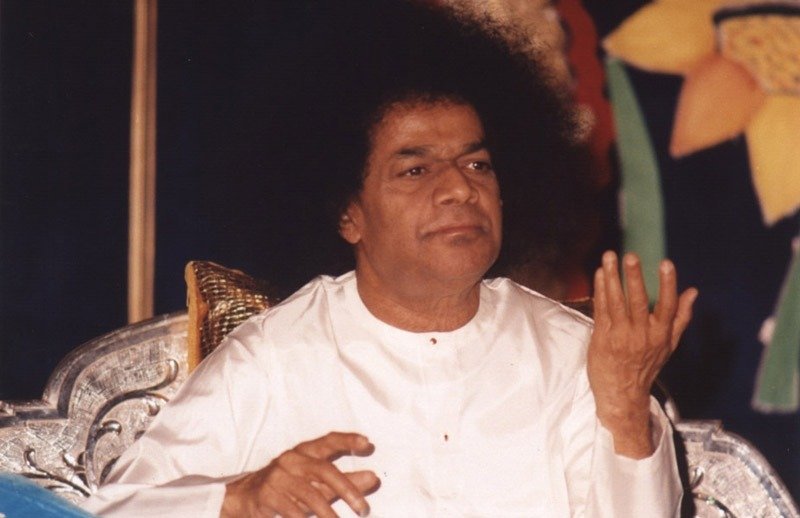
shri sathya sai baba Spiritual leader in white robe gesturing thoughtfully image
Summer Showers

summer showers in (1993)

Summer Showers in (1993) Summer Showers in Brindavan 1993 is a compilation of spiritual discourses delivered by Bhagavan Sri Sathya Sai Baba during the Summer Course in Indian Culture and Spirituality held at Brindavan, Whitefield. The central theme of this series is the transformation of man from the level of the human to the divine, emphasizing self-realization, ethical living, and the unity of all existence. Sai Baba explores both the philosophical depth and the practical applications of Indian spiritual traditions, especially focusing on the mind, thought, and self-discipline as essential tools for spiritual evolution. A major portion of the discourses examines the six classical schools of Indian philosophy—Nyaya, Vaisheshika, Samkhya, Yoga, Purva Mimamsa, and Vedanta—explaining their concepts in a simplified and practical way, showing their relevance to modern life. He emphasizes that thought is the basis of creation, and one’s inner world directly shapes one’s outer experiences. By purifying thought and controlling the restless mind, individuals can achieve peace and harmony. Sai Baba likens the mind to a mad monkey and stresses the need for self-control, discrimination (viveka), and dispassion (vairagya) as tools to master it. Throughout the discourses, he underscores the value of Dharma (righteousness) and Atma Vidya (knowledge of the Self), asserting that true education is that which leads to character formation and the realization of the divine within. The discourse on “Sathyam, Shivam, Sundaram” highlights truth, goodness, and beauty as the ultimate attributes of the divine, and he encourages students to cultivate these qualities in thought, word, and deed. The mind is presented as both the source of bondage and liberation—when polluted by desires, it leads to suffering, but when purified, it becomes a gateway to bliss. Baba also elaborates on the maladies of the modern mind, such as ego, hatred, selfishness, and restlessness, and prescribes remedies like devotion, service, meditation, and surrender to God. The ultimate goal of life, according to him, is not material success, but self-realization and unity with the divine consciousness. He reminds the youth that the strength of India lies not in wealth or technology, but in its rich spiritual heritage, which teaches love, sacrifice, and unity. Sai Baba’s teachings in this volume are deeply rooted in Indian philosophy but are presented in a manner accessible to students and spiritual seekers across cultures. His goal is not merely to inform but to transform—to awaken the divinity latent in every human being and guide them toward a life of love, peace, selfless service, and inner joy. Summer Showers 1993 thus serves not only as a philosophical text but also as a spiritual manual for those who wish to rise above worldly distractions and rediscover their true nature as the Atma, the eternal Self.

summer showers in (1993) Read Post »