






Hari Om

Menu

Sri Sathya Sai Baba conversation with Anil Kumar

Bhagwan Shri Sathya Sai Baba love and peace photo
Sri Sathya Sai Baba conversation with Anil Kumar

CONVERSATIONS WITH SAI Satyopanishad 

Satyopanishad – Part Seven CHAPTER 2 – TRENDS IN SOCIETY Anil Kumar: Swami! Many speak of culture? What is the value of culture? Bhagavan: Culture is very important because your life and its value depend on it. Culture is a way of life. It enables you to experience divinity in your life and realise unity in diversity. Without culture, a person becomes a demon. He falls down in stature and ultimately ruins himself/herself. You know that sea water is saline or salty. Human life is like a vast sea. God’s grace is like sunlight that falls on the sea. The seawater, because of the heat of the sun, becomes vaporised. This is the vapour of bliss that settles as clouds in the sky to fall down to the earth as rain. It is the rain of love. The seawater is salty but the rainwater is sweet. Why? Where does the difference lie? Seawater is refined by sunlight. So also, our life must be cultured and refined. The value of life will then rise. A piece of iron worth less than a rupee can be made into a beautiful and expensive watch after it is processed and refined. This is due to the culture it has undergone. So long as a boulder remains itself, it is bound to be neglected. But, once it is in the hands of a sculptor, chiseled and hammered, and shaped into a beautiful Krishna idol; it starts receiving respect and worship. Why? It is only culture that makes all the difference. A boulder, once trodden by everyone underfoot, now in the form of an idol, occupies a place at the altar in a temple and is worshipped everyday. This is the value that culture confers. Without culture, one develops a foolish view of life finding diversity in unity. For example, take a needle. It stitches pieces of cloth into a garment. The needle stands for culture. But scissors cut the cloth into pieces. This is the condition in the absence of culture. Anil Kumar: Swami! Have people come closer to God in this modern world? Modern science has enabled man to land on the moon. But, man has forgotten to step into his neighbour’s house. Yes, he can reach chandra, the moon, but can’t see Ramachandra (God) in his heart. Modern man can swim in water like a fish, and fly like a bird, but can’t walk a mile with his two legs on the ground. With his physical eye, which is not even two inches in size, he is able to see a galaxy several thousand miles away from him, but he is not able to see himself. The eye and the ear are so near but they don’t see each other! Do they? God reclines on the ksirasagara, ‘ocean of milk’ located in your Heart, but today we find that the ‘Heart’ has become ksarasagara, ‘ocean of poison’. How do you expect him to realise Divinity? Even after having become a very rich country, France, lost the Great War. Why? It was because of her reckless youngsters and the vices of the day. This trend is increasing today among people. Man is living and working for the fulfillment of his asalu, lowly desires, but he should live for asayalu, ideals. People with high ideals alone can come closer to one another spiritually. Anil Kumar: Swami! Kindly tell us how to achieve greatness in life? Bhagavan: Never allow this sort of idea to get into your head. You are mistaken if you think that you have achieved something very special and unique by becoming great. It is not true at all. Becoming great in life should not be your aim. There are several great people in society. I don’t think this is important or matters the most. Goodness is superior to greatness. Instead of aiming to be great, try to be good. It is far more important to be a good man than a great man. What is the difference between the two? A great man sees man in God, while a good man sees God in man. Ravana, as portrayed in the Ramayana, was undoubtedly a great man. He considered Rama, the Lord, a mere man. You should not give any scope for laziness. All employees should work most sincerely doing justice to the salaries they receive every month. Otherwise, it will amount to cheating or betraying their fellow beings or the government. People should cultivate samarasyam, integration, samagrata, coordination, samaikyata, unity, and saubhrdtrata, fraternity. Look at this piece of cloth. This is very strong because the threads are closely interwoven. But if you separate the threads, you can cut it with your finger. Everybody should know that strength lies in unity. India could achieve independence but not unity. You are free to walk waving your walking stick, so long as it does not hit the nose of another pedestrian and your freedom does not rob the independence of others. Fundamentals applicable to all must be followed. The individual is less important than the community or society. It is always better that you manage to employ yourselves in learning those things that are needed for society. Your education should help you to better the community. t is good to know the news that comes from the outside world. What about nuisance that comes from within you? Know that and correct yourself. Anil Kumar: Swami! What is essential for us now? Bhagavan: If you have love, it is enough. Everything will be added unto you. Service, sacrifice, humility, devotion, discipline, etc. are contained within love. It is only love that prompts and promotes all virtues. Where there is love, there will be no ego, hatred, jealousy and such other low and mean animal qualities. There was a lady in Paris. She led her life with the little money she had. One day she saw some helpless footpath dwellers shivering in the cold. She was deeply moved by this sight. Everyday she used to take a few blankets along with her and offer them to those poor, needy and forlorn. This had

CONVERSATIONS WITH SAI Satyopanishad  Read Post »

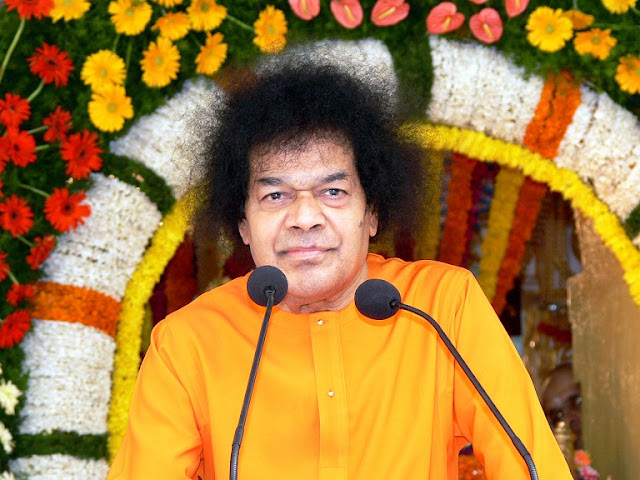
Shri Sathya Sai Baba peace photo
Sri Sathya Sai Baba conversation with Anil Kumar

CONVERSATIONS WITH SAI Satyopanishad 

Satyopanishad – Part Five Direct Directions from the Divine CHAPTER 2 – TRENDS IN SOCIETY Anil Kumar (AK): Swami! When we say, ‘men and women are equal’, why then do we find differences and discrimination between the two sexes? Bhagavan: Physically, men and women are different. But spiritually, i.e., from the atmic point of view, both are equal. In fact, God is the only male while all others are females. The deham, body, is also called puram, dwelling place. It is the principle of atma that works from top to bottom. You know, colleges for women celebrate anniversary functions during which they present cultural items like a play. Similarly, all but God are women in this world. A similar thing happened in the life of Mira, the great devotee of Lord Krishna. She was stopped at the main entrance of a Krishna temple at Brindavan, and was told that women were not permitted to enter a temple of God . Then Mira replied, “Oh! Is that so! Where are men here? I find only women. God is the only male person. “ AK: Swami! We hear many funny statements in present day society. People speak about the Women’s Liberation Movement. Some say that women have not been given their due place since times immemorial. They complain that there has always been discrimination on grounds of gender, and women have never been given a fair deal. Women now fight for equal rights with men. We pray to you to describe to us the role of women in our society? Bhagavan: This is not true, spiritually speaking. There is a physical difference, but Atma or the spirit is one. However, each one has to discharge the duties expected of him or her. In a social order, man and woman are like the two hands, the two eyes, and the two feet. One is the positive, while the other is the negative for the current to flow and operate. Lord Siva is called ardhanaris’vara, androgynous God (half of His body being that of a woman) to explain this unity. Man and woman are like matter and energy. A woman is described as adis’akti, paras’akti Supreme Power, Infinite Power. You also notice in the history of Bharat ( India ) the place given to women. Many of them are known today for their sacrifice, wisdom, devotion, and many of them could give better and sane advice to their husbands. Characters like Savitri, Mandodari, Sita, Anasuya, Tara, Damayanti, Madalasa, and Draupadi are very well known. In ancient times, Gargi and Maitreyi were known for their outstanding scholarship and spiritual excellence. In recent times, have you not heard of the role played by the mother of Emperor Sivaji and of Gandhi, the Father of the Nation, in moulding their character and personality? In our daily prayers we say matr devo bhava, ‘Mother is God’. Don’t you see the names of women come first and those of men next, in compounds like SitaRama, GauriSankar, LakshmiNarayanaand and so on? In the past, there never was an instance of women being humiliated, neglected or treated with disrespect. Don’t you hear words like ‘motherland’, ‘mother tongue’ that speak highly of women? The Bhagavad Gita refers to seven types of power enjoyed by women as a matter of right. She has quite a few titles that underscore her contribution to the family and her special role. A housewife is called illalu, the one who takes care of the house or illu. She is described as sahadharma carini, the one who guides her husband along the path of Dharma or righteousness. She is praised as grhalaksmi, the very embodiment of the wealth, peace and prosperity of the family. She is called ardhangi, representing a half of man, the better half. Woman stands for patience, sacrifice, forbearance, respect, humility and obedience, the qualities, which are usually missing among men. A woman is prepared to die for her child or husband. She slogs and struggles for the progress and the well being of the family. She is the backbone of the country. She is the light and the delight of the family. AK: Swami! A change is very much needed in every field of our activity. Almost all walks of public life are nowadays polluted, disgusting and disappointing. How is change to be brought about? Bhagavan: Truly speaking, villagers who are unlettered, innocent and rustic are living in greater peace and cooperation, in more intimate relationships, and mutual love than the so called urban, sophisticated, educated, and seemingly cultured people. The latter are full of ego and jealousy. To bring about a change, they need to work for it. They must put in enough sincere effort to overcome qualities like egoism, pride, jealousy, and hatred. Butter is, no doubt, very soft; but in order to make ghee out of it, you must heat it. Similarly, for any change, you have to work for it. You should, first of all, listen to all good things from good people. This listening, s’ravana is the first step. It is not enough if you simply listen. You should remember, recall, recollect, and recapitulate the good things you have listened to. It is then that you eat it. Further, the food that you eat must be digested, assimilated, and the nourishment supplied to different parts of your body. Is it not so? Similarly, s’rvana, listening is like cooking; manana, remembering is the same as food kept on the table; whereas nidhidhyasa, practicing what is heard is like eating and digesting. AK: Swami! We are always in a hurry. We have to rush to so many places to catch up and to keep pace with time and work. In this type of fast life, is it possible to be spiritual? Can we hurry here in the spiritual field too? Bhagavan: Today, many of the diseases are due to the three factors very common among you: hurry, worry, and curry. Haste makes waste, waste makes worry. So, don’t be in a hurry. Patience is very important and essential. In my previous body as Shirdi, I laid emphasis on sraddha and saburi, sincerity and patience. It is very common to find people running to catch a train or a

CONVERSATIONS WITH SAI Satyopanishad  Read Post »
Shri Sathya Sai Baba raised hand blessing image photo
Sri Sathya Sai Baba conversation with Anil Kumar

CONVERSATIONS WITH SAI Satyopanishad 

Satyopanishad – Part Three Direct Directions from the Divine CHAPTER 1 – THE INDIA ETERNAL Anil Kumar (AK): Swami! Right now, we are in Kodai Kanal. Tamilnadu is known for its renowned devotees. We often hear about Manikya Vachakar and Tiruvalluvar. We want to hear from You about these two illustrious sons of Tamilnadu. Bhagavan: Manikya Vachakar is the personification of forbearance, forgiveness, patience, and devotion. One day, the son of a very rich man came to him. You know, Manikya Vachakar was selling saris and maintaining his family. This boy, The sari seller said, “Rupees ten, Sir”. The boy tore it further into two halves and asked, “Now, what is the price of this quarter sari”? The former patiently replied, “Rupees five, Sir”. The mischievous boy was very much taken aback by Manikya Vachakar’s patience. He then asked, “How is it that you are so patient in spite of my mischief?” Manikya Vachakar smiled and said, “I am a devotee of God and I have full faith in Him. He is responsible for my peace and calmness.” In Tamilnadu, there was one devotee by name Tiruvalluvar. He was highly reputed and is known even today for his devotional composition, Tirukkural. In those days, the Pandya king had youngsters serving him as ministers. Tiruvalluvar was one of them. The Pandya king had a great liking for horses. He liked to have a number of horses of different breeds from all parts of the country. He called Tiruvalluvar, gave him some money, and sent him to get new breeds of horses from all places. The latter agreed and proceeded. The King repented later for his hasty and wrong decision. He requested Tiruvalluvar to return and resume his duties as a minister. However, Tiruvalluvar politely refused to take up any responsibilities in the kingdom. He spent the remaining part of his life wholly in spiritual pursuits. AK: Swami! God is attributeless. He is above the three qualities – sattvika, rajasika, and tamasika. But, we are bound by these three attributes. Then, how can we realise God? Bhagavan: The Divine has two aspects – He can be experienced as the one with attributes, and also as beyond them. You should know one thing chiefly – God is in the attributes. But, the attributes are not in Him. Attributes or traits cannot function and operate without Divinity in them. Gold is in the jewellery; but, jewels are not in gold. Pots are made of clay, but not vice versa. Silverware, like a glass or a plate, is made of silver. But, the glass and plate are not in silver. Another example: You know, an electric bulb illumines, and a fan revolves. Radios, TVs, etc. are electrical gadgets, which need electricity for their functioning. But, none of these gadgets are there in electricity. Likewise, God is present in the attributes. They are not present in God. So, in a way, we can say that He has attributes, and at the same time, He is attributeless – that is, saguna and nirguna. Every man has three qualities – sattva, rajas, and tamas. But, the one that dominates the other two decides his/her thinking, feeling and action. But, unless we transcend these three qualities, we cannot experience Divinity in the true sense. Here is an example: If you want to see your own chest, what should you do? First, remove your coat, then your shirt, and finally even your undershirt, isn’t it? So also, to see the chest of Divinity, you should first remove the coat of tamasika quality, the shirt of rajasika quality and the undershirt of sattvika quality. AK: Swami! We pray to you to tell us about the two aspects of God, with form and without it? Bhagavan: It is here that many are confused. Without a form, from where do you get the formless? How is it possible for you to visualise the Formless? Since you have a form, you can only think of God with a form. For example, if a fish is to think of God, it can visualise God only in the form of a bigger fish. So also, if at all a buffalo thinks of God, it can think of God only as a bigger buffalo. In the same way, man can think of God only as existing in human form, the form of an ideal man. Even the formless aspect of God can be meditated upon basing on the aspect of God with form. You cannot derive the formless without a form. Here is a small example. You are all seated in this hall, in front of Swami today, in Kodai Kanal, and listening to Swami’s words. This is an experience with a form. Later, you go home, and after a few days, you begin to reflect on what had happened here. You recall the entire scenario. In fact, has Swami come to your place physically? Would you find this room at your place? Have all of you gone there? No. But this direct experience is pictured mentally, which gives you the indirect experience of being here. What you see here is the sakara (with form), and what you experience there is the nirakara (formless). So, the formless is based on the aspect with form. One cannot exist without the other. Another example. Here is milk. You want to drink it. How do you drink? Don’t you need a cup or a glass? Similarly, to worship God (milk) you need a form (cup). AK: Swami, of these two ways of worship, the aspect with form, and the other, the formless, which is greater? Bhagavan: In my opinion, both are equal. One is not in any way greater than the other. Now you are in Coimbatore. Here the land is plain, without any ups and downs. The level of the land is the same throughout; nobody leveled it. Nobody prepared the ground to be like this. It is basically the design of Coimbatore. But Kodai Kanal is located on the hills. Nobody assembled hills there. It is made that way. Coimbatore and Kodaikanal are different from one other. Each one is full, but in its own

CONVERSATIONS WITH SAI Satyopanishad  Read Post »
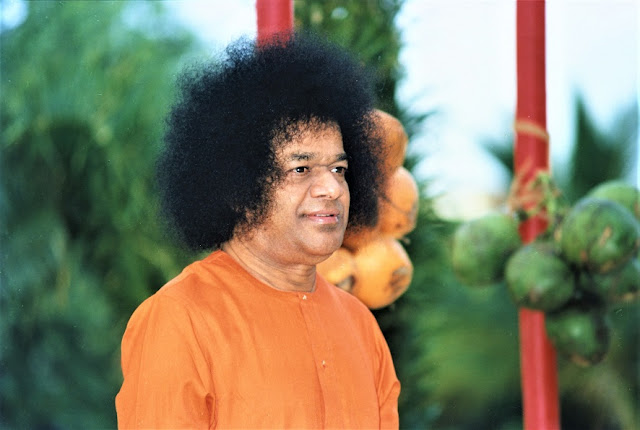
Bhagwan Shri Sathya Sai Baba faith
Sri Sathya Sai Baba conversation with Anil Kumar

CONVERSATIONS WITH SAI Satyopanishad 

Satyopanishad – part one Direct Directions from the Divine Responding to positive responses from many readers to this section who prefer the “question-answer” format in finding answers to issues connected with spirituality and personal growth, from this issue we serialize another popular book, this time by Prof. Anil Kumar, entitled “Satyopanishad.” Published in two parts by the author, this revealing dialogue with the Divine has topics as wide-ranging as the origin of evil, the goals of human life, aspects of God – embodied and formless – to price hikes, women’s liberation, vegetarianism and the generation gap. Unlike Dr. Hislop’s book, the 270 questions in these volumes are neatly grouped and presented in nice chapters under three parts. We start in this issue with the first chapter of the first part called “The India Eternal.” CHAPTER 1 – THE INDIA ETERNAL rof. Anil Kumar (AK): Swami! India (Bharat) is the land of religion and spirituality. All the incarnations have taken birth in Bharat. What is the reason behind this? Bhagavan: Bharat is yogabhumi, the land of spirituality. Bharat is punyabhumi, the sacred land. Bharat is karmabhumi, the land of sacred activity. Bharat is tyagabhumi, the land of renunciation. Here saints, sages, seers, aspirants, seekers and devotees pray to God to enjoy His proximity. Here is an illustration. You asked why Bharat alone has always been the birthplace of the incarnations. You know that the train has an engine in the front with several carriages connected to it. The power or energy generated there in the engine pulls the carriages forward. Where do you find the driver? Naturally, he sits in the engine monitoring the train, does he not? Similarly, in the train of the world, Bharat is in the position of an engine and the carriages are the several countries attached to it. In the great epic, the Mahabharata we find Arjuna and Bhima always following Yudhisthira. Here, Arjuna stands for intelligence, while Bhima symbolises physical strength. Now, Bharat is in the position of Yudhisthira. America is Arjuna, while Russia is Bhima. Just as you find Bhima and Arjuna obeying the command of Yudhisthira, America and Russia should follow Bharat. n the very name “Bharat” we have three letters. (Written in Telugu, “Bharat” comprises three letters). Bha, the first letter stands for bhava or feeling; ra, the second signifies raga, tune or melody; and ta, the third indicates tala or beat. Thus, Bharat is the country where the glory of God is sung with proper feeling, melody and right rhythm. This country has another name “Hindudesam” which means a country that shuns violence, ‘Him’ means, himsa or violence and ‘du’ refers to “dura” or shuns. For these reasons God has chosen to incarnate or descend in human form in Bharat. AK: Swami! We find people of every religion following a specific sacred text and a particular path. But in Sanathana Dharma (ancient Indian practice), we have numerous paths, texts, and procedures such as dualism, qualified non-dualism and nondualism, the nine paths of devotion, the six Darsanas, the four Vedas, numerous Sastras (scriptures), and so on. How are we to understand these and practice the principles of Sanathana Dharma? Bhagavan: Sanathana Dharma is the most ancient spiritual way of life. Its diversity matches the spectrum of human behavioral tendencies, temperaments and mental attitudes. It is practical and confers divine experiences. A small example. You buy a piece of cloth and give it to a tailor to make a suit for you. The tailor will get your suit ready according to your measurements, does he not? You cannot wear a dress made for someone else. Another example. You may know the nadasvaram (the South Indian musical instrument required to be played on every auspicious occasion). To maintain srti or rhythm by way of an accompaniment, one person plays an instrument in the same way all through. On the other hand, with nadasvaram you can play any number of ragas or tunes. Sanathana Dharma is like the nadasvaram. Yet another example: Whatever be the combination of optional subjects you may take in Science during your undergraduate programme, be it ‘M.P.C.’ (Maths, Physics and Chemistry) or ‘C.B.Z.’ (Chemistry, Botany and Zoology), you get a B.Sc. degree. Similarly, in the university established by Sage Vyasa, you can opt for any course like the Sastras, the Vedas, the Upanishads, etc. This is the significance of our ancient Sanathana Dharma, which gives ample freedom for you to select and follow. Here is one more example: A pharmacist and a cafe owner had a headache on the same day. Seeking relief, the pharmacist went to the cafe for a cup of coffee, and the cafe owner to the medical shop for a tablet. So, one has faith in a cup of coffee while the other trusts a tablet. In the same way, you should follow the spiritual path you believe in, and the text that is convincing and appealing to you. AK: Swami! Muslims go to a mosque every Friday to pray (namaj), and Christians go to a church every Sunday. Then, how is it that Hindus do not meet in a temple like other religious groups? Bhagavan: You are wrong if you think Hindus should. They are not required to specially meet on a specific day like others. Why? Every Hindu has a puja room or an altar in his home particularly meant for worship. He prays there every day. So there is no need for him to assemble for mass prayer or to pray on specific days like people belonging to other religions. AK: Swami! Since God is omnipresent and omniscient, do we need temples and should we go on pilgrimage to holy places like Shirdi, Puttaparti, Tirupati, and so on? Bhagavan: This is a foolish question. You are exhibiting your ignorance and your ‘fashionable’ way of thinking which, more often than not, is perverted. There is no relationship between what is said and what is experienced. You say that God is everywhere. But it is merely an expression, vocal and verbal. Do you really have strong faith that God is present everywhere? Do you have that experience of the divinity, which is all pervasive? You are simply speaking like a parrot. Here

CONVERSATIONS WITH SAI Satyopanishad  Read Post »