













Hari Om

Menu

Shri Sathya Sai Baba Chinna Kathas

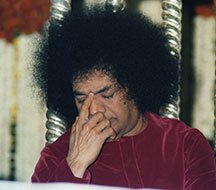
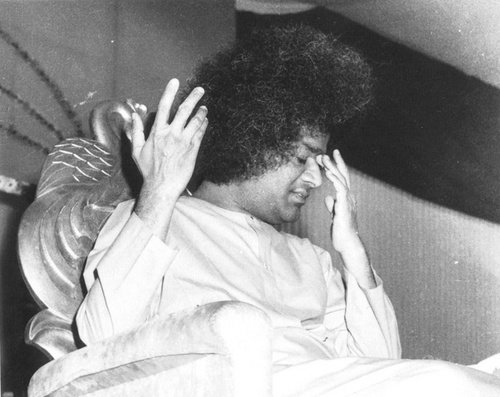
shri sathya sai baba with curly hair sitting and touching his head in contemplation image
Shri Sathya Sai Baba Chinna Kathas

Shri Sathya Sai Baba Chinna Kathas – Practice

Shri Sathya Sai Baba Chinna Kathas – Practice​ 1.- Ramakrishna Paramahamsa on practice Puttaparthi, Sai Kulwanth Hall (1996 Special Discourses )   Your browser does not support the audio element. 1996-06-19   Document Download Audio Social Share Facebook Twitter Youtube Instagram Description The great saint Ramakrishna Paramahamsa used to live in an ashram in a village named Kamarakpur in Bengal and located on the banks of the river Ganges. Unlike their counterparts elsewhere, Brahmins in Bengal eat fresh-water fish and are thus known as Matsya Brahmins or fish-eating Brahmins. Whenever they went to the river for bathing, they would bring some fish back home. For going from Kamarakpur to the city of Calcutta [annotate in text version], one had to cross the Ganges by boat. Often while Ramakrishna made such trips, he would gather all the children in the boat and tell them stories that promoted devotion and spiritual values. Thanks to the influence of the Kali age, both young and old made fun of Satsang and good company. Thus the youth and the parents of children in the boat did not like what Ramakrishna was doing and raised questions like: “Why is devotion needed at this early age? Worship of God and chanting Divine names like Rama, Krishna and Govinda can wait till retirement.” Back then, many youth were drawn to Ramakrishna and everyday he would assign one of them to get fish from Calcutta. One day, it was the turn of Brahmananda. Seeing the orange-robe clad Brahmananda get into the boat and recognising him to be one of Ramakrishna’s disciples, the people managing the boat immediately began making very critical remarks about Ramakrishna saying, “That mad man does not do any work nor do his boys, like this one.” In their view, Ramakrishna was collecting talented youth and ruining them. Back then, it was common to regard Ramakrishna as a mad person. When Brahmananda heard his master being vilified, he was deeply upset. However, being a soft person he did not raise his voice in protest. Instead, deeply troubled and full of anguish, Brahmananda returned to the ashram with fish. Seeing Brahmananda Ramakrishna asked, “What happened and why are you in tears?” Brahmananda replied, “Master, I just could not bear to hear the way people on the boat talked about you. I do not care if people say bad things about me; but when they abuse you, I feel deeply hurt!” Hearing this Ramakrishna became angry and said, “Can you call yourself a disciple after putting up with abuses hurled at your master? You are unfit to be here in the ashram. Leave this place at once! You are not a good disciple. How could you remain silent when your Master was being vilified? How could you put up with all that abuse? Is it not a sin to tolerate the abuses directed at one’s master? The one who abuses a Guru commits a sin as also a disciple who puts up with it.” Brahmananda did not respond but just went on crying. Next day, it was the turn of young Narendra, also known as Vivekananda, to do the boat trip. And as earlier, people on the boat began mocking him as he approached. Even as Vivekananda purchased a ticket and boarded the boat, the boatmen began to mock him. Infuriated, Vivekananda shouted, “Shut up!” This only served to encourage the offenders to become more aggressive. Vivekananda then resorted to force and picking up one man warned that if the abuse did not stop he would begin throwing them into the river. That frightened the mob and everyone promptly became silent. Vivekananda was thus able to make the trip, buy fish and complete his assignment. When Vivekananda returned, Ramakrishna asked him, “What happened today?” Vivekananda replied, “Whatever happened when Brahmananda went happened again.” “How did you respond?” Ramakrishna then asked. Vivekananda answered, “Will I remain silent if my Guru is vilified? I thrashed them and even threatened to throw them into the river!” Hearing this Ramakrishna reprimanded Vivekananda and said, “You are wearing ochre robe and live here in the Ashram. And yet, you seem to have no forbearance. When you have no control over yourself, what purpose is there in your staying in the Ashram? Deeply perplexed, Narendra who had earlier been a member of the Brahmo Samaj asked, “Master, yesterday you gave Brahmananda some advice but today you are telling me exactly the opposite! Which of these two is the correct advice? The one you gave yesterday or what you are telling me now?” Ramakrishna then said, “O foolish young man, when there is excess air in the tyre that excess has to be let out; likewise, when air is lacking, the tyre must be filled to the required extent!” Teaching and preaching must always be tailored to the situation and the circumstances and cannot be the same for all. They must be tuned to the nature of the person receiving the teaching and the capacity of the person to absorb the teachings. There is plenty of water in the Ganges. However, what each person carries home depends on the size of the container he brings. In the same way, teaching must be tailored to the recipient; all cannot be taught the same lesson. Where spiritual seekers are concerned, God bestows energy according to their capacity to absorb, which in turn is determined by how disciplined they are. It is through discipline that you can enhance your capacity to absorb. Without discipline, it is not possible to attain God. Lack of steadiness would not do!   Listen To Full Discourse Discipline in daily life leads to God realisation Puttaparthi, Sai Kulwanth Hall (1996 Special Discourses ) Your browser does not support the audio element. 1996-06-19 Document Download this Audio Social Share Facebook Twitter Youtube Instagram Description EMBODIMENTS of love! Discipline is vital to every living being. For man it is even more important like the spinal column. Without discipline mankind will be ruined. Discipline means the observance

Shri Sathya Sai Baba Chinna Kathas – Practice Read Post »
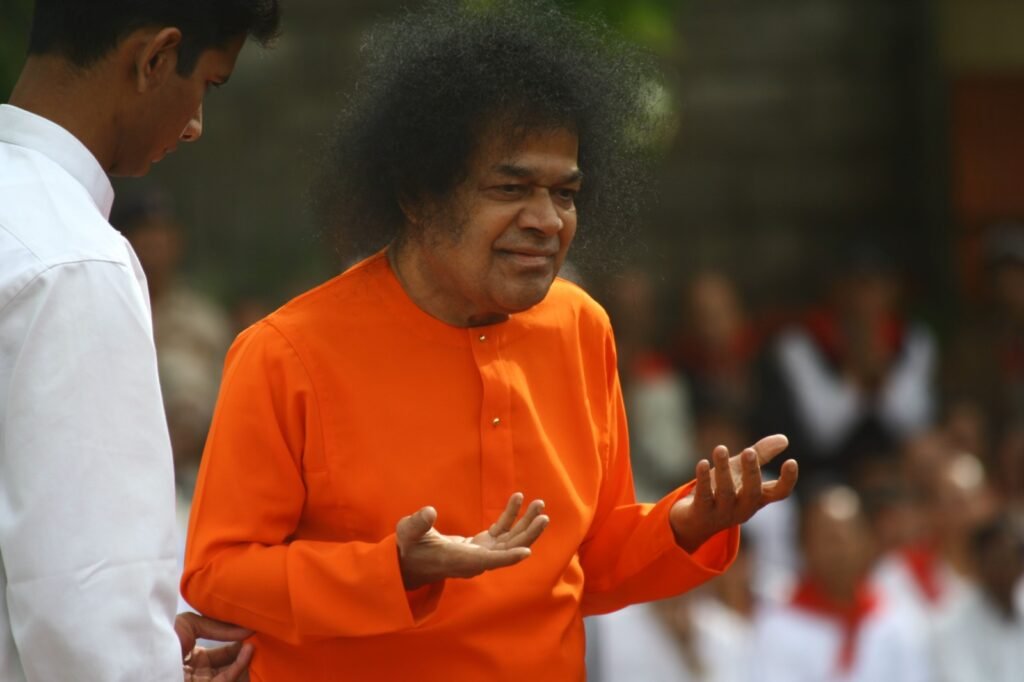
shri sathya sai baba Spiritual leader in orange robe gesturing while speaking image
Shri Sathya Sai Baba Chinna Kathas

Shri Sathya Sai Baba Chinna Kathas – Love

Shri Sathya Sai Baba Chinna Kathas – Ego 1.-Radha’s love is unmatched and she is egoless: Conversation between Yashoda and Radha Puttaparthi, Sai Kulwanth Hall (1996 Special Discourses ) Your browser does not support the audio element. 1996-07-31   Document Download Audio Social Share Facebook Twitter Youtube Instagram Description Truth and love are one and the same. The whole world becomes ‘shoonyam’- null and void due to the union of love and truth. A small example to illustrate this. Yashoda was going from street to street searching for Krishna. Since Krishna has one body, the word ‘searching’ is used. She was in continuous search of Krishna. If Krishna was everywhere, then is there any need to search for Him? But since Krishna had put on one body, she was searching for it. Seeing Radha in front of her, she asked, “O Radha! Did you see my boy Krishna? Did he come by to your place? I went all over and to everybody’s place, I did not find Krishna. Did you see Him?” Radha closed her eyes and with intense love she thought about Krishna, “O Krishna!” In a moment Krishna appeared there!! Yashoda saw this. “Krishna is my son and I am his mother. I thought for long that no love is greater than the mother’s love. I was egoistic with the feeling that none would love Krishna as much as I love him. I could not realise the mighty power of your love. Is there so much power in your love?! He manifested the moment you lovingly thought about him.” What kind of love is that of Radha? Her love is pure, sacred and egoless hence Krishna manifested there. If there is impurity in the heart or traces of ego, God does not manifest even after hours, days, years and eras of trying. Yashoda caught hold of Radha’s hands and said, “O Mother! You have opened my eyes to wisdom and have driven away my ego and ignorance. I realised that there are many whose love is greater than mine. I considered my love to be supreme and top most. It is my mistake. Please teach me love like you.” Radha said, “O Yashoda, it cannot be taught by anybody, it cannot be passed on by anybody. Each one has to understand and realise it by oneself and this love can only be developed once you believe Krishna whole heartedly.”After Krishna returned home, catching hold of Krishna tightly, she said, “Krishna! Pettinadi tinavu! Ne pettinadi tinavu! Gollala puttal kunupoyi, Pattelluga dobuttunavu tinedavu Neetho puttenu mattella Krishna!! Krishna! You don’t eat what is served, You do not eat what I give you, You visit the houses of cowherd boys And eat secretly fists full of butter” “You do not eat the butter that I give you. We have butter in plenty in our house but you do not eat that. But you go to other’s homes and eat butter even if they are chasing you.” What is the inner meaning of this? It only means that to Krishna heart of the devotee is most important than his mother or his home. God manifests without a moment’s delay when one develops love that is pure, unselfish and devoid of ego. The devotees are put to such delusions and troubles due to the body attachment.   Listen To Full Discourse Vedanta is Very Easy to Practise Puttaparthi, Sai Kulwanth Hall (1996 Special Discourses ) Your browser does not support the audio element. 1996-07-31 Document Download this Audio Social Share Facebook Twitter Youtube Instagram Description You may master the Vedas and Vedanta, You may be an expert composer of beautiful poems and prose, But if you lack purity of heart, You will ruin yourself. Never forget these good words.    Vedanta is Very Easy to Practise Puttaparthi, Sai Kulwanth Hall (1996 Special Discourses ) Your browser does not support the audio element. 1996-07-31 Document Download this Audio Social Share Facebook Twitter Youtube Instagram Description You may master the Vedas and Vedanta, You may be an expert composer of beautiful poems and prose, But if you lack purity of heart, You will ruin yourself. Never forget these good words.    2.- Pure love doesn’t beg; An illustration Puttaparthi, Sai Kulwanth Hall (1996 Special Discourses ) Your browser does not support the audio element. 1996-06-20   Document Download Audio Social Share Facebook Twitter Youtube Instagram Description Love is a triangle and it is not afraid of anything. It does not beg anyone. Love loves only for the sake of Love but not for any material thing. So Love is for Love. Love is fearless. It does not beg for anything. It loves just for Love. Such Love with these three qualities is the True Love. Once a king went to a forest for hunting. He was tired and felt thirsty. He saw a small hut at some distance. Expecting someone to be there he went and saw a great person meditating in that place. The king waited there without disturbing the person who is in meditation. After a little while the person got up and asked the king who he is and why he was waiting. The king replied that, “He is the king of that kingdom and having come for hunting and getting tired, he came there to take some rest”. Then that great person gave him some cool water and some fruits. The king was happy. Going back, the king requested that person to go along with him to his kingdom and accept his hospitality. That person being a sage who relinquished everything did not accept king’s invitation. The king pleaded repeatedly and then to make him happy, the sage went with him. Both of them bathed and the king went to the altar in his house and prayed to God as follows. “Oh God! By my fortune, I became the king. But this kingdom is very small. I have to expand this by conquering some other kings. Please bless me”. The sage, hearing this prayer

Shri Sathya Sai Baba Chinna Kathas – Love Read Post »

shri sathya sai baba Spiritual leader in orange robe offering blessing gesture image
Shri Sathya Sai Baba Chinna Kathas

Shri Sathya Sai Baba Chinna Kathas – Ego

Shri Sathya Sai Baba Chinna Kathas – Ego 1:- Give up ego; Bhakta Ramadas story Puttaparthi, Sai Kulwanth Hall (Christmas ) Your browser does not support the audio element. 1998-12-25   Document Download Audio Social Share Facebook Twitter Youtube Instagram Description Never give scope for ego. Ramadas also said this. Ramadas faced difficulties, Thyagaraja faced problems. Difficulties are necessarily experienced by devotees. Why do these difficulties arise? To strengthen your faith. To purify your heart. In order to solve your problems, just as to clean a vessel, you have to struggle a lot. The human heart is full of dirt. The vessel of the human heart must be cleansed well. This is why you face difficulties. Ramadas, Tukaram and Thyagaraja conveyed this. Thyagaraja felt sad because he was separated from Rama, and wondered how he could live without Rama. He felt very angry with Rama. “Are You really powerful? Oh Rama! If you have any power, why don’t you solve my problems? You are powerless, I have devotion.” He praised his own devotion and became egoistic. “I have Bhakthi, devotion. You don’t have Shakthi, power.” He sat in meditation. “I’m very unlucky, I’m very bad. Do I know that I have devotion? Do I know that you have no power? It is a mistake.” He sought pardon from God. “Rama! Who can know Your strength, Your power? (Without Your power), Can a monkey cross the ocean? Would it be possible to tie You to a mortar? Would Lakshmana worship (You if You were powerless)? Would Goddess Lakshmi wed You (if You were powerless)? Would the intelligent Bharatha serve you?” Rama’s power is so mighty. “Your power, your strength is so mighty. Since I am low and mean, I took your power also to be mean – pardon me”, he said. When once he sought pardon and surrendered, immediately both of them (Rama and Lakshmana) manifested there. The moment you put on the switch, the light appears right away – there will not be any delay, not even for a second. Therefore they manifested immediately. And then they went to Taanisha. “Here – we’re repaying your money”. “Who sent you?” “Ramadas sent us” “How could he get so much of money? Who are you?” They said “We are Rama and Laxmana, we are sent by Ramadasu.” Rama and Laxmana have become servants of Ramadasu. God becomes a servant to His devotee. The devotee is not able to understand the strength of devotion. All the devotees should spend their life this way, propagate these ideals in society. There will be obstacles in the path of the devotion. There will be many arguments and accusations, they may make fun of you and you will be humiliated but you will never lose out in the end. If anyone harms you, they will ultimately face the reaction. Nothing comes in the way of God, God is always sacred.   Listen To Full Discourse Sacrifice leads to Immortality Puttaparthi, Sai Kulwanth Hall (Christmas ) Your browser does not support the audio element. 1998-12-25 Document Download this Audio Social Share Facebook Twitter Youtube Instagram Description Having taken birth as a human being, one has to realize the divinity within. The primary duty of every individual, as a messenger of God, is to practice and propagate the principles of truth, love, and peace and to experience the bliss and share it with others. The one who propagates the worldly, fleeting, and ephemeral matters cannot be called a messenger of God.     Sacrifice leads to Immortality Puttaparthi, Sai Kulwanth Hall (Christmas ) Your browser does not support the audio element. 1998-12-25 Document Download this Audio Social Share Facebook Twitter Youtube Instagram Description Having taken birth as a human being, one has to realize the divinity within. The primary duty of every individual, as a messenger of God, is to practice and propagate the principles of truth, love, and peace and to experience the bliss and share it with others. The one who propagates the worldly, fleeting, and ephemeral matters cannot be called a messenger of God.    

Shri Sathya Sai Baba Chinna Kathas – Ego Read Post »

shri sathya sai baba touching forehead with closed eyes photo
Shri Sathya Sai Baba Chinna Kathas

Shri Sathya Sai Baba Chinna Kathas – Devotee

Shri Sathya Sai Baba Chinna Kathas – Devotee 1.- How am I to know, if you are Shiva or Madhava: Thyagaraja Story Puttaparthi, Sai Kulwanth Hall (1996 Special Discourses ) Your browser does not support the audio element. 1996-07-19   Document Download Audio Social Share Facebook Twitter Youtube Instagram Description Thyagaraja said, “O lord, how can I decide who you are?! How am I to know if you are Shiva or Madhava? ‘Ra’ is the primal letter in the eight lettered Madhava mantra ‘Om Namo Narayanaya’ ” Without the ‘ra’ syllable the mantra becomes ‘nayanaya’ which means ‘chopping’ and so the mantra loses its significance. Tyagaraja further says, “In the mantra ‘Om namah Shivaya’, ‘ma’ is the primal and life letter” And its absence makes the mantra ‘om nah shivaya’ which means inauspicious. “I pay my respects to the one who knows these details. How am I to know if you are Shiva or Madhava?” In Shiva mantra ‘ma’ is the life letter and in Madhava mantra ‘ra’ is the life letter. These two letters make the word ‘RAMA’ and so Thyagaraja says that he salutes the word Rama. So there is none in this world who does not chant the Lord’s name. One thinks of God in one form or the other.   Listen To Full Discourse Singing the glory of the Lord is the royal path to liberation Puttaparthi, Sai Kulwanth Hall (1996 Special Discourses )   Your browser does not support the audio element. 1996-07-19 Document Download this Audio Social Share Facebook Twitter Youtube Instagram Description Devotion is the basis t o attain knowledge of the Supreme Being. Devotion is the panacea to get rid of the disease of birth and death. D evotion leads to the knowledge of eternal truth and con fers liber a tio   Singing the glory of the Lord is the royal path to liberation Puttaparthi, Sai Kulwanth Hall (1996 Special Discourses )   Your browser does not support the audio element. 1996-07-19 Document Download this Audio Social Share Facebook Twitter Youtube Instagram Description Devotion is the basis t o attain knowledge of the Supreme Being. Devotion is the panacea to get rid of the disease of birth and death. D evotion leads to the knowledge of eternal truth and con fers liber a tio   1.- How am I to know, if you are Shiva or Madhava: Thyagaraja Story Puttaparthi, Sai Kulwanth Hall (1996 Special Discourses ) Your browser does not support the audio element. 1996-07-19   Document Download Audio Social Share Facebook Twitter Youtube Instagram Description Shankaracharya had five disciples. One is very pure hearted. The others came there to learn Shastras and Upanishads and other knowledge. They were going through logic and grammar. One day Shankaracharya was teaching this logic. One student wanted to attend to the personal duties of the teacher. He would collect all the clothes of the guru and take it to the river when he would go to bathe. This disciple got completely involved in these duties in attending the personal needs of the guru. Thinking, chanting and and repeating the name of the Guru, he started washing the clothes and he finds that the water of the Ganges was rising. The water reached his neck when he noticed this. He was not fear stricken because he would drown, he thought he may not be able to survive. “By evening time it may not be possible for me to handover the clothes to my Guru” that was his main thought. ” I should handover these clothes to the Guru. It doesn’t matter even if I lose my life”. He kept the bundle of clothes on his head and started chanting the name of his Guru. Wherever he kept his foot to step ahead, there arose a lotus flower from the stone. The student was named Padmapada. The guru summoned him and blessed him. “Service to Guru is greatest. You considered Guru as your God. God is not separate from your Guru. Guru is Brahma, Guru is Vishnu, Guru is Shiva. Do not get carried away by today’s interpretation of Guru. God is only Guru. The creation, sustenance and annihilation are divine qualities. Consider God as your Guru. Don’t take individuals as your Guru”. Thus, he blessed Padmapada. The other four disciples used to make fun of Padmapada. At a moment of time he could chant all his lessons learnt. In fact, he was much better than all those who had studied everyday. Shankaracharya asked, “How are you chanting all these things?” He said Guru, “You are my everything, I surrender myself to you”. Who is Shankara? The one without doubts (Shanka) is Shankara. Shankara has no doubts.    Listen To Full Discourse God alone is the real Guru Puttaparthi, Sai Kulwanth Hall (Gurupoornima ) Your browser does not support the audio element. 1998-07-09 Document Download this Audio Social Share Facebook Twitter Youtube Instagram Description Concentrate on the love of God. Although one’s mother, father, and preceptor are to be adored as divine beings, they are not God. God should be worshipped as mother, father, preceptor, kinsman, and friend. Father, mother, and preceptor dwell in their respective abodes. But God dwells in your heart. Love the Lord who resides in your heart. All other objects of love are impermanent. What is the use of education if you have not learnt to worship God?   God alone is the real Guru Puttaparthi, Sai Kulwanth Hall (Gurupoornima ) Your browser does not support the audio element. 1998-07-09 Document Download this Audio Social Share Facebook Twitter Youtube Instagram Description Concentrate on the love of God. Although one’s mother, father, and preceptor are to be adored as divine beings, they are not God. God should be worshipped as mother, father, preceptor, kinsman, and friend. Father, mother, and preceptor dwell in their respective abodes. But God dwells in your heart. Love the Lord who resides in your heart. All other objects of love are impermanent. What is the use of education if you have not learnt

Shri Sathya Sai Baba Chinna Kathas – Devotee Read Post »