




Hari Om

Menu

Love Offering Poetry

Bhagwan Shri Sathya Sai Baba blessings image
Love Offering Poetry

Sri Sathya Sai Aradhana Mahotsavam

Sri Sathya Sai Aradhana Mahotsavam Rejoicing the incomparable OmniPresence of Beloved Bhagawan Sri Sathya Sai, a host of Carnatic musical talents from the south of India assembled at the Sanctum Sanctorum in Prasanthi Nilayam, presenting the traditional “Sai Pancharatnas” on the auspicious Sri Sathya Sai Aradhana Mahotsavam this morning. ‘Sai Pancharatna’ has been an established tradition on the auspicious 24th April morning, the day Bhagawan chose to halt His earthly sojourn.  The Sai Pancharatna Kritis, fashioned in the popular Thyagaraja Pancharatna tradition, as the name indicates, is a compilation of five musical gems set to five different ragas, focusing on different tenors. All the songs were composed by Dr R Vasanthalakshmi of Sathya Sai Mirpuri College Of Music, and music was composed by Sri Raj Kumar Bharati, from Chennai.  Bhagawan’s Divine discourse followed, the recorded version played on the public address system. The Sanctum Sanctorum and the entire Sai Kulwant Hall was aesthetically decorated for the occasion. Bhajans continued and Mangala Arathi at 10:00 hrs marked the conclusion of the morning session. Evening Session After the month-long observance of spiritual disciplines aimed at ‘Becoming and Being’ when the D-Day of Sri Sathya Sai Aradhana Mahotasavam arrived today, Prasanthi Nilayam turned to rejoice, reminiscing with a heart full of the olden-golden memories of Beloved Mother Sai. Post the vibrant musical morning of the traditional Sai Pancharatna Kritis, in the evening-turned-twilight, the session turned out to be an unlocking of the nostalgic built up within, heart-wrenching, soul-stirring feelings for the most beauteous presence, The ‘Beauty Beyond Compare’ Beloved Mother Sai. The devotional musical by the Prasanthi Bhajan Group commenced with Karunasagara Kalpatharum…, and flowed on with Tumhi Ho Matha Pitha Tumhi Ho…, Vasudevayani Vedalina… (Carnatic number), Jab Koi Baat Bigat Jaye…, Hold On Sai Ram….every moment of my life be with me…Baba…, Kanula Mundara Kadaliyaade Karuna Roopamu Neevu…, O Nesthama Priyamaina Bandhama…, and Sai Ram Sumiranu Jo bi Kare… Yahi Naam Sab Dukh Dur Kare … Sai Ram Sai Ram Sai Ram Sai Ram. Bhajans continued, and the session concluded with Mangala Arathi to Bhagawan. The Sri Sathya Sai Seva Organisations – India had special month-long Sadhana Aradhana initiative for devotees, with each day from March 25th until the D-day covering with beautiful value oriented messages. In the concluding online function last evening, SSSSO – India released the a special brochure on the culmination of Sadhana Aradhana month-long programme. Sri Nimish Pandya addressed that pan India devotees which also featured musical offering. II Samastha Lokah Sukhino Bhavantu II

Sri Sathya Sai Aradhana Mahotsavam Read Post »
Bhagwan Shri Sathya Sai Baba faith
Love Offering Poetry

There Is No Greater Sadhana Than Oneness

There Is No Greater Sadhana Than Oneness Lack of recognition of the principle of Oneness is mainly responsible for the conflicts and calamities in the world around, discoursed Bhagawan long ago, exhorting on the greater need for developing Oneness of all. How often we are privileged with such a Mighty Compassionate Divine Presence in the physical, Who speaks out in the open,  ‘I Am yours, you are Mine,’ `You and I Are one’?!? Read on Bhagawan’s Divine discourse delivered on 25th August 1999, on the auspicious occasion of Onam.  The present population of the world is approximately 600 crores. But, the principle of `I’ is one and the same in everyone. Each one refers to himself or herself as `I’. How can one know these 600 crore people? Once you recognise the principle of ‘I’, you would have recognised all. Here you find many bulbs glowing; the same current flows through all of them. Similarly, the principle of `I’ is the same in all. Instead of questioning, “Who are you?” question yourself, “Who Am I?” Know yourself first, then you will know all. What is the cause of conflicts and restlessness in this world? Lack of recognition of the principle of Oneness is mainly responsible for this. If someone were to criticise you, do not get agitated. Remember that the same Atmic principle is present in both of you. The one who accuses and the one who is accused are not two different entities. There will be no scope for agitation if you understand this truth. Peace and serenity will reign supreme in the world once this principle of oneness is recognised. Likewise, God and devotee are not separate from each other. The one who worships and the one who is worshipped are one and the same. The devotee worshipping God actually means worshipping himself. Ekatma Sarvabhuthantaratma (the same Atma is present in everyone). This principle of Oneness is Brahma. Viewing this Oneness as many is bhrama or bhranthi (illusion). It is this bhrama that is responsible for the restlessness in the world. True spiritual practice lies in cultivating the spirit of Oneness. There is no greater sadhana than this. Whatever sadhana one undertakes, one should do it with Love. Then there will be no scope for anger and jealousy. In order to understand the Vedic dicta, Easwara Sarvabhuthanam (God dwells in all beings), Sarvam Khalvidam Brahma (all this is verily Brahman), one should inculcate noble qualities. Na Karmana Na Prajaya Dhanena Thyagenaikena Amrutathwamanasu (neither wealth nor progeny nor good deeds can confer immortality; it can be attained only through sacrifice). People respect you as long as you occupy exalted positions in society. But nobody follows you when you lose your position and power. The Vedas address human beings as Amrutasya Puthra. You should live up to that title. You are Amrutasya Puthra (sons of immortality), not Anrutasya Puthra (sons of falsehood). There is Chinmaya (awareness) in Mrinmaya (physical body). That Awareness is true wisdom. The Vedas refer to this as Prajnanam Brahma (constant integrated awareness). It is this Constant Integrated Awareness that makes the body, the mind and the intellect function. All the four Mahavakyas, namely, Prajnanam Brahma, Ayamatma Brahma, Aham Brahmasmi and Tattwamasi speak of this Constant Integrated Awareness. Understand the Truth that you are God. You may think that you are separate from Swami. But in fact, I and you are not separate. ‘I Am yours, you are Mine,’ `You and I Are one’. Understand this Truth and act accordingly. “Abheda Darshanam Jnanam” (experience of Oneness is True Wisdom). There is only one without a second. If you go on adding the number 1 to itself, the value increases. On the other hand, even if crores of `I’s are added to `I’, it still remains ‘I’. That ‘I’ is Divinity. Once you understand this Truth, you will realise that all are Embodiments Of Divinity. The essence of Vedanta is contained in these four Mahavakyas. II Samastha Lokah Sukhino Bhavantu II

There Is No Greater Sadhana Than Oneness Read Post »

Shri Sathya Sai Baba peace photo
Love Offering Poetry

Divine discourse and bhajans by Vizag devotees…

Divine discourse and bhajans by Vizag devotees… Bhagawan’s Divine discourse followed by bhajans by the Vizag devotees marked the evening session of Ugadi festivity in Prasanthi Nilayam. Of all the knowledge, spiritual knowledge stands first and foremost, and man should attempt to spread this knowledge. The man should eschew idleness and get into work with his best abilities, thinking of God and should at no point in time engaged in idling, exhorted Bhagawan blessing the concourse on the New Year occasion. ‘Narayana Bhaja Narayan Narayana Bhaja Narayan…’ in Bhagawan’s golden voice marked the end of the Divine discourse. Bhajans by Vizag devotees followed, and the session ended with Mangala Arathi to Bhagawan. II Samastha Lokah Sukhino Bhavantu II

Divine discourse and bhajans by Vizag devotees… Read Post »

Sathya Sai Baba compassion and mercy image
Love Offering Poetry

Holy Ugadi In Prasanthi Nilayam

Holy Ugadi In Prasanthi Nilayam Today marks the commencement of the Telugu New Year, called Ugadi. Ugadi marks New Year’s Day for Andhra Pradesh, Telangana, Karnataka and Maharashtra. While this festival is known as Ugadi in Andhra Pradesh and Karnataka, the same is celebrated as Gudi Padva in Maharashtra.  According to Chandramana, the Lunar Calendar, Ugadi comes on the bright fortnight (‘Shukla Paksha’) of the first month (‘Chaitra Masa’) in the first season of the year i.e., spring (‘Vasanta-Ritu’). The word ‘Ugadi’ is derived from the Sanskrit word ‘Ugadi’, which means ‘beginning of a new Yuga or era’. Legend has it that this was the day on which Lord Krishna shed His mortal coil signifying the end of the Dwapara Yuga and the commencement of the Kali Yuga. “The Kali Yuga (the present era) started in the year Pramadi, the month named Sravana, the fortnight named Bahula, and the day called Ashtami. According to the English Calendar, the same would be described as 20th February, 3102 years before the advent of Christ. In order to bring out this aspect of the commencement of the new Yuga on 20th February 3102 B.C., our ancestors have been calling that day ‘the day of the beginning of a new era’, Ugadi. Since this was the commencing day of a new Yuga, it was called Ugadi. This year is called Plava Nama Samvastara, indicative of the abundance of Wisdom and Knowledge. Prasanthi Nilayam would always feast the occasion with great festive fervour, with Bhagawan officiating and always attended by thousands from the Telugu and Kannada regions. Every year Bhagawan would bless the occasion with His Divine benedictory discourse. Marking the occasion this morning, Dr K.T.V. Raghavan, Research Officer at Indira Gandhi National Centre for the Arts Regional Centre, Pondicherry (IGNCA), delivered the traditional ‘Panchanga Sravanam’, the astrological predictions for the ensuing year. Bhajans continued, and the session concluded with Mangala Arathi to Bhagawan. II Samastha Lokah Sukhino Bhavantu II

Holy Ugadi In Prasanthi Nilayam Read Post »

Bhagwan Shri Sathya Sai Baba divine form image
Love Offering Poetry

Supreme Mother Kundalini

Supreme Mother Kundalini Kundalini Sakthi is the evolutionary power in the human system that starts Its journey from the Muladhara Chakra at the base traversing towards the Sahasrara Chakra, completing the journey of human spiritual evolution, the merger of Shakti with Shiva, Self-Realisation. Dr PV Shankar from the US had the great good fortune of learning the real essence of ‘the yoga’ from Bhagawan directly. Read on the ‘essence’ from the author, extracted from his book, SAI ANTARVANI.  In 1975 I was serving as a Sevadal volunteer in Dharmakshetra at Mumbai. During Swami’s visit, Swami brought with Him an octogenarian devotee called Thirumalachar, who was the author of Sri Sathya Sai Suprabhatam. I was informed that Swami had chosen me to serve Sri Thirumalachar and came to know that Thirumalachar was the Raja Guru of Venkatagiri Maharaja, and he is the one who introduced Venkatagiri Maharaja to Swami. Thirumalachar was a great Yogi and an adept in Kundalini Yoga. Pleased with my service, one day, he promised to teach me Kundalini Yoga, the intricate yoga mudras, the whole nine yards. Most unexpectedly, Bhagawan walked in while Thirumalachar was saying this. Teasing him Swami said: “Thirumalachar, have you become a Guru? Who are you to teach him Yoga?” Swami looked at me and said, “No, Kundalini Yoga for you.” Thirumalachar got afraid and chased me away, saying never to ask him spiritual questions again. Years later, Swami asked me, “Do you remember Thirumalachar? He used to remember you all the time. Yesterday he merged in Me.” Many years later, Swami gave me the following message saying He was teaching me the real essence of the Kundalini Yoga, not the Hatha Yoga interpretation. The power of Divinity lies hidden within everyone at the base of the spine, coiled like a serpent in everlasting wait for the awakening moment. She is the Mother of all bliss and the Power of all powers. Whether one believes or not, with a little effort in observation, anyone can feel the movement of Prana in the body, the precursor to the arousal of Kundalini. One may call it tingling or goosebumps or simply strange vibes; it is all the same, the movement of Prana from head to toe. The human body houses seventy-two thousand nerves interconnected in a giant network and energy management system, which can put to shame any modern energy plant, self-monitoring, self-cleaning, self-controlled, and self-renewable God energy. The journey starts at the base of the spine and is rooted for the crown of the head; in between, there are five service stations, knots of nerves and muscles called plexus, chakras like the transformer of an energy plant. Each chakra routes the energy to a higher, subtler, and high-frequency plane. Each centre is a chakra or a wheel in motion, with energy swirls at the macrocosmic and the microcosmic levels. What is outside in the cosmos is reflected within the body at these spiritual energy centres. The Muladhara Chakra at the base of the spine is the foundation where the Kundalini is coiled up. The Swadishtana Chakra the natural resting place, which facilitates the fulfilment of desires, primarily sensual, the confluence of the creative forces. The Manipuraka Chakra at the navel region is the city of jewels, the treasure chest of human accomplishment. The turbocharged energy for the next ascendency, the Anahata Chakra, is the home of Pranava, AUM, the origin of the origin-less sound. Next is the Visuddha Chakra at the throat, the centre of purity of thought, word, and deed. The Jneya Chakra (Ajna Chakra) in between the eyebrows is the command centre of the other lower centres. It is the doorway to the dawn of wisdom operated by the key, the command of the Guru. And finally, the summit of all accomplishments is the Sahasrara Chakra, the thousand-petalled lotus radiating the magnificence of the cosmic energy symbolising the merger of the individual soul with the Universal Soul. In the spiritual journey of man, these seven centres are also recognised as the centres of Self-Confidence (Muladhara Chakra), Self-Satisfaction (Swadishtana Chakra), Self-Reliance (Manipuraka Chakra), Self-Sacrifice (Anahata Chakra), Self-Enquiry (Visuddha Chakra), Self-Surrender (Jneya Chakra) and then finally Self-Realisation (Sahasrara Chakra). II Samastha Lokah Sukhino Bhavantu II

Supreme Mother Kundalini Read Post »

Bhagwan Shri Sathya Sai Baba devotion image
Love Offering Poetry

“Mother Always Comes First”

“Mother Always Comes First” He Is often called Sai Maa, Mother Sai, Who Is verily The Supreme Creator. From That Hiranya Garbha of Sri Sathya Sai emerged this vast physical creation and the many mysterious realms of existence, that Mother Sai is verily The Surpeme Source n’ Force. On Earth, He preached the supreme importance of Motherhood, which always stands first and foremost.  A beautiful illustration on the beauty called ‘Mother!’ by Ms Loraine Burrows from the UK, livng in Thailand. My mind goes back to the first Christmas that I spent in our Lord’s Divine presence. It was in 1977 in Whitefield. It was one of the most special days of my life as we spent almost the entire day with our beloved Lord. But to relate the story properly I have to go back a few months. At the time I was living in the United States and I had come to Prasanthi for a visit. Swami called me and a small group of Americans for interviews,  twice  in Whitefield. After the second day, Swami called Dr Hislop to come and talk with us about the changes in the Sai international Organisation. Dr Hislop explained how things were changing globally and more and more people were learning about (Sri) Sathya Sai Baba. He said that Swami had asked all countries outside India to make their centres and practise more in accordance to the country in question. In other words bhajans should be sung in local languages as well as Sanskrit and Hindi. A group of us around New York got together and tried to make English bhajans, mostly translating the original bhajans into English. One day I was driving my car and a song came into my head in its entirety. It was “You are Lord of the Universe”.  When I got home I sang it to my husband and he said it was OK but the last verse was wrong- “Mother of the Universe, Father of the Universe, the Light of mankind (Sri Sathya) Sai Baba.” He explained that (Sri Sathya) Sai Baba was a man, therefore it should be “Father of the Universe, Mother of the Universe…” So I changed it! Later that year I was in India.  Swami was to perform the marriage of one of my dearest friends on Christmas Day 1977. The marriage took place in Swami’s house in Brindavan. At the end of the beautiful ceremony Swami said: “It is an Indian tradition – wedding song.” There was silence because no one knew any wedding song. Then Swami said: “Happy song? English song?” Swami looked at Faith and she glanced over to me. Swami then looked at me, waiting for me to sing at the same time someone nudged me and said: “Loraine, you sing.” I thought that this was my chance to sing this new song “Lord of the Universe”, so I started to sing. It was a total disaster because no one had ever heard this song before and the rhythm was off and it sounded awful. Swami told everyone to be quiet and then He looked at me and said “sing”, so I sung and Swami sang with me! We got to the last verse and I sang “Father of the Universe, Mother of the Universe” and Swami sang “Mother of the Universe, Father of the Universe.” He looked at me as if to say – “you got it wrong!!” He also said: “Mother Always Comes First!” II Samastha Lokah Sukhino Bhavantu II

“Mother Always Comes First” Read Post »

Shri Sathya Sai Baba spiritual light
Love Offering Poetry

Grand Culmination To Maha Shivarathri Celebrations

Grand Culmination To Maha Shivarathri Celebrations Shivarathri 2021 came to a grand culmination this morning in Prasanthi Nilayam. The session this morning commenced at 0430 hrs with the chanting of Sri Sathya Sai Suprabhatam. Bhajans continued until 0600 hrs, and ended with Bhagawan ‘singing’ ‘Shiva Shiva Shiva Shambho… Hara Hara Hara Shambho’. Maha Mangala Arathi followed marking the grand culmination. Sanctified Prasadam, tamarind rice and sweet pudding, was distributed to the entire assemblage of devotees.   Over the past several decades Prasanthi Nilayam had the grand tradition of Shivarathri festivity with full night vigil of Akhanda Bhajan. Owing to the prevailing pandemic restrictions, this year, Bhajan was conducted for 2 hours at the beginning and 90 minutes at the end. II Samastha Lokah Sukhino Bhavantu II

Grand Culmination To Maha Shivarathri Celebrations Read Post »

Sathya Sai Baba love and faith
Love Offering Poetry

Rudrabhishekam and Bhajans on Maha Shivarathri Evening…

Rudrabhishekam and Bhajans on Maha Shivarathri Evening… Post the soulful morning session, Prasanthi Nilayam continued with the Shivarathri celebrations with holy Rudrabhishekam followed by two-hour bhajans this evening in the immediate Divine OmniPresence.  The session commenced at 1620 hrs with a regal procession escorting the SaiEaswara Lingam, that had the unique blessing of being the focal point of the AtiRudra Maha Yajna-2006 in Prasanthi Nilayam. The procession from the bhajan hall carrying the Lingam moved through the ladies’ end of the hall, finally arriving at the make-shift podium amid full-throttle Vedic incantations. Maha Rudrabhishekam to the SaiEaswara Lingam followed next. The abhishekam with eighteen unique items, each significant in imparting spiritual lessons to humans on earth, performed for World-Peace. Maha Alankaram, decorating the Lingam, next was followed by Sri Sathya Sai Ashtothara Namavali. Mangala Arathi at 1740 hrs marked the end of the Rudrabhishekam. Bhagawan’s Divine discourse followed next, played on the public address system. Devotion is the manifestation of already existing Divinity (Sath-Chith-Ananda) in man, exhorted Bhagawan, discoursing on the essence of Spirituality. Citing the example of the Chataka bird that drinks water directly from the rainwater daring the oddities of thunder and lightning, Bhagawan echoed that devotees should take up such severe penance in realising the Divinity within and should never run after petty, mean things. Bhagawan also explained the meaning of Sath-Chith-Ananda and the meaning of Shivarathri. Explaining and exhorting on the supreme significance of the Jagarana, the Shivarathri Vigil, Bhagawan blessed the concourse to follow the path devoutly to attain Divinity. Hey Shiva Sankara Namami Sankara… in His mellifluous voice set the tone for the special bhajan session that ensued. The bhajans continued for two hours, until 2000 hrs. Even as bhajans commenced, the devout assemblage received a special token of blessing with Prokshanam, sacred sprinkling of abhishekam water. Bhajans will continue from 0430 hrs until 0600 hrs on Friday morning that will be followed by Mangala Arathi marking the conclusion of Shivarathri celebrations. Maha Prasadam will follow next. II Samastha Lokah Sukhino Bhavantu II

Rudrabhishekam and Bhajans on Maha Shivarathri Evening… Read Post »

Shri Sathya Sai Baba spiritual teachings photo.
Love Offering Poetry

Maha Shivarathri Morning In Prasanthi Nilayam

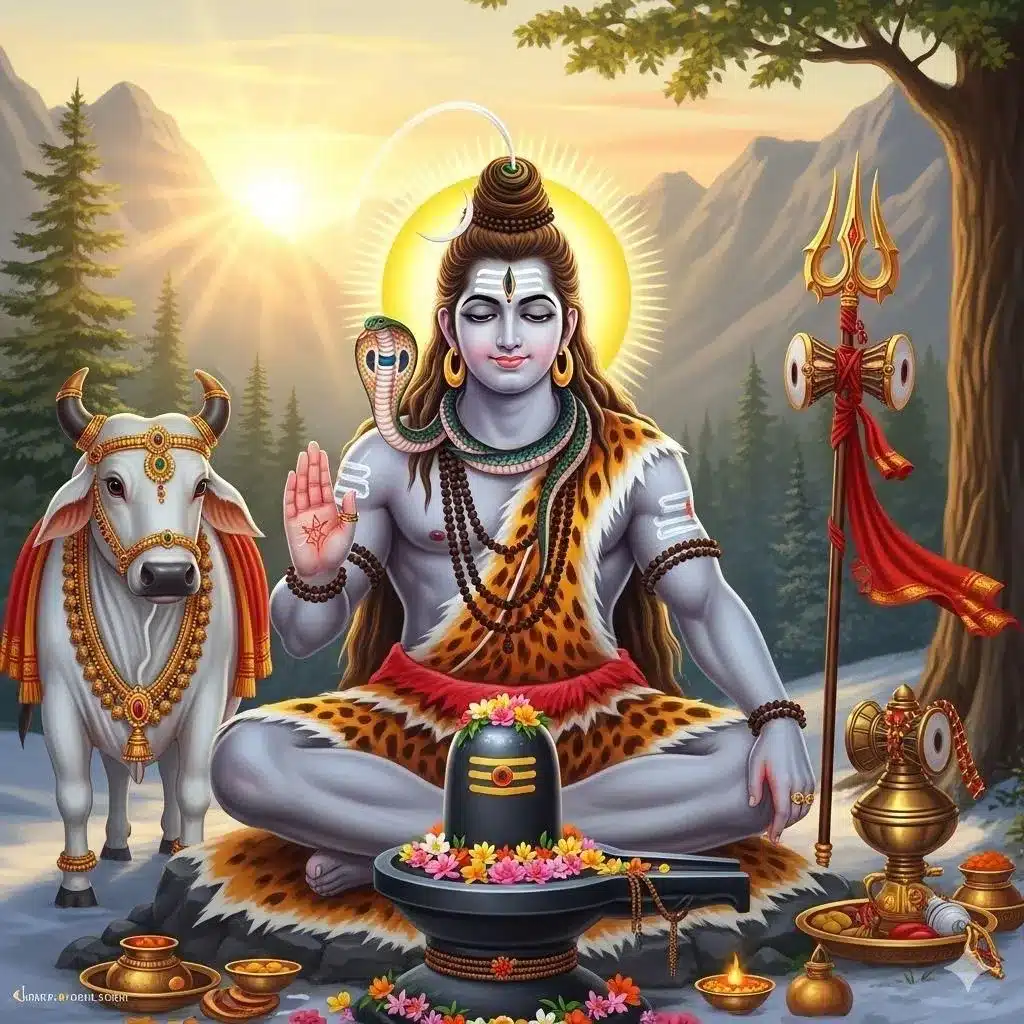
Maha Shivarathri Morning In Prasanthi Nilayam March 11, Thu, 2021: Today is Maha Shivarathri, the Holy Night Of Vigil dedicated to the Supreme Purusha, Lord Shiva. The occasion is considered auspicious as it is widely believed that all spiritual efforts summit to fulfilment on this Holy Night. Sacrosanct Prasanthi Nilayam, with its golden memories of the holy occasion in the Immediate Divine Presence, commenced the celebration this morning at 0820 hrs, shortly after the regular Rudram chanting, with a soulful composition of Shiva Stotrams.  Propitiating The Lord with the sacred chanting of Bilvashtakam, the session by the Prasanthi Bhajan Group flowed on with ‘Subah Subah Le Shiv Ka Naam…’, ‘Lingashtakam’, ‘O’ Sankar Mere Mangala Darshan De…’, ‘Sai Mahadeva Mamu Kaapadaga Raava…’, Shiva Ashtakam’, ‘Om Namah Sivaya…’, ‘Devadi Deva Sada Siva…’, concluding with ‘Jaya Sankara Siva Sankara Jai Jai Tripurari…’ With the session coming to a close, with minds-and-hearts-many filled and fulfilled, the silent refrain for the Day, Tat Pranamami SadaShivaLingam still lingered on in the Prasanthi air, a true sign of the greater auspiciousness of Prasanthi Nilayam’s ‘Sai Special’ Maha Shivarathri. Back in the Mandir, thematic festive decorations paraded all over the Sanctum Sanctorum this morning, commemorating the auspiciousness of the festivity. A sizeable assemblage of devotees attended the session, who sat in ‘SaiLence’ adhering to the prevailing safe distancing norms. The Truth is, Shiva is here in The Now, along with Shakti, very much in Prashanti Nilayam and in every bit of His creation. Maha Shivarathri heralds in that ‘Absolute Infinite Presence’, reminding man of that Everlasting OmniPresence. The session will continue this evening at 1630 hrs with holy Rudrabhishekam followed by a two-hour-long bhajan session from 1800 – 2000 hrs. Bhajans will again resume on Friday morning at 0430 hrs to end with Maha Mangala Arathi at 0600 hrs. Bhagawan’s Maha Shivarathri message will be aired at 0540 hrs this evening after the conclusion of the Rudrabhishekam.  II Samastha Lokah Sukhino Bhavantu II

Maha Shivarathri Morning In Prasanthi Nilayam Read Post »

Sathya Sai Baba spiritual path image
Love Offering Poetry

Shri Sathya Sai ‘Artificial’ or ‘Heartificial’

‘Artificial’ or ‘Heartificial’ How often Bhagawan stresses on the importance of harmony in Thought, Word and Deed, Trikaranasuddhi?!? What you think you must speak and what you speak, you must do. Read on a couple of such beautiful learning lessons at His Lotus Feet, penned by a former student at Bhagawan’s educational institutions, Sri K. Ajay, extracted from the 95th Birthday Souvenir of Sri Prasanthi Society, Hyderabad, ‘SRI SATHYA SAI – THE DIVINE COMPANION’. Let me start with a story that happened when I was a 11th grade student in Swami’s higher secondary school. It was summer vacation time and Swami was in Brindavan. Many may already know that the lotus shaped building that Swami stayed in is called ‘Trayee’. Most afternoons, after bhajans, Swami would spend time with the boys in what were aptly named, Trayee sessions. In one such session, Swami posed a question that still gives me goose bumps when I think of it: ‘Who Am I?” He asked, lovingly challenging us on an unknowable question! The boys started providing various answers. “You are Love walking on two legs”, said one. Another added, “You are the love of a 100 mothers.” Not to be outdone – and focusing the power of zeroes, another brother piped in, ‘You are the love of a 1000 mothers!” Swami kept shaking His head saying ‘no’. “You do not understand the love of one mother, how can you ever comprehend the love of a 1000! Dunapota” said Swami – The Eternal Mother. I had stayed quite through all this. Presumably the youngest in the room, I was quite intimidated by the occasion and the difficult question. But wait a minute! Something suddenly struck me and I blurted out, “Swami, you are our conscience!” In response, I got the most dazzling smile – one that could melt Mt. Everest. I will translate what He said next. “See, it has taken a young, innocent boy to finally figure it out.” I looked around me to see who He was referring to as I hardly considered myself innocent. But He carried on to pump my inner balloon of ego a bit more with more praises and I would not dare repeat. In any case, I was by then in cloud nine and extremely full of myself. But the Divine Teacher wanted to teach us something and I was merely the sacrificial lamb at the altar of profound truth. The balloon was completely burst when He used words that I try and remind myself of everyday. “If you really believe that I Am your conscience, why then do you behave so naughty?” My dear sisters, brothers, elders and children – these are immortal words of high wisdom from Bhagawan. We may or may not remember this message, but it is a fundamental truth. To only speak of myself, I fail so much in this tenet on a daily basis. Let me illustrate this with another story. When I was a student at Parthi, I had the habit of writing poems almost on a daily basis. On one beautiful autumn afternoon in Sai Kulwant Hall, I was in full flow and words were flowing out of me in beautiful alliterations, if I can say so myself. As I was putting finishing touches on this perceived masterpiece, Swami walked out of the interview room. He walked towards what we called the old students’ block, lovingly speaking with several people. I was seated right by one of the entrances to the bhajan hall. Suddenly I felt the urge to give the poem to Swami. After all, it was for Him. He came up to me and saw the sheet of folded paper in my hand and asked (in Telugu) “What is this?” . “Swami, it is a poem,” I replied handing it over to Him. “Aa? Love letter?” He asked questioningly while taking, and unfolding the paper. “No Swami, it is a poem,” I repeated lamely while He read on. After a few seconds, He looked up and said, “See, I told you; it is a love letter; you used the word love at least six times.” Amused, I kept my mouth shut. How can He ever be wrong? Swami then folded up the paper and putting it into my shirt pocket. He gently tapped on my chest and said, “Pretty words, but it has to come from inside; else, they are just empty words!” II Samastha Lokah Sukhino Bhavantu II

Shri Sathya Sai ‘Artificial’ or ‘Heartificial’ Read Post »