





Hari Om

Menu

human values

Shri Sathya Sai Baba tranquil divine temple photo
human values

Educare is True Education – By Bhagavan Sri Sathya Sai Baba

Educare Is True Education No harm can ever befall a person whose heart is full of compassion,whose words are adorned by truth,and whose body is dedicated to the welfare of others. Embodiments of Love! First and foremost, we must investigate into “panchatantra,” or the five principal aspects of education. These are as follows: 1. What is education?2. What type of education should we pursue?3. What is the main aim of education?4. What is the uniqueness of education?5. What are we gaining from present-day education? Only when we recognise the inner significance of these “panchatantra” can we know what true education is. What is education? It is of two types. The first type is collection of facts and knowledge about the external world, and sharing them with students. The second type is educare. Educare involves the deep understanding of the knowledge that springs from within and imparting it to students. But today’s education gives the students’ knowledge only about the external world. Only culture or refinement can develop good personality and not this type of education. So both education and culture are important. Today’s education is devoid of culture and is like a counterfeit coin. Even a beggar does not accept a counterfeit coin. Then how can experienced and intelligent people accept such education? So to satisfy everyone we must develop educare. Education without refinement is like a dark room. Only bats can live in dark rooms; such rooms are filthy. So, by pursuing such education devoid of culture, our hearts have become dark rooms and hence many animal qualities find their way into them. Education without culture is like a kite with a broken string. No one knows where it will fall and what damage it will cause to others. Therefore, such education does not benefit anyone. Proceed from Superficial to Practical Knowledge Only if education is blended with culture will it shine forth as true education. What is culture? It is the cultivation of discrimination between good and evil, sin and merit, and truth and untruth that we experience in our daily life. It is also removal of one’s evil thoughts, feelings and qualities, and cultivation of good thoughts, feelings and qualities. Not only this, culture makes one broad-minded by getting rid of one’s narrow-mindedness. This morning, a song “I and you are one!” was sung. Even this is also a kind of narrow-mindedness. It will be better to say, “All are one!” A celestial voice told Jesus, “All are one, my dear son, be alike to everyone!” Educare develops such broad-mindedness. Today’s education comprises only bookish knowledge. It is only superficial knowledge and it changes every moment. So we must add Educare to this bookish knowledge. Educare is practical knowledge. There are a few steps between superficial knowledge and practical knowledge. From superficial knowledge we must proceed to general knowledge. After analysing this general knowledge one gains discrimination knowledge and knows the difference between good and evil. From this discrimination knowledge we proceed to practical knowledge. This practical knowledge is changeless. True and eternal education never changes when the heart is filled with compassion; it becomes sacred and aspires for the welfare of one and all. An educated person should not have bad qualities and must not indulge in bad deeds. Today’s education imparts only bookish knowledge, which really degrades a person. How long will this bookish knowledge last? It lasts as long as we keep it in our mind. It is not possible to put bookish knowledge into practice. We fill our heads with bookish knowledge, go to the examination hall, fill our answer paper with it and return with empty heads! In effect, the head always remains empty. To acquire discrimination knowledge one requires general knowledge, which consists of ordinary cleverness and intelligence. Discrimination knowledge also has in it common sense. Both are essential for life in this world. Students and Teachers! What we need today is not bookish knowledge, though we require it to a certain extent to cope with life in this world. But what is essential to us is the knowledge of the Atma. Spiritual education is the highest education, says the Bhagavad Gita. It starts with discrimination knowledge, which is like a perennial river. In perennial rivers the quantity of water may vary but not the quality. Thus, students should understand that quality of education is more important than its quantity. Degrees are not important, but the knowledge accomplished out of education is important. What is the meaning of education? Education is not mere knowledge, it includes action too. Education that originates from within has a sound basis and is permanent. It is referred to as sathyam. A step higher than sathyam is ritam, as proclaimed in the Vedas. What we normally refer to as truth in daily life is merely a fact. Today’s education is aimed at merely eking out a livelihood. If mere living is the purpose, then how do birds and beasts live without any education? Even ants and mosquitoes, which do not have any education, live their lives. Is education for merely earning one’s bread? What is the essence of education? The essence of education is the concentration of the mind and not the collection of facts. Mere collection of facts will not serve any purpose. For example, a washerman in a village goes from house to house collecting clothes for washing. In each household the number of clothes that are given for washing is noted down in a notebook. But the washerman does not have an account. By evening he returns the clothes to the respective houses. This is general knowledge. For acquiring this general knowledge education is not necessary. Even a washerman possesses it. Many educated men lack the acumen of even a washerman. General knowledge cannot be acquired by mere study. It is learnt from the book of life. What is the end of education? People answer this question by saying there is no end to education. Definitely there is an end to what we study from books. The end of education is character. Education without character is useless. Earlier in gurukulas the sages

Educare is True Education – By Bhagavan Sri Sathya Sai Baba Read Post »
Prakriti and Paramatma
human values

Sathya Sai Baba Speaks on Education

Sathya Sai Baba Speaks on Education Sri Sathya Sai Baba is known as a world teacher. Not only did he teach and inspire millions of people on the spiritual path, he was the founder of primary, secondary and tertiary education institutions that bear his name to this day. He also addressed the importance of true education in hundreds of discourses. True education encompasses traditional secular education subjects as well as fostering realization of one’s true self. True education brings the human values integral to one’s humanity, truth, right conduct, peace, love and nonviolence into action in one’s life. Sri Sathya Sai Speaks on Education is a compilation of his teachings on many different aspects of education. Compiled by a team of Sri Sathya Sai Education teachers from the USA in 2001, the entries in this collection include Sai Baba’s explanations and advice on numerous aspects of teaching, organizing and operating schools, and, most importantly, advice to students.

Sathya Sai Baba Speaks on Education Read Post »

Shri Sathya Sai Baba inner peace
human values

Being a Good Human First

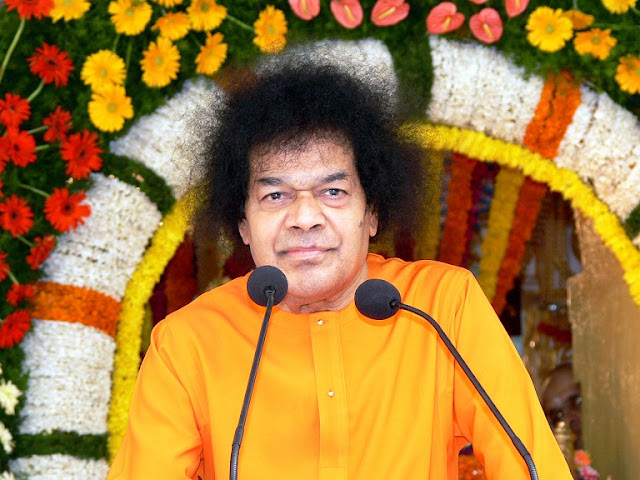
Being a Good Human First Unnoticed and unpublished until 2022, this 1981 discourse is an inspiration for all Sai Education teachers today. On August 1, 1981, in the inaugural discourse of the Overseas Bal Vikas Teachers Training Camp in Prasanthi Nilayam, the ashram of Sathya Sai Baba, Sathya Sai Baba elucidates the fundamental basis of human values in language and style clearly understood and appreciated by those fortunate teachers from outside India who were present. Ostensibly addressed to Bal Vikas (now SSE) teachers, the concepts he gave universally apply to teachers fostering the emergence of human values in thought, word and deed in students in all Sai Education programs whether one teaches in Sai Spiritual Education (SSE), Sathya Sai Education in Human Values (SSEHV), Sathya Sai Schools, or Institutes of Sathya Sai Education (ISSE). Entitled “Humanness in Man”, the discourse is translated on the dais with clear diction and pronunciation by Professor N. Kasturi, Sai Baba’s chosen biographer. In the early 1980s videotaping of discourses had not yet begun. Fortunately, the audio recording of this discourse remains for all to hear Sathya Sai Baba’s melodious voice in this video presentation of seven parts. The images in the videos are from Sathya Sai Baba’s visit to the Poornachandra Auditorium in Prasanthi Nilayam to inaugurate the World Education Conference Exhibition of July 20, 2008.

Being a Good Human First Read Post »

Bhagwan Shri Sathya Sai Baba spiritual energy
human values

Sri Sathya Sai Education in Human Values

Sri Sathya Sai Education in Human Values The Sathya Sai Education in Human Values program (SSEHV) fosters the emergence of the five human values espoused by Sri Sathya Sai Baba: Truth, Right Conduct, Peace, Love and Nonviolence. These values are inherent in human beings. Through the process of educare, teachers guide students to bring out their innate human values into thought, word and deed. SSEHV community-based programs for children and adults are provided free by 28 Institutes of Sathya Sai Education around the world. SSEHV programs do not focus on any one spiritual leader or any one religion. Descriptions and locations of SSEHV programs can be found in the SSEHV Global Compendium. Sri Sathya Sai Baba has spoken frequently about human values. His statements about human values can be found in The Supreme End of Education. Here are two examples: Of what use is human birth if human values are absent? From head to foot, man is filled with anger today. He has become like an animal. Even an animal is better than man. An animal has a reason and season. Today man has no reason and no season. If you behave in this manner, how can you call yourself a human? To call yourself a human, first and foremost show humanness in action. Just because you have a human body, you cannot call yourself a human. The human body will have value only when you cultivate human values, namely, sathya (truth), dharma (righteousness), santhi (peace), prema (love) and ahimsa (non-violence). Of what use is human birth if human values are absent? First demonstrate humanness. Develop love. By doing so, all will become your friends. What kind of friends? Those who are full of love. Your real friend is only God. God is love personified. He is full of love. Sri Sathya Sai Baba, June 01, 2001 When the principles are properly explained, everyone will accept them We feel that some countries are not amenable to accept these values. What is the reason? When the principles are properly explained, everyone will accept them. Parrot-like repetition of the words “Human Values” will not result in understanding. When the inner significance is explained, everyone will accept them. Tell them—Truth is God, Love is God, live in love. When explained thus, everyone will accept. Will anybody say `no,’ to speak truth? Everyone has to accept the validity of these assertions. When you explain in detail the inner significance, humanity will accept it without reservation. No matter whether it is India, America, Japan or Germany or Christian or Muslim; Truth is only one for all. Truth is one, Truth is God. You should attain this sacred state. This fact has to be accepted by any nation. We in India say 2+2=4. Whether Pakistan or anywhere else, this will be the same. Is there any one in Pakistan who will say 2+2=3? Will the Chinese say 2+2=1? All will say 2+2=4. This is fundamental truth. It is a pure truth. It is beyond time and place. It is in the same way that eternal values of Truth, Peace, Righteousness, Love and Non-violence are permanent and eternal. People come to Me and say, “Swami, I want peace.” Where is that peace? They don’t know. I tell them, “You are the embodiment of peace. There is no peace outside you, outside there are only pieces!” When this is explained, they realize the truth and actually attain peace. Sri Sathya Sai Baba, September 29, 2000

Sri Sathya Sai Education in Human Values Read Post »

Shri Sathya Sai Baba raised hand blessing image photo
human values

Education System – The World Teacher

Education System – The World Teacher Sathya Sai Education in Human Values fulfils the ultimate mission of education. He, who has inspired this educational programme, Sri Sathya Sai Baba, goes directly to the essence of the institution of education and its role in human civilization, as he does with other social institutions and, indeed, with human life itself. He distinguishes between, “the really real and the relatively real”, between the universal and the parochial, between that which is lasting and that which is transient. Front Matter Chapter – 1 The history and philosophy of Sathya Sai Education  Chapter 2. The Sathya Sai education system Chapter 3. Non-fomal and informal education programs Chapter 4. Formal education programmes and institutions Chapter 5. Sri Sathya Sai University Chapter 6. Educational standards and quality assurance Chapter 7. International cooperation and exchange programmes Chapter 8. Achievements of Sathya Sai education Chapter 9. Future perspectives Chapter 10. Towards a new educational order Appendices Index

Education System – The World Teacher Read Post »

Bhagwan Shri Sathya Sai Baba spiritual wisdom image
human values

Education and Culture

Education and Culture by Bhagavan Sri Sathya Sai Baba STUDENTS, teachers and educators! What do you mean by education? What type of education should you have? What kind of education will set an ideal? What is the outcome of education? One must enquire deeply, investigate and get the right answer to these questions. People feel that education helps in materialistic pursuits and rest content with this. This is a not a right attitude. Education should promote culture. It is not by education alone but by culture that one gets refined. Culture promotes refinement. It is termed as saṃskāra which consists of sadguña (good character), sadāchāra (good practices) and sadbhāvanā (good feelings). For a person to be deemed educated, his behaviour should be good, his actions useful to society and his feelings should be compassionate and kind. “Sarvabhūta Hite Ratah” (One should have concern for the welfare of all beings). What is education without culture? It is not enough if a student is endowed with scientific and worldly knowledge. He should have essentially moral and spiritual knowledge also. The aim of education should be to bring about an all-round development of the personalities of the students. Education should make all virtues emerge and shine forth in students. Indian culture essentially aims at developing human beings with such a personality. What is education without culture? It is like a kite cut off from its main thread. It is not possible to predict where this kite would land–whether on thorny bushes or on dwelling places. It is difficult to predict how such education is going to affect and harm society. It may also be compared to a house without light; bats and poisonous reptiles enter into such houses. Education without culture makes man forget his true human nature and take to evil ways. Such education is like a counterfeit coin. Even beggars refuse to accept a counterfeit coin. Even parents would hesitate to love a son without culture. Refinement and culture are the very life-breath of human life. Knowledge with humility makes one blossom It would be wrong to call it education if it merely teaches the meanings of words. The basic aim of education is to make men of character and virtue. Many people think that knowledge is power. It is not so. In fact, character is power. Education should confer humility Education without humility, action without discrimination, scholarship without wisdom, words without truth, friendship without gratitude, music without melody, politics without morality and integrity can never shine in society. One’s personality blossoms only when one has humility along with knowledge. Education should be useful to society. It should make citizens follow the path of morality and righteousness and make their lives happy. Human life is very sacred and valuable. Today people are not aware of the uniqueness of human life. They have forgotten human values. That is the reason why one comes across various agitations and strikes in society today What is the reason for the country getting poverty-stricken, for suffering from fear and anxiety, for not recognizing the sacredness of spirituality, for losing morality and integrity? The reason is that man is not living as a human amidst his fellow beings. He is living like an animal or like a demon. Today, the cloud of ego and pomp is covering the sun of Atma and hiding its natural splendour. Selfishness is rampant. The true meaning of word swārtha is that one has to know swa (Atma). Understanding the swa is swārtham (swa+artha). The syllable swa in swārtham does not refer to the body; but the soul. The Atma is pure, unselfish and eternal. That was the reason why the ancient rishis described the Atma in such glorious terms, but today man is misunderstanding the meaning of the word swa, identifying it with the body instead of the soul. Man today is treating the body as the source of all happiness. Such happiness is not true and permanent; it is momentary. Educated persons are not striving to earn spiritual, permanent and real happiness. We need a fusion of knowledge and action We are acquiring knowledge, but do not put it to proper use. Knowledge without action is useless. Action without knowledge is foolishness. There is a divorce between knowledge and action today We need a fusion of knowledge and action. Students should cultivate patriotism and a spirit of service. It is conspicuously absent today. In India today there are 200 Universities and 9000 colleges. About a crore of students have been enrolled in these colleges. Universities are becoming factories which manufacture graduates. These students are let loose on the world after graduation. No one is bothered about the future of these graduates and how they will benefit the nation. What is the use of having education which does not benefit society? No one seems to bother to examine all these matters, whether Government, society, educational authorities, Vice- Chancellors or other administrators, etc. This is a sad state, which ails the system of education today. It is making man a slave of the senses. How can such people serve the society? Wherever you look at the students you find sacrifice conspicuous by its absence. Universities are busy developing different types of subjects to be taught, but are not aware of the real subject which they should reach. What is that subject which is the very basis of all other subjects? Atma-vidyā (spiritual knowledge), is the basis of all education. It is like the ocean while all other types of education are like rivers which must merge in the ocean. Today, education without a spiritual base is causing harm. The essence of Spiritual Education is faith and dedication. They are like the two bunds of a river. Only when the river of life flows between these bunds would the river be safe. If there are no bunds, the waters would flow over villages and towns and cause vast destruction. It is the absence of spirituality which is responsible for all the problems, violence, agitation and strike. Education should foster the two bunds of dedication and faith in students. From self-reliance to self-realisation Education should inculcate in students the spirit of self-reliance and self-confidence. The first thing in

Education and Culture Read Post »