Hari Om

Menu

Glory Beyond Borders

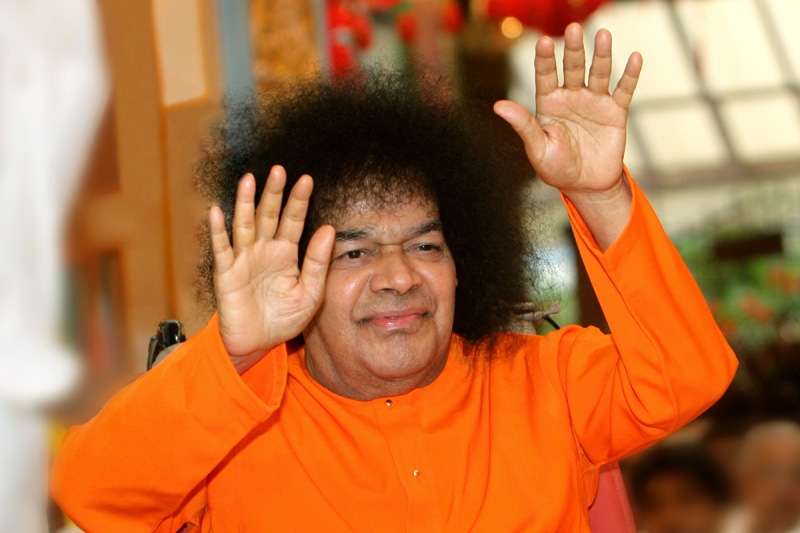
Shri Sathya Sai Baba Smiling Spiritual Portrait Image
Glory Beyond Borders

Regional Conference poses challenge of Unity

Regional Conference poses challenge of Unity Sairam Friends. Baba’s love and blessings to you. Happy spring! Each year Spring means that we will soon see our Sai friends and family at our annual conference. We look forward to the satsang, the singing, and the workshops where we learn to apply different aspects of His teachings to our lives. We look forward to sharing with one another our stories of His Divine interventions. Our retreat planning committee members are hard at work. They plan to make this year’s conference one of the best. Your center will soon receive its invitation from the committee describing this year’s program. Our speakers are Mr. Dave Lambert, of the U.S. Sathya Sai Council, and   Mr. Michael McCarthy, a long-time devotee.  Our theme this year is: ALL PATHS LEAD TO GOD; UNITY—A DIVINE CHALLENGE. What a rallying call! Are you up to the Divine challenge? Are you ready for unity? Old timers, after knowing Baba for so many years, are you still clinging to differences based on outer rituals or appearances? New-timers, are you ready to commit yourselves to tolerance, understanding, and peace? Then come, see, learn and share. One year in Puttaparthi, Baba told us, “If you want a vacation, go to the Riviera. If you want spirituality, come to Prasanthi.” The same discipline applies to our conferences. If you want just a weekend in the country, or if you have a private program, then there are plenty of vacation resorts. If you wish to participate in a vibrant, joyous spiritual program, then come join your Sai brothers and sisters at the Bryn Mawr Camp. We are a very blessed group of people. We share in the sport of the Avatar of the Kali age. Baba pours His love and His teachings on mankind. Are you able to see His unity in all of His Divine diversity? Come, see, learn and share at the Bryn Mawr Camp on Memorial Day weekend (register early for the “early bird” discount). See you there. Sai Ram Anne Sohani, President, Mid-Atlantic Region

Regional Conference poses challenge of Unity Read Post »

Sathya Sai Baba compassion image
Glory Beyond Borders

Members Study Swami’s Teachings at Regional Conference

Members Study Swami’s Teachings at Regional Conference In study circles and workshops at the Mid-Atlantic Sai Conference, members explored, debated, and reflected on the application of Sai’s teachings in various situations. Below are some thoughts that were shared within these groups. How Swami’s Teachings Can Help Us Deal with Difficult People in Our Daily Lives Family and work are divine opportunities for learning to deal with others. We have to develop the inner vision of the soul instead of seeing only the outer. Baba says names and forms are different naturally, but they are all aspects of the ONE. He urges us to serve all as His images. Robert M. Bramson, in his book, Coping with Difficult People, describes seven types of difficult people: 1) Hostile-aggressives, who bully their way around; 2) Complainers, who don’t improve their situation; 3) Silent and unresponsives; 4) Super-agreeables, who don’t produce what they promise; 5) Negativists, who object to any project proposed; 6) Know-it-all experts; and 7) lndecisives, who are always waiting for the perfect answer. To these, the facilitator added an eighth category, the controlling-manipulatives. Participants made many practical suggestions for dealing with difficult people. You can see Baba in their heart, pray to Him, or use mantras. Recognizing each incident as Swami’s leela (play) and looking at the situation as a lesson are also helpful. Other ideas included countering hostility with humor, focusing on the positive, and following your heart, even if that means giving back a negative signal. But no matter what the method used, it’s important to avoid getting caught up in the difficult person’s emotions and to accept where he or she is at. Baba says that “when someone insults you or defames you or ignores you, accept it with a smile. This is the way of the world: it is basically ungrateful, ill-mannered. ‘They are doing me a good turn; my strength is under trial; I should not yield to anger or resentment! Tell yourself such invigorating things, and be quiet, with a smile of triumph on your lips,” He says. A basic change in outlook is essential in dealing with difficult people. If you see negative traits in others, they are reflections of what is going on inside of you. It’ s the way you are looking at others. Don’t ask, how can I fix all that up? Nothing anyone is going through is your business. And don’t be upset if people don’t act up to your expectations. As one of the participants noted, “You can’t transform the other person; you can only change yourself. Transforming them—that’s Swami’s job.” They are doing the very best they can at this moment. So, receive what they give with love. Develop forbearance. Baba says, “Only when we are able to develop the feeling that we are all children of God, that we are all one brotherhood and that really none is apart and alien to us, will the flower of forbearance blossom in our heart. Only when there is love, will there be forbearance. Forbearance is but the result of love and compassion towards all beings.” How to Cultivate Devotion Starting with the devotional song “Sai Bhajan Bina Sukha Shanti Nahi” and its explanation, the facilitator said: “Without singing bhajans (devotional songs), there is no peace or happiness. Without God’s name, there is no bliss. Without love and devotion, there is no upliftment. And without serving the Master, there is no liberation.” Baba says that bhakti, or devotion, is the supreme single-pointed love for the Lord. In this state of mind, the devotee has no separate existence apart from God. The two types of bhakti are saguna bhakti, in which you think of God as far away and plead for His mercy, and nirguna bhakti, in which you see God in all beings and experience unity with all creation. The Upanishads (Hindu scriptures) prescribe nine steps in devotion: 1) describing God’s actions; 2) singing about the Lord; 3) allowing the mind to dwell on the glory of God; 4) adoring the feet of the Lord; 5) worshipping the Lord in a systematic ritualistic way; 6) experiencing gratitude and joy at the Lord’s grace; 7] feeling like His instrument and devotedly serving all; 8) thinking of the Lord as a friend; 9) surrendering totally to God. You can also express devotion by constantly practicing equanimity, loving the Lord as a mother loves a child, and fostering the quality of love within. But any expression of devotion has to be guided and controlled by discipline. Only then can you realize the goal—liberation. According to the Vedas (Hindu scriptures), liberation is a three-stage process. First the devotee is drawn to physical experiences, such as idol worship, repetition of God’s name, visits to holy places, and service. Then, by controlling the senses and cleansing the mind of impure thoughts, the devotee becomes aware of the atma (individual soul) within. Finally, through deep inquiry into the reality of the inner self, he or she realizes that there is no difference between the atma and the Paramatma (the Absolute). Baba says that everything in a devotee’s life must revolve around God. ‘”Whatever you do, wherever you are placed,” He says, “believe that God has put you there to work; then it becomes an education, a sadhana (spiritual discipline). Every day, with every act, every thought, every word, you must approach nearer and nearer to God. That will give you the super most bliss. That will confer true liberation.” Spirituality Through the Native American Tradition Native Americans are often called the caretakers of the Earth because of their communion with, and great respect for, nature. They believe that everything in nature is in constant prayer—such as the grass and the tree branches that grow up, reaching to the heavens. They also accept nature as their teacher, learning from animals, plants, the four winds, and whatever else is around them, as Baba encourages us all to do. The facilitator of this workshop was a pipe carrier in the tradition of the Huichol tribe of Mexico. In that culture, the pipe is one of the most sacred objects on Earth. being a direct contact to universal energy. Each part of

Members Study Swami’s Teachings at Regional Conference Read Post »

Bhagwan Shri Sathya Sai Baba faith
Glory Beyond Borders

Panel Discussion on All Paths Lead to God

Panel Discussion on All Paths Lead to God Six faiths are represented on Swami’s Sarva Dharma symbol, and to explore how all these religions lead to God, a member of each faith spoke at a panel discussion at the Mid-Atlantic Regional Sai Conference this summer. Regrettably, space limitations prevent us from reprinting their entire talks, but we hope that the following edited excerpts will convey a sense of the many paths through which God leads us to Him. “Let different faiths exist. Let them flourish; let the glory of God be sung in all languages and in a variety of forms. I have not come to defend any sect; I have not come to collect any followers. I have come to tell you about the unity of faiths… Worship Me in the symbols and images which remind you of Me.”             ~Sathya Sai Baba HINDUISM Ananth Raman The father told the son, “Bring me the fruit of the banyan tree.” The son said, “Father, here is the fruit of the banyan tree.” The father told the son, “Break the fruit.” The son said, “Father, it is broken.” The father asked the son, “What do you see?” The son replied, “Sir, I see seeds.” The father told the son, “Break the seed.” The son broke the seed. The father asked the son, “What do you see?” The son said, “Father, I see nothing.” The father said, “That subtle essence that you do not see, there is the whole essence of which the banyan tree is made. It is the Truth, it is the Self, and thou art it.” This is the first of the four basic truths on which Hinduism is built: Tat Twam Asi (Thou art that), Pragnam Brahmam (The highest wisdom is You), I am Atma Brahmam (This You is Brahmam), and Aham Brahmasmi (I am Brahmam). Hinduism basically says that Brahmam alone is real; everything in the world is unreal. Every atom in a human being is a bundle of total energy expressing Divine Will. Matter and energy are indivisible, and they are all part of the Divine Will. It is this Divine Will that circulates through every pore of the human being; and the purpose of human existence is to reach that ultimate level of consciousness. In Sai, God became man so that man could become God by becoming aware of this Divinity. When Sai addresses us as Divyaatma Swaroopa (Embodiments of the Divine Soul), Prema Swaroopa (Embodiments of Love), and Ananda Swaroopa (Embodiments of Bliss), He is, in fact, reminding us of the Divinity in each of us. He brings about this process gradually. He first asks us to experience “I am in the light.” Then He raises us to the next stage, “The light is in me.” Finally, He raises us to the true non-dualistic stage, “I am the light.” A devotee once asked Baba, “Baba, I listen very carefully and intently for Your direction whenever I have a problem, but I don’t seem to hear Your voice.” Baba replied, “When you are attuned to Me, your voice is My voice.” Sai constantly addresses this problem of unity, universality, and Divinity. He says, “Sai has come in order to achieve the supreme task of uniting us as one family—the entire mankind to the bond of brotherhood by offering and utilizing the Atmic Reality in each one in order to reveal the Divine, which is the basis on which the entire cosmos exists, and instructing all to recognize the common Divine heritage that binds man to man. All men are of one lineage. All … is part of one organism. Learn to live as man.” This is sadhana (spiritual practice). A few years ago, the theme of this very conference was conceptualized beautifully when Baba sang in His mellifluous voice in the Poornachandra auditorium: Sarva Roop Dharma ShantamSarva Namadharam ShivamSatchidanand Roopam AdvaitamSathyam, Shivam, Sundaram I am all Yours, ascribed to the AlmightyI am the Embodiment of Perfect PeaceI am Known by all means through whichthe Almighty is addressed…and adoredby menI am the embodiment of goodnessI am Being, AwarenessBliss, Atma, One without a secondTruth, Goodness, Beauty. Sai constantly addresses this problem of unity, universality, and Divinity. He says, “Sai has come in order to achieve the supreme task of uniting us as one family—the entire mankind to the bond of brotherhood by offering and utilizing the Atmic Reality in each one in order to reveal the Divine, which is the basis on which the entire cosmos exists, and instructing all to recognize the common Divine heritage that binds man to man. All men are of one lineage. All…is part of one organism. Learn to live as man.” This is sadhana (spiritual practice). BUDDHISM Genzo Makino I had been a Buddhist monk for 16 years, going from home to home asking for alms to support my master’s family. My master became an alcoholic, and even though I had vowed to follow him all the way, I could not do so any longer. I began to study Buddhist scriptures, which, it is said, number about 84,000. The more I read, the more I wanted to know what Buddha really taught when He was alive. I prayed every night to Lord Buddha, “Please lead me to your original Truth.” Shortly after that, I came across a Sathya Sai Baba book, Bhagwatha Vahini. My master had told me that at the age of 40, I would meet an Embodiment of God, and through Him I would attain liberation. I didn’t quite believe him at the time. I said goodbye to my master and came to New York. I wasn’t sure which way I was going, but then I met a devotee who gave me Sai Baba books. Soon I found myself in Puttaparthi and was called in by Baba for an interview. “What are you doing?” He asked me. I said that I wasn’t doing anything but that I used to be a disciple of this master for 16 years. Baba said, “All paths lead to the same God.” I had a lot of questions, but that one


Panel Discussion on All Paths Lead to God Read Post »

Sathya Sai Baba compassion
Glory Beyond Borders

Young Adults Corner

Young Adults Corner In addition to the knowledge derived from the sacred texts, one should gain wisdom through experience. Knowledge without personal experience is futile. Wisdom lodged within us will be of no avail if it is static. ~ Baba When we are very young, we only experience life, we do not analyze it. As we grow older, our intellect begins to gain understanding of these experiences and we begin to integrate the lessons in our lives. We offer this column as an opportunity to young adults to share their experiences, realize how life is the greatest teacher, and show how Swami’s teachings have helped them. We also hope that the process of writing will enable them to integrate these experiences into their daily life. A Journey to God Varsha Ghayal Swami has often said, “Young people should cultivate Divine feelings and qualities, participate in sacred activities and lead a life of exemplary excellence.” “Well, how does one go about doing this?”, I asked myself. As a first-year college student, living away from home and Sai center, I was feeling devoid of these Divine feelings and lacked participation in sacred activities. I felt as though I had fallen into an abyss of materialism and delusion. I did not have the energy and motivation to pull myself out of this bottomless pit and was utterly confused as to what I should do. However, Swami, Our Beloved, Merciful Bhagavan, cultivated a tremendous desire in me to see Him, to be a student of His…to attend the Summer Showers in Brindavan. This desire was so strong that I prayed fervently to Swami to allow me to attend the Summer Course, to change into a more devoted spiritual aspirant and to live as an example of His teachings. I went through the necessary application procedures for the summer course, was selected as one of the twelve privileged girls and made all the appropriate preparations for the trip, only to find out that the Dearest Swami had canceled the summer course one week prior to our departure. As I learned of this sad news, many thoughts ran through my mind. How will I survive another year of college without seeing Swami? How will I learn to conduct myself in an exemplary manner? But most upsetting was the thought that I would not have the golden opportunity to be a student of Baba. Fortunately, all the girls in the group had tremendous enthusiasm and determination to make the trip despite the cancellation. And Swami guided and helped through the entire trip. We made our own summer course which included seva in the canteen, study circles on Summer Showers 1993, lectures given by various renowned speakers and Divine discourses by our Beloved Bhagavan. Through this we learned tremendous, invaluable amounts of information on Indian Culture and Spirituality. One of the most important lessons was the Unity in Diversity. Swami had given permission to a group from Malaysia to attend the Divine discourses, but when they tried to attend that evening, they were not permitted to enter. They realized that Swami gave permission not only to them, but to us, the American girls, as well, for we had come for the same purpose. From then on, we all prayed together, as one, that Swami would allow us to listen to the Divine discourses and give us an interview. Both of these occurred, due to our unity. We began to see our two groups as one group of students, who have come for the same purpose—spiritual upliftment. Throughout the trip, Swami, by various means, kept emphasizing the power of our thoughts. 0ur whole life rests on the power of our mind. “We sow the seed of thought and reap the fruit of action; we sow the seed of action and reap the fruit of nature; we sow the seed of nature and reap the fruit of character; we sow the seed of character and reap the fruit of destiny. It is evident from this that our destiny rests on our thoughts.” But how do we control our thoughts to be pure ones, I questioned. It is so difficult to always have good thoughts. What do you do when a bad thought comes to mind? My answer came from one of the Malaysian girls. She said you must uproot any negative thought in your mind and replace it with a good one. You are the only one who can do this. No one is going to remind you to stop having bad thoughts. Then Swami, during our second interview, also demonstrated a method to keep our thoughts pure. When you are angry, say, ‘I am man, I am not dog’. When the mind wavers, say, ‘I am man, I am not monkey.’ Repeat this ten times and your mind will be free of these thoughts.” I tried this technique on several occasions and was quite successful. I learned another important lesson when reading the book Summer Showers 1993. Swami says, “Students should press forward with patience in spite of stress and strain, the trial and the tribulation which they have to undergo. It is hard in the beginning to move forward, but as you press forward, it becomes natural for you to make your journey towards God.” This passage touched me especially, since the past semester of college was full of stress. I would become nervous, impatient, instead of maintaining patience and peace of mind. Even after learning all this and trying to put it into practice, I was still left unsatisfied. I saw the Anantpur college girls and the college boys on a daily basis and desired to be Swami’s student. But without admission to a Sai Institute or the Summer Showers course this would be impossible. Then one day Swami answered my yearning through a guest speaker. He said, “Swami’s student is not one who studies in Swami’s institute, but one who is a student of spirituality …. One who puts Swami’s teachings into practice”. Jai Sai Ram


Young Adults Corner Read Post »

Sathya Sai Baba divine message
Glory Beyond Borders

It Always Works

It Always Works Once a month, the Sai Baba Center of Manhattan takes responsibility for the soup kitchen at the Cathedral of St. John the Divine in New York City and feeds nearly 300 people. Our fearless leader, June, manages the proceedings with great aplomb. Since I started coming a couple of years ago, there have never been any incidents or noteworthy events of any kind, except for our feeding last month. It was nearing the end of the day. Our service had gone smoothly. People at the second sitting were finishing their meal and about ready to leave when some generous donor brought additional quantities of food into the kitchen. It was chicken with rice and gravy. The quantity wasn’t enough for everybody, but we did not want it to go to Waste. We decided to pack individual servings in styrofoam containers with the intention of handing them out to some of the people as they departed. We brought the food in containers to the main exit. It soon became apparent to the people that there were just a limited number of containers and not everyone was going to get one. The crowd congregating by the door started to get angry and the atmosphere was, to say the least, tense. The tension escalated and a fight broke out between two of the men. June and I were standing and watching from the entrance to the kitchen. June, seemingly oblivious to my presence, started saying, slowly and deliberately, “Swami, disperse the crowd. Okay, Swami, disperse the crowd.” Before she had even finished the second plea, instantaneously, a thin mist of grace (a phenomenon I have often witnessed during darshan, in Puttaparthi, when Swami blesses devotees) descended on the crowd. The fight stopped, the tension disappeared and everyone Walked calmly and peacefully out the door. I turned to June, expecting to see an expression of utter amazement (and, perhaps, a little pride) but she turned and walked into the kitchen to finish her chores as if nothing out of the ordinary had happened. Since June has known Baba about 20 years, I thought, maybe she takes these things for granted. I am, however, still left dumbfounded by such incidents, having known Baba for only three years. And, sure enough, when I mentioned this incident to her the next time we met, she was rather amused that I was in such awe. She said, “It always works! If there is, say, a baby crying on the plane and it’s bothering me, I pray to Swami and send the child light. It always works!” ~Richard Margolin


It Always Works Read Post »

Shri Sathya Sai Baba Compassionate Blessing Portrait Image
Glory Beyond Borders

Children Move Audience to Standing Ovation and Tears

Children Move Audience to Standing Ovation and Tears In First Regional Play “Harriet Tubman” In the grand finale, about 100 Bal Vikas students representing nearly all Sai Baba Centers in the Mid-Atlantic Region stood on the stage at Camp Akiba, clapping and singing from their hearts, “Come on up, I have a lifeline. Come on up to this train of mine.” With their arms stretched high, they concluded the song, “Come on up!” There was an electrifying silence as the energy of love poured out from the children to more than 600 people in the room. Then came a standing ovation from the audience and they cheered loudly, “Om Sai Ram! Om Sai Ram.” The joy we all felt will never be forgotten. At that moment we are all one. In February 1995, Bernice Mead, our National Bal Vikas Coordinator, sent me a letter asking that our region write and produce a play based on an American folk hero, to be presented to Swami on His 70th birthday. We Chose Harriet Tubman, a slave born in the United States in the early 1800s. She risked her life to help slaves from the South escape to the North. She had a deep and sincere love for the faith in God and her fellow men. Throughout her life, Harriet exemplified the values of courage, determination and selflessness, all values that Swami teaches us. She also acted on her conviction and belief that all men should be free, and thus she practiced unity of thought, word, and deed. The Bal Vikas students exemplified the same values in preparing the play. A core group of 23 students attended two practices prior to the retreat. Then at the retreat, they joined 77 other students and persevered through hours of work on positioning, choreography, lines, and songs. This required patience, courage, selflessness and love for Swami. Sai Baba says that children should study the lives of great people so that they too can strive for excellence. He also says, “The hearts and minds of the children are very tender, and what is taught to them at this tender age will get imprinted on their hearts and will form the foundation of their later life. These young children have certain capacities which will not be possessed by grownups. In their tender hearts and minds, there is the potentiality by which we can make them go close to God with such devotion and attachment that you will not find paralleled in grownups.” Indeed, everyone was moved by the love and devotion they felt coming from the Bal Vikas Students’ The Play was a miracle of Swami’s. It was only on the actual day of the performance that we went the entire play for the first time. The last scene was changed at the last minute. In my years of knowing Baba and serving Him, l have learned that last-minute changes are His way of taking over the directing. This change was dramatic and exactly what was needed in the play. “Why fear when I am here?” He asks us. It would be easy to get entangled in all the worries of what can go wrong. During our last practice run of the play two of our key people were lying down, not feeling well. Yet through it all, the most amazing thing was that everyone had a deep conviction that we were doing our best and that Swami would take over in the end. And He did!! Swami says, “Cooperation, not operation.” It was the cooperative effort of so many Sai devotees in the region, professionals in their own fields, that made this play so outstanding. I would like to acknowledge with gratitude the work of all Bal Vikas coordinators, organizers, and assistants who worked with children, without whom the play would not have been possible; those who helped me write the play and who gave advice and support; the artists who spent many hours making the most incredible sets our region has seen (their sets brought cheers from the audience); the guitarist and singers and trainers; those who did stage management and the stage hands who were so busy moving sets on and off the stage as the children sang; the videotaping crew; those who designed and made costumes; and the incredible work of the sound man—for the first time at a regional cultural program, people in the back of the large hall could hear the children speak. My thanks also to our regional officers who helped with publicity, and to Bal Vikas parents who gave selflessly of their time and energy to bring the children to practices and to make their costumes. The Bal Vikas students themselves are to be congratulated for a magnificent performance. It is they who brought alive the inspiring life of Harriet Tubman. They spoke and sang with such love and devotion that the audience was moved to tears. We are all grateful to our beloved Lord Sri Sathya Sai Baba, who was the true director of the play and who is also the director of the play of our lives. Sai Ram! ~Cathy DaubBal Vikas Coordinator of the Mid-Atlantic Region

Children Move Audience to Standing Ovation and Tears Read Post »

Shri Sathya Sai Baba universal brotherhood image.
Glory Beyond Borders

Places Hold Vibrations

Places Hold Vibrations “Follow winding road to the next Pocono Picnic Company sign and make a right onto Camp Akiba Road ….” These were the directions to the 20th Annual Regional Conference of the Sri Sathya Sai Baba Organization of the Mid-Atlantic Region in the United States. The conference began on Friday, May 26, and ended on Monday, May 29, 1995. Camp Akiba was named for Rabbi Akiba, who lived in the belief that everything God does is for the best, even though at the time it may seem like one catastrophe after another. He was a renowned teacher and was deeply loved. When the Mid-Atlantic Region called the Pocono Picnic Company to arrange the conference, another group was already scheduled. The owners offered to see if the group would rearrange its dates. After a number of months and a series of miscommunications, it was concluded that the camp would not be available. As another site was being investigated, one member of the planning team went to Prasanthi Nilayam. The day he arrived, there was a message on his answering machine back in the U.S. saying that the owners could accommodate the Sai group. It would seem that Swami had a hand in this decision. On the first day, there were the usual challenges of registration, with additional ones being thrown at the seva dals and officers working with the camp owners. The latter were constantly changing what they wanted from the Sai group, putting out more demands while backing down from their own commitments. Their behavior seemed to indicate a belief that people would take material advantage of them, so a good offense was the best defense. The building for registration was not available when originally promised, so delaying the process for hours. The land they were to till for the seeding of the butterfly garden was not ready. Yet the flowers they had asked us to plant were waiting there, all 4,300 of them! To aggravate things further, the cabins and toilets did not meet our standards for cleanliness. One wise seva dal sighed and then reflected, there was a reason Swami wanted us to be at this particular camp. Four different coupon collecting systems were tried at the dining halls for as many meals. The original agreement for counting was no longer acceptable to the owners. An atmosphere of tension existed at the doors, with everyone anxious to begin eating. On Saturday evening when the final ticket system was introduced on the women’s side, two additional seva dals were watching along with the owner and his employee. These additional people were an indication of how little trust existed at this time between the owners and the Sai Organization. The seva dals taking tickets felt the need to change the atmosphere. One began saying, “Sai Ram” to everyone, and the other called on Swami, asking, “What do You want me to do?” She saw Him, with her inner eye, standing at the side of the line. He told her to smile and welcome people into the dining hall, and not to worry about the tickets. So, she too said, “Sai Ram, Sai Ram.” The atmosphere was becoming more relaxed. Another glitch: The stage curtain once closed would not reopen! When the children’s play was to begin on Sunday evening, it was delayed as an eight-foot ladder was brought in to open the curtain. It seemed like all the other frustrations could be accepted with resignation, but when it came to the children, everyone wanted the best for them. The costumes, the script, the songs, the scenery, the rehearsals, all were to support the children learning human values. In some ways, the whole retreat seemed a vehicle for this Bal Vikas play. It was an example of what the region could accomplish when it pulled together in a group effort. The audience reacted with smiles and tears, giving the children a standing ovation. On Monday morning at breakfast, there were only two people present to take tickets on the women’s side: the owner and the seva dal. Once again, this seva dal greeted people with, “Sai Ram, Sai Ram.” Then, Swami’s leela (Divine play), the owner did the same! He had awakened that morning humming a bhajan and now he realized he liked the feeling of saying, “Sai Ram” and seeing people smile. Someone had given his wife a book on Sai Baba, which she had left at the camp. She called her husband that morning, reminding him to bring the book home. She wanted so much to read it. Later, one of the speakers shared her experience of Swami. Her childhood was one of physical and emotional abuse, broken homes, running away, and teenage years of drug and sexual overdoses in the glittering, yet empty, lifestyle of the rich and destitute in Hollywood, California. Many in the audience were touched, even as they were uncomfortable absorbing the reality of her life. She shared how Sai Baba helped her transform into the person we saw. It became obvious what finding God can mean in a troubled youth’s life, a young life where human values of self-worth and dignity had not been taught. Swami’s leela was standing before us, showing that help is available, even when hope seems impossible. And a final piece! An employee mentioned that soon 300 disadvantaged children would be coming to the camp. These children do not have the same opportunity that the Bal Vikas students do to learn human values. The regional play was about Harriet Tubman, who worked to free slaves in the United States in the 1850s. Poverty is a very real threat to freedom and human values in the United States in 1995. Equally threatening is material wealth without love and respect for each other. Why was the Mid-Atlantic Region to meet at this site? Sai Baba says that places hold vibrations from the thoughts of people who have been there. Perhaps we were there to help these children feel help is available, even when hope seems impossible. Over 500 people sang bhajans throughout the weekend, changing the vibrations at Camp Akiba. Many

Places Hold Vibrations Read Post »

Sathya Sai Baba love and compassion image.
Glory Beyond Borders

Mid-Atlantic Regional Conference

Mid-Atlantic Regional Conference From May 23-26, 1997, amid the natural splendors of the Pocono Mountains in Pennsylvania, more than 700 devotees gathered at Camp Akiba to concentrate on the conference theme “Dharma (right action)—Our Way of Life.” Swami tells us that “Love in action is dharma.” And certainly love in action was the common thread running throughout the weekend’s activities, from the first arrivals of the volunteers who came early to set up the main bhajan hall and Baba’s room to the young adults who spontaneously began directing traffic in the parking lot to the many loving hands that prepared the meals to the joyous voices raised in song to the enlightening words of the workshops and guest speakers to the last departing Sai Ram, love was clearly the unifying theme that brought us together as a Sai family. On Saturday morning, our guest speakers, Jack and Louise Hawley, spoke about the six landscapes of love. They reminded us that we need to move ourselves from the non-loving state of wanting love through the worldly levels of feeling love, doing love and giving love to the spirituality of being love. From the Hawley’s work with various groups in many different countries around the globe, they have found that love is the single energizing force moving us from community to unity, then on to purity, and finally arriving at Divinity. During the day on Saturday, we all basked in the warm glow of Sai’s sunshine and love. The scenic landscape, the soothing greenery, and the clear mountain air renewed our bodies as we refreshed our spirits and shared the insights of the workshop speakers. Some workshops focused on the individual aspects of love in action through meditation, self-inquiry, namasmarana (reciting the name of God) and personal health, while others emphasized the interactive dimensions of love in organizational behaviors, developing unity, bhajan singing, and the guru-disciple relationship. The highlight of Saturday evening’s activities was a thoroughly enjoyable musical drama, lovingly presented by the young adults, on the power of positive thinking and love for God. The presence of children of all ages added to the joy and purity of the weekend. A full range of activities—including stories, drama, mask making, creating book marks and singing, as well as learning bhajans—was offered during the three days. The youngest of the children enjoyed the playground and arts and crafts activities in the loving care of volunteers. The older children, among other activities, shared comments on a film that presented many opportunities to identify what right action is, which characters were acting in a manner that was consistent with right action and what leadership really meant. Outdoor activities included a challenge course and boating. When we awoke Sunday morning, we found that Sai was showering His love on us in the form of life-giving rain. Although the cool rainy weather may have dampened our enthusiasm for outdoor activities, the downpour also brought us closer together when we moved inside to escape the wet weather. Our Sunday morning guest speaker, Dr. Raghvendra Prasad mentioned briefly the j unifying aspect of the rain as he expounded on the transforming power of love in his personal life and on his work at the overseas devotees medical camps in Prashanti Nilayam. Throughout the weekend, Swami provided us with many chances to realize love in action. Lastminute schedule changes, inclement weather and unexpected events were only a few of the ways in which our Lord gave us frequent opportunities to put His teachings into practice. Surrounded by the atmosphere of love and devotion, sometimes it was easy to saturate our actions with love. But as we reflect on the experiences of the weekend, let us renew our firm resolve to carry that loving environment within us as we returned to the hurry and worry of our daily lives. Let the still small voice within us become a silent mantra repeating love in action, love in action. ~Marion ChewBethesda, Maryland, USA

Mid-Atlantic Regional Conference Read Post »

Sri Sathya Sai Baba Mahasamadhi at Sai Kulwant Hall
Glory Beyond Borders

Easwaramma Day Celebrations, 1997

Easwaramma Day Celebrations, 1997 Annual Easwaramma Day Celebrations were held this year on May 10, as the first faint breath of springtime was felt in Morganville, New Jersey. A record-breaking number of devotees (400-500) of all ages from across the Mid-Atlantic Region participated in the festive event. Coinciding with Mother’s Day, and commemorating the samadhi (attainment of ultimate peace) of Swami’s own beloved mother and her great love of children, this year’s Easwaramma Day was an occasion for all to bask in the unspeakable love of our Divine Mother Sai. A spirit of appreciation pervaded the day—appreciation for mothers, through whom Swami nurtures e and guides us, and appreciation for the precious children whom he has entrusted to our care, as parents and teachers. A sense of family was also strongly felt, both in the presence of large numbers of families attending together and in the feeling of brotherhood evident among the members of the larger Sai family. The day commenced with bhajans, delightfully sung with the children’s characteristic innocence of heart. The young people then competed in a rousing game of Sai jeopardy, which showcased “Baba facts,” as well as their innate playfulness. The highlight of the afternoon was a cultural program presented by the Centers. The duties of Master of Ceremony were shared by Joan Riggi and Michael Kaufman, who brought levity to their roles. Between performances, several devotees shared personal Sai experiences, often delighting the audience with examples of Baba’s inimitable sense of humor. The presentations were of an exceptionally high quality, with themes ranging from classical Hindu stories, folk singing and a play written by Swami as a child to moral fables, dramatic reenactments and Native American legend. Costumes and scenery were colorful, creative and professional. Musical accompaniments displayed considerable talent. It was obvious to the audience that both SSE teachers and students had responded to the challenge of bringing a higher level of discipline to this year’s celebration. As the number of participants grows each year, teachers and students find themselves stretched to express their creativity within limited parameters. That challenge seemed to spur further creativity, as the cultural program was presented with alacrity, to the delight of all. The program’s effort, preparation, discipline and cooperation were greatly appreciated. The children also displayed their creativity in the visual arts. An abundant Sai Darshan Art Exhibit decorated the auditorium with beautiful and inspiring examples of Swami’s teachings and spiritual themes expressed in paintings, drawings, collages and shoe-box scenes. The artwork was later displayed at the annual retreat. The finale of the day was a spirited SSE rally, filling the auditorium with song, motion and color. The rally culminated with each child receiving a T-shirt bearing Swami’s exhortation to “Be good, see good and do good.” The T-shirts were created and presented by the Sri Sathya Sai Baba Center of Central Park, New York. The full and active day was brought to a close by Regional President Rajen Ghayal, who declared that “This was, by far, our best Easwaramma Day ever.” He acknowledged “the very high vibrations of the day and the spirit of cooperation and discipline, which was very evident.” All participants went home happy and very grateful to Swami for providing such a joyful occasion. ~Pru KaufmanNew Jersey, USA

Easwaramma Day Celebrations, 1997 Read Post »

Sathya Sai Baba divine presence
Glory Beyond Borders

Sai Spiritual Education (SSE)—Workshop on Values

Sai Spiritual Education (SSE)—Workshop on Values On September 19, devotees interested in Sai spiritual education attended a workshop called Activities for Teaching Human Values. The program featured presentations on drama, arts and crafts, role-playing and games—all with a view toward sharing creative ideas on activities for children in SSE classes. As Anne Sohani led the arts and crafts unit, the room full of adults was transformed into children hunting for leaves, glue, ribbons and miniature Teddy bears. The group constructed a WATCHman as a reminder that we should always watch our words, actions, thoughts, characters and hearts. While we worked, we sang together, “Watch your words, watch your actions, watch your thoughts.” The song gave real meaning to the figure we were building. We also made finger puppets and Halloween leaf magnets, reinforcing the lesson that nothing is useless. Even insects use dead leaves to float over a body of water. We also shared ideas for a Gratitude Journal, in which children or adults write five things each day that they are grateful for. Tom Roepke led us through the world of drama. Radio Reading was the title of our first dramatization. A moderator announced the radio station and students played various roles in stories and prose readings. This idea could be expanded, using sound effects, then taped and given to old-age or nursing homes for great listening opportunities. Poetry is another tool that can serve as a springboard for dramatic scenes. Similarly, an adult can lead an imaginary adventure story where both teacher and students add elements to the journey as they go along. This helps children get involved and open themselves to new feelings and situations. Suchita Nayak talked about the value of role-playing in which a child invents a situation or adapts a known story. We divided into groups and each group received two slips of paper, one with the name of a value and one with a sub-value. We then developed plays to illustrate the values assigned. When children do this exercise, they automatically concentrate on values and get a deeper understanding of them. Role-playing stirs the hearts of children and helps motivate them to choose appropriate values in their own lives. It also gives them practice in applying their personal beliefs and values in difficult situations. Children, with the help of their teachers, can be inspired to think about right action. Piyush Ghayal presented a game that highlighted individual and group behavior and the effects of teamwork and cooperation. It is easy to be insensitive to a newcomer. When we enter an existing group, we expect to be welcomed and absorbed. But how do we actually behave when we see a new person enter our own group? Piyush led us in a thought-provoking discussion of these situations as illustrated by our behavior in the games we played. Swami talks about triple purity—unison in thought, word and deed. With this in mind, Kusuma Rao and Rajani Kanukollu presented an activity on the unity of thought, word and deed. After listening to Swami’s quote on the subject, the participants began with a pre-story game, the purpose of which was to find out how it feels to communicate without words. As the principle activity, two stories about the lives of Helen Keller and Anne Sullivan were given to two groups. Each group read its story and tried to understand how the two women used thought, word and deed in their individual roles—one as teacher, the other as student. Participants stretched to think, understand and reflect on how a deaf, blind and mute person rose to such imminence. Lessons that emerged were that the power of love, patience and tolerance can overcome the most difficult situations and that unity in thought, word and deed is essential for all levels of knowledge. Deepa Awal emphasized the importance of creating an environment for discussion. Placing a quotation before the group, Deepa encouraged each of us to express our understanding of it. The quotation: “It is good to be born in a religion, not good to die in one.” Group discussions are useful because both children and teacher can learn from listening to each other. Even though children are younger, they have all the necessary information stored within their consciousness. Swami says that our age refers only to our body’s age. Our souls are ageless. We, as teachers, must help children reveal the wisdom from within them. In order to create an environment for free discussion, we must encourage dialogue, not arguments, remembering always that there are no right or wrong answers, only different ways of looking at the same thing. One needs to be aware of shy children and encourage those who are not talking to participate. The idea is to set up situations in which group members can learn from one another. When conflicts arise, as they so often do, we need to remember that although there may be differences in opinion, at the level of the heart, differences disappear. Love is the great equalizer. This is exactly what we experienced during the workshop, coming to it, as we did, with different ideas, but imbued by the same love of Swami that poured out through each activity presented. ~Rajani KanukolluHolmdel Center, New Jersey, USA

Sai Spiritual Education (SSE)—Workshop on Values Read Post »