Hari Om

Menu

Divine Diaries – In the Divine Presence of Lord Sri Sathya Sai

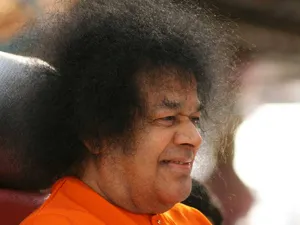
Shri Sathya Sai Baba divine smile picture.
Divine Diaries - In the Divine Presence of Lord Sri Sathya Sai

It is not Emptiness but a Super Cosmic Fullness

It is not Emptiness but a Super Cosmic Fullness This article is excerpted from musings by Prof. G. Venkataraman, eminent scientist and former Vice Chancellor of Sri Sathya Sai Institute of Higher Learning, broadcast by Sai Radio on April 29, 2011. Dear listener, this is a talk that I never thought or dreamt I would ever have to give. In a sense, the events of the last one month or so have gone by like a surrealistic experience, and suddenly I feel bewildered. More explicitly I am wondering, as perhaps many listeners are, whether the world as it existed before 28th March was real, or the world as it appears today without that beautiful form is real, the earlier experience being just a dream. Inevitably, this reminds me of a story that Swami used to narrate occasionally, back in the old days. The story goes like this: One evening Emperor Janaka’s Queen asks him to freshen up for dinner. Janaka overcome by exhaustion slumps into a chair and dozes off. During his nap, he has a disturbing dream and wakes up with a start. As he looks around, the scene is very different from what he was seeing just moments ago—there was no forest, no tiger chasing him, etc. Puzzled He begins to mutter, “Was that real, or is this real?” The Queen reminds the Emperor about dinner but he continues to remain in stupor, constantly repeating the same question. Palace medics are summoned, but they are unable to help. Ultimately, the court guru, sage Vasishta, is called. Janaka is still asking the same question. With a smile on his face the sage places his hand on Janaka’s shoulder and gently observes, “O king, neither is real; you alone are!” Vasishta was, of course, referring to the atma [soul] within, dismissing what is experienced both in the waking as well as in the dream state as illusory. In other words, Vasishta was telling Janaka that what is real lies beyond the experience of the senses and the thoughts of the mind, both of which are transient. Alas, we have no Sage Vasishta to guide us out of our confusion that we face today. For me personally it all started with every evening during February and a good part of March of this year. I along with a couple of others would go for darshan a little after 6 p.m. or so and wait patiently while the boys sang bhajans vigorously till Swami came anytime after 7 p.m.to as late as 8.15 p.m. When Swami came out the tempo of singing would become really charged. For His part, Swami would just sit there quietly, enjoying the bhajans, making everyone in the vast Sai Kulwant Hall forget time. Bhagavan did have the magical power to make time disappear and lose meaning in His presence. Finally around maybe 9 p.m., sometimes even later, Swami would take arati, linger for a while, raise both His hands in loving benediction, and slowly leave. For over a year Bhagavan came in a mobile chair [wheel chair] and would leave the same way. However, the routine began to change almost imperceptibly. He would still come using the chair but return using the Porte-chair-car. Still later, He started coming by car and returning the same way. Toward the end on some days, the car would come to the porch and halt, after which arati would be offered almost immediately, without Swami even coming out of the car, [and then] He would return [to His home, Yajur Mandir]. There were some days when a message came from Yajur Mandir and arati was given to the chair. On Saturday evening, March 27, 2011, the day before Swami was admitted to the hospital, arati was given early, after which the current Vice Chancellor Prof. Prasad, former Vice Chancellor Prof. Pandit, and I went to Swami’s residence as we usually did. We were told Swami was not well, that two doctors whom Swami lately permitted to attend on Him were upstairs with Swami and that some monitoring equipment was being brought to keep a watch on His health condition. At that time, no one had the slightest indication whatsoever that a crisis was fast approaching. Night passed and when I checked next morning, I was told that Swami had rested and spent an uneventful night. Around 3 o’clock or so in the afternoon, Prof. Pandit called me to say that an ambulance had come to Swami’s residence—Yajur Mandir. It seemed as if Swami was being taken to the hospital, and so we both rushed there. Even though we left a bit later, our car almost caught up with the ambulance, and we managed to be there when Swami was helped out of the ambulance at the entrance to the hospital. Although Swami went by an ambulance, He was actually on a wheel chair and not on a stretcher as I had imagined. Prof. Pandit, who was by my side all the time, tells me that Swami gave him a gentle smile. Little did he know that that smile was going to become his most treasured memory. Swami’s wheel chair was whisked away and soon He disappeared from sight. Meanwhile, Prof. Pandit and I both were shown to a room upstairs, and we waited silently and anxiously while the clock kept ticking. One hour passed and we became somewhat restless. We came out and a surgeon standing at the end of the long corridor signaled us to join him and told us that Swami was undergoing a procedure in the cardiac catheterization lab, which was further down the corridor. Shortly thereafter, we saw the Chief Nurse of the Hospital giving strict instructions to the staff nearby. It looked like Swami was ready to be moved from the catheter lab to the special ICU, located across the corridor. Roughly about two hours after Swami arrived at the hospital, we saw a hospital bed on wheels come out of the cath lab with a lot of staff in surgical dress walking along with the bed, one person

It is not Emptiness but a Super Cosmic Fullness Read Post »

Sathya Sai Baba divine message
Divine Diaries - In the Divine Presence of Lord Sri Sathya Sai

The Silent but Steady Presence of Sai in my Life

The Silent but Steady Presence of Sai in my Life After its spellbinding presentation in the Sai Kulwant Hall on the birthday evening, a dedicated group—of 126 musicians from 16 countries—did an encore in the Indian capital, New Delhi. The symphony was a unique blend of Western and Indian classical music composed by the German composer Mr. Michael Herting and conducted by Dr. Michael Koehler. One of the chief guests that day was Dr. Najma A. Heptulla,a five-time member of the Rajya Sabha, the Upper House of the Indian Parliament,  from 1986-2012. She was also the Deputy Chairperson of the Rajya Sabha for sixteen years. In May 2014 she became the Minister of Minority Affairs, Government of India. Following is the edited transcript of her speech before the performance of the Global Sai Symphony. My respects and tributes to Baba on His 90th birthday. Let me share with you my experience of how I came into Baba’s fold. This happened 50 years ago when I lived in Bhopal. My would-be husband, living then in Mumbai, wanted to marry me, but we belonged to two different sects of the Muslim community. In those days this was a problem as we were not allowed to marry. At that time one of my husband’s South Indian friends told him about Sai Baba and took him to Puttaparthi. That was December 1965 and Puttaparthi was very different then. Fortunately Baba called him for an interview and blessed him saying, “Coming December, 1966, you will get married.” We got married as Baba had foretold and in December 1966 I came to Mumbai with my husband. I noticed that my husband’s dress pockets always had this peculiar ash. I wondered what it was (only later did I come to know that it was vibhuti [sacred ash]). So, one day I asked him, “What are these little packets that you always carry in your pocket?” Then he told me the whole story of his meeting with Baba and how our marriage came about. Until then I had no clue of any of this. I had not even heard of Baba but now I had a strong desire to go and see this person with whose blessings we were married. Meanwhile I got elected to the Parliament in 1980. I kept telling my husband, “Let’s go to Puttaparthi and pay our respects to Baba. I want to meet Him.” But somehow it did not happen then. Many years later I met Captain Sharma, a pilot who had flown Baba in planes before. I noticed the green ring on his finger and exclaimed, “Oh, so you’re a devotee of Baba! I want to go there, but somehow it  never happens.” Mr. Sharma said, “I’m going there next week.” I immediately wrote a letter to Baba and asked him to give it to Baba on my behalf. The next week again I was on a flight from Mumbai to Delhi and Mr. Sharma came to see me. He took out the letter I had given him and returned it to me. Surprised, I said, “Why are you giving it back to me? You didn’t give it to Baba?” He said, “I didn’t have to give it to Him. I was sitting outside His room and He came straight to me. Even before I could say anything to Him, He said, ‘Tell that lady to come. Baba’s house is her house too. She is welcome anytime.’” After this I told my husband, “Next week we must go!” And we went immediately to Puttaparthi. Before I proceed, let me tell you something interesting about my husband’s first trip. He had travelled from Mumbai to Puttaparthi in a car. It was a Morris Minor Tiger, a small black car. After the interview with Baba, when he was getting up, the keys of this car fell out of his pocket. Baba instantly picked them up and placed them in my husband’s hands and blessed him. After our marriage we travelled over 5000 kilometers [3,106 miles] in this very car. We almost did a ‘Bharat Yatra’, a mini tour of India. We went all over Rajasthan, Madhya Pradesh, Uttar Pradesh, Delhi, and so on. During this entire trip this car never stopped, had a flat tire, or gave any problem whatsoever. By the blessings of Baba I still have this car! The Rings of Blessings Many interesting things happened in our lives. When we went to Puttaparthi as a couple for the first time, we were accommodated in the round guesthouse. I harbored a wish that I did not share with anyone, not even my husband. I thought, “If Baba calls me today I must get a green ring. I will not leave until I receive Baba’s green ring.” I actually removed the ring I was currently wearing on my ring finger, waiting for the new gift from Baba. As luck would have it Baba called us for an interview. When we were inside, He gave us vibhuti. Then Baba did create a green ring for me! Instantly I gave my hand from which I had removed the other ring. But Baba said, “No, no, give me the other hand. You have already removed a ring from there and kept it in the cupboard. Give me the other hand!” I shared this only to tell you how He knows us completely and how He cares for us. Let me narrate another instance. On the occasion of Diwali [festival of lights], Mr. Kulwant Rai, a great devotee of Baba, had come to my house. He was like a brother to me. I saw a multi-colored nine-gem ring on his finger. “What happened to your green ring?” I asked him. He said, “Baba changed it.” Again I thought in my heart “I, too, should get a ring like this one from Baba.” But I didnot tell anybody. Next time when I was in Baba’s presence, He said, “Give me the ring.” So I placed the green ring on His palm and Baba instantly changed it into

The Silent but Steady Presence of Sai in my Life Read Post »

Bhagwan Sathya Sai Baba meditation moment
Divine Diaries - In the Divine Presence of Lord Sri Sathya Sai

The Greatest Gift of Life

The Greatest Gift of Life The 9th of December in 1986 dawned as usual in Puttaparthi. The senior boys’ hostel was bustling with hectic activity, as they got ready for the classes. Among them was Mr. V. Kumar, an MBA student at the Prasanthi Nilayam campus of the Sri Sathya Sai Institute of Higher Learning. The Lord’s darshan Like anywhere else Parthi students were not very excited about the classes; for them the most beautiful time of the day was in the evening when they would go to the mandir [temple] for darshan [sight of a holy person] of their beloved Swami, Bhagavan Baba. Kumar, too, went through all the classes eagerly waiting for the last bell to ring so that he could rush to the hostel, freshen up discarding the ‘college whites’ for the bright, creaseless white clothes that he had kept aside for darshan. Within a matter of minutes, Kumar was at the Ganesh gate of the ashram. As he cast away his slippers, he saw a few of the students carefully hiding their footwear or locking them with a chain and keeping the key safely with them lest they [slippers] be lost. However, he had his own strategy to protect them by leaving his slippers near his home, room A1 in East Prasanthi, right next to the mandir. The house was a gift from Swami to his parents in 1985—a bountiful blessing for the pious souls. As Kumar moved toward East A1, he saw his father standing outside the house. He appeared very pensive and seemed to be searching for him [Kumar] among the students. The smile on Kumar’s face faded and he knew that something was wrong. He turned and rushed to his father. “Mother is the first God; Father is the next God. Then comes the Guru and finally God.” Kumar remembered Swami’s words as he sacrificed his vantage seat in the mandir to find out why his father was looking for him. Meanwhile, one of the front racers shouted, “its no use! We have all missed darshan. Swami has gone into the interview room with a group.” A tragedy no son can bear Assured that he was not missing out in today’s race, Kumar approached his father. “Oh Kumar,” he said almost swooning in his arms, “All of a sudden, your mother collapsed in the house this afternoon. There are doctors in our house monitoring her situation now….” Kumar rushed into the house and went straight to the living room. Kumar recollects those painful moments: When I went into the living room, I could see almost all the famous doctors of Puttaparthi there. I turned and saw my amma (mother) lying on the bed—straight, eyes closed, and arms on the side. On the right, I saw Dr. Chari, Dr. Alreja, Dr. Shantamma, and several others. There was an ECG machine plugged in and it was beeping weakly. I was totally flummoxed and speechless. Dr. Chari came up to me, put his hand on my shoulder, and taking me to the front room said, “Your mother’s pulse rate is dropping every minute. We are doing everything that we can from a medical angle, but she is not responding at all. At this rate, we might see 20 or 25 minutes of life in her. I feel you should go to the mandir, sit in the front and inform Swami about this situation. He is the only one who can save her.” For the first time in my life, I felt as though a ton of bricks were falling on me. The doctor’s words left me bewildered and motionless. I asked him, “Sir, will you also sit in the front and try to talk to Swami?” “Yes, I will try my best,” he nodded. I looked at my dad. He was in tears. Being the only son without any siblings, I suddenly felt very emotional and responsible. I told my father, “Dad, do not worry. I will try to talk to Swami. Swami is the only refuge we have.” Kumar ran out of his house and into the Bhajan hall of the mandir. Swami was still in the interview room. Being a good singer, he requested the other singers to allow him sit in the front row next to the bhajan hall door. The idea being that he would be the first person Swami would see as He came out of the interview room. Sitting in that strategic place, Kumar closed his eyes and tried to focus and pray. The loneliness of sorrow That proved to be a Herculean task as the mind kept getting sad thoughts about his mother. Memories are really funny; you think of the times when you cried and laughed at yourself; then, when you think of the good times and that you were happy, your eyes well up with tears. Similarly, Kumar too had a smile on the face and tears in his eyes thinking that he might lose his mother’s love and care! He looked out of the bhajan hall and saw Dr. Chari arrive and take a seat in front of the portico. He was definitely doing his best with all the other doctors. Kumar then looked at the clock, 15 minutes had passed since Dr. Chari had predicted about 25 minutes of life for his mother. He recollects: This was perhaps the only time in my student life when I felt that time was ticking too fast. My prayer was—Oh Lord! When are you going to come out of the interview room? Do you even know that my mother is going farther away from me with every passing moment? Can you please come and save her? My heart was pining for His physical presence. Everything seemed to have come to a standstill, except the clock! Time was ticking. I continued seeing my watch for the nth time and I realized that 20 minutes had passed. I looked at the doctor sitting at a distance and gestured to him wanting to know what his feelings were with regard to amma hanging on to her life. He stared at me

The Greatest Gift of Life Read Post »

Bhagwan Shri Sathya Sai Baba spiritual guidance
Divine Diaries - In the Divine Presence of Lord Sri Sathya Sai

Be Human

Be Human In an ancient Hindu temple, a number of pigeons were living for quite some time on top of the gopuram (the monumental tower at the entrance of any temple). This wasn’t such an uncommon occurrence as pigeons generally prefer elevated or high structures. But the pigeons were forced to relocate when the management decided to renovate the temple and perform the Kumbhabhishekam (consecration ceremony). The pigeons found a church nearby and decided to settle down there. This church already had some pigeons and so the newcomers managed to find places wherever possible. As time rolled by, Christmas approached and the church management decided to paint the church. Now the new pigeons along with the earlier ones had to relocate again and look for another place. To their joy, they discovered that the nearby mosque had sufficient space for all of them. They settled there to live along with the existing pigeons in the mosque. As luck would have it, soon the mosque management also decided to carry out some repair as the festival of Ramzan [sacred month of fasting] was nearing. By this time the temple renovation and the consecration ceremony were over and so the pigeons returned to the same temple that they had been forced to leave earlier. One day, when the pigeons were sitting on top and relaxing, they were watching some communal clashes going on below and not far away from the temple. One baby pigeon asked its mother, “Who are these people?” The mother replied, “They are human beings.” The baby then asked, “But why are they fighting with each other?” The mother said, “The human beings praying in the temple are called Hindus, those praying in the church are called Christians, and those praying in the mosque are called Muslims.” The little pigeon was quite puzzled and asked, “Why is it so, mother? When we were in the temple we were called pigeons, when we were in the church we were still called pigeons, and when we were in the mosque we were called pigeons. Similarly, shouldn’t they be called ‘human beings’ regardless of where they go?” The mother smiled and simply said, “You and I and our pigeon friends have understood this simple truth. That’s why we are living here in a highly elevated place peacefully. But these humans are yet to understand this and hence they live down below, fighting and killing each other.” What a profound lesson taught by our feathered friends! The Lord in His incarnation as Shirdi Sai Baba beautifully fostered the unity of religions. He stayed in a mosque but encouraged devotees to observe Rama Navami (a festival celebrated by Hindus) as well as the sacred Urs festival (commemorates the death anniversary of the Sufi saint Moinuddin Chishti and is observed by Muslims). He was regarded as a Muslim by Muslims and a Hindu by Hindus, since He would sometimes say, “Allah Malik! Allah Malik!” [Allah is supreme] and at other time, “Dattatreya Malik!” [Dattatreya, the incarnation of Brahma, Vishnu and Shiva, is supreme]. Baba’s appearance was very much like that of a Muslim and therefore many Muslims came to Him. Hindus also would offer incense to Him. The Muslims did not approve of what the Hindus were doing, and vice versa. Consequently, bitterness developed between these two communities. On one occasion a controversy arose among the residents of Shirdi as to whether Baba was a Muslim or a Hindu. Mhalsapathi, the priest of the Khandoba temple at Shirdi and a great devotee of Baba, was sitting near Him. The Muslims, who were opposed to the presence of a Hindu priest near Baba, came with sticks and beat up Mhalsapathi. At every stroke, Mhalsapathi cried out “Baba! Baba!” and soon fell to the ground. At that instant Baba roared at the Muslim crowd, “Shaitaan! (demon) On one side you worship Me and on the other you beat Me. Is this your devotion?” Baba was bleeding all over His body. When the Muslims saw this, they were appalled and asked Baba who had beaten Him. Baba said, “Did you not beat Me? Did you not  beat Me?” pointing to several men in the crowd. They said, “We did not come near You at all, Baba. We only beat Mhalsapathi.” Baba declared, “Who is in Mhalsapathi? I am in him.” On hearing this, the Muslims fell at Baba’s feet and sought His forgiveness. Baba then summoned the Hindus and Muslims and told them, “Dear children, you are all the progeny of one mother.” Baba demonstrated the fatherhood of God and the brotherhood of man. He emphasized that people should give up all differences of caste, creed, and religion. The Lord continued His task of promoting unity among all religions even in the Sathya Sai Avatar. The mosque that Bhagavan Sri Sathya Sai Baba built for the Muslims of Puttaparthi is ample proof that He transcends all religions and stands for only one all-encompassing religion—the religion of love. Why, even as a little child, during the school prayer sessions, little Sathya sang a song glorifying the unity of faiths. In fact, on one occasion, recalling His childhood, Bhagavan Baba said there were a sizeable number of Muslims in Puttaparthi and they would celebrate the festivals of Muslim fakirs [ascetics], in which the Hindus also participated. In that context, little Sathya used to teach the children, “It is not the religion that is important. Morality is important. Cast off all your differences of religion and caste and be friendly with everyone. You must also participate in the festivals of fakirs.” But one boy got up and said, “Raju! My parents will not agree to my participation in a Muslim festival. We are Brahmins [priests].” Then Sathya explained, “My dear, first and foremost, you are a human being. Your religion is love and your caste is the caste of humanity. Therefore, always keep that principle of unity as your goal.” The parents of these children were, however, not happy with Sathya’s teachings. They thought he was spoiling young minds and quarreled with Him saying, “Raju! You are spoiling our

Be Human Read Post »

Shri Sathya Sai Baba divine blessings
Divine Diaries - In the Divine Presence of Lord Sri Sathya Sai

Krishna’s Flute

Krishna’s Flute Every day Krishna would go in the garden and say to all the plants, “I love you.” The plants were very happy and responded saying, “Krishna, we love You too.” One day Krishna rushed quickly into the garden very alarmed. He went to the bamboo plant and the bamboo plant asked, “Krishna, what´s wrong?” Krishna said, “I have something to ask you, but it is very difficult.” The bamboo said, “Please tell me. If I can, I will give it to You.” So Krishna said, “I need your life. I need to cut you.” The bamboo thought for a while and then said, “Don’t You have any other choice? Don’t You have any other way?” Krishna said, “No, no other way.” So it said “OK” and gave itself up. Krishna cut the bamboo and made holes in it. Each time He carved the holes, the bamboo was crying in pain. Krishna made a beautiful flute out of it, and this flute was with Him all the time. Twenty-four hours a day it was with Krishna. Even the gopis [milk maidens] were jealous of the flute. They said, “Look, Krishna is our Lord, yet we get to spend only some time with Him. He wakes up with you, He sleeps with you, all the time you are with Him.” The gopis asked the bamboo, “Tell us your secret. What secret do you have, that the Lord treasures you so much?” The bamboo said, “The secret is that I gave myself up, and He did what was right for me, and in the process I had to undergo a lot of pain.” “The Lord does whatever He wants, whenever He wants, and however He wants with me. I have just become His instrument.” This is complete surrender—where God can do whatever He wants with you, whenever He wants, and as He wants. Trust Him completely and have faith in Him, and always think that when you are in His hands nothing can go wrong. This is samarpan or complete surrender.

Krishna’s Flute Read Post »