





Hari Om

Menu

⁠Books by Sri Sathya Sai Baba

78a2c351e2690da3b6ead67da90cc890 1
Adi Shankaracharya, ⁠Books by Sri Sathya Sai Baba

 Prauda anubhuti Book

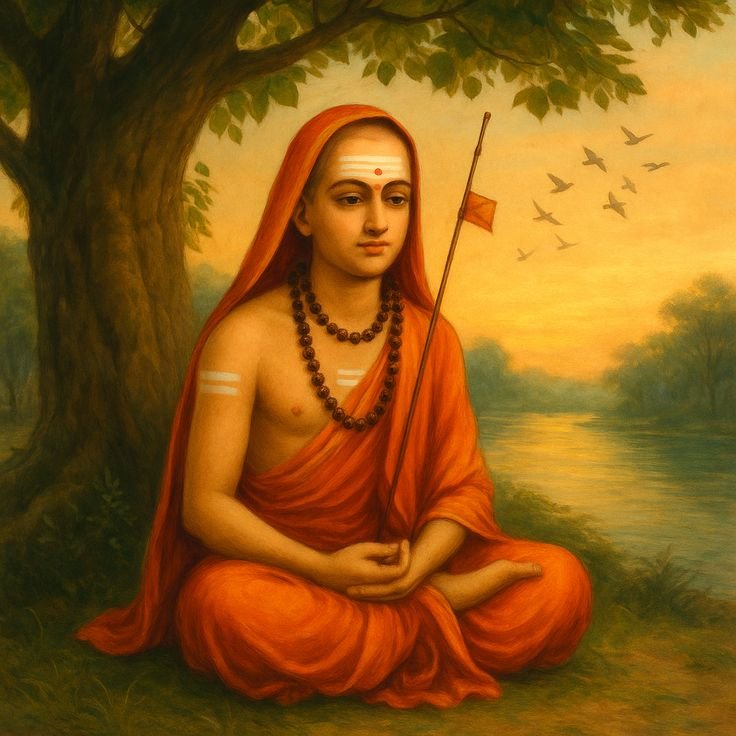
Prauda anubhuti Prāuḍa-Anubhūti is a Sanskrit term that can be translated as “mature experience” or “deep realization.” In the context of Indian philosophy and spirituality—particularly in Advaita Vedānta—it refers to a firm, unshakable realization of the Self (Ātman) as non-different from Brahman, the infinite, non-dual reality. While many seekers may gain intellectual knowledge or temporary glimpses of spiritual truth, Prāuḍa-Anubhūti refers to a ripened, stable, and transformative experience of the Truth that leads to complete liberation (mokṣa). In Advaita Vedānta, three stages of knowledge are often discussed: śravaṇa (listening to the teachings), manana (reflecting on them), and nididhyāsana (deep contemplation or meditation). Through these, a seeker gradually removes doubts and false identifications. However, the final stage is anubhūti, direct realization. When this realization becomes unwavering and continuous, free from distractions and doubts, it is called prāuḍa-anubhūti—mature realization. It is no longer just a mystical experience or passing insight; it becomes the seeker’s abiding inner state. This deep realization reveals that the individual self (jīva) was never truly separate from Brahman. One no longer just believes or understands that “I am Brahman” (Aham Brahmāsmi), but lives in that awareness naturally, effortlessly. The illusion of individuality (ahaṅkāra, or ego) dissolves completely, and one sees the world not as separate entities but as appearances within one indivisible consciousness. This state is beyond intellectual comprehension—it is the natural state of the Self, which was always present but previously hidden by ignorance (avidyā). Prāuḍa-anubhūti is marked by inner stillness, fearlessness, and freedom from attachment, desire, and sorrow. Since the person knows without doubt that they are not the body, mind, or emotions, but the infinite, eternal awareness, worldly events no longer disturb their peace. This does not mean the person becomes inactive or indifferent, but that their actions flow spontaneously from inner clarity and compassion, free from selfish motives. The Bhagavad Gītā describes such a realized person as a sthita-prajña, one with steady wisdom. In spiritual literature, this state is often described using metaphors: like the sky untouched by clouds, or the ocean unaffected by waves. Saints like Adi Shankaracharya, Ramana Maharshi, and Sri Ramakrishna have spoken about this realization not as something to be attained in the future, but as the recognition of what is always present—our true nature.

 Prauda anubhuti Book Read Post »
61sBrwExbXL
Adi Shankaracharya, ⁠Books by Sri Sathya Sai Baba

Adi Shankaracharya Tattva-bodha Book

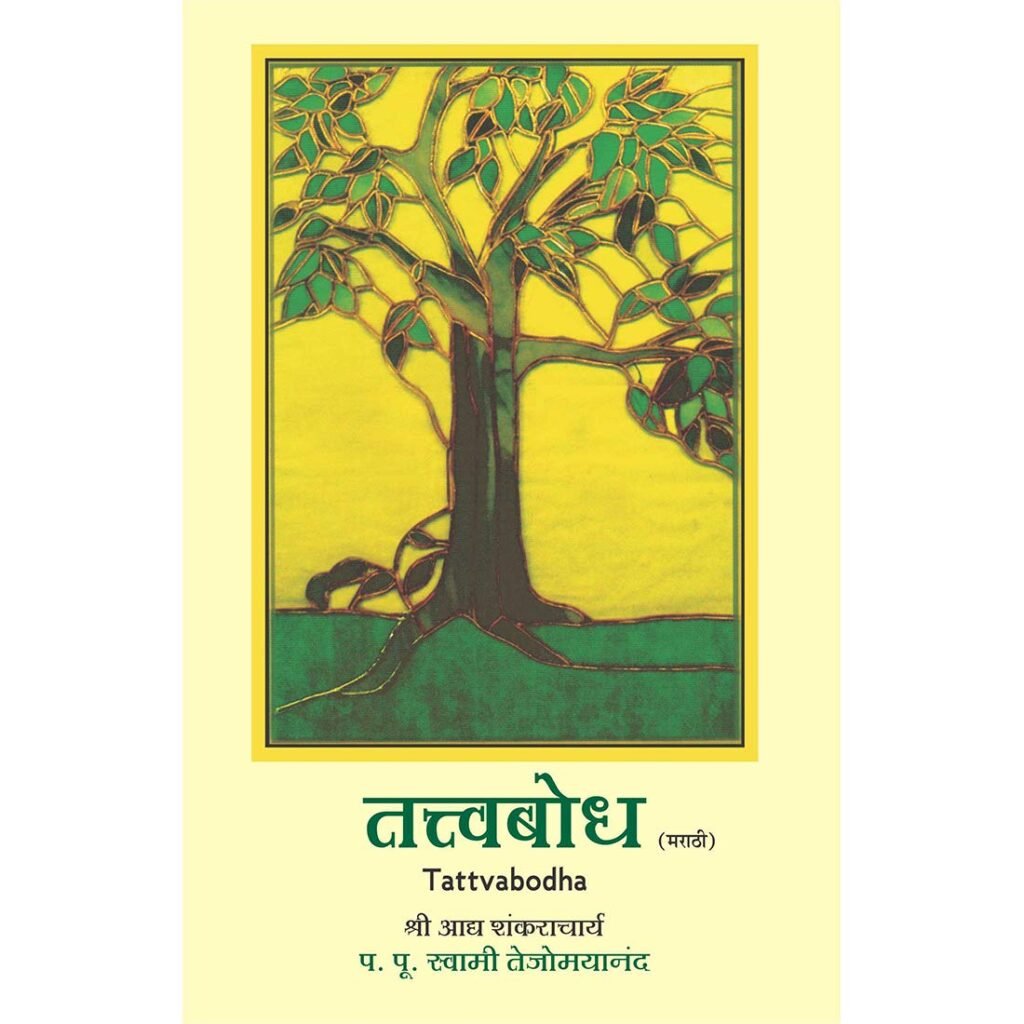
Tattva-bodha Tattva Bodha, which means “Knowledge of the Truth” or “Understanding of the Principles,” is a foundational text in Advaita Vedānta attributed to Adi Shankaracharya, one of the greatest spiritual teachers in Indian philosophy. This short yet profound work serves as an introductory manual for seekers who wish to understand the basic concepts of non-dual Vedānta and prepare themselves for deeper study and realization. The text is written in the form of a dialogue between a teacher and a student, using a question-and-answer format that systematically explains the essential teachings required for Self-knowledge (ātma-jñāna). Tattva Bodha begins by defining the qualifications of a genuine seeker, known as sādhana chatuṣṭaya: discrimination between the real and unreal (viveka), dispassion toward the fruits of actions (vairāgya), sixfold qualities like control over mind and senses (ṣaṭ-sampatti), and an intense desire for liberation (mumukṣutva). These qualifications are necessary for progressing on the path of Self-realization. The text then explores the five sheaths (pañca-kośa) that cover the true Self: the physical sheath (annamaya), vital energy sheath (prāṇamaya), mental sheath (manomaya), intellectual sheath (vijñānamaya), and bliss sheath (ānandamaya). By analyzing these layers, Tattva Bodha helps the seeker understand that the Self is not the body, mind, or emotions, but the pure awareness that witnesses them. The concept of the three bodies—gross (sthūla śarīra), subtle (sūkṣma śarīra), and causal (kāraṇa śarīra)—is also explained to show how the individual identifies wrongly with limited aspects of existence. The text introduces the idea of Jīva (the individual self), Īśvara (God or the cosmic controller), and Jagat (the world), and explains their relationship through the concept of Māyā, the divine illusion or power that veils reality. Through Māyā, the non-dual Brahman appears as the manifold universe, just as one rope may appear as a snake in dim light. The ultimate teaching of Tattva Bodha is that the true Self (Ātman) is none other than Brahman, the infinite, eternal consciousness, and realizing this identity leads to liberation (mokṣa). The text emphasizes that knowledge alone—gained through śravaṇa (listening to the teachings), manana (reflecting upon them), and nididhyāsana (deep meditation)—is the direct means to liberation. Unlike ritualistic actions or pilgrimages, Self-knowledge alone destroys ignorance, which is the root cause of bondage and suffering. Tattva Bodha is revered for its clarity, structure, and simplicity, making it accessible to beginners while being deeply insightful for advanced students. It serves as a bridge between philosophical theory and personal realization, offering both intellectual understanding and practical guidance for spiritual growth. In essence, Tattva Bodha distills the vast teachings of Vedānta into a concise and systematic form, guiding the sincere seeker step by step toward the realization of the Self as the infinite, indivisible reality, beyond all limitations and dualities.

Adi Shankaracharya Tattva-bodha Book Read Post »

nao837
Adi Shankaracharya, ⁠Books by Sri Sathya Sai Baba

Adi Shankaracharya Panchikarana Book

Panchikarana Panchīkaraṇa is a Sanskrit term that refers to the process of the fivefold combination or quintuplication of the five subtle elements (tanmātras) into gross elements (sthūla bhūtas), forming the material universe as explained in Vedānta philosophy. According to ancient Indian cosmology, the universe is made up of five basic elements: ākāśa (space), vāyu (air), agni (fire), āpas (water), and pṛthivī (earth). Initially, these exist in their subtle forms, which are not perceivable by the senses. The process of Panchīkaraṇa explains how these subtle elements combine to become the gross, tangible elements we experience in the physical world. In Vedānta, it is said that each subtle element is first divided into two equal halves. One half remains intact, and the other half is further divided into four equal parts. Then, the intact half of one element is combined with one-eighth of each of the other four elements. For example, gross earth (pṛthivī) consists of half of subtle earth, and one-eighth each of subtle water, fire, air, and space. This same process is applied to each of the five elements. As a result, every gross element contains all five subtle elements, though in different proportions. This quintuplication process makes the gross world more stable, interconnected, and sensible to human perception. For instance, earth has solidity (earth), liquidity (water), heat (fire), movement (air), and sound (space). Through this model, Panchīkaraṇa helps explain how the physical world functions with various qualities. The concept is elaborated in texts like Vedānta Sāra by Sadananda and Panchīkaraṇa attributed to Adi Shankaracharya, where it is used to help spiritual seekers understand the structure of the physical world and how it emerges from subtle energy. In the context of spiritual practice, Panchīkaraṇa is not merely a metaphysical or cosmological explanation—it serves a deeper purpose. It helps the aspirant distinguish between the Self (Ātman) and the non-Self (Anātman) by showing how the body and the material world are formed through the combination of inert elements, while the Self remains pure consciousness, untouched by this process. In this way, Panchīkaraṇa supports the Vedantic teaching that the world is Mithyā (relatively real or illusory) and that liberation (moksha) comes through knowledge of the unchanging Self. By understanding how the physical world is formed through Panchīkaraṇa, the seeker can cultivate detachment and focus inward to realize the true nature of the Self, which is beyond all physical and mental constructs. This understanding also plays a role in meditative practices and contemplation, as the aspirant moves beyond identification with the body and mind, recognizing them as temporary formations of the five elements. In conclusion, Panchīkaraṇa is a vital concept in Vedānta that explains the transformation of subtle energy into the gross material world. It is both a philosophical and practical tool for understanding the nature of creation and for advancing on the path to self-realization.

Adi Shankaracharya Panchikarana Book Read Post »

714ZAjNP8vL. UF350350 QL80
Adi Shankaracharya, ⁠Books by Sri Sathya Sai Baba

Adi Shankaracharya Anaatma Shree Vigrahanaamann Book

Anaatma Shree Vigrahanaamann “Anaatma Shree Vigrahanaamann” can be understood as the juxtaposition of two seemingly contradictory concepts—Anaatma (non-self or not-self) and Shree Vigraha (sacred form or divine idol). This phrase reflects deep philosophical and spiritual insights found in Hindu, Jain, and Buddhist traditions, where the idea of self, identity, form, and divinity are questioned and redefined. Anaatma – The Concept of Non-Self The term Anaatma originates from Sanskrit: “An” meaning not, and “Atma” meaning self or soul. It is a fundamental concept in Buddhism and Advaita Vedanta philosophy, which teaches that what we commonly regard as “self”—our body, mind, thoughts, and ego—is not our true essence. According to these traditions, clinging to the idea of a permanent, individual self is the root cause of suffering (dukkha). In Buddhism, the doctrine of Anatta (Pali form of Anaatma) teaches that there is no unchanging, eternal soul. Everything is impermanent, including consciousness. In Vedanta, the concept evolves to say that the true Self (Atman) is not the ego or individual personality but is identical with Brahman, the infinite, formless, non-dual reality. What we call “self” is actually a misidentification with form and thought. Shree Vigraha – The Sacred Form On the other side, Shree Vigraha refers to the divine form or idol used in worship, especially in Hinduism. “Shree” is an honorific denoting auspiciousness and divine presence, and “Vigraha” means form, figure, or embodiment. These idols are not merely artistic representations; they are considered manifestations of the divine. Through rituals like prana pratishta, the form is believed to be infused with the divine presence, making it worthy of worship. Vigrahas act as mediums for the devotee to connect with the formless divine. They serve as symbolic representations of deep metaphysical truths and allow abstract spiritual concepts to become accessible and personal. Even though God is beyond form (nirguna), the form (saguna) is used as a tool for devotion (bhakti). Reconciling Anaatma and Shree Vigraha At first glance, Anaatma (no-self, no-form) and Shree Vigraha (divine form) seem to contradict each other. However, within Indian spiritual traditions, this duality is harmonized. The form is used to transcend form. The self is negated to realize the Self. The sacred form (Vigraha) is not worshiped for its material qualities but as a pointer to the formless reality. Through meditating on the idol, chanting names, and performing rituals, the devotee gradually lets go of ego and self-identification, entering deeper states of consciousness where the illusion of separateness dissolves. Thus, Anaatma Shree Vigrahanaamann can be seen as a poetic expression of spiritual paradox: using the form to transcend form, using the non-self to realize the true Self. It invites practitioners to go beyond surface identities and connect with the universal essence that is both within and beyond all forms.

Adi Shankaracharya Anaatma Shree Vigrahanaamann Book Read Post »

nzy154
Adi Shankaracharya, ⁠Books by Sri Sathya Sai Baba, stotram

Yoga Taravali Book

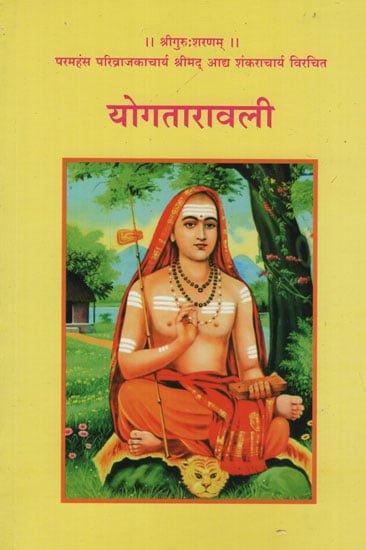
Yoga Taravali Yoga Taravali, meaning “A Garland of Verses on Yoga”, is a powerful and poetic Sanskrit text traditionally attributed to Adi Shankaracharya, the great 8th-century philosopher and saint best known for his exposition of Advaita Vedanta (non-dualism). Though he is widely revered for his teachings on knowledge (jnana yoga), in Yoga Taravali, Shankara demonstrates a deep understanding and reverence for yoga as a spiritual discipline, especially as a preparation for Self-realization. This text is a bridge between yoga and Vedanta, blending yogic techniques and insights with the ultimate goal of realizing the non-dual Self (Atman). Unlike systematized yogic manuals like the Yoga Sutras of Patanjali, Yoga Taravali is poetic, experiential, and philosophical, capturing the inner journey of a yogi in search of liberation. Meaning and Context The text consists of around 29 verses (though some versions vary slightly in count), each filled with deep meaning and direct spiritual insight. Core Themes and Teachings

Yoga Taravali Book Read Post »

Adi Shankaracharya, ⁠Books by Sri Sathya Sai Baba, stotram

Adi Shankaracharya sadaachaar anusandhaanam Book

sadaachaar anusandhaanam Sadachara Anusandhanam, meaning “Inquiry into Right Conduct”, is a concise yet profound Sanskrit text composed by Adi Shankaracharya, one of the greatest spiritual teachers and philosophers in the Advaita Vedanta tradition. This short treatise, often overlooked compared to his more technical works, focuses on the daily conduct, duties, and spiritual discipline expected of a seeker who desires liberation (moksha). While Shankaracharya is widely known for his abstract metaphysical writings, Sadachara Anusandhanam stands out for its practical orientation, offering clear and actionable guidelines for righteous living. The term sadachara means good or noble conduct, and anusandhanam means inquiry or contemplation. Thus, the text is a manual for self-reflection and disciplined living aligned with spiritual goals. The text is intended for spiritual aspirants, particularly householders, who wish to live a life of dharma (righteousness) while also progressing toward Self-realization. It outlines how to integrate Vedantic wisdom into everyday actions—right from waking up in the morning to sleeping at night. Unlike purely ritualistic or ascetic texts, Sadachara Anusandhanam strikes a balance between worldly duties and inner contemplation, making it accessible and relevant for both monks and laypeople. Key Themes and Teachings

Adi Shankaracharya sadaachaar anusandhaanam Book Read Post »

hbw196
Adi Shankaracharya, ⁠Books by Sri Sathya Sai Baba

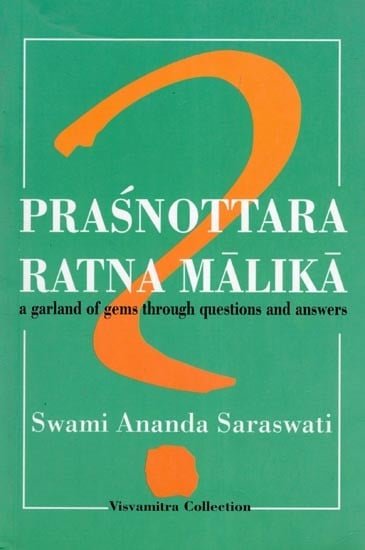
Prasnottara Ratna Malika Book

Prasnottara Ratna Malika Prasnottara Ratna Malika, meaning “A Garland of Jewel-like Questions and Answers,” is a revered Sanskrit text attributed to the great philosopher and spiritual teacher Adi Shankaracharya. This concise and insightful work presents essential spiritual and ethical teachings in the form of questions and answers, making it accessible, clear, and highly practical. Composed in simple yet profound language, the text is structured as a series of direct questions (prasna) followed by succinct, wise answers (uttara), much like a catechism in the Hindu tradition. The text touches upon a wide range of topics, from ethics and devotion to knowledge and liberation, offering timeless guidance for anyone seeking truth and a righteous life. Structure and Purpose The question-and-answer format serves both pedagogical and meditative purposes. It allows readers to engage with each topic reflectively and contemplate the meaning of each answer deeply. Unlike abstract philosophical treatises, this text is more practical and personal, offering direct instructions for living a spiritually meaningful life. The “ratna malika” or “garland of jewels” metaphor suggests that each question-answer pair is a gem — valuable, self-contained, and illuminating. Core Themes

Prasnottara Ratna Malika Book Read Post »

61qiWxIK1kL
Adi Shankaracharya, ⁠Books by Sri Sathya Sai Baba

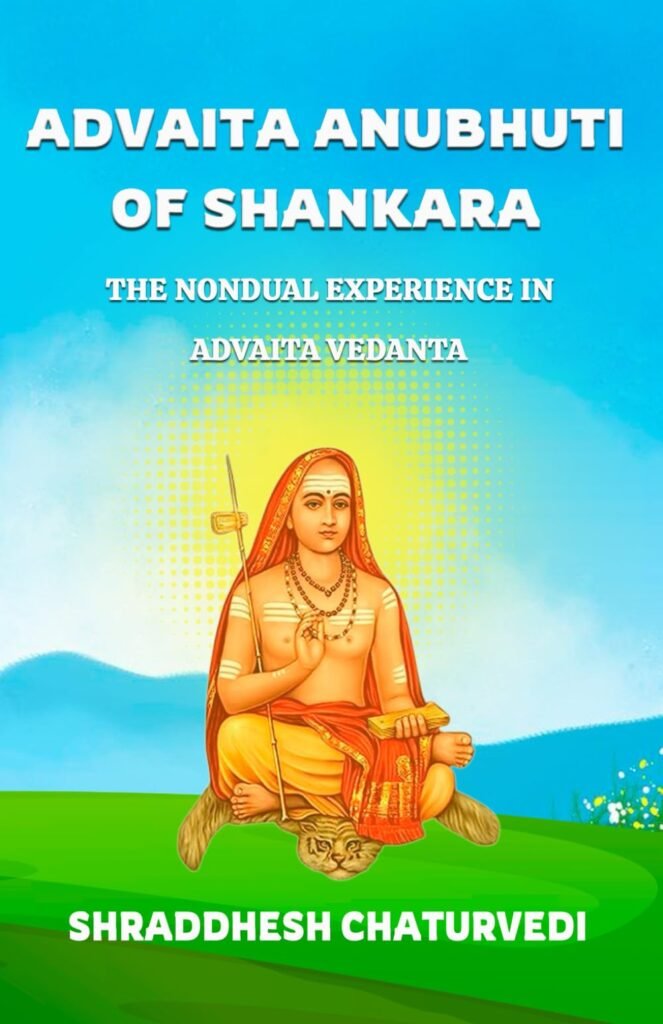
Advaita Anubhuti Book

Advaita Anubhuti Advaita Anubhuti (also spelled Advaitānubhūti) means “The Experience of Non-Duality”. It is a philosophical and spiritual treatise that deals with the direct realization (anubhuti) of the truth of Advaita Vedanta — the non-dualistic school of Hindu philosophy. The text is traditionally attributed to Swami Vidyaranya, a 14th-century saint and scholar, who is also known for his major works like the Panchadashi and his role in the founding of the Vijayanagara Empire. In Advaita Anubhuti, Vidyaranya presents the essence of Advaita philosophy not merely as a theory or intellectual concept, but as a direct inner experience of the Self. Meaning and Purpose The word Advaita means “non-duality” — the idea that there is no real distinction between the individual self (Atman) and the ultimate reality (Brahman). According to Advaita Vedanta, the multiplicity we see in the world is an illusion (maya), and the only truth is Brahman, the infinite, eternal, and unchanging consciousness. Anubhuti means direct realization or experience — not in the sense of sensory experience, but in the sense of self-revealing knowledge. So, Advaita Anubhuti is a text focused on the practical realization of the non-dual truth. Core Themes of Advaita Anubhuti

Advaita Anubhuti Book Read Post »

images 2025 09 19T132457.335
Adi Shankaracharya, ⁠Books by Sri Sathya Sai Baba

Prabodha Sudhakaram Book

Prabodha Sudhakaram Prabodha Sudhākara, meaning “The Nectar of Enlightenment”, is a unique and profound spiritual text that blends the paths of knowledge (jñāna) and devotion (bhakti). Traditionally attributed to Adi Shankaracharya, this text differs from many of his purely philosophical works by addressing the emotional and devotional aspects of spiritual practice alongside rigorous reasoning. The work consists of 257 Sanskrit verses divided into 19 chapters, written in a poetic and reflective style, aimed at leading the seeker from ignorance (avidyā) to spiritual awakening (prabodha). The text begins by exploring the human condition — why people suffer, what they seek, and where real fulfillment lies. It points out that while all beings seek happiness, they often look for it in impermanent things — wealth, pleasure, status, relationships — all of which inevitably lead to dissatisfaction. True and lasting happiness, the text declares, comes only through Self-realization — the direct knowledge of one’s own eternal, unchanging nature as pure consciousness (Ātman). To help the seeker develop the right mindset, the early chapters of Prabodha Sudhākara focus on detachment (vairāgya) and discrimination (viveka). The text strongly criticizes blind attachment to the body, sensory pleasures, and worldly objects. It uses vivid imagery and logical arguments to show that everything perceived by the senses is fleeting. The body is subject to aging, illness, and death; the mind is unstable; worldly happiness is momentary and dependent. These insights are not meant to create fear, but to generate a deep desire for liberation (mokṣa). The middle chapters guide the seeker inward, toward the nature of the Self. The Self is described as pure awareness, untouched by birth and death, and the witness of all experiences. The text teaches that the Self is neither the body nor the mind, but the unseen seer, the silent presence behind all perception. By turning attention inward, using practices like self-inquiry (ātma-vicāra) and meditation, one can recognize the Self as their true identity. Unlike many jñāna-based texts, Prabodha Sudhākara also emphasizes devotion. It praises surrender to God, especially in the form of Krishna, and encourages the seeker to combine philosophical inquiry with love and humility. This synthesis makes the text accessible to both intellectually inclined seekers and emotionally devotional practitioners. One of the text’s central teachings is that liberation is possible in this life (jīvanmukti). One need not wait for death to attain freedom. When ignorance is destroyed through knowledge and the heart is purified through devotion, the Self shines forth, and the seeker realizes that they have always been free. In conclusion, Prabodha Sudhākara is a luminous work that awakens the spiritual seeker to their true nature. It harmonizes Advaita Vedānta’s deep metaphysical insights with the warmth of devotion, offering a balanced path to liberation. It is ideal for those seeking clarity of mind, purity of heart, and the ultimate goal of life: freedom from suffering and union with the Self.

Prabodha Sudhakaram Book Read Post »

hbv142
Adi Shankaracharya, ⁠Books by Sri Sathya Sai Baba

Sarva Vedanta Sara Samgraha Book

Sarva Vedanta Sara Samgraha Sarva Vedanta Siddhanta Sara Saṅgraha, meaning “A Compilation of the Essence of the Doctrines of All Vedanta”, is a classical Vedānta prakaraṇa grantha attributed to Adi Shankaracharya. It is intended for serious seekers of knowledge, providing a concise yet comprehensive distillation of the essential truths of Advaita Vedānta. The text is composed in Sanskrit, in verse form, and lays out both the sādhana (means) and the phala (fruit) of Vedānta sādhanā (spiritual practice), with emphasis on what qualifications a student must cultivate, how ignorance arises, and how the Self is known. One of the first topics in the work is sadhana catuṣṭayam, or the fourfold qualifications required of a seeker: viveka (discrimination between the real and unreal), vairāgya (dispassion or detachment), śat-sampatti (the six‑fold inner virtues such as self‑control, endurance, faith, etc.), and mumukṣutva (intense desire for liberation). These form the foundation. Without them, mere intellectual understanding does not lead to liberation. The text also discusses nitya‑anitya vastu viveka, the discrimination between what is permanent and what is impermanent. It shows that our attachments to the body, mind, senses, and objects of the world are based on ignorance, because these things are in constant flux. The Self (Ātman) is that which is immutable: aware, pure consciousness, not subject to birth, death, change or decay. Another important theme is vairāgya, dispassion. The text shows how desires, longing, attachment to transient pleasures and fears bind the seeker. Liberation requires that these attachments be loosened, that the seeker turns inward and ceases to depend on external things for happiness. This leads to inner peace. The text examines the nature of avidyā (ignorance) which is the root cause of suffering and bondage. Ignorance is not mere absence of knowledge: it is a misapprehension, a superimposition (adhyāropa) of what is not the Self onto the Self, and subsequent negation (apavāda) to remove the false. Vedānta uses methods like śravaṇa (listening to teachings of scriptures), manana (reflection), and nididhyāsana (deep meditation) to purify the mind and uproot ignorance. Sarva Vedanta Sara Sangraha also addresses the nature of the Self. It emphasizes that the Self is ever‑present, self‑luminous, unborn, undying, not to be taken as body, senses, mind, or intellect. It is both the knower and witness; all other phenomena are known, changing, impermanent. Once ignorance is dispelled, the realization “I am That (Brahman)” dawns—not as an idea, but as direct, unmediated experience. This experience is liberation, freedom from the cycle of birth and death, suffering and fear. The work also points out that rituals, external worship, pilgrimage, vows, mantra, austerities etc., while perhaps beneficial for some, are not sufficient for liberation unless one has the inner qualifications and the correct discrimination. The ultimate realization transcends all forms and rites. Finally, Sarva Vedanta Siddhanta Sara Saṅgraha gives assurance and encouragement to the seeker: once one surrenders the egoistic misidentifications, cultivates the four qualifications, practices discrimination and detachment, then the Self reveals itself. The knower becomes established in knowledge (jñāna‑niṣṭhā), unshaken by duality, abiding in peace, non‐difference, pure awareness. Liberation is natural, immediate, timeless.

Sarva Vedanta Sara Samgraha Book Read Post »