


Hari Om

Menu

Yoga of Synthesis

88fc7854e007727bb05cd1538ba9ba1f
Swami Sivananda, Yoga of Synthesis

Sivananda Gita

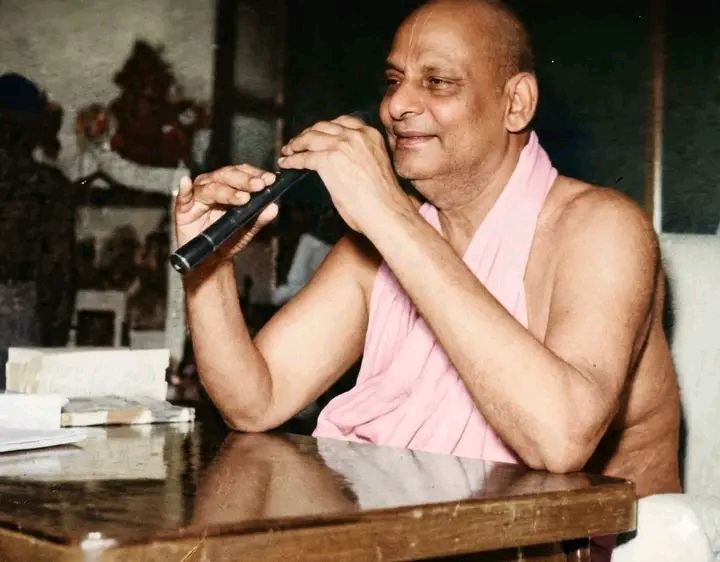
Sivananda Gita (Written by Swami Sivananda in 1946) I was born of P.S. Vengu Aiyar and Parvathiammal on 8th September 1887 at Pattamadai, Tirunelvely District, S. India, in the line of Appayya Dixit. My star is Bharani. I was extremely mischievous in my boyhood. I studied in the S.P.G. College, Trichy. I was a Doctor in Malaya States for 10 years. I took Sanyasa in 1924 in Rishikesh. I did tapas and meditation for 15 years. I went on lecturing tours for 10 years. I founded the Divine Life Society in 1936 and the AllWorld Religions Federation in 1945. I am childlike in my svabhava. So I mix with all. I become one with all. I am ever happy and joyful and make others also happy and joyful. I am full of educative humour. I radiate joy through humour. I respect all. I do salutations to all first. I always speak sweetly. I walk quickly. I do japa and meditation while walking and while at work also. I am ever hardworking. I have intense application to work. I never leave a work till it is finished. I never procrastinate any work. I finish it then and there. I am very quick in doing things. I cannot suppress the spirit of service in me. I cannot live without service. I take immense delight in service. Service has elevated me. Service has purified me. I know well how to extract work from others. I extract work through kindness, service, respect and love. I am very regular in doing asanas and exercises. I even now do sirshasan, sarvangasan and other asanas. I do pranayama also regularly. These give me wonderful health and energy. I run round the bhajan hall daily. I cannot deliver fiery lectures sitting on a special seat. Special seat pricks me. I stand up or throw the seat away and then begin to speak. I never sat on a special seat when I presided over spiritual conferences. I rejoice in giving. I always give. I am 59 (1946) now. I ever feel I am quite young. I am full of vigour, vim and vitality. I am ever cheerful. I sing, dance, run, and jump in joy. I am robust and strong. I can digest any kind of food. I continuously work, read and write. I never go to hill stations or seaside for a holiday. Change of work gives rest. Meditation gives abundant rest. Work gives me delight. Service gives me happiness. Writing bestows joy. Meditation energises and invigorates me. Kirtan vivifies me. “Aham Brahmasmi, Sivoham, Soham, Satchidananda Swaroopoham”This is my favourite formula for vedantic meditation.Hare Rama Hare Rama Rama Rama Hare HareHare Krishna Hare Krishna Krishna Krishna Hare Hare. -This Mahamantra Kirtan is my favourite kirtan At the present moment I am the richest man in the whole world. My heart is full. Further, all the wealth of the Lord belongs to me now. Hence I am king of kings, emperor of emperors, shah of shahs, maharaja of maharajas. I take pity on the mundane kings. My dominion is limitless. My wealth is inexhaustible. My joy is inexpressible. My treasure is immeasurable. I attained this through sanyasa, renunciation, untiring selfless service, japa, kirtan and meditation. I am tall. My height is 6 feet. I have a sinewy frame. I have symmetrical limbs. I was a first class gymnast. I fast on Ekadasi. I do not take even a drop of water. I take milk and fruits on Sundays. I do not take salt on Sundays. I lead a simple natural life. There is a fountain of youth in me. I beam with joy. I observe fasting, resting, airing, bathing, breathing, exercising, sunbathing and enjoy freedom, power, beauty, courage, poise and health. Om. Om. Om. I love nature, music, art, poetry, philosophy, beauty, goodness, solitude, meditation, yoga and vedanta. I am humble and simple. I am frank and straightforward. I am perfectly tolerant and catholic. I am merciful and sympathetic. I have spontaneous and unrestrained generosity. I am bold and cheerful. I am patient. I can bear insult and injury. I am forgiving. I am free from vindictive nature. I return good for evil. I serve that man who has injured me, with joy. I love Ganga and the Himalayas. Ganga is my mother divine. Himalayas is my father divine. They inspire and guide me. I take bath in Ganga. I swim in Ganga. I adore Ganga. I feed the fishes of Ganga. I wave light to Mother Ganges. I pray to Ganga. I do salutations to Ganga. I sing the glory of Ganga. I write about the grandeur and glory of Ganga. Ganga has nourished me. Ganga has comforted me. Ganga has taught me the truth of the Upanishads. Glory to Ganga! My daily routine is like that of Lord Buddha. I always remain in the room. I do japa, kirtan and meditation. I study sacred books. I write. I come out of the room for a short time for work, service and interview. I talk a little. I think much. I meditate much. I try to do much and serve much. I do not waste even a single minute. I ever keep myself fully occupied. I lead a wellregulated life. I perform worship of atman at all times. I work for the good of others. Om. Om. Om. Gita, Upanishads, Bhagavat, Yoga Vasishta, Avadhootha Gita, Vivekachudamani are my constant companions. I am a strange mixture of service, devotion, yoga and wisdom. I am a follower of Sri Sankara. I am a KevalAdvaita vedantin. I am not at all a dry lipvedantin. I am a practical vedantin. I practise and advocate the Yoga of Synthesis. I practise ahimsa, satyam and brahmacarya. Glory to Sri Sankara! I respect all saints and prophets of all religions. I respect all religions, all cults, all faiths and all creeds. I serve all, love all, mix with all and see the Lord in all. I stick to my promises. I serve the poor.
Sivananda Gita Read Post »

948b30bf39bfc886e87a321ab1817ccb
Swami Sivananda, Yoga of Synthesis

Secret of Raja Yoga

Secret of Raja Yoga ORDER IN YAMA AND NIYAMA There is a deliberate order in the five parts or limbs of yama (self-control). Ahimsa (non-violence) comes first, because man must remove his brutal nature first. He must become non-violent; he must develop cosmic love. Only then does he become fit for the practice of yoga. Then comes satyam or truthfulness. Because the whole phenomenon of maya (illusion) is asat or unreal, the aspirant should be aware of this fact. He should ever remember the truth or Brahman. Then comes asteya or non-stealing. Because he must develop moral consciousness, he must know right from wrong, righteousness from unrighteousness; and he must know that all are one. Brahmacarya is a divine attribute. The aspirant is now becoming a superman by the practice of brahmacarya or celibacy. The fifth is aparigraha. The yogic student is free now from desires, cravings, unnecessary wants, luxuries, desire to possess and enjoy. He has a very expanded heart. Yama is “taking of vow”. Niyama is “religious observance”. Yama is not a policy or company manners or courtesy, it is sticking to ideals and principles; it is development of divine traits that will transform human nature into divine nature; it annihilates desires, cravings, evil qualities; it eradicates brutal instinct and brutal nature; it removes harshness, violence, cruelty and covetousness; it fills the heart with cosmic love, kindness, mercy, goodness, purity and divine light. It is the foundation of divine life or yoga, on which the super-structure of samadhi is built. It is the corner-stone of yoga, on which the edifice of superconsciousness is built. Niyama is canon or religious observance. It consists of five limbs; namely, puca, santosa, tapas, svadhyaya and Isvara pranidhana. Sauca is purity, internal and external. Santosa is contentment. Tapas is austerity or control of senses or meditation. Svadhyaya is study of scriptures. It means also chanting of mantra (name of God) or enquiry. Isvara pranidhana is self-surrender to the Lord. It is consecration of one’s work as an offering to the Lord. There is an intimate relation between yama and niyama. Niyama safeguards yama. If one has internal purity one can get established in brahmacarya. If you have contentment, you will not steal or hurt others or tell lies. It will be easy for you to practise aparigraha. BLESSING OF AHIMSA Ahimsa (non-violence) is one of the foremost vows of good life. It is a supreme duty of man-ahimsa paramo dharmah-thus scripture declares. In the regeneration and divinisation of man, the first step is to eliminate the beastly nature. The predominant trait in beasts is cruelty; therefore wise sages prescribed ahimsa. This is a most effective master-method to counteract and eradicate completely the brutal, cruel nature in man. O earnest aspirant: Ponder the great significance, and immense importance, value and blessings of ahimsa and start its practice now-this moment. Ahimsa is not merely non-killing as some think. Ahimsa is perfect harmlessness and positive love also. It is to abstain even from the slightest thought of harm to any living creature-mentally, verbally, or by deed. There is no excuse nor exception to the above rule. Harsh words to beggars, servants or inferiors is himsa (cruelty). To fail to relieve pain or trouble in another is negative himsa. To approve of another’s harsh actions is against ahimsa. Avoid strictly all forms of harshness, direct or indirect, positive or negative, immediate or delayed. Practise ahimsa in its purest form, O Saumya’. and become divine. Ahimsa and divinity are one. Ahimsa is a weapon of the strong. It cannot be practised by weaklings. Ahimsa is supreme love. He who embraces ahimsa embraces all, loves all. To begin with, stop all physical violence, stop speaking vulgar and harsh words. Then attack the mind directly. There will be inner agitation. You may think of doing violence. Check this thought-wave through prayer, worship, meditation, enquiry, pranayama (yoga breathing), satvic (pure) food, and study of sacred books. Generate again and again currents of love by cultivating the feeling that ‘everything is the self’ (atma-bhava), or ‘everything is the Lord’ (Narayana-bhava). You will fail one hundred times, but it does not matter. Stand up again. Make fresh resolves and stick to them tenaciously. March on boldly with steady steps, O knower of thyself: Never despair. Study the lives of the apostles of non-violence-Lord Buddha, Lord Jesus, Mahatma Gandhi and others, again and again. Keep their mental picture and ideals before your mind’s eye and draw inspiration from them. Carefully watch your conduct, thought and speech and deeds daily and you will grow steadily in the practice of non-violence. AHIMSA IS SUPREME VIRTUE That work which gives elevation, joy and peace to the mind, is right. That which brings depression, pain and restlessness to the mind is wrong. This is an easy way to find out what is right and what is wrong. Selfishness clouds understanding. Therefore if a man has got even a tinge of selfishness, he cannot detect what is right and what is wrong. A very pure, subtle, sharp intellect is needed for this purpose. The Gita describes the nature of satva (purity), rajas (dynamism) and tamas (inertia in relation to reason) in chapter eighteen. It says: “That which knoweth energy and abstinence, what ought to be done and what ought not to be done, fear and fearlessness, bondage and liberation-that reason is pure, O Partha. That by which one understandeth right from wrong and also what ought to be done, and what ought not to be done-that reason, O Partha, is passionate. That which, enwrapped in darkness, thinketh wrong to be right, and which seeth all things subverted-that reason, O Partha, is of darkness.” Various other definitions are given by wise men to help the students in the path of righteousness. In the Bible it is said “Do unto others as you would be done by.” This is a very good maxim. The whole gist of right conduct is here. If one practises this very carefully, he will not

Secret of Raja Yoga Read Post »

948b30bf39bfc886e87a321ab1817ccb
Swami Sivananda, Yoga of Synthesis

Yogasara Upanishad

Yogasara Upanishad MANTRA – 1 NOW YOGA IS EXPLAINED NOTES AND COMMENTARY Yoga is the state wherein there is no sankalpa-vikalpa (thought or doubt). Yoga is the control of mind and its modifications. Yoga is the equal state between jivatma (soul) and paramatma (God). The word ‘Yogi’ signifies an aspirant or a student in the path of yoga, as well as a full-blown developed adept in yoga. He who is fully established in the highest nirvikalpa samadhi (superconsciousness) is a yogi. He who practises yoga is also a yogi. A ‘raja yogi’ is otherwise known as ‘dhyana yogi’. Dhyana means meditation. It is the continuous flow of one idea of God. Raja yoga aims at controlling all thought-waves or mental modifications. It concerns with the mind, its purification and control. Hence it is called, ‘raja yoga king of yogas.’ It is otherwise known as astanga yoga (yoga with eight limbs). A sutra means a thread or aphorism or terse saying. Each sutra is pregnant with high, sublime ideas. Without the help of commentary, it is difficult to understand the meanings of the aphorisms. Just as flowers or pearls are studded in a string or a thread, even so, philosophical or spiritual ideas are studded in a sutra or thread. Food (ahara), sleep (nidra), fear (bhaya), and coition (maithuna) are common to both animals and human beings. But man has got intelligence, power of discrimination (viveka) and power of enquiry (vicara sakti); with the help of these special powers, he can realise his self and can know his true nature. Even devas (gods) are envious of human beings. because deva-yoni (divine species) is mere bhoga-yoni (enjoyment). They can enjoy only with a daivic (divine) body. Man has got both karma-yoni (activity) and bhoga-yoni. He can do nishkamya karma yoga and attain jnana through cittasuddhi (purity of mind). He can take recourse to various yogic practices for spiritual unfoldment and can become a full-blown yogi in this birth. Horses and dogs possess minds. But they have neither discrimination nor intelligence nor vicara sakti. Hence it is not possible for them to attain freedom. You will find in Yajnavalkya Smrti that Hiranyagarbha was the original teacher of yoga. Patanjali Maharishi is only a compiler or explainer of the yogic principles and tenets taught and practised by Hiranyagarbha and others. MANTRA – 2 YOGA IS THE RESTRAINT OF THE THOUGHT-WAVES NOTES AND COMMENTARY Now I proceed to explain the system of yoga philosophy in brief and bring home to the readers the salient and vital points in the yogic system. Yoga teaches how to control the vrttis (thought-waves) of the mind and get freedom. Yoga teaches how to curb the outgoing mind and attain one’s pure state of bliss by going beyond the mind. Yoga teaches how to transmute the unregenerate nature and attain the state of divinity. Yoga is a complete suppression of the tendency of the – mind to transform itself into objects, thoughts, etc. Raja yoga is an exact science. One can ascend the yogic ladder patiently through its different rungs. The highest summit of the ladder is asamprajnata samadhi (superconsciousness), wherein all the samskaras (mental impressions), which bring about successive births, are absolutely fried up. The eight limbs of astanga yoga are: yama (self-restraint), niyama (religious observances or canons), asana (posture), pranayama (restraint of breath), pratyahara (abstraction of senses), dharana (concentration), dhyana (meditation) and samadhi (super-conscious state). This is one kind of classification of yoga: karma, upasana, raja yoga and jnana. This is yogatraya (three-fold yoga). Upasana is bhakti. Another classification is mantra yoga, laya yoga, hatha yoga and raja yoga. Mantra yoga is recitation of mantras as “Om Namah Sivaya” of Lord Siva, “Om Namo Narayanaya” of Lord Vishnu, Gayatri, etc. Laya yoga is kundalini yoga. Nada anusadhana (concentration on anahata sounds of heart) is also laya yoga. Laya means dissolution. The mind is dissolved in God. Hatha yoga relates to the restraint of breath (pranayama), Asanas, bandhas, mudras, etc. ‘Ha’ and ‘Tha’ means the union of sun and moon, union of prana and apana. Hatha means any obstinate practice till the object or end is achieved. Hatha is sticking to some spiritual practices. Mauna (vow of silence), trataka (steady gazing), crystal-gazing, standing on one leg ( a kind of austerity) etc., are all hatha practices. Hatha yoga is not separate from raja yoga. It prepares the student to take up raja yoga. Hatha yoga is concerned with the breath (prana) and the physical body. Pranayama purifies the pranamaya kosa (vital sheath). MANTRA – 3 THEN THERE IS COMMUNION WITH THE LORD NOTES AND COMMENTARY The word ‘Yoga’ comes from the Sanskrit root ‘Yuj’ which means ‘to join’. By the practice of yoga, the individual soul (jivatma) is united with the supreme soul (paramatma). Yoga means union with God. Then all samsara (cycle of birth and death) comes to an end. Yoga kills all sorts of pain – miseries and tribulations. Yoga frees you from the samsaric wheel of birth and death. – Yoga gives you various powers and liberation through jnana (self-knowledge). Therefore drink the elixir or nectar of immortality and become a yogi. “Tasmat Yogi bhava Arjuna”, Gita, Ch. VI – 46. Union with God is the goal of human life. It is the be-all and end-all of our existence. It is the summum bonum. The Lord (lsvara) of raja, yoga is a special purusa (person) who is not affected by the five afflictions and the fruit of actions and desires. His name or symbol is Om. He is indicated by the mono-syllable Om. He is omnipotent, omniscient, omnipresent, etc. SONG OF REAL SADHANA Do real sadhana, my dear children (Do real sadhana …. ) sadhana – sadhana – sadhana – sadhana To free yourself from birth and death And enjoy the highest bliss I will tell you the surest way Kindly hearken with greatest care (Do real sadhana ….) Acquire first sadhana chatushtaya, Then proceed to the feet of sad guru, After having sravan and

Yogasara Upanishad Read Post »

163654bdd6e3a38a1d8a20ce209f0512
Swami Sivananda, Yoga of Synthesis

Transcending The Mind

Transcending The Mind by Swami Sivananda I solemnly affirm that the disease of birth and death can be removed only through the divine panacea of mind-mastery; not through any other means. The path of annihilation of the mind will be most beneficial to you and will never generate the least of pains. If the mind is destroyed by dint of discrimination, then maya (illusion) will not afflict you. There is no other vessel on this earth to sail the ocean of rebirth, than mastery of this turbulent mind. Tame the mind. Collect your thoughts. Keep the mind serene. Think not of evil. You will enter the realm of deathlessness, dominion of eternal bliss. Withdraw the senses from their objects. Collect the rays of the mind. Direct the mind towards the ajna cakra (or the space between the eyebrows) and fix it there steadily. Understand the mind; know how to manage it. Mind abhors a vacuum. Aversion and desire, both are binding two monkeys sitting on the tree of the heart. While they continue to shake and agitate it there can be no peace. Man falls into the cycle of births and deaths through his own thoughts, his own ignorance. Liberation means nothing but the destruction of the impurities of the mind. If your mind is free and pure, you will not again enter into birth. Control of the mind is not done in a day but by constant practice and sustained dispassion. Victory will be yours. Become a true hero. Have mastery over the mind. Enter the illimitable realms of bliss. Blessed is he who has controlled his mind and achieved self-conquest. Dispassion, discrimination, renunciation and meditation are enemies of the mind. You can destroy the mind easily, if you possess these virtues. The mind manifests itself as the external world in the shape of pain and pleasure. The mind subjectively is consciousness, while objectively it is this universe. The mind has the potency of creating or undoing the world in the twinkling of an eye. THE SOURCE OF THE MIND Creation, preservation, destruction, veiling and blessing are God’s five kinds of actions. God is the ruler, the knower of the heart, and the prompter. He helps the student in a variety of ways-through dreams, the inner voice, talking through the mouths of others in conversation and in advice from friends. Eternal bliss, supreme peace, eternal satisfaction, infinite happiness and unbroken joy can be had only in God. Attain God-consciousness or self-realisation through exclusive devotion to one aspect of the Lord, or by self-enquiry. When, by analysing your own mind, you come face to face with something which is never destroyed, something which by its own nature is eternally pure, perfect, self-luminous and unchanging, you will no longer be miserable or unhappy. The nature of Brahman is Sat-Cidananda (Existence-Knowledge-Bliss-Absolute). What limits the individual soul’s vision? It is only the mind. Between the atman (self) and the organs of the senses, a connecting link is necessary. We acknowledge the existence of an internal organ, the mind, through which perception takes place. If we do not admit the internal organ, there would result either perpetual perception or perpetual non-perception. Perception results when there is conjunction of atman, the sense and the object (these are the three instruments of perception). If this effect did not follow, perpetual non-perception would take place. Neither is the case however. We have therefore to acknowledge the existence of an internal organ, on whose attention and non-attention perception and non-perception take place. This is the argument for the existence of the mind. Mind is nothing but a collection of impressions. It is a bundle of habits. It is a collection of desires arising from contact with different objects. It is a collection of feelings aroused by worldly botherations; of ideas gathered from different objects. These desires, ideas and feelings change constantly. Some of the old desires and feelings are constantly departing from the store-house, the mind, and being replaced by new ones. This constant change does not in any way interfere with the harmony of mental operations. Some ideas and feelings depart and those that remain work in healthy co-operation with the new arrivals. They work in harmony and this harmony sustains the identity of mental existence. MIND IS ALL Mind alone is the whole world, with its pains, old age, death, sin, earth, water, fire, air and ether, and all the internal organs. Mind binds man. He who has controlled his mind is a veritable god on earth. We live in a world of thoughts. First there is the thought and then there is the expression of that thought through the organ of speech. Thought and language are intimately connected. Loving thoughts uplift and encourage others. Unkind thoughts, thoughts of anger, bitterness and malice injure others. Thoughts are things. Sound, touch, taste, form and odour, the waking, dream and deep sleep states-all are the products of the mind only. Thoughts such as passion, anger, bondage, time-know all these to be the results of the mind. The only true laboratory is the mind. Study it, test it and then go beyond it. Then you will realise the truth; then you will discover the hidden soul. Only if your mind is quiet will you enjoy peace in your own home, as you will enjoy it in the forest. Man has a mind. But mind is not man. Mind is a good servant. It is an instrument only. Utilise it tactfully and properly. The prime requisite for happiness is control of the mind or lower self. Your thought is imprinted on your face. Mind is a bridge that connects the human with the divine. Your body, your business, your house, are all only ideas within your own mind. Thought is a dynamic force. Good thought is the first perfection; it is the real wealth. Emotion is the driving force at the back of the mind. Will-power is the master key to success. Knowledge, thought, intellect and reason are one.

Transcending The Mind Read Post »

7951733394afb7c87fbc2b21c434a805
Swami Sivananda, Yoga of Synthesis

Worship, Self-Surrender and Liberation

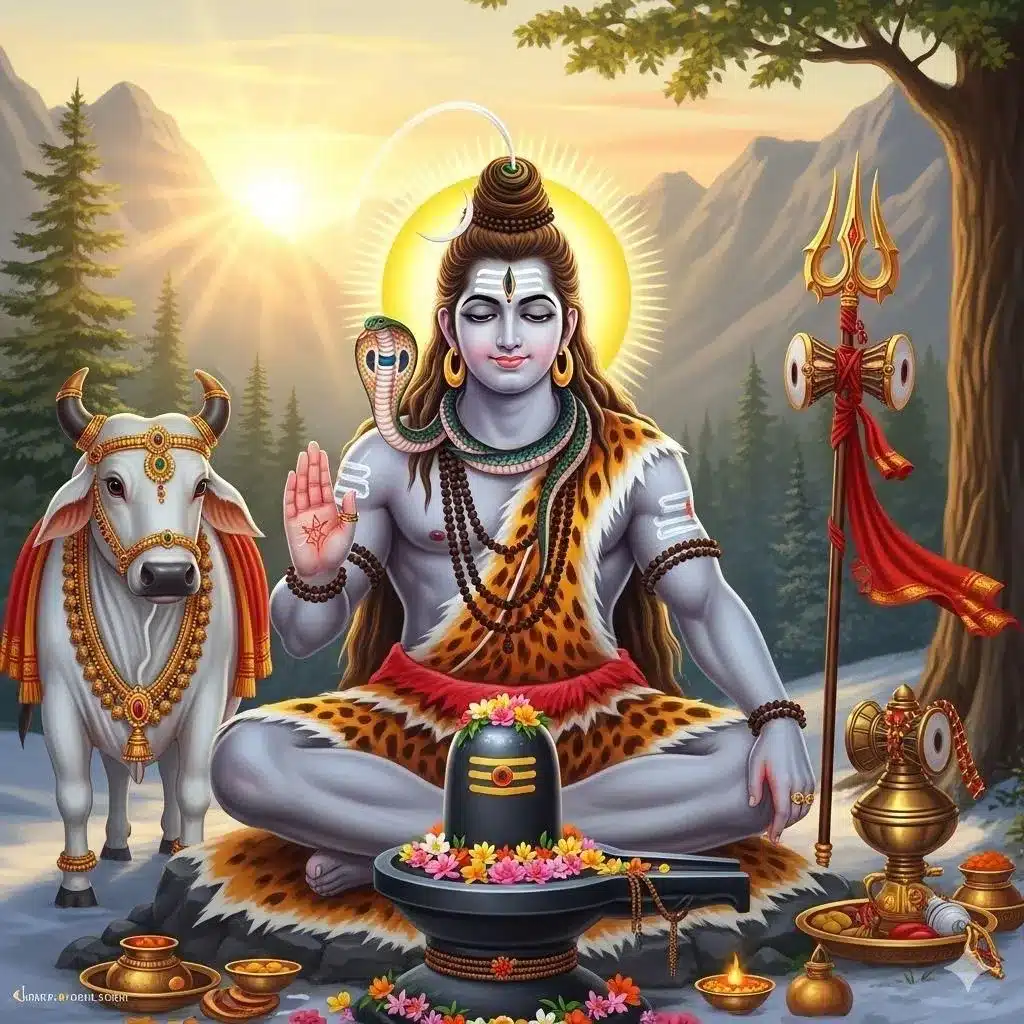
Worship, Self-Surrender and Liberation WORSHIP An idol (murti or vigraha), sun, fire, water, Ganges, saligram (symbol of Visnu), linga (symbol of Siva), are all symbols of God which help the aspirants to attain one-pointedness of mind and purity of heart. A symbol is absolutely indispensable for fixing the mind. The Christians also have the symbol-the cross. A gross mind needs a concrete symbol; a subtle mind needs an abstract symbol. Even a vedantin has the symbol Om for fixing the wandering mind. In the beginning concentration or meditation is not possible without a symbol. The mind is disciplined in the beginning by fixing the mind on a concrete object or symbol. Later, when it has been rendered steady and subtle, it can be fixed on an abstract idea such as Aham Brahma Asmi (I am the infinite). The devotee superimposes, on the concrete idol, the Lord and his attributes. He does sodasopacara puja for the idol-the sixteen kinds of respect or service of the Lord. This consists of padyam (water for washing the feet), arghyam (water to wash hands), asana (seat), snana (bathing), offering of clothing, applying sandal paste, offering flowers (arcan), burning incense, waving of lights and camphor, food offering (maha naivedyam) etc. The wandering mind is fixed now in this form of worship. The aspirant gradually feels the nearness of the Lord. He attains purity of heart and slowly annihilates his egoism. He who has done puja (worship) with flowers and other articles of worship for some time, can take to mental worship. In mental puja the devotee offers all offerings to the Lord mentally. This is an advanced form of worship. It purifies the heart and steadies the mind. It fills the mind with pure love for the Lord and gradually transmutes man into a divine being. Even in worshipping a small idol, he has to repeat the Purusa Sukta (a sacred hymn) and to think of the virat purusa (cosmic form)-with countless heads, countless eyes, countless hands, who extends beyond the universe and also of the Lord or atman who dwells in the hearts of all. The aspirant gradually begins to feel that the Lord he worships is in the idol, in the hearts of all creatures and in the names and forms of all in this universe. He begins to feel His presence everywhere. One can realise God through worship of murti (or idol). The worship of the Lord in saguna (concrete) form is a great aid for vedantic realisation also, and for the realisation of the Lord in His all-pervading, formless aspect. The worship of the murti is very essential for the purpose of concentration and meditation in the beginning. Such worship is not in any way a hindrance to the attainment of God-consciousness. Those who vehemently attack murti puja (worship) are groping in the darkness of extreme ignorance. They have no real knowledge. They enter into vain debates to show that they are learned persons and have not done any sadhana (spiritual practice). Idle talking is their real profession. They have unsettled the minds of countless persons. The whole world worships symbols and murtis in some form or other. As one advances in meditation, the form melts into the formless and the aspirant becomes one with the formless essence. Empty vessels only make sound. A practical man who does meditation and worship, who is full of knowledge and real devotion, keeps always silence. He influences and teaches others through silence. He only knows whether a murti is necessary in the beginning or not. Prasada is that which gives peace. During kirtan (chanting), worship (puja, havan and arati), milk, sweets and fruit are offered to the Lord. Puja is done with bael (wood apple) leaves, flowers, tulsi (basil), sacred ash, and these are later given as prasada from the Lord. They are charged with mysterious powers, by the chanting of mantras (sacred hymns) during puja and havan (worship with the fire as the sacred symbol). Prasada is a great purifier. Prasada is a panacea for all ills; it is a spiritual elixir. Prasada is the grace of the Lord. It is an embodiment of sakti (divine energy). Prasada is divinity in manifestation. Many sincere aspirants get wonderful experiences from prasada alone. Many incurable illnesses are cured by prasada alone. Prasada energises, vivifies, invigorates and infuses devotion. It should be taken with great faith. Those brought up in modern education and culture have forgotten the glory of prasada. Prasada gives good health, long life, peace and prosperity to all. The sacred ash is the prasada of Lord Siva. It is applied to the forehead. Kumkum (vermilion powder) is the prasada of Sri Devi or Shakti. It is applied at the space between the eyebrows. A devotee repeats the mantra (mystic formula) of the Lord during worship and touches his heart, his head, tuft of hair, arms and hands. There is caitanya (consciousness, power) in every letter of the mantra. Through repetition of the mantra and the touching of the parts of the body with the repetition of the mantra, the aspirant is gradually divinised. There is spiritual awakening. Spiritual currents are generated-tamas (inertia) and rajas (impurity) are destroyed and he is filled with pure satva (purity). He becomes identical with the object of worship. He attains the same world of, or proximity with, or the same form of, or absorption into, the Lord. For a sage there is no such thing as insentient matter. Everything is Vasudeva or caitanya. The devotee actually beholds the Lord in the idol. But the worship does not stop there. The sadhaka (seeker) is taken step by step to higher stages of devotion and samadhi (or communion) through the worship of the idol. Though he worships the idol, he has to keep before his mental eye the all-pervading Lord. He has to feel the Lord’s presence in his heart and in all objects also. The ways and rules of worship, described in the Hindu scriptures are scientifically accurate and

Worship, Self-Surrender and Liberation Read Post »

ebb8e1c10e68914d5fd47f8bd21b97e8
Swami Sivananda, Yoga of Synthesis

Secret of Karma Yoga

Secret of Karma Yoga RACTISE KARMA YOGA The practice of Karma Yoga does not demand that you possess enormous wealth. You can serve with your mind and body. If you find a poor sick man lying on the roadside, give him some water or milk to drink. Cheer him up with sweet encouraging words. Take him to the nearest hospital. If you do service like this, your heart will be purified. If anyone is suffering from pain in any part of the body, at once shampoo the part. When you massage him feel that you are shampooing the body of the Lord. As you do this, repeat your mantra, or any other name of the Lord. Also pray from the bottom of your heart: “O Lord! Remove the pain of this man. Let him rest in peace. Let him possess good health.” When you massage any person feel that it is the energy from the cosmic source that is flowing continuously through your hands. Some neophytes are afraid that their energy will be depleted by massaging another person. This is a serious mistake. The more you give, the more you will get. You will be in tune with the cosmic energy. This is the divine law. If you see a man or an animal with severe bleeding, on the road or anywhere, do not run hither and thither to find cloth to bandage them. At once tear a piece of cloth from your shirt and use that for bandaging. This is real Karma Yoga. This is a test to gauge your heart. How many of you have done such noble service? If you have not done it up till now – then do it from today. God is more pleased with such service of the poor and the helpless, than with service done by rich people with pomp and vanity. “Do as you would be done by”-remember this motto always. You will not do any wrong action. You will feel unbounded joy. Never lose the opportunity to serve. Serve to the satisfaction of the person you are serving. It is not enough to serve him just to please yourself. Only by selfless service can you attain God-realisation. If selflessness becomes the religion of the world, there will be heaven on earth. When work is done as worship of the Lord, it is transformed from karma into yoga. Cultivate cosmic love. Rekindle the light of love in the world. THE PRESENT IS SUPREME In order to attain success in yoga, sadhana (spiritual practice) is necessary. Have no patience with theoretical religion. By contemplating in a closed room for years, you may not advance more than a few steps. The effects of past actions can only be washed away by the fresh, virtuous actions in the present-that is, by service. There is no other way of purifying yourself. There is no other method of destroying impure impressions, and desires. No one can achieve the ideals of Karma Yoga without destroying the ego. And the ego, the accumulated layers of egoism cannot be destroyed without the magic solvency of service. If one wishes to know, one must give and one must serve. To the self-centred, knowledge will ever be meaningless and empty. God has no use for the so-called pandit who mechanically chants the scriptures, but who shuts his eyes to the sick man on the wayside. The self, the smaller self, of rajas (dynamism) and tamas (inertia), is always prompting one for one’s own aggrandisement. It wishes to enjoy, it wishes to have bhoga (pleasure). But the bhoga of the three worlds cannot give a tenth, a hundredth, of the bliss of divine knowledge. Karma Yoga is very difficult in the beginning due to the ego-ridden impure mind. You have to be strict and firm with the mind. Do not listen to its selfish promptings. Draw inspiration and courage from communion with the Lord in the silent hours of prayer, and from studying the lives of saints and from the sacred scriptures. Do not think too much about this method of Nishkamya Yoga (the yoga of selfless service). Just begin somewhere. Work with the right intention, the right spirit. The way will open before you. Do charity. Serve the sick. Serve the poor. Serve the country. Serve your parents. Serve any social or spiritual institution. Spiritualise all of your actions. Then every action becomes an offering unto the Lord, when it is performed in the right spirit. Karma Yoga is a great leveller. It removes all illusory distinctions and differences. It leads to unity and to a feeling of oneness. It removes idleness and inertia. It gives you good health. Plunge yourself in the practice of Karma Yoga, ‘The Yoga of Selfless Service’. Glory to Karma Yoga which elevates a man to divinity and unity. GRADUAL PROGRESS The mind is so framed that it cannot work without expectation of fruits or anticipation of rewards for actions. If you smile when you meet your friend, you expect a smile in return. If you give a glass of water to somebody, you expect something in return. If you salute a friend, you expect him to salute you in return. This is the inborn nature of a worldly-minded man. Train the mind to work disinterestedly. Discipline the mind with patience and perseverance. Worldly-minded people cannot understand the spirit of Nishkamya Seva (unselfish, motiveless service) as their minds are charged with or even saturated with impurities. In the beginning all your actions may be selfish. But if you work hard in the field of Karma Yoga for two years then five actions out of a hundred will be unselfish and ninety-five will be selfish. Scrutinise your motives. Purify them. Struggle hard. After some years of incessant struggle, fifty actions out of a hundred will be unselfish. A good time will come and all your actions will be unselfish and pure. The time is not very far to reach the ideal if you keep the ideal

Secret of Karma Yoga Read Post »

786141b7226af89f9c56b3e9c9c87380
Swami Sivananda, Yoga of Synthesis

Understanding Karma

Understanding Karma UNDERSTAND NATURE Every man should have a comprehensive understanding of nature’s laws, and their operations. Then he can pull on in this world smoothly and happily. He can utilise the helping forces to serve his ends in the best possible manner. He can neutralise the hostile or antagonistic currents. Just as the fish swims against the current, so also he will be able to go against the hostile currents by adjusting himself properly and safeguarding himself through suitable precautionary methods. Otherwise he becomes a slave. He is tossed about hither and thither helplessly by various currents. Various hostile forces drag him in different corners. He drifts like a wooden plank in a river. He is always very miserable and unhappy although he is wealthy and possesses everything that the world can offer. The captain of a steamer who has a mariner’s compass, who has knowledge of the sea, the routes and the oceanic currents can sail smoothly. Otherwise his steamer will drift here and there helplessly and be wrecked by being dashed against some icebergs or rocks. Likewise, a wise sailor in the ocean of this life, who has a detailed knowledge of the laws of karma and nature can sail smoothly and reach the goal of life positively. Understanding the laws of nature, you can mould or shape your character in any way you like. “As a man thinketh so he becometh”, is one of the great laws of nature. Think you are pure; pure you will become. Think you are noble; noble you will become. Think you are a human being; human you will become. Think you are Brahman; Brahman you will become. He who spreads happiness will always get such favourable circumstances as can bring him happiness. He who spreads pain to others will, doubtless, get such unfavourable circumstances, according to the law of nature, as can bring him misery and pain. Therefore man creates his own character and circumstances. Bad character can be transmuted into good character by means of good thoughts, and unfavourable circumstances can be changed into favourable circumstances by doing good actions. O Ram! You must understand the laws of nature and become wise and happy. NATURE’S LAWS The law of compensation operates everywhere in nature’s phenomena. The seed breaks and a large tree arises from the seed. There is no loss in the breaking of the seed. Fuel burns. Fuel is destroyed. But there is heat, in accordance with the law of compensation. Many articles are cooked in the fire on account of the heat. The law of compensation operates in the mental plane also. It keeps up the balance and establishes peace, concord, equilibrium, harmony and justice in nature. Think deeply, cogitate and reflect. You will see that this law of compensation is operating everywhere in the phenomena of nature. It is inexorable and immutable. No on can defy this relentless and irresistible law. If you do an evil act, you will reap a bad fruit in compensation. If you take an individual life as an isolated event which begins with birth of the physical body and terminates with its death you cannot find any correct explanation or solution for the affairs of life. You will be groping in darkness and despair. Your present life is nothing, when compared with the whole soul-life. It is momentary – a mere fragment. If you want to find the cause or antecedent for anything, you will have to go deep into the affairs of the eternal soul-life. Then alone there will be perfect balance of cause and effect, antecedent and consequence. Life does not end with the disintegration of this physical body alone. There is reincarnation. There had been countless previous lives also. You will have to take into consideration the widest view of the life of the soul. Then you will find a perfect, satisfactory solution for all the intricate and complicated affairs of life. Every wrong action or crime brings its own punishment in accordance with the law of retribution. The law of causation, the law of action and reaction, the law of compensation and the law of retribution – all operate together. He who hurts another man, hurts himself first. Remember that God is neither partial nor unjust. Remember that God is not responsible for the wealth of one man or the poverty of another. You suffer on account of your own wicked actions. There is nothing chaotic or capricious in this world. Things do not happen in this universe by accident or chance in a disorderly manner. They happen in regular succession and events follow each other in a regular order. There is a kind of definite connection between what is being done now by you and what will happen in the future. Sow always the seeds which will bring pleasant fruits and which will make you happy herein and hereafter. THREEFOLD KARMA Man is threefold in his nature. He consists of desire or feeling, knowing and willing. These three fashion his karma. He knows objects like chair, tree, etc. He feels joy and sorrow. He wills – to do this, or not to do that. Behind the action, there are desire and thought. A desire for an object arises in the mind and then you think of ways and means to obtain it. Then you exert to possess it. Desire, thought and action always go together in this process. They are the three threads, as it were, that are twisted into the cord of karma. Desire produces karma. You work and exert to acquire the objects of your desire. Karma produces its fruits as pain or pleasure. You will have to take birth after birth to reap the fruits of your karmas. This is the law of karma. Karma is of three kinds, namely, the accumulated works, the works that fructify and the current works. The accumulated karmas have accrued to you from the past. Part of it is seen in the character of man, in

Understanding Karma Read Post »

dbbf8e485457efd36573eba472f5518e
Swami Sivananda, Yoga of Synthesis

The Science of Yoga

The Science of Yoga THE SUPREME GIFT Yoga is the supreme gift of India to the world at large. Yoga does not quarrel with science; it supplements it. Yoga is a methodical way to attain perfection, through the control of the different elements of human nature -both physical and psychical. Yoga is the supreme science of contacting reality. It is perfection in action. It is equanimity of attitude. It is perfect peace. Yoga is union with God. Yoga is not a thing merely to be heard. Yoga is a thing that has to be assimilated and put into practice in daily life. The practice of yoga enables one to realise unity with the whole world. It is living in tune with God. Yoga is abiding by the principles of truth and avoiding the path of untruth. Yoga is a science which is meant for the study of the reflective. It is for those who are convinced that the world of the senses has nothing substantial to offer. Yoga is a process of continuous transformation. The inner perfection of self-realisation can only come to be revealed by experience. This happens only progressively. The transformation of one’s personality is achieved through stages. As you advance in yoga, the ego is progressively replaced by the spirit. It is through this that the will of God works. By the practice of yoga, the sadhaka (seeker) is freed from the tyranny of the lower mind and he becomes divine. At a later stage the transformation takes the shape of a progressive unfoldment of the spirit. A preceptor or guru is indispensable for the practice of yoga. The aspirant should be humble, simple, gentle, refined, tolerant, merciful and kind. You will not have success in yoga if you have desire to get psychic powers. Yoga does not consist of sitting cross-legged for six hours, nor in stopping the heart-beat, nor in getting buried in the ground for a week or a month. YOGA IS ETERNAL LIFE Yoga is a perfect and practical system of self-culture. Yoga is an exact science, it aims at the harmonious development of the body, the mind and the soul. Yoga is the turning away of the senses from the objective universe and concentrating it on the mind within. Yoga is eternal life in the spirit. Yoga aims at controlling the mind and its modifications. The path of yoga is an inner path, whose gateway is your heart. Yoga is the discipline of the mind, the senses and the physical body. It helps to control and co-ordinate the subtle forces within the body. Yoga brings perfection, peace and everlasting happiness. Yoga helps you in your business and also in your daily life. Through yoga you can have a calm mind and a peaceful sleep. Through yoga you can also have increased energy, vigour, vitality, longevity and a high standard of health. Yoga transmutes your animal nature into divine nature. It raises you to the pinnacle of divine glory and splendour. The practice of yoga will help you to control your emotions and passions. It will give you the power to resist temptations and to remove disturbing elements from the mind. Yoga enables you to keep a balanced mind always. It removes fatigue. It confers on you serenity, calmness, and wonderful concentration. It will enable you to hold communion with the Lord and thus attain self-realisation. If you want to attain success in yoga you will have to abandon all worldly enjoyments. You will have to practise tapas, (austerity) and brahmacarya (celibacy). To curb the mind you have to use intelligent and judicious methods – because, if you use force, the mind becomes more turbulent and mischievous. Those who try to control the mind by force are like those who endeavour to bind a furious elephant with a silken thread. WHAT IS YOGA? Yoga is the science that teaches us the way, the most effective way, how to remove our defects and weaknesses, and how to attain the state of perfection, freedom and super-conscious blessedness. The state in which there is union with the absolute. Yoga enables its students to acquire perfect control over the physical body, the mind and the senses. Yoga shows you the marvellous method of rising from evil to goodness and from goodness to godliness, and then from godliness to divine splendour. Yoga is a search for truth. It raises a man to spiritual eminence. This form of self-education is called yoga. The yogi observes the law of moderation at all times. He treads the middle path. He does not torture his body, but he does regulate his eating and sleeping. He does regulate his talking and working. Yoga is your unique heritage. Proceed upon this path gradually and steadily. Nothing can be achieved overnight. But steady practice will certainly bestow great blessings in the long run. Yoga has an unparalleled utility and curative value not yet tapped by modern medical science. The practice of yoga is not opposed to any religion. It is not opposed to any sacred church. It is purely spiritual and universal in its teachings. It does not contradict anyone’s sincere faith. Yoga does not want you to turn away from life; it demands spiritualization of life. Yoga brings about physical and spiritual development, side by side. And finally, yoga enables the aspirant to attain blissful union with the supreme being. When yoga gets ripened, it becomes the super-conscious state. It becomes the state called nirvikalpa samadhi (realisation of the absolute). Apply yourself tenaciously to self-enquiry and meditation. Be vigilant. Be diligent. Kill thoughts and desires of the world, through holy desires. Slay unholy thoughts with holy thoughts. Thus gain victory over your destiny. There is a vast ocean of knowledge within you. Unfold. Become a jivanmukta (a liberated soul). Remember, God helps those who help themselves. THE LADDER OF YOGA There are people who have not been able to serve their preceptors, who have not done any selfless service, or any devotional practices,

The Science of Yoga Read Post »

The Divine Life Society Rishikesh Swami Sivananda
Swami Sivananda, Yoga of Synthesis

Epistle of Sivananda

Epistle of Sivananda What is divine life? To shed the animal in man and to sublimate the human in him to the divine; to express the sublimation in his daily life, in his hourly life, in thought, word and deed. That is divine life. To pray, to do japa (repetition of God’s name), to sing His glory, to do kirtan (chanting), to meditate on the Lord, is divine life. Treat all kinds of work, domestic, official, etc., as service of God. Surrender all your actions and their fruits to the Lord. Give up agency. Feel you are an instrument in the hands of the Lord. Actions will not bind you. Your heart will be purified. The grace and light of God will descend on you. THIS IS THE WAY TO SPIRITUALISE ALL YOUR ACTIONS 1. See God in all beings and things. See the world as a manifestation of God. It is not necessary to abandon the world in order to have a vision of God, because the world itself is a manifestation of God. 2. Listen! Wake up now. Develop dispassion. Do sadhana (spiritual practice). Beware of the senses. Become desireIess. 3. Understand life. Live divinely. Seek good company. Fear not. Waste not time. Depend on God. 4. Spiritual discipline is the key to God-realisation. Discipline the body and the senses and the mind. 5. May you attain God-realisation now and here. 6. Be regular in keeping your spiritual diary. Spiritual progress will be greatly quickened. Kindly be regular in sending me a copy of your diary at the end of each month for review and further instructions. I am immensely pleased to note your regularity in sadhana. 7. Go to bed early (10 p.m.) and get up early (4 a.m.). The early morning hours are most favourable for meditation. 8. Understand life’s supreme purpose. Seek the eternal. Realise the underlying essence. 9. Have intense thirst for liberation. Die to live. Discipline the mind. Have self-control. 10. Learn to be wise. Make the best use of this human birth. Realise the oneness of existence. 11. Serve untiringly. Serve selflessly. Pray devotedly. Live truthfully. You will soon enter the kingdom of God. 12. Remain cheerful. Do japa whole-heartedly. Rejoice heartily. You will attain the state of blessedness. 13. Reflect ceaselessly. Meditate intensely. Realise perfectly. Rest peacefully. 14. Think rightly. Act righteously. Meditate regularly. You will attain eternal bliss. 15. Aspire fervently. Pray sincerely. Introspect seriously. Reflect vigorously. You will enjoy supreme peace. 16. Speak sweetly. Speak softly. Speak lovingly. Speak truthfully. You will attain unalloyed felicity. 17. Never leave your sadhana (spiritual practice), your meditation, even for a day. Constant practice and eternal vigilance are indispensable, till God-realisation is attained. 18. As long as you do not realise the truth, practise self-control and meditation. 19. Conscious attempts to unite oneself with God, is called spiritual sadhana. 20. Subjugate the senses. Slay this egoism. Curb the mind and enter the illimitable domain of immortal bliss. 21. Om Krishna. 22. Faith creates, faith heals, faith works wonders, faith moves mountains. 23. Faith is the secret light for finding God. Faith makes the weak strong and the timid brave. Faith makes the impossible possible. 24. Therefore, have unflinching, perfect faith in the Lord. 25. Please remember always that renunciation is the essence of spirituality and the secret of self-realisation. Renunciation is getting rid of egoism, desires and cravings. 26. Renunciation is the only way to perfection and bliss eternal. Renunciation leads to complete unification with the Supreme Being. 27. Renounce and be free. 28. Dharma is the pivot of life. Dharma means duty, righteousness, religion, eternal law. 29. Where dharma is, there victory is. Dharma supports life. Dharma brings perfection. Dharma is a way of life based on virtues and perfect moral conduct. Dharma bestows immortal bliss. 30. Control of the mind is the first step to spirituality. Victory over the mind means victory over the world. Conquest of the mind is the greatest victory. 31. The mind becomes unstable and restless through desires for objects. When the mind is not centred in the atman, man desires objects. Become desireless, control the mind, be happy for ever. 32. Satsanga is association with saints and sages. Without satsanga the mind cannot be turned towards God. 33. Satsanga is a formidable and impregnable – fortress to protect aspirants from the temptations of maya (illusion). Live in the company of sages, hear their valuable instructions and follow them implicitly. 34. God is love. Bhakti is the experience of divine love. 35. Do your duty in a spirit of worship. Perform all actions in an attitude of prayer. 36. Your heart should overflow with divine love at the sight of any object in this world. Then alone you will become an ideal devotee. 37. Bhakti is devotion unto the Lord. Prayer, japa (repetition of God’s name), kirtan (chanting), remembrance, worship, meditation, self-surrender are all limbs of bhakti yoga. Bhakti yoga is suitable for the vast majority of persons. Para (supreme) bhakti and jnana (self-knowledge) are one. 38. God is very close to you. He abides in your heart. Closer is He than the breath; nearer than hands and feet! He isyour very self or atman. 39. Strive to know God. Seek the company of sages. Lead a life of selfless service, renunciation, dispassion, prayer and meditation. 40. Have self-conquest. Control the mind. You will attain perfection and peace. 41. The divine grace is life’s greatest treasure. If there is self-surrender, there is the inflow of grace. Lord’s grace will descend in proportion to the degree of surrender, the more the surrender, the more the grace. 42. Supreme love comes only by the grace of God. Grace of God will make you stick to the spiritual path. 43. Japa is the-recitation of Lord’s name. Japa is an important sadhana (practice) for God-realisation. 44. Japa yoga is the easiest, safest and surest way of attaining the goal in the present age. 45. Repeat 200 malas (rosary of 108

Epistle of Sivananda Read Post »

swamisivananda
Swami Sivananda, Yoga of Synthesis

Where Everyone is Welcome and Cared For

Where Everyone is Welcome and Cared For As qualification for first class aspirants, Viveka, Vairagya, Shat-sampat and Mumukshutva are prescribed by the scriptures. Some orthodox cults have caste-restrictions and insist on the students passing through the four stages of life, viz., Brahmacharya, Grihastha, Vanaprastha and then Sannyasa. When students come to me, I do not enquire anything about their qualification, position, parentage, caste or capacity. I welcome even thieves and rogues, persons of tender age and those who are sickly and old also. I know very well that they will all become dynamic Yogis when they are put in the company of sages and saints or when they are allowed to stay in a place charged with marvellous spiritual vibrations. PERFECT FREEDOM The spiritual vibrations of the Ashram have a great beneficial effect in moulding people in the path of Yoga. Thousands have felt this. I do not impose any rules or restrictions on the aspirants who desire to stay in the Ashram. Any number of persons can come and stay here as long as they like and they can go out the moment they wish. I do not demand any work, service or help from them. I permit them to carry on their own study and Sadhana and help them in all possible ways. The highly devoted aspirants who appreciate selfless service for their own evolution spend all their time in carrying out useful works and manage the affairs of the Society nicely. It is all Yoga for them. They are all Yoga Bhrashtas, living examples and models for the world. Thousands of aspirants have come to the Ashram. Several hundreds have gone out, after proper training, either for intense Sadhana in seclusion or dynamic work in cities; and yet the Ashram is always full and every day at least a dozen highly educated candidates crave permission to live in the Ashram. The students are mysteriously helped by attending the Satsanga and taking bath in the holy Ganga. Through some work, they all come in close touch with me and learn a lot in a short period. Quickly they develop all divine qualities without much effort and become great Yogis. MIRACLE OF MIRACLES How is it possible to run an ideal Ashram under the above circumstances? It is a great puzzle for many. It looks like a miracle to the world. People are staggered. I do not worry even a bit if the Secretaries and Managers of the Ashram come to me frequently with a big list showing a statement of debts extending to a lakh of Rupees. People’s wonder knows no bounds when, in spite of such debts, I sanction the purchase of several automatic printing machines for the University Press, or latest model high class Cameras, Enlargers and Projectors for the Studio, or the construction of big halls, temples and Ghats by the side of the Ganga. People complain that here they get more food and facilities than they need for their living. The inmates feel very rich and happy. Some may look as ordinary villagers; a few may not have had much education. But I find that every one who lives in the Ashram is a great saint with wonderful hidden faculties and talents. Prominent persons who visit the Ashram are stunned to see the wonderful development in the inmates, admire their capacities and enquire: “Dear Swamiji Maharaj, how do you find so many people of talents?” Is there any instance of my having asked any inmate of the Ashram to go out or expressed ill-feelings or used harsh words to him? None at all. When I have serious complaints that a particular Sadhaka disturbs the peace of the Ashram or interferes with the smooth working of the institution, I ask the man to go out and live independently in some other suitable place. I give him enough money for travelling expenses and a note of introduction to devotees for helping him. I give him spiritual advice at the time of his departure and pray for his welfare and enlightenment. In a few days or weeks, the man feels the Ashram as his own sweet home and comes back with a changed angle of vision and heart. I heartily welcome him. I forget the past easily. I do not have a vindictive nature. I permit useless persons, pessimistic people and even those who criticise me and attack the management to stay in the Ashram. After a short stay, they are transformed miraculously. I see joy and bliss in their face. HOW ASPIRANTS SHOULD BE CARED FOR I have unlimited, spontaneous generosity, love and affection for all the students of Yoga, irrespective of their age or sex, qualifications or abilities. I am highly pleased with those who do Japa, or a little meditation or some kind of service for the society, the sick and the poor. I give ample scope for all types of people to remain in the Ashram and evolve through Sadhana or work for the spiritual uplift of mankind. I take special care of the old people, young aspirants and the helpless sick persons. I distribute sweets and fruits first to all of them and then take a small portion. I remember now how I carried milk and curd to the old Sadhus in Swargashram and shampooed their legs and gave them medicine when they were sick. Even now I send a portion of my own food first to some Sannyasi students and visitors in the Ashram. For some years I myself carried a portion of my own food to a few hard workers who were taking a meagre diet and had very poor health. Later on, when the work increased in all directions, I kept two young Brahmacharis by my side always to distribute fruits and biscuits to all the inmates of the Ashram. These were not thrown into the rooms in the way in which worldly people haughtily give charity. I had the Bhav that I served the Lord in that

Where Everyone is Welcome and Cared For Read Post »