








Hari Om

Menu

THE Glory of Saints – The Self Realized Masters of Bharat – The Jivanmuktas

shiva5 1
Swami Sivananda, THE Glory of Saints - The Self Realized Masters of Bharat - The Jivanmuktas

Treatment of Visitors

Treatment of Visitors People came to the well-known Ananda Kutir with the devout desire of having the ‘darshan’ and blessing of this mahatma, and to their surprise and confusion found themselves confronted by a stately, stalwart sadhu (monk) who behaved as if it was he who had come eager for their darshan. For instance, a certain lady from South India came to have Swami Sivananda’s darshan. At that time Swamiji was in the office and she was shown in. After some time she came out and asked some ashramites standing there “Where is Swami Sivananda?” When she was told that it was from him she was coming, in great astonishment she gasped: “Oh! I thought he was the manager. Is he the saint?” With tears in her eyes she ran again to the manager-monk, and fell at his feet. To see him cutting jokes with everyone gave the impression that he was a worldly man, but one who was perceptive could not but be dazzled by the exquisite lustre of his eyes which ever revealed his spiritual greatness. Yet, not withstanding the unmistakable atmosphere of serenity and dignity that pervaded his presence, every movement, word and action appeared to say, “I am your servant.” Though he was a seer of great repute, a teacher and reformer of nation-wide renown and the founder and head of a great organisation, Swamiji seemed quite oblivious of these facts, and was aware of himself as the cosmic servant and worshipper. Even when a dozen willing students of his were ready to hasten to serve him at a single word, one would find at times that before a cup of milk could be ready for a tired guest, Swamiji himself would come up with the milk from his room, and some fruits as well in his little white bag. If he saw that a visitor had a naturally shy or reserved temperament and felt sensitive about making known his needs, Swamiji would anticipate every one of them and an ashramite would be directed to attend to all his wants even before he asked for anything. When he went for his evening walk Swamiji was always in the habit of carrying with him some fruit, some little tit-bit or perhaps an interesting book which he would take to the room of anyone to whom he could give it. Whilst on his way to his room at midday, happening to see some sadhu being served with bhiksha by an ashramite, at times Swamiji would stop there to drive away the monkeys and pour water for the sadhu to wash his hands. On such occasions remonstrances were of no avail. If his devotees had presented fruits and sweets to him as an offering, Swamiji would at once start giving them to every soul in sight. If the servant boys, the barber, the postman, a passing beggar or scavenger happened to be on the spot, they all got their share. On the eve of periodical functions in particular, when feeding on a large scale was to take place, before the hired cook had begun to prepare the special sweet dish Swamiji’s childlike impatience would overcome him. Quickly offering a little to the Ganges he would heap up all that was ready and hasten to distribute it. He did not give with one hand, but would scoop with both hands from the plate and pour it into everyone’s hands. At times he forgot to distinguish between adults and infants in his fervour to give. Several times one would witness the comic terror of a suddenly wide-eyed child confronted by the extended palms of Swamiji, heaped with a quantity of sweets such as would hardly be possible for it even to hold, let alone carry. He amazed the orthodox type of sannyasins by his manner of service to his devotees. A guest would feel that he was monopolising the entire time and attention of Swamiji and that the latter was bestowing the most exceptional care upon his comforts. The visitor would find that no sooner was a room allotted to him than he was besieged by a dozen kind enquiries as to his needs. Water would be placed in his room, a lantern provided immediately, a mosquito net if it was summer or an extra blanket or two if the season was cold, an easy chair if he happened to be old or an invalid. Then Swamiji would finally ask the librarian to issue any book that he desired to study. Observing this extreme and meticulous manner of Swamiji’s care and attendance proved a revelation to many visitors who said frankly, “We are really put to shame by Swamiji. He teaches us householders the true method of treating and serving guests. Swamiji has perfected the art of hospitality and we feel that we must learn many points from him. We thought that as householders there was little that we did not already know about entertainment; but here is one who is a model to be copied, even by us.” The manner of treatment of visitors and guests at this remote ashram was truly an eye-opener. The ashramites as well as anyone connected with them could well be proud of it. Swamiji was like a watchdog in this respect. His instruction to his beloved workers was never to be overbearing to any visitors. He would constantly say: “If you try to view everything as Atman you must express it in all your actions. It’s no good to have your head in the clouds while you keep your palms clenched in your pockets. It does not matter whether they derive any extraordinary spiritual gain or not, but people staying here for some time must at least enjoy real peace. Later, whenever they remember the love and kindness they received here they will also be reminded of the peace of the Ganges, the kirtans and other spiritual ideas associated with the place. Serve them, therefore, with bhava (feeling). Ashrams and maths must serve as examples

Treatment of Visitors Read Post »

images 9 2
Swami Sivananda, THE Glory of Saints - The Self Realized Masters of Bharat - The Jivanmuktas

Swami Sivananda’s Unique Way of Teaching

Swami Sivananda’s Unique Way of Teaching Swami Sivananda accepted the supreme and vital need for what is known as Sadhana-Chatushtaya. Whereas the orthodox Rishis, sages, Yogis or holy men waited for the ripe seeker (one who was ready, who had disciplined himself, who had prepared himself) to approach them, Swami Sivananda said that it is perhaps too much to expect a person living in the modern world, assailed on all sides by distractions and temptations, to develop discrimination and dispassion. He said that even in the case of a person who runs away from failure it is possible to find a spark which could be fanned into a big flame. Sometimes if the spark didn’t exist he even ignited it. That was the extraordinary beauty in Swami Sivananda. One of the methods adopted by him was massive dissemination of spiritual knowledge. It was absolutely and totally indiscriminate. Viveka is often translated into discrimination. Here was a master who performed indiscriminate charity and undertook indiscriminate dissemination of spiritual knowledge in the hope that one of these pamphlets or books, dropping into the hands of a man at a certain psychological moment, might ignite true Viveka, true aspiration, in him. I’ll give you just one or two instances. He used to send lots of free books to devotees and non-devotees. Among the recipients of these free books were Sir Winston Churchill (Prime Minister, London, Great Britan), President Truman (Washington) and Marshall Stalin (Moscow). Once somebody said, “Swamiji, these will never reach those men.” He replied, “Never mind, they are books after all and they are parcelled and addressed to Moscow, London, Washington. They have got to get there. Somebody has got to open them to find out what the parcel contains. He will read them.” Now another rather interesting incident which is relevant to the discussion. One day an official letter had been received from a government department. On top of it there was the name and address of the head of that department. Immediately Swamiji autographed a book, “May God bless you, with regards, Prem and Om, Sivananda”, and sent it to this address. That man’s name was also put on the Divine Life Magazine free register. He received the book and a couple of days later a copy of the Divine Life Magazine. Probably he threw it away. Next month again there was the Divine Life Magazine, so he asked his assistant to write a stiff letter to the Divine Life Society saying, “Do not waste time sending these to me, I don’t like them. I can’t bother to look at them.” When this letter was received Swamiji said, “Ah, he doesn’t want, all right. Take his name off the magazine free register. We don’t want to impose a thing upon him.” It looked as though the story was completed there. No, two years later this man wrote to Swamiji a letter that moved all of us: “I received a book from you two years ago, heaven knows how you got my name and address. At that time I was so arrogant and haughty–I was occupying a position of power and prestige–that when I received your book I threw it away. I was on top, then a little later I came down–I lost my job, my money, everything went wrong. One day I had suicidal thoughts and wandered into my study. Sitting dejected in a depressed mood, I happened to look up and there I saw ‘Sure Ways for Success in Life and God-realisation’. Almost mechanically I pulled out that book, opened a page and there was ‘Never Despair’. I saw this and suddenly I remembered that I had received this book two years ago from you and had callously thrown it into the waste paper basket. But my servant who cleaned my room had emptied the basket and thought I might have accidentally dropped that book into the basket, so he took it out, dusted it and put it on the shelf without my knowledge. So I am thankful to him and I am thankful to you. That book saved my life. Then he pinked up the threads of what was left and made a success of his life. That was Gurudev’s method. I am quite sure that of the thousands and thousands of people who received books, pamphlets and magazines from him, only a few made use of them in this manner. But it might strike a sympathetic cord in the heart of somebody, somewhere, at sometime. In Swamiji’s case it was indiscriminate dissemination of spiritual knowledge. If you bestow some thought upon it you’ll probably feel (like me) that he must have been a divine incarnation, because only God adopts this attitude. Only in God’s nature you find such an approach. If you look at a fruit tree (or any tree which bears fruits and berries with seeds) you’ll understand this philosophy very beautifully. Can you count the number of seeds that one single tree produces in one single season? Imagine what would happen if all of them germinated and became trees. There wouldn’t be space even for one species of tree to exist on this earth! But it does not happen. (I’m not interested in explanations, I’m only looking at the truth.) God has created a fruit-bearing tree; that tree yields thousands of fruits every season and not all of those seeds germinate. This omniscient, omnipotent, omnipresent God is quite satisfied with that. You may argue that the rest of the fruits become fertiliser. Excellent, that suits me! That is precisely what Swami Sivananda did. He went on sowing thousands and thousands of seeds. A few of them germinated and became mighty trees in themselves, and the others acted (or act) as fertilisers for the preparation of the soil for a future growth. People whom Swami Sivananda loved and trained, served and guided, people in whom Swami Sivananda sowed the seeds of spiritual aspiration–and who perhaps did not respond as zealously as you might have expected them

Swami Sivananda’s Unique Way of Teaching Read Post »

hqdefault 2 1
Swami Sivananda, THE Glory of Saints - The Self Realized Masters of Bharat - The Jivanmuktas

Swami Sivananda’s Philosophy

Swami Sivananda’s Philosophy  Sri B.S. Mathur. Swami Sivananda Maharaj of Rishikesh is a great Sage. He lives in the company of God incessantly. More than that he is a teacher, a world-teacher, keen on elevating mankind. But how does he do all this? He lives in Rishikesh and has disciples all round him. He does not leave Rishikesh and yet he is a treasure house of comfort and instruction to millions of people, all over the world. One might think that he is living far from the world. But that is not true. He is getting nearer and nearer to God so that he might uplift and comfort humanity by his illumination. He is freeing himself to free others; he is delivering himself to deliver others. There is no ignorance about him; instead, he has light and illumination. He is now spreading that light. But how? That question remains to be answered. Swami Sivanandaji has written so many books; they are all a world of knowledge and experience. They are leading people and they will continue to lead. They are definite things, something precious which generations ill-afford to forget. Then, he is responsible for a number of first rate magazines: “The Divine Life,” “The Forest University Weekly,” and “Wisdom Light.” In all these journals, words of his wisdom, hence words of universal and eternal wisdom, appear ceaselessly. And the purpose is the same to illumine and lead. This is right education that the Swami is imparting and how delightfully? Just peep into his books and magazines. This peeping is so good that you have a true and lasting glimpse of the reality behind all these appearances, so deceptive and so killing. Now think of the way. What has he prescribed to achieve all this? Here are his words. Write them in gold; they are for All Time and they are for All. “Do not be credulous. Do not give your ear to every saying or suggestion, or news or rumour. Weigh them very carefully. Ponder well, cogitate. Then come to a definite conclusion. If anything does not tally with Sruti, Yukti, Shastras, reasoning, and your own experience, reject it ruthlessly, even though it comes from the mouth of Brahma. It agrees with the above, accept it as gospel truth even though it comes from the mouth of a child.” What is all this that the Swami is talking about? Is he not asking you to possess the outlook of a rationalist? You might, if you don’t think deeply, doubt his religiousness. But that is not the thing. The Swami is a true religious sage. He is not taken up by the show of religion. He has gone deeper; he has pierced through the apparent deception of religion, from religion to reason. Look at the method. You are not to take anything for granted anything may come down to you as a tradition. Cogitate over it and accept or reject it as your reason allows you to do. Only that is precious which is accepted by your reason. Animals are animals as they have no reason. You have reason to use, and if you don’t, you get down to the level of animals. That you are not prepared to be. That is good. Try your reason and step out of darkness to come to light and greatness. That is the advice. That is the philosophy I get from Swamiji’s life and teachings. That is the philosophy I am trying to practise in life. The world round us, is full of deceptive suggestions and sayings. Why not scrutinise them? There is misery in the world. You are here to dismiss it. Do so by working under the guidance of thought and reason. Even if things don’t agree with accepted principles and contents of religious literature, you are to reject them. What an advice? What merciless reason? After all, that is reason and we have to follow it. Here you can think of Swamiji as a scientific thinker keen on truth and experiments for verification. What else a scientist will say than what is said by Swamiji? He is for the glorification of reason and truth. It might come from the mouth of a child. There is God in all of us. There is God residing in the child. God might speak through his mouth. This is common experience. Whenever we do an evil thing, there is a protest from inside. It might be feeble but it is there. That is the Voice of God. Why not listen to it? What is feeble today will assume strength in due course if you are on the right path, following God and His wishes all your life. This feeble voice you have to perfect by your thoughts, dreams and deeds. This we fail to do and thus become endless witnesses of misery and war. “Turn to the pages of the Great book of Nature and study them carefully.” Again this is Swamiji. The Book of Nature is our true teacher. There are times in which you live and there are times when you don’t live, when you simply exist. Your times of living should be continuous. So turn to the great pages of the Great Book of Nature. What a fundamental idea? In fact, this is to be our ideal and also outlook. We have to go through the Book of Nature. We cannot stick to anything endlessly except one thing and that is Nature and Reason, all in one. Let the light of Reason be our guide, friend and teacher. This is the philosophy of Swami Sivanandaji. Who will not follow it to come to comfort and to one’s real self?

Swami Sivananda’s Philosophy Read Post »

images 2026 02 17T230253.769
Swami Sivananda, THE Glory of Saints - The Self Realized Masters of Bharat - The Jivanmuktas

Swami Sivananda–Personified Synthesis of Dynamism and Renunciation

Sri Swami Chidananda Introduction The lives of great men are like so many lights removing the darkness that besets the highway of human progress. Their lofty actions are sources of perennial inspiration, not only to the people of their own immediate times, but for human beings in times to come as well. Their lives and actions serve to vivify the present and to supply perennial vitality to the future. Everything about them is so invested with unique power that during their life-time, as well as for long many years afterwards, their every word, act and example continue to exert a powerful influence over the lives of men and to carry a persistent message to all humanity. The glorious Sannyasa Diksha anniversary that we have the privilege and joy to worshipfully celebrate this day (1st June), and which marks the supreme occasion of H.H. Satgurudev Swami Sivanandaji’s renunciation of a secular life and his entry into the holy order of Sannyasa, commemorates one such lofty and significant action in the Master’s life which is filled profusely with such exemplary and inspiring acts. A Blend of Two Trends I deem it a rare joy and a great privilege to be provided this sacred opportunity of paying my homage to Sri Satgurudev, in whom I see a unique and amazing confluence of two trends, viz., of renunciation and all the inwardness and detachment that it connotes, as well as the thrilling dynamism with all the outwardly expressed vigour of activity and active, sympathetic interest in human beings and their lives, implied by it. These two trends, seemingly so much mutually exclusive and far apart, would lead us to suppose our revered Gurudev to be a mixture of contradictions. But no, rather, it is precisely to teach us that true renunciation and dynamism are not contradictory, and to bring home to us the lofty lesson that all inspired, altruistic activity for the common weal and welfare of mankind at large is actually based upon and springs forth from a whole and genuine renunciation of one’s self-centred life, and that is why our revered Master has taken to this ancient order and lived his noble life of unceasing good works and innumerable services unto all classes and sections of present-day humanity all over the world. Significance of Renunciation His renunciation represents, as it were, a fertile seed out of which has sprung forth the great tree of his later Sannyasa life, full of the flowers, fruits and the shade-giving foliage of a many-sided Lokasangraha or selfless service unto humanity upon the physical, mental, moral and spiritual fields of modern man’s life. The Master’s act of Tyaga (renunciation) and Sannyasa carries the message: “O Man! Give up thy little ‘I’ and thy petty, selfish life, and let thy selfless life flower into cosmic love, world-brotherhood and service unto all. Give up thy little self and give thyself, in body, mind and spirit, to the whole world. To renounce is, verily, to offer thyself as a gift unto the noble cause of human welfare.” His Holiness’ act of renunciation and Sannyasa, done thirty-five years ago, has served during these years as an incontrovertible proof-positive that this ancient tradition of holy Bharatavarsha, that this ancient heritage received from our bygone seers and sages, is not a negative lapsing into a selfish and careless quiescence (as it is sometimes thoughtlessly misconstrued) or an unfeeling retreat from realities, but, on the contrary, it is an utmost, positive step, pregnant with the possibilities of unlimited human welfare and containing within it the seeds of selfless service of the most glorious type. Fruit of Renunciation It is a step by which man breaks out through the barriers of his little, limited and narrow life of selfishness and attachments, and soars high into the empyrean of world-consciousness, cosmic love and vision of world oneness. It transports him into the field of world-service of Loka-Seva. This is the dynamic structure of genuine renunciation and true Sannyas. It is vibrant with love and compassion, dynamic with worshipful service and divinely pervaded by Karma Yoga in the spirit of the Gospel of the Bhagavad Gita. Such has been the exemplary Sannyasa life of our holy Gurudev Sivanandaji Maharaj and such is the significance of his Tyaga done full three and a half decades ago. The giving up of his secular life has come to mean the bestowal of lofty example of new divine life to countless thousands of people in this present age of restlessness and tension. His renunciation and Sannyasa has been a blessedness not merely to him as the renouncer, but a blessedness to countless thousands who have now come to receive the rare fruits of his renunciation. The cultural genius of Bharatavarsha, her wondrous heritage of Yoga and Vedanta, and the ideals of Sanatana Dharma, received a tremendous fillip and became infused with new life through the fact of Swami Sivanandaji’s great renunciation and through the wave of spiritual forces released thereby. To those who could perceive it, it was an act according to the Divine plan. In the building of the New India within the set-up of this memorable and significant nuclear age, his renunciation was a constructive feature that has proved prolific and richly fertile in that it has showered the incomparable wealth from the treasure-house of India’s ethical and spiritual culture like bounteous life-giving rain to an impoverished world where all higher values and nobler ideals had been seared and scorched by the consuming flames of destructive, materialistic trends and God-denying ideologies. Power That Transforms The power that sprang out of his renunciation has outspread into the world of today, reached, into all points of the compass and, penetrating all lands and homes, has brought new life, hope, solace, light, strength, joy and inspiration to literally countless millions of souls throughout the modern world. Thus, the “loss” (if it can be termed as such at all) of one little family became the blessed reward for the entire universal family

Swami Sivananda–Personified Synthesis of Dynamism and Renunciation Read Post »

08 sivananda altar
Swami Sivananda, THE Glory of Saints - The Self Realized Masters of Bharat - The Jivanmuktas

Surgeon Sivananda’s Egodectomy

Surgeon Sivananda’s Egodectomy INTRODUCTION Even a child can tell us what is right and what is wrong; but even the wisest among men might fail to do the right and to resist what is wrong. Anyone who knows anything about Yoga and Vedanta, knows too, that the ego is the only thing that keeps us from realising that we are, in truth, the Omnipotent, Omniscient, Omnipresent Self! But it needs Surgeon Sivananda to give us the details of the most delicate operation–Ego-dectomy–that is the vital part of spiritual endeavour. MONEY FEEDS THE EGO This happened on a pleasant August morning. A young foreign student of Yoga was chosen as the instrument to convey this lesson. Swamiji elicited the information from him that he had with him, a few hundred rupees which he had meant to utilise “in case of need.” He was a zealous worthy and earnest spiritual aspirant; a ripe case for “egodectomy.” “Give away all your money in charity. Now you identify yourself with the money. Your ego feeds upon it. That money is your strength; you lean on it and not on God. You feel that it is yours; and not that all humanity is your own Self. Give it away. Your ego will be curbed. The pride of wealth will go,” said Swamiji. But that is not all. It is like removing cancerous tissue. You cut it off in one place; it grows in another! So, Swamiji continued “But, you have to be careful. The ego will take the form of pride of renunciation. This is worse than pride of wealth. People will admire your spirit of renunciation. Your reputation will grow. Name and fame will come. You will become a famous Yogi. Money orders will come. The old pride of wealth also will return by and by. The ego is ever ready to assume new forms–sometimes gross, sometimes subtle, but ever dangerous.” How is success assured then in this operation? POSITIVE THOUGHT-FORCE TO BE BUILT UP Swamiji is as thorough and practical in this as in every other aspect of his teaching. A positive, vigorous, thought-force is to be built up within: “I am Akarta, Abhokta, Asanga, Sakshi.” During a recent discourse, Swamiji himself remarked: “There is a great power in these four words: Akarta (I am non-doer), Abhoktha (I am non-enjoyer), Asanga (I am unattached), Sakshi (I am a witness only).” And, then there is the negative but equally potent aspect which Sri Swamiji exalts very often and of which he sings: “Bear insult; bear injury: (this is) highest Sadhana.” This forbearance is the touchstone to ascertain the extent to which the inner personality has been purified by reflection over the Four Great Words of Power. These two–positive and negative–aspects are inevitable counterparts of this highest Sadhana. Without the positive aspect, the negative one of bearing insult and injury might make one effeminate and cowardly, weak and weary of life, a walking-talking beast. Without the negative aspect, the positive one might merely be wishful thinking, without the least actual progress. WORKING OUT THE WILL OF GOD If the saint says “I am Akarta, Abhokta,” how does he work? Swamiji lives and serves, not because, in the words of the Bhagavad Gita, he has anything to gain thereby, but because it is His Will, calculated to promote the welfare of all beings. A thousand times he has declared thus. Not when fortune smiles on him and on the Ashram, but when the cloud of ill-health and financial break-down blurs the vision of everyone else. “It is His work; He will carry it on as long as He wills.” When his radiant physical body emerges triumphant after a serious accident (as in January 1950), or a serious illness (as in August 1954), he re-iterates that the precious life has been prolonged to do His Will and to carry on His Work. Is this resignation or surrender, entirely passive? No, that would be vegetation! The Divine Will will not choose a human instrument, merely to vegetate. Swamiji recognises that he himself and the institution over which he presides are instruments chosen by the Lord to do His work. The instruments have to be looked after; they are to be kept in working order; but they should not be allowed to rust, and the maximum use should be made of them. A significant incident comes to mind. INSTRUMENT OF THE DIVINE It happened during the All-India Tour of Swamiji in 1950. The first procession (on arrival in the town) had been elaborately planned and advertised in one of the centres. The organisers wanted Swamiji alone to travel in an open car; but Swamiji wanted two of his disciples to be also there. The organisers consented, but were reluctant to starve these disciples. The procession had commenced. All eyes were focused on the holy car. The organiser was whispering to the two disciples, a request to drink a cup of cocoa. The disciples were unwilling. Through the corner of his eye, Swamiji noticed this. “Bring it here,” said he. The organiser joyously passed the cup on to him. Swamiji merely took a sip: but only to say to the disciples: “Take it. You know your body needs it. Why are you afraid of public criticism? It is here you should apply the dictum. ‘There is no world in the three periods of time.’ Take it, because you have to work, to serve humanity.” The vital lesson came later. When, at the Vani Mahal at Madras, Swamiji running high temperature, went on addressing the audience, even though his throat was hoarse with acute inflammation, the organisers had to plead with him to have a little more mercy for his body. The doctor-Mayor of Colombo (the late Dr. Kumararatnam) begged of Swamiji to give his throat complete rest for three days, and “merely give Darshan to people.” Swamiji smiled: “Even if the worst is to happen, I shall not cease from singing His names and delivering the Message of Divine

Surgeon Sivananda’s Egodectomy Read Post »

yogi sivananda html 13525668
Swami Sivananda, THE Glory of Saints - The Self Realized Masters of Bharat - The Jivanmuktas

Sri Swami Sivananda—A Composite Personality 

Sri Swami Sivananda—A Composite Personality  Introduction Swami Sivananda is not only a sage, Yogi, philosopher, author and orator, but also a poet, artist, humorist, singer and musician. His poems in English belong to a class of their own. He sings melodious songs in Hindi, Sanskrit and English with a charming celestial voice which must be heard to be believed. As a child innocent and pleasing, as a friend cordial and sympathetic, as a doctor successful and benevolent, and above all as a Sannyasin noble and sublime, Swami Sivananda stands as a beacon-light amidst the billowing ocean of humanity. The fertility of Swami Sivananda’s brain, the lucidity of his expressions, the sweetness of his tone, the boldness of his spirit, the simplicity of his appearance, the affection in his voice, the magnanimity of his service, the popularity of his undying works, the glorious work at Ananda Kutir, the Forest University, the Ayurvedic Pharmacy, the Free Literature Department, Charitable Hospital and the School are all different shades of his unique personality. He is a dynamic personality of the present age, endowed with diverse faculties of the head and the heart. He is a man of practical wisdom capable of guiding the destinies of nations. His indomitable courage, iron tenacity of purpose and flawless character make him a great soul, unique in all respects. He is a most enchanting and arresting personality. The Ashram The Sivananda Ashram atmosphere breathes the idea of the essential unity of all religions. To be in Swami Sivananda’s presence is in itself a blessing. The spiritual aura brings that wonderful peace and happiness which cannot be had elsewhere in the world. The Swami sheds wisdom, power and love to all who come within his aura. The moment people enter the gates of Ananda Kutir, the headquarters of the worldwide Divine Life Society, and the seat of the Yoga-Vedanta Forest University, they entirely forget the differences of opinion, party feelings and miseries of the world. The Divine Atmosphere creates joy and thrill in all aspirants. The sacred environment where every ripple of the Ganga, every gush of the forest wind and the very soil of the Himalayas thrill one with ancient and modern Tapas is beyond description. The special attention of the Swamiji, his kind regards and uniform and artless courtesy bestowed on all visitors turn every man into a divine being. The visitors cherish with joy and gratitude the happy memory of (his) God-intoxication. Sivananda’s Religion Swami Sivananda’s religion of the heart, which he has significantly termed “Divine Life” is not the cave-dweller’s concern, nor the monopoly of monks. It is for all. Swamiji tells each one of us how to transform our daily life into divine life and how through regular, fruitful, dynamic activity, everyone can expand the heart to infinite dimensions to enable it to hold and be filled with Divinity or Self-realisation, that is the goal of all. To him religion is not mere meditation,–something dry and fairy, something which we may practise only in shrines and temples. To him religion is the daily demonstration of our spiritual belief from hour to hour, indeed from moment to moment, in our dealings with one and all, here and now, in this very work-a-day world. His attitude to life and the personal example he sets before all naturally satisfied the educated, the rationalist, the modern men and women in all of whom his sagely teachings and Yogic power evoke a sense of loving adoration. Swami Sivananda has been a source of spiritual inspiration to millions of men and women in various countries irrespective of colour, creed and race. With a special knowledge of all religions, he talks on the essential unity of religions with convincing persuasiveness. He has scholarship which is happily combined with understanding; he wields a facile pen and possesses fiery eloquence to give expression to his views. His explanations of social and metaphysical problems and their solutions are clear and they carry conviction with all, even with those saturated with modern scientific education and materialistic culture. His constant endeavours in the field of dissemination of spiritual knowledge are the expressions of profound conviction that is rooted in his very soul that modern man can be saved only by an inner spiritual awakening, and that the realisation of the highest peace and happiness is possible only by ceaseless service of Man. His message is that ‘Love of God is Service of Man.’ This is for him not a mere theoretical concept to be preached but a matter of daily practice, every moment of everyone’s life. The Impressive Writings There are no subjects in Hindu religion and Philosophy which the Swamiji has not expounded for the easy understanding of all. His writings are an indispensable guide to all those who tread the spiritual path. The simple, fascinating, calm and forceful style of Swami Sivananda has brought about a wonderful change in the readers. He is that rare fusion of intellectual giant and spiritual angel. Many spiritual giants of India cannot be understood and so they cannot find response in the material world of the Occident: but Swami Sivananda writes with both spiritual depth and intellectual persuasion. He practices what he preaches, just what the country and the world need today. His teachings warm up the hearts of countless people and give them a new hope. He himself comes down to the level of the Sadhaka and then gradually takes him up to the higher level. He finds out the aspiration of each and combines in himself the wisdom of a Jnani and the zest for assisting human beings at all psychological levels that is the hall-mark of a true selfless social leader (Karma Yogi). The difficulties we feel in our day-to-day life, as well as in our spiritual practices, vanish when we turn to his hope-radiating precepts which are not at all irksome to follow. He does not advocate the orthodox tight-rope walking Sadhanas nor does he place before his disciples the proverbial ‘razor’s edge’ to walk over.

Sri Swami Sivananda—A Composite Personality  Read Post »

images 2026 02 18T162145.279
Swami Sivananda, THE Glory of Saints - The Self Realized Masters of Bharat - The Jivanmuktas

The Spirit of Ananda Kutir

The Spirit of Ananda Kutir The spirit that pervades and works behind the every activity of the Ananda Kutir, cannot be expressed, but can be deeply felt and experienced at times. The degree of manifestation of the spirit differs from an individual to individual, because the degree of revelation varies. Now, greater the revelation, greater shall be the faith and devotion of a person. And to these chosen few whom the spirit stands fully revealed, their devotion and dedication is Supreme, for they are not deluded, for they at every moment behold the beauty, splendour and glory of the spirit. If we ponder deeply we find that behind every department of Ananda Kutir it is the spirit of Sri Sat-Guru Sivananda that is ever working very actively. So to work sincerely in any department is to become an instrument in the hands of Sri Swami Sivananda. Behind the press, behind the studio, behind the hospitals, behind the temples, in the Annapurna hall, behind the typewriters, it is the spirit of Sri Swami Sivananda that works. Minus Sri Swami Sivananda from all these things, then they will all become meaningless. And I remember the day when I was to begin the work of typing letters. Sri Gurudeva said, “Do not be afraid of the work. Do not think that you are typing.” Believe it or not, behind every cup of tea and plate of food, too, there is His unseen hand and Spirit. Countless people come to Ananda Kutir, out of them some are unimpressed, while some are captured by the Divine Spirit of Sri Guru Deva. Only those are captured whom the Sat-Guru draws to Himself; and those whom He draws, He works up the transformation of their personalities by various methods. Sri Guru Deva’s Spirit pervades the entire Universe. That is the only reason why He is able to help us even when we are far, far away from Him. In the Ashram also, the thoughts and feelings and actions of every person are known to Him. I have a firm conviction that every feeling, thought and action of every person is known to Sri Guru Deva. I have always felt His Omnipresence. And once He draws a person to His feet, then He works for the evolution of the person. Whenever we move towards goodness, He would at once give us encouragement. And when He would find us stepping on the path of evil, He would give us a nice unseen, sweet slap or a kick. Though unseen, it is at once felt by the recipient. Those are the moments of struggle, darkness and remorse. When repentance and humility manifest in the heart, Sri Guru Deva Himself kneels down, out of His Supreme Love and compassion, to lift us up. This process goes on continuously between the Guru and disciple. Sri Guru Deva adopts various methods to transform the disciples. Sometimes He would Himself send terrible trials, tests and storms. Sometimes He would talk through someone and warn us. Sometimes He would talk to us through books and dreams. Sometimes He would send powerful thought-waves and sometimes amidst the darkness of struggle, and painful inner civil war, He would bless us with some revelation accompanied by bliss. And, these moments infuse in us courage, faith and hope, to struggle and struggle forward. Every moment Sri Guru Deva is shedding Grace and blessings on each and every person. But our own impurities obstruct the showers. Our own doubts, ego, and ingratitude shut out the blessedness that Sri Guru Deva wants to give us. Siva works at the very destruction of these barriers, so that our hearts and minds may be purified. The process of purification is extremely painful, but Siva calls it the negative aspect of Grace. Various experiences in the Ashram have given me the firm conviction that Siva is the embodiment of Divine Mother. As Sri Kali, He would assume Her frightening form and destroy the Asuras (the evil in us). As Sri Lakshmi He would shed Gracious smile on us and bless us with all sorts of prosperities and ultimately as Sri Saraswati showers supreme wisdom on His devotees. Once Siva draws a person, then whether he be far or near, whether he wants or not, whether he knows or not, Siva works for the evolution of that person, slowly but surely.

The Spirit of Ananda Kutir Read Post »

images 2026 02 18T000402.110
Swami Sivananda, THE Glory of Saints - The Self Realized Masters of Bharat - The Jivanmuktas

The Silent Teachings

The Silent Teachings Sri Swami Chidananda Sit before your spiritual preceptor or any Mahatma quietly and meditate. Let the Soul speak to soul. All your doubts will be cleared by themselves. You will have good spiritual experiences. You will experience ineffable Peace and a thrill of Joy in your heart. This is the real way for attaining the Goal of life. —Swami Sivananda. He is a mass of Bliss, Bliss that is unalloyed. None can dream of evil in Siva’s presence. Evil flies away, Satan takes to his heels, passion dies, anger perishes, and the rogue becomes a saint in the presence of sweet and Blissful Siva. —Swami Krishnananda. Persons of high eminence, Presidents of India, Deputy Premier of the U.S.S.R. and many others visited the Ashram. The Ashram is on the highway leading to the holiest places of pilgrimage in the Uttarakhanda —Triyugi Narayana, Kedarnath, Tunganath, Hemkund, Badrinath. Let us try to understand that large-hearted person who as it were, at one stroke showered unutterable good fortune on all the seekers. Gurudev was a person on whom honour, homage, tribute, high praise, veneration, respect, etc., were no burden. They were showered on him without affecting his inner simplicity, serenity and humility. They rested lightly on his personality. He did not like to sit on heavy cushion seat. He would say. “This sort of special seat pricks me. Take it away.” So, if we had put a special seat for him, the first thing that he would do before sitting was to remove it. He would remove it and then only sit. He had not the habit of delivering lectures or making us sit in front of him and do teaching. No class, no lesson, no personal instructions, no oratory. On three or four occasions, at the supplication of his disciples, he did speak. When he spoke, he thundered, he minced no matters, he was forthright and came down heavily, and at the same time he was most inspiring. He swept us off our feet and uplifted us to sublime heights. What were those occasions? They were (i) Guru Purnima (ii) Birthday anniversary on September 8th (iii) New Year eve, that is December 31st, — he sometimes spoke at midnight. He gave a written message on every special occasion almost every month. It started with Makara Sankranti message on January 14th, Mahasivaratri in February, Vasant Panchami in March, Rama Navami in April. Also on Hanuman Jayanti, Buddha Purnima, Janmashtami, Durga Puja. But he confined to only three occasions for speaking. Sometimes, he spoke on two other occasions also. The two Sadhana weeks. But that was left to his sweet will. There were two Sadhana weeks during Easter and Christmas holidays. But the schedules of the Sadhana weeks never mentioned any item like ‘Talk by Gurudev.’ In those days, the early morning prayer-meditation session was at 4.00 a.m. People were up by 3.00 or 3.30 a.m. and after bath/wash, etc., they would be present in the Bhajan Hall before 4.00 a.m. It was all dark outside as well as inside the Bhajan Hall. There was no electricity in those days. There was Akhanda Kirtan of Maha Mantra, so there was like in ancient Greece and Rome an Akhanda Jyoti, a little cotton-wick flame in a small earthen dish. That flame was always there, day and night, in one corner. Except that the rest of the Hall was in complete darkness. The morning prayers started with Jai Ganesh Kirtan, Guru Stotras, Shantipath and all that. Swami Narayanananda, Swami Poornabodhendra, Swami Saswatanandaji Maharaj, Swami Nijabodhananda (who settled in Varanasi later and passed away on 3rd August 1987), they were in-charge of all that just as our Swami Devanandaji is now. Then there was Nama-Sankirtan, reading, etc. There was no special place or seat for Gurudev, when he came, he sat in one corner like anyone else. No ostentation, no waiting for honour, nor trying to find out a seat. He would quietly sit in a corner and no one would even know it. But as the routine items came to an end, and the Kirtan was about to start, the silence was suddenly broken by very, very loud and long drawn Pranavas “O…m…, O…m…, O…m…” What was that? Gurudev had come and sat in a corner, and suddenly came the loud, long drawn Pranavas, and he drew himself to full height and we found he was towering above us all. He never liked to deliver a talk sitting, that was not his style. Whenever he spoke, he spoke standing only, as long as he was in normal health uptill 1954. After that, he was not keeping well due to old age he was unable to stand and had no alternative. Even on the stage also, he would deliver his speech standing. We had a Parliament of World Religions in 1953, near the Pillar. He pushed back the chair and stood up and talked. He used to say, “I feel free standing, I feel expanded.” No one knew, when suddenly during his talk, he may do Kirtan raising his hands over head, or even start dancing in a mood of ecstasy! There was no knowing, what mood will carry him off and what he would do next! That was his nature. He did not like any formalities. Once we were going down after a class. In those days, there were already 22 to 24 wooden steps. A part of way we had to walk on a slope and then midway onwards were made very broad, series of railway sleepers type deodar (Himalayan cedar) wooden steps and they were painted too. While we were going down, Gurudev was pleased to engage us in some discussion about the manuscript of some book. He had a bag in which was the latest part of the manuscript that he had written. As he was talking, he wanted to make out some point by showing me the manuscript. So he simply sat on the steps where he was. He never

The Silent Teachings Read Post »

image 2
Swami Sivananda, THE Glory of Saints - The Self Realized Masters of Bharat - The Jivanmuktas

Sivananda–The Fire of Sannyasa

Sivananda–The Fire of Sannyasa SRI SWAMI KRISHNANANDA Swami Sivanandaji was known as Dr. Kuppuswamy in his Purvashrama. He arrived Rishikesh in the year 1922 when there was practically nothing in Rishikesh except a few alm-houses (Kshetras) and Sadhus staying in isolated thatched huts. It was the year when there was unprecedented floods. Everywhere there was water and water alone. In all the rivers of India there was flood beyond limit. It was the biggest flood ever seen in Rishikesh. The next big flood we had was, of course, in July 1963, immediately after Swami Sivanandaji’s Mahasamadhi, when it flooded Sri Gurudev’s Kutir neck-deep. After that we did not have a flood of that kind. It was in that year 1922, that Gurudev H.H. Sri Swami Sivanandaji Maharaj then known as Dr. Kuppuswamy came to Rishikesh and stayed on the other side of the Ganga, in Svargashram, which is an ancient Institution. A few Sadhus and Sannyasins were put up there, living on alms and practising their meditations. Perhaps, the Svargashram Kshetra was functioning in a small measure even then. Two years afterwards, in the year 1924, he came across a great saintly person known as Swami Visvananda Sarasvati, whom he met, as it is said, only for a few minutes and from whom he received initiation into the sacred order of Sannyasa, as Swami Sivananda Sarasvati. This was on the 1st of June. This Swami Visvananda Sarasvati is little known to the public and, perhaps, personally he was not even acquainted to Swami Sivanandaji Maharaj. It was a unique coming-together of two personalities, as if ordained by God Himself, and Jnana Sannyasa, as it is known, was offered to Swami Sivanandaji Maharaj. Jnana Sannyasa implies Sannyasa without ritual. The ritualistic confirmation of this Jnana Sannyasa was subsequently performed by the great Sri Swami Vishnudevanandaji Maharaj of Kailas Ashram, who attained Mahasamadhi very recently. Thus, Swami Visvanandaji Maharaj was his Diksha Guru, while Swami Vishnudevanandaji Maharaj was his Sannyasa Kriya Guru. But Swami Sivanandaji had equal regard for both. From the year 1924, after he received Sannyasa, he started a rigorous life of Tapas or austerity. People who had the blessedness to see him those days described him as a fire of renunciation. There was an old Swamiji in the Kailas Ashram, who is now no more; who used to come to our hospital for medicine. He was a regular patient. Everyday he used to come with some trouble or the other. He had seen Swamiji in those days–1924 and onwards. He used to give us an idea as to what he looked like, in what esteem he was held by people in Svargashram, what was the type of Tapas he was performing to the astonishment of the other Sadhus, and the great reverence which he commanded from all the Mahatmas of Svargashram. The only two centres in Rishikesh which had a little population then were the Svargashram on the one side and the Kalikambalivala Kshetra in another place. There was nothing here where the Divine Life Society is situated now. This place known as Muni-ki-reti was an uninhabited forest. They say even wild animals used to crawl in these areas. When the land was dug up for some construction, they discovered even bones and skulls. No one knew what exactly was the situation or condition of this area. It was completely deserted, uninhabited by human beings. Such were the days when Swami Sivanandaji Maharaj entered the life of austerity in Svargashram. From the year 1924 till the year 1936, for 12 years, he was an incognito Mahatma doing his own Tapasya for a purpose which he alone knew. None of us was there and no disciples were there. He had neither associates, nor friends. What we hear from people who had seen him in those days amounts to this, that he wore little clothing and ate no delicious diet, which, of course, was not available at all even if he wanted. The only food that was available to Mahatmas in those days was dry bread (Chapattis, Rottis, the Pulka which had no ghee or oil) and Dal which also had no fat, neither ghee nor oil. People say that Swamiji did not take the Dal even, he used to take only the dry bread from the Kshetra and drank Ganga water over it. You know what will happen if you eat only dry bread with Ganga water. You will have diarrhoea instantaneously in this atmosphere. Anyhow he bore it. He was a doctor himself, but he had no medicines with him. He continued to live that austere life with dry bread and Ganga water. There was no question of milk or tea, or coffee, not even Dal, not even pulse. Vegetables were out of question. This went on for some years, and people held him in great regard for his tremendous renunciation which he held as his ideal of personal life. From another little information that we gathered from Swamiji himself during his later years, we understood that he used to go to the other side of the Laxman Jhula bridge. His Kutir was somewhere directly opposite to the Darsana Mahavidyalaya of the present day, and he used to be put up there. But he never used to stay in the Kutir most of the daytime because of fear that people would frequent him. He was a worshipful figure, even from the very beginning of his life in Rishikesh and Svargashram on account of the distinguished life of austerity that he led. It is difficult to live a life of austerity. Only if you live that life, you will know what it is. It is like death itself. You may even prefer death to a life of that kind. So it was a terror to see him leading a life of that kind with no clothes on his body. Who would give him clothes! There were no charities of any kind in those days. As I have already said, he used to absent himself from

Sivananda–The Fire of Sannyasa Read Post »

Image 22
Swami Sivananda, THE Glory of Saints - The Self Realized Masters of Bharat - The Jivanmuktas

Siva–A Unique Personality

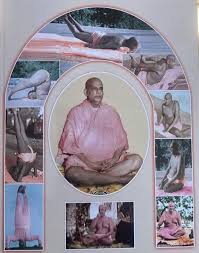
Siva–A Unique Personality Siva is well-versed in all branches of Yoga. He is a Karma Yogin, Bhakta, Hatha Yogin, Raja Yogin and Jnana Yogin. He has trained countless aspirants in all branches of Yoga. He has trained students in Asanas, Pranayama and selfless service. He was the editor of four journals. He contributes articles to countless journals. He has published numerous books, pamphlets, messages and leaflets on a variety of subjects. He has established many branches of the Divine Life Society. He moved about and did vigorous propaganda and lectures for several years. He has revived the Sankirtan movement and has done much work in this field. He has given a new orientation to this neglected science. He conducts Sadhana weeks. He is rendering great medical service to the poor. His activities are many-sided. He can attend to many things at a time. He will never complain of Vikshepa. City or forest, both are equal to him. He carries on his activities for the spiritual uplift of the world under all circumstances. He keeps correspondence with hundreds of aspirants. He lectures and sings through the gramophone records. Such a unique and all-round Yogi who has done variety of works without money and assistance, remaining in one place, the world has not seen till now.

Siva–A Unique Personality Read Post »