Hari Om

Menu

Practice of Concentration

Bhagwan Shri Sathya Sai Baba Throne Darshan Blessing Image
Practice of Concentration, Swami Sivananda

Trataka or Gazing

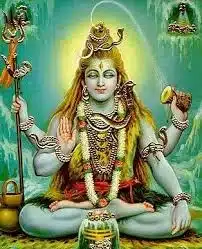
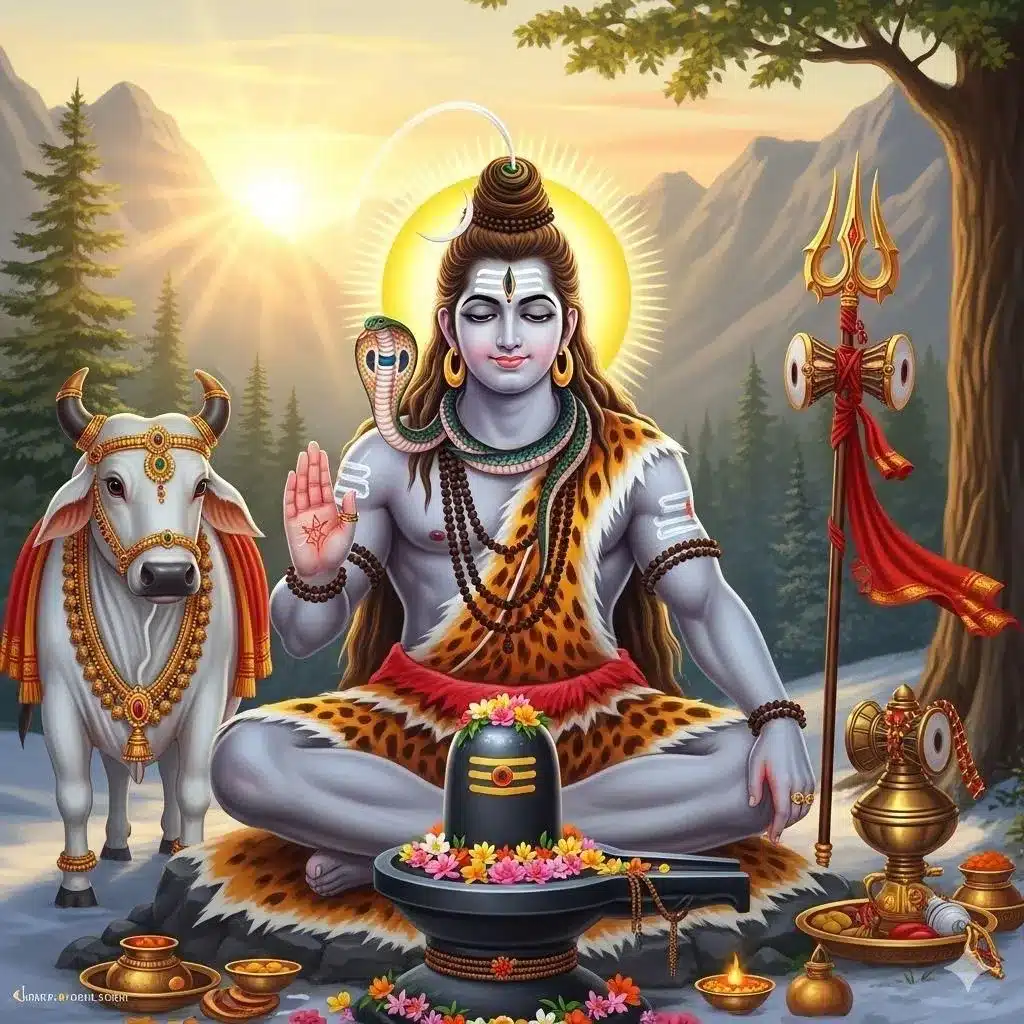
Trataka or Gazing Trataka is steady gazing. Write the word OM in black on the wall. Sit in front of the drawing. Concentrate on it with open eyes till tears come in the eyes. Then close the eyes. Visualise the picture of OM. Then open the eyes and again gaze till lachrymation manifests. Gradually increase the period. There are students who can gaze for one hour. Trataka is one of the Shat-Kriyas (six exercises) in Hatha Yoga. Get an OM picture, fix it on the wall and concentrate on this. Pictures are sold in the bazaar. Trataka steadies the wandering mind and removes Vikshepa (tossing of mind). Instead of gazing on OM you may gaze at a big black dot on the wall. The walls will present a golden colour during Trataka. Or draw a big black dot on a white paper and fix it on the wall. This will be a target for the Yogic student to concentrate his mind upon. Gaze at this black dot on the paper. You can do Trataka on any picture of the Lord either of Krishna, Rama or Siva or on Saligram. You can sit in the chair and gaze at the picture on the wall in front of your eyes. Trataka is the alphabet of concentration. It is the first exercise for Yogic students in concentration. Trataka with open eyes is followed by visualisation. Visualisation is calling up of a clear mental image of anything. Trataka and visualisation do help a lot in concentration. The mind can also be rendered steady by doing Manasic Puja, by thinking the attributes of the Lord and by remembering His Lilas.Practise Trataka for one minute on the first day. Then gradually increase the period every week. Do not strain the eyes. Do it gently with ease and comfort, as long as you can conveniently do. Repeat your Ishta Mantra, Hari Om, Sri Rama or Gayatri during Trataka. In some people who have weak capillaries, the eyes may become red. They need not be alarmed unnecessarily. The redness of the eyes will pass off quickly. Practise Trataka for six months. Then you can take up advanced lessons in concentration and meditation. Be regular and systematic in your Sadhana. If there is a break, take up the deficiency or loss on the next day. Trataka removes many eye-diseases and ultimately brings in Siddhis.

Trataka or Gazing Read Post »

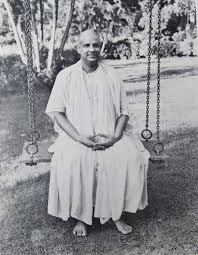
Swami Sivananda seated on garden swing image
Practice of Concentration, Swami Sivananda

Concentration on Anahata Sounds

Concentration on Anahata Sounds Dharana is the intense and perfect concentration of the mind upon some interior or exterior object or sound like Anahata sounds, or any abstract idea, accompanied by complete abstraction (Pratyahara) from everything pertaining to the external universe or the world of senses. Practise Sadhana Sit in Padma or Siddha Asana. Practise Yoni Mudra by closing the ears with the thumbs. Hear the internal sound through the right ear. The sound which you hear will make you deaf to all external sounds. Having overcome all obstacles, you will enter the Turiya State within 15 days. In the beginning of your practice, you will hear many loud sounds. They gradually increase in pitch and are heard more and more subtly. You should try to distinguish sounds more and more subtle. You may change your concentration from the subtle to the gross, but you should not allow your mind to be diverted from them towards other objects. The mind having at first concentrated itself on any one sound fixes firmly to that and is absorbed in it. The mind becoming insensible to the external impressions, becomes one with the sound as milk with water and then becomes rapidly absorbed in Chidakasa (the Akasa where Chit prevails). Being indifferent towards all objects, and having controlled the passions, you should, by continual practice, concentrate your attention upon the sound which destroys the mind. Having abandoned all thoughts and being freed from all actions, you should always concentrate your attention on the sound, and then your Chitta becomes absorbed in it. Just as the bee drinking the honey alone does not care for the odour, so the Chitta which is always absorbed in sound, does not long for sensual objects, as it is bound by the sweet smell of Nada and has abandoned its fitting nature. The serpent-Chitta through listening to the Nada is entirely absorbed in it, and becoming unconscious of everything, concentrates itself on the sound. The sound serves the purpose of a sharp goad to control the maddened elephant-Chitta-which roves in the pleasure-garden of the sensual objects. It serves the purpose of a snare for binding the deer-Chitta. It also serves the purpose of a shore to the ocean-waves of Chitta. The sound proceeding from Pranava, which is Brahman, is of the nature of effulgence; the mind becomes absorbed in it; that is the Supreme Seat of Vishnu. The mind exists so long as there is sound, but with its cessation, there is that state termed Turiya. This sound is absorbed in Brahman and the soundless state is the Supreme Seat. The mind which along with Prana has its Karmic affinities destroyed by the constant concentration upon Nada is absorbed in the unstained One. There is no doubt of it. Being freed from all states and all thoughts whatsoever, you will remain like one dead. You will become a Mukta. There is no doubt about this. The body is certainly like a log and does not feel heat or cold, joy or sorrow. When the spiritual sight becomes fixed without any object to be seen, when the Prana becomes still without any effort, and when the Chitta becomes firm without any support, you become a Brahman (Brahmavid-Brahmaiva Bhavati).You may experience the tenth sound without the first nine sounds through the initiation of a Guru. In the first stage, the body becomes Chin-chini; in the second, there is the (Bhanjana) breaking or affecting in the body; in the third, there is the (Bhedana) piercing; in the fourth, the head shakes; in the fifth, the palate produces saliva; in the sixth, nectar is attained; in the seventh, the knowledge of the hidden things in the world arises; in the eighth, Paravak is heard; in the ninth, the body becomes invisible and the pure divine eye is developed; in the tenth, you attain the state of Para Brahman. When the Manas is destroyed, when virtues and sins are burnt away, you shine as the Effulgent, Immaculate, Eternal, Stainless, Suddha Brahman.

Concentration on Anahata Sounds Read Post »

The Divine Life Society Rishikesh Swami Sivananda 1
Practice of Concentration, Swami Sivananda

Concentration on a Chair

Concentration on a Chair The subject of concentration is disgusting and tiring for the neophyte. But it is the most interesting and beneficial science in the world. When one advances in concentration, when one takes real interest, when one has realised some benefits, he cannot leave the practice. He cannot remain even for a day without concentration. He becomes restless when he fails to have the practice. Concentration brings supreme joy, inner spiritual strength, unalloyed felicity and infinite eternal peace. Concentration brings profound knowledge and deep inner sight, intuition and communion with God. It is a wonderful science in the three worlds. I cannot adequately describe its benefits. Concentration on a chair really means getting full, detailed knowledge of the chair, its different parts, the particular wood out of which it is manufactured such as Devadaru, rose wood, etc., its workmanship, its durability, its cost price, the degree of comfort it gives for the back, arms, etc., whether the parts can be detached and fixed again, whether it is manufactured on modern lines and made bugproof, what sort of polish or varnish is used to make it durable, etc. When you concentrate on the chair, this sort of idea occupies your mind. Mind generally wanders wildly at random. When it thinks of one object, in a second it leaves that object and runs to another object like a monkey, then to a third object and so on. It cannot stick to one point. When the thought runs in one definite groove continuously on one subject alone like the flow of oil from one vessel to another, then it is concentration. The aspirant should withdraw his mind whenever it runs outside and put it in the same groove in the same line of thought on one subject and on one idea. This is spiritual Sadhana. This is Dharana and Dhyana. This will result in Samadhi or the superconscious state, the fourth dimension or Turiya. The vital point in concentration is to bring the mind to the same point of object again by limiting its movements in a small circle in the beginning. That is the main aim. A time will come when the mind will stick to one point alone. This is the fruit of your constant and protracted Sadhana. The joy is indescribable now. When you meditate on a chair, bring all thoughts connected with the chair and dwell on these ideas. Do not allow any other thought connected with another object to enter the mind. There should be one line of thought. There should be one continuity of thought like the steady flow of oil from one vessel to another vessel, like the continuous sound of a church-bell. There may be several ideas connected with one subject. This does not matter. You can reduce the number of ideas and come to one idea of one subject. When this one idea also dies you get the superconscious state or Samadhi. When there is one idea it is called Savikalpa Samadhi which is a lower stage. When this one idea also dies out and when there is not even a single idea, the mind becomes blank or void. There is mental vacuity. This is the stage of thoughtlessness of Patanjali Maharshi in his Raja Yoga philosophy. You will have to rise above this blank Vritti and identify yourself with the Supreme Purusha or Brahman, the silent witness of the mind, who gives power and light to this mind. Then and then alone you can reach the highest goal of life.When you concentrate on a chair, do not allow any other thought of different objects. Again and again bring the mind that wanders to the object which is chair. When you meditate on a rose, think of rose and rose alone. When you think of a book, think all that is connected with the book and nothing outside it. When you think of a radio or talkie, think of the radio or talkie alone. Exhaust all matters connected with the subject on hand. You can take any subject that is pleasing to the mind. Slowly you can take up any subject that is displeasing to the mind by creating interest in it again and again. You should always remember the maxim: “One thing at a time and that done well is a very good rule as many can tell.” When you take up any work, apply your whole heart, full mind and sound to the work. Do it with perfect concentration. What another can do in six hours you can turn out within half an hour, smoothly and in a methodical and orderly manner. This is Yogic activity. You will be taken for an accomplished Yogi. Even when you study, study the subject with perfect concentration. Do not allow the mind to wander. You must shut out all external sounds. Fix the gaze at one point. Do not allow the eyes to wander. When you study one subject, do not think of a talkie or sweetmeats or a friend. The whole world must be dead to you for the time being. Such must be the nature of concentration. It will come to you after some steady and constant endeavours. Be not troubled. Be not discouraged. There will be some delay. Wait coolly and patiently. Rome was not built in a day. It is all a question of time. Do not leave the practice even for a day, even when you are sick. In your failure lies the secret of your success and in your weakness the secret of your strength. Plod on. Push on. Gird up your loins. Nil desperandum. Be bold. March on courageously. Be cheerful. A brilliant future is awaiting thee. Practise. Feel. Rejoice. Become a Yogi or a world-figure. I can make you one. Follow me. Be sincere and earnest. Rise up. Awake. Thy Light has come. O my dear children of Light and Immortality, Brahmamuhurta is dawning now. It is 3.30 a.m. This is the best time

Concentration on a Chair Read Post »

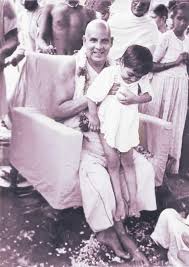
swami sivananda Monk holding child with affection
Practice of Concentration, Swami Sivananda

Exercises in Concentration

Exercises in Concentration I. Ask your friend to show you some playing cards. Immediately after the exposure, describe the forms you have seen. Give the number, name, etc., such as king of clubs, ten of spades, queen of diamonds, jack of hearts, etc. II. Read two or three pages of a book. Then close the book. Now attend to what you have read. Abandon all distracting thoughts. Focus your attention carefully. Allow the mind to associate, classify, group, combine and compare. You will get now a fund of knowledge and information on the subject. Mere skipping over the pages inadvertently is of no use. There are students who read a book within a few hours. If you ask them to reproduce some important points of the book, they will blink. If you attend to the subject on hand very carefully, you will receive clear, strong impression. If the impressions are strong, you will have very good memory. III. Sit in your favourite meditative pose about one foot from a watch. Concentrate on the ‘tik-tik’ sound slowly. Whenever the mind runs, again and again try to hear the sound. Just see how long the mind can be fixed continuously on the sound. IV. Sit again in your favourite Asana. Close your eyes. Close the ears with your thumbs or plug the ears with wax or cotton. Try to hear the Anahata sounds (mystic sounds). You will hear various kinds of sounds such as flute, violin, kettledrum, thunder-storm, conch, bells, the humming of a bee, etc. Try to hear the gross sounds first. Hear only one kind of sound. If the mind runs, you can shift it from gross to subtle, or from subtle to gross. Generally you will hear sounds in your right ears. Occasionally you may hear in your left ear also. But try to stick to the sound of one ear. You will get one-pointedness of mind. This is an easy way to capture the mind, because it is enchanted by the sweet sound, just as a snake is hypnotised by the notes of the snake-charmer. V. Keep a candle-flame in front of you and try to concentrate on the flame. When you are tired of doing this, close your eyes and try to visualise the flame. Do it for half a minute and increase the time to five or ten minutes according to your taste, temperament and capacity. You will see Rishis and Devatas, when you enter into deep concentration. VI. In a lying posture, concentrate on the moon. Whenever the mind runs, again and again bring it back to the image of the moon. This exercise is very beneficial in the case of some persons having an emotional temperament. VII. In the above manner, you can concentrate on any star you may single out from the millions of stars shining above your head. VIII. Sit by the side of a river where you can hear a roaring sound like “OM.” Concentrate on that sound as long as you like. This is very thrilling and inspiring. IX. Lie on your bed in the open air and concentrate on the blue expansive sky above. Your mind will expand immediately. You will be elevated. The blue sky will remind you of the infinite nature of the Self.X. Sit in a comfortable posture and concentrate on any one of the numerous abstract virtues such as mercy, compassion, etc. Dwell upon this virtue as long as you can.

Exercises in Concentration Read Post »

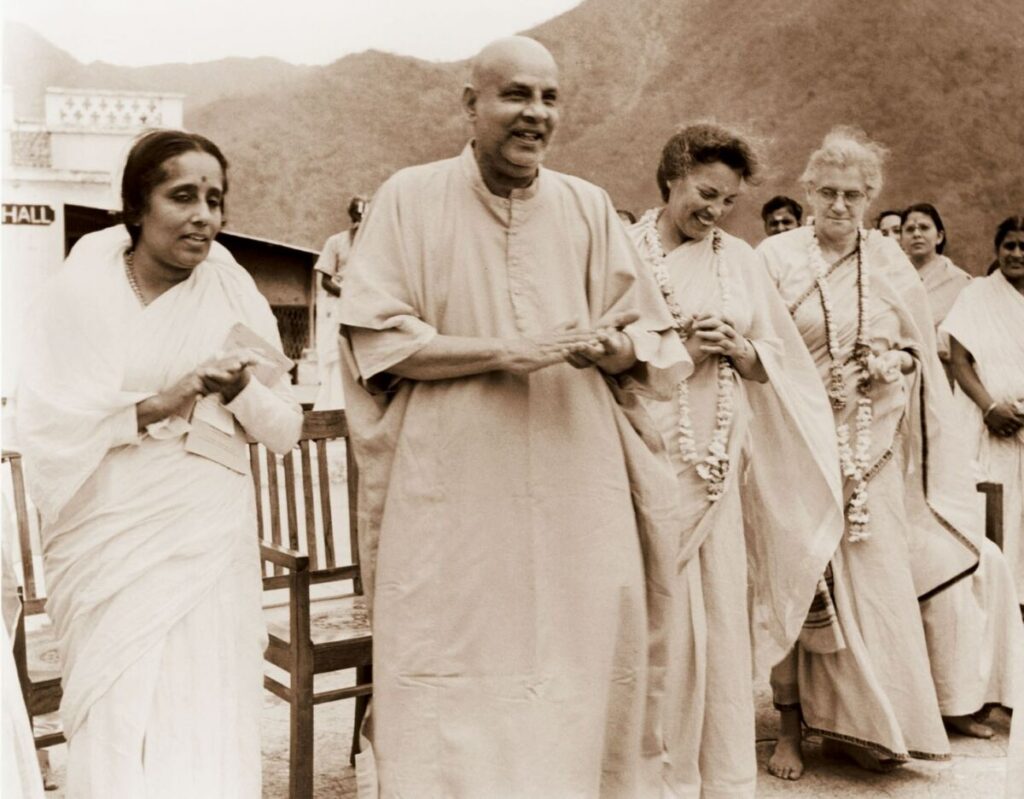
swami sivananda Guru seated with two women devotees image
Practice of Concentration, Swami Sivananda

Gist of Yoga of Concentration

Gist of Yoga of Concentration It is very difficult to say where concentration ends and meditation begins. Meditation follows concentration. Purify the mind first through the practice of Yama and Niyama. Then take to the practice of Dharana. Concentration without purity is of no use. Concentration is steadfastness of mind. If you remove all causes of distraction, your power of concentration will increase. A true Brahmachari who has preserved his Virya will have powerful concentration. Attention plays a prominent part in concentration. He who has developed his power of attention will have good concentration. You should be able to visualise very clearly the object of concentration even in its absence. You must call up the mental picture in a moment’s notice. If you have good practice in concentration you can do this without difficulty. He who has gained success in Pratyahara (abstraction) by withdrawing the Indriyas from the various objects will have good concentration. You will have to march in the spiritual path step by step, stage by stage. Lay the foundation of Yama (right conduct), Niyama, Asana (posture), Pranayama and Pratyahara to start with. The superstructure of Dharana (concentration), Dhyana (meditation), and Samadhi will be successful then only. Asana is Bahiranga Sadhana (external); Dhyana is Antaranga Sadhana (internal). When compared with Dhyana and Samadhi, even Dharana is Bahiranga Sadhana. He who has steady Asana and has purified Yoga-Nadis and the Pranamaya Kosha (vital sheath) through Pranayama will be able to concentrate easily. You can concentrate internally on any of the seven plexus or Chakras or centres of spiritual energy viz., Muladhara, Svadhishthana, Manipura, Anahata, Vishuddha, Ajna and Sahasrara, or on the tip of the nose, or on the tip of the tongue or externally on the picture of any Devata, Hari, Hara, Krishna or Devi. You can concentrate on the ‘tik-tik’ sound of a watch or on the flame of a candle, or on a black point of a wall, or on a pencil or rose flower or any pleasing object. This is concrete concentration (Sthoola). There can be no concentration without something upon which the mind may rest. The mind can be fixed easily on a pleasing object such as jasmine flower, mango or orange or a loving friend. It is difficult to fix the mind in the beginning on any object which it dislikes such as faecal matter, cobra, enemy, ugly face, etc. Practise concentration till the mind is well established in the object of concentration. When the mind runs away from the object of concentration, bring it back again and again to the object. Lord Krishna says in the Gita: “Yato yato nischarati manas-chanchalam-asthiram, Tatastato niyamyaitad-atmanyeva vasam nayet-As often as the wavering and unsteady mind goes forth, so often reining it in, let him bring it under the control of the Self.” If you want to increase your power of concentration, you will have to reduce your worldly activities (Vyavahara-Kshaya). You will have to observe Mouna (vow of silence) also for two hours daily. A man whose mind is filled with passion and all sorts of fantastic desires can hardly concentrate on any object even for a second. His mind will be jumping like a balloon. Regulate and master the breath. Subdue the senses and fix the mind on any pleasing object. Associate the ideas of holiness and purity with the object. You can concentrate on the space between the two eyebrows (Trikuti). You can concentrate on the mystic sounds (Anahata Dhvani) that you hear from your right ear. You can concentrate on ‘Om’ picture. The picture of Lord Krishna with flute in hand and the picture of Lord Vishnu with conch, discus, mace and lotus are very good for concentration. You can concentrate on the picture of your Guru or any saint. Vedantins try to fix the mind on Atman, the Inner Self. This is their Dharana. Dharana is the Sixth stage or limb of Ashtanga Yoga or Raja Yoga of Patanjali Maharshi. In Dharana you will have only one Vritti or wave in the mind-lake. The mind assumes the form of only one object. All other operations of the mind are suspended or stopped. He who can practise real concentration for half or one hour will have tremendous psychic powers. His will also will be very powerful. When Hatha Yogis concentrate their minds on Shadadhara or the six supports (the Shat-Chakras), they concentrate their minds on the respective presiding Devatas also, viz., Ganesha, Brahma, Vishnu, Rudra, Isvara and Sadasiva. Control the breath through Pranayama. Subdue the Indriyas through Pratyahara. And then fix the mind either on Saguna or Nirguna Brahman. According to the Hatha Yogic School, a Yogi who can suspend his breath by Kumbhaka for 20 minutes can have very good Dharana. He will have a very tranquil mind. Pranayama steadies the mind, removes Vikshepa (distraction) and increases the power of concentration. Those who practise Khechari Mudra by cutting the frenum lingua and lengthening the tongue and fixing it in the hole beyond the palate by taking upwards, will have good Dharana. Those who can practise concentration evolve quickly. They can do any work with scientific accuracy and great efficiency. What others do in six hours can be done by one who has concentration within half an hour. What others can read in six hours, can be read by one who has concentration within half an hour. Concentration purifies and calms the surging emotions, strengthens the current of thought and clarifies the ideas. Concentration helps a man in his material progress also. He will have a very good outturn of work in his office or business-house. What was cloudy and hazy before becomes clear and definite. What was difficult before becomes easy now and what was complex, bewildering and confusing before comes easily within the mental grasp. You can achieve anything through concentration. Nothing is impossible to a man who practises regular concentration. It is very difficult to practise concentration when one is hungry and when one is suffering from an acute


Gist of Yoga of Concentration Read Post »

Swami Sivananda walking with devotees during spiritual gathering image
Practice of Concentration, Swami Sivananda

Concentration in Every Walk of Life

Concentration in Every Walk of Life Concentration is a very important qualification for a beginner in the spiritual path. Concentration is required not only in the spiritual path but also in every walk of life. A man without concentration is a failure in life. Concentration in a spiritual sense means the one-pointedness of the mind. It is the fixing of one’s mind on the Ishta Devata or the deity of one’s choice. To attain concentration you should drive off all useless thoughts of the world. You must be entirely free from all base desires of a worldly nature. You should substitute divine thoughts in their stead. Meditation follows concentration. Samadhi follows meditation. Jivanmukti state follows the attainment of Nirvikalpa Samadhi which is free from all thoughts of duality. Jivanmukti leads to emancipation from the wheel of birth and death. Therefore concentration is the first and foremost thing a Sadhaka or aspirant should acquire in the spiritual path. Every little act demands concentration and your whole- hearted attention. If you want to pass a thread through the eye of the needle you must remove all fibres that are disjointed. Then you must make it a single fibre and with great care and one-pointed thought pass the thread into the needle. When you climb a mountain or get down a steep descent you will have to be very careful. Otherwise you will have a slip and fall into the deep abyss below. When you ride a bicycle, you talk to your friends on the road, a motor-car will dash against you from behind. If you are a bit absent-minded when you walk on the road, you will strike against a stone and fall down. A careless barber will cut the nose of his customer. A careless washerman will burn the clothes of his master. A sleepy aspirant will dash his head against the wall or fall down prostrate on the ground. Therefore you must develop attention. Attention leads to concentration. Fix your mind on the work at hand. Give your complete heart and soul to it. Let it be even a small work like peeling off the skin on a plantain fruit or squeezing a lemon. Never do anything haphazardly. Never take your meals in haste. Be calm and patient in all your actions. Never arrive at hasty conclusions. Never do a thing in haste. No work can be done successfully without calmness and concentration. Those who have attained success and become great have all possessed this indispensable virtue. You will be successful in every attempt. You will never meet with failure if you can do your work with perfect attention and concentration. When you sit for prayers and meditation never think of your office-work. When you work in the office never think of the child who is sick or any other household work. When you take bath do not think of games. When you sit for meals do not think of the work that is pending in the office. You must train yourself to attend to the work on hand with perfect one-pointedness. You can easily develop your will-power and memory. Concentration is the master-key to open the gates of victory. If an ordinary man takes one hour to do a work, a man of good concentration will accomplish it in half an hour with better efficiency than the former. You will become a mighty man.You must know very well the science of relaxation of the mind. You must be able to eliminate all other thoughts from the mind. You must think of rest only. You should consider yourself as if you were dead. Mentally repeat the names of the Lord and think of the Ananda aspect of His attribute. You will not have dreams. You will rest in blissful sleep. You will be refreshed very easily. Even if you sleep for two hours you would feel quite refreshed.


Concentration in Every Walk of Life Read Post »

Swami Sivananda 10 1 e1770970745933
Practice of Concentration, Swami Sivananda

Attention

Attention You must evince good interest in the practice of concentration. Then only your whole attention will be directed towards the object upon which you wish to concentrate. There can be really no concentration without a remarkable degree of interest and attention shown by the practitioner. You must, therefore, know what these two words mean. Attention is steady application of the mind. It is focussing of consciousness on some chosen object. Through attention you can develop your mental faculties and capacities. Where there is attention, there is also concentration. Attention should be cultivated gradually. It is not a special process. It is the whole mental process in one of its aspects. Perception always involves attention. To perceive is to attend. Through attention you get a clear and distinct knowledge of objects. The entire energy is focussed on the object towards which attention is directed. Full and complete information is gained. During attention all the dissipated rays of the mind are collected. There is effort or struggle in attention. Through attention a deeper impression of anything is made in the mind. If you have good attention, you can attend to the matter in hand exclusively. An attentive man has very good memory. He is very vigilant and circumspect. He is nimble and alert. Attention plays a very great part in concentration. It is the basis of the will. When it is properly guided and directed towards the internal world for the purpose of introspection, it will analyse the mind and illumine very many astounding facts for you. Attention is focussing of consciousness. Attention (Avadhana) plays a conspicuous part in concentration. It is one of the signs of trained will. It is found in men of strong mentality. It is a rare faculty. Brahmacharya wonderfully develops this power. A Yogi who possesses this faculty can even fix the mind on an unpleasant object for a very long time. It is easy to fasten the mind on an object which the mind likes best. Attention can be cultivated and developed by persistent practice. All the great men of the world who have achieved greatness have risen up through this faculty. Throw your entire attention into whatever you happen to be doing at the moment. Practise attention on unpleasant tasks from which you have been shrinking before on account of their unpleasantness. Throw interest upon uninteresting objects and ideas. Hold them on before your mind. Interest will slowly manifest. Many mental weakness will vanish. The mind will become stronger and stronger. The force wherewith anything strikes the mind, is generally in proportion to the degree of attention bestowed upon it. Moreover the great art of memory is attention; inattentive people have bad memories. The human mind has the power of attending to only one object at a time, although it is able to pass from one object to another with a marvellous degree of speed, so rapidly in fact, that some have held that it could grasp several things at a time. But the best authorities, eastern and western, hold to the “single idea” theory as being correct. It agrees with one’s daily experience also. If you analyse carefully the mental functions or operations, no one process can be singled out and called attention. It is not possible to separate attention as a distinct function. You observe something; therefore you are attentive. Attention belongs to every state of consciousness and is present in every field of consciousness. An attentive student in the spiritual path can do hearing (Sravana) of the Srutis in an efficient manner. The military officer says “attention,” and the soldier is ready with his gun to carry out his behests. An attentive soldier alone can hit the mark. No one can get success either in temporal or spiritual pursuits without attention. There are Yogis who can do eight or ten or even hundred things at a time. This is not strange. The whole secret lies in the fact that they have developed their attention to a remarkable degree. All the great men of the world do possess this faculty in varying degrees. Attention is of two kinds, viz., external attention and internal attention. When the attention is directed towards external objects, it is called external attention. When it is directed internally within the mind upon mental objects and ideas, it is known as internal attention. There are again two other kinds of attention viz., voluntary attention and involuntary attention. When the attention is directed towards some external objects by an effort of the will, it is called voluntary attention. When you have an express volition to attend to this or that, it is called voluntary attention. The man understands why he perceives. Some deliberate intention, incentive, goal or purpose is definitely involved. Voluntary attention needs effort, will, determination and some mental training. This is cultivated by practice and perseverance. The benefits derived by the practice of attention are incalculable. Involuntary attention is quite common. This does not demand any practice. There is no effort of the will. The attention is induced by the beauty and attractive nature of the object. Individuals perceive without knowing why and without observed instruction. Young children possess this power of involuntary attention to a greater degree than grown up people. If a man is not observant, he is not attentive. If he observes something, he is said to be attentive. Intention, purpose, hope, expectation, desire, belief, wish, knowledge, aim, goal and needs serve to determine attention. You will have to note carefully the degree, duration, range, forms, fluctuations and conflicts of attention. There is great attention, if the object is very pleasing. You will have to create interest. Then there will be attention. If the attention gets diminished, change your attention to another pleasant object. By patient training you can direct the mind to attend to an unpleasant object also by creating interest. Then your will will grow strong. If you closely watch, you will note that you observe different objects at different times. This

Attention Read Post »

swami sivananda Spiritual monk seated by riverside wearing shawl and garland photo
Practice of Concentration, Swami Sivananda

Practice of Concentration

Practice of Concentration by Swami Sivananda Fix the mind on some object either within the body or without. Keep it there steadily for some time. This is concentration. You will have to practise this daily. Purify the mind first through the practice of right conduct and then take to the practice of concentration. Concentration without purity of mind is of no avail. There are some occultists who have concentration. But they have no good character; that is the reason why they do not make any progress in the spiritual life. He who has a steady posture and has purified his nerves and the vital sheath by the constant practice of control of breath will be able to concentrate easily. Concentration will be intense if you remove all distractions. A true celibate who has preserved his energy will have wonderful concentration. Some foolish, impatient students take to concentration at once without undergoing, in any manner, any preliminary training in ethics. This is a serious blunder. Ethical perfection is a matter of paramount importance. You can concentrate internally on any of the seven centres of spiritual energy. Attention plays a very prominent part in concentration. He who has developed his powers of attention will have good concentration. A man who is filled with passion and all sorts of fantastic desires can hardly concentrate on any subject or object even for a second. His mind will be jumping like an old monkey. He who has gained abstraction (withdrawing the senses from the objects) will have good concentration. You will have to march on in the spiritual path step by step and stage by stage. Lay the foundation of right conduct, postures, regulation of breath and abstraction to start with. The superstructure of concentration and meditation will be successful then only. You should be able to visualise the object of concentration very clearly even in its absence. You will have to call up the mental picture at a moment’s notice. If you have concentration you can do this without much difficulty. In the beginning stage of practice, you can concentrate on the ‘tic-tic’ sound of a watch or on the flame of a candle or any other object that is pleasing to the mind. This is concrete concentration. There is no concentration without something to rest the mind upon. The mind can be fixed on any object in the beginning which is pleasant. It is very difficult to fix the mind, in the beginning, on an object which the mind dislikes. Sit in lotus-pose (Padmasana) with crossed legs. Fix the gaze on the tip of the nose. This is called the nasal gaze. Do not make any violent effort. Gently look at the tip of the nose. Practise for one minute in the beginning. Gradually increase the time to half an hour or more. This practice steadies the mind. It develops the power of concentration. Even when you walk, you can keep up this practice. Sit on lotus-pose and practise fixing the mind between the two eyebrows. Do this gently for half a minute. Then gradually increase the time to half an hour or more. There must not be the least violence in the practice. This removes tossing of mind and develops concentration. This is known as frontal gaze. The eyes are directed towards the frontal bone of the forehead. You can select either the nasal gaze or the frontal gaze according to your taste, temperament and capacity. If you want to increase your power of concentration you will have to reduce your worldly activities. You will have to observe the vow of silence every day for two hours or more. Practise concentration till the mind is well established on the object of concentration. When the mind runs away from the object bring it back again.When concentration is deep and intense all other senses cannot operate. He who practises concentration for three hours daily will have tremendous psychic power. He will have a strong will-power.

Practice of Concentration Read Post »