Hari Om

Menu

Swami Sivananda

Swami Sivananda holding portrait with wisdom quote image
Jnana Yoga, Swami Sivananda

Three Ways of Definition

Three Ways of Definition by Swami Sivananda A thing can be defined in three ways: By distinguishing it from others (Vyavartaka Lakshana); By pointing out its apparent attributes (Tatastha Lakshana); and By describing its essential nature (Svrupa Lakshana). For example a particular house may be defined: It is to the north of another house. That is the house wherein the crow is just perching on. That is the house which has four storeys. Similarly the Self or Brahman or Atman may be described as: The Atman is distinct from Anatman (not-self) (Vyavartaka Lakshana). The Atman is the seeming substratum of the phenomenal universe (Tatastha Lakshana). Atman is essentially Satchidananda (Svarupa Lakshana). Atman can again be described in another manner: (a) Atman is distinct from the three bodies (gross, subtle and causal).(b) Atman is distinct from the Pancha Koshas or five sheaths, viz., Annamaya, Pranamaya, Manomaya, Vijnanamaya and Anandamaya (Vyavartaka Lakshana). Atman is the seeming witness of the three states, viz,, waking state, dreaming state and deep sleep state. Atman is essentially Satchidananda.

Three Ways of Definition Read Post »

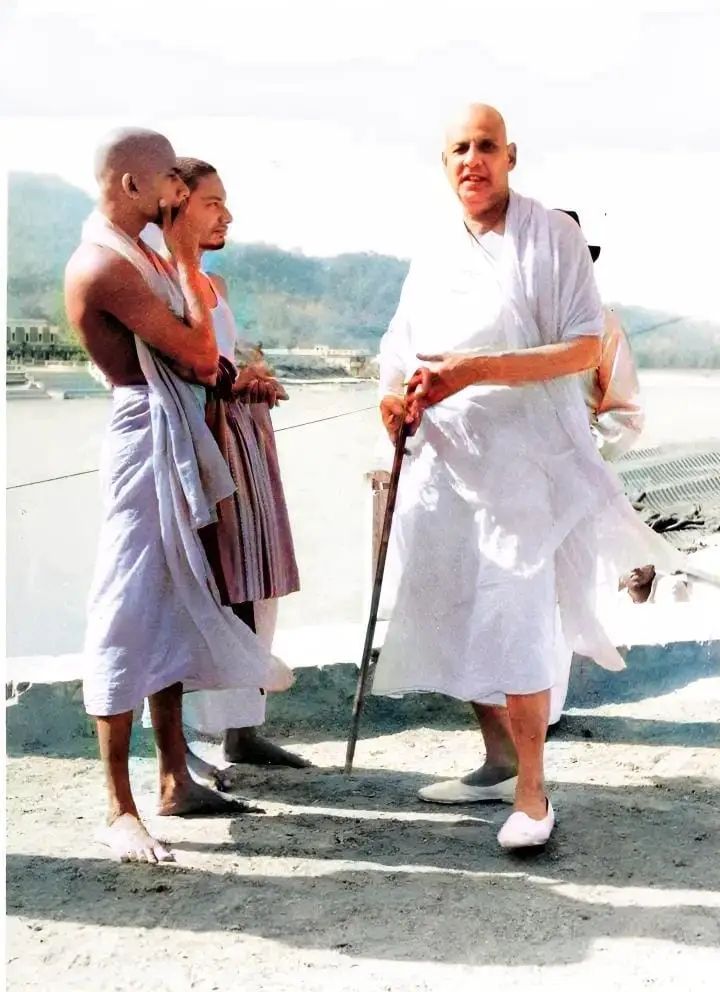
Swami Sivananda with disciples standing by riverside image
Jnana Yoga, Swami Sivananda

Atman, Anvaya and Vyatireka

Atman, Anvaya and Vyatireka by Swami Sivananda Atman Sankara’s individual soul is Brahman in so far as it is limited by the unreal Upadhis due to Maya. The individual soul of Ramanuja, on the other hand, is really individual; it has indeed sprung from Brahman and is never outside Brahman, but nevertheless it enjoys a separate personal existence and will remain a personality for ever. Anvaya and Vyatireka Anvaya means the presence of one thing along with the particular another, and Vyatireka means its absence when that other is absent. It is synthesis and analysis (positive and negative method). The names and forms are different and illusory, but the one, underlying essence of Atman is the same in all forms. It is the only reality. Negate the forms and grasp the essence by meditation on Atman. Separate the Atman from the five Kosas (sheaths) just as you draw the pith from the Munja grass or a reed. Just as you take out the small diamond that is mixed with different kinds of pulses and cereals by separating it from them, so also take out this Atman by separating it from the five sheaths (physical, vital, mental, intellectual and blissful entities of man). Where the five sheaths exist, there the Atman also exists. Where the five sheaths do not exist, even there the Atman exists. Therefore, the Atman is independent of the five sheaths. During the state of dreaming there is no consci ousness of the existence of the material body, but the presence of the spirit is experienced, as without the spirit it is not possible to have the consciousness of what occurs in a dream. It thus follows that in the state of dreaming there is the presence of the Spirit and the absence of the material body. This coexistence of the Spirit in all conditions is called Anvaya and the non-coexistence of the material or the physical and the other sheaths with the Spirit in certain circumstances is called Vyatireka. Similarly, in the state of sound sleep one is not conscious of the existence of the subtle body (Linga Sarira), but the presence of the Spirit is proved by the fact that after waking, everyone has the consciousness that during the state of sound sleep he was perfectly ignorant of everything, and this conscious ness is the result of previous experience and in that state there is no one else than the Spirit to receive that experience. This coexistence of the Spirit with the Karana Sarira is called Anvaya, and the non-coexistence of the Linga Sarira with the Spirit in the state of sound sleep is called Vyatireka. It is thus clear that the Spirit is present in all conditions while the material and subtle bodies are not present in certain state. It thus follows that while the Spirit is eternal, these two bodies are not so. The Annamaya Kosa is the material body and it has been shown that the Spirit exists without the material body in certain conditions. It follows, there fore, that this Annamaya Kosa is not the Spirit. It has also been shown above that the Spirit exists without the subtle body in certain conditions. The three sheaths Pranamaya Kosa, Manomaya Kosa and Vijnanamaya Kosa are connected with the Linga Sarira, and receive their different names on account of the difference in the quality and condition of their constituents, all of which together go to form the Linga Sarira. It, therefore, follows that these three sheaths also are not the Spirit. The first four sheaths having been differentiated from the Spirit, it now remains to differentiate the Anandamaya Kosa. This sheath is connected with the Karana Sarira. In the state of Samadhi, i.e., perfect absorption of thought into the one object of meditation, viz., the Supreme Spirit, there is absence of Karana Sarira, which is the same thing as perfect ignorance, but the presence of the Spirit is experi enced in that state. This coexistence of the Spirit with the state of Samadhi is called Anvaya, and the non-coexistence of the Karana Sarira with the Spirit is called Vyatireka. It thus follows that in certain conditions the Spirit does not coexist with the Kara na Sarira, and as the Anandamaya Kosa is connected with the Karana Sarira, it must be said that in those conditions the Spirit does not coexist with the Anandamaya Kosa. The conclusion, therefore, is that this sheath also is not the Spirit. It has thus been shown that the Spirit exists in dependently of the several sheaths under certain con ditions. It is an axiom that whatever exists apart from certain other things is different from those things. It, therefore, follows that the Spirit is diffe rent from the five sheaths. In the syllogistic argument ‘where there is pit cher, there is clay’, the negative proposition would be ‘where there is no clay, there is no pitcher’. This is the common illustration of the Anvaya-Vyatireka method in logic. Applying this process to the three states and the Atman, we see from experience that ‘when waking exists, Atman exists’ (Anvaya). But the Vyatireka method cannot be put as ‘when Atman does not exist, waking does not exist’, because, in the method of Anvaya-Vyatireka which is applied in the Vedanta philosophy to prove the difference of the Atman from the three states of consciousness, we cannot, in the beginning itself, take for granted that the Atman is consciousness, because the very purpose of the method is to show that the Atman is independent consciousness. Therefore, in order to avoid the fallacy of petitio principii and also to avoid the conception of the nonexistence of the Atman which is involved in the argument, we have to put the statement thus: ‘When waking exists, Atman exists’ (Anvaya). ‘When waking does not exist, Atman exists’ (Vyati reka). But we should not say as a Vyatireka ‘when Atman does not exist, waking does not exist’, be cause, here, we already assume that the conscious ness

Atman, Anvaya and Vyatireka Read Post »

Swami Sivananda wearing flower garland close-up image
Jnana Yoga, Swami Sivananda

Atma-Svarajya

Atma-Svarajya by Swami Sivananda The Infinite is Bliss. The infinite is Brahman or Atman or the Supreme Self. The Infinite is the Absolute. The Infinite is Bhuma or the unconditioned that is beyond time, space and causation. The Infinite is Immortality. Where one sees nothing else, hears nothing else, understands nothing else, there is Infinity. The Infinite abides in its own greatness. The Infinite is Supreme Peace. The Infinite is fearlessness. The Infinite is Existence Absolute, Knowledge Absolute and Bliss Absolute. The Infinite is all-full and indivisible. The Infinite is self-existent, self-contained and self-luminous. The Infinite alone is real. The Infinite alone exists in the three periods of time. You must search, understand and realise the Infinite. The ‘oversoul’ of the Western philosophers is the Brahman of the Upanishads or Atman of the Vedantins. The Supreme Soul or Paramatma which is the support for the individual is the ‘Oversoul’. The ‘oversoul’ is the ‘Substance’ of Spinoza or the ‘Thing-in-Itself’ of Kant. The essence of Vedanta has slowly infiltrated into the minds of Western philosophers and they have accepted now the existence of one eternal principle or the immortal soul which is distinct from the body and mind. Brahman is the Soul or Atman of man. He is the Soul of the Universe. Brahman alone is Infinite. There cannot be two infinities. If there are two infinities. These will be fighting among the infinities themselves. One infinite will be creating something, another infinite will be destroying it. There can be only one infinite. This Atman is the one Infinite Brahman. Everything else is its manifestation or expression. Vedanta holds the first place amongst all systems of philosophies. It is a system of philosophy in which human speculation has reached its very pinnacle or acme. It is indeed a unique system of thought, which demands a subtle, sharp intellect to grasp its fundamental principles. It is unique in the boldness of its conclusions. It is absolutely free from all shades of dogmatism or pet doctrines. Vedanta is very practical. It does not preach an impossible ideal. Vamadeva, Jada Bharata, Sankara and many others realised the Truth of Vedanta. You can also realise it if you will. What is wanted is regular and constant practice. You must have perfect faith in the utterance of the Srutis and in the words of the Guru. You must have perfect faith in yourself first. Vedanta wants you to give up Moha for the physical body, wife, children and property. Vedanta wants you to abandon all worldly desires, cravings and longings. Vedanta wants you to eradicate the desire for power, name and fame. Vedanta wants you to break all ties and connections with the world mentally. Vedanta wants you to cut off ruthlessly all worldly attachments by the sword of discrimination. Some ignorant people say that Vedanta preaches immortality, hatred and pessimism. This is a very sad mistake. Vedanta does not preach either immortality or even indifference to morality. The realisation of Brahman is not possible for the immoral. An aspirant who has ethical perfection and who is endowed with the four means can become a student of Vedanta. How can you expect an aspirant who possesses discrimination, dispassion, serenity, self-restraint, forbearance, endurance, faith, one-pointed mind and a burning desire for liberation to lead an immoral life? It is a quite absurd. Vedanta wants you to destroy Moha or selfish love and passion for the body and to develop pure, disinterested, cosmic love or the magnanimous divine Prem. It never preaches pessimism but it preaches the pinnacle of optimism. It preaches: Give up this little illusory pleasure. You will get eternal and infinite bliss. Kill this little ‘I’. You will become one with the Infinite. You will become immortal. Give up this illusory world. You will get the vast domain of Supreme Peace or Kingdom of God. Is this pessimism? Certainly not. It is wonderful optimism. In the whirlpool of fleeting sensual pleasures you have forgotten the purpose of life and its goal. You live more for the body than for the soul. In your pursuit after the phantom shows of worldly vanities you have annihilated the spiritual instincts and longings of the soul. What a sad state! Mysterious is Maya! Mysterious is Moha! Open your eyes now. Wake up from the long slumber of ignorance. Realise that ultimate Reality and enjoy Eternal Bliss. You cannot die, because you were never born. You are immortal Atman. Birth and death are two false scenes in the unreal drama of Maya. They concern the physical sheath only, a false product formed by the combination of five elements. The ideas of birth and death are mere superstition. You admire the sun, the moon and the stars, the snowy peaks of the Himalayas, the jessamine, the rose, the Niagara falls and the vast ocean. You admire the air-ship, the steamer, the railway, the telegraph and the wireless. But the mind that has its seat in the brain is still more wonderful. In the twinkling of an eye it moves from Colombo to London, from Himalayas to Alps. The greatest wonder is the Immortal Brahman or Atman that pervades the whole universe, that illumine the sun, the moon, the stars and the mind. You see your dear brother Banerjee in front of you. What is it that you call and recognise as Banerjee? Certainly Banerjee is not his hands, feet, head, chest or belly. Even if his hands and legs are amputated, even if he gets leucoderma or while skin, even if his eye-balls are removed, you have the same love for him. You will call him by the name ‘Banerjee’. This proves that ‘Banerjee’ is not the physical body. Physical body is composed of five elements only. It has a beginning and an end. You may now say that ‘Banerjee’ consists of thoughts, ideas, emotions, feelings and sentiments and that the mind is ‘Banerjee’. The thoughts change. Mind changes. Mind is made up of subtle matter. The non-quintuplicated Sattvic portion

Atma-Svarajya Read Post »

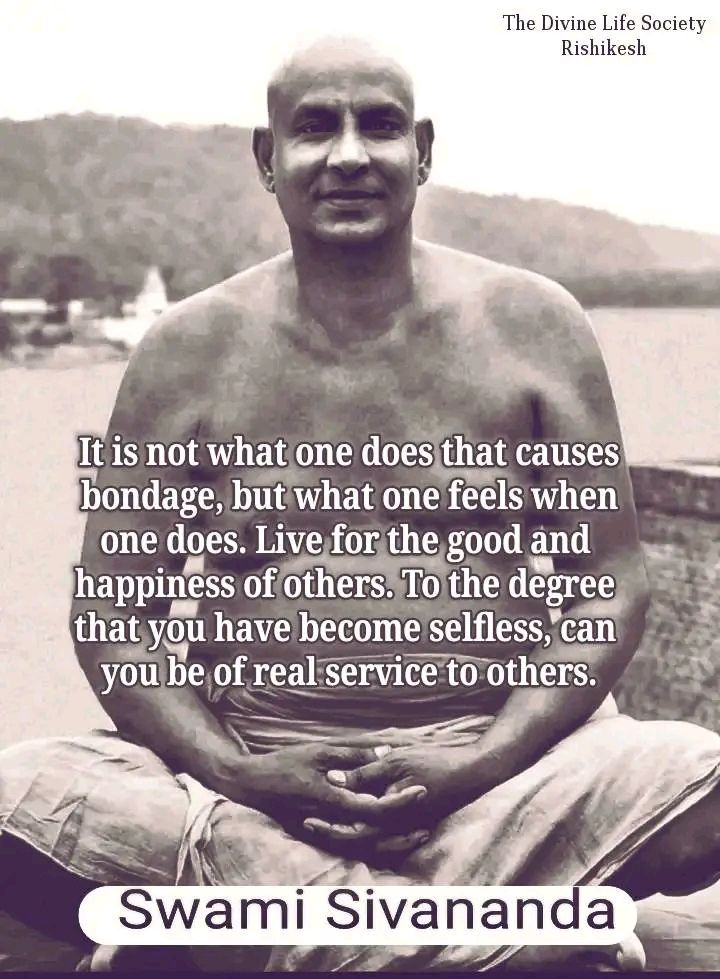
Swami Sivananda with selfless service quote image
Swami Sivananda, Yoga of Synthesis

Towards Perfection

Towards Perfection STRIVE Strive. Strive to realise God. This is the purpose of human birth. The perfection of the realisation of absolute knowledge, supreme bliss and immortality is the one and only goal in human life. Release from the round of births and life in eternity is the goal of man. Till self realisation is attained, man is subject to the law of karma and rebirth. Finish your task Godrealisation in this life itself; do not postpone it. Just as food is necessary for the body so also daily meditation and prayer are necessary for the soul. O man! Wake up from this slumber of ignorance. Why do you waste your life building castles in the air? Turn your gaze within. Stop all this hurry and worry. Sit down and relax. Dive deep within. Discover the pearl of atman. You will be freed from birth and death here and now. Remember the goal every moment of this life. Strive incessantly to realize it by living a life of detachment, dispassion, devotion, deep meditation and samadhi (self knowledge). O man! Nothing is permanent. All things change. All things pass away. Seek the permanent, changeless, immortal atman and be free. He is truly wise who lives in the eternal and who is endowed with discrimination and dispassion. Life is a transforming process by which attachment, fear, anger, hatred and lust are transformed by steady and rigorous discipline and meditation into joy, bliss, peace and love. In simplicity is the secret of real beauty. Simplify your life. Be humble, pure, straight forward and true to yourself and others. Be good and do good so that each tomorrow will find you farther than today. Be humble, be meek, be pure, be holy, be godly and peaceful. Be charitable. Be moral. Be humble. Be courageous. Be pure. Meditate. Become wise. Whoever does anything with enthusiasm, patience and perseverance, never fails to achieve his object. Annihilate desires. Seek the company of saints and devotees. Control the mind. Control anger. Be charitable. Help the needy. Kill the ego. Be grateful. Respect the great. Be truthful. Indulge not in gossip. You will attain the supreme blessedness. REALISE THY TRUE NATURE First, learn to know yourself, the true value of your own character. Then alone you will be able to serve humanity and benefit people. You are taintless, tranquil, pure consciousness; you are beyond nature. All this time you have been duped by illusion, maya. Know one individual (yourself) correctly and you can know the whole world. To know thy self, is to know God. Seek perfection, freedom and eternal bliss in the atman or self, by the self and through the self. Talk only of the atman. Purify, meditate, lose yourself in Brahman or the absolute and you will find your self, you will know your self. Nobody doubts his own existence, though he may doubt the existence of God. Find the truth, the source of your own self and then you will know everything. The more you know the more you will grow in humility. I climbed the peak of vedanta and merged in the Light of Lights. How can I express it? To express the unspeakable all words are feeble. I am the witness the eternal, pure, infinite, internal self. I am Siva himself. I am changeless. None of the things of the world have touched me, will ever touch me. I have no moods I am beyond moods. I am the blissful atman. The light which illumines the intellect, the sun, the moon, the stars and also yonder lamp, is bliss eternal. That light am I. Om. If you find you need a place of perfect security and peace then come, sit in my heart and be one with me. There is a central harmony within you, a wisdom, a spirit of wholeness which is divine. That is immortal atman, your own innermost soul or self. Dwell in this atman. Realise this atman and be free for ever. The atman or supreme self must be realised. This is practical religion. Open the eye of your heart, Enjoy the vision of the Lord. Break the seal of your ego, Realise the eternal bliss of the self. Clean the dirt of your mind’s mirror, Behold the beauty of the majestic atman. Sit on the horse of brahmakara vrtti. Reach your destination; the home of eternal peace. Still the waves of the mind, Take a dip in the ocean of bliss, Shut up your mouth and the mouth of the mind And enjoy the peace of supreme silence. PERSEVERE IN SADHANA Let the sadhana (spiritual practice) always be regular, continuous, unbroken and earnest. Not only regularity but also continuity in sadhana and meditation are necessary if you want to attain self realisation quickly. A spiritual stream, once set going, does not dry up unless the channel bed gets blocked, unless there is stagnation. Be vigilant eternally. Meditate regularly. Annihilate the under current of vasana (habit patterns). Patience, perseverance, courage, determination, discrimination and dispassion are needed to tread the spiritual path. Put away thoughts, stimuli, perceptions, intentions, emotions, feelings, preoccupations and deliberations arising out of the senses and the sense objects. You will attain supreme blessedness or the peace of the eternal. Keep the flame of thy aspiration ever kindled bright. Let purity, serenity, compassion, truth and oneness, manifest in thy thoughts and actions. Through penance, prayer and meditation the soul ascends on the divine chariot, to the realms of infinite bliss, to God’s halls of wisdom. Regularity is of paramount importance in spiritual practice. Spiritual aspirants must be arduous and efficient in performing their tasks without a break. Pray without a break. Have unshakable faith. Remember vairagya (dispassion) and abhyasa (constant practice). Prayer is the wing by which you fly to God. Meditation or intuition is the eye by which you see God. Pray fervently unto the Lord. Pray for the Lord’s light and guidance. Meditate on the great truth within. Strive ever to keep thyself close
Towards Perfection Read Post »

Swami Sivananda Spiritual man sitting on a large log outdoors in rural landscape. image
Jnana Yoga, Swami Sivananda

Garland of Vedanta

Garland of Vedanta by Swami Sivananda A VEDANTIN says, ‘Nothing is mine and everything is mine’. As the world is a mere appearance he is quite right in saying, ‘nothing is mine’. As he has realised the Self, as the world has no independent existence apart from Brahman or the Self, he says, ‘everything is mine.’ He has controlled the organ of smell and Prithivi Tattva and so all objects of smell and sense belong to him. He has controlled the palate or tongue and the Apas Tattva and so all objects of taste, fruits and other dainties belong to him. He has controlled the organ of sight or eye and Agni-Tattva and so all objects of sight and beauties and gardens belong to him. He has controlled the organ of touch and Vayu Tattva and so all objects of touch belong to him. He has controlled the organ of hearting and the Akasa Tattva and so all the sounds and music belong to him. Identification with the body (Deha Adhyasa) brings pain. When one attains knowledge of the Self, he will experience no pain although there is some disease in the body. He is above body consciousness. A highly developed Hatha Yogi only, who has control over the atoms and Kaya Siddhi, can keep his body without ailment. Rise above body and always identify yourself with the painless, diseaseless Atman. You will be free from pain. When you are in deep sleep there is no pain even if you are suffering from any disease. When you are under chloroform there is no pain even if the leg is amputated. It is the linking of the mind with the body that causes pain. If the mind is taken away from the body consciously and fixed on all-blissful Self through constant mediation, you will have no pain even if the body is subject to any kind of ailments. This is Jnana Yoga Sadhana. Prarabdha has to be worked out. Therefore the body will be subject to diseases. The Jivanmukta will not experience any pain. The on-lookers may wrongly imagine that the sage is also suffering. It is a serious mistake. Ramakrishna Paramahamsa had cancer in the throat. Buddha had chronic dysentery. Sankara had piles. But they experienced no pain. When doctors asked Ramakrishna Paramahamsa: Why do you suffer like this? Can you not undergo the operation? He replied, I have given my mind to Mother Kali. How can I think of my body? How can I bring my mind back to the cage of flesh? I am always in bliss. If you are deluded by a mirage for some time, you will not be affected by it again when you come to know that it is a mirage only but not water. Even so the world will appear for a Jivanmukta but he knows that it is unreal. He will not be attracted a bit by the objects. It is no more the world of sorrow for him. He knows fully well that it is mere appearance owing to the play of Maya. The will of a Jivanmukta becomes one with the cosmic will. He experiences the bliss of cosmic consciousness. He feels that all ears are his ears, all eyes are his eyes, all mouths are his mouths, all tongues are his tongues, all hands are his hands, all legs are his legs, all minds are his minds. This will be a magnanimous experience indeed. Words will fail to describe adequately the grandeur of this experience. Realise this experience and be free. O man! In essence thou art the blessed divinity. Thou art the immoral blissful Self. Why are you attracted towards the physical beauty, the beauty of landscapes and flowers when you are yourself the Beauty of beauties, the fountain-source of all beauties? Why do you admire the sun, moon, stars and lightning, when you are yourself the Sun of suns, the Light of lights? Why do you say ‘I am 40 years of age’, ‘I am at death’s door’, ‘Time has passed away’, when you are yourself the Eternity? Why do you say ‘I am fat’, ‘I am 5 feet and 6 inches’, when you are the Infinite? Why do you say ‘I have no money’, ‘I am very poor’, ‘I am penniless’, when you are the Emperor of the three worlds, the source of all wealth? Why do you say ‘I am helpless’, I am your most obedient servant’, when you are the Director and Governor of the whole world? Why do you say ‘I am miserably’, ‘I am restless’, when you are the embodiment of Bliss and peace? Why are you afraid of death or Lord Yama, when you are Existence Absolute? Why do you say ‘I am unwell’, ‘I am suffering from a chronic disease’, when you are all-health? Why do you say ‘I am ignorant’, ‘I know nothing’, when you are Knowledge Absolute? Realise the mysterious Sat-Chit-Ananda Atman through purification, concentration, meditation and identification. Rejoice in this wonderful Self and be free. Tat Tvam Asi, Thou art That, O dear Satyakama bold.

Garland of Vedanta Read Post »

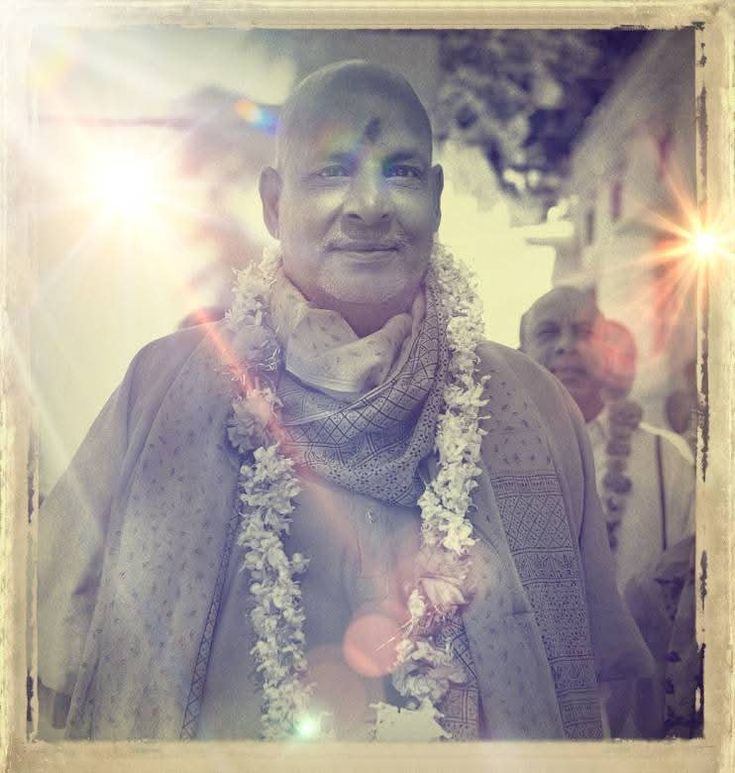
Swami Sivananda Spiritual leader wearing garland walking outdoors with soft light effects image
Jnana Yoga, Swami Sivananda

‘I’ is The Soul and not The Body

‘I’ is The Soul and not The Body by Swami Sivananda A sense is not soul, because you can apprehend an object through any other sense, e.g., Previously I saw a tree and now I touch it; such an expression will be meaningless if ‘I’ is not different from the eye which cannot touch, and from the skin which cannot see. The ‘I’ or the Soul is distinct from the senses. There is a fixed relation between the senses and their objects, e.g., between the eye and colour, the ear and sound, and so on. It is the eye and not the ear that can apprehend colour, and it is the ear and not the eye that can apprehend sound. If a sense were the Soul, it (the Soul) could apprehend only one object, but the ‘I’ can apprehend many objects; the ‘I’ can see colour, hear sound, and so on. Therefore, the ‘I’ or the Soul which confers unity on the various kinds of apprehension is different from the senses, each of which can apprehend only one object. If we do not admit a permanent Soul beyond our frail body, we shall be confronted with many absur dities such as loss of merited action (Kritahani) and gain of unmerited action (Akritabhyagama). A man who has committed a certain sin may not suffer its results in this life, and unless there is a Soul conti nuing in the next life, he will not suffer them at all. This is loss of merited action. Again, we often find a man suffering the results of actions which he never did in this life. This would be a gain of unmerited action, unless we believe that his Soul did exist pre vious to this life and that he did the action in his previous life. A thing seen previously by the left eye is re cognised now by the right eye. This would have been impossible if the Soul were identical with the left eye alone or the right eye alone, on the principle that the seat of recognition must be the same as the seat of perception. Hence we must admit that there is a Soul which is distinct from the left and right eyes and which is the common seat of perception and recognition. The Soul is distinct from the senses, because there is an excitement of one sense through the opera tion of another sense. When you see a mango fruit or lime pickle, there is salivation in our mouth. The sense of taste is excited. There is an excitement of the sense of taste on account of the operation of the sense of sight. This would be impossible unless there is a Soul distinct from the senses and uniting the senses. The Soul sees the fruit or the pickle and remembers its properties. The remembrance of the properties of the object excites the sense of taste. You can remember only that object which you have seen. You remember the smell of an object by seeing its colour. This would be impossible if re membrance is a quality of a sense, e.g., the eye, which has never smelt the object. Therefore, remembrance must be admitted to be a quality of a distinct entity called the Soul which is the common seat of percep tion of colour and smell. The Soul is the absolute Seer and is Consciousness in nature, whereas all other things, objects, body, senses, Pranas, mind, intellect, etc., are the seen and are inert in nature. The Soul is the Imperishable Reality, while everything else is perishable and false.

‘I’ is The Soul and not The Body Read Post »

Swami Sivananda Black and white photo of saint seated with staff and traditional attire. image
Jnana Yoga, Swami Sivananda

Vedantic Culture

Vedantic Culture by Swami Sivananda THE Being who is described in the Upanishads is Brahman or Atman or the Self or Absolute. He is the fountain-head of all scriptural knowledge. He is the source or womb for everything. He is existence absolute, knowledge absolute and bliss absolute. He is indivisible, all-pervading, self-contained, eternal and immortal. He is beyond time, space and causation. He is beginningless and endless. He is the indweller in all beings. He is the witness of the activities of all minds. The Atman or the Self is all-pervading. He is beyond birth and death. He is undecaying, self-luminous, eternal, pure and self-existent. He is all-full, imperishable and infinite. He is the silent witness of the three states, viz., waking, dreaming and deep sleep. He is beyond caste, creed or colour. Sin cannot touch Him because He is ever pure. Pain, sorrow and delusion cannot affect Him, because He is all-joy. Hunger, worries and tribulations cannot torment Him, because He is all-bliss. Lust cannot reach Him, because He is sexless. Wrath cannot approach Him, because He is mindless. Restlessness cannot agitate Him, because He is all-peace. Time cannot devour Him, because He is eternity. What on earth can cause fear in you when you have realised your identity with such an Atman? What on earth can generate hatred, delusion, difference and sorrow in you when you behold the one in all and all in one? What on earth can cause agitation in you when you have transcended the mind and when you rest peacefully in your own Sat-Chit-Ananda Svarupa, that magnanimous ocean of bliss and stupendous silence? The question: Who am I? What is this Samsara? Whence have I come? Whither will I go? What is the goal of life? What is Brahman or Atman? What is the relation between the individual soul and the supreme soul? How to attain the goal? Can I become immortal? Can I enjoy eternal bliss? Will surely arise in the mind of every human being at one stage of his life or another. He who seriously thinks over these questions and attempts in right earnest to reach the goal in a wise man but he who does not care to ponder over these vital questions, who leads a sensual life and who does not endeavour to attain the final beatitude of life, is a fool or a thoughtless person. He lives in vain. He is a burden on this earth. He is a slayer of his own Self. His life is indeed very pitiable. He alone who is devoted to his parents, who has a calm mind, who has controlled all his senses, who has a one-pointed mind, who is equipped with four means, who is endowed with Sattvic qualities, who has purified his mind by constant selfless service, who has removed the tossing of the mind by Upasana or worship, Japa and Kirtan and, last but not least, who sits at the feet of a preceptor, who is enlightened and well-versed in scriptural knowledge, is able to grasp the Truth or the one Eternal Principle. Worldly enjoyments are fleeting like the flashes of lightning. Human life is ephemeral like the bubble. The vigour of youth is short-lived. All these are illusory in this world. All worldly things are generative of pain only. There is not even an iota of bliss in this world. The wealth which you covet is only ephemeral. The longing for wife and wealth does but enchain you. One thing which is sweet and pleasant to you at one moment produces the very reverse of that sensation in another moment. Who has not experienced this in this world? Hence it behoves a wise man to concentrate his mind on the Atman or the Self and attain the supreme seat of Eternal Bliss and Supreme Quiescence. Do not be afraid of difficulties and failures in the spiritual path. Failures are stepping stones to success. Difficulties will make you stronger and powerful. Difficulties will develop your will-power. Overcome the difficulties one by one. Use your intelligence, sagacity, discrimination and common-sense. Be bold. Stand adamant. Be cheerful. Dismiss fear and anxiety. March boldly in the spiritual path. Do not look backwards. Draw courage, strength and power from within. Tap the source. Go direct. Refresh yourself. Renovate yourself. Then march cautiously. Thou art invincible. Nothing is the three worlds can hurt you. Rest assured. Remain serene always. Smile and rejoice in the Atman. Do not confine yourself to names and forms. Rise above them and realise the Truth. Just as bubbles, foam and waves come from the ocean, exist in the ocean and dissolve in the ocean itself eventually so also these illusory names and forms have come out of Brahman or the Absolute or the Ocean of Bliss and Knowledge, exist in Brahman and ultimately dissolve in Brahman. This world is nothing but Brahman. Behold the one Self in all forms. See the One in all and all in one. You can dispel pain, sorrow, ignorance, fear, worry and anxiety only when you realise Brahman or the Self. This is the emphatic declaration of Vedanta. There is no other way to attain complete freedom from ignorance, fear, sorrow and pain. Verily it is true indeed! For how can you be subject to fear when you have realised the Self, when you have come to know that you are in essence identical with the non-dual Brahman and that there is no other seer but you, no other hearer but you, no other knower but you, no other thinker but you? Who is to be afraid of whom, when one feels oneness everywhere? Who is to hurt whom, when all dualities have totally vanished? The music of the soul is within you. The kingdom of God is within you. The domain of peace is within you. The Light of lights is within you. Knowledge is within you. The three worlds are within you. The source of power, joy, bliss and life is

Vedantic Culture Read Post »

Swami Sivananda Spiritual guru seated indoors with inspirational quote text below image
Swami Sivananda, Yoga of Synthesis

Essential Jnana

Essential Jnana PHILOSOPHY OF OM The sound produced in the flowing of the river Ganges, the sound that is heard at a distance, the sound that proceeds from the bustle of the market, that is produced by the flywheel when it is set in motion, that is caused when it rains, or there is a conflagration, or thunder-it is all Om only. Split any word and you will find. Om there. Om is allpervading, like akasa (space), like Brahman, the absolute. Om is the symbol of Brahman. It is the word of power. It is the sacred monosyllable. It is the essence of the vedas. It is the boat to take you across to the other shore of fearlessness and immortality. The word Om is the most appropriate name of Brahman. By its application, by its chanting, he becomes propitiated Om is emblematic of Brahman, as images are of material objects. When you hear the sound ‘tree’. you at once understand it has a root, a stem, branches, leaves, flowers, fruits, etc. Similarly too, when you hear the sabda (sound) Om it denotes Satchidananda Srahman existence absolute, knowledge absolute, bliss absolute. Sabda (word) and artha (meaning) are inseparable. All collections of words (speech), terminate in one sound-Om. All objects are denoted by sounds, and all sounds merge in Om. The whole universe comes out of Om and is absorbed into Om. Hence Om is very important. Om should be worshipped. Om should be chanted loudly. Om should be repeated mentally, with deep meaning and feeling. Om should be meditated upon. Watch the breath. When you inhale, the sound so is produced. When you exhale, the sound ham is produced. You are naturally uttering Soham-I am he-or-he am I-with every breath. The breath reminds you that you are in essence identical with the supreme self. In Soham the s and the h are consonants. If you delete them you get oam or om. Consonants depend on vowels for their existence. S and h represent names and forms, or this universe which is phenomenal or relative or empirical or dependent existence. Om is the only solid reality. Om is the soul of your breath. As soon as you sit for meditation chant Om loudly, three, six or twelve times. This drives away worldly thoughts from the mind and removes vikshep (tossing of the mind). Later you may take to the mental repetition of Om. INSTRUCTIONS IN MEDITATION Just as the light is burning within the hurricane lamp, so also the divine flame is burning from time immemorial in the lamp of your heart. Close your eyes. Merge yourself within the divine flame. Plunge deep into the chambers of your heart. Meditate on this divine flame and become one with the flame of God. If the wick within the lamp is small, the light will also be small. If the wick is big, the light also will be powerful. Similarly if the jiva (individual soul) is pure, if he practises meditation, the manifestation of the self will be powerful. He will radiate a big light. Likewise the purer the soul, the greater the expression. If the magnet is powerful, it will influence the iron filings even when they are placed at a distance. Even so, if the yogi is an advanced person, he will have greater influence over the persons with whom he comes in contact. He can exert his influence on persons even when they live in distant places. During meditation note how long you can shut out all worldly thoughts. Watch the mind. Try to increase the period. Fill the mind with thoughts of God again and again. In meditation do not strain the eyes. Do not strain the brain. Do not struggle or wrestle with the mind. Relax. Gently allow divine thoughts to flow. Steadily think of laksya (point of meditation). Do not voluntarily and violently drive away the intruding thoughts. Have sublime (satvic) thoughts. The vicious thoughts will vanish by themselves. If there is much strain in your meditation reduce the duration of each sitting for a few days. Those who meditate for four or five hours at a stretch can have two meditative poses. Keep the spine erect. You must daily increase your vairagya (dispassion) and meditation on satvic virtues such as patience, perseverance, mercy, love and forgiveness. Vairagya and good qualities help meditation. Meditation increases the satvic qualities . THE GLIMPSE AND THE GOAL When you get a flash of illumination, do not be frightened. It will be a new experience of immense joy. Do not turn back. Do not give up meditation. Do not stop there. You will have to advance still further. This is only a glimpse of truth. This is not the whole experience. This is not the highest realisation. This is only a new platform. Try to ascend further. Reach the Bhuma (the infinite). Now alone you are proof against all temptation. You will drink deep the nectar of immortality. This is the acme or final state. You can take eternal rest now. You need not meditate any further. This is the final goal. You have within yourself tremendous powers and latent faculties of which you have really never had any conception. You must awaken these dormant powers and faculties by the practice of meditation and yoga. You must develop your will and control your senses and mind. You must purify yourself and practise regular meditation, then only can you become a superman or God man. Every human being has within himself various potentialities and capacities. He is a magazine of power and knowledge. As he evolves he unfolds new powers, new faculties, new qualities. Now he can change his environment and influence others. He can subdue others’ minds. He can conquer internal and external nature. He can enter into superconscious state. The wise cut asunder the knot of egoism by the sharp sword of constant meditation. Then dawns supreme knowledge of the self or full illumination or selfrealisation. The liberated sage


Essential Jnana Read Post »

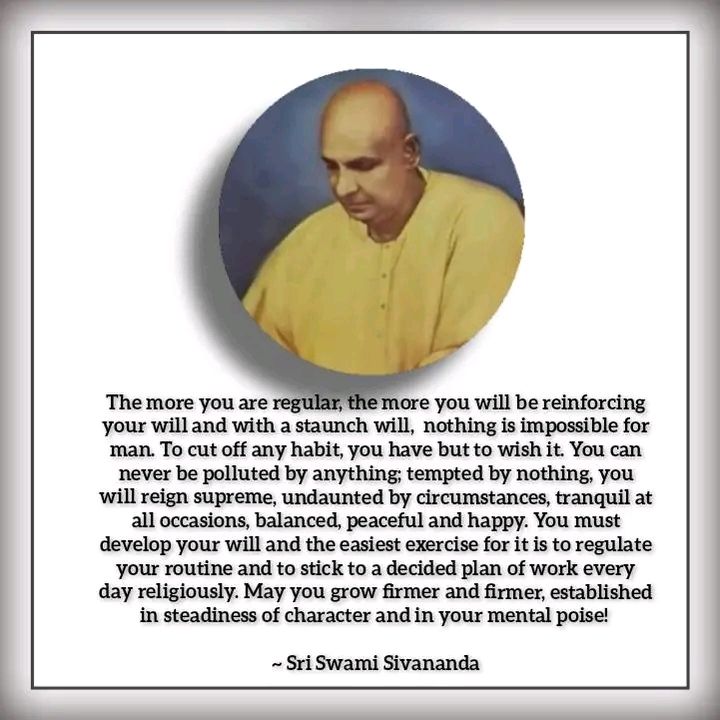
Swami Sivananda willpower discipline quote image
Swami Sivananda, Yoga of Synthesis

Sivananda Gita

Sivananda Gita (Written by Swami Sivananda in 1946) I was born of P.S. Vengu Aiyar and Parvathiammal on 8th September 1887 at Pattamadai, Tirunelvely District, S. India, in the line of Appayya Dixit. My star is Bharani. I was extremely mischievous in my boyhood. I studied in the S.P.G. College, Trichy. I was a Doctor in Malaya States for 10 years. I took Sanyasa in 1924 in Rishikesh. I did tapas and meditation for 15 years. I went on lecturing tours for 10 years. I founded the Divine Life Society in 1936 and the AllWorld Religions Federation in 1945. I am childlike in my svabhava. So I mix with all. I become one with all. I am ever happy and joyful and make others also happy and joyful. I am full of educative humour. I radiate joy through humour. I respect all. I do salutations to all first. I always speak sweetly. I walk quickly. I do japa and meditation while walking and while at work also. I am ever hardworking. I have intense application to work. I never leave a work till it is finished. I never procrastinate any work. I finish it then and there. I am very quick in doing things. I cannot suppress the spirit of service in me. I cannot live without service. I take immense delight in service. Service has elevated me. Service has purified me. I know well how to extract work from others. I extract work through kindness, service, respect and love. I am very regular in doing asanas and exercises. I even now do sirshasan, sarvangasan and other asanas. I do pranayama also regularly. These give me wonderful health and energy. I run round the bhajan hall daily. I cannot deliver fiery lectures sitting on a special seat. Special seat pricks me. I stand up or throw the seat away and then begin to speak. I never sat on a special seat when I presided over spiritual conferences. I rejoice in giving. I always give. I am 59 (1946) now. I ever feel I am quite young. I am full of vigour, vim and vitality. I am ever cheerful. I sing, dance, run, and jump in joy. I am robust and strong. I can digest any kind of food. I continuously work, read and write. I never go to hill stations or seaside for a holiday. Change of work gives rest. Meditation gives abundant rest. Work gives me delight. Service gives me happiness. Writing bestows joy. Meditation energises and invigorates me. Kirtan vivifies me. “Aham Brahmasmi, Sivoham, Soham, Satchidananda Swaroopoham”This is my favourite formula for vedantic meditation.Hare Rama Hare Rama Rama Rama Hare HareHare Krishna Hare Krishna Krishna Krishna Hare Hare. -This Mahamantra Kirtan is my favourite kirtan At the present moment I am the richest man in the whole world. My heart is full. Further, all the wealth of the Lord belongs to me now. Hence I am king of kings, emperor of emperors, shah of shahs, maharaja of maharajas. I take pity on the mundane kings. My dominion is limitless. My wealth is inexhaustible. My joy is inexpressible. My treasure is immeasurable. I attained this through sanyasa, renunciation, untiring selfless service, japa, kirtan and meditation. I am tall. My height is 6 feet. I have a sinewy frame. I have symmetrical limbs. I was a first class gymnast. I fast on Ekadasi. I do not take even a drop of water. I take milk and fruits on Sundays. I do not take salt on Sundays. I lead a simple natural life. There is a fountain of youth in me. I beam with joy. I observe fasting, resting, airing, bathing, breathing, exercising, sunbathing and enjoy freedom, power, beauty, courage, poise and health. Om. Om. Om. I love nature, music, art, poetry, philosophy, beauty, goodness, solitude, meditation, yoga and vedanta. I am humble and simple. I am frank and straightforward. I am perfectly tolerant and catholic. I am merciful and sympathetic. I have spontaneous and unrestrained generosity. I am bold and cheerful. I am patient. I can bear insult and injury. I am forgiving. I am free from vindictive nature. I return good for evil. I serve that man who has injured me, with joy. I love Ganga and the Himalayas. Ganga is my mother divine. Himalayas is my father divine. They inspire and guide me. I take bath in Ganga. I swim in Ganga. I adore Ganga. I feed the fishes of Ganga. I wave light to Mother Ganges. I pray to Ganga. I do salutations to Ganga. I sing the glory of Ganga. I write about the grandeur and glory of Ganga. Ganga has nourished me. Ganga has comforted me. Ganga has taught me the truth of the Upanishads. Glory to Ganga! My daily routine is like that of Lord Buddha. I always remain in the room. I do japa, kirtan and meditation. I study sacred books. I write. I come out of the room for a short time for work, service and interview. I talk a little. I think much. I meditate much. I try to do much and serve much. I do not waste even a single minute. I ever keep myself fully occupied. I lead a wellregulated life. I perform worship of atman at all times. I work for the good of others. Om. Om. Om. Gita, Upanishads, Bhagavat, Yoga Vasishta, Avadhootha Gita, Vivekachudamani are my constant companions. I am a strange mixture of service, devotion, yoga and wisdom. I am a follower of Sri Sankara. I am a KevalAdvaita vedantin. I am not at all a dry lipvedantin. I am a practical vedantin. I practise and advocate the Yoga of Synthesis. I practise ahimsa, satyam and brahmacarya. Glory to Sri Sankara! I respect all saints and prophets of all religions. I respect all religions, all cults, all faiths and all creeds. I serve all, love all, mix with all and see the Lord in all. I stick to my promises. I serve the poor.

Sivananda Gita Read Post »

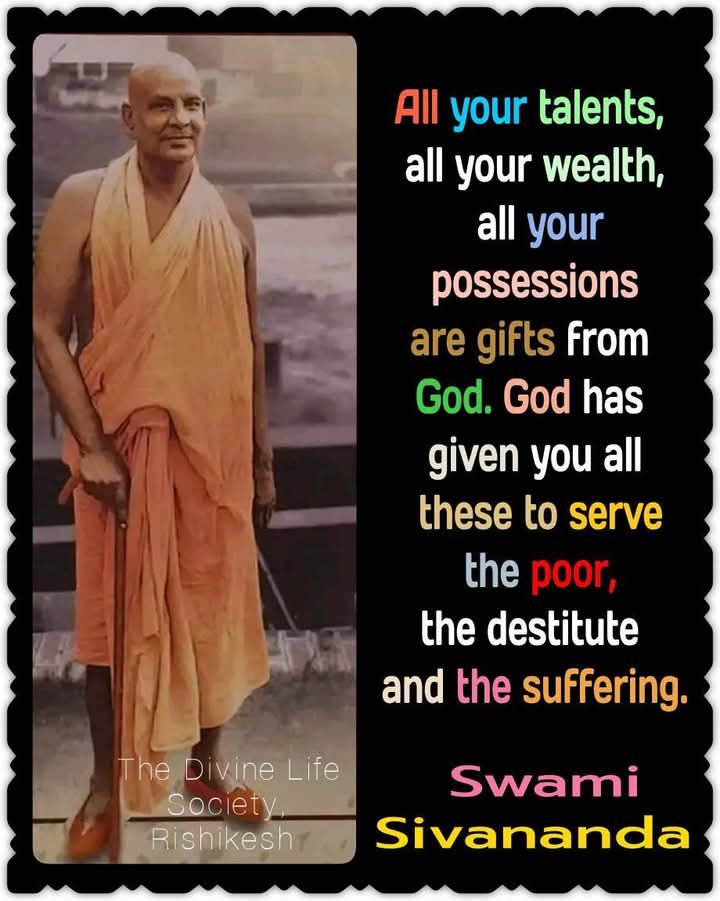
Swami Sivananda Spiritual monk image with quote about serving poor and suffering. image
Swami Sivananda, Yoga of Synthesis

Secret of Raja Yoga

Secret of Raja Yoga ORDER IN YAMA AND NIYAMA There is a deliberate order in the five parts or limbs of yama (self-control). Ahimsa (non-violence) comes first, because man must remove his brutal nature first. He must become non-violent; he must develop cosmic love. Only then does he become fit for the practice of yoga. Then comes satyam or truthfulness. Because the whole phenomenon of maya (illusion) is asat or unreal, the aspirant should be aware of this fact. He should ever remember the truth or Brahman. Then comes asteya or non-stealing. Because he must develop moral consciousness, he must know right from wrong, righteousness from unrighteousness; and he must know that all are one. Brahmacarya is a divine attribute. The aspirant is now becoming a superman by the practice of brahmacarya or celibacy. The fifth is aparigraha. The yogic student is free now from desires, cravings, unnecessary wants, luxuries, desire to possess and enjoy. He has a very expanded heart. Yama is “taking of vow”. Niyama is “religious observance”. Yama is not a policy or company manners or courtesy, it is sticking to ideals and principles; it is development of divine traits that will transform human nature into divine nature; it annihilates desires, cravings, evil qualities; it eradicates brutal instinct and brutal nature; it removes harshness, violence, cruelty and covetousness; it fills the heart with cosmic love, kindness, mercy, goodness, purity and divine light. It is the foundation of divine life or yoga, on which the super-structure of samadhi is built. It is the corner-stone of yoga, on which the edifice of superconsciousness is built. Niyama is canon or religious observance. It consists of five limbs; namely, puca, santosa, tapas, svadhyaya and Isvara pranidhana. Sauca is purity, internal and external. Santosa is contentment. Tapas is austerity or control of senses or meditation. Svadhyaya is study of scriptures. It means also chanting of mantra (name of God) or enquiry. Isvara pranidhana is self-surrender to the Lord. It is consecration of one’s work as an offering to the Lord. There is an intimate relation between yama and niyama. Niyama safeguards yama. If one has internal purity one can get established in brahmacarya. If you have contentment, you will not steal or hurt others or tell lies. It will be easy for you to practise aparigraha. BLESSING OF AHIMSA Ahimsa (non-violence) is one of the foremost vows of good life. It is a supreme duty of man-ahimsa paramo dharmah-thus scripture declares. In the regeneration and divinisation of man, the first step is to eliminate the beastly nature. The predominant trait in beasts is cruelty; therefore wise sages prescribed ahimsa. This is a most effective master-method to counteract and eradicate completely the brutal, cruel nature in man. O earnest aspirant: Ponder the great significance, and immense importance, value and blessings of ahimsa and start its practice now-this moment. Ahimsa is not merely non-killing as some think. Ahimsa is perfect harmlessness and positive love also. It is to abstain even from the slightest thought of harm to any living creature-mentally, verbally, or by deed. There is no excuse nor exception to the above rule. Harsh words to beggars, servants or inferiors is himsa (cruelty). To fail to relieve pain or trouble in another is negative himsa. To approve of another’s harsh actions is against ahimsa. Avoid strictly all forms of harshness, direct or indirect, positive or negative, immediate or delayed. Practise ahimsa in its purest form, O Saumya’. and become divine. Ahimsa and divinity are one. Ahimsa is a weapon of the strong. It cannot be practised by weaklings. Ahimsa is supreme love. He who embraces ahimsa embraces all, loves all. To begin with, stop all physical violence, stop speaking vulgar and harsh words. Then attack the mind directly. There will be inner agitation. You may think of doing violence. Check this thought-wave through prayer, worship, meditation, enquiry, pranayama (yoga breathing), satvic (pure) food, and study of sacred books. Generate again and again currents of love by cultivating the feeling that ‘everything is the self’ (atma-bhava), or ‘everything is the Lord’ (Narayana-bhava). You will fail one hundred times, but it does not matter. Stand up again. Make fresh resolves and stick to them tenaciously. March on boldly with steady steps, O knower of thyself: Never despair. Study the lives of the apostles of non-violence-Lord Buddha, Lord Jesus, Mahatma Gandhi and others, again and again. Keep their mental picture and ideals before your mind’s eye and draw inspiration from them. Carefully watch your conduct, thought and speech and deeds daily and you will grow steadily in the practice of non-violence. AHIMSA IS SUPREME VIRTUE That work which gives elevation, joy and peace to the mind, is right. That which brings depression, pain and restlessness to the mind is wrong. This is an easy way to find out what is right and what is wrong. Selfishness clouds understanding. Therefore if a man has got even a tinge of selfishness, he cannot detect what is right and what is wrong. A very pure, subtle, sharp intellect is needed for this purpose. The Gita describes the nature of satva (purity), rajas (dynamism) and tamas (inertia in relation to reason) in chapter eighteen. It says: “That which knoweth energy and abstinence, what ought to be done and what ought not to be done, fear and fearlessness, bondage and liberation-that reason is pure, O Partha. That by which one understandeth right from wrong and also what ought to be done, and what ought not to be done-that reason, O Partha, is passionate. That which, enwrapped in darkness, thinketh wrong to be right, and which seeth all things subverted-that reason, O Partha, is of darkness.” Various other definitions are given by wise men to help the students in the path of righteousness. In the Bible it is said “Do unto others as you would be done by.” This is a very good maxim. The whole gist of right conduct is here. If one practises this very carefully, he will not

Secret of Raja Yoga Read Post »