Hari Om

Menu

Swami Sivananda

Swami Sivananda illustration with anger and purity quote image
Jnana Yoga, Swami Sivananda

Glory of Pranava

Glory of Pranava by Swami Sivananda Within the Twinkling of an Eye! Within the twinkling of an eye, you can enter the Realms of Inexpressible BlissNiratisaya Ananda! The key is in your own hands: that is OM, the most sacred Pranava. OM is the Name of the Nameless: the Form of Pranava is the Form of the Formless. OM is the symbol of Nada Brahman. OM leads the Sadhaka instantly into Samadhi. In the Upanishads you find this Sacred Pranava compared to a bow with the help of which the Atman (arrow) is directed to the Lakshya (target), i.e., Brahman. When the Yogi who has full control over his senses and who has practised the initial rules of self-discipline, viz., Yama, Niyama, Asana, Prana�yama, Pratyahara and Dharana, directs this arrow of Atman with the help of the Pranava-Dhanus, the arrow at once becomes one with the target! He loses himself in Nirvikalpa Samadhi and finds his Goal Kaivalya Moksha. All Tapas, all Sadhanas, all observances, the practice of devotion, the performance of austerities, the vow of celibacy, of truth and of Ahimsa, all these have this one end and aim: Self-realisation. From time Immemorial the Sages of India have resorted to this Great Weapon Pranava for the purpose of achieving this aim. Various Upanishadic Seers have sung the glory of the Pranava. Pranava leads the aspirant through all the stages, and that is the extraordinary charm in its meditation all at once! Ordinarily, man’s Antahkarana is filled with Vishayakara Vrittis. He runs after objective enjoyment. He is dissatisfied; he is puzzled; he is unable to quench his thirst for enjoy�ment. He is unaware that the very source of Bliss is within him, his own Self. Pranava guides him along the right path. OM! It reveals to him the source of the Joy, Bliss, Peace and Immortality. Through the three Avasthas represented by A, U and M, he is led beyond to Turiya: and there in that Silence, he finds his own Self the Antara Atman! That is the Goal!

Glory of Pranava Read Post »

Swami Sivananda holding veena with humility quote image
Jnana Yoga, Swami Sivananda

Practise Meditation

Practise Meditation by Swami Sivananda A neophyte should remember again and again some important Vedantic texts daily. Then only his doubts will be removed. Then only he will be established in the path. These texts are: Being only was in the beginning. One without a second Chhandogya Upanishad VI-2-1; In the beginning all this was one Self only Aitareya Upanishad VI-2-1; This is the Brahman, without cause and without effect; this Self is Brahman perceiving everything Brihadaranyaka Upanishad II-5-19; That immortal Brahman before Mandukya Upanishad II-2,7. Concern yourself with the present only. Do not look back upon the past or the future. Then alone you will be really happy. You will be free from cares, worries and anxieties. You will have a long life. Destroy the Sankalpas through strenuous efforts. Meditate ceaselessly upon that Satchidananda Brahman and attain the supreme immaculate seat. May you prosper gloriously! May you live drowned in the ocean of Brahmic bliss in an illumined state! This immortal Atman cannot be attained without constant practice. Therefore he who wishes to attain immortality and freedom should meditate on the Self or Brahman for a long time. The real solitary place is Brahman who is one without a second. There is neither sound nor colour here. There is no disturbance of any sort here. The only companion for you in the beginning of your practice is Brahman. When you become That during deep meditation, you are left alone (Sivah Kevaloham). Atman is the fountain-source of energy. Thinking on Atman or the source for energy also, is a dynamic method for augmenting energy, strength and power. If you once think even for a second of the all-pervading, pure, immortal, Satchidananda Atman or Brahman, this is tantamount to taking thousand and eight dips in the sacred Triveni the junction of holy rivers at Prayag. This is the real mental sacred bath. Physical bath is nothing when compared to this internal bath of wisdom or knowledge. Worship God or Atman with the flowers of Jnana, contentment, peace, joy and equal vision. This will constitute real worship. Offerings of rose, jessamine, sandal paste, incense, sweetmeats and fruits are nothing when compared to the offerings of Jnana, contentment, etc. These are the offerings given by ignorant persons. Try to identify yourself with the eternal, immortal, ever pure Atman or soul that resides in the chambers of your heart. Think and feel always: I am the very pure Atman. This one thought will remove all troubles and fanciful thoughts. The mind wants to delude you. Start this anti-current of thought. The mind will lurk like a thief. Be careful.

Practise Meditation Read Post »

Swami Sivananda meditating with inner tranquility quote image
Jnana Yoga, Swami Sivananda

Vedantic Meditation

Vedantic Meditation by Swami Sivananda Section I Withdrawal From Multiplicity Self-restraint is the opposite of self-expression. The latter tends towards Pravritti or life in the variegated Samsara, and the former leads to the Highest Integration through Nivritti or stepping back to Truth. The creative diversifying power is turned in and sublimated into the spiritual splendour. The withdrawal from multiplicity and centring oneself in Unity is effected through self-restraint which is the austere transformation of the creative objective force into the conscious Power that causes the blossoming of the sense of individual finitude into the expanse of objectless consciousness. Variety is the meaning of manifestation. Every individual force is a copy of the limitless creative force and the natural tendency of this energy is to move towards the creation of multiplicity. This is the reason why the control of the action of creativity is found to be difficult in the case of those who are tied to individual physicality. An individual finds it hard to properly direct the cosmic habit unless he takes recourse to process of Spiritual Realisation. A spiritual Sadhaka goes to the source of this objectified energy and compel the force to diffuse itself in the serene Ground-Noumenon. A person who has let loose the flow of the creative force gets entangled in the process of multiple-creation and ever remains away from the knowledge of the Non-Dual Truth of his Eternal Self. This is the root background of the universal ethics that self-control is imperative to a seeker after the Absolute Reality. Those who have discriminatively grasped the spiritual character of human life refrain from the instinctive practice of self-multiplication and devote themselves to the glorious task of directing the potential energy to conscious contemplation on the Spiritual Ideal through the triple transformation of the active emotional and intellectual aspects of the general human nature. Such integrated persons possess a mighty power of understanding, analysis and meditation. The Chhandogya Upanishad says that when purity and Sattva are increased, there is a generation of immense memory which paves the way to the shattering open of the knot of self. The most intricate technic of the art of Self-realisation is mastered by the genius of an austere who has learnt to expand his formative lower into the plenitude of limitless life. Such austere spiritual beings flow with the lustrous spiritual strength which handles with ease even the most formidable of the diversifying forces of nature. Fear is unknown to them and their divinised energy is centred in the Self to be utilised in transcending the realm of the ego-sense. They establish themselves in the unbroken vow of leaping over phenomenon into the heart of Existence. Such is the glory of self-restraint! The control of the objective instincts is the preparation for world-renunciation in the quest of the Ultimate Essence. An abandonment of earthly nature effected by a distaste for particularities is what marks the character of a true austere Sadhaka. He should not enter the household, for, his path leads to Unity and not to the creative social activity. Alone and unfriended should he carry on the duty of Self-integration through unceasing selflessness and remembrance of the Divine Ideal. Selfless service polishes the self and rubs the ego and thus renders the person fit for the higher life of Dhyana and Brahma-Chintana. A cutting off from acquaintance with relatives is necessary, for, Nivritti-Marga does not allow of any transient connections. Fitness for Wisdom One who is fit for receiving Wisdom of the Self shall receive it ‘in due time.’ Self-effort and passage of time work simultaneously and one cannot be distinguished from the other, for Providence and Personal exertion cannot be separated as they both work simultaneously and are interdependent. Rather, these are only two names for one and the same force of action. Sri Sankaracharya had already exhorted that one has to undergo the disciplinary stages of Viveka, Vairagya, Sama, Dama, Uparati, Titiksha, Sraddha, Samadhana, and Mumukshutva before getting initiated into the mystery of Existence. One should not be initiated into the Truth of the Absolute unless he is found well developed in all these qualities. Nowadays generally we find that aspirants do not have a strong desire for Liberation. They may have a ray of Viveka and Vairagya of a mild variety. But it is very difficult to find an aspirant who cares for nothing but final Emancipation, who treats the whole world and its contents as mere straw, who meditates incessantly upon how to attain Salvation from embodied existence. It is not easy to understand the meaning of Liberation. How can it be possible for raw men of the world to realise the nullity of earthly existence and of worldly activities? Even advanced aspirants sometimes have got a strong desire for doing something wonderful in this world, something which none has done before. Such people cannot have a real desire for liberation. And such people are unfit for receiving Brahma Vidya. It is only the Uttama-Adhikari, the best qualified, who cares for nothing, who is totally indifferent to the ways of the world, who is ever silent and serene due to the dawn of proper knowledge, who is ever the same among the diverse men of the world, who is undisturbed by the distracted activity of the world, who is calm and peaceful, who has withdrawn himself from the bustle of life, who cares not for either death or life, who is unmindful of what is happening in the world, who is careless towards either this or that, that is really fit to receive the Ultimate wisdom of the Absolute! Even if there is the slightest desire lurking inside other than for the Realisation of the Absolute, that man will not be able to comprehend the true import of the Vedantic instructions by the Spiritual Teacher (Preceptor). He will have thousand doubts and distractions in the mind which will entirely pull him down from Vedantic Meditation. A person should desire for nothing else, than the Realisation

Vedantic Meditation Read Post »

swami sivananda Framed portrait of monk with umbrella
Karma Yoga, Swami Sivananda

Karma Yoga

Karma Yoga Introduction Karma, Bhakti, Yoga and Jnana do no mutually exclude each other. Karma Yoga leads to Bhakti Yoga which in its turn leads to Raja Yoga. Raja Yoga brings Jnana. Para Bhakti is Jnana only. Bhakti is not divorced from Jnana. On the contrary, Jnana intensifies Bhakti. Karma purifies the heart. Bhakti removes the tossing of the mind. Raja Yoga steadies the mind and destroys Sankalpas. Every Yoga is a fulfillment of the preceding one. Bhakti is the fulfillment of Karma. Yoga (i.e., Raja Yoga) of Bhakti is the fulfillment of Karma, and Jnana of all the preceding three. The practice of Karma Yoga prepares the aspirant for the reception of knowledge of the Self. It makes him a proper Adhikari (aspirant) for the study of Vedanta. Ignorant people jumps at one to Jnana Yoga, without first having a preliminary training in Karma Yoga. That is the reason why they fail miserable to realise the Truth. “Work for the sake of the work without any motive is all very well in words. But when it comes to the practical field, when one endeavours to put it into actual practice, he will have to encounter countless difficulties at every step.” A person’s mind is saturated with many desires. He expects fruits for every action. But gradually he too can wean the mind from expectation of rewards. It is all a question of discipline of the mind. By and by his selfish nature will be destroyed. He will understand the glory of Nishkamya Karma Yoga. Then he will be able to do works without any motives, without expectation of fruits of action. Of course, it is a question of time. One must be patient and preserving. One path does not exclude the other. The path of action is suitable for a man of Karmic tendency. The path of love is adapted for a man of emotional temperament. The path of Raja Yoga is fitted for a man of mystic temperament. The path of Vedanta or Jnana Yoga is suitable for a man of will or reason. Each path blends into the other. Ultimately all these paths converge and become one. It is very difficult to say where Raja Yoga ends and Jnana Yoga begins. All aspirants of different paths meet on a common platform or junction in the ling run. Karma, love and Yoga are the means to an end. Jnana is the end. Just as rivers join the sea, so also Karma, love and Yoga join the ocean of Jnana. Karma Yoga prepares the mind for the reception of light or knowledge. It expands the heart and breaks all barriers that stand in the way of unity or oneness. Bhakti and meditation are also Karmas. There cannot be Jnana without Yoga. The fruit of Bhakti is Janana. If you remove the hunger of man by giving food, it is only temporary physical help. It is removal of a physical want for three hours. Then the hunger manifests. The man remains in the same miserable state. Building of hospitals, rest-houses and choultries for the distribution of free food, distribution of clothes, etc., are not the highest kind of help. Miseries are nor eradicated. The world will continue to remain in a miserable state even if you build many millions of hospitals and feeding-places. Get Brahma Jnana or divine knowledge, and distribute this knowledge everywhere and remove the ignorance in men. The only will all kinds of miseries, tribulations and evils be completely eradicated. That man who helps others really helps himself. This is another important point. This world does not want the help of anybody. There is one omnipotent Isvara who controls and guides this universe. He can immediately supply a thousant and one Tilaks, Newtons, Shakespeares, Napoleans, Valmikis and Yodhishthiras. When you serve a man, think God has given you an opportunity to improve, corret and mould yourself by service. Be grateful to that man who gave you a chance to serve. People have various motives when they work. He who does selfless service without expectation of fruits of any kind becomes a powerful Yogi. A Karma Yogi knows the secret of work. He does not allow any energy to be unnecessarily frittered away. He conserves and regulates energy. He knows the science of self-restraint. He utilises the energy for good purposes that can bring maximum good to a great number of people. “The Karma Yogi, having abandoned the fruit of action, obtains eternal peace or release which comes of wisdom, while, he who, being prompted by desire, is attached to them, becomes bound.” Gita: Chapter V-12.

Karma Yoga Read Post »

Swami Sivananda with purity of heart quote picture
Jnana Yoga, Swami Sivananda

Shad Lingas

Shad Lingas by Swami Sivananda THE UPANISHADS are the sole authority regarding Brahman. You will have to take the help of the six marks (Shad Lingas) in the investigation of Brahman. The Shad Lingas go to determine what the main theme of a section is and indicate clearly that the Vedantic texts treat mainly of Brahman. The six marks are: Upakrama-Upasamhara (commencement, conclusion), Abhyasa (practice or reiteration), Apurvata (unprecedentedness), Phala (fruit), Arthavada (glorifying passage or explanatory statement) and Upapatti (illustration). The Sruti begins, In the beginning there was Brahman (Existence alone), one only without a second. (Chh. Up. 6-2-i) and concludes, All this has its being in It; It is the True; It is the Self; and Thou art That, Tat Satyam Sa Atma Tat Tvam Asi Svetaketu. (Chh. Up. 6-8-7). Both the beginning and the end of a section refer to Brahman alone. There should be agreement between the commencement and the conclusion of a section. This constitutes Upakrama-Upasamhara Ekavakyata, one Linga or mark. Abhyasa is the frequent repetition of ‘That Thou art’. The Sage Uddalaka repeats this nine times to his son Svetaketu in order to produce a deep impression in his mind. Apurvata – Revelation is the sole authority regarding Brahman. Brahman is knowable only through the Upanishads or the Vedas. The Sruti expressly denies other sources of knowledge. Apurvata or unprecedentedness consists in Brahman being inaccessible to any other Pramana than the Srutis. Brahman has neither colour nor taste. So It does not come within the scope of sensuous perception (Pratyaksha Pramana). It is not endowed with attributes invariably associated and so It cannot be known through inference (Anumana Pramana). It is not similar to anything known. Therefore, It cannot be known through comparison (Upamana Pramana). It can be known only through the Srutis. Phala or fruit is Moksha or the final emancipation through the knowledge of Brahman. Arthavada consists of explanatory statements. They explain that Brahman creates, sustains, destroys, enters into the governs the universe. Upapatti consists of illustrations (Drishtantas) similes and analogies such as that of the clay and the pot, the thread and the cloth, the gold and the ornaments, the ocean and the waves, etc. We have to conclude by these marks that Brahman is the main theme of the Srutis. One goes beyond grief and evil by attaining the knowledge of Brahman, just as one goes beyond fear and trouble by the knowledge, This is not a serpent, this is only a rope.’Have a comprehensive understanding of these six marks which will help you in your investigation or enquiry of Brahman (Atma Nirnaya). Equip yourself with the four means. Practise Sravana (hearing), Manana (reflection), Nididhyasana (meditation on the Self) and attain Eternal Bliss and Immortality!

Shad Lingas Read Post »

Swami Sivananda portrait with peace and friendship quote image
Jnana Yoga, Swami Sivananda

The Pancha Koshas

The Pancha Koshas by Swami Sivananda I BOW to that Supreme Brahman from whom these five Koshas have sprung, by whom they are sustained and in whom they are dissolved, who is Existence, Consciousness and Infinity. Man in essence is the all-pervading immortal soul. He identifies himself, on account of delusion and ignorance, with the five illusory Koshas or sheaths, the Annamaya, Pranamaya, Manomaya, Vijnanamaya, Anandamaya and thinks that he himself is subject to the various changes. He identifies himself with the Annamaya Kosha or the physical body and when the physical body is burnt, he thinks himself burnt. He regards himself black. He become attached to son, wife, cattle, wealth, house, etc., on account of ignorance (Avidya) and thinks himself to be the owner of them. He thinks that he is a student, a householder, an ascetic and so on. The body is a product of five elements. It is entirely distinct from the real Self. The ignorance man is bound to Samsara by mere delusion, by the false ideas of ‘I’ and ‘mine’. He identifies himself with the Pranamaya Kosha and thinks ‘I am hungry, I am thirsty, I did this action.’ The Pranamaya Kosha is quite foreign to the real Self. He identifies himself with the Manomaya Kosha and regards himself as the thinker and thinks ‘I am angry, I am lustful, I am greedy.’ The Manomaya Kosha is entirely distinct from the real Self of man. He identifies himself with the Vijnanamaya Kosha and regards himself as the cogniser and thinks ‘I am intelligent, I know everything, I am the enjoyer.’ He identifies himself with the Anandamaya Kosha and feels ‘I am happy.’ Both the Vijnanamaya and the Anandamaya Koshas are quite foreign to the real Self of man. Just as there is a set of five vessels, one within the other, just as there are the layers of an onion, so also are these Koshas lying one within the other. There is the singlet close to the body. Over this there is the shirt, over the shirt there is the waist-coat, over the waist-coat there is the coat, over the coat there is the over-coat. Even so the Atman is enveloped by these five sheaths. The teacher first gives an exposition of the five Koshas to his disciple, gives him an insight into the nature of the Koshas and then points out that Brahman which is beyond the Koshas is identical with the man’s innermost Atman within, just as one points out the star by pointing out first the end of the tree’s branch. In Arundhati Nyaya one big star is shown first to the man, then a small, then a smaller star and finally the smallest star. Even so, the instructions given takes the mind from the gross to the subtle, from the subtle to the subtler and eventually from the subtler to the subtlest of although e Atman or the Self which is encased within the five sheaths. The human mind which is tainted by various kinds of Vasanas and impurities that have accumulated in this beginningless Samsara can realise the subtle Atman within, only by some appropriate process or method, and it is this appropriate process which the teacher describes in his masterly discourses. The illumined teacher enables his disciples to rise above the level of effects by explaining the grand truth that the Self and Brahman are identical. Man naturally identifies himself with the Koshas. His intellect becomes pure through meditation. He develops the faculty of true discrimination between the real and the unreal, between the permanent and the impermanent. When he acquires this faculty of discrimination, he abandons the first Kosha and recedes to the one next behind. He resolves by meditation each Kosha into what is behind it, till he reaches the innermost Atman behind the Koshas and then holds on to that Atman alone. Step by step he abandons one Kosha after another and dissolves all of them and eventually attains knowledge of unity with Brahman and becomes liberated from the round of births and deaths. The main object of the Srutis also is to impart a knowledge of Brahman as the means of attaining the highest goal or the final emancipation (Moksha). In order to transport man by the ship of Brahma-Vidya to the farthest shore of the great ocean (Koshas), the Sruti says, This Atman is Brahman; Thou art That.’ Just as a rope becomes a serpent, only on account of ignorance, so by Avidya or ignorance alone Atman becomes the man of five Koshas and appears to suffer along with the Koshas.The Annamaya Kosha constitutes the gross physical body. The Pranamaya, the Manomaya and the Vijnanamaya Koshas constitute the Linga Sarira or subtle body (astral body). The Anandamaya Kosha constitutes the causal body (Karana Sarira). The physical body is formed of the essence of food. The subtle body is formed of unquintuplicated, Apanchikrita or uncompounded elements. The casual body is formed of Samskaras or Moola Ajnana (primitive ignorance). The Anandamaya Kosha is the cause for the subtle and gross bodies or the remaining four sheaths. Birth and death are the Dharmas (attributes) of the Annamaya Kosha. Hunger and thirst are the Dharmas of the Pranamaya Kosha. Moha (delusion) and Soka (grief) are the attributes of the Manomaya Kosha. The Atman is ever pure and unattached. He is absolutely free from the Shad Urmis or six waves of the ocean of Samsara, viz., birth, death, hunger, thirst, delusion and grief. The physical body operates during the waking state. The subtle body functions during the dreaming state; and the causal body operates during deep-sleep state. During deep-sleep it is the thin veil of Anandamaya Kosha that separates the individual soul from the supreme Soul or Brahman. The Sruti shows with the help of knowledge that the individual soul is identical with the Brahman who is within and beyond the five sheaths from the Annamaya (food sheath) down to the Anandamaya (the blissful sheath) and goes on to

The Pancha Koshas Read Post »

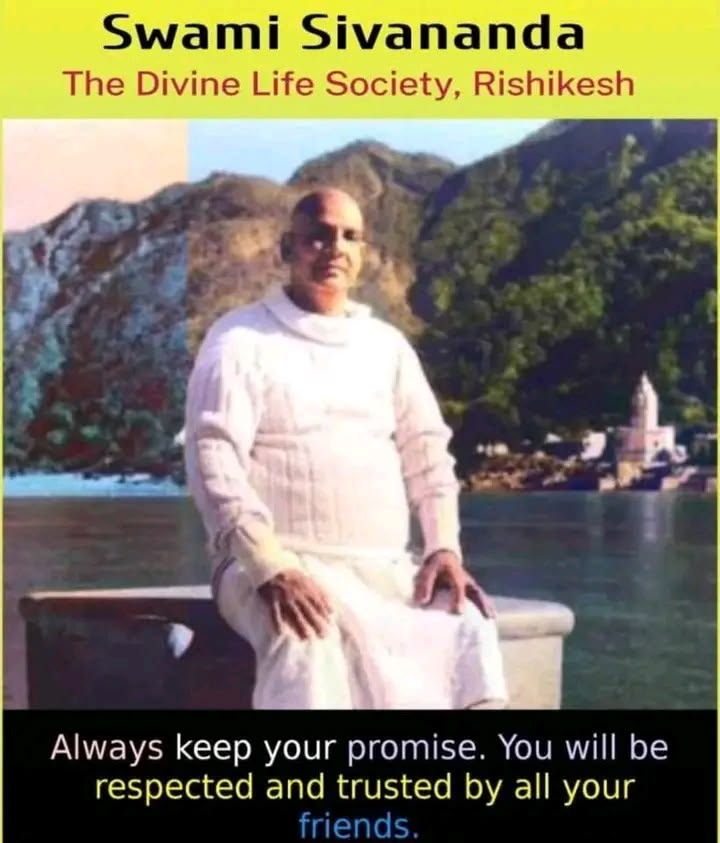
Swami Sivananda seated by river with promise quote image
Jnana Yoga, Swami Sivananda

Bases of Vedanta

Bases of Vedanta by Swami Sivananda Introduction The purpose of life is the realisation of one�s own essential nature. It is to know that you are the pure ever-free Atman. The Vedanta expounds the great truth that Atman alone is real, the phenomenal world is unreal. You are Atman, but you forget your real Svarupa due to identification with the body. This is called Deha-Adhyasa. This is the greatest obstacle to Self-Knowledge or Atma-Jnana. To get over this delusion of identification with body the Vedantic Seers have made a detailed analysis of the different bodies, gross and subtle, and systematically proved that the Jiva is not the body but is identical with the Paramatman. The study of the three bodies, the five sheaths and the three states of waking, dream and deep sleep, helps man to understand that he is different from all these diverse modifications and that he is the unchanging, constant, witness of all these. This helps him to feel that he transcends the three states, the three bodies and the Panchakoshas. Constant remembrance of this and meditation on this knowledge will lead him to the realisation of his Atma-svarupa. Therefore, the study of the Panchakoshas is a valuable aid in the process of disassociating yourself from the bodies and the sheaths. It enables you to rise above body-consciousness, to feel that you are the Atman and thus remain quite unaffected and unattached amidst all distractions and tribulations of life. I. The Three Bodies & their Enumeratioon (The individual experiencer is a consciousness-centre enveloped by several layers of matter existing as the factors causing objective awareness in it. The analysis of these layers or bodies is necessary to ascertain the nature of the true Self.) Hari Om. Om Sat-Guru-Paramatmane Namah. Disciple: How many bodies are there in an individual (Jiva)? Guru: There are three bodies in every individual (Jiva). Disciple: Please name them. Guru: The physical body or the gross body (Sthula Sarira), the astral body or the subtle body (Sukshma Sarira or Lingadeha) and the causal body or the seed body (Karanasarira) are the three bodies. Disciple: Please illustrate them. Guru: The shell of a tamarind corresponds to the physical body. The pulp represents the subtle body. The seed corresponds to the causal body. Ice represents the physical body. H2O represents the subtle body. The Tanmatras or root-elements correspond to the causal body. The Gross Body Disciple: What are the components of the physical body? Guru: The physical body is composed of five elements, viz., earth (Prithivi), water (Apah), fire (Tejas), air (Vayu) and space (Akasa). Disciple: What are the seven primary essences (Sapta-Dhatus) of the physical body? Guru: Chyle (Rasa), blood (Asra), flesh (Mamsa), fat (Medas), bone (Asthi), marrow (Majja) and semen (Sukla), are the seven primary essences of the physical body. Disciple: What are the Shad-bhava-vikaras (six modifications of the body) ? Guru: Asti (existence), Jayate (birth), Vardhate (growth), Viparinamate (change), Apaksheeyate (decay), Vinashyate (death), are the six modifications or changes of the body. Disciple: What are the links with which the body is connected? Guru: The body (Deha), action (Karma), love and hate (Raga-dvesha), egoism (Ahamkara), non-discrimination (Aviveka) and ignorance (Ajnana) are the seven links of the chain of Samsara (world-experience). From Ajnana (ignorance), Aviveka is born. Aviveka is non-discrimination between the real and the unreal. From Aviveka is born Ahamkara or egoism; from egoism is born Raga-dvesha (like and dislike); from Raga-dvesha Karma (action) arises; from Karma the body or the Deha is produced. If you want to free yourself from the pain of birth and death, destroy ignorance (Ajnana), the root cause of this Samsara (world-experience), through the attainment of the Knowledge of Brahman or the Absolute. When ignorance is removed, all the other links will be broken by themselves. This physical body of yours is the result of your past actions and is the seat of your enjoyment of pleasure and pain. Disciple: Why is the body called Sarira or Deha? Guru: Because the body decays (Sheeryate) on account of old age, it is called Sarira. Because it is cremated or burnt (Dahyate) it is called Deha. The Subtle Body Disciple: What is the composition of the subtle body? Guru: The subtle body is composed of nineteen principles (Tattvas), viz., five Jnana Indriyas or organs of knowledge, five Karma Indriyas or organs of action, five Pranas or vital airs, Manas or mind, Buddhi or intellect, Chitta or the subconscious and Ahamkara or the ego. It is a means of enjoying pleasure and pain. Disciple: When will this subtle body get dissolved? Guru: It gets dissolved in Videha Mukti or disembodied Liberation. The Causal Body Disciple: What is the causal body (Karana Sarira) ? Guru: The beginningless ignorance that is indescribable is called the causal body. It is the cause of the gross and the subtle bodies. Disciple: How can I transcend the three bodies? Guru: Identify yourself with the All-pervading, Eternal Atman. Stand as a witness (Sakshi) of all experiences. Know that the Atman is always like a king – distinct from the body, organs, vital breaths, mind, intellect, ego and Prakriti – the Witness of their attributes. II. The Five Sheaths Disciple: What is meant by a Kosha? Guru: Kosha means a sheath. Disciple: Kindly illustrate these sheaths. Guru: Just as a pillow-cover is a covering or a sheath for the pillow, just as a scabbard is a sheath for the sword or the dagger, so also this body, Pranas, mind, intellect and the causal body are sheaths that cover the Atman or the Soul. There is the singlet close to the body; over this there is the shirt; over the shirt there is the waist-coat; over the waist-coat there is the coat; over the coat there is the overcoat. Even so, the Atman is enveloped by these five sheaths. Disciple: How many sheaths are there in the body? Guru: There are five sheaths. Disciple: Please name them. Guru: Annamaya Kosha, Pranamaya Kosha, Manomaya Kosha, Vijnanamaya Kosha and Anandamaya Kosha are the five Koshas or sheaths. Disciple: What is Annamaya Kosha? Guru: Annamaya Kosha is food-sheath. It is the gross body made up of the five gross elements. Disciple: Why is it called Annamaya

Bases of Vedanta Read Post »

Swami Sivananda portrait with determination and effort quote image
Jnana Yoga, Swami Sivananda

Categories in Vedanta

Categories in Vedanta by Swami Sivananda Introdution The Prakriyas or the different categories in the philosophy of Vedanta are the fundamental rudimentary principles with which its ethics and metaphysics are built up. They take into account both the Unmanifest and the Manifest, Brahman, Maya, Isva�ra, Jiva and the universe. The nature of the Reality, the characteristics of the phenomenal appearance and the constitution of the individual selves are the main themes of Vedantic discussion. Sri Sankaracharya says that one must possess the fourfold qualification of Sadhana before entering into the study of Tattva-Bodha or the Knowledge of the Vedantic Categories and the Nature of the At�man. Sincere aspirants who have an ardent aspi�ration, faith, perseverance and purity of conscience will find a way of self-transformation through this Knowledge. A thorough understanding of these different categories is necessary before starting to study the actual philosophy of the Advaita Vedanta which abounds with severe logic and penetrating reasoning over the eternal verities of existence. Categories in Vedanta There are twenty-four Tattvas or Principles of the manifestation of Mula Prakriti: The five Tanmatras or rudimentary principles of the elements: Sabda (sound), Sparsa (touch), Rupa (form or colour), Rasa (taste), Gandha (smell). The five Jnana-Indriyas or organs of perception: Srotra (ear), Tvak (skin), Chakshus (eye), Jihva (tongue), Ghrana (nose). The five Karma-Indriyas or organs of action: Vak (speech), Pani (hand), Pada (foot), Upastha (genital), Payu (anus).The five Pranas or vital forces: Prana, Apana, Vyana, Udana, Samana. The fourfold Antahkarana or the internal organs: Manas (mind), Buddhi (intellect), Chitta (memory or subconscious), Ahamkara (ego�ism). 2. There are three Sariras or bodies: Sthula-Sarira (gross physical body), Sukshma or Linga-Sarira (subtle body), Karana-Sarira (causal body). 3. There are five Kosas or sheaths covering the Jiva: Annamaya (food sheath), Pranamaya (vital sheath), Manomaya (mental sheath), Vijnanamaya (intellectual sheath), Anandamaya (bliss-sheath). 4. There are six Bhava-Vikaras or modifica�tions of the body: Asti (existence), Jayate (birth), Vardhate (growth), Viparinamate (change), Apa�kshiyate (decay), Vinasyati (death). 5. There are five gross elements: Earth, Water, Fire, Air, Ether (sky). 6. There are five Upa-pranas or subsidiary vital airs: Naga, Kurma, Krikara, Devadatta, Dhananjaya. 7. There are six Urmis or waves (of the ocean of Samsara): Soka (grief), Moha (delusion), Kshut (hunger), Pipasa (thirst), Jara (decay or old age), Mrityu (death). 8. There are six Vairies or enemies: Kama (passion), Krodha (anger), Lobha (greed), Moha (infatuation or delusion), Mada (pride), Matsarya (jealousy). 9. Maya is twofold: Vidya (knowledge), Avi�dya (ignorance). 10. Vidya or knowledge is twofold: Para (higher), Apara (lower). 11. Avasthas or states of consciousness are three: Jagrat (waking), Svapna (dreaming), Su�shupti (deep sleep). 12. Saktis are two: Avarana (veil), Vikshepa distraction). 13. Jnana-Bhumikas or degrees of knowledge are seven: Subhechha, Vicharana, Tanumanasi, Sat�tvapatti, Asamsakti, Padartha-Abhavana, Turiya. 14. Ajnana-Bhumikas or degrees of ignorance are seven: Aija-Jagrat, Jagrat, Maha-Jagrat, Jagrat-Svapna, Svapna, Svapna-Jagrat, Sushupti. 15. Sadhana is fourfold: Viveka (discrimina�tion), Vairagya (dispassion), Shat-Sampad (six vir�tues), Mumukshutva (desire for liberation). 16. The six virtues (Shat-Sampad) are: i. Sama (tranquillity of mind), ii. Dama (self-restraint or control of the senses), iii. Uparati (cessation from worldly activity), iv. Titiksha (forbearance or pow�er of endurance), v. Sraddha (faith in God, Guru, Scripture and Self), vi. Samadhana (concentration or one-pointedness of mind). 17. The nature of Atman or Brahman is three�fold: Sat (Existence), Chit (Consciousness), Ananda (Bliss). 18. The Granthis or knots of the heart are three: Avidya (ignorance), Kama (desire), Karma (action). 19. The defects of the Jiva are three: Mala (impurity), Vikshepa (distraction), Avarana (veil of ignorance). 20. The Vrittis or modes of the mind are two: Vishayakara-Vritti (objective psychosis), Brahma�kara-Vritti (Infinite psychosis). 21. Gunas or qualities of Prakriti are three: Sattva (light and purity), Rajas (activity and pas�sion), Tamas (darkness and inertia). 22. The Puris or cities constituting the subtle body are eight: Jnana-Indriyas, Karma-Indriyas, Pranas, Antahkarana, Tanmatras, Avidya, Kama, Karma. 23. Karmas are three: Sanchita, Prarabdha, Agami. 24. The nature of a thing is fivefold: Asti, Bhati, Priya, Nama, Rupa. 25. Bhedas or differences are three: Svagata, Svajatiya, Vijatiya. 26. Lakshanas or definitions of the nature of Brahman are two: Svarupalakshana, Tatasthalak�shana. 27. Dhatus or constituents of the body are seven: Rasa (chyle), Asra (blood), Mamsa (flesh), Medas (fat), Asthi (bone), Majja (marrow), Sukla (semen). 28. There are four states of the Jnanis: Brahmavid, Brahmavidvara, Brahmavidvariyan, Brahma�vidvarishtha. 29. Anubandhas or matters of discussion (themes) in Vedanta are four: Adhikari (fit aspi�rant), Vishaya (subject), Sambandha (connection), Prayojana (fruit or result). 30. Lingas or signs of a perfect exposition or a text are six: Upakrama-Upasamhara-Ekavakyata (unity of thought in the beginning as well as in the end), Abhyasa (reiteration or repetition), Apurvata (novelty or uncommon nature of the proof), Phala (fruit of the teaching), Arthavada (eulogy, praise or persuasive expression), Upapatti (illustration). Some say that Yukti or reason is the seventh sign. el�ing of impossibility), Viparitabhavana (perverted or wrong thinking). 32. Malas or impurities of the mind are thir�teen: Raga, Dvesha, Kama, Krodha, Lobha, Moha, Mada, Maatsarya, Irshya, Asuya, Dambha, Darpa, Ahamkara. 33. Klesas or worldly afflictions are five: Avidya. (ignorance), Asmita (egoism), Raga (love), Dvesha (hatred), Abhinivesa (clinging to body and earthly life). 34. Taapas or sufferings are three: Adhidai�vika, Adhibhautika, Adhyatmika. 35. Pramanas or proofs of knowledge are six: Pratyaksha (perception), Anumana (inference), Upa�mana (comparison), Agama (scripture), Arthapatti (presumption), Anupalabdhi (non-apprehension). 36. Minds are two: Asuddha (impure), Suddha (Pure). 37. Meditations are two: Saguna, Nirguna. 38. Muktas are two: Jivanmukta, Videhamukta. 39. Muktis are two: Krama-Mukti, Sadyo-Mukti. 40. Samadhis are two: Savikalpa, Nirvikalpa. 41. Jnana is twofold: Paroksha (indirect), Aparoksha (direct). 42. Prakriti is twofold: Para, Apara. 44. Prasthanas or the regulated texts of Ve�danta are three: Upanishads (Sruti), Brahmasu�tras (Nyaya), Bhagavad-Gita (Smriti). 45. Eshanas or desires are three: Daraishana (desire for wife), Putraishana (desire for son), Vit�taishana (desire for wealth). 46. Species of beings are four: Jarayuja (born of womb), Andaja (born of egg), Svedaja (born of sweat), Udbhijja (born of earth). 47. The sentinels to the door of salvation are four: Santi (peace), Santosha (contentment), Vi�chara (enquiry or ratiocination), Satsanga (company of the
Categories in Vedanta Read Post »

Swami Sivananda by river with health responsibility quote image
Jnana Yoga, Swami Sivananda

Essence of Vairagya

Essence of Vairagya by Swami Sivananda Introduction Vairagya is the opposite of Raga (attachment). Vairagya is dispassion. Vairagya is detachment. Vairagya is indifference to sensual enjoyment here and hereafter. It is the second item in Sadhana Chatushtaya-Viveka, Vairagya, Shadsampat and Mumukshutwa. Vairagya is born of Viveka, or discrimination between Nitya and Anitya (Eternal and non-eternal), Sat and Asat (Real and unreal), Tattwa and Atattwa (Essence and non-essence). Viveka comes through selfless service done in several births and through Puja and Aradhana (worship and adoration of God), and through the Grace of the Lord. From Viveka is born Vairagya. It gives spiritual strength. A man of Vairagya has no attraction for the material world. So Vairagya is a supreme, inexhaustible wealth for spiritual aspirants. Vairagya aids concentration of mind (Samadhana) and generates burning Mumukshutwa, or strong yearning for Liberation or Emancipation, or Release. Raga is attachment to objects. Wherever there is a little pleasure, there is Raga. Wherever there is pain, there is dislike. Like and dislike are inter-related. Raga-Dwesha is also one of the important afflictions, according to Patanjali Maharshi. The five afflictions are Avidya (ignorance), Asmita (egoism), Raga-Dwesha (like and dislike) and Abhinivesha (clinging to life). First, there is ignorance, the original Avidya. From this is born egoism, Asmita, and from Asmita is born Raga-Dwesha, and from Raga-Dwesha, Abhinivesha, or clinging to this life. Types of Vairagya Vairagya is of different types or degrees-Mridu, Madhyama and Teevra (mild, moderate and intense). Intense Vairagya only will help the aspirant to stick to the spiritual path. If it is of a dull type like Smasana Vairagya, the mind will simply be waiting to get back the objects that were renounced previously, and the aspirant will get a downfall. He will not be able to climb again to the heights he formerly reached. So, the aspirants should be careful. Even though their Vairagya is of a mild type, they should try to make it moderate and then intense. Vairagya comes through looking into the defects of sensual life. Sensual pleasure is not real happiness. It is illusory, transient, impermanent. It is mixed with pain. So, again and again by looking into the defects of sensual life, Vairagya dawns. It should be strengthened through the study of spiritual books, Satsanga, Vichara (discrimination) and enquiry. Need for Enquiry Vairagya should be born of discrimination, enquiry and analysis. By these, the mind is weaned from sensual enjoyments and rendered thin like a thread (Tanumanasi) and only then is Vairagya lasting. Again and again you will have to make enquiry. Physical nudity and external penance do not constitute real Vairagya. Real Vairagya should come from enquiry, Vichara. All these material objects do not give us lasting happiness. They lead us unto pain and sorrow. Such deep enquiry, again and again persisted in for a very long time, produces lasting Vairagya. Vairagya is the real wealth for an aspirant. It helps him to do real Sadhana. It makes the mind introvert. Vairagya puts a brake to the extrovert tendency of the mind. Even if the mind runs towards objects, at once Vairagya will point out that there is pain there, that sensual enjoyment is the cause for rebirth and intense suffering. So the mind is bridled, and gradually through intense practice, it is established in real, lasting, sustained, intense Vairagya. Vairagya is of two grades: Para (supreme) Vairagya and Apara (relative) Vairagya. Para Vairagya comes after one attains Self-realisation. The whole world then appears like a straw. This gives intense spiritual strength. An Essential Pre-Requisite Without Vairagya there cannot be any real spiritual progress. In Vedanta it is the only vital, fundamental Sadhana. If you have Vairagya, all other virtues will come by themselves. Patanjali Maharshi says: Abhyasavairagyabhyam tannirodhah-“the mind is controlled by meditation or Sadhana and Vairagya.” They are the two wings of the aspirant to soar high into the realm of Immortal Abode. The same thing Lord Krishna also says: Abhyasena tu Kaunteya, vairagyena cha grihyate-“the mind is controlled by practice and dispassion and intense detachment.” By Vairagya, the mind is detached. He who works in a detached way is not bound by Karma (action). So it is the aspirants’ duty to cultivate this one virtue, or Sadhana-anka-Vairagya. Mental Disposition Vairagya is, doubtless, a mental state whereby the mind does not run into sensual grooves. It moves towards Atman, towards God. Queen Chudalai ruled a kingdom, and yet she had absolute (Para) Vairagya. Even amidst the temptations of the world, she had mental Vairagya, through Vichara and wisdom. So she was not affected in the least by the attractive objects of the world, whereas her husband, Sikhidhwaja, went to the forest, renouncing his kingdom, and yet he was not established in Vairagya. He was attached to the body; he was attached to his Kamandalu (water-bowl). A man may get attached to any object. You see a Vairagi, the common type one comes across. His whole body is smeared with ash, but he will fight for a rupee if he finds you giving a rupee to another Vairagi. This is his mental state. So by external appearance you cannot tell that one has Vairagya. Vairagya is a mental disposition. Sri Ramanuja does not belong to this extreme type of Vairagya-wearing only a rope loin cloth. He lived amidst luxurious things, but his mind was not polluted. He had that mental state of Vairagya, detachment, indifference, born of Viveka. ‘Golden Medium’ Lord Krishna says that He is not in favour of extreme asceticism: Karshayantah sareerastham bhootagramamachetasah, Mam chaivantahsareerastham tanvidhyasuranischayan-“They torture all the elements in the body and Me also who dwells in the body”. Lord Buddha also tortured his body in the beginning but later on he found out that there was not much spiritual progress, and then he came to the golden medium, the middle path. So we should go by the middle path always. The body is an instrument for attaining Self-realisation. So you should not torture the body. Whatever is needed for the

Essence of Vairagya Read Post »

Swami Sivananda with disciple sitting by riverside image
Jnana Yoga, Swami Sivananda

Vairagya

Vairagya by Swami Sivananda Why do you laugh in vain, friend! when you have just the cause really to weep? You have wasted this life in foolish mirth and carnal pleasures. You have done various sinful acts. You have not done anything to improve your nature. You have no clear conscience Your heart is filled with all sorts of impurities. You have no peace of mind. Remember that all carnal pleasure will bite and sting you to death in the end.In the Gita, Chapt. XVIII-38, you will find: That pleasure which arises from the contact of the sense-organ with the object is at first like nectar but in the end it is like poison. Open your eyes now. Do virtuous actions. Seek the company of the wise. Remember Him. Practise meditation. You will have a new glorious life.Vairagya is purely an internal, mental state. A man may remain in the world amidst luxuries, women, riches etc., and yet may possess perfect Vairagya, while a Sadhu who remains in the cave in the Himalayas may be attached to his Kamandalu, stick or piece of loin cloth. Raja Janaka was a perfect dispassionate man though he ruled a vast kingdom. So was Raja Bhagiratha. Queen Chudala possessed perfect Vairagya though she ruled a dominion, while her husband who retired into the forest was intensely attached to his body and Kamandalu. You cannot form a correct opinion of any Sannyasin or a householder as to his state of Vairagya or mental condition by a casual talk with him for a few hours or staying with him for a few days. You will have to live with him for a very long time and study his internal mental attitude. Generally people make serious mistakes. They are deluded by external appearances. They take a physically nude Sadhu for a great Mahatma in the beginning. Later on, they change their impression after close contact. Physical nudity alone will not constitute real Vairagya. What is wanted is mental nudity, i.e., complete eradication of Vasanas, egoism, etc. Do not be deceived by external appearances!


Vairagya Read Post »