






















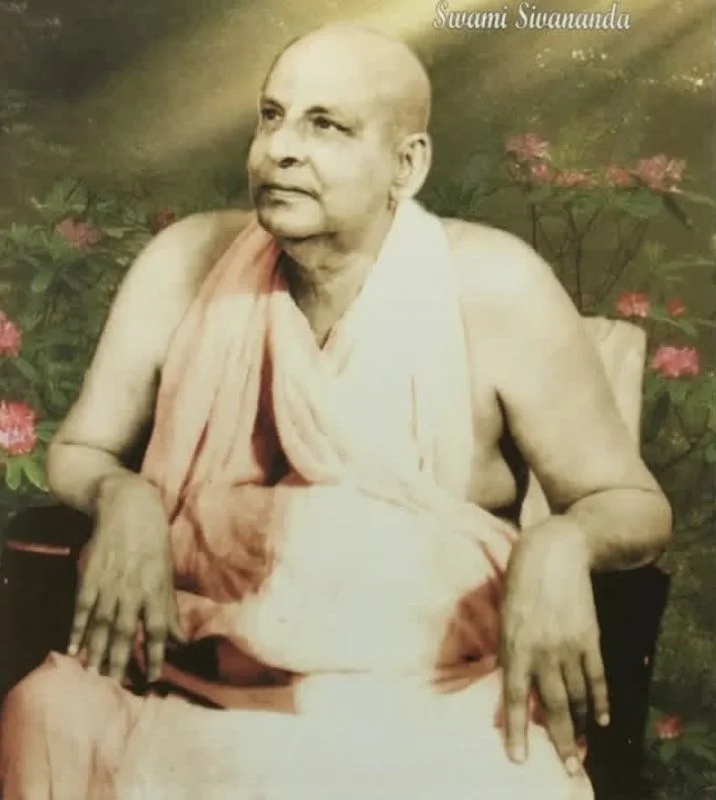
The Theory of Creation
The Theory of Creation by Swami Sivananda SOME hold that the universe was created out of nothing by a feat of God and that it will again lapse into nothing at the period of deluge. This dogma of creation ex-nihilo is not endorsed by the scientists. They say emphatically that what exists now should have existed always and will continue to exist always in some form or other. In Sankhya philosophy also you will find, That which is cannot come out of that which is not. (Sankhya Sutra 78). Gita also states: There can be no existence out of non-existence nor can the existent cease to be. The truth about both has been perceived by seers. (Chap. II-16). According to the Nebular theory, even solar system was in the beginning a huge mass of gaseous matter in its own axis. As ages rolled on, the gaseous matter attained the igneous stage. The central portion contracted. The mass rotated very rapidly and threw off rings on the outer side which gradually cooled down and formed into planets. These planets were in a molten or liquid condition for a protracted period. Gradually they cooled down and became solid. You will find in the Brahmananda Valli of Taittiriya Upanishad: From this Atman was born the Akasa; from Akasa, Vayu; from Vayu, fire; from fire, water; from water, earth; from earth, the herbs; from herbs, food; from food, man, and this man is made of the essence of food. (Chap. I-i). In Brahman there was a Spandan or vibration before the world was projected. This is the Sankalpa of Brahman. He thought or willed: Ekoham bahushyamiI am One, may I become many. This vibration corresponds to the bulging of the seed within the ground when it is soaked in water. Then the whole world was projected. Srishti or creation is of two kinds, viz., Yugapat Srishti and Krama Srishti. In Yugapat Srishti, the five elements, Mahat, Ahamkara, etc., and other objects of the universe come into being at one time or simultaneously. In Krama Srishti, the elements come out one by one. From Akasa, Vayu is born; from Vayu, fire, etc.; and from Avyakta, Mahat; from Mahat, Ahamkara, etc. There is creation in succession. Vasishtha tells Rama in Yoga-Vasishtha: At one period, Siva creates all the universe; at another period, Brahma; at another period, Vishnu; then Munis and so on. Sometimes Brahma is born in a lotus; sometimes in water; sometimes in the mundane egg; sometimes in Akasa. In one creation, the powerful trees will alone exist in this universe; in another, the earth alone; in another, stone alone; in another, flesh alone; and in another, gold alone. Thus will it be in diverse ways. During the several creations, the foremost in sometimes Akasa, sometimes Vayu, sometimes Agni, sometimes Apas and sometimes Prithvi. Herein I have but briefly described to you the creation of one Brahma. The order of evolution will not be the same in all Yugas, but will vary with different Yugas. Krita and other Yugas will again and again recur. There is no object in this world which does not again and again cycle round many times. Maya is Abhinna Shakti of Brahman. Abhinna means inseparable. Maya cannot be separated from Brahman. Just as heat is inseparable from fire, so also Maya is inseparable from Brahman. Avyakta, Maya, Mulaprakriti, Pradhana (the chief or first), Gunasamya, are synonymous terms. Avyakta is the unmanifested state of Maya. Just as the tree exists in the seed in a subtle state, so also this world exists in a seed-state in Avyakta during Pralaya. Avyakta and Pradhana are terms of the Sankhya philosophy. Mulaprakriti is a compound of Sattva, Rajas and Tamas, like a three-stranded rope of white, red and black colours. In the Gunasamya Avastha or state, the three Gunas are in a state of equilibrium. This is the state of Pralaya or Maha-Sushupti. Just as men go everyday into the state of deep sleep, so also the world goes into the Sushupti state during Pralaya. In Pralaya, countless Jivas get absorbed in Mulaprakriti with their Samskaras, like particles of gold that adhere to a ball of wax. The Karmas of the Jivas ripen at the end of Pralaya. Ishvara has to give the fruits of their Karmas. So he again projects this universe by mere willing. From Avyakta or the unmanifested (Maya), the Mahat Tattva comes out first, just as the sprout shoots out from the seed in the ground. From Mahat proceeds Ahamkara. Then come mind, senses, Prana, Tanmatras. From the quintuplication or mixing of the five Tanmatras, the five gross elements come into being. Then the whole external universe is created out of the five gross elements. Aham is of two kinds, viz., Samashti Aham or collective egoism and Vyashti Aham or individual egoism. The collective egoism is Ishvara and the individual egoism is the Jiva or the human being. The Jiva develops egoism first and begins to feel ‘Aham Jiva – I am Jiva,’ and then only he begins to cognise the world and the Ishvara. But for the Vyashti Aham, there cannot be any Samashti Aham or Ishvara and the world. No Guna can exist by itself. The three Gunas exist in a state of combination. Sattva, Rajas and Tamas cannot be separated like grains from one another. Sometimes, one Guna is in excess. If Sattva Guna is predominant, then it is called Sattva Guna Pradhana.’ If Rajas is predominant, it is called ‘Rajoguna Pradhana.’ If Tamas is predominant, it is called ‘Tamoguna Pradhana.’ There is excess of pure Sattva in Maya. The reflection of Para Brahman in Maya is Ishvara. Maya is the Upadhi of Ishvara. It is the causal body of Ishvara. Ishvara has Maya under his control. Ishvara is also called by the names, Avyakrita and Antaryamin. Ishvara is the instrumental cause of the universe (Nimitta Karana). He becomes the material cause by commingling himself with the Tamas, just as the spider produces the web out
The Theory of Creation Read Post »