Hari Om

Menu

Swami Sivananda

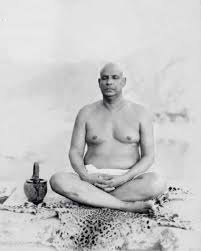
swami sivananda Monk meditating in seated posture picture
Jnana Yoga, Swami Sivananda

The Three Tests

The Three Tests by Swami Sivananda In order to understand an object thoroughly in this world, there are three tests or means viz., by approximation, by its characteristics, and by an enquiry into its characteristics. by the first means we know only the name of the object sought to be known; by the second we understand its real nature; and by the third we enquire into such characteristics. According to the second test, the characteristics of an object should not be subject to the faults of Avyapti (non-inclusion or exclusion of part of a thing defined,) Adhivyapti (redundancy) and Asambhava (impossibility) and should thus not be found in another. Avyapti arises when the characteristics are found in one part of a class only and not in the rest. For example, the cow is of a tawny colour. Here the object cow is subject to the fault of Avyapti, as the tawny colour is an attribute of one class of cows only and not of the whole class. Hence, cow cannot be properly known through this description of it alone. Adhivyapti arises when the characteristics pointed out are found in (or are common to) other objects also. For instance, the cows are four-legged. Here not only cows but also other animals have four legs. Hence redundancy. Asambhava is where the characteristics given out are not at all found in the object stated. For instance, the cow is one-hoofed. All cows have two hoofs and not one. Hence impossibility. That which is not subject to these stains has not the properties that are found in or common to another. For instance, a cow has the characteristics of neck, dewlap, back and hump. Here these characteristics are found in the bovine genus only.

The Three Tests Read Post »

swami sivananda Monk meditating in seated posture picture
Karma Yoga, Swami Sivananda

Qualifications of a Karma Yogi

Qualifications of a Karma Yogi A Karma Yogi should be absolutely free from lust, greed, anger and egoism. Even if there are traces of these Doshas, he should try to remove them. He should not expect any kind of fruits for his actions herein and hereafter. He should not have any desire for name and fame, approbation, appreciation, thirst for applause, admiration and gratitude. He must have a spotless character. He should try to possess this gradually. He should be humble and free from hatred, jealousy, harshness, etc. He should always speak sweet words. How can a proud and jealous man, who expects respect and honour from others, serve others? He should be absolutely fearless.� A Karma Yogi should have an amiable, loving, sociable nature. He should be able to move and mix with everybody without distinction of caste, creed or colour. He should have perfect adaptability, mercy and cosmic love. He should be sympathetic and tolerant. He should be able to adjust himself to the habits and ways of others. He should have an all-embracing and all-inclusive heart. He should always have a cool and balanced mind. He should have presence of mind also. He should have equal vision. He should rejoice in the welfare of others. A man who is easily irritated and who can be easily offended over trifling things is absolutely unfit for the path of Karma Yoga. He should have all the organs under perfect control. He should lead a very simple life. If he leads a life of luxury, if he wants everything for himself, how can he share his possessions with others? He should burn his selfishness to the very root. Let me remind you once more of the words of the Gita: Samniyamyendriyagramam sarvatra samabuddhayahTe prapnuvanti mameva sarvabhutahite rataah. “Restraining and subduing the senses, regarding everything equally, in the welfare of all rejoicing, these also come to Me.” Gita: Chapter XII-4. A Karma Yogi should have a sound, healthy and strong physical body. How can he serve others if he has a poor physique and a dilapidated frame? He should take great care of the body, but he should not have the least Moha or attachment for it. He should never say: “This body is mine.” Even the jackals and fish claim: “This body is ours.” He should be ever ready to sacrifice his body for a noble cause. He should do regular Pranayama, physical exercise and Asanas to keep up a high standard of health. He should take good, nourishing and substantial food. He should bear insult, disrespect, dishonour, harsh words, censure, infamy, disgrace, heat and cold, and the pain of diseases. He should have power of endurance. He should have absolute faith in himself, in God, in the scriptures and in the words of his Guru. Such a man only can become a good Karma Yogi. Such a man only can do real and useful service to the country and to suffering humanity. It is always difficult to find an ideal Adhikari. Even if you possess a few of the above qualifications, the other qualifications will come to you by themselves, when you earnestly work in the field of Karma Yoga. You need not be discouraged. Plunge yourself in the service of God. Forget the body. March boldly in the field with Prem and Shraddha. Blow the bugle with the feeling: “I must become a true Karma Yogi now.” All virtues will cling to you by themselves. Apply yourself diligently right now from this very second. Become an ideal Karma Yogi like Janaka or Buddha. May God bless you with inner strength, faith, virtues and the spirit of self-sacrifice. Start the work even with a little capital of some love, mercy and sympathy. Enter the field at once. You will draw inspiration from the leaders in the field. The astral or invisible helpers, Nitya Siddhas, Amara-Purushas and your colleagues will push you on. After sometime, you will become a wonderful Karma Yogi. Fearlessness, humility and all other virtues will shine in you by themselves now.

Qualifications of a Karma Yogi Read Post »

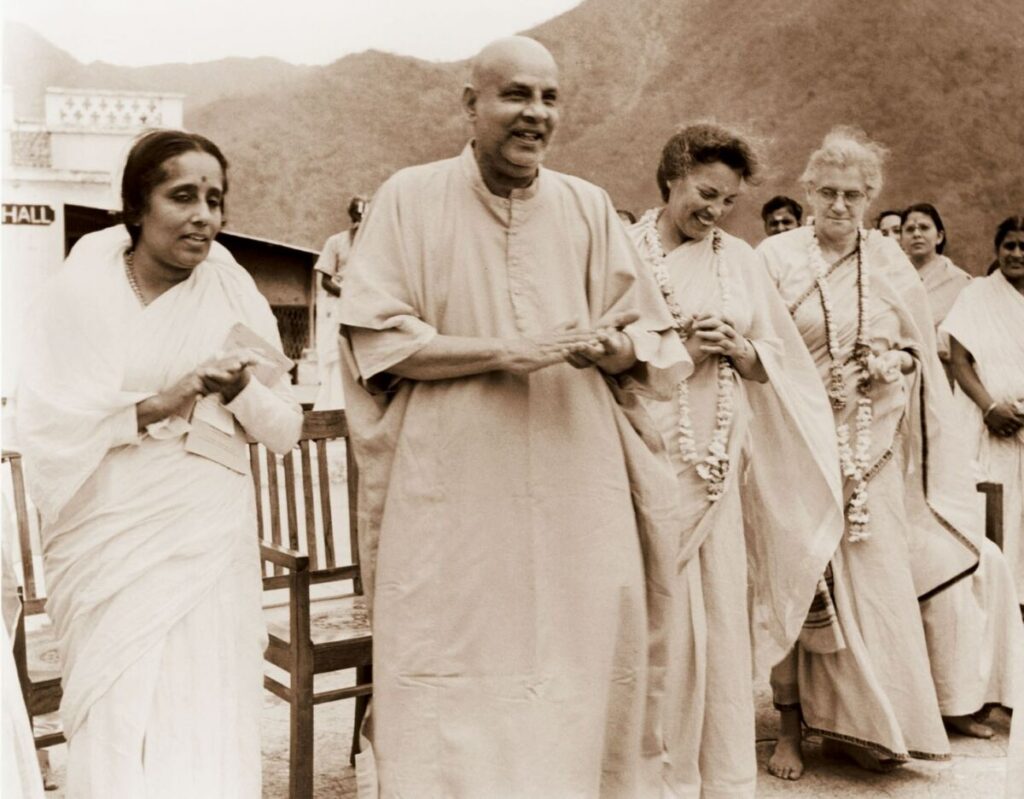
Swami Sivananda walking with devotees image
Jnana Yoga, Swami Sivananda

Creation

Creation by Swami Sivananda Salutations to the most adorable Supreme Para Brahman who is the Indweller of all beings, who creates, protects and dissolves this world into Himself, who is the unchanging substratum behind these physical phenomena, who guides the actions of all the organs of action, and of knowledge and the working of the Pranas, who remains the same under all conditions of superficial changes in the external world and Who is the support, solace, guide and refuge of one and all. Here are some of the doubts that a thinking aspirant generally entertains in his mind in respect of creation of this world. If the world is created by Isvara how can he be at the same time Akarta also? If the present birth is the result of past Karma then with what Karma the first man started his life? Who has created this world in reality? These and many other doubts torment the student of philosophy as he goes on with his enquiry. All doubts become clear like the light of the sun to that aspirant who is regular in his Sadhana, whose devotion to God is great and whose devotion to his preceptor is equal to that of God, who is endowed with a clear and sharp intellect and who devotes some part of the day in contemplation. Creation is a mystery. Creation is Anadi (beginningless). Creation is a mere projection of what existed before. It is mere Brahma Sankalpa. Mysterious is the path of Karma. Karma is Anadi. Only when you attain knowledge of the Self you become disillusioned and the theory of Karma, the theory of creation and such other transcendental questions become quite clear like the Amalaka fruit in the palm of the hand. The frail human intellect unaided by intuition and the Grace of the Lord is too weak to comprehend these subtleties of the workings of the universal law which governs the world. Hindu religion teaches us that God created this world consisting of man, beasts, etc., for His sport (Lila). by His mere Sankalpa (thought power) He created the whole world and created the first man who is known in our scriptures by the name of Manu. He was the most perfect man. He laid down all laws for mankind, for those who came after him. This is called the Code of Manu. This contains all laws of Dharma, morals, politics, science and all laws for the smooth working of the universe. The first man, Manu, was an Amsa or part of the Lord Himself and he was not born due to any of his past actions or Karma. Manu is the Manasaputra (a son created by mere thought) of Brahma. This world is the manifested aspect of the Lord. He was alone in the beginning when there was no creation. After creation also He remains unattached and free like the ether in the pot. The earthen pot is full inside and outside with ether but the ether is not at all affected by the existence or non-existence of the pot. Even so the Lord is all-pervading and full, inside and outside of all beings, and remains ever non-attached. He guides the actions of all beings but He is not the actor. He is the mere witness of the activities of the organs. He gives power and strength to the organs. So He may be said to be the actor but at the same time He is Akarta (non-doer) and Asanga (non-attached). Different views are held by different Acharyas or founders of different systems of philosophy in respect of creation. Sri Sankara, the exponent of the Kevala Advaita philosophy explains creation as Maya, an illusory power of the Lord inherent in Him. The expression of this illusive power called Maya is the cause of creation. Creation, he says, is a mere superimposition just as a snake is superimposed in a rope or water which is superimposed in the desert. There is neither snake in the rope nor water in the desert. The Lord has Maya under His perfect control. The individual soul is a slave of Maya or Avidya. The Jiva when he attains freedom from ignorance acquires the knowledge of the unchanging Self. Still another view is maintained by the Upanishads in regard to creation. How was this world created? To this the Upanishads answer thus: God did not create this world like the potter who makes a pot. But this world emanated from Him just as hair grows from the body of a man. Just as a man is not aware of the growth of the hair on his head and face, even so the Lord is unaware and remains unaffected by the creation of this world though it has emanated from Him alone. This is how the Lord remains both as the Karta and Akarta in respect of creation. Just as the spider weaves the web out of its own saliva and finally absorbs it into itself so also the Lord does not stand in need of any external help for the creation of this world. He, in the end, dissolves this Universe into Himself. He is self-existent and self-luminous. He is all-full. He is the supreme cause. The Ajativada propounded by Sri Gaudapadacharya completely denies the creation of the world. According to him there is no creation at all. There is no world in the three periods of time, past, present and future. Brahman alone exists. There is not even a trace of diversity in it. God, man and the world of diverse names and forms are the mere creation of ignorance. He asserts and proves beyond all doubt refuting all counter-suggestions, that there is no creation at all in the three periods of time. This is the culmination of Vedanta philosophy which stands unrefuted to this very day. Only when you suppose creation to be a reality, the questions who created it and how it was created and so on arise. People who are

Creation Read Post »

swami sivananda Black-and-white photo of monk holding books and offering gesture image
Jnana Yoga, Swami Sivananda

Vijnana Yoga

Vijnana Yoga by Swami Sivananda Knowledge of the Supreme Self is Vijnana. It is direct intuitive perception of the Self through Nirvikalpa Samadhi. Jnana is theoretical knowledge of Brahman through study of the Upanishads and Vedantic literature. Maya is dependent on the Lord. She is from the Lord. She is called the Sakti or energy of the Lord. When the Maya covers Brahman, who is devoid of attributes, then She is called by the Vedantins as the Avyakrita or unmanifest. Some call Her the Mula Prakriti (the primordial energy). She is also styled Sansriti (the world process), Bandha (limitation) and the like. Impelled by the Lord, She creates Mahat-Tattva (the great intelligence). Impelled by the energy of the Lord Mahat creates Ahamkara or the principle of egoism. Covered with Mahat-Tattva, the Ahamkara becomes threefold, viz., Sattva (goodness), Rajas (action) and Tamas (darkness or inertia). From the principle of Tamas are produced the five subtle Tanmatras. Thence come the five primeval gross elements, viz., ether, air, fire, water and earth, each partaking the attributes of the one preceding. From the attribute of Rajas coupled with Ahamkara, are produced the organs of action. From the attribute of Sattva, coupled with Ahamkara, are produced the deities presiding over each organ of sense, together with the mind. Coupled with the attribute of Sattva, the Lord is known by the name of Vishnu, the sustainer of the world. Associated with Tamas, He is known as Rudra. The conditions of wakefulness, dream and deep sleep are due to the attributes of the Buddhi or intellect. They are not in the Atman or the Absolute. The Atman is their witness. He is of the nature of intelligence itself, and undecaying. The Maya always appears to be twofold, viz., Vidya (Knowledge) and Avidya (Ignorance). Those who are under the intelligence of Avidya are attached to the path of action. Those who are given to the study of Vedanta take to the path of cessation from action, only after their heart is purified completely. Maya flies away from those who are given to the recitation of the names of the Lord. Those who are under the influence of Avidya or ignorance, are always wandering in the Samsara. Those who are given to the practice of introspection, Japa, Kirtan, meditation, and study of holy scriptures, are always emancipated.Knowledge of Self reveals itself to those who are the devotees of the Lord and who worship daily. Those who are possessed of devotion are undoubtedly emancipated. Those who are destitute of the nectar of devotion, cannot achieve emancipation even in dream. The company of the saints is declared to be the cause of emancipation. Saints are those whose minds are unruffled, who are free from avarice, who have conquered desire, who have brought their senses and internal nature under control, who are devoted to the Lord, who have no longing for anything, who are the same in pleasure and pain, who are free from attachment, who are ever devoted to the Lord, who have the attributes of self-control, and who are content with whatever comes in their way. If somehow or other one gets into the company of saints, then he is inspired to love hearing of the deeds of the Lord. From it develops devotion to the Lord. When devotion is attained, knowledge appears in all its fullness. The idea of Self in the non-self, the body and the rest, is verily Maya. This world exists through Maya. This illusion of the world is only due to the action of the mind. It has no existence in reality. There are two forms of Maya, viz., Avarana Sakti (veiling power) and Vikshepa Sakti (perspecting power). The former envelops all knowledge. The latter creates the world wheel by dividing into the gross and the subtle, from the Mahat-Tattva and Brahma, down to the blade of grass. This world is superimposed upon the Supreme Self by Maya, like a snake on a rope. Brahman is without duality. In reality nothing exists save Brahman. All that is heard, seen or remembered is like the creation of dream or reverie. The body alone is known as the deep-seated root of this tree of world. Attachment to wives and sons, has its root in it. If there is no body, these objects cease to exist. The body, or Kshetra, is gross and subtle. The gross is that which is composed of the five elements, viz., ether, air, fire, water and earth. The subtle is that which is made up of the five subtle elements, viz., egoism, mind, intelligence, and the organs of perception and action. The reflection of Chaitanya is Chidabhasa or Jiva. The Supreme Self is devoid of disease and decay. He is self-luminous, birthless, deathless, eternal, all-pervading and indivisible. He is one without a second. When ignorance is destroyed, the Jiva begins to identify himself with Brahman. Different from the intellect, the vital airs, the body, egoism, is Brahman. He is ever pure. He is the witness. He is Intelligence itself. He is everywhere full. He is supreme bliss itself. He is above all limitations of Buddhi and the rest. He is changeless, timeless and spaceless. He illuminates the body and the rest by his own light. He is uncovered by anything else. His nature is Truth and Knowledge. Avoidance of dissimulation, killing and the rest, bearing of calumny with patience, always behaving towards others without crookedness, serving a good teacher through thought, word and deed, with devotion, internal and external purity, perseverance in good actions and the like, control of mind, speech and the body, avoidance of objects of sense, absence of egoism, examination of the faults of birth, old age, death and the like, freedom from attachment to sons, wives and wealth, preservation of equanimity of temper in pleasure and pain, single-minded devotion unto the Lord, residence in a sacred place free from the society of men, avoidance of the company of worldly-minded persons, constant effort towards the attainment of knowledge of
Vijnana Yoga Read Post »

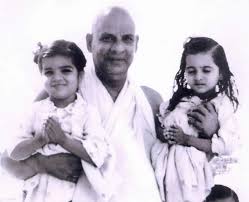
swami sivananda Black-and-white photo of monk holding two young children image
Jnana Yoga, Swami Sivananda

Inner Government

Inner Government by Swami Sivananda Salutations to the Para Brahman who is the substratum for the Inner Government, who is the Supreme Head of the Inner Government, and who is the Supreme Purusha in the celestial hierarchy and who is an embodiment of Knowledge and Bliss. He Who dwells within this world, Who is within this world, Whom the world does not know, Whose body is this world, Who rules the world from within is thy innermost Self, Inner Ruler, Immortal. He is the Supreme Head of the Inner Government. He Who dwells in the body, Who is within this body, Whom the body does not know, Whose body is this body, Who rules the body from within is thy innermost Self, Inner Ruler. He Who dwells in the eyes, Who is within the eyes, Whom the eyes do not know, Whose body is the eyes, Who rules the eyes from within, know Him to be the Supreme Head of the Inner Government. He Who dwells in the ears, Who is within the ears, Whom the ears do not know, Whose body is the ears, Who rules the ears from within, know Him to be the Supreme Head of the Inner Government. He Who dwells in the mind, Who is within the mind, Whom the mind does not know, Whose body is the mind, Who rules the mind from within, know Him to be the Supreme Head of the Inner Government. He Who dwells in the Prana, Who is within the Prana, Whom the Prana does not know, Whose body is the Prana, Who rules the Prana from within, know Him to be the Supreme Head of the Inner Government. He Who dwells in the Buddhi, Who is within the Buddhi, Whom the Buddhi does not know, Whose body is the Buddhi, Who rules the Buddhi from within, know Him to be the Supreme Head of the Inner Government. Just as there is a Government in all countries to govern the nation and maintain law and order, so also there is an Inner Government to maintain law and order in this universe. The inner marvellous Government has Satyam as their banner, Dharma (righteousness) as their seal, Omkara as the band, discrimination as the coat-of-arms and dispassion as the shield. This is an eternal Government. They have one unchanging policy, viz., of helping the aspirants to attain Self-realisation. They do not thirst for annexing dominions. Their treasure is inexhaustible. Their dominion is illimitable and boundless. Their wealth consists of supreme peace, eternal bliss, perennial joy, everlasting satisfaction and divine knowledge or Upanishadic wisdom. The head of a Government is either a President, or a dictator, or a king or a Maharaja. The head of the Inner Government is Isvara or the Supreme Lord Who assumes three forms, viz., Brahma or Hiranyagarbha for the purpose of creation, Vishnu for the purpose of maintenance or preservation and Rudra for the purpose of dissolution or destruction, Who is the Antaryamin or Inner Ruler and the spiritual director. Above Isvara is Para Brahman Who is the silent witness and supreme head. By His command the earth and the sky stand apart. By His command the sun and the moon always rotate as the flaming fire-brand. By His command the rivers and the seas do not over-step the limits. By His command the seasons, solstices and the years do not transgress. By His command Karmas and their performers and their fruits do not likewise go beyond their appointed time. By His command the sky, the sun and the moon stand in their respective places. This whole universe evolved from the Brahman moves in the highest Brahman. That Brahman is a great terror, like an uplifted thunderbolt. Those who know this become immortal. From fear of Brahman fire burns; from fear of Him the sun shines; from fear of Him Indra and Vayu and Death, run. There is perfect justice in the administration of the Inner Government. The Devatas obtain their status according to their merit and righteous actions. The Lord is assisted by the eight Lokapalas or guardians of the quarters. They are Indra, Varuna, Agni, Yama, Nirriti, Marut, Kubera and Isana. Yama, Varuna, Indra, Brihaspati and Surya are the Chief Ministers of this Lord of the Inner Government. They have a subtle fiery body. They can assume any form at their will. They are endowed with great powers. The eight Vasus, the eleven Rudras, the twelve Adityas also do their own part in the administration of the Inner Government. Indra is at the head of the Devas. Anyone who has got the qualification can become an Indra or attain Indrahood. Indrahood is a status in the celestial hierarchy. The blowing of winds, the rising of the sun, the change in Ritus or seasons, the fall of rain and their stoppage are all governed by the Devatas or gods. There is the celestial hierarchy of gods. There are series of successive terms of different rank. Suppose there be a youth, a good youth, well versed in the scriptures, well-disciplined, resolute and very strong. Suppose his is all this earth full of wealth. This is one human bliss. A hundredfold of the bliss of human beings is the unit measure of the bliss of human Gandharvas. A hundredfold of the bliss of human Gandharvas is the unit measure of the bliss of celestial Gandharvas. A hundredfold of the bliss of Devas is the unit measure of the bliss of gods known as Karma Devas. A hundredfold of the bliss of Karma Devas is the unit measure of the bliss of Indra. A hundredfold of the bliss of Indra is the bliss of Brihaspati. A hundredfold of the bliss of Brihaspati is the bliss of Prajapati. A hundredfold of the bliss of Prajapati is the unit measure of the bliss of Brahma. The bliss of Brahma is but an atom when compared to the bliss of the Supreme Lord of the Inner Government. The change of Ministry

Inner Government Read Post »

Swami Sivananda walking with devotees during spiritual gathering image
Jnana Yoga, Swami Sivananda

Why This Running After the Shadow

Why This Running After the Shadow by Swami Sivananda Some people say: We should direct all our energies in gaining political freedom and economic betterment of the masses. If we do not waste time and energy in propagating spiritual ideas, Gita studies and Sankirtans, and devote that energy to the above ends, then we shall get freedom and economic betterment earlier, after which those who wish can pursue philosophy and religion.How can the masses and the middle classes who have nothing to eat assimilate these teachings before their physical needs are satisfied? It is too much stress on spiritual life that has brought our downfall and slavery. Hence we are still a poor and a backward people. We have neglected material progress in the past, hence others overpowered us. We should therefore develop our material and physical powers and get to the same peak of progress, power and comfort as the Western nations, before we can dabble in philosophy and the like. No nation, in the history of the world, has gained freedom or economic welfare by study of scriptures and leading a divine life, or by Bhajan and Sankirtan. We must have a balance between spiritual and material life. by stressing the spiritual aspect too much, we have reached this stage. Hence it should be relaxed and the need for material and industrial progress should be emphasised as far as the Indian youths are concerned. These people have no religious inclination. They have no knowledge of higher, transcendental matters. They have a gross and a limited vision. Even after political freedom is attained, they will continue to remain in that same condition, and argue in the same manner. They have neither religious Samskaras nor piety. They are a sort of destructive critics of the type mentioned in the Gita Chapter XVI. Two types of workers, social and religious, are necessary in this world. Social workers will work in their own fields of activity. Religious workers will carry on special propaganda and dissemination of Knowledge. A carpenter has his own field of work and an electrician has his own field. You cannot ask a carpenter to do the work of an electrician and the electrician to do the work of a carpenter. Social, economical, political and industrial development and constructive work in this direction are very necessary. These should not be ignored. But religion only can save people. Without religion man is nowhere. Even those who work in the political and other fields cannot turn out good work without disciplining themselves, without having a spiritual basis, without under- going a religious training, without practising Ahimsa, Satyam and Brahmacharya. Leaders, who are selfish and corrupt spoil the society. They fight for their own superiority and power. Political freedom cannot root out the miseries of the world. You can have a little more comfort through political freedom. Bread, butter, jam and nice biscuits cannot give you everlasting peace. Comforts are enemies of spiritual life and peace. They pull a man down. After all, man wants very little on this earth. You will think of God only when you are in adversities. What is wanted is spiritual wealth which is inexhaustible. That work which removes ignorance of man and gives him happiness can eradicate human sufferings in toto and give him eternal happiness. That work is spiritual propaganda. That work is the dissemination of Bhakti and knowledge of Yoga and Vedanta. It is the crowning glory of human activities. This is the greatest Yajna or Yoga. This is the Jnana Yajna, the highest of all Yajnas. India alone possesses the supreme divine wealth. Even the richest people of the different parts of the world come to Himalayas to practise Yoga, to seek the guidance of Rishis, Seers, Yogis and Sages and to acquire this imperishable wealth. No one can rob India of this wealth. India is ever rich and will be ever so both materially and spiritually. Her resources are vast and limitless. She was invaded and plundered by several people and yet her resources are abundant. She is ever free and will be ever free. Her culture and civilisation rank foremost in the whole world. Happiness does not come from wealth. The Western nations are quite restless despite their enormous wealth. From this we can infer that spiritual life alone can give real, everlasting peace and happiness. It is very difficult to convince these people as their minds are filled with wrong Samskaras. The fight between political and spiritual propagandists, between dualists and non-dualists, between Sannyasins and householders as to which is better is going on from beginningless time. Those who work in the religious field should not enter into discussion with these people. It is only wasting of time and energy. They should go on with their work with unabated vigour. May true discrimination and light dawn on those people who are too much attracted to this world and politics, who have ignored the spiritual side of life altogether, who are thinking too much of body and its comforts, who have forgotten all about their essential divine nature, who are running after the shadow and who have disregarded the priceless Atmic Jewel that is hidden in their hearts!

Why This Running After the Shadow Read Post »

Swami Sivananda folded hands greeting outdoors image
Karma Yoga, Swami Sivananda

Work is Worship

Work is Worship Work is worship. Work is meditation. Serve all with intense love without any idea of agency and without expectation of fruits or reward. You will realise God. Service of humanity is service of God. Work elevates when done in the right spirit without attachment or egoism. If you are a Bhakta (devotee), feel you are a Nimitta or instrument in the hands of God. If you adopt the path of Jnana, feel that you are a silent Sakshi (witness) and that Prakriti does everything. All work is sacred. There is no menial work from the highest view-point (from the view-point of the Absolute, from the view-point of Karma Yoga). Even scavengering, when done with the right mental attitude as described above, will become a Yogic activity for God-realisation. It is selfishness that has deplorably contracted your heart. Selfishness is the bane of human life. Selfishness clouds the understanding. Selfishness is petty-mindedness. Bhoga (sensual enjoyment) increases selfishness and selfish Pravritti. It is the root cause of human sufferings. Real spiritual progress starts with selfless service. Serve Sadhus, Sannyasins, Bhaktas, the poor and sick people with Bhava, Prem and Bhakti. The Lord is seated in the hearts of all. Isvarah sarvabhutanam hriddese arjuna tishthatibhramayan sarvabhutani yantraroodhani mayaya. “The Lord dwelleth in the hearts of all beings, O Arjuna, and by His illusive power, causes all beings to revolve as though mounted on a potter�s wheel.” Gita: Chapter XVIII-61. The spirit of service must be deeply ingrained in your very bones, cells, tissues and nerves. The reward is invaluable. Practise and feel the cosmic expansion and infinite Ananda (bliss). Tall talk and idle gossiping will not do, my dear friends. Evince intense zeal and enthusiasm for work. Be fiery in the spirit of service. Have Nishtha with God and Chesta with hands like the Bahurupi who has Nishtha of a male and Chesta of a female. You will be able to do two things at a time through gradual practice. Repeat the Name of the Lord while at work. Karma Yoga is generally combined with Bhakti Yoga. A Karma Yogi offers to the Lord as an oblation (Isvara Pranidhana) whatever he does through the Karma Indriyas (organs of action). A Karma Yogi does not expect even a return of love, appreciation, gratitude or admiration from the people whom he is serving. In the beginning, all your Karmas may not be of the pure Nishkamya type. Some may be Sakamya (with expectation). Some may be Nishkamya. You must be very vigilant in scrutinising your motives during action. You must be ever introspective. By and by, when the heart becomes purer and purer through constant work, your actions will be perfectly disinterested and selfless. In the mind there are three Doshas, viz., Mala (impurities like lust, wrath, greed, etc.), Vikshepa (tossing of the mind), and Avarana (veil of ignorance). Mala is removed through Nishkamya Karma Yoga; Vikshepa by means of Upasana (worship); and Avarana by means of study of Vedantic literature and Jnana. Karma Yoga gives Chitta Suddhi. It purifies the heart and prepares the mind for the dawn of knowledge (Jnana Udaya). Only he who has reduced his wants and controlled his Indriyas can do Karma Yoga. How can a man of luxury, with his Indriyas revolting, serve others? He wants everything for himself, and wants to exploit and domineer over others. Another qualification is that he must have a balanced mind. He must be free from Raga-Dvesha (likes and dislikes) also. “An action which is ordained, done by one who is undesirous of fruit, devoid of attachment, without love or hate�that is called pure.” Gita: Chapter XVIII-23. You must learn the secret of renunciation or the abandonment of the fruits of action. Long is the lesson, toilsome the practice. You have to combine energy in work, with indifference to the result of the work. Kill ambition, kill desire of life, kill desire for comfort. Work as those work who are ambitious. Respect life as those do who desire it. Be happy as those who live for happiness. The reconcilement of these opposites is the secret of renunciation. All who seek power, life of comfort, perform actions with a view to obtaining and enjoying these fruits, and they direct their activities to this end. The fruit is the motive for exertion and the longing of it inspires the effort. Aspirants must work as energetically as the children of this world, but they must substitute a new motive; they work that the divine law may be fulfilled, that the divine purpose may be promoted, that the Will of God may be carried out in every direction. This is the new motive and it is one of the all-compelling forces; they work for God alone. Thus acting they create no Karma-bond for it is desire that binds. Now, the attainment of renunciation is difficult and requires prolonged and patient practice. The probationer will begin by trying to be careless of the results brought to him personally by his actions; he will try to do his very best and then rid himself of all feeling as to the reaction on himself, taking equally whatever comes. If success follows, he will check the feeling of elation; if failure, he will not permit depression to master him. Persistently he will repeat his efforts, until by slow degrees he finds that he is beginning to care little for retards (or falls) while he has lost no whit of his energy and painstaking in his actions. He will not seek external activities, but will do his best with every duty that comes in his way and will begin to show the balanced state of mind which marks the crowning strength and detachment of the soul. He will hasten the attainment of these through a cool estimation of the value of the earth’s so-called prices, and will meditate on their transitory nature, the anxiety and unrest of those whose hearts are fixed on them, and the emptiness of

Work is Worship Read Post »

swami sivananda Black-and-white photo of seated guru addressing a large gathering photo
Jnana Yoga, Swami Sivananda

Doctrine of Avidya

Doctrine of Avidya by Swami Sivananda Avidya is that portion of the primitive non-intelligent principle in which Sattva is subordinated to Rajas and Tamas. This is known as Malina Sattva, because it is impure on account of the predominance of Rajas and Tamas. It is the reflector of Jiva whereas Maya is the reflector of Isvara. Maya is called Suddha Sattva on account of the predominance of Sattva. This world of experience is due to the force of Avidya. It is the force of Avidya that plunges us into the ocean of Samsara. It is a negative power which makes us forget our divine nature. Avidya operates through the mind, and the mind functions through the time, space and causation. Avidya is an illusory power that disintegrates the Divine into a million different fragments. Pleasure, pain, desire, Karma, attraction, repulsion, delusion, pride, lust, egoism, anger, jealousy, the three bodies, five sheaths, are all effects of Avidya. Avidya is the source of all ignorance, sin and misery. Avidya is beginningless (Anadi) but it has an end. As soon as one gets knowledge of the Self, Avidya terminates. Brahman appears as the world on account of Avidya, just as the rope appears as snake in the dusk. If we bring a lamp, the snake disappears, but the rope alone remains. Even so, when we get knowledge of Brahman, the appearance of the world will vanish. Avidya is not negative, but is positive (Bhavarupa). It is absence of Knowledge. It is erroneous knowledge. Avidya or Ajnana which constitutes the causal body is the cause for the two bodies, gross and subtle. It is impossible to define the nature of Avidya. It is Anirvachaniya. It is not real, because it vanishes when knowledge of the Self dawns. It is not unreal, because we experience it unlike the horn of a hare or a barren woman’s son. It is not a non-entity as it is destroyed by Atma Jnana. It is through the force of Avidya that the ignorant Jiva has mistaken the impure mortal body for the pure immortal Self and says I am a Brahmin, I am a Pandit, I am a householder, I am beautiful, I am lean, I am a doctor, etc. No explanation is possible for the rise of this deluding Avidya. This has somehow come into phenomenal being. Although its origin and explanation are beyond our reach, its operation through the mental categories is clearly perceptible. The Avidya cannot be the Brahman’s because He is an embodiment of pure knowledge. How can there be darkness in the sun? It cannot belong to the souls, as they are not distinct from the Brahman. If Avidya were an essential property of the Atman, he could never get rid of it. Anyhow you are caught up within the clutches of Avidya. Do not rack your brain with the question: Whence comes Avidya? Kim Bhranti Jnanam? Yadi Bhranti Sa Kasya? Whose is Avidya? Why should there be Avidya? Try to get out of this fire of Samsara or this ocean of darkness. This is your duty. There are two ways to cross this ocean of Samsara. These are clearly chalked out by Rishis and Sages of yore. When you have attained knowledge of the Self, you will have a clear understanding of the nature, why and how of the formidable Avidya. Will a patient who is suffering from severe abdominal colic try to enquire from his friend when he gets some medicine, Where from did you get this medicine? What are its components? What is the price? Who gave the medicines? Will he not swallow it immediately? Will a man whose cloth is caught in fire run towards water immediately to cool himself or will he be philosophising How did this fire come? etc.

Doctrine of Avidya Read Post »

swami sivananda Monk in orange robes with artistic double-exposure portrait photo
Jnana Yoga, Swami Sivananda

Doctrine of Maya

Doctrine of Maya by Swami Sivananda You must try to understand the right significance of Maya which is the chief characteristic of Vedanta or Kevala Advaita school of Sri Sankara. The term Maya appears in the Svetasvatara Upanishad and in the Gita, chapter VII-14, Mama Maya the divine illusion of Mine. Svetasvatara Upanishad IV-10 declares that Maya is the material cause of the world and the possessor of Maya is the great Lord. Maya is that portion of the primitive non-intelligent principle in which pure Sattva is not subordinated to Rajas and Tamas. In other words, that portion in which pure Sattva is predominant is called Maya. The world is regarded as Maya, as it cannot be accepted as real. Does Maya really exist or not? The Advaitin gives a reply: This inscrutable, indescribable Maya cannot be said either to exist or not to exist. It is a strange phenomenon which cannot be accounted by any law of nature. Maya is Anirvachaniya i.e., incapable of being described. It is neither Sat (real) like Brahman nor Asat (unreal) like a barren woman’s son or horn of a hare or a lotus flower in the sky. The phenomena produced by a magician do not really exist, because they vanish soon. The magician himself is fully aware that it is mere illusion. But we cannot say that they do not exist at all, because we are conscious of the phenomena, though only for a short time. We are never conscious of a thing which is altogether non-existent like the lotus flower in the sky. Similar is the phenomenon called the universe which is imagined to be distinct from Brahman. It is like the silver for which the mother-of-pearl is mistaken. It is difficult to conceive how the infinite comes out of itself into the finite. The magician brings out a mango tree before us from out of nothing. The tree is there, though we cannot explain it. So we call it Maya or illusion. If we know the nature of the Brahman, all names and forms and limitations will melt away. The world is Maya as it is not the essential truth of the infinite reality of the Brahman. The world somehow exists and its relation to the Brahman is indescribable (Anirvachaniya). The illusion vanishes by attainment of knowledge of the Brahman. Sages, Rishis and Srutis emphatically declare that the Maya vanishes entirely as soon as the knowledge of the Supreme Self dawns. It is in this sense, in the sense that it vanishes when Atma-Jnana arises that this phenomenal universe is said to be unreal (Mithya), in contradistinction to the Self-existent and Self-luminous Brahman who never ceases to exist and shine. The Eternal always abides in its own nature. It rests in its own native pristine glory. Srutis declare: All indeed is Brahman. There is no such thing as diversity. This is the experience of liberated sages. The Sankhyas and the Tarkikas teach that emancipation is attained by a knowledge of the true nature of the Spirit and by discriminating spirit from matter. The world of names and forms vanishes entirely from the vision of a sage. It is only an illusion that can be removed by mere knowledge. It is the illusory notion of serpent which is removed when the rope that is mistaken for a serpent is recognised. Therefore it must be clearly admitted that the universe which is removed by knowledge of Self is also an illusion. If you give up entirely reading of newspapers and shut yourself up in a room for a month and if you plunge yourself in deep meditation, you will have a very light impression of the world in your mind. Gradually this light impression also will be obliterated. The world is nothing but a play of the two currents of Raga-Dvesha. If these two currents are destroyed, the world will vanish. Because the minds of the worldly people are filled with passions, attachment and delusion, this world appears to be real. Some philosophers state that this world is real because, if at the very outset, they declare, the world is unreal, the aspirants will be bewildered. It is only with a view to prevent this perplexity that the universe is spoken of as real.
Doctrine of Maya Read Post »

swami sivananda Monk in yellow robes seated cross-legged against painted backdrop image
Jnana Yoga, Swami Sivananda

Maya and Avidya

Maya and Avidya by Swami Sivananda The reflection of intelligence is Maya which has no beginning, which is indescribable, which is the source of inorganic world, and which is connected only with the intelligence called Isa or the Supreme Being. The reflections in numerous small portions of that Maya, which are possessed of two powers of enveloping and projecting and which are known as Avidya are said to be Jivas. It may be noticed here that in this view Maya and Avidya are looked upon as one element, and are related with each other as the whole and its parts. The former is the adjunct (Upadhi) of Isa, the latter of Jiva (Prakartha Vivarana). In Tattva-Viveka, a chapter of Panchadasi, the matter is thus elucidated: The primitive non-intelligent principle (Mulaprakriti) which consists of three Gunas (Primordia rerum) has two forms, (1) Maya and (2) Avidya. According to the text, That non-intelligent principle divided itself into two forms named Maya and Avidya, which are the reflectors, as it were, of Isa and Jiva respectively. Maya is that portion of the primitive non-intelligent principle in which pure Sattva is not subordinated to Rajas and Tamas. In other words, that portion in which Pure Sattva is predominant is called Maya, whereas that in which the Sattva is subordinated to Rajas and Tamas and is consequently impure, is known as Avidya. Reflections of intelligence in Maya and Avidya are Isa and Jiva respectively. In some other places Maya and Avidya, the reflectors of Isa and Jiva, are thus distinguished: The primitive dead principle, which is essentially one, is called Maya, when we take into account the predominance of its projecting power, and is called Avidya when we take into consideration the predominance of its enveloping power. Thus the material principle of which the projecting power is superior to the concealing power is the limiting condition of Isa; and the same principle with its concealing power predominant is the limiting condition of Jiva. The Avidya which forms the limiting adjunct of Jiva is otherwise called Ajnana. That the projecting power is predominant in Isa follows from His being the creator of this great world. He is always conscious of His free state, and hence is untouched by the concealing power. Jiva, on the contrary, labours under ignorance of Brahman his true nature owing to the predominance of the concealing power of the material principle working in him. He is incompetent to create the great universe as he lacks the predominance of the projecting power. Vedanta-Siddhanta Bheda. Just as the mirror is rendered dim by a layer of dirt attaching to it, so also Knowledge is veiled by Avidya. Therefore all people are deluded. They cling to things unreal and mistake the body for the pure Atman. They think that this illusory world of names and forms is quite real. Mula Prakriti is the slumbering or latent state of the Universe called also Maha Sushupti when the Gunas are in a state of equilibrium. When the Gunas are disturbed, Mula Prakriti is called by the different names as Maya, Avidya, Tamas, etc. Brahman is beginningless and endless. Maya is beginningless but She has an end. She vanishes as soon as one gets the Knowledge of the Self.
Maya and Avidya Read Post »