













Hari Om

Menu

Swami Sivananda

images 2026 02 24T121140.029
Celestial Collection of Divine Messages - Awakening the Divinity in Man, Swami Sivananda

The Heart Of The Spiritual Problem

The Heart Of The Spiritual Problem Sri Swami Chidananda What is the heart of the spiritual problem of the individual soul upon this earth plane, who is in a state of bondage to an earth consciousness, a limited individual consciousness which is referred to as jivahood? It is important to try to understand or to get to the essence of this metaphysical problem, this cosmic problem of the individual soul imprisoned in a structure made of flesh and bones, in a labyrinth, a net, of constant, unceasing thoughts, fancies, imaginations, memories and projections into the future. These constitute an inner mesh or net in which we are caught and held firmly, for the identification with the psycho-physical dimensions of our personality is so total, so complete, that it has become normal. It has become the one and only consciousness that we know. It has become our natural condition although Vedantic psychology would describe it as abnormal. It is an aberration. Thus, Swami Vivekananda, trying to make his Western audience understand this subtle, inner metaphysical point a hundred years ago used the term “dehypnotise.” When they suggested that Vedantic affirmations such as “I am Atman, I am immortal, I am without birth and death, name or form,” were only a form of self-hypnosis, he replied: “On the contrary, you have been hypnotised into thinking I am the body, I am a human being, I am so and so, I belong to this family, to this country.” What Vedanta wants to do is to dehypnotise you from the hypnotised condition you have fallen into through birth after birth of wrong thinking.” Thus it is that we have to go through a process of trying to discover what it is into which we have landed through ages of wrong thinking. That state Vedanta pinpoints as a state of identification with that which we are not, a total moving away from the centre of our real, natural awareness of what we are. Moving away, completely forgetting and becoming disconnected, as it were, from the awareness or from the consciousness of what we really and truly are, we have entered into a state of consciousness identifying ourselves and thinking ourselves to be something which we are not. We are immortal Spirit, but we think we are people subject to birth and death, a beginning and an end, a birth day and an epitaph. So, Vedanta precisely pinpoints our situation as this state of forgetfulness of our real nature and being totally caught up, entangled and overcome by a wrong awareness, an identification with a personality consciousness which is not our real consciousness. Out of this wrong identification has arisen a false ego-sense, and we are held in bondage to this wrong, vitiated consciousness dominated by ego and totally pervaded by selfishness which is the outcome of ego and which leads to a self-centred, self-seeking life. This is the present malady. And, this condition seems to be our real, natural condition, whereas it is a diseased one. It is called bhava-roga (disease of transmigration). The bondage of earth life is not outside you. It is not made up of anything other than your own self. It is not the outer world perceived by the five senses that constitutes prapancha or samsara or earth life. It is this inner state of becoming completely deprived of our true awareness and becoming enslaved by a wrong consciousness dominated by a false ego and further complicated by selfishness that is the natural immediate outcome of the ego and its attachments to so many things. It is this wrong awareness of ourselves, this self-centred, self-seeking life that is the root cause of all clash and conflict with others, differences of opinion, disharmony, discord, prejudice, bias, hatred, misunderstanding, envy, jealousy, suspicion and anger. Everything stems from this basic state which constitutes your bhava-roga. Bhava-roga is not outside, it is inside. Samsara or prapancha or bandhana (binding) are not outside, they are inside. Therefore, the first process is to somehow or other clearly perceive this. Because, as long as you do not clearly perceive this and honestly accept this state of yours, kaivalya moksha, liberation and illumination are all far, far away. They are only so much of fancy. They are only a vapour of imagination. We must clearly perceive this state, and we must be honest enough to admit this very painful truth about the actual inner state of our consciousness. It is not at all flattering, but unless there is honesty about oneself we cannot step into spiritual life even if we know all about Vedanta. For the spiritual life has two dimensions. One is the Vedanta siddhanta (doctrine) of the ultimate experience, but the other is vyavahara (worldly activity). Unless Vedanta is brought over into vyavahara, it is only a burden to us. Siddhanta is useless unless it is brought down to the level of abhyasa (practice), and takes the form of sadhana in day-to-day living—in your everyday activity, thinking and feeling, reaction to things around you, and your relationship with others with whom you have to live. These have been provided by God Himself for the jivatma as a field of sadhana so that siddhanta can be applied, so that one may begin to move towards Truth-experience, Reality-consciousness. Unless we understand our position in samsara to be thus, unless we see it as a gymnasium in which to exercise and strengthen our inner spiritual sinews and muscles, we are the losers. We shall ever be in a wonderful field, yet we will not be able to take advantage of it, because we will be thinking that sadhana is somewhere in a forest or inside a cave. It is inside a cave, but the cave is inside us. We must see very clearly that it is here, it is now, it is in this way that I have to evolve. There is not going to be another opportunity given. If we fail to recognise and bypass the opportunity that God has given, then we are losers. Every moment, every day that dawns is a great, golden chance and opportunity given. The field is immediately reopened afresh for you to exercise practical Vedanta, for you to put siddhanta into abhyasa. This constitutes practical

The Heart Of The Spiritual Problem Read Post »

Time for Change
Bhrama Muhurata Meditative Talks at Swami Sivananda Ashram - Rishikesh, Swami Sivananda

Change Now!

Change Now! By Sri Swami Atmaswarupananda Early Morning Meditation Talk given in the Sacred Samadhi Hall of Gurudev Sri Swami Sivanandaji Maharaj, Sivananda Ashram, Rishikesh In the Gita, Lord Krishna warns us that lust, anger and greed are the gateways to hell. And in his Universal Prayer, Gurudev prays that we may be freed from egoism, lust, greed, hatred, anger and jealousy. And so it is in most religions. These are the sort of things that we consider to be our worst enemies from a spiritual point of view. However, perhaps from the point of view of a spiritual teacher, these types of sins can be secondary to habits and ways of living that we don’t consider to be a problem. As an analogy, a progressive enterprise can stand almost anything in a person except their desire to find a comfort level. The one thing that is most difficult to fight is inertia–people being satisfied where they are and no longer being willing to improve and advance. Sometimes spiritual teachers can be confusing in that they preach against the well-known sins, yet surrounding them they tolerate people who are not living up to the virtues that they are preaching. But perhaps those people are not suffering from the worst sin of all from a spiritual point of view which is inertia. If a person is willing to change then there is always hope, but if they are self-satisfied, if they have found a comfort level, if there is inertia, then even if their normal sins are at a minimum, from a higher point of view they are hopeless because they are not willing to move. In addition, they may be suffering from spiritual pride, thinking that they are better than most others because they are not committing the same sins. Our spiritual teachers, gurus, and the scriptures are calling us to an entirely different view of life. We are basing our life on an identity with a body and mind; our only concern is that we get what we want. From their higher point of view, that is the ultimate sin. The thing that counts is that we be flexible enough to move, that we surrender ourselves to that one Spirit that is the Indweller of all of us. Therefore, each one of us must constantly examine our lives. Have we found a comfort level? Are we no longer willing to change? Have we lost interest in a new angle of vision? This is the real test of our spiritual life. As long as we are willing to move, anything is possible. All goals are possible. If we have reached a comfort level, if inertia has set in, then we can dream as much as we want about spiritual progress, but it is not likely to happen. We must be willing to change, and that is what all the scriptures and all our gurus are calling us to. That has always been their central message. Have another angle of vision. Change now!

Change Now! Read Post »

New Year Message
Celestial Collection of Divine Messages - Awakening the Divinity in Man, Swami Sivananda

A Pointing Finger

A Pointing Finger Sri Swami Chidananda Worshipful homage to the eternal, Universal Spirit Divine, that Worshipful Cosmic Being who is our source, origin, support and strength, fulfilment and goal-ultimate. May His divine grace be upon you all! Loving adorations to our revered and beloved holy Master Swami Sivanandaji Maharaj in whose spiritual presence we are all assembled in this early morning spiritual fellowship in this Samadhi Hall of his holy Ashram on the banks of divine Mother Ganga. May his glance of grace, Gurukripa and his hand of benediction be upon you all sincere seeking souls. The bell rings and reminds by marking the arrival of a certain time for some specific purpose that time does not stand still, it passes. Therefore, beloved Sadhaks and Seekers, Jijnasus and Mumukshus, even as time is ever moving, we have to keep pace with it and also keep moving. Movement is the great law of evolution, nature. Movement is the secret of success. Movement is the one condition of progress. But movement does not merely mean motion. There may be continuous, unbroken motion without any movement. Movement in time and space indicates or symbolises a certain progression. Motion can be round and round and round, and it may be involved in a single location. It may be in the same place, take you nowhere as you say. Upward movement and forward movement, Godward movement, movement upon the path of evolution which constitutes the essence of evolution and progress, does not occur by itself. And this movement has to be initiated, maintained, directed and it has to be safeguarded also. Movement can come to an abrupt stop but it need not necessarily be of the same rate because there are ups and downs in life. All things do not remain the same, all conditions do not remain the same. A person keeps moving forward and a pace is of a certain rate, but it is buffeted by strong winds in the opposite direction. One has to struggle against the winds and the movement is naturally slowed down. As we had occasion to mention when your movement is in the direction of the flow of a stream or a river, the movement requires no special effort and it is rapid. But when you have to move against the stream and you have to swim against the current, then naturally the movement will be slower because it has to overcome opposition, overcome a contrary current. This is to be expected because we are in a world of diversity. Just as these facts are true about the outer physical universe of ours, they are also, to some extent, true about your inner psychological and spiritual universe within. Movements, progression in spiritual life means progress of our entire being, of our mind, our emotions, our sentiments, our thoughts, the quality of our thoughts, the direction of our thoughts, the motivations of our thoughts. They are all involved in contributing to the correctness, the rightness, wisdom of any inner movement of your real inner being, your vital being. Even so your higher vital being, the intelligence, the reason dictates, if it is clouded, if it is overcome by strong emotion, passion, sentiment, the reason may start working in a topsy-turvy way justifying that which is not to be justified, supporting that which is not to be supported. Then you create your own spiritual problem, you create your own spiritual situation, problematic situation, complicated situation. There should be a harmony between the higher vital being and the vital being upon the mental level of thoughts, emotions, sentiments, imaginations, memories. There should be harmony—that which harmonises the outer physical manifestations of these inner movements and the inner movements upon the vital mental level and the inner movements upon the higher vital, intellectual level. That which harmonises is your ideal and goal, your philosophy of life, your principles of life, and the living of your life, the principle of your conduct and character. We live by certain principles. We abide by certain time-honoured truths expounded in our scriptures. We live by certain goals and ideals and they have the power and efficacy, effectiveness of bringing about a unification, a harmony, a oneness in all levels of our being. Therein lies the importance of these factors, principles for living, and ideal for life and well-conceived goal for our day-to-day living of our life, our thoughts, words, emotions, moods, motivations, sentiments, actions. The harmony, the unification, integration of your personality depend upon your unified ideal and goal, your principles and your philosophy of life. You must be very very clear about what is ‘plus’ for you and what is ‘minus’ for you. And the source of our wisdom, the material for our deciding, choosing, selecting, rejecting and deciding is our heritage of wisdom we have inherited from our past. Saints, Sages, mystics, men of wisdom have not come and gone in vain. They have left something for posterity and that is our inheritance, our asset, our wealth. Their advent, their life, and even the manner of their passing is for us a permanent endowment, a light upon the path, a pointing finger, a certain directing ideal. If this background is recognised for its value and from time to time you compare your life with the ideals handed down to you, then you have a safe term of reference by which you can direct this movement forward towards the chosen goal which Spiritual Life constitutes both upon the outer plane as well as the vital plane of the mind and the higher vital plane of your reasoning, knowledge, intellect, Buddhi. Ideals co-ordinate them and harmonise them. Certain unswerving eternal principles, values—co-ordinate them, bring about a harmony in them. They integrate them, giving them great force and a shining idea! placed before you always. It becomes of extreme help in times of an inner conflict between the vital and the higher vital, between the wisdom of reason and the waywardness of the mind. In resolving

A Pointing Finger Read Post »

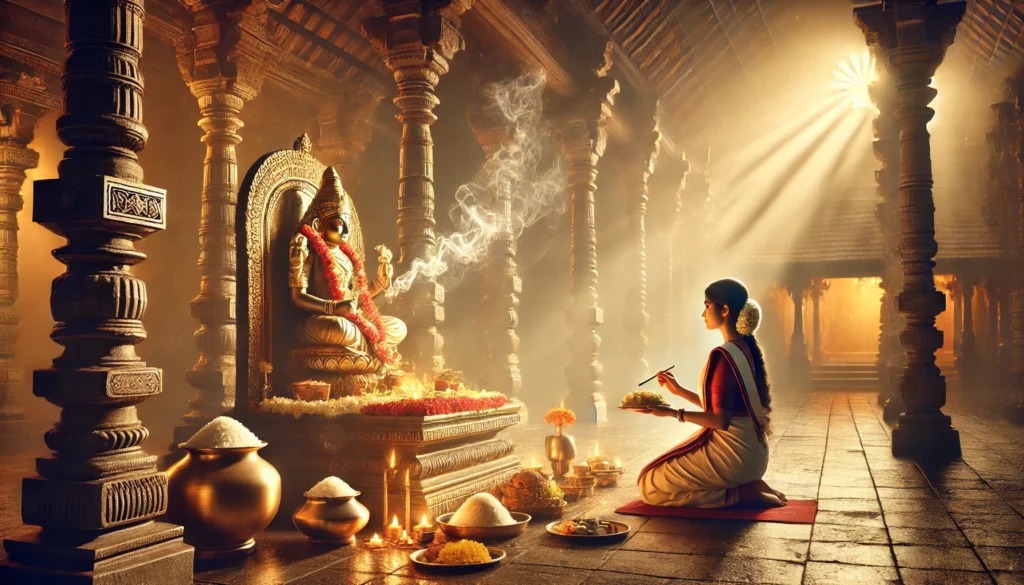
Woman performing puja before temple deity with offerings image
Bhrama Muhurata Meditative Talks at Swami Sivananda Ashram - Rishikesh, Swami Sivananda

The Rationale Behind Prayer

The Rationale Behind Prayer By Sri Swami Chidananda Early Morning Meditation Talk given in the sacred Samadhi Hall of Gurudev Sri Swami Sivanandaji Maharaj, Sivananda Ashram, Rishikesh. God, not only being transcendental, but also being immanent, not only being immanent but also being a specific indwelling divine principle within each and every body, why is there so much difficulty in attaining that which is nearer to us than anything else in all the universe? Even if the most proximate thing is by your side, if you turn your head the other way and look in the opposite direction, you will not be able to see it. That is the trouble. That is the problem. There is nothing wrong with God, nothing wrong with His immanence, nothing wrong with His immediacy. What is wrong is that our gaze is elsewhere. So everything is wrong with the direction we have decided to turn our gaze to. Therefore, all the saints and mystics have prayed, “O Lord, bless me and grant that I may constantly remember You. Let my mind be constantly thinking of You. Let my entire being look only in Your direction, and may I have no eyes for anything else, no ears for anything else. Having ears, let me hear nothing except Your name, Your description, Your glories, Your praise–from saints, scriptures, teachers, mystics, yogis. Having eyes, let me see nothing except things pertaining to You, things that will help me to move towards You. Having a mind, let it think of nothing, but think only of You. In this way, through all our faculties, let us become only God-oriented. Let all our faculties move only in His direction. Let us make up our mind, our entire being, to refuse to focus upon anything else except the supreme, ultimate, almighty, universal Spirit Divine, our ultimate goal supreme. This then is the way. Therefore, we pray to the Supreme Being every morning to bless us that we may have the ability and strength to so do. We pray to Him. This leads us into another quandary, another difficulty, another paradox. All religions, all scriptures, all prophets have declared that God is omniscient. Does He not know our predicament? When He is omniscient and He thus knows our situation, why should we pray? Does He not know? Can He not set it right? A baby knows nothing; it cannot express itself. But the mother, through her love and care, intuitively grasps, “Oh, something is wrong with baby’s tummy. It’s feeling discomfort; therefore it is crying.” God is more than father and mother. He is everything to us, ten times more than any earthly mother that Brahma has ever created. That being so, where is the need to bring anything to His notice, as though He doesn’t know it? Does He need to be told? He is the eye of our eye, ear of our ear, heart of our heart, mind of our mind. So what is the purpose of prayer, the meaning of prayer? This is the paradox and question that faces us when we say, “Prayer can overcome all things.” A cloth gets soiled. We wish to make it clean, white and shining once again. So we put it in a bucket of hot water and add soap powder. We clean it. The water is not in need of the cloth, nor is the soap. They can serve many other purposes, yet we bring them together. Why? Because the cloth is in need of water, it is in need of soap. Therefore, it goes into the proximity, into an active, dynamic contact with the water and soap. And it comes out clean, white, completely free from all dirt. It is restored to its original purity. That is the logic behind prayer. Not because the Lord needs to be told, not because He does not know. He knows everything. It is because the one who prays is benefited, is blessed by the contact he creates through prayer. Prayer has gained an essential place in the context of the mystical aspects of all the living religions of the world. They all emphasis prayer. Not because we are telling Him something that He does not know, that He has to be told, but because the very act of telling Him elevates us, sanctifies us, blesses us. Therefore it is that we pray. Even so, let us pray to revered and beloved Holy Master that by his blessings we will be enabled to constantly keep ourselves in a state of continuous contact and communion with the Supreme Being, for that is the greatest good of man. In that lies the highest welfare of the human individual. In that lies the fulfilment and success of the pilgrim soul upon earth, success in ultimately completing this journey of life by reaching the destination–not having to come back again to repeat this journey, but making it the final journey. Supremely blessed are those who are thus graced by the almighty Spirit Divine and blessed by their spiritual master. May all of you who sit and hear this word be thus graced by God and guru. God bless you all!

The Rationale Behind Prayer Read Post »

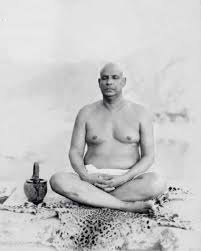
swami sivananda Monk meditating in seated posture picture
Celestial Collection of Divine Messages - Awakening the Divinity in Man, Swami Sivananda

Practice of Meditation

Practice of Meditation Sri Swami Sivananda Meditation is doubtless difficult. It will be very difficult, nay indeed impossible for a beginner to take to subtle meditation all at once. There must be graduated practices and the mind must be rendered very subtle for higher practices of concentration and meditation. Just as the archer first aims at gross things, target, etc., and then takes to subtle points, so also the student of Yoga should do gross concentration to start with and then take to subtle concentration practices. There must be gradual ascent in the successive stages of Yoga. But, Yoga Bhrashtas like Jnana Deva or Sadasiva Brahman of Karur, Trichinopoly, Trilinga Swami and others can at once take to higher stages. Such persons are very, very rare indeed. The object of meditation in the beginning must be Personal God, the body of Virat, or the four-armed Maha Vishnu, or the flute-bearer Lord Krishna or Rama or any other object. Later on, meditation can be practised on Impersonal God. In Savitarka meditation you will have a comprehensive understanding and knowledge of the objects, their excellence and defects, all the features, present, past and future, and also those near and remote, even those unheard of or unthought of. The whole knowledge of the objects and elements will be revealed to you. The name Sampatti is given to the four experiences collectively, Savitarka, Savichara, Sananda and Asmita. Sasmita Samadhi culminates in Dharmamega Samadhi. Then comes absolute dispassion for him. This brings him Asamprajnata Samadhi. Why do you read many books? It is of no use. The great book is within your heart. Open the pages of this inexhaustible book, the Source for all knowledge. You will know everything. What is that knowledge of Brahman or the Source or Self? Close your eyes. Withdraw the senses. Merge deep in the Supreme Soul, the Light of lights, the Sun of suns. Complete knowledge will be revealed to you. You will have direct intuitional knowledge and divine wisdom by direct perception. All doubts will vanish now. All mental torments will disappear. All hot discussions, heated debates will terminate. Forget the body. Forget the surroundings. Forget friends and relatives. Forgetting these is the highest Sadhana. It helps meditation a great deal. By remembering God you can forget all these things. Merge within by practising deep, silent meditation. Taste the spiritual consciousness by withdrawing the mind from the sensual objects and fixing it on the object of meditation. This will lead you to Samadhi, the highest goal of Yogis. You will have to note carefully whether you remain stationary in the spiritual path even after many years of meditation or whether you are progressing. Sometimes you may even retrograde or fall downwards also if you are not vigilant and careful, if your Vairagya wanes and if you are slack in meditation. Reaction may set in. Some practise meditation for a period of 15 years and yet they have not made any spiritual progress. Why? This is due to the lack of earnestness, Vairagya, keen longing for liberation and intense constant Sadhana. Just as water leaks out into the rat holes in the agricultural fields, so also energy is wasted in wrong channels through Raga and undercurrent, lurking, subtle desire. Suppressed desires also will manifest and harass you. Unconsciously you will become a victim to those desires. When you advance in the spiritual practice, it will be very difficult for you to do both meditation and office work at the same time daily because the mind will undergo a double strain. It works in different grooves and channels with different Samskaras during Dhyana. It find it to adjust itself to different kinds of uncongenial activity, as soon as it comes down from a higher plane of sublime thinking. The mind has to move in a diametrically opposite direction. It gropes in the darkness. It gets bewildered, confused and puzzled. You might have noticed how the mind gets puzzled even in ordinary daily affairs of life when you go to a new place in matters of food, bath, rest and answering the calls of nature. When you again sit for meditation in the evening you will have to struggle hard to wipe out the new worldly Sarnskaras you have gathered during the course of the day, and to get a calm, one-pointed mind again. This struggle, sometimes, brings on headache. The Prana which moves inwards in different grooves and channels during worldly activities becomes very gross during work. During meditation the Prana is taken up to the head. Serve. Love. Meditate. Realise.

Practice of Meditation Read Post »

Say the Right Thing Question Answer Class 7 English Poorvi Chapter 6 1 e1772094308496
Bhrama Muhurata Meditative Talks at Swami Sivananda Ashram - Rishikesh, Swami Sivananda

The Right Bhav

The Right Bhav By Sri Swami Atmaswarupananda Early Morning Meditation Talk given in the Sacred Samadhi Hall of Gurudev Sri Swami Sivanandaji Maharaj, Sivananda Ashram, Rishikesh Many great spiritual teachers have taught only one yoga. It is the way they have realised God, so it seems to them to be the easy way. That was not Gurudev’s way. He recommended to us an integral yoga. He believed that head, heart and hand should all be developed. Perhaps it was because in his experience he had seen that those who followed just one path often ignored parts of themselves that are vital to all-round development. He noticed that those who followed only the path of Vedanta, instead of realising the ultimate truth, would often become dry Vedantins, arguing this way and that way about minor points. Those who would only repeat God’s name or follow devotional practices would be caught up in their feelings and often have no actual idea of the real goal of the spiritual life. And while Gurudev, from beginning to end, was an advocate of karma yoga, he knew that without the development of understanding, without proper devotion, karma yoga would not be yoga at all, but just karma–work–thinking you were making spiritual progress, but actually not moving at all. However, in actual fact, even integral yoga doesn’t necessarily guarantee that we will make spiritual progress. Just as those who follow only the path of head or heart or hand can get stuck, so too, if we follow integral yoga, we can also get stuck if in our heart of hearts we ignore the ultimate truth of the spiritual life, if we ignore that which we are meant to realise. The declaration of the scriptures is that all this is Brahman and That thou art. And whether we practise an individual yoga or integral yoga, if we don’t bring into our spiritual life the ultimate truth of the scriptures in a real way, how can we possibly dream that we can have the fruit of the scriptures? Therefore, sooner or later, our spiritual life must be done from the point of view of the truth of the scriptures. If all this is Brahman and I am That, it is not an individual ego that is doing the spiritual practice at all, whether it be an individual yoga or integral yoga. It has to be the Lord Himself. It is this bhav–that feels that it is the Lord that is doing our yoga, that everything is the Lord–that can make any yoga successful. It can be an individual yoga or integral yoga. It doesn’t matter. The important thing is the bhav with which we do our practice: That which is doing the yoga is nothing except the Lord Himself, because there is nothing except the Lord. Even the feeling that there is separation is nothing except the Lord. It is this understanding that will lead us towards our goal and make our present yoga successful.

The Right Bhav Read Post »

image 32
Bhrama Muhurata Meditative Talks at Swami Sivananda Ashram - Rishikesh, Swami Sivananda

Spirituality Means Willingness to Change

Spirituality Means Willingness to Change By Sri Swami Atmaswarupananda First Early Morning Meditation Talk given in the Sacred Samadhi Hall of Gurudev Sri Swami Sivanandaji Maharaj, Sivananda Ashram, Rishikesh during the annual Christmas Retreat, December 26th to December 31st, 2002. It is not uncommon that when a speaker is speaking to an audience that he or she will get insights from what they said and perhaps be affected even more than their audience. This will normally happen if a speaker has thought deeply upon a subject, if it’s a subject that they are keenly interested in. A theme like “Spirituality Means Change” is meant to be such a challenge to the speakers–so that as they prepare the talk, or give it, they themselves realise the implications of what they are saying and it goes in very, very deep. When this happens it cannot help but communicate itself to the audience. Actually, most of us are not totally satisfied with our lives. We want change. So when we hear that spirituality means change, we can see many things in our lives that we would like to have changed. Especially we would like to have more Be good, Do good in our lives. And, also, we would like to expand our consciousness beyond its present narrow boundaries–to enter into greater understanding. If that is so, why is it that we haven’t seen greater change in ourselves over the years? Why do most of us sometimes even feel that there has been no change, no improvement? Perhaps the discovery we will make this week is that while there definitely is one part of ourselves that wants to change, there is another part of ourselves that simply does not want to change. Each one will have to ponder this question for oneself, because no one else can know our interior exactly. But what we may discover by the end of the week is that there is a surprising balance between wanting to change and not wanting to change. Therefore, one way of looking at the theme Spirituality Means Change would be to see that in the final analysis spirituality means the willingness to change. We have all tried to change things and been unable to do so; we all have things we want to change; we’re in a stalemate. What is the solution? Being willing to change. That seems like a very reasonable suggestion. However, if we’re willing to change, then perhaps that implies that we will lose control over our lives. But, what did Jesus mean when He said, “Follow Me.” He implied, “I know best. I know the way. Trust Me. Let go of your control of your life and put it in my hands.” What did Lord Krishna mean when He said, “No one crosses samsara without taking refuge in Me alone.” What did He mean when He told us to abandon all dharmas, all our ideas of right and wrong, and take refuge in Him alone. “I will save you from all sins. Don’t worry,” Lord Krishna said. He meant that our ideas, our keeping control of our life is what is killing us spiritually. The solution is to trust Him, take refuge in Him alone. And so, as we explore during this week the theme Spirituality Means Change, perhaps in the final analysis we will have to look at the subject in terms of Spirituality Means Willingness to Change.

Spirituality Means Willingness to Change Read Post »

image 39
Bhrama Muhurata Meditative Talks at Swami Sivananda Ashram - Rishikesh, Swami Sivananda

It Is Possible To Be in the World Yet Dwell in God!

It Is Possible To Be in the World Yet Dwell in God! By Sri Swami Chidananda Worshipful homage to the supreme, almighty, universal Spirit Divine that shines as an eternal light beyond all darkness, beginningless and endless, boundless and limitless, immeasurable, infinite, and, at once both far beyond human ken–far beyond the reach of the thought of the mind, far beyond the reasoning and logic of our finite, limited intellect–as well as being nearer to us than ourselves, nearer than the nearest. This is what our great ones, the ancient ancestors of our human family on planet Earth, directly experienced in the deepest depth of their illumined spiritual consciousness, what they directly experienced as the supreme personal experience in the highest heights of their glorious ascent along the upward path of Yogic meditation, Vedantic meditation. And scaling the highest pinnacles of human aspiration and human realisation, they knew with absolute certitude the great truth of the existence of an eternal Being that was all-in-all, that encompassed everything, pervaded everything, indwelt everything, and, in fact, was the awareness and consciousness of all conscious beings on earth. They at once realised Its immediate proximity and Its supreme, transcendental remoteness, and gave utterance to this experience as taddure tadvantike (It (the Aman) is distant and It is near) in the first articulate declaration of these great transcendental experiences. In that Presence we are. And the ability to cognise that Being also springs out of His presence in all of us as consciousness: “I am, and I am aware. I am thus able to express myself.” It is because of the existence of that Being within us as consciousness that we are able to say these things. May the grace of that Being be upon us all! We are not only in that presence, we are also in the spiritual presence of Holy Master in the sacred Samadhi Shrine. Therefore, we offer our loving adorations to revered and beloved Holy Master Gurudev Swami Sivanandaji Maharaj who conveyed to us in and through his being, in and through his words and teachings, this great truth-experience of our ancients. May his blessings enable us, as we live and move and go about our daily duties, to go on progressively becoming more and more centred in this awareness that whatever is, whatever is happening, whatever is seen, heard, tasted, touched or smelt, whatever exists, whatever is within me, whatever is surrounding me–all this is nothing but That. That alone is. All other things are shadows that appear to be. They appear and they pass. The enduring and unchanging amidst the passing show is the Reality behind all these ever-changing experiences, appearances. It is the one among the many, the imperishable among the perishable, the eternal in the midst of the non-eternal. Thus may we be rooted in that Reality-awareness not only daily, but always. May we be rooted in that Reality-awareness every minute and every moment at all times. With each breath we take, with each step as we move about, in all conditions of the body and states of the mind, let us be centred in that awareness, Reality-awareness. This is dynamic spirituality. This is praying unceasingly. This is unbroken sadhana. This is the yoga that the great world teacher, Lord Krishna, wanted us to be engaged in. He knew that no one can avoid a certain minimal activity, but “In the process of fulfilling your obligations and doing your duties, be in a state of yoga continuously, yogasthah kurukarmani (Perform action, being steadfast in yoga). Be in a state of inner awareness of your oneness with the Supreme Being. And with this inner state of continuous awareness of your oneness with the Supreme Being, perform action, do your duties. But let not the performance of action be allowed to interfere with this continuous, unbroken flow of God-awareness within.” This then is the sadhana to be cultivated, the sadhana to be engaged in–to be in this world, yet at the same time to dwell in God, dwell in the great Divine Reality. That such a thing is possible is the declaration of all our scriptures and the central spiritual direction of all illumined sages and seers, and it is also the teaching of Holy Master. That such a thing is possible is our heritage from our sublime spiritual past. Let us claim this heritage, for we are heir to it, and it is our birthright–seemingly live in this world, but really abide in that great Being. In this task, may the Supreme grace us, and may the Holy Master bless us!

It Is Possible To Be in the World Yet Dwell in God! Read Post »

Swami Sivananda Monk praying beside large portrait image
Celestial Collection of Divine Messages - Awakening the Divinity in Man, Swami Sivananda

The Difficulty of Progress in Sadhana

The Difficulty of Progress in Sadhana Swami Sivananda The workings of Maya are very extremely subtle, so very difficult to overcome and human nature is fundamentally so Asuric and unregenerate that real spiritual development and progress in Sadhana are indeed very hard to obtain. To achieve success in any measure in the spiritual life is the most difficult and an up-hill task that truly it is Divine Grace alone that can raise the aspirant from darkness to Light. So vehement, self-assertive and rebellious is the egoistic self of man that it refuses to be changed from its vicious state to a state of virtue, goodness and saintliness. It is a great blunder to think that the mere act of renunciation is sufficient achievement in spiritual life. If renunciation makes you feel that you have at once become quite superior to the rest of mankind and has bestowed on you the right to preach and to dictate to others, then the very purpose of renunciation gets blasted. You destroy the very foundation of spiritual life by this egoistic assumption. The eradication of egoism in all its numerous aggressive forms comprises the very core of spirituality and all spiritual Sadhana. Right from the very beginning of your spiritual life, you must understand clearly that in true humility, sincere desire to root out gradually pride, egoism and jealousy, earnest and unceasing introspection to find out one’s own defects and improve oneself lies your hope of progress. Without this basis, any Sadhana becomes a delusion and waste. It makes the aspirant puffed up, more proud and egoistic. When this happens, all good advices and instructions fall flat upon him. Higher influences cease to have any effect as the aspirant becomes deliberately and obstinately non-respective to them. Eternal vigilance should be exercised by every aspirant if he is to avoid falling into this dangerous state. Spiritual life is not a light matter. To grow in Yoga is not an easy joke. Sadhakas must take to the path sincerely. Always feel that you are just a beginner and strive diligently to acquire the primary virtues of kindness, charitability, patience, forbearance. With boldness, manliness and self-reliance, combine humility, softness of speech and behaviour and self-denial. Be ready to serve others and put up with provocation and abuse without retaliation. Remove all harshness and rudeness from your nature. Courtesy and politeness must become part of your very nature. Then alone the hardened heart gets softened and good sentiments and spiritual emotions arise in it. Concentration, meditation and Samadhi are still far from him who has not purified himself and got rid of his evil traits. Sinning and evil has become so much a habit with man that he never feels that he is committing them even though day and night he is doing so constantly. And the greatest harm is done by the fact that even while in this unregenerate state, the aspirant becomes deluded by Maya into thinking that he has already progressed considerably in spirituality. He deceives himself with the thought that as far as he is concerned he is pretty advanced in Sadhana. He thinks he has acquired that Nirlipta (unattached) attitude where he can commit any sort of act and yet remain unaffected by it. This self-deception puts a bar to all progress. Under this grave delusion he allows himself to be unrestrained and runs wild, intolerant of criticism, resentful of the least opposition, utterly disregardful of others feelings and absolutely unamenable to advice and correction. All senses of discrimination, sane judgment and introspection vanish from him. Even the common courtesy and culture possessed by an ordinary worldly man take leave of the aspirant on account of his presumption of spiritual advancement and growth of wisdom. He becomes disposed to attack even venerable and elderly persons and spiritually superior souls. O aspirants! Beware of these dangers in your spiritual life. Be vigilant always. Always regard yourself as a beginner just commencing Sadhana. Never underestimate the importance of Yama, Niyama, of ethical culture and Sadhana-Chatushtaya. They are everything. Japa, Kirtan, Svadhyaya, Upasana should all be done side by side with this ethical training and character-building. Without the latter, Sadhana becomes fruitless as filling a vessel which is full of holes in the bottom. Without the eager and earnest desire to obey the Guru and improve oneself, without service, humility, sincerity, simplicity and eagerness to learn and improve oneself, Sadhana is useless like rowing a boat which is firmly anchored to the river-bed or like sowing seeds upon the rock. Spirituality means growing into the form of the Divine Ideal. It is the transformation of your nature from the human to the Divine. You can hope to achieve perfection only when you effect this transformation. It is purification and change of heart alone that makes Dharana and Dhyana possible. To grow in Sattva, you must entirely destroy the Asuric side of your nature. Never imagine for a moment that you are anywhere near the Goal unless and until you strive with earnestness and diligence to rid yourself of evil tendencies, get established in a pure Sattvic ethical character. Remember this point clearly. Constantly reflect upon this. Meditate upon this. Know what true spirituality is. Fully realise the importance of becoming a changed man ethically and morally, before you can claim to be a Sadhaka. Carefully avoid the dangers of self-deception by constant vigilance and introspection. Do Sadhana regularly and pray for His grace. Imagine not that you have scaled the heights of spirituality. Patiently wait for the result. When your nature is changed, purified and prepared, Grace will flow down of itself, illumination will flash by itself, in the firmament of your pure heart. Bliss and Ananda will spontaneously flow in and fill you when you have emptied yourself of all harshness, egoism, pride and passion. Perfection and Immortality will be yours. Where there is kindness, humility and purity, there spirituality springs up, saintliness shines, divinity descends and perfection manifests itself.

The Difficulty of Progress in Sadhana Read Post »

good news concept displayed peace hand symbol wooden surface creative layout good news concept peace hand symbol 429253912
Bhrama Muhurata Meditative Talks at Swami Sivananda Ashram - Rishikesh, Swami Sivananda

The Good News

The Good News By Sri Swami Atmaswarupananda Second Early Morning Meditation Talk given during the Annual Christmas Retreat–Spirituality Means Change–in Gurudev’s sacred Samadhi Hall, Sivananda Ashram, Rishikesh. On Christmas Eve, we read out passages from the Gospel according to St. Matthew, the Gospel according to St. Luke and the Gospel according to St. John. The one thing they all have in common is that they are called gospels, which as we know means good news–the good news according to St. Matthew, the good news according to St. Luke, the good news according to St. John. What was the essence of that good news? Perhaps it was best summarised by the first words of Jesus: “Repent, the Kingdom of Heaven is at hand.” Repent means turn around. In other words, you have been going in the wrong direction. Turn around, what you are seeking is right at hand. In other places, Jesus said, “The Kingdom of Heaven is amidst you and it’s within you.” Why was this good news? Because for over a thousand years the Jews had been trying to achieve the Kingdom of Heaven through their own efforts. It was something that they were going to attain if they followed all the correct rituals, all the correct behaviours. But, just as the Upanishads declared, “That thou art,” Jesus declared, “You are looking in the wrong direction. Turn around. It’s right at hand.” After Lord Krishna had taught Arjuna the entire Gita, He asked him, “Have you understood, Arjuna?” Arjuna replied, “I have recovered my memory.” The one principal discovery that all realized saints seem to have in common is that “I have always been free. I simply didn’t recognise it or realise it.” One time when Pujya Swami Chidanandaji was giving instructions, he said, “Sit four or five times a day and try to remember who you are.” Realise means make real. In other words, make real to your consciousness the truth of what you always have been. If the goal of the spiritual life is something new, something to be attained, then perhaps it can never be attained or achieved, and as Ramana Maharshi used to say, “Whatever is new will have to end someday. What you want is what you have always had–the natural state.” The natural state according to Ramana Maharshi was found by enquiring “Who am I?” First, we discover “I am not someone or something. I am everything.” And then the discovery is simply “I am.” And finally the discovery is something that cannot be described that is prior to “I am.” That is eternity, what we have always been. And it is our natural state. This is the real good news. If it were something new, it might be frightening. We might question whether we want it or not. But to say, “I have always been free,” means, “this is natural, this is me. I feel more myself than I have ever been. Previously I have been distracted by likes and dislikes, fears and desires. My mind has been full of turmoil. I haven’t felt myself at all. Now I feel totally myself. I am home. I am natural.” So the changes that are meant to be brought about are only onerous to the ego, to that which doesn’t want to change, doesn’t want to move. To us, to our real Self, the changes are all good news, because we are getting rid of those things that bind us. As Swamiji has said, “The spiritual life is for joy–the joy of the oneness of our ownself.”

The Good News Read Post »