Hari Om

Menu

Daily Practice

swami sivananda Monk studying and writing with books image
Daily Practice, Swami Sivananda

Bhujangasana (Serpent posture)

Bhujangasana (Serpent posture) TECHNIQUE Lie prone on the ground with your forehead touching the ground. Place the palms down, on the floor below the shoulders. Keep the elbows close to the body. Keep the knees together. Extend the toes back, pointing them to the rear. Pressing the palms hard against the floor, inhale and slowly raise the upper part of the body. Draw the head far back feeling the vertebrae bend one by one, until the body from the navel downwards alone touches the floor. Feel that the entire weight of the body is resting on the legs and hip (rear end of the spine). No weight of the body should be on the palms. Retain the pose as long as possible (from 20 to 30 seconds). Concentrate on the abdomen and the rear end of the spine. Slowly lower the body and exhale. Release the entire body to rest on the floor and relax with deep breathing. Repeat the posture three times. Finally, relax in Makarasana (see next posture). BENEFITS This Asana tones up the spine and expands the chest. It also helps to set right minor spinal disorders. The abdominal and back muscles get themselves well stretche, thereby effecting proper circulation of blood into the regions of the spinal column, stomach and back. It helps to increase the body-heat, promotes good appetite, removes constipation and increases the digestive power. This Asana specially renders the spine supple and elastic. This means providing of good health, vitality and juvenility to the individual. This Asana is particularly helpful for ladies in toning up the ovaries and uterus.

Bhujangasana (Serpent posture) Read Post »

image 19
Daily Practice, Swami Sivananda

Paschimottanasana (Posterior posture)

Paschimottanasana (Posterior posture) TECHNIQUE Sit on a folded blanket with both the legs stretched and place the two hands on the knees. Slowly exhale, bend forward and catch hold of the big toes without lifting the knees. Bend your head down to touch the knees. Rest the elbows on the ground. Retain the posture for a few seconds. Gradually increase the duration of the time. Release the toes, and slowly return to the sitting position with inhalation. Take in a few slow deep breaths and exhale slowly. Repeat the posture two to three times. You can also do slow deep breathing while remaining in the posture. When you gain mastery, you can comfortably stay for three to five minutes in the posture with normal breathing. While remaining in the posture, concentration should be on the spine and back muscles. BENEFITS Stiff back and all sorts of cramp in the back muscles, and other diseases of the back are cured. The elasticity of the spine is increased. The hamstring muscles behind the knees are strengthened. It removes sluggishness and tones up the kidneys and abdominal organs. It also rejuvenates the spine and promotes better digestion. Note: In the case of many, perfection in this Asana can be achieved only by regular practice for a number of days. Care should be taken not to cause too much of strain to the hip region.

Paschimottanasana (Posterior posture) Read Post »

swami sivananda Monk writing at desk with books image
Daily Practice, Swami Sivananda

Halasana (Plough posture)

Halasana (Plough posture) TECHNIQUE Lie flat on your back with the arms at your sides and the palms resting on the ground. Keep your legs together, so that the big toe and the heel of one leg touch those of the other. Raise the legs slowly till they make a right angle with the trunk without bending the legs at the knees. Keeping the hands on the ground, raise the hip and the lumbar part of the back also and bring down the legs to the floor beyond the head. Press the chin against the chest and breathe slowly through the nose. Let your palms, wrists and hands be kept flat on the floor. Lift your knees and stretch the toes as much as possible. Remain in this posture for a few seconds in the beginning with slow, deep breathing. Then, slowly raise the legs and bring them gradually, by degrees to the original posture of lying flat on the back. Gradually, increase the duration from one to three minutes, according to your capacity and convenience. Variation: After lifting your knees and stretching the toes as much as possible, you may take the hands and catch hold of the toes. BENEFITS Various diseases and complications of the back, spine and shoulders and pains in the stomach and elbows are removed. The spine is rendered flexible and sturdy. The abdominal muscles get rejunvenated. Better blood circulation is effected into those parts of the abdominal organs, the spinal column, the back and the neck. This Asana reduces excess of fat from the abdomen, thighs and hips.

Halasana (Plough posture) Read Post »

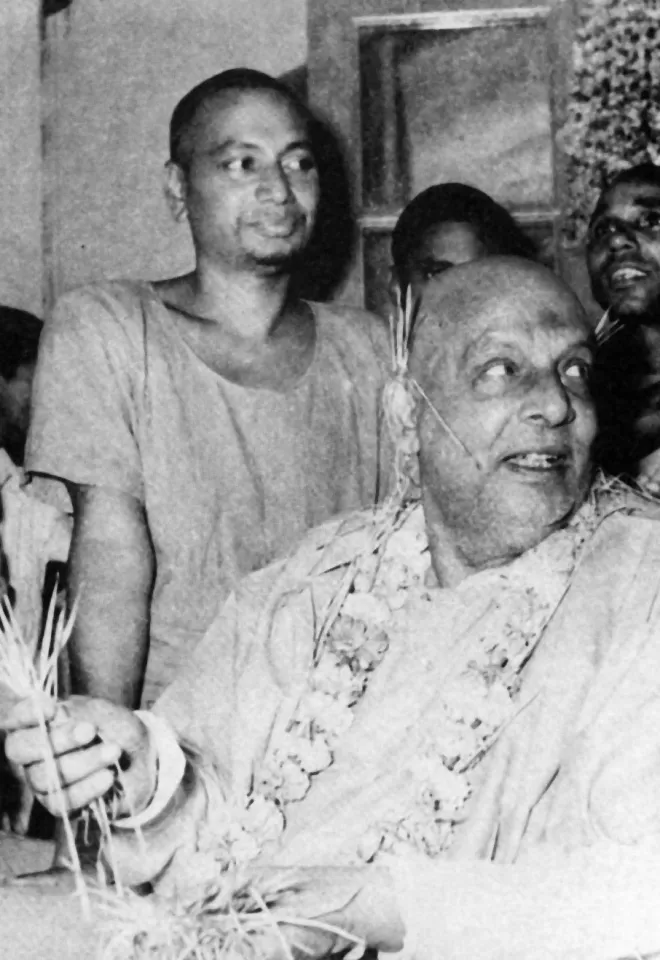
swami sivananda Black-and-white photo of garlanded guru holding ritual grass with devotees image
Daily Practice, Swami Sivananda

Dhanurasana (Bow posture)

Dhanurasana (Bow posture) TECHNIQUE Lie flat, face downwards on the floor. Keep the hands at your side. Breathe out and bend the legs at the knees, drawing the feet above the thighs. Stretch the arms back and catch hold of the right ankle with the right hand and the left ankle with the left hand. Make secure the position of the hands, with normal breathing. Raise the head, body and knees by tugging the hands and legs, so that the whole weight of the body rests on the abdomen. Retain the posture for a few seconds. Gradually increase the duration. While remaining in the posture, concentrate on the abdomen, thighs and back muscles. Release the ankles, stretch out the legs and bring the legs, chest and head to rest in a straight line on the floor. Relax in Makarasna for a few seconds. Repeat this Asana two or three times. BENEFITS This Asana relieves constipation and tones up the liver, pancreas and kidneys. The vertebrae of the lumbar and sacrum bones also get toned up. Proper blood circulation is effected and thus good health is promoted. This also renders the spine supple and elastic and minor pains in the spine are checked.

Dhanurasana (Bow posture) Read Post »

Swami Sivananda meditating in lotus pose under tree
Daily Practice, Swami Sivananda

Salabhasana (Locust posture)

Salabhasana (Locust posture) TECHNIQUE Lie flat on the floor with face downwards and keep the hands by the side of the body with the fingers clenched into fists. Rest the chin on the ground by raising the head. Inhale and stiffen the body by pressing the fists against the floor. Slowly raise the legs as high as possible. Keep the legs in a straight line, while the two thighs, knees and ankles touch each other. The weight of the legs must fall on the body and hands. Contract the muscles of the buttocks, stretch the muscles of the thighs and further extend the position of the legs. Retain the posture for a few seconds in the beginning and gradually increase the duration. Concentrate on the upper portion of the body, i.e., above the waist. Slowly lower the legs to the floor and simultaneously exhale. Relax with normal breathing. Repeat the posture two or three times. Relax in Makarsana. BENEFITS The practice of this Asana renders the spine supple and elastic. It relieves backache or strain on the spine caused by hard work, etc. It also tones up the muscles at the back and the intestinal organs in the abdominal region and relieves pain in the lumbar and sacral regions. Above all it aids digestion and relieves gastric troubles.

Salabhasana (Locust posture) Read Post »

Swami Sivananda portrait photograph picture
Daily Practice, Swami Sivananda

Matsyasana (Fish posture)

Matsyasana (Fish posture) This Asana should be done immediately after Sarvangasana. The duration prescribed is one-third of the time for Sarvangasana. If one does the Sarvangasana for three minutes, this should be done for one minute. In this posture, one will derive some of the benefits of Sirshasana and Sarvangasana. In Sarvangasana there is a forward bend of the throat region, while here in this pose the neck region is stretched backward, so that fresh blood from the heart can flow abundantly to the brain where the pituitary and pineal glands are situated. During the practice of this Asana, the apices of the lungs (upper portion of the lungs) begin to function without any exertion to the body. Generally, this can be effected only after considerable physical exertion. TECHNIQUE Sit in Padmasana on a blanket spread on the floor. Slowly go back by resting on the elbows. Arch the back by lifting the chest and trunk and bend the neck backwards. Draw the head back and rest it on its crown. Raise your hands and catch hold of the big toes and gradually increase the arch by pressing further back the position of the crown of the head and pulling the toes by the hands. Concentrate on the chest, throat, crown of the head and the rear end of the spine, with normal breathing. Retain the posture for 20 seconds to one minute i.e., one-third duration of Sarvangasana. Release the toes by resting on the elbows and rest the back of your head on the ground. Slowly get up and sit in Padmasana and release the legs one by one. As you gain mastery over this Asana, you may gradually increase the duration of the posture. Do slow, deep breathing while in posture. Note: Beginners who are not in a position to sit in Padmasana, can stretch their legs and practise this Asana. The palms may rest on the thighs throughout. BENEFITSThe chest and the dorsal regions are well expanded and breathing becomes more full. The pelvic joints are rendered more flexible. Due to the stretching of the neck, the thyroids are benefited. The spasm from the bronchial tubes are removed. This will effect some relief for the Asthma patients.

Matsyasana (Fish posture) Read Post »

Swami Sivananda eating at table image
Daily Practice, Swami Sivananda

Sarvangasana (All Member’s Posture or Shoulder Stand)

Sarvangasana (All Member’s Posture or Shoulder Stand) TECHNIQUE Spread a thick blanket on the floor. Lie flat on your back with legs stretched out, heels and knees together and the hands close to the sides of the body, palms facing the floor. Slowly inhale and simultaneously raise the legs without bending the knees. Slowly lift the trunk and support it at the back (in the middle of the spine) with your hands, bent at the elbows. Keep the spine vertical i.e., perpendicular to the floor. The back of the shoulders, neck and the back of the crown of the head should touch the floor, and the chin kept pressed tightly against the chest. When you get the spine vertical and establish balance in the posture, slowly stretch the legs with the toes pointing up. Keep the legs, the back and the spine in a straight line, vertical, in a relaxed position, with normal breathing. Concentrate on the throat where fresh blood is flowing abundantly which promotes the secretion of the thyroid and para-thyroid glands. This is most important. Exhale slowly, lower the legs without jerks and release the position of the hands. One should not lift the head from the ground while lowering the legs to its original position. Slowly slide down and lie flat and relax in Savasana for a few minutes. The duration for this posture may vary from one minute to three minutes for daily practice BENEFITS During the practice of this Asana, every part of the body is given exercise. Circulation of blood is directed to the thyroid and para-thyroid glands of the endocrine system. It stretches and renders pliable the muscles of the shoulders and the ligaments of the cervical region. It helps the victims of varicose veins. It strengthens the muscles of the back and neck. It tones up arm muscles, and the body on the whole. It also checks elimination of toxin forming waste matter and regulates the entire blood circulation of the body. Caution: As in Sirshasana.

Sarvangasana (All Member’s Posture or Shoulder Stand) Read Post »

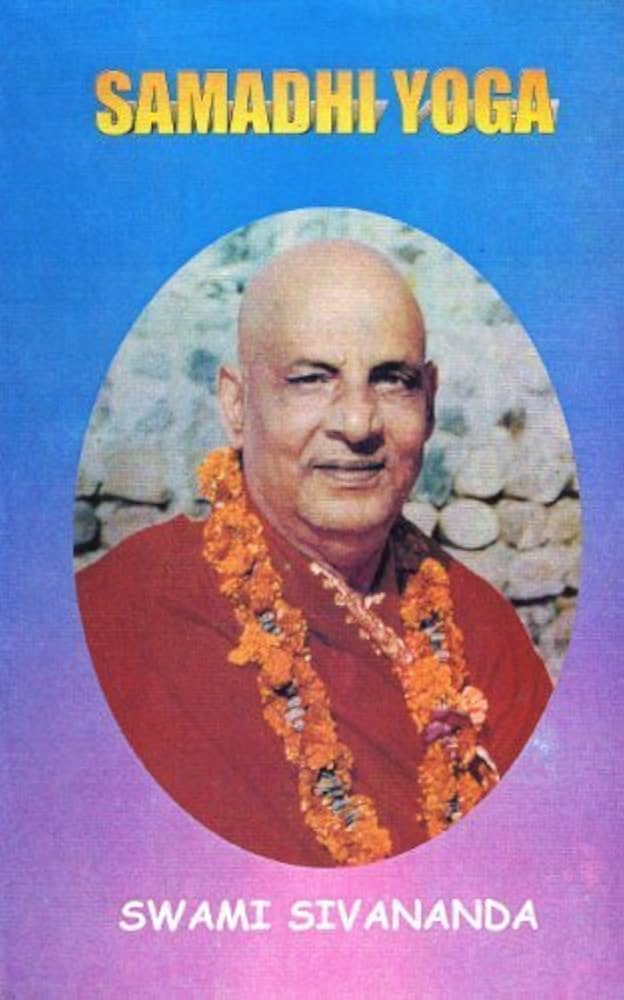
Swami Sivananda portrait on Samadhi Yoga poster image
Daily Practice, Swami Sivananda

Sirshasana (Topsy-Turvey Posture)

Sirshasana (Topsy-Turvey Posture) TECHNIQUE Sit on your knees before a fourfold blanket spread on the floor. Interlock your fingers making the palms of your hand to assume the form of a cup. Adjust the little fingers so that both palms may rest evenly on the blanket. Place the hands on the blanket, the little fingers touching the blanket. The line joining the elbows would be the base of the triangle now formed by the position of the hands on the blanket. The space between the elbows should be within the width of your chest. Next, place the crown of your head on the blanket so that the back of the crown touches the cupped palms. Raise the knees from the ground and keep the toes on the floor. Secure the position of your head, and bring the toes and thighs nearer to the body. Draw the knees close to the body and slowly raise the toes of the two legs simultaneously just off the floor and try to balance for a few seconds. When the balance becomes steady and the spine erect, straighten the knees and stretch both the legs up slowly bringing the whole body to a straight line with the head down and the feet high up. Do slow, deep breathing through the nose while in this posture. Retain the posture as long as you can without any discomfort, say for 10 to 15 seconds to start with, and gradually increase the period to 3 minutes. Slowly exhale and lower the legs, bending them at the knees. Slowly draw the knees forward, close to the body and let the toes touch the floor. Straighten the knees with the toes on the floor and spine straight. Then, rest the knees on the floor and release the pose, placing the forehead so as to rest on your closed fists placed one upon the other. Remain in this position for 30 seconds and then stand on your legs (in Tadasana) for 30 seconds. This will prevent a sudden reverse flow of blood from the head. After some days of practice, when you feel ease and comfort, try to concentrate on the crown of your head with normal breathing. This Asana can be practised according to one’s capacity and the duration may vary from one minute to three minutes for daily practice. Note: Beginners should not stand on this pose too long. Avoid straining the body. When you feel any discomfort return to the normal position and relax. During the practice, mentally visualise the body, keeping the knees and toes straight but relaxed. Adjust your hands in such a way that the entire weight of the body should rest only on the head, but not on the hands. In the beginning, the sudden heavy flow of fresh blood into the head may cause some unusual feelings which you would gradually overcome and you would then feel comfortable. As you gain mastery, you would feel the body very light and at ease. BENEFITS Steady practice of Sirshasana makes the neck, stomach walls and thighs strong and powerful. The vertebral column is toned up and rendered strong. Regular practice of this Asana ensures proper flow of healthy and pure blood through all the body cells, especially in those parts above the heart, thus rejuvenating those parts. The thought-power also increases and thereby thoughts become more clear. The pituitary and pineal glands in the brain get proper blood supply and this ensures promotion of good health, growth and vitality. This Asana is specially beneficial to people suffering from loss of sleep, memory and vitality. Proper and correct practice of this Asana provides abundant energy and alertness. The lungs build up power to resist variations in climatic conditions, and makes one free from colds, coughs, tonsillitis, foul breath, palpitations, etc. It regulates the body temperature, removes constipation and tones up the blood content. Regular and correct practice also ensures proper and sound development of the body and mind. The power of concentration is increased.Caution: High and low blood pressure patients and those suffering from heart troubles, pus in the ears, displaced retina and other chronic eye diseases, should not do this Asana. Children below 15 years of age also must refrain from practising this Asana.

Sirshasana (Topsy-Turvey Posture) Read Post »

Swami Sivadasananda
Daily Practice, Swami Sivananda

Savasana (Relaxation posture)

Savasana (Relaxation posture) Now, you are going to relax wholly. Whatever strain, tension, or exertion is in the body, that is to be eliminated completely in this posture which is called Savasana. Savasana combines pose with meditation. It gives rest not only for the body, but also for the mind. It gives relief, comfort and ease. Relaxation is a very important factor in muscular exercises. TECHNIQUE Lie down on your back, keep your hands by the side of your thighs with the palms facing upwards. Keep the legs apart without touching one another. Close your eyes. Concentrate on the toes of both the feet, slightly move them and then relax. Now, mentally disconnect yourself from that part of the body, i.e., give the auto-suggestion: ‘Let the toes go from my mind’. Feel that all the toes are completely relaxed. Then concentrate on the heels. The heavy weight of the legs will be resting on them. Relax the heels and relieve them of the weight, and feel they are relaxed. Concentrate on the calf muscles, relax them. Feel that up to the calf muscles both the legs are completely relaxed. Then concentrate on the knees which are nothing but heavy bones. The entire weight of the legs are resting on them. Relax the knees. Now feel that up to the knees both the legs are relaxed. Concentrate on the thighs, heavy muscles and bones and relax both the thighs completely. Then concentrate on the hip, heavy bones and muscles. The entire weight of the body will be resting on them. Relax the hips. Feel that up to the hip, the entire lower parts of the body are completely relaxed. Once you relax a particular part, you should not have any control over that part of the body. Now, concentrate on the vertebral column. The entire weight of the body will be resting on it. Relax the vertebral bones, one by one. Slowly relax up to the neck. Concentrate on the stomach and relax the stomach muscles completely. Feel the slight movement of the abdomen due to slow breathing. Concentrate on the chest. Feel that the entire weight of the chest is resting on the ribs. Relax the ribs and the chest. Breathe slowly and feel the harmonious movement of the lungs. Due to complete relaxation, feel that the entire chest region is becoming very light. Concentrate on the shoulders. The heavy weight of the body will be resting on the back of the shoulders. Relax the shoulders, biceps, elbows, forearms, wrists, palms and fingers. Feel that both the hands are completely relaxed. Now, concentrate on the neck. The heavy weight of the head is resting on the neck. Relax your neck. Slowly turn your head towards the right side. Slowly move it and bring it back to the centre. Turn your head towards the left side and slowly roll it and bring it back to the centre. Relax your neck completely. Concentrate on your head. Relax the head. Concentrate on your face and relax the face muscles. Concentrate on the lips, separate the lips slightly and relax them. Separate the two rows of the teeth and relax them. Just loosen your tongue and then relax it. Gently smile and relax the cheeks. Concentrate on the nostrils, breathe slowly and feel the slight movement of air through the nostrils. Relax the nostrils. Concentrate on the region of the eyes. Slowly and gently open the eyes partially, look at the sky (or roof), and then slowly close your eyes. The eye balls behind the eyelids may be gently directed downwards within. Relax the eyeballs. Let the eyes rest in perfect repose. Relax the eyebrows. Feel that the entire region of the eyes is completely relaxed. Concentrate on the forehead. Forget all other engagements. Have no thoughts in the mind. Feel that the entire forehead is relaxed. Concentrate on the ears. Hear the sound that come without resistance. Do not think of the nature, cause, etc., of the sounds. Be a witness to the sounds. Concentrate on the crown of your head. Feel a slight warmth there at the crown. Relax the head totally. Feel that the heavy weight of the body is resting on the planet earth. Relax your body totally. Breathe gently in and out. Let the diaphragm be relaxed. Feel that the body is becoming lighter and lighter and it is floating in the space, in the ether. Feel also that is nothing but a centre of consciousness moving in space. This is our essential nature. Relax in this pose for a few minutes. Now, slowly inhale and feel that fresh oxygen is entering and rejuvenating all the parts of the body. Exhale and feel that all the impurities are going out of the body. Once again, inhale and feel that fresh oxygen is entering and rejuvenating all the blood cells of the body; and then exhale and feel that all the impurities are going out. With a deep inhalation, raise both the hands and place them on the ground above the head. Stretch your body from the toes to the tip of the hands. Turn your entire body from the toes up to the hands towards right, stretch the body and look at the hands. Bring the body back to the original position. Repeat the same process towards the left side. Slowly bring the hands by the side of the thighs. Slowly get up and sit, for a few seconds. Then, stand up on your toes and fully stretch the hands over the head. Slowly bring the hands down and relax. This whole process constitutes Savasana or complete relaxation.

Savasana (Relaxation posture) Read Post »

Swami Sivananda Guru meditating with faded background portraits image
Daily Practice, Swami Sivananda

Surya Namaskara

Surya Namaskara The Suryanamaskara or offering prostrations to the Sun, is practised in the early morning or evening, facing the Sun. The Sun is supposed to be the deity for health and long life. The genius of the Indian Sage has, in the Suryanamaskara Exercise, evolved a unique method of effecting perfect synthesis of culture of body, mind and spirit. With his intuitive insight into the nature of the mass mind, the Indian Sage has cleverly woven into every man’s daily routine this unparalleled system of all-round self-culture. A harmonious development of the body and mind alone can enable man to fulfil his ambitions and live a fruitful and happy life here in this world. A sickly body acts as a dead-weight preventing the mind from soaring into the higher realms. An excellent, well-built body, strong and healthy, if it serves only to house an undeveloped or diseased mind, is capable of much harm and little good to anyone. A good body, and a keen mind, with the inner spirit entirely dormant is like a lovely mansion without foundation liable to topple over at any moment. A perfectly harmonious development of the body, mind and spirit makes one perfect. Suryanamaskara achieves this harmonious development. Suryanamaskara is combined process of Yoga Asanas and Pranayama (Yogic postures and regulated breathing). Before students take up the practice of more complicated and difficult Yogic postures and exercises in Pranayama, the spine and body muscles should acquire some flexibility. This exercise of Suryanamaskara reduces abdominal fat, brings flexibility to the spine and limbs, and also increases the breathing capacity. There are twelve spinal positions each stretching various ligaments and giving different movements to the vertebral column. The vertebral column is bent forward and backward alternately with deep inhalation and exhalation of breath and a little of retention of breath in some cases. Whenever the body is bent forward, the contraction of the abdomen and diaphragm, throws out the breath. When the body bends backward the chest expands and deep inhalation occurs automatically. In this way the body becomes flexible and the entire portion of the lungs begins to function which results in correct breathing. Moreover, it gives mild exercises to leg and arm muscles and ensures good circulation of blood. At the same time, the sun’s life-giving rays play on the man’s body, sucking away the toxins along with perspiration invigorating circulation and imparting life to the human organism-the life which the sun alone can give. For a person with stiff limbs and spine the Suryanamaskara exercise is a boon to bring back lost flexibility. TECHNIQUE Caution: During all these positions, movements of the limbs and breathing must be very, very slow and rhythmical. Sudden jerks of any part of the body and hard inhalation and exhalation in quick succession including retention of breath causing strain in the lungs, should be completely avoided. Position No. 1: Face the sun, fold the hands, keep the palms together touching the middle of the chest with both thumbs, keep legs together and stand erect. Position No. 2: Slowly inhale and raise the arms overhead. Bend backward. Position No. 3: Slowly exhale and bend forward till the palms are kept flat in line with the feet. Touch the knees with your head keeping the legs straight without bending. In the beginning there may be slight bend at the knees to effect this, but after some days’ practice, the legs could be kept straight. Position No. 4: After slow and deep inhalation, move the right leg from the body in a long backward step. Keep the hands and the left foot firmly on the ground without moving, raise the head, and look forward. The left knee should be between the hands. Position No. 5: Retain the breath. Move the left leg and keep the left foot along with the right foot, thus making the body a straight line. The entire weight of the body should rest on the hands and toes. Position No. 6: Exhale, slowly lower the body and let eight limbs of the body-two toes, two knees, two hands, chest and forehead-alone touch the floor. The abdominal region is to be kept slightly raised. Position No. 7: With inhalation, slowly raise your head and bend the spine backward as much as possible. Position No. 8: Exhale, slowly lower your head and raise the body, the toes and hands resting on the floor. Position No. 9: Inhale and bring the left foot along the level of the hands. The right foot and knee should touch the ground. Look forward (Same as Position No. 4). Position No. 10: Exhale, bring the right leg also forward and come back to Position No. 3. Position No. 11: Inhale and raise the hands overhead and bend backward as in Position No. 2. Position No. 12: Slowly bring your hands as in Position No. 1. Simultaneously exhale and relax in Tadasana. This is one Namaskara. After completing twelve namaskaras lie down flat on the ground on your back and relax each and every limb one by one from toes to the crown of the head. This is called Savasana (corpse pose). To begin with if one feels tired after three or four Namaskaras, he may stop with that and increase the number gradually (one everyday or every two days) all the time taking care that too much strain is not caused on any account, on any part of the body. The number may be increased according to each one’s capacity. There are persons who can do 108 Namaskaras at a stretch without great strain. Those who are spiritually or religiously inclined, would do well to follow, in addition, the instructions given below: Before doing the Suryanamaskara the student may chant the prayer to the Almighty Lord: PRAYER TO THE SUN “Om Suryam Sundaralokanathamamritam Vedantasaram Sivam, Jnanam Brahmamayam Suresamamalam Lokaikachittam Svayam; Indradityanaradhipam Suragurum Trailokyachudamanim, Brahmavishnusivasvarupahridayam Vande Sada Bhaskaram.” Meaning: I always adore Surya, the sun, the beautiful Lord of the world, the immortal, the
Surya Namaskara Read Post »