













Hari Om

Menu

Asanas for Dhyana

swami sivananda with mantra text image
Asanas for Dhyana, Swami Sivananda

Sukhasana

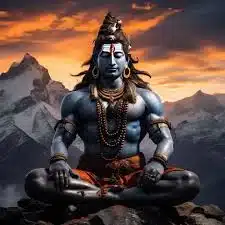
Sukhasana Sukhasana is sitting at ease with the body erect. Spread the legs forward. Fold the left leg and place the feet near the right thigh muscles. Similarly, bend the right leg and push it in the space between the left thigh and calf muscles. Now you will find the two feet between the thighs and calves of the legs. This is very comfortable for meditation. Keep the hands as instructed in Padmasana.Variation Any easy comfortable posture for Japa and meditation is Sukhasana, the important point being the head, neck and trunk should be in a line without curve. People who begin Japa and meditation after 30 or 40 years of age, generally are not able to sit in Padma, Siddha, or Svastikasana for a long time. I will describe now a nice form of Sukhasana in which old persons can sit and meditate for a long time. This specially suits old people who are unable to sit in Padma or Siddhasana in spite of repeated attempts. Young people also can practise this. TECHNIQUETake a cloth 5 cubits long. Fold it nicely lengthwise till the width becomes half a cubit. Sit in your usual way keeping the feet below your thighs. Raise the two knees above to the level of your chest till you get a space of 8 or 10 inches between the two knees. Now take the folded cloth. Keep one end near the left knee; going to the back by the left side, touching the right knee, come to the starting point and make a knot of the two ends. Keep your palms face to face and place them between the knees. In this Asana the hands, legs and backbone are supported. Hence you will never feel tired. If you cannot do any other Asanas, sit at least in this Asana and do Japa and meditation for a long time.

Sukhasana Read Post »

swami sivananda Black-and-white group photo of guru with followers outside building image
Asanas for Dhyana, Swami Sivananda

Svastikasana

Svastikasana Svastikasana is sitting at ease with the body erect. Spread the legs forward. Fold the left leg and place the feet near the right thigh muscles. Similarly, bend the right leg and push it in the space between the left thigh and calf muscles. Now you will find the two feet between the thighs and calves of the legs. This is very comfortable for meditation. Keep the hands as instructed in Padmasana.

Svastikasana Read Post »

Swami Sivananda Group of monks standing with spiritual teacher photo
Asanas for Dhyana, Swami Sivananda

Siddhasana

Siddhasana Next to Padmasana comes Siddhasana in importance. Some eulogise this Asana as even superior to Padmasana for the purpose of Dhyana (contemplation). If you get mastery over this Asana, you will acquire many Siddhis (powers). Further it was practised by many Siddhas (perfect Yogins) of yore. Hence the name Siddhasana. Even fat persons with big thighs can practise this Asana easily. In fact, this is better to some persons than Padmasana. Young Brahmacharins who attempt to get established in celibacy should practise this Asana. This is not suitable for ladies. TECHNIQUE Place one heel at the anus (Guda), the terminal opening of the alimentary canal or digestive tube. Keep the other heel at the root of the generative organ. The feet or legs should be so nicely arranged that the ankle-joints should touch each other. Hands can be placed as shown in Padmasana. VARIATIONS I. Guptasana (Hidden Pose): The left heel is placed over the organ of generation. The right heel is also over the externel organ of generation. The two ankles are in close apposition or contact. The right toes are thrust inside the hollow between the left thigh and left calf muscles. The left toes are covered by the right leg. Gupta means hidden. As this Asana hides well the organ of generation it is called Guptasana. II. Vajrasana (Adamantine Pose): The left heel is placed below the organ of generation. The right heel is placed over the organ. Vajra means adamantine. There is also another variety of Vajrasana. Instructions are given elsewhere. III. Baddhayonyasana: Sit on ordinary Siddhasana and do Yoni Mudra. It is called Baddhayonyasana. The description of Yoni Mudra is given along with other Mudras. IV. Kshemasana: By sitting on Siddhasana if you raise your hands together up to your chest level, it is called Kshemasana. It is meant that you are praying for the Kshema (welfare) of the public. The palms must be facing each other.

Siddhasana Read Post »

swami sivananda Vintage photo of guru teaching disciples by riverside image
Asanas for Dhyana, Swami Sivananda

padmasana

padmasana Padma means Lotus. When the Asana is demonstrated, it presents the appearance of a Lotus, in a way. Hence the name Padmasana. This is also known by the name Kamalasana. Amongst the four poses prescribed for Japa and Dhyana, Padmasana comes foremost. It is the best Asana for contemplation. Rishis like Gheranda, Sandilya and others speak very highly of this vital Asana. This is highly agreeable for householders. Even ladies can sit in this Asana. Padmasana is suitable for lean persons and for youths as well. TECHNIQUE Sit on the ground by spreading the legs forward. Then place the right foot on the left thigh and the left foot on the right thigh. Place the hands on the knee-joints. You can make a finger-lock and keep the locked hands over the left ankle. This is very convenient for some persons. Or you can place the left hand over the left knee and then place the right hand over the right knee with the palm facing upwards and the index-finger touching the middle portion of the thumb (Chinmudra). VARIATIONS I. Ardha-Padmasana: If you cannot place both the feet on the thighs at the very start, just keep one foot on one thigh for some time and the other foot on the other thigh for some time. After a few days’ practice, you will be able to keep both the feet on the thighs. This is half pose of Padmasana or Ardha-Padmasana. II. Virasana: Sit at ease. Place the right foot on the left thigh and the left foot underneath the right thigh. Lord Gauranga used to sit on this Asana for his meditation. This is a comfortable posture. Virasana means hero posture. III. Parvatasana (Mountain Pose): Do ordinary Padmasana. Stand on the knees and raise your hands above. This is Parvatasana. Keep a thick blanket on the ground and then do this Asana so that you will not injure your knees. In the beginning, for a few days, catch hold of a stool or bench till you get the balance. Afterwards you can raise the hands above. Sit on Virasana and then raise the hands above and be steady. Some persons call this also as Parvatasana. IV. Samasana (Equal Pose): Place the left heel at the beginning of the right thigh and the right heel at the beginning of the left thigh. Sit at ease. Do not bend either on the left or right. This is called Samasana. V. Karmukasana: Sit on ordinary Padmasana. Catch hold of the right toe with the right hand and the left toe with the left hand, thus making a cross of your hand at the elbow. VI. Utthita Padmasana: Sit on Padmasana. Keep your palms on the ground by your sides. Slowly raise the body. There should be no jerks. The body should not be trembling. Retain the breath as long as you remain in that raised position. When you come down you can exhale. Persons who cannot perform Kukkutasana can do this. The hands are kept by the sides in this Asana, but the hands are kept between the thigh and calf muscles in Kukkutasana. This is the difference.

padmasana Read Post »

Swami Sivananda collage with Spiritual teachers picture
Asanas for Dhyana, Swami Sivananda

Asanas for Dhyana (Meditation)

Asanas for Dhyana (Meditation) by Swami Sivananda Four Asanas are prescribed for the purposes of Japa and meditation. They are Padma, Siddha, Svastika and Sukha. You must be able to sit in any one of these four Asanas at a stretch for full three hours without shaking the body. Then only will you get mastery over the Asana (Asana Jaya). Then only can you take to the practice of Pranayama (control of breath) and Dhyana (meditation). Without securing a steady Asana you cannot further get on well in meditation. The more steady you are in your Asana the more you will be able to concentrate and make your mind one-pointed. If you can be steady in the posture even for one hour, you will be able to acquire one-pointed mind and feel thereby infinite peace and Atmic Ananda inside. When you sit on the posture, think: I am as firm as a rock. Nothing can shake me.” Give these suggestions to the mind a dozen times. Then the Asana will become steady soon. You must become as a living statue when you sit for Dhyana. Then only there will be real steadiness in your Asana. In one year by regular practice you will have success and you will be able to sit for three hours at a stretch. Start with half an hour and gradually increase the period. If there is severe pain in the legs after some time, unlock the legs and then shampoo them for five minutes and sit again in the Asana. When you advance you will not experience any pain. You will experience on the other hand immense joy. Practise the Asana both morning and evening. After sitting in the Asana close eyes and concentrate on the Bhrukuti or Trikuti (the space between the two eyebrows) or in the Anahata Chakra (lotus of the heart). As the Trikuti (Ajna Chakra) is the seat of the mind, the mind can be quite easily controlled if you concentrate gently on this spot. Ekagrata (one-pointedness of the mind) supervenes quite readily. Concentration at the tip of the nose (Nasikagra Drishti), also has the same advantage, but it takes more time for the focussing of the mind. Those who cannot concentrate either at Bhrukuti or the tip of the nose may concentrate at any other outer point or inner Chakra of heart, head, neck, etc. Gazing at Trikuti (Ajna Chakra) is also called Bhrumadhya Drishti. Keep the head, neck and trunk in one straight line. Stick to one Asana; either Padma, Siddha, Svastika or Sukha and make it quite steady and perfect by repeated attempts. Never change the Asana. Adhere to one tenaciously. Cling to it like a leech. Realise the full benefits of one Asana for meditation. BENEFITS Books on Hatha Yoga eulogise the merits and advantages of Padma and Siddhasanas to a very high degree. He who sits in any one of the Asanas even for 15 minutes daily with closed eyes, concentrating on God at the lotus of the heart, destroys all sins and gets Moksha quickly. These Asanas increase digestive fire and give good appetite, health and happiness. They remove rheumatism and keep the three humours, wind, bile and phlegm in proper proportion. They purify and strengthen the nerves of the legs and thighs. They are suitable for keeping up Brahmacharya.

Asanas for Dhyana (Meditation) Read Post »