


















Hari Om

Menu

⁠Three Important Sages and Avatar of Ancient Bharat

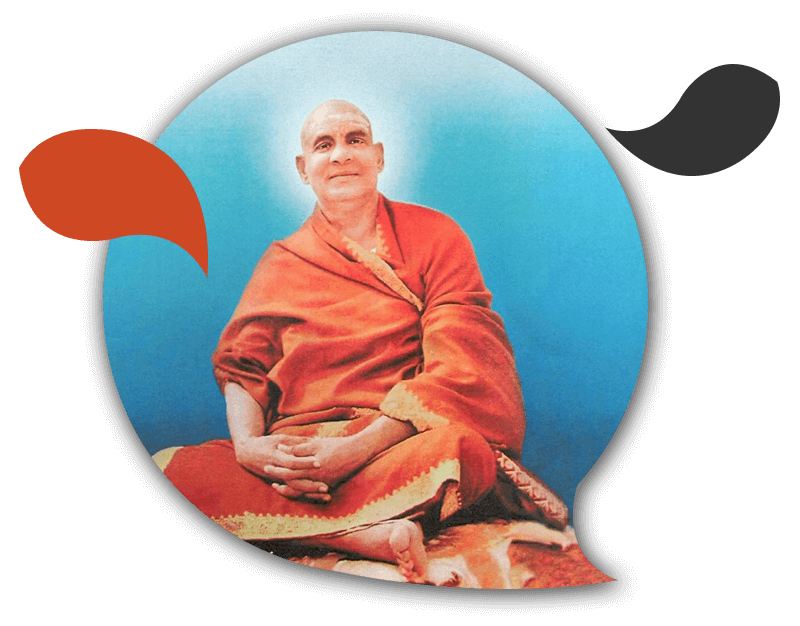
swami sivananda Monk seated wearing garland outdoors image
Swami Sivananda, ⁠Three Important Sages and Avatar of Ancient Bharat

Ramanuja

Ramanuja Sri Swami Sivananda In the year 1017 A.D., Ramanuja was born in the village of Perumbudur, about twenty-five miles west of Madras. His father was Kesava Somayaji and his mother was Kantimathi, a very pious and virtuous lady. Ramanuja’s Tamil name was Ilaya Perumal. Quite early in life, Ramanuja lost his father. Then he came to Kancheepuram to prosecute his study of the Vedas under one Yadavaprakasha, a teacher of Advaita philosophy. Ramanuja was a very brilliant student. Yadavaprakasha’s interpretations of Vedic texts were not quite up to his satisfaction. Ramanuja pointed out many mistakes in the exposition of his master. Sometimes he gave his own interpretations which were much liked by all the co-students. This made Yadavaprakasha very jealous of Ramanuja. Yadavaprakasha made a plan to take away the life of Ramanuja. He arranged for Ramanuja and his cousin Govinda Bhatta–a fellow student–a pilgrimage to Varanasi. Govinda Bhatta, being a favourite student of Yadavaprakasha, came to know of the latter’s plan while they were travelling. He at once apprised Ramanuja of the danger and helped him to escape. By the grace of God, Ramanuja escaped with the help of a hunter and his wife whom he accidentally met on the way. About the end of the tenth century, the Visishtadvaita system of philosophy was well established in Southern India and the followers of this creed were in charge of important Vaishnavite temples at Kancheepuram, Srirangam, Tirupathi and other important places. The head of the important Vaishnavite institution was Yamunacharya, a great sage and profound scholar; and he was also the head of the Mutt at Srirangam. One of his disciples, by name Kanchipurna, was serving in the temple at Kancheepuram. Although a Sudra, Kanchipurna was so very pious and good that the people of the place had great respect and reverence for him. At present, there is a temple at Kancheepuram where Kanchipurna’s image has been installed and where he is worshipped as a saint. Young Ramanuja came under Kanchipurna’s influence and had such reverence for him that he invited him to dinner in his house. Ramanuja’s intention was to attend on Kanchipurna and personally serve him at dinner and himself take meals afterwards. Unfortunately, Kanchipurna came to dinner when Ramanuja was not at home, and took his meals being served by Ramanuja’s wife. When Ramanuja returned home, he found the house washed and his wife bathing for having served meals to a Sudra. This irritated Ramanuja very much and turned him against his wife who was an orthodox lady of a different social ideal. After a few incidents of this nature, Ramanuja abandoned the life of a householder and became a Sannyasin. About this time, Yamunacharya being very old was on the look-out for a young person of good ability and character to take his place as head of the Mutt at Srirangam. He had already heard of Ramanuja through his disciples and made up his mind to instal Ramanuja in his place. He now sent for Ramanuja. By the time Ramanuja reached Srirangam, Yamunacharya was dead; and Ramanuja saw his body being taken by his followers to the cremation ground outside the village. Ramanuja followed them to the cremation ground. There he was informed that Yamunacharya, before his death, had left instructions that he had three wishes which Ramanuja was to be requested to fulfil, viz., that a Visishtadvaita Bhashya should be written for the Brahma Sutras of Vyasa which hitherto had been taught orally to the disciples of the Visishtadvaita philosophy and that the names of Parasara, the author of Vishnu Purana, and saint Sadagopa should be perpetuated. Ramanuja was deeply touched, and in the cremation ground itself, before the dead body of Yamunacharya, he made a solemn promise that, God willing, he would fulfil all the three wishes of Yamunacharya. Ramanuja lived for 120 years, and in the course of his long life, fully redeemed his promise by fulfilling all the three wishes of Yamunacharya. After the death of Yamuna, his disciples at Srirangam and other places wanted Ramanuja to take Yamuna’s place as the head of the Mutt at Srirangam. This was also the expressed wish of Yamuna. Accordingly, Ramanuja took his place and was duly installed with all the attendant ceremonies and celebrations as the head of the Visishtadvaita Mutt at Srirangam. Ramanuja then proceeded to Thirukottiyur to take initiation from Nambi for Japa of the sacred Mantra of eight letters Om Namo Narayanaya. Somehow, Nambi was not willing to initiate Ramanuja easily. He made Ramanuja travel all the way from Srirangam to Madurai nearly eighteen times before he made up his mind to initiate him, and that too, only after exacting solemn promises of secrecy. Then Nambi duly initiated Ramanuja and said: “Ramanuja! Keep this Mantra a secret. This Mantra is a powerful one. Those who repeat this Mantra will attain salvation. Give it only to a worthy disciple previously tried”. But Ramanuja had a very large heart. He was extremely compassionate and his love for humanity was unbounded. He wanted that every man should enjoy the eternal bliss of Lord Narayana. He realised that the Mantra was very powerful. He immediately called all people, irrespective of caste and creed, to assemble before the temple. He stood on top of the tower above the front gate of the temple, and shouted out the sacred Mantra to all of them at the top of his voice. Nambi, his Guru, came to know of this. He became furious. Ramanuja said: “O my beloved Guru! Please prescribe a suitable punishment for my wrong action”. Ramanuja said: “I will gladly suffer the tortures of hell myself if millions of people could get salvation by hearing the Mantra through me”. Nambi was very much pleased with Ramanuja and found out that he had a very large heart full of compassion. He embraced Ramanuja and blessed him. Having thus equipped himself with the necessary qualifications, Ramanuja succeeded Yamuna. By this time, Ramanuja’s fame had spread far and

Ramanuja Read Post »

Dattatreya with sages performing ritual vintage illustration
Swami Sivananda, ⁠Three Important Sages and Avatar of Ancient Bharat

Dattatreya

Dattatreya Anasuya is generally quoted as the model of chastity. She was the wife of Atri Maharishi, a great sage and one of the Sapta Rishis. She was well established in Pativrata Dharma. She served her husband with intense devotion. She did severe Tapas for a very long time in order to beget sons equal to Brahma, Vishnu and Siva. Once Narada took a small ball of iron–the size of a gram-grain–to Sarasvati and said to her, “O Sarasvati Devi! Please fry this iron ball. I will eat this iron-ball-gram during my travel”. Sarasvati laughed and said, “O Rishi Narada! How can this iron ball be fried? How can this be eaten?”. Narada afterwards went to Mahalakshmi and Parvati and requested them to fry the iron ball. They also laughed at Narada Rishi. Then Narada said, “O Devis! See, I will get it fried by Anasuya, wife of Atri Maharishi, a great Pativrata who lives in the earth-plane”. Then Narada came to Anasuya and requested her to fry the iron-ball-gram. Anasuya put the iron ball in the frying pan, meditated on the form of her husband and put a few drops of water which were used in washing the feet of her husband on the iron ball. The iron ball was at once fried. Narada went to Sarasvati, Lakshmi and Parvati, ate before them the fried iron-ball-gram and gave them also a little of it. He greatly praised the glory of Anasuya and her chastity. Then Narada resolved to fulfil the wish of Anasuya to beget sons equal to Brahma, Vishnu and Siva. Narada said to Sarasvati, Lakshmi and Parvati: “You also could have fried the iron ball, if you all had done service to your husbands with faith, sincerity and devotion. Make a request to your husbands to test Anasuya’s Pativrata Dharma”. Then Sarasvati, Lakshmi and Parvati requested their husbands to test the Pativrata Dharma of Anasuya, wife of Atri Maharishi, and ask her to give them Nirvana Bhiksha, that is, to give them alms in a naked condition. The Tri-Murtis, through Jnana-Drishti, came to know of the action of Narada and the Tapas and the wish of Anasuya. They agreed. The Tri-Murtis put on the garb of Sannyasins, appeared before Anasuya and asked her to give them Nirvana Bhiksha. Anasuya was in a great dilemma. She could not say ‘No’ to the Bhikshus. She had to maintain her Pativrata Dharma also. She meditated on the form of her husband, took refuge in his feet and sprinkled over the three Sannyasins a few drops of water which were used for washing the feet of her husband. The Tri-Murtis were converted into three children on account of the glory of the Charanamrita. At the same time, there was accumulation of milk in the breast of Anasuya. She thought that those children were her own children and fed them with the milk in a nude state and put them to the cradle. She was eagerly expecting the arrival of her husband who had gone for taking his bath. As soon as Atri Rishi came back home, Anasuya related to him all that had happened during his absence, placed the three children at his feet and worshipped him. But Atri knew all this already through his divine vision. He embraced all the three children. The three children became one child with two feet, one trunk, three heads and six hands. Atri Rishi blessed his wife and informed her that the Tri-Murtis themselves had assumed the forms of the three children to gratify her wish. Narada went to Brahma-Loka, Vaikuntha and Kailasa and informed Sarasvati, Lakshmi and Parvati that their husbands had been turned into children through the power of the Pativrata Dharma of Anasuya when they asked her Nirvana Bhiksha and that they would not return unless the Devis asked for Bhartri Bhiksha (Bhiksha of husband) from Atri. Sarasvati, Lakshmi and Parvati assumed the forms of ordinary women, appeared before Atri and asked for Pati Bhiksha: “O Rishi, kindly give us back our husbands”. Atri Rishi duly honoured the three ladies and with folded hands prayed to them that his wish and the wish of Anasuya should be fulfilled. Then the Tri-Murtis appeared in their true form before Atri and said, “This child will be a great sage according to your word and will be equal to us according to the wish of Anasuya. This child will bear the name of Dattatreya”. Then they disappeared. Dattatreya attained manhood. As he had the rays of the Tri-Murtis, and as he was a great Jnani, all the Rishis and ascetics worshipped him. He was gentle, peaceful and amiable. He was always followed by a great multitude of people. Dattatreya tried to get rid of them, but his endeavours were all in vain. Once when he was surrounded by many people, he entered a river for bathing and he did not come out of it for three days. He entered into Samadhi inside the water. On the third day, he came out and found that the people were still sitting on the banks of the river awaiting his return. He did not succeed in getting rid of the people by this method. So Dattatreya adopted another plan. He created a beautiful girl and a bottle of wine out of his Yogic power. He came out of the waters holding the girl in one hand and the bottle of wine in the other. The people thought that Dattatreya had fallen from his Yoga and so they left him and went away. Dattatreya threw away all his personal possessions, even the scanty clothing he had, and became an Avadhuta. He went out preaching and teaching the truths of Vedanta. Dattatreya taught his Gita, named Avadhuta Gita, to Lord Subrahmanya. This is a most valuable book which contains the truths and secrets of Vedanta and the direct experiences of Self-realisation. Once, while Dattatreya was roaming in a forest happily, he met king Yadu, who on seeing Dattatreya

Dattatreya Read Post »

Swami Sivananda seated in meditation with graphic frame image
Swami Sivananda, ⁠Three Important Sages and Avatar of Ancient Bharat

Sage Yajnavalkya

Sage Yajnavalkya Sri Swami Sivananda The name of Yajnavalkya of Mithila stands distinguished both in the Srutis and in the Smritis. Yajnavalkya is especially known for his unsurpassed spiritual wisdom and power. The seer of a Veda Samhita from Bhagavan Surya, the revealer of Brahma Jnana to Janaka, Maitreyi and others, Yajnavalkya hails supreme among sages of sacred memory. As to his obtaining the Shukla Yajurveda Samhita from Bhagavan Surya, there is the following history. Yajnavalkya was the son of the sister of Mahamuni Vaishampayana, the Vedacharya of the Taittiriya section. He was studying the Taittiriya Samhita from Vaishampayana who was also his Guru. Vaishampayana had many other disciples too and they all were students of the Taittiriya Shakha. Once all the Rishis decided to form an association near the Meru mountain and made a rule that any Rishi who absented himself at the appointed hour should incur the sin of Brahmahatya (the sin of killing a Brahmin) for seven days. On that appointed day fell the Sraddha ceremony of Vaishampayana’s father. Vaishampayana thought, “Somehow I have to perform my father’s ceremony. If the sin of Brahmahatya comes to me, my disciples will observe the expiatory penance therefor”. So Vaishampayana did not attend the meeting of the Rishis. And accordingly he incurred the sin of Brahmahatya. Then Vaishampayana said to his disciples, “Now I have to expiate this great sin of Brahmahatya. Therefore, you all will observe, for my sake, an expiatory penance for seven days”. At once Yajnavalkya stood up and said, “O Guru! All these are poor-spirited young students. They will not be able to undergo such a hard penance. So, instead of all, I myself alone shall observe it in the manner in which nobody else can”. Vaishampayana told Yajnavalkya not to undertake it alone. But Yajnavalkya persisted. The preceptor was offended at this audacious attitude of the disciple and said, “O proud one, you are very conceited. You get away from me. Enough of you who is disposed to despise wise Brahmins. Give back to me immediately whatever you have learnt from me”. Upon the order of the Guru, Yajnavalkya, the son of Devarata, vomited out the collection of the Yajus in the form of food. The other disciples ate that food taking the form of the Tittiri birds, because they were very eager to receive the same. They then had the direct revelation of those Yajurveda collections. As the Tittiri birds ate this Veda, it is thenceforth called the Taittiriya Yajurveda. It is also known as Krishna (black) Yajurveda on account of its being vomited substance. Then Yajnavalkya determined not to have any human Guru thereafter. Thus he began to propitiate the Sun-God, Surya. Yajnavalkya worshipped and extolled the Sun, the master of the Vedas, for the purpose of acquiring the fresh Vedic portions not known to his preceptor, Vaishampayana. Yajnavalkya said, “Prostration to the glorious Aditya, who in the form of the Atman, abides in all beings. I bow to Him who surrounds all like Akasa, who is one and not separated or distanced by limiting conditions. O Great God, O Creator, I contemplate upon that glowing sphere which lights and warms the whole world! O God who burns all miseries wrought by unrighteous activities, who burns ignorance which is the seed of activity! O Lord, I worship Thy lotus-like feet praised and worshipped by the rulers of the three worlds. Give me those portions of the Veda which are not known to others”. The Sun-God, the glorious Lord Hari, pleased with Yajnavalkya’s penance, assumed the form of a horse and taught the sage such fresh portions of the Yajurveda as were not known to any other. This portion of the Yajurveda goes by the name of Shukla Yajurveda. It is also known as Vajasaneya Yajurveda, because it was evolved in great rapidity by Surya in the form of a horse through his manes. Yajnavalkya divided this Vajasaneya Yajurveda again into fifteen branches, each branch comprising hundreds of Yajus Mantras. Kanva, Madhyandina and others learnt those branches. Yajnavalkya married two wives. One was Maitreyi and the other Katyayani. Of the two, Maitreyi was a Brahmavadini. When Yajnavalkya wished to divide his property between the two wives before starting for the fourth Ashrama of his life, Maitreyi asked whether she could become immortal through wealth. Yajnavalkya replied that there was no hope of immortality through wealth and that she would only become one among the many who were well-to-do on earth. On hearing this, Maitreyi requested Yajnavalkya to teach her what he considered as the best. Then Yajnavalkya elaborately described to her the sole greatness of the Absolute Self, the nature of Its existence, the way of attaining infinite knowledge and immortality, etc. This immortal conversation between Yajnavalkya and Maitreyi is recorded in the Brihadaranyaka Upanishad. The central theme of the discourse is this: “All things are dear, not for their sake, but for the sake of the Self. This Self alone exists everywhere. It cannot be understood or known, for It alone is the Understander and the Knower. Its nature cannot be said to be positively as such. It is realised through endless denials as ‘not this, not this’. The Self is self-luminous, indestructible, unthinkable”. The other wife Katyayani, the daughter of Bharadhwaja, was of common intelligence, and through her Yajnavalkya had three sons–Chandrakanta, Mahamegha and Vijaya. Yajnavalkya, though a great Brahmajnani, was a great Karmakandi too. He caused many Yajnas to be performed and himself became the Acharya of those great Yajnas. He was a celebrated Srotriya and a Brahma-nishtha Guru. Once King Janaka of Videha wanted to know from which real Brahmanishtha to receive Brahma Vidya. In order to find out who was the real Brahma-nishtha, Janaka performed a huge Bahu-dakshina sacrifice to which all the Rishis from far and wide were invited. And he offered one thousand cows with their calves, all their horns being decked with enormous gold. Then he proclaimed to the assembled ones, “Whosoever is the best Brahmana amongst you may drive these cows

Sage Yajnavalkya Read Post »

swami sivananda Black-and-white photo of monk meditating seated cross-legged image
Swami Sivananda, ⁠Three Important Sages and Avatar of Ancient Bharat

Maharshi Vyasa

Maharshi Vyasa Sri Swami Sivananda In ancient days, our forefathers, the Rishis of Aryavartha, went to the forest to do Tapasya during the four months following Vyasa Purnima–a particular and important day in the Hindu calendar. On this memorable day, Vyasa, an incarnation of the Lord Himself, began to write his Brahma Sutras. Our ancient Rishis did this Tapasya in caves and forests. But times have changed and such facilities are not common nowadays although Grihasthas and Rajas are not wanting who are able and willing to place at the disposal of the members of the fourth Ashrama such help and facilities as they can afford. The forests and caves have given place to the rooms of Sadhus in their own Gurudwaras and Mutts. One has of necessity to suit himself to time and place; and change of place and situation should not be allowed to make such a difference in our mental attitudes. Chaturmas begins from the Vyasa Purnima Day when, according to our Shastras, we are expected to worship Vyasa and the Brahmavidya Gurus and begin the study of the Brahma Sutras and other ancient books on ‘wisdom’. Our mythology speaks of many Vyasas; and it is said that there had been twenty-eight Vyasas before the present Vyasa–Krishna Dvaipayana–took his birth at the end of Dvapara Yuga. Krishna Dvaipayana was born of Parasara Rishi through the Matsyakanya–Satyavathi Devi–under some peculiar and wonderful circumstances. Parasara was a great Jnani and one of the supreme authorities on astrology and his book Parasara Hora is still a textbook on astrology. He has also written a Smriti known as Parasara Smriti which is held in such high esteem that it is quoted by our present-day writers on sociology and ethics. Parasara came to know that a child, conceived at a particular Ghatika or moment of time, would be born as the greatest man of the age, nay, as an Amsa of Lord Vishnu Himself. On that day, Parasara was travelling in a boat and he spoke to the boatman about the nearing of that auspicious time. The boatman had a daughter who was of age and awaiting marriage. He was impressed with the sanctity and greatness of the Rishi and offered his daughter in marriage to Parasara. Our Vyasa was born of this union and his birth is said to be due to the blessing of Lord Siva Himself who blessed the union of a sage with a Jnani of the highest order, although of a low caste. At a very tender age Vyasa gave out to his parents the secret of his life that he should go to the forest and do Akhanda Tapas. His mother at first did not agree, but later gave permission on one important condition that he should appear before her whenever she wished for his presence. This itself shows how far-sighted the parents and the son were. Puranas say that Vyasa took initiation at the hands of his twenty-first Guru, sage Vasudeva. He studied the Shastras under sages Sanaka and Sanandana and others. He arranged the Vedas for the good of mankind and wrote the Brahma Sutras for the quick and easy understanding of the Srutis; he also wrote the Mahabharata to enable women, Sudras and other people of lesser intellect to understand the highest knowledge in the easiest way. Vyasa wrote the eighteen Puranas and established the system of teaching them through Upakhyanas or discourses. In this way, he established the three paths, viz., Karma, Upasana and Jnana. To him is also attributed the fact that he continued the line of his mother and that Dhritarashtra, Pandu and Vidura were his progeny. Vyasa’s last work was the Bhagavata which he undertook at the instigation of Devarshi Narada who once came to him and advised him to write it as, without it, his goal in life would not be reached. Vyasa is considered by all Hindus as a Chiranjivi, one who is still living and roaming throughout the world for the well-being of his devotees. It is said that he appears to the true and the faithful and that Jagadguru Sankaracharya had his Darshan in the house of sage Mandana Misra and that he appeared to many others as well. Thus, in short, Vyasa lives for the welfare of the world. Let us pray for his blessings on us all and on the whole world. Everybody knows that there are six important systems of thought developed by our ancients known as the Shad Darshanas or the six orthodox schools of philosophy, viz., Sankhya, Yoga, Nyaya, Vaiseshika, Purva Mimamsa and Uttara Mimamsa or Vedanta. Each system has a different shade of opinion. Later, these thoughts became unwieldy, and to regulate them, the Sutras came into existence. Treatises were written in short aphorisms, called “Sutras” in Sanskrit, meaning clues for memory or aids to long discussions on every topic. In the Padma Purana, the definition of a Sutra is given. It says that a Sutra should be concise and unambiguous; but the brevity was carried to such an extent that the Sutra has become unintelligible and particularly so in the Brahma Sutras. Today we find the same Sutra being interpreted in a dozen ways. The Brahma Sutras written by Vyasa or Badarayana–for that was the name which he possessed in addition–are also known as Vedanta Sutras as they deal with Vedanta only. They are divided into four chapters, each chapter being subdivided again into four sections. It is interesting to note that they begin and end with Sutras which read together mean “the inquiry into the real nature of Brahman has no return”, meaning that “going by that way one reaches Immortality and no more returns to the world”. About the authorship of these Sutras, tradition attributes it to Vyasa. Sankaracharya, in his Bhashya, refers to Vyasa as the author of the Gita and the Mahabharata, and to Badarayana as the author of the Brahma Sutras. His followers–Vachaspathi, Anandagiri and others–identify the two as one and the same person, while Ramanuja and others attribute the authorship of all three to Vyasa himself. The oldest commentary on the Brahma Sutras is by Sankaracharya; he was later followed by Ramanuja, Vallabha, Nimbarka,

Maharshi Vyasa Read Post »



