




Hari Om

Menu

Teachings of Swami Sivananda on Yoga

d167456bfb6fcc356c3c72f7df1a7b26
Swami Sivananda, Teachings of Swami Sivananda on Yoga

Tantra Yoga

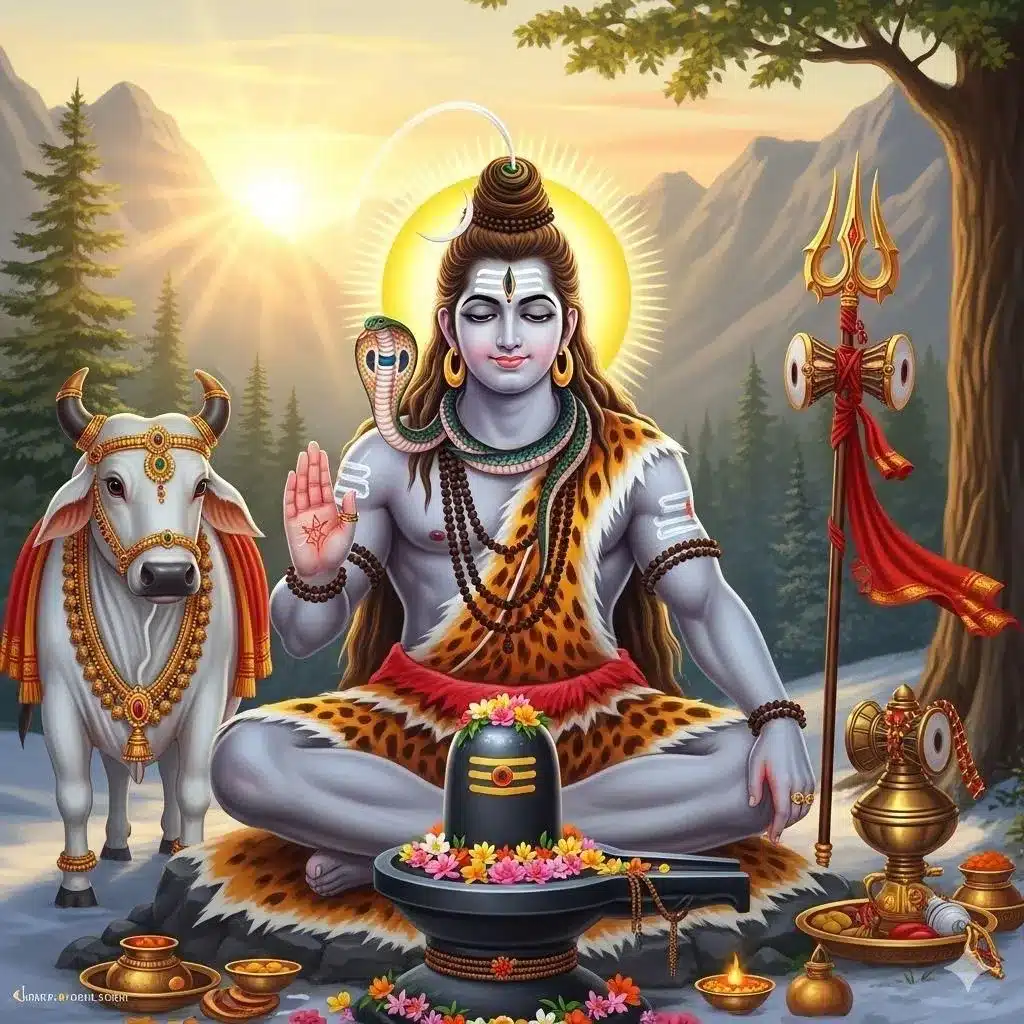
Tantra Yoga Introduction Sanskrit literature can be classified under six orthodox heads and four secular heads. They are: (i) Sruti, (ii) Smriti, (iii) Itihasa, (iv) Purana, (v) Agama, and (vi) Darsana; and (i) Subhashita, (ii) Kavya, (iii) Nataka and, (iv) Alankara. The Agamas are theological treatises and practical manuals of divine worship. The Agamas include Tantras, Mantras, and Yantras. These are treatises explaining the external worship of God, in idols, temples, etc. All the Agamas treat of (i) Jnana or Knowledge, (ii) Yoga or concentration, (iii) Kriya or making, and (iv) Charya or doing. They also give elaborate details about the ontology, cosmology, liberation, devotion, meditation, philosophy of Mantras, mystic diagrams, charms and spells, temple-building, image-making, domestic observances, social rules, and public festivals. The Agamas are divided into three sections: the Vaishnava, the Saiva, and the Sakta. The three chief sects of Hinduism, viz., Vaishnavism, Saivism, and Saktism, base their doctrines and dogmas on their respective Agamas. The Vaishnava Agamas or Pancharatra Agamas glorify God as Vishnu. The Saiva Agamas glorify God as Siva and have given rise to an important school of philosophy known as Saiva Siddhanta. The Sakta Agamas or Tantras glorify God as the Mother of the world under one of the many names of Devi. The Agamas do not derive their authority from the Vedas, but they are not antagonistic to them. They are all Vedic in spirit and character. That is the reason why they are regarded as authoritative. The Tantra Agamas belong to the Sakta cult. They glorify Sakti as the World-Mother. They dwell on the Sakti (energy) aspect of God and prescribe numerous courses of ritualistic worship of Divine Mother in various forms. There are seventy-seven Agamas. These are very much like the Puranas in some respects. The texts are usually in the form of dialogues between Siva and Parvati. In some of these, Siva answers the questions put by Parvati and in others Parvati answers, Siva questioning. Mahanirvana, Kularnava, Kulasara, Prapanchasara, Tantraraja, Rudra Yamala, Brahma Yamala, Vishnu Yamala, and Todala Tantra are the important works. The Agamas teach several occult practices, some of which confer powers, while the others bestow knowledge and freedom. Among the existing books the Mahanirvana Tantra is the most famous. Tantra Yoga Tantra Yoga had been one of the potent powers for the spiritual regeneration of the Hindus. When practised by the ignorant, unenlightened, and unqualified persons, it has led to certain abuses; and there is no denying that some degraded forms of Saktism have sought nothing but magic, immorality, and occult powers. An example of the perverted expression of the truth, a travesty of the original practices, is the theory of the five Makaras (Pancha Makaras);-Madya or wine, Mamsa or flesh, Matsya or fish, Mudra or symbolical acts, and Maithuna or coition. The esoteric meaning of these five Makaras is: “Kill egoism, control flesh, drink the wine of God-intoxication, and have union with Lord Siva”. Tantra explains (Tanoti) in great detail the knowledge concerning Tattva (Truth or Brahman) and Mantra (mystic syllables). It saves (Trayate). Hence it is called Tantra. The Tantras are not books of sorcery, witchcraft, magic spells, and mysterious formulae. They are wonderful scriptures. All persons without the distinctions of caste, creed, or colour may draw inspiration from them and attain spiritual strength, wisdom, and eternal bliss. Mahanirvana and Kularnava Tantras are the important books in Tantra Sastra. Yoga Kundalini Upanishad of Krishna Yajurveda, Jabala Darsana, Trisikha Brahmana, and Varaha Upanishad are useful for getting knowledge of Kundalini Sakti and the methods to awaken it and take it to Sahasrara Chakra at the crown of the head. The Tantra is, in some of its aspects, a secret doctrine. It is a Gupta Vidya. You cannot learn it from the study of books. You will have to get the knowledge and practice from the practical Tantrikas, the Tantric Acharyas and Gurus who hold the key to it. The Tantric student must be endowed with purity, faith, devotion, dedication to Guru, dispassion, humility, courage, cosmic love, truthfulness, non-covetousness, and contentment. Absence of these qualities in the practitioner means a gross abuse of Saktism. The Sakti Tantra is Advaita Vada. It proclaims that Paramatman (Supreme Soul) and Jivatman (individual soul) are one. The Saktas accept the Vedas as the basic scriptures. They recognise the Sakta-Tantras as texts expounding the means to attain the goal set forth in the Vedas. Tantra Yoga lays special emphasis on the development of the powers latent in the six Chakras, from Muladhara to Ajna. Kundalini Yoga actually belongs to Tantric Sadhana which gives a detailed description about this serpent-power and the Chakras (plexus). Entire Tantric Sadhana aims at awakening Kundalini, and making her to unite with Lord Sadasiva, in the Sahasrara Chakra. Methods adopted to achieve this end in Tantric Sadhana are Japa of the Name of the Mother, prayer, and various rituals. Guru and Diksha (Initiation) Yoga should be learnt from a Guru (spiritual preceptor). And this is true all the more in the case of Tantra Yoga. It is the Guru who will recognise the class to which the aspirant belongs and prescribe suitable Sadhana. The Guru is none other than the Supreme Divine Mother Herself, descended into the world in order to elevate the aspirant. As one lamp is lit at the flame of another, so the divine Sakti consisting of Mantra is communicated from Guru to the disciple. The disciple fasts, observes Brahmacharya, and gets the Mantra from the Guru. Initiation tears the veil of mystery and enables the disciple to grasp the hidden truth behind scriptures’ texts. These are generally veiled in mystic language. You cannot understand them by self-study. Self-study will only lead you to greater ignorance. The Guru only will give you, by Diksha (initiation), the right perspective in which to study the scriptures and practise Yoga. Qualifications of a Disciple The qualifications of the disciple are purity, faith, devotion, dispassion, truthfulness, and control of the senses. He should be intelligent and a believer
Tantra Yoga Read Post »

6a1fa2 9894c1adc37249368c5e17250082bec5mv2
Swami Sivananda, Teachings of Swami Sivananda on Yoga

Jnana Yoga (The Path of Enquiry)

Jnana Yoga (The Path of Enquiry) INTRODUCTION Jnana is knowledge. To know Brahman as one’s own Self is Jnana. To say, “I am Brahman, the pure, all-pervading Consciousness, the non-enjoyer, non-doer and silent witness,” is Jnana. To behold the one Self everywhere is Jnana. Ajnana is ignorance. To identify oneself with the illusory vehicles of body, mind, Prana and the senses is Ajnana. To say, ” I am the doer, the enjoyer, I am a Brahmin, a Brahmachari, this is mine, he is my son,” is Ajnana. Jnana alone can destroy Ajnana, even as light alone can remove darkness. Brahman, the Supreme Self, is neither the doer of actions nor the enjoyer of the fruits of actions. The creation, preservation and destruction of the world are not due to Him. They are due to the action of Maya, the Lord’s energy manifesting itself as the world-process. Just as space appears to be of three kinds – absolute space, space limited by a jar, and space reflected in the water of a jar, – so also there are three kinds of intelligence. They are absolute intelligence, intelligence reflected in Maya, and intelligence reflected in the Jiva (the individual soul). The notion of the doer is the function of intelligence as reflected in the intellect. This, together with the notion of Jiva, is superimposed by the ignorant on the pure and limitless Brahman, the silent witness. The illustration of space absolute, space limited by a jar and space reflected in water of a jar, is given to convey the idea that in reality Brahman alone is. Because of Maya, however, It appears as three. The notion that the reflection of intelligence is real, is erroneous, and is due to ignorance. Brahman is without limitation; limitation is a superimposition on Brahman. The identity of the Supreme Self and the Jiva or reflected self is established through the statement of the Upanishad ‘Tat Tvam Asi’ – ‘That Thou Art’. When the knowledge of the identity of the two arises, then world problems and ignorance, with all their offshoots, are destroyed and all doubts disappear. Self-realization or direct intuitive perception of the Supreme Self is necessary for attaining freedom and perfection. This Jnana Yoga or the path of Wisdom is, however, not meant for the masses whose hearts are not pure enough and whose intellects are not sharp enough to understand and practice this razor-edge path. Hence, Karma Yoga and Upasana (Bhakti) are to be practiced first, which will render the heart pure and make it fit for the reception of Knowledge. BRAHMAN AND MAYA Brahman is Sat, the Absolute, Reality. That which exists in the past, present and future; which has no beginning, middle and end; which is unchanging and not conditioned by time, space and causation; which exists during the waking, dream and deep sleep states; which is of the nature of one homogeneous essence, is Sat. This is found in Brahman, the Absolute. The scriptures emphatically declare: “Only Sat was prior to the evolution of this universe.” This phenomenal universe is unreal. Isvara created this universe out of His own body (Maya), just as a spider creates a web from its own saliva. It is merely an appearance, like a snake in a rope or like silver in mother-of-pearl. It has no independent existence. It is difficult to conceive how the Infinite comes out of Itself and becomes the finite. The magician can bring forth a rabbit out of a hat. We see it happening but we cannot explain it; so we call it Maya or illusion. Maya is a strange phenomenon which cannot be accounted for by any law of Nature. It is incapable of being described. Its relation to Brahman is like that of heat to fire. The heat of fire is neither one with it nor different from it. Does Maya really exist or not ? The Advaitin gives this reply: “This inscrutable Maya cannot be said either to exist or not to exist”. If we know the nature of Brahman, then all names, forms and limitations fall away. The world is Maya because it is not the essential truth of the infinite Reality – Brahman. Somehow the world exists and its relation to Brahman is indescribable. The illusion vanishes through the attainment of knowledge of Brahman. Sages, Rishis and scriptures declare that Maya vanishes entirely as soon as knowledge of the Supreme Self dawns. Brahman alone really exists. The Jiva, the world and this little “I” are false. Rise above names and forms and kill the false egoism. Go beyond Maya and annihilate ignorance. Constantly meditate on the Supreme Brahman, your divine nature. The world is unreal when compared to Brahman. It is a solid reality to a worldly and passionate man only. To a realized sage it exists like a burnt cloth. To a Videhamukta (disembodied sage) it does not exist at all. To a man of discrimination it loses its charm and attraction. Do not leave the world to enter a forest because you now read that the world is unreal. You will be utterly ruined if you do this without proper qualifications. Be first established in the conviction that the world is unreal and Brahman alone is real. This will help you to develop dispassion and a strong yearning for liberation. Stay in the world but be not worldly; strive for liberation by the practice of Sadhana Chatushtaya. SADHANA CHATUSHTAYA Jnana Yoga of Brahma Vidya or the science of the Self is not a subject that can be understood and realized through mere intellectual study, reasoning, ratiocination, discussion or arguments. It is the most difficult of all sciences. A student who treads the path of Truth must, therefore, first equip himself with Sadhana Chatushtaya – the “four means of salvation”. They are discrimination, dispassion, the sixfold qualities of perfection, and intense longing for liberation – Viveka, Vairagya, Shad-Sampat and Mumukshutva. Then alone will he be able to march forward fearlessly on the path. Not an iota of spiritual progress is possible unless one is endowed with these

Jnana Yoga (The Path of Enquiry) Read Post »

swamisivananda
Swami Sivananda, Teachings of Swami Sivananda on Yoga

Raja Yoga (The Path of Meditation)

Raja Yoga (The Path of Meditation) The Philosophy of Yoga It is said that the original propounder of classical Yoga was Hiranyagarbha Himself. It is Patanjali Maharishi who formulated this science into a definite system under the name of Ashtanga Yoga or Raja Yoga. This forms one of the Shad-Darsananas or Classical Systems of Philosophy. Vyasa has explained the original aphorisms or Yoga Sutras of Patanjali and this has been further elaborated through a gloss by a learned author named Vachaspati Mishra, and through the celebrated writings of Vijnana Bhikshu. The Yoga, in allegiance to the Sankhya, holds that there is an eternal and omnipresent inert Prakriti and a plurality of omnipresent Conscious Purusha. The Yoga accepts a third principle, viz., Ishvara. The contact of the Purusha with Prakriti makes the latter evolve itself into its various effects. The Purusha, due to Aviveka (non-discrimination), feels that it is an individual on account of its identification with Prakriti and its modifications. The Yoga concerns itself with the method of freeing the Purusha from this bondage through right effort. Yoga is, thus, more a practical way of attainment than a philosophical excursion into the realms of the Spirit. As a Darsana, it is Sa-Ishvara Sankhya, i.e., it sanctions the twenty-five Tattvas of the Sankhya and adds one more, Ishvara. In doing so, Yoga fulfills its own characteristic of being an utterly practical system of Sadhana. When covered over by the veil of ignorance (Aviveka), the Purusha imagines that He is imperfect, incomplete, and that fulfillment can be had only in His conjunction with Prakriti. The Purusha then, so to say, begins to gaze at Prakriti; and in the light of His consciousness, the inert Prakriti commences its kaleidoscopic display of objects. The Purusha, due to Prakriti-Samyoga, appears to desire for enjoyment of these objects. He acts, as it were. He seems to grasp the objects. Now bondage, though not e ssential to the Purusha, is complete and the vicious circle is kept up. Transmigration of the individual is the consequence of Aviveka and its effects. Yoga by its scientific processes cuts these three knots one by one and leads to Kaivalya Moksha which is the realization of the true Purusha as independent of Prakriti and its evolutes. Deep within everyone there is an abiding faith in a Supreme Being, someone to whom a Sadhaka can look up for help and guidance, for protection and inspiration. But the ego does not allow this to happen. Disentanglement of the Purusha from the ego alone can lead to Its release from the snares of Prakriti. The ego can hardly be subdued by subjective analysis only; but it is easy to discriminate this ego as separate from the Purusha when it is voluntarily offered as a sacrifice at the altar of self-surrender to a Supreme Being, Ishvarapranidhana. This is the hypothesis of the Yoga, in addition to its exhortation to put forth effort (Sadhana-Marga). Yoga Sutras of Patanjali Raja Yoga is the king of Yogas. It concerns directly with the mind. In this Yoga there is no struggling with Prana or physical body. There are no Hatha Yogic Kriyas. The Yogi seats at ease, watches his mind and silences the bubbling thoughts. He stills the mind, restraints the thought-waves and enters into the thoughtless state or Asamprajnata Samadhi, Hence the name Raja Yoga. Though Raja Yoga is a dualistic philosophy and treats of Prakriti and Purusha, it helps the student in Advaitic Realization of oneness eventually. Though there is the mention of Purusha, ultimately the Purusha becomes identical with Highest Self or Purusha, or Brahman of Upanishads. Raja Yoga pushes the student to the highest rung of the spiritual ladder of Advaitic realization of Brahman. Patanjali’s Yoga system is written in Sutras. A ‘Sutra’ is a terse verse. It is an aphoristic saying. It is pregnant with deep, hidden significance. Rishis of yore have expressed philosophical ideas and their realization in the form of Sutras only. It is very difficult to understand the meaning of the Sutras without the help of a commentary, a gloss or a teacher who is well-versed in Yoga. A Yogi with full realization can explain the Sutras beautifully. Literally, Sutra means a thread. Just as various kinds of flowers with different colours are nicely arranged in a string, to make a garland, just as rows of pearls are beautifully arranged in a string to form a necklace, so also Yogic ideas are well-arranged in Sutras. They are arranged into Chapters. The First Chapter is Samadhi-pada. It deals with different kinds of Samadhi. It contains 51 Sutras. Obstacles in meditation, five kinds of Vritti and their control, three kinds of Vairagya, nature of Ishvara, various methods to enter into Samadhi and the way to acquire peace of mind by developing virtues are described here. The Second Chapter is Sadhana-pada. It contains 55 Sutras. It treats of Kriya Yoga, viz., Tapas, study and self-surrender to God, the five Kleshas or afflictions, the methods to destroy these afflictions which stand in the way of getting Samadhi, Yama and Niyama and their fruits, practice of Asana and its benefits, Pratyahara and its advantage, etc. The Third Chapter is Vibhuti-pada. It contains 56 Sutras. It treats of Dharana, Dhyana and various kinds of Samyama on external objects, mind, internal Chakras and on several objects, to acquire various Siddhis. The Fourth Chapter is Kaivalya-pada or Independence. It contains 34 Sutras. It treats of the independence of a full-blown Yogi who has perfect discrimination between Prakriti and Purusha, and who has separated himself from the three Guna. It also deals with mind and its nature. Dharmamegha Samadhi also is described here. States of the Mind Raja Yoga is mainly concerned with the mind, its modifications and its control. There are five states of the mind – Kshipta, Mudha, Vikshipta, Ekagra and Niruddha. Usually the mind is running in various directions; its rays are scattered. This is the Kshipta state. Sometimes it is self-forgetful, it is full of foolishness (Mudha). When you try to practice concentration, the mind seems to get concentrated but gets distracted often. This is Vikshipta. But with prolonged and repeated practice of concentration again and again, and repeating Lord’s Name, it becomes one-pointed. This is called the Ekagra state. Later on, it is fully controlled (Niruddha). It is

Raja Yoga (The Path of Meditation) Read Post »

Image 22
Swami Sivananda, Teachings of Swami Sivananda on Yoga

Sankirtan Yoga (Singing of the Lord’s Name)

Sankirtan Yoga (Singing of the Lord’s Name) Sankirtan is the Svarupa (essential nature) of God. Dhvani is Sankirtan. Sankirtan is the essence of the Vedas. The four Vedas originate from sound. There are four kinds of sound, viz., Vaikhari (vocal), Madhyama (from the throat), Pasyanti (from the heart) and Para (from the navel). Sound originates from the navel. Vedas also originates from the navel. Sankirtan and Vedas are born from the same source. People sit together and sing the names of the Lord with harmony and concord, and with Suddha or Divine Bhava (feeling). This is Sankirtan. Sankirtan is accompanied by the play of musical sounds as the word ‘San’ precedes ‘kirtan.’ Sankirtan is an exact science. It elevates the mind quickly and intensifies the Bhava or divine feeling to a maximum degree. Nama and Nami are inseparable. Nama means Name (Name of God). Nami means ‘that which is denoted by the Nama or Name’. Nama is greater than the Nami. Even in worldly experience the man dies but his name is remembered for a long time. Kalidasa, Valmiki, Tulsidas, etc., are remembered even today. Nama is nothing but Chaitanya. Sankirtan is singing God’s name with Bhava, Prem or divine feeling. Sankirtan Yoga is the easiest, quickest, safest, cheapest and best way for attaining God-realization in this age. People cannot practice severe austerities now-a-days. They do not have the strength of will to practice Hatha Yoga. They cannot maintain perfect life-long Brahmacharya. They do not have the prerequisites for Raja Yoga. They are not endowed with the keen intellect necessary for Jnana Yoga or Vedantic Sadhana. But this Sankirtan Yoga or the Yoga of Singing Lord’s Names is within the reach of all. There is infinite Sakti or power in the Lord’s Names. It will remove all impurities from your mind. Vedantins say that there are three kinds of obstacles to Self-realization – Mala, Vikshepa and Avarana. To remove them they prescribe Nishkamya Karma (selfless service), Upasana (worship) and Vedantic Nididhyasana (intellectual enquiry). This Sankirtan alone can achieve all these together. Sankirtan removes the impurities of the mind (Mala); it steadies the mind and checks its tendency to vacillate (Vikshepa); and ultimately it tears the veil of ignorance too (Avarana), and brings the Sadhaka (aspirant) face to face with God. Maya is so powerful that she deludes you every moment. Every moment she makes you feel that there is pleasure only in the sense-objects and nowhere else. You mistake pain for pleasure. This is the work of Maya. Beware. Remember Janma-mrityu-jara-vyadhi-duhkha-dosha, – this world is full of the pains of birth, death, old age, disease and misery. There is no pleasure in these finite objects. Yo Vai Bhuma Tat Sukham. You can have Bliss in the Infinite alone. Sankirtan will enable you to realize this Infinite here and now. Sankirtan will save you from Maya, from delusion. Therefore sing the Names of the Lord always. Let us, therefore, sing the Maha Mantra: Hare Rama Hare RamaRama Rama Hare Hare,Hare Krishna Hare KrishnaKrishna Krishna Hare Hare. This is the great Mantra which is specially meant for the people of Kali Yuga (this modern age of destruction) . Narada went to Lord Brahma and said: “O Lord, the people of Kail Yuga will not be able to practice austerities, nor to perform the Yajnas (sacrifices), nor to pursue the path of Vedanta. Kindly have mercy on them and tell me some easy way by which they can attain God.” Lord Brahma in His Supreme Compassion and Mercy gave this Maha Mantra by repeating which people of the Kali Yuga will attain Self-realization. Therefore, sing the Lord’s Names; serve, love, give, meditate, realize; be good and do good (this is the essence of all scriptures); be kind and be compassionate; enquire “Who am I ?”, know the Self and be free. May God bless you all with health, long life, peace, prosperity and Eternal Bliss.

Sankirtan Yoga (Singing of the Lord’s Name) Read Post »

11 ms sv etc study
Swami Sivananda, Teachings of Swami Sivananda on Yoga

Bhakti Yoga (The Path of Devotion)

Bhakti Yoga (The Path of Devotion) WHAT IS BHAKTI ? The term Bhakti comes from the root ‘Bhaj’, which means ‘to be attached to God’. Bhajan, worship, Bhakti, Anurag, Prem, Priti are synonymous terms. Bhakti is love for love’s sake. The devotee wants God and God alone. There is no selfish expectation here. There is no fear also. Therefore it is called ‘Parama Prem Rupa’. The devotee feels, believes, conceives and imagines that his Ishtam (tutelary deity) is an Ocean of Love or Prem. Bhakti is the slender thread of Prem or love that binds the heart of a devotee with the lotus feet of the Lord. Bhakti is intense devotion and supreme attachment to God. Bhakti is supreme love for God. It is the spontaneous out-pouring of Prem towards the Beloved. It is pure, unselfish, divine love or Suddha Prem. There is not a bit of bargaining or expectation of anything here. This higher feeling is indescribable in words. It has to be sincerely experienced by the devotee. Bhakti is a sacred, higher emotion with sublime sentiments that unites the devotees with the Lord. Mark how love develops. First arises faith. Then follows attraction and after that adoration. Adoration leads to suppression of mundane desires. The result is single-mindedness and satisfaction. Then grow attachment and supreme love towards God. In this type of highest Bhakti all attraction and attachment which one has for objects of enjoyment are transferred to the only dearest object, viz., God. This leads the devotee to an eternal union with his Beloved and culminates in oneness. TYPES OF BHAKTI Bhakti is of various kinds. One classification is Sakamya and Nishkamya Bhakti. Sakamya Bhakti is devotion with desire for material gains. A man wants wealth with this motive practices Bhakti. Another man wants freedom from diseases and therefore does Japa and offers prayers. A third one wants to become a Minister and does Upasana with this aim. This is Sakamya Bhakti. Whatever you want the Lord will certainly give you, if your Bhakti is intense and if your prayers are sincerely offered from the bottom of your heart. But you will not get supreme satisfaction, immortality and Moksha through Sakamya Bhakti. Your Bhakti should always be Nishkamya Bhakti. God has already given you a good position, a good job, wife and children and enough wealth. Be contented with these. Aspire for Nishkamya Bhakti. Your heart will be purified and the Divine Grace will descend upon you. Be in communion with the Lord, you will become one with the Lord and you will enjoy all the Divine Aisvaryas (Divine attributes like wisdom, renunciation, power, etc.). All the Vibhutis (Special forms in which the Lord manifests) of the Lord He will give you. He will give you Darsan. He will help you to dwell in Him. At the same time He will give you all the Divine Aisvaryas also. Another classification of Bhakti is Apara-Bhakti and Para-Bhakti. Apara-Bhakti is for beginners in Yoga. The beginner decorates an image with flowers and garlands, rings the bell, offers Naivedya (food-offerings), wave lights; he observes rituals and ceremonies. The Bhakta here regards the Lord as a Supreme Person, who is immanent in that image and who can be propitiated through that form only. He has no expanded heart. He is a sectarian. He dislikes other kinds of Bhaktas who worship other Devatas. Gradually, from Apara-Bhakti, the devotee goes to Para-Bhakti, the highest form of Bhakti. He sees the Lord and Lord alone everywhere and feels His Power manifest as the entire universe. “Thou art all-pervading; on what Simhasana shall I seat Thee ? Thou art the Supreme Light, in whose borrowed light the sun, the moon, the stars and the fire shine; shall I wave this little Deepa or light before You ?” – thus the devotee recognizes the transcendental nature of God. Para-Bhakti and Jnana are one. But every Bhakta will have to start from Apara-Bhakti. Before you take your food, offer it to God mentally; and the food will be purified. When you pass through a garden of flowers, mentally offer all the flowers to the Lord in Archana (offering flowers in worship). When you pass through the bazaar and see a sweetmeat shop, offer all the sweetmeats as Naivedya to the Lord. Such practices will lead to Para-Bhakti. Bhakti is also classified into Gauna-Bhakti and Mukhya-Bhakti. Gauna-Bhakti is the lower Bhakti and Mukhya-Bhakti is the higher type of Bhakti. Go from stage to stage. Just as a flower grows in the garden, so also gradually develop love or Prem in the garden of your heart. The enemy of devotion is egoism and desire. Where there is no Kama or desire, there alone will Rama (the Lord) manifest Himself. The enemies of peace and devotion are lust, anger and greed. Anger destroys your peace and your health also. When a man abuses you, keep peaceful. When blood begins to boil, it is impoverished. You lose vitality if you become a prey to fits of temper. HOW TO CULTIVATE BHAKTI It would be a gross mistake if you consider Bhakti as merely a stage of emotionalism, while it is actually a thorough discipline and training of one’s will and the mind, a sure means to intuitive realization of God Almighty through intense love and affection for Him. It is a means to thorough apprehension of the true knowledge of Reality, beginning from the ordinary form of idol worship right upto the highest form of cosmic realisation of your oneness with Him. You can achieve this by following the eleven fundamental factors which Sri Ramanuja had prescribed. They are Abhyasa or practice of continuous thinking of God; Viveka or discrimination; Vimoka or freedom from everything else and longing for God; Satyam or truthfulness; Arjavam or straightforwardness; Kriya or doing good to others; Kalyana or wishing well-being to all; Daya or compassion; Ahimsa or non-injury; Dana or charity; and Anavasada or cheerfulness and optimism. People put a question: “How can we love God whom we have not seen ?” Live in the company of saints. Hear the Lilas of God. Study the sacred scriptures. Worship Him first in His several forms as manifested in the world. Worship any image or picture of the Lord

Bhakti Yoga (The Path of Devotion) Read Post »

YSS Swami Sivananda 2
Swami Sivananda, Teachings of Swami Sivananda on Yoga

Karma Yoga (The Path of Selfless Service)

Karma Yoga (The Path of Selfless Service) WHAT IS KARMA ? Karma is a Sanskrit term. It means action or deed. Any physical or mental action is Karma. Thinking is mental Karma. Karma is the sum total of our acts, both in the present life and in the preceding births. Karma means not only action, but also the result of an action. There is a hidden power in Karma or action termed ‘Adrishta’ which brings in fruits of Karmas for the individual. The consequence of an action is really not a separate thing. It is a part of the action and cannot be divided from it. Karma, according to Jaimini Rishi, is the performance of Agnihotra and other Vedic rituals. According to the Gita, any action done with Nishkamya Bhava is Karma. Lord Krishna says: “Work incessantly. Your duty is to work but not to expect the fruits thereof.” The central teaching of the Gita is non-attachment to work. Breathing, eating, seeing, hearing, thinking, etc., are all Karmas. Thinking is the real Karma. Raga-dvesha (likes and dislikes) constitute real Karma. HOW KARMA IS FASHIONED Man is threefold in his nature. He consists of Iccha, Jnana and Kriya. Iccha is desire or feeling. Jnana is knowing. Kriya is willing. These three fashion his Karma. He knows objects like chair, tree. He feels joy and sorrow. He wills – to do this, or not to do that. Behind the action, there are desire and thought. A desire for an object arises in the mind. Then you think how to get it. Then you exert to possess it. Desire, thought and action always go together. They are the three threads, as it were, that are twisted into the cord of Karma. Desire produces Karma. You work and exert to acquire the objects of your desire. Karma produces its fruits as pain or pleasure. You will have to take births after births to reap the fruits of your Karma. This is the Law of Karma. KINDS OF KARMA Karma is of three kinds, viz. Sanchita or the accumulated works, Prarabdha or the fructifying works, and Kriyamana or the current works. Sanchita is all the accumulated Karmas of the past. Part of it is seen in the character of man, in his tendencies and aptitudes, capacities, inclinations and desires. Prarabdha is that portion of the part of Karma which is responsible for the present body. It is ripe for reaping. It cannot be avoided or changed. It is only exhausted by being experienced. You pay your past debts. Kriyamana is that Karma which is now being made for the future. It is also called Agami or Vartamana. In Vedantic literature, there is a beautiful analogy. The bow-man has already sent an arrow; it has left his hands. He cannot recall it. He is about to shoot another arrow. The bundle of arrow in the quiver on his back is the Sanchita. The arrow he has shot is Prarabdha. And the arrow which he is about to shoot from his bow is Agami. Of these, he has perfect control over the Sanchita and the Agami, but he must surely work out his Prarabdha. The past which has begun to take effect he has to experience. Actions are of three kinds, viz., good, bad and mixed. Good Karmas make you a god or angel in heaven. Bad Karmas throw you in lower wombs. Mixed actions give you a human birth. Every work is a mixture of good and evil. There can be neither absolute good work nor absolute bad work in this world. This physical universe is a relative plane. If you do some action, it will do some good in one corner, and some evil in another corner. You must try to do such actions that can bring the maximum of good and the minimum of evil. THE LAW OF KARMA The Doctrine of Karma forms an integral part of Vedanta. The Law of Karma is one of the fundamental doctrines not only in Hinduism, but also in Buddhism and in Jainism. As a man sows, so he shall reap. This is the Law of Karma. It expounds the riddle of life and the riddle of the universe. It brings solace, satisfaction and comfort to one and all. It is a self-evident truth. Fortunately, the Westerners have also begun now to acknowledge its importance and veracity. The Americans have now full belief in this doctrine. Every sensible man will have to accept it. There is no other go. A close study of this law gives encouragement to the hopeless man, to the desperate and ailing. Destiny is created by man’s thoughts, habits and character. There is every chance for his correction and improvement by changing his thoughts and habits. The scoundrel can become a saint; the prostitute can become a chaste lady; a beggar can become a king. This mighty law provides for all this. The Doctrine of Karma only can explain the mysterious problem of good and evil in this world. The Doctrine of Karma only can bring solace, contentment, peace and strength to the afflicted and the desperate. It solves our difficulties and problems of life. It gives encouragement to the hopeless and the forlorn. It pushes a man to right thinking, right speech and right action. It brings a brilliant future for that man who lives according to this universal law. If all people understand this law correctly and discharge their daily duties carefully, they would rise to sublime heights in the ladder of spirituality. They will be moral and virtuous and have a happy, peaceful, contented life. They can bear the burden of Samsara with patience, endurance and strength of mind. There will not be any room for complaint when they see the inequalities in birth, fortune, intelligence, capacities, etc. There will be heaven on earth. All will rejoice even in suffering. Greed, jealousy, hatred, anger, passion will vanish. Virtue will reign everywhere. We will have a glorious Satya Yuga now with peace and plenty everywhere. Blessed is the man who understands and lives in the

Karma Yoga (The Path of Selfless Service) Read Post »

images 2026 02 17T230253.769
Swami Sivananda, Teachings of Swami Sivananda on Yoga

Karma Yoga

Karma Yoga WHAT IS KARMA ? Karma is a Sanskrit term. It means action or deed. Any physical or mental action is Karma. Thinking is mental Karma. Karma is the sum total of our acts, both in the present life and in the preceding births. Karma means not only action, but also the result of an action. There is a hidden power in Karma or action termed ‘Adrishta’ which brings in fruits of Karmas for the individual. The consequence of an action is really not a separate thing. It is a part of the action and cannot be divided from it. Karma, according to Jaimini Rishi, is the performance of Agnihotra and other Vedic rituals. According to the Gita, any action done with Nishkamya Bhava is Karma. Lord Krishna says: “Work incessantly. Your duty is to work but not to expect the fruits thereof.” The central teaching of the Gita is non-attachment to work. Breathing, eating, seeing, hearing, thinking, etc., are all Karmas. Thinking is the real Karma. Raga-dvesha (likes and dislikes) constitute real Karma. HOW KARMA IS FASHIONED Man is threefold in his nature. He consists of Iccha, Jnana and Kriya. Iccha is desire or feeling. Jnana is knowing. Kriya is willing. These three fashion his Karma. He knows objects like chair, tree. He feels joy and sorrow. He wills – to do this, or not to do that. Behind the action, there are desire and thought. A desire for an object arises in the mind. Then you think how to get it. Then you exert to possess it. Desire, thought and action always go together. They are the three threads, as it were, that are twisted into the cord of Karma. Desire produces Karma. You work and exert to acquire the objects of your desire. Karma produces its fruits as pain or pleasure. You will have to take births after births to reap the fruits of your Karma. This is the Law of Karma. KINDS OF KARMA Karma is of three kinds, viz. Sanchita or the accumulated works, Prarabdha or the fructifying works, and Kriyamana or the current works. Sanchita is all the accumulated Karmas of the past. Part of it is seen in the character of man, in his tendencies and aptitudes, capacities, inclinations and desires. Prarabdha is that portion of the part of Karma which is responsible for the present body. It is ripe for reaping. It cannot be avoided or changed. It is only exhausted by being experienced. You pay your past debts. Kriyamana is that Karma which is now being made for the future. It is also called Agami or Vartamana. In Vedantic literature, there is a beautiful analogy. The bow-man has already sent an arrow; it has left his hands. He cannot recall it. He is about to shoot another arrow. The bundle of arrow in the quiver on his back is the Sanchita. The arrow he has shot is Prarabdha. And the arrow which he is about to shoot from his bow is Agami. Of these, he has perfect control over the Sanchita and the Agami, but he must surely work out his Prarabdha. The past which has begun to take effect he has to experience. Actions are of three kinds, viz., good, bad and mixed. Good Karmas make you a god or angel in heaven. Bad Karmas throw you in lower wombs. Mixed actions give you a human birth. Every work is a mixture of good and evil. There can be neither absolute good work nor absolute bad work in this world. This physical universe is a relative plane. If you do some action, it will do some good in one corner, and some evil in another corner. You must try to do such actions that can bring the maximum of good and the minimum of evil. THE LAW OF KARMA The Doctrine of Karma forms an integral part of Vedanta. The Law of Karma is one of the fundamental doctrines not only in Hinduism, but also in Buddhism and in Jainism. As a man sows, so he shall reap. This is the Law of Karma. It expounds the riddle of life and the riddle of the universe. It brings solace, satisfaction and comfort to one and all. It is a self-evident truth. Fortunately, the Westerners have also begun now to acknowledge its importance and veracity. The Americans have now full belief in this doctrine. Every sensible man will have to accept it. There is no other go. A close study of this law gives encouragement to the hopeless man, to the desperate and ailing. Destiny is created by man’s thoughts, habits and character. There is every chance for his correction and improvement by changing his thoughts and habits. The scoundrel can become a saint; the prostitute can become a chaste lady; a beggar can become a king. This mighty law provides for all this. The Doctrine of Karma only can explain the mysterious problem of good and evil in this world. The Doctrine of Karma only can bring solace, contentment, peace and strength to the afflicted and the desperate. It solves our difficulties and problems of life. It gives encouragement to the hopeless and the forlorn. It pushes a man to right thinking, right speech and right action. It brings a brilliant future for that man who lives according to this universal law. If all people understand this law correctly and discharge their daily duties carefully, they would rise to sublime heights in the ladder of spirituality. They will be moral and virtuous and have a happy, peaceful, contented life. They can bear the burden of Samsara with patience, endurance and strength of mind. There will not be any room for complaint when they see the inequalities in birth, fortune, intelligence, capacities, etc. There will be heaven on earth. All will rejoice even in suffering. Greed, jealousy, hatred, anger, passion will vanish. Virtue will reign everywhere. We will have a glorious Satya Yuga now with peace and plenty everywhere. Blessed is the man who understands and lives in the Law, for he will soon

Karma Yoga Read Post »

Swami Sivananda Saraswatis Legacy Timeless Wisdom for 2025.jpeg
Swami Sivananda, Teachings of Swami Sivananda on Yoga

Foundation of Yoga

Foundation of Yoga Develop virtues like generosity, forgiveness and love. Mere Yogic Kriyas alone will not help you much. Do self-analysis daily and eradicate your faults and evil, slavish habits. Rectify your defects such as selfishness, pride, jealousy and hatred. You must cultivate a compassionate and loving heart first. At all times you must share what you have with others and practice selfless service. Then only will you get purity of heart. Yoga is unity, identity, homogeneity, oneness and sameness with God. Many aspirants neglect these preliminaries and jump, out of curiosity, to Yogic Kriyas for getting psychic powers. It is really a serious blunder. They will have a hopeless downfall. Therefore, be careful. Mere Yogic Kriyas cannot bring about the desired results. The purification of the heart is of paramount importance. The aspirant must free himself from lust, anger, greed, jealousy, hatred, egoism, vanity, attachment, pride and delusion. This is more difficult than control of breath or the practice of Yoga Asanas. Virtuous qualities such as mercy, tolerance, adaptability, courage, patience, balance state of mind and cosmic love should be assiduously cultivated. Sages have always laid great stress on selfless service, generous charity, purity and simple living. With firm faith, application, perseverance, careful attention to even small details, and fortitude in trials, you must set foot and proceed on the path of Sadhana. Yoga is not hidden in caves, not sequestered in thick Himalayan forests. It is not in taking mountain herbs. God is not a coward to run away from towns, cities and villages. Practice Yoga in your own home. When the desire to practice Yoga comes, it means that liberation is near at hand. Now, take the plunge. It is a blessing to be a Yogi. Practice Yoga and preach. Hatha Yoga ensures good physical and mental health. You must utilize this to the best advantage by deep meditation on the Atman or inner Self. Self-realization should be your goal. This should be achieved by the constant remembrance of God, by righteousness, by a life of virtue and by the practice of Yoga. Becoming a Yogi does not involve the abandonment of anyone or neglect of any duties. It means switching over from a life of purpose-lessness to the path of God. It entails a change of your attitude towards life and in the methods pursued for liberating yourself. True and lasting renunciation is, after all, a matter of the attitude of the mind. There is only one institution for you which can train you to evolve into a full-bloom Yogi, and that is where Providence has placed you-your own home. Mind is indeed the cause of bondage and liberation; a restless mind will find rest nowhere except in its own annihilation. The mind should be attacked on all sides with every possible type of weapon-with the repetition of God’s Name, study of religious scriptures, devotion, practice of silence, service. Pranayama, Japa, prayer, Kirtan and meditation. All these should be combined. Do not look upon Yoga as something beyond you or as calling for any extraordinary efforts. You can remain in your station of life, carry on your work and at the same time embark on the Yogic path. Do Japa, prayer, Kirtan, meditation and Asanas regularly. Any effort in the direction of Yoga never goes in vain. You will realize thereby the fruits of even a little Yogic practice. Yes, there is a popular notion that Yoga is only for the intelligentsia. It is not so. Yoga is for all. Everyone can and should practice Yoga from his own station in life. I can impart to your noble self training in one of the most ancient Hindu medicine – the great miracle panacea for all ills-Yoga. Become a Yogi from this moment. The aim and end of Yoga is Self-realization. Yogic methods should not be applied for mere material gains. Yoga does not consist in just reading books and discussion at a club table. It consists in practicing what you already know. Every activity – from the rearing of children to the management of the home – can be readily converted into Yoga. Kindly study the first six chapters of the Gita again and again. Merely running away from crowds is not a sign of Yoga. The performance of all actions as an instrument in His hands, and with the consciousness that this world is pervaded by Him, the Supreme Spirit, is called Yoga.

Foundation of Yoga Read Post »

images 2026 02 18T162145.279
Swami Sivananda, Teachings of Swami Sivananda on Yoga

Yoga Defined

Yoga Defined The word ‘Yoga’ comes from a Sanskrit root ‘Yuj’ which means ‘to join’. In its spiritual sense, it is the process by which the identity of the individual soul and the Supreme Soul is realized by the Yogi. The human soul is brought into conscious communion with the Divine Reality. Just as camphor melts and becomes one with fire; just as a drop of water when it is thrown into the ocean, becomes one with the ocean; the individual soul, when it is purified, when it is freed from lust, greed, hatred and egoism, when it becomes pure (Sattvic), becomes one with the Supreme Soul. The science that teaches the way of acquiring this occult knowledge is called ‘Yoga Sastra’. Yoga, in a generic sense, refers to Karma Yoga, Bhakti Yoga, Raja Yoga, Jnana Yoga, Hatha Yoga, Mantra Yoga, Laya Yoga or Kundalini Yoga. In a restricted sense, it means the Ashtanga Yoga or Raja Yoga of Patanjali Maharishi only. The word Yoga is also applicable in a secondary sense to all those factors and practices that are conducive to the final achievement or fulfillment of Yoga, and as such indirectly lead to final freedom or perfection. Similarly, though the one who has reached the final Asamprajnata Samadhi or union with Reality is called a Yogi, one who is attempting to get perfection in Yoga is also called a Yogi. Yoga philosophy is one of the six systems of Hindu philosophy. Unlike so many other philosophies of the world, it is a philosophy that is wholly practical. Yoga is an exact science based on certain immutable Laws of Nature. It is well known to people of all countries of the world interested in the study of East civilization and culture, and is held in awe and reverence as it contains in it the master-key to unlock the realms of Peace, Bliss, Mystery and Miracle. Even the philosophers of the West found solace and peace in this Divine Science. Jesus Christ himself was a Yogi of a superior order, a Raja-Yogi indeed. The founder of the Yoga Philosophy, Patanjali Maharishi, was not only a Philosopher and a Yogi, but a Physician as well. He is said to have lived about three hundred years before Jesus Christ. Yoga is that state of Absolute Peace wherein there is neither imagination nor thought. Yoga is control of mind and its modifications. Yoga teaches us how to control the modifications of the mind and attain liberation. It teaches us how to transmute the unregenerate nature and attain the state of Divinity. It is the complete suppression of the tendency of the mind to transform itself into objects, thoughts, etc. Yoga kills all sorts of pain, misery and tribulation. It gives you freedom from the round of births and deaths, with its concomitant evils of disease, old age, etc., and bestows upon you all the Divine Powers and final liberation through super-intuitional knowledge. Equanimity is Yoga. Serenity is Yoga. Skill in actions is Yoga. Anything by which the best and the highest in life can be attained is also Yoga. Yoga is thus all-embracing, all-inclusive and universal in its application leading to all-round development of body, mind and soul. Yoga is primarily a way of life, not something which is divorced from life. Yoga is not forsaking of action, but is efficient performance in the right spirit. Yoga is not running away from home and human habitation, but a process of moulding one’s attitude to home and society with a new understanding. Yoga is not a turning away from life; it is spiritualization of life. Yoga is Universal Yoga is for all. Yoga is universal. It is not a sectarian affair. It is a way to God and not a creed. The practice of Yoga is not opposed to any religion or any sacred Church. It is purely spiritual and universal. It does not contradict anyone’s sincere faith. Yoga is not a religion, but an aid to the practice of the basic spiritual truths in all religions. Yoga can be practised by a Christian or a Buddhist, a Parsee, a Muslim, a Sufi or an atheist. To be a Yogi means to abide continuously in God and to live at peace with men. Yoga is union with God. Yoga is union with all. God dwells in all. This is not Yoga A man gets himself buried in a box underneath the ground. He does this by plugging the nostrils through Khechari Mudra. This is no doubt a difficult Kriya. He gets Jada Samadhi. This is a state like deep sleep. The Samskaras and Vasanas (subtle desires) are not fried by this Samadhi. He does not return with superintuitional knowledge. This cannot give Mukti or Liberation. This is kind of feat only. This is not a sign of spirituality. People use this Kriya for acquiring money, name and fame. When they come out of the box, they stretch their hand for money. They make transactions before they enter the box. Tie the hands and legs of a man with iron-chain and shut him in a room. Before you lock the door he will stand before you. Get inside the room. He will be again there. No doubt this is very, very astonishing. It is a mere trick. It is a kind of Jaalam (illusion). Some people can seat on a plank studded with sharpened nails and chew snakes like chocolates. If you pierce a long needle in their arms, no blood will come out. Some can draw water from stone. A Yogic charlatan can perform all these things through some trick or Jaalam. But these have nothing to do with real Yoga. The public will take a man to be a Yogi or Guru only if he exhibits some Siddhis. It is a serious mistake. They must not be overcredulous. They will be easily duped by these Yogic charlatans. They must use their power of discrimination and reasoning. They must study the ways, habits, nature, conduct, Vritti, Svabhava, antecedence, etc.,

Yoga Defined Read Post »