






Hari Om

Menu

Swami Chidananda

New Year Message 1
Celestial Collection of Divine Messages - Awakening the Divinity in Man, Swami Chidananda

New Year Message

New Year Message Sri Swami Chidananda God be with you. The old year 2007 has passed. We are commencing this New Year 2008 with added knowledge and experiences. These experiences and knowledge we have obtained through the 365 days of the past year 2007. Through the experiences of each day we have learnt something new. In the same way the 366 days stretches before you. You may add on to your knowledge and experience and get all the more wiser and benefit yourself and others. God who has sent you into this human world regards your life as a process of positive evolution. God’s plan for man (who is the only creature having a mind and intellect) is for evolution and progress in every way because this earth life is meant to give each individual a scope that may end in total perfection. In the previous two paras you have been told this human earth is a school for perfection. God’s Divine perfection is already within you but in a latent form, therefore you are apt to forget it. Your body from its head to foot is a Royal and Divine Palace for GOD to reside in. God’s throne is your spiritual Heart situated on the right side of your chest. It is not the anatomical heart which pumps blood throughout your physical body. This is why God is called ANTARYAMIN which means the one who dwells in your spiritual Heart. You are meant to gradually unfold this Divine perfection within you and consciously make this Divine perfection completely manifest in your life and reflect in and through your day-to-day activities. Each day you must learn something new and carry this process onward that ultimately will make you a perfect human being ethically and spiritually. All the lessons you have learnt in all the 365 days of the year 2007 must now be applied in the 366 days that are stretching before you in the year 2008. Body, mind and intellect should all go towards evolution to Perfection. God has sent you to this human world not to be a static creature with no change or progress. God has sent you not to remain in the same condition of both body and intellect. God’s plan for you is evolution until you reach perfection. Body, mind, intellect and that which is imperishable within the perishable, all of them have to attain a state of completeness and Perfection. In this matter, above referred, there is no other Indian scripture, so complete and thorough, giving the entire process of progress to perfection in all its aspects in its eighteen chapters in which Lord Krishna brings his friend Arjuna from a state of doubt and confusion to a state of certainty and action. This scripture is Srimad Bhagavad Gita. In Bhagavad Gita Lord Krishna tells Arjuna that the body, mind and intellect are restricted in their activities and are not above error. The soul which is imperishable is evolving to aid each other to bring the individual upon the State of Perfection where it is neither troubled nor affected by wind, water, or fire or any weapon. The individual must raise himself from doubt to faith and the knowledge of a perishable being to imperishable being. That is why man is born to attain this knowledge and become fearless. This was the reason why Dr. Anne Besant of Theosophical Society liked the Bhagavad Gita so much and persuaded others to follow its teachings in life. As this is my New Year’s Message I want all readers to know that the purpose of life is evolutionary until you reach immortality by Realising that body and Soul (Atman) are quite different. Body is born and it dies. Death is inevitable to the body. In this entire human world wherever you go, in whichever direction and in whichever country, you will find crematoriums, graveyards behind the churches for the Christians and Kabristan for all those who follow the Muslim faith. In this body house, the Soul remains immortal and imperishable. This is what we call Atman (Soul). Your Atman is identical with Satchidananda Atman or Brahman. The Ultimate Spiritual Realisation is therefore the experience of “Aham Brahmasmi”. In this human world bodies come and go. But that which gives it life is the imperishable Atman dwelling within you. This is my vital message to one and all the readers. They must base their lives upon this fundamental truth and be fearless and free. May God and Gurudev bless you to understand and follow this message in your life from this very moment when you are reading this! I wish you a happy and progressive new year 2008! Swami ChidanandaPresident,The Divine Life Society
New Year Message Read Post »

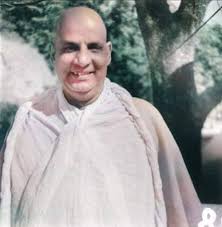
Swami Sivananda smiling outdoors photo
Swami Chidananda, Swami Sivananda

A Biography of Swami Chidananda

A Biography of Swami Chidananda Sridhar Rao, as Swami Chidananda was known before taking Sannyasa, was born to Srinivasa Rao and Sarojini, on the 24th September 1916, the second of five children and the eldest son. Sri Srinivasa Rao was a prosperous Zamindar owning several villages, extensive lands and palatial buildings in South India. Sarojini was an ideal Indian mother, noted for her saintliness. At the age of eight, Sridhar Rao’s life was influenced by one Sri Anantayya, a friend of his grandfather, who used to relate to him stories from the epics, the Ramayana and the Mahabharata. Doing Tapas, becoming a Rishi, and having a vision of the Lord became ideals which he cherished. His uncle, Krishna Rao, shielded him against the evil influences of the materialistic world around him, and sowed in him the seeds of the Nivriti life which he joyously nurtured until, as latter events proved, it blossomed into sainthood. His elementary education began at Mangalore. In 1932 he joined the Muthiah Chetty School in Madras where he distinguished himself as a brilliant student. His cheerful personality, exemplary conduct and extraordinary traits earned for him a distinct place in the hearts of all teachers and students with whom he came into contact. In 1936, he was admitted to Loyola College, whose portals admit only the most brilliant of students. In 1938, he emerged with the degree of Bachelor of Arts. This period of studentship at a predominantly Christian College was significant. The glorious ideal of Lord Jesus, the Apostles and the other Christian saints had found in his heart a synthesis of all that is best and noble in the Hindu culture. To him, study of the Bible was no more routine; it was the living word of God, just as living and real as the words of the Vedas, the Upanishads and the Bhagavadgita. His innate breadth of vision enabled him to see Jesus in Krishna, not Jesus instead of Krishna. He was as much an adorer of Jesus Christ as he was of Lord Vishnu. The family was noted for its high code of conduct and this was infused into his life. Charity and service were the glorious ingrained virtues of the members of the family. These virtues found an embodiment in Sridhar Rao. He discovered ways and means of manifesting them. None who sought his help was sent away without it. He gave freely to the needy. Service to lepers became his ideal. He would build them huts on the vast lawn of his home and look after them as though they were deities. Later, after he joined the Ashram, this early trait found in him complete and free expression where even the best among men would seldom venture into this great realm of divine love, based upon the supreme wisdom that all are one in God. Patients from the neighborhood, suffering from the worst kinds of diseases came to him. To Sridhar Rao the patient was none other than Lord Narayana Himself. He served him with tender love and compassion. The very movement of his hands portrayed him as worshipping the living Lord Narayana. Nothing would keep him from bringing comfort to the suffering inmates of the Ashram, no matter what the urgency of other engagements at the time. Service, especially of the sick, often brought out the fact that he had no idea of his own separate existence as an individual. It seemed as if his body clung loosely to his soul. Nor was all this service confined to human beings. Birds and animals claimed his attention as much as, if not more than, human beings. He understood their language of suffering. His service of a sick dog evoked the admiration of Gurudev. He would raise his finger in grim admonition when he saw anyone practicing cruelty to dumb animals in his presence. His deep and abiding interest in the welfare of lepers had earned for him the confidence and admiration of the Government authorities when he was elected to the Leper Welfare Association, constituted by the state-at first as Vice-Chairman and later as Chairman of the Muni-ki-reti Notified Area Committee. Quite early in life, although born in a wealthy family, he shunned the pleasures of the world to devote himself to seclusion and contemplation. In the matter of study it was the spiritual books which had the most appeal to him, more than college books. Even while he was at the college, textbooks had to take second place to spiritual books. The works of Sri Ramakrishna, Swami Vivekananada and Sri Gurudev took precedence over all others. He shared his knowledge with others, so much so that he virtually became the Guru of the household and the neighborhood, to whom he would talk of honesty, love, purity, service and devotion to God. He would exhort them to perform Japa of Rama-Nama. While still in his twenties he began initiating youngsters into this great Rama Taraka Mantra. He was an ardent admirer of Sri Ramakrishna Math at Madras and regularly participated in the Satsangas there. The call of Swami Vivekananda to renounce resounded within his pure heart. He ever thirsted for the Darshan of saints and Sadhus visiting the metropolis. In June 1936, he disappeared from home. After a vigorous search by his parents, he was found in the secluded Ashram of a holy sage some miles from the sacred mountain shrine of Tirupati. He returned home after some persuasion. This temporary separation was but a preparation for the final parting from the world of attachments to family and friends. While at home his heart dwelt in silent forest of spiritual thoughts, beating in tune with the eternal Pranava-Nada of the Jnana Ganga within himself. The seven years at home following his return from Tirupati were marked by seclusion, service, intense study of spiritual literature, self-restraint, control of the senses, simplicity in food and dress, abandonment of all comforts and practice of austerities which augmented his inner spiritual power. The final

A Biography of Swami Chidananda Read Post »

swami sivananda Black-and-white photo of monk with garland holding flowers image
Swami Chidananda, Swami Sivananda

Autobiography of Swami Chidananda

Autobiography of Swami Chidananda Worshipful homage unto the Supreme Cosmic Spirit Divine. Reverential prostrations to the Guru who is representative on earth of the Supreme Being or God. Loving adorations to holy saints of Bharatvarsha, our spiritual motherland which has brought into being countless saints, sages, seers and Brahma-Jnanis of God-realization and such towering personalities like Maharshi Vyas, Vasishta, Yagnyavalkya and others of yore. These Great Ones, having attained the highest experience of the Absolute Transcendental Reality or the Eternal Truth, lived on to distribute the spiritual light of their Jnana and the indescribable Ananda of their God-experience through Bhakti to all their fellow-beings of their own contemporary times. May their blessings be upon all. Meeting between two individuals in this world is always brought about by the Prarabdha Karma of both concerned. Having met once, the continuity of their relationship in the Vyavaharic world is also the resultant outcome of the Prarabdha Karma of both concerned. This has been clearly stated in the Sanatana Dharma or Vaidic Dharma, popularly referred to as Hinduism. Such a meeting between two Jivatmas born as human individuals in this world, comes about in various ways-sometimes in very peculiar and curious manner as well. I will relate here the way in which life brought me into contact with the exalted blissful personality whom the whole world knows as Papa Ramdas before ending my spiritual journey at the feet of Gurudev Sri Sivanandji Maharaj. I was born in Mangalore which is a riverside town (today it is a big city) situated in the West Coastal region of South India. Mangalore is 69 kms from Anandashram in Kanhangad Railway station on the Mangalore-Madras route. I was born on 24th September 1916 in the house of my maternal grandfather, Sri Nellikai Venkat Rao and his Dharmapatni Smt Sundaramma. Both were pious and extremely generous hearted, especially to the poor and the needy. My mother’s name was Smt Sarojini Devi. Grandparents simply adored her because she was the first child to survive in their family after grandmother had lost 11 male children, one after the other. Mother Sarojini Devi was born in 1900 and passed away when she was 25 years of age. She had five children. My elder sister Hemalata was 11 years of age and myself nine years when mother passed away. Just as my mother was the first surviving child in the family, it so happened that I was the first male child in the family and hence I became the apple of the eye to grandmother. Grandmother and mother used to vie with each other in showering their love upon this being whom they named as Sridhar. Father’s family lived in Madras. After my birth, I was expected to be brought home to my father’s house. In my case, however, the maternal grandparents pleaded and prayed that being the first male child in the family, I may be allowed to remain with them in Mangalore and be brought up and educated there. Unexpectedly, almost miraculously, my father Sri Sreenivas Rao understood their heart’s earnest longing and very generously granted their prayer. Thus it was that for the first 16 years of my life, I was brought up and given a good education in Mangalore town, in close proximity to Kasaragod and Kanhangad with which Ramdas’ early life was closely connected. Later as a student, he (Papa Ramdas) shifted to Mangalore and did his High School at the Mission High School run by the German Basel Mission. Later, after taking a course in textile technology at Bombay and having served in a number of textile mills in different places, Papa Ramdas finally came back to Mangalore and set up a small textile business in the form of a handloom factory at Falnir, beyond Hampankatta. What happened to Vittal Rao (as Papa Ramdas was called in his younger days) during that period is too well-known a story for me to relate anything about it. It is rendered in great detail in Papa Ramdas’ well known book In Quest of God. This book was a narration of his wandering all over India, steeped in the all-absorbing power of the divine Name. His wanderings covered the whole of the year 1923, he finally returned to Mangalore and secluded himself in some cave in the Kadri hills on the outskirts of the town, chanting Ram Nam all the time. There he was prompted to write down a brief account of his wanderings and he did so during 1924. In Mangalore, there was a pious good gentleman called Bolar Vittal Rao (by chance, coinciding with Papa Ramdas’ earlier name given to him by his parents). Bolar Vittal Rao owned a printing press called Saraswati Printing Press, located at one corner of the old Police maidan behind St. Paul’s Church. A member of Papa Ramdas’ family gave the manuscript of In Quest of God to Bolar Vittal Rao, requesting him to print it in a paper back type book. He printed the book under the title In Quest of God and the price was half a rupee or eight annas. Bolar Vittal Rao and Nellikai Venkata Rao, my grandfather, were very good friends. Every day, after closing the press, in the evening, Bolar Vittal Rao used to drop in at “Manohar Vilas” and spend half an hour chatting with grandfather over a cup of excellent coffee. Over the years, Bolar Vittal Rao was in the practice of bringing along with him one copy of whatever matter was printed by him on that day at his printing press and give it to grandfather. In accordance with this habit, Bolar Vittal Rao brought along with him one copy of the very first 1924 edition of In Quest of God and gave it to grandfather. Though religious-minded, grandfather was not interested in saints and spiritual teachings. Thus, the very first copy of In Quest of God, which was given to him by his friend, was taken by grandfather inside the house and deposited

Autobiography of Swami Chidananda Read Post »

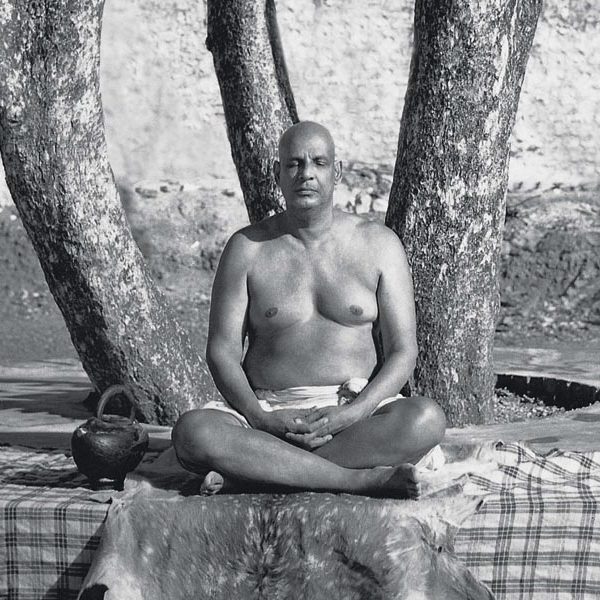
Swami Sivananda meditating under tree image
Swami Chidananda, Swami Sivananda

Surgeon Sivananda’s Egodectomy

Surgeon Sivananda’s Egodectomy by Swami Venkatesananda INTRODUCTION Even a child can tell us what is right and what is wrong; but even the wisest among men might fail to do the right and to resist what is wrong. Anyone who knows anything about Yoga and Vedanta, knows too, that the ego is the only thing that keeps us from realising that we are, in truth, the Omnipotent, Omniscient, Omnipresent Self! But it needs Surgeon Sivananda to give us the details of the most delicate operation�Ego-dectomy�that is the vital part of spiritual endeavour. MONEY FEEDS THE EGO This happened on a pleasant August morning. A young foreign student of Yoga was chosen as the instrument to convey this lesson. Swamiji elicited the information from him that he had with him, a few hundred rupees which he had meant to utilise “in case of need.” He was a zealous worthy and earnest spiritual aspirant; a ripe case for “egodectomy.” “Give away all your money in charity. Now you identify yourself with the money. Your ego feeds upon it. That money is your strength; you lean on it and not on God. You feel that it is yours; and not that all humanity is your own Self. Give it away. Your ego will be curbed. The pride of wealth will go,” said Swamiji. But that is not all. It is like removing cancerous tissue. You cut it off in one place; it grows in another! So, Swamiji continued “But, you have to be careful. The ego will take the form of pride of renunciation. This is worse than pride of wealth. People will admire your spirit of renunciation. Your reputation will grow. Name and fame will come. You will become a famous Yogi. Money orders will come. The old pride of wealth also will return by and by. The ego is ever ready to assume new forms�sometimes gross, sometimes subtle, but ever dangerous.” How is success assured then in this operation? POSITIVE THOUGHT-FORCE TO BE BUILT UP Swamiji is as thorough and practical in this as in every other aspect of his teaching. A positive, vigorous, thought-force is to be built up within: “I am Akarta, Abhokta, Asanga, Sakshi.” During a recent discourse, Swamiji himself remarked: “There is a great power in these four words: Akarta (I am non-doer), Abhoktha (I am non-enjoyer), Asanga (I am unattached), Sakshi (I am a witness only).” And, then there is the negative but equally potent aspect which Sri Swamiji exalts very often and of which he sings: “Bear insult; bear injury: (this is) highest Sadhana.” This forbearance is the touchstone to ascertain the extent to which the inner personality has been purified by reflection over the Four Great Words of Power. These two�positive and negative�aspects are inevitable counterparts of this highest Sadhana. Without the positive aspect, the negative one of bearing insult and injury might make one effeminate and cowardly, weak and weary of life, a walking-talking beast. Without the negative aspect, the positive one might merely be wishful thinking, without the least actual progress. WORKING OUT THE WILL OF GOD If the saint says “I am Akarta, Abhokta,” how does he work? Swamiji lives and serves, not because, in the words of the Bhagavad Gita, he has anything to gain thereby, but because it is His Will, calculated to promote the welfare of all beings. A thousand times he has declared thus. Not when fortune smiles on him and on the Ashram, but when the cloud of ill-health and financial break-down blurs the vision of everyone else. “It is His work; He will carry it on as long as He wills.” When his radiant physical body emerges triumphant after a serious accident (as in January 1950), or a serious illness (as in August 1954), he re-iterates that the precious life has been prolonged to do His Will and to carry on His Work. Is this resignation or surrender, entirely passive? No, that would be vegetation! The Divine Will will not choose a human instrument, merely to vegetate. Swamiji recognises that he himself and the institution over which he presides are instruments chosen by the Lord to do His work. The instruments have to be looked after; they are to be kept in working order; but they should not be allowed to rust, and the maximum use should be made of them. A significant incident comes to mind. INSTRUMENT OF THE DIVINE It happened during the All-India Tour of Swamiji in 1950. The first procession (on arrival in the town) had been elaborately planned and advertised in one of the centres. The organisers wanted Swamiji alone to travel in an open car; but Swamiji wanted two of his disciples to be also there. The organisers consented, but were reluctant to starve these disciples. The procession had commenced. All eyes were focused on the holy car. The organiser was whispering to the two disciples, a request to drink a cup of cocoa. The disciples were unwilling. Through the corner of his eye, Swamiji noticed this. “Bring it here,” said he. The organiser joyously passed the cup on to him. Swamiji merely took a sip: but only to say to the disciples: “Take it. You know your body needs it. Why are you afraid of public criticism? It is here you should apply the dictum. ‘There is no world in the three periods of time.’ Take it, because you have to work, to serve humanity.” The vital lesson came later. When, at the Vani Mahal at Madras, Swamiji running high temperature, went on addressing the audience, even though his throat was hoarse with acute inflammation, the organisers had to plead with him to have a little more mercy for his body. The doctor-Mayor of Colombo (the late Dr. Kumararatnam) begged of Swamiji to give his throat complete rest for three days, and “merely give Darshan to people.” Swamiji smiled: “Even if the worst is to happen, I shall not cease from singing His names and delivering the

Surgeon Sivananda’s Egodectomy Read Post »