






Hari Om

Menu

Shiva

bhola3
Shiva

Chandrashekhara Ashtakam

Chandrashekhara Ashtakam चन्द्रशेखर चन्द्रशेखर चन्द्रशेखर पाहि माम् ।चन्द्रशेखर चन्द्रशेखर चन्द्रशेखर रक्ष माम् ॥ १॥ candraśekhara candraśekhara candraśekhara pāhi mām .candraśekhara candraśekhara candraśekhara rakṣa mām .. 1.. Oh Chandrashekara (The Lord whose crown is the moon), please protect me.Oh Chandrashekara (The Lord whose crown is the moon), please save me. रत्नसानुशरासनं रजताद्रिशृङ्गनिकेतनंसिञ्जिनीकृत पन्नगेश्वरमच्युताननसायकम् ।क्षिप्रदग्धपुरत्रयं त्रिदिवालयैरभिवन्दितंचन्द्रशेखरमाश्रये मम किं करिष्यति वै यमः ॥ २॥ ratnasānuśarāsanaṃ rajatādriśṛṅganiketanaṃsiñjinīkṛta pannageśvaram acyutānanasāyakam .kṣipradagdhapuratrayaṃ tridivālayairabhivanditaṃcandraśekharamāśraye mama kiṃ kariṣyati vai yamaḥ .. 2.. The God who made Mount Meru his bow and resides on the silver mountain,who made Vasuki the bowstring and Lord Vishnu the arrow,the destroyer of the three cities, worshipped by the three worlds,I take refuge in Chandrashekara, so what can Yama do to me? पञ्चपादप पुष्पगन्ध पदाम्बुजद्वयशोभितंभाललोचन जातपावक दग्धमन्मथ विग्रहम् ।भस्मदिग्धकलेवरं भवनाशनं भवमव्ययंचन्द्रशेखरमाश्रये मम किं करिष्यति वै यमः ॥ ३॥ pañcapādapa puṣpagandha padāmbujadvayaśobhitaṃbhālalocana jātapāvaka dagdhamanmatha vigraham .bhasmadigdhakalevaraṃ bhavanāśanaṃ bhavamavyayaṃcandraśekharamāśraye mama kiṃ kariṣyati vai yamaḥ .. 3.. Whose feet are adorned with the fragrance of divine flowers,who burned Manmatha with the fire of his third eye,whose body is smeared with sacred ash and who is eternal,I take refuge in Chandrashekara, so what can Yama do to me? मत्तवारण मुख्यचर्मकृतोत्तरीय मनोहरंपङ्कजासन पद्मलोचन पूजिताङ्घ्रि सरोरुहम् ।देवसिन्धुतरङ्गसीकर सिक्तशुभ्रजटाधरंचन्द्रशेखरमाश्रये मम किं करिष्यति वै यमः ॥ ४॥ mattavāraṇa mukhyacarmakṛtottarīya manoharaṃpaṅkajāsana padmalocana pūjitāṅghri saroruham .devasindhutaraṅgasīkara siktaśubhrajaṭādharaṃcandraśekharamāśraye mama kiṃ kariṣyati vai yamaḥ .. 4.. Who wears the elephant skin as his garment,whose lotus feet are worshipped by Brahma and Vishnu,whose matted locks are bathed by the celestial Ganga,I take refuge in Chandrashekara, so what can Yama do to me? यक्षराजसखं भगाक्षहरं भुजङ्गविभूषणंशैलराजसुतापरिष्कृत चारुवामकलेवरम् ।क्ष्वेडनीलगलं परश्वधधारिणं मृगधारिणंचन्द्रशेखरमाश्रये मम किं करिष्यति वै यमः ॥ ५॥ yakṣarājasakhaṃ bhagākṣaharaṃ bhujaṅgavibhūṣaṇaṃśailarājasutāpariṣkṛta cāruvāmakalevaram .kṣveḍanīlagalaṃ paraśvadhadhāriṇaṃ mṛgadhāriṇaṃcandraśekharamāśraye mama kiṃ kariṣyati vai yamaḥ .. 5.. The friend of Kubera, destroyer of Bhaga’s eyes, adorned with serpents,whose left half is beautified by Goddess Parvati,the blue-throated one bearing an axe and a deer,I take refuge in Chandrashekara, so what can Yama do to me? कुण्डलीकृत कुण्डलेश्वर कुण्डलं वृषवाहनंनारदादि मुनीश्वरस्तुत वैभवं भुवनेश्वरम् ।अन्धकान्धकामाश्रितामरपादपं शमनान्तकंचन्द्रशेखरमाश्रये मम किं करिष्यति वै यमः ॥ ६॥ kuṇḍalīkṛta kuṇḍaleśvara kuṇḍalaṃ vṛṣavāhanaṃnāradādi munīśvarastuta vaibhavaṃ bhuvaneśvaram .andhakāndhakāmāśrita amarapādapaṃ śamanāntakaṃcandraśekharamāśraye mama kiṃ kariṣyati vai yamaḥ .. 6.. The one who wears coiled serpents as earrings and rides the bull,praised by Narada and sages, the Lord of the universe,destroyer of Andhaka and protector of devotees,I take refuge in Chandrashekara, so what can Yama do to me? भेषजं भवरोगिणामखिलापदामपहारिणंदक्षयज्ञविनाशनं त्रिगुणात्मकं त्रिविलोचनम् ।भुक्तिमुक्तिफलप्रदं सकलाघसङ्घनिबर्हणंचन्द्रशेखरमाश्रये मम किं करिष्यति वै यमः ॥ ७॥ bheṣajaṃ bhavarogiṇām akhilāpadāmapahāriṇaṃdakṣayajñavināśanaṃ triguṇātmakaṃ trivilocanam .bhuktimuktiphalapradaṃ sakalāghasaṅghanibarhaṇaṃcandraśekharamāśraye mama kiṃ kariṣyati vai yamaḥ .. 7.. The healer of worldly sorrow and remover of all afflictions,destroyer of Daksha’s sacrifice, embodiment of the three gunas,bestower of enjoyment, liberation and destroyer of sins,I take refuge in Chandrashekara, so what can Yama do to me? भक्तवत्सलमर्चितं निधिमक्षयं हरिदम्बरंसर्वभूतपतिं परात्परमप्रमेयमनुत्तमम् ।सोमवारिद भूहुताशन सोमपानिलखाकृतिंचन्द्रशेखरमाश्रये मम किं करिष्यति वै यमः ॥ ८॥ bhaktavatsalamarcitaṃ nidhimakṣayaṃ haridambaraṃsarvabhūtapatiṃ parātparam aprameyamanuttamam .somavārida bhūhutāśana somapānilakhākṛtiṃcandraśekharamāśraye mama kiṃ kariṣyati vai yamaḥ .. 8.. The protector of devotees, inexhaustible treasure, supreme and incomparable,the Lord of all beings, beyond measure and unsurpassed,present in sacred Soma rites,I take refuge in Chandrashekara, so what can Yama do to me? विश्वसृष्टि विधायिनं पुनरेव पालनतत्परंसंहरन्तमपि प्रपञ्चमशेष लोकनिवासिनम् ।क्रीडयन्त महर्निशं गणनाथयूथ समन्वितंचन्द्रशेखरमाश्रये मम किं करिष्यति वै यमः ॥ ९॥ viśvasṛṣṭi vidhāyinaṃ punareva pālanatatparaṃsaṃharantamapi prapañcamaśeṣa lokanivāsinam .krīḍayanta maharniśaṃ gaṇanāthayūtha samanvitaṃcandraśekharamāśraye mama kiṃ kariṣyati vai yamaḥ .. 9.. The creator, preserver and destroyer of the universe,dwelling in all worlds, playful with the Ganas day and night,I take refuge in Chandrashekara, so what can Yama do to me? मृत्युभीतमृकण्डसूनु कृतस्तवं शिवसन्निधौयत्र कुत्र च यः पठेन्न हि तस्य मृत्युभयं भवेत् ।पूर्णमायुर रोगितामखिलार्थसम्पदमादरंचन्द्रशेखर एव तस्य ददाति मुक्तिमयत्नतः ॥ १०॥ mṛtyubhītamṛkaṇḍasūnu kṛtastavaṃ śivasannidhauyatra kutra ca yaḥ paṭhenna hi tasya mṛtyubhayaṃ bhavet .pūrṇamāyura rogitām akhilārtha sampadamādaraṃcandraśekhara eva tasya dadāti muktimayatnataḥ .. 10.. He who recites this hymn composed by the son of Mrikandu,will be freed from fear of death,will enjoy long life, health and prosperity,and will attain liberation by the grace of Lord Chandrashekara. Description Chandrashekhara ashtakam is a divine hymn to praise God Shiva as Chandrasekhara, the lord who is adorned with moon on his head (Chandra – moon, Sekhar – crown) . The Chandrashekhara Ashtakam is a great remedy for protection from difficulties including untimely death due to accidents etc. The lyrics and meaning of Chandrasekhara Ashtakam have an in-depth explanation of the greatness of God shiva, his appearance, the protection offered to his devotees, along with the divine qualities of the Lord. It was the hymn sung by Markandeya rishi and is related to his legend where he offered his prayers to God Shiva, in order to get away from the clutches of the Yama, the lord of death. During which, God Shiva offered his protection to Markandeya, defeating Yama to the point of death. Chandrasekhar Ashtakam was written by Rishi Markandeya. One legend relates the story of how Lord Shiva protected Markandeya from the clutches of death, personified as Lord Yama. Mrikandu rishi and his wife Marudmati worshipped Shiva and sought from him the boon of begetting a son. As a result, he was given the choice of either a righteous son, but with a short life on earth or 100 long-lived, foolish sons. Mrikandu rishi chose the former and was blessed with Markandeya, an exemplary son, destined to die at the age of 16. Markandeya grew up to be a great devotee of Shiva and on the day of his destined death, he continued his worship of Shiva in his aniconic form of Shivalingam. The messengers of Yama, the god of death were unable to take away his life because of his great devotion and continual worship of Shiva. Yama then came in person to take away Markandeya’s life and sprung his noose around the young sage’s neck. By accident or fate the noose mistakenly landed around the Shivalingam, and out of it, Shiva emerged in all his fury attacking Yama for his act of aggression. After defeating Yama in a battle to the point of death, Shiva then revived him, under the condition that the devout youth

Chandrashekhara Ashtakam Read Post »

bhola2
Shiva

Bilvashtakam

Bilvashtakam त्रिदलं त्रिगुणाकारं त्रिनॆत्रं च त्रियायुधं ।त्रिजन्म पापसंहारम् ऎकबिल्वं शिवार्पणं ॥१॥ tridalaṃ triguṇākāraṃ trinĕtraṃ ca triyāyudhaṃ .trijanma pāpasaṃhāram ĕkabilvaṃ śivārpaṇaṃ ..1.. I offer one leaf of Bilva to Lord Shiva,which has three leaves (a Bilva leaf has three leaves as a cluster),which represents the three Gunas (Sattva, Rajas, Tamas),which represents the three eyes of Shiva,which is like the triad of weapons he bears,and whose very remembrance destroys sins accumulated over three births. त्रिशाखैः बिल्वपत्रैश्च ह्यच्छिद्रैः कोमलैः शुभैः ।शिवपूजां करिष्यामि ह्येकबिल्वं शिवार्पणम् ॥२॥ triśākhaiḥ bilvapatraiśca hyacchidraiḥ komalaiḥ śubhaiḥ .śivapūjāṃ kariṣyāmi hyekabilvaṃ śivārpaṇam ..2.. I offer one Bilva leaf to Lord Shivawhich has three shoots,which is flawless,soft and tender,and auspicious in nature. अखण्ड बिल्वपत्रेण पूजिते नन्दिकेश्वरे ।शुद्ध्यन्ति सर्वपापेभ्यो ह्येकबिल्वं शिवार्पणम् ॥३॥ akhaṇḍa bilvapatreṇa pūjite nandikeśvare .śuddhyanti sarvapāpebhyo hyekabilvaṃ śivārpaṇam ..3.. By worshipping Shiva, the Lord of Nandi,with a whole and unbroken Bilva leaf,one becomes purified of all sins.I offer one Bilva leaf to Lord Shiva. शालिग्राम शिलामेकां विप्राणां जातु चार्पयेत् ।सोमयज्ञ महापुण्यं एकबिल्वं शिवार्पणम् ॥४॥ śāligrāma śilāmekāṃ viprāṇāṃ jātu cārpayet .somayajña mahāpuṇyaṃ ekabilvaṃ śivārpaṇam ..4.. Offering one Bilva leaf to Lord Shivais equal to offering a Shaligrama stone to a realized Brahmin,or to the immense merit gained by performing a Soma Yajna. दन्तिकोटि सहस्राणी वाजपेय शतानि च ।कोटिकन्या महादानं एकबिल्वं शिवार्पणम् ॥५॥ dantikoṭi sahasrāṇī vājapeya śatāni ca .koṭikanyā mahādānaṃ ekabilvaṃ śivārpaṇam ..5.. The gifting of thousands of crores of elephants,the performance of hundreds of Vajapeya sacrifices,or even the great charity of giving millions of daughters in marriagecannot equal the merit of offering a single Bilva leaf to Lord Shiva.I offer one Bilva leaf to Lord Shiva. लक्ष्म्यास्तनुत उत्पन्नं महादेवस्य च प्रियम् ।बिल्ववृक्षं प्रयच्छामि ह्येकबिल्वं शिवार्पणम् ॥६॥ lakṣmyāstanuta utpannaṃ mahādevasya ca priyam .bilvavṛkṣaṃ prayacchāmi hyekabilvaṃ śivārpaṇam ..6.. The Bilva tree originated from the body of Goddess Lakshmiand is exceedingly dear to Lord Mahadeva.I offer one Bilva leaf to Lord Shiva. दर्शनं बिल्ववृक्षस्य स्पर्शनं पापनाशनम् ।अघोरपापसंहारं एकबिल्वं शिवर्पणम् ॥७॥ darśanaṃ bilvavṛkṣasya sparśanaṃ pāpanāśanam .aghorapāpasaṃhāraṃ ekabilvaṃ śivarpaṇam ..7.. Merely seeing the Bilva treeor even touching itdestroys the most terrible sins.I offer one Bilva leaf to Lord Shiva. मूलतो ब्रह्मरूपाय मध्यतो विष्णुरूपिणे ।अग्रतः शिवरूपाय ह्येकबिल्वं शिवार्पणम् ॥८॥ mūlato brahmarūpāya madhyato viṣṇurūpiṇe .agrataḥ śivarūpāya hyekabilvaṃ śivārpaṇam ..8.. The root of the Bilva tree represents Brahma the creator,the middle represents Vishnu the sustainer,and the top represents Shiva the destroyer.Offering a Bilva leaf thus grants supreme spiritual benefit.I offer one Bilva leaf to Lord Shiva. बिल्वाष्टकमिदं पुण्यं यः पठेत् शिवसन्निधौ ।सर्वपाप विनिर्मुक्तः शिवलोकमवाप्नुयात् ॥ bilvāṣṭakamidaṃ puṇyaṃ yaḥ paṭhet śivasannidhau .sarvapāpa vinirmuktaḥ śivalokamavāpnuyāt .. Whoever recites this sacred Bilvashtakamin the presence of Lord Shivawill be freed from all sinsand will attain the abode of Lord Shiva. DescriptionNote: For the alternate version of Bilvashtakam with 14 verses please click here.Composed by Sri Adi Shankaracharya, the famous Bilvashtakam extols the virtues of the Bilva leaf (also spelt Vilva, Bilwa) and Lord Shiva’s love for it. Shri Shiva Bilvashtakam is a very powerful chant that describes the power and glory of offering bilva leaves to Lord Shiva. They are to be offered in a group of three leaves and are said to have features that identify them with Lord Shiva himself. The Bilva leaf is trifoliate which signifies the holy Trinity: Brahma, Vishnu and Maheshwara. It also signifies the three eyes of Shiva. According to Shiva Purana, the Bilwa is the symbol of Lord Shiva. It is adored even by the Gods. It is difficult to understand its greatness. Blessed are the ones who offer the Bilva. One Bilva is equal to a thousand lotus, says the Siva Purana. According to the Skanda Purana, the Bilwa (Bel) tree grew from the sweat droplets of Parvati which fell on the Mandrachal mountain. From there the Bel tree emerged. Hence, it is believed that the Goddess resides in this tree in all Her forms. She resides as Girija in the roots of the tree, as Maheshwari in its trunk, as Dakshayani in its branches, Parvati in its leaves, Katyayani in its fruit and as Gauri in its flowers. Therefore as Parvati resides in Her various forms in this tree, Shiva is extremely fond of its leaves. Bilva LeafBilva PujaBilva Tree The following commentary is from SanskritDocuments.org by N. Balasubramanaiam. These verses in this poem Bilvashtakam highlight some of Shiva’s glories and draw one’s mind to Him. Thus it will help a devotee’s mind in getting involved in the puja. Let us go to the verses proper. Each verse is a couplet and has two lines. The verses are identified with numbers 1 through 8. The first verse identifies some features of Lord Shiva with a Bilva leaf which is actually a cluster consisting of three leaves of bilva and offers prayer to it. Verse 9 is the phalaśrutiḥ and gives the benefit one will gain by reciting this hymn. tridalaṃ triguṇākāraṃ trinetraṃ triyāyudhamtrijanmapāpasaṃhāraṃ ekabilvaṃ śivārpaṇm ..1.. tridalam = having three petalstriguṇākāraṃ = constituted of three gunas, satva, rajas and tamas which together constitute Maya, the creative power of Ishvara and the cause of creationtrinetram = having three eyes, the sun, the moon and fire, signifying infinite wisdomtriyāyudham = having three kinds of weapons used for striking, aiming and releasingtrijanmapāpasaṃhāram = destroyer of sins accumulated over many birthseka bilvam = one cluster of bilva leavesśivārpaṇam = offered to Lord Shiva In this manner one bilva leaf offered with devotion is of great merit. This reminds us of what Krishna said in the Gita (9-26). When one with pure mind offers to Me with devotion a leaf, a flower, a fruit or water, that I accept. patraṃ puṣpaṃ phalaṃ toyaṃ yo me bhaktyā prayacchatitadahaṃ bhaktyupahṛtamaśnāmi prayatātmanaḥ Meaning of the verse: I offer to Lord Shiva a cluster of three bilva leaves which represent the three gunas, His three eyes, the three kinds of weapons He bears and whose remembrance destroys accumulated sins. triśākhaiḥ bilvapatraiśca hyacchidraiḥ komalaiḥ śubhaiḥśivapūjāṃ kariṣyāmi hyekabilvaṃ śivārpaṇam ..2.. Meaning of the verse: I perform puja to Lord Shiva with bilva leaves that are trifoliate, flawless, soft, tender and auspicious. akhaṇḍa bilvapatreṇa pūjite nandikeśvareśuddhyanti

Bilvashtakam Read Post »

bhola1
Shiva

Bhoothanath Ashtakam

Bhoothanath Ashtakam शिव शिव शक्तिनाथं संहारं शं स्वरूपम्नव नव नित्यनृत्यं ताण्डवं तं तन्नादम्घन घन घूर्णिमेघं घंघोरं घंन्निनादम्भज भज भस्मलेपं भजामि भूतनाथम् ॥१॥ śiva śiva śaktināthaṃ saṃhāraṃ śaṃ svarūpamnava nava nityanṛtyaṃ tāṇḍavaṃ taṃ tannādamghana ghana ghūrṇimeghaṃ ghaṃghoraṃ ghaṃnninādambhaja bhaja bhasmalepaṃ bhajāmi bhūtanātham ..1.. I worship Shiva, the Lord of Shakti (power), who embodies destruction and is the very essence of auspiciousness.He performs the ever-new and eternal cosmic dance (Tandava), creating the primordial sound (Nāda).His presence is like a dark, swirling storm cloud, producing terrifying, thunderous sounds.I worship him, smeared with sacred ash, the Lord of all beings (Bhoothanatha). This verse glorifies Shiva as Bhoothanatha, showing his destructive yet auspicious nature, his cosmic dance, and his association with ash and primordial sound. कऴ कऴ काऴरूपं कल्लोऴं कं कराऴम्डम डम डमनादं डम्बुरुं डंकनादम्सम सम शक्तग्रिवं सर्वभूतं सुरेशम्भज भज भस्मलेपं भजामि भूतनाथम् ॥२॥ kaḻa kaḻa kāḻarūpaṃ kalloḻaṃ kaṃ karāḻamḍama ḍama ḍamanādaṃ ḍamburuṃ ḍaṃkanādamsama sama śaktagrivaṃ sarvabhūtaṃ sureśambhaja bhaja bhasmalepaṃ bhajāmi bhūtanātham ..2.. I worship Shiva, the fierce form of Time (Kala), roaring like a terrifying wave.He produces the resonant sound of the Damaru drum, echoing through the cosmos.He bears the power of Shakti and is the Lord of all beings and gods.I worship him, smeared with sacred ash, the Lord of all beings. This verse highlights Shiva’s fearsome cosmic aspect as Time and his supreme lordship. रम रम रामभक्तं रमेशं रां रारावम्मम मम मुक्तहस्तं महेशं मं मधुरम्बम बम ब्रह्मरूपं बामेशं बं विनाशम्भज भज भस्मलेपं भजामि भूतनाथम् ॥३॥ rama rama rāmabhaktaṃ rameśaṃ rāṃ rārāvammama mama muktahastaṃ maheśaṃ maṃ madhurambama bama brahmarūpaṃ bāmeśaṃ baṃ vināśambhaja bhaja bhasmalepaṃ bhajāmi bhūtanātham ..3.. I worship Shiva, beloved of Lord Rama and Lord of Lakshmi (Ramesha).He grants liberation with his blessing hand and is the gentle Mahesha.He is the embodiment of Brahman and the destroyer of all impurity.I worship him, smeared with sacred ash, the Lord of all beings. This verse emphasizes Shiva as the giver of liberation and supreme reality. हर हर हरिप्रियं त्रितापं हं संहारम्खम खम क्षमाशीऴं सपापं खं क्षमणम्द्दग द्दग ध्यानमूर्त्तिं सगुणं धं धारणम्भज भज भस्मलेपं भजामि भूतनाथम् ॥४॥ hara hara haripriyaṃ tritāpaṃ haṃ saṃhāramkhama khama kṣamāśīḻaṃ sapāpaṃ khaṃ kṣamaṇamddaga ddaga dhyānamūrttiṃ saguṇaṃ dhaṃ dhāraṇambhaja bhaja bhasmalepaṃ bhajāmi bhūtanātham ..4.. I worship Shiva, beloved of Vishnu, who destroys the threefold sufferings.He forgives sins with boundless compassion.He is the very form of meditation and sustains the universe through concentration.I worship him, smeared with sacred ash, the Lord of all beings. This verse reflects Shiva’s compassion, meditation, and unity with Vishnu. पम पम पापनाशं प्रज्वलं पं प्रकाशम्गम गम गुह्यतत्त्वं गिरीशं गं गणानाम्दम दम दानहस्तं धुन्दरं दं दारुणम्भज भज भस्मलेपं भजामि भूतनाथम् ॥५॥ pama pama pāpanāśaṃ prajvalaṃ paṃ prakāśamgama gama guhyatattvaṃ girīśaṃ gaṃ gaṇānāmdama dama dānahastaṃ dhundaraṃ daṃ dāruṇambhaja bhaja bhasmalepaṃ bhajāmi bhūtanātham ..5.. I worship Shiva, the destroyer of sins, blazing with divine light.He reveals secret truths and is Lord of mountains and the Ganas.He grants boons yet remains fierce in form.I worship him, smeared with sacred ash, the Lord of all beings. गम गम गीतनाथं दूर्गमं गं गंतव्यम्टम टम रूंडमाऴं टंकारं टंकनादम्भम भम भ्रम् भ्रमरं भैरवं क्षेत्रपाऴम्भज भज भस्मलेपं भजामि भूतनाथम् ॥६॥ gama gama gītanāthaṃ dūrgamaṃ gaṃ gaṃtavyamṭama ṭama rūṃḍamāḻaṃ ṭaṃkāraṃ ṭaṃkanādambhama bhama bhram bhramaraṃ bhairavaṃ kṣetrapāḻambhaja bhaja bhasmalepaṃ bhajāmi bhūtanātham ..6.. I worship Shiva, the Lord of music and the ultimate goal.He wears a garland of skulls and resounds with thunderous sound.He appears as Bhairava, the guardian of sacred places.I worship him, smeared with sacred ash, the Lord of all beings. त्रिशुऴधारी संहारकारी गिरिजानाथम् ईश्वरम्पार्वतीपति त्वम् मायापति शुभ्रवर्णम् महेश्वरम्कैऴाशनाथ सतीप्राणनाथ महाकालम् कालेश्वरम्अर्धचंद्रम् शिरकिरीटम् भूतनाथं शिवम् भजे ॥७॥ triśuḻadhārī saṃhārakārī girijānātham īśvarampārvatīpati tvam māyāpati śubhravarṇam maheśvaramkaiḻāśanātha satīprāṇanātha mahākālam kāleśvaramardhacaṃdram śirakirīṭam bhūtanāthaṃ śivam bhaje ..7.. I worship Shiva, wielder of the trident, husband of Parvati, Lord of Kailasa and Time itself. नीलकंठाय सत्स्वरूपाय सदा शिवाय नमो नमःयक्षरूपाय जटाधराय नागदेवाय नमो नमःइंद्रहाराय त्रिलोचनाय गंगाधराय नमो नमःअर्धचंद्रम् शिरकिरीटम् भूतनाथं शिवम् भजे ॥८॥ nīlakaṃṭhāya satsvarūpāya sadā śivāya namo namaḥyakṣarūpāya jaṭādharāya nāgadevāya namo namaḥiṃdrahārāya trilocanāya gaṃgādharāya namo namaḥardhacaṃdram śirakirīṭam bhūtanāthaṃ śivam bhaje ..8.. Salutations to Nilakantha, the eternal auspicious one, bearer of Ganga and the three-eyed Lord. तव कृपा कृष्णदासः भजति भूतनाथम्तव कृपा कृष्णदासः स्मरति भूतनाथम्तव कृपा कृष्णदासः पश्यति भूतनाथम्तव कृपा कृष्णदासः पि वति भूतनाथम् ॥९॥ tava kṛpā kṛṣṇadāsaḥ bhajati bhūtanāthamtava kṛpā kṛṣṇadāsaḥ smarati bhūtanāthamtava kṛpā kṛṣṇadāsaḥ paśyati bhūtanāthamtava kṛpā kṛṣṇadāsaḥ pi vati bhūtanātham ..9.. By your grace, Krishnadasa worships, remembers, sees, and experiences Bhoothanatha. अथ श्रीकृष्णदासः विरचित भूतनाथ अष्टकम् यःपठति निस्कामभावेन सः शिवलोकं स गच्छति ॥ Thus, whoever recites the Bhoothanatha Ashtakam composed by Shri Krishnadasa with a selfless mind attains Shivaloka. Description Bhoothanath Ashtakam The Bhoothanatha Ashtakam composed by Shri Krishnadasa is a devotional hymn that glorifies Lord Shiva in his form as Bhoothanatha, the Lord of all beings, spirits, and the cosmos. Each verse highlights various aspects of Shiva’s powers, his cosmic role, and his deep connection with his devotees. The hymn reflects the themes of protection, destruction, transformation, and the ultimate grace of Shiva. Key Themes: Overall Message: The Bhoothanatha Ashtakam is a powerful hymn that combines reverence for Shiva’s formidable, cosmic powers with a deep, personal devotion. It shows how, through Shiva’s grace, devotees can overcome worldly struggles, receive spiritual nourishment, and ultimately attain liberation. The hymn presents Shiva as the destroyer and protector, embodying both fearsome and compassionate aspects, with the devotee’s unconditional surrender at its core.

Bhoothanath Ashtakam Read Post »

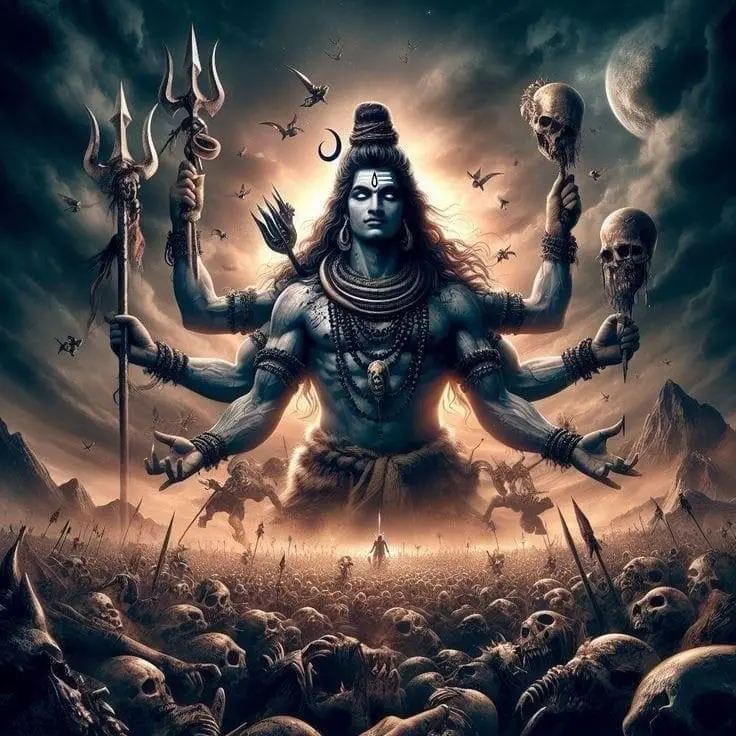
392719870 Insights on Shiva Purana 1 1
Shiva

Ardha Narishvara Stotram

Ardha Narishvara Stotram चाम्पेयगौरार्ध शरीरकायै कर्पूरगौरार्ध शरीरकाय ।धम्मिल्लकायै च जटाधराय नमः शिवयै च नमः शिवाय ॥1॥cāmpeyagaurārdha śarīrakāyai karpūragaurārdha śarīrakāya .dhammillakāyai ca jaṭādharāya namaḥ śivayai ca namaḥ śivāya ..1..I bow to the form where half of the form of Goddess Parvati was with the complexion of the Champaka flowers and the other half of God Shiva is present with a complexion like that of camphor. The form where the half of the head of Parvati is braided beautifully with a chignon, while the other half of God Shiva is with the matted hair. I bow to you, Goddess Parvathi and God Shiva in the form of Ardhanareeswara.कस्तूरिका कुङ्कुमचर्चितायै चितारजःपुञ्जविचर्चिताय ।कृतस्मरायै विकृतस्मराय नमः शिवायै च नमः शिवाय ॥2॥kastūrikā kuṅkumacarcitāyai citārajaḥpuñja vicarcitāya .kṛtasmarāyai vikṛtasmarāya namaḥ śivāyai ca namaḥ śivāya ..2..I bow to the form where the side of Goddess Parvathi is smeared with Kasturi musk and Kumkuma, while the half of God Shiva is smeared with the ashes from the funeral pyre. The form with splendid looks on the side of Parvati and dreadful looks on the side of Shiva. I bow to you, Goddess Parvathi and God Shiva in the form of Ardhanareeswara.झणत्क्वणत्कङ्कणनूपुरायै पादाब्जराजत्फणिनूपुराय ।हेमाङ्गदायै भुजगाङ्गदाय नमः शिवायै च नमः शिवाय ॥3॥jhaṇatkvaṇatkaṅkaṇanūpurāyai pādābjarājatphaṇinūpurāya .hemāṅgadāyai bhujagāṅgadāya namaḥ śivāyai ca namaḥ śivāya ..3..I bow to the form in which the half of Goddess Parvati is adorned with sweet-sounding bangles and anklets, while the lotus feet of God Shiva are adorned with serpents as anklets. The form where Parvati wears gold ornaments and Shiva wears serpents as ornaments. I bow to you, Goddess Parvathi and God Shiva in the form of Ardhanareeswara.विशालनीलोत्पललोचनायै विकासिपङ्केरुहलोचनाय ।समेक्षणायै विषमेक्षणाय नमः शिवायै च नमः शिवाय ॥4॥viśālanīlotpalalocanāyai vikāsipaṅkeruhalocanāya .samekṣaṇāyai viṣamekṣaṇāya namaḥ śivāyai ca namaḥ śivāya ..4..I bow to the form where the eyes of Goddess Parvati are long and beautiful like blue lotuses, and the eyes of God Shiva shine like blossomed red lotuses. The composite form of the two-eyed Goddess and the three-eyed God. I bow to you, Goddess Parvathi and God Shiva in the form of Ardhanareeswara.मन्दारमाला कलितालकायै कपालमालाङ्कितकन्धराय ।दिव्याम्बरायै च दिगम्बराय नमः शिवायै च नमः शिवाय ॥5॥mandāramālā kalitālakāyai kapālamālāṅkitakandharāya .divyāmbarāyai ca digambarāya namaḥ śivāyai ca namaḥ śivāya ..5..I bow to the form in which Goddess Parvati’s hair is adorned with flower garlands and God Shiva’s neck is adorned with a garland of skulls. The divine form where the Goddess is richly clothed and Shiva is unclothed. I bow to you, Goddess Parvathi and God Shiva in the form of Ardhanareeswara.अम्भोधरश्यामलकुन्तलायै तडित्प्रभाताम्रजटाधराय ।निरीश्वरायै निखिलेश्वराय नमः शिवायै च नमः शिवाय ॥6॥ambhodharaśyāmalakuntalāyai taḍitprabhātāmrājaṭādharāya .nirīśvarāyai nikhileśvarāya namaḥ śivāyai ca namaḥ śivāya ..6..I bow to the form where Goddess Parvati’s hair is dark like rain clouds and God Shiva’s matted locks shine like copper. The supreme Lord without any superior, ruler of the entire cosmos. I bow to you, Goddess Parvathi and God Shiva in the form of Ardhanareeswara.प्रपञ्चसृष्ट्युन्मुखलास्यकायै समस्तसंहारकताण्डवाय ।जगज्जनन्यै जगदेकपित्रे नमः शिवायै च नमः शिवाय ॥7॥prapañcasṛṣṭyunmukhalāsyakāyai samastasaṃhārakatāṇḍavāya .jagajjananyai jagadekapitre namaḥ śivāyai ca namaḥ śivāya ..7..I bow to the form through which creation begins with Parvati’s gentle smile and dissolution happens through Shiva’s Tandava. The Mother and Father of the universe. I bow to you, Goddess Parvathi and God Shiva in the form of Ardhanareeswara.प्रदीप्तरत्नोज्ज्वलकुण्डलायै स्फुरन्महापन्नगभूषणाय ।शिवान्वितायै च शिवान्विताय नमः शिवायै च नमः शिवाय ॥8॥pradīptaratnojjvalakuṇḍalāyai sphuranmahāpannagabhūṣaṇāya .śivānvitāyai ca śivānvitāya namaḥ śivāyai ca namaḥ śivāya ..8..I bow to the form where Parvati shines with gem-studded earrings and Shiva shines adorned with great serpents. The one united with Shiva and the one united with Shakti. I bow to you, Goddess Parvathi and God Shiva in the form of Ardhanareeswara.फलश्रुतिःएतत्पठेदष्टकमिष्टदं यो भक्त्या स मान्यो भुवि दीर्घजीवी ।प्राप्नोति सौभाग्यमनन्तकालं भूयात्सदा तस्य समस्तसिद्धिः ॥phalaśrutiḥetatpaṭhedaṣṭakamiṣṭadaṃ yo bhaktyā sa mānyo bhuvi dīrghajīvī .prāpnoti saubhāgyamanantakālaṃ bhūyātsadā tasya samastasiddhiḥ ..One who recites this Ashtakam with devotion will gain honor, long life, lasting prosperity, and all spiritual accomplishments. Description Shri Ardhanareeshwara Stotram was composed by Sri Adi Shankara bhagavatpada. Creator and Creation are One ~ Ardhanarishwara, composite of Shiva and Shakti together in one body. This form reminds us that Shiva is beyond gender, yet encompasses both genders. Shiva represents the unmanifest and Shakti the manifest; Shiva the formless and Shakti the formed; Shiva consciousness and Shakti energy, not only in the cosmos as a whole but in each and every individual. The Ardhanarishwara form also illustrates how the female principle of God, Shakti, is inseparable from the male principle of God, Shiva. Ardhanarishwara in iconography is depicted as half-male and half-female, split down the middle. `Ardhanarishwara` is a combination of three words `Ardha`, `Nari` and `Ishwara` means `half`, `woman` and `lord` respectively, which when combined means the lord whose half is woman. The Ardhanarishwara represents a constructive and generative power. God is beyond the concept of any sex. God can be male, female, and even neuter too. So god existing in this intrinsic condition is referred as Ardhanarishwara. Shiva and Shakti are one and the same supreme power. One should chant Shri Ardhanarishwara Stotram for a happy and prosperous family life. The benefit of chanting the Ardhanareeshwara stotram is as follows:He who reads this stotram containing eight verses with bhakti will obtain all he desires, honor, a long life, and all auspicious things for eternity. One who repeats it again and again will attain all powers and perfection.

Ardha Narishvara Stotram Read Post »

dark lord shiva silhouette hindu festival maha shivratri 1017 49867 1
Shiva

Anayasena Maranam

Anayasena Maranam अनायासेन मरणं विनादैन्येन जीवनं ।देहि मे कृपया शम्भो त्वयि भक्तिं अचन्चलं ॥(or)अनायासेन मरणं विनादैन्येन जीवनं ।देहान्ते तव सान्निध्यम् देही मे परमेश्वरम ॥ anāyāsena maraṇaṃ vinādainyena jīvanaṃ .dehi me kṛpayā śambho tvayi bhaktiṃ acancalaṃ ..(or)anāyāsena maraṇaṃ vinādainyena jīvanaṃ .dehānte tava sānnidhyam dehī me parameśvarama .. O Lord Shiva, please grant me a peaceful death without pain (Anasayena Maranam), a life without any trouble or dependence on others for my basic needs (Vina Dhainyena Jeevanam) and a life filled with uwavering, constant bhakti (tvayi bhaktiṃ acancalaṃ) to you dear Lord.(or)O Lord Shiva, please grant me a peaceful death without pain (Anasayena Maranam), a life without any trouble or dependence on others for my basic needs (Vina Dhainyena Jeevanam) and when my soul leaves this body, I must only remember You dear Lord (Dehante tava Sanityam). Description A life without hardships, an end that is peaceful and a journey that is filled with devotion to you dear Lord. That is what is wished in this prayer, which says – O Lord Shiva, grant me, out of compassion these 3 wishes: 1) A painless, peaceful trouble-free death2) A life without shortage for my basic needs (as long as I am alive, please let me have the dignity to be able to live a life where I do not have to go beg for resources from others. Let there be enough when I truly need it in my life).3) A life filled with total, unwavering devotion towards you and when my soul leaves this body, I must only remember you. The 3rd request is key. When my soul leaves this body, I must only remember you. Because if you don’t remember the Lord at the moment of death, it means you are remembering something else. And whatsoever, whosoever we remember at the moment of death has a direct impact on where we end up in the next birth. Lord Krishna states this clearly in the Bhagavad Gita, Chapter 8: Verse 6:yaṃ yaṃ vāpi smaranbhāvaṃ tyajatyante kalevaramtaṃ tamevaiti kaunteya sadā tadbhāvabhāvitaḥWhosoever, at the end, leaves the body, thinking of any being, to that being only he goes, O son of Kunti, because of his constant thought of that being. For most people, as the body is about to die, there is usually pain, sometimes extreme. There is fear, worry. There is loss of memory, loss of consciousness. Or there is a deep concern for loved ones, property, business etc, etc. We can now see how difficult it is to remember God at that time. Especially at the final moment, at that last breath. Therefore one has to start thinking of the Lord or repeating his Name, as early as possible in life so that it becomes a deep-rooted habit. Now, one might think, I will start thinking of the Lord once I am older and closer to death. It doesn’t work that way. The mind forms deep channels of whatever habitual thoughts repeat themselves. Therefore Iswhara Smaranam – remembering the Lord has to be done continuously. That’s why Hindus name their children after God, so that each time they call them, knowingly or unknowingly they are calling the Lord’s name. As we make it a habit to take frequent breaks during the day to remember His form or remember His name, or remember His attributes, it slowly gets ingrained in us. Even in our sleep when we start to see the Lord in our dreams, that is a good sign. After all, death is nothing but an extended sleep between births. Thus, the only way to remember the Lord at the exact moment of death, is to practice doing it continuously now. Hence we pray for a life filled with devotion. This prayer is a great way to remember the Lord. Another versionAlso referred to as Drona Sthuthi, ascribing it to the prayer of the great Sri Dronacharya to Lord Krishna. Other references ascribe this prayer as Sri Vidhura’s to Lord Krishna. Anayasena maranam |Vina dainyena jivanam ||Dehi me krpaya krsna |Tvayi bhaktimacancalam ||

Anayasena Maranam Read Post »

Siva 600
Shiva

Aksharamalika Shiva Stotram

Aksharamalika Shiva Stotram Aksharamalika Shiva Stotram IntroductionAlso called the Shiva Akshara Mala Stotram, this is a very popular hymn dedicated to Lord Shiva, composed in the aksharamalika style, where each verse or section follows an alphabetical sequence of the Sanskrit alphabet. This structured poetic composition is a way of glorifying the deity while showcasing linguistic artistry. More information on the Aksharamalika Shiva Stotram can be found at the end of this page.अद्भुतविग्रह अमराधीश्वर अगणितगुणगण अमितशिवसाम्बसदाशिव साम्बसदाशिव साम्बसदाशिव साम्बशिव ॥adbhutavigraha amarādhīśvara agaṇitaguṇagaṇa amitaśivasāmbasadāśiva sāmbasadāśiva sāmbasadāśiva sāmbaśiva .. 1I bow to Lord Shiva, whose form is wondrous, the lord of immortals, and the possessor of infinite virtues and immeasurable glory. Oh eternal Shiva united with Parvati, Oh eternal Shiva united with Parvati, Oh eternal Shiva united with Parvati, Oh Shiva united with Parvati. (This refrain is to be repeated below for each verse)आनन्दामृत आश्रितरक्षक आत्मानन्द महेश शिवसाम्बसदाशिव साम्बसदाशिव साम्बसदाशिव साम्बशिव ॥ānandāmr̥ta āśritarakṣaka ātmānanda mahēśa śivasāmbasadāśiva sāmbasadāśiva sāmbasadāśiva sāmbaśiva .. 2I bow to Shiva, the source of eternal bliss and nectar, who protects those who seek refuge in him and embodies supreme joy.इन्दुकलाधर इन्द्रादिप्रिय सुन्दररूप सुरेश शिवसाम्बसदाशिव साम्बसदाशिव साम्बसदाशिव साम्बशिव ॥indukalādhara indrādipriya sundararūpa surēśa śivasāmbasadāśiva sāmbasadāśiva sāmbasadāśiva sāmbaśiva .. 3I bow to Shiva, the bearer of the crescent moon, beloved of Indra and other gods, and the Lord with a divine, beautiful form.ईश सुरेश महेश जनप्रिय केशवसेवितपाद शिवसाम्बसदाशिव साम्बसदाशिव साम्बसदाशिव साम्बशिव ॥īśa surēśa mahēśa janapriya kēśavasēvitapāda śivasāmbasadāśiva sāmbasadāśiva sāmbasadāśiva sāmbaśiva .. 4I bow to Shiva, the supreme ruler, beloved by all, whose feet are served by Keshava (Vishnu) and other gods.उरगादिप्रियभूषण शङ्कर नरकविनाश नटेश शिवसाम्बसदाशिव साम्बसदाशिव साम्बसदाशिव साम्बशिव ॥uragādipriyabhūṣaṇa śaṅkara narakavināśa naṭēśa śivasāmbasadāśiva sāmbasadāśiva sāmbasadāśiva sāmbaśiva .. 5I bow to Shiva, adorned with serpents, the destroyer of sins and ignorance, and the cosmic dancer.ऊर्जितदानवनाश परात्पर आर्जितपापविनाश शिवसाम्बसदाशिव साम्बसदाशिव साम्बसदाशिव साम्बशिव ॥ūrjitadānavanāśa parātpara ārjitapāpavināśa śivasāmbasadāśiva sāmbasadāśiva sāmbasadāśiva sāmbaśiva .. 6I bow to Shiva, the supreme Lord who destroys mighty demons and removes the sins earned through lifetimes.ऋग्वेदश्रुतिमौलिविभूषण रविचन्द्राग्नि त्रिनेत्र शिवसाम्बसदाशिव साम्बसदाशिव साम्बसदाशिव साम्बशिव ॥r̥gvēdaśrutimaulivibhūṣaṇa ravicandrāgni trinētra śivasāmbasadāśiva sāmbasadāśiva sāmbasadāśiva sāmbaśiva .. 7I bow to Shiva, adorned by the Rigveda and other sacred scriptures, with the sun, moon, and fire as his three eyes.ॠपमनादि प्रपञ्चविलक्षण तापनिवारण तत्त्व शिवसाम्बसदाशिव साम्बसदाशिव साम्बसदाशिव साम्बशिव ॥r̥̄pamanādi prapañcavilakṣaṇa tāpanivāraṇa tattva śivasāmbasadāśiva sāmbasadāśiva sāmbasadāśiva sāmbaśiva .. 8I bow to Shiva, the eternal essence, beyond the cosmos, who removes all suffering and embodies the ultimate truth.लिङ्गस्वरूप सर्वबुधप्रिय मङ्गलमूर्ति महेश शिवसाम्बसदाशिव साम्बसदाशिव साम्बसदाशिव साम्बशिव ॥liṅgasvarūpa sarvabudhapriya maṅgalamūrti mahēśa śivasāmbasadāśiva sāmbasadāśiva sāmbasadāśiva sāmbaśiva .. 9I bow to Shiva, the embodiment of the linga form, beloved by the wise, and the auspicious Lord of the universe.लूताधीश्वर रूपप्रियशिव वेदान्तप्रियवेद्य शिवसाम्बसदाशिव साम्बसदाशिव साम्बसदाशिव साम्बशिव ॥lūtādhīśvara rūpapriyaśiva vēdāntapriyavēdya śivasāmbasadāśiva sāmbasadāśiva sāmbasadāśiva sāmbaśiva .. 10I bow to Shiva, the Lord of beauty and truth, beloved of all forms, and comprehended through Vedantic wisdom.…(continues identically through verse 51)…इति श्रीसाम्बसदाशिव मातृकावर्णमालिका स्तोत्रम् ।iti śrīsāmbasadāśiva mātr̥kāvarṇamālikā stōtram ..Thus ends the Sri Sambasadashiva Matruka-Varna-Malika Stotram Description Aksharamalika Shiva Stotram Also called the Shiva Akshara Mala Stotram, this is a very popular hymn dedicated to Lord Shiva, composed in the aksharamalika style, where each verse or section follows an alphabetical sequence of the Sanskrit alphabet. This structured poetic composition is a way of glorifying the deity while showcasing linguistic artistry. It is often recited during Shiva-related festivals like Mahashivaratri or as part of daily worship.

Aksharamalika Shiva Stotram Read Post »