









Hari Om

Menu

Saints and Masters

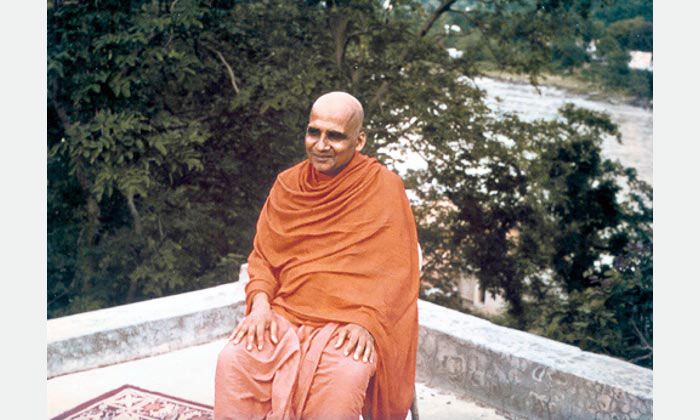
Swami Sivananda seated outdoors near river and trees. image
Saints and Masters, Swami Sivananda

Parsvanatha

Parsvanatha by Swami Sivananda Parsva is regarded as an incarnation of Indra. He was the son of King Visvasena of Kashi, a descendant of the Ikshvaku family, and Queen Bama Devi, daughter of King Mahipala. He was the twenty-third Tirthankara. He was born on the eleventh day of the dark fortnight in the month of Pousha in the year 872 B.C. Parsvanatha began to practise the twelve vows of a householder when he was only eight years old. Prince Parsva was now sixteen years old. He was sitting on the throne. His father Visvasena said, “My son, in order to continue our celebrated royal dynasty, you must marry now. At the desire of Nabhi Raja, Rishabha had to marry”. Parsvanatha was very much frightened when he heard the words of his father. He said, “My life-period will not be so extensive as that of Rishabha. I am to live only a few score years. I have already wasted sixteen years in boyish sports. I must enter the order in my thirtieth year. Should I then have a married life for so short a period in the hope of getting pleasures which are, after all, only imperfect, transient and illusory?” Parsvanatha’s heart was filled with a spirit of renunciation. He reflected within himself: “For long, long years I enjoyed the status of Indra and yet the lust for pleasures did not decrease. Enjoyment of pleasures only increases the lust for pleasures, just as the addition of fuel only increases the virulence of fire. Pleasures at the time of enjoyment are pleasant, but their consequences are surely disastrous. “The soul experiences from beginningless time the sufferings of birth, old age, etc., on account of its attachment to the objects of this world. To satisfy the cravings of his senses, man wanders in the realm of pain. So that he may have sensual gratification, he does not heed the moral injunctions and he commits the worst vices. He kills living animals to enjoy the pleasures of the senses. Lust is at the root of theft, greed, adultery and all vices and crimes. “As a consequence of sinful acts, the soul is forced to migrate from birth to birth in the kingdom of the lower animals etc., and to suffer the torments of hell. This lust for pleasures must be shunned ruthlessly. So long I have wasted my life. I am not going to spend any more time in the vain pursuit of pleasures. I shall be serious and practise right conduct.” Prince Parsva had the twelve Anuprekshas or meditations. He resolved to abandon the world. He took leave of his parents and then left his house. He retired into the forest. He became absolutely naked. He turned towards the north and bowed to the great Emancipated Siddhas. He plucked five tufts of hair from his head and became a monk. Parsva practised fasting. He observed with scrupulous care the twenty-eight primary and the ninety-four secondary rules of the order of monks. He was found lost in meditation. He attained the pure omniscience. He attained the final liberation in the Sammeda Hill which is known today as the Parsvanatha Hill. Parsvanatha preached in Kashi, Kosi, Kosala, Panchala, Maharashtra, Magadha, Avanti, Malava, Anga and Vanga. Many joined the Jain faith. Parsvanatha spent seventy years in preaching. Mahavira modified and enlarged what had already been taught by Parsvanatha. He did not preach anything which was absolutely new. Parsvanatha lived for one hundred years. He abandoned his home when he was thirty years old. He left home in 842 B.C. and attained Nirvana in 772 B.C. Glory to Parsvanatha, the twenty-third Tirthankara!
Parsvanatha Read Post »

swami sivananda Monk studying and writing with books image
Saints and Masters, Swami Sivananda

Moses

Moses by Swami Sivananda The rapidly increasing population in Egypt caused much concern amongst the Egyptians, so the pharaoh ordered that all male children born to Hebrew women be slain at birth. A Levite woman, fearing for the life of her newborn son, hid him for three months, and when no longer able to do so, made a cradle out of bullrushes, wherein she laid her baby. She then placed the cradle by the banks of the river. While bathing, the pharaoh’s daughter found the baby and feeling compassion, she decided to adopt him and called him Moses. Moses grew up in the pharaoh’ s household, but his loyalty to his own people was unshakable. One day, while out watching the Hebrews labouring for their Egyptian masters, he saw an Egyptian cruelly beating one of the Hebrews. Moses killed the Egyptian and buried his body in the sand, but the pharaoh heard of this and so Moses was forced to flee. He went to the land of Midian where he lived as a humble shepherd and married Zipporah, one of the priest’s daughters. It was in this land, at the foot of a rugged, forbidding mountain, that the Lord spoke to Moses from a flame of fire out of the midst of a bush. Moses was commanded to lead the children of Israel out of their bondage in Egypt. He therefore, returned to Egypt where, joined by his brother, Aaron, they pleaded with the pharaoh to let their people go. But the pharaoh refused, and so God, to prove their divine purpose, manifested himself in many miraculous ways, and pharaoh finally relented. They had not been gone very long, when pharaoh changed his mind and decided to pursue them, but God told Moses to stretch out his hand, which he did, and the waters of the Red Sea parted allowing the Israelites to cross over, after which, Moses caused the waters to return thus drowning the pursuing Egyptian armies. Three months after their escape, they arrived at mount Sinai, and it was here, on the slopes of the mountain where Moses went to meditate, that God gave to him the ten commandments which were inscribed on two tablets of stone, and which tenets of the faith have been followed ever since by the children of Israel. According to the Lord’s instructions, Moses and the people built an Ark of the Covenant made of acacia wood and overlaid with gold, containing the two tablets of stone. They carried this Ark with them on their journey. Moses and the children of Israel wandered for forty years in the wilderness before settling in the Promised Land. Moses, now old in years, but not in spirit and ability, was not to enter this land himself. After giving his people final instructions which make up the major part of the book of Deuteronomy found in the Old Testament of the Bible, Moses gave them his final blessing, made his way to the summit of a mountain about ten miles east of the mouth of the Jordan, and with his eyes gazing at the panoramic view of the land of Israel, this great prophet and servant of God, died. Moses is known in the history of Israel as the law-giver and as an ideal and faithful leader.�

Moses Read Post »

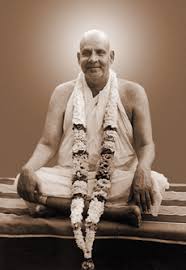
swami sivananda Sepia photo of garlanded monk seated cross-legged with calm smile image
Saints and Masters, Swami Sivananda

Zoroaster

Zoroaster by Swami Sivananda There is no certainty at all about the age in which Zoroaster lived. Some say that Zoroaster lived about 6000 B.C. Others maintain that he flourished in the middle of the seventh century B.C. Zoroaster was the greatest prophet among the ancient Iranians. He took his birth in order to establish the worship of Ahura Mazda, the Supreme Lord of the Universe and to fulfil the Divine Mission. His own original writings, the precious Gathas in the Avestan language, indicate that he was a God-intoxicated person. Zoroaster’s father was the venerable Porushaspo and his mother Dughdhvo. Zoroaster was born in the west of Iran in Takht-e-Suleman in the district of Azerbaijan. He was a direct descendant in the royal line of the house of Manushcihar, the ancient King of Iran. The Prophet of Iran is known to his followers as Zarathustra. (Possessor of yellow or old camels. Ustra’ means camels.) When the Prophet of Iran was born, nature rejoiced. The trees, rivers and flowers expressed their joy and delight. The demons were frightened. As soon as the child was born, he did not cry like an ordinary mortal. He made a loud laughter. Many angels and archangels came to adore him. Zoroaster’s family name was Spitama’, which means White’. Zoroaster had two elder brothers and two younger brothers. The birth of Zoroaster was miraculous. The glory of Ahura Mazda descended from heaven and entered the house of the future mother of the prophet. When she was pregnant, archangels came to her and worshipped and praised the unborn child. Zoroaster married three times and had many children. His first wife had one son and three daughters. The youngest daughter Pourucista married Jamaspa, who was the uncle of Zoroaster’s third wife. Zoroaster had two sons by his second wife. We know very little of the early life of Zoroaster. Even when he was a boy, he showed great wisdom. He argued with wise men and censured the heretics. Demons and evil spirits tried to kill him. The Turanian King Durasrobo also tried to kill the child, but the life of the prophet was miraculously saved by the all-merciful Lord. Zoroaster developed dispassion when he attained the age of sixteen. The objects of the world lost all attraction for him. He despised all mundane pleasures. He rose above all sensual cravings. He showed intense love and compassion for all living beings Zoroaster left his home at the age of twenty and wandered from place to place. He led a life of purity and righteousness. He roamed about in forests. He lived alone in caves and mountain-tops. He controlled his tongue and subjugated his other senses also. He was very abstemious in his diet. He spent his time in calm meditation. Zoroaster experienced Samadhi or communion with Ahura Mazda, the Supreme Lord of the Universe, on the top of Mount Sabatam. He had prophetic divine visions. He conversed directly with Ahura Mazda and received the wisdom of the Lord. He received seven revelations from Ahura Mazda. At the age of thirty, he came out as the Prophet of God. After receiving the divine light of revelation, he became the renowned messenger of Ahura Mazda. Several archangels helped Zoroaster in the spiritual path. Archangels are divine messengers of the highest order. They are the attendants of Ahura Mazda. They correspond to the Siva-Ganas-the attendants of Lord Siva;-and to Jaya, Vijaya, Nanda, Sunanda, etc.-the attendants of Lord Vishnu. They are the guardian-deities or the Lokapalas of the world. Zoroaster had direct conversation with these archangels. Vohumanah is the archangel of good thought. He is also the presiding Lord of domestic animals. He appeared before Zoroaster and helped him to cast off the physical sheath and directed his soul to the supreme abode of Ahura Mazda. Ahura Mazda Himself gave instructions to the Prophet and imparted divine wisdom to him. Zoroaster obeyed the commands of Ahura Mazda. When Zoroaster was coming down from the celestial abode of Ahura Mazda, he was terribly attacked by the evil force Ahriman, the Satan of Zoroastrianism. Ahriman wanted to kill Zoroaster, but Zoroaster’s spiritual powers saved him. The Prophet became the master of all demons after conquering Ahriman. He began to preach again. Zoroaster experienced a second vision. The same archangel asked the prophet to take great care of the animals and to protect them. Then Zoroaster conversed in his third vision with Asha Vahishta, the archangel of righteousness who is the presiding Lord of sacred fires. The archangel commanded Zoroaster to protect the sacred fire and all fires. Zoroaster conversed with Khehathra Vairya, the archangel of good royalty who is the presiding Lord of metals. The archangel commanded the Prophet to take care of the metals. Then Zoroaster conversed with Spenta Armaith, the archangel of modesty, who is the presiding Lord of earth. Then he conversed with Hauravatat, the archangel of health who is the presiding Lord of the waters. Lastly, he conversed with Ameretat, the archangel of immortality who presides over plants. Zoroaster had a perfect knowledge of the celestial hierarchy of gods through these visions. Zend Avesta, which is the Bible and the Gita of the Parsis, contains the wisdom which the Prophet received from Ahura Mazda, the Supreme Lord. The divine experiences of Zoroaster are similar to the experiences of Satyakama Jabala of the Chhandogya Upanishad. The Wind-God, the God of Fire, the Sun-God, and Varuna or the presiding Deity of the Waters imparted divine wisdom to Satyakama. Archangel Vahishta is the Fire-God or Agni of the Hindus. Archangel Hauravatat is Varuna of the Hindus. Zoroaster disliked the Kavis and the Karpans, who were the chiefs of the demon-worshippers. The Karpans were devoted to rites and ceremonies. They were addicted to the use of Homa, the intoxicating drink, in their religious ceremonies. The Prophet tried to convert all the demon-worshippers, the evil men and women and their chiefs, viz., the Kavis and the Karpans. The Kavis and the Karpans were the priests.

Zoroaster Read Post »

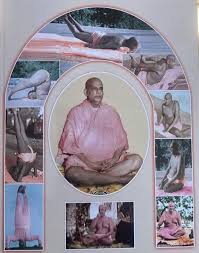
Swami Sivananda yoga master performing asanas and meditation in different scenes
Saints and Masters, Swami Sivananda

Prophets

Prophets Hinduism, Zoroastrianism, Judaism, Buddhism, Christianity and Islam are the six great religions of the world. There is no founder for Hinduism. All the other religions have their founders. They are named after the name of the founder (except Islam). Jainism is only another form of Buddhism. Sikhism is based chiefly on Hinduism and partly on Islam. Brahmoism is born of Hinduism and Christianity and so on with other minor religions. Whenever any important truth of religion was suppressed by the arrogance and selfishness of the priestly class or forgotten through the ignorance of the people, there appeared a great Saint or Prophet or Religious Teacher. He emphasized that truth, removed the dross which had concealed or obscured it and made it shine in its original brilliance, purity, splendour and glory. In this way every new religion was only an endeavour to reform the older religion as it then existed and a protest against its abuses. When in olden times people forgot all about the Vedic monotheism (Hinduism), there arose Zoroaster. He preached the worship of one God, Ahura Mazda, and condemned the worship of Devas (gods). When the religion of the Vedas (Hinduism) degenerated into a blind observance of rites and sacrifices of animals, when the Sudras (servants) were treated with contempt by the Brahmins (priests), there appeared the compassionate Buddha, who stopped killing of animals and raised the status of Sudras. When the priests of Judaism became arrogant, there arose Jesus to purify Judaism. When Christianity had also degenerated into idolatry and superstition, there appeared Mohammed to preach his monotheism. Thus all great religious teachers were original reformers. They tried to improve the existing religions and to do good in their own way to suit the time and condition in which they were born. Here is a compilation of what Gurudev Swami Sivanandaji Maharaj wrote about the great prophets who were born in various parts of the world.

Prophets Read Post »

Swami Sivananda meditating in lotus pose under tree
Saints and Masters, Swami Sivananda

Jaya Deva

Jaya Deva by Swami Sivananda “The sky is clouded and the wood resembles The sky, thick-arched with black Tamala boughs; O Radha! Radha! take this soul that trembles In life’s deep midnight, to Thy golden house! So Narada spoke—and led by Radha’s Spirit, The feet of Krishna found the road aright; Wherefore, in bliss which all high hearts inherit, Together taste they, Love’s Divine delight!” These are the opening lines of a translation by Edwin Arnold of a piece of poetic composition in Sankskrit called Gita Govinda, the theme of which is the Divine Love between Radha and Krishna. The author is Jaya Deva, a great reputed Bhakta who lived about five hundred years ago, in a village called Bilvagam, near the sacred city of Jagannath-Puri in the state of Orissa. Gita Govinda is the most celebrated poetical work of Sri Jaya Deva. His birth Jaya Deva’s father was Narayana Sastri, a very pious Brahmin. Jaya Deva’s mother’s name was Kamalabai. She was pious and devoted. Sastriar and his wife had no child for a long number of years. Sastriar had no desire for children. But Kamalabai nurtured a sacred desire for a son. She did not reveal this to her husband. She constantly prayed to the Lord that she might be blessed with a beautiful and virtuous male child. She was ashamed to be regarded by the world as a barren woman. One night Narayana Sastri dreamt that the Lord appeared and told him that his wife’s prayer would be fulfilled and that he would soon have an illustrious son. Sastriar woke up and reported to his wife his happy dream. He asked her if she made any prayer to God for the boon of a child. She admitted that she did pray. Narayana Sastri felt extremely grieved that all their Tapas and devotion became useless on account of their selfish motive. He became angry with his wife and said, “Foolish woman, you ought not to have prayed for a son. You ought to have prayed for the eternal bliss of Atma. You have ruined yourself and me also.” He did not speak to his wife from that moment. She appealed to her husband for pardon, but to no purpose. They both even fasted for a day or two. A holy pious Brahmin entered their house and enquired into the cause of their grief and reconciled them both. He said that it was the will of the Lord that they should be blessed with a virtuous son and that the child would become a great reputed saint. Narayana Sastri thought that the Lord Himself had appeared in human form. A few months thereafter, a male child was born to Kamalabai. That was Jaya Deva. Jaya Deva was highly devoted to God even in his boyhood. His Upanayana ceremony was performed when he was five years old. He studied all the sacred scriptures. He had an orthodox type of education. Narayana Sastri entered the forest along with his wife to lead the life of a Vanaprasthi. His marriage There was one Brahmin in Jagannath-Puri by name Deva Sharma. He was a great Bhakta of Lord Jagannath; but, for many years, he had no child. One day he prayed to the Lord, “O Lord! If I beget children through Thy grace, I shall surely dedicate the first among them to Thee. This is my sincere heartfelt prayer. O dear Lord! Kindly grant this, my wish.” So praying, he returned to his house. Then, in due course of time, a daughter was born to the devout Brahmin Deva Sharma, and afterwards, many good and brilliant sons. Taking the daughter with him, one day he came to Lprd Jagannath with his wife by his side and said, “O Lord! By Thy grace, my desire has been fulfilled. According to my promise, I dedicate this first child to Thee. Kindly accept her.” Then he narrated all the previous story to the Pujakas or worshippers and went back to his house. That night the Lord appeared in Deva Sharma’s dream and told him, “O Deva Sharma! I am highly pleased with you. I have accepted your child. But, give your daughter to Sri Jaya Deva, because he is my dear devotee.” The same dream the worshippers also had. Jaya Deva was then living outside the village boundary in a leafy Kutia. He was meditating upon Lord Jagannath and his face showed clearly that he was extremely happy in spite of his material poverty. Sharma came there, and prostrating to Jaya Deva said, “By the command of Lord Jagannath I have brought my daughter Padmavati to you. Kindly accept her.” Jaya Deva declined the offer, saying that he was very poor and that he was not a fit person to accept Kanya Dana. Despite all efforts, Jaya Deva did not accept the girl. Deva Sharma brought the worshippers of the temple to verify his statement. Then, making the girl stand nearby, Deva Sharma said, “my dear daughter! From today he is your husband. You have to worship him daily. A woman merged in the service of her husband attains undying happiness.” Thus saying, he returned to his house. The girl stood for a long time near Jaya Deva. Jaya Deva said to the girl, “Your parents have gone away leaving you here. How are you going to live in this dreadful forest?” Padmavati replied, “O my lord! What are you saying? My father has given me to you. I belong to you now. I am not alone here, because you are always with me.” Hearing these words of Padmavati, Jaya Deva thought, “She is speaking the truth. Surely it will be a sin to abandon her. Hence I shall have to go to her parents’ house and marry her according to the ritualistic ceremonies.” Thus resolving, Jaya Deva asked Padmavati to follow him to her parents’ house for marriage according to Brahminical rites. Padmavati said, “My father has ordered me to obey your commands implicitly.

Jaya Deva Read Post »

Swami Sivananda spiritual guru meditating in peaceful yogic lotus posture
Saints and Masters, Swami Sivananda

Tukaram

Tukaram by Swami Sivananda Tukaram was born in 1608 A.D. at a village called Dehu in Poona district. It is about seven miles from Alandi- the place honoured by the Samadhi of Jnaneshwar- and about three miles from the railway station at Shelarwadi on the railway line running from Bombay to Pune. Tukaram came of a well-to-do Sudra family belonging to the tradesman class called Moray. The family had established itself at Dehu for a long time. They had accepted Vithoba of Pandharpur for worship and they had also constructed a temple of their own dedicated to Vithoba. The family members, since many generations, had also accepted the ‘Wari’ of Pandharpur, i.e., the annual pilgrimages to Pandharpur on the eleventh day of the month of Ashadh (June-July) and again on the eleventh day of the month of Kartik (October-November). The childhood of Tukaram was almost uneventful. Tukaram was the second of three brothers, the names of the other two being Savji and Kanhoba. Savji had no worldly ambitions and the father was religiously inclined and thus the family burden fell on Tukaram when he was just thirteen years old. Tukaram was married to Rukmabai at about the same time, but as she was of weak health, he was soon married again to Jijabai of Pune. Tukaram began the management of household affairs and carried it on to the satisfaction of everybody, till he was about twenty years of age. In 1625, when he was about seventeen years, he lost his parents, and as his sister-in-law also died about this time, his elder brother left the village and went to Varanasi seeking spiritual salvation. The death of his parents was a great shock to Tukaram. And the next four years, from 1626 to 1630, were almost cyclonic in their effect. After the death his parents and his sister-in-law, and the going away of his elder brother Savji, all enthusiasm for worldly life left Tukaram. Taking advantage of his state of mind, the debtors would not repay whatever due to him and the creditors began to press him for the money due to them. Tukaram tried his hand in several ventures of trade and always came back either with empty hands or with a loss. Once, on the way home, he was robbed of everything by confidence-tricksters who gave him gilt brass ornaments in exchange for all the money he had with him. On another occasion, returning home, he came across a poor Brahmin who was starving; he made the Brahmin very happy by giving him everything- the profit as well as the principal which his wife had borrowed. After those bitter experiences, Tukaram was not entrusted with anything valuable when he went far from home. Jijabai helped him again to set up a small shop in his own village, but she counted without Tukaram’s state of mind. Tukaram used to sit in the shop doing Bhajan and being very kind and honest to his customers. Soon therefore, he became bankrupt, with two wives, a son and a younger brother to feed. Just at this juncture, about the years 1629 and 1630, the country was visited by a very severe famine for two consecutive years. Tukaram’s first wife died of hunger crying for food. Tukaram’s son also died. The few cattle that were left also died. The promissory notes of monies due the family became dead letters of credit as nothing could be realised in a famine. Tukaram’s real mission in life began at this stage. As a consequence of the many misfortunes, Tukaram was so much disgusted with life that he left his house and village and disappeared into the Bhamnath forest nearby. For fifteen days he stayed there concentrating on the Almighty without food, water or sleep. After the fifteenth day, he realised his Supreme Self and Vithoba visited him in His true form. In the meantime, Tukaram’s second wife was searching everywhere for her husband and when she found him at the hill, she brought him back to the house; but it was Tukaram different from the one who had left her a fortnight earlier. Now Tukaram had no love for his household, wife or relations. Immediately after he came back, he gathered all the promissory notes which were in the house, and all the account books, and threw them into the Indrayani river, in spite of the protests of his relatives. Then, with his own hands, he reconstructed the temple which had fallen into disrepair and began to spend his life- day and night- in Bhajan and Kirtan. His mind at that time was described by him thus: “O God! Kindly grant that I should never forget You. My body is made up of the five elements which I have to return with interest at the end. My conclusion is that there is no well-wisher for me other than You, O Pandhuranga!” As a result of his whole-hearted devotion, Bhajan and Kirtan, Tukaram was rewarded with Guru Upadesh. The Guru visited him in a dream. Tukaram describes this, the greatest event of his life, thus: “The Sadguru came to me in a dream and was really very kind to me, though I had done nothing to deserve it. He met me when I was going to the river for a bath and placed his hand on my head and blessed me. He said that his name was Babaji and gave the names of his two predecessors as Raghava Chaitanya and Keshava Chaitanya and advised me to do Japa of Ramakrishna Hari. I adopted my Guru on the tenth day of the bright half of the month Magh.” This was about the month of January 1632 when he was twenty-four years of age. Tukaram’s joy. at this event knew no bounds. Tukaram now began to spend his life more and more in devotional practices, study of the poems and works of Jnanadev, Namdev and Ekanath, Gita, Bhagavata, etc., with the result that slowly, but unconsciously, he began to

Tukaram Read Post »

Swami Sivananda teaching disciples by river image
Saints and Masters, Swami Sivananda

Saint Francis

Saint Francis by Swami Sivananda Saint Francis is called the little poor man of Assisi. He was born in the year 1182 in the town of Assisi in Italy. His father’s name was Bernadone. Bernadone was a very wealthy merchant of Assisi. Francis was a very good-looking boy. He was merry and soft-hearted. So he had many friends. All the noble men’s sons were his companions. Francis was brought up in luxury and gaiety. He spent a considerable portion of his wealth in extravagant pleasures. He used to drink with the young princes of the land. One day Francis was joking and laughing with his friends. A beggar came along crying for alms. Francis, who was soft-hearted, gave whatever he had in his pocket to the beggar. His companions mocked at him for his charitable act. Dispassion dawned in his heart. The sight of the beggar set him thinking about the poverty and misery of mundane life. He gave much money to the poor. His father thought that Francis was wasting his money and rebuked him. Sometime after this, Francis was laid up in bed for many months on account of some serious disease. He was about to die. But the Lord saved him as he had to carry out a definite mission in his life. The nature of Francis was entirely changed. Francis prayed to the Lord for light and guidance as to his future. He had a vision of Lord Jesus. He made a strong determination to renounce his old way of living to tread a life of purity and to dedicate his life to the service of humanity. As soon as Francis got well, he informed his parents of his determination. They were disappointed. They became angry with Francis. Francis gave up his old ways and habits and set up to serve God. He distributed clothes, goods and money to the poor. His father was very much annoyed towards his son. He said, “Is this the gratitude you show to me ? I laboured hard and amassed wealth. You are lavishly wasting it on these miserable wretches”. Francis’ friends mocked at him and teased him. His father turned him out of the house. Francis lived like a beggar. His old friends even pelted him with stones and mud. He bore everything with patience. He wore a coarse dress and ate simple food. Francis lived in a cave in the mountains of Assisi and spent his time in prayer and meditation for two years. Some kind people gave him food, but very often he had to starve. Francis called the body ‘brother ass’. He kept this brother ass under perfect discipline and control. Sometimes he kept this brother ass without food and water and denied it some special food that it liked very much. Francis was humble. He loved God’s creatures. He loved birds and beasts. He loved the depressed and the outcastes. He treated the birds, the beasts and all beings as brothers and sisters. Francis went from village to village preaching the love of God. He invited people to join him in his life of service if they were willing. Bernard, a rich man of Assisi, was very much attracted by the saintliness of Francis. He joined Francis. He was the first follower of Francis. He placed all his wealth at the altar of God. Eleven others also joined Francis. They distributed all their wealth to the poor. Francis and his followers went all over Italy preaching, teaching, healing and blessing wherever they went. The gospel of kindness and love of Francis soon spread all over Europe and earned for him the name of St. Francis. People called him the little poor man of Assisi. He lived for ever in the hearts of all men. St. Francis collected many followers and founded the Order of Mendicant Friars or Franciscans. The members of this Order have to take a vow of poverty, chastity, love and obedience. St. Francis gave up his mortal coil in 1228. The followers of St. Francis built a beautiful church round him on the hill of Assisi, the hill he so dearly loved. The influence of St. Francis and the sweet aroma of the life he lived will last for ever. Glory to St. Francis, the little poor man of Assisi, but an illustrious saint ! The Prayer of Saint Francis “O Lord, make me an instrument of Thy Peace!Where there is hatred, let me sow love;Where there is injury, pardon;Where there is discord, harmony;Where there is doubt, faith;Where there is despair, hope;Where there is darkness, light, andWhere there is sorrow, joy.Oh Divine Master, grant that I may notso much seek to be consoled as to console;to be understood as to understand; to be lovedas to love; for it is in giving that we receive;It is in pardoning that we are pardoned;and it is in dying that we are born to Eternal Life.” “The simple prayer of St. Francis of Assisi provides for us a mold in which to cast our own life’s conduct and character. It provides a blueprint upon which to pattern our living in our thoughts, speech and actions within our day to day relationships with our fellow beings and with all life around us. Therefore, the prayer of St. Francis is a precious document for us, an indispensable, invaluable frame of reference by which to judge our own lives, and referring to which we can do the necessary to bring about the needed alterations and modifications for the upliftment and purification of our own daily life.”

Saint Francis Read Post »

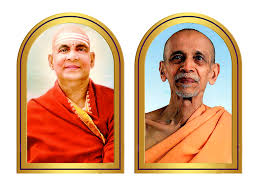
Swami Sivananda Paired spiritual leaders framed photo
Saints and Masters, Swami Sivananda

Yogi Milarepa

Yogi Milarepa by Swami Sivananda Tibet’s Great Yogi: It was in the first autumn month, on the twenty-fifth day of A.D. 1052 under the influence of an auspicious star that Milarepa was born. His father gave him the name Thopaga (which means “delightful to hear”). He had one sister by name Peta. Milarepa’s father was Mila-Sherab-Gyaltsen. Milarepa was born in a rich family. His hair was plaited with gold and turquoises when he was young. When Milarepa reached the age of seven, his father died. His uncle was in charge of the estate of Milarepa. He deceived Milarepa and his mother and ill-treated them. Milarepa was a black-magician in the beginning. He destroyed his enemies by launching a hailstorm just to please his mother. Then he repented very much and turned to the “white path” or the path of virtue. Marapa was the Guru of Milarepa. Milarepa was also known by the name of Jetsun. Marapa tested Jetsun very much in various ways. With great difficulty Milarepa got the highest initiation from his Guru, and became his pet disciple. He practised severe austerities and meditation in solitary caves. Demema, the wife of Marapa, treated Milarepa with kindness and tender affection, because Milarepa was energetic, sincere, hardworking and intelligent. He was shut up in a cave. Food was passed inside by the servant of Marapa through a small aperture in the side. Milarepa used to sit in a rigid posture with a lighted-lamp on his head, without moving till the light was out, were it night or day. Milarepa meditated in various caves. His body was reduced to a skeleton owing to severe austerities. He lived on nettles only for several months. He followed the instructions of his Guru to the very letter. He developed various Siddhis. Just as Lord Krishna multiplied himself and appeared in the house of all the Gopis, so also Milarepa had the power to take as many forms as he liked. He played with his disciples by multiplying himself. Milarepa once transferred his pain to the door of his meditation room. The door began to emit sounds of cracking and splitting. It throbbed and vibrated and was on the point of crumbling down. Milarepa attained the state of Buddha-hood. The caves where he practised devotion and meditation are even now places of pilgrimage and worship. He had a large number of followers. Even now there are people in Tibet who belong to his school. He died in A.D. 1135 at the age of eighty-four. Those who desire to have a detailed study of his life can get a copy of the book “Tibet’s Great Yogi�Milarepa” (by W.Y. Evans Wentz, Jesus College Oxford) from the Oxford University Press, London.

Yogi Milarepa Read Post »

swami sivananda Thought Power book cover with monk image
Saints and Masters, Swami Sivananda

Baba Neem Karoli

Baba Neem Karoli by Swami Chidananda INVOCATION Om Sri Hanumate Namah. Homage unto the Divine! Worshipful salutations unto the Supreme Almighty Being, the Wonder of wonders, the Beauty of beauties, the Light of lights, the Power of powers, the Eternal Truth of all truths. May His Divine Grace shower upon all and lead all beings unto joy, peace and illumination. May His love, compassion and blessings manifest upon us through His spiritual representatives, namely, the Saints and Holy Men. Salutations to the holy memory of worshipful and beloved Sri Baba Neem Karolithe wonder mystic of Northern India. He is one of the most unique phenomena among the religious fraternity of Saints, Sages and holy Fakirs of Northern India. It would not be a wonder to me, if, as I am sitting and dictating this article on a mildly warm summery afternoon at Jaipur, in Rajasthan, at this moment Babaji is perfectly aware of this fact and knows exactly where I am staying, what words I am dictating, to whom I am dictating them and precisely at what time I am doing this; and this in spite of the fact that revered Baba Neem Karoli is physically no more amongst us and has left his body very recently, just about a couple of years back. Though this statement may seem rather extraordinary and would surprise many of the readers, yet, it is nevertheless true that many of Babajis close disciples and devotees had personal experience of the fact that revered Babaji seemed to be aware of whatever they had been saying and doing in distant places, far away from him, and Babaji was actually in some other place at that moment. This has convinced most of his closest followers that Sri Baba Neem Karoli was a Siddha Purusha (perfected being) and knower of the past, present as also of the futureTrikala Jnani. The last time I had the good fortune of meeting revered Baba Neem Karoliji was in the month of October 1973. This was when I visited him at his secluded Ashram at Kainchi near Nainital, U.P., in the Kumaon Hills. I was driving from Almora to Nainital during a tour. It was late evening and, when we arrived at Kainchi, it was dark. The season was autumn and it was beginning to get chill as it was near night-fall. One of our party went ahead to ascertain and find out whether Babaji was in the Ashram. Babaji was present and sent word that he would receive us. Myself with my companions went down from the road with the help of flash lights and, crossing the little bridge that spans the mountain stream, we entered the Ashram. The entire place was totally deserted and absolute silence prevailed. The Temple Pujari (priest) received us in the courtyard and conducted us into a little room. The revered Baba Neem Karoli was seated on a cot and was wrapped in a simple blanket. He received me and my party with a very kind and benign look and motioned us to take our seats on the carpet spread near the cot. I knelt down beside the cot and offered my homage, laying my head upon his lap where he had tucked up his foot, being seated cross-legged. Babaji softly said “All right, all right, very good” and signed to me to be seated. One of our tour party, Sri Yogesh Bahuguna, a very idealistic young man and a sincere spiritual seeker, had brought with him 7 or 8 oranges in a little towel. There was an empty basket by the side of Babaji and Sri Yogesh Bahuguna placed these oranges in the basket as an offering. We then sang some Sankirtan and sat in silence for a couple of minutes. Before taking leave after enquiring about Babajis health and answering a few queries by him, Babaji started to distribute the fruit as Prasad to us. By this time some other workers and devotees of the Ashram had gathered near the door. Sri Yogeshji was taken aback and was overcome by surprise when he observed that Babaji continued taking oranges from the basket even after he had already given away 8 oranges and went on distributing this Prasad to all the members of our party plus the assembled Ashram Staff and ultimately he had given 18 fruits in all. From where the additional 10 oranges came into the basket is something we could not explain. Perhaps only Babaji knows this. I first came to hear about revered Baba Neem Karoli in some detail in the early fifties about 23 years ago. It took place this way. Worshipful Gurudev Swami Sivanandajis Ashram is situated in Tehri-Garhwal district. At that time the District Magistrate was Sri R.K. Trivedi, an able and outstanding officer. He later on became one of the very first Directors of the National Academy of Administration in Mussoorie. Sri R.K. Trivedis old father used to stay with him at Narendranagar, which is the district headquarters of Tehri-Garhwal. The father was an old man, a very pious and spiritual Sadhaka who had developed a good inner life. He expressed a desire to visit Sivananda Ashram to meet Gurudev. Sri R.K. Trivedi, D.M., had great respect for Sri Gurudev and he gladly brought his old father down from Narendranagar and they met H.H. Sri Swami Sivanandaji Maharaj in his little cottage on the bank of the Ganga. Being General Secretary at that time, I had to conduct the two visitors into revered Gurudevs presence. He asked me to stay on while they were with him and it was then that Mr. Trivedis father told us that his Guru was Sri Baba Neem Karoliji of Nainital. When requested to tell us something about his Guru, the senior Trivedi narrated many things about Babaji and his experience about him as his disciple. He said, “Swamiji, right at this moment Babaji knows where I am, what I am doing and what exactly I am saying to you. When

Baba Neem Karoli Read Post »

Swami Sivananda Monk praying beside large portrait image
Saints and Masters, Swami Sivananda

Sri Sri Ananda Mayee Ma

Sri Sri Ananda Mayee Ma by Swami Chidananda Beloved Immortal Atman, Beloved seekers and aspirants! Yesterday we were referring to saints and sages as being of two types. Some who were born like other human individuals, but who, by their prayer and persistence in spiritual life, went beyond to God-realization. The second category were never born, ever free souls with some mission on earth; eternally free, perfect beings. In the case of the latter category, many are born with their advent announced before their birth and with their birth attended by many supernatural, supranormal signs. Sometimes they gave indications of their special divine origin, through certain events or actions, even in their young age. There was no question on any spiritual struggle in them. Sometimes, if they seemed to do sadhana, it was more as an example to guide others, rather than for any necessity of theirs. Among this unique class of never bound, ever free beings, we have our worshipful Sri Sri Ananda Mayee Ma. Sri Sri Ma was born in a Bengali family in a rural part of East Bengal, which is now a separate state under the name of Bangladesh. It was part of India and Bengal at that time. Her father and mother were both pious God-fearing people. The special uniqueness of this child when she was born was something we could learn only much later from the lips of Ma herself. Otherwise, there was no means of knowing what the state of consciousness of this child was when it was in infancy. But it is now definite and certain that even from the time of being born, the consciousness of the child was one of awareness of its spiritual identity. The little infant in the cradle gazed around and saw its surroundings and people moving about, but it was aware that it did not belong to that outer environment and was fully aware of itself as an ever free, ever-perfect soul. At all times the child was fully aware that it was pure, untrammeled spirit, without limitation of body, mind or identity. It knew itself to be Satchidananda Atman. From that state it watched like a witness the parents and relatives at home as if in a play or dramatic performance. So the child grew up in a state of awareness of her true self. That awareness afterwards never left Ma until the very last day of her life. This then is the secret behind Ma�s personality. As was the case in those days, the child was brought up with great love and affection by her parents, relatives and neighbors. She received the rudiments of ordinary, normal education, but was more interested in serving her parents at home than anything else. As in the case of Lord Krishna, this little girl had a powerful attraction to all people. She was of an extremely sweet and kind nature, filled with the spirit of service. She liked to help her mother in the household duties. One extraordinary trait in her, was that when she heard the chanting of God�s Name, she gravitated to that place. She could not resist it. Otherwise, she was normal and ordinary in every respect. This young girl, Nirmala, which means “pure”, grew up into a very virtuous and sweet tempered, good-natured young maid. As was the Indian custom, when she became of marriageable age, the family arranged a marriage with a good boy from a reputable family and they were married. The young man, Bholnath, was also of a pure and simple nature. Now the couple entered into the second stage of life, according to the Hindu life pattern. However, in a short time, through a couple of incidents, Bholnath became aware that his bride was no ordinary human individual. He felt that he had some celestial or divine being as his partner. From that day onwards all thought of basing their relationship upon the gross physical level vanished from the mind of the earthly husband of this being. As days passed by, many extraordinary experiences were gone through by the young bride and housewife, but through it all she was meticulous in performing all her household duties and responsibilities and, if necessary attending to guests in the house. She was a very good cook and a very large-hearted housewife. At this stage, extraordinary phenomena began to occur in and through her body. The husband would sit after supper in bed, put up the mosquito curtain and smoke. After finishing in the kitchen, his wife would come into the room and sit on the floor. As I told you, she had no special spiritual sadhana routine. She was engaged in household work, but suddenly from nowhere various ingredients of worship began to manifest in front of her. Her body started to assume various yogic postures and kriyas began to manifest in and through her body. Bholnath had a clear vision of all that was happening. He watched in wonder and silence. The young housewife was at that time in a peculiar state of trance and was not aware of her body. Soon, various kriyas manifested in her body. A fire appeared and she made use of all the ingredients for doing worship. When the whole thing was completed, she would go into a deep trance and all the ingredients of worship would vanish and the place would be exactly as it was before, but remnants of the worship in the form of flowers would be left behind. This went on for many weeks and months. Until this time, the nature of this young person and their mutual relationship was known only to themselves and God. No other person was aware of their special relationship. But soon it came to the knowledge of an office colleague of the husband, who was a genuine seeker and devotee of the Divine Mother. He expressed the ardent desire to have the darshan of Ma. So one evening he accompanied Bholnath home from the office. Arriving

Sri Sri Ananda Mayee Ma Read Post »