Hari Om

Menu

Sadhana

images 59
Sadhana, Swami Sivananda

Manasic Puja

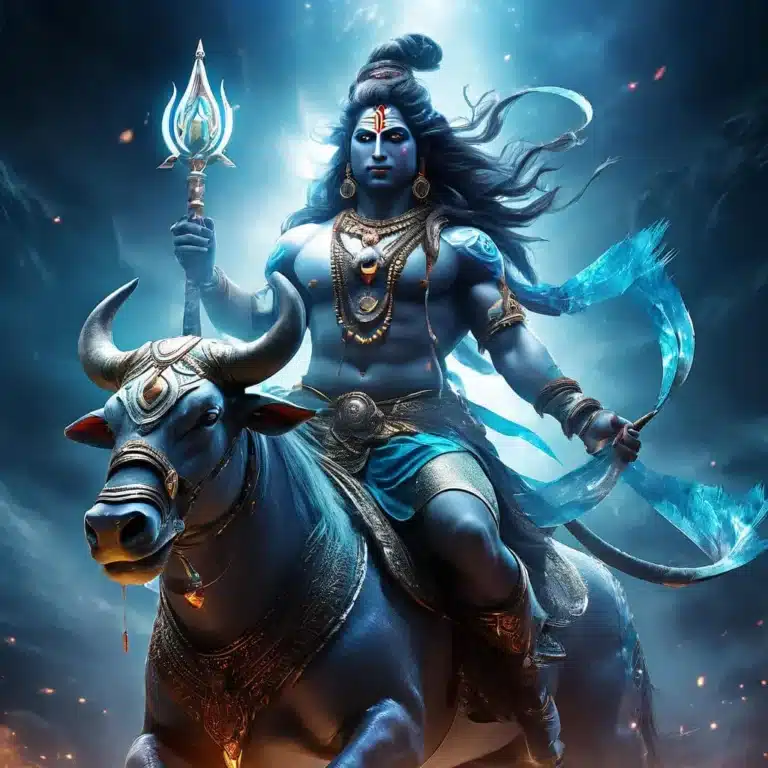
Manasic Puja by Swami Sivananda Manasic Puja or mental worship is more powerful than external Puja of the Murti with flowers, etc. Arjuna thought that Bhima was not doing any kind of worship. He was proud of his external worship to Lord Siva. He offered Bael leaves. But Bhima offered to Lord Siva mentally the Bael leaves of all the Bael of the whole world. He was doing Manasic Puja of Lord Siva. The attendants of Lord Siva were not able to remove the Bael leaves offered by Bhima from the head of Siva. Arjuna once saw a large band of people carrying baskets of Bael leaves. He thought within himself that these leaves must be those offered by him to the Lord and questioned them thus: “Brothers, wherefrom do you carry these Bael leaves.” They replied: “O Arjuna, these leaves are offered to our Lord by Bhima through his Manasic Puja.” Arjuna was struck with wonder. He came to know that Manasic Puja was more powerful than the external worship and that Bhima was better devotee than himself. He who has done Puja with flowers and other articles of worship for some time can do mental worship. In mental Puja the devotee offers mentally all offerings to the Lord. This is advanced form of worship. Manasic Puja can be done by advanced students. Beginners should certainly do worship with flowers, sandal paste, incense, etc. You will have more concentration when you do Manasic Puja. Mentally enthrone the Lord in Simhasan seat with diamonds, pearls, emeralds, etc. Offer Him a seat. Apply sandal paste to His forehead and body. Offer Arghyam, Madhuparka, and various sorts of flowers, clothes, etc. Burn incense, Wave lights. Burn camphor. Offer various kinds of fruits, sweetmeats, and Maha Naivedyam. Offer to the Lord the fruits of the whole world. Do not be miserly even in Manasic Puja. In Manasic Puja one man offered only one stale plantain fruit and a handful of gram. A miserable miser! Even in Manasic Puja he cannot be very generous and liberal. This world abounds with such deplorable misers. In the end mentally repeat: “kayena vacha mansendriyairva, buddhyatmanava prakriteh svabhavat karomi yadyat sakalam parasmai narayanayeti samarpayami.”-Whatever action I do by the body, by speech, by the mind, by the senses, by the intellect or by my own nature, I offer all of them to the Supreme Lord Narayana.” Also say “OM Tat Sat Brahmarpanamastu.” This will purify your heart and remove the taint of expectation of reward.

Manasic Puja Read Post »

images 37 1
Sadhana, Swami Sivananda

Idol Worship

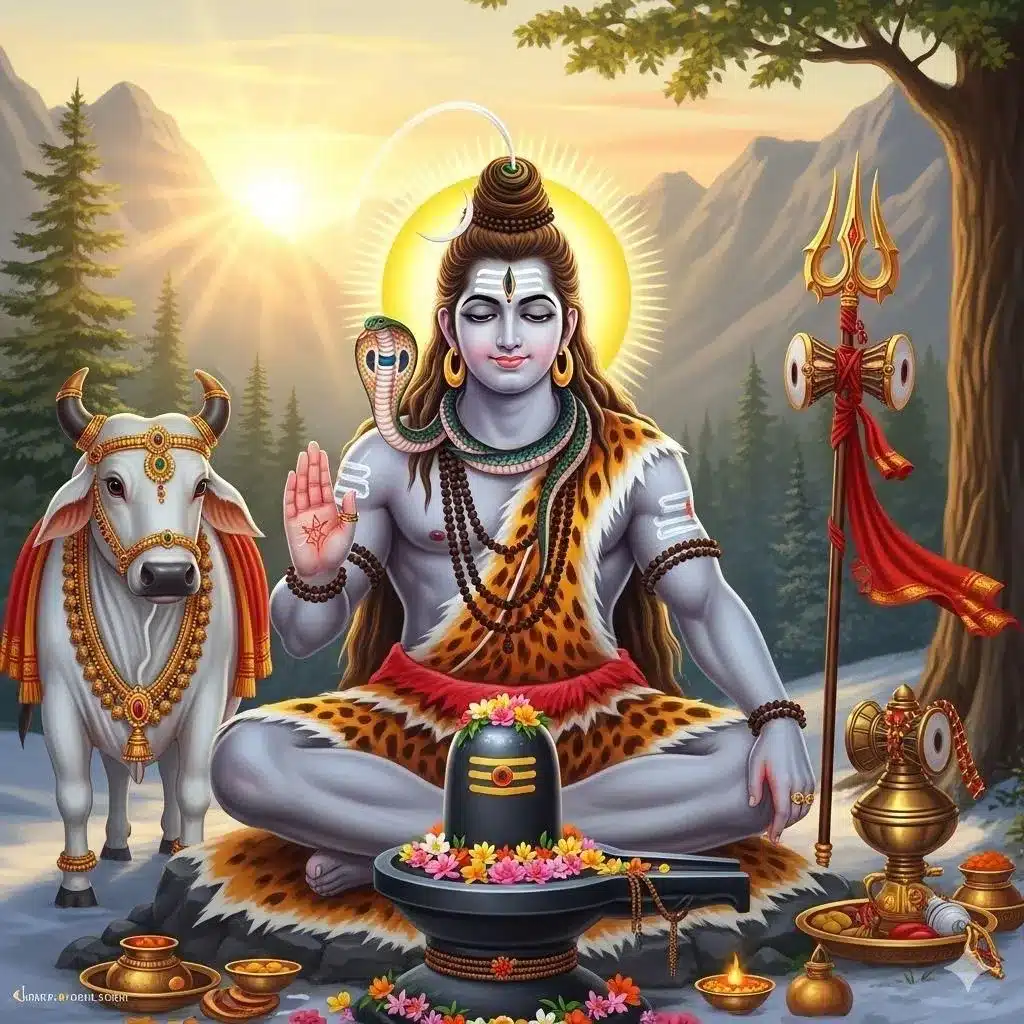
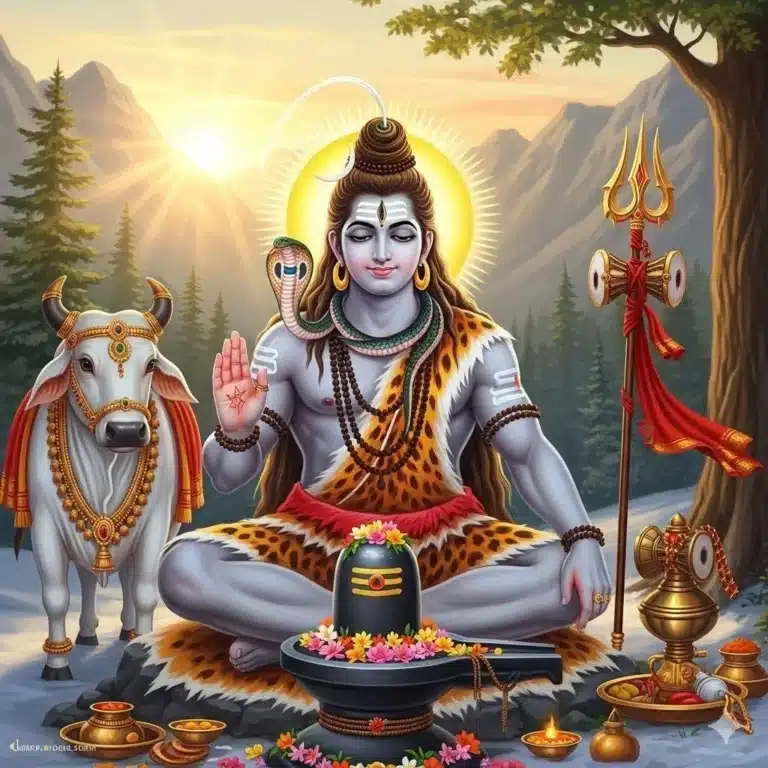
Idol Worship by Swami Sivananda Idol or Murthy (Vigraha), Sun, Fire, Water, Ganga, Saligram, Linga are all symbols or Prateekas of God which help the aspirants to attain one-pointedness of mind and purity of heart. A symbol is absolutely indispensable for fixing the mind. The Christians also have got the symbol ‘cross’. A gross mind needs a concrete symbol as a prop or Alambana; a subtle mind requires an abstract symbol. Even a Vedantin has the symbol of OM for fixing the wandering mind. In the beginning concentration or meditation is not possible without a symbol. The devotee superimposes on the concrete idol the Lord and His attributes. He does Shodasopachara for the idol, the sixteen kinds of paying respects or service to the Lord such as Padyam (water for washing feet), Arghyam, Asana (seat), Snana (bathing), offering clothes, Achamana (water for sipping), applying sandal paste, offering flowers (Archana), burning incense, waving of lights and camphor; Maha Naivedyam, etc. The wandering mind is fixed now in this form of worship. The aspirant gradually feels the nearness of the Lord. He attains purity of heart and slowly annihilates his egoism. Even in worshipping a small idol, he has to repeat the Purusha Sukta and to think of the Virat Purusha with countless heads, countless eyes, countless hands, who extends beyond the universe, and of the Lord or Atman who dwells in the hearts of all beings. For a Bhakta or a sage, there is no such thing as Jada or insentient matter. Everything is Vasudeva or Chaitanya-vasudevah sarvam iti. The devotee beholds actually the Lord in the idol. Narsi Mehta was put to test by a Raja. The Raja said: “O Narsi, if you are a sincere devotee of Lord Krishna, if as you say the idol is Lord Krishna Himself, let this idol move.” According to the prayer of Narsi Mehta, the idol moved. The sacred Bull Nandi before Siva’s idol took the food offered by Tulasidas. The Murti played with Mira Bai. It was full of life and Chaitanya for her. How sublime is Hindu philosophy and Hindu mode of worship! It does not stop or end with worship of idol alone. The Sadhaka is taken step by step to higher stages of devotion and Samadhi or communion through the worship of the idol. Though he worships the idol, he has to keep before his mental eye the all-pervading Lord. He has to feel His Presence in His heart and all objects. The ways and roles of worship, Puja-Vidhi and the secrets of worship that are described in the Hindu scriptures are scientifically accurate and highly rational. It is only ignorant people who have not studied the scriptures, who have not associated with the devotees and great souls vilify worship of idols or Murtis. Many English educated persons do not attach any importance to Prasad when they get it from the Mahatma. This is a serious mistake. Prasad is a great purifier. As they are brought up in the Western style of living, they have imbibed the spirit of Westerners and forgotten the spirit of the true children of Indian Rishis of yore. Live for a week in Brindavan or Ayodhya or Benares or Pandarpur. You will realise the glory and the miraculous effects of Prasad. Many incurable diseases are cured. Many sincere devotional aspirants get wonderful spiritual experiences from mere Prasad alone. Prasad is a panacea. Prasad is a spiritual elixir. Prasad is the Grace of the Lord. Prasad is a cure-all and an ideal ‘pick-me-up’. Prasad is an embodiment of Sakti. Prasad is Divinity in manifestation. Devotees of Lord Krishna should feel that every form is the form of Lord Krishna. They should not change this Bhava or mental attitude, even if a murderer appears before them to kill them. If they are established in this Bhava, the nature of the murderer will be changed or some other man will kill the murderer. If the Bhava changes, they should cultivate it again and again. Feel His Presence always. Recognise His presence everywhere. Carry His presence wherever you walk. Remember Him always. Live in Him. You need not read many books. You need not roam about in search of Gurus. You need not stand on your head for 12 years. You need not do Aswini Mudra to open the Kundalini. I have given you the essence of all Sadhanas. It is the gist of all Vedas. Practise it. Believe me. It is very easy. It will surely give you Moksha. I assure you. Those who worship Hiranyagarbha go to Brahmaloka or Satyaloka. They wait there for the life-time of Brahma. When the Brahmanda gets dissolved during the Pralaya, they enter the Supreme Self or Para Brahman along with Hiranyagarbha. Then only they lose their sense of individuality. Hiranyagarbha Upasana is the worship of the life-aspect of Ishvara. Meditation on Saguna Brahman wards off calamities. The devotee gets powers though he does not want them. Siddhis roll under his feet. He gets emancipation by successive steps. This is called Krama Mukti or progressive emancipation in contradistinction to the Sadyo Mukti or immediate emancipation attained by a Jnani. The devotee goes to Brahmaloka first and then enters into Nirguna Brahman. This is called Krama Mukti. The Jnani is absorbed into Nirguna Brahman directly. This is the difference. Saguna Upasakas or those who meditate on the image of the Lord should do Trataka first with open eyes till they can visualise a clear-cut, well-defined picture. Later on they can visualise the picture with closed eyes. The picture must be very pleasing to the mind and the eyes. It should have a good, agreeable background. When you have created a strong mental image of your Lord in the mind by continuous practice of meditation on one form, you should not disturb the mental image by changing the picture. Stick to the same picture and strengthen and feed the mental image through repeated practice of Trataka, visualisation and constant meditation on the

Idol Worship Read Post »

images 63
Sadhana, Swami Sivananda

The Gist of Bhakti Yoga Sadhana

The Gist of Bhakti Yoga Sadhana by Swami Sivananda Select an Ishta Devata either Siva, Krishna, Rama, Vishnu, Dattatreya, Gayatri or Sakti according to the advice of your Guru, or your own inclination or on consultation with a good astrologer who will name the Deity according to your planetary influence. Get the proper Mantra also OM Namah Sivaya, or OM Namo Bhagavate Vasudevaya, OM Sri Ram Jaya Ram Jaya Jaya Ram, or OM Namo Narayanaya. Keep a photo of your Ishtam in front of you in the meditation room. For 6 months, do Trataka on the picture. See the picture carefully with concentration for half an hour without winking till tears flow profusely. Study constantly the Bhagavata, the Ramayana, Narada Bhakti Sutras and Sandilya Sutras. Live for one year in Ayodhya, Mathura, Pandarpur or Nadia, Bengal. Pass through the course of Nava Vidha Bhakti, Sravana, Smarana, Kirtana, Vandana, Archana, Pada Sevana, Sakhya, Dasya, Atmanivedana. Repeat your Guru Mantra constantly, all throughout the 24 hours. Have sleep for 3 hours. Select a Bhava suitable for you, either Madhurya, Sakhya, Dasya or Vatsalya. Make ungrudging, unreserved, true, perfect self-surrender to God. Do Antarika prayer from the bottom of your heart. Prayer can move mountains. Prayer can reach a realm wherein reason can hardly enter. Have Eka Nishtha, devotion to one ideal. The Bhakti must be Ananya, Avyabhicharini (unwavering, one-pointed, single-minded devotion). Develop slowly Anurag, Prem, Preeti, Viraha (pain of separation from God), Bhava, Maha Bhava. In Maha Bhava, the devotee is unconscious of his body and the world and is absolutely merged in God. From Apara or lower Bhakti, the devotee passes on to Para or Abheda Bhakti. A devotee gets Krama Mukti or progressive emancipation after passing through Salokya, Sameepya, Sarupya and Sayujya Mukti. “Dadami Buddhiyogam Tam Yena Mam Upayanti Te: I give the Yoga of discrimination by which they come unto Me.”-Gita, X, 10. After enjoying the lower Mukti, a devotee finally attains Kaivalya Moksha, the same state as that of a Jnani. An earnest Sadhaka with Utsaha (perseverance) can realise within 2 or 3 years. I assure you emphatically. I assure you sincerely and boldly. Make a sincere effort, and watch the results. Follow Lord Krishna’s instructions in the Gita, as described in the terms ‘MACCHITTA’, ‘YUKTA’, ‘MATPARA’.

The Gist of Bhakti Yoga Sadhana Read Post »

images 66
Sadhana, Swami Sivananda

Important Sadhana in Bhakti Yoga

Important Sadhana in Bhakti Yoga by Swami Sivananda Self-surrender is complete surrendering of the self to God. Self-surrender makes the devotee feel the reality of divine grace and Lord’s readiness to bestow on him help at all times. The divine influence streams into his being and moulds it to make it a fit medium for divine realisation and divine instrumentality. Surrender and grace are inter-related. Surrender draws down grace and grace makes surrender complete. Surrender starts the purification of the heart. Grace completes it. Without grace the complete unification is not possible. Grace divinises your being in order that the constant inflow and inspiration can be received and retained. It is through divine grace alone that his whole being is galvanised, rejuvenated. You can realise the Absolute or the Impersonal by surrender to the Divine. Surrender is not a thing that is done in a week or a month. You cannot make total surrender from the very beginning of your Sadhana. The self-arrogating little ego persists and resists again and again. It clings leech-like to its old habits, cravings and desires. It wages guerilla war. It resists surrender. It demands certain objects for its secret gratification. The whole being should be surrendered. That is the reason why Lord Krishna says, “Tameva Saranam Gaccha Sarvabhavena Bharata-Flee unto Him for shelter with all thy being, O Bharata.” The Chitta, the ego, the mind, the intellect and the soul should be placed at the feet of the Lord. Mira did this and so she obtained Lord Krishna’s grace and became one with Him. The vulgar, stiff, obstinate ego is harder than diamond, reinforced concrete or steel. It is very difficult to melt it. Constant vigilance and ceaseless effort is necessary to slay this dire enemy of peace and wisdom. It keeps subtle desires for its own silent appeasement. Introspect and find out the subtle desires that lurk in the corners of your heart through the search-light of concentration and discrimination and kill them ruthlessly through regular, silent meditation. Do not bother about taking care of your body. God will save it if He needs it for further service in this body. Surrender it at His feet and rest in peace. He will take care of it. A real devotee says, “Let me take millions of births. It does not matter. But let me be attached to the lotus feet of Lord Hari. Let me have spontaneous devotion to the Lord. Let me be endowed with purity, spiritual strength, spirit of selfless service and divine virtues. If you simply say without real inner feeling “I am Thine, O Lord”, this will not constitute real integral self-surrender. It should come from the core of your heart. You must be prepared for a radical change. You should not stick to your old habits, ways and motives. You should not expect that everything should happen in the way you want. You should live to carry out the divine purpose. You should not think of those ambitions which the mind likes to gratify. You should not think of using even the divine grace or the divine force for your own purpose. The irrepressible ego will assert in various ways and refuse to give up its old habits and ways. It will try to get everything from the Divine. It will totally decline to give itself to the Divine. That is the reason why aspirants do not make any substantial progress in the spiritual path even after doing Sadhana for several years. There is no loss in self-surrender. You get from the Lord everything. You enjoy all divine Aisvarya of the Lord. The whole wealth of the Lord belongs to you. Siddhis and Riddhis will roll under your feet. You become one with the Lord. You are freed from all wants and desires and cravings. The spiritually hungry and real thirsty aspirant who yearns for the vision of the Lord turns towards the Divine and is quite willing, eager and happy to consecrate his body, life, mind and soul at the feet of the Lord. The first stage of self-surrender is only a firm resolve to surrender oneself to God or the Preceptor. A Sadhaka who has dedicated his life for the service of his teacher or the service of humanity or for attaining Self-realisation is not at all bound by the actions he performs, subsequent to his self-surrender. Self-surrender becomes perfect only after God-realisation. Renunciation of the family life is the beginning of self-surrender. He who is endowed with burning Vairagya and discrimination and is really earnest for his spiritual rejuvenation can also do complete self-surrender even though he is in the world. In and through the world he realises the Lord by complete surrender of his entire being to Him. But it is only a very few who are capable of doing this. Because, the worldly life is beset with innumerable obstacles and temptations and the aspirant finds it very difficult to attain complete dispassion in the midst of so many dissipations and distractions. Therefore, renunciation of family life makes his path easier and smoother. The seed is now sown. Then the aspirant goes to his preceptor and falls at his feet. Now the seed germinates. He starts the service of his Guru. As he advances in his devotion and sincere service, his surrender becomes more and more perfect and complete. His heart becomes purer and purer and gradually the light of knowledge dawns in him and he cognises the Supreme Atman, which pervades all and everywhere. The actions performed by the Sadhaka after renunciation do not bind him, as he offers all his actions as offerings unto his preceptor or Lord. He does not do any action, which can be considered as selfish. Thus through service of one’s preceptor with utter self-dedication, his heart becomes purified, and ultimately the Lord becomes his preceptor. Now he has completely surrendered himself to the Lord and he attains the highest intuition. In the beginning individual effort is very

Important Sadhana in Bhakti Yoga Read Post »

images 67
Sadhana, Swami Sivananda

The Role of Faith in Bhakti Sadhana

The Role of Faith in Bhakti Sadhana by Swami Sivananda Arm yourself with faith in God. Vain argumentation is a sign of ignorance. Faith leads to peace and harmony. Argument produces restlessness. However much you argue you cannot understand the nature of God; even as, however much you try you cannot see your own eye-balls, except in a mirror. That mirror is faith. Faith reflects God; intellect veils Him. God is the Hand that holds the torch of your intellect; it is useless trying to apply your intellect to the Truth of His Existence. What is required is faith. Faith in the Existence of God, faith in the words of saints and sages, will lead to inward peace and joy; and in that stillness you will discover God. You will shine as an embodiment of peace, love and unity. From you will spring forth thoughts, words and actions that will flood the entire world with peace, plenty and prosperity. May you all shine as saints, Yogins, sages and Jivanmuktas! May there be peace in the world and love in the heart of man! May His Divine Power triumph in this universe, now and for ever! May God bless you all with health, long life, peace, prosperity and Eternal Bliss!

The Role of Faith in Bhakti Sadhana Read Post »

Sivma
Sadhana, Swami Sivananda

Essentials in Bhakti Yoga Sadhana

Essentials in Bhakti Yoga Sadhana by Swami Sivananda There are different types of mind. People have different tastes, tendencies, temperaments, inclinations and capacities for Sadhana. So various paths are necessary although the goal to be reached, i.e., Self-realisation is always the same. The path of Bhakti Yoga is open to all and is the easiest path for God-realisation in this Iron Age. Anybody can become a devotee. No distinction of caste, colour or sex finds a place in the realm of Bhakti. Devotion has nothing to do with age, caste, position or rank in life. The desire for liberation alone makes one a fit person for developing devotion and taking up the path of Bhakti Yoga. Merits acquired in the previous births generate devotion in the heart of a man in the following birth. Liberation comes to him who is devoted to the Lord. Bhakti is supreme devotion and intense attachment to the Lord. Faith in the existence of God is the foundation of Bhakti. Service of Bhagavatas, Sadhus and Sannyasins, repetition of God’s name, Satsanga, Hari-kirtan, study of the Bhagavata or the Ramayana, stay in Brindavan, Pandarpur, Chitrakuta or Ayodhya-these are the six means of cultivating and developing Bhakti. Navavidha Bhakti or nine modes of devotion should be practised by all aspirants in the path of Bhakti Yoga. They are: Sravanam hearing the Lilas of the Lord, Kirtanam singing His praises, Smaranam remembering God, Padasevanam worshipping the lotus feet of God (service of humanity, country and poor people), Archanam offering of flowers, Vandanam prostration, Dasyam service, Sakhyam friendship and Atmanivedanam complete self-surrender. Bhakti should be of a Nishkamya type. It should be Avyabhicharini also. It should be continuous like the flow of oil. The aspirant should observe Sadachara or right conduct. He should be very very serious and earnest in his devotional practices. These are the five indispensable requisites in the Bhakti Yoga. Then only realisation of God will come quickly. Know that caste, learning, position, beauty and youth are the five thorns in the path of devotion. Beware of the two inner enemies, viz., lust and anger that stand in the way of developing Bhakti. Know that ten kinds of vices follow lust and eight kinds of vices accompany anger. Lajja or shyness for the utterance of the names of the Lord is also a great obstacle for the beginners in the path of devotion. Trishna or internal craving for sensual objects is quite detrimental to the growth of Bhakti. Have true, perfect, living, unswerving faith in God, in His grace and in the power of His name. Faith can work wonders. Faith can move mountains. Faith can take you to the inner Chambers of the Lord. Faith can make you Divine. Faith can give you peace, inner spiritual strength, joy, freedom, immortality and bliss. Therefore have genuine and living faith in the existence of God, in the scriptures, in the words of your Guru and in your own self. God tries His devotees in various ways in the beginning. He puts them to severe trials and tests. Eventually He becomes a slave of the Bhaktas. Lord Krishna says, “I am not in My control. I am under the complete control of My Bhaktas. They have taken entire possession of My heart. How can I leave them when they have renounced everything for My sake only?”de God is full of mercy, compassion and love. He has been described as the ocean of mercy. His mercy flows like the streams of the Ganga and the Yamuna. He willingly suffers endless pain in the eyes of the world in order to alleviate the sufferings of His devotees. He ran with His Chakra to kill the Asura who was in the form of a crocodile, when He heard the cry from Gajendra, the lord of the elephants and gave him salvation. He posed as Inspector of Schools and signed in the register when Roop Kalaji of Ayodhya was very busy in his worship of Lord Rama and forgot all about his inspection work. Lord Rama took the form of a sepoy and did sentinel duty when His sepoy Bhakta in Punjab left his duty and attended a Sankirtan party. Stand up dear friends! Life is short and time is fleeting. Time is more precious. Remember the goal and the purpose for which you have taken this physical body. Struggle hard. Do intense Sadhana. Annihilate egoism, selfishness, pride and hatred. Consecrate everything at the lotus feet of the Lord. Strive in right earnest after the achievement of that great end of human life, the true essence of all religions-Devotion to God’s Divine Prem or Bhakti, which alone can free us from the Samsaric wheel of births and deaths and give us highest knowledge, infinite bliss, supreme peace and Immortality. May you all tread the path of devotion and ever rest in the state of divine ecstasy and unalloyed bliss of joy and happiness.

Essentials in Bhakti Yoga Sadhana Read Post »

Swami Sivananda Archive Yoga Vidya Blog Yoga Meditation und Ayurveda
Sadhana, Swami Sivananda

Nine Modes of Bhakti Yoga Sadhana

Nine Modes of Bhakti Yoga Sadhana by Swami Sivananda In the Srimad Bhagavata and the Vishnu Purana it is told that the nine forms of Bhakti are Sravana (hearing of God’s Lilas and stories), Kirtana (singing of His glories), Smarana (remembrance of His Name and presence), Padasevana (service of His feet), Archana (worship of God), Vandana (prostration to the Lord), Dasya (cultivating the Bhava of a servant with God), Sakhya (cultivation of the friend-Bhava) and Atmanivedana (complete surrender of the self). A devotee can practise any method of Bhakti which suits him best. Through that he will attain Divine illumination. 1. SRAVANA Sravana is hearing of Lord’s Lilas. Sravana includes hearing of God’s virtues, glories, sports and stories connected with His divine Name and Form. The devotee gets absorbed in the hearing of divine stories and his mind merges in the thought of Divinity, it cannot think of undivine things. The mind loses, as it were, its charm for the world. The devotee remembers God only, even in dream. Sri Sankaracharya says, “The company of the wise, even for a moment, becomes the boat to cross across the ocean of Samsara.” Without Satsanga, Sadhana does not become perfect and strong. The fort of Sadhana should be built on the foundation of Satsanga. Mere austerities are not the end of Sadhana. Satsanga illumines the devotee and removes his impurities. It is only then that subtle truths are grasped well by the devotee. Lord Krishna says to Uddhava that nothing but Satsanga alone can put an end to all worldly attachments. In the Bhagavata Mahatmya it is told that the best Dharma in this world is to hear Lord’s glories. For, thereby, one attains to the Divine Abode. 2. KIRTANA Kirtana is singing of Lord’s glories. The devotee is thrilled with Divine Emotion. He loses himself in the love of God. He gets horripilation in the body due to extreme love for God. He weeps in the middle when thinking of the glory of God. His voice becomes choked, and he flies into a state of divine Bhava. The devotee is ever engaged in Japa of the Lord’s Name and describing His glories to one and all. Wherever he goes he begins to sing the praise of God. He requests all to join his Kirtana. He sings and dances in ecstasy. He makes others also dance. Such practices should be the outcome of a pure heart, and they should not be merely a show. God knows the inner secret of all and none can cheat Him. There should be perfect straightforwardness and all his actions should be the natural outpouring from his heart. This is the easiest of all modes of approach to God. In the Kali Yuga, iron age, Kirtana alone is the best Yoga-‘Kalau Kesavakirtanam.’ This is the prescribed method of devotion for this age. The mind is ever intent upon singing Lord’s Names and glories and it has no occasion to take interest in things of the world. Day and night the devotee feels the presence of God and thins out his ego. He becomes Sattvic and pure at heart. 3. SMARANA Smarana is remembrance of the Lord at all times. This is unbroken memory of the Name and Form of the Lord. The mind does not think of any object of the world, but is ever engrossed in thinking of the glorious Lord alone. The mind meditates on what is heard about the glories of God and His virtues, Names, etc., and forgets even the body and contents itself in the remembrance of God, just as Dhruva or Prahlada did. Even Japa is only remembrance of God and comes under this category of Bhakti. Remembrance also includes hearing of stories pertaining to God at all times, talking of God, teaching to others what pertains to God, meditation on the attributes of God, etc. Remembrance has no particular time. God is to be remembered at all times, without break, so long as one has got his consciousness intact. Right up from his getting up from sleep in the morning, until he is completely overpowered by sleep in the night, a person is to remember God. He has no other duty in this world except remembrance of God. Remembrance of God alone can destroy all worldly Samskaras. Remembrance of God alone can turn away the mind from sense-objects. Generally the mind runs extrovert. But remembrance of God makes it introvert and does not allow it to run to particular objects of the world. Remembrance of God is a very difficult method of Sadhana. It is not possible to remember God at all times. The mind will cheat the person. He will think that he is meditating on God, but actually he will be dreaming of some object of the world or something connected with name and fame. Remembrance is equal to concentration or meditation. All the qualities which a Raja Yogin prescribes for the practice of meditation should be acquired by a Bhakta who wants to practise Smarana-Bhakti. Smarana is swimming against the forceful current of the river of Maya. Smarana leads to exclusive meditation on God, as is done in Raja Yoga. 4. PADASEVANA Padasevana is serving the Lord’s feet. Actually this can be done only by Lakshmi or Parvati. No mortal being has got the fortune to practise this method of Bhakti for the Lord is not visible to the physical eyes. But it is possible to serve the image of God in idols and better still, taking the whole humanity as God. This is Padasevana. Padasevana is service of the sick. Padasevana is service of the poor. Padasevana is service of the whole humanity at large. The whole universe is only Virat-Svarupa. Service of the world is service of the Lord. Service of the Lord’s feet can be done through formal worship to Murtis or idols in temples or to a mental image of God. 5. ARCHANA Archana is worship of the Lord. “Those who perform

Nine Modes of Bhakti Yoga Sadhana Read Post »

2012 08 02 12.45.46
Sadhana, Swami Sivananda

Faith, Aspiration and Self-Surrender

Faith, Aspiration and Self-Surrender by Swami Sivananda Faith is Sraddha. Faith is the greatest thing in the world. Even the highest rationality has faith as its background. One cannot ratiocinate on things in which he has no faith. Even the greatest philosopher has faith as his stronghold. No intellectualism can prove good if it is not supported by faith. The whole world stands on faith and is guided by faith. Religion has faith as its root. One cannot prove God if he has no faith in God. God is only a matter of faith. This faith is the outcome of previous Samskaras. Certain men are born-philosophers and certain others do not grasp the fundamentals of religion even at the age of seventy. This is all due to past Samskaras or impressions. Faith is guided by impressions of actions done in the previous births and the present faith is nearer or farther from the Truth in accordance with the advancement made in spiritual evolution. Blind faith should be turned into rational faith. Faith without understanding is blind faith. Bhakti is the development of faith. Jnana is the development of Bhakti. Faith leads to Final Experience. Whatever a person strongly believes in, that he experiences, and that he becomes. The whole world is a product of faithful imagination. If you have no faith in the world the world does not exist. If you have no faith in sensual objects, they will not give you pleasure. If you have no faith in God, you never reach perfection. Wrong faith turns even existence into non-existence. “One who thinks that Brahman does not exist, himself becomes non-existent” says the Taittiriyopanishad. Faith is the fundamental necessity for spiritual Sadhana. Aspiration is a development of faith. It is one step ahead of faith. The flame of faith burns as the conflagration of spiritual aspiration for Moksha. The aspirant yearns to have divine experience. It is no more mere faith but strong feeling which cannot be easily shaken by external events. The devotee longs to have union with the Beloved. He has no sleep, no rest. He always contemplates on how to attain the object of his love. He prays, sings, and gets mad of his Lord. Divine madness overtakes the devotee and he completely loses personality in the aspiration for attaining God. This is called self-surrender. Self-surrender is the end of Bhakti Yoga. The self or the ego is surrendered or parted with for ever as an offering to the Lord. The devotee is lost in the consciousness of God. He has plunged into the ocean of bliss. He has taken a bath in the sea of nectar. He has drunk deep the essence of Immortality. He has become an Apta-Kama, for he has attained God, the root of the universe.

Faith, Aspiration and Self-Surrender Read Post »

images 80
Sadhana, Swami Sivananda

A Few Facets Of Bhakti Yoga Sadhana

A Few Facets Of Bhakti Yoga Sadhana by Swami Sivananda Bhakti is the slender silken thread of Prem or Love that binds the heart of a devotee to the Lotus Feet of the Lord. Bhakti is intense devotion and supreme attachment to God. It is the spontaneous outpouring of love towards God. It is pure, unselfish, Divine Love or Suddha Prem. Bhakti is the sacred, higher emotion of sublime sentiments that unites the devotee with the Lord. It has to be experienced by the Bhaktas. Human love is hollow. It is mere animal attraction. It is passion. It is carnal love. It is selfish love. It is ever changing. It is all hypocrisy and mere show. The wife does not care for her husband when he is in the role of unemployment. She frowns at him. The husband dislikes his wife when she loses her beauty on account of some chronic disease. You can find real, lasting love in God alone. His love knows no change. Bhakti is the basis of all religious life. Bhakti destroys Vasanas and egoism. A life without Bhakti, faith, love and devotion is a dreary waste. Bhakti softens the heart and removes jealousy, hatred, lust, anger, egoism, pride and arrogance. It infuses Joy, Divine Ecstasy, Bliss, Peace and Knowledge. All cares, worries, anxieties, fears, mental torments and tribulations entirely vanish. The devotee is freed from the Samsaric wheel of births and deaths. He attains the Immortal Abode of everlasting Peace, Bliss and Knowledge. Sakamya Bhakti is one where the Bhakta worships God for getting riches, son or for removal of sufferings from diseases. Vyabhicharini Bhakti is one in which the devotee worships or loves God for some time and then his wife, children and property for some time. To love God and God alone for ever and ever is Avyabhicharini Bhakti. Prahlada in the advanced stage of devotion meditated on his own self as Lord Hari. This is Abheda Bhakti. The Bhakta remains in the Loka where Lord Vishnu resides, like an inhabitant of a state. This is Salokya Mukti. In Sameepya Mukti, the Bhakta remains in close proximity with the Lord, like the attendant of a king. In Sarupya Mukti he gets the same form like that of the Lord, like the brother of a king. In Sayujya Mukti, he becomes one with the Lord, like salt and water. Thus there are four kinds of Mukti for the Bhaktas. Out of love, the formless Brahman assumes the form of Lord Hari to please His devotees. God is an embodiment of mercy. The Lord runs after His devotees with food and water in His hands to the forests. He becomes a slave of His devotees. Lord Vishnu says to Prahlada: “Dear, you are too tender of age and too delicate of body to stand the terrible tortures inflicted on you by your hot-headed father. A parallel of his atrocious deeds I have never seen before. Pray, therefore, excuse me if I was late in coming to your rescue.” Again Lord Krishna says: “I am not in My control. I am under the complete control of My Bhaktas. They have taken entire possession of My heart. How can I leave them when they have taken entire possession of My heart? How can I leave them when they have renounced everything for My sake? He who seeks Me in all things and all things in Me, to Him I am never lost, nor he is lost to Me.” Study the Gita, the Ramayana, the Bhagavata. Have Satsanga. Visit holy places (Yatra). Do Japa. Meditate. Sing His Name. You can develop Bhakti and have His Darshan. Do you really want God? Do you really thirst for His Darshan? Have you got spiritual hunger? You may deliver thrilling lectures on Bhakti. You may write several volumes on Bhakti, and yet you may not possess even a grain of true devotion. He who thirsts for Darshan of God will develop Bhakti. If there is sincere demand for God, then the supply will come. By regular steady Sadhana, may you attain Peace, Bliss, Knowledge, Perfection and God-realisation! The Name of God chanted in any way, correctly or incorrectly, knowingly or unknowingly, carefully or carelessly is sure to give the desired result. The glory of the Name of God cannot be established through reasoning and intellect. It can be certainly experienced or realised through devotion, faith and constant repetition of the Name. Every Name is filled with countless potencies or Saktis. The power of the Name is ineffable. Its glory is indescribable. The efficacy and inherent Sakti of the Name of God is unfathomable. Just as fire has the natural property of burning inflammable things, so also the Name of God has the power of burning sins, Samskaras and Vasanas and of bestowing eternal Bliss and everlasting Peace on those who repeat the Name of the Lord. Just as the burning quality is natural and inherent in fire, so also is the power of destroying sins with their very root and branch and of bringing the aspirant into blissful union with the Lord through Bhava Samadhi, natural and inherent in the Name of God. O Man! Take refuge in the Name. Nami and Nama are inseparable. Sing the Lord’s Name incessantly. Remember the Name of the Lord with every incoming and outgoing breath. In this iron age Nama Smarana or Japa is the easiest, quickest, safest and surest way to reach God and to attain Immortality and perennial Joy. Glory to the Lord. Glory to His Name. Sing Hari Om, Sri Ram, Radheyshyam or ‘Hare Rama Hare Rama, Rama Rama Hare Hare; Hare Krishna Hare Krishna, Krishna Krishna Hare Hare.’

A Few Facets Of Bhakti Yoga Sadhana Read Post »

images 68
Sadhana, Swami Sivananda

Bhakti Yoga Sadhana

Bhakti Yoga Sadhana by Swami Sivananda OUTLINES OF BHAKTI YOGA SADHANA What is Bhakti? Bhakti or devotion is supreme Love directed towards God. There are two kinds of Bhakti… Kamya. Nishkamya. The two kinds of Nishkamya Bhakti are… Vaidhi or external Puja and Japa etc. Ragatmika or Prema (internal) due to extreme Prema or intense Love. Four kinds of Bhaktas (Gita, VII-16)… Aarta (the sufferers as Draupadi and Gajendra etc.). Jijnasu (the seeker as Uddhava). Artharthi (he who has the desire to obtain some object. Dhruva is an example). Jnani (the Wise as Sukdeva etc.). Five kinds of Muktis: 1. Salokya (residence in the same abode as the Lord): 2. Sameepya (to abide near God); 3. Sarupya (similarity of form with the Lord); 4. Sayujya (complete identity with the Lord) and 5. Sarishti (enjoyment of Divine Powers). Nine modes of Bhakti (Bhagavatam: 7-5-23): 1. Sravanam (hearing of Lord’s Lilas, Kathas etc.); 2. Kirtanam (musical chanting of his name and Lilas, Kathas etc.); 3. Smaranam (remembrance of the Lord); 4. Padasevanam (service of His feet and service of Guru, parents, country and humanity); 5. Archanam (offering of flowers, sacred leaves etc.); 6. Vandanam (prostrations before Lord and mental prostrations to every being); 7. Dasyam (servant and Master Bhava); 8. Sakhyam (friendship-attitude) and 9. Atma-Nivedanam (self-surrender, literally offering oneself up). Five kinds of Bhavas: 1. Santa (peaceful, self-controlled and serene as Bhishma); 2. Dasya (servant and master Bhava, as Hanuman); 3. Sakhya (friendship as Arjuna); 4. Vatsalya (parental affection as Kausalya, Yasoda) and 5. Madhurya (wife and husband, or lover and beloved, like Gopis, Gauranga). Six means of developing Bhakti: 1. Service of Bhagavatas, Sadhus, Sannyasins etc.; 2. Repetition of God’s Name, Japa, Smarana etc.; 3. Satsanga; 4. Hari Kirtan (Loud repetition of Lord’s Name); 5. Study of religious books as the Gita, the Ramayana, the Bhagavata etc., and 6. Pilgrimage and stay in Holy Places like Brindavan, Ayodhya, Pandarpur, Chitrakuta, etc. Eight signs of Bhakti: 1. Asrupaata (tears), 2. Pulaka (horripilation), 3. Kampana (tremor), 4. Rodana (crying or weeping), 5. Haasya (laughing), 6. Sveda (perspiration or sweating), 7. Murchha (fainting) and 8. Svarabhanga (inability to speak). Four qualifications of a Bhakta: 1. Humble as a blade of grass, 2. Forbearance like a tree, 3. Not to desire praise or respect for himself but to praise and respect others, and 4. Always repeating Lord’s Name. Five thorns in the path of Bhakti: Pride of 1. Caste, 2. Learning, 3. Position, 4. Beauty and 5. Youth. Two inner enemies in the path of Sadhana: 1. Lust and 2. Anger. Ten vices that follow lust: 1. Love of hunting, 2. Gambling, 3. Sleeping in day time, 4. Slandering (abusing), 5. Company with bad women, 6. Drinking, 7. Singing love songs, 8. Dancing, 9. Music of vulgar nature and 10. Aimlessly wandering. Eight vices that follow Anger: 1. Injustice, 2. Rashness, 3. Persecution, 4. Jealousy, 5. Captiousness (Fault-finding nature), 6. Cheating, 7. Harsh words and 8. Cruelty. Three Eshanas: 1. Desire for wealth, 2. Desire for wife and children, and 3. Desire for name, fame and heaven etc. Three great dangers in Bhakti: Association with 1. Women, 2. Wealth and 3. Atheists. Requisites in Bhakti: 1. Nishkamya (without any desire for fruits), 2. Ananya (undivided love towards God only), 3. Avyabhicharini (intense love towards the chosen Deity or Ishta-Devata), 4. Akhanda (Taila Dharavat, unbroken, continuous love), 5. Sadachara Sahita (with noble qualities and character) and 6. Deeply earnest and serious i.e. real and not for show. Seven forms of Prema: 1. Sneha (Melting of heart by love or Prema); 2. Mana (that sentiment which interferes with the enjoyment of a couple who are at heart desperately in love with each other notwithstanding their being together for enjoyment); 3. Pranaya, (love which makes the lover think himself at one with the beloved, it is the thorough unification of the one with the other); 4. Raga-Sneha (when it makes its object feel happiness even when put to misery for the sake of the beloved one is called Raga); 5. Anuraga (Raga, when it discovers ever new sweetness in the beloved one is Anuraga-Raga); 6. Bhava (Bhava is the name of that emotional state the essence of which is likened unto the rays of the rising sun, i.e. it ushers in Prema just as the rays usher in the rising sun. It melts the heart by unquenchable desire for attainment of Sri Krishna); and 7. Maha-Bhava (the highest pitch or consummation of Bhava) Twenty-Four Avataras: 1. Matsya Avatara brought the Vedas from the waters of Pralaya; 2. Kurma Avatara supported Mandara Mountain in the ocean churning; 3. Varaha Avatara to raise the earth from water after destroying Hiranyaksha; 4. Nrisimha from the Pillar destroyed Hiranyakasipu and gave Darshan to Prahlad; 5. Vamana Avatara put down the might of king Bali; 6. Parasurama destroyed 21 times Kshatriya Kings and gave land to Brahmins; 7. Rama destroyed Ravana; 8. Krishna destroyed Kamsa, and taught Brahma-Vidya to Arjuna and Uddhava; 9. Buddha preached Ahimsa to Asuras; 10. Kalki will appear in the end of Kaliyuga; 11. Yajna was born of Ruchi and Akuti. (The Suyama Devas were born of Yajna. He removed the fear of Triloki); 12. Kapila was born of Kardama Prajapati and Devahuti (Founder of Sankhya system of Philosophy. He taught Brahma-Vidya to his mother); 13. Dattatreya, the Avatara of Tri-Murtis (Brahma-Vishnu-Siva) born of Atri Muni and Anasuya Devi; 14. The Four Kumaras i.e. Sanaka, Sanandana, Sanatana and Sanatkumara-mental sons of Brahma always about six years of age-Brahma-Vidya Gurus; 15. Nara-Narayana were born of Dharma and Murti and did Tapas in Badrikashrama; 16. Sri Hari gave Darshan to Dhruva (son of Uttanapada and Suneeti); 17. Prithu took out riches and eatables from earth; 18. Rishabha, (Paramahamsa) a great Brahma-varishta born of Nabhi and Sudevi, or Meru Devi; 19. Hayagreeva (the horse-headed Avatara) appeared in Vedic Yajna and promulgated the Vedas; 20. Hari saved Gajendra from Makara; 21. Hamsa narrated Bhakti Yoga, Jnana and Bhagavata Purana to Rishi Narada;
Bhakti Yoga Sadhana Read Post »