






Hari Om

Menu

Sadhana

6a1fa2 996c09f3f75d4fbd8a56865619f14e3fmv2 1
Sadhana, Swami Sivananda

Main Obstacles in Yoga Sadhana

Main Obstacles in Yoga Sadhana by Swami Sivananda Real aspirants who thirst for Self-realisation should be absolutely honest in every dealing. Honesty should not be the policy for them but it should be their strict rule of daily conduct. Steya or the pilfering habit is very dangerous. It may develop into a serious crime under suitable conditions and favourable circumstances. He who commits even small thefts will have neither moral strength nor peace of mind. If the aspirant is not established in perfect Asteya or non-stealing, he cannot hope to get an iota of progress in the spiritual path. He may retain his breath for five hours, he may do Trataka in the mid-day sun, he may get himself buried underneath the ground for three months or he may show many other dexterous Yogic feats. These are of no value if he has the pilfering habit. He may be respected and adored for a week or a month. People will treat him with contempt when he starts pilfering. Do not be deceived by external appearances. Just hear this remarkable incidence. A Pundit of vast erudition was a guest of a high personage. The Pundit could recite by heart the whole of the Vedas and the Upanishads and he had done great Tapasya. He was very abstemious in his diet and took only a very small quantity of food. He would never waste unnecessarily a single minute of the day and was always absorbed in the study of religious books, Puja, Japa and meditation. His host held him in very high esteem. This learned Pundit stole one day some articles from his host’s house. They were not valuable at all. In the beginning he totally denied the theft. Later on he admitted it and apologised. Would anybody take such a learned Pundit of severe austerities for a petty thief? The subtle Vritti of pilfering was hidden in the Pundit’s mind; he had not destroyed it through self-analysis and drastic purificatory Sadhana. He had not developed the virtues of nobility and integrity. He had only controlled his tongue to a small extent and crammed some sacred books. The habit of telling lies co-exists with the habit of pilfering. Some aspirants tell lies even for trifling things. We can excuse householders but we cannot excuse aspirants. If the preceptor asks the disciple, “O Ram, have you taken quinine mixture this morning,” he replies, “Swamiji, yes, I have taken already.” Ram tells a lie for this trifling thing and on further strict investigation he is found out to be a liar. Many aspirants pose as great Yogins when they know only a few Asanas and Mudras and pose as great Vedantins when they have read only Vichara Sagara and Panchadasi. This is also another great obstacle in the path. Religious hypocrisy of an aspirant is more dangerous than the hypocrisy of worldly-minded persons. This is an evil quality born of a mixture of Rajas and Tamas. Religious hypocrisy is a great bar to the descent of Divine Light and knowledge. It is very difficult to eradicate religious hypocrisy. What is this religious hypocrisy then? It is pretending to be what one is not. When the aspirant pretends to be a realised soul or a Jivanmukta when he is really otherwise, it is a pure type of religious hypocrisy. A religious hypocrite can never reach the goal of life and will soon be detected by the public though he may hide his face like an ostrich. No Yoga or no union with Atma or Samadhi is possible if one is a victim of hypocrisy. He who says “I am a realised soul” when he is a slave of evil Vrittis is a confirmed hypocrite. Let no such man be trusted. Self-sufficiency is another evil Vritti in the mind-lake. This is also born of a mixture of Rajas and Tamas. It acts as a stumbling block in the spiritual path. The student who is a victim to this evil trait thinks foolishly that he knows everything. He is quite contented with his little knowledge and achievements. He stops his Sadhana. He never attempts for further acquisition of knowledge. He never endeavours to attain the highest knowledge of Bhuma (highest Self). He does not know that there is a vast realm of knowledge beyond. He is like the toad in the well which has no knowledge of the ocean, which thinks that the well is the only illimitable expanse of water. A self-sufficient man foolishly thinks and imagines “I know everything. There is nothing more to be known by me.” Maya spreads a thick veil in his mind. The self-sufficient man has a turbid mind, clouded understanding and a perverted intellect. Self-sufficiency is a strong weapon of Maya with which she deludes people and puts a strong break in the Sadhana of an aspirant. She does not allow him to proceed further or look beyond the veil as he is carried away by false contentment through self-sufficiency. The self-sufficient scientist who has knowledge of the electrons and laws of the physical aspect of nature thinks that there is nothing beyond this. The moralist who has developed some ethical virtues thinks that there is nothing beyond this. The self-sufficient Yogic student who experiences Anahata sounds and flashes of lights thinks that there is nothing beyond this. The self-sufficient Sannyasin who knows the Gita and the Upanishads by heart thinks that there is nothing beyond this. The self-sufficient Yogi or Vedantin who gets experiences of the lower Samadhi thinks that there is nothing beyond this. All are groping in the dark. They know not what perfection is. Maya tests the students in every step, at every stage and appears before the student in various forms or colours like an Asura or a chameleon. It is very difficult to detect Her presence. But he who has obtained the grace of the Mother will experience no difficulty in his onward march. She Herself lifts him up and carries him with

Main Obstacles in Yoga Sadhana Read Post »
images 5 1
Sadhana, Swami Sivananda

Light on Yoga Sadhana

Light on Yoga Sadhana by Swami Sivananda Question: In “Practical Lessons on Yoga” it is stated that Bandha Traya can be practised during Pranayama, concentration and meditation, with much advantage. But is not Bandha Traya a strenuous exercise by itself? Will not the combination distract the attention from the Lakshya? Answer: While practising Bandha Traya, the mind should be engaged in meditation. This will help Kumbhaka to be prolonged during Pranayama, concentration and meditation. If the mind is allowed to wander about, Kumbhaka will last for a very short period only. Bandha Traya should be practised at the primary stages of meditation for success in Kevala Kumbhaka. In the advanced stages the combination is not necessary. Q.: Should one do Kumbhaka after inhaling the breath when one does simple Bandha Traya, i.e., without combining it with Pranayama? How many times this Kriya should be performed, especially for the purpose of Brahmacharya? A.: Bandha Traya (particularly Jalandhara Bandha) is a necessity for Kumbhaka only, soon after inhalation. It is just to arrest the involuntary impulse to exhale. Even ten times Bandha Traya during Pranayama practice in the morning and evening will give success in observing Brahmacharya. Much depends, however, on diet and changing the angle of vision towards spiritual values. Q.: I read in a book that a Yogi once gave some magnetised water to a patient. When the boy was asked to take the water, the Yogi touched the glass with his fingers, and the water began to boil. How is it? A.: I have seen many ‘Yogins’ creating water from empty pots, making water boil, and preparing rice in it. This is not associated with Yoga. It is pure jugglery. Healing power can be increased only by spiritual power through purity and intensity of concentration. Yoga confers this power. But no ostentation is resorted to for attracting attention for personal fame or gain or even for creating belief. By mere Sankalpa wonders can be effected by a man of unbroken truthfulness, celibacy and ethical virtues. Even the proper practice of Satya, Ahimsa and Brahmacharya by an ordinary man, irrespective of his past records, can work miracles. Q.: Some one has written that by mastery over Yoni Mudra, Kutastha can be seen. How can the Absolute Consciousness (Kutastha) be seen thus? A.: Yoni Mudra is meant only for developing deep concentration through the avoidance of external distractions. Kutastha or other points relating to the Sukshma Sarira or beyond cannot be seen by the physical eyes. One has to develop the internal divine vision or intuition to perceive the hidden truths of Yoga. Q.: Is Kundalini awakened only through particular Yoga, e.g. the method of Rishi Patanjali? Is it essential for acquiring Siddhis? A.: Raja Yogins awaken Kundalini through Samyama, Hatha Yogins through various Yogic Kriyas, Jnana Yogins through Pure Will, and the Bhaktas through immaculate devotion. Awakening Kundalini through any of these methods will bestow Siddhis. When Kundalini passes through various Chakras, the aspirant attains their respective Siddhis. Intelligent Yogins never demonstrate Siddhis, as in most cases they cause downfall. The ultimate goal is Self-realisation, for which Siddhis are absolutely useless. Misused Siddhis lose their effectiveness and cause untold suffering.

Light on Yoga Sadhana Read Post »

images 40
Sadhana, Swami Sivananda

Inner Yogic Discipline

Inner Yogic Discipline by Swami Sivananda I Yoga is the discipline of the mind, senses and the physical body. Yoga helps in the coordination and control of the subtle forces within the body. Yoga brings in Perfection, Peace and everlasting Happiness. Yoga can help you in your business and in your daily life. You can have calmness of mind at all times by the practice of Yoga. You can have restful sleep. You can have increased energy, vigour, vitality, longevity and a high standard of health. You can turn out efficient work within a short space of time. You can have success in every walk of life. Yoga will infuse in you new strength, confidence and self-reliance. Through Yoga you can have complete mastery over the mind, passions, emotions, impulses, temper, tongue, and so forth. The body and mind will be ever at your beck and call. God-consciousness or communion with the Lord is the acme of the ethico-religious discipline of Yoga. This is attended by a remarkable sense of freedom and moral elevation on account of the crumbling down of the false, illusory, little ‘I’. The Yogi is in possession of all Divine Powers now. He enjoys unalloyed eternal Bliss. Power of endurance is a virtue to be possessed by a Yogi, a Jnani and a Bhakta. Many hardships and privations have to be faced by the aspirant in the successful performance of Yoga. Titiksha develops will-power. That is the reason why Lord Krishna says to Arjuna: “The contacts of matter, O son of Kunti! giving cold and heat, pleasure and pain, they come and go, impermanent, endure them bravely, O Bharata! The man whom these torment not, O chief of men, balanced in pain and pleasure, steadfast, he is fit for immortality.”-Bhagavad-Gita: Ch. II-14, 15. Moral excellence or ethical perfection is not, however, the final goal of the Yogi. It is only a means to the attainment of the end of life. Ethical development is more difficult than the attainment of intellectual eminence, because the truth can only be grasped by the Yogi who possesses a pure or untainted heart. The essentials of moral life are straightforwardness, honesty, mercy, humility, respect for life or tender regard for every creature that breathes, absolute unselfishness, truthfulness, celibacy, non-covetousness, absence of vanity and hypocrisy, and cosmic love. The student of Yoga should be abstemious in his diet. He should avoid laziness, ease, habitual languor and excess of sleep. He should observe silence and occasional mild fasts to ensure a good tone to his constitution. He should develop correct habits. He should check all sorts of ambitions and counter-currents of worldly desires by enquiry, thinking and discrimination. He should say unto the deceiving mind: “O mind! I know your tricks. I have got dispassion and discrimination now. Do not wag your tail now. I will snip it off ruthlessly. I have learnt many lessons. It is only ignorance that makes man prefer a transient gain to permanent benefits. I do not want again these sensual enjoyments. They are like vomited matter for me. I have resolved to attain the free, everlasting fruits of Yoga viz., EVERLASTING PEACE, INFINITE BLISS AND SUPREME JOY.” Yoga advocates complete detachment from secular interests for the sake of practising uninterrupted meditation. It recommends meditation on the inner Light of the heart or anything that is pleasing to you. It prescribes that one should withdraw oneself from the ordinary affairs of life for the purpose of practising constant meditation. Yoga can also be practised at home by having well-regulated life. A Yogi claims that he can attain extraordinary powers and knowledge by subduing the passions and appetites and by practising Yama, Niyama and Samyama (or the practice of concentration, meditation and Samadhi at one and the same time). Patanjali Maharshi, the author of YOGA-SUTRAS, clearly warns the students that they should not be carried away by the temptations of powers. The gods themselves tempt the unwary Yogi by offering him a position similar to theirs. Students seek more after Siddhis than after Truth and spiritual attainment despite the clear note of warning. Desire for power acts like puffs of air which may blow out the lamp of Yoga that is being carefully tended. Any slackness in feeding it due to carelessness or selfishness for Siddhis will blow out the little spiritual light that the Yogi has kindled after so much struggle and will hurl him down into the deep abyss of ignorance. He cannot rise up again to the original height to which he had ascended in the Hill of Yoga. Temptations are simply waiting like vultures to overwhelm the unwary student. Temptations of the astral, mental and Gandharva worlds are more powerful than the earthly temptations. Success in Yoga is possible only if the aspirant practises profound and constant meditation. He must practise self-restraint at all times, because all of a sudden the senses may become turbulent. That is the reason why Lord Krishna advises Arjuna: “O son of Kunti! The excited senses of even a wise man, though he be striving impetuously, carry away his mind. For the mind, which follows in the wake of the wandering senses, carries away his discrimination, as the wind (carries away) a boat on the waters.”-Bhagavad-Gita: Ch. II-60, 67). Very often various sorts of obstacles come in the way of the Yogi. Disappointment, despair, sickness, depression, doubt, indecision, lack of physical and mental energy, slothfulness, unsteadiness, craving for sensual objects, blunder, act as stumbling blocks. He should not be discouraged. Patanjali Maharshi prescribes Eka-Tattva-Abhyasa i.e., practice of concentration on one subject to overcome them. This will give him steadiness and strength. He further advocates the practice of friendship between equals, mercy towards inferiors, complacency towards superiors and indifference towards wicked people. This practice will generate peace of mind or composure and will destroy hatred, jealousy, etc. A new life will dawn in him when he practises these virtues. What is needed is perseverance. It is the key-note of Yoga.

Inner Yogic Discipline Read Post »

images 43
Sadhana, Swami Sivananda

Practical Yogic Instructions

Practical Yogic Instructions by Swami Sivananda Control your senses. Calm your mind. Still the bubbling thoughts. Fix the mind on the lotus of the heart. Concentrate. Meditate. Realise Him intuitively this very second and enjoy the Bliss of the Self. Have firm and unshakable faith in the existence of God, the supreme, undying, intelligent Principle or Essence or Substance who exists in the three periods of time-past, present and future. He has neither beginning, middle nor end. He is Sat-Chit-Ananda (Existence Absolute, Knowledge Absolute and Bliss Absolute). O ignorant man! Why do you vainly search for happiness in the perishable external objects of the world conditioned in time, space and causation? You have no peace of mind. Your desires are never fully gratified. You may amass boundless wealth, beget beautiful babies, earn titles, honours, name, fame, power, publicity, and all you want, and yet your mind is restless. You have no real, abiding happiness. You feel you still want something. You have no feeling of fullness. Never, therefore, forget from this moment onwards that this feeling of fullness or eternal satisfaction can be obtained only in God by realising Him through constant practice of self-control, purity, concentration, meditation and practice of Yoga. There is restlessness everywhere. Selfishness, greed, jealousy and lust are playing unimaginable havoc in every heart. Fights, skirmishes and petty quarrels are polluting the atmosphere of the world and creating discord, disharmony and unrest. The bugle is blown and the armies march to the battle-field to destroy their enemies. One nation wages war against another nation for acquiring more dominions and power. Side by side with these bloody wars, peace movement is also working for bringing harmony and peace, for eradicating dire ignorance, the root-cause of all human sufferings and for disseminating Divine Knowledge. The greatest need of the world today is the message of Love. Kindle the light of love in your own heart first. Love all. Include all creatures in the warm embrace of your love. Nations can be united by pure love only. World-wars can be put an end to by pure love only. The United Nations cannot do much. Love is a mysterious divine glue that unites the hearts of all. It is a magical healing balm of very high potency. Charge every action with pure love. Kill cunningness, greed, crookedness and selfishness. It is extremely cruel to take away the lives of others by using poisonous gas. This is a capital crime. The scientist who manufactures the gas in the laboratory cannot escape without being punished for this crime by the great Lord. Forget not the Day of Judgment. What will you say unto the Lord, O ye mortals, who run after power, dominions and wealth? Have a clean conscience and pure love. You will verily enter into the Kingdom of God. Ah, how mysterious is the universe! How mysterious are the silent workings of the unseen Power, who prompts passionate people to wage wars on the one side and pious people to disseminate Divine Knowledge on the other and bring peace and happiness to the suffering humanity at large! As you think, so you become. Think you are a High Court Judge, High Court Judge you will become. Think you are the monarch of the whole world, monarch of the whole world you will become. Think you are a great teacher, teacher you will become. Think you are poor and weak, poor and weak you will become. Think you are a multi-millionaire, multi-millionaire you will become. Think you are a saint of spotless character, saint of spotless character you will become. Think you are God or Atman or Brahman, God or Atman or Brahman you will become. The whole universe is governed by this wonderful Law of Nature. Always think rightly and act rightly. Never try to seize the possessions of others. Never envy your neighbours. Entertain noble and sublime thoughts. Have supreme self-confidence and courage. Whatever you do, do it with a will to succeed. You will by all means succeed in all your endeavours. Success is yours. You will know no failures. This is the Sovereign Secret. Meditate upon this Secret daily in the morning for some time and enjoy the Bliss of the Self. In the Vishnupurana you will find: “If the deluded fool loves the body, a mere collection of flesh, blood, pus, faeces, urine, muscles, fat and bones, he will verily love hell itself! To him who is not disgusted with the nasty smell from his own body, what other argument need be adduced for detachment?” It is a well-known fact that enjoyment cannot bring you satisfaction of desire. On the contrary, it aggravates desire and makes man more restless. The root-cause of all human sufferings and miseries is the craving for worldly enjoyments. The more you hanker after these sensual enjoyments, the more unhappy do you become. The desires also grow, when they are not fulfilled. You can never be happy as long as the craving for enjoyments exists. It is painful to earn money. It is more painful to keep the money that is earned. It is still more painful, if the money gets reduced. And it is extremely painful, if the whole money is lost. Money is the abode of all sorts of pain. That is the reason why in India a Sadhu or a Sannyasin does not possess anything. In his grand vision, he does not possess his body also. He constantly asserts: “The body is not mine; I am not body.” A real Sannyasin is one who feels: “I am bodiless.” These Sannyasins lead a life of perfect dispassion and ruthless renunciation. Renunciation brings in its train supreme Peace. It is very difficult to become absolutely desireless. A liberated sage or a full-blown Yogi alone is entirely free from the taint of desires, for he has completely annihilated his mind and is enjoying the Supreme Bliss of the Self within. How can desires arise in him who is plunged in the

Practical Yogic Instructions Read Post »

images 46 e1772517883357
Sadhana, Swami Sivananda

Practice of Yoga Sadhana

Practice of Yoga Sadhana by Swami Sivananda Meditate regularly on your ideal. Strive to live in it. Weed out the vices. Scrutinise your character. Enlarge your capacities. Cultivate mental and moral qualities. Close the doors of the senses. Make the mind steady and calm by silencing the thoughts, subduing the surging emotions and crushing all desires and cravings. Meditate. You will behold now the majesty and the glory of the Supreme Self, the Indweller. Forgive those who slander or speak ill of you. Do not harm anyone who injures you. If anybody from aversion speaks disparagingly of you, greet him courteously without caring for those disagreeable words. Steadily resist the promptings of the lower nature. Gradually it will lose its power over you. You will gain strength. Even if you fail, it is one step nearer to victory or the goal. You will develop your will-power. The will-force will penetrate into the subconscious mind and eradicate all wrong impressions, vicious habits and evil traits. You will encounter various difficulties in the beginning of your Sadhana. You are not conscious of any spiritual progress, but you are only conscious of your failures in your attempts, in meditation, the resistance you meet and your defects and weaknesses. If you persist in your Sadhana vigorously and diligently, if you are regular in your Sadhana you will attain success. Meditation will come without effort. Meditation will become habitual. All resistance will vanish. You will develop strong will-power. You will have triumph at every step. Failure and despair will be unknown to you. Sadhana will go on in great strides. Evil thoughts perish when divine thoughts are entertained. Evil thoughts die when good thoughts are cherished. Evil thoughts and evil desires perish merely from want of nourishment. Abstention from gratification of a desire will cause starvation of desire and then its death. The desire will fade away if you do not indulge in the objects of desire. Do not talk of Samadhi and awakening of Kundalini. The greater things you can begin to do afterwards. Do the smaller things first. Practise, Yama, Niyama first. Be good, do good. Attain ethical perfection first. Eradicate evil traits and develop divine qualities first. Control the senses and purify the heart first. What is the use of talking of Samadhi and awakening of Kundalini when the first steps are not yet taken up and practised? Be abstemious in everything. Abandon fear, anger, cupidity and errors of judgment. Stick to your vows at any cost, even at the risk of your life. Then only you are fit to attain immortality. Sticking to the vows will contribute to your true happiness. Observe the vow with your passions under control, with a pure heart. If you like mangoes very much, if you are longing intensely to eat them, if they are actually in front of you and if you are quite ready to eat them do not eat them. Control the desire through discrimination. Practise this again and again in respect of those things which you like best. Gradually you will be able to control the tongue. Each failure sows the seed of your future success or triumph. Stand up. Do not be afraid of your failures. March forward boldly with undaunted spirit and redoubled energy. If you do a wrong action, when you do not wish to do it, your weak will has been overpowered by the strong force of past habit. Do more virtuous actions daily. You will develop a strong will. Then you will not repeat wrong actions. Strong will-power consists in overcoming desires, irritability, anger, impurities, evil emotions and in possessing serenity, self-possession, presence of mind, balanced mind in success and failure, censure and praise, honour and dishonour, gain and loss.

Practice of Yoga Sadhana Read Post »

images 28 1
Sadhana, Swami Sivananda

Structure of Yoga Sadhana

Structure of Yoga Sadhana by Swami Sivananda Ethical discipline is incumbent for success in Yoga. Ethical discipline is the practice of right conduct in life. The two moral pivots of Yoga are Yama and Niyama, which the aspirant must practise in his daily life. These correspond broadly to the ten commandments of the Bible or to the noble eightfold path of Lord Buddha. Non-injuring (Ahimsa), truthfulness (Satya), continence (Brahmacharya), non-stealing (Asteya) and non-covetousness (Aparigraha) are the component parts of Yama. Internal and external purification (Saucha), contentment (Santosha), austerity (Tapas), study of religious and philosophical books (Svadhyaya) and self-surrender to the Lord (Isvarapranidhana) come under Niyama. Practice of Yama and Niyama will eradicate all the impurities of the mind. In fact, Yama and Niyama form the corner-stones of Yoga Philosophy. Pre-eminence is given to abstention from injuring any living creature (Ahimsa) amongst all other virtues. There must be non-injuring in thought, word and deed. Non-injuring is placed first because it is the source of the following nine. The practice of universal love or brotherhood is nothing but the practice of non-injuring. He who practises non-injuring will get quick success in Yoga. The practitioner must abandon even harsh words and unkind looks. He must show goodwill and friendliness to one and all. He must respect life. He must always remember that one common Self dwells in the hearts of all beings. Truthfulness (Satya) comes next in order. Thought must agree with word, and word with action. This is truthfulness. These virtues are attainable only by the unselfish. Truth can hardly arise unless there is pure motive behind all actions. The word of a Yogi must be a blessing to others. Then comes non-stealing (Asteya). You must be satisfied with what you get by honest means. The law of Karma is inexorable. You will have to suffer for every wrong action of yours. Action and reaction are equal and opposite. Amassing wealth is really theft. The whole wealth of all the three worlds belongs to the Lord. You are only a care-taker of this wealth. You must willingly share what you have with all and spend it in charity. The third virtue is the practice of celibacy. Brahmacharya is the substratum for a life in the Atman. It is a potent weapon for waging a relentless war against the internal monsters-passion, greed, anger, miserliness, hypocrisy, etc. It contributes to perennial joy and uninterrupted, undecaying bliss. It gives tremendous energy, clear brain, gigantic will-power, bold understanding, retentive memory and good power of enquiry (Vichara-Sakti). What is wanted is deep inner life. Silence the bubbling thoughts. Keep the mind cool and calm. Open yourself to higher spiritual consciousness. Feel the Divine Presence and Divine Guidance. Fix your mind at the lotus-feet of the Lord. Become like a child. Speak to Him freely. Become absolutely candid. Do not hide your thoughts. You cannot do so because He is the Inner Ruler (Antaryami). He watches all your thoughts. Pray for mercy, light, purity, strength, peace and knowledge. You will surely get them. A Yogic student should abstain from greed. He should not receive luxurious presents from anybody. Gifts affect the mind of the receiver. These five virtues must be practised in thought, word and deed, for they are not merely restraints but change the character of the practitioner, implying inward purity and strength. Two things are necessary for attaining success in mind-control, viz., practice (Abhyasa) and dispassion (Vairagya). You must try your level best to be free from any desire for any pleasure, seen or unseen, and this dispassion can be attained through constant perception of evil in them. Dispassion is renunciation of attainment. It is aversion to sensual enjoyments herein and hereafter. The detachment or dispassion is of two kinds, the lower and the higher. Vijnana Bhikshu distinguishes the superior and the inferior types of Vairagya in the following way: “The former is a distaste for the good things of life, here or hereafter due to the experience that they cannot be acquired or preserved without trouble, while their loss causes pain and that the quest is never free from egoistic feelings. The latter, however is based on a clear perception of the difference between intelligence and the objects that appear in its light.” There are various stages in dispassion. The determination to refrain from enjoying all sorts of sensual objects is the first stage. In the second stage certain objects lose their charm for the spiritual aspirant and he attempts to destroy the attraction for others also. In the third stage the senses are controlled, but a vague longing for the sensual enjoyment remains in the mind. In the fourth the aspirant loses completely all interest whatsoever in the external objects. The final stage is a state of highest desirelessness. It is this kind of dispassion that bestows Absolute Independence on the Yogi. In this stage the Yogi renounces all kinds of psychic powers even as Omniscience, etc. It is by practice and dispassion that the passage of thought towards external objects can be checked. Mere indifference will not serve the purpose. Practice is also necessary. Remembering God always is also practice. Lord Krishna says to Arjuna with reference to this practice of controlling the mind: “Abandoning without reserve all desires born of the imagination by the mind, curbing in the aggregate of the senses on every side, little by little let him gain tranquillity by means of reason controlled by steadiness; having made the mind abide in the Self, let him not think of anything. As often as the wavering and unsteady mind goeth forth, so often reining it in, let him bring it under control of the Self.” (Bhagavad Gita, Ch. VI-24, 25, 26) Mind is drawn towards external objects by the force of desire. By convincing oneself of the illusoriness of sense-objects through an investigation into their nature and by cultivating indifference to worldly objects, the mind can be restrained and brought back to the Self to abide finally. In virtue

Structure of Yoga Sadhana Read Post »

Swami Sivananda Gazing
Sadhana, Swami Sivananda

Need for Yoga Sadhanav

Need for Yoga Sadhana by Swami Sivananda Why should you prolong your bondage unnecessarily? Why should you not claim your divine birthright right now? Why should you not break your bondage now? Delay means prolongation of your sufferings. You can break it at any moment. This is in your power. Do it now. Stand up. Gird up your loins. Do rigorous and vigorous Sadhana and attain freedom, which is immortality or eternal bliss. Make the lower nature the servant of the higher through discipline, Tapas, self-restraint and meditation. This is the beginning of your freedom. The divine within you is stronger than anything that is without you. Therefore be not afraid of anything. Rely on your own Inner Self, the Divinity within you. Tap the source through looking within. Without renunciation you can never be happy. Without renunciation you can never be successful in gaining the highest good i.e., Moksha. Without renunciation you can never be at your ease. Therefore renounce everything. Make happiness your own. Hold renunciation as the foremost of things. Improve yourself. Build your character. Purify the heart. Develop divine virtues. Eradicate evil traits. Conquer all that is base in you. Endeavour to attain all that is worthy and noble. Only when you have purified the heart, silenced the mind, stilled the thoughts and surging emotions, withdrawn the outgoing senses, thinned out the Vasanas, you can behold the glorious Atman during deep meditation. There are five means by which perfect tranquillity or emancipation can be attained. These form the highest happiness. They are Satsanga or association with the wise, discrimination between the real and the unreal, dispassion, enquiry of ‘Who am I?’ and meditation. These are called Heaven. These are religion. These form the highest happiness. Become a good man first. Then control the senses. Then subdue the lower mind by the higher mind. Then the divine light will descend. Only then the vessel will be able to receive and hold the divine light. Practise meditation persistently and calmly without haste. You will soon attain Samadhi or the Nirvikalpa state. Spiritual life is toilsome and laborious. It demands constant vigilance and long perseverance before substantial progress is made. You have yourself built the walls of your prison-house through ignorance. You can demolish the walls through discrimination and enquiry of “Who am I?” Sufferings purify the soul. They burn up the gross material sins and impurities. The Divinity becomes more and more manifest. They give inner spiritual strength and develop the will force, the power of endurance. Hence sufferings are blessings in disguise. Even a ray of inner light during meditation will lighten your path. It will give you a great deal of encouragement and inner strength. It will goad you to do more Sadhana. You will experience this ray of light when the meditation becomes deeper and when you rise above body-consciousness. Meditation and worship are the means of evolving your potentialities and seeking a higher level of consciousness or existence. Life is the unfolding of the latent capacities of the soul. Lead the divine life. Generate sublime divine thoughts in your mind through meditation, Japa, Kirtan and study of sacred scriptures. Bathe in the river of life everlasting. Plunge in it. Take a dip in it. Swim in it. Float in it. Rejoice. Bask the body in the physical sunlight. Bask the soul in the sunlight of the Eternal. You will have good health and everlasting life. Worship is the unfolding of the bud of the flower of the soul. Worship is life. Worship bestows life eternal. You may conquer millions of persons in battle, but you will become the greatest conqueror only if you can conquer your own lower self or mind. So long as your senses are not subdued or weakened, you will have to practise Tapas or self-restraint, Dama or Pratyahara. Sit down with a composed mind. Assert your mastery over the body and mind. Plunge deep into the chambers of the heart, and enter into the stupendous ocean of Silence. Listen to the voice which is soundless. Build your spiritual life on a sure foundation, on the rock of divine grace and strength of character. Take refuge in the Lord and His eternal law. There is no power in heaven or on earth that can bar your march now. Success in Self-realisation is certain. Failure exists not for you. There is light on your path. All is brilliant.

Need for Yoga Sadhanav Read Post »

images 49
Sadhana, Swami Sivananda

An Essential Condition

An Essential Condition by Swami Sivananda In the Upanishads the Atman is described as beyond the mind and speech. In another place you will find that the Atman can be known through the pure mind-the Buddhi. There are two kinds of minds-pure mind and impure mind. What we possess is impure mind. We have to remove all the gross impurities through Tapas, Yoga, Austerities and Pranayama and then acquire the four means of Viveka, Vairagya, Shad-Sampat and Mumukshutva. Then you approach a Guru and study the Upanishads, practise Sravana, Manana and Nididhyasana. The Atma is beyond the reach of the mind. It is beyond the reach of the impure mind. But it can be reached. It should be reached by a man who is a Viveki, who has performed Tapascharya, who has Vairagya and Shad-Sampat, who has practised concentration and Nididhyasana. So there is no contradiction in the Upanishadic utterances, if only we can take the trouble to find out what the Rishis told us. Though Atman is beyond the reach of impure mind, it is attainable through the pure mind.

An Essential Condition Read Post »

images 52
Sadhana, Swami Sivananda

Eight Fundamentals of Raja Yoga

Eight Fundamentals of Raja Yoga by Swami Sivananda The eight fundamentals or accessories of Raja Yoga, as it has been described by Maharshi Patanjali, are Yama, Niyama, Asana, Pranayama, Pratyahara, Dharana, Dhyana and Samadhi. These eight accessories are like the eight rungs in the ladder of Raja Yoga. They all should be practised in the order given. Through the practice of these eight accessories, the impurities of the mind are destroyed and the light of wisdom, the discriminative knowledge illumines the life of the practitioner. Then he attains Kaivalya or the Supreme Perfection. Now, Yama is the practice of Ahimsa (abstinence from injury or non-violence), Satya (truthfulness), Brahmacharya (continence), Asteya (abstinence from theft or earning through illegal methods) and Aparigraha (abstinence from avariciousness or greed). The other restraints that follow have their origin in Ahimsa. Practice of Ahimsa culminates eventually in realisation of unity or oneness of life, of cosmic love and universal brotherhood and ultimately the Advaitic consciousness. The second aspect of Yama, viz., Satyam or truthfulness is the most important qualification of a Sadhaka. Truth is the symbol of God and He can be realised only through unflinching adherence to truth. The fourth aspect i.e., Asteya means complete annihilation of one’s pilfering nature. The Sadhaka has to be contented with whatever he gets through honest means. He must completely abstain himself from illegal appropriation or confistication of others’ property and other illegal ways of maintaining his livelihood. Brahmacharya, the third aspect, means purity in thought, word and deed. No Yoga or spiritual evolution is possible without the observance of rigid celibacy. The fifth and the last aspect of Yama i.e., Aparigraha means freedom from greed or covetousness. The aspirant should live on the barest necessities of life, abstaining from receiving any gift or presentation from others. He must live independently without the support of others. The second accessory of Raja Yoga viz., Niyama is the observance of the five canons: Saucha (internal and external cleanliness), Santosha (contentment), Tapas (austerity or mortification), Svadhyaya (study of scriptures) and Isvarapranidhana (worship of God or self-surrender). The first aspect of Niyama, Saucha or purification is of two kinds: internal (mental) and external (physical). Cleanliness is next to godliness. Just as you need soap, water etc., for washing the body, so also you need Japa, Kirtan, prayer, meditation and selfless service for washing your mind. Keep the body always neat and clean and the mind always pure and healthy, free from evil thoughts, evil desires or cravings. The second aspect Santosha or contentment brings a fullness of life, happiness and peace. If there is no contentment, the mind is always restless and ruffled, and naturally the Sadhana becomes impossible. The third aspect-Tapas is austerity of the mind and the body. You should be able to bear heat and cold, physical discomfort and fatigue, as well as insult, injury, persecution and any sort of humiliation or crucifixion. You should keep your body and the senses ever pure and carefully guarded. The fourth aspect-Svadhyaya or the study of scriptures and religious books, elevates and inspires the mind. It gives you an idea of your goal and the necessary practices that are necessary for its accomplishment. Practical application of what you read that are amicable to your temperament and applicable to your mode of life, is very necessary if you wish to derive any permanent, substantial benefit out of your study. The fifth and the last aspect of Niyama-Isvarapranidhana is worship of God and ultimate self-surrender. Worship Him with a pure heart and stainless mind, surrender your ego at His feet, and annihilate the idea of doership or separateness from the Lord. You will realise the Advaitic Oneness of the Self. Asana is the third Anga of Raja Yoga. Physical fitness, a diseaseless healthy body is essential for spiritual practices. Without good health you cannot fight against the turbulent senses and the boisterous mind. Regular practice of Asanas will keep the body fit and the mind calm, and will give you abundant energy, vigour, strength and nerve-power. You will be able to do intense Sadhana without physical discomfort. Padmasana, Siddhasana and Sukhasana are prescribed for meditation. For all-round physical and internal development, Sirshasana, Sarvangasana, Matsyasana, Paschimottanasana, Ardha-Matsyendrasana, Bhujangasana, Dhanurasana, Salabhasana, Trikonasana, Padahastasana, Halasana and Mayurasana are the important ones. Bandhas and Mudras are auxiliaries to Asanas. The fourth Anga or accessory-Pranayama is regulation and control of breath. Literally it means the process by which you can know the secret of Prana and its control. The mind can be made to transcend ordinary experience and exist on a plane higher than that of reason known as superconscious state of concentration and also beyond the limit of concentration. The Yogi comes face to face with facts which ordinary consciousness cannot comprehend. This is achieved by proper training and manipulation of the subtle forces of the body so as to cause them to give, as it were, an upward push to the mind into the higher planes. When the mind is so raised into the superconscious state of perception, it begins to act from there and experiences higher facts and higher knowledge. Such is the ultimate object of Pranayama which is achieved through the control of the vibratory Prana. That which moves through the nerves of the physical body is gross Prana. That which moves in subtle tubes of Yoga Nadis of the astral body is subtle Prana or psychic Prana. Breath is an external effect or manifestation of the gross Prana. There is intimate connection with the gross Prana and the subtle Prana. The control of the external breath leads to the control of the gross and subtle Prana of the body and mind. Hence Pranayama-exercises are practised. When the Prana and the mind are controlled, then all the mental modifications cease to arise. Then you become the master of your mind and body. Then dawn the intuitive knowledge of the Self, and you realise your essential nature-the supreme Reality. The important Pranayamas practised are: Sukha Purvaka

Eight Fundamentals of Raja Yoga Read Post »

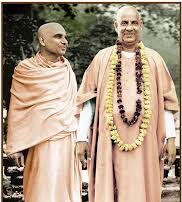
Swami Chinmayananda on his day of Sannyas initiation with Guru Swami Sivananda and other disciples Feb 25 1949 Maha Shivratri Day
Sadhana, Swami Sivananda

Raja Yoga Sadhana

Raja Yoga Sadhana by Swami Sivananda The earliest Seers who realised the Truth have explained the cosmic process as the work of Maya, the inscrutable power of the Supreme Spirit. By the mysterious operation of this veiling power, the undivided Absolute Blissful One is made to reflect Itself in an infinite multiplicity of names and forms. As described in verse 6, Chap. IV of the Gita, Maya brings about this phenomenal existence with its duality and diversity. Each centre of consciousness thus involved from the Infinite has therefore to transcend Maya to realise its essential identity with the Supreme Being. Now Maya is the eternal negation as distinguished from the Ultimate Reality that shines as the Eternal ‘I am’, the Eternal ‘SAT’. Maya is used to denote the sum-total of the forces of negativity. Nescience, oscillation, delusion, attachment, egoism, disharmony and discord, sensuality are some of the prominent forms in which it finds expression upon the human plane. Yoga then concerns itself in enabling the individuals to effectively deal with and overcome the above factors that keep him pinned down to the phenomenal existence. A state of knowledge through a constant discrimination between the real and the unreal, combined with a ceaseless assertion of an identification with the ideas of omniscience and perfection, a state of unshakable equilibrium and one-pointedness, non-attachment to everything mundane coupled with an intense unabated attachment to some particular aspect of the divine, a complete self-effacement and active selflessness, constitute, therefore, the major means of obtaining a victory over Maya. A determined development along any one or more of these lines broadly go to form the paths of knowledge, occult meditation, devotion or divine love and selfless action. The process of Yoga embodies an ascent into purity, into that absolute perfection, which is the original state of man. It implies therefore the removal of the enveloping impurities, the stilling of the discordant vibratory tempo of the lower Kosas and the establishment of a state of perfect balance and harmony. Now all the above-mentioned factors that bind down the Jiva may be seen to be operating upon a larger scale through humanity as a whole. The present age is enmeshed in ignorance, characterised by restlessness, a blind clinging to earthly existence; perverted individualism and voluptuous abandonment to pleasures of the flesh and violence, strife and discord in all walks of life. Modern age is the machine age. As such, it is power-ridden. Discovery of newer ways of generating power, exploiting fresh aspects of known forces, inventing machine to make machine is the present craze under man’s control but man himself does not have his senses and mind under his control. This has resulted in the misuse and abuse of the fruits of civilisation and science, ecause all power corrupts. The adoption of the Yogic way of life is the release from and the guarantee against such abuse of power and the resultant disaster. Training in Yoga brings to man several supernormal powers that no machine can ever generate. Yet the discipline laid down on the path ensures against their abuse. All methods of Yoga have ethical training and moral perfection as their basis. The eradication of vices, the development of certain virtues forms the first step in the ladder of Yoga. Disciplining of your nature and the formation of a steady and pure character through a set of right habits and regular daily observances is the next step. This is Yama-Niyama in Raja Yoga. The acquiring of Sadhana-Chatushtaya by the neophyte on the path of knowledge and the insistence upon Sraddha, Sadachara and self-consecration, desirelessness, sacrifice for the devotee and the Karma Yogi respectively have as their aim the development of character and ethical perfection. Thus the ringing in of a new world order of love and sacrifice, of cooperation and brotherhood and the realisation of the ideals of universal perfection can be effected by a willing unreserved allegiance to even the initial stages of Yoga. Upon this firm foundation of a well-established and virtuous moral character is built the further structure of Yoga. The inherent restlessness of the mind constitutes the greatest problem to the follower of Yoga. By its very nature, mind is ever outgoing. Also it is always unsteady. The resolute turning away from earthly attachment, the determined effacement of the ego, deliberate stoppage of all inharmonious mental processes and the constant dwelling upon a single idea, all these methods require a firm control of the mind and the conscious direction of its powers towards the desired end. The greatest external manifestation of the mental impulses is physical action. Actions when repeated crystallise into habits. In course of time, habits through indulgence get incorporated as definite traits in the individual’s personality. The plan of Yoga Science, in obtaining mastery over the mind proceeds step by step most systematically, regulating and controlling first the grosser and then the subtler manifestation. Yama overcomes all vice and implants virtue. It weakens out all evil traits and implants godly qualities. Niyama regulates the habits and aims at giving the Sadhaka mastery over his behaviour. Instead of being a slave to habits the aspirant now controls his conduct and develops certain habits by determined will. Next the inherent urge to activity is checked through Asanology. By a practice of a system of steady postures, the tendency to unrestrained and aimless movements is curbed and overcome. Character developed, ennobling traits acquired, old habits overcome and replaced by new ones, activity regulated and checked, now the vagaries of the mind are next restrained by a control of its counterpart, namely the breath. This stage is Pranayama. Though thoughts are checked, the mind yet continues to agitate in the form of desires and cravings. Thus fifth limb of Yoga is the withdrawal of all the centripetal senseward movements of the desire element in the mind, turning away from the external world and withdrawing the senses from the objects. Pratyahara paves the way for the sixth rung in the Yogic ladder, Dharana

Raja Yoga Sadhana Read Post »