





Hari Om

Menu

mantras

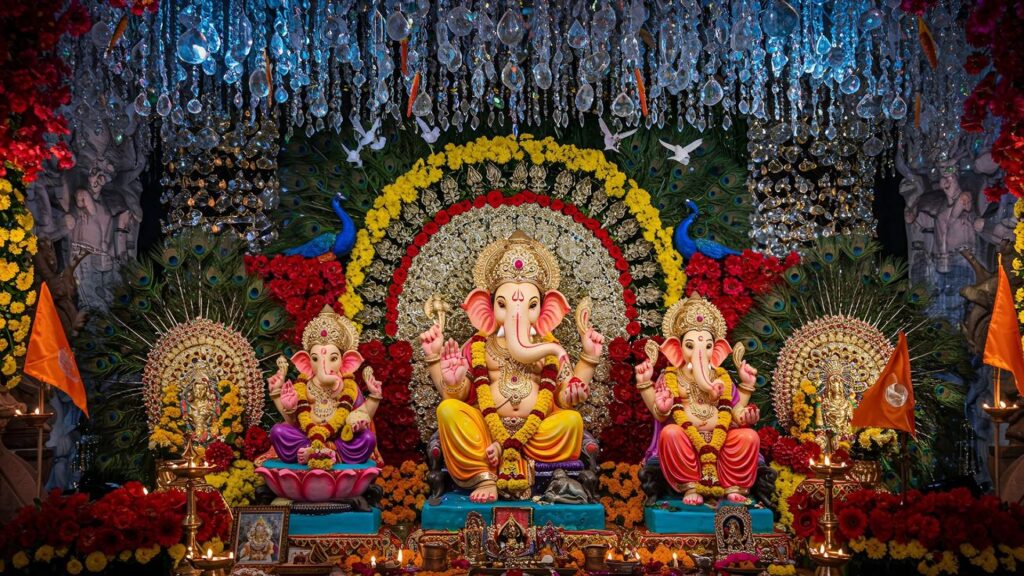
Decorated Ganesh Chaturthi pandal with multiple Ganesha idols and flowers. image
Ganesha Mantra

Gajananam Bhuta

Gajananam Bhuta गजाननं भूतगणादि सेवितंकपित्थजम्बूफलसार भक्षितम् ।उमासुतं शोकविनाशकारणंनमामि विघ्नेश्वर पादपङ्कजम् ॥ gajānanaṃ bhūtagaṇādi sevitaṃkapitthajambūphalasāra bhakṣitam .umāsutaṃ śokavināśakāraṇaṃnamāmi vighneśvara pādapaṅkajam .. I bow to you, the Lord with the face of an elephant (Gajanana), one who is served by the celestial attendants (Bhoota ganas) and other beings.The one who consumes the extract of Kapitha (wood apple) and Jambul fruits (Jamun).O the son of Goddess Uma, who is responsible for destroying all sorrows.I reverently bow to the lotus feet of Lord Vigneshwara (who removes all obstacles). Description The Gajananam Bhutaganadhi Sevitam mantra is one of the most loved morning prayers offered to Lord Ganesha, the God of Auspiciousness and Success. This prayer is also chanted before starting any new activity. Gajananam – Gaja means elephant and anan means face or mouth. The elephant faced god.Bhoota Ganadhi Sevitam – Bhuta means soul and gana means servants, meaning come to be served by Celestial Attendants or Followers.Kapittha Jambu Phalacharu Bhakshanam – means who Eats the Core of Kapittha (Wood Apple) and Jambu (Rose Apple) fruits.Uma Sutam – means son of Uma ( Parvati, wife of Lord Shiva and is also considered as adi shakti).Shoka Vinasha Karanam – means the one who can destroy all the reasons of the sadness.Namami Vigneshwara pada Pankajam – Namami means Bow or Prostrate; Vigneshwara pada Pankajam is the Lotus feet. I Prostrate at the Lotus-Feet of Vigneshwara (the God Who Removes Obstacles). Visit our Ganesh Chaturthi home page for more information, Pooja videos and popular Lord Ganesh songs all Ad-Free! Ganapati means “Lord of the people” (gana-“Host, group of people”, pati-“father, Lord”) and is also known asGanesha Gana-Esha, again referring to a Lord (Isha) of the Host/People.Lord Ganesha, who is known as the Lord of New Beginnings, is also worshipped as the Remover of Obstacles. Sri Swami Chinmayananda describes the symbolism of Lord Ganesha as follows: The Lord of Obstacles, Sri Vighneswara has four arms representing the four inner equipments, the Anthahakarana(Mind, Intellect, Memory and Ego).In one hand He has the ROPE and in the other He has an AXE. On the spiritual pilgrimage, all obstacles are created by the very subjective and objective worlds in the seeker himself. SriVighneswara chops them off with the AXE. He cuts off the attachments of His devotees to the world of plurality and thus ends all the consequent sorrows. He holds the attention of the seeker constantly towards the Higher, and pulls us nearer and nearer to the Truth and ultimately ties him down to the Highest Goal with the ROPE. With one hand, He blesses all His devotees and protects (ABHAYA) them from all obstacles on their spiritual path of seeking the Supreme, and with the other hand He feeds the seeker with MODAKA, representing the reward of the joys of sadhana — the “Joy of Experiencing the Reality”. Sri Sai Baba on Significance of Vinayaka WorshipBy Sri Sathya Sai Baba The following are a few more salient features of Ganesha’s symbolism that we ought to know 1. He is the first God to awaken in our consciousness and the first God to preside over our inner transformation. 2. As Vighneswara, the remover of obstacles, he removes ignorance, the biggest obstacle in our spiritual transformation. 3. Seated in the Muladhara chakra, he opens the blockages of inertia (tamas) present in the body and facilitates the passage of Kundalini and the free flow of spiritual energy. 4. As the harbinger of good, messenger of God and lord of the divinities, he fulfills the desires of his devotees and opens to them the doors of prosperity and abundance. 5. He is not only the son of Siva but also of Parvathi (nature). Since he is born out of their union, he personifies life, duality and manifestation in its diverse aspects. 5. His vehicle is the lowly mouse. His association with it symbolizes his lordship or control over fear, hesitation, weakness, doubt and nervousness, which the mouse symbolizes. He removes these obstacles to facilitate success and achievement for those who pray to him. 6. Lord Ganesha is the enjoyer of food. As the eater of various forms of food, he symbolizes Brahman, the ultimate recipient of all sacrificial offerings, In the body he symbolizes the individual Self, which is described in the Vedas as the enjoyer and the witness consciousness. 7. Lord Ganesha is the lord of Siva ganas. In the body, the ganas symbolize desires, thoughts and impulses. They are responsible for the instability and the modifications of the mind. They are also responsible for our distractions and failures in life. As their lord, Ganesha helps us in stabilizing our minds and experiencing peace and sameness. Lord Ganesha is our friend and benefactor in the fulfillment of the four aims of human life, namely duty (dharma), wealth (artha), enjoyment (kama) and liberation (moksha). He helps both the householders as well as the ascetics in realizing their goals. He is also described as a galactic god, who keeps balance among various worlds. He is the true son of God, Isvara, the Lord of the Universe.
Gajananam Bhuta Read Post »

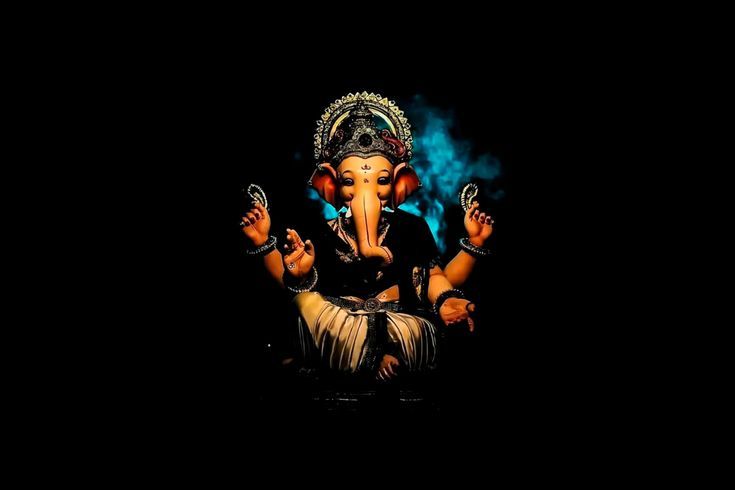
Lord Ganesha idol emerging from dark background with blue smoke.
Ganesha Mantra

Agajanana Padmakam

Agajanana Padmakam अगजानन-पद्माकं गजाननम्-अहर्निशम्।अनेकदंतं भक्तानाम् एकदन्तम्-उपास्महे ॥१॥ agajānana-padmākaṃ gajānanam-aharniśam.anekadaṃtaṃ bhaktānām ekadantam-upāsmahe ..1.. We meditate day and night on the one-tusked one who is the sun for the lotus in the form of the face of Pārvatī, the one with the elephant face and the one who is the giver of all desired ends to his devotees.(Or)As the rays from the lotus-face of Gauri (Devi Parvati) is always on her beloved son Gajanana (Who has the face of an elephant), similarly, the Grace of Sri Ganesha is always on his devotees; granting their many prayers; the devotees who with deep devotion worship the ekadanta (one with a single tusk). Description Agajanana Padmarkam is a well-known sloka in praise of Lord Ganesha, the removal of all obstacles. The shloka says that Lord Ganesha is the giver of all (anekadam) to devotees who sincerely invoke him. Excerpt from the book ‘Prayer Guide’ by Swami Dayananda SaraswatiGajananam ekadantam aharnisam upasmahe. Gaja is elephant and anana means face. Gajanana is one who has the face of an elephant. Ekadanta is the one who has only one danta, tusk. Upasmahe means we meditate upon and aharnisam means day and night. We meditate day and night upon that one who has the face of an elephant, and who has one tusk. Agajanana-padmarkam is a compound word. That which is born is jah, jayate iti jah. Gah means that which goes, gacchati iti gah. Agah means that which does not move, na gacchati iti agah, parvata, mountain. The king of the mountain is parvata-raja. Agat jayate, then, is the one who is born of aga, the mountain king. This is Goddess Parvati. Parvati is called Agaja, Girija. In this context agajananam is agajayah ananam, the face of Goddess Parvati. This face of Parvati is likened to the lotus, padma, agajananam eva padmam. For a lotus to bloom, the presence of the sun is required. While the water-lily blooms in the wake of moon at night, the water-lotus blooms only when the sun is up. Arka means sun. So too Parvati’s lotus like face requires a sun to bloom, and this is Lord Ganesa. He is the one who is the sun, as it were, for the lotus that is the face of Goddess Parvati. When she sees Lord Ganesa, she is so happy that her face blossoms. Lord Ganesa is himself gajanana, who has the face of an elephant which is a symbol for all wisdom and all power. What is anekadantam? It is anekadam tam. The one who gives is dah, dadati iti dah. The one who gives ekam, one thing, is called ekadah, ekam dadati iti ekadah. Lord Ganesa is not the giver of only one thing. He is anekadah, the giver of all that you want; in the second case-ending, it is anekadam. He gives aneka: dharma, artha, kama, and moksha. You can get everything by his grace. Tam means him. Anekadam tam means unto that Lord whose grace will help you achieve everything. For whom is he anekadah? Bhaktanam, for his devotees, those who invoke him. We meditate upon this Lord Ganesa.

Agajanana Padmakam Read Post »

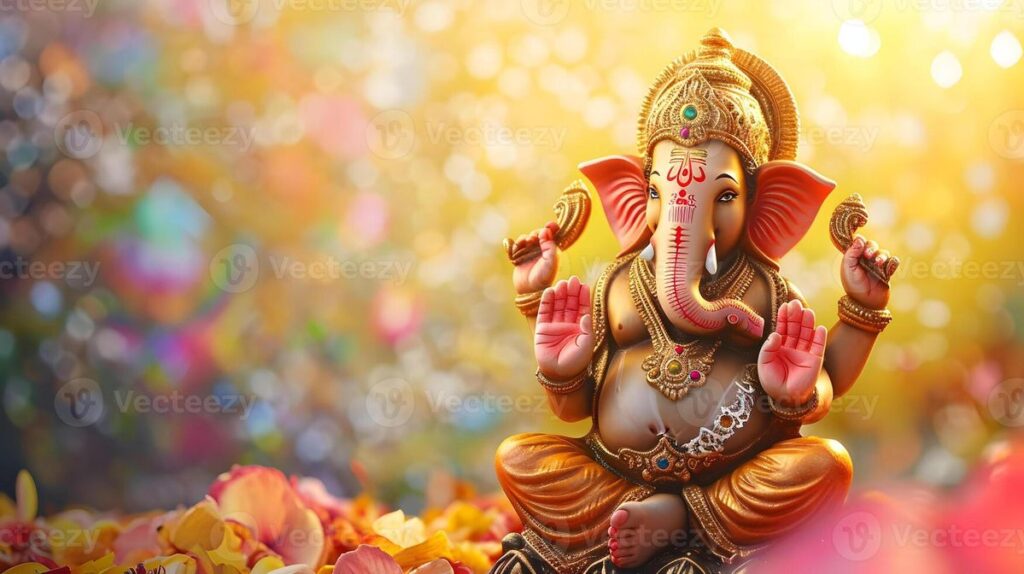
Lord Ganesha idol with golden background and colorful festive bokeh lights.
Ganesha Mantra

Gananamtva Ganapatim

Gananamtva Ganapatim ॐ गणानांत्वागणपतिंहवामहेकविं कवीनामुपमश्रवस्तमम् ।ज्येष्ठराजं ब्रह्मणां ब्रह्मणस्पतआ नः शृण्वन्नूतिभिः सीद सादनम् ॥ oṃ gaṇānāṃ tvā gaṇapatigṃ havāmahekaviṃ kavīnāmupamaśravastamam |jyeṣṭharājaṃ brahmaṇāṃ brahmaṇaspataā naḥ śṛṇvannūtibhiḥ sīda sādanam || Among the celestial attendants (Ganas), you are the Lord (Ganapathi), We offer sacrificial oblations to you.You are the wisest among the scholars. Your wisdom is known to be highest quality and incomparable for its glory.You are the eldest or foremost of the kings (referring to devas), the Lord of the sacred prayers, rituals and its performers.O Lord, come to us by hearing our hymns and be seated in this sacred sacrificial altar. Description This sacred mantra is usually chanted at the beginning of all Vedic chants. This mantra of Rig Veda 2.23.1 is addressed to Brihaspati/Brahmanaspati, and refers to Ganapati. This is a very powerful chant dedicated to Lord Ganesha, the remover of all obstacles. Ganesha or Ganapathi, undoubtedly, is the most popular among the Hindu gods. His popularity and worship extends to Buddhism and Jainism. He is worshiped not merely in India but in other parts of the world too. He is an ancient God. The earliest reference to Ganapathi appears in the second book of the Rig Veda in the rik starting with the above verse Ganaanaam tva Ganapati Gum Havamahe (RV 2.23.1). Ganapati means “leader of the people” (gana-“Host, group of people”, pati-“father, Lord”), i.e. Chief of the Ganas. It is explained that Ganapathi in this rik refers to Brahmanaspati, a Vedic divinity of the highest order, the leader of the heavenly bands and a sage (kavi) among sages (Jyeshta Rajam Brahmanam, Brahmanaspata).Ganesha is another name for Ganapati – Gana-Esha, again referring to a Lord (Isha) of the Hostthe remover of all obstacles.Ganaanaam of Ganas. GaNa refers to a group or collection of peopletvaa yougaNa-patim pati means Lord. So, Lord of the ganas.havaamahe aahvaamahe Hava means an oblation. Havaamahe means’ we offer our oblations.kavim poet (inspirer)kaviinaam of the poetsupama comparable. In this context, it means incomparableshravaha that which is famously heard as, glorytamam of the highest quality Oh Lord of all people, we offer our oblations! The inspirer of poets, famously heard of as incomparable and the highest Glory – Supreme jyeshhTha eldestraajam raaj means to shine. Devata also means one who shines. Raj here refers to devatasbramhaNaam that which is related to bramhan (absolute consciousness)bramhaNaha vedas and those who recite them.pate comes from patihi which means ‘lord’aa = come near!naha = usshRuNvann = hearinguutibhihi = out of your gracesiida = sitsaadanam dwelling Senior-most among the devatas, the Lord of the Vedas and the chanters. Hear us, grace us and be present in the seat of this altar

Gananamtva Ganapatim Read Post »

Golden Lord Ganesha idol seated in ornate temple with garlands. image
Ganesha Mantra

Gajananam Bhuta

Gajananam Bhuta गजाननं भूतगणादि सेवितंकपित्थजम्बूफलसार भक्षितम् ।उमासुतं शोकविनाशकारणंनमामि विघ्नेश्वर पादपङ्कजम् ॥ gajānanaṃ bhūtagaṇādi sevitaṃkapitthajambūphalasāra bhakṣitam .umāsutaṃ śokavināśakāraṇaṃnamāmi vighneśvara pādapaṅkajam .. I bow to you, the Lord with the face of an elephant (Gajanana), one who is served by the celestial attendants (Bhoota ganas) and other beings.The one who consumes the extract of Kapitha (wood apple) and Jambul fruits (Jamun).O the son of Goddess Uma, who is responsible for destroying all sorrows.I reverently bow to the lotus feet of Lord Vigneshwara (who removes all obstacles). Description The Gajananam Bhutaganadhi Sevitam mantra is one of the most loved morning prayers offered to Lord Ganesha, the God of Auspiciousness and Success. This prayer is also chanted before starting any new activity. Gajananam – Gaja means elephant and anan means face or mouth. The elephant faced god.Bhoota Ganadhi Sevitam – Bhuta means soul and gana means servants, meaning come to be served by Celestial Attendants or Followers.Kapittha Jambu Phalacharu Bhakshanam – means who Eats the Core of Kapittha (Wood Apple) and Jambu (Rose Apple) fruits.Uma Sutam – means son of Uma ( Parvati, wife of Lord Shiva and is also considered as adi shakti).Shoka Vinasha Karanam – means the one who can destroy all the reasons of the sadness.Namami Vigneshwara pada Pankajam – Namami means Bow or Prostrate; Vigneshwara pada Pankajam is the Lotus feet. I Prostrate at the Lotus-Feet of Vigneshwara (the God Who Removes Obstacles). Visit our Ganesh Chaturthi home page for more information, Pooja videos and popular Lord Ganesh songs all Ad-Free! Ganapati means “Lord of the people” (gana-“Host, group of people”, pati-“father, Lord”) and is also known asGanesha Gana-Esha, again referring to a Lord (Isha) of the Host/People.Lord Ganesha, who is known as the Lord of New Beginnings, is also worshipped as the Remover of Obstacles. Sri Swami Chinmayananda describes the symbolism of Lord Ganesha as follows: The Lord of Obstacles, Sri Vighneswara has four arms representing the four inner equipments, the Anthahakarana(Mind, Intellect, Memory and Ego).In one hand He has the ROPE and in the other He has an AXE. On the spiritual pilgrimage, all obstacles are created by the very subjective and objective worlds in the seeker himself. SriVighneswara chops them off with the AXE. He cuts off the attachments of His devotees to the world of plurality and thus ends all the consequent sorrows. He holds the attention of the seeker constantly towards the Higher, and pulls us nearer and nearer to the Truth and ultimately ties him down to the Highest Goal with the ROPE. With one hand, He blesses all His devotees and protects (ABHAYA) them from all obstacles on their spiritual path of seeking the Supreme, and with the other hand He feeds the seeker with MODAKA, representing the reward of the joys of sadhana — the “Joy of Experiencing the Reality”. Sri Sai Baba on Significance of Vinayaka WorshipBy Sri Sathya Sai Baba The following are a few more salient features of Ganesha’s symbolism that we ought to know 1. He is the first God to awaken in our consciousness and the first God to preside over our inner transformation. 2. As Vighneswara, the remover of obstacles, he removes ignorance, the biggest obstacle in our spiritual transformation. 3. Seated in the Muladhara chakra, he opens the blockages of inertia (tamas) present in the body and facilitates the passage of Kundalini and the free flow of spiritual energy. 4. As the harbinger of good, messenger of God and lord of the divinities, he fulfills the desires of his devotees and opens to them the doors of prosperity and abundance. 5. He is not only the son of Siva but also of Parvathi (nature). Since he is born out of their union, he personifies life, duality and manifestation in its diverse aspects. 5. His vehicle is the lowly mouse. His association with it symbolizes his lordship or control over fear, hesitation, weakness, doubt and nervousness, which the mouse symbolizes. He removes these obstacles to facilitate success and achievement for those who pray to him. 6. Lord Ganesha is the enjoyer of food. As the eater of various forms of food, he symbolizes Brahman, the ultimate recipient of all sacrificial offerings, In the body he symbolizes the individual Self, which is described in the Vedas as the enjoyer and the witness consciousness. 7. Lord Ganesha is the lord of Siva ganas. In the body, the ganas symbolize desires, thoughts and impulses. They are responsible for the instability and the modifications of the mind. They are also responsible for our distractions and failures in life. As their lord, Ganesha helps us in stabilizing our minds and experiencing peace and sameness. Lord Ganesha is our friend and benefactor in the fulfillment of the four aims of human life, namely duty (dharma), wealth (artha), enjoyment (kama) and liberation (moksha). He helps both the householders as well as the ascetics in realizing their goals. He is also described as a galactic god, who keeps balance among various worlds. He is the true son of God, Isvara, the Lord of the Universe.

Gajananam Bhuta Read Post »

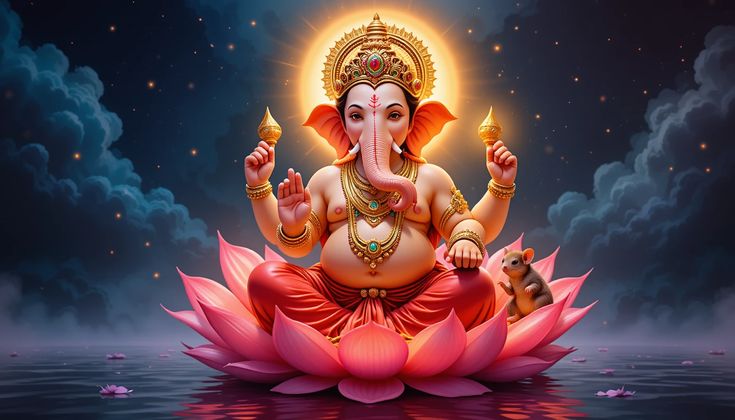
Lord Ganesha seated on lotus over water with glowing halo. image
Ganesha Mantra

Agajanana Padmakam

Agajanana Padmakam अगजानन-पद्माकं गजाननम्-अहर्निशम्।अनेकदंतं भक्तानाम् एकदन्तम्-उपास्महे ॥१॥ agajānana-padmākaṃ gajānanam-aharniśam.anekadaṃtaṃ bhaktānām ekadantam-upāsmahe ..1.. We meditate day and night on the one-tusked one who is the sun for the lotus in the form of the face of Pārvatī, the one with the elephant face and the one who is the giver of all desired ends to his devotees.(Or)As the rays from the lotus-face of Gauri (Devi Parvati) is always on her beloved son Gajanana (Who has the face of an elephant), similarly, the Grace of Sri Ganesha is always on his devotees; granting their many prayers; the devotees who with deep devotion worship the ekadanta (one with a single tusk). Description Agajanana Padmarkam is a well-known sloka in praise of Lord Ganesha, the removal of all obstacles. The shloka says that Lord Ganesha is the giver of all (anekadam) to devotees who sincerely invoke him. Excerpt from the book ‘Prayer Guide’ by Swami Dayananda SaraswatiGajananam ekadantam aharnisam upasmahe. Gaja is elephant and anana means face. Gajanana is one who has the face of an elephant. Ekadanta is the one who has only one danta, tusk. Upasmahe means we meditate upon and aharnisam means day and night. We meditate day and night upon that one who has the face of an elephant, and who has one tusk. Agajanana-padmarkam is a compound word. That which is born is jah, jayate iti jah. Gah means that which goes, gacchati iti gah. Agah means that which does not move, na gacchati iti agah, parvata, mountain. The king of the mountain is parvata-raja. Agat jayate, then, is the one who is born of aga, the mountain king. This is Goddess Parvati. Parvati is called Agaja, Girija. In this context agajananam is agajayah ananam, the face of Goddess Parvati. This face of Parvati is likened to the lotus, padma, agajananam eva padmam. For a lotus to bloom, the presence of the sun is required. While the water-lily blooms in the wake of moon at night, the water-lotus blooms only when the sun is up. Arka means sun. So too Parvati’s lotus like face requires a sun to bloom, and this is Lord Ganesa. He is the one who is the sun, as it were, for the lotus that is the face of Goddess Parvati. When she sees Lord Ganesa, she is so happy that her face blossoms. Lord Ganesa is himself gajanana, who has the face of an elephant which is a symbol for all wisdom and all power. What is anekadantam? It is anekadam tam. The one who gives is dah, dadati iti dah. The one who gives ekam, one thing, is called ekadah, ekam dadati iti ekadah. Lord Ganesa is not the giver of only one thing. He is anekadah, the giver of all that you want; in the second case-ending, it is anekadam. He gives aneka: dharma, artha, kama, and moksha. You can get everything by his grace. Tam means him. Anekadam tam means unto that Lord whose grace will help you achieve everything. For whom is he anekadah? Bhaktanam, for his devotees, those who invoke him. We meditate upon this Lord Ganesa.

Agajanana Padmakam Read Post »

images 2025 12 03T143837.823
Sūktam, veda pushpanjali part 2

Pavamāna Süktam with meaning

Pavamāna Süktam with meaning ॐ ॥ हिरण्यवर्णाः शुचयः पावका यास जातः कश्यणो यास्विन्द्रः । अग्निं या गर्भ दधिरे विरूपास्तान आपश स्योना भ॑वन्तु ।। १ ।।Om. Hiranyavarņāḥ śucayaḥ pāvakā yāsu jātaḥ kaśyapo yāsvindrah. Agnim yä garbham dadhirë virupāstāna āpaśśagg syōnā bhavantu. May these pure and golden waters which gave birth to Kashyapa, Indra and Agni, be gracious and kind to us. यासां राजा वरु॑णो याति॒ मध्ये सत्यानृते अ॑व॒पश्यं जना॑नाम् । मधुश्चुत॒श्शुच॑यो॒ याः पया॑वि॒कास्ता न॒ आप॒रशन्न् स्योना भ॑वन्तु ।। २ ।।Yāsāgam rājā varuņo yāti madhye satyānṛtē avapaśyam janānām. Madhuścutaśśucayō yāḥ pavakāstā na āpaśśagg syōnā bhavantu. May these pure and honeyed waters which surround Lord Varuna who distinguishes truthful men from the untruthful ones – be gracious and kind to us. यासां” दे॒वा दि॒िवि कृण्वन्ति॑ि भ॒क्षं या अन्तरिक्षे बहुधा भव॑न्ति । याः पृ॑थि॒र्वी पय॑तो॒न्दन्ति शुक्रास्ता न आप॒शग्गा स्योना भ॑वन्तु ।। ३ ।॥Yāsắm dēvā divi kṛņvanti bhakşam yā antariksē bahudh bhavanti. Yāḥ pṛthivīm payásōndanti śukrāstā na āpaśśa-syōnā bhavantu. May these waters which provide nourishment to gods in heaven and shower auspiciousness on earth, be gracious and kind to us. शिवेने मा चक्षुषा पश्यतापरिशवया तनवो स्पृशत त्वचें मे । सर्वां अग्नीं रेप्सुषदों हुवे वो मयि वर्ची बलमोजो निर्धत्त ॥ ४ ॥Šivēna mā cakşuşă paśyatāpaśśivaya tanuvōpa sprśata tvacam mē. Sarvägam agnīgam rapsusado huve võ mayj varco balamōjō nidhatta. O Waters, bless me with Your benedictory gaze and caress my skin with Your loving touch. I invoke Agni who has His abode in these waters to bestow upon me radiance, might and power. पर्वमानस्सुवर्जनेः । पवित्रेण विच॑र्षणिः । यः पोता स पुनातु मा ॥ ५ ॥Pavamānassuvarjanah. Pavitreņa vicarsanih. Yah pōtā sa punātu mā. O holy and pure ones, who inhabit the Suvarloka (causal world), may you along with Lord Potha purify us with your holy thoughts. जात॑वेदः प॒वित्र॑वत् । प॒वित्रेण पुनाहि मा । शुक्रेण॑ देव॒दीय॑त् । अग्ने॒ क्रत्वा॒ क्रतुं रनुं ॥ ७ ॥Jātavēdaḥ pavitrávat. Pavitreņa punāhi mā. Šukrēņa dēvadīdyát. Agnē kratvā kratūgam ranú. O pure and omniscient Lord Jataveda (Fire), You know all beings in this universe and You shine with purity; may You purify us and grant us the will power to act righteously. यस्तै पवित्रमर्षि। अग्ने विर्ततमन्तरा । ब्रह्म तेर्न पुनीमहे ॥॥८॥Yatte pavitramarcişi. Agnë vitatamantara. Brahma tens punimahe. O Lord Agni (Fire), may our knowledge be sublimated by Your power which is manifest in Your flames. वैश्वानरो रश्मिर्भि-र्मा पुनातु । वार्तः प्राणेने॑ष॒रो म॑यो॒ भूः । द्यावा॑पृथि॒वी पय॑सा॒ पयो॑भिः । ऋ॒ताव॑री य॒ज्ञियै मा पुनीताम्॥ ११ ॥Vaiśvānarō raśmibhirmā punātu. Vātaḥ prānēneșirō máyō bhūh. Dyāvapṛthivī payasā payobhih. Rtāvarī yajñiye ma punītām. May Lord Vaishvanara (Agni) who is the benefactor of one and all, purify us with his rays. May Lord Vayudeva (Wind God) bestow happiness upon us by pervading our body as the life principle. May the heaven and earth, inhabited by truthful people, and filled with abundant flow of milk and water, purify us by facilitating the performance of sacrifices. येन॑ दे॒वाः प॒वित्रेण । आत्मानं पुनते॒ सदाँ । तेर्न स॒हस्रंधारेण । पाव॒मा॒न्यः पुंनन्तु मा । प्राजापत्यं पवित्रम् । शतोर्चामं हिरण्मयम् । तेन॑ ब्रह्म विदर्दो व॒यम् । पूतं ब्रह्म पुनीमहे । इन्द्रेस्सुनीती सहर्मा पुनातु । सोम॑स्स्व॒स्त्या व॑रुणस्सुमीच्याँ । य॒मो राजा प्रमृणार्भिः पुनातु मा । जातर्वेदा मोर्जय॑न्त्या पुनातु ।॥ १५ ॥Yêná dēvāḥ pavitreņa. Ātmānam punatē sada. Tēna sahasradhārēņa. Pāvamānyaḥ punantu mā. Prājāpatyam pavitram. Satōdyamagam hiranmayam. Tēna brahma vido vayam. Pütam brahma punīmahē. Indrássunītī sahama punātu. Sömassvastyā varunassamīcyā. Yamō rājā pramṛnābhiḥ punātu mā. Jātavedä mörjayantyā punātu. May the sacred hymns of Pavamana Sukta, by chanting which even the gods, Prajapati and the knowers of Brahman (Brahmanas) attain purity.sanctify us in manifold ways. May Lord Indra purify us by guiding us on the path of morality; May Lord Soma purify us by granting us well being; May Lord Varuna purify us with his companionship; May Lord Yama purify us with noble thoughts and may Lord Jataveda bless us with ever growing energy.

Pavamāna Süktam with meaning Read Post »

Goddess Durga with multiple arms riding a lion holding divine weapons. image
Sūktam, veda pushpanjali part 2

Ayuşya Sūktam with meaning

Ayuşya Sūktam with meaning यो ब्रह्मा ब्रह्मण उज्जहार प्राणैः शिरः कृत्तिवासौँः पिनाकी । ईशानो देवः स न आयु॑र्दधातु तस्मै जुहोमि हविर्षा घृतेन ॥॥१Yō brahmā brahmaņa újjahāra prāṇaiḥ śiraḥ kṛttiväsah pinākī. Iśānō dēvaḥ sa na āyurdadhātu tasmai juhomi havișa ghrtēna. Lord Brahma (Creator) was born from the breath (Prana) of the Supreme Brahman. Shiva attired in elephant skin and wielding Pinaka (weapon) arose out of his Head. I pray to Lord Brahma, Lord Shiva (wielder of Pinaka) and Lord Vishnu (Ishana) for long life by offering ghee as oblation. विभ्राजमानः सरिरस्य मध्या-द्रोचमानो घर्मरुचिर्य आगात्। घोरानिहायुषेणोस मृत्युपाशानपर्नुद्य घृतम॑त्तु देवः ॥ २ ॥ Vibhrājamānah sarirásya madhyädröcanānō gharmarucirya agāt. Sa mṛtyupāśānapanudya ghöränihäyusēņö ghrtamatu dēvah. Lord Agni, who is fiery bright and who provides warmth (for life to flourish), arose from the effulgent chest of the Supreme Brahman. May Lord Agni release us from the dreadful noose of death (cycle of birth and death); I offer my oblations to Him. ब्रह्मज्योति-ब्रह्म-पत्नीषु गर्भं य॒मादधात् पुरुरूर्षं जयन्तम् । सुवर्णरम्भग्रह-म॑र्कम॒र्ध्वं त॒मायुषे वर्धयार्मो घृतेन ॥ ३ ॥Brahmajyōtirbrahmapatnīşu garbham yamadadhar pururūpam jayantam. Suvarnarambhagrahamárkamarcyan tamāyuṣē vardhayāmổ ghṛtēna. The radiance of the Supreme Brahman gave birth to the victorious golden orbed Lord Sun. May Lord Sun grant us a long life. I offer my oblations to Him. दाक्षायण्यः सर्वयोन्य॑ः स योन्यः सहस्रशो विश्वरूपां विरूपाः । ससूनवः सपतर्यः सयूथ्या आयुषेणो घृतमिदं जुषन्ताम् ।। ५ ।।Dākṣāyanyaḥ sarvayōnyah sa yonyaḥ sahasraśō viśvarūpa virūpāh. Sasūnavah sapatayah I offer ghee as oblation to Daakshayani the Universal Mother (Daughter of Daksha and Consort of Lord Shiva), and all the gods and demi-gods who are Her descendants. May they grant us a long life. 6.दिव्या गणा बहुरूपर्पाः पुराण आयुश्छिदो नः प्रमथ्न॑न्तु वीरान् । तेभ्यो जुहोमि बहुर्धा घृतेन॒ मा नः प्र॒जां रीरिषो मौत वीरान् ।। ६ ।।Divyā gaņā bahurūpaḥ purāṇā āyuśchidō nah pramathnántu vīrān. Tēbhyō juhōmi bahudha ghṛtēna mã naḥ prajāgam rīrişō mota vīrān. I offer ghee as oblation to the eternal divine Ganas (demi-gods) and their various forms (Bahurupa) so that they remove all obstacles which come in the way of our long life. May those divine Ganas (demi-gods) protect our valiant children. 7.Ékah purastat ya idam babhūva yatō babhūva bhuvanas gopah. Yamapyēti bhuvanagam samparāyē havirghṛtamihāyuşettu dēvah. sa वसून् रुद्रा-नादित्यान् मरुतौऽथ साध्यान् ऋभून् यक्षान् गन्धर्वाश्च पितॄश्च विश्वान् । भृगून् सर्पाश्चाङ्गिरसोऽय सर्वान् घृतं हुत्वा स्वायुष्या महर्याम शश्वत् ।। ८ ॥Vasūn rudranādityän maruto tha sādhyān ‘rbhün yaksin gandharvāgśca pitrūgśca viśvān. Bhrgün sarpāgścāngi rasố tha sarvān ghṛtagam hutvā svāyuṣyā mahayama śaśvat. The Supreme Brahman who existed all alone (before the creation) brought forth many gods and demi-gods (Vasus, Rudras, Adityas, Maruths, Sadhyas, Yakshas, Gandharvas, Pitrus and Bhrigus) to protect and help people in need. I offer ghee as oblation to the Supreme God, all gods and demi-gods, and pray for an eternal (long) life.

Ayuşya Sūktam with meaning Read Post »

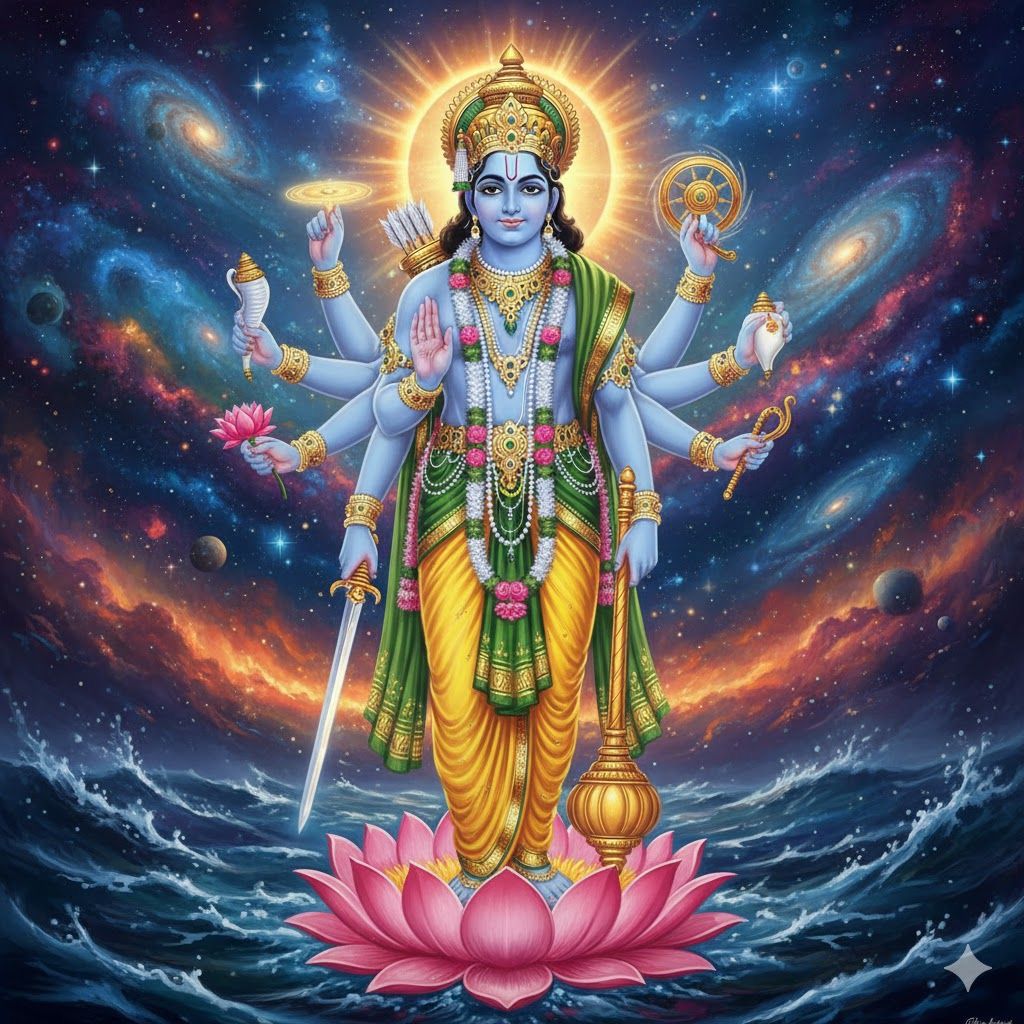
Lord Vishnu standing on a lotus with multiple arms holding divine symbols in a cosmic background. image
Sūktam, veda pushpanjali part 2

Nasadiya Suktam with meaning

Nasadiya Suktam with meaning नास॑दासीनो सर्दासीत् तदानीम् । नासीद्रजो नो व्योंमा पुरो यत् । किमावरीवः कुह कस्य शर्मन्ने। अम्भः किमासीद्रह गभीरम् ।। १ ।।Näsadāsinnō sadasit tadānīm. Näsidrajō no vyömā par yat. Kimävarivah kuha kasya śarmann. Ambhal kimásīdgahanam gabhiram. Then (Before the act of creation), there was neither existence nor non-existence: there was neither the wind nor the heavens (There were neither the five elements nor the worlds made of them). None can fathom what existed then, where then did exist the primordial impulse of life (cosmic water)? (The sage who is a poet at heart is in total awe and wonder of the Supreme Lord who existed before creation.) न मृत्युरमृतं तर्हि न । रात्रिंया अर्द्ध आसीत् प्रक्रेतः । आनींदवातं स्वधया तदेकम् । तस्माद्धान्यन परः किं चनासे ।। २ ।।Na mṛtyuramṛtaṁ na tarhi na. Rātriyā ahná āsīt prakëtaḥ. Anīdavātagam svadhayā tadēkam. Tasmäddhānyana parah kim canāsa. Then, there was neither death nor immortality (since only that which is born will die and the idea of immortality arises only when there is death). There was neither day nor night (since sun himself was not born). The One existed without the second; (Ekam eva Advitiyam Brahma – There existed only One ‘Brahman’). It sustained itself without even the air to breathe (Remember, air is also part of the creation). तर्म आसीत् तम॑सा गूढमग्रें प्रकृतम् । सलिलं सर्वमा इदम् । तुच्छ्येना॒भ्वप॑िहितं यदासीत् । तमस॒स्तन्म॑हि॒नाना॑य॒तैकम् ।।३॥Tama āsīt tamasā gūdamagrë prakētam. Salilagas sarvamā idam. Tucchyēnābhvapihitam yadāš tapasastanmahina-jayataikam. There was only darkness wrapped in layers of darkness, and in the darkness was hidden the primordial impulse of life, born of the power of desire (Ekoham Bahusyam I am One, let me become many). It was this primary desire in the cosmic mind which was the seed of creation. This was the discovery of the wise sages who delved deep into their hearts (in the depths of intuition). तिरश्चीनो विर्ततो रश्मिरेषाम् । अधः स्विदासी ३दुपरि स्विदासी३त् । रेतोधा सन् महिमान आसन् । स्वधा अ॒वस्तात् प्रय॑तिः प॒रस्ता॑त् ।। ५ ।।Tiraścīno vitatō raśmirėsām. Adhah svidāsīduparies dāsīt. Rētōdhā asan mahimāna āsan. Svadhā avastat prayatih parastat.By this basic effort of the Creator, there arose matter propelled by awesome force. This fundamental matter expanded itself in all directions (This is an allusion to the Big Bang theory). को अद्धा बंद क इह प्रवर्वोचत् । कुत आर्जाता कुते इ विसृष्टिः । अर्वाग्देवा अस्य विसर्जनाय । अथा को वैद वन आब॒भूर्व ।। ६ ।।Kō addhā veda ka iha pravocat. Kuta ājatā kutá iyam visrstih. Arvärgdevā asya visarjanāya. Athā kō vềda yatá ābabhūva. But, who can know and who can say how this first act of creation happened? Even, the gods do not know, since they came into existence only after this act of creation. इयं विसृष्टियंत आबभूव । यदि वा दधे यदि वा न । यो अस्याध्यक्षः परमे व्योमन । सो अङ्ग वैद यदि वा २ वेदं ॥७ ॥Iyam visrstiryata ābabhūva. Yadi va dadhë yadi va na Yo asyādhyakşaḥ paramë vyoman. Sõ anga veda yadi vă na vědá. Whether anyone knows it or not, the whole creation arose from the Supreme Ruler. He is the Director who is present in every atom of His creation.

Nasadiya Suktam with meaning Read Post »

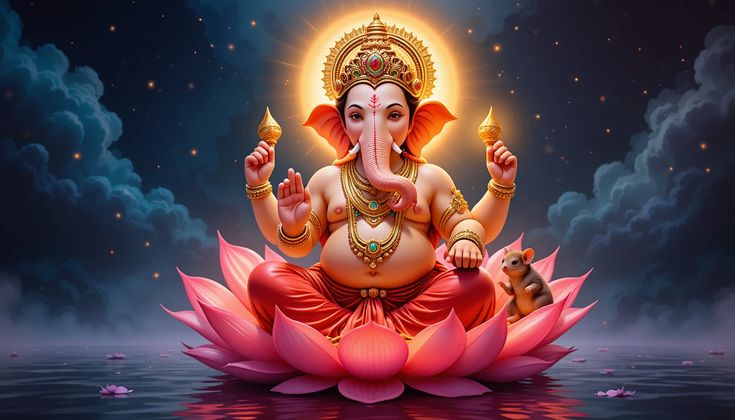
Lord Ganesha seated on a pink lotus with mouse beside him under a glowing halo. image
Sūktam, veda pushpanjali part 2

Ganapati Suktam with meaning

Ganapati Suktam with meaning आतून इन्द्र क्षुमन्त चित्रं ग्राभं से भाय । महान दक्षिणेन १॥A to na indra ksumantam citram gräbham sam grhhaya Mahahasti dakšiņčna.In this Suktam the word Ganapati occurs in the last stanza. Ganapati means the Lord of a group of demi-gods. The first nine stanzas, composed in Gayatri Chandas have Indraas Devata. Therefore. this Suktam is addressed to Lord Indra as the Lord of demi-gods (Devatas). ॐ गणानां त्वा गणप॑तिं हवामहे कविं कवीनामुपम श्रवस्तमम् । ज्येष्ठराजं ब्रह्म॑णां ब्रह्मणस्पत॒ आ र्नः गुण्व नूतिर्भिः सीद् सार्दनम् ।। १० ॥Ôm ganănằm tvā ganapatigam havāmahe kavim kavīnāmúpamaśrávastamam. Jyēstharājam brahmanām brahmanaspata a náh śrnvannūtibhiḥ sīda sādanam. O Lord of demigods (Ganapati), decimator of obstacles, and the All-knowing One, we have come to You drawn by Your greatness. You are the emperor of emperors and the highest treasure among all treasures; You are verily Brahma. निषुसींद गणपते गणेषु त्वामाहुर्विप्रतमं कवीनाम् । न करे त्वत्क्रियते किं च नारे महामर्क मघवन् चित्रर्मर्च ॥ ११ ॥Nisusida ganapatē gaņēșu tvāmåhurvipratamam kavinām Na ste tvatkriyatē kim ca nārē mahāmarkam maghavan citramarca. O Bounteous Lord, best among friends. the supreme among sages, grace us with Your benevolent presence since nothing can begin without You. We are overwhelmed with Your gracious presence and adore you by singing Your praises Lord, we implore You to grant us devotion and wisdom. O mighty warrior, condescend to fight for us and grant us imperishable wealth. अभिख्यानों मघवन्नार्धमानान्त्सखै बोधि व॑सुपते सर्वांनाम् । रणं कृधिरणकृत्सत्य शुष्माऽभक्त चिदा भंभेजा राये अ॒स्मान् ॥॥ १२ ॥bhájā rāyē asmān. Abhikhyāno maghavannādhamānāntsakhë bōdhi vasupate ( sakhīnām. Ranam kṛdhiranakrtsatya śuṣmā bhakttē cida In the above hymns, very often we have prayers to God for victory over ones enemies. In the context of spiritual quest, the worst of our enemies are within ourselves in the form of the six vices Kama (lust/desire) Krodha (anger/hatred), Lobha (greed), Moha (attachment), Mada/Ahankara (pride/ego) and Matsarya (jealousy). We pray to the Lord to grant us victory over our inner foes).

Ganapati Suktam with meaning Read Post »

Goddess Saraswati seated on a swan holding book, rosary, and pot. image
Sūktam, veda pushpanjali part 2

Mṛttikā Sūktam with meaning

Mṛttikā Sūktam with meaning भूमि-र्धेनुर्धरणी लोकधारिणी । उद्धर्ताऽसि वराहेण कृषक शेत-बाहुना ।। १ ।।Bhūmirdhënurdharani lokadhāriņi. Uddhrta’si väräht krsnēna šátabähună O Mother Earth, You shower happiness like the milch cow. You sustain all life and provide support to all living beings. You were redeemed by the mighty arms of Varaha. (When demon king Hiranyaksha tried to destroy the Earth by submerging it in waters, the Lord incarnated as the big black boar and lifted it up on its tusks after slaying the demon Hiranyaksha). 2.मृत्तिकै हर्न मे पापं युन्मया दुष्कृतं कृतम् । मृत्तिकै ब्रह्म॑दत्ताऽस काश्यपैनाभि॒मन्त्रिता । मृत्तिकै देहिं मे पुष्टि त्वयि र्सर्वं प्रतिष्ठितम् ।। २ ।।Mrttike hana mē pāpam yanmayā duşkṛtaṁ kṛtam. Mrttike brahmadatta’si kāśyapenābhimantritā. Mṛttike dehi më pustim tvayi sarvam pratisthitam. O Mother Earth, I pray to You to destroy all my sins and evil tendencies. As adored and described by devoted sage Kashyapa, You are God’s gift to all living beings. You are the basis of everything and everything is established in You; grant me all nourishment. (Here, the seeker is praying for expiation of sins committed in the past and removal of evil tendencies in him so that he does not commit sins in the future). मृत्तिके प्रतिष्ठिते सर्वं तन्मे निर्णद मृत्तिके । तर्या हतेने पांक गुच्छामि परमां गतिम् ।॥ ३ ॥Mrttikë pratisthitë sarvam tanmë nirnuda mṛttikë. Tay hatēna pāpēna gacchāmi paramām gatim.O Mother Earth, redeem me from all the sins I have committed. Once all my sins are destroved by You. I attain the highest goal (Divine).

Mṛttikā Sūktam with meaning Read Post »