


















Hari Om

Menu

Our Heritage

Swami sivananda
Our Heritage, Swami Sivananda

Swami Satchidananda

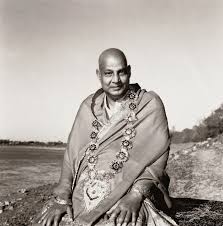
Swami Satchidananda Ramaswamy, as he was named by his parents, was born on the 22nd December, 1914, as the second son of a very devout couple Sri Kalyanasundaram and Smt. Velammai, at Chettipalayam, Tamilnadu. After pursuing a highly successful business career, he gave up worldly life on the death of his wife. He visited many sacred places of pilgrimage, stayed in Ashrams with holy saints like Sadhu Swamigal, Sri Aurobindo, Swami Chidbhavananda and Sri Ramana Maharshi, and finally arrived at Rishikesh in 1949 and met Swami Sivanandaji Maharaj upon which he felt he has reached his final destination and his Guru. He was initiated into the holy order of Sannyasa by Swami Sivananda giving him the monastic name of Swami Satchidananda, on the 10th of July, 1949. In February, 1951, Sri Gurudev asked him to undertake an All-India Tour, during which he gave lectures, taught Yoga Asanas and organised Branches of the Divine Life Society. Knowing his ability in the work of management and also proficiency especially in Hatha Yoga, Swami Satchidananda was asked by Sri Gurudev to go to Ceylon, now known as Sri Lanka, to build up a centre of the Divine Life Society, in response to an ardent request by a lady called Swamy Satchidananda Mata. She was a very devoted lady and considered Gurudev as God himself. But she had not the ability to maintain the Centre being a lady herself and not very much acquainted with the knowledge of the Sastras, much less of Yoga. So Swami Satchidananda’s going there was a God-sent, and he actually fulfilled this pious wish of Sri Gurudev. Having seen that the Centres in Sri Lanka are raised to the status expected by Sri Gurudev, he moved further to the West until he established himself in the United States of America where he has his Yoga capital in Buckingham, Virginia. This Swami has also veritably worked a miracle in the West, and in one of the movies that he has produced he has portrayed the difficulties which he had to face in doing any good at all to people there as also the achievements which were to his credit by the grace of Sri Gurudev; because materialism, atheism and total non-acquaintance with the higher values of life etc., etc., were some of the negative sides which he had to face in Western youth especially, all which he handled very dexterously with his calm, quiet and poised nature, speaking slowly, powerfully, cogently and touchingly whatever be the disciples, students and enquirers that came to him for guidance. Today he has a vast Ashram with a land extended to some hundreds of acres where he has recently built a temple of all faiths, called the LOTUS (Light of Truth Universal Shrine), which is the work of several years of many people’s cooperation and thinking under his guidance. The construction of this was completed recently and inauguration of it was done in July 1986 in a most grand manner attended by many dignitaries both in the West as well as in the East. Swami Satchidananda is also a staunch devotee of Sri Gurudev though he stands by himself, on his own legs, in reputation as well as material security. He is one of the stalwarts who succeeded to the point of perfection in carrying the message of Sri Gurudev, in the West. Sri Swami Satchidananda took Mahasamadhi on August 19, 2002 in South India. .

Swami Satchidananda Read Post »
images 32
Our Heritage, Swami Sivananda

Swami Satyananda

Swami Satyananda Swami Satyananda was a teenager, a little boy, when he came to the Ashram, but very active and proficient in Hatha Yoga right from the beginning. Many were the departments of the Ashram in which he rendered service, particularly during the later days in the Hindi department of the Ashram. He edited the Hindi journal and wrote articles and was proficient even in composing poems in Hindi and Sanskrit, language; very active and tireless in his service. One of the great contributions of his, which is to be remembered for all times, is the hard work that he did in bringing about a translation and commentary in the English language of the Brihadaranyaka Upanishad by Sri Gurudev. He was actively connected with this work and, but for his struggle day and night in seeing to it that the manuscript was made ready, the book would not have actually come out. He was solely responsible, one may say, for the coming out of this book-the commentary on the Brihadaranyaka Upanishad of Sri Gurudev. Later on, he left the Ashram on an inner feeling of establishing himself separately in a secluded place and he found himself somehow landed in Bihar, a place called Monghyr, where devotees somehow recognised some value and worth and intrinsic merit in him, collaborated with him and the result was a very magnificent well-planned Institution of Yoga teaching, which became the venue for imparting instructions not only the seekers in India, but also countless seekers came from the West, many of whom took Sannyasa, under Swami Satyananda. He did such active and intensive work in the field of Yoga that his name is known in many places even in the West as a very competent and effective teacher of Yoga and the way of spiritual life. Now he is retired and has handed over the active work of his Ashram to an assistant of his.

Swami Satyananda Read Post »

images 2026 02 14T165611.736
Our Heritage, Swami Sivananda

Swami Vishnudevananda

Swami Vishnudevananda Born on the 31st of December, 1927, he was known as Kuttan Nair. He hails from Kerala, where he had his school education. After completing school, he was engaged in teaching for sometime, after which he joined the Indian Army. While searching for a misplaced paper, he happened to lay his hand on a pamphlet entitled ‘Sadhana Tattwa’ by Swami Sivananda. The practical instructions in that pamphlet attracted him to Sivananda. He took leave, went to Rishikesh and had Darshan of Swamiji. Subsequently he visited the Ashram a few times and finally when he came to the Ashram in 1947 to attend the Diamond Jubilee of Swami Sivananda, the Master told him, “Stay here,” and he stayed. The Master initiated him into the holy order of Sannyasa, on the sacred Mahasivaratri, in February 1949, and gave him the name Swami Vishnudevananda. When he entered the Ashram he was specially interested in the Hatha Yoga techniques, knowledge of which he brought with him even when he came from Kerala. The Master, knowing his abilities, made him the Professor of Hatha Yoga in the Forest Academy of the Ashram which was the only work he did for several years. It was during a period of absence from the Headquarters of Swami Madhavananda, the Secretary, that Sri Gurudev nominated Swami Vishnudevananda as the Secretary of the Ashram, sometime in the year 1955-56. During those very hard days when the financial strength of the Ashram was not much, Swami Vishnudevananda worked hard not merely as a managing Secretary but took immense interest in seeing to it that a temple is built in the name of Sri Gurudev, called Sri Guru Mandir. He had to struggle hard to achieve this purpose which of course he completed. In the year 1957, devotees who were attached to him due to the teaching they got through him got interested in him to such an extent that they invited him to countries outside, which invitation he accepted with the permission of Sri Gurudev and went to Malaysia, Hong Kong and Japan and from Japan he went to America fixing his permanent Centre in Montreal, in Canada. He opened other Centres in the United States and also several other Yoga Centres in Europe.Today Swami Vishnudevananda is a very well-known name and his work is of international reputation and very few in the field of Yoga in the world would be unacquainted with the name of Swami Vishnudevananda. He has also a Centre in India in Nayyardam near Trivandrum, South India. Swami Vishnudevananda is a very simple man, though, like a magician, he worked a miracle in the West, where tirelessly he worked to bring together many complex elements, group of devotees and participants in his work. He maintained a simplicity of his own and almost not caring for himself, only caring for the welfare of his mission and his devotees. He lives the life of a desireless, unselfish and simple man, working very hard vigorously for sometime and completely severing himself from work at other times and rushing back to the Himalayan peaks, Uttarakashi and Gangottari often times for retreat and personal prayer and meditation. He has taken several rounds of trip through the world and through India in the name of Sri Gurudev and it is a great praiseworthy quality of his that even after earning such a reputation as a Yoga Teacher throughout the world, even today he considers himself as the humble servant of the great master Swami Sivananda and never does he forget to mention the name of the Master when he speaks whether in Satsangas, retreats, seminars or conferences. He is an extremely good person, simple to the core, very hard working and immensely devoted to the name of Sri Gurudev and his Mission.

Swami Vishnudevananda Read Post »

images 61
Our Heritage, Swami Sivananda

Swami Paramananda

Swami Paramananda Born on the 15th of February, 1907, in the town of Nagore in South India, as the youngest son of the prosperous Brahmin couple Sri N. Sambamurthy and Smt. Sundarambal, he was known as S. Jayaraman in his Purvashram. After his early education in Nagore itself, he served for a short time as a teacher in the local Catholic Mission School. He then went to Madras in 1927 and got employed in the Railways. The young boy, who had an adventurous spirit and an innate urge for renunciation, happened to read Swami Sivananda’s first writing ‘Practice of Yoga’ at the Connemera Library, Madras, in 1929. He started postal correspondence with Swami Sivananda and expressed his wish to renounce the world and join him at Rishikesh. He was, however, advised not to be hasty in giving up his job but to serve the Ramakrishna Mission. But Jayaraman’s zeal could not be subdued and he went to Rishikesh to have Swami Sivananda’s Darshan in December 1930. Swamiji was, however, not there; he was on a long tour. After a few days stay at Swarg Ashram, Jayaraman made a bee-line to the Ramakrishna Mission Ashram in Calcutta and became an attache to Sriman Mahapurushji Swami Sivanandaji Maharaj, one of the first disciples of Sri Ramakrishna Paramahamsa. As a disciple of Sri Mahapurushji, he served him with heart and soul and got himself endeared to the Swamiji. On the Mahasamadhi of Mahapurushji, Jayaraman felt impelled to reach the feet of Sri Swami Sivanandaji Maharaj of Rishikesh and forthwith reached the sacred banks of the Ganga. Swami Sivananda initiated him into the order of Sannyasa, under the monastic name of Swami Paramananda, in the year 1932, in Swarg Ashram. Paramananda joined Sivananda when the latter had really no Ashram of his own, and was taking his Bhikska from the Annakshetra of Swarg Ashram, living in a neglected, dilapidated hut. Paramananda had naturally to be happy with a rough life bereft of even the normal amenities of one’s life. Those were the very hard days of the Tapas of Sivananda, when he used to utilise the inside portion of used envelops or margins of old newspapers thrown on roadside for embodying his immortal message to humanity. This saint of such rigorous self-discipline and austerity, Paramananda served, and served with unabated energy, enthusiasm and tireless fervour. Swami Paramananda was with Gurudev from his remote Swarg Ashram days and was the pioneering Executive of the Divine Life Society during the days of its inception. He was then the veritable right hand of Sri Gurudev and was the sole in-charge in those difficult days of the spade-work of the Institution which was just gaining ground as the would-be world renowned Organisation. Swami Paramananda was responsible for the typing, proof-reading, printing and publishing of most of the early writings of Sri Gurudev. Swami Sivananda sent Paramananda to Madras to assist Mr. P.K. Vinayagam, Editor of the periodical ‘My Magazine of India’, in which a page was already being devoted to Swamiji’s article ‘Precepts for Practice’, which Swamiji continued to contribute for more than two decades. Stationed in Madras, Paramananda got published many of Gurudev’s works through the good offices of Mr. P.K. Vinayagam. So hard-working and dedicated was Swami Paramananda that Sri Gurudev took him, as also Sri P.K. Vinayagam, as Trustees of the Divine Life Trust Society on its formation in 1936. Swami Paramananda was also nominated as the joint Secretary of the Society and he, in collaboration with Swami Swaroopananda did superhuman services to Swami Sivananda and his Mission. Referring to Swami Paramananda, Swami Venkatesananda Writes: “Matchless Guru-Bhakti (devotion to the Guru), an astounding dynamism, unflinching devotion to the cause he espouses, intense activity in the service of his Master, love and affection towards all who serve the cause, a great love for discipline and an innate capacity to maintain it, and selflessness to the absolute degree, selflessness that perfumes all the other virtues and strikes awe and evokes respect in all-that, in short, was Swami Paramanandaji Maharaj. “Even a mere catalogue of the services rendered by Paramananda to the divine cause espoused by the Master would fill the pages of a large volume. Suffice it to say that when a holy wish arose in the Cosmic love-lake of Swami Sivananda’s heart, it flooded Paramananda’s entire being; when a word issued from Swami Sivananda’s lips, Paramananda was ready with the response, ‘It is done, Swamiji.’ Thus were born the Divine Life Society, the Sivananda Publication League, the Sadhana Weeks, the Ashram, and the Divine Life Magazine, etc.” Such was the Master’s confidence in Swami Paramananda’s ability and fitness that when he suddenly disappeared from the Ashram in February, 1941, for rest on account of poor health, he had left a note nominating Swami Paramananda as the President of the Divine Life Society, though he returned after a week’s absence. Swami Paramananda became the second General Secretary of the Divine Life Society from 1939 and did yeoman service till 1942, when came an important turning point in his life. In October 1942, he left the Ashram, with a general letter of introduction from the Master. But his devotion to his Master and his divine mission did not diminish in the very least by leaving the Master’s physical presence; he continued to serve the cause wherever he went,-Punjab, Kashmir and Madras-during the next four years. In 1946 Swami Paramananda came to Rishikesh to have Darshan of Gurudev and the latter asked him to stay at the Ashram. This gave him the golden opportunity to plan and prepare and celebrate Sivananda’s Birth Diamond Jubilee in 1947, in an unprecedented manner. In 1950, Swami Paramananda organised the Epochal All-India-Ceylon tour, from 9th September to 8th November, a task which none else could do. It was he, again, who left no stone unturned to see through the success of the ‘World-Parliament of Religions’ held at the Headquarters of the Society in April,: 1953. On 9th January, 1956, he set up

Swami Paramananda Read Post »

images 16 1
Our Heritage, Swami Sivananda

Swami Venkatesananda

Swami Venkatesananda Parthasarathy (as Swami Venkatesananda was called before he entered the holy order of Sannyasa) was born to the pious and noble parents, Sri Srinivasan and Srimati Lakshmi Devi, in a village called Koil Venni in Tanjore District, South India, on 29th December 1921. Many incidents happened in his childhood and boyhood which reveal his inborn divine qualities. The boy’s mind began to turn to devotion and love towards Lord Venkatesa of the famous shrine of Holy Tirupati. When Parthasarathy was a boy of twelve years, he came across books written by Swami Sivananda who was destined to become his spiritual Master and Living God. In course of time Parthasarathy held a responsible position at Delhi as a personal assistant to highly influential Secretary to the Government of India. But the call of the spirit was irresistible. His contact with Swami Sivananda through books had developed into contact through frequent letters. Then it flowed into regular visits to the holy Ananda Kutir, whenever Parthasarathy managed to get leave from his office duties. The personal contact with the Master soon overwhelmed Parthasarathy and he cut off all bonds that bound him to the secular life, renounced a promising career and offered himself as a dedicated Sevak (servant) at the lotus-feet of his Divine Master Swami Sivananda. Coming thus into the spiritual fold of Swami Sivananda at a very young age, Parthasarathy took to the renunciate in the year 1945 when he resigned the excellent position he was holding. He came with the specific intention of placing himself entirely at the service of Gurudev’s Universal Spiritual Mission, with intense devotion, utter dedication and unparalleled spirit of service. He soon made himself indispensable to worshipful Gurudev, especially, in his global spiritual dissemination work. From early 1945 up to the time when he breathed his last, his entire life was whole-souled absorption in the sublime good work of Gurudev Sivananda. Parthasarathy was ordained as a monk on 8th of September, 1947, the sacred Diamond Jubilee of Sri Gurudev. He became Swami Venkatesananda. The Swami was a versatile personality. He placed his great talent in the service of the holy Master. He was one of the pillars of the Divine Life spiritual movement. At a certain period he was the very right hand of worshipful Gurudev. Such was the great confidence reposed on him by worshipful Gurudev, that every morning, when Gurudev stepped out of his little cottage on the banks of the holy Ganga, he would first go directly to Swami Venkatesananda’s room situated right in front and sitting there, he would many a time consult him and seek his opinion on matters concerning Jnana Yagna (dissemination of spiritual knowledge) and publishing activities of the Society and at times on other important matters as well. He was a tower of strength to Sri Gurudev during the latter’s unique “ALL INDIA SPIRITUAL AWAKENING TOUR OF 1950” which had electrified the entire nation and powerfully stirred up the spiritual consciousness of millions of people creating a wave of religious awakening and inspiration throughout the country. Gurudev declared about Swami Venkatesananda: “He is the Crest-Jewel of my Mission. He is the resplendence of my work. Will I see anyone else shine brighter than him! Surely none have I seen so far. He is a tower of strength to me and my Mission.” During the tour he took down notes of every word spoken by Sri Gurudev at each centre and has brought a voluminous work “Sivananda’s Lectures: All India Tour.” He came especially to work vigorously in the correspondence section of the Ashram. One can say that volumes of typewritten material connected with correspondence is to be turned out, even during night hours by this Swami. The entire career of his in the Ashram was devoted to writing, recording of Gurudev’s speeches and editing the day-to-day messages and conversations of Gurudev which he did to the point of perfection and perhaps most of the Sivananda: Day-to-Day that we have these days recorded are the works of Swami Venkatesananda, principally. After tireless service and winklessly working in the Ashram for Sri Gurudev’s glory, his main mission was to bring glory around the aura of Gurudev’s Centre, The Divine Life Society, which task he fulfilled very commendably. He has produce a superb work entitled “Gurudev Sivananda” which is not merely a detailed biography of Swami Sivananda but also an authentic record of the history of the Divine Life Society, – a reference book involving great labour. The Indian devotees in South Africe, headed by Swami Sahajanandaji Maharaj, required a powerful spirit of the Divine Life Society to enthuse them and Swami Venkatesananda was the man chosen by Sri Gurudev for the fulfilment of this Mission there. Thus in 1961 Swami Venkatesananda was deputed to South Africa, where he did a marvellous work. Reports came from there Swami Venkatesananda shook the whole of South Africa and he hoisted the banner of Sri Gurudev’s Mission. After working there for some years, he moved to other countries – Mauritius, Madagascar, and some countries in Europe, – and later on to the East, particularly to Australia. Most of his later days were spent in South Africa only, where again he did vigorous literary work, writing and compiling excellent text books on philosophy, Yoga and scriptures. He produced more than 50 books covering a wide range of subjects pertaining to philosophy, religion, metaphysics, ethics, self-development, spiritual Sadhana (spiritual practice), the different Yoga paths, Gurudev’special teachings, comparative religion, psychology and the different scriptures like the Ramayana, Srimad Bhagavata Purana, Yoga Vasishtha, the Gita, the Devi Mahatmya, etc., the very latest volume being a compilation of the teachings of Lord Buddha, entitled “Buddha Daily Readings.” No other single disciple of worshipful Gurudev has made such an admirable, substantial contribution on such a scale to the great Master’s world-wide spiritual ministry of the present-day mankind. The crowning glory of his contribution was the spade-work he prepared of the “Complete Work of Swami Sivananda” in 18

Swami Venkatesananda Read Post »



