








Hari Om

Menu

Karma Yoga

images 2026 02 17T150049.684
Karma Yoga, Swami Sivananda

Qualifications of a Karma Yogi

Qualifications of a Karma Yogi A Karma Yogi should be absolutely free from lust, greed, anger and egoism. Even if there are traces of these Doshas, he should try to remove them. He should not expect any kind of fruits for his actions herein and hereafter. He should not have any desire for name and fame, approbation, appreciation, thirst for applause, admiration and gratitude. He must have a spotless character. He should try to possess this gradually. He should be humble and free from hatred, jealousy, harshness, etc. He should always speak sweet words. How can a proud and jealous man, who expects respect and honour from others, serve others? He should be absolutely fearless.� A Karma Yogi should have an amiable, loving, sociable nature. He should be able to move and mix with everybody without distinction of caste, creed or colour. He should have perfect adaptability, mercy and cosmic love. He should be sympathetic and tolerant. He should be able to adjust himself to the habits and ways of others. He should have an all-embracing and all-inclusive heart. He should always have a cool and balanced mind. He should have presence of mind also. He should have equal vision. He should rejoice in the welfare of others. A man who is easily irritated and who can be easily offended over trifling things is absolutely unfit for the path of Karma Yoga. He should have all the organs under perfect control. He should lead a very simple life. If he leads a life of luxury, if he wants everything for himself, how can he share his possessions with others? He should burn his selfishness to the very root. Let me remind you once more of the words of the Gita: Samniyamyendriyagramam sarvatra samabuddhayahTe prapnuvanti mameva sarvabhutahite rataah. “Restraining and subduing the senses, regarding everything equally, in the welfare of all rejoicing, these also come to Me.” Gita: Chapter XII-4. A Karma Yogi should have a sound, healthy and strong physical body. How can he serve others if he has a poor physique and a dilapidated frame? He should take great care of the body, but he should not have the least Moha or attachment for it. He should never say: “This body is mine.” Even the jackals and fish claim: “This body is ours.” He should be ever ready to sacrifice his body for a noble cause. He should do regular Pranayama, physical exercise and Asanas to keep up a high standard of health. He should take good, nourishing and substantial food. He should bear insult, disrespect, dishonour, harsh words, censure, infamy, disgrace, heat and cold, and the pain of diseases. He should have power of endurance. He should have absolute faith in himself, in God, in the scriptures and in the words of his Guru. Such a man only can become a good Karma Yogi. Such a man only can do real and useful service to the country and to suffering humanity. It is always difficult to find an ideal Adhikari. Even if you possess a few of the above qualifications, the other qualifications will come to you by themselves, when you earnestly work in the field of Karma Yoga. You need not be discouraged. Plunge yourself in the service of God. Forget the body. March boldly in the field with Prem and Shraddha. Blow the bugle with the feeling: “I must become a true Karma Yogi now.” All virtues will cling to you by themselves. Apply yourself diligently right now from this very second. Become an ideal Karma Yogi like Janaka or Buddha. May God bless you with inner strength, faith, virtues and the spirit of self-sacrifice. Start the work even with a little capital of some love, mercy and sympathy. Enter the field at once. You will draw inspiration from the leaders in the field. The astral or invisible helpers, Nitya Siddhas, Amara-Purushas and your colleagues will push you on. After sometime, you will become a wonderful Karma Yogi. Fearlessness, humility and all other virtues will shine in you by themselves now.

Qualifications of a Karma Yogi Read Post »
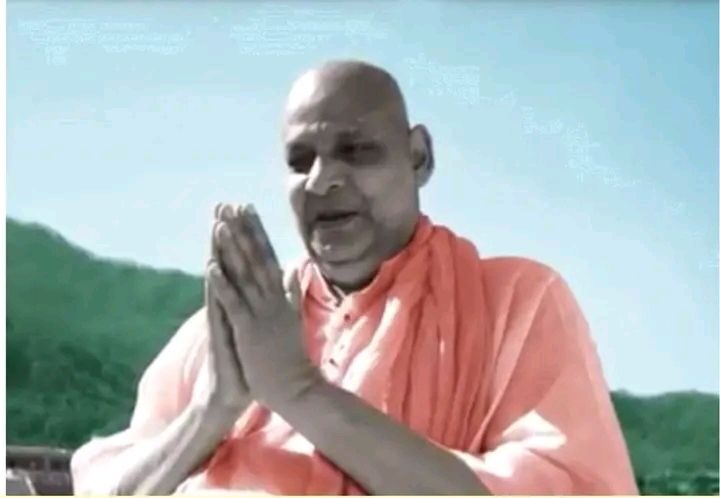
Swami Sivananda 10 1 e1770970745933
Karma Yoga, Swami Sivananda

Work is Worship

Work is Worship Work is worship. Work is meditation. Serve all with intense love without any idea of agency and without expectation of fruits or reward. You will realise God. Service of humanity is service of God. Work elevates when done in the right spirit without attachment or egoism. If you are a Bhakta (devotee), feel you are a Nimitta or instrument in the hands of God. If you adopt the path of Jnana, feel that you are a silent Sakshi (witness) and that Prakriti does everything. All work is sacred. There is no menial work from the highest view-point (from the view-point of the Absolute, from the view-point of Karma Yoga). Even scavengering, when done with the right mental attitude as described above, will become a Yogic activity for God-realisation. It is selfishness that has deplorably contracted your heart. Selfishness is the bane of human life. Selfishness clouds the understanding. Selfishness is petty-mindedness. Bhoga (sensual enjoyment) increases selfishness and selfish Pravritti. It is the root cause of human sufferings. Real spiritual progress starts with selfless service. Serve Sadhus, Sannyasins, Bhaktas, the poor and sick people with Bhava, Prem and Bhakti. The Lord is seated in the hearts of all. Isvarah sarvabhutanam hriddese arjuna tishthatibhramayan sarvabhutani yantraroodhani mayaya. “The Lord dwelleth in the hearts of all beings, O Arjuna, and by His illusive power, causes all beings to revolve as though mounted on a potter�s wheel.” Gita: Chapter XVIII-61. The spirit of service must be deeply ingrained in your very bones, cells, tissues and nerves. The reward is invaluable. Practise and feel the cosmic expansion and infinite Ananda (bliss). Tall talk and idle gossiping will not do, my dear friends. Evince intense zeal and enthusiasm for work. Be fiery in the spirit of service. Have Nishtha with God and Chesta with hands like the Bahurupi who has Nishtha of a male and Chesta of a female. You will be able to do two things at a time through gradual practice. Repeat the Name of the Lord while at work. Karma Yoga is generally combined with Bhakti Yoga. A Karma Yogi offers to the Lord as an oblation (Isvara Pranidhana) whatever he does through the Karma Indriyas (organs of action). A Karma Yogi does not expect even a return of love, appreciation, gratitude or admiration from the people whom he is serving. In the beginning, all your Karmas may not be of the pure Nishkamya type. Some may be Sakamya (with expectation). Some may be Nishkamya. You must be very vigilant in scrutinising your motives during action. You must be ever introspective. By and by, when the heart becomes purer and purer through constant work, your actions will be perfectly disinterested and selfless. In the mind there are three Doshas, viz., Mala (impurities like lust, wrath, greed, etc.), Vikshepa (tossing of the mind), and Avarana (veil of ignorance). Mala is removed through Nishkamya Karma Yoga; Vikshepa by means of Upasana (worship); and Avarana by means of study of Vedantic literature and Jnana. Karma Yoga gives Chitta Suddhi. It purifies the heart and prepares the mind for the dawn of knowledge (Jnana Udaya). Only he who has reduced his wants and controlled his Indriyas can do Karma Yoga. How can a man of luxury, with his Indriyas revolting, serve others? He wants everything for himself, and wants to exploit and domineer over others. Another qualification is that he must have a balanced mind. He must be free from Raga-Dvesha (likes and dislikes) also. “An action which is ordained, done by one who is undesirous of fruit, devoid of attachment, without love or hate�that is called pure.” Gita: Chapter XVIII-23. You must learn the secret of renunciation or the abandonment of the fruits of action. Long is the lesson, toilsome the practice. You have to combine energy in work, with indifference to the result of the work. Kill ambition, kill desire of life, kill desire for comfort. Work as those work who are ambitious. Respect life as those do who desire it. Be happy as those who live for happiness. The reconcilement of these opposites is the secret of renunciation. All who seek power, life of comfort, perform actions with a view to obtaining and enjoying these fruits, and they direct their activities to this end. The fruit is the motive for exertion and the longing of it inspires the effort. Aspirants must work as energetically as the children of this world, but they must substitute a new motive; they work that the divine law may be fulfilled, that the divine purpose may be promoted, that the Will of God may be carried out in every direction. This is the new motive and it is one of the all-compelling forces; they work for God alone. Thus acting they create no Karma-bond for it is desire that binds. Now, the attainment of renunciation is difficult and requires prolonged and patient practice. The probationer will begin by trying to be careless of the results brought to him personally by his actions; he will try to do his very best and then rid himself of all feeling as to the reaction on himself, taking equally whatever comes. If success follows, he will check the feeling of elation; if failure, he will not permit depression to master him. Persistently he will repeat his efforts, until by slow degrees he finds that he is beginning to care little for retards (or falls) while he has lost no whit of his energy and painstaking in his actions. He will not seek external activities, but will do his best with every duty that comes in his way and will begin to show the balanced state of mind which marks the crowning strength and detachment of the soul. He will hasten the attainment of these through a cool estimation of the value of the earth’s so-called prices, and will meditate on their transitory nature, the anxiety and unrest of those whose hearts are fixed on them, and the emptiness of

Work is Worship Read Post »

swami sivananda meditating
Karma Yoga, Swami Sivananda

Right and Wrong Action

Right and Wrong Action Have right thinking. Use your reason and commonsense. Follow the injunctions of the Sastras. Consult the Code of Manu or Yajnavalkya Smriti whenever you have doubts. You will be able to find out whether you are doing right or wrong action. If you say: “Sastras are countless. They are like the ocean. I can hardly understand the truths that are inculcated there. I cannot fathom out and gauge their depths. There are contradictions. I am puzzled and bewildered,” then strictly follow the words of a Guru in whom you can place absolute faith and confidence. The third way is to have fear of God. Consult your conscience. The shrill, inner voice can guide you. As soon as you hear the voice, do not delay even for a moment. Start the action diligently without consulting anybody. Practise to hear the inner voice in the morning at 4 a.m. If there are fear, shame, doubt, pricking of the conscience, and uneasiness of mind, know that you are doing wrong. If there are joy, exhilaration and satisfaction, understand that you are doing a right action.

Right and Wrong Action Read Post »

11 ms sv etc study
Karma Yoga, Swami Sivananda, Uncategorized

What is Karma?

What is Karma? Karma means work or action. According to Rishi Jaimini, rituals like Agnihotra, Yajnas, etc., are termed Karmas. There is a hidden power in Karma termed ‘Adrishta’, which brings in fruits of Karmas for the individual. Karma is all in all for Jaimini. Karma is everything for a student of the Mimamsic school of thought. Jaimini is the founder of Poorva Mimamsa. He was a student of Maharishi Vyasa, the founder of Uttara Mimamsa or Vedanta. The Mimamsa school denies the existence of Ishvara, who awards the fruits of works. According to the Gita, any action is a Karma. Charity, sacrifice and Tapas are all Karmas. In a philosophical sense, even breathing, seeing, hearing, tasting, feeling, smelling, walking, talking, etc., are all Karmas. Thinking is the real Karma. Raga-dvesha (likes and dislikes) constitute real Karma.

What is Karma? Read Post »

images 2026 02 18T001829.837
Karma Yoga, Swami Sivananda

Karma Yoga

Karma Yoga Introduction Karma, Bhakti, Yoga and Jnana do no mutually exclude each other. Karma Yoga leads to Bhakti Yoga which in its turn leads to Raja Yoga. Raja Yoga brings Jnana. Para Bhakti is Jnana only. Bhakti is not divorced from Jnana. On the contrary, Jnana intensifies Bhakti. Karma purifies the heart. Bhakti removes the tossing of the mind. Raja Yoga steadies the mind and destroys Sankalpas. Every Yoga is a fulfillment of the preceding one. Bhakti is the fulfillment of Karma. Yoga (i.e., Raja Yoga) of Bhakti is the fulfillment of Karma, and Jnana of all the preceding three. The practice of Karma Yoga prepares the aspirant for the reception of knowledge of the Self. It makes him a proper Adhikari (aspirant) for the study of Vedanta. Ignorant people jumps at one to Jnana Yoga, without first having a preliminary training in Karma Yoga. That is the reason why they fail miserable to realise the Truth. “Work for the sake of the work without any motive is all very well in words. But when it comes to the practical field, when one endeavours to put it into actual practice, he will have to encounter countless difficulties at every step.” A person’s mind is saturated with many desires. He expects fruits for every action. But gradually he too can wean the mind from expectation of rewards. It is all a question of discipline of the mind. By and by his selfish nature will be destroyed. He will understand the glory of Nishkamya Karma Yoga. Then he will be able to do works without any motives, without expectation of fruits of action. Of course, it is a question of time. One must be patient and preserving. One path does not exclude the other. The path of action is suitable for a man of Karmic tendency. The path of love is adapted for a man of emotional temperament. The path of Raja Yoga is fitted for a man of mystic temperament. The path of Vedanta or Jnana Yoga is suitable for a man of will or reason. Each path blends into the other. Ultimately all these paths converge and become one. It is very difficult to say where Raja Yoga ends and Jnana Yoga begins. All aspirants of different paths meet on a common platform or junction in the ling run. Karma, love and Yoga are the means to an end. Jnana is the end. Just as rivers join the sea, so also Karma, love and Yoga join the ocean of Jnana. Karma Yoga prepares the mind for the reception of light or knowledge. It expands the heart and breaks all barriers that stand in the way of unity or oneness. Bhakti and meditation are also Karmas. There cannot be Jnana without Yoga. The fruit of Bhakti is Janana. If you remove the hunger of man by giving food, it is only temporary physical help. It is removal of a physical want for three hours. Then the hunger manifests. The man remains in the same miserable state. Building of hospitals, rest-houses and choultries for the distribution of free food, distribution of clothes, etc., are not the highest kind of help. Miseries are nor eradicated. The world will continue to remain in a miserable state even if you build many millions of hospitals and feeding-places. Get Brahma Jnana or divine knowledge, and distribute this knowledge everywhere and remove the ignorance in men. The only will all kinds of miseries, tribulations and evils be completely eradicated. That man who helps others really helps himself. This is another important point. This world does not want the help of anybody. There is one omnipotent Isvara who controls and guides this universe. He can immediately supply a thousant and one Tilaks, Newtons, Shakespeares, Napoleans, Valmikis and Yodhishthiras. When you serve a man, think God has given you an opportunity to improve, corret and mould yourself by service. Be grateful to that man who gave you a chance to serve. People have various motives when they work. He who does selfless service without expectation of fruits of any kind becomes a powerful Yogi. A Karma Yogi knows the secret of work. He does not allow any energy to be unnecessarily frittered away. He conserves and regulates energy. He knows the science of self-restraint. He utilises the energy for good purposes that can bring maximum good to a great number of people. “The Karma Yogi, having abandoned the fruit of action, obtains eternal peace or release which comes of wisdom, while, he who, being prompted by desire, is attached to them, becomes bound.” Gita: Chapter V-12.

Karma Yoga Read Post »