Hari Om

Menu

Getting Started

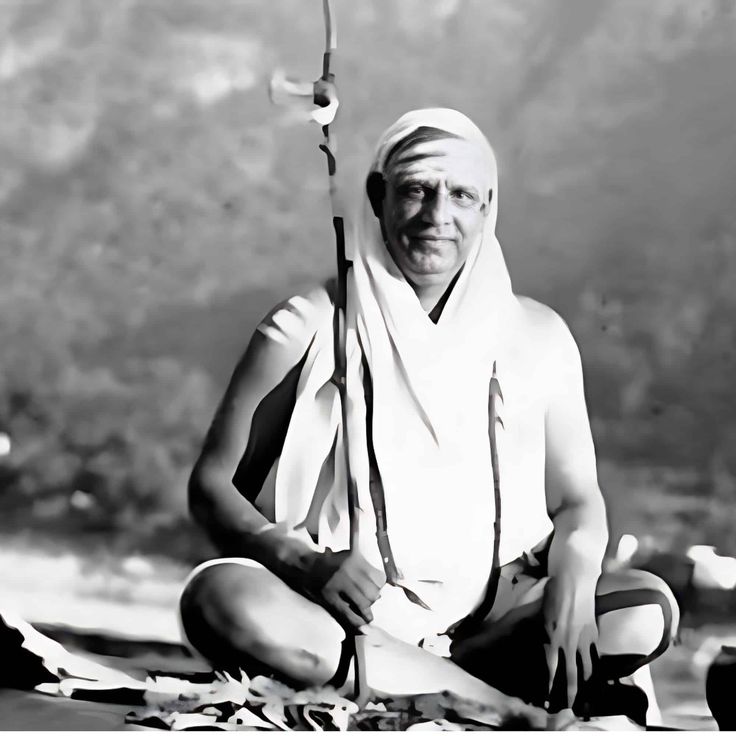
Swami Sivananda meditating in lotus pose under tree
Getting Started, Swami Sivananda

Spiritual Diary

Spiritual Diary by Swami Sivananda The Spiritual Diary is a whip for goading the mind towards righteousness and God. If you regularly maintain this diary you will get solace, peace of mind and make quick progress in the spiritual path. Maintain a daily diary and realize the marvelous results. -Swami Sivananda 1 When did you go to bed last night? 2 When did you get up from bed? 3 How many hours did you sleep? 4 How many Malas of Japa? 5 How long in Kirtan? 6 How many Pranayamas? 7 How long did you perform Asanas? 8 How long did you meditate in one Asana? 9 How many Gita Slokas did you read or get by heart? 10 How long in the company of the wise (Satsanga)? 11 How many hours did you observe Mouna? 12 How long in disinterested selfless service? 13 How much did you give in charity? 14 How many Mantras you wrote? 15 How long did you practice physical exercise? 16 How many lies did you tell and with what self-punishment? 17 How many times and how long of anger and with what self-punishment? 18 How many hours you spent in useless company? 19 How many times you failed in Brahmacharya? 20 How long in study of religious books? 21 How many times you failed in the control of evil habits and with what self-punishment? 22 How long you concentrated on your Ishta Devata (Saguna or Nirguna Dhyana)? 23 How many days did you observe fast and vigil? 24 Were you regular in your meditation? 25 What virtue are you developing? 26 What evil quality are you trying to eradicate? 27 What Indriya is troubling you most? NOTES: 4. One Mala of Japa is one full turn around the Japa Mala or rosary for a count of 108 repetitions of the Lord’s Name or Mantr 5. You can perform Kirtan in any language you wish.

Spiritual Diary Read Post »

3afe10b53cac4266ade659900386d8e9
Getting Started, Swami Sivananda

Special Instructions

Special Instructions by Swami Sivananda 1. When your house is on fire how daringly you enter the house to take your child who is sleeping in the room! Even so you must be very courageous when you tread on the spiritual path. You must be absolutely fearless. You must not have the least attachment to your body. Then only you will have Self-realisation quickly. Timid people are absolutely unfit for the spiritual path. 2. If there are mangoes on the top of a big tree, you do not jump all at once to pluck them. It is impossible. You gradually climb up the tree by getting hold of different branches and then reach the top of the tree. Even so you cannot jump all at once to the summit of the spiritual ladder. You will have to place your foot with caution on each rung of the ladder. You will have to practice Yama, Niyama, Asana, Pranayama, Pratyahara, Dharana and Dhyana. Then only you will reach the highest rung of the ladder of Yoga, viz., Samadhi. If you are a student of Vedanta you will have to equip yourself with the four means. First you will have to do Sravana, Manana and Nididhyasana. Then only you will attain Brahma Sakshatkara. If you are a student of Bhakti Yoga, you will have to practice the nine modes of Bhakti, viz., Sravana, Kirtana, Smarana, Padasevana, Archana, Vandana, Dasya, Sakhya and Atma-nivedana. Then only you will attain the state of Para-bhakti. 3. If the chicken and fowls run hither and thither to eat various sorts of rubbish, what does the owner of the poultry do? He gives a slight tap on their heads and throws before them some grains to eat. Gradually they leave their dirty habit of eating filth. Even so this mind runs hither and thither to eat filthy things and enjoy five kinds of sensual objects. Give a tap on its head and make it taste gradually the spiritual bliss by practice of Japa and meditation. 4. It takes a long time for the charcoal to catch fire but gun-powder can be ignited within the twinkling of an eye. Even so it takes a long time for igniting the fire of knowledge for a man whose heart is impure. But an aspirant with great purity of heart gets knowledge of the Self within the twinkling of an eye, within the time taken to squeeze a flower by the fingers. 5. Maya is a very huge saw. Lust, anger, greed, delusion, pride, jealousy, hatred, egoism, etc., are the teeth of this huge saw. All worldly-minded persons are caught up in the teeth of this saw and are crushed. Those who are endowed with purity, humility, love, dispassion, devotion and enquiry are not hurt. They escape through the divine grace. They pass smoothly below the saw and reach the other side of immortality. 6. Winter is very congenial for vigorous meditation. You will not get tired even if you meditate for hours together at a stretch. But in the morning hours laziness tries its level best to overpower you. If you cover yourself with one or two warm blankets you feel quite comfortable. You do not want to get up in the early morning even though the repeated alarm wakes you up again and again. You decide now: “Let me sleep for fifteen minutes more and then let me start my meditation.” Then you begin to cover nicely, with the blanket, certain exposed parts of the feet. You feel quite pleasant now. What is the net-result? You begin to snore nicely and get up only after the sun has arisen. Days, weeks and months will roll on like this. Every winter also will pass away in this manner. Just at that time which is quite favourable for meditation, mind deceives you and overpowers you by sleep. Mind is a master-magician. He knows several tricks and illusions. Maya operates through mind. Mysterious is Maya. Be on your alert. Be vigilant. You can control mind and Maya. Throw away the blanket as soon as you hear the alarm. Sit on Vajra Asana. Do 20 Pranayamas. Drowsiness will disappear. 7. O friends! Wake up! Sleep no more. Meditate. It is Brahmamuhurta now! Open the gate of the temple of the Lord in your heart with the key of love. Hear the music of the soul. Sing the song of Prema to your Beloved. Play the melody of the Infinite. Melt your mind in His contemplation. Unite with Him. Immerse yourself in the ocean of Love and Bliss. 8. Just as you remove at once a pebble in your shoes that troubles you, so also you must be able to remove any tormenting thought from your mind at once. Then only you have gained sufficient strength in control of thought. Then only you have attained some real progress in the spiritual path. 9. An aspirant says: “I am able to meditate on one Asana for three hours. In the end I become senseless but I do not fall down to the ground.” If there is real meditation, you will never become senseless. You will experience perfect awareness. This is a negative, undesirable mental state. You will have to get over this state by keeping up perfect vigilance. 10. Suppose the mind runs outside during meditation forty times within one hour. If you can make it run only 38 times it is a decided improvement. You have gained some control over the mind. It demands strenuous practice for a long time to check the mind-wandering. Vikshepa Sakti is very powerful. But Sattva is more powerful than Vikshepa Sakti. Increase your Sattva. You can very easily control the oscillation of the mind. 11. When there is deep concentration you will experience great joy and spiritual intoxication. You will forget the body and the surroundings. All the Prana will be taken up to your head. 12. If you find it difficult to concentrate your mind within a room,

Special Instructions Read Post »

c6e6a53c0eb8de4803ee34dea73b5717
Getting Started, Swami Sivananda

Advice to Aspirants

Advice to Aspirants by Swami Sivananda 1. Vanity, arrogance, self-assertive nature and Rajasic violence are great obstacles in the spiritual path. They take various forms. It is very difficult for the aspirant to detect them. The Guru only can detect them and show efficient methods to eradicate them. The aspirant vainly imagines that he is advanced in the spiritual path. He resents when these defects are pointed out by others. He never admits his defects. Such an aspirant cannot make any spiritual progress. 2. The aspirant claims that he is a superior Sadhaka with psychic powers and great knowledge of Yoga. He thinks that he is free from defects and that he is a perfect Yogi. He poses as a Yogi with realisation. He says that he can influence others and has a large number of disciples, devotees, and admirers. Such an aspirant cannot make an iota of spiritual progress. He is more egoistic and proud than ordinary householders. 3. Lower nature persists and resists. It refuses to get itself sublimated and transformed. 4. If the aspirant is not willing to regenerate his lower nature, he will not be benefited even if he remains for several years with his Guru. 5. Disobedience and indiscipline are great obstacles in spiritual path. Self-assertion stands in the way of obedience. The ego can be annihilated only by obedience, humility and service. The aspirant has his own ideas, whims, fancies and impulses. He is unwilling to accept any order or discipline, presented by his Guru. He has his own ways. He promises to be obedient and observe discipline, but the actions done or the course followed is the very opposite of his profession or promise. 6. He finds faults in his Guru and even superimposes defects in him. This is height of his folly. How can he improve in the spiritual path? 7. He who is not straightforward cannot profit by the Guru’s help. 8. An aspirant who conceals facts, who utters falsehood, who is hypocritical cannot hope for the descent of divine light. He does things to keep up his position, to get his own way or indulges in his own habit. He clouds his own understanding and conscience. 9. It is impossible to correct an aspirant who has the dangerous habit of constant Self-justification. He is ready to bring any kind of clumsy argument to justify himself, to keep up his position and prestige. 10. If an aspirant continues out of Self-esteem and Self-will or Tamasic inertia to shut his eyes or harden his heart against the Divine Light, so long as he does that, no one can help him. 11. The entire being must agree for the divine change. There must be integral surrender. Then alone the light will descend. Then alone the Guru can help the aspirant. 12. An aspirant who is obstinate, Self-assertive or aggressive and Self-willed has his own ways of thinking and acting. He will not pay any heed to the advice of his Guru. He gets stuck up in the Self-created mind. He cannot rise up in the ladder of Yoga. 13. If an aspirant who is arrogant, vain, untruthful and violent says, that he is meditating for two hours nicely, he is a hypocrite, he is a deluded soul. No meditation is possible in one who has such evil traits. Do not believe this deluded man. 14. Obey your teacher. Follow his instructions implicitly. Be truthful. Be calm. Be serene. Be humble. Be devoted. Be disciplined. You will attain Self-realisation now and here. May Lord bless you all, O sincere seekers after Truth. 15. Svetasvatara Upanishad says: “He who has supreme devotion to God, and has intense devotion to the Guru as he has to God, unto him are the truths of the Upanishads revealed.”

Advice to Aspirants Read Post »

The Divine Life Society Rishikesh 5
Getting Started, Swami Sivananda

Exercises for Developing Sight

Exercises for Developing Sight by Swami Sivananda Whenever you meet a person, look at his figure carefully from top to bottom, and note mentally his peculiar features, condition of his eyes and eyebrows, teeth, arms, etc., the sort of dress he is wearing, whether he has got moustache or not, the kind of cap he has on his head, his voice, his behaviour, his looks, his gait, whether he seems to be a kind-hearted or cruel man, whether he is intelligent or dull, whether he is polite or not, his colour, etc. There are many people who are not able to give a clear description of the faces of their own friends with whom they are moving for years and years. The son is unable to describe exactly the physiognomy or marks on the face of his father, though he lives with him in close contact for a number of years. The obvious reason is that the son has not developed the power of memory. One cannot become a skilful scientist unless he has an acute power of observation. He has to observe the various phenomena of nature and to draw his own conclusions and inferences. He has to collect facts and figures to study the ‘Law of Nature’. Enter the drawing room of your friend and notice carefully what all things you find therein. Then close your eyes and reflect. Then come out of the room and note mentally, in order, all the things which the room contains, and then enter again into the room for verification. You should practise this for some months. Then you will develop a wonderful power of sight. Go to a library and note carefully all the books that are arranged in any two rows of the almirah or shelf. Close your eyes and reflect. Note down in your diary, and then verify. Let there be mistakes. It does not matter much. A time will come when you will not commit even a single mistake. You should be able to pick out or single out your comrade in a big crowd by noticing the nature of his gait and movements of his limbs or hands at a distance. There was a blind man in Srinagar who could tell the nature of colours by simply feeling the cloth. What a wonderful development of the power of touch he had! It is all a matter of training. At night, you cannot see properly; the power of seeing becomes dull, but the power of hearing is intensified. This is compensation in nature. There are some deaf and dumb people in the world who are intelligent. They do good work in the press as compositors. When one organ becomes deficient, another organ gets more developed. The energy of the organ that is not in use is utilised by the other organ and it grows rapidly. Nature is very merciful and intelligent. There are some people who cannot remember more than two things at a time. There was a soldier who could not remember the ingredients of gunpowder, even though he was trained to remember for months together. This is due to ill-development of the faculty of memory. A judge in a court of law should have an acute hearing. Then alone he will become a distinguished and able judge. Then alone he can write down quickly all evidences without any mistake. A commander-in-chief should have an acute sight. Then alone he can survey all the infantries and cavalries. Then, and then alone, he can have a clear vision of the enemies on the opposite side, even at a very long distance. One will have to develop the power of hearing and power of attention. The development of these two organs is of great help in the practice of memory-culture. In some, the organ of hearing is more developed. In others, the power of sight is more developed. Dogs have got an acute nose. They have to smell things before they get their daily bread. Prakriti has shown marked intelligence in the creation of beings. Cobras have an acute sense of hearing. They hear through their eyes. They have not got separate ears. Tigers have acute nose; they can smell blood from a very long distance. There is a play of intelligence in every inch of divine creation. Songsters and musicians have very acute hearing. They have to develop it. They will have to find out various kinds of undulations in the vibration of sounds which make difference in Ragas and Raginis. The very profession itself demands the development of the particular organ which helps them in the culture of their art or science.

Exercises for Developing Sight Read Post »

fd5ba6d82fce217b4b8a3d26c8355cc4
Getting Started, Swami Sivananda

How to Develop Perception and Hearing

How to Develop Perception and Hearing by Swami Sivananda Organs deteriorate if you do not use them properly, just in the same manner as hands and legs get atrophied by disuse, and are developed by muscular exercises, etc. There is intimate connection between sight and memory, and also hearing and memory. He who has an acute sight, a keen perception, a good power of observation and hearing, will have very good memory. There are counterparts of these external parts in the internal astral body. They are called astral senses. A Yogi hears through astral ears, and sees through astral eyes, and thus develops clairvoyance and clairaudience. He can hear sounds from distant lands, and see objects that are in distant localities. Generally, people are very careless. They have no interest to learn higher things and to have a fund of knowledge. There are millions of people in India who cannot sign even their names. India, the land of Rishis and sages, still abounds in ignorance when compared with America and the Continent. Even a small boy, who brushes a pair of boots and applies polish in the streets of London and Paris, knows politics, reads newspapers, and can discuss things nicely. The masses of India are steeped in ignorance and darkness. The root cause is carelessness, indifference and cold apathy. To get success in life, to become an able doctor or a lawyer or a good successful businessman, the ears and the eyes should be developed to an enormous extent. A blind man, or a deaf and dumb man, is practically a living dead man. All wealth and knowledge comes from the ears, the eyes and the organ of speech. These Indriyas are the Ayatana, or the receptacles, for riches and knowledge. The knowledge of the sense-universe comes through these two channels and is expressed by speech to others. Whenever you move about, you should be very alert. You must keep the eyes and ears sharp. You should try to remember all things and news that you have seen, heard or read. You should develop the power of observation. Be very attentive. Attention helps observation. Bring the power of curiosity into play. Curiosity will turn into desire after sometime. Interest and attention will come in automatically. Whenever a man talks to you, give him a very patient hearing. If there are useful and interesting points, note down in your pocket-diary then and there. Go through the pages of the diary once a week. Exercises for Developing Hearing Keep a watch very close to the ear, and hear the sound attentively. On the second day, keep it at a little distance, and hear the ‘tick, tick’ sound. Everyday increase the distance, and train yourself to hear the sound. Plug the ear with the index-finger of your hand. Train the ears alternately. There is also another exercise. Close both the ears through Yonimudra with your two thumbs and try to hear the Anahata sounds that emanate from the heart-lotus. You will hear ten varieties of sounds, such as, the sound of a flute, Mridanga, Veena, conch, bells, thunder, humming of the bee, drum, etc. Allow the organ of hearing (ear) to shift from one sound to another and carefully differentiate the various sounds, and eventually fix the ear on one sound. First try to hear the gross sounds and then the subtle sounds. There is also a third exercise. Fix the ears on the Pranava Dhvani that emanates from the Ganga. It will be heard like “Bhum”, or long “OM.” Train your ears to hear this sound. Do this exercise in the morning at 4 a.m. or at night at 9 p.m., when the din and bustle of the town is at an end. Keep your ears keen. Try to differentiate the sounds of various kinds of birds, beasts, children, factories, motor-cars, aeroplanes, cycles, shrieks, yells, snores, sobbing, crying, laughing, mocking, joking, etc. It is advisable to sit in a quite room. Close your eyes and try to concentrate on these sounds. Distinguish them. You must be able to find out, from hearing a voice of a person at a distance from within your room, that such and such a man has come in front of your room. There are some people whose voices have some resemblance. You should be able to find out that the voice of Mr. Bose more or less resembles the voice of your cousin Mr. Ganga Prasad. You should be able to find out the nature of Ragas and Raginis from the nature of vibrations and undulations, such as Kalyani, Todi, Bhairavi, Kanada, Kamboji, Deepak, Durbari, Malkose, etc. Try to hear the sounds of the heart by applying your ear to the chest of another man. You will hear the sounds “lub-dhub.” Pay heed to the sounds of sparrows and other birds, and try to differentiate their sounds. Sometimes they sing. At other times, they give signals of alarm to invite their mates and friends when there is impending danger. Animals and birds have got their own languages. Yogins can understand their languages. There is a particular technique in Samyama (or the practice of Dharana, Dhyana and Samadhi) on sounds. Some males have the voice of females, and some females the voice of males. You must be able to differentiate. You must be able to know the hissing sound of a cobra, its nature, strength of vibration, etc. Even at a distance you can say, “There is a cobra in that room.” Cats express peculiar sounds during, before and after copulation. Dogs, horses and elephants are very intelligent animals. They have got simple consciousness. They laugh and smile and express their feelings of joy and gratitude by certain sounds. You must be able to understand the nature of the sounds. By the practices enumerated above and careful observation, you will be able to develop a wonderful power of hearing. You can get on well in your business ventures and vocations in life. Sharp ears and keen
How to Develop Perception and Hearing Read Post »

download 19
Getting Started, Swami Sivananda

How to Develop the Will-Power

How to Develop the Will-Power by Swami Sivananda Attention, power of endurance, overcoming aversion, dislikes and irritations, fortitude in suffering, Tapas (austerities such as standing on one foot, sitting in the hot sun) or Panchagni Tapas before five fires, standing in cold water in piercing winter, raising the hands above and keeping in the same position for an hour, fasting, patience, command of temper, forbearance, clemency, mental power of endurance, firmness in meeting danger, power of resistance or attack, Satyagraha, keeping up daily diary-all pave a long way in developing the will. One should patiently hear the words of others even though they are not interesting and charming. He should not fret and fume. Patient hearing develops will and wins the hearts of others. One should do actions or tasks that are uninteresting. This also develops the will-power. The actions that are not interesting will become interesting after sometime. Never complain against bad environments. Create your own mental world wherever you remain and wherever you go. There are some difficulties and disadvantages wherever you go. If the mind deludes you, at every moment and at every step, try to overcome the obstacles and difficulties by suitable means. Do not try to run away from bad, unfavourable environments. God has placed you there to make you grow quickly. If you get all sorts of comforts in a place, you will not grow strong. Your mind will be puzzled in a new place when you cannot get these comforts. Therefore, make the best use of all places. Never complain against surroundings and environments. Live in your own mental world. Nothing can upset your mind. You will find Raga-Dvesha even in the eternal snowy regions of the Himalayas, near Gangotri. You cannot get an ideal place and ideal surroundings in any part of the world. Kashmir is very cool; the scenery is very enchanting; but Pissus (small insects like fleas) trouble you at night; you cannot sleep. Varanasi is a centre of Sanskrit learning, but it is notorious for hot winds in summer. Uttarkasi in the Himalayas is beautiful, but you cannot get vegetables or fruits there; the cold is so very biting in winter. This world is a relative plane of good and evil. Remember this point at all times. Try to live happily in any place, under any condition. You will become a strong and dynamic personality. This is a great secret. Keep this in your pocket and unlock the Elysian regions, the spiritual realms and the immortal abode. You can get sanguine success in any undertaking. You can conquer any difficulty. The practice of concentration is of great help to strengthen the will. You must have an intelligent understanding of the habits of the mind-how it wanders and how it operates. You must know easy and effective methods to control the wandering of the mind. The practice of thought-culture, the practice of concentration, the practice of memory-culture, are all allied subjects. All these are of immense help in the practice of will-culture. You cannot draw a line of demarcation to denote where the practice of concentration or memory-culture ends and the practice of will-culture begins. There is no hard and fast rule. For further particulars on the practice of concentration, please see the article “Control of Mind-wandering.” Mr. Gladstone and Mr. Balfour could go to deep sleep the moment they went to bed through mere willing. They had such a strong will. Even Mahatma Gandhi had this practice. They could get up in the morning at any time they wanted, to the very minute. They had so trained their subconscious mind. The subconscious mind was their obedient servant. It would wake them up at the very second. Every one of you should develop this habit through will and become a Gandhi, a Gladstone or a Balfour. Generally, the vast majority of persons simply roll in their beds for hours together and do not get sound sleep even for half an hour. It is the quality of sleep, and not the quantity, that gives refreshment. Sound sleep for even an hour is quite sufficient to refresh the body and revitalise the mind. The moment you go to bed, simply relax the mind and give the suggestion, “I will have good sleep now.” Do not think of anything. Napoleon had this habit. Even when the bugle was blowing and the drums were beating on the battlefield, he would be snoring. His subconscious mind would wake him up at the very second he wanted to get up. With a cool mind, Napoleon would appear like a lion on the battlefield. One should train himself to sleep in running cars, trains, and when moving in the aeroplanes, even in a sitting posture. This practice is of immense help for busy medical practitioners, advocates and businessmen, who have to do immense work daily and a good deal of travelling. Life has become so very complex nowadays that busy people do not find time to get enough sleep. Whenever they find some leisure, even for five minutes, they should close their eyes in any place and go to sleep for a short time. This would give great rest. They can continue their further activities. This kind of practice is a blessing to busy people. Their nerves are under great tension and pressure. By relaxing them every now and then, they could refresh themselves and keep quite fit for further activities. One should be able to sleep on the platforms of Howrah or Bombay railway stations when trains are moving at all times. This is a wonderful practice that gives immense strength. Dr. Annie Besant used to write editorial columns when moving in the cars. There are some busy doctors who read newspapers even when they are in the water closets. They keep their minds fully occupied. The practice of keeping the mind fully occupied is the best of the practices for keeping up physical and mental Brahmacharya. Those who want to become magnetic and dynamic

How to Develop the Will-Power Read Post »

download 21
Getting Started, Swami Sivananda

Exercises for Memory-Culture

Exercises for Memory-Culture by Swami Sivananda I Here are some easy exercises for memory-culture. Sit on Virasana or Padmasana. Close your eyes. Imagine there is a big garden. In one corner there are jessamine flowers, in another roses, in another Champak, in another lily of the valley. First think of the jessamine, then rotate the mind to roses, then to Champak, and then to lily. Again bring back the mind to jessamine. Revolve the mind like this for two or three minutes. Look at the map of the heavens at night and count the stars in a small localised area. On Thursday morning, try to remember the dietetic preparations, vegetables, kinds of Dhal, etc., that were prepared on Wednesday. This is another kind of exercise. II Study one important Sloka from the Gita. Find out parallel lines in the Ramayana, the Bhagavata, the Upanishads, the Yoga Vasishtha and the Bible, and connect all these passages and keep them in your mental disposition or pigeon-holes of the brain. III Bring back the word ‘V-I-B-G-Y-O-R’ to memory. Try to remember the various colours such as violet, indigo, blue, green, yellow, orange and red. Coin your code words to help you for remembering. Every one of you can have your own code words. IV Coin your catch-words, some that start with A, some with B, some others with R, some that end with ‘tion, some with ‘ness. Here are some sentences:- “An Austrian army arrived at Aurangabad.” “Be bold, but be benevolent.” “Cunning camels carried caravans.” “Doctor Dadabhai died during Dipavali.” “Examination is a great botheration to the Hindu nation whose sole occupation is cultivation.” “If you do not want to study, hang that matriculation and take to meditation. This is a sure way for Salvation.” “If you combine Satsanga and Kirtan with meditation, this will form a good spiritual emulsion.” “This is my firm conviction after mature deliberation and careful consideration.” Here, you find all words ending in ‘tion. This is a specimen for you. You can do in your own way. Every one of you has creative power of your own. V Japa, meditation, prayer, devotion, Sirshasana and Pranayama develop memory wonderfully. Here is a short description of Sirshasana. (For detailed particulars, vide the book “YOGA ASANAS”.) Sirshasana is the king of all Asanas. Spread a fourfold blanket. Rest the head over locked fingers, and slowly raise the legs up. Then slowly bring down the legs without jerks. Take the help of a wall or any of your friends in the beginning. Do it for a minute; and gradually increase the time to ten minutes. It removes diseases of the eyes, ears, nerves, blood, stomach, intestines, gonorrhoea, spermatorrhoea, dyspepsia, constipation, etc. It augments the digestive fire and improves appetite. It is a blood and nervine tonic. Intellectual faculties develop. It helps Brahmacharya and makes you an Urdhvareto-Yogi. VI Here are some assertions and affirmations for developing memory. Meditate and assert on them:- I have a very strong memory-Om Om Om. I can remember things now nicely-Om Om Om. My memory has very much improved-Om Om Om. 4. I have a wonderful retentive memory-Om Om Om. VII “Day by day, in every way, I am becoming better and better through the grace of my Lord.” Repeat this formula several times daily. Meditate on this in the morning also for five minutes. You will have wonderful improvement. Meditate on the meaning and feel also. I shall speak a word on keeping a memorandum notebook. Daily jot down in the notebook, as soon as you rise from bed in the morning, the various kinds of work that you have to do in the course of the day; and see if all have been carried out to the very letter. Tick each item as soon as it is finished. VIII Take a packet of playing cards and have six cards from out of it and see them very carefully. Then place them in front of you with face downwards. Through memory, jot down in order on a piece of paper, their exact description. You can slowly increase the number to ten or twelve. This exercise will also develop memory. IX Lie down in any easy chair quite comfortably. Recollect the picture of your father. Close your eyes. Just try to bring out a clear description of some of his distinct physical characteristics and marks on the body, such as the kind of nose, hair, the condition of his eyes, forehead, lips, ears, chest, whether broad or pigeon chest, whether sinewy or thin arms, whether there is symmetry in his limbs, the condition of his teeth, his gait, way of talking, special distinctive features and physiognomy, special traits that attract people, the nature of his voice, special marks or moles on the different parts of his body, etc. After seeing once any great man, try to bring out the special qualities and features that have arrested your attention. X Try to remember synonymous terms. This will increase your vocabulary of words and you will be able to write beautiful essays and deliver excellent lectures. You will become a great journalist. You can write thrilling books. Take, for instance, the word “compassion” or “generosity.” Try to bring out the synonymous terms such as “pity”, “mercy”, “liberality”, “munificence”, etc. Through the law of association, connect one idea with several other ideas. This will develop your memory. The thought of ‘coffee’ will bring the idea of Nilgiri Hills where it is grown, and the idea of ‘Stane’s Company’ who sell coffee seeds, and the idea of the founder of this company. Through the law of ‘Sadrishya’ or similarity, you may remember other places in the world where coffee is cultivated. You can remember the advantages of coffee. The idea of coffee will bring in the idea of similar beverages, like tea, and the name of ‘Lipton’ and his native place, how he started his business and how he became a millionaire in the end, and the nectar of


Exercises for Memory-Culture Read Post »

Swami Sivananda 1 1
Getting Started, Swami Sivananda

Instructions to Aspirants

Instructions to Aspirants by Swami Sivananda Take up memory-culture in the beginning. Take to any exercise that suits you best and put it in daily practice. Keep a daily record. This is very important. Mere skipping over the pages will not do. You will not be benefited. If you really want rapid improvement, if you want to become a real man, put the lessons in practice and take down notes. You can watch your progress and correct your mistakes. I want to make you practical man quickly. Keep special notebooks. Send me a copy of the notes of exercises that you have done in a month. I will make corrections and give you very valuable suggestions. I will put you in the right path. If you are very earnest and sincere, you can finish up the memory exercises in three months. For a mediocre, I allow six months. For a third-class type, I allow one year. After you are well up in memory-culture, you can take up will-culture. You have gained now some success and power through memory-culture. This will give you a great impetus in the will-culture. You will be rejoicing now. You will be training your every nerve in the practice of will-culture. You have already started the current. It will keep up your zeal and enthusiasm. Practise the assertions boldly and calmly. Finally understand the meaning of every assertion and try to feel it. The feeling will slowly manifest. Do not be discouraged. You will have to fight against your old enemies, the old Samskaras. Wait coolly. Try to develop patience, attention, power of endurance, balance of mind, presence of mind, etc. These qualities are very necessary to develop your will. Develop attention also. Practise will-culture for three months. You will feel your inner strength. The things that appeared difficult sometimes ago can be done with ease now. You will feel that you now have an unruffled mind. Things that easily upset your mind cannot do so now. You can turn out immense work quite smoothly. Your walk is graceful. Your speech is powerful. You are quite a changed man. There is a glow in your cheeks and a peculiar charm in your smile. You are now able to influence many. Your friends notice a magnetic aura in your face. The practice of concentration should go hand in hand with the memory and will-cultures. Concentration is an auxiliary in all cultures. No culture is possible without concentration. Have regular concentration daily in the morning for half an hour or one hour. Have a spiritual basis in your concentration. You practise concentration not only for developing your memory and will, but mainly for Self-realisation. That is the chief aim. Never, never forget this point. This is the fundamental difference between my system and the various other systems. Brahmacharya and Self- realisation are the keynotes of my system. I harp on these two points in various places. I want you to develop your memory and will for success in life and achievement of Brahmic bliss eventually. Concentrate on the picture of Lord Krishna or Lord Rama or Lord Siva or Lord Jesus or Lord Buddha or Prophet Mohammed, according to your inclination. The practice of concentration will immensely help your memory and will- culture also. Keep a record of your experiences in concen- tration in your diary and send a copy to me every month. The fourth point is the development of virtues. Go through the articles “Character Building” and “Subconscious-Mind.” You will understand the method of developing various virtues. Develop that virtue which you are hopelessly lacking in. Courage, mercy, universal love, nobility, forbearance, contentment, frankness and honesty, must be developed one by one. Take up one virtue every month and meditate on that virtue regularly. You will manifest that virtue in your character. If you develop one important virtue, all other virtues will cling to you. If you have humility and courage, all other virtues will come of their own accord. You should spend daily some time, say half an hour, for development of virtues. If you are established in Brahmacharya or truthfulness, all other virtues will cling to you by themselves. Take up one of these virtues-humility, courage, Brahmacharya and truthfulness-for development. The fifth point is eradication of evil qualities. The development of virtuous qualities will itself remove the negative qualities. But, it is better to make a positive attempt also in the eradication of these evil qualities. Then the progress will be rapid. It is a double attack on the enemy. Then success becomes easy and sure. If you could remove lust or anger or egoism, all other evil qualities will disappear by themselves. All evil qualities are the attendants of egoism. If egoism is destroyed, if the commander is slain, all the soldiers and retinues will take to their heels, out of fright, because they have lost their head. All vices originate from anger. If anger is destroyed, all sorts of vices will vanish. Therefore, concentrate your attention in killing egoism or anger. Then the whole work is done, and done perfectly, too. The sixth point is the discipline of the Indriyas. This is very important. If the Indriyas are turbulent, you cannot have concentration. Watch every Indriya carefully and curb it by suitable methods, such as fasting, Mouna, Trataka, celibacy, renunciation of articles, Dama and Pratyahara (vide the article on “Discipline of Indriyas”). Indriyas draw you out and make your mind outgoing. Curbing of the Indriyas really means the curbing of the mind. The Indriyas cannot do any independent work without the direct help of the mind. The seventh point is physical culture. I again remind you that no culture is possible if you do not possess a sound and healthy body. Keep your body strong and healthy, vigorous and active, by regular exercises. You must have a beautiful, symmetrical body. The eighth point is the keeping up of a daily diary. If you want quick and rapid progress, if you want

Instructions to Aspirants Read Post »

Swami Sivananda with red background image
Getting Started, Swami Sivananda

Details of the Spiritual Diary

Details of the Spiritual Diary by Swami Sivananda 1. When did you get up from bed? “Early to bed, early to rise, makes a man healthy, wealthy and wise.” You must get up at 4 a.m., and practise Japa and meditation. The meditative state of the mind will come by itself without exertion at this period. 2. How many hours did you sleep? Sleep for six hours is quite sufficient for every individual. Go to bed at 10 p.m., and get up at 4 a.m. Napoleon Bonaparte believed in only four hours of sleep. Too much sleep makes a man dull and lethargic. Too much sleep causes premature decay and weakens the brain-power. Those spiritual aspirants who want to do rigorous Sadhana should reduce the sleep gradually. For three months reduce the sleep by half an hour. During the next three months go to bed at 11 p.m., and get up at 4 a.m. In this way you can conquer sleep and become one like Arjuna or Lakshmana. 3. How many Malas of Japa? Japa is an important limb of Yoga. In this Kali Yuga, Japa and Kirtan are effective Sadhanas for God-realisation. Japa results in Samadhi or communion with God. Japa is the repetition of the name of the Lord. There are three varieties of Japa, viz., Vaikhari (verbal), Upamsu (whispering), and Manasic (mental). Have a Japa Mala (rosary) round your neck or in your pocket or underneath your pillow at night. Use a Mala of 108 beads. A Mala is a whip to goad the mind towards God. The fruits of Manasic Japa are ten thousand times more than Vaikhari or Upamsu. Always try to do mental Japa when you are busy in daily activities. Make it a point to repeat the Mantra some thousand times and record the number in the diary. 4. How long in Kirtan? Repetition of God’s name enables the devotee to feel the divine presence, the divine glory and the divine consciousness within himself and also everywhere. How powerful is God’s name! When one sings His name or hears its sound, he is unconsciously raised to sublime spiritual heights. He loses his body-consciousness. He is immersed in joy and drinks deep the divine nectar of immortality. Sankirtan is singing God’s name with Bhava and Prema or divine feeling. Sankirtan brings Darshan of God or attainment of divine consciousness easily in this Kali Yuga. 5. How many Pranayamas? Pranayama is ‘control of breath’. Sit in Padmasana, Sukhasana, or any other comfortable pose, with an empty stomach. Close your eyes. Close the right nostril with the thumb. Draw in the air very very slowly through the left nostril. Now close your left nostril with the little and right fingers, and retain the breath as long as you can comfortably keep. Then very very slowly exhale through the right nostril after removing the thumb. Again draw in the air through the right nostril retain it as long as you can and exhale through the left nostril very slowly. This is one Pranayama. To start with, do five Pranayamas in the morning and evening and gradually increase to 10 or 20. This is Sukhapurvaka-easy, comfortable Pranayama. 6. How long did you perform Asanas? Asana is the first stage of Ashtanga Yoga. Padmasana and Siddhasana are intended for doing Japa and meditation. Do not often change the Asana. Stick to one and gradually increase the period to even three hours. Sirshasana, Sarvangasana and other exercises are intended for maintaining good health. They remove various diseases. These Asanas will awaken the Kundalini Sakti. Perform the Asanas when the stomach is empty or light. Early morning and evening are very good for the practice of Asanas. Practise the Asanas in well-ventilated room or on the sandy beds of rivers, open airy places, or seaside. During the practice repeat your Ishta or Guru Mantra. 7. How long did you meditate in one Asana? Sit in Padmasana or Sukhasana in your meditation room. Early morning between 4 and 6 is the best period for contemplation and Japa. You can have another sitting in the night also. Take your seat before the picture of your Ishta Devata. Look at the picture steadily for a few minutes. Repeat some Stotras mentally. Then close your eyes and visualise the picture. Repeat the Ishta Mantra mentally. Sit for meditation for half an hour in the beginning and try to increase the period to three hours by gradual daily practice. When you sit on your Asana for meditation, do not shake the body. Try to keep up one current of thought of God. 8. How many Gita Slokas did you read or get by heart? Study of scriptures is Kriya Yoga or Niyama. It purifies the heart and fills the mind with sublime and elevating thoughts. Gita is a unique book for Svadhyaya. It contains the essence of all the Yogas and the cream of the Vedas. You can devote half an hour to three hours for this purpose according to the time at your disposal. 9. How long in the company of the wise (Satsanga)? The glory and power of Satsanga or association with the wise, Saints, Yogins, Sannyasins and Mahatmas, is described in detail in Bhagavata, Ramayana, and other holy scriptures. Even a moment’s company is quite sufficient to overhaul the old vicious Samskaras of the people. Service to Mahatmas purifies the mind of passionate men rapidly. Satsanga elevates the mind to magnanimous heights. Study of books written by realised persons will also be tantamount to Satsanga. 10. How many hours did you observe Mouna? Monna means vow of silence. Energy is wasted in idle talking and gossiping. Mouna develops will-power. Mouna checks the impulse of speech. It is a great help for the observance of truth and control of anger. Emotions are controlled and irritability vanishes. Observe Mouna at least for one hour or two hours a day. During Mouna, sublime thoughts should replace worldly thoughts and Japa should be done. 11. How

Details of the Spiritual Diary Read Post »

Swami Sivananda 3 1
Getting Started, Swami Sivananda

Importance of Keeping a Spiritual Diary

Importance of Keeping a Spiritual Diary by Swami Sivananda The keeping up of a daily spiritual diary is an indispensable requisite and of paramount importance. Those who are already in the habit of keeping it know its incalculable advantages. Diary is a whip for goading the mind towards God. It shows the way to freedom and eternal bliss. It is your Guru. It is the eye-opener. It develops the Manana-Sakti or the power of reflection. It will help you to destroy all your evil qualities and to be regular in your spiritual practices. If you regularly maintain a diary, you will get solace, peace of mind and quick progress in the spiritual path. Those who desire to grow in morality and spirituality, those who wish to evolve rapidly must keep a daily record of their actions. All great men of the world keep diaries. The life of Benjamin Franklin is known to you all. He kept a daily diary. He noted down the number of untruths and wrong actions for which he was responsible during the course of the day. In course of time, he became a perfect man. He had perfect control over his mind. Mahatma Gandhi used to advise the students to keep a daily diary always. A big thief is hiding himself in your brain. He has snatched away your Atmic pearl. He is giving you immense worries and troubles. He is deluding you. The thief is your mind. You must not be lenient towards him. You must kill him ruthlessly. There is no other sword sharper than this diary to kill him. It checks his happy-go-lucky ways and destroys him eventually. All your daily mistakes will be corrected. A good time will come when you will be entirely free from anger, untruth, lust, etc. You will become a perfect Yogi. Your father and mother gave you this body. They gave you food and clothing. But this diary is superior to your parents. It shows the way to freedom and eternal bliss. It gives you solace, satisfaction and peace of mind. Turn the pages of your diary carefully once a week. If you can record your actions every hour, your growth will be rapid. Happy is the man who keeps a daily diary for he is very near to God. He has a strong will and he is free from defects and mistakes. By keeping a spiritual diary you can then and there rectify your mistakes. You can do more Sadhana and evolve quickly. There is no other best friend and faithful teacher or Guru than your diary. It will teach you the value of time. At the end of every month calculate the total number of hours you spent in Japa, study of religious books, Pranayama, Asanas, sleep, etc. Then you will be able to know how much time You are spending for religious purposes. You have got every chance to increase the period of Japa, meditation, etc., gradually. If you maintain a daily diary properly, without any fault in any of the items, you will not like to waste even a single minute unnecessarily. Then alone will you understand the value of time and how it slips away. Compare the total of the last month with those of the previous months. Find out whether you have progressed in your Sadhana or not. If you have not progressed, increase your practice daily. You can do more Sadhana and evolve quickly. In maintaining a diary, you should not utter any falsehood anywhere. You are keeping it only for your own benefit. It is the diary of a religious aspirant who is treading the path of truth to realise Truth. Acknowledge your faults openly and endeavour to rectify yourself in future. You should not neglect to record everything in your diary. It is better if you compare the progress of your work of the present week with that of the previous week. If you are not able to do so once a week, you must at any cost compare it once a month. Then you will be able to make various adjustments in different items, increase the period of Japa and meditation and decrease the time of sleep. Self-punishment consists in giving up the night meals and in doing fifty Malas of Japa more than the usual number. The filling in of the form should not be a mere routine work. The annexed form is only a specimen for guidance. These items should be copied on a foolscap size paper neatly with columns drawn for all the days of the month. Do not be ashamed to mention your mistakes, vices and failures. This is meant only for your own progress. Do not waste your precious hours. It is enough that you have wasted so many years in idle gossiping. Enough, enough of the troubles you had all these days in satisfying your senses. Do not say, “From tomorrow, I will be regular.” That “tomorrow” will never come. Be sincere and start doing Sadhana from this moment. If you are really sincere, He is ever ready to help you and give you a push in your spiritual march. He who regulates his life on the above lines is sure to become a Jivanmukta or a Yogi in this very birth. Do it practically and see how you grow. Start maintaining a spiritual diary from this moment itself and realise the marvellous results.

Importance of Keeping a Spiritual Diary Read Post »