Hari Om

Menu

Ganesha Mantra

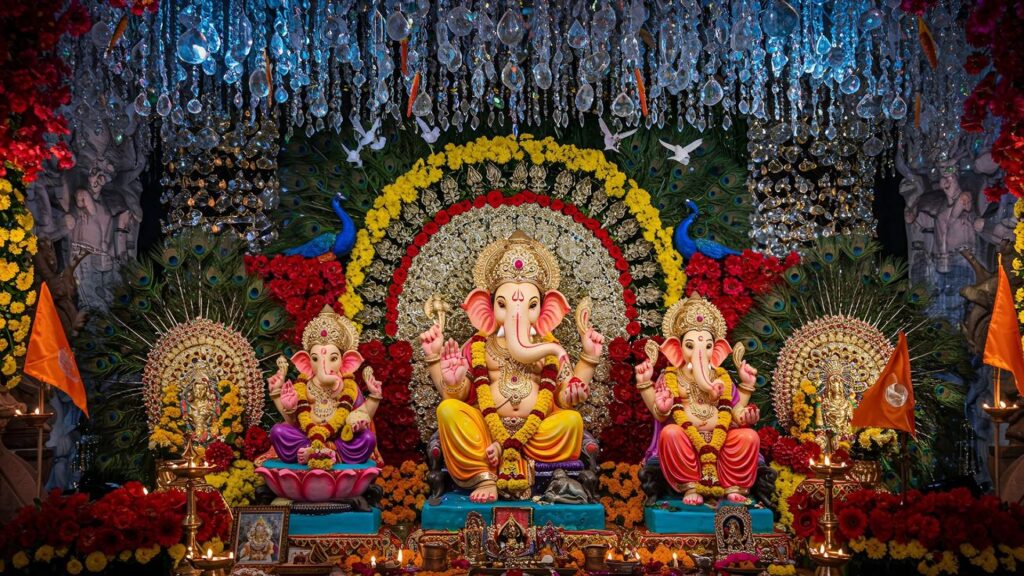
Decorated Ganesh Chaturthi pandal with multiple Ganesha idols and flowers. image
Ganesha Mantra

Gajananam Bhuta

Gajananam Bhuta गजाननं भूतगणादि सेवितंकपित्थजम्बूफलसार भक्षितम् ।उमासुतं शोकविनाशकारणंनमामि विघ्नेश्वर पादपङ्कजम् ॥ gajānanaṃ bhūtagaṇādi sevitaṃkapitthajambūphalasāra bhakṣitam .umāsutaṃ śokavināśakāraṇaṃnamāmi vighneśvara pādapaṅkajam .. I bow to you, the Lord with the face of an elephant (Gajanana), one who is served by the celestial attendants (Bhoota ganas) and other beings.The one who consumes the extract of Kapitha (wood apple) and Jambul fruits (Jamun).O the son of Goddess Uma, who is responsible for destroying all sorrows.I reverently bow to the lotus feet of Lord Vigneshwara (who removes all obstacles). Description The Gajananam Bhutaganadhi Sevitam mantra is one of the most loved morning prayers offered to Lord Ganesha, the God of Auspiciousness and Success. This prayer is also chanted before starting any new activity. Gajananam – Gaja means elephant and anan means face or mouth. The elephant faced god.Bhoota Ganadhi Sevitam – Bhuta means soul and gana means servants, meaning come to be served by Celestial Attendants or Followers.Kapittha Jambu Phalacharu Bhakshanam – means who Eats the Core of Kapittha (Wood Apple) and Jambu (Rose Apple) fruits.Uma Sutam – means son of Uma ( Parvati, wife of Lord Shiva and is also considered as adi shakti).Shoka Vinasha Karanam – means the one who can destroy all the reasons of the sadness.Namami Vigneshwara pada Pankajam – Namami means Bow or Prostrate; Vigneshwara pada Pankajam is the Lotus feet. I Prostrate at the Lotus-Feet of Vigneshwara (the God Who Removes Obstacles). Visit our Ganesh Chaturthi home page for more information, Pooja videos and popular Lord Ganesh songs all Ad-Free! Ganapati means “Lord of the people” (gana-“Host, group of people”, pati-“father, Lord”) and is also known asGanesha Gana-Esha, again referring to a Lord (Isha) of the Host/People.Lord Ganesha, who is known as the Lord of New Beginnings, is also worshipped as the Remover of Obstacles. Sri Swami Chinmayananda describes the symbolism of Lord Ganesha as follows: The Lord of Obstacles, Sri Vighneswara has four arms representing the four inner equipments, the Anthahakarana(Mind, Intellect, Memory and Ego).In one hand He has the ROPE and in the other He has an AXE. On the spiritual pilgrimage, all obstacles are created by the very subjective and objective worlds in the seeker himself. SriVighneswara chops them off with the AXE. He cuts off the attachments of His devotees to the world of plurality and thus ends all the consequent sorrows. He holds the attention of the seeker constantly towards the Higher, and pulls us nearer and nearer to the Truth and ultimately ties him down to the Highest Goal with the ROPE. With one hand, He blesses all His devotees and protects (ABHAYA) them from all obstacles on their spiritual path of seeking the Supreme, and with the other hand He feeds the seeker with MODAKA, representing the reward of the joys of sadhana — the “Joy of Experiencing the Reality”. Sri Sai Baba on Significance of Vinayaka WorshipBy Sri Sathya Sai Baba The following are a few more salient features of Ganesha’s symbolism that we ought to know 1. He is the first God to awaken in our consciousness and the first God to preside over our inner transformation. 2. As Vighneswara, the remover of obstacles, he removes ignorance, the biggest obstacle in our spiritual transformation. 3. Seated in the Muladhara chakra, he opens the blockages of inertia (tamas) present in the body and facilitates the passage of Kundalini and the free flow of spiritual energy. 4. As the harbinger of good, messenger of God and lord of the divinities, he fulfills the desires of his devotees and opens to them the doors of prosperity and abundance. 5. He is not only the son of Siva but also of Parvathi (nature). Since he is born out of their union, he personifies life, duality and manifestation in its diverse aspects. 5. His vehicle is the lowly mouse. His association with it symbolizes his lordship or control over fear, hesitation, weakness, doubt and nervousness, which the mouse symbolizes. He removes these obstacles to facilitate success and achievement for those who pray to him. 6. Lord Ganesha is the enjoyer of food. As the eater of various forms of food, he symbolizes Brahman, the ultimate recipient of all sacrificial offerings, In the body he symbolizes the individual Self, which is described in the Vedas as the enjoyer and the witness consciousness. 7. Lord Ganesha is the lord of Siva ganas. In the body, the ganas symbolize desires, thoughts and impulses. They are responsible for the instability and the modifications of the mind. They are also responsible for our distractions and failures in life. As their lord, Ganesha helps us in stabilizing our minds and experiencing peace and sameness. Lord Ganesha is our friend and benefactor in the fulfillment of the four aims of human life, namely duty (dharma), wealth (artha), enjoyment (kama) and liberation (moksha). He helps both the householders as well as the ascetics in realizing their goals. He is also described as a galactic god, who keeps balance among various worlds. He is the true son of God, Isvara, the Lord of the Universe.
Gajananam Bhuta Read Post »

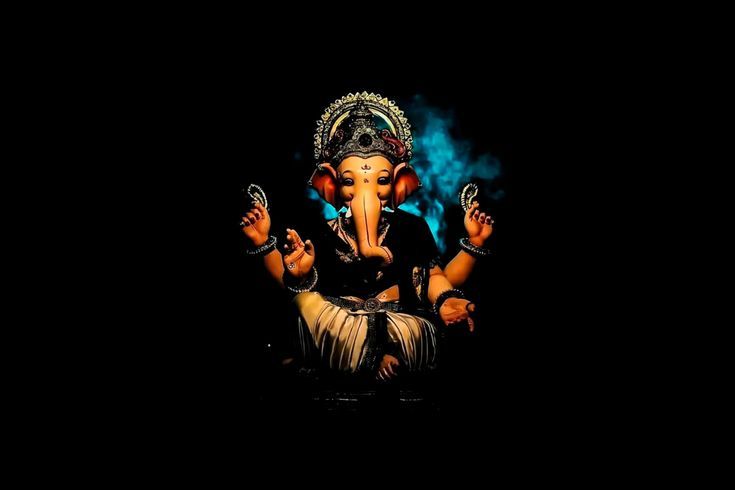
Lord Ganesha idol emerging from dark background with blue smoke.
Ganesha Mantra

Agajanana Padmakam

Agajanana Padmakam अगजानन-पद्माकं गजाननम्-अहर्निशम्।अनेकदंतं भक्तानाम् एकदन्तम्-उपास्महे ॥१॥ agajānana-padmākaṃ gajānanam-aharniśam.anekadaṃtaṃ bhaktānām ekadantam-upāsmahe ..1.. We meditate day and night on the one-tusked one who is the sun for the lotus in the form of the face of Pārvatī, the one with the elephant face and the one who is the giver of all desired ends to his devotees.(Or)As the rays from the lotus-face of Gauri (Devi Parvati) is always on her beloved son Gajanana (Who has the face of an elephant), similarly, the Grace of Sri Ganesha is always on his devotees; granting their many prayers; the devotees who with deep devotion worship the ekadanta (one with a single tusk). Description Agajanana Padmarkam is a well-known sloka in praise of Lord Ganesha, the removal of all obstacles. The shloka says that Lord Ganesha is the giver of all (anekadam) to devotees who sincerely invoke him. Excerpt from the book ‘Prayer Guide’ by Swami Dayananda SaraswatiGajananam ekadantam aharnisam upasmahe. Gaja is elephant and anana means face. Gajanana is one who has the face of an elephant. Ekadanta is the one who has only one danta, tusk. Upasmahe means we meditate upon and aharnisam means day and night. We meditate day and night upon that one who has the face of an elephant, and who has one tusk. Agajanana-padmarkam is a compound word. That which is born is jah, jayate iti jah. Gah means that which goes, gacchati iti gah. Agah means that which does not move, na gacchati iti agah, parvata, mountain. The king of the mountain is parvata-raja. Agat jayate, then, is the one who is born of aga, the mountain king. This is Goddess Parvati. Parvati is called Agaja, Girija. In this context agajananam is agajayah ananam, the face of Goddess Parvati. This face of Parvati is likened to the lotus, padma, agajananam eva padmam. For a lotus to bloom, the presence of the sun is required. While the water-lily blooms in the wake of moon at night, the water-lotus blooms only when the sun is up. Arka means sun. So too Parvati’s lotus like face requires a sun to bloom, and this is Lord Ganesa. He is the one who is the sun, as it were, for the lotus that is the face of Goddess Parvati. When she sees Lord Ganesa, she is so happy that her face blossoms. Lord Ganesa is himself gajanana, who has the face of an elephant which is a symbol for all wisdom and all power. What is anekadantam? It is anekadam tam. The one who gives is dah, dadati iti dah. The one who gives ekam, one thing, is called ekadah, ekam dadati iti ekadah. Lord Ganesa is not the giver of only one thing. He is anekadah, the giver of all that you want; in the second case-ending, it is anekadam. He gives aneka: dharma, artha, kama, and moksha. You can get everything by his grace. Tam means him. Anekadam tam means unto that Lord whose grace will help you achieve everything. For whom is he anekadah? Bhaktanam, for his devotees, those who invoke him. We meditate upon this Lord Ganesa.

Agajanana Padmakam Read Post »

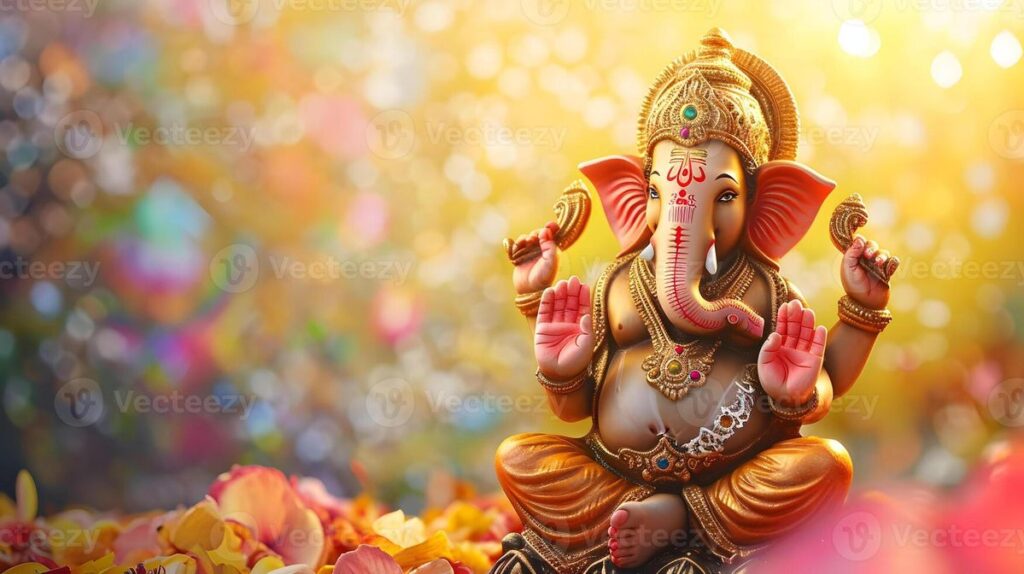
Lord Ganesha idol with golden background and colorful festive bokeh lights.
Ganesha Mantra

Gananamtva Ganapatim

Gananamtva Ganapatim ॐ गणानांत्वागणपतिंहवामहेकविं कवीनामुपमश्रवस्तमम् ।ज्येष्ठराजं ब्रह्मणां ब्रह्मणस्पतआ नः शृण्वन्नूतिभिः सीद सादनम् ॥ oṃ gaṇānāṃ tvā gaṇapatigṃ havāmahekaviṃ kavīnāmupamaśravastamam |jyeṣṭharājaṃ brahmaṇāṃ brahmaṇaspataā naḥ śṛṇvannūtibhiḥ sīda sādanam || Among the celestial attendants (Ganas), you are the Lord (Ganapathi), We offer sacrificial oblations to you.You are the wisest among the scholars. Your wisdom is known to be highest quality and incomparable for its glory.You are the eldest or foremost of the kings (referring to devas), the Lord of the sacred prayers, rituals and its performers.O Lord, come to us by hearing our hymns and be seated in this sacred sacrificial altar. Description This sacred mantra is usually chanted at the beginning of all Vedic chants. This mantra of Rig Veda 2.23.1 is addressed to Brihaspati/Brahmanaspati, and refers to Ganapati. This is a very powerful chant dedicated to Lord Ganesha, the remover of all obstacles. Ganesha or Ganapathi, undoubtedly, is the most popular among the Hindu gods. His popularity and worship extends to Buddhism and Jainism. He is worshiped not merely in India but in other parts of the world too. He is an ancient God. The earliest reference to Ganapathi appears in the second book of the Rig Veda in the rik starting with the above verse Ganaanaam tva Ganapati Gum Havamahe (RV 2.23.1). Ganapati means “leader of the people” (gana-“Host, group of people”, pati-“father, Lord”), i.e. Chief of the Ganas. It is explained that Ganapathi in this rik refers to Brahmanaspati, a Vedic divinity of the highest order, the leader of the heavenly bands and a sage (kavi) among sages (Jyeshta Rajam Brahmanam, Brahmanaspata).Ganesha is another name for Ganapati – Gana-Esha, again referring to a Lord (Isha) of the Hostthe remover of all obstacles.Ganaanaam of Ganas. GaNa refers to a group or collection of peopletvaa yougaNa-patim pati means Lord. So, Lord of the ganas.havaamahe aahvaamahe Hava means an oblation. Havaamahe means’ we offer our oblations.kavim poet (inspirer)kaviinaam of the poetsupama comparable. In this context, it means incomparableshravaha that which is famously heard as, glorytamam of the highest quality Oh Lord of all people, we offer our oblations! The inspirer of poets, famously heard of as incomparable and the highest Glory – Supreme jyeshhTha eldestraajam raaj means to shine. Devata also means one who shines. Raj here refers to devatasbramhaNaam that which is related to bramhan (absolute consciousness)bramhaNaha vedas and those who recite them.pate comes from patihi which means ‘lord’aa = come near!naha = usshRuNvann = hearinguutibhihi = out of your gracesiida = sitsaadanam dwelling Senior-most among the devatas, the Lord of the Vedas and the chanters. Hear us, grace us and be present in the seat of this altar

Gananamtva Ganapatim Read Post »

Golden Lord Ganesha idol seated in ornate temple with garlands. image
Ganesha Mantra

Gajananam Bhuta

Gajananam Bhuta गजाननं भूतगणादि सेवितंकपित्थजम्बूफलसार भक्षितम् ।उमासुतं शोकविनाशकारणंनमामि विघ्नेश्वर पादपङ्कजम् ॥ gajānanaṃ bhūtagaṇādi sevitaṃkapitthajambūphalasāra bhakṣitam .umāsutaṃ śokavināśakāraṇaṃnamāmi vighneśvara pādapaṅkajam .. I bow to you, the Lord with the face of an elephant (Gajanana), one who is served by the celestial attendants (Bhoota ganas) and other beings.The one who consumes the extract of Kapitha (wood apple) and Jambul fruits (Jamun).O the son of Goddess Uma, who is responsible for destroying all sorrows.I reverently bow to the lotus feet of Lord Vigneshwara (who removes all obstacles). Description The Gajananam Bhutaganadhi Sevitam mantra is one of the most loved morning prayers offered to Lord Ganesha, the God of Auspiciousness and Success. This prayer is also chanted before starting any new activity. Gajananam – Gaja means elephant and anan means face or mouth. The elephant faced god.Bhoota Ganadhi Sevitam – Bhuta means soul and gana means servants, meaning come to be served by Celestial Attendants or Followers.Kapittha Jambu Phalacharu Bhakshanam – means who Eats the Core of Kapittha (Wood Apple) and Jambu (Rose Apple) fruits.Uma Sutam – means son of Uma ( Parvati, wife of Lord Shiva and is also considered as adi shakti).Shoka Vinasha Karanam – means the one who can destroy all the reasons of the sadness.Namami Vigneshwara pada Pankajam – Namami means Bow or Prostrate; Vigneshwara pada Pankajam is the Lotus feet. I Prostrate at the Lotus-Feet of Vigneshwara (the God Who Removes Obstacles). Visit our Ganesh Chaturthi home page for more information, Pooja videos and popular Lord Ganesh songs all Ad-Free! Ganapati means “Lord of the people” (gana-“Host, group of people”, pati-“father, Lord”) and is also known asGanesha Gana-Esha, again referring to a Lord (Isha) of the Host/People.Lord Ganesha, who is known as the Lord of New Beginnings, is also worshipped as the Remover of Obstacles. Sri Swami Chinmayananda describes the symbolism of Lord Ganesha as follows: The Lord of Obstacles, Sri Vighneswara has four arms representing the four inner equipments, the Anthahakarana(Mind, Intellect, Memory and Ego).In one hand He has the ROPE and in the other He has an AXE. On the spiritual pilgrimage, all obstacles are created by the very subjective and objective worlds in the seeker himself. SriVighneswara chops them off with the AXE. He cuts off the attachments of His devotees to the world of plurality and thus ends all the consequent sorrows. He holds the attention of the seeker constantly towards the Higher, and pulls us nearer and nearer to the Truth and ultimately ties him down to the Highest Goal with the ROPE. With one hand, He blesses all His devotees and protects (ABHAYA) them from all obstacles on their spiritual path of seeking the Supreme, and with the other hand He feeds the seeker with MODAKA, representing the reward of the joys of sadhana — the “Joy of Experiencing the Reality”. Sri Sai Baba on Significance of Vinayaka WorshipBy Sri Sathya Sai Baba The following are a few more salient features of Ganesha’s symbolism that we ought to know 1. He is the first God to awaken in our consciousness and the first God to preside over our inner transformation. 2. As Vighneswara, the remover of obstacles, he removes ignorance, the biggest obstacle in our spiritual transformation. 3. Seated in the Muladhara chakra, he opens the blockages of inertia (tamas) present in the body and facilitates the passage of Kundalini and the free flow of spiritual energy. 4. As the harbinger of good, messenger of God and lord of the divinities, he fulfills the desires of his devotees and opens to them the doors of prosperity and abundance. 5. He is not only the son of Siva but also of Parvathi (nature). Since he is born out of their union, he personifies life, duality and manifestation in its diverse aspects. 5. His vehicle is the lowly mouse. His association with it symbolizes his lordship or control over fear, hesitation, weakness, doubt and nervousness, which the mouse symbolizes. He removes these obstacles to facilitate success and achievement for those who pray to him. 6. Lord Ganesha is the enjoyer of food. As the eater of various forms of food, he symbolizes Brahman, the ultimate recipient of all sacrificial offerings, In the body he symbolizes the individual Self, which is described in the Vedas as the enjoyer and the witness consciousness. 7. Lord Ganesha is the lord of Siva ganas. In the body, the ganas symbolize desires, thoughts and impulses. They are responsible for the instability and the modifications of the mind. They are also responsible for our distractions and failures in life. As their lord, Ganesha helps us in stabilizing our minds and experiencing peace and sameness. Lord Ganesha is our friend and benefactor in the fulfillment of the four aims of human life, namely duty (dharma), wealth (artha), enjoyment (kama) and liberation (moksha). He helps both the householders as well as the ascetics in realizing their goals. He is also described as a galactic god, who keeps balance among various worlds. He is the true son of God, Isvara, the Lord of the Universe.

Gajananam Bhuta Read Post »

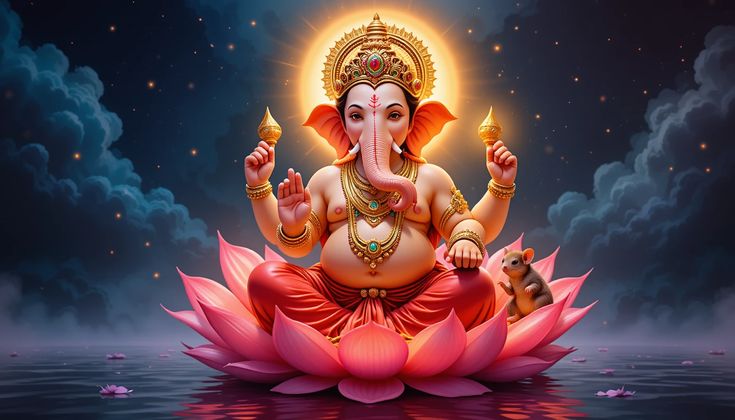
Lord Ganesha seated on lotus over water with glowing halo. image
Ganesha Mantra

Agajanana Padmakam

Agajanana Padmakam अगजानन-पद्माकं गजाननम्-अहर्निशम्।अनेकदंतं भक्तानाम् एकदन्तम्-उपास्महे ॥१॥ agajānana-padmākaṃ gajānanam-aharniśam.anekadaṃtaṃ bhaktānām ekadantam-upāsmahe ..1.. We meditate day and night on the one-tusked one who is the sun for the lotus in the form of the face of Pārvatī, the one with the elephant face and the one who is the giver of all desired ends to his devotees.(Or)As the rays from the lotus-face of Gauri (Devi Parvati) is always on her beloved son Gajanana (Who has the face of an elephant), similarly, the Grace of Sri Ganesha is always on his devotees; granting their many prayers; the devotees who with deep devotion worship the ekadanta (one with a single tusk). Description Agajanana Padmarkam is a well-known sloka in praise of Lord Ganesha, the removal of all obstacles. The shloka says that Lord Ganesha is the giver of all (anekadam) to devotees who sincerely invoke him. Excerpt from the book ‘Prayer Guide’ by Swami Dayananda SaraswatiGajananam ekadantam aharnisam upasmahe. Gaja is elephant and anana means face. Gajanana is one who has the face of an elephant. Ekadanta is the one who has only one danta, tusk. Upasmahe means we meditate upon and aharnisam means day and night. We meditate day and night upon that one who has the face of an elephant, and who has one tusk. Agajanana-padmarkam is a compound word. That which is born is jah, jayate iti jah. Gah means that which goes, gacchati iti gah. Agah means that which does not move, na gacchati iti agah, parvata, mountain. The king of the mountain is parvata-raja. Agat jayate, then, is the one who is born of aga, the mountain king. This is Goddess Parvati. Parvati is called Agaja, Girija. In this context agajananam is agajayah ananam, the face of Goddess Parvati. This face of Parvati is likened to the lotus, padma, agajananam eva padmam. For a lotus to bloom, the presence of the sun is required. While the water-lily blooms in the wake of moon at night, the water-lotus blooms only when the sun is up. Arka means sun. So too Parvati’s lotus like face requires a sun to bloom, and this is Lord Ganesa. He is the one who is the sun, as it were, for the lotus that is the face of Goddess Parvati. When she sees Lord Ganesa, she is so happy that her face blossoms. Lord Ganesa is himself gajanana, who has the face of an elephant which is a symbol for all wisdom and all power. What is anekadantam? It is anekadam tam. The one who gives is dah, dadati iti dah. The one who gives ekam, one thing, is called ekadah, ekam dadati iti ekadah. Lord Ganesa is not the giver of only one thing. He is anekadah, the giver of all that you want; in the second case-ending, it is anekadam. He gives aneka: dharma, artha, kama, and moksha. You can get everything by his grace. Tam means him. Anekadam tam means unto that Lord whose grace will help you achieve everything. For whom is he anekadah? Bhaktanam, for his devotees, those who invoke him. We meditate upon this Lord Ganesa.

Agajanana Padmakam Read Post »