Hari Om

Menu

Bhakti Yoga

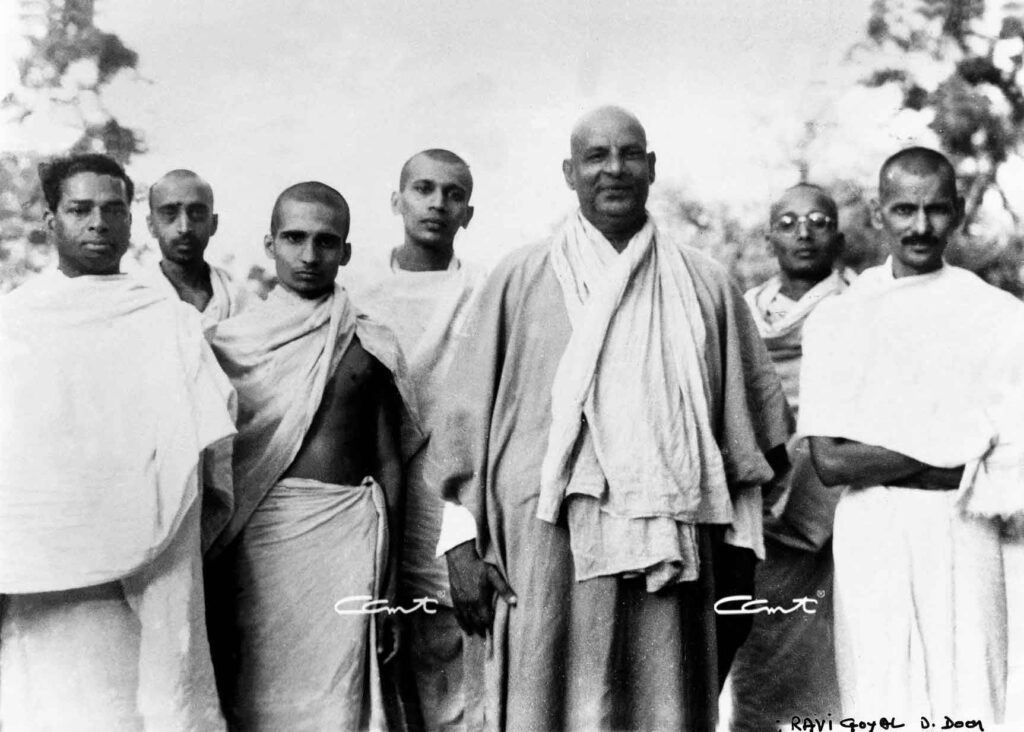
Swami Sivananda Group of monks standing with spiritual teacher photo
Bhakti Yoga, Swami Sivananda

Rules for Japa

Rules for Japa by Swami Sivanadna While doing Japa the following rules should be observed. Take a bath, or wash your hands, feet, face and mouth before sitting for Japa in the morning. At other times this is not absolutely necessary. Do Japa whenever you have leisure, specially during the Sandhyas or the junctions of the day (morning, noon and evening) and before going to bed. A comfortable Asana (Padmasana, Siddhasana, etc.) helps to make the mind also steady, controls Rajas and aids concentration. Face the North or East. This exercises a subtle influence and enhances the efficacy of Japa. Before commencing the Japa repeat elevating prayers invoking the aid of your Ishta-Devata. This induces proper Sattvic Bhava. Repeat your Ishta Mantra 108 or 1080 times daily (one to 10 Malas). Gradually increase this. Think of the meaning of the Mantra while repeating it. Pronounce each letter of the Mantra correctly and distinctly. Do not repeat it too fast or too slow. Increase the speed only when the mind wanders. Variety in Japa is necessary to sustain interest, avoid fatigue, and counteract monotony. Repeat aloud for a time, then hum the Mantra and repeat mentally sometimes. During Japa you should be alert and vigilant. This is important. Otherwise after a time the mind will begin to wander and drowsiness will overcome you. Keep a picture of your Ishtha-Devata in front. Side by side with Japa think of the Lord as present before you and picture His entrancing, beautiful form. This practice aids tremendously to the efficacy or power of your Sadhana. Feel that your heart is being purified and the mind is becoming steady by the power of the Mantra with the grace of God. God and His Name are identical. After Japa is over do not immediately leave the place and do not mix with everyone nor plunge into worldly activity. Sit very quietly for about 10 minutes at least, humming some prayer, remembering the Lord or reflecting upon His infinite love. Then after devout prostrations, leave the place and commence your routine duties. Spiritual vibrations will be intact. Keep your Mantra a secret. Never disclose it to anyone. Carry on the current of Japa mentally even at other times, in whatever works you may be engaged.

Rules for Japa Read Post »

saa
Bhakti Yoga, Swami Sivananda

The Secret of Ramayana

The Secret of Ramayana by Swami Sivananda The secret of Ramayana is the attainment of Jivanmukti through control of mind. Killing the ten-headed monster, Ravana of Lanka, is the annihilation of the ten evil Vrittis of mind, viz. , Raga (love), Dvesha (hatred), Kama (lust), Krodha (anger), Lobha (miserliness), Moha (infatuation, delusion), Mada (pride), Ahamkara (egoism), Matsarya (Jealousy) and Dambha (ostentation or vanity). Sita represents mind. Rama represents Brahman. Sita unites with her husband Rama. Mind merges in Brahman by concentration and incessant meditation on Rama. This is the esoteric teaching of the Ramayana. Constant repetition of the two-lettered Mantra RAMA (RA+MA) with Suddha Bhavana and perfect concentration leads to the control of mind and Samadhi. The thinker and the thought, the meditator and the meditated, the worshiper and the worshipped, the Upasaka and the Upasya become blended into one. Mind is filled with Rama. It becomes tadakara, tadrupa, tanmaya (oneness, sameness) and talleenata (as a man thinketh). As you think, so you become. The mind becomes identical with Rama. Jiva’s will will become merged with the Cosmic Will or the Will of Rama. Jivatma now vanishes. The two-lettered Rama Mantra is the best of all the Mantras. Why? Because it is a combination of Panchakshara and Ashtakshara. RA is taken from OM NAMO NARAYANAYA and MA from OM NAMAH SIVAYA. It is therefore very powerful. The shorter the Mantra, the greater the concentration. So repetition of Rama Mantra brings about greater amount of concentration. By worship and meditation or Japa of Rama Mantra, the mind is actually shaped into the form Rama. The object of worship is made pure through the purity of the object viz. , Ishtadevata, Rama. By continual practice (Abhyasa) the mind becomes full of the object (Rama) to the exclusion of everything else, steady in purity and does not stray into impurity. So long as mind exists it must have an object to lean upon and the object of Sadhana is to present to the mind with a pure object. The sound repeatedly and harmoniously uttered in Japa of a Mantra must create or project into perception the corresponding thing (Devata). The Mantra gathers creative momentum by repetition through the force of Samskaras. A Mantra is a mass of radiant Tejas or energy. It transforms the mental substance by producing a particular thought-movement. The rhythmical vibrations produced by its utterance regulate the unsteady vibrations of the five sheaths (Pancha Kosas). It checks the natural tendencies of the mind to run after objects. It helps the Sadhana-Sakti and reinforces it when it becomes imperfect and meets with obstacles. Sadhana-Sakti is strengthened by Mantra-Sakti. Mantra awakens super-human powers (Siddhis) when the sleeping consciousness in a Mantra (the Mantra Chaitanya) is awakened. The famous Tulasi Das had Darshan of Rama by repeating this Rama Mantra. Samartha Rama Das performed his Tapas in Takli village on the banks of the Godavari and chanted Rama Mantra thirteen crores of times and eventually had Darshan of Rama. Ramadas of Bhadrachalam had Darshan of Rama by constantly repeating this Rama Taraka Mantra on the holy banks of the Godavari. Such is the power of Rama Mantra. It purifies the Chitta, gives Ashta Siddhis and eventually leads to Mukti. Have intense faith and Ananya, Avyabhicharini Bhakti towards Sri Rama. Do Antarika (from the bottom of the heart) prayer. Chant this Name constantly with Suddha Bhava. Sing Rama Nam daily for a couple of hours with closed eyes in a solitary room. Serve Bhaktas. You will doubtless be freed from this wheel of births and deaths. You will certainly have Darshan of Rama and through Para Bhakti or Abheda Bhakti will merge yourself in Rama. You will attain the Satchidananda state. There is no doubt of this.

The Secret of Ramayana Read Post »

swami sivananda Spiritual collage with monk seated between Hindu deities and floral border image
Bhakti Yoga, Swami Sivananda

God Gives Darshan

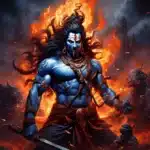
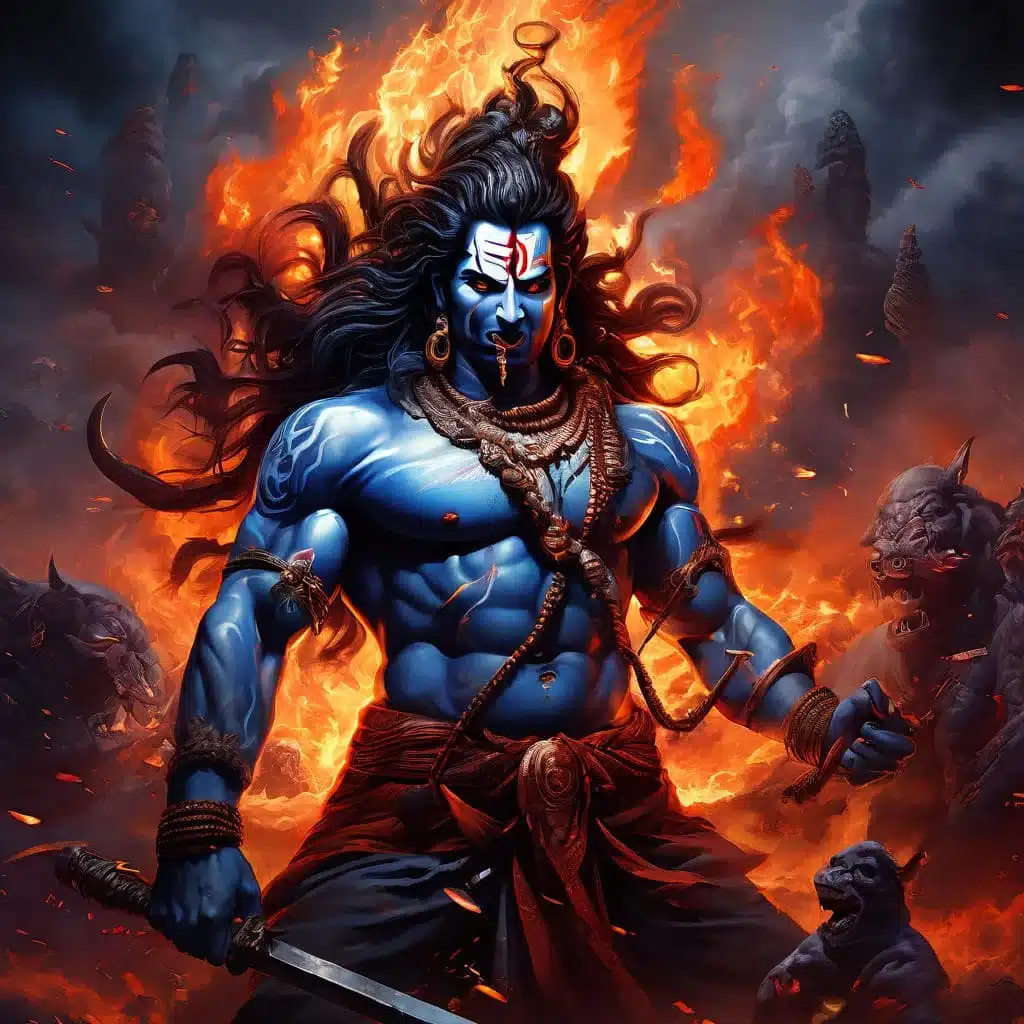
God Gives Darshan by Swami Sivananda There is a village known as Dagheta near Mathura. One Swami Krishnananda was doing Kirtan one night with his party. It was the 10th October, 1934. A certain Bhakta who was much interested in Kirtan locked her little girl in the house and attended the Kirtan. There was none else in the house save the child. When the mother returned, she saw her child playing and laughing. She asked the child: “With whom are you playing, my child?” The child replied: “I am playing with this old man. Do you not see him?” The child repeated these words thrice. The mother was not able to see the old man. The old man was none else but Lord Krishna. He disappeared. Where there is Bhakti and faith, the Lord is always there. Where there is Kama (passion) there is no Rama. In front of Sankar Kutir, Meerut, where Sannyasins stay, there is a bungalow belonging to Sri Sankar Dayal, an advocate. He has a daughter. She is very devout. She worships Lord Krishna daily. This is all due to her previous virtuous Samskaras. She used to cull flowers in the garden daily. One day when she was doing this work early in the morning, a boy came to her with peacock feathers on the head and said: “Child, repeat this Mantra. ” He gave a certain Mantra for Japa and disappeared. Who else the boy can be but Lord Krishna? This incident took place on 5th October, 1934. Even in this Kali‑Yuga, if you have even a minute trace of faith and devotion, the Lord is ever ready to give His Darshan. In Farukkabad I met a boy aged about 19 on 14th November, 1934. He was a Bhakta of Lord Siva. He was repeating Om Namah Shivaya for some months past. But he did not have Darshan of the Lord. He felt aggrieved on account of this and one day he wanted to give up his life by some means or other. Finally when he set about to do a most violent act which it is not necessary for our purpose to mention here, the Lord of Mount Kailas appeared in the midst of a blazing blue light before the boy. The boy heard a voice: “Child what boon do you want?” The boy answered: “I want Your Darshan again for a second time. ” But Lord Siva did not again appear before him for the second time. Sri Bhagawant Prasad, the Deputy Collector, brought the boy to me to at Sarasvati Bhavan.

God Gives Darshan Read Post »

swami5
Bhakti Yoga, Swami Sivananda

Japa Yoga

Japa Yoga by Swami Sivananda Japa is an important limb of Yoga. In the Gita you will find: “Yajnanam Japa-Yajnosmi-Among Yajnas I am Japa Yajna. ” In this Kali Yuga practice of Japa alone can give eternal Peace, Bliss and Immortality. Japa ultimately results in Samadhi or communion with God. Japa must become habitual and must be attended with Sattvic Bhava, Purity, Prem and Sraddha. There is no Yoga greater than Japa-Yoga. It can bestow upon you all Ishta-Siddhis (whatever you want), Bhakti and Mukti. A Mantra is Divinity. It is Divine Power or Daivi-Sakti manifesting in a sound body. The Sastra says that those who think that an image is a mere stone, that Mantras are merely letters, and that a Guru is a mere man and not a manifestation and representative of the Lord or Supreme Teacher, Illustrator and Director, go to hell. The aspirant should endeavour to realise his unity with the Mantra or the Divinity and to the extent he does so, the Mantra-Sakti supplements his worship-power (Sadhana-Sakti). Japa is the repetition or recital of a Mantra or the Name of the Lord. Dhyana is the meditation on the form of the Lord with His attributes. This is the difference between Japa and Dhyana. There is Japa with meditation (Japa-Sahita) and without meditation (Japa-Rahita). As you advance, the Japa will drop by itself and meditation alone will remain. It is no doubt an advanced stage. You can practise concentration separately. You can do whatever you like best. Om is both Saguna and Nirguna Brahman. You can repeat ‘Om Ram’ for worship of the Saguna Brahman. Om is everything. Om is the name or symbol of God, Isvara or Brahman. Om is your real name. Om covers all the three-fold experiences of man. Om stands for all the phenomenal worlds. From Om this sense-universe has been projected. The world exists in Om and dissolves in Om. Om is derived by adding the letters A+U+M. ‘A’ represents the physical plane, ‘U’ represents the mental and the astral plane, the world of spirits, all heavens, and ‘M’ represents all the deep sleep state as well as in your wakeful state all that is unknown and beyond the reach of the intellect. Om therefore represents all. Om is the basis of your life, thought and intelligence. Om is the centre of all worlds that denote objects. Hence the whole world has come out from Om, rests in Om, and dissolves in Om. As soon as you sit for meditation, chant Om loudly 3 or 6 or 12 times. This will drive away all worldly thoughts from the mind and remove tossing of mind (Vikshepa). Then take to mental repetition of Om. In the act of breathing, the greatest Mantra SOHAM is repeated automatically by the Jiva 21, 600 times within 24 hours. This is called Ajapa Mantra. That is to say, it is a Mantra that is repeated without Japa or willed effort of the Jiva. Breath goes out with HAM and comes in with SO. Soham is Om only. Delete S and H, the consonants. The balance is OM. Soham is the Mantra of a Vedantic student. It means: “I am He” or “He am I. ” This signifies the identity of Jiva and Brahman. Repetition of this Mantra “HAMSAH SOHAM-SOHAM HAMSAH adds force to the Japa as is the case in “GOD IS LOVE-LOVE IS GOD. ” In the same way the Mahavakya is repeated “Aham Brahma Asmi- Brahmaivaham Asmi. “ A Mantra in the Hindu religion has a Rishi who gave it; a metre which governs the inflection of the voice; and a Devata as its informing power. The Beeja (seed) is a significant word or series of words which give it a special power. Sometimes this word is a sound which harmonises with the key-note of the individual using it and varies with the individual. Sometimes this word expresses the essence of the flower springing from this seed. This essence of the Gita is in the words quoted. The Sakti is the energy of the form of the Mantra i. e. , the vibration-forms set up by its sounds. These in the Gita carry the man to the Lord. The pillar (Kilakam) is that which supports and makes the Mantra strong. This is the ceasing from sorrow by the freeing from imperfections. Then follow certain special directions intended to set up relations between the centres in the man’s body and the corresponding centres in the body of the Lord (the universe). The thumbs, the earth-symbol, are connected with the physical plane and are utilised in control of its subtle forces. The index fingers, the water-symbol, are connected with the astral plain and are similarly used with astral forces. The middle fingers, the fire-symbol, the apex of the pyramid of the hand, are also similarly used with mental forces. The ring fingers, the air-symbol, are used with Buddhic forces. The little fingers, the most powerful in the subtle worlds, are the Akasa-symbol and are similarly used with Atmic-forces. The other organs of the body are the other poles of the magnet of the body: thumbs and heart; index fingers and head; middle fingers and the point of juncture of the occipital and parietal sutures; the ring fingers and the Sukshma Sarira; the little fingers and the creative organ. These are the positive and negative poles of the magnet we call the body; either may be positive, either negative according to the object aimed at, but they work together. There is a special, mysterious force or wonderful magnetic power at Sandhi or junction time (sunrise and sunset). The mind will be elevated quickly. It will be filled with Sattva. Concentration will come by itself without any effort at this time. Japa should be done at Sandhis. It is always better to start Japa and meditation at 4 in the morning as soon as you get up from the bed. At this time the mind is quite calm

Japa Yoga Read Post »

final logo
Bhakti Yoga, Swami Sivananda

How to See God?

How to See God? by Swami Sivananda The personal aspect of that Being is termed ‘Isvara’, ‘Allah’, ‘Hari’, ‘Jehovah’, ‘Father in Heaven’, ‘Buddha’, ‘Siva’, etc. The impersonal aspect is called “Brahman” by Vedantins, “Unknowable” by Herbert Spencer, “Will” by Schopenhauer, “Absolute”, “Noumenon” by some, and “Substance” by Spinoza. Religion is faith for knowing God and worshipping Him. It is not a matter for discussion at a club‑table. It is the realisation of the true Self. It is the fulfilment of the deepest craving in mind. Therefore hold religion as the highest prize of your life. Live every moment of your life for its realisation. Life without religion is real death. “Remove selfishness. Calm the passions. Remove egoism. Purify the heart. Analyse your thoughts. Scrutinise your motives. Cleanse the dross or impurity. Realise God. ” This has been the essence of the preachings of all prophets, seers and sages of all times. Read the teachings of Buddha, Jesus, Mohammed, Confucius, Shinto, Chaitanya, Sankara or any other prophet. This is the essence of Sadhana. This is the way to God. God‑realisation is your chief duty. Just as a charioteer restrains the restive horses through the reins, so also you will have to curb the restless “Indriyas” (the horses) through the reins of Viveka and Vairagya (discrimination and dispassion). Then alone you will have a safe journey to Atman or God, the sweet, eternal abode of peace and bliss. Be righteous always; never deviate from the path of righteousness. You are born to practise righteousness and lead a virtuous life. Truth is established in righteousness. Stand upright. Be bold. Be fearless. Practise Truth. Proclaim it everywhere. A man who speaks truth, who is merciful and liberal, who has Kshama and Santi, who is free from fear, wrath and greed, who is innocent and loving is really God or Brahman. He is the real Brahmin. Those who are destitute of the above virtues are Sudras only. How can you obtain His Grace, if you have no humility and if you do not make ungrudging, unreserved, unconditioned self‑surrender to the Lord? The Lord knows what is good for you better than you do. To resign yourself absolutely to His Will is even higher form of worship than visiting temples and shaking the bell, and doing all sorts of ritualistic ceremonies. The Lord does not want your external show. He wants your heart. Say once more: “Thy Will be done. I am Thine. All is Thine” from the bottom of your heart, Antarika. Be sincere. Weep for Him out of Prem (pure love). Cry in solitude out of devotion. Let the cloth be drenched in profuse tears. Close your eyes. Destroy the Vasana (of body, world and book‑lore). Withdraw the mind. Merge in Him. Drink the nectar of immortality now. A real devotee of Lord Krishna sees Krishna and Krishna alone in the whole world. He has a new Yogic eye, a new spiritual vision. It is simple foolishness to think that you are separate from the rest of the world. You are one with all. In injuring Visvaranjan you injure yourself. In loving Chandrasekhar you love yourself. Separation is death. Unity is eternal life. O friends! It is not very difficult to have Darshan of God. It is not very difficult also to please Him. He is everywhere, within all. He is seated in your hearts. Think of Him always (Sakara, Saguna). Pray fervently: “O Lord! Have mercy upon me. Open my inner eye-the Divyachakshus. Let me have Thy Grand vision-Visvaroopadarshan. Bhaktas sing about Thee as “Patitapavana” (purifier of the fallen ones), “Bhaktavatsala” (lover of the devotees), “Deenadayalu” (merciful towards the helpless). Just as the bird protects the young ones under its wings so also protect me under Thy wings, O Ocean of Mercy! “

How to See God? Read Post »

Swami Sivananda portrait with garland and tilak image
Bhakti Yoga, Swami Sivananda

Manasic Puja

Manasic Puja by Swami Sivananda Manasic Pooja is preferable to actual Pooja of the Murthy with flowers, sandal‑paste etc. But beginners should start with physical Pooja. When they advance in devotion they can take recourse to mental worship. Sri Sankara’s mental Pooja in the form “Atma Tvam, Girija Matih etc. , ” is a beautiful way of worshipping God mentally. Get this Sloka by heart and before starting worship repeat this Sloka with Bhava. Mental Pooja consists in offering mentally flowers, Arghya, Achamaneeya, sandal‑paste, cloth, ornament, Naivedya, etc. , to God. Lord Siva was more pleased with the mental worship of Bhima than the actual offering of Bael leaves by Arjuna.

Manasic Puja Read Post »

Swami Sivananda spiritual guru portrait with historic photographs
Bhakti Yoga, Swami Sivananda

How to do Dhyana?

How to do Dhyana? by Swami Sivananda Fix your mind at the Lotus Feet of Lord Hari. Then rotate the mind on His silk-cloth (Pitambara), Srivatsa, Kaustubha gem on His chest, bracelets on His arm, ear-rings, crown on the head; then conch, disc, mace and lotus, on His hands and then come to His feet. Repeat the process again and again. Think of His attributes also. In this way you can do Dhyana on Krishna, Rama or Siva. Uddhava asked: “In what form and with what rites should the devotee think of You? Please inform me of the same fully. ” Sri Krishna said: “Seated comfortably in a seat neither high nor low, keeping the hands near the body unmoved, control the eye from wandering outwards. (Fix it on the tip of the nose to prevent distraction). Control the breath by taking it through one nostril and letting it out through the other and vice versa. Control the senses. Pronounce the letter OM continuously and with deep devotion both while inhaling and exhaling. “The above practice daily at the three periods (morning, noon and dusk) will enable the Jiva to get perfect control of breath within a month. Imagine in the heart the lotus flower with its petals as seat, and fancy the sun, moon and fire to be the three lights, at their proper places. Concentrate your mind and imagine My present form as seated in the flower, with calm, dignified, smiling face, the cheeks resplendent with the lustre of the gold ear-rings; of beautiful neck, of sky colour, wearing a white cloth of spotless purity, with the ornament Srivatsa and the Goddess Lakshmi on the chest. With the weapons and other usual appendages, Chakra, mace, conch and lotus flower in My four hands, My feet shining with diamonds; with the splendour of the various ornaments on My body, crown, Kaustubha (diamond) on the chest, waist-ring, and the amulet at the shoulder, overflowing with grace towards My devotees. “Run your fancy over the whole form till you complete all the details and then fix your mind on the same without thinking of anything else. By thus looking at the form and fixing the mind from wandering elsewhere, the face will gradually wear an ecstatic look. When thus the mind oblivious of everything else (forgetting even the triple differences, conscious at the starting point viz. , the person concentrating the mind, the form on which the mind is concentrated and the act of concentration) gets fixed in concentration of My form (Dhyeyam), the Jiva becomes completely merged in Me (in the Turiya or conscious Anandic ecstatic state), just as a ball of fire gets merged in a big bonfire. By constant practice of this Samadhi or ecstasy the Jiva very soon gets rid of all delusion caused by diversity and attains bliss. “

How to do Dhyana? Read Post »

Swami Sivananda framed portrait with floral design image
Bhakti Yoga, Swami Sivananda

Philosophy of Pratima

Philosophy of Pratima by Swami Sivananda Pratima is a substitute or symbol. For a beginner Pratima is an absolute necessity. By worshipping an idol Isvara is pleased. The Pratima is made up of five elements. Five elements constitute the body of the Lord. The idol remains an idol; but the worship goes to the Lord. Just as a man is pleased by shaking hands with his friends by touching a small portion of his body, so also God is pleased when a small portion of His Virat (cosmic) body is worshipped. Just as the child develops the maternal Bhava (mother-feeling) by playing with its imaginary toy-child made up of rags, and suckling it in an imaginary manner, so also the devotee develops the feeling of devotion by worshipping the Pratima and by concentrating upon it. Pictures, drawing, etc. , are only a form of Pratima. A reputed baron of New York came to me one evening for an interview. During the course of conversation the baron said: “Swamiji, I have no faith in image-worship. It is all foolishness. ” The private secretary of the baron who was also with him had a photo of the baron in his pocket-diary. I took the photo and asked the private secretary to spit on it. The secretary was struck aghast. He hesitated and looked at the baron. I again commanded him: “Go on, spit at the picture. Quick. ” The secretary said: “Swamiji, the baron is my master. I serve him. How can I spit at the picture? This is his image. I cannot do this ignoble act. I respect him in this picture. ” I said to him: “This is only a paper. This is not the real baron. It cannot talk, move or eat. ” Then the secretary said: “Anyhow, I see my baron in this picture. This mean act would affect my feelings as well as wound the feelings of my master. I cannot spit. ” I said to the baron: “Look here, my friend! Your secretary loves and respects your photo. He associates your presence with the picture although it is just a bit of paper. Is this not image-worship? Even so, the devotee associates the attributes of God with the image and feels His presence or immanence there. He finds it easy to concentrate his mind on the image. The mind wants a concrete prop to lean upon in the beginning stage of practice. Do you see the point now, my dear baron?” The baron replied: “Revered Swamiji! You are quite right. My eyes are opened now. I am quite convinced. Pray, pardon me. “

Philosophy of Pratima Read Post »

images 51 1
Bhakti Yoga, Swami Sivananda

Bhakti Yoga Alphabets

Bhakti Yoga Alphabets by Swami Sivananda ANANYA Prema is single-minded devotion to the Lord exclusive of everything else. BHAKTI Yoga is the easiest path for God-realisation in this Iron Age. CHANDRAYANA Vrata is observed by the devotees to destroy and propitiate the Lord. DASYA Bhava is the servant Bhava entertained by the devotee towards the Lord. ESHANATRAYAM (the three desires wealth, children and heaven) stand as hindrance to the development of true devotion. FAITH in the existence of God is the foundation of Bhakti. GURU is the visible God on earth for the devotee. HORRIPILATION (Pulaka) is the standing up of the hairs of the body experienced by the devotee as he advances in devotion. ISHTA DEVATA is the deity of one’s liking or choice by the worship of whom the Bhakta attains God-consciousness. JAPA of the names of the Lord brings purity of mind and increases concentration to a great degree. KRISHNA is the Supreme Deity, the destroyer of the stains of Kali. LAJJA for the utterance of the Names of the Lord is a great obstacle for beginners in the path of devotion. MADHURYA Bhava is the highest form of Bhakti. NAVA-VIDHA Bhakti should be practised by all aspirants in the path of Bhakti Yoga. OFFERING the body, mind and soul exclusively to the service of God is Saranagati (self-surrender). PADASEVANA is service of the Lotus Feet of the Lord or service of humanity with Narayana Bhava. QUIESCENCE of the mind is a qualification common to both the Vedantin and the Bhakta. RUCHI (Nama) is the taste for the repetition of the Names of the Lord. SAKSHATKARA is attainment of God-consciousness. TRISHNA (internal craving for sensual objects) is detrimental to the growth of Bhakti. UPASANA is worship of the Lord. VIRAHA is intense pain caused by the separation from the Lord that is felt by a sincere devotee. WEEP for the separation of the Lord but not for the death of relatives or loss of wealth. X’MAS holidays should be availed of for the completion of at least one Purascharana of your Ishta-Mantra. YOGAKSHEMA of the devotee is vouchsafed by the Lord. ZEAL and sincerity of purpose pave a long way in God-realisation.

Bhakti Yoga Alphabets Read Post »

images 50 1
Bhakti Yoga, Swami Sivananda

Eleven Points for Development of Bhakti

Eleven Points for Development of Bhakti by Swami Sivananda It would be a gross mistake if you consider Bhakti as merely a state of emotionalism, while it is actually a thorough discipline and training of one’s will and the mind, a sure means to intuitive realisation of God Almighty through intense love and affection for Him. It is a means to thorough apprehension of the true knowledge of the Reality, beginning from the ordinary form of idol-worship right upto the highest form of cosmic realisation of your oneness with Him. You can achieve this by following the eleven fundamental factors which Sri Ramanuja had prescribed. They areAbhyasa or practice of continuous thinking of God, Viveka or discrimination, Vimoka or freedom from everything else and longing for God, Satyam or truthfulness, Arjavam or straightforwardness, Kriya or doing good to others, Kalyana or wishing well-being to all, Daya or compassion, Ahimsa or non-injury, Dana or charity and Anavasada or cheerfulness and optimism. Abhyasa or practice is a sustained and persistent effort to achieve mastery over a certain thing. Through continued practice the Sadhaka tries to secure the steadiness of his mind, to restrain all its external Vrittis, thereby convulging them upon his one objectthe Lord. Through persistent Abhyasa he checks the outgoing tendencies of his mind and directing them inward he constantly dwells and meditates upon the Lord. Viveka or discrimination enables him to choose between the right and the wrong: to follow and to adhere to what is right i.e., what should be done, and to abstain from what is wrong i.e., what should not be done. How does he discriminate between the right and the wrong? That which elevates and takes him nearer to Godhis Idealthat which brings him good, joy and peace, he considers as right and adheres to and acts in accordance with it. That which brings him depression, pain and restlessness, that which pricks his true conscience, that which drags him down from goodness and takes him away from God he considers as wrong and abstains from it in toto and guards himself against its influence. As regards his diet, he discriminates between Sattvic food, i.e., what should be taken, and Rajasic or Tamasic food, i.e., what should not be taken. Thus he discriminates between the right and the wrong, follows the directions of the wise, respects their warnings and obeys their admonitions and commandments. Thus he perseveres and strives to reach his goal, following the path of righteousness. Vimoka is longing for God alone, renouncing everything else that does not accelerate his progress. Obviously one has to renounce what is earthly if he wishes to attain what is eternal, permanent and infinite. The Sadhaka has to renounce all his desires and cravings for the material objects: he has to renounce the evil Vrittis of the mind through introspection and right exertion. Only then can he develop true longing for God, only then can he proceed Godwards. You cannot drink two things at a time in the same cup. If you wish to progress Godwards, then, necessarily, you have to renounce all else that are not conducive to your progress. This is the secret. To want nothing is the greatest and most efficacious way to attain the keenest longing for God. Satyam or truthfulness is surely the prime postulate in Sadhana. God is Truth: to realise Him, therefore, you must need become the very embodiment of Truth. You have to live the Truth: you should have to think of truth alone, speak the truth alone and do what is right and true to your conscience. Arjavam is straightforwardness or honesty. There is no place for deceit, crookedness or falsehood in the quest for God. God neither wants your riches nor your intellect, but he wants only a pure truthful heart altogether shorn of deceit, shallowness and hypocrisy. There is nothing to hide from Him, for He is the all-knowing, all-pervading Spirit. Your heart must be as pure as the white snow and as clear as crystal. Just as you cannot see a clear and correct reflection in a corrugated, dust-coated mirror, even so, if your heart is cobwebbed by selfish desires and dishonesty, and corrugated by hypocrisy and crookedness, you can hardly know the real nature of God. The Sadhaka must cultivate a heart like that of a child. Kriya or doing good to others comes next. As a true devotee, you should behold Him in all for He is the manifest form in whatever you perceive. The Sadhaka’s foremost duty is to do good and serve others, irrespective of any distinction or personal consideration. Serving and helping those in distress open your eyes to the sorrows of human life. You begin to understand the painful nature of the worldly existence. The stony selfish heart learns to feel for others. Then compassion, mercy and love nurture in your heart. Your heart becomes purified and Vairagya dawns in you. Kalyana or wishing well to others is another necessary qualification for devotee. With a pure loving heart, you should pray to the Lord for the good and well-being of others. First pray for others, for the peace and welfare of the world, and then for your evolution. You should not entertain any grudge or ill-feeling towards your opponents but you should wish for all that is good and auspicious. This is the true spirit of a devotee. Daya or compassion comes next. God is Love. He is all-merciful and compassion personified; and as you seek to realise Him, you must need become a veritable ocean of mercy and love. You must cultivate a heart as broad as the infinite sky. All the divine virtues that are necessary for one’s evolution have their origin in Ahimsa or non-violence. Ahimsa is a life-giving force. Ill-will, hatred, anger and malice cannot stand before its mighty potency. It is a special attribute of the soul. Practice of Ahimsa culminates eventually in the realisation of unity and oneness of life. It generates the
Eleven Points for Development of Bhakti Read Post »