




Hari Om

Menu

Bhakti Yoga

swami sivananda Framed portrait of monk with umbrella
Bhakti Yoga, Swami Sivananda

Samadhi or Cosmic Consciousness

Samadhi or Cosmic Consciousness by Swami Sivananda MESSAGE OF PREM Prem is the flower of flowers. It is the rarest of all flowers. It is cultivated in the hearts of devotees. Prem or Bhakti is intense love or highest form of devotion to God. It is supreme attachment to the Lotus-Feet of the Lord. It springs from the bottom of the devotee’s heart. There is not a bit of effort. There is a genuine, natural, spontaneous longing to meet God in the heart. Just as fish cannot live without water, just as the sun-flower cannot live without the sun, just as the chaste wife cannot live without her husband, so also a true Bhakta cannot live without God even for a moment. Bhakti or Prem is of the nature of nectar. It gives freedom to the devotee and makes him perfect and fully satisfied. It takes him to the Lotus-Feet of the Lord. For all beings a human birth is difficult to obtain, more so a male body. There are three things which are indeed rare and are due to the Grace of the Lord viz. , human birth, the longing for liberation and the protecting care of a perfected sage. The man who, having by virtuous actions in previous births, obtained a human birth with a male body and good intellect to boot is foolish enough not to exert for Self-realisation. He verily commits suicide, for he kills himself by clinging to things unreal. There is no hope of immortality by means of riches. Such indeed is the emphatic declaration of the Sruti: “Na karmana na prajaya dhanena tyagenaike amritatvam-anasuh-Neither by rituals, nor by progeny, nor by riches, but by renunciation alone one can attain immortality. ” Mere giving up of objects will not constitute real renunciation. Dear friends, remember this point well. True Tyaga consists in renouncing egoism, mine-ness, selfishness, Moha, Deha-Abhimana, desires and cravings. Even the greatest of persons will in course of time become the lowest of the low. Countless kings, earls, barons, emperors and millionaires have come and gone. Where are those distinguished poets, intellectual geniuses, reputed scientists with boasted intellects? Where are Shakespeare, Kalidas, Byron, Newton, Kant, Plato and Faraday? In youth you are enveloped with total ignorance, in adult age you are entangled in the meshes of women, in old age you groan under the burden of Samsara and debility. You eventually die and pass away from the scene. Being thus always occupied, when will you, dear brothers, find time to devote yourself to the commission of virtuous deeds, Nishkama Karma, Bhajan, Satsanga, Kirtan and meditation? Why should you realise Atman? Because Self-realisation gives you freedom from the Samsaric wheel of birth and death and bestows on you supreme peace, illimitable Ananda and unalloyed felicity. Hear the emphatic declaration of the Srutis: “This Atman (Self) which is free from sin, undecaying, undying, free from sorrow, hunger and thirst, with true desires and true resolves, that is what is to be sought after and which one must wish to understand. One who has sought after this Self and understands It, obtains all worlds and all desires. ” “The Infinite (the great) is Bliss. There is no bliss in what is small. The Infinite alone is Bliss. But one should wish to understand the Infinite. “-Chhandogya Upanishad. Religion must educate and develop the whole man-his heart, his head and his hand. Then only he will have real perfection. There must be integral development. One-sided development is not commendable. You must have the head of Sankara, the heart of Buddha and the hand of Janaka. Vedanta without devotion is quite dry. Pure love is divine Prem. It is the spontaneous outpouring of affection and devotion from the bottom of the heart of a sincere devotee towards God. The only Sara-vastu in the world is Love or Prem. It is eternal and undecaying. Physical love is passion or Moha. Universal Love is Divine Love. Cosmic Love, Visva Prem, Universal Love are all synonymous terms. God is Love. Love is God. Selfishness, greed, egoism, vanity, pride, jealousy and anger contract the heart and stand in the way of developing Universal Love. Who of us is really anxious to know the truth about God or Divine Love? We are more ready to ask ourselves: “How much money you have got in the Bank? Who said that against me? Do you know who am I? How are your wife and children doing?” and questions of this sort, than questions like: “Who am I? What is this Samsara? What is freedom? Whence have I come? Whither shall I go? Who is Isvara? What are the attributes of God? What is our relationship to God? How to attain Moksha? What is the Svaroopa of Moksha?” How many of you, sisters and brothers, ask questions of this nature? Sravanam kirtanam Vishnoh-smaranam paadasevanam; Archanam vandanam dasyam sakhyam-atmanivedanam. “Hearing the Name of the Lord, singing (His) praises, remembering (Him), serving His Lotus Feet, worshipping Him, bowing before Him, attending on Him, loving Him as a Friend, and surrender of the self completely to Him-these are the nine ways of developing devotion. “ Sri Vishnoh Sravane Parikshidabhavad Vaiyasikah Kirtane Prahladah Smarane Tadanghribhajane Lakshmih – Prithuh Poojane; Akrurastvabhivandane Kapipatir Dasye cha Sakhyerjunah Sarvasyatmanivedane Balirabhat Krishnaptirevampara. “In hearing was Parikshit; in Kirtan was Vaiyasika (Sukadev, son of Vyasa); in Smarana was Prahlada; in serving the Feet of the Lord was Lakshmi; in worshipping was Prithu; in prostrating, Akrura; in serving, the Lord of the monkeys (Hanuman); in loving Him as a Friend, Arjuna; and in surrendering completely to Him was Bali. Thus the highest attainment of Lord Krishna is to be had. “ Just as taking of food brings Tushti (satisfaction), Pushti (nourishment to the body) and cessation of hunger, so also Bhakti brings Vairagya and Jnana. Have Avyabhicharini Bhakti. It is undivided love. The devotee loves God and God alone. His mind is ever fixed at the Lotus-Feet of the Lord. His whole mind, heart and

Samadhi or Cosmic Consciousness Read Post »

swami sivananda Hindu altar with deities and guru portraits photo
Bhakti Yoga, Swami Sivananda

Radha, The Personification of Bhakti

Radha, The Personification of Bhakti by Swami Sivananda Salutations to Sri Radha, the World-Mother, who took her birth at Barsana, near Brindavan, who is an embodiment of Sri Krishna Prema! The Supreme emotion, Mahabhava, is the quintessence of Prema. Radha is the personification of this Supreme emotion. The play of Radha with Sri Krishna is extremely deep; it cannot be learnt from the Dasya, Vatsalya and other Bhavas. The Sakhis alone are qualified for it. They alone relish this Lila in full. Sakhis or those who worship Sri Krishna in the spirit of His Sakhis have a right to this Lila. A Sakhi does not yearn to play with Sri Krishna all by herself. She feels a keener delight in contriving Sri Krishna’s dalliance with Radha. Radha is indeed the Wishing Creeper, Kalpalata, of the love of Sri Krishna. The Sakhis are the leaves, flowers and shoots of the Creeper. If the nectar of dalliance with Sri Krishna waters the Creeper, the leaves etc., take delight in it million times more than if they themselves had been watered. The Sakhis do not long for Sri Krishna’s embrace, but they exert themselves to make Sri Krishna embrace Radha. They send Sri Krishna to her for this purpose under various pretexts. They attain thereby a bliss million times sweeter than that of selfish enjoyment. The unselfish devotion of these towards each other strengthens the deliciousness, Rasa. The sight of such unselfish, pure Prema pleases Lord Sri Krishna. The love felt by the Gopis is not really earthly lust. Earthly lust seeks sensual gratification for one’s own self. The Gopis abandon all idea of self and seek Sri Krishna’s enjoyment. They did not yearn for their own pleasure. They embrace Sri Krishna only to please Him. You cannot attain Sri Krishna, however much you worship Him, if you only meditate on Him as a divinity and not serve Him as a Gopi. See how Lakshmi adored Him, but could not attain Him in Brija. Radha is a Devi. She is the queen of lustrous beauties or the abode of Sri Krishna’s love-sports and worship. She beholds Lord Krishna in anything and everything. She sets her love-lit eyes upon Him. Lord Krishna is the Supreme Matchless Lover and Sri Radha is identical with Him. She is the part and parcel of Krishna and His love-energy. Her sole object of existence and devout prayers is to fulfil the wishes of Sri Krishna. Hence she is named Krishnamayi. She is full of Krishna inside and outside. Krishna is the charmer of all. Radha is Krishna’s charmer and therefore the Supreme Goddess. She is the worshipped of all the worshipped deities. She is the fosterer and mother of the worlds. She is the presiding deity of the Lakshmis of Vaikuntha or of the six divine attributes of Lord Krishna. She is the seat of concentrated beauties or the source and centre from which the Lakshmis draw their beauties. Lord Krishna is the embodiment of bliss. He is the source of and centre of real happiness. Bliss is divine elixir that bestows immortality. Sensual pleasure is a poison which causes disease and death. Lord Krishna has a certain energy called Antaranga or Svarupa Sakti. The Sakti which has the power of giving delight to Krishna and His devotees is called Hladini Sakti or delight-giving energy. The essence of Hladini is Prema or selfless Krishna’s Prema. The selfless love is called Ananda-Chinmaya-Rasa. The quintessence of this Rasa or Mahabhava is Radha. Radha is the embodiment of Mahabhava. The word Radha etymologically means a devotee. Radha is the Chief of Krishna’s sweethearts. All the Lakshmis of Vaikuntha are her Vilasa-Murtis. The queens of Dvaraka are her reflections. Lalita and other Gopis of Brindavan are her manifold forms. She pervades the Gopis in her subtle form in order to contribute to Krishna’s enjoyment. Radha is Krishna’s delighter, charmer and life’s all. She is the queen of all the lovely maidens of Braja. She is the crest Gem of all celestial beauties. Radha and Krishna are inseparable as fire and its heat, ice and its coolness, flower and its fragrance. The body of Radha is made up of sweet tenderness and loveliness for Sri Krishna. The substance of her subtle form as Mahabhava is Krishna Prema. Ardent passion for Sri Krishna is her dress. Her sweet radiant smile is the camphor. All good qualities are her garlands. All the Bhavas form the ornaments of her limbs. Lord Krishna’s Name and qualities form the ornaments of her ears. Krishna’s Name and qualities flow out in a stream from her tongue. She serves Krishna with the drink of Premarasa or Shyama-Rasa. The culmination of Bhakti is reached in Madhurya Bhava. The lover and the Beloved become one through the intensity of love. Radha had this type of love. In Madhurya Bhava there is the closest relationship between the devotee and the Lord. There is no sensuality in �Madhurya Bhava. There is no tinge of carnality in it. Passionate people cannot understand this Bhava as their minds are saturated with passion and lower sexual appetite. Sufist saints also have the Bhava of lover and Beloved (Madhurya Bhava). Gita Govinda written by Jayadeva is full of Madhurya Rasa. The language of love which the mystics use cannot be comprehended by worldly persons. Only Gopis, Radha, Mira, Tukaram, Narada, Hafiz, can understand the language.Glory to Radha, the consort of Lord Krishna! Glory, glory to Lord Krishna, the Joy of Devaki, the Goal of Yogis, the Refuge of devotees and the Delight of Yasoda and Nanda. May their blessings be upon you all.

Radha, The Personification of Bhakti Read Post »

images 63 1
Bhakti Yoga, Swami Sivananda

Mutual Dependence of Bhakti and Jnana

Mutual Dependence of Bhakti and Jnana by Swami Sivananda We are often confronted with the puzzling question: “Are Jnana and Bhakti conflicting with each other?” My answer is emphatically “No. ” There is in fact, an inter-relationship between these two, the one supplementing the other. Bhakti is not at all antagonistic to Jnana. There is undoubtedly a mutual dependence between the two. Both lead to the same destination. Bhakti Yoga and Jnana Yoga are not incompatibles like acid and alkali. One can combine Ananya Bhakti (one-pointed devotion) with Jnana Yoga. The fruit of Bhakti Yoga is Jnana. Highest Love (Para Bhakti) and Jnana are one. Perfect knowledge is love. Perfect love is knowledge. Sri Sankara, the Advaita Kevala Jnani, was a great Bhakta of Lord Hari, Hara and Devi. Jnanadev of Alandi, another great Yogi-Jnani, was a Bhakta of Lord Krishna. Sri Ramakrishna Paramahamsa worshipped Kaali and obtained Jnana through Swami Totapuri, his Advaita Guru. Gouranga Maha Prabhu (Lord Chaitanya) of Bengal was a fine Advaita-Vedantic scholar and yet he danced in the streets singing Hari’s Names. It behoves therefore that Bhakti and Jnana can be combined with much advantage. Action, emotion and intelligence are the three horses that are linked to this body-chariot. They should work in perfect harmony or unison. Then only the chariot will run smoothly. There must be integral development. You must have the head of Sankara, the heart of Buddha and the hand of Janaka. Vedanta without devotion is quite dry. Jnana without Bhakti is not perfect. How can one, who has realised his oneness with Atman remain without serving the world which is Atman only? Devotion is not divorced from Jnana but Jnana is rather exceedingly helpful to its perfect attainment.

Mutual Dependence of Bhakti and Jnana Read Post »

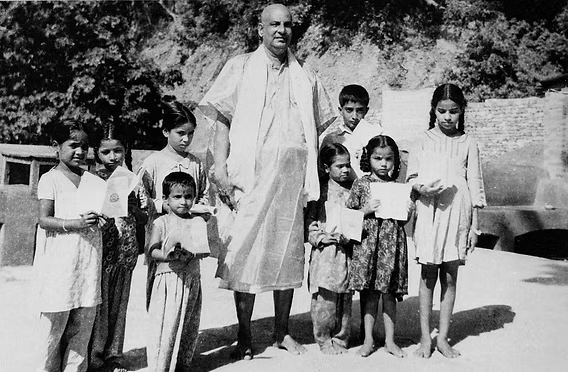
Swami Sivananda standing with children sharing blessings and spiritual guidance
Bhakti Yoga, Swami Sivananda

Doctrine of Avtarhood

Doctrine of Avtarhood by Swami Sivananda God takes a human form for elevating human beings. There is descent of God for the ascent of man. This is known as Avatara or incarnation of God. In the Gita (IV-6, 7, 8) you will find: “Though unborn, the imperishable Self, and also the Lord of all beings, brooding over nature, which is Mine own, yet I am born through My own power. Whenever there is decay of righteousness, then I Myself come forth. For the protection of the good, for the destruction of evil-doers, for the sake of firmly establishing righteousness, I am born from age to age. “ There are various kinds of Avataras: (1) Poorna-avatara, (2) Amsa-avatara and (3) Avesha-avatara. Lord Krishna was a Poorna-avatara, as you already know, with sixteen rays. Lord Rama was an Avatara of fourteen rays. Sri Sankaracharya was an Amsa-avatara. Avataras generally proceed from Brahma, Vishnu and Siva. They cannot come out of Isvara Himself. Just as a tailor who makes coats for others can make a coat for himself also, God who has created the bodies for others, can create a body for Himself as well. There is no difficulty. He is omnipotent and omniscient. As He has control over Maya, He is fully conscious of His divine nature though He assumes a form. Still He is infinite and unconditioned. Lord Krishna told Arjuna that this was the ancient and imperishable Yoga which he taught to Vivasvan the Sun-God; Vivasvan taught it to Manu; Manu taught it to Ikshvaku and so it was handed down through Parampara from royal sage to royal sage till it is decayed in the world by great efflux of time and was now renewed for Arjuna as he was His devotee and friend. Some ignorant persons object: “How can the unborn God assume a human form? How can the Ruler be limited in a perishable, human body? How can the Lord who stands as the Witness only put on a finite body?” These are all vain, worthless, illogical discussions. The doctrine of Avatarahood is perfectly rational, perfectly logical and perfectly tenable. God is the Antaryamin, the Inner Self of all beings. He is not an absolute landlord of this world. He is not extra-cosmic or super-cosmic deity. He pervades and permeates all atoms and the whole universe. He is the Lord of the breath, mind and all organs. In him we live, move and have our very being. A simple Jivanmukta is like a star that glitters at night. He throws a little light only. Somehow or other he has crossed to the other shore through some Tapas and Sadhana. He cannot elevate a large number of people. Just as the waters of the small spring in the yonder fields can quench the thirst of a few pilgrims only, so also this Kevala Jnani can bring peace for a few persons only. Whereas an Avatara is a mighty person. He is like the big Manasarovar lake. He removes the veil of ignorance of thousands of men and women and takes them to the land of eternal rest, bliss and sunshine. There are some premonitory signs that indicate the advent of an Avatara. The ground is well prepared for his descent. People take interest in Sankirtana and some pious people disseminate Sankirtana Bhakti far and wide. Some great souls are born beforehand and these train people in selfless service and right conduct. The Lord incarnated as Nara and Narayana. The object of the incarnation was to teach by precept and example the performance of duty without desire for reward. Nara and Narayana were doing severe penance at Badrikashram. The Lord appeared as a swan to teach Atma-Yoga to Brahma. Dattatreya, the Kumaras, four sons of Brahma are all partial incarnations of Vishnu. Lord Vishnu has taken ten Avataras up till now. Dakshinamoorthy was an Avatara of Lord Siva. The philosophy of Jesus Christ, the Yogi of Nazareth, is the best of its kind for the European world as is the philosophy of Buddha for Thailand, China, Japan and Sri Lanka. So is the philosophy of Mohammed for Arabia. All are the sons of God made in His image to give to the different parts of the great wide world a message of peace and of the secret of life. Very few people like Bhishma recognised Lord Krishna as the Avatara. That is the reason why Lord Krishna says: “The foolish disregard Me, when clad in human semblance, ignorant of My Supreme nature, the great Lord of beings. ” (Gita: IX-11. ) “Those devoid of reason think of Me, the unmanifest, as having manifestation, knowing not My supreme nature, imperishable, most excellent. ” (Gita: VII-24. ) Pseudo-Avataras are abundant these days. They have cropped up like mushrooms. Their disciples pompously advertise these Avataras as Bhagavans, torch-bearers, Perfect Masters, Thakurs, Adepts etc. , for collecting money and building Ashrams for their own comfortable living. They get their downfall also soon. All that glitters is not gold. People have lost their faith now in these charlatans. Truth alone can get victory. How long can falsehood stand? The pseudo-Avataras dress themselves as Lord Krishna with crown and peacock-feathers on their heads and appear before credulous disciples and say: “I am Lord Krishna. Drink my Charanamrita. I shall give you Mukti. ” Any saint who wants to rise up should not allow his disciples to advertise. Otherwise he will lose his respect soon. These pseudo-Avataras who live in the midst of utter darkness but profess themselves to be wise and learned, go round and round, deluded in many crooked ways, as blind people led by the blind. There is grand possibility of the descent of God in human form as an Avatara. This has occurred several times in the past and will continue to occur in future as well. In the divine scheme of things Avataras are indispensably required for the uplift of humanity. In this Kali-Yuga, Kali-Avatara is expected. May that Avatara bring

Doctrine of Avtarhood Read Post »

ANI 20250504114000
Bhakti Yoga, Swami Sivananda

Jnani is the Greatest Bhakta

Jnani is the Greatest Bhakta by Swami Sivananda Bhagavan Sri Sankaracharya defines Bhakti as devotion unto Atman. You cannot entirely separate Bhakti from Jnana. When Bhakti matures, it becomes transmuted into Jnana. A real Jnani is a devotee of Lord Hari, Lord Krishna, Lord Rama, Lord Siva, Durga, Sarasvati, Lakshmi, Lord Jesus and Buddha. He is a Samarasa Bhakta. Some ignorant people think that a Jnani is dry man and has no devotion. This is a sad mistake. A Jnani has a very, very large heart. Go through the hymns of Sri Sankaracharya and try to gauge the depth of his devotion. Go through the writings of Sri Appaya Dikshitar and measure the magnanimous depths of his unbounded devotion. Swami Rama Tirtha was a Jnani. Was he not a Bhakta of Lord Krishna? If a Vedantin excludes Bhakti, remember, he has not really grasped and understood Vedanta. The same Nirguna Brahman manifests with a little Maya in a corner as Saguna Brahman for the pious worship of His devotees. Isvara is His Tatastha Lakshana only. Lord Krishna takes a Jnani as a first-class Bhakta. “Of these, the wise, constantly harmonised, worshipping the One, is the best; I am supremely dear to the wise, and he is dear to Me. Noble are all these but I hold the wise as verily Myself; he self-united, is fixed on Me, the highest path. ” (Gita: VII-17, 18. ) Bhakti is not divorced from Jnana. On the contrary Jnana intensifies Bhakti. He who has knowledge of Vedanta is well established in his devotion. He is steady and firm. Some ignorant people say that if a Bhakta studies Vedanta, he will lose his devotion. This is wrong. Study of Vedanta is an auxiliary to increase and develop one’s devotion. The devotion of a man proficient in Vedantic literature is well-grounded. Bhakti and Jnana are like the two wings of a bird to help one to fly unto Brahman, to the summit of Mukti. Hear this story with rapt attention. Sukadev was a perfect Jnani. He was an Avadhoota. How is it then that he studied the Bhagavata and held Katha for seven days for Raja Parikshit? This is a wonder of wonders! A perfect Jnani was absorbed in his Brahmanishtha but he came down from his heights and preached devotion. Did he lose his Atma-Jnana? What is the truth here? Sri Veda Vyasa wrote the eighteen Puranas for the benefit of the world. He wrote the Mahabharata which deals more with Pravritti. Yet he was not satisfied in his heart of hearts. He was quite uneasy and restless. Narada met Vyasa and enquired: “What is the matter with you, O Vyasa? You are in a sunken, depressed mood. ” Vyasa spoke out his heart. Then Narada said: “You will have to write a book which treats of Krishna-Prem and the Lilas of Lord Krishna. Then only you will have peace of mind. ” Then Vyasa wrote the Bhagavata, a book that overbrims with Bhakti Rasa and Kirtan of Hari. Rishis studied Bhagavata and held Kathas in a lonely forest in the vicinity of Sukadev’s hermitage. Sukadev was very much attracted towards the Katha of the Rishis. He directly proceeded to his father and studied the Bhagavata under him. Then only he taught Bhagavata to Raja Parikshit. Look at the devotion of Sukadev! From this incident it is quite clear that devotion and Jnana are inseparable and a Jnani is greatest Bhakta and those Vedantins who speak ill of devotion are deluded, ignorant persons.

Jnani is the Greatest Bhakta Read Post »

images 73 1
Bhakti Yoga, Swami Sivananda

Bhakti and Jnana

Bhakti and Jnana by Swami Sivananda (1) Jnana Yoga is like crossing a river by swimming. Bhakti Yoga is like crossing a river by a boat. (2) The Jnani gets knowledge by self-reliance and assertion. The Bhakta gets Darshan of God by self-surrender. (3) The Jnani asserts and expands. The Bhakta dedicates and consecrates himself to the Lord and contracts himself. Suppose there is one rupee in the body of a small circle. This rupee contracts and merges itself into the circumference. This is Bhakti. Imagine there is a two-anna piece in the centre of a circle. This coin so expands that it occupies the whole body of the circle and the circumference also. This is Jnana. (4) A Bhakta wants to eat sugar-candy. A Jnani wants to become sugar-candy itself. (5) A Bhakta is like a kitten that cries for help. A Jnani is like a baby-monkey that clings itself boldly to the mother. (6) A Bhakta gets Krama Mukti. A Jnani gets Sadyo-Mukti. (7) A Jnana Yogi exhibits Siddhis through will or Sat-Sankalpa. A Bhakta gets all the divine Aisvaryas through self-surrender and the consequent descent of Divine Grace. In the Gita (IV-39) Lord Krishna clearly points out that Bhakti and Jnana are not incompatibles like oil and water. He says: “Sraddhavan labhate jnanam-The man who is full of faith obtaineth wisdom. “ “Tesham satatayuktanam bhajatam preetipurvakam; Dadami buddhiyogam tam yena mamupayanti te-To these ever harmonious, worshipping in love, I give the Yoga of discrimination by which they come unto Me. ” (X-10. ) “Bhaktya maamabhijanati yavanyaschasmi tattvatah; Tato mam tattvato jnatva visate tadanantaram-By devotion he knoweth Me in essence, who and what I am; having thus known Me in essence, he forthwith entereth into the Supreme. ” (XVIII-55. ) To deny Jnana altogether, to say that there is nothing beyond Goloka as some sectarian Bhaktas do, is the height of one’s folly. To deny Bhakti and Isvara as some dry Vedantins do is also foolishness. A happy combination of head and heart is perfection.

Bhakti and Jnana Read Post »

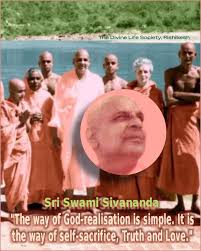
Swami Sivananda Collage of Swami Sivananda images and quotes
Bhakti Yoga, Swami Sivananda

How to Develop Love

How to Develop Love by Swami Sivananda If you really want to root out hatred and develop Prem or pure love, you will have to serve that man whom your mind dislikes. You will have to serve that man who is planning to destroy you. When you hear that your bitterest enemy is sick, you will have to run immediately to his house and shampoo his legs with full Prem. You will have to attend on him day and night, just as you attend on your sick wife, son or mother. Even if inimical feelings rise in your heart, you will have to subdue them by raising frequently to opposite positive feelings of love. This is doubtlessly a trying, difficult Sadhana. But the benefits are wonderful. You will become a centre of power and energy. You will become a spiritual giant indeed. You will become an embodiment of love (Prem Murthi or Prem Vigraha. ) When you try to control anger, when somebody has injured you, you should not only check the big wave of anger, but also try to eradicate the internal burning which remains even though you do not speak harsh words or express outwardly any signs of anger in the face. This is most difficult; but it can be eradicated by continuous service and love. Whenever your friend is annoyed with you, speak to him first with a smile and apologise sincerely with tears even though you are right. Serve him nicely with Prem. Vindictive spirit is a deadly enemy of peace, devotion, love and Jnana.

How to Develop Love Read Post »

Swami Sivananda Two monks conversing with guru image background image
Bhakti Yoga, Swami Sivananda

Faith Can Work Miracles

Faith Can Work Miracles by Swami Sivananda Faith in God is the first step to God-realisation. Not an iota of progress is ever possible in the path of spirituality without faith. The faith must be a living faith. It must be unwavering faith. Lack of faith is a stumbling block in the path of realisation. Faith develops into Bhakti or devotion to God. Faith is the gateway to the Kingdom of God. It is the threshold to the Knowledge of God. Faith gives strength and removes anxieties and uneasiness of mind. Faith is therefore a powerful mental tonic. Faith is an important qualification for an aspirant in the path of spirituality. Students of all Yogas, whether of Karma, Bhakti, Raja and Jnana, should possess this fundamental virtue. No faith, no devotion. No faith, no Jnana. The Sanskrit equivalent of faith is “Sraddha” or “Visvas. ” The student should have faith in the existence of God, in the teachings of his Guru, in the Vedas and his own self. The whole world runs on faith only. The Raja has faith in his Diwan. The husband has faith in his wife. The shop-keeper has faith in his customers. The patient has faith in his doctor. The client has faith in his lawyer. The engineer has faith in his head-clerk. Faith is one of the important items in the Shad-Sampat or sixfold virtues of the four means of salvation or Sadhana Chatushtaya in the path of Jnana. Even Patanjali Maharshi, the exponent of Raja Yoga philosophy lays much stress on faith. He says: “Sraddha veerya smriti samadhi prajna – purvaka itaresham-to others (this Samadhi) comes through faith, energy, memory, concentration and discrimination of the real. ” (I-20. ) He has placed Sraddha (faith) in the very beginning of this Sutra. He has given prominence to this. If a man has faith, then energy, memory etc. , come by themselves. He will collect all his energies and remember the ultimate Tattva and will exert to realise the basic Reality. Let me repeat the words of the Gita here. “He who is full of faith obtaineth wisdom, and he also who hath mastery over his senses; and having obtained wisdom he goeth swiftly to the Supreme Peace. But the ignorant, faithless, doubting self goeth to destruction; nor this world, nor that beyond, nor happiness is there for the doubting self. ” (IV, 39-40) “Some by meditation behold the Self in the self by the Self; others by the Sankhya Yoga and others by the Yoga of action. Others also ignorant of this having heard of it form others, worship; and these also cross beyond death, adhering to what they had heard. ” (VIII, 24-25) Dhruva had faith in the words of his mother. So he retired into the forest, did severe Tapas and came face to face with Lord Hari. The milk-maid had faith in the words of the Pandit who said: “Thousands have easily crossed the ocean by a single Name of God. Could you not cross this tiny stream?” and crossed the river by reciting His Name, whereas the faithless Pandit who preached about the power of the Name to the milk-maid was on the point of drowning when he himself tried to cross the river on the strength of the Name after seeing the marvellous spectacle of the girl’s crossing the river by repeating RAMA NAM. Prahlada had unswerving faith on Narayana. And so he had His Grace. Fire was transmuted into ice by the Name of Hari. Mira had absolute faith on her Giridhar Gopal. And so poison was changed into nectar. “Life is faith and illumination. Without faith it is lame, without illumination it is blind. We need today the creative force of faith, the faith that discerns without logic, the faith that electrifies, the faith that removes all barriers and obstacles from its path and is anxious to fill us with divine enthusiasm and to give expression to the divine in man. Be strong in faith and be complete in the light faith enkindles in the heart If the power of intellect can discern the ideals of life, the power of faith retains them and makes them active in us. The delight of life is in the constant striving for actualising the ideal, and unless we can claim the touch of divine faith in us, we do not see the joy of a new creation, a new realisation, a new life, a new dream. “ Bad company, lust, greed, infatuated love for wife, son and property, and unwholesome food are the enemies of faith. They spoil the intellect, cloud the understanding and destroy memory. They produce wrong Samskaras or impressions in the mind and render the intellect gross and impure. Study of Bhagavata, Ramayana, Gita, Upanishads, Yoga Vasishtha; the elevating company of Sadhus and Mahatmas; service of saints; stay at Prayag, Rishikesh, Ayodhya, Vrindavana, Gangotri, Badrinarayan; prayer; Japa or recitation of Mantra; Kirtan or singing His Name; meditation; remembrance of saints and sages who have realised God and study of their teachings; fasting; pilgrimage; personal contact of a Guru can sow the seed of faith in a man and increase it also till it becomes quite firm and unshakable. Look at the perfect faith of the boy Nama Dev! His father asked him to place a dish of food before Vittobha (Lord Krishna at Pandharpur). Nama Dev placed the plate before the Murthy and asked the Deity to eat it. He wept bitterly when the Murthy kept quiet. After sometime Lord Krishna came out of the Murthy in the form of a boy and ate the food. The boy brought back the plate empty. The father asked: “Nama Dev, where is the food?” The boy replied: “My Vittobha has eaten it. ” Such is the power of real faith. The rare achievements of Vishwamitra Rishi in his Tapas and Yoga, the success of Napoleon in the field of battle, the attainments of Mahatma Gandhi in his Karma Yoga

Faith Can Work Miracles Read Post »

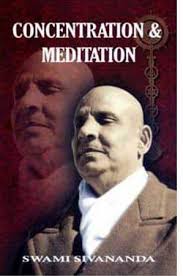
Swami Sivananda concentration and meditation poster picture
Bhakti Yoga, Swami Sivananda

Faith and Aspiration

Faith and Aspiration by Swami Sivananda Faith is Sraddha. Faith is the greatest thing in the world. Even the highest rationality has faith as its background. One cannot ratiocinate on things in which he has no faith. Even the greatest philosopher has faith as his stronghold. No intellectualism can prove good if it is not supported by faith. The whole world stands on faith and is guided by faith. Religion has faith as its root. One cannot prove God if he has no faith in God. God is only a matter of faith. This faith is the outcome of previous Samskaras. Certain men are born-philosophers and certain others do not grasp the fundamentals of religion even at the age of seventy. This is all due to past Samskaras or impressions. Faith is guided by impressions of actions done in the previous births and the present faith is nearer or farther from the Truth in accordance with the advancement made in spiritual evolution. Blind faith should be turned into rational faith. Faith without understanding is blind faith. Bhakti is the development of faith. Jnana is the development of Bhakti. Faith leads to Final Experience. Whatever a person strongly believes in that he experiences, and that he becomes. The whole world is a product of faithful imagination. If you have no faith in the world, the world does not exist. If you have no faith in sensual objects, they will not give you pleasure. If you have no faith in God, you never reach perfection. Wrong faith turns even existence into non-existence. One who thinks that Brahman does not exist, himself becomes non-existent, says the Taittiriyopanishad. Faith is the fundamental necessity for spiritual Sadhana. Aspiration is a development of faith. It is one step ahead of faith. The flame of faith burns as the conflagration of spiritual aspiration for Moksha. The aspirant yearns to have divine experience. It is no more mere faith but strong feeling which cannot be easily shaken by external events. The devotee longs to have union with the Beloved. He has no sleep, no rest. He always contemplates on how to attain the object of his love. He prays, sings, and gets mad of his Lord. Divine madness overtakes the devotee and he completely loses his personality in the aspiration for attaining God. This is called self-surrender.

Faith and Aspiration Read Post »

images 68 1
Bhakti Yoga, Swami Sivananda

The Divine Name

The Divine Name by Swami Sivananda Bhakti in essence is twofold: on the one hand there is an intense attachment towards God nurtured by deep emotion, and on the other, an earnest urge of love for Him. When these two elements are combined, we find Bhakti to be either an attachment emerging out of love or love being manifested itself as an attachment. Either we take love or attachment, the essential feature in Bhakti is that this feeling is in relation to the Highest the supreme Lovable One who is Real and imperishable, and surely not in relation to the objects of the world that are transitory and therefore, unreal. Such a love or devotion, as it may be termed, assumes various forms of expression and goes by different names. Kirtan or narration in poetry or prose of singing the glory of Lord, or more popularly, singing the Name of the Lord, is one of them. Any name denotes a particular concept; it is rather a verbal embodiment of a concept. Whatever the object of conception may be, either general or particular, either gross or subtle, visionary or real, the name is essentially associated with it. It gives a clear, adequate expression to a particular form or object that is associated with it, so as to enable us to comprehend and distinctly retain it in our mind. The Name is a verbal embodiment of the conception of the Supreme Being who is known by different names and forms in different times and climes. The Supreme is Infinite, and as it is not always possible for the common man to conceive of what is beyond the perception of the finite mind, they symbolise this Infinite Truth as forms, symbols or objects that vary according to their respective tendencies or mode of perception. Though in the initial stage there is difference and distinction among various names and their associated objects, but ultimately, when a habit of repetition of the Name is formed and the divine consciousness is kept ever awake, then there remains no distinction between the Name and the associated idea or object, the intuitive knowledge of the Supreme reveals in the Name itself. For, the basis of all names and forms is the one Primal Being who manifests Himself under different names and forms as per the faiths and tendencies of the different sects and races of different times and places. Harmonious, rhythmical note produces a distinctive image. It is not an imagination. For every sound there is a particular image. It has been scientifically proved that a certain particular sound produces a certain particular figure over some distinct surface. So it is reasonably believed that the respective names of God associated with their respective forms can also produce their images on the mental surface. Through continuous repetition it forms a deep-rooted impression in the mind of the repetitioner who ultimately attains God-Vision. There is an unfathomable depth, intense sweetness and charm in the Lord’s Name. It is beyond the futile explanation of the limited intellect. It is a thing knowable only through experience. The music first thrills the nerves, harmonises them and then mysteriously acts upon the mind. The sincere devotee loses himself in divine ecstasy. The worldly mind cannot grasp or perceive this state of intense emotion. The Lord’s Name is all-bliss, and when it is chanted, the mind merges in its bliss, it loses its individual entity in the bliss: it becomes one with the Bliss itself. God and His Name are identical; they are inseparable. He dwells where His Name is sung. The whole atmosphere becomes sanctified. Peace, purity and bliss prevail there. His Name carries the message of love. His Name frees the soul from affliction, unrest and bondage. His Name knows no barrier or distinction. His Name purifies the vicious lower self and elevates it to sublimity of universai consciousness and transcendent God-head. In ordinary self-consciousness there is the duality between the repetitioner and the Name. It is discursive: it is within the fields of common experience, it is confined within the rigid categories of the mind of limited conceptions. Ultimately the ordinary self-consciousness elevates into a transcendental experience, into a state of super-consciousness. The repetitioner and the Name become one. The eternally revealed Truth reveals to himself. He realises his oneness with the Supreme. The senses of duality the gulf of separateness between the finite and the infinite is removed. The dawn of intuition leads him from finitude to infinitude, from bondage to freedom, from darkness to Light, from mortality to Immortality. He only experiences his delight in the Divine. He does not even have the inclination to analyse his delight or its source, he will find that is but his love for God. He is not conscious of anything other than God. To him everything is only the manifestation of God. His all-absorbing love for God pierces through the names and forms of the universe, the universe as a whole, and in its multiphased appearance present themselves to him only as God. He feels the same intensity of love to the animate and inanimate objects of the world. The glory of the Divine Name cannot be obviously established through reasoning or discursive arguments. It can be experienced only through faith and belief. A finite, limited intellect surely cannot understand the nature of the infinite or the limitless. There is no limit of God’s Name. The scriptures present us His innumerable Names. It means His Names are unreckonable and therefore, infinite. So, how can a finite intellect comprehend that which transcends finitude? All Glory to His all-blissful, all-pure, omnipotent Name that liberates one from the shackles of earthly bondage and leads him to the illimitable domain of peace, bliss, and immortality! All glory to those blessed ones who take delight in His Name, sustain themselves by His Name and live to merge in His Name!

The Divine Name Read Post »