





Hari Om

Menu

Bhakti Yoga

Swami Sivananda Indian yoga guru and saint picture
Bhakti Yoga, Swami Sivananda

Selected Kirtan Dhvanis

Selected Kirtan Dhvanis by Swami Sivananda 1. Jaya Ganesa, Jaya Ganesha, Jaya Ganesa,PahimamSri Ganesa, Sri Ganesa, Sri Ganesa, Rakshamam. 2. Jaya Guru, Siva Guru, Hari Guru RamJagat Guru, Param Guru, Sat Guru Shyam.Adi Guru, Advaita Guru, Ananda Guru OmChid Guru, Chidghana Guru, Chinmaya Guru Om. 3. Saravanabhava, Saravanabhava, Saravanabhava PahimamSubramanya, Subramanya, Subramanya Rakshamam. 4. Goura Hari, Goura Hari, Goura Hari, PahimamGouranga Hari, Gouranga Hari, Gouranga Hari Rakshamam. 5. Jaya Sarasvati, Jaya Sarasvati, Jaya Sarasvati, PahimamSri Sarasvati, Sri Sarasvati, Sri Sarasvati, Rakshamam. 6. Sivaya Nama Om, Sivaya NamahSivaya Nama Om, Namah Sivaya.Siva Siva Siva Siva, Sivaya Namah OmBum Bum Bum Bum, Namah Sivaya.Siva Siva Sankara, Hara Hara SankaraJaya Jaya Sankara, Namami Sankara.Samba Sada Siva, Samba Sada Siva,Samba Sadasiva, Samba Sivom Hara.Om Namah Sivaya, Om Namah SivayaOm Namah Sivaya, Om Namah Sivaya. 7. Raghupathi Raghava Raja Ram Patita Pavana Sita Ram,Jaya Raghu Nandana Jaya Siya Ram Janaki Vallabha Raja Ram. 8. Achyutam Keshavam Rama NarayanamKrishna Damodaram Vasudevam Harim,Sridharam Madhavam, Gopika VallabhamJanaki Nayakam Ramachandram Bhaje. 9. Jaya Jaga Janani Sankata HariniTribhuvana Tarini Mahesvari. 10.Dattatreya Tavasaranam Dattannatha Bhava Haranam.Datta Guru Jaya Datta Guru Poorna Guru Avadhuta Guru. 11.Isvari, Mahesvari, Paramesvari PahimamKamesvari, Mathesvari, Sarvesvari Rakshamam. 12.Dhana Lakshmi, Dhanya Lakshmi, Dhairya Lakshmi, PahimamVara Lakshmi, Vijaya Lakshmi, Vidya Lakshmi, RakshamamJaya Lakshmi, Gaja Lakshmi, Pankaja Lakshmi, Namah OmAshta Lakshmi, Maya Lakshmi, Padma Lakshmi, Sarana Om. 13.Jaya Gange, Jaya Gange RaniSri Gange Jaya, Hara Gange. 14.Om Namo Bhagavate VasudevayaOm Namo Bhagavate Vasudevaya. 15.Hare Rama Hare Rama Rama Rama Hare Hare,Hare Krishna Hare Krishna Krishna Krishna Hare Hare.

Selected Kirtan Dhvanis Read Post »

swami sivananda Monk writing at desk with books image
Bhakti Yoga, Swami Sivananda

Maharashtrian Kirtan Dhvanis

Maharashtrian Kirtan Dhvanis by Swami Sivananda I In Maharashtra the devotees start their Kirtan with singing Jaya Jaya Rama Krishna Hari, Jaya Jaya Rama Krishna Hari. ‘Jaya Jaya Rama Krishna Hari’ is the Mantra which Sri Tukaram received from Lord Krishna in his dream. Further this Mantra is an abbreviated form of the Maha Mantra Hare Rama Hare Rama Rama Rama Hare Hare, Hare Krishna Hare Krishna Krishna Krishna Hare Hare. II In Alandi near Pune where there is the Samadhi of the reputed Yogi Sri Jnana Dev, people sing throughout the twentyfour hours,’Jnana Dev Tukaram’. III Another favourite Kirtan of the Maharashtra devotees is Jaya Jaya Vittoba Rukmai, Jaya Jaya Vittoba Rukmai. Vittoba or Vittala is another Name for Lord Sri Krishna. Rukmini is the Mother of the Universe. Rukmini is the consort of Lord Sri Krishna. IV Another beautiful Kirtan is the combined names of the important saints of Maharashtra: Thars: Sunaja Nivrittinath, Jnana Dev, Sopan, Muktabai, Ekanath, Nama Dev, Tukaram. Nivrittinath is the elder brother of Jnana Dev, the author of Jnaneshwari Gita. Sopan is another brother of Jnanadev, whose Samadhi is in Satara. Muktabai is the sister of Jnanadev. The three brothers are regarded as the incarnation of Brahma, Vishnu and Siva and Muktabai as the incarnation of Maya. Mysterious is the birth of great souls. Mysterious is their end also.

Maharashtrian Kirtan Dhvanis Read Post »
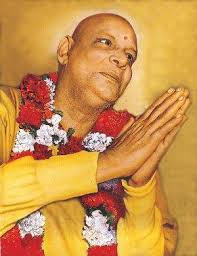
Swami Sivananda Monk with folded hands in prayer photo
Bhakti Yoga, Swami Sivananda

Sankirtan Dhvanis

Sankirtan Dhvanis by Swami Sivananda (Sing with Bhava and enjoy the spiritual bliss) (Thars: Sunaja) 1. Bhajo Rama – Hari Rama Hari Rama Hari Ram Bhajo Krishna Hari Krishna Hari Krishna Hari Shyam Bhajo Siva – – Hari Siva Hari Siva Hari Bhum Bhajo Guru – Hari Guru Hari Guru Hari Om. 2. (i) Jaya Siva Sankara Jaya Tripurari Jaya Gangadhara Jaya Madanari (ii) Jaya Muralidhara Jaya Asurari – Jaya Manamohana Kunjabihari – Jaya Sarangadhara Jaya Asurari – Jaya Manamohana Rama Murari 3. Siva Sambasadasiva Sambasadasiva Sambasadasiva Sambasiva Hara. 4. Sambho Sankara Gaureesa Siva Samba Sankara Gaureesa. 5. Sankara Siva Sankara Siva Sankara Siva Sankara Siva Hara 6. Hari Om Ram Ram Hari Om Ram Hari Om Ram Sita Hari Om Ram Hari Om Hari Om Hari Om Ram Siva Om Siva Om Siva Om Shyam Hari Om Tat Sat Tat Sat Om Hari Om Santi Tat Sat Om. 7. Radha Krishnane, Trilokanathane Venugana‑lola Neela‑Megha‑Shyamane Pita Raghuvara, Mata Raghuvara Bhrata Sakha Prabhu Guru Hita Raghuvara. 8. Natesa Saranam-Saranam Venkatesa 9. Rama Rama Rama Rama Rama Nama Tarakam Ramkrishna Vaasudeva Bhaktimuktidayakam. 10. Achyutam Kesavam Rama Narayanam Krishna Damodaram Vaasudevam Harim Sridharam Madhavam Gopikavallabham Janakee‑Nayakam Ramachandram Bhaje. 11. Jaya Siyaram Jaya Jaya Siyaram Jaya Radheshyam Jaya Jaya Radheshyam Jaya Hanuman Jaya Jaya Hanuman Audh Bihari Sitaram Kamala Vimala Mithila Dham – – – – – (Jaya Siyaram. . . ) 12. Ramaho Krishnaho Radha Krishna Devaho, Venugana‑Lola Neela Megha Shyama Krishnaho.

Sankirtan Dhvanis Read Post »

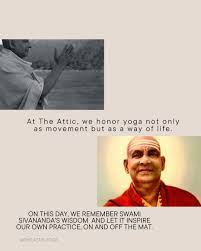
Swami Sivananda Yoga tribute image with guru portrait image
Bhakti Yoga, Swami Sivananda

Kirtan at Anand Kutir

Kirtan at Anand Kutir by Swami Sivananda (This article was written in the late 40s.) (Special Feature) The Sankirtan conducted at Ananda Kutir at nights has its own remarkable special features which will not be found anywhere in India. It is more a class of silent common meditation and Samadhi. It is a Santa type of Sankirtan. It is not a violent type of Sankirtan which you will find in Punjab, U.P., Bengal and other places. Mridanga, Tabala, Dole, Cymbals, Kartals are not used at all. There is no clapping of hands. Aspirants sit in the meditative pose. One man sings sweetly and gently Namavalis or Dhwanis and the others follow. In other places only some select people lead but at Ananda Kutir the turn comes to everyone. Even ladies, children and servants get their turn. Even big officers who feel shy in doing Kirtan are made to do Kirtan. The opening Kirtans are Ganesa Kirtan, Sarasvati Kirtan, Guru Kirtan, Mahamantra Kirtan, Panchakshara Kirtan Hanuman Kirtan and Gauranga Kirtan. Om is chanted first loudly three times to begin with. As Lord Gauranga revived the Kirtan movement and as his name is ever associated with Sankirtan, Kirtan of his name also is done. Kirtan is no Kirtan if Sri Hanuman is not invoked. Whenever Ramanam is sung, there dwells Hanuman. Hence Hanuman Kirtan also is recited at the beginning. On Fridays there is special Devi Kirtan. On Thursdays there is special Dattatreya Guru Kirtan. On Saturdays there is special Hanuman Kirtan. The Sankirtan of Ananda Kutir is more a Japa Kirtan. Panchakshara, Ashtakshara, Dvadasakshara, Rama Taraka, Mahavakya, Gita Slokas and Upanishadic Mantras are sung very beautifully. Mahamantra Kirtan is sung in a variety of ways. There is Sanskrit Kirtan. There is Nirguna Kirtan also. Further the Sankirtan class is also a lecture class. Swamiji’s English philosophical songs, Sanskrit songs and Vedantic songs are sung in the interval. This itself forms a lecture. The students give an introduction to the song first which itself is a beautiful lecture. The songs are full of practical spiritual instructions. Hindi Bhajans are sung in the interval. Occasionally harmonium and Tabala are used on special functions. For Akhanda Kirtan cymbals are used at night to drive out sleepiness. The recitation of Srisukta, Lakshmi Ashtottara, Samagana and Vedic chanting are thrilling and touching. Children are specialists in doing lectures and Kirtans. Sometimes the whole ‘Wavelets of Bliss’ of Sri Swamiji in English and Tamil tunes is sung. Swamiji will sing ‘Philosophy and Yoga’, ‘Wisdom Sparks’, ‘Sangita Lila Yoga’, and ‘Sangita Bhagavata’. There will be no satiety even if you hear hundreds of times his ‘Maya’ poem and ‘Divine Creeper’. Sometimes two-party and three-party Kirtan are done. This inspires and arouses many. Chanting Om and Ram is also done in two parties. On Sundays Aditya Hridayam is recited. On Thursdays Dattatreya Stuti is chanted. On Mondays Sarvalingastava is recited. On Saturdays Sangita Hanuman Chalisa (40 verses) in Hindi is recited. On Ekadasi days Vishnu Sahasranama is recited and Sangita Ramayana in Hindi is sung. Daily Mahabharata Santi Parva, Upanishads, one chapter of the Gita, MindIts Mysteries and Control, Aphorisms, Yoga-Vasishtha are recited. Sometimes dramas ‘Radha’s Prem’, ‘Gita Drama’ and ‘Brahmavidya Vilas’ are enacted. The function closes with common meditation, Arati song ‘Jaya Jaya Arati Venugopala’, prayer for World-Peace and distribution of Prasad.

Kirtan at Anand Kutir Read Post »

Swami Sivananda Guru raising hand in greeting gesture image
Bhakti Yoga, Swami Sivananda

Latvian Sankirtan

Latvian Sankirtan by Swami Sivananda The Latvians from the Baltic Branch of the Indo-European family of nations. Their language is the best proof of their ancient origin. It is akin to Sanskrit. The Latvians have preserved their Aryan strength also in choir-singing which they foster with love. All down the ages the Latvians have created hundreds of thousands of folk-songs and they are the fountain from which they derive their ethical and spiritual outlook on the world. It has been the tradition to mark every event, from the cradle to the grave, by singing collectively in a common place. This is Latvian Sankirtan. The Latvian folk-songs or ‘Dainas’ as they are called here, are in verse and rhythm. Although the creation of individual authors, the Dainas reflect the life of the nation in its entirety, and handed down and spreading from generation to generation they have assumed a final aspect which fully portrays the soul of the people. They embrace the animate and inanimate world alike and glorify all the great events of the nation. The Sankirtan movement in Latvia began to decline owing to some evil causes, but at the present day there is a revival of it. Even the geographical situation of Latvia has not only facilitated the exchange of goods and brought the Latvians into contact with the other countries; it has also taught them to weather many a gale without losing their national individuality. In order to preserve the great spiritual inheritance of the Latvian nation, some patriots have devoted a life-time to collect and study the Dainas. Despite their great antiquity the Latvian Dainas are recited and sung by the people on appropriate occasions with great reverence and much feeling. In the songs the Latvians find comfort and consolation when times are bad. The Dainas owe their existence to the love of singing. It is also the source from which arose the tradition of the Latvian people to arrange song festivals from time to time. They are musical events of a high order, with vast numbers of performers and enormous audience. In the summer of 1938, on 18th and 19th June, the ‘Ninth All-Latvian Song Festival’ has been celebrated in Riga, the capital of Latvia. More than 400 choirs comprised of 18,000 singers have participated in this Festival. All the singers and most of the audience were dressed in the national costumes of various districts. Choirs from neighbouring countries, Lithuania, Estonia, have attended this Festival. In the soul of the Latvians we find vividly envisaged the idea of the universal power of song. Not only does song make life more tolerable, but the spirit of song dispels enmity while the power of song stays arrows and wards off wars. That is why the Latvians hope that the spirit and sound of their song will spread the boundaries of their own country. The song will be the bond uniting the spiritual culture of the nations, and will be the promoter of brotherhood and peace.

Latvian Sankirtan Read Post »

Swami Sivananda writing spiritual teachings surrounded by books
Bhakti Yoga, Swami Sivananda

Kirtan in Maharashtra

Kirtan in Maharashtra by Swami Sivananda Maharashtra also is celebrated for Kirtan. The spiritual influence of Sri Eknath, Tukaram, Namdev, Jnana Dev etc., the reputed saints of Maharashtra still exists. It is understood that Maharashtra Kirtan begins with the invocation of the grace of Lord Ganapathi, with Kathak and music interspersed, ending with the recital of some Puranic story. Maharashtrians do not use harmonium and Tablas. They use Ektar Sitar, Tambura and Kartals and Tepri (wooden pieces). They sing the Names of Lord Krishna or Vitthala or Vitthoba and the Bhajans or Abhangas of Saint Tukaram. They commence with Brahmanirupa or Avahan or Gurustotra and Ganesa Stotra and Bhajan. They do Nama Saptaha. They have Palki procession also. They tie Gungru to their legs and do Nritya while doing Kirtan either in a circle or in two lines. Jnana Dev was the founder of an institution called Warkari Sampradaya which is still alive in all its glory in Maharashtra. It is called ‘Wari’ to Pandharapur. All who have accepted this Wari undertake to go to Pandharpur on Ashadh Ekadasi (June-July) and Kartik Ekadasi (October-November) days. They must visit Pandharpur at least once, if not on both these days. It is considered so very sacred that except in the event of physical illness, they continue to go to Pandharpur the whole of life and from generation to generation. Devotees collect together and walk to Pandharpur from their villages. They do Kirtan on the way. They start the Kirtan with ‘Jay Jaya Rama Krishna Hari’. Saint Tukaram had initiation of the Mantra in his dream. In Alandi near Pune they do Akhanda Kirtan of ‘Jnanadev and Tukaram.’ In Ganigapur Kirtan of Lord Dattatreya is performed. ARDHA VASA Before starting Akhanda Kirtan, a ceremony called Ardha Vasa is performed the previous night. A big Mandapa is erected. The Mandapa is decorated with mango leaves, flowers etc. Then the picture of Lord Krishna or Lord Rama is placed on the Simhasana, which is also nicely decorated. Just in front of the picture Vedi (a big pillar) or Tulasi plant is decorated by various pictures of Lord Krishna, Chaitanya Mahaprabhu etc. The Kirtan is done till mid-night. In the end Puja is done with recitation of Stotras and Arati. Then the Lord goes to sleep by the recitation of Sayana Mantra. In the early morning, the priest comes and does the Puja. Four Akhanda Dipas are placed in the four corners of the Vedi. At the end of Akhanda Kirtan the devotees go for Nagar Kirtan, singing the Names of the Lord or Mahamantra in chorus. They come back and do the ceremony called Dadhi Kandon. Curd mixed with water and sandal paste is sprinkled by the Darbha grass over the persons. The following song is sung, when the water is sprinkled. Lord Krishna speaks to Mother Yasoda: O Deyya Mayya Makhan Kilade, Makhan Kilade, Makhan Khilade, Brindavan Key Kunj Galin Mein, Dadhi Key Dhoom Machade (O Deyya Mayya) O my Beloved Mother! Please feed me with butter. O feed me with butter! Feed me with butter! Let there be a bustling shower of curds, Everywhere in the busy streets of Brindavan! (O my Beloved Mother)

Kirtan in Maharashtra Read Post »

110489 90143
Bhakti Yoga, Swami Sivananda

Kirtan in Bengal

Kirtan in Bengal by Swami Sivananda I Glorified above all, is the chanting of the various Names of Lord, which cleans the mirror of Chitta; which extinguishes the great fire of successive births and rebirths; which operates like the moon-beam upon the white lily of spiritual life of bride Vidya; which swells the ocean of bliss; which gives the chanter the fullest enjoyment of that Divine Love at the utterance of each word and bathes the mind and senses in Divine Bliss. LORD GAURANGA. Bengal is known as the birth-place of Sankirtan. Lord Gauranga was the first man, who pioneered the propagation of Sankirtan Yoga in Bengal, Assam and Orissa during the middle of the fifteenth century. His Kirtans are widely sung there. There are several kinds of Kirtan in Bengal. Paalaa Kirtan, Shyama Sangit, Parvati and Nama Kirtan are the important ones. Kirtans are generally sung with accompaniments like Khol, Jhal, Vina, Pakhvaj, Mridanga and other musical instruments. Paalaa Kirtan is the most ancient Kirtan in Bengal. They are written in verse with rhythm. Most of them deal with the life-history of Lord Krishna. They were written by Ramprasad, Chandidas, Vidyapati during the sixteenth century. Paalaa Kirtan is divided into several parts. They are: Balakanda, Yasoda-Gopal, Rasa Lila, Gopiviraha etc. The Vaishnavas sing this Kirtan in chorus on some special occasions. Khol and Jhal are the main accompaniments. Shyama Sangita or the song of Mother Kali is the special Kirtan for the Saktas, the worshippers of Sakti. They also sing Siva Sangit. These Kirtans are sung only on special occasions. Recitation of the Names of various Gods and Goddesses and hymns relating to them is called Nama Kirtan. They are generally sung in the evening, after Puja. Parvati Kirtan is another form of Nama Kirtan, sung in different Svaras. Particularly, it is sung in Bhairavi tune in the early morning. It is also sung in Prabhata Pheri. During Arati, they do Nritya with Khol and other musical instruments and sing Hari Bol. II The Sanskrit verb ‘Krit’ means praising. In the 10th Skanda of the Srimad-Bhagavata is a beautiful description of the Lord’s entrance in His ‘Lilabhumi’ Brindavan: Barhapeedam natavaravapuh karnayoh karnikaram Bibhradvasah kanakakapisam vaijayanteem cha maalam Randhran venoradharasudhaya purayan gopivrindair- Vrindaranyam svapadaramanam pravisad-gitakritih. The last word ‘Kriti’ denotes praise and from this is derived Kirtan which is now commonly known as a certain type and method of melodious singing, particularly singing Lord Krishna’s Name and His Lila. Only praising the Name of the Lord and His Lila in melody for the purposes of keeping the flame of Bhakti burning in our hearts can be termed Kirtan. Santa Tukaram of Maharashtra in one of his Abhangas has charmingly said that as the purifying waters of Jahnavi (Ganga) have come down to the mortal world from the Lord’s feet so the flow of Kirtan comes out of the hearts of mortals and reaches the Lord’s feet. Both these flows are purifying. Singing about the Lord is usually known as Bhajan in most parts of India and there is nothing comparable to Kirtan singing of Bengal outside the province. Kirtan can be classified under two heads: 1. Namakirtan and 2. Lilakirtan or Rasakirtan. Singing the Names of the Lord in melody is named Namakirtan. The main Sadhana in the nine kinds of Bhakti is Namakirtan. The influence and utility of this are highly appreciated among the Vaishnavites of Bengal and among all the religious cults of India. They think that the essence of all religions in Kaliyuga is Namasankirtan Kalau Namasankirtanat. Singing Lord Hari’s Name aloud is Sankirtan. From this Prema blossoms out and a devotee forgets the existence of the outer world while he sincerely sings the Name of the Lord. This is called Avesha. A Bhakta attains Samadhi by singing the Lord’s Names just as a Yogi does through Yoga Sadhana. The primary aim of Namasankirtan is to attain Prema and the main aim of Vaishnava cult is to generate this Prema. It is said that when Lord Chaitanya used to do Namasankirtan dipped in Prema thousands accompanied him. Such singing is done according to the appropriate Ragas and Raginis of the hours of the day and night, e.g., in the morning hours in Bhairavi, in the noon in ‘Bagasree,’ in the evening in ‘Purbi,’ or ‘Yaman Kalyan,’ in the night in ‘Behag.’ Mass singing in such style and compass when the singer and the audience both calling the Lord with tears rolling down their cheeks is characteristic of Bengali Kirtan and such examples are rare except in Indian music. Namaskarakirtan is usually singing the Lord’s Name, e.g., ‘Hare Krishna Hare Krishna Krishna Krishna Hare Hare; Hare Rama Hare Rama Rama Rama Hare Hare.’ But as the Vaishnavites of Bengal believe Sri Chaitanya as an incarnation of the Lord they sometimes sing ‘Sri Krishna Chaitanya Prabhu Nityananda, Hare Krishna Hare Rama Sri Radhe Govinda’ or ‘Nitai Gour Radhe Shyam, Hare Krishna Hare Ram.’ Lord Sri Chaitanya and Nityananda deluged Bengal with Prem by Namasankirtan; hence they are known as the fathers of Sankirtan. The greatest among the teachings of Lord Chaitanya is: Satye yad dhyayato vishnum tretayam yajato makhaih; Dvapare paricharyayam kalau tad harikirtanat. When the mind is attracted towards the Lord the heart experiences a selfless, blissful state and this is called Rati. When this Rati gets a greater hold it is termed as Prema. The devotee does not wish for Moksha because even asking for or wanting Moksha is a type of Vasana and selfishness. When Bhagavan is the only object of attainment what else can be desired? The utility of Namasankirtan is the purification of the heart and it is both the method and the goal as the Name and the named are one and the same. The doings at different periods and in different circumstances and ways of Lord Krishna are termed Lila. Any song composed and sung on such Lila is known as Lilakirtan or Rasakirtan. Some are fond of Namasankirtan and others

Kirtan in Bengal Read Post »

images 95
Bhakti Yoga, Swami Sivananda

Variety of Kirtan

Variety of Kirtan by Swami Sivananda Sankirtan Yoga can be practised by sincere devotees and earnest Sadhakas after God-realisation in a variety of ways. Just as we take delight in preparing various kinds of dishes out of one and the same vegetable and relish their tastes immensely in each of the preparations individually, even so devotees sing in ecstasy the blessed Names of the Lord and enjoy the unparalleled spiritual bliss. Mind is a peculiar combination of various kinds of moods, temperaments, whims, fancies and sentiments. It is a strange mixture of various sentiments, emotions, etc., that is known in this world. Therefore the Rishis of yore have designed various methods to control the mind. Control of the mind forms the most important and major item of spiritual Sadhana in the path of God-realisation. Bhakti Yoga and specially Sankirtan being the easiest, surest and quickest means of God-realisation it is worthwhile giving very careful attention and earnestness in its practice and hence details will be of great help to Sadhakas in this direction. Of the various methods of Sankirtan we have the following varieties. People of different communities, localities and provinces conduct Kirtan in their own usual and established manner. For example there is Sankirtan prevalent in Latvia, a description of which is given elsewhere in this book. Srimati Anna Plaudis of Riga is a great Sankirtan enthusiast in Latvia and through her we know something of Latvian Sankirtan which the members of the Divine Life Society at Latvia also practise. In South India they have what is called ‘Divya Nama Kirtan.’ Maharastrians, Bengalis, Gujaratis, Biharis, etc., have their own ways of conducting Sankirtans in their places. Some of the most important and existing modes of Sankirtan are 1. Akhanda Kirtan, 2. Prabhata Kirtan, 3. Prabhat Pheri, 4. Nagar Kirtan, 5. Boat Kirtan, 6. Lorry Kirtan, 7. Kirtan on elephant back, 8. Party Kirtan, 9. Nama Kirtan, 10. Gunanuvad, 11. Yas Kirtan, 12. Naradiya Kirtan, 13. Lila Kirtan, etc. Thus Sankirtan can be done in a variety of ways to suit the temperament, time and place. Sankirtan can be done without any restriction to its time and place. Not only Bhaktas, even Vedantins can do Sankirtan and we have Vedantic Kirtans. The attributes of the Nirguna Brahman are described by means of attractive Kirtans. Generally Sankirtan is conducted in temples, houses etc. Devotees join together at sunset in temples or they keep a photo of the Lord in a hall, decorate it with flowers etc., and seat themselves in front of the picture in two rows facing one another. In the beginning Omkar or Pranava is chanted loudly in chorus by all the devotees three times. Then Ganesa and Guru Kirtans are sung. One of the devotees sings the Names of the Lord melodiously and others follow him next. This method ensures more attention, harmony and uniformity. This preliminary Kirtan consisting of Ganesa and Guru Kirtan lasts for about five minutes. Next the Maha Mantra or Kalisantarana Upanishad Mantra, ‘Hare Rama, Hare Rama’ is repeated for nearly 10 minutes. Then the turn comes for all other devotees too to sing and lead the Kirtan individually. They sing for a definite period and it is beneficial to keep 5 to 10 minutes as the minimum time. When all the devotees have sung Kirtan the Kirtan is concluded with Jayajayakaras, prayer for world peace and repetition of Santi-Mantra ‘Purnamadah Purnamidam’ etc. In the end there should be common meditation for a few minutes. There should be also Arati to the Lord’s picture and distribution of the sacred Prasad. Next comes Akhanda Kirtan a detailed description of which is given in the book Bhakti and Sankirtan. Sankirtan is conducted in the early morning hours also. The devotees leave their beds at 4 a.m., wash their faces, teeth etc. They also take a bath if convenient and then sit for Sankirtan. They keep their Ishtadevata in front of them and do Kirtan as mentioned above. Before the starting of Kirtan they repeat certain sacred hymns to Sadguru, Lord Vishnu, Sarasvati and others. This is called Prabhata Kirtan. When Prabhata Kirtan is concluded the devotees start the Prabhata Pheri. Pheri means going round and Prabhata Pheri means going round in the morning doing Sankirtan of God’s Names in a batch. Generally Prabhata Pheri is conducted before sunrise. It is done as the first item of the programme in all spiritual congregations and assemblies like Sankirtan Sammelan, Sadhana Weeks etc. This serves to make the people know of the forthcoming congregation. The philosophy behind Prabhata Pheri is this. The people of the locality who are not in the habit of getting up before sunrise will develop the habit of waking before sunrise, in the Brahmamuhurta. They will hear the Names of the Lord chanted as soon as they get up which purify the inner impurities of mind. The effect of the Prabhata Pheri Kirtan is beyond description. It generates a divine current in the whole Mohalla or town. There will be peace, joy, and ecstasy in the minds of all those who sing and hear. NAGAR KIRTAN:- This is generally done in the evening after 4 p.m. It can be conducted in the morning also. Here the group of devotees start from a particular place with harmonium, Kartals, and other instruments of music. After Ganesa Kirtan, Guru Kirtan and Mahamantra Kirtan the devotees sing various other Sankirtan Dhvanis. Nagar Kirtan can be done without instruments also. This is more effective. The pure vibrations of the Lord’s Names will not be tainted by the instrumental sounds in the middle. The devotees go round the town and return to the place where they started and do Arati to the Lord with great zeal. Nagar Kirtan is conducted on Purnima, Ekadasi and other days sacred to the devotees like Ramanavami, Janmashtami, Sivaratri etc. In South India Nagar Kirtan is conducted in many places at night with grand illumination. In the month of December Nagar Kirtan is conducted daily

Variety of Kirtan Read Post »

Swami Sivananda wearing saffron robe spiritual teacher
Bhakti Yoga, Swami Sivananda

Benefit of Sankirtan

Benefit of Sankirtan by Swami Sivananda Lord Hari says to Rishi Narada: “I dwell not in Vaikuntha nor in the hearts of the Yogins, but I dwell there where My devotee sings My name, O Narada! “ If one does Sankirtan from the bottom of his heart with full Bhava and Prem, even the trees, birds and animals will be deeply influenced. They will respond. Such is the powerful influence of Sankirtan. Rishis and Siddhas visit the place where Sankirtan is held. You can see brilliant lights all around the Pandal. Melodious music soothes the nerves. In America doctors cure diseases by music. Shakespeare says: “The man who hath no music in himself nor is not moved by the concord of sweet sounds, is fit for treason, stratagem and spoils. The motions of his spirit are dull as night, his affections dark as Erebus. Let no such man be trusted. Mark the music. “ Vedanta and Jnana can only be understood by the microscopic minority. Vast majority are fit for Sankirtan-Bhakti only. Even highly intellectual people will derive immense benefit by doing Sankirtan. Their minds will be elevated for practising Nididhyasana (meditation). The Vikshepa in their minds will also be removed. There is no Yajna greater than Akhanda Kirtan. It does not cost you anything. Whenever you get holidays, start Akhanda Kirtan for twenty-four hours. Change the batch of people every two hours. Those who take an active part in it should wear clothes washed by their own hands and take milk and fruits or Phalahar that day. They should observe strictly the vow of celibacy (Brahmacharya) and walk bare-footed to the place where the Yajna is held. The Kirtan can be continued for a week also. The longer, the better. In Jhusi there had been Akhanda Kirtan for full one year. In Lakhmipur-Kheri, Pandit Rama Dasji had Akhanda Kirtan for three months. You will also have to follow suit. Remember, Akhanda Kirtan produces tremendous purity of mind and other incalculable benefits. Utsavas for three days may not produce a lasting impression. To induce Samadhi and Divine ecstatic mood quickly, there is no other agent more powerful than Akhanda Kirtan. You should have Akhanda Kirtan, Prabhata Kirtan and also daily Kirtans at night in your own house. We are often confronted with the puzzling question: Are Jnana and Bhakti conflicting with each other? My answer will be in the negative. There is, in fact, an inter-relation between the two, the one supplementing the other. Bhakti is not at all antagonistic to Jnana. There is doubtless a mutual dependence. Both lead to the same destination. Jnana intensifies Bhakti. A Jnani is truly a highest Samarasa Bhakta. He is a Saivite, Vaishnavaite and a Sakta. He has an all-inclusive, all-embracing heart. How patiently and cautiously the fisherman watches the bait to catch a single fish! How energetically and untiringly a student works for passing his M. Sc. examination! How vigilant is the man who wants to catch the train at 2 a. m. ! How smart and careful is the surgeon in the operation-theatre when the patient is on the table! How alert is the lawyer when he argues a case in the court! How vigilant is the captain of a ship when there is a cyclone or an ice-berg! Even so, you will have to work hard in the practice of Sankirtan if you care to realise fully the fruits of Sankirtan Bhakti-Yoga. Do Prabhata Kirtan in a common place and at home at 4 a. m. Do Prabhata Pheri Kirtan around Mohallas. Do Akhanda Sankirtan. Do Nagar Kirtan. Do daily Kirtan in a common place and at home. Establish Hari Kirtan Mandalis in every Mohalla. Train your children in Kirtan. Do Utsava every year. Let ladies do vigorous Sankirtan. Ladies are the backbone of religion. Religion is maintained through the devotion of our women alone. If they are inspired, the whole world will be inspired. Disseminate Sankirtan Bhakti far and wide. Bring Vaikuntha on earth in every house. Do actions for His sake only. Be intent on His service. Work with controlled Indriyas and disciplined mind. Be fully devoted to Him. Sacrifice everything to Him. Service of humanity (Desa-Seva) is only Padaseva of God. Prostrate before Him with Bhava and sincerity. Have Lord Krishna as your be-all and Supreme Goal. Take refuge under His Lotus Feet. Constantly think of Him. He will give you liberation. He will give you freedom and perfection. Now then, stand up friend! Gird up the loins. Push on in your practice. Be true and sincere. Be not troubled; be not anxious if there is a little delay in your progress and advancement. You will have to thoroughly overhaul old Samskaras and fight with the Indriyas and mind. Have full trust in Isvara. Destroy all doubts and desires in the burning ground of mind by the fire of devotion. March cautiously and boldly in the field of Sankirtan with Vairagya coat-of arms, with the band of Hari Bol, Hari Bol. Remove the five thorns viz. , Abhimana of caste, learning, position, beauty and youth, that lie in the path. That man who is humbler than the blade of grass, who has more endurance than the tree, who cares not for honour and yet honours all is only fit to sing Hari’s Name always. Therefore acquire these four qualifications if you want to become real Sankirtanists and desire to get the grace of Hari and His Darshan quickly. Ask the Lord when you fervently pray, “Tell me honestly, O Hari of compassion. I am sincere now. Will a day come to me in the near future, a day when tears will gush out from my eyes in silence out of sincere devotion unto Thee and drench my clothes as in the case of Lord Gouranga; when I will cry bitterly, ‘O Hari! Hey Krishna! ‘ and roll about on earth in Divine ecstasy forgetting my body, relatives and surroundings and all differences and seeing everywhere Hari

Benefit of Sankirtan Read Post »

images 91 1
Bhakti Yoga, Swami Sivananda

Sankirtan Movement

Sankirtan Movement by Swami Sivananda Kirtan is singing God’s Name with feeling (Bhava), love (Prem) and faith (Sraddha). In Sankirtan people join together and sing God’s Name collectively in a common place. There is accompaniment of musical instruments such as harmonium, violin, cymbals, Mridanga or Kole etc. Christians sing hymns in the churches with piano. This is only Sankirtan. There are nine modes of Bhakti (Nava-Vidha-Bhakti). Kirtan is one of the nine modes. One can realise God through Kirtan alone. This is the easiest method for attainment of God-consciousness. Sri Tuka Ram, Sri Ram Prasad, Lord Gauranga had attained Godhood through Kirtan and Kirtan alone. The Sankirtan movement which had its revival during the time of Lord Gouranga began gradually to decline owing to several causes as time passed on. But thanks to the great change in the atmosphere of the present day, there is a striking revival of this movement in U. P. , Bengal, Maharashtra, Tamil Nadu and Punjab. The party of the late reputed Sri Roopkalaji of Ayodhya is holding – This book was written in 1937 all-India Sankirtan in the various places in U. P. and Bihar. Sri Krishna Premi also known as Mr. Nixon, M. A. of Uttara Vrindavan, Almora, is a great Bhakta and a fine Sankirtanist. He evinces very keen interest in the movement. He sings and dances in divine ecstasy forgetting himself in Krishna Prem. He delivers lectures in Hindi and has now become a Sanskrit scholar. When an Englishman takes so much interest in Sankirtan, our Hindu brothers are lethargic and spend their time in sleeping only. What a shame! Sri Hari Babaji is also a well-known Bhakta staying in Bhand in U. P. He is a devotee of Lord Krishna and belongs to the Sampradaya of Lord Gouranga. He has disseminated Sankirtan in Aligarh, Delhi and other places. He has done remarkable service to the villagers all round Bhand by constructing an anicut up to a distance of six miles on the bank of the Ganga and saved several villages from being swept away during the recent floods. He collected six lakhs of rupees for this noble work. He is known as Bhandwala. He holds Akhanda Kirtan for several months. He held several Kirtan Utsavas in Delhi, Bulandsahar, Aligarh and other places. The reputed Sri Odiya Babaji always accompanies him wherever big religious functions are held. Rasa Lila and Kathas are also held. He is now holding Akhanda Sankirtan for one year at Bhand. He hails from Punjab. He got Vairagya when he was a medical student and immediately left his studies and renounced the world. He never wastes a single minute. He always plunges himself in Katha and Kirtan. Sri Swami Ekarasanandaji is another veteran Swami who stays sometimes at Kanpur. He has got Ashram at Kanpur and Farukkabad. He has established the Daivi Sampat Mandal there. He is a noble, pious soul full of humility and love. Though he is aged 75 now, he could deliver lectures standing three or four hours at a stretch. He is a Bhakta-Jnani. He is very fond of Sankirtan. He helps the Sankirtan movement a good deal. His lectures impress people very much. His disciples Sri Bhajananandaji, Sri Naradanandaji and Sri Sukadevanandaji are disseminating his ideals and views in religion. Pandit Bindhuji Sharma, a nice Katha-Vachak, Sangeeta Bhushan, Kavya Kaustubh Vani Visarad and poet of Vrindavana is another important figure in the field. He has disseminated Sankirtan in Gwalior, Jhansi, Sagar, Jammu and other places. He is a learned man and is greatly skilled in music. Sri Swami Ramananda Saraswati, another Sankirtan Acharya is spreading Sankirtan in Layalpur, Sitapur, Lakhimpur and other places. Sri Hanuman Prasad Poddar, the Editor of “Kalyan” is now holding Akhanda Kirtan in Gorakhpur for one year. Sri Jayadayal Goyandka is another Bhakta who has stirred the whole Marwari community in the path of devotion. He holds Sankirtan on Ekadasi and Poornima. Sri Hanuman Prasad Poddarji and Sri Jayadayalji are the corner-stones for the edifice of Sankirtan in Gorakhpur. Through the medium of the Gita Press they are nicely spreading the message of Sankirtan Bhakti. In this connection it is but right to mention that two important journals issued from Meerut viz. , “Svadharma” and “Sankirtan” are the leading organs of the movement. Professor Ganga Saran Sheelji, M. A. , of Chandosi Intermediate College is working very hard in disseminating Sankirtan Bhakti. He is very energetic and can be rightly said to be an enthusiastic worker in the field. He has stirred Meerut, Rawalpindi and other places. Sri Prabhu Dutt Brahmachariji held Akhanda Kirtan in Jhusi near Allahabad for one full year. He is also another important man in the movement. There are twelve Sankirtan Sabhas in Lahore (now in Pakistan). Various other Sankirtan Mandals also have been started in U. P. and Punjab. Pt. Durga Prasad, a retired Advocate and Managing Editor of the “Sankirtan”, Meerut, is labouring in this direction. Pt. Ramdasji may be rightly described as the heart and soul of the Sankirtan Mandal at Lakhimpur-Kheri. Lala Chetu Ramji, the prop of Sankirtan Sabhas in Lahore, Seth Bhagath Ram of Lahore, Dr. Parsram of Jammu, Sri Karamchand Bhagat of Ambala Cantt. are doing very good work in this direction. In this Kali Yuga Sankirtan alone is the easiest, quickest and surest path for God-realisation. Wherever Sankirtan is held there you will find Munis, Rishis like Sri Narada, Nitya-Siddhas, Sri Hanuman, Lord Krishna and Lord Rama. Workers in the field should not relax their efforts but should keep the divine flame burning steadily. They should see that Sankirtan is held in every Mohalla, in every house of a town or village. They should direct their energies in villages. They can do much work there. The villagers are more devotional than the people in towns. There you will find more purity, more simplicity and faith in the innocent villagers. Fashion, civilization and cunningness have not yet penetrated their hearts. Ladies of Punjab and U. P. are

Sankirtan Movement Read Post »