












Hari Om

Menu

Mandir

unnamed
Stories of places

Story of Arunachala

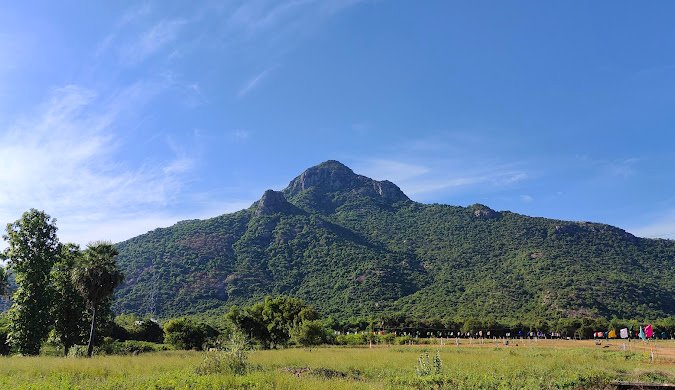
Story of Arunachala The Spiritual Significance of Arunachala Arunachala is one of those places that stays with you long after you’ve left. The first time I heard about it, I was intrigued—but it wasn’t until I visited that I truly understood its pull. Arunachala isn’t just a hill in Tamil Nadu; it’s a presence, a feeling, and for many, a destination that calls them back to something deep within themselves. Nestled in the heart of Tiruvannamalai, this sacred mountain has been revered for centuries as a physical manifestation of Lord Shiva. When you see Arunachala for the first time, it’s hard to describe the emotion it stirs. It’s rugged and unassuming in a way, but there’s a stillness about it that feels ancient, almost eternal. According to Hindu mythology, this is where Shiva appeared as a pillar of fire to settle a debate between Brahma and Vishnu, embodying the element of fire. Over time, Arunachala came to represent Shiva himself, not in his typical deity form but as the ultimate formless essence. But it’s not just mythology that makes Arunachala special. The hill has a way of silencing your mind and pulling you into the present moment. People come here for all kinds of reasons—to pray, to meditate, to walk around the hill—but almost everyone seems to leave with a sense of peace. It’s like the hill works on you in ways you don’t even realise until later. For me, learning about Ramana Maharshi’s connection to Arunachala was what first sparked my interest. He described the hill as his guru, saying it wasn’t just a mountain but a guide for anyone who sought the truth. The more I learned about Arunachala and Ramana Maharshi, the more I felt drawn to visit. It wasn’t just curiosity; it was something deeper, like the place itself was calling me. And when I finally stood before it, I understood its power.. The air felt different, the silence seemed fuller, and I couldn’t shake the feeling that I was standing in the presence of something far greater than myself. Arunachala Hill and Its Mystical Importance The moment you set eyes on Arunachala Hill, you can sense there’s something special about it. I remember standing there, looking at its rocky slopes, and feeling this quiet, unshakable presence. It’s not the tallest mountain, nor is it lush or dramatic like some other famous peaks—but it doesn’t need to be.  In Hindu tradition, Arunachala is considered a physical embodiment of Shiva’s fire element. There’s a story in the Puranas that has always stayed with me: Brahma and Vishnu, two of the most powerful deities, were arguing over who was superior. To settle the dispute, Shiva appeared as a towering column of fire, stretching infinitely in both directions. Brahma tried to find its top, and Vishnu tried to find its base, but neither could. Eventually, they realised Shiva’s true nature was beyond comprehension. That fire, that infinite presence, is what Arunachala represents. I remember walking around the hill for the first time, doing what’s called Girivalam—the 14-kilometre circumambulation of Arunachala. It’s a practice that’s been done for centuries, and it’s believed to be a way of connecting deeply with the energy of the hill. What struck me wasn’t just the beauty of the path, dotted with temples and shrines, but the sheer simplicity of the act. You don’t need elaborate rituals or offerings; you just walk. With each step, it felt like I was shedding something—some worry, some attachment, some part of myself that didn’t need to be there. People from all walks of life come to Arunachala to do Girivalam. Some walk in silence, some chant mantras, and others just take in the atmosphere. I remember seeing families with small children, monks in saffron robes, and elderly pilgrims who looked like they had made this journey dozens of times. Arunachala also has a way of making you feel deeply connected to nature. As I walked, I noticed the little things—the sound of the wind, the rustle of leaves, the way the sunlight hit the rocks. It’s like the mountain itself was alive, not in the way we usually think of life, but in a more profound sense. It’s the kind of silence that makes you feel like everything is exactly as it should be. One of the most fascinating things about Arunachala is the belief that simply seeing the hill can have a transformative effect. There’s a saying that goes, “By seeing Arunachala, one becomes still.”  References in Ancient Texts and Scriptures Arunachala’s significance is not limited to mythology; it is deeply rooted in Hindu scripture. The Tevaram, a collection of devotional hymns composed by Tamil Shaivite saints in the 6th to 9th centuries CE, praises Arunachala as a holy site of Shiva worship. These hymns, written by saints like Appar, Sambandar, and Sundarar, describe Arunachala as a place where seekers can attain liberation and dissolve their ego in the presence of the divine. The hill also features prominently in the Arunachala Puranam, a Tamil text that elaborates on the mountain’s divine origins and its role as a spiritual centre. According to these texts, Arunachala is not just a geographical feature but a sacred power that draws devotees to it, offering them grace and guidance on their spiritual paths. The Emergence of Arunachaleswarar Temple One of the most tangible aspects of Arunachala’s history is the Arunachaleswarar Temple, which stands at the base of the hill. This massive temple, dedicated to Lord Shiva, has been a centre of worship for over a thousand years. While its exact origins are unclear, the temple’s earliest structures are believed to date back to the 9th century CE during the rule of the Chola dynasty. The Cholas were known for their architectural prowess and devotion to Shiva, and they significantly expanded the temple, adding ornate gopurams (towering gateways) and intricate carvings. Later dynasties, including the Vijayanagara kings, continued to contribute to the temple’s grandeur, making it one of the largest and most revered Shiva temples in South India. The temple’s sprawling

Story of Arunachala Read Post »
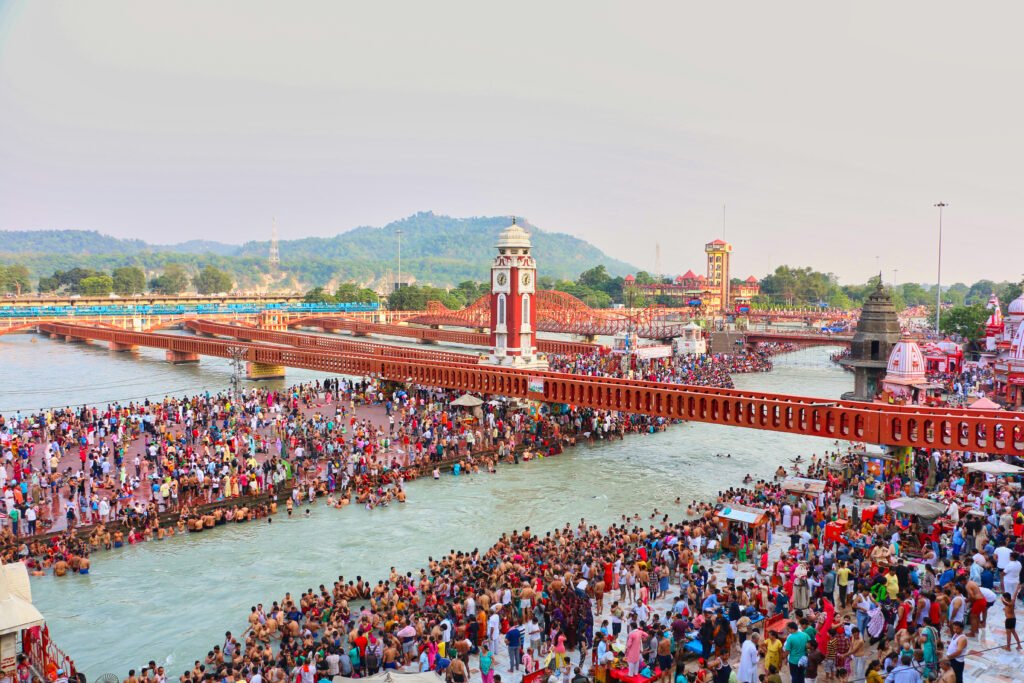
har ki pauri is famous ghat banks ganges haridwar india
Stories of places

Story Of Haridwar

Story Of Haridwar Haridwar is district of Uttarakhand state in India. Haridwar is place where the river Ganges enters in plain areas north India after flowing 250 km from its origin Gaumukh (Gangotri Glacier). Haridwar is the destination where people from across the India visit for pilgrimage and to take a holy dip into the holy river Ganges. Haridwar city is an ancient and it is one of the most sacred cities in India. The diverse nature of the Hindu religion has attracted foreign visitors from all around the world. Foreigners always attracted to Haridwar because here they can closely experience India’s complex culture, various Hindu rituals and the ancient civilization. Haridwar 30 kms from Rishikesh and 90 kms from Mussoorie and 220 kms from Delhi. Haridwar is one of the primary areas where river Ganges emerges from the mountains and enters to the plain areas. Lush green forests and crystal clear water of river Ganges and background of mountains create the charming beauty of this holy city. In the evening ghats looks beautiful as hundreds of diyas (lamps) and marigold flowers float and light up the river Ganges. The Rajaji National Park is just 10 km from Haridwar. Its an ideal destination for wild life and adventure lovers.If you want to purify yourselves take a holy dip in the water of river Ganges at Haridwar. All your sins will be purified. This is most common thing which you can hear about Haridwar in all over India. Haridwar contains two words Hari and Dwar. Hari means god and Dwar means gate. Haridwar means gateway to the god. There are four holy temples Yamunotri, Gangotri Kedarnath and Badrinath on the hills also known as Chardham. Haridwar is like a entry point to these chardham. People visit Haridwar before visiting these temples so the town was became famous as Haridwar. Shaivites call it Har Dwar Gateway to Lord Shiva (Kedarnath Temple) and Vaishnavites call it Hari Dwar Gateway to Lord Vishnu (Badrinath Temple) It is also said that Haridwar is blessed by the presence of all three major Gods of Hindus namely Brahma, Vishnu and Maheshwar. Thus, with all these mythological links attached to its name, it’s little wonder why Haridwar is often referred to as ‘gateway to god’. Haridwar is an ancient pilgrimage site situated in the foothills of the shivalik range in Garhwal Himalayas. Haridwar is welcomes the river ganga to the plain areas. Haridwar means gurgling of river Ganges, innumerable temples, groups of monks in saffron clothes, enchanting sounds of vedic hymns and the divine holiness. Apart from religious importance Haridwar is also a centre for learning different arts and culture. Haridwar is well known as great source of Ayurvedic medicines and herbal remedies. Haridwar is now home to unique Indian tradition of teaching “Gurukula.” Gurukula Kangri Vishwavidyalay is providing unique teaching in Gurukul system since 1902. Haridwar is always place of interest for the researchers because it is one of the oldest living cities in India. Haridwar has numerous temples with interesting legacies. Maa Ganga after carrying the purity of heaven from the kamandal of Lord Brahma, washing the feet of Lord Vishnu and flowing through the sahastra of Lord Shiva came on this earth and made Haridwar as it’s divine flow area. From time immemorial, Maa Ganga has been doing the duty of absorbing the heat and negativities of this earth. Besides and , It is Gateway for the four dhams of Himalayas viz. Gangotri, Yamunotri, Kedarnath and Badrinath. Haridwar is divided in several small areas such as Mayapur, Ranipur, Jwalapur, Har Ki Pauri, Motichur, Devpura, Bhupatwala, Haripur Kalan, Shivalik Nagar, and Brhampuri. Haridwar is also one of the four places where Kumbh Mela occurs after rotation of every twelve Years and Ardh Kumbh after every six years. It is said that drops of Amrit (Elixir) fell in to the Brahmkund of Har-Ki-Pauri, therefore considered that a dip in the Brahmakund. What is the history of Haridwar? It has been proved by archaeological findings that terracotta culture had an existence in Haridwar during 1700 B.C. and 1800 B.C. Haridwar has been in people’s mind from the period of Buddha to the British arrival and still in the 21st century. Haridwar was ruled by Maurya Empire from 322 BCE to 185 BCE and later it came under the rule of Kushan Empire according to historical evidences. Well-known Chinese traveler Huan Tsang visited India in 629 AD. He has mentioned Haridwar in his travel journal. At that time Haridwar was part of the kingdom of the King Harshvardhan (590 to 647). The city was also invaded by Timur Lang (1336–1405), a Turkish King on January 13, 1399. First Sikh Guru, Guru Nanak (1469–1539) bathed at ‘Kushwan Ghat’ on Baisakhi Day. Later in the 16th century Haridwar came under reign of Mughals and emperors like Akbar and Jehangir stamped their dominated here. According to Ain-e-Akbari Mughal Emperor, Akbar drank water from the Ganges river collected from Haridwar, which he called ‘the water of immortality’. Thomas Coryat, an English traveler visited Haridwar during the reign of Jehangir. In 18th centaury Haridwar was a port city and it was widely used by ships of East India Company. One of the two major dams on the river Ganges is the Bhimgoda Dam. It is situated in Haridwar. Dam was opened in 1854. Haridwar Municipality’ was constituted in 1868 including Kankhal and Mayapur. Haridwar was connected with railways by Laksar Railway Station in 1886. In 1901, Haridwar has population of 25,597 and Haridwar was a part of the Roorkee tehsil, in Saharanpur district of the United Province. Gurukul Kangri Vishwavidyalaya was established in 1902. In 1946 Haridwar was merged in Uttar Pradesh State. Haridwar Legends : According to Kedarkhand (Chapter 111) in Skanda Purana, the ancient great King named as Shwet did long penance on the bank of river Ganges at Haridwar. The Brahma pleased with his devotion & blessed that the place will be special place with blessing from all gods and bathing here will be very fruitful to devotees. Raja Vikramaditya’s brother Bhratuhari has also done penance here. In his memory, King Vikramaditya built a “Paudi (pawadi)”/ Steps here, which later became

Story Of Haridwar Read Post »

surya narayana temple domlur bangalore temples 5sgeyo6qsv
All Surya Mandir, Mandirs In Rajasthan

Surya Narayan Temple

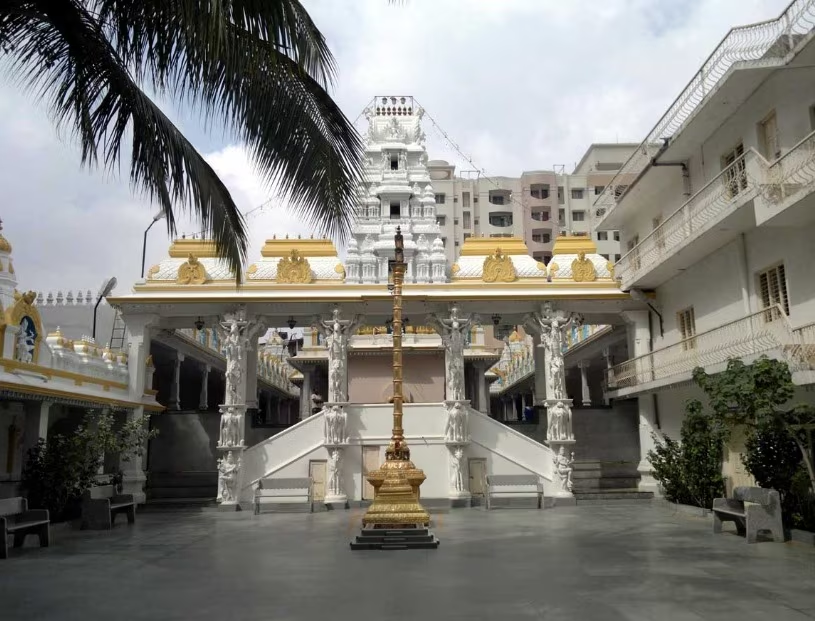
The temple is a place for devotees to offer prayers to the sun, seek energy, light, health, and spiritual illumination. The temple often consists of sanctum (garbhagriha) with Surya’s idol, mandapas (halls), and sometimes subsidiary shrines for other deities. Architecture of the Temple Arasavalli Temple: built in Kalinga (Odisha) style (Rekha deula) like the Jagannath temple; has multiple gates and precise alignment such that early morning sun rays fall on the feet of the deity even when the five entrance gates are closed. Domlur Suryanarayana Temple (Bangalore): constructed in a style inspired by Chola temple architecture.. Typical elements include:  • Garbhagriha (sanctum) oriented east so that rising sun’s rays may enter the sanctum.  • Mandapa / Sabha hall for devotee gatherings.  • Entrance gopuram / tower (in southern style).  • Use of stone, carved pillars, sculptures, depictions of Surya’s chariot (7 horses, 2 consorts Usha & Pratyusha).  • In some temples, a temple tank / pond or Pushkarini / kund is present for ritual ablutions. How to Reach to Temple By Road / Local Transport: Most Sun temples are reachable by road from the nearest city or town via buses, taxis, auto‑rickshaws. By Rail / Air: Use the nearest railway station or airport, then travel by road to the temple. For instance, for Arasavalli Surya Narayana Temple, it’s located in Arasavalli village, ~1 km east of Srikakulam in Andhra Pradesh. For Domlur Suryanarayana Temple, it’s inside Bangalore city, in Domlur area. travels by road to Goalpara and then local transport. Temple Timings Temple Location

Surya Narayan Temple Read Post »

Sri Surya pahar 2023
All Surya Mandir, Mandirs in Assam

Surya Pahar Temple

The place is unique for its ancient rock‑cut sculptures, Shiva Lingas, votive stupas, remains of Hindu, Buddhist and Jain sculptures, natural caves, and relics. It is protected by the Archaeological Survey of India (ASI) as a monument of national importance. Architecture of the Temple Terrain: It’s hilly—seven peaks—rock outcrops, natural caves in the slopes. Sculptures and rock‑cut works are carved directly into the hill and boulders. Lingas: Many Shiva Lingas (shivalingas) cut into rock (some small, some large) dispersed over the hill foot and slopes. These are simple rock‑cut objects, some worn over time. Votive stupas and Buddhist remains: There are remains of votive stupas, possibly small stupas, panels, and chaitya‑type elements from Buddhist tradition. Jain images: Carved figures of Jain Tirthankaras (standing and seated postures) inside natural caves / rock faces, e.g. Adinath Tirthankara, recognizable by customary symbols (like bulls etc.). Other sculptures: Deities like Vishnu, Hari‑Hara, Durga (Mahishasuramardini), decorative motifs like kirtimukha, lion heads, floral and geometric tile plaques, etc. How to Reach to Temple By Road: From Goalpara town (Assam), you can take local road transport (buses, taxis) about 12‑13 km to Surya Pahar. By Rail: Goalpara Railway Station is the nearest main railhead. By Air: Nearest airport is Lokpriya Gopinath Bordoloi International Airport, Guwahati (Guwahati). From there one travels by road to Goalpara and then local transport. Temple Timings Temple Location

Surya Pahar Temple Read Post »

c46d72840ed3c76388e4357b3e52ea61
All Surya Mandir, Mandirs in Uttarakhanad

Katarmal Sun Temple

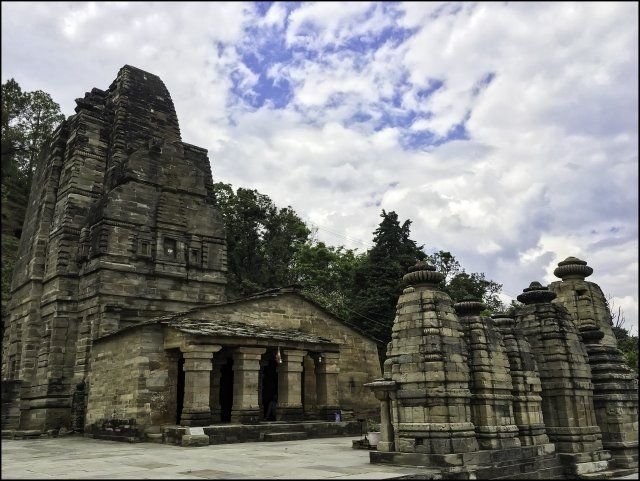
The temple stands at an elevation of about 2,116 metres above sea level. It is notable as the only major Surya temple in the hills of Kumaon. Architecture of the Temple The temple is constructed in the Katyuri style, which combines local Himalayan architecture with Nagara traits. It uses large cut stone slabs, metallic clamps, carved stone pillars, and wooden carved doors and panels. It has a raised platform (jagati) and the sanctum sanctorum (garbha griha) is oriented eastwards, so that the first rays of the rising sun fall on the deity. Surrounding the main shrine are about 44‐45 subsidiary shrines. These smaller shrines show similar artistry (stone carving, metal work) although many are in varying states of preservation. The doors and panels are known for their wooden carvings. Many original wooden doors/panels have been removed to protect them, as some were stolen. The superstructure (shikhara) height is estimated; the temple has been designed with careful alignment to sun rays. How to Reach to Temple By Air The nearest airport is Pantnagar Airport, about 120‑130 km from Almora / Katarmal. By Train The nearest railway station is Kathgodam, approx 90 km (some sources say ~82‑90 km) from Katarmal. From there, one travels by road to Almora and then to Kosi village / Katarmal. By Road / Bus / Taxi Almora is well connected by roads to other towns. From Almora you can hire a taxi or bus towards Kosi / Hawalbagh / Matela and then to Katarmal. The last stretch involves trekking (approx 2‑3 km) from the nearest road / village to reach the temple. Temple Timings Temple Location

Katarmal Sun Temple Read Post »

Martand Sun Temple Central shrine 6133772365
All Surya Mandir, Mandir in Jammu & Kashmir

Martand Sun Temple

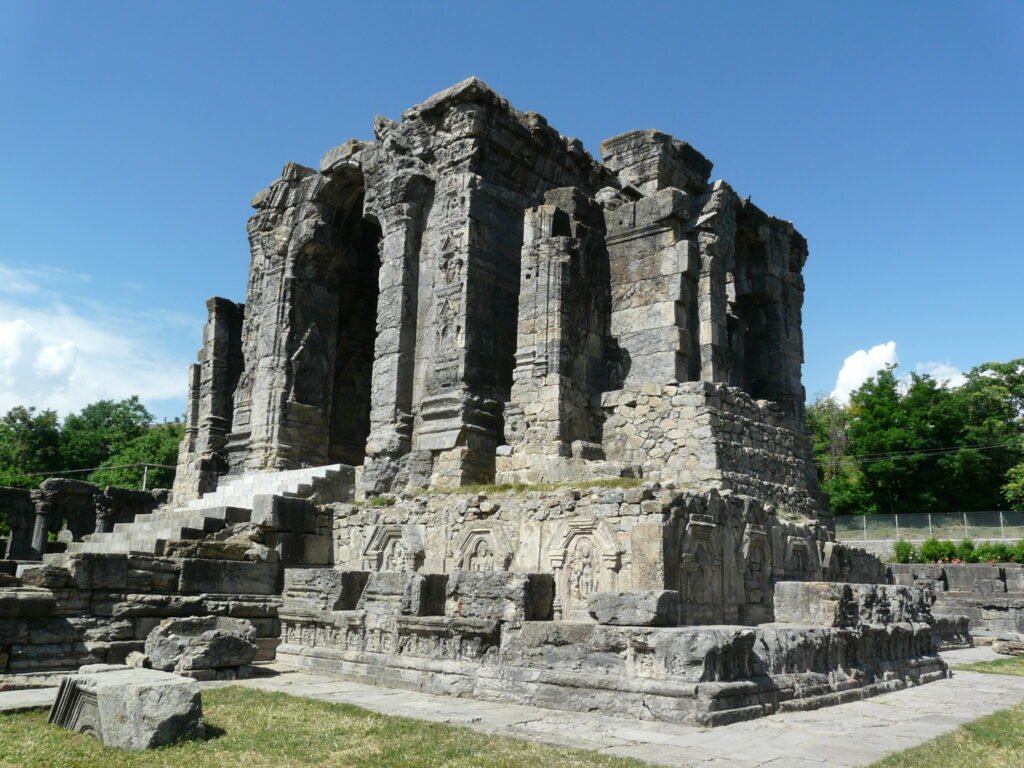
Built in the 8th century CE by King Lalitaditya Muktapida of the Karkota dynasty, it is one of the most significant examples of early Kashmiri temple architecture.Although now in ruins, the grandeur of its design, carvings and layout make it a major heritage monument. Architecture of the Temple The temple is built on a plateau (a karewa) offering a commanding view of surrounding Kashmir Valley. The layout: a large courtyard (quadrangular) of about 220 feet in length and 142 feet in breadth. It had a colonnaded peristyle (a ring of columns around the courtyard) and originally about 84 (some sources say 86) pillars. The central shrine (sanctum) was in the middle of the courtyard, on a raised platform, approached by steps. Features of ornamentation include carvings of Hindu deities, river goddesses Ganga & Yamuna, motifs of flora, flying Gandharvas, etc. The entrance to the temple complex is from the western side, matching temple‑architecture norms in the r How to Reach to Temple Nearest airport: Srinagar International Airport (SXR), approx 50‑70 km from Anantnag. Nearest railway station: Anantnag Railway Station is closest; larger networks connect through major junctions. By road: From Srinagar or within Kashmir Valley, take the highway / road to Anantnag, then local roads to Mattan / Martand temple. It is about 9 km from Anantnag town. Local transport: taxis / shared jeeps from Anantnag; road conditions may vary depending on weather & season. Temple Timings Temple Location

Martand Sun Temple Read Post »

unnamed 2025 10 04T142723.703
All Surya Mandir, Mandir in Jammu & Kashmir

Dakshinaarka Sun Temple

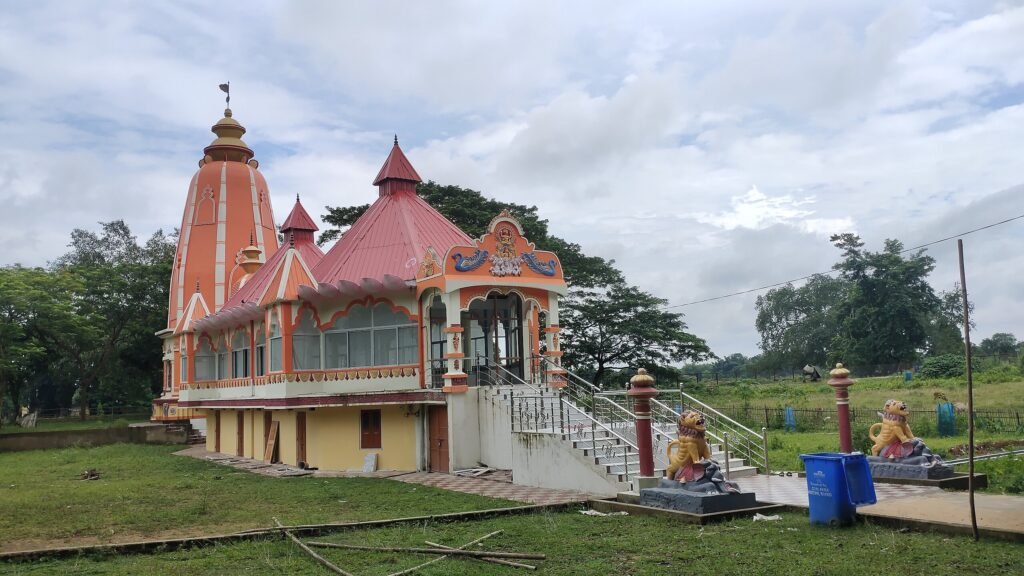
It is revered both for its mystical/legendary associations and for being a place of pilgrimage and spiritual retreat. Architecture of the Temple The temple structure includes a courtyard with three shikharas (temple spires), two are modern and one ancient. There is a tall pink arched gateway at entrance, with stairs made of white marble, with railings. Flooring includes marble and mosaic in the verandah, with a long verandah (corridor) leading to cave entrance. The entrance to the cave is under a dome (Gumband), which is ribbed and adorned; the dome entrance shows paintings with Mughal and Dogra style influence, especially floral motifs. The ceiling of dome and niches are decorated in style akin to Jammu school of painting (19th century) with colours like indigo etc. How to Reach to Temple Location: On Circular Road in Jammu city, about 2‑4 kilometres from Raghunath Bazar, on the bank of River Tawi. By Road: It is accessible by auto‐rickshaw, taxi or local transport from city centre. Being close to major area of Jammu, reaching via road is easy. By Train/Air: Jammu Tawi Railway Station is nearest railway hub. Jammu Airport is the air access. From there local transport to the temple. (Exact distances depend on your starting location in Jammu.) — this is typical for temples in city. Temple Timings Temple Location

Dakshinaarka Sun Temple Read Post »

30b4ecd62b4b7458c86d6aba5f84529e 1
state wise

Mandirs in Tripura

Mandirs in Tripura Tripura, a small but culturally rich state in Northeast India, has a deep spiritual heritage reflected in its ancient mandirs. Influenced by both Hinduism and indigenous tribal traditions, the temples of Tripura are centers of devotion, art, and legend. The state is especially known for its Shakti temples, Vaishnavite shrines, and unique architectural styles blending local craftsmanship with Bengal and Manipur traditions. One of the most revered temples in Tripura is the Tripura Sundari Temple at Udaipur, also known as Matabari. This temple is one of the 51 Shakti Peethas of India, where the right foot of Goddess Sati is believed to have fallen. The sanctum houses a square-shaped idol of Goddess Kali, worshipped as Tripura Sundari, seated on the chest of Lord Shiva. It is considered the state’s holiest shrine, drawing thousands of devotees, especially during the annual Diwali Mela, when the temple becomes the heart of celebrations. Another important shrine is the Bhubaneswari Temple, built in the 17th century by Maharaja Govinda Manikya. Located on the banks of the Gomati River in Udaipur, this temple is dedicated to Goddess Bhuvaneswari. Its serene surroundings and elegant architecture inspired Nobel laureate Rabindranath Tagore, who mentioned it in his plays Rajarshi and Bisarjan. The Chaturdash Devta Temple, also in Udaipur, is unique as it enshrines the fourteen deities worshipped by the Tripuri kings. The temple is the center of the famous Kharchi Puja, a week-long festival held every July, where thousands gather to honor the state’s guardian deities with grand rituals, music, and fairs. The Jagannath Temple in Agartala is another significant Vaishnavite shrine, dedicated to Lord Jagannath along with Balabhadra and Subhadra. Its octagonal base and vibrant orange-yellow exterior make it stand out. The temple hosts an annual Rath Yatra, similar to Puri, attracting large numbers of devotees. In the heart of Agartala lies the Lakshmi Narayan Temple, built by King Birendra Kishore Manikya in the early 20th century. Dedicated to Lord Vishnu and Goddess Lakshmi, it is one of the most prominent Hindu temples in the state, especially during Janmashtami and Diwali celebrations. Another sacred place is the Fourteen Gods Temple (Chaturdasha Devata) near Old Agartala, closely associated with the royal family’s religious practices. It is linked with tribal traditions and showcases the fusion of Vedic Hinduism with local beliefs. The Uma Maheshwar Temple, also located in Udaipur, is dedicated to Lord Shiva and Goddess Parvati. Along with this, there are numerous smaller mandirs dedicated to Shiva, Vishnu, Hanuman, and Shakti scattered across the state, many of which were built under the patronage of the Manikya kings. In conclusion, the mandirs of Tripura highlight the state’s rich spiritual and cultural history. From the sacred Shakti Peeth of Tripura Sundari to the Vaishnavite devotion of Jagannath Temple, from the tribal-Hindu synthesis of Chaturdash Devta Temple to the elegance of Bhubaneswari Mandir, these shrines form the spiritual backbone of the state. They not only preserve ancient traditions but also serve as vibrant centers of community life, where devotion, art, and heritage come together in harmony. Temples in Tripura

Mandirs in Tripura Read Post »

ad8471163225badd096b2dc4d50b3726
state wise

Mandirs in Telangana

Mandirs in Telangana Telangana, a land blessed with a rich cultural legacy, is home to some of the most ancient and spiritually powerful temples of South India. With roots going back to the Satavahanas, Kakatiyas, Chalukyas, and other dynasties, the mandirs of Telangana reflect a blend of devotion, architecture, and history. The state is dotted with temples dedicated to Shiva, Vishnu, Durga, and local deities, which not only serve as sacred spaces but also as living centers of tradition, art, and community life. One of the most renowned temples in Telangana is the Yadadri Lakshmi Narasimha Swamy Temple, located near Hyderabad. Dedicated to Lord Narasimha, this temple is believed to fulfill the wishes of devotees who worship with faith. Recently renovated and expanded with grand architecture, it has become one of the most significant pilgrimage destinations in South India. Another iconic shrine is the Bhadrachalam Temple, dedicated to Lord Rama, situated on the banks of the Godavari River. This temple has immense significance as it is linked with the Ramayana. According to legend, it is the place where Lord Rama is believed to have stayed during his exile. The annual Sri Rama Navami festival is celebrated here with grandeur, drawing devotees from across the country. The Thousand Pillar Temple in Warangal is an architectural marvel built during the Kakatiya dynasty. Dedicated to Lord Shiva, Vishnu, and Surya, the temple is famous for its richly carved pillars, star-shaped structure, and fine stone carvings. It stands as a testimony to the artistic excellence of the Kakatiya rulers and continues to attract both pilgrims and history lovers. Another significant temple is the Jogulamba Temple in Alampur, dedicated to Goddess Jogulamba, one of the eighteen Shakti Peethas of India. The temple is part of the Navabrahma temples complex built on the banks of the Tungabhadra River, showcasing exquisite Chalukyan architecture. Jogulamba is worshipped here as the fierce form of Shakti, and the shrine is considered highly powerful. The Keesaragutta Temple, located near Hyderabad, is dedicated to Lord Shiva and is associated with the legend of Lord Rama, who is said to have installed the Shiva Lingam here after defeating Ravana. The temple attracts large crowds during Maha Shivaratri. Hyderabad is also home to the Birla Mandir, a beautiful modern temple built entirely of white marble on a hillock. Dedicated to Lord Venkateswara (Balaji), the temple offers a panoramic view of the city and has become a spiritual and cultural landmark. Similarly, the Chilkur Balaji Temple, popularly known as the “Visa Balaji Temple,” is dedicated to Lord Venkateswara. Devotees believe that sincere prayers here help fulfill their aspirations, especially related to overseas travel. Other notable temples include the Gnana Saraswati Temple at Basar, one of the few temples dedicated to Goddess Saraswati in India, where children are traditionally initiated into learning through the Akshara Abhyasam ritual. The Ramappa Temple, a UNESCO World Heritage Site, dedicated to Lord Shiva, is another gem of Kakatiya architecture, known for its intricate carvings and floating bricks used in construction. Temples in Telangana

Mandirs in Telangana Read Post »

dd1c94aed31d44340b62f1f115be7d78
state wise

Mandirs in Sikkim

Mandirs in Sikkim Sikkim, nestled in the lap of the Himalayas, is known across the world for its Buddhist monasteries, pristine landscapes, and spiritual serenity. However, alongside Buddhism, Hinduism also has a significant presence here, reflected in the mandirs spread across the state. These temples are visited not only by locals but also by pilgrims from across India, especially from neighboring states like West Bengal, Bihar, and Nepal. Many of them are dedicated to Lord Shiva, Hanuman, and Goddess Durga, and they coexist harmoniously with Buddhist monasteries, symbolizing the cultural unity of Sikkim. One of the most popular temples in Sikkim is the Kirateshwar Mahadev Mandir, located near Legship by the banks of the Rangit River. Dedicated to Lord Shiva, this ancient temple has deep mythological significance from the Mahabharata. According to legend, Arjuna meditated here and pleased Lord Shiva, who appeared before him in the form of a hunter (Kirata) to bless him with the Pashupatastra. Today, the temple is not only a major pilgrimage site but also a serene spot surrounded by nature. The temple complex also houses shrines of Goddess Durga and Lord Ganesha, making it spiritually diverse. Another important shrine is the Ganesh Tok Temple, perched on a hilltop near Gangtok. Dedicated to Lord Ganesha, the temple offers breathtaking panoramic views of the Kanchenjunga range. Devotees visit this mandir to seek blessings before starting new endeavors, and it is also a favorite stop for tourists exploring the capital city. The Hanuman Tok Temple, located around 12 km from Gangtok, is dedicated to Lord Hanuman. As per legend, Hanuman rested at this spot while carrying the Sanjeevani herb during the Ramayana war. Maintained by the Indian Army, the temple is beautifully kept and provides a peaceful atmosphere for worship. The hilltop location offers a spectacular view of Gangtok and the surrounding mountains, making it both a religious and scenic destination. Sikkim also has a remarkable temple complex called the Siddheshwara Dham (Char Dham), located on Solophok Hill near Namchi. Built to promote pilgrimage tourism, this complex houses a massive 108-foot statue of Lord Shiva in sitting posture and replicas of the twelve Jyotirlingas of India. It also features miniature versions of the Char Dhams—Badrinath, Dwarka, Jagannath, and Rameshwaram. This site has become one of the most important Hindu pilgrimage centers in Northeast India, attracting devotees from across the country. The Sai Mandir in Namchi is another prominent Hindu temple dedicated to Shri Shirdi Sai Baba. Surrounded by lush gardens and offering scenic views, this temple reflects the growing devotion to Sai Baba in Sikkim. Daily aarti and bhajans create a spiritual ambiance that draws both locals and tourists. Temples in Sikkim

Mandirs in Sikkim Read Post »