Hari Om

Menu

Mahatmas

swami sivananda Monk writing at desk with books image
Pranayama, Swami Sivananda

Three Bandhas

Three Bandhas There are four Bhedas (piercing of divisions) viz., Surya, Ujjayi, Sitali and Basti. Through these four ways, when Kumbhaka is near or about to be performed, the sinless Yogi should practise the three Bandhas. The first is called Mula Bandha. The second is called Uddiyana, and the third is Jalandhara. Their nature will be thus described. Apana which has a downward tendency is forced up by contracting and drawing the anus upwards. This process is called Mula Bandha. When Apana is raised up and reaches the sphere of Agni (fire), then the flame of Agni grows long, being blown about by Vayu. The Agni and Apana come to or commingle with Prana in a heated state. Through this Agni, which is very fiery arises in the body the flaming of fire which arouses the sleeping Kundalini. Then the Kundalini makes a hissing noise, becomes erect like a serpent beaten with a stick and enters into the hole of Brahmanadi (Sushumna). Therefore Yogins should daily practise Mula Bandha. Uddiyana should be performed at the end of Kumbhaka and at the beginning of inhalation. Because Prana ‘Uddiyate’-goes up the Sushumna in this Bandha, it is called Uddiyana by the Yogins. Being seated in the Vajra and holding firmly the two toes by the two hands near the two ankles, he should gradually upbear the Tana (thread or Nadi, the Sarasvati Nadi) which is on the western side of Udara (the upper part of the abdomen, above the navel), then to neck. When Prana reaches Sandhi (junction) of navel, slowly it removes the diseases of the navel. Uddiyana can be done in standing posture also. When you practise in standing posture, place your hand on the knees or a little above the knees. Keep the legs a little apart.The Bandha called Jalandhara should be practised at the end of Puraka. Jalandhara is of the form of contraction of the neck and is an impediment to the passage of Vayu upwards. When the neck is contracted by bending the head downwards, so that the chin may touch the chest, Prana goes through Brahmanadi. Assuming the seat, as mentioned before, one should stir up Sarasvati and control Prana. On the first day Kumbhaka should be done four times, on the second day ten times and then five times separately. On the third day, twenty times will do and afterwards Kumbhaka should be performed with the Bandhas and with an increase of two times per day.

Three Bandhas Read Post »

Swami Sivananda spiritual saint and yoga master
Pranayama, Swami Sivananda

Asanas for Pranayama

Asanas for Pranayama PADMASANA (LOTUS POSE) This is also known by the name Kamalasana. Kamala means lotus. When the Asana is demonstrated it presents the appearance of a lotus in a way. Hence the name Padmasana. Amongst the four poses prescribed for Japa and Dhyana, Padmasana comes foremost. It is the best Asana for contemplation. Rishis like Gheranda, Sandilya, speak very highly of this important Asana. This is highly agreeable for householders. Even ladies can sit in this Asana. Padmasana is suitable for lean persons and for youths as well. Technique Sit on the ground by spreading the legs forward. Then place the right foot on the left thigh and the left foot on the right thigh. Place the hands on the knee-joints. You can make a finger-lock and keep the locked hands over the left ankle. This is very convenient for some persons. Or you can place the left hand over the left knee and the right hand over the right knee with the palm facing upwards and the index finger touching the middle portion of the thumb (Chinmudra). SIDDHASANA (THE PERFECT POSE) Next to Padmasana comes Siddhasana in importance. Some eulogise this Asana as even superior to Padmasana for the purpose of Dhyana (contemplation). If you get mastery over this Asana you will acquire many Siddhis. Further, it was being practised by many Siddhas (perfected Yogins) of yore. Hence the name Siddhasana. Even fatty persons with big thighs can practise this Asana daily. In fact this is better for some persons than Padmasana. Young Brahmacharins, who attempt to get established in celibacy, should practise this Asana. This is not suitable for ladies. Technique Place the left heel at the anus or Guda, the terminal opening of the alimentary canal or digestive tube. Keep the right heel on the root of the generative organs; the feet or legs should be so nicely arranged that the ankle-joints should touch each other. Hands can be placed as in Padmasana. SVASTIKASANA (PROSPEROUS POSE) Svastika is sitting at ease with the body erect. Spread the legs forward. Fold the left leg and place the foot near the right thigh muscles. Similarly, bend the right leg and push the foot in the space between the thigh and calf muscles. Now you will find the feet between the thighs and calves of the legs. This is very comfortable for meditation. Keep the hands as instructed in Padmasana. SAMASANA (EQUAL POSE)Place the left heel at the beginning of the right thigh and the right heel at the beginning of the left thigh. Sit at ease. Do not bend either on the left or right. This is called as Samasana.

Asanas for Pranayama Read Post »

Swami Sivananda portrait with radiant background image
Pranayama, Swami Sivananda

Dietetic Discipline

Dietetic Discipline The proficient in Yoga should abandon articles of food detrimental to the practice of Yoga. He should give up salt, mustard, sour, hot, pungent and bitter things, asafoetida, worship of fire, women, too much walking, bathing at sunrise, emaciation of the body by fasts, etc. During the early stages of practice, food of milk and ghee is ordained; also food consisting of wheat, green pulse and red rice is said to favour the progress. Then he will be able to retain his breath as long as he likes. By thus retaining the breath as long as he likes Kevala Kumbhaka (cessation of breath without inspiration and expiration) is attained. When Kevala Kumbhaka is attained by one, expiration and inspiration are dispensed with. There is nothing unattainable in the three worlds for him. In the commencement of his practice sweat gets out. As a frog moves by leaps so the Yogi sitting in Padmasana moves on the earth. With a further increased practice, he is able to rise from the ground. He, while seated in lotus-posture, levitates. Then arise in him the power to perform extraordinary feats. Any pain, small or great, does not affect the Yogi. Then excretions and sleep are diminished; tears, rheum in the eyes, salivary flow, sweat and bad smell in the mouth, do not arise in him. With a still further practice, he acquires great strength by which he attains Bhuchara Siddhi which enables him to bring under his control all the creatures that tread on this earth; tigers, Sarabhas, elephants, wild bulls and lions even die by a blow given by the palms of this Yogi. He becomes as beautiful as the God of Love himself. By the preservation of the semen a good odour pervades the body of the Yogi. MITAHARA Take wholesome Sattvic food half stomachful. Fill a quarter with pure water. Allow the remaining quarter free for expansion of gas and for propitiating the Lord. PURITY IN FOOD “Ahara-suddhau sattva-suddhih, Sattva-suddhau dhruva- smritih, Smritilambhe sarvagranthinam vipramokshah.” By the purity of food, follows the purification of the inner nature; on the purity of the inner nature, the memory becomes firm; and on the strengthening of memory follows the loosening of all ties, and the wise get liberation thereby. You must not practise Pranayama just after meals. When you are very hungry, then also you must not practise. Go to the water closet and empty the bowels before you begin Pranayama. A Pranayama-practitioner should observe Samyama (control) in food and drink. Those who are strict and regular in diet derive immense benefits during the course of practice. They get success quickly. Those persons who suffer from chronic constipation and who are in the habit of defecating in the afternoon can practise Pranayama in the early morning without answering the calls of nature. They should try their level best by some means or other to get an evacuation their bowels in the early morning. Food plays a very important role in Yoga Sadhana. An aspirant should be very, very careful in the selection of articles of diet in the beginning of his Sadhana period. Later on when Pranayama-Siddhi is obtained, drastic dietetic restrictions can be removed. CHARU This is a mixture of boiled, white rice, ghee, sugar and milk. This is a wholesome combination for Brahmacharins and Pranayama-practitioners. MILK DIET Milk should be scalded but not too much boiled. The process of scalding is that the milk should be immediately removed from the fire as soon as the boiling point is reached. Too much boiling destroys the vitamins, the mysterious nutritive principles and renders it quite useless as an article of diet. Milk is a perfect food by itself, containing as it does the different nutritive constituents in a well-balanced proportion. It leaves very little residue in the bowels. This is an ideal food for Yogic students during Pranayama practice. FRUIT DIET A fruit diet exercises a benign, soothing influence on the constitution and is a very desirable diet for Yogins. This is a natural form of diet. Fruits are very great energy-producers. Bananas, grapes, sweet oranges, apples, pomegranates, mangoes, Chikkus (Sapota) and dates are wholesome fruits. Lemons possess anti-scorbutic properties and act as restoratives to blood. Fruit-juice contains vitamin C. Chikkus increase pure blood. Mangoes and milk is a healthy agreeable combination. You can live on mangoes and milk alone. Pomegranate juice is cooling and very nutritious. Bananas are very nutritious and substantial. Fruits help concentration and easy mental focussing. ARTICLES ALLOWED Barley, wheat, ghee, milk, almonds promote longevity and increase power and strength. Barley is a fine article of diet for a Yogi and Sadhaka. It is cooling too. Sri Swami Narayan, the author of `Ek Santka Anubhav’, who wears a Kaupin of gunny bag, lives on bread, made up of barley. He recommends barley bread to his disciples. It is said that Emperor Akbar lived upon barley. You can take wheat, rice, barley, milk, bread, cow’s milk, ghee, sugar, butter, sugar-candy, honey, dried ginger (Soont), green pulse, Moongdal, Panchashaka vegetables, Peypudalai, potatoes, raisins, dates, light Khichdi of green dal. Khichdi is a light food and can be agreeably taken. The food should be reduced in proportion to the increase in Kumbhaka. You must not reduce your food much in the beginning of your practice. You must use your commonsense all throughout the Sadhana. Toor-ki-dal can be taken. The Pancha-Shaka belongs to the species of spinach. They are excellent vegetables; the thick succulent young leaves are boiled and seasoned or fried with ghee. They are five in number, viz., Seendil, Chakravarthi, Ponnangani, Chirukeerai and Valloicharnai keerai. When the Pingala or Suryanadi runs in the right nostril, you must take your food. Suryanadi produces heat. It will digest the food well. You may take jack-fruit, cucumber, brinjal, plantain-stem, lauki, parval and bhindi (lady’s finger). ARTICLES FORBIDDEN Highly seasoned dishes, hot curries, chutneys, meat, fishes, chillies, sour articles, tamarind, mustard, all kinds of oil, asafoetida, salt, garlic, onions, urad-ki-dal (black gram), all


Dietetic Discipline Read Post »

Swami Sivananda folded hands greeting outdoors image
Pranayama, Swami Sivananda

The Meditation Room

The Meditation Room Have a separate meditation room under lock and key. Never allow anyone to enter the room. Keep it sacred. If you cannot afford to have a special room for contemplative purposes and for practising Pranayama, have a place in the corner of a quiet room, set apart for this purpose. Have it screened. Place the photo of your Guru or Ishta-Devata in the room in front of your Asana. Do Puja daily to the picture, physically and mentally, before you start meditation and Pranayama. Burn incense in the room or burn Agarbathi (incense sticks). Keep some sacred books there such as Ramayana, Srimad Bhagavata, Gita, Upanishads, Yoga-Vasishtha, etc., for your daily study. Spread a fourfold blanket and over it a piece of soft white cloth. This will serve the purpose of an Asana. Or spread an Asana of Kusa grass. Over it spread a deer or tiger skin. Sit on this Asana for practising Pranayama and meditation. You can have a raised platform made of cement. Over this you can spread your Asana. Small insects, ants, etc., will not molest you. When you sit on the Asana keep your head, neck and trunk in a straight line. By doing so, the spinal cord that lies with the spinal column will be quite free. THE PLACE Select a solitary, beautiful and pleasant spot, where there are no disturbances, on the bank of a river, lake or the sea or the top of a hill where there is a nice spring and grove of trees, and where milk and articles of food are easily procurable. Build a small Kutir or hut. Have one compound. In the corner of the enclosure, sink a well. It is impossible to get an ideal place that can satisfy you from all viewpoints. The banks of Narmada, Yamuna, Ganga, Kaveri, Godavari, Krishna are very suitable for building Kutirs or huts. You must select one such spot, where there are some other Yogic practitioners in the neighbourhood. You can consult them in times of difficulties. You will have faith in the Yogic Kriyas. When you see others also who are devoted to such Yogic practices, you will diligently apply yourself in your practice, as you will get an impetus and you will strive to excel them. Nasik, Rishikesh, Jhansi, Prayag, Uttarkasi, Brindavan, Ayodhya, Varanasi, etc., are good places. You can fix a spot in a place far from the crowded localities. If you build a Kutir in a crowded place, people out of curiosity will molest you. You will have no spiritual vibrations there. You will be without any protection if you build your cottage in a thick forest. Thieves and wild animals will trouble you. The question of difficulty for food will arise. In Svetasvatara Upanishad it is said: “At a level place, free from pebbles, fire and gravel, pleasant to the eyes, and repairing to a cave, protected from the wind, let a person apply his mind to God.” Those who practise in their own houses can convert a room into a forest. Any solitary room will serve their purpose well. THE TIME The practice of Pranayama should be commenced in Vasanta Ritu (spring) or Sarad Ritu (autumn) because in these seasons success is attained without any difficulty or troubles. The Vasanta is the period from March to April. The Sarad, autumn, lasts from September to October. In summer do not practise Pranayama in the afternoon or evening. In the cool morning hours you can have your practice. THE ADHIKARI One who has a calm mind, who has subdued his Indriyas, who has faith in the words of the Guru and Sastras, who is an Astika (i.e., one who believes in God) and is moderate in eating, drinking and sleeping and one who has an eager longing for deliverance from the wheel of births and deaths-is an Adhikari (qualified person) for the practice of Yoga. Such a man can easily get success in the practice. Pranayama should be practised with care, perseverance and faith. Those who are addicted to sensual pleasures or those who are arrogant, dishonest, untruthful, diplomatic, cunning and treacherous; those who disrespect Sadhus, Sannyasins and their Gurus or spiritual preceptors and take pleasure in vain controversies, and are of a highly talkative nature, those who are disbelievers, who mix much with worldly-minded people, who are cruel, harsh and greedy and do much useless Vyavahara, can never attain success in Pranayama or any other Yogic practice. There are three types of Adhikaris, viz., 1. good (Uttama), 2. middle (Madhyama) and 3. inferior (Adhama) according to Samskaras, intelligence, degree of Vairagya, Viveka and Mumukshutva and the capacity for Sadhana. You must approach a Guru, who knows Yogasastra and has mastery over it. Sit at his lotus-feet. Serve him. Clear your doubts through sensible and reasonable questions. Receive instructions and practise them with enthusiasm, zeal, attention, earnestness and faith according to the methods taught by the teacher. A Pranayama practitioner should always speak kind and sweet words. He must be kind to everybody. He must be honest. He must speak the truth. He must develop Vairagya, patience, Sraddha (faith), Bhakti (devotion), Karuna (mercy), etc. He must observe perfect celibacy. A householder should be very moderate in sexual matters during the practice. A KUTIR FOR SADHANAThe Pranayama student should erect a beautiful room or Kutir with a very small opening and with no crevices. It should be well pasted with cow-dung or with white cement. It should be absolutely free from bugs, mosquitoes and lice. It should be swept well every day with a broom. It should be perfumed with good odour and fragrant resin should be burnt therein. Having taken his seat, neither too high nor too low, on an Asana, made of a cloth, deer-skin and Kusha grass one over the other, a wise man should assume the lotus-posture and keeping his body erect and his hands folded in respect should salute his tutelary deity and Sri Ganesa by repeating ‘Om

The Meditation Room Read Post »

Swami Sivananda 10
Pranayama, Swami Sivananda

he five Essentials

he five Essentials Five things are necessary for practising Pranayama. First a good place; second, a suitable time; third, moderate, substantial, light and nutritious food; fourth, patient and persistent practice with zeal, ease and earnestness, and lastly, the purification of Nadis (Nadi-Suddhi). When the Nadis are purified the aspirant enters the first stage in the practice of Yoga-‘Arambha’. A Pranayama practitioner has a good appetite, good digestion, cheerfulness, courage, strength, vigour, a high standard of vitality and a handsome appearance. The Yogi should take his food at a time when Surya Nadi or Pingala is working, i.e., when the breath flows through the right nostril, because Pingala is heating and digests the food quickly. Pranayama should not be practised just after taking meals, nor when one is very hungry. Gradually one should be able to retain the breath for 3 Ghatikas (one hour and a half) at a time. Through this, the yogi gets many psychic powers. When anyone wants to stop the breath for a long period, he should remain by the side of a Yogi Guru, who knows the practice of Pranayama thoroughly. The breath can be suspended by graduated practice from one to three minutes without the help of anybody. Suspension for three minutes is quite sufficient for purifying the Nadis and steadying the mind and for the purpose of good health.

he five Essentials Read Post »

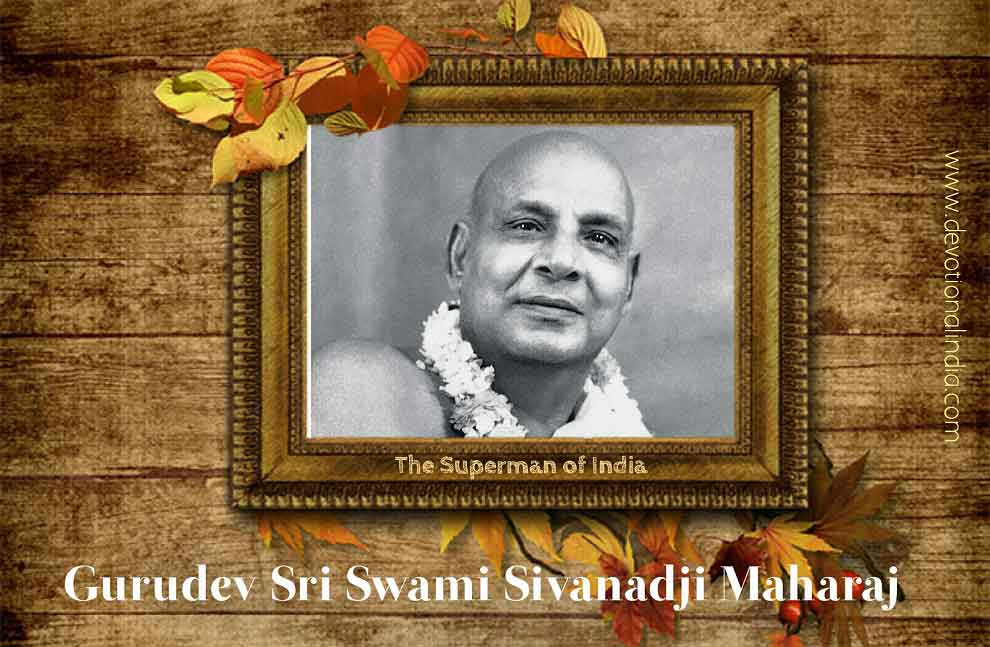
swami sivananda Framed portrait of Gurudev Sri Swami Sivanandaji Maharaj with floral design image
Pranayama, Swami Sivananda

Kundalini & Chakras

Kundalini & Chakras KUNDALINI Kundalini is the serpent power or sleeping Sakti, that has 3 coils with face downwards, in the Muladhara Chakra, at the base of the spine. No Samadhi is possible without its being awakened. The practice of Kumbhaka in Pranayama produces heat and thereby Kundalini is awakened and passes upwards along the Sushumna Nadi. The Yogic practitioner experiences various visions. Then the Kundalini passes along the Six Chakras and eventually gets united with Lord Siva, seated on the Sahasrara or thousand-petalled lotus, at the crown of the head. Nirvikalpa Samadhi ensues now and the Yogi gets liberation and all the divine Aishvaryas. One should practise control of breath with concentration of mind. The awakened Kundalini that is taken up to Manipura Chakra may drop down again to Muladhara. It has to be raised again with effort. One should become perfectly desireless and should be full of Vairagya before he attempts to awaken Kundalini. Kundalini is like a thread and is resplendent. When it is awakened it hisses like a serpent beaten with a stick and enters the hole of Sushumna. When it travels from Chakra to Chakra, layer after layer of the mind becomes open and the Yogi acquires various Siddhis (psychic powers). SHAT-CHAKRASChakras are centres of spiritual energy. They are located in the astral body, but they have corresponding centres in the physical body also. They can hardly be seen by the naked eyes. Only a clairvoyant can see with his astral eyes. Tentatively they correspond to certain plexuses in the physical body. There are six important Chakras. They are: Muladhara (containing 4 petals) at the anus; Svadhisthana (6 petals) at the genital organ; Manipura (10 petals) at the navel; Anahata (12 petals) at the heart; Visuddha (16 petals) at the throat and Ajna (2 petals) at the space between the two eyebrows. The seventh Chakra is known as Sahasrara, which contains a thousand petals. It is located at the top of the head. Sacral plexus tentatively corresponds to Muladhara Chakra; Prostatic plexus to Svadhishthana, Solar plexus to Manipura, Cardiac plexus to Anahata Chakra, Laryngal plexus to Visuddha Chakra and Cavernous plexus to Ajna Chakra.

Kundalini & Chakras Read Post »

Swami Sivananda spiritual master of Divine Life photo
Pranayama, Swami Sivananda

Nadis

Nadis Nadis are astral tubes made up of astral matter that carry Pranic currents. They can be seen by the astral eyes only. They are not the nerves. They are 72,000 in number. Ida, Pingala and Sushumna are the important ones. Sushumna is the most important of all. IDA AND PINGALA There are two nerve-currents one on either side of the spinal column. The left one is called Ida and the right is known as Pingala. These are Nadis. Tentatively, some take these as the right and the left sympathetic cords, but they are subtle tubes that carry Prana. The Moon moves in the Ida and the Sun in the Pingala. Ida is cooling. Pingala is heating. Ida flows through the left nostril and the Pingala through the right nostril. The breath flows through the right nostril for one hour and then through the left nostril for one hour. Man is busily engaged in worldly activities, when the breath flows through Ida and Pingala. When Sushumna operates, he becomes dead to the world, and enters into Samadhi. A Yogi tries his level best to make the Prana run in the Sushumna Nadi, which is known as the central Brahman Nadi also. On the left of Sushumna is situated Ida and on the right is Pingala. The moon is of the nature of Tamas and the sun is that of Rajas. The poison share is of the sun and the nectar is of the moon. Ida and Pingala indicate time. Sushumna is the consumer of time. SUSHUMNA Sushumna is the most important of all the Nadis. It is the sustainer of the universe and the path of the universe and the path of salvation. Situated at the back of the anus, it is attached to the spinal column and extends to the Brahmarandhra of the head and is invisible and subtle. The real work of a Yogi begins when Sushumna begins to function. Sushumna runs along the centre of the spinal cord or spinal column. Above the genital organs and below the navel is the Kanda, of the shape of a bird’s egg. There arise from it all the Nadis 72,000 in number. Of these, seventy-two are common and generally known. Of those the chief ones are ten and they carry the Pranas. Ida, Pingala, Sushumna, Gandhari, Hastijihva, Pusa, Yusasvini, Alambusa, Kuhuh and Sankhini are said to be the ten important Nadis. The Yogis should have a knowledge of the Nadis and the Chakras. Ida, Pingala and Sushumna are said to carry Prana and have Moon, Sun and Agni as their Devatas. When Prana moves in Sushumna, sit for meditation. You will have deep Dhyana. If the coiled-up energy, Kundalini, passes up along the Sushumna Nadi and is taken up from Chakra to Chakra, the Yogi gets different sorts of experiences, powers and Ananda. PURIFICATION OF NADIS Pranayama is said to be the union of Prana and Apana. It is of three kinds-expiration, inspiration and retention. They are associated with the letters of the Sanskrit alphabet for the right performance of Pranayama. Pranava(OM) only is said to be Pranayama. Sitting in Padmasana (Lotus-posture) the person should meditate that there is, at the tip of his nose, Devi Gayatri, a girl of red complexion, surrounded by numberless rays of the image of the moon and mounted on Hamsa (Swan) having a mace in her hand. She is the visible symbol of the letter A. The letter U has as its visible symbol Savitri, a young lady of white colour having a disc in her hand, riding on an eagle (Garuda). The letter M has as its visible symbol Sarasvati, an aged woman of black colour, riding on a bull, having a trident in her hand. He should meditate that the single letter, the supreme light-the Pranava(OM) is the origin or source of these letters-A, U and M. Drawing up the air through Ida (left nostril) for the space of 16 Matras, he should meditate on the letter A during that time; retaining the inspired air for the space of 64 Matras he should meditate on the letter U during that time; he should then exhale the inspired air for the space of 32 Matras, meditating on the letter M during that time. He should practise thus in the above order again and again. Having become firm in the posture and having preserved perfect self-control, the Yogi should, in order to clear away the impurities of the Sushumna, sit in Padmasana, and having inhaled the air through the left nostril, should retain it as long as he can and should exhale through the right. Then drawing it again through the right and having retained it, he should exhale it through the left, in the order that he should draw it through the same nostril by which he had exhaled it before and had retained it. To those who practise it according to these rules, through the right and left nostrils, the Nadis become purified within three months. He should practise cessation of breath at sunrise, at midday, at sunset and at mid-night, slowly, 80 times a day, for 4 weeks. In the early stage, perspiration is produced; in the middle stage the tremor of the body; and in the last stage, levitation in the air. These results ensue out of the repression of the breath, while sitting in the Padma posture. When perspiration arises with effort, one should rub his body well. By this, the body becomes firm and light. In the early course of practice, food with milk and ghee is excellent. One, sticking to this rule, becomes firm in his practice and gets no Taapa (burning sensation) in the body. As lions, elephants and tigers are gradually tamed, so also the breath, when rigidly managed, comes under control. By the practice of Pranayama, the purification of the Nadis, the brightening of the gastric fire, hearing distinctly of spiritual sounds and good health result. When the nervous centres have become purified

Nadis Read Post »

Swami Sivananda wearing garland near riverbank picture
Pranayama, Swami Sivananda

The Lungs

The Lungs It will not be out of place here to mention a word on lungs and their functions. The organs of respiration consists of two lungs, one on either side of the chest and the air passages that lead to them. They are located in the upper thoracic cavity of the chest, one on each side of the median line. They are separated from each other by the heart, the greater blood vessels and the larger air-tubes. The lungs are spongy, porous and their tissues are very elastic. The substance of the lungs contain innumerable air-sacs, which contain air. After post-mortem, when it is placed in a basin of water, it floats. They are covered by a delicate serous membrane called the pleura which contains serous fluid to prevent friction of the lungs, during the act of breathing. One wall of the pleura closely adheres to the lungs. The other wall is attached to the inner wall of the chest. Through this membrane the lungs are fixed to the wall of the chest. The right lung consists of three lobes. Each lung consists of an apex and a base. The base is directed towards the diaphragm, the muscular septum, the dividing wall between throat and abdomen. The apex is situated above, near the root of the neck. It is the base that gets inflamed in Pneumonia. The apex of the lung which does not get proper supply of oxygen gets affected by consumption. It affords favourable nidus or breeding ground for Tubercle Bacilli (T.B.). By the practice of Kapalabhati and Bhastrika Pranayama and deep breathing exercises, these apices get good supply of oxygen and thus phthisis is obviated. Pranayama develops the lungs. He who practices Pranayama will have a powerful, sweet, melodious, voice. The air-passage consists of the interior of the nose, pharynx or throat, larynx or the wind box, or sounding box, which contains two vocal cords, trachea or windpipe, right and left bronchi and the smaller bronchial tubes. When we breathe, we draw in the air through the nose and after it has passed through the pharynx and larynx, it passes into the trachea or windpipe, thence into the right and left bronchial tubes, which in turn, subdivide into innumerable smaller tubes called bronchioles, and which terminate in minute subdivisions in the small air-sacs of the lungs, of which the lungs contain millions. The air-sacs of the lungs when spread out over an unbroken surface, would cover an area of 1,40,000 square feet. The air is drawn into the lungs by the action of the diaphragm. When it expands, the size of the chest and lungs is increased and the outside air rushes into the vacuum thus created. The chest and lungs contract, when diaphragm relaxes and the air is expelled from the lungs. It is through vocal cords that are located in the larynx that sound is produced. Larynx is the sounding box. When the vocal cords are affected by too much straining, as in singing and continuous lecturing, the voice becomes hoarse. In females these cords are shorter. Hence they have a sweet melodious voice. The number of respiration per minute is 16. In pneumonia it is increased to 60, 70, 80 per minute. In Asthma, the bronchial tubes become spasmodic. They contract. Hence there is difficulty in breathing. Pranayama removes the spasm or constriction of these tubes. A small membranous flat cap covers the upper surface of larynx. It is called Epiglottis. It prevents the food particles or water from entering into the respiratory passage. It acts the part of a safety valve. When a small particle of food tries to enter the respiratory passage, cough comes in and the particle is thrown out. Lungs purify the blood. The blood starts in its arterial journey, bright-red and rich-laden with life-giving qualities and properties. It returns by the venous route, poor, blue-laden with the waste matter of the system. Arteries are tubes or vessels that carry pure oxygenated blood from the heart towards the different parts of the body. Veins are vessels or tubes that carry back impure blood from the different parts of the body. The right side of the heart contains impure venous blood. From the right side of the heart the impure blood goes to the lungs, for purification. It is distributed among the millions of tiny air-cells of the lungs. A breath of air is inhaled and the oxygen of the air comes in contact with the impure blood through the thin walls of the hair-like blood-vessels of the lungs called pulmonary capillaries. The walls of the capillaries are very thin. They are like muslin cloth or sieve. Blood oozes out or exudes readily. Oxygen penetrates through the walls of these thin capillaries. When the oxygen comes in contact with the tissues, a form of combustion takes place. The blood takes up oxygen and releases carbonic acid gas generated from the waste products and poisonous matter, which has been gathered up by the blood from all parts of the system. The purified blood is carried by the four pulmonary veins to the left auricle and thence to the left ventricle. From the ventricle it is pumped into the biggest artery, aorta. From aorta, it passes into the different arteries of the body. It is estimated that in a day 35,000 pints of blood traverses the capillaries of the lungs for purification. From the arteries the pure blood goes into the thin capillaries. From the capillaries the lymph of the blood exudes, bathes and nourishes the tissues of the body. Tissue respiration takes place in the tissues. Tissues take up the oxygen and leave the carbon dioxide. The impurities are taken by the veins to the right side of the heart.Who is the creator of this delicate structure? Are you feeling the invisible hand of God behind these organs? The structure of this body bespeaks undoubtedly of the omniscience of the Lord. The Antaryamin or the Indweller of our hearts supervises

The Lungs Read Post »

Swami Sivananda writing spiritual teachings surrounded by books
Pranayama, Swami Sivananda

Prana and Pranayama

Prana and Pranayama Pranayama is an exact science. It is the fourth Anga or limb of Ashtanga Yoga. “Tasmin Sati Svasaprasvasayor- gativicchedah Pranayamah”-Regulation of breath or the control of Prana is the stoppage of inhalation and exhalation, which follows after securing that steadiness of posture or seat, Asana. Thus is Pranayama defined in Patanjali Yoga Sutras, Ch. II-49. ‘Svasa’ means inspiratory breath and ‘Prasvasa’ is expiratory breath. Breath is the external manifestation of Prana, the vital force. Breath, like electricity, is gross Prana. Breath is Sthula, gross. Prana is Sukshma, subtle. By exercising control over this breathing you can control the subtle Prana inside. Control of Prana means control of Mind. Mind cannot operate without the help of Prana. The vibrations of Prana only produce thoughts in the mind. It is Prana that moves the mind. It is Prana that sets the mind in motion. It is the Sukshma Prana or Psychic Prana that is intimately connected with the mind. This breath represents the important fly-wheel of an engine. Just as the other wheels stop when the driver stops the fly-wheel, so also other organs cease working when the Yogi stops the breath. If you can control the fly-wheel, you can easily control the other wheels. Likewise, if you can control the external breath, you can easily control the inner vital force, Prana. The process by which the Prana is controlled by regulation of external breath is termed Pranayama. Just as a goldsmith removes the impurities of gold by heating it in the hot furnace, by strongly blowing the blow-pipe, so also the Yogic student removes the impurities of the body and the Indriyas by blowing his lungs, i.e., by practising Pranayama.The chief aim of Pranayama is to unite the Prana with the Apana and take the united Prana-apana slowly towards the head. The effect or fruit of Pranayama is Udghata or awakening of the sleeping Kundalini.

Prana and Pranayama Read Post »

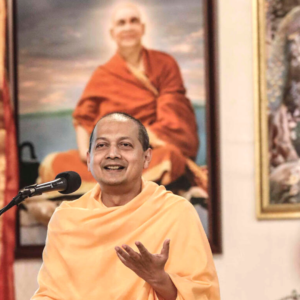
swami sivananda Monk speaking with microphone indoors
Pranayama, Swami Sivananda

What is Prana?

What is Prana? “He who knows Prana knows Vedas” is the important declaration of the Srutis. You will find in Vedanta Sutras: “For the same reason, breath is Brahman.” Prana is the sum total of all energy that is manifest in the universe. It is the sum total of all the forces in nature. It is the sum total of all latent forces and powers which are hidden in men and which lie everywhere around us. Heat, light, electricity, magnetism are the manifestations of Prana. All forces, all powers and Prana spring from the fountain or common source, ‘Atman’. All physical forces and all mental forces come under the category ‘Prana’. It is the force on every plane of being, from the highest to the lowest. Whatever moves or works or has life, is but an expression or manifestation of Prana. Akasa or ether also is an expression of Prana. The Prana is related to mind and through mind to will, and through will to the individual soul, and through this to the Supreme Being. If you know how to control the little waves of Prana working through the mind, then the secret of subjugating universal Prana will be known to you. The Yogi who becomes an expert in the knowledge of this secret, will have no fear from any power, because he has mastery over all the manifestations of powers in the universe. What is commonly known as power of personality is nothing more than being successful in life, more influential and fascinating than others. It is all due to the power of this Prana. Such people manipulate everyday, unconsciously of course, the same influence which the Yogi uses consciously by the command of his will. There are others who by chance tumble unaware of this Prana and use it for lower purposes under false names. This working of Prana is seen in the systolic and diastolic actions of the heart, when it pumps the blood into arteries in the action of inspiration and expiration during the course of breathing; in the digestion of food; in the excretion of urine and faecal matter; in the manufacture of semen, chyle, chyme, gastric juice, bile, intestinal juice, saliva; in closing and opening of the eyelids, in walking, playing, running, talking, thinking, reasoning, feeling and willing. Prana is the link between the astral and physical body. When the slender thread-link Prana is cut off, the astral body separates from the physical body. Death takes place. The Prana that was working in the physical body is withdrawn into the astral body. This Prana remains in a subtle, motionless, unmanifested, undifferentiated state during the cosmic Pralaya. When the vibration is set up, Prana moves and acts upon Akasa, and brings forth the various forms. The macrocosm (Brahmanda) and microcosm (Pindanda) are combinations of Prana (energy) and Akasa (matter). That which moves the steam-engine of a train and a steamer, that which makes the aeroplanes fly in air, that which causes the motion of the breath in lungs, that which is the very life of this breath itself, is Prana. I believe, you have now a comprehensive understanding of the term Prana about which you had a very vague conception in the beginning. By controlling the act of breathing you can efficiently control all the various motions in the body and the different nerve-currents that are running through the body. You can easily and quickly control and develop body, mind and soul through breath control or the control of Prana. It is through Pranayama that you can control your circumstances and character, and can consciously harmonise the individual life with the cosmic life. The breath, directed by thought under the control of the will, is a vitalising, regenerating force which you can utilise consciously for self-development; for healing many incurable diseases in your system; for healing others and for other various useful purposes. It is within your easy reach at every moment of your life. Use it judiciously. Many Yogins of yore, like Sri Jnanadeva, Trailinga Swami, Ramalinga Swami and others, had utilised this breath, this force, the Prana, in a variety of ways. You can also do so, if you practise Pranayama by prescribed breathing exercises. It is Prana that you are breathing rather than the atmospheric air. Inhale slowly and steadily with a concentrated mind. Retain it as long as you can do it comfortably. Then exhale slowly. There should be no strain in any stage of Pranayama. Realise the occult inner life-powers which underlie the breath. Become a Yogi and radiate joy, light and power all around you. Pranavadins or Hatha Yogins consider that Prana Tattva is superior to Manas Tattva, the mind principle. They say, Prana is present even when the mind is absent during sleep. Hence Prana plays a more vital part than the mind. If you go through the parables in Kaushitaki and Chhandogya Upanishads, when all the Indriyas, mind and Prana fight amongst themselves as to their superiority, you will find that Prana is regarded as the highest of all. Prana is the oldest, for it starts its functioning from the very moment the child is conceived. On the contrary, the organs of hearing, etc., begin to function only when their special abodes, viz., the ears, etc., are formed. Prana is called Jyestha and Sreshtha (oldest and best) in Upanishads. It is through the vibrations of psychic Prana that the life of the mind, Sankalpa or thinking, is kept up and thought is produced. You see, hear, talk, sense, think, feel, will, know, etc., through the help of Prana and therefore Srutis declare: “Prana is Brahman.” SEAT OF PRANA The seat of Prana is heart. Though the Antahkarana is one, yet it assumes four forms, viz., (i) Manas, (ii) Buddhi, (iii) Chitta and (iv) Ahamkara, according to the different functions it performs. Likewise, though Prana is one, it assumes five forms viz., (1) Prana, (2) Apana, (3) Samana, (4) Udana and (5) Vyana, according to the different




What is Prana? Read Post »