







Hari Om

Menu

Mahatmas

swami chinmayananda ji devotional india
Mahatmas

Sri Swami Chinmayananda

Sri Swami Chinmayananda Sri Swami Chinmayananda was a rare spiritual force who combined profound scriptural knowledge with fearless action and modern vision. He emerged at a time when spiritual values were fading from public life and boldly re-introduced Vedanta as a practical philosophy for everyday living. With his sharp intellect and powerful oratory, he shattered the misconception that spirituality was meant only for ascetics. Instead, he proclaimed that Vedanta is a science of life meant to strengthen individuals, families, and society. His mission was not to create followers, but thinkers—people capable of standing on their own spiritual understanding. A defining quality of Swami Chinmayananda was his emphasis on inner strength and self-confidence. He repeatedly taught that weakness is the greatest sin, and that realization of one’s true nature removes fear at its root. According to him, every individual carries infinite potential within, but ignorance veils this truth. Through systematic study of the Upanishads and the Bhagavad Gita, he guided seekers to remove this ignorance and live with clarity and courage. His teachings encouraged people to face life’s challenges with composure, efficiency, and dignity. Swami Chinmayananda was also deeply committed to nation-building through spiritual awakening. He believed that a strong nation is built by strong individuals, and strong individuals are formed through right values. His work extended beyond discourses into education, healthcare, and cultural revival. Through Chinmaya Mission, he established centers that promoted not only spiritual study but also service activities, thereby integrating knowledge with compassionate action. His vision was holistic—uplift the individual, and society would naturally rise. Despite his commanding personality, Swami Chinmayananda was deeply humble at heart. He constantly credited his Guru, Swami Tapovan Maharaj, and the ancient rishis for all knowledge. He lived simply, owned very little, and dedicated every moment of his life to teaching and service. His personal discipline, intense study, and unwavering commitment to truth gave his words authenticity and power. Even today, Swami Chinmayananda’s influence continues to grow across the globe. His books, commentaries, and recorded lectures remain invaluable guides for spiritual seekers and students of philosophy. More than a teacher, he was a spiritual awakener who ignited self-belief and higher vision in countless hearts. Sri Swami Chinmayananda’s life reminds us that true spirituality is dynamic, courageous, and transformative—leading individuals from limitation to liberation, and from doubt to divine awareness. Swami Chinmayananda strongly emphasized discipline, courage, and character. He believed spirituality was not meant to weaken individuals but to make them bold, dynamic, and fearless. He often reminded his audiences that a spiritual person should be efficient in action, noble in thought, and pure in intention. Through karma yoga, he taught that work done with dedication and without selfish attachment becomes a means of inner purification. Such work, when combined with devotion and study, prepares the mind for higher knowledge. His exceptionally brilliant mind and intensity to seek out the goal of human existence led Swami Sivananda to recommend that he leave the ashram and study under the tutelage of the great Vedantic master, Swami Tapovanam. Swami Tapovanam was a recluse who did not stay in one place for long. He spent his time in the Himalayan mountains moving from place to place. Swami Chinmayananda turned out to be an exceptional student who could keep up with the rigorous lifestyle and the strict discipline of his master. Swami Tapovanam took him on as a disciple on the condition that he would would never repeat anything. The student would have to take the responsibility of going deep into the studies through his own personal notes, reflection and meditation. While the lessons were in Sanskrit, the language of the ancient spiritual texts, Swami Chinmayananda wrote out his notes in English. Under Swami Tapovanam, Swami Chinmayananda totally immersed himself in his spiritual studies and a life of meditation. In just two short years, in the tranquility of the great Himalayan mountains, Swami Chinmayananda, the once rational skeptic gained inner peace and spiritual enlightenment In December 1951, Swami Chinmayananda came down to the plains to teach spirituality to the ordinary man on the street. His approach was startlingly different. Traditionally, the ancient Hindu scriptures were taught only to the male members of the priest class in the ancient language of Sanskrit. But Swami Chinmayananda shocked everyone by teaching freely and openly to men and women alike without any class distinctions – and in ENGLISH!. Swami Chinmayananda was an enthusiastic and animated orator. He taught with clarity, humor and insightful examples from everyday life. He stormed into the lives of ordinary Indians with the inspiring teachings of spirituality in daily life. They were spellbound by his great brilliance and clarity. He was astonishingly popular. Indoor venues soon became too small to hold the masses that came to listen to him. Many came just to feed their curiosity about this remarkably modern Swami (monk). His talks soon took place in open public grounds which could accommodate thousands of people. Swami Chinmayananda, with his ability to reach into the hearts of people with his intellectual brilliance, insight, clarity of thought and down-to-earth manner, brought about a cultural and spiritual reawakening in a newly independent India. In 1953, a small group of enthusiastic devotees formed the ‘Chinmaya Mission’ in Madras (now Chennai, India) to formalize and organize the work of Swami Chinamayananda. ‘Chinmaya’ means True Knowledge in Sanskrit. Swami Chinmayananda’s followers thought it would be an apt name as it described not only His spiritual teachings but the seeking of the True Knowledge of life. Sri Swami Chinmayananda was one of the most influential spiritual teachers of modern India and a dynamic exponent of Vedanta, whose mission transformed the spiritual understanding of millions across the world. Born in 1916 as Balakrishna Menon in Kerala, he was initially a journalist with a sharp intellect and a questioning mind. His search for truth led him to meet Swami Sivananda of Rishikesh, who inspired him to pursue the deeper purpose of life. Under the guidance of Swami Tapovan Maharaj, Swami Chinmayananda underwent intense spiritual

Sri Swami Chinmayananda Read Post »

Swami Chidanananda saraswati
Mahatmas

Swami Chidananda Saraswati

Swami Chidananda Saraswati Sridhar Rao, as Swami Chidananda was known before taking Sannyasa (embracing a life of renunciation), was born to Srinivasa Rao and Sarojini, on the 24th September, 1916, the second of five children and the eldest son. Sri Srinivasa Rao was a prosperous Zamindar (a rich landlord) owning several villages, extensive lands and palatial buildings in South India. Sarojini was an ideal Indian mother, noted for her saintliness. At the age of eight, Sridhar Rao’s life was influenced by one Sri Anantayya, a friend of his grandfather, who used to relate to him stories from the epics, Ramayana and Mahabharata. Doing Tapas (austerities), becoming a Rishi (sage), and having a vision of the Lord became ideals which he cherished. Swami Chidananda Saraswati was one of the most luminous spiritual masters of modern India and a revered disciple of Swami Sivananda of the Divine Life Society, Rishikesh. Born in 1916, he embodied from a young age a deep inclination toward spirituality, self-discipline, and service to humanity. After meeting Swami Sivananda, his life was completely transformed, and he dedicated himself fully to the path of renunciation, selfless service, and God-realization. Swami Chidananda later became the President of the Divine Life Society and carried forward his Guru’s mission with remarkable humility, wisdom, and inner purity. Known as the “Saint among saints,” his life itself was a silent teaching, radiating peace, compassion, and divine awareness. Swami Chidananda taught that the purpose of human life is realization of the Self, which is one with the Supreme Reality. He emphasized that true spirituality is not mere philosophy or ritual but a lived experience expressed through character, conduct, and compassion. According to him, purity of heart, control of the mind, and selfless service are essential foundations for spiritual growth. He constantly reminded seekers that God is not distant or separate, but ever-present within one’s own heart. In 1936, he was admitted to Loyola College, whose portals admit only the most brilliant of students. In 1938, he emerged with the degree of Bachelor of Arts. This period of studentship at a predominantly Christian College was significant. The glorious ideals of Lord Jesus, the Apostles and the other Christian saints had found in his heart a synthesis of all that is best and noble in the Hindu culture. To him, study of the Bible was no mere routine; it was the living word of God, just as living and real as the words of the Vedas, the Upanishads and the Bhagavad-Gita. His innate breadth of vision enabled him to see Jesus in Krishna, not Jesus instead of Krishna. He was as much an adorer of Jesus Christ as he was of Lord Vishnu. The family was noted for its high code of conduct and this was infused into his life. Charity and service were the glorious ingrained virtues of the members of the family. These virtues found an embodiment in Sridhar Rao. He discovered ways and means of manifesting them. None who sought his help was sent away without it. He gave freely to the needy. Service to lepers became his ideal. He would build them huts on the vast lawns of his home and look after them as though they were deities. Later, after he joined the Ashram (hermitage), this early trait found in him complete and free expression where even the best among men would seldom venture into this great realm of divine love, based upon the supreme wisdom that all are one in God. Patients from the neighbourhood, suffering from the worst kind of diseases came to him. To Sridhar Rao the patient was none other than Lord Narayana Himself. He served him with tender love and compassion. The very movement of his hands portrayed him as worshipping the living Lord Narayana. Nothing would keep him from bringing comfort to the suffering inmates of the Ashram, no matter what the urgency of other engagements at the time. Swami Chidananda was also a great exponent of yoga and Vedanta, yet his approach was simple and practical. He taught that regular prayer, meditation, study of sacred texts, and disciplined living gradually purify the mind and lead to inner illumination. His words were gentle, filled with love and clarity, touching the hearts of people from all walks of life. Without seeking recognition or fame, he became a source of inspiration for seekers across the world. Even after leaving his physical body in 1993, Swami Chidananda’s spiritual presence continues to guide countless aspirants. His writings, recorded talks, and the institutions he nurtured still inspire lives of faith, discipline, and service. Swami Chidananda Saraswati remains a shining example of how a life rooted in humility, devotion, and selfless love can uplift humanity and lead souls toward peace, truth, and liberation. Service, especially of the sick, often brought out the fact that he had no idea of his own separate existence as an individual. It seemed as if his body clung loosely to his soul. Swami Chidananda Saraswati was a towering spiritual personality whose life was a perfect expression of purity, self-discipline, and divine awareness. As the beloved disciple of Swami Sivananda, he absorbed his Guru’s teachings not merely through study, but through total surrender and lived experience. From the moment he entered the Divine Life Society at Rishikesh, his life became one of intense sadhana, simplicity, and service. He lived with minimal needs, strict personal discipline, and unwavering devotion, becoming a living embodiment of the yogic ideals taught in the scriptures. His presence itself created an atmosphere of peace and inner stillness for all who came in contact with him. Nor was all this service confined to human beings. Birds and animals claimed his attention as much as, if not more than, human beings. He understood their language of suffering. His service of a sick dog evoked the admiration of Gurudev. He would raise his finger in grim admonition when he saw anyone practicing cruelty to dumb animals in his presence. His deep and abiding interest in the

Swami Chidananda Saraswati Read Post »

swami samarth ji devotional
Mahatmas

Swami Samarth

Swami Samarth In a place called Karanja Nagar (Karnataka State) in Southern India, there lived a pious Brahmin couple, Madhava and Ambabhavani, in the 13th century. To this God-fearing & religious couple, was born a son around 1275 A.D. This child was the incarnation of Lord Dattatreya and came to be known as the great sage Shrimad Nrusimha Saraswati. The child was unique in the sense that, he was chanting only ‘Aum’ (the Hindu holy chant) since his birth. The parents were concerned about his dumbness till his ‘Vratabandha’ (the sacred thread bearing ceremony), when this child was merely eight years old, he started reciting all the four Vedas (the Holiest Hindu scriptures) to the great astonishment of all the learned people.After the aforesaid incident, the child left for Kashi (Uttar Pradesh State, Northern India) for Tapas [penance]. Pleased with his rigorous tapasya [penance], a learned ascetic named Shree Krishna Saraswati Swami, initiated him into Sanyasashram (Ascetism) and gave him the name, Shrimad Nrusimha Saraswati. Swami Samarth taught that God does not reside merely in temples or rituals but dwells within the heart of every being. According to him, ignorance of one’s true nature is the root cause of suffering. He constantly reminded his devotees that attachment to the body, ego, and desires binds the soul to misery, while surrender to the Divine leads to freedom and peace. His teachings emphasized the harmonious path of karma (selfless action), bhakti (devotion), and jnana (knowledge). Through simple yet profound words, he urged people to recognize the Atman within and realize their unity with the Supreme Reality. Many miraculous incidents are associated with Swami Samarth, including healing the sick, protecting devotees from danger, and revealing hidden truths. However, he never encouraged the pursuit of miracles. He often stated that miracles distract the seeker from the ultimate goal of self-realization. For Swami Samarth, inner transformation was far more important than outward displays of divine power. His methods of teaching were unique—sometimes gentle, sometimes strict—designed to break the ego of the disciple and instill humility, faith, and courage. Even today, the name “Shri Swami Samarth” is a powerful mantra for millions of devotees. His blessings are believed to provide strength in adversity, clarity in confusion, and peace in inner turmoil. The temple at Akkalkot continues to be a sacred center of devotion and faith. Swami Samarth’s life and teachings remind humanity that a true guru does not merely give comfort but transforms consciousness. He remains a living presence in the hearts of devotees, guiding them toward truth, fearlessness, and eternal bliss. gives us the details of his work in guiding the devotees and the various miracles he performed to help the devotees. He stayed at Ganagapur (Karnataka State, Southern India) for a long time and then gave his “Nirguna Padukas” to his disciples and devotees, The biography of Shrimad Nrusimha Saraswati “Shree Gurucharitra”, before leaving for the Kardali forests to perform Tapas [penance]. His disciples prepared a floating seat of flowers for him on which he sailed against the current of the river Patalganga and disappeared.He performed rigorous tapasya [penance] on the Shree Shail mountain in the Kardali forests for nearly 150 years. After this he took an extensive pilgrimage, covering even places, now known as Jawa, Sumatra, Indonesia, China, Japan, Australia etc., relieved many people from their miseries, and guided them on the spiritual path. Finally, he came to the ranges of Himalayas where he enlightened many devotees. Later he sat under a Deodar tree for tapasya [penance]. This Tapasya [penance] in the Himalayas lasted for nearly 250 years, but a woodcutter unknowingly axed the anthill enveloping the body of Shrimad Nrusimha Saraswati. This resulted in the break in Tapasya [penance] and Shrimad Nrusimha Saraswati then left for an extensive travel throughout the Indian sub-continent guiding the devotees. Swami Samarth, also known as Shri Swami Samarth of Akkalkot, was one of the greatest spiritual masters of Bharat and is revered as an incarnation of Lord Dattatreya. He appeared in the nineteenth century and spent much of his divine life in Akkalkot, Maharashtra. Swami Samarth lived as an avadhuta, beyond social conventions and worldly attachments. His outward behavior often appeared stern, unconventional, and unpredictable, yet behind this seemingly harsh exterior was an ocean of compassion and unconditional love for his devotees. His life was dedicated to awakening humanity to higher spiritual truths and guiding seekers toward self-realization. Swami Samarth extended his grace equally to all, regardless of caste, status, or background. The poor, the suffering, and the troubled found solace in his presence. Although he occasionally used sharp words or severe actions, devotees understood that such behavior was meant for their spiritual upliftment. It is believed that he accelerated the working of karma for his followers, helping them exhaust their past burdens quickly and progress on the spiritual path. During this travel, he became popular by various names at various places. Thus at one place he was known as Chanchal Bharati and at another place he would be called Digambar Swami. As he travelled and stayed at various places, he became the Guru (preceptor) of many great souls like Shree Ramkrishna Paramahansa, Shree Saibaba of Shirdi, Shree Shankar Maharaj, Shree Gajajan Maharaj of Shegaon etc. Finally he settled down at Akkalkot (Maharashtra State) and stayed there for 24 years from 1854 A.D. to 1878 A.D. and thus came to be known as the Akkalkot Niwasi Shree Swami Samarth Maharaj (the great sage of Akkalkot). Here he enlightened many disciples, such as Shree Dev Mamledar, Shree Balappa Maharaj, Shree Cholappa Maharaj, Shree Nrusimha Saraswati Maharaj of Alandi, Shree Ramanand Beedkar Maharaj of Pune etc. For Swamiji, there was no difference between earth and gold. Sometimes he would sleep on a mattress and sometimes on stone. He would ride on a horse or elephant with a parasol or sometimes sit on a heap of rubbish. Sometimes he would take bath many a times a day or sometimes would not take bath for days on end. Sometimes

,

Swami Samarth Read Post »

Swami Sivananda
Mahatmas

Swami Sivananda

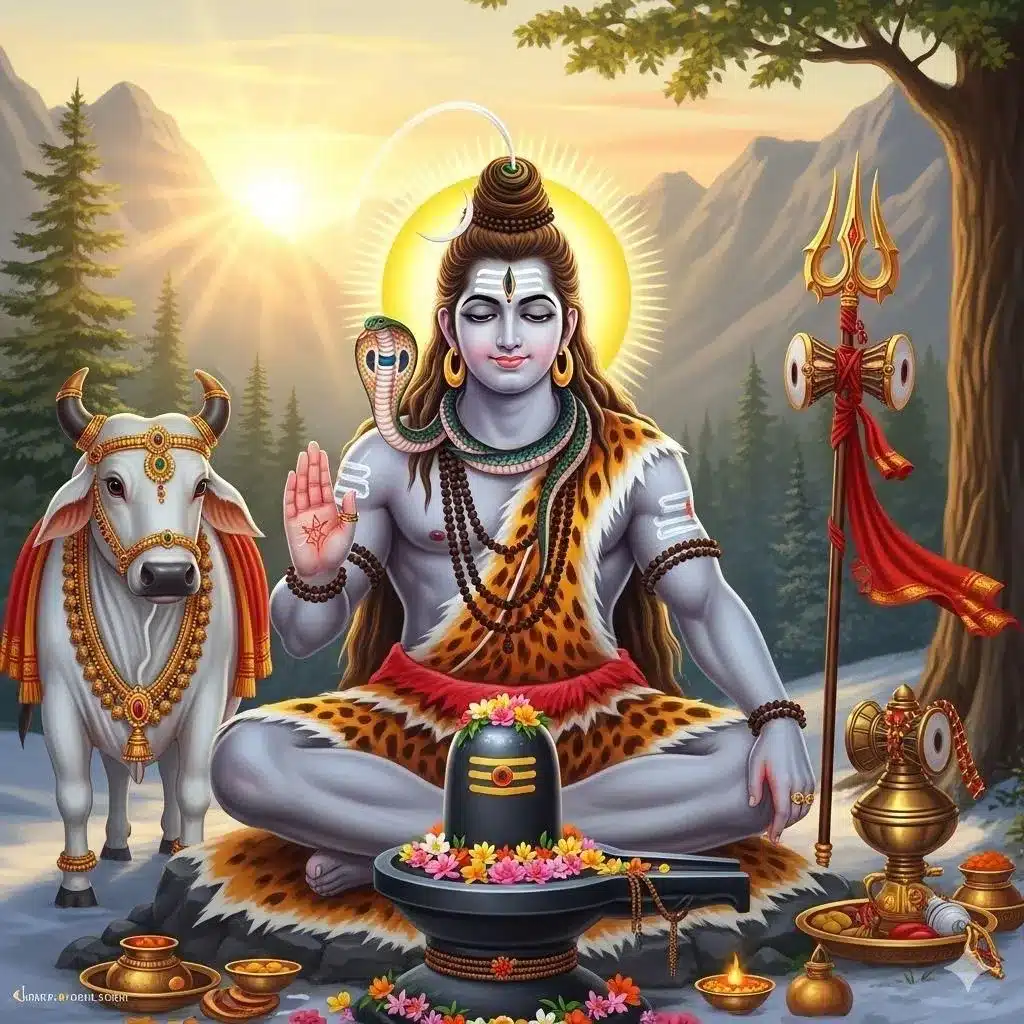
Swami Sivananda Saraswati ~ 𝗔 𝗗𝗶𝘃𝗶𝗻𝗲 𝗕𝗹𝗶𝘀𝘀𝗳𝘂𝗹 𝗣𝗿𝗮𝘆𝗲𝗿 𝘁𝗼 𝗟𝗼𝗿𝗱 𝗦𝗵𝗶𝘃𝗮 ~ 𝘉𝘺 𝘚𝘸𝘢𝘮𝘪 𝘚𝘪𝘷𝘢𝘯𝘢𝘯𝘥𝘢 The leaves of life are falling off.Youth is fading. The days are rolling on. Time, the destroyer, lays his hands on the whole world. Existence in this world is as momentary as a bubble or lightening. O lord Shiva ! Protect me. O Lord Shiva! Who holds the begging bowl of the skull of Brahma ! Control this monkey mind which jumps at its sweet will on the branches of desires in the forest of Lust and keep it with Thee for ever. The leaves of life are falling off.Youth is fading. The days are rolling on. Time, the destroyer, lays his hands on the whole world. Existence in this world is as momentary as a bubble or lightening. O lord Shiva ! Protect me. O Lord Shiva! Who holds the begging bowl of the skull of Brahma ! Control this monkey mind which jumps at its sweet will on the branches of desires in the forest of Lust and keep it with Thee for ever. “ Swami Sivananda Saraswati was a renowned spiritual leader, yoga master, and philosopher, whose teachings continue to inspire millions around the world. As the founder of The Divine Life Society (DLS) and an advocate of selfless service, meditation, and spiritual discipline, Swami Sivananda played a pivotal role in reviving yoga and Vedantic philosophy in the modern era. His mission was to spread spiritual awareness and the message of unity, peace, and self-realization.Early Life and Medical Career Born as Kuppuswami Iyer on September 8, 1887, in Pattamadai, Tamil Nadu, Swami Sivananda was inclined towards spirituality from an early age. However, before embracing monastic life, he pursued a career in medicine. After obtaining his medical degree, he worked as a doctor in Malaysia, where he selflessly served the poor and needy. His deep compassion and experiences with human suffering led him to seek a higher purpose in life—one rooted in spirituality and self-realization. Spiritual Awakening and Monastic Life In 1923, he renounced his medical career and traveled to Rishikesh, the spiritual heart of India, where he met his guru, Swami Vishwananda Saraswati. Under his guidance, he underwent rigorous spiritual training, practicing intense meditation, yoga, and self-discipline. He was later initiated into sannyasa (monastic life), taking the name Swami Sivananda Saraswati. Establishing The Divine Life Society In 1936, Swami Sivananda founded The Divine Life Society (DLS) in Rishikesh to spread spiritual knowledge and the principles of Vedanta, Yoga, and selfless service. Through his organization, he offered guidance on living a balanced and virtuous life, blending spiritual practice with social service. Teachings and Philosophy Swami Sivananda’s philosophy was based on the integral approach to yoga and spirituality, summarized by his famous motto: “Serve, Love, Give, Purify, Meditate, Realize.” His teachings emphasized: Hatha Yoga (Physical and Mental Discipline): Using yoga postures and breath control for a healthy and balanced life. Karma Yoga (Path of Selfless Service): Serving humanity as a form of worship. Bhakti Yoga (Path of Devotion): Surrendering to the divine with love and faith. Jnana Yoga (Path of Knowledge): Seeking truth through wisdom and self-inquiry. Raja Yoga (Path of Meditation): Practicing meditation for self-realization. Contributions to Yoga and Spiritual Literature Swami Sivananda was a prolific writer, authoring over 200 books on spirituality, health, and yoga. Some of his most notable works include: Influence and Disciples Swami Sivananda’s teachings spread far and wide, influencing countless seekers and spiritual leaders. Among his prominent disciples were: Legacy and Passing Swami Sivananda dedicated his life to the upliftment of humanity through yoga, spirituality, and selfless service. He attained Mahasamadhi (left his physical body) on July 14, 1963, but his spiritual presence continues to guide seekers worldwide.

, ,

Swami Sivananda Read Post »