













Hari Om

Menu

Mahatmas

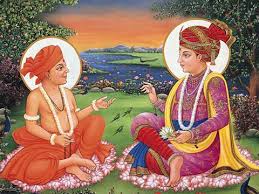
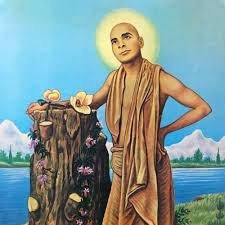
Surdass Artistic Depictions How Art Imagines the Blind Poet
Mahatmas

Surdas

Surdas After sometime Surdas with his Gurudev went to Govardhan from Gokul. Here he saw Shrinathji’s temple and decided to spend the rest of his life at the holy feet of the Lord. Sri Vallabhacharya appointed Surdas as the chief singer of the Shrinathji temple. After that there was no stopping him. Surdas attained a mystical union with Lord Krishna and from then on he could bring before his mind/eyes any episode of the life of Lord Krishna he chose which he then rendered into verse almost as if an eyewitness report. Though Surdas was blind, he used to get the divine darshan of Lord Krishna and Radha Rani, and he could actually tell the attire worn by the Lord. Once, blind Surdas fell into a well. He called upon Lord Krishna for help. Lord Krishna came immediately to help Surdas. Krishna took hold of his devotees hand and pulled him out of the well. When Surdas came out of the well, Krishna began to leave. As soon as Surdas recognised the divine touch of Krishna, his heart sank and with tears filled his eyes. He said हाथ छुड़ाये जात हो, निर्बल जानि के मोय।         हृदय से जब जाओ, तो सबल जानूँगा तोय।।         हाथ छुड़ाये जात हो, निर्बल जानि के मोय।         हृदय से जब जाओ, तो सबल जानूँगा तोय।। Radha Rani also came to meet his devotee. Surdas recognised Radha Rani by the ting-a-ling sound of her anklets. Surdas fell onto her lotus feet and took her anklets. When Radha Rani asked him to return her anklets, he refused. At that moment, Lord Krishna gave him the vision in his eyes and asked him to ask for a wish. Surdas returned the anklets and said- “My Lord, you have already given me everything. After receiving your divine darshan (sight) there is nothing more left for me to see in this world. Please make me blind as before“. Krishna granted him his wish. Surdas had a remarkable talent for memorising Sanskrit hymns such as Srimad Bhagavata along with many others. It was this that made him such an in-demand figure wherever he went, with his ability to pass on such important compositions. He also had a firm grasp of the life and achievements of Krishna and was able to portray all of this in his exquisitely crafted poetry. Many historians say that no one has ever done it better. The fact that the writer was blind makes it all even more remarkable. He went into incredible details about Krishna’s early life, such as where and when he took his first steps and what were his first utterances. He even described the infant cutting a first tooth! These tiny details were woven into poems and songs and some of them are sung even today by parents who see in their children some elements of Krishna. Surdas’s reputation as a singer and a devotee spread far and wide. One day in the court of the mogul emperor Akbar the court singer Tansen sang one of Surdas’s songs. Akbar was charmed. Tansen admitted that the tune and the lyrics were of Surdas, the blind devotee of Lord Krishna. Akbar being a broad-minded Muslim invited Surdas to his court. Surdas declined saying that he only sang in the court of his beloved Krishna. On hearing this Akbar came to Surdas and listened to his prayer songs in the temple. Surdas is best known for his composition the Sur Sagar. Sursagar in its 16th century form contain descriptions of Krishna and Radha as lovers; the longing of Radha and the gopis for Krishna when he is absent and vice versa. In addition, poems of Sur’s own personal bhakti are prominent, and episodes from the Ramayana and Mahabharata also appear. The Sursagar’s modern reputation focuses on descriptions of Krishna as a lovable child, usually drawn from the perspective of one of the cowherding gopis of Braj. Sur also composed the Sur Saravali and Sahitya Lahari. In contempary writings, it is said to contain one lakh verses, out of which many were lost due to obscurity and uncertainty of the times. It is analogical to the festival of Holi, where the Lord is the Great Player, who, in his playful mood, creates the universe and the Primerial man out of himself, who is blessed with the three gunas, namely Sattva, Rajas and Tamas. He describes 24 incarnations of the Lord interspersed with the legends of Dhruva and Prahlada. He then narrates the story of the incarnation of Krishna. This is followed by a description of the Vasant (Spring) and Holi festivals. Sahitya Lahari consists of 118 verses and emphasises on Bhakti (devotion). Sur’s compositions are also found in the Guru Granth Sahib, the holy book of the Sikhs. He is referred to as Bhagat Surdasji by the Sikhs.

Surdas Read Post »

Sage Ashtavakra devotional
Mahatmas

Sage Ashtavakra

Sage Ashtavakra In Mahabharata,In the Vana Parva of the Mahabharata, the legend of Ashtavakra is described in greater detail. On losing the game of dice with the Kauravas, the fivePandava princes and Draupadi are exiled for twelve years. On their pilgrimage, they meet the sage Lomasha, who shows the river Samanga to Yudhishthira. Lomasha says that this is the same river, on bathing in which the deformed Ashtavakra was cured of his eight deformities. On being asked by Yudhishthira, Lomasha narrates to the Pandava princes the legend of Ashtavakra, which forms three chapters of the Mahabharata. It all starts when King Janaka asks the sage Ashtavakra how he can attain Knowledge, detachment, liberation. Ashtavakra tells him. Ashtavakra expounds to King Janaka the characteristic of the self and instructs him on the knowledge of the self that is natural and ever-existent. It works! Upon hearing Ashtavakra’s words Janaka realizes his True Nature. Enraptured, he describes the joy and wonder of his new state. An amazed Janaka relates the joy of his own experiences on realizing the subtleties of the principles explained. Ashtavakra is delighted for Janaka but sees inconsistencies. He fires off a series of confrontational verses about attachment to worldly pleasure. Ashtavakra deprecates the attachments within and without and enunciates the status of the realized.Janaka asserts that the Lord of the Universe can do as he pleases. Janaka dwells at length on the glory of jnana – the state of self-realization.Ashtavakra does not disagree, but in a terse four verses points to the next step dissolution. Ashtavakra instructs Janaka that the world and its objects and the experiences in the world are all imagines and unreal and exhorts him therefore to gain equanimity of perception and get dissolved in the self.Janaka says “I know that already,” matching him in style and number of verses. Janaka replies that the self being the substratum of the circumscribed world of insentience, the question of rejecting it or accepting it or making it naught doesn’t arise. Unable to leave it at that, however, Janaka goes on to further describe his enlightened state. Janaka says that the knower of the self is one who is firmly poised in the expansive or limitless experience and sees only one and therefore the world appearances create no impact either favorable or unfavorable in him; nor do they generate attraction or repulsion towards them. Where do you search me? I am with you, Not in pilgrimage, nor in icons; Neither in solitary living; Not in temples, nor in mosques; Neither in Kaba nor in Kailas; Not in prayers, nor in meditation; Neither in fasting or prohibition; Not in vedic procedure; Nor in yogic postures; Not even in sky or universe; Neither in womb of nature; Not in the breath of the breaths; If you are a true seeker; In a moment than you discover; Says Kabir, listen with care, where your faith is, I am there. Ashtavakra’s profound understanding of the scriptures and philosophical concepts enabledhim to defeat Bandin decisively. His victory led to the release of the sages, including his father,who had been defeated and imprisoned by Bandin. This triumph underscored Ashtavakra’sspiritual and intellectual prowess, earning him great respect and admiration.

Sage Ashtavakra Read Post »

Bhagavan Sri Ramana Maharshi
Mahatmas

Sri Ramana Maharshi

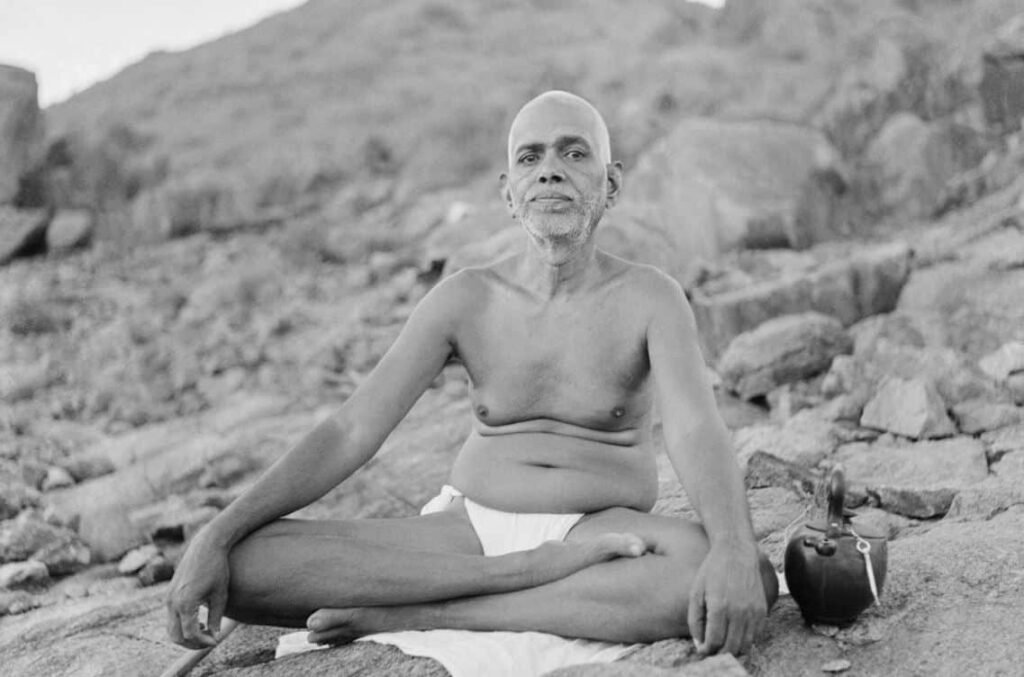
Sri Ramana Maharshi Born as Venkataraman Iyer but revered as Bhagavan Ramana Maharshi, he wasn’t just a sage who shared wisdom—he lived it. His life and teachings have touched countless hearts, mine included. The simplicity of his message, the profoundness of his realisation, and the way he embodied peace make him one of the greatest spiritual figures of modern times. Also known as Maharshi Ramana, Sri Ramana, or simply Ramana, he showed us that enlightenment isn’t some far-off, unreachable goal. Through his method of self-inquiry, he revealed that the answer lies in turning inward and asking the most fundamental question: Who am I?  Ramana Maharshi, born on December 30, 1879, in a small village called Tiruchuzhi in Tamil Nadu, India, began life as a regular boy named Venkataraman Iyer. As a boy, Venkataraman showed no extraordinary signs of spiritual inclination. In fact, he was like any other child—playing, attending school, and occasionally getting into mischief. What stands out about his early life is its simplicity. There were no miraculous signs or grand prophecies about his future. If anything, this normalcy makes his transformation into Bhagavan Ramana Maharshi all the more remarkable. When Venkataraman was just 12 years old, his father passed away unexpectedly. This event brought significant changes to the family’s life, forcing them to move to his uncle’s house in Madurai. While this loss was undoubtedly a turning point, it wasn’t yet the moment that would awaken the Maharshi Ramana we now revere. However, during this time, Venkataraman began hearing about Arunachala Hill, the sacred mountain in Tiruvannamalai. Stories of its divine significance captured his imagination, though he had no idea how pivotal Arunachala would become in his life. It’s said that even as a child, he felt an unexplainable pull toward the mountain, which Hindus regard as a physical manifestation of Lord Shiva. The upadesa of Sri Bhagavan, that is to say, the guidance or instruction given by Him, was secret in a sense. Although he was accessible to all alike, and although questions were normally asked and answered in public, the guidance given to each disciple was nevertheless intensely direct and adapted to his character. When asked once by Swami Yogananda, a Swami with a large following in America, what spiritual instruction should be given to the people for their uplift, he replied: “It depends on the temperament and spiritual maturity of the individual. There can be no mass instruction.” Ramakrishna’s teachings regarding the highest truths of spiritual life were delivered in the simplest language and were punctuated by parables and homely metaphors as illustrations. Many noted writers and philosophers—Mahatma Gandhi, Leo Tolstoy, Aldous Huxley, Christopher Isherwood, Thomas Merton, Arnold Toynbee, Joseph Campbell—have been deeply impressed and influenced by him. Sri Bhagavan was intensely active, yet so concealed was his activity that casual visitors and those who failed to perceive it believed that he gave no upadesa at all or that he was indifferent to the needs of seekers. It is generally agreed that realization is possible only through the grace of a guru. Sri Bhagavan was as definite about this as other Masters. Therefore, it was not enough for the sadhaka (aspirant) to know that his teaching was sublime and his presence inspiring; it was necessary to know that he was a Guru giving diksha (initiation) and upadesa (instruction). It is axiomatic that one who is a Guru in this supreme sense of having realized his identity with the Absolute does not say so, inasmuch as there is no ego left to affirm the identity. Also, he does not say that he has disciples, for, being beyond otherness, there can be no relationship for him. As a boy, Venkataraman showed no extraordinary signs of spiritual inclination. In fact, he was like any other child—playing, attending school, and occasionally getting into mischief. What stands out about his early life is its simplicity. There were no miraculous signs or grand prophecies about his future. If anything, this normalcy makes his transformation into Bhagavan Ramana Maharshi all the more remarkable. When Venkataraman was just 12 years old, his father passed away unexpectedly. This event brought significant changes to the family’s life, forcing them to move to his uncle’s house in Madurai. While this loss was undoubtedly a turning point, it wasn’t yet the moment that would awaken the Maharshi Ramana we now revere. However, during this time, Venkataraman began hearing about Arunachala Hill, the sacred mountain in Tiruvannamalai. Stories of its divine significance captured his imagination, though he had no idea how pivotal Arunachala would become in his life. It’s said that even as a child, he felt an unexplainable pull toward the mountain, which Hindus regard as a physical manifestation of Lord Shiva. Bhagavan Ramana Maharshi remained indifferent to the material aspects of the ashram. He continued living a simple life, often joining devotees in their daily tasks, whether it was preparing meals or tending to the cows. The ashram slowly developed around him, with devotees contributing their time, skills, and resources. Over the years, various structures were added: Even as the ashram grew, it retained the essence of Sri Ramana’s teachings—simplicity, humility, and a focus on self-realisation. Walking through the ashram today, it’s easy to feel the calm and silence that must have pervaded during Ramana’s time. While Maharshi Ramana rarely engaged in abstract philosophy, his teachings naturally aligned with the principles of Advaita Vedanta (non-dualism). Some of his core ideas include: The Self is EternalAccording to Sri Ramana, the self is not something to be attained—it’s already present within each of us. The journey is about removing ignorance and recognising this eternal truth. The Illusion of the EgoRamana often spoke about the ego as the false “I” that creates a sense of separation. Through self-inquiry, this ego dissolves, revealing the true self. Silence as the Ultimate TeachingFor Bhagavan Ramana, words were secondary. He often said that silence was the purest form of communication. Sitting in his presence, many devotees reported profound inner experiences without a single word being spoken. The later years of Bhagavan

Sri Ramana Maharshi Read Post »

images 3 2
Mahatmas

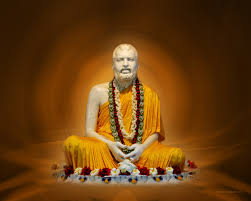
Sri Ramakrishna

Sri Ramakrishna The central theme of Sri Ramakrishna’s life was God-realization. He believed firmly that God can be realized here and now through intense longing, purity of heart, and sincere spiritual practice. As a priest at the Dakshineswar Kali Temple, he practiced unwavering devotion to Goddess Kali, surrendering himself completely to the Divine Mother. Through rigorous spiritual disciplines, he attained direct visions and constant awareness of the Divine presence. His life demonstrated that spiritual truth is not theoretical but experiential. One of the most remarkable aspects of Sri Ramakrishna was his universal spiritual vision. He practiced and realized the truths of different religious paths, including Vedanta, Bhakti, Tantra, Islam, and Christianity. Through direct experience, he concluded that all religions lead to the same ultimate Reality. His famous teaching, “As many faiths, so many paths,” emphasized harmony, tolerance, and unity among religions. At a time of religious division and confusion, his message stood as a beacon of universal love and understanding. Sri Ramakrishna taught through simple stories, metaphors, and parables drawn from everyday life. His teachings were spontaneous, practical, and deeply touching. He emphasized purity, renunciation of lust and greed, humility, and intense devotion to God. According to him, attachment to wealth and sensual pleasures binds the soul, while love for God liberates it. He often said that one must live in the world like a maidservant in a rich household—performing duties sincerely while keeping the mind fixed on God. A defining feature of Sri Ramakrishna’s spirituality was his childlike simplicity and complete surrender to God. He related to the Divine as a living, loving presence, especially in the form of the Divine Mother, Kali. For him, God was not an abstract idea but a personal reality that could be seen, spoken to, and loved. His devotion was so intense that he often forgot his own body, remaining absorbed in blissful union with the Divine. Through his life, he demonstrated that sincere love for God is the most powerful spiritual path. Sri Ramakrishna’s teachings were rooted in experience rather than doctrine. He often said that knowledge without realization is like a map without a journey. His parables, drawn from village life, merchants, farmers, and household situations, conveyed profound truths in the simplest language. He emphasized that purity of mind and heart is essential for spiritual progress, and that attachment to lust and greed obstructs God-realization. Renunciation, according to him, was primarily inner, not merely external. One of his greatest contributions was his vision of religious harmony. By practicing different religious paths and attaining realization through each, Sri Ramakrishna affirmed that all genuine paths lead to the same Divine Truth. This insight was revolutionary in an age marked by religious conflict and dogmatism. His universal outlook laid the foundation for modern interfaith understanding and spiritual inclusiveness. Sri Ramakrishna’s influence continues to shape spiritual thought through the lives of his disciples, especially Swami Vivekananda. He foresaw Vivekananda’s role in spreading Vedanta to the West and awakening spiritual pride in India. Through the Ramakrishna Mission and Order, his teachings continue to inspire service, devotion, and self-realization worldwide. Among his many other noteworthy characteristics were his universality and childlike purity, his intense sincerity, his vast knowledge of things spiritual and human (which came not from book-learning but from direct perception), and his extraordinary power to transform lives. Ramakrishna’s teachings regarding the highest truths of spiritual life were delivered in the simplest language and were punctuated by parables and homely metaphors as illustrations. Many noted writers and philosophers—Mahatma Gandhi, Leo Tolstoy, Aldous Huxley, Christopher Isherwood, Thomas Merton, Arnold Toynbee, Joseph Campbell—have been deeply impressed and influenced by him. THE MASTER WITH THE LOWLY AND HUMBLE No person is too lowly for God’s grace, as the familiar story of Rasik, the sweeper of the Dakshineswar Temple courtyard and steps, illustrates. Rasik was simple and guileless; his pure heart longed only for God but he suffered under the restrictions of his caste and lowly status. He craved to approach Shri Ramakrishna, whom he called “Father” but suffered under the restrictions of his caste and lowly status. He could only watch with longing as others came close to the Master and were redeemed. He wept much for Shri Ramakrishna’s grace. One day, he prostrated himself before Shri Ramakrishna as he was returning from the Panchavati, absorbed in a spiritual mood. “What will happen to me?” he cried. Ramakrishna’s heart was very much touched by Rasik’s wretched condition. Gazing at Rasik with full compassion, he gave him his greatest blessing: “You will see me at the time of death.” Two years after the Master’s demise, Rasik became feverish and gravely ill. He rejected all medicines. He only accepted the sanctified water (Charanamrita) which sustained him and gave him some energy. The fever ended. He spent his waking hours chanting God’s name and praying earnestly for His grace. Lying on a mat in his tulsi grove, his rosary in hand, the blessed Rasik died with full consciousness visualizing the presence of the Master. Shri Ramakrishna’s great assurance to Rasik was literally fulfilled. Rasik’s story has been well documented. A similar event occurred in the life of Hazra, who is familiar to all readers of the Gospel of Sri Ramakrishna. Hazra used to call Swamiji his friend; when Swamiji intervened on his behalf, Shri Ramakrishna was constrained to grant Hazra his grace. Hazra died peacefully and happily in a manner similar to Rasik. Dina Mukherjee was another very good devotee who lived near Baghbazaar. He was very poor. The Master so loved the pure in heart that he did not wait to be invited to their homes. One day Ramakrishna asked Mathur to take him to Dina’s house. It was so small and crowded with people that they could not find a place to sit. On their way back to Dakshineswar, Mathur complained to Ramakrishna about these inconveniences but the Master remained very lighthearted about it. It is well known that Chandra Haldar, a priest of the Kali temple at Kalighat

Sri Ramakrishna Read Post »

images 4 2
Mahatmas

Bhagwan Swaminarayan

Bhagwan Swaminarayan The Swaminarayan Sampraday is a Bhakti Sampraday founded by Bhagwan Swaminarayan on 31 December 1801 CE. It belongs to the Vaishnav tradition and represents the purest form of the Hindu religion. It focuses its faith on salvation through total devotion – bhakti – to the Supreme God developed through dharma, jnan and vairagya(righteousness, knowledge and detachment).At 20, the Lord was in Ramanand Swami’s Ashram serving as a humble servant. He was named Sahajanand when Ramanand Swami initiated Him. The Lord became the sole spiritual master when Ramanand Swami appointed Him as the Guru of his ashram. A month later, Ramanand Swami passed away. On the 14th day of the funeral rites, in the village of Faneni, the Lord introduced the new Swaminarayan Mantra. News of this Mantra spread far and wide. And its spiritual power was felt everywhere. Sahajanand Swami now became known as Bhagwan Swaminarayan. Anyone who chanted the Mantra enjoyed samadhi – the ultimate spiritual experience. Bhagwan Swaminarayan, also known as Sahajanand Swami, was a great spiritual reformer and divine incarnation who revitalized Sanatana Dharma in the late eighteenth and early nineteenth centuries. Born in 1781 in Chhapaiya, Uttar Pradesh, as Ghanshyam Pande, he displayed extraordinary spiritual qualities from early childhood. At the age of eleven, he renounced home and undertook a long spiritual journey across India as Nilkanth Varni, seeking saints, studying scriptures, and practicing intense austerities. This pilgrimage shaped his divine mission and prepared him to uplift society through spiritual discipline, devotion, and moral reform. Bhagwan Swaminarayan left his physical body in 1830, but his spiritual legacy continues to flourish worldwide. Through temples, service activities, and spiritual education, his teachings continue to guide millions toward a life of devotion, discipline, and moral excellence. Bhagwan Swaminarayan stands as a timeless symbol of divine love, righteous living, and spiritual transformation. Bhagwan Swaminarayan, also known as Sahajanand Swami, was a great spiritual reformer and divine incarnation who revitalized Sanatana Dharma in the late eighteenth and early nineteenth centuries. Born in 1781 in Chhapaiya, Uttar Pradesh, as Ghanshyam Pande, he displayed extraordinary spiritual qualities from early childhood. At the age of eleven, he renounced home and undertook a long spiritual journey across India as Nilkanth Varni, seeking saints, studying scriptures, and practicing intense austerities. This pilgrimage shaped his divine mission and prepared him to uplift society through spiritual discipline, devotion, and moral reform. The teachings of Bhagwan Swaminarayan emphasized pure devotion to God, strict moral conduct, and self-discipline. He taught that liberation is attained through devotion to the Supreme God combined with righteousness and restraint. He strongly advocated values such as non-violence, truthfulness, celibacy, honesty, and abstinence from intoxicants. At a time when social evils and moral decline were widespread, his teachings brought clarity, order, and spiritual strength to thousands of lives. He uplifted people from all sections of society, including women and the marginalized, instilling dignity and spiritual confidence in them. Bhagwan Swaminarayan established a well-organized spiritual fellowship, later known as the Swaminarayan Sampradaya, grounded in devotion, discipline, and service. He installed deities in several temples and laid down clear guidelines for personal conduct and spiritual practice. His teachings were preserved in sacred texts such as the Shikshapatri and the Vachanamrut, which remain central to the faith and provide practical guidance on spiritual living. Through these teachings, he presented a harmonious balance of bhakti, jnana, and dharma. A remarkable aspect of Bhagwan Swaminarayan’s life was his emphasis on social and moral reform. He opposed practices such as animal sacrifice, addiction, and exploitation, and promoted compassion, cleanliness, and community harmony. His compassion extended to all beings, and his leadership helped transform entire communities into disciplined, peaceful, and spiritually oriented societies. His personal conduct and divine presence inspired deep devotion and unwavering faith among his followers. On 1 June 1830 CE (Jeth sud 10, 1886 VS), Bhagwan Swaminarayan left His mortal body which was cremated in Gadhada. But long before that He had begun to reveal that He would continue to be present on this earth through a succession of spiritual Gurus. The Lord’s eternal words spoken on 8 February 1826 CE (Maha sud 2, 1882 VS) are recorded in Vachanamrut Vadtal 19: “When the Jiva gets a birth as a human being, God or God’s enlightened Sadhu are always manifest on this earth. When the Jiva knows and understands them, he becomes a Bhakta – God’s devotee.” Keeping to this timeless promise, Bhagwan Swaminarayan entrusted Gunatitanand Swami, His Enlightened Sadhu, with the oars of the Sampraday. “Gunatitanand and I are no different.” “Just as people follow me, millions shall follow Gunatitanand.” Such revelations and predictions of the Lord, were truly and fully realized as Gunatitanand Swami led the mission. Since then, the spiritual succession has continued in all its divinity through Bhagatji Maharaj, Shastriji Maharaj, Yogiji Maharaj and, at present, Pramukh Swami Maharaj. On his return to India, Swami Rama continued to lecture in the plains, but his health began to break down. He went back to the Himalayas and settled at Vasishtha Ashram. He gave up his body in the Ganges on 17 October, 1906, when he was only thirty-three. The Rama Tirtha Publication League has brought out most of the writings of this great saint of India. They are given in several volumes, entitled, In the Woods of God-realisation. His inspiring writings show us that he saw his Beloved Lord in all names and forms. In many of his poems he sings the glory of nature. Philosophy of Succession: Philosophically, Bhagwan Swaminarayan is Purushottam – the God Supreme. And Gunatitanand Swami is Aksharbrahman – His divine abode, also called Akshardham. The Lord in His fullest glory, eternally resides in Gunatitanand Swami. They are ever together, inseparable – The Lord as the Master and Gunatitanand Swami as the ideal devotee, the disciple. On earth, every spiritual Guru in Bhagwan Swaminarayan’s succession is the incarnation of Aksharbrahman in whom the Lord resides fully and eternally. As every Guru is the same Aksharbrahman entity, the devotees feel no

Bhagwan Swaminarayan Read Post »

Swami purushottamananda 1630564
Mahatmas

swami purushottamananda

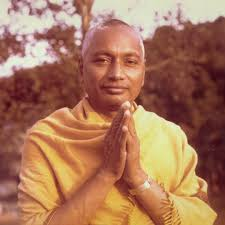
Swami Purushottamananda Swami Purushottamananda was a revered spiritual master of the twentieth century, widely respected for his profound wisdom, simplicity of life, and deep commitment to the teachings of Vedanta and Yoga. A direct disciple of Swami Sivananda of the Divine Life Society, Rishikesh, he dedicated his entire life to the service of humanity and the dissemination of spiritual knowledge. From an early age, he displayed a strong inclination toward renunciation, discipline, and inner inquiry. Under the guidance of his Guru, Swami Purushottamananda immersed himself in scriptural study, meditation, and selfless service, gradually emerging as a beacon of clarity and spiritual strength. The central theme of Swami Purushottamananda’s teachings was purification of the mind and self-realization. He emphasized that the ultimate purpose of human life is to realize one’s true nature as pure consciousness, beyond body and mind. According to him, ignorance manifests as ego, desire, and attachment, which bind the soul to suffering. Through discrimination, detachment, and devotion to God, the seeker can gradually transcend these limitations. His teachings encouraged seekers to cultivate inner silence, self-discipline, and unwavering faith in the Divine. Swami Purushottamananda placed great importance on yoga as a holistic way of life. He taught that yoga is not limited to physical postures or breath control but includes ethical living, mental balance, devotion, and wisdom. Karma yoga, performed with a spirit of surrender and service, was central to his guidance. He believed that selfless service purifies the heart and prepares the mind for higher knowledge. Through regular meditation, prayer, and study of sacred texts, one could attain inner peace and spiritual clarity. Known for his powerful yet compassionate discourses, Swami Purushottamananda had the rare ability to explain deep philosophical truths in simple and practical language. His talks inspired discipline, courage, and devotion among spiritual aspirants. He never sought personal recognition and remained deeply humble despite the respect he commanded. His life itself was his greatest teaching—marked by austerity, contentment, and complete surrender to the Divine will. Swami Purushottamananda’s influence extended to seekers from diverse backgrounds, both in India and abroad. He guided countless aspirants on the path of yoga and Vedanta, emphasizing that spiritual growth is achieved through sincerity, perseverance, and inner purity. Even after his physical departure, his teachings continue to inspire those seeking truth and liberation. Swami Purushottamananda remains a shining example of how a life rooted in discipline, devotion, and wisdom can uplift humanity and lead souls toward lasting peace and self-realization. A few days after the sannyasa ceremony Swami Purushottamananda left for Varanasi, Haridwar and other sacred tirthas. After a few years’ pilgrimage in the Himalayas, he settled in Vasishtha-Guha in the year 1929 to spend his life in prayer and meditation in the solitary cave in the midst of a dense forest. A man of courage and inner strength and extreme dis- passion, he chose this cave for his tapasya. During those days there was no motor road, 1986 THE SAGE OF VASISHTHAGUHA 231 not even a regular foot-path, from Rishikesh to the cave. One had to walk along the river Ganga, sometimes ascending up-hill. Yet he preferred the place as the very name, “ Vasishtha-Guha ” had a charm irresistible. He had toundergo great hardships during those days. The nearest place of human habitation was a hamlet three miles away and he had to trek uphill and downdale to reach it and obtain the bare necessities of life. The rheumatic attacks had left his right leg emaciated and weak. He had to limp all the way, which made it all the more painful. Once, when his fire had gone out, he had to walk the whole distance to the village to get tire! But he did not give up the cave or hisausterities. Help came to him in various ways. On another occasion when he was in need of fire and was reluctant to walk all the way to the village and waste four precious morning hours, a stranger came on a raft from the other bank of Ganga, gave him a box of matches of his own accord, and went away. The same evening Swamiji received half-a-dozen match boxes sent by a Mahatma of Rishikesh, through somebody. And, when the season of harvest came round, one day he was getting ready to go to some villages for collecting food-grains.Just at that moment, a former acquaintance, Swami Narayana Giri, came from Rishikesh. He accompanied Swamiji to the villages, and carried the load single-handed, not allowing our subject to carry anything. Swami Purushottamananda at first protested as he did not like the visitor doing such services. Only after coming to an understanding that the visitor would stay with Swamiji during the chaturmasya period (rainy season) and sharewhatever they collected, did he allow him to do this seva (service). Such instances increased Swamiji’s faith in God. His perseverance, intense tapasya and complete surrender to the Lord resulted in the fulfilment of his aim in life namely, Self-realisation. He was a true Vedantin, a happy blend of jnana and Bhakti, who exhorted his disciles to meditate. On hearing good devotional music (kirtans) he would go into ecstasy and become unconscious of the surroundings. Tears would trickle down his cheeks while reading or hearing certain portions of Srimad-Bhagavatam. He advised spiritual aspirants to “feel, feel for others”,“be sincere and true”, and ” surrender completely to the Lord” He also stressed the importance of brahmacharya (continence ), and said, “If you have brahmacharya you have everything ; if not, you have nothing.” “Anumodaamahe brahmacharyam -ekaantanirmalamDharmyam yasasyam-aayushyam lokadvaya -rasaayanam” was one of his oft-quoted s/okas. The meaning is simple: “We admire brahmacharya of ‘purest ray’ which is conducive to virtue, fame and longevity, and is a panacea for all the ailments here and hereafter.’” Swami Purushottamananda viewed yoga as a complete and integrated way of life, not merely as a set of techniques or physical disciplines. According to him, true yoga begins with ethical living and inner refinement. He taught that without purity of character, practices

swami purushottamananda Read Post »

image 51
Mahatmas

Swami Venkatesananda

Swami Venkatesananda Swami Venkatesananda was a revered spiritual teacher of the twentieth century, widely known for his clarity of thought, deep humility, and ability to present ancient yogic wisdom in a practical and universal manner. A direct disciple of Swami Sivananda of Rishikesh, he was born in 1925 in South Africa and from an early age showed a keen interest in spirituality, philosophy, and service. Under the guidance of his Guru, he immersed himself in the study of yoga, Vedanta, and the sacred scriptures, eventually becoming one of the most trusted messengers of Swami Sivananda’s teachings across the world. The essence of Swami Venkatesananda’s message was self-awareness and inner responsibility. He emphasized that spiritual life is not about adopting labels or external practices alone, but about understanding the movements of one’s own mind. According to him, ignorance expresses itself through habitual reactions, ego, and attachment, while wisdom manifests as awareness, compassion, and freedom. He encouraged seekers to observe themselves honestly and live in harmony with life as it unfolds, without resistance or clinging. Swami Venkatesananda was especially admired for his unique approach to yoga as a way of life rather than a system of techniques. He taught that yoga is the art of right relationship—with oneself, with others, and with nature. Postures, breath control, and meditation were meaningful only when rooted in ethical living and self-inquiry. His teachings emphasized simplicity, sincerity, and direct experience over rigid discipline or dogma. This made his message deeply appealing to people of diverse cultures and backgrounds. A gifted teacher and communicator, Swami Venkatesananda traveled extensively across Europe, Australia, and the Americas, sharing the wisdom of the Yoga Sutras, the Bhagavad Gita, and Advaita Vedanta. His talks were marked by clarity, warmth, and gentle humor, making profound truths accessible without diluting their depth. He consistently avoided claims of authority or spiritual superiority, reminding seekers that truth must be discovered individually through awareness and understanding. Swami Venkatesananda lived a life of simplicity, service, and inner freedom. He placed great importance on humility and compassion, often stating that spirituality without kindness is incomplete. Even after his passing in 1982, his teachings continue to inspire seekers worldwide through his books, recordings, and the lives he touched. Swami Venkatesananda remains a guiding light for those seeking a balanced, intelligent, and compassionate approach to yoga and self-realization. Swami Venkatesananda was a luminous example of wisdom expressed through simplicity, compassion, and clarity. As a close disciple of Swami Sivananda, he absorbed not only the teachings of yoga and Vedanta but also the spirit of humility and selfless service that his Guru embodied. He lived without pretension or authority, presenting himself as a fellow seeker rather than a teacher, which made his guidance deeply relatable and transformative. His life demonstrated that true spirituality is revealed in one’s daily conduct and relationships, not in titles or external achievements. A central theme in Swami Venkatesananda’s teaching was freedom through understanding. He emphasized that suffering arises when the mind clings to fixed ideas, identities, and expectations. Instead of trying to control the mind forcefully, he encouraged gentle observation and inquiry. By becoming aware of one’s own reactions, desires, and fears, the grip of conditioning naturally loosens. This approach made spirituality a living, dynamic process rather than a rigid discipline. Venkatesananda joined the Ashram in 1945 and would serve for “seventeen blissful years” at the feet of his beloved Master. His work was primarily in the preparing of manuscripts, printing and publication of Gurudev’s work. In 1961 Swami Sivananda sent this close disciple into the world to spread his “Yoga of Synthesis”:  “There are four types of human beings: the active, the emotional, the mystic and the intellectual. The seers have therefore evolved four paths – kama yoga, bhakti yoga, raja yoga and jnana yoga – to enable people of the four temperaments to reach the goal, Atma-jnana. “Everyone is endowed with all four but one aspect is predominant in each. Therefore the yoga of synthesis with stress on one system is the most suitable yoga for the present age. The yoga of synthesis develops you harmoniously.” Swami Sivananda. Venkatesananda began his outside work with Swami Sahajananda (Sivananda disciple) at his Ashram in South Africa. There, as in Rishikesh, he was instrumental in the preparation, composition, lino-typing and publication of many volumes of Swami Sivananda’s works.  From this time he would began travelling of the world. He founded centres and ashrams and was a guest of many others.  He met with many religious philosophical and spiritual teachers all over the world and chronicled these colourful meetings in essays published in two volumes: Yoga Around the World.   The first yogi to come to Australia – certainly Western Australia – where Venkatesa came in 1961 as the guest lecturer of the University of Western Australia (UWA) Adult Education programme Swami Venkatesananda had a rare ability to interpret ancient texts in a fresh and relevant way. His commentaries on the Yoga Sutras of Patanjali, the Bhagavad Gita, and Vedantic teachings were marked by clarity and depth without intellectual complexity. He avoided dogmatic explanations and invited seekers to verify truth through direct experience. His emphasis was always on living wisdom rather than accumulating knowledge. Despite being highly respected worldwide, Swami Venkatesananda lived with extraordinary simplicity. He owned very little, traveled lightly, and remained free from institutional ambition. Compassion was central to his life; he believed that understanding naturally expresses itself as kindness. For him, spirituality was incomplete without sensitivity toward others and respect for life in all forms. Walter Dawson, leader of Perth Self-Realisation wrote to Swami Sivananda: “His public tour was a tremendous success culminating in the Physics Theatre which was packed to the highest tier to hear his discourses on Yoga and Christianity”. He held and won the hearts of everyone present with his clear and lucid explanation of this difficult subject, also his wonderful sense of humour which had the audience rocking with laughter.”  Swami Venkatesananda’s legacy continues to guide seekers who value sincerity over show, awareness over authority, and understanding

Swami Venkatesananda Read Post »

hq720 1
Mahatmas

Shree Ramsukhdasji Maharaj

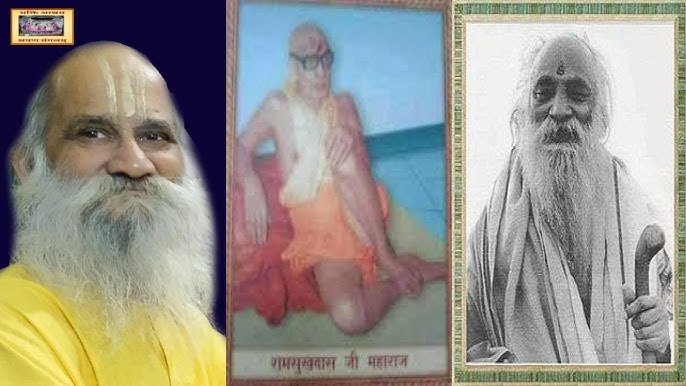
Shree Ramsukhdasji Maharaj Shree Ramsukhdasji Maharaj was a radiant saint whose entire life was an offering to God and the upliftment of humanity. Known for his profound understanding of the Bhagavad Gita, he lived in complete alignment with its teachings. From an early age, he renounced worldly comforts and dedicated himself to spiritual discipline, scriptural study, and contemplation. His life reflected total surrender to the Divine will, free from personal ambition or attachment. Simplicity, austerity, and unwavering faith were the hallmarks of his spiritual journey. The essence of Shree Ramsukhdasji Maharaj’s teachings was selfless devotion combined with inner detachment. He repeatedly emphasized that liberation does not require drastic outer changes but a transformation of the inner attitude. According to him, bondage is created not by action but by attachment to the results of action. By surrendering the sense of doership and offering every action to God, one can live in the world yet remain untouched by its anxieties. His explanations made even the most subtle teachings of the Gita practical and relevant for daily life. A remarkable quality of Shree Ramsukhdasji Maharaj was his ability to communicate profound spiritual truths in simple and compassionate language. He avoided philosophical complexity and focused on clarity and directness, ensuring that people of all backgrounds could understand and apply his teachings. His discourses inspired faith, discipline, and moral strength. He stressed the importance of truthfulness, humility, contentment, and constant remembrance of God as essential virtues for spiritual progress.Despite his immense knowledge and influence, Shree Ramsukhdasji Maharaj remained deeply humble. He lived with minimal possessions, accepted no honors, and maintained complete detachment from recognition and authority. His daily life was filled with prayer, scriptural reflection, and silent contemplation. Those who came into his presence often experienced a sense of peace and spiritual reassurance, as if their burdens had been gently lifted. Shree Ramsukhdasji Maharaj was one of the most revered saints of modern India, widely respected for his deep scriptural wisdom, simple living, and unwavering devotion to Shri Ram and the Bhagavad Gita. Born in 1913 in Rajasthan, he displayed a strong inclination toward spirituality and renunciation from a very young age. Choosing the path of sannyasa early in life, he dedicated himself entirely to the study, contemplation, and propagation of Sanatana Dharma. His life was marked by extreme simplicity, humility, and tireless spiritual service, making him a guiding light for seekers across India. The central focus of Shree Ramsukhdasji Maharaj’s teachings was Bhagavad Gita, which he regarded not merely as a philosophical text but as a practical guide for everyday life. He explained the Gita in a clear, direct, and accessible manner, making its profound truths understandable to common people. According to him, human suffering arises from attachment, ego, and ignorance of one’s true relationship with God. He emphasized surrender to the Divine, selfless action, and constant remembrance of the Lord as the path to inner peace and liberation. Shree Ramsukhdasji Maharaj lived exactly as he taught. He possessed almost nothing, lived a life of strict discipline, and remained absorbed in the remembrance of God. Despite being a great scholar of scriptures, he never sought fame or recognition. His discourses were simple, heartfelt, and filled with spiritual clarity rather than rhetorical display. People were drawn to him not only for his knowledge but for the peace and purity that radiated from his presence. Not insisting on any particular viewpoint, ism, sect etc, he verily proclaimed what he experienced himself. He explained the most subtle, the most intricate, and the most profound topics of the spiritual path in a simple manner so that even an ordinarily educated person could easily understand them and enshrine them in his or her life. The very living embodiment of the Srimad Bhagavad Gita, Paramsraddheya Shree Swamiji Maharaj also wrote an unparalleled commentary on the Gita entitled ‘Sadhaka-Sanjivani,’ which is his unique gift to the spiritual world. In addition, he has also composed several other wonderful sacred texts such as Gita-Darpaṇ, Gita Prabodhani, Sadhan-Sudha-Sindhu, etc. These sacred texts are written on the strength of personal experience, and not on the basis of scholarship. This great glory of the spiritual world reverted back to Godhead (tirobhava) on July 3, 2005 (Ashada Krishna 12, Vikram Samvat 2062) on the bank of the holy river Ganges, Gita Bhavan, Svaragashram (Rishikesh). It was the special instruction of the utterly detached, embodiment of renunciation, Paramsraddheya Shree Swamiji Maharaj, that no one should write his biography. This brief introduction is written by way of “shakha-chandra-nyaya,” (analogically pointing out the moon through the branch of a tree), so that maximum number of people, by becoming familiar with this great saint, may benefit from his teachings.. The very living embodiment of the Shrimad Bhagavad Gita, Paramsraddheya Shree Swamiji Maharaj also wrote an unparalleled commentary on the Gita entitled ‘Sadhaka-Sanjivani,’ which is his unique gift to the spiritual world. In addition, he has also composed several other wonderful sacred texts such as Gita-Darpan, Gita Prabodhani, Sadhan-Sudha-Sindhu, etc. These sacred texts are written on the strength of personal experience, and not on the basis of scholarship. Shree Ramsukhdasji Maharaj’s spiritual legacy continues through his writings and the lives he touched. His teachings encourage seekers to develop unwavering faith in God, perform duties with sincerity, and cultivate inner renunciation. Even today, his words serve as a guiding light for those walking the path of devotion and righteousness. Shree Ramsukhdasji Maharaj remains an enduring symbol of pure devotion, self-discipline, and the timeless wisdom of Sanatana Dharma. Shree Ramsukhdasji Maharaj was a rare embodiment of scriptural wisdom, devotion, and renunciation, whose life was devoted entirely to the realization and dissemination of divine truth. He considered the Bhagavad Gita not merely as a sacred text but as a living guide meant to transform human conduct and consciousness. From an early age, he chose a life of simplicity and restraint, renouncing comfort and personal ambition to remain absorbed in spiritual pursuit. His disciplined lifestyle reflected his deep inner conviction that peace and fulfillment arise

Shree Ramsukhdasji Maharaj Read Post »

sawami rama tirtha
Mahatmas

Swami Rama Tirtha

Swami Rama Tirtha Swami Rama Tirtha, previously known as Gossain Tirtha Rama, was born in 1873, at Murariwala, a village in the district of Gujranwala, Punjab, India. His mother passed away when he was but a few days old and he was brought up by his elder brother, Gossain Gurudas.As a child, Rama was very fond of listening to recitations from the holy scriptures and attending Kathas. He often put questions to holy men and even offered explanations. He was very intelligent and loved solitude.Rama was barely ten years old when his father got him married. His father left him under the care of his friend, Bhakta Dhana Rama, a man of great purity and simplicity of life. Rama regarded him as his Guru, and offered to him his body and soul in deep devotion. His surrender to his Guru was so complete that he never did anything without first consulting him. He wrote numerous loving letters to him. Swami Rama Tirtha was one of the most radiant and fearless spiritual philosophers of modern India, whose life and teachings awakened the Vedantic spirit of self-realization across the world. Born in 1873 as Tirtha Ram Goswami in Punjab, he was a brilliant scholar in mathematics, yet from an early age he possessed an intense longing for spiritual truth. His deep study of the Upanishads and Advaita Vedanta transformed him into a living embodiment of divine wisdom. Renouncing worldly life at a young age, he became Swami Rama Tirtha and dedicated himself to proclaiming the truth of man’s divine nature. The central message of Swami Rama Tirtha was “Thou art That.” He boldly declared that every human being is inherently divine, infinite, and free. According to him, ignorance alone makes people feel weak, limited, and unhappy. He taught that happiness does not come from possessions, status, or external circumstances, but from the realization of one’s own true Self. His teachings were filled with courage, joy, and spiritual strength, encouraging individuals to rise above fear and live with self-confidence and inner freedom. Despite his growing fame, Swami Rama Tirtha lived with extreme simplicity and detachment. He found joy in nature, solitude, and contemplation, often retreating to the banks of the Ganges or the Himalayan forests. In 1906, he attained Mahasamadhi at a young age, merging into the Infinite he so joyfully proclaimed. Swami Rama Tirtha’s life and teachings continue to inspire seekers worldwide, reminding humanity that true freedom, bliss, and strength arise from the realization of one’s own divine Self. Swami Rama Tirtha was a luminous embodiment of Vedantic truth whose life radiated joy, fearlessness, and spiritual freedom. Unlike many spiritual teachers who emphasized austerity and renunciation alone, he revealed Vedanta as a path of inner celebration and strength. To him, spirituality was not an escape from life but a bold affirmation of its divine essence. He spoke with the conviction of one who had directly realized the Self, and this authenticity made his words deeply transformative for all who heard or read them. The heart of Swami Rama Tirtha’s teaching was the realization of absolute oneness. He proclaimed that the individual is not a weak, sinful being but the very expression of infinite consciousness. According to him, all limitations arise from false identification with the body and mind. When this ignorance is removed through knowledge, one naturally experiences peace, bliss, and freedom. He encouraged seekers to constantly affirm their divine nature and live with dignity, courage, and inner authority. Swami Rama was a living Vedantin. He saw and felt God in all names and forms. His beautiful words are often addressed to the trees, rivers and mountains. Rama soon resigned his post and left for the forest. His wife and two children and a few others accompanied him to the Himalayas. Owing to ill-health, his wife later returned with one of her sons. The other was left at Tehri for his schooling there. Rama Tirtha took Sannyas a few days before the passing of Swami Vivekananda. Swami Madhava Tirtha had already allowed him to take Sannyas whenever he wished. A few years later he returned to the plains to preach. The effect of his presence was marvellous. His infectious joy and his bird-like warbling of Om enchanted everyone. Swami Rama’s burning desire to spread the message of Vedanta made him leave the shores of India for Japan. He went with his disciple Swami Narayana. After a successful visit to Tokyo, he departed for the U.S.A. He spent about a year and a half in San Francisco under the hospitality of Dr Albert Hiller. He gained a large following and started many societies, one of them being the Hermetic Brotherhood, dedicated to the study of Vedanta. His charming personality had a great impact on the Americans. Devout Americans even looked upon him as the living Christ On his return to India, Swami Rama continued to lecture in the plains, but his health began to break down. He went back to the Himalayas and settled at Vasishtha Ashram. He gave up his body in the Ganges on 17 October, 1906, when he was only thirty-three. The Rama Tirtha Publication League has brought out most of the writings of this great saint of India. They are given in several volumes, entitled, In the Woods of God-realisation. His inspiring writings show us that he saw his Beloved Lord in all names and forms. In many of his poems he sings the glory of nature. Swami Rama Tirtha’s biography above has been reproduced from Swami Sivananda’s “Yoga Lessons for Children (Vol. 7)”, published by the Divine Life Society of South Africa. More on Swami Rama Tirtha’s life and teachings from Swami Sivananda’s Life of Saints. Swami Rama Tirtha, a direct descendant of Gosain Tulsi Das, the immortal author of the widely read Hindi Ramayan, was born in 1873, at Muraliwala, in the district of Gujranwala, Punjab. Rama Tirtha was a very bright student, a genius possessing unusual intelligence, contemplative nature and an intrinsic love of mathematics

Swami Rama Tirtha Read Post »

shri adi shankracharya ji
Mahatmas

Sri Adi Shankaracharya

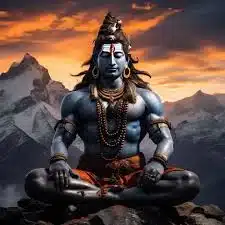
Sri Adi Shankaracharya The Divine Purpose of Avatara When spiritual darkness engulfs humanity and eternal principles of Dharma face extinction, the Supreme Consciousness manifests in human form to restore cosmic order. These divine incarnations—Avataras—emerge with specific forms and purposes uniquely suited to address the spiritual crises of their time. Sri Adi Shankaracharya stands among these luminaries as an Avatara of Lord Shiva Himself, whose appearance twelve centuries ago transformed the spiritual landscape of India, revitalized the profound wisdom of Vedanta, and forged national integration across diverse regions. It is universally acknowledged that if Sanatana Dharma thrives today, allowing us to partake in its spiritual treasures, it is primarily due to Sri Shankaracharya’s divine intervention and tireless work. His legacy continues to illuminate the path for seekers worldwide, serving as the foundation upon which the living tradition of eternal wisdom stands. Sri Adi Shankaracharya was one of the greatest spiritual luminaries in the history of Bharat and the foremost expounder of Advaita Vedanta, the philosophy of non-duality. Born in the eighth century CE in Kaladi, Kerala, he displayed extraordinary spiritual brilliance from a very young age. Renouncing worldly life in his childhood, Adi Shankaracharya devoted himself entirely to the realization and propagation of the highest truth—that Brahman alone is real, the world is transient, and the individual self is not different from Brahman. In a remarkably short lifespan, he revitalized Sanatana Dharma and unified diverse spiritual traditions through clarity of thought and spiritual authority. Adi Shankaracharya taught that ignorance (avidya) is the root cause of human suffering. According to him, people mistakenly identify themselves with the body and mind, forgetting their true nature as pure, infinite consciousness. Through the path of jnana (knowledge), he guided seekers to discriminate between the eternal and the temporary, leading to liberation (moksha). His teachings emphasized self-inquiry, detachment, and direct realization of the Self. While rituals and devotion have their place, he clarified that ultimate freedom comes only through the knowledge of non-duality. A Timely Manifestation The Hindu society of His time had fractured into countless competing sects, each advancing contradictory interpretations and engaging in endless disputations that served only to weaken the unified spiritual foundation of the culture.Into this intellectual chaos, Sri Bhagavatpada brought the crystalline clarity of Advaita Vedanta—the non-dual wisdom of the Upanishads. With matchless eloquence and penetrating insight, He revitalized the eternal truths that had become clouded by misinterpretation and neglect. His accomplishment becomes even more remarkable considering the absence of modern communication technologies and transportation systems, as He traveled the length and breadth of India on foot, igniting a spiritual renaissance. One of Adi Shankaracharya’s greatest contributions was his profound commentaries on the Upanishads, Bhagavad Gita, and Brahma Sutras, which remain authoritative texts of Advaita Vedanta to this day. He possessed a rare ability to present subtle metaphysical truths with logical precision and spiritual depth. At the same time, he composed numerous devotional hymns such as the Bhaja Govindam, Nirvana Shatakam, and Soundarya Lahari, showing that devotion and knowledge are not opposed but complementary paths. Through these hymns, he made deep philosophical truths accessible to the common people. Adi Shankaracharya traveled extensively across the Indian subcontinent, engaging in debates with scholars of various philosophical schools and re-establishing the primacy of Vedantic wisdom. To preserve and propagate the teachings of Advaita, he established four major monastic centers (Mathas) in the four directions of India—Sringeri in the south, Dwaraka in the west, Puri in the east, and Jyotirmath in the north. These institutions continue to uphold his spiritual vision and serve as pillars of Sanatana Dharma. Though established in the sublime state of Self-realization, where He could have remained in solitary bliss, Sri Shankaracharya chose instead to embrace humanity with boundless compassion. Recognizing the diverse spiritual capacities of seekers, He communicated transcendent wisdom at multiple levels, meeting souls precisely where they stood on the spiritual journey. His extraordinary talents included: Within the remarkably brief span of His manifest life—completing His earthly mission by age 32—Sri Shankaracharya accomplished what would seem impossible for many lifetimes. His commentaries on the principal Upanishads, the Brahma Sutras, and the Bhagavad Gita (collectively known as the Prasthanatraya) remain definitive expositions that have guided generations of seekers to the highest truth. The heart of Sri Shankaracharya’s philosophy reveals that: Many forms, one Bhagavan – all divine forms are manifestations of the same Supreme and there is no difference in the essence Brahman—the eternal, impersonal, conscious Absolute—is the only reality The universe, with all its names and forms, appears within this reality through the power of Maya The individual soul (jiva) is fundamentally non-different from Brahman, appearing separate only due to limiting adjuncts (upadhis) Liberation (Moksha) is the direct recognition of this eternal oneness, as proclaimed in the Mahavakyas of the Upanishads Karma (action) and Bhakti (devotion), when performed with proper understanding, purify the mind and prepare it for this supreme knowledge While maintaining that Brahman alone is the Absolute Truth (Paramarthika), Sri Shankaracharya acknowledged the practical reality (Vyavaharika) of the world for purposes of spiritual practice and daily living. This balanced approach allowed Him to integrate diverse spiritual practices within a coherent framework, leading ultimately to non-dual realization. Compassion in Action Though His philosophical achievements alone would secure His place among humanity’s greatest teachers, Sri Shankaracharya’s compassion extended beyond the intellectual realm to address practical human suffering. Numerous accounts attest to His willingness to employ yogic powers for the welfare of others—from blessing a destitute woman with prosperity through the Kanakadhara Stotram to revealing the greatness of His disciple Padmapadacharya through the miracle of lotus flowers manifesting upon the waters of the Ganga. Perhaps the most enduring testament to Sri Shankaracharya’s visionary leadership lies in the establishment of the four Chaturamnaya Peethams (monastic centers) at the cardinal points of India. With remarkable foresight, He created a network of spiritual epicenters that would preserve and propagate Sanatana Dharma through the centuries: Uttaramnaya Sri Jyotir Peetham at Badrinath in the North Dakshinamnaya Sri Sharada Peetham at Sringeri in the South

Sri Adi Shankaracharya Read Post »