







Hari Om

Menu

Mahatmas

Swami Vivekananda ji
Mahatmas

Swami Vivekananda

Swami Vivekananda After a few years two events took place which caused Narendra considerable distress. One was the sudden death of his father in 1884. This left the family penniless, and Narendra had to bear the burden of supporting his mother, brothers and sisters. The second event was the illness of Sri Ramakrishna which was diagnosed to be cancer of the throat. In September 1885 Sri Ramakrishna was moved to a house at Shyampukur, and a few months later to a rented villa at Cossipore. In these two places the young disciples nursed the Master with devoted care. In spite of poverty at home and inability to find a job for himself, Narendra joined the group as its leader. After establishing the new monastic order, Vivekananda heard the inner call for a greater mission in his life. While most of the followers of Sri Ramakrishna thought of him in relation to their own personal lives, Vivekananda thought of the Master in relation to India and the rest of the world. As the prophet of the present age, what was Sri Ramakrishna’s message to the modern world and to India in particular? This question and the awareness of his own inherent powers urged Swamiji to go out alone into the wide world. So in the middle of 1890, after receiving the blessings of Sri Sarada Devi, the divine consort of Sri Ramakrishna, known to the world as Holy Mother, who was then staying in Kolkata, Swamiji left Baranagar Math and embarked on a long journey of exploration and discovery of India. During his travels all over India, Swami Vivekananda was deeply moved to see the appalling poverty and backwardness of the masses. He was the first religious leader in India to understand and openly declare that the real cause of India’s downfall was the neglect of the masses. The immediate need was to provide food and other bare necessities of life to the hungry millions. For this they should be taught improved methods of agriculture, village industries, etc. It was in this context that Vivekananda grasped the crux of the problem of poverty in India (which had escaped the attention of social reformers of his days): owing to centuries of oppression, the downtrodden masses had lost faith in their capacity to improve their lot. It was first of all necessary to infuse into their minds faith in themselves. For this they needed a life-giving, inspiring message. Swamiji found this message in the principle of the Atman, the doctrine of the potential divinity of the soul, taught in Vedanta, the ancient system of religious philosophy of India. He saw that, in spite of poverty, the masses clung to religion, but they had never been taught the life-giving, ennobling principles of Vedanta and how to apply them in practical life. Thus the masses needed two kinds of knowledge: secular knowledge to improve their economic condition, and spiritual knowledge to infuse in them faith in themselves and strengthen their moral sense. The next question was, how to spread these two kinds of knowledge among the masses? Through education – this was the answer that Swamiji found. One thing became clear to Swamiji: to carry out his plans for the spread of education and for the uplift of the poor masses, and also of women, an efficient organization of dedicated people was needed. As he said later on, he wanted “to set in motion a machinery which will bring noblest ideas to the doorstep of even the poorest and the meanest.” It was to serve as this ‘machinery’ that Swamiji founded the Ramakrishna Mission a few years later. It was when these ideas were taking shape in his mind in the course of his wanderings that Swami Vivekananda heard about the World’s Parliament of Religions to be held in Chicago in 1893. His friends and admirers in India wanted him to attend the Parliament. He too felt that the Parliament would provide the right forum to present his Master’s message to the world, and so he decided to go to America. Another reason which prompted Swamiji to go to America was to seek financial help for his project of uplifting the masses.Swamiji, however, wanted to have an inner certitude and divine call regarding his mission. Both of these he got while he sat in deep meditation on the rock-island at Kanyakumari. With the funds partly collected by his Chennai disciples and partly provided by the Raja of Khetri, Swami Vivekananda left for America from Mumbai on 31 May 1893. His speeches at the World’s Parliament of Religions held in September 1893 made him famous as an ‘orator by divine right’ and as a ‘Messenger of Indian wisdom to the Western world’. After the Parliament, Swamiji spent nearly three and a half years spreading Vedanta as lived and taught by Sri Ramakrishna, mostly in the eastern parts of USA and also in London. He returned to India in January 1897. In response to the enthusiastic welcome that he received everywhere, he delivered a series of lectures in different parts of India, which created a great stir all over the country. Through these inspiring and profoundly significant lectures Swamiji attempted to do the following:  to focus the attention of educated people on the plight of the downtrodden masses, and to expound his plan for their uplift by the application of the principles of Practical Vedanta.  to rouse the religious consciousness of the people and create in them pride in their cultural heritage;  to bring about unification of Hinduism by pointing out the common bases of its sects; It may be mentioned here that in the West many people were influenced by Swami Vivekananda’s life and message. Some of them became his disciples or devoted friends. Among them the names of Margaret Noble (later known as Sister Nivedita), Captain and Mrs Sevier, Josephine McLeod and Sara Ole Bull, deserve special mention. Nivedita dedicated her life to educating girls in Kolkata. Swamiji had many Indian disciples also, some of whom

Swami Vivekananda Read Post »

Thyagaraja
Mahatmas

sant Tyagraj Ji

Sant Tyagraj Ji Shri Tyagraj had got his primary education in music at home from his father Later, he took further education from great music teacher Sonti Venkataramanayya  became a scholar in music in all aspects. For Shri Tyagraj, music was a medium of expressing the emotions of devotion. He used to sing to express his love for God and not to show off his knowledge in music At a very young age, he had composed his first song “Namo Namo Raghavayya” in Rag Todi. Since childhood, Shri Tyagraja used to visit temples along with his mother and sing bhajans there. People used to love his bhajans. Gradually, he came out as a great singer and a musician. Once his guru, Sonti Venkataramaya called him over to perform at his house in Thanjavur. There, Tyagraja sang one of his Panchratna creations “Endaro Mahanubhavulu”, in Shri Rag. Hearing this, his guru was so pleased that he discussed about Tyagraja’s caliber with the king of Thanjavur. The King sent his men with many gifts to Tyagraja and sent an invitation to come to king’s court. The king wished that Tyagraja remains in the court and sing for him. But Tyagraja rejected King’s invitation because he only wanted to sing for his beloved God Shri Ram. Angry with his refusal to the King, Tyagraja’s brother threw the idol of Ram that Tyagraja worshipped daily in to the river Kaveri. Tyagraja, deeply hurt with this incident, left home. He visited all the pilgrimages of South India. Wherever he went, he used to sing bhajans praising Lord in the temple. “O my mind! Whom do you wish to praise?A mortal king, or the King of all kings—Lord Ram?Do you seek worldly rewards for the talents God has given,Or will you offer them back in His service?” Tyagraja was a devotee of the same stature as Narad, Pundalik and Prahlad for whom singing was not a medium of entertainment but a way to attain salvation. He wrote thousands of songs and made it musical but unfortunately only few hundreds of them are available now. Tyagraja has also composed musical plays in Telugu namely “Prahalada Bhakti Vijayam” and “Nauka Charitam”. Of these, “Nauka Charitam” is very famous. Even today, in fond memories of this great singer saint, a music festival is organized in Thiruvaiyar wherein singers, composers and musicians of Carnatic music from all over the world get together and pay their homage by singing their own composed songs.  In the world of Carnatic music, “Great” is a very small word to describe poetic saint Tyagraja.    Later that evening, they approached Tyagraj, fell at his feet, and confessed all. Awed by grace, they abandoned their ways and became his devotees. Tyagraj listened; his heart moved. On one side, he rejoiced—the Lord had protected what was His, responding to a sincere prayer in the most wondrous way. He showed the world that true music is not just heard—it is felt in the soul, offered in devotion, and capable of touching the divine. “O Ram, O Lakshman—this wealth is Yours.If You wish it to be protected, You must guard it Yourself.”Divine Intervention Tyagraj was born on May 4, 1767, in a Telugu family in Thiruvarur, a town in Tamilnadu’s culturally rich Thanjavur district. Even as a child, his life was steeped in bhakti (devotion) and music. His guru, Sonti Venkataramanayya, himself came from a lineage of court musicians. His father, Sonti Venkatasubbayya, was a renowned artist in the court of King Sarabhoji. Source: jkyog . Sagarworld

sant Tyagraj Ji Read Post »

tulsidas ji devotional india e1772875912730
Mahatmas

Swami Tulsidas ji

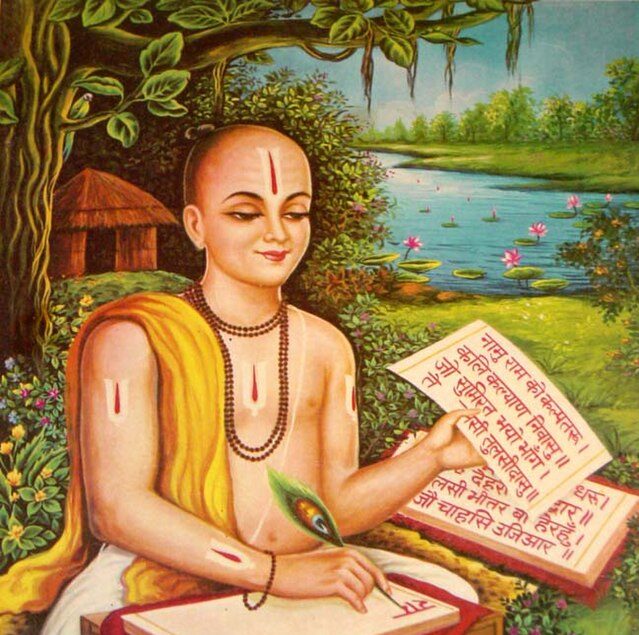
Swami Tulsidas ji Tulsidas was born after staying in his mother’s womb for twelve months.When he was born , he showed strange signs. His health and looks were like that of five year old child. He had all 32 teeth. Instead of crying after birth,he uttered “Ram -Ram”. So , he was named ‘Rambola’ , which means the one who recites name of Rama. Tulsidas birth was accompanied by bad omens, and according to astronomical predictions, there was an immediate danger to the life of his father after his birth. He was abandoned by his parents on the fourth day of his birth and was taken care of by their female servant named ‘Chuniya’. She looked after him for five years before passing away . After her death,Tulsidas led his life as an abandoned orphan and wandered from place to place and begged for food. It is believed that the goddess Parvati assumed the form of a Brahmin woman and fed Rambola every day. Excerpt from Ramcharitmanas :मैं पुनि निज गुर सन सुनी कथा सो सूकरखेत । समुझी नहिं तस बालपन तब अति रहेउँ अचेत ॥ mai puni nija gura sana sunī kathā so sūkarakheta ।samujhī nahi̐ tasa bālapana taba ati raheu̐ aceta ॥ And then, I heard the same narrative from my Guru in a Sukarkhet (Varaha Kshetra) Soron. I did not understand it then, since I was totally without cognition in childhood. Narharidas , a Vaishnav saint adopted tulsidas at the age of six . A Vaishnava ascetic of Ramananda’s monastic order who is believed to be the fourth disciple of Ramananda,or alternately, the disciple of Anantacharya . He was given the title of ‘Tulsidas’ and the ‘Virakta Diksha’ (initiation of renunciation). At the age of seven the sacred thread ceremony called ‘Upanayana’ was performed for him at Ayodhya.Tulsidas heard the first narration of Ramayana from his guru in Varaha kshetra Soron (in kashganj ,Uttar Pradesh) . According to popular belief Tulsidas was married to Ratnavali. He was so passionately attached to her that he could not bear a separation of one day from her .Once she went to her father’s house without informing Tulsidas about her visit. Out of attachment Tulsidas went to see her at her father’s house at night.His wife felt it as a humiliation and said to Tulsidas :“My body is but a network of flesh and bones. If you would develop for Lord Rama even half the love that you have for my filthy body, you would certainly cross the ocean of Samsara and attain immortality and eternal bliss”. Tulsidas left her at the very moment and lived as an ascetic . He then moved to Varanasi , and studied Sanskrit literature, scriptures, Vedangas, Jyotish and schools of Hindu Philosophy. He travelled to Prayag, Ayodhya, and Chitrakuta and several pilgrimage for the next fourteen to fifteen years. During his travel he went to far off places including the four Dham – Badrinath,Dwarka ,Puri and Rameshwaram. He also went to Lake Mansarovar (presently in Tibet).It is believed that here he had a sight of Kakabhushundi ( the crow who is one of the four narrators in Ramcharitmanas). Some scholars believe the story of his marriage to be a later interpolation in the lifestory of tulsidas. They believe that he was a bachelor throughout his life. The detailed account of Tulsidas meeting Hanuman and Ram is given by Priyadas ( a contemporary poet and saint ) in his work ‘Bhaktirasabodhini’.Tulsidas used to visit outside Varanasi for his morning nature call . When he returned he offered the remaining water to a tree , which was the residence of a Pret (a type of ghost) . This would quench his thirst. Pleased by this act of Tulsidas ,the ghost asked Tulsidas to ask him a boon. Tulsidas moved to Chitrakoot and lived in an ashram at Ramghat. While performing circumambulation of Kamadgiri mountain ,Tulsidas saw two princes sitting on horseback passing from there. He could not recognise them and moved ahead. The next day Hanuman told him that they were Rama and Lakshman . Tulsidas repented of his act of ignorance. He was pacified when Hanuman told him that the two brothers would again visit him the next morning.The next day , two young boys visited him and asked him to apply the tilak of sandalwood paste on their forehead. This time Tulsidas recognised them and had full vision of Rama. He was enchanted by their looks and lost his senses. Tulsidas was so charmed that he forgot about the sandalwood. Rama took the sandalwood paste and put a Tilaka himself on his forehead and Tulsidas’ forehead before disappearing. In reference to this incident there is a famous proverb:चित्रकूट के घाट पर हुई संतन की भीर तुलसीदास चन्दन घिसे तिलक देते रघुबीर. Chitrakoot ke ghat par hui santan ki bheed tulsidas chandan ghise tilak kare raghubeer Source: mahaprasada,

Swami Tulsidas ji Read Post »

Sant Kabir ji
Mahatmas

Sant Kabir

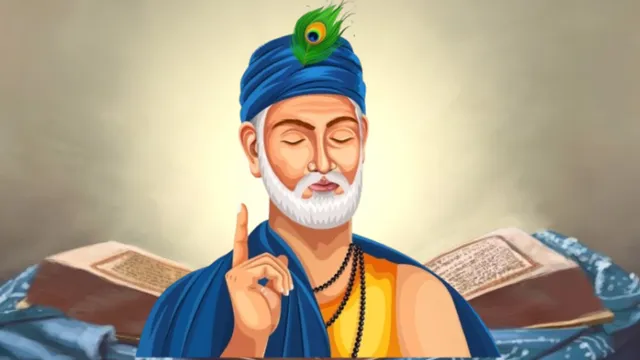
Sant Kabir “Reading books everyone died, none became wise.One who reads the word of love alone becomes truly wise.” Teachings and Philosophy of Sant Kabir. Sant Kabir’s teachings are immortalized in his dohas (couplets), which are still widely recited across India. His philosophy emphasizes the equality of all human beings and the futility of rituals and religious dogma. Kabir’s poetry speaks directly to the soul, advocating for a direct connection with God through love and inner purity. He famously said, “Pothi Padh Padh Jag Mua, Pandit Bhayo Na Koye. Dhai Aakhar Prem Ka, Padhe So Pandit Hoye,” which translates to, “Reading countless scriptures won’t make you wise; only the understanding of love can make one truly knowledgeable.” Kabir’s influence extended beyond his lifetime through disciples known as “Kabir Panthis,” who continued spreading his teachings across different regions of India. His ideas also inspired other prominent Bhakti saints like Guru Nanak Dev Ji and Tulsidas. Today, Sant Kabir Das continues to be revered as one of India’s greatest mystic poets. His teachings resonate with seekers seeking spiritual enlightenment and liberation from societal norms. His impact on shaping the Bhakti movement cannot be understated; it remains an integral part of Indian cultural heritage. During this time he had a number of fundamental spiritual experiences which convinced him of the truth of the “Sanatana Dharma” – the ancient spiritual knowledge and practice of India. Impact on Society. Sant Kabir’s influence was not confined to his lifetime; it continues to shape spiritual movements in India and beyond. He challenged the rigid social hierarchies of his time and spoke out against both Hindu and Muslim orthodoxy. His message of love and unity transcended religious boundaries, making him a figure of universal respect. Even today, Sant Kabir’s teachings are a source of inspiration for millions, particularly the Kabirpanthis, who continue to follow his path of devotion, simplicity, and spiritual insight. Kabir challenged caste discrimination, untouchability, and sectarian divisions. He was born into a Muslim weaver family but preached the oneness of all humans beyond caste and religion. His teachings empowered the poor and marginalized, encouraging self-respect and spiritual independence. He criticized meaningless rituals, idol worship, and religious dogmas of both Hinduism and Islam. Advocated inner devotion (bhakti) and direct experience of God instead of relying on priests or mullahs. Promoted Nirguna Bhakti — devotion to a formless God. ‘ Kabir remains a symbol of unity, simplicity, and truth. His messages are still relevant in today’s world torn by religious intolerance, inequality, and spiritual confusion. Kabir emphasized that true worship lies not in external rituals or idol worship but in developing an intimate and personal relationship with the divine. He spoke against blind adherence to religious customs and rituals, highlighting the importance of inner spirituality and love for all beings. Sant Kabir Das, the 15th-century mystic poet and philosopher, played a crucial role in shaping the Bhakti movement in India. His love, devotion, and unity teachings have profoundly impacted society and continue to resonate with people across generations. Inspiration Sant Kabir is one of India’s greatest spiritual poets and reformers whose teachings continue to inspire people even after 600 years. Born in a humble weaver family, Kabir rose above all religious and social boundaries to spread the message of truth, love, unity, and inner devotion. source: kabirpanthishadi,

Sant Kabir Read Post »

images 2026 03 07T145552.298
Mahatmas

Swami Bhramananda Saraswati

Swami Bhramananda Saraswati Ji The goal of this website is to highlight the broad & unique tradition of which this master was a part It has also been suggested that Swami Brahmanand Saraswati’s guru was also the guru of Shri Dada of Aligarh (1854-1910) It is to be remembered that back in 1936, before being offered the post of Shankaracharya, Maharaj Shri had had built the Shri Brahmavidya Niketan and the Shri Brahmanandeshwar Mahadev Ji Mandir (a temple) in Choti Gaibi, Varanasi, in rememberance of his own venerable Shri Gurudeva. The beautiful appearance of the ashram and mandir (temple) etc, was made on account of the management and another major ashram in Siddhi Giri Baag, Varanasi, was built by the name of Shri Brahma Niwas. This, the two other buildings and one at Bahadur Ganj, Prayag (Allahabad) were all connected, and these properties were placed under the protection of the Shri 1008 Swami Krishnanand Saraswati Trust, whereof mention is made in Maharaj Shri’s final will.Pujya Swami Gyananand Ji Maharaj, the senior founder of Bharat Dharma Mahamandala, had long wished for the restoration of the peeth so he proceeded to Sidhhigiri Baaga hoping for the fulfilment of this desire. The glory of the Upanishads lies in the teachings on non-duality found in their pages Apparently, it was first suggested in 1908 that Swami Brahmananda take the position of Shankaracharya of Jyotirmath, but it was not until April 1941 that he finally accepted the post which had been vacant for over a century. Prior to 1776 Jyotirmath appears to have had an unbroken succession of Shankaracharyas going back to at least before 1500. In more recent years the names of the Shankaracharyas before Guru Dev are recorded to have been:-When he was thirteen years old, he was married to a girl named Rakhumai. But Rakhumai had severe asthama and so Shri Tukaram’s parents got him married again. The name of his second wife was Jijabai. Shankaracharya Swami Brahmanand Saraswati was highly respected for his knowledge and wisdom. Swamiji had traveled widely across India sharing his knowledge and reviving religious and spiritual traditions wherever he went. At the age of fourteen, he became a disciple of Swami Krishnananda Saraswati. Swamiji took sanyasa at the age of 33. For many years they lived mainly in forests, in caves. He became Shankaracharya of Jyotir Math in 1941 at the age of 70. The post of Shankaracharya in Jyotirmath was vacant for 165 years. When efforts were made to renovate this most important Peetha, Swami Brahmananda Saraswati was accepted by all as the ideal person to fill the post. After much persuasion he finally allowed himself to be consecrated as Shankaracharya of Jyotir Math in April 1941. Source: Bhaktibharat , blogger

Swami Bhramananda Saraswati Read Post »

sant tukaramji devotional india
Mahatmas

Sant Tukaram ji

Sant Tukaram ji For four years, he managed the responsibility of house and business successfully. First his mother and father died and then elder brother’s wife died. After the death of his wife, elder brother Savji who was already disinterested became an ascetic and he left the house and went for pilgrimage. Now, even Tukaram’s heart broke and he lost all enthusiasm in the household. With this, the business became slow and taking advantage of this, the debtors stopped returning his money and the creditors kept asking him for money. This way, the business got affected and the time for bankruptcy came. Around two times, his in-laws helped him but once the business was affected it never came back on track. All his efforts did not pay off. To add to his misery, Pune regions had a severe famine. Many people died fluttering without food and water. Seeing all these, Tukaram’s mind filled with sorrow. Just then, his troubles reached its pinnacle. His first wife died and then, his son. But after all these difficulties, Tukaram came out as an image of asceticism. He handed over his younger brother his share and became engrossed in singing bhajans and praying. After great difficulties, Sant Tukaram’s mind and heart became absorbed in reciting the Lord’s name forever. By the grace of God, whenever he used to sit down for kirtan with people, he used to start saying Abhang Vani on its own. Seeing the greatest sense in his creations, great Saints and Brahmins respected him and started bowing to him. With the fame of Sant Tukaram, many people were upset. Of this, one Brahmin who was a great scholar of Vedas, felt very bad that a person like Tukaram of the other caste sings Abhangs and all the castes including Brahmins believe him and respect him.That is why he told a hakim (a learned man) to order Tukaram to leave Dehu and go away. At this, Tukaram went to Rameshwar Bhatt and told him, “The Abhangs which I say are said by the orders of Lord Pandurang. You are a Brahmin; with your orders I will stop creating Abhangs but what about those Abhangs which are already made and which are kept written?” at this the Pandit asked him to throw away those Abhangs in the river. On the second day of dark fortnight of Chaitra month in Samvat (the year of Vikram era) 1706, Shri Tukaramji left for heavenly abode. No one saw his dead body, actually he did not die. Lord personally took him to Vaikuntha along with his physical body. This way, after going to Vaikunthdham, Shri Tukaram appeared in front of his devotees. There are many monuments of Tukaram Maharaj in Dehu and Lohgaon. His Abhang –Vani is a precious and eternal religious asset. Shri Tukaram lives within his devotees through his Abhangs. Shri Tukaram said, “There cannot be anything pure in his world that is created by the Creator. Just like water in ice and yarn in cloth, God is contained in this whole universe and that is why to consider anything impure in this world is an insult to God.” Sant Tukaram also said, “Where there is a meeting of God, saints and prayers, there is the real Triveni Sangam. According to him, even Brahma cannot describe the happiness of Satsang. Source: sagarworld

Sant Tukaram ji Read Post »

neem karoli baba ji devotional
Mahatmas

Shri Neem Karoli Baba

Shri Neem Karoli Baba The Establishment of Ashrams Maharaj-ji established numerous ashrams across India, with the most prominent being Kainchi Dham near Nainital. These ashrams served as centers for spiritual growth, meditation, and selfless service. The serene ambiance and the spiritual energy of these places attracted devotees seeking solace and enlightenment.Kainchi Dham, in particular, became a spiritual hub where Maharaj-ji met countless devotees and imparted his teachings. It remains a sacred site visited by thousands annually, including renowned personalities like Steve Jobs, Mark Zuckerberg, and Julia Roberts, who credit their spiritual journeys to Maharaj-ji’s blessings. Teachings of Neem Karoli Baba Neem Karoli Baba’s teachings were simple yet profound, rooted in universal truths that resonate with people from all walks of life. Here are some core principles: Love and Compassion: Maharaj-ji often emphasized the power of unconditional love and compassion. He believed that loving others selflessly was the highest form of worship. Service to Humanity: He advocated for seva (selfless service) as a path to spiritual growth. Serving others with humility and without expectation was a recurring theme in his guidance. Faith and Devotion: Maharaj-ji inspired his devotees to cultivate unwavering faith in God and practice devotion through simple acts of prayer, meditation, and surrender. Simplicity: He lived an austere life, teaching that spiritual fulfillment does not require material wealth but a pure heart and a simple approach to life. Miracles and Divine Acts Neem Karoli Baba was renowned for performing miracles that strengthened the faith of his followers. From healing the sick to appearing in multiple places simultaneously, his divine acts were a testament to his spiritual powers. However, Maharaj-ji often downplayed these occurrences, redirecting attention to the importance of spiritual practice and love. Neem Karoli Baba’s influence extended far beyond India, touching the lives of global icons. Steve Jobs visited Kainchi Dham in the 1970s, seeking spiritual guidance during a challenging phase in his life. Inspired by the teachings of Maharaj-ji, Jobs later recommended the journey to Mark Zuckerberg, who visited the ashram before the significant growth of Facebook. Actress Julia Roberts also embraced Maharaj-ji’s philosophy after reading about him, finding profound inspiration in his teachings on love and devotion. Neem Karoli Baba left his mortal body in 1973, yet his presence continues to be felt by devotees worldwide. His teachings are preserved in the hearts of his followers and through the ongoing activities of the ashrams he established. Books like Miracle of Love by Ram Dass, one of Maharaj-ji’s closest disciples, serve as timeless tributes, capturing his essence and wisdom. The life and teachings of Neem Karoli Baba remain a beacon of divine wisdom, offering solace and inspiration in a chaotic world. His emphasis on love, service, and devotion transcends religious and cultural boundaries, uniting people in the pursuit of spiritual growth. For those who seek guidance on the path of love and selflessness, Maharaj-ji’s teachings provide an eternal source of light and peace. Source: kainchidham tours,

Shri Neem Karoli Baba Read Post »

Vallabhacharya ji
Mahatmas

Shri Vallabhacharya

Shri Vallabhacharya Vallabhacharya aced all the religious scriptures like Vedas, Puranas, Smriti, Tantra and various other religious philosophies like yoga, Buddhism, Jainism and so on, at a tender age of 11. At the same age, he set out for a Bharat Parikarma, visiting remote villages, only wearing a dhoti and upvastra and offering seva to Thakorji – a form of Lord Krishna. At age 12, Mahaprabhuji reached Jagannath Puri, where the king had held a debate over four religious questions for Pandits and Acharyas. The questions included – Which is the best scripture? Who is the supreme of all gods? Which is a best mantra? And what is the best duty to perform. Most scholarly Pandits present were stumped by the questions. Unable to find answers, king turned to Mahaprabhuji, who answered all questions. Yet feeling challenged, other Pandits mocked him saying they would accept the answers if Lord Jagannath himself answered these questions, He wrote them on a piece of paper and closed the doors of the temple after placing the paper in front of the Lord Jagannath’s idol. When the doors opened the following day, the king found the same answers on the piece of paper stating that Gita is the best scripture, Lord Krishna is the supreme god, Krishna mantra is the best mantra and service to Lord Krishna is the best duty. Another victory was at the debate of Vijaynagar, where king Krushnadevray summoned his court and Pandits to delve on the opting dualism and non-dualism. Vallabhacharya was bestowed the title of ‘Jagadguru’ after establishing ‘Shuddhadvaita Bhramavad Philosophy’. During his entire lifetime he wrote many literary works including ‘Shodash Granth’ – 16 individual granths. He undertook the arduous task of familiarising people with Gita. He is said to have undertaken 3 Bharat Parikarmas and offered discourses on Bhagvad Gita at 84 locations. These locations are now popular pilgrim places amongst Vaishanavas known as ‘Chauraisi Ghat’. Devoting his entire life to Lord Krishna, he narrated epics like Madhurakshtam and Yamnashtak which are jewels of praises and prayers for Krishna and Yamunaji. Vallabhacharya laid a cornerstone for Vaishnav Sampraday and its philosophy as a way of life, with his continuous efforts to lead people to realise god by the way of spontaneous, motiveless and selfless love and devotion to Lord Krishna.

Shri Vallabhacharya Read Post »

Jagadguru Madhvacharya
Mahatmas

Madhavacharya

Madhavacharya Shri Madhava was very clever in reading and writing. Whatever he used to read once was not required to read it again. As soon as he completed three years, his father started educating him regularly. When he was five years old, he went along with his mother to a nearby place named Neyampalli where a scholar was lecturing. But unsatisfied with his lecture, Shri Madhava proved his explanation to be wrong and said the right meaning in front of everyone and the crowd present there was stunned with Shri Madhava’s knowledge. Once, he even surprised his father who was a great scholar by telling him the meaning of a word which even Nadillya did not know. His father was very happy with the knowledge of his son.When Shri Madhava was seven years old, after his initiation of sacred thread, he was sent to his guru to learn Ved- shastra. His guru’s name was Totantillya, who was one of the honored teachers of Vedic tradition of those times. Shri Madhava was not only clever in studies but also very good at sports. No one could beat him in sports and wrestling. Impressed with Shri Madhava’s brilliance especially in wrestling, his fellow students used to call him Bheem.Once, unhappy with him giving too much time towards sports activities, his teacher scolded him and tested him for his knowledge. But contrary to what his teacher had expected, Madhava answered each and every question so fluently that his guru was impressed with his knowledge. After this, his guru never objected to his playing sports. After being established as an Acharya, he always paid attention towards health. It is said that when he was more than forty years, to know the importance of healthy body, he had challenged his students of twenty years for wrestling and defeated each and every one of them. Once, when Acharya was going on the tour to Badrikashram, a group of robbers cornered him. He told his disciples, “This is not the time to get scared. The hands that can lift a stick can also lift an axe. One should not get scared of bad people, instead punish them.” Hearing this, the disciples pounced on to the robbers. Seeing this severe form of the saints, the robbers ran away to save their lives. Once while he was going on pilgrimage in the North, some soldiers of a Muslim King arrested him. The King asked him as to whether he was scared. Shri Acharya said, “Why should I get scared. The God that I pray is also your God. You call him Allah and I call him Narayan. This whole world is his state and all of us live in his state and I am going for pilgrimage through one of his states, then why should I get scared to go from his state?” The Muslim king was so impressed with his answer that he honored him in his assembly and donating him a big plot of land asked him to built an ashram over there and stay there. But Acharya Shri refused his proposal and went ahead on his pilgrimage. Shri Madhavacharya believed for a healthy mind; healthy body is a must. So, he always encouraged his disciples to exercise. When he was eleven years old, he expressed his wish to be an ascetic but due to his love for his son, his father did not permit him.  To stop him, his father pleaded him and bowed him at his feet. Shri Madhava just told him, “For a father to bow down at the feet of a son who is not an ascetic is not proper, but when you have already bowed, it shows that you have already accepted me as an ascetic.” When his mother told him that if he becomes an ascetic, who would take care of them in their old age, he said that he would not accept ascetism till they have a second son and then, surprisingly his parents had a second son the next year. After this incident, his parents were compelled to permit him for ascetism. The second son took care of his parent till the last day and then got consecrated by Shri Madhava. His name was “Vishnutirth”. After getting permission from his parents, Shri Madhava accepted ascetism by an Advait ascetic named Achyutpragya (also named Achyutpakshacharya, Achyutpreksha). After his consecration, his guru named him “Purnpragya”. Later, he was also named Anandtirth. But in the end, he became world famous with the name of Madhavacharya.

Madhavacharya Read Post »

guru nanak devji devotional
Mahatmas

Guru Nanak Dev Ji

Guru Nanak Dev Ji His instructions to Srila Rupa Gosvami and Srila Sanatana Gosvami, His discussions with Ramananda Raya, the debate with the Mayavadi sannyasi Prakashananda Sarasvati and the Vedanta Sutra, the discussion between Him and Sarvabhauma Bhattacharya are excellent sources through which we understand His teachings in detail. The Lord left only eight slokas of His instructions in writing, and they are known as the Siksastaka. All other literatures based on His teachings were extensively written by the Lord’s principal followers, the six Gosvamis of Vrindavana, and their followers. Lord Chaitanya’s Mission – The Universal Religion His mission was to preach the importance of chanting the holy names of the Lord in this age of Kali (quarrel). In this present age quarrels take place even over trifles, and therefore the shastras have recommended for this age a common platform for realization, namely chanting the holy names of the Lord. People can hold meetings to glorify the Lord in their respective languages and with melodious songs, and if such performances are executed in an offenseless manner, it is certain that the participants will gradually attain spiritual perfection without having to undergo more rigorous methods. At such meetings everyone, the learned and the foolish, the rich and the poor, the Hindus and the Muslims, the Englishmen and the Indians, and the chandalas and the brahmanas, can all hear the transcendental sounds and thus cleanse the dust of material association from the mirror of the heart. To confirm the Lord’s mission, all the people of the world will accept the holy name of the Lord as the common platform for the universal religion of mankind. Jagadguru Shri Kripalu Ji Maharaj encapsulates this profound philosophy in his kirtan: Mahāprabhu Chaitanya Hari avatārī, āpuna bhakti kare āpu murārī He says that Chaitanya Mahaprabhu is an incarnation of Shree Krishna, who appeared as His own devotee. Chaitanya Mahaprabhu was Shree Krishna embodying the divine sentiment of Radharani. Shree Chaitanya had Radharani’s complexion and the physical attributes of Lord Krishna. Radha is the epitome of Krishna-Prem. She is Krishna’s divine Energy and Her love provides divine bliss to the Lord. While Shree Krishna descended as Chaitanya Mahaprabhu to disseminate pure, unadulterated devotion to God, He had other reasons to appear. He was thoroughly intrigued by the nature of Radhaji’s love for Him. Though He is the Knower of everything, He did not know the depth, nature, and ecstasy of Radha’s selfless love (nishkam prem) because He was the object of Her devotion, and that devotion resided in Her alone. Thus, if He descended imbibing the devotional sentiments of Radharani in His heart, He could experience Her bhav and relish it. Further, Shree Krishna wondered about the sweetness and happiness that Radhaji experienced in Her love for Him. And third, He wished to know, which divine qualities induced such ecstatic devotion in Her. So, Bhagavan Shree Krishna appeared in this world as Shri Chaitanya Mahaprabhu to taste the divine love of Radharani and distribute it to all living beings. In his earthly manifestation, Chaitanya Mahaprabhu immersed Himself in divine ecstasy as an ardent devotee lost in Krishna’s glories. Sarvabhauma Bhattacharya: Transformation of a Vedic Scholar to a Bhakt.

Guru Nanak Dev Ji Read Post »