






Hari Om

Menu

Bhagavad Gita

life before matsya avatar
Bhagavad Gita

Chapter Eight

Chapter 8 Akshara Brahma Yoga The eighth chapter of the Bhagavad Gita is “Akshara Brahma Yoga”. In this chapter, Krishna reveals the importance of the last thought before death. If we can remember Krishna at the time of death, we will certainly attain him. Thus, it is very important to be in constant awareness of the Lord at all times, thinking of Him and chanting His names at all times. By perfectly absorbing their mind in Him through constant devotion, one can go beyond this material existence to the Lord’s Supreme abode. Bhagavad Gita 8.1 अर्जुन उवाच किं तद्ब्रह्म किमध्यात्मं किं कर्म पुरुषोत्तम। अधिभूतं च किं प्रोक्तमधिदैवं किमुच्यते।।8.1।। arjuna uvācha kiṁ tad brahma kim adhyātmaṁ kiṁ karma puruṣhottama adhibhūtaṁ cha kiṁ proktam adhidaivaṁ kim uchyate arjunaḥ uvācha—Arjun said; kim—what; tat—that; brahma—Brahman; kim—what; adhyātmam—the individual soul; kim—what; karma—the principle of karma; puruṣha-uttama—Shree Krishna, the Supreme Divine Personality; adhibhūtam—the material manifestation; cha—and; kim—what; proktam—is called; adhidaivam—the Lord of the celestial gods; kim—what; uchyate—is called; Translation Arjuna said, “What is Brahman? What is Adhyatma? What is action, O best among men? What is Adhibhuta declared to be? And, what is Adhidaiva said to be?” Commentary 8.1 किम् what? तत् that? ब्रह्म Brahman? किम् what? अध्यात्मम् Adhytama? किम् what? कर्म action? पुरुषोत्तम O best among men? अधिभूतम् Adhibhuta? च and? किम् what? प्रोक्तम् declared? अधिदैवम् Adhidaiva? किम् what? उच्यते is called.Commentary In the last two verses of the seventh chapter Lord Krishna had used certain philosophical and technical terms such as Adhyatma? Adhibhuta? Adhidaiva and Adhiyajna. Arjuna does not understand the meaning of these terms. So he proceeds to ask the Lord the above questions for their elucidation. Lord Krishna gives the answers succinctly to the above questions in their order. Some treat this chapter as Abhyasa Yoga because in this chapter, verses 7, 8, 10, 12, 13 and 14 deal with spiritual practices. Verse 7 treats of Karma and Bhakti Yoga combined (giving the hands to the service of humanity or society and fixing the mind on the Lord). Verse 8 deals with Abhyasa Yoga. Verses 10? 12 and 13 treat of Hatha Yoga (how to raise the lifeforce t the Ajna Chakra and the Sahasrara and the Brahmarandhra). Verse 14 treats of the easy Yoga of constant Namasmarana or remembering the names of the Lord constantly. This alone will help the spiritual aspirant to approach the Lord easily. The nature of Brahman? The individual Self (Adhyatma)? The nature of action? The nature of the objective universe or phenomena (Adhibhuta)? Knowledge of the shining ones (Adhidaiva)? and the secret of sacrifice (Adhiyajna) are described in this discourse. The perfect sage will have perfect knowledge. He will have perfect knowledge of not only the manifested Brahman but also of the transcendental Brahman and the why of the universe? etc. Bhagavad Gita 8.2 अधियज्ञः कथं कोऽत्र देहेऽस्मिन्मधुसूदन। प्रयाणकाले च कथं ज्ञेयोऽसि नियतात्मभिः।।8.2।। adhiyajñaḥ kathaṁ ko ’tra dehe ’smin madhusūdana prayāṇa-kāle cha kathaṁ jñeyo ’si niyatātmabhiḥ adhiyajñaḥ—the Lord all sacrificial performances; katham—how; kaḥ—who; atra—here; dehe—in body; asmin—this; madhusūdana—Shree Krishna, the killer of the demon named Madhu; prayāṇa-kāle—at the time of death; cha—and; katham—how; jñeyaḥ—to be known; asi—are (you); niyata-ātmabhiḥ—by those of steadfast mind Translation Who and how is Adhiyajna here in this body, O destroyer of Madhu? And how, at the time of death, are You to be known by the self-controlled? Commentary 8.2 अधियज्ञः Adhiyajna? कथम् how? कः who? अत्र here? देहे in body? अस्मिन् this? मधुसूदन O Madhusudana? प्रयाणकाले at the time of death? च and? कथम् how? ज्ञेयः knowable? असि art? नियतात्मभिः by the selfcontrolled.Commentary Arjuna put seven questions to the Lord1. What is that Brahman Is it Brahman with the Upadhis (limiting adjuncts) or Brahman without them2. Is it the aggregate of the senses or individual consciousness (PratyakChaitanya) or distinct? pure consciousness3. What is Karma Is it Yajna Or? is it distinct from Yajna4? Adhibhuta is knowledge of the Bhutas. Is this the knowledge of the elements or something else. Adhidaiva is that which is associated with the gods. Is this the meditation on the gods Or? is it the consciousness associated with the Suryamandala? etc.6. Adhiyajna is that which is associated with Yajnas or Vedic rituals. Is this the Para Brahman (Supreme Being) or any special god? Is it of the same form (Tadatmyarupa) or is it entirely nondifferent (Abheda)? Does it exist in the body or outside it If it exists in the body? Is it the intellect (Buddhi) or distinct from it? At the time of death? When the memory is lost and when the senses become cold (i.e., when they lose their vitality), how can the man of one-pointedness and of steadfast mind know the Lord, Madhusudana, Thou art all merciful. Thou hast killed Madhu and removed the miseries of the people. Even so, thou canst remove my difficulties and doubts very easily. This is nothing for Thee? The omniscient Lord. (This is the reason why Arjuna addresses the Lord by the name Madhusudana.) Bhagavad Gita 8.3 श्री भगवानुवाच अक्षरं ब्रह्म परमं स्वभावोऽध्यात्ममुच्यते। भूतभावोद्भवकरो विसर्गः कर्मसंज्ञितः।।8.3।। śhrī bhagavān uvācha akṣharaṁ brahma paramaṁ svabhāvo ’dhyātmam uchyate bhūta-bhāvodbhava-karo visargaḥ karma-sanjñitaḥ śhrī-bhagavān uvācha—the Blessed Lord said; akṣharam—indestructible; brahma—Brahman; paramam—the Supreme; svabhāvaḥ—nature; adhyātmam—one’s own self; uchyate—is called; bhūta-bhāva-udbhava-karaḥ—Actions pertaining to the material personality of living beings, and its development; visargaḥ—creation; karma—fruitive activities; sanjñitaḥ—are called Translation The Blessed Lord said, “Brahman is the Imperishable, the Supreme; its essential nature is called Self-knowledge; the offering (to the gods) that causes the existence and manifestation of beings and sustains them is called action.” Commentary 8.3 अक्षरम् imperishable? ब्रह्म Brahman? परमम् Supreme? स्वभावः (His) Nature? अध्यात्मम् Selfknowledge? उच्यते is called? भूतभावोद्भवकरः that which causes the origin and growth of beings? विसर्गः offering (to gods)? कर्मसंज्ञितः is called action.Commentary Brahman is imperishable? immutable? eternal? selfexistent? selfluminous? unchanging and allpervading. It is the source? root and womb of everything. In It all beings that are manifested live? move and have their very being. Hence? It is Paramam? the Supreme and Akshara.Its essential nature or Svabhava is Adhyatma.
Chapter Eight Read Post »

Read Bhagavad Gita Chapter Three
Bhagavad Gita

Chapter Seven

Chapter 7 Gyaan Vigyana Yoga The seventh chapter of the Bhagavad Gita is “Gyaan Vigyana Yoga “. In this chapter, Krishna reveals that he is the Supreme Truth, the principal cause and the sustaining force of everything. He reveals his illusionary energy in this material world called Maya, which is very difficult to overcome but those who surrender their minds unto Him attain Him easily. He also describes the four types of people who surrender to Him in devotion and the four kinds that don’t. Krishna confirms that He is the Ultimate Reality and those who realize this Truth reach the pinnacle of spiritual realization and unite with the Lord. Bhagavad Gita 7.1 श्री भगवानुवाच मय्यासक्तमनाः पार्थ योगं युञ्जन्मदाश्रयः। असंशयं समग्रं मां यथा ज्ञास्यसि तच्छृणु।।7.1।। śhrī bhagavān uvācha mayyāsakta-manāḥ pārtha yogaṁ yuñjan mad-āśhrayaḥ asanśhayaṁ samagraṁ māṁ yathā jñāsyasi tach chhṛiṇu śhrī-bhagavān uvācha—the Supreme Lord said; mayi—to me; āsakta-manāḥ—with the mind attached; pārtha—Arjun, the son of Pritha; yogam—bhakti yog; yuñjan—practicing; mat-āśhrayaḥ—surrendering to me; asanśhayam—free from doubt; samagram—completely; mām—me; yathā—how; jñāsyasi—you shall know; tat—that; śhṛiṇu—listen Translation The Blessed Lord said, “O Arjuna, hear how you shall, without doubt, know Me fully, with your mind intent on Me, practicing Yoga and taking refuge in Me.” Commentary 7.1 मयि on Me? आसक्तमनाः with mind intent? पार्थ O Partha? योगम् Yoga? युञ्जन् practising? मदाश्रयः taking refuge in Me? असंशयम् without doubt? समग्रम् wholly? माम् Me? यथा how? ज्ञास्यसि shall know? तत् that? श्रृणु hear.Commentary He who wishes to attain some result or reward performs the ritual known as Agnihotra or does charity? sinks wells? builds hospitals? resting places? etc.? with Sakama Bhavana (with an inner profit motive) and attains them. But the Yogi on the contrary practises Yoga with a steadfast mind and takes refuge in the Lord alone? with the mind wholly fixed on Him? on His lofty attributes such as omnipotence? omniscience? omnipresence? infinite love? beauty? grace? strength? mercy? inexhaustible wealth? ineffable splendour? pristine glory and purity.The servant of a king? though he constantly serves the king? has not got his mind fixed on him. The mind is ever fixed on his wife and children. Unlike the servant? fix your mind on Me? (the allpervading One)? and take refuge in Me alone. Practise control of the mind in accordance with the instructions given in chapter VI. Then you will know Me and My infinite attributes in full.If you sing the glory and the attributes of the Lord? you will develop love for Him and then your mind will be fixed on Him. Intense love for the Lord is real devotion. You must get full knowledge of the Self without any doubt.He who has taken refuge in the Lord? and he who is trying to fix or has fixed his mind on the Lord cannot bear the separation from the Lord even for a second. Bhagavad Gita 7.2 ज्ञानं तेऽहं सविज्ञानमिदं वक्ष्याम्यशेषतः। यज्ज्ञात्वा नेह भूयोऽन्यज्ज्ञातव्यमवशिष्यते।।7.2।। jñānaṁ te ’haṁ sa-vijñānam idaṁ vakṣhyāmyaśheṣhataḥ yaj jñātvā neha bhūyo ’nyaj jñātavyam-avaśhiṣhyate jñānam—knowledge; te—unto you; aham—I; sa—with; vijñānam—wisdom; idam—this; vakṣhyāmi—shall reveal; aśheṣhataḥ—in full; yat—which; jñātvā—having known; na—not; iha—in this world; bhūyaḥ—further; anyat—anything else; jñātavyam—to be known; avaśhiṣhyate—remains Translation I will declare to you in full this knowledge combined with realization, after knowing which nothing else remains to be known here. Commentary 7.2 ज्ञानम् indirect knowledge of Sastras? ते to thee? अहम् I? सविज्ञानम् combined with realisation (direct knowledge of the Atman through experience)? इदम् this? वक्ष्यामि will declare? अशेषतः in full? यत् which? ज्ञात्वा having known? न not? इह here? भूयः more? अन्यत् anything else? ज्ञातव्यम् what ought to be known? अवशिष्यते remains.Commentary Jnanam is Paroksha Jnanam or indirect knowledge of Brahman obtained through the study of the Upanishads. Vijnanam is Visesha Jnanam? i.e.? Aparoksha Jnanam obtained through direct Selfrealisation (intuitional wisdom).In this verse the Lord praises knowledge in order to make Arjuna follow His instruction closely with rapt attention? faith and interest. The Lord says I shall teach thee in full. You will attain to omniscience or perfect knowledge of the Self? after knowing which nothing more remains to be known here. If anyone attains the knowledge of the Self? he will know everything. That is the reason why Saunaka? the great householder? approacehd Angirasa respectfully and asked What is that? O Lord? which being known all this becomes known (Cf.XIII.11) Bhagavad Gita 7.3 मनुष्याणां सहस्रेषु कश्िचद्यतति सिद्धये। यततामपि सिद्धानां कश्िचन्मां वेत्ति तत्त्वतः।।7.3।। manuṣhyāṇāṁ sahasreṣhu kaśhchid yatati siddhaye yatatām api siddhānāṁ kaśhchin māṁ vetti tattvataḥ manuṣhyāṇām—of men; sahasreṣhu—out of many thousands; kaśhchit—someone; yatati—strives; siddhaye—for perfection; yatatām—of those who strive; api—even; siddhānām—of those who have achieved perfection; kaśhchit—someone; mām—me; vetti—knows; tattvataḥ—in truth Translation Among thousands of men, one may perchance strive for perfection; even among those successful strivers, only one may perchance know Me in essence. Commentary 7.3 मनुष्याणाम् of men? सहस्रेषु among thousands? कश्चित् some one? यतति strives? सिद्धये for perfection? यतताम् of the striving ones? अपि even? सिद्धानाम् of the successful ones? कश्चित् some one? माम् Me? वेत्ति knows? तत्त्वतः in essence.Commentary Mark how difficult it is to attain to the knowledge of the Self or to how Brahman in essence. Siddhanam literally means those who have attained to perfection (the perfected ones) but here it means only those who strive to attain perfection.Those who purchase diamonds? rubies or pearls are few. Those who study the postgraduate course are few. Even so those who attempt for Selfrealisation and who actually know the Truth in essence are few only. The liberated ones (Jivanmuktas) are rare. Real Sadhakas are also rare. The,knowledge of the Self bestows incalculable fruits on man? viz.? immortality? eternal bliss? perennial joy and everlasting peace. It is very difficult to attain to this knowledge of the Self. But a good and earnest spiritual aspirant (Sadhaka) who is endowed with a strong determination and iron resolve? and who is eipped with the four means to salvation can easily obtain the knowledge of the Self. Bhagavad Gita 7.4 भूमिरापोऽनलो वायुः खं मनो बुद्धिरेव च। अहङ्कार इतीयं मे भिन्ना प्रकृतिरष्टधा।।7.4।। bhūmir-āpo ’nalo vāyuḥ khaṁ mano buddhir eva cha

Chapter Seven Read Post »

shri Krishna Bhagavad Gita
Bhagavad Gita

Chapter Six

Chapter 6 Dhyana Yoga The sixth chapter of the Bhagavad Gita is “Dhyana Yoga”. In this chapter, Krishna reveals the “Yoga of Meditation” and how to practise this Yoga. He discusses the role of action in preparing for Meditation, how performing duties in devotion purifies one’s mind and heightens one’s spiritual consciousness. He explains in detail the obstacles that one faces when trying to control their mind and the exact methods by which one can conquer their mind. He reveals how one can focus their mind on Paramatma and unite with the God. Bhagavad Gita 6.1 श्री भगवानुवाच अनाश्रितः कर्मफलं कार्यं कर्म करोति यः। स संन्यासी च योगी च न निरग्निर्न चाक्रियः।।6.1।। śhrī bhagavān uvācha anāśhritaḥ karma-phalaṁ kāryaṁ karma karoti yaḥ sa sannyāsī cha yogī cha na niragnir na chākriyaḥ śhrī-bhagavān uvācha—the Supreme Lord said; anāśhritaḥ—not desiring; karma-phalam—results of actions; kāryam—obligatory; karma—work; karoti—perform; yaḥ—one who; saḥ—that person; sanyāsī—in the renounced order; cha—and; yogī—yogi; cha—and; na—not; niḥ—without; agniḥ—fire; na—not; cha—also; akriyaḥ—without activity Translation The Blessed Lord said: He who performs his bounden duty without depending on the fruits of his actions—he is a sannyasi and a yogi, not he who is without fire and without action. Commentary 6.1 अनाश्रितः not depending (on)? कर्मफलम् fruit of action? कार्यम् bounden? कर्म duty? करोति performs? यः who? सः he? संन्यासी Sannyasi (ascetic)? च and? योगी Yogi? च and? न not? निरग्निः without fire? न not? च and? अक्रियः without action.Commentary Actions such as Agnihotra? etc.? performed without the expectation of their fruits purify the mind and become the means to Dhyana Yoga or the Yoga of Meditation. Karyam Karma bounden duty.Niragnih without fire. He who has renounced the daily rituals like Agnihotra? which are performed with the help of fire.Akriya without action. He who has renounced austerities and other meritorious acts like building resthouses? charitable dispensaries? digging wells? feeding the poor? etc.Sannyasi he who has renounced the fruits of his actions.Yogi he who has a steady mind. These two terms are applied to him in a secondary sense only. They are not used to denote that he is in reality a Sannyasi and a Yogi.The Sannyasi performs neither Agnihotra nor other ceremonies. But simply to omit these without genuine renunciation will not make one a real Sannyasi. (Cf.V.3) Bhagavad Gita 6.2 यं संन्यासमिति प्राहुर्योगं तं विद्धि पाण्डव। न ह्यसंन्यस्तसङ्कल्पो योगी भवति कश्चन।।6.2।। yaṁ sannyāsam iti prāhur yogaṁ taṁ viddhi pāṇḍava na hyasannyasta-saṅkalpo yogī bhavati kaśhchana yam—what; sanyāsam—renunciation; iti—thus; prāhuḥ—they say; yogam—yog; tam—that; viddhi—know; pāṇḍava—Arjun, the son of Pandu; na—not; hi—certainly; asannyasta—without giving up; saṅkalpaḥ—desire; yogī—a yogi; bhavati—becomes; kaśhchana—anyone Translation Do you, O Arjuna, know that Yoga is what they call renunciation; no one indeed becomes a Yogi who has not renounced their thoughts. Commentary 6.2 यम् which? संन्यासम् renunciation? इति thus? प्राहुः (they) call? योगम् Yoga? तम् that? विद्धि know? पाण्डव O Pandava? न not? हि verily? असंन्यस्तसङ्कल्पः one who has not renounced thoughts? योगी Yogi? भवति becomes? कश्चन anyone.Commentary Sankalpa is the working of the imagining faculty of the mind that makes plans for the future and guesses the results of plans so formed. No one can become a Karma Yogi who plans and schemes and expects fruits for his actions. No devotee of action who has not renounced the thought of the fruits of his actions can become a Yogi of steady mind. The thought of the fruits will certainly make the mind unsteady.Lord Krishna eulogises Karma Yoga here because it is the means or an external aid (Bahiranga Sadhana) to Dhyana Yoga. Karma Yoga is a steppingstone to Dhyana Yoga. It leads to the Yoga of Meditation in due c Bhagavad Gita 6.3 आरुरुक्षोर्मुनेर्योगं कर्म कारणमुच्यते। योगारूढस्य तस्यैव शमः कारणमुच्यते।।6.3।। ārurukṣhor muner yogaṁ karma kāraṇam uchyate yogārūḍhasya tasyaiva śhamaḥ kāraṇam uchyate ārurukṣhoḥ—a beginner; muneḥ—of a sage; yogam—Yog; karma—working without attachment; kāraṇam—the cause; uchyate—is said; yoga ārūḍhasya—of those who are elevated in Yog; tasya—their; eva—certainly; śhamaḥ—meditation; kāraṇam—the cause; uchyate—is said Translation For a sage who wishes to attain to Yoga, action is said to be the means; for the same sage who has attained Yoga, inaction is said to be the means. Commentary 6.3 आरुरुक्षोः wishing to climb? मुनेः of a Muni or sage? योगम् Yoga? कर्म action? कारणम् the cause? उच्यते is said? योगारूढस्य of one who has attained to Yoga? तस्य of him? एव even? शमः inaction (iescence)? कारणम् the cause? उच्यते is said.Commentary For a man who cannot practise meditation for a long time and who is not able to keep his mind steady in meditation? action is a means to get himself enthroned in Yoga. Action purifies his mind and makes the mind fit for the practice of steady meditation. Action leads to steady concentration and meditation.For the sage who is enthroned in Yoga? Sama or renunciation of actions is said to be the means.The more perfectly he abstains from actions? the more steady his mind is? and the more peaceful,he is? the more easily and thoroughly does his mind get fixed in the Self. For a Brahmana there is no wealth like unto the knowledge of oneness and homogeneity (of the Self in all beings)? truthfulness? good character? steadiness? harmlessness? straightforwardness and renunciation of all actions. (Mahabharata? Santi Parva? 175.38) Bhagavad Gita 6.4 यदा हि नेन्द्रियार्थेषु न कर्मस्वनुषज्जते। सर्वसङ्कल्पसंन्यासी योगारूढस्तदोच्यते।।6.4।। yadā hi nendriyārtheṣhu na karmasv-anuṣhajjate sarva-saṅkalpa-sannyāsī yogārūḍhas tadochyate yadā—when; hi—certainly; na—not; indriya-artheṣhu—for sense-objects; na—not; karmasu—to actions; anuṣhajjate—is attachment; sarva-saṅkalpa—all desires for the fruits of actions; sanyāsī—renouncer; yoga-ārūḍhaḥ—elevated in the science of Yog; tadā—at that time; uchyate—is said Translation When a person is not attached to the sense-objects or to actions, having renounced all thoughts, then they are said to have attained Yoga. Commentary 6.4 यदा when? हि verily? न not? इन्द्रयार्थेषु in senseobjects? न not? कर्मसु in actions? अनुषज्जते is attached? सर्वसङ्कल्पसंन्यासी renouncer of all thoughts? योगारूढः one who has attained to Yoga? तदा then? उच्यते is said.Commentary Yogarudha he who is enthroned or established in Yoga. When a Yogi? by keeping the mind ite steady? by withdrawing it from the objects of the senses? has attachment

Chapter Six Read Post »

shri Krishna Bhagavad Gita
Bhagavad Gita

Chapter Five

Chapter 5 Karma Sanyasa Yoga The fifth chapter of the Bhagavad Gita is “Karma Sanyasa Yoga”. In this chapter, Krishna compares the paths of renunciation in actions (Karma Sanyas) and actions with detachment (Karma Yoga) and explains that both are means to reach the same goal and we can choose either. A wise person should perform his/her worldly duties without attachment to the fruits of his/her actions and dedicate them to God. This way they remain unaffected by sin and eventually attain liberation. Bhagavad Gita 5.1 अर्जुन उवाच संन्यासं कर्मणां कृष्ण पुनर्योगं च शंससि। यच्छ्रेय एतयोरेकं तन्मे ब्रूहि सुनिश्िचतम्।।5.1।। arjuna uvācha sannyāsaṁ karmaṇāṁ kṛiṣhṇa punar yogaṁ cha śhansasi yach chhreya etayor ekaṁ tan me brūhi su-niśhchitam arjunaḥ uvācha—Arjun said; sanyāsam—renunciation; karmaṇām—of actions; kṛiṣhṇa—Shree Krishna; punaḥ—again; yogam—about karm yog; cha—also; śhansasi—you praise; yat—which; śhreyaḥ—more beneficial; etayoḥ—of the two; ekam—one; tat—that; me—unto me; brūhi—please tell; su-niśhchitam—conclusively Translation Arjuna said, “O Krishna, you praise renunciation of actions and also yoga. Please tell me conclusively which is better of the two.” Commentary 5.1 संन्यासम् renunciation? कर्मणाम् of actions? कृष्ण O Krishna? पुनः again? योगम् Yoga? च and? शंससि (Thou) praisest? यत् which? श्रेयः better? एतयोः of these two? एकम् one? तत् that? मे to me? ब्रूहि tell? सुनिश्चितम् conclusively.Commentary Thou teachest renunciation of actions and also their performance. This has confused me. Tell decisively now which is better. It is not possible for a man to resort to both of them at the same time. Yoga here means Karma Yoga. (Cf.III.2) Bhagavad Gita 5.2 श्री भगवानुवाच संन्यासः कर्मयोगश्च निःश्रेयसकरावुभौ। तयोस्तु कर्मसंन्यासात्कर्मयोगो विशिष्यते।।5.2।। śhrī bhagavān uvācha sannyāsaḥ karma-yogaśh cha niḥśhreyasa-karāvubhau tayos tu karma-sannyāsāt karma-yogo viśhiṣhyate śhrī-bhagavān uvācha—the Supreme Lord said; sanyāsaḥ—renunciation; karma-yogaḥ—working in devotion; cha—and; niḥśhreyasa-karau—lead to the supreme goal; ubhau—both; tayoḥ—of the two; tu—but; karma-sanyāsāt—renunciation of actions; karma-yogaḥ—working in devotion; viśhiṣhyate—is superior Translation The Blessed Lord said, “Renunciation and the Yoga of action both lead to the highest bliss; but of the two, the Yoga of action is superior to the renunciation of action.” Commentary 5.2 संन्यासः renunciation? कर्मयोगः Yoga of action? च and? निःश्रेयसकरौ leading to the highest bliss? उभौ both? तयोः of these two? तु but? कर्मसंन्यासात् than renunciation of action? कर्मयोगः Yoga of action? विशिष्यते is superior.Commentary Sannyasa (renunciation of action) and Karma Yoga (performance of action) both lead to Moksha or liberation or the highest bliss. Though both lead to Moksha? yet of the two means of attaining to Moksha? Karma Yoga is better than mere Karma Sannyasa (renunciation of action) without the knowledge of the Self.But renunciation of actions with the knowledge of the Self is decidedly superior to Karma Yoga.Moreover? Karma Yoga is easy and is therefore suitable to all. (Cf.III.3V.5VI.46) BG 5.3 ज्ञेयः स नित्यसंन्यासी यो न द्वेष्टि न काङ्क्षति। निर्द्वन्द्वो हि महाबाहो सुखं बन्धात्प्रमुच्यते।।5.3।। jñeyaḥ sa nitya-sannyāsī yo na dveṣhṭi na kāṅkṣhati nirdvandvo hi mahā-bāho sukhaṁ bandhāt pramuchyate jñeyaḥ—should be considered; saḥ—that person; nitya—always; sanyāsī—practising renunciation; yaḥ—who; na—never; dveṣhṭi—hate; na—nor; kāṅkṣhati—desire; nirdvandvaḥ—free from all dualities; hi—certainly; mahā-bāho—mighty-armed one; sukham—easily; bandhāt—from bondage; pramuchyate—is liberated Translation He should be known as a perpetual Sannyasi who neither hates nor desires; for, free from the pairs of opposites, O mighty-armed Arjuna, he is easily freed from bondage. Commentary 5.3 ज्ञेयः should be known? सः he? नित्यसंन्यासी perpetual ascetic? यः who? न not? द्वेष्टि hates? न not? काङ्क्षति desires? निर्द्वन्द्वः one free from the pairs of opposites? हि verily? महाबाहो O mightyarmed? सुखम् easily? बन्धात् from bondage? प्रमुच्यते is set free.Commentary A man does not become a Sannyasi by merely giving up actions because of laziness or ignorance or some family arrel or calamity or unemployment. A true Sannyasi is not a hypocritical coward.The Karma Yogi who neither hates pain and the objects which give him pain? nor desires pleasure and the objects that give him pleasure? who has neither attachment nor aversion to any senseobject and who has risen above the pairs of heat and cold? joy and sorrow? success and failure? victory and defeat? gain and loss? praise and censure? honour and dishonour? should be known as a perpetual Sannyasi though he is ever engaged in action.One need not have taken Sannyasa formally but if he has the above mental attitutde? he is a perpetual Sannyasi. Mere ochrecoloured robe cannot make one a Sannyasi. What is wanted is a pure heart with true renunciation of egoism and desires. Physical renunciation of objects is no renunciation at all. (Cf.VI.1) BG 5.4 सांख्ययोगौ पृथग्बालाः प्रवदन्ति न पण्डिताः। एकमप्यास्थितः सम्यगुभयोर्विन्दते फलम्।।5.4।। sānkhya-yogau pṛithag bālāḥ pravadanti na paṇḍitāḥ ekamapyāsthitaḥ samyag ubhayor vindate phalam sānkhya—renunciation of actions; yogau—karm yog; pṛithak—different; bālāḥ—the ignorant; pravadanti—say; na—never; paṇḍitāḥ—the learned; ekam—in one; api—even; āsthitaḥ—being situated; samyak—completely; ubhayoḥ—of both; vindate—achieve; phalam—the result Translation Children, not the wise, speak of knowledge and the Yoga of action, or the performance of action, as though they are distinct and different; he who is truly established in one, obtains the fruits of both. Commentary 5.4 सांख्ययोगौ Sankhya (knowledge) and Yoga (Yoga of action or performance of action)? पृथक् distinct? बालाः children? प्रवदन्ति speak? न not? पण्डिताः the wise? एकम् one? अपि even? आस्थितः established in? सम्यक् truly? उभयोः of both? विन्दते obtains? फलम् fruit.Commentary Children the ignorant people who have no knowledge of the Self? and who have only a theoretical knowledge of the scriptures.Children or ignorant people only say that knowledge and the performance of action are different and produce distinct and opposite results. But the wise who have the knowledge of the Self say that they produce the same result only? viz.? Moksha or liberation. He who is duly established in,one? he who truly lives in one? Sankhya or Yoga? obtains the fruits of both. Therefore there is no diversity in the result or the fruit. This is the gist of this verse. (Cf.VI.2) BG 5.5 यत्सांख्यैः प्राप्यते स्थानं तद्योगैरपि गम्यते। एकं सांख्यं च योगं च यः पश्यति स पश्यति।।5.5।। yat sānkhyaiḥ prāpyate sthānaṁ tad yogair api gamyate ekaṁ sānkhyaṁ cha yogaṁ cha yaḥ paśhyati sa paśhyati yat—what; sānkhyaiḥ—by means of karm sanyās; prāpyate—is attained; sthānam—place; tat—that; yogaiḥ—by working in devotion;

Chapter Five Read Post »

shri Krishna Bhagavad Gita.
Bhagavad Gita

Chapter Four

Chapter 4 Jnana Karma Sanyasa Yoga The fourth chapter of the Bhagavad Gita is “Jnana Karma Sanyasa Yoga”. In this chapter, Krishna glorifies the Karma Yoga and imparts the Transcendental Knowledge (the knowledge of the soul and the Ultimate Truth) to Arjuna. He reveals the reason behind his appearance in this material world. He reveals that even though he is eternal, he reincarnates time after time to re-establish dharma and peace on this Earth. His births and activities are eternal and are never contaminated by material flaws. Those persons who know and understand this Truth engage in his devotion with full faith and eventually attain Him. They do not have to take birth in this world again. Bhagavad Gita 4.1 श्री भगवानुवाच इमं विवस्वते योगं प्रोक्तवानहमव्ययम्। विवस्वान् मनवे प्राह मनुरिक्ष्वाकवेऽब्रवीत्।।4.1।। śhrī bhagavān uvācha imaṁ vivasvate yogaṁ proktavān aham avyayam vivasvān manave prāha manur ikṣhvākave ’bravīt śhrī-bhagavān uvācha—the Supreme Lord Shree Krishna said; imam—this; vivasvate—to the Sun-god; yogam—the science of Yog; proktavān—taught; aham—I; avyayam—eternal; vivasvān—Sun-god; manave—to Manu, the original progenitor of humankind; prāha—told; manuḥ—Manu; ikṣhvākave—to Ikshvaku, first king of the Solar dynasty; abravīt—instructed Translation The Blessed Lord said, “I taught this imperishable Yoga to Vivasvan; he then told it to Manu; Manu proclaimed it to Ikshvaku. Commentary 4.1 इमम् this? विवस्वते to Vivasvan? योगम् Yoga? प्रोक्तवान् taught? अहम् I? अव्ययम् imperishable? विवस्वान् Vivasvan? मनवे to Manu? प्राह taught? मनुः Manu? इक्ष्वाकवे to Ikshvaku? अब्रवीत् taught.Commentary Vivasvan means the sun. Ikshvaku was the son of Manu. Ikshvaku was the reputed ancestor of the solar dynasty of Kshatriyas.This Yoga is said to be imperishable because the result or fruit? i.e.? Moksha? that can be attained through it is imperishable.If the rulers of dominions possess a knowledge of the Yoga taught by Me in the preceding two discourses? they can protect the Brahmanas and rule their kingdom with justice. So I taught this Yoga to the Sungod in the beginning of evolution. Bhagavad Gita 4.2 एवं परम्पराप्राप्तमिमं राजर्षयो विदुः। स कालेनेह महता योगो नष्टः परन्तप।।4.2।। evaṁ paramparā-prāptam imaṁ rājarṣhayo viduḥ sa kāleneha mahatā yogo naṣhṭaḥ parantapa evam—thus; paramparā—in a continuous tradition; prāptam—received; imam—this (science); rāja-ṛiṣhayaḥ—the saintly kings; viduḥ—understood; saḥ—that; kālena—with the long passage of time; iha—in this world; mahatā—great; yogaḥ—the science of Yog; naṣhṭaḥ—lost; parantapa—Arjun, the scorcher of foes Translation This, handed down in regular succession by the royal sages, was known. This Yoga, however, has been lost here over time, O Parantapa (burner of the foes). Commentary 4.2 एवम् thus? परम्पराप्राप्तम् handed down in regular succession? इमम् this? राजर्षयः the royal sages? विदुः knew? सः this? कालेन by lapse of time? इह here? महता by long? योगः Yoga? नष्टः destroyed? परन्तप O Parantapa.Commentary The royal sages Men who were kings and at the same time sages also? learnt this Yoga.Arjuna could burn or harass his foes? like the sun? by the heat of his valour and power. Hence the name Parantapa. Bhagavad Gita 4.3 स एवायं मया तेऽद्य योगः प्रोक्तः पुरातनः। भक्तोऽसि मे सखा चेति रहस्यं ह्येतदुत्तमम्।।4.3।। sa evāyaṁ mayā te ’dya yogaḥ proktaḥ purātanaḥ bhakto ’si me sakhā cheti rahasyaṁ hyetad uttamam saḥ—that; eva—certainly; ayam—this; mayā—by me; te—unto you; adya—today; yogaḥ—the science of Yog; proktaḥ—reveal; purātanaḥ—ancient; bhaktaḥ—devotee; asi—you are; me—my; sakhā—friend; cha—and; iti—therefore; rahasyam—secret; hi—certainly; etat—this; uttamam—supreme Translation That same ancient yoga has been today taught to you by me, for you are my devotee and my friend; it is the supreme secret. Commentary 4.3 सः that? एव even? अयम् this? मया by Me? ते to thee? अद्य today? योगः Yoga? प्रोक्तः has been taught? पुरातनः ancient? भक्तः devotee? असि thou art? मे My? सखा friend? च and? इति thus? रहस्यम् secret? हि for? एतत् this? उत्तमम् best.Commentary This Yoga contains profound and subtle teachings. Hence it is the supreme secret which is revealed by the Lord. Bhagavad Gita 4.4 अर्जुन उवाच अपरं भवतो जन्म परं जन्म विवस्वतः। कथमेतद्विजानीयां त्वमादौ प्रोक्तवानिति।।4.4।। arjuna uvācha aparaṁ bhavato janma paraṁ janma vivasvataḥ katham etad vijānīyāṁ tvam ādau proktavān iti arjunaḥ uvācha—Arjun said; aparam—later; bhavataḥ—your; janma—birth; param—prior; janma—birth; vivasvataḥ—Vivasvan, the sun-god; katham—how; etat—this; vijānīyām—am I to understand; tvam—you; ādau—in the beginning; proktavān—taught; iti—thus Translation Arjuna said, “Later was Thy birth, and prior to it was the birth of Vivasvan (the Sun); how am I to understand that Thou hast taught this Yoga from the beginning?” Commentary 4.4 अपरम् later? भवतः Thy? जन्म birth? परम् prior? जन्म birth? विवस्वतः of Vivasvan? कथम् how? एतत् this? विजानीयाम् am I to understand? त्वम् Thou? आदौ in the beginning? प्रोक्तवान् taughtest? इत thus.Commentary Thy birth took place later in the hourse of Vasudeva Vivasvan or Vivasvat (the Sun) was born earlier in the beginning of evolution. How am I to believe that Thou taughtest this Yoga in the beginning to Vivasvan? and that Thou? the selfsame person? hast now taught it to me I am not able to reconcile this. Be kind enought to enlighten me? O my Lord. Bhagavad Gita 4.5 श्री भगवानुवाच बहूनि मे व्यतीतानि जन्मानि तव चार्जुन। तान्यहं वेद सर्वाणि न त्वं वेत्थ परन्तप।।4.5।। śhrī bhagavān uvācha bahūni me vyatītāni janmāni tava chārjuna tānyahaṁ veda sarvāṇi na tvaṁ vettha parantapa śhrī-bhagavān uvācha—the Supreme Lord said; bahūni—many; me—of mine; vyatītāni—have passed; janmāni—births; tava—of yours; cha—and; arjuna—Arjun; tāni—them; aham—I; veda—know; sarvāṇi—all; na—not; tvam—you; vettha—know; parantapa—Arjun, the scorcher of foes Translation The Blessed Lord said, “Many births of Mine have passed, as well as of thine, O Arjuna; I know them all, but thou knowest not, O Parantapa (scorcher of foes).” Commentary 4.5 बहूनि may? मे My? व्यतीतानि have passed away? जन्मानि births? तव thy? च and? अर्जुन O Arjuna? तानि them? अहम् I? वेद know? सर्वाणि all? न not? त्वम् thou? वेत्थ knowest? परन्तप O Parantapa.Commentary You have no intuitional knowledge. The eye of wisdom has not been opened in you on account of your past actions. So your power of vision is limited and therefore you do not know your previous births. But I know them because I am omniscient. Bhagavad Gita 4.6 अजोऽपि सन्नव्ययात्मा भूतानामीश्वरोऽपि सन्। प्रकृतिं स्वामधिष्ठाय संभवाम्यात्ममायया।।4.6।। ajo ’pi sannavyayātmā bhūtānām īśhvaro ’pi san prakṛitiṁ

Chapter Four Read Post »

shri Krishna Bhagavad Gita.
Bhagavad Gita

Chapter Three

Chapter 3 Karma Yoga The third chapter of the Bhagavad Gita is “Karma Yoga” or the “Path of Selfless Service”. Here, Lord Krishna emphasises the importance of karma in life. He reveals that it is important for every human being to engage in some sort of activity in this material world. Further, he describes the kinds of actions that lead to bondage and the kinds that lead to liberation. Those persons who continue to perform their respective duties externally for the pleasure of the Supreme, without attachment to its rewards, get liberation at the end. Bhagavad Gita 3.1 अर्जुन उवाच ज्यायसी चेत्कर्मणस्ते मता बुद्धिर्जनार्दन। तत्किं कर्मणि घोरे मां नियोजयसि केशव।।3.1।। arjuna uvācha jyāyasī chet karmaṇas te matā buddhir janārdana tat kiṁ karmaṇi ghore māṁ niyojayasi keśhava Translation Arjuna said: If Thou thinkest that knowledge is superior to action, O Krishna, why then, O Kesava, doest Thou ask me to engage in this terrible action? arjunaḥ uvācha—Arjun said; jyāyasī—superior; chet—if; karmaṇaḥ—than fruitive action; te—by you; matā—is considered; buddhiḥ—intellect; janārdana—he who looks after the public, Krishna; tat—then; kim—why; karmaṇi—action; ghore—terrible; mām—me; niyojayasi—do you engage; keśhava—Krishna, the killer of the demon named Keshi; Commentary 3.1 ज्यायसी superior? चेत् if? कर्मणः than action? ते by Thee? मता thought? बुद्धिः knowledge? जनार्दन O Janardana? तत् then? किम् why? कर्मणि in action? घोरे terrible? माम् me? नियोजयसि Thou engagest? केशव O Kesava.Commentary In verses 49? 50 and 51 of chapter II? Lord Krsihna has spoken very highly about Buddhi Yoga. He again asks Arjuna to fight. That is the reason why Arjuna is perplexed now. Bhagavad Gita 3.2 व्यामिश्रेणेव वाक्येन बुद्धिं मोहयसीव मे। तदेकं वद निश्िचत्य येन श्रेयोऽहमाप्नुयाम्।।3.2।। vyāmiśhreṇeva vākyena buddhiṁ mohayasīva me tad ekaṁ vada niśhchitya yena śhreyo ’ham āpnuyām vyāmiśhreṇa iva—by your apparently ambiguous; vākyena—words; buddhim—intellect; mohayasi—I am getting bewildered; iva—as it were; me—my; tat—therefore; ekam—one; vada—please tell; niśhchitya—decisively; yena—by which; śhreyaḥ—the highest good; aham—I; āpnuyām—may attain Translation With this seemingly perplexing speech, you seem to be confusing my understanding; therefore, tell me one certain way by which I may attain bliss. Commentary 3.2 व्यामिश्रेण perplexing? इव as it were? वाक्येन with speech? बुद्धिम् understanding? मोहयसि (Thou) confusest? इव as it were? मे my? तत् that? एकम् one? वद tell? निश्चित्य for certain? येन by which? श्रेयः bliss (the good or the highest)? अहम् I? आप्नुयाम् may attain.Commentary: Arjuna says to Lord Krishna? Teach me one of the two? knowledge or action? by which I may attain to the highest good or bliss or Moksha. (Cf.V.I). Bhagavad Gita 3.3 श्री भगवानुवाच लोकेऽस्मिन्द्विविधा निष्ठा पुरा प्रोक्ता मयानघ। ज्ञानयोगेन सांख्यानां कर्मयोगेन योगिनाम्।।3.3।। śhrī bhagavān uvācha loke’smin dvi-vidhā niṣhṭhā purā proktā mayānagha jñāna-yogena sāṅkhyānāṁ karma-yogena yoginām śhrī-bhagavān uvācha—the Blessed Lord said; loke—in the world; asmin—this; dvi-vidhā—two kinds of; niṣhṭhā—faith; purā—previously; proktā—explained; mayā—by me (Shree Krishna); anagha—sinless; jñāna-yogena—through the path of knowledge; sānkhyānām—for those inclined toward contemplation; karma-yogena—through the path of action; yoginām—of the yogis Translation The Blessed Lord said, “In this world, there is a twofold path, as I said before, O sinless one: the path of knowledge of the Sankhyas and the path of action of the Yogins.” Commentary 3.3 लोके in world? अस्मिन् in this? द्विविधा twofold? निष्ठा path? पुरा previously? प्रोक्ता said? मया by Me? अनघ O sinless one? ज्ञानयोगेन by the path of knowledge? सांख्यानाम् of the Sankhyas? कर्मयोगेन by the path of action? योगिनाम् of the Yogins.Commentary The path of knowledge of the Sankhyas (Jnana Yoga) was described by Lord Krishna in chapter II? verses 11 to 38 the path of action (Karma Yoga) from 40 to 53. Pura Prokta may also mean In the beginning of creation the twofold path was given by Me to this world. Those who are endowed with the four means and who have sharp? Subtle intellect and bold understanding are fit for Jnana Yoga. Those who have a tendency or inclination for work are fit for Karma Yoga. (The four means are discrimination? dispassion? Sixfold virtues? and longing for liberation. The sixfold virtues are control of the mind? Control of the senses? Fortitude (endurance)? turning away from the objects of the world? faith and tranquillity.)It is not possible for a man to practise the two Yogas simultaneously. Karma Yoga is a means to an end. It purifies the heart and prepares the aspirant for the reception of knowledge. The Karma Yogi should take up Jnana Yoga as soon as his heart is purified. Jnana Yoga takes the aspirant directly to the goal without any extraneous help. (Cf.V.5). Bhagavad Gita 3.4 न कर्मणामनारम्भान्नैष्कर्म्यं पुरुषोऽश्नुते। न च संन्यसनादेव सिद्धिं समधिगच्छति।।3.4।। na karmaṇām anārambhān naiṣhkarmyaṁ puruṣho ’śhnute na cha sannyasanād eva siddhiṁ samadhigachchhati na—not; karmaṇām—of actions; anārambhāt—by abstaining from; naiṣhkarmyam—freedom from karmic reactions; puruṣhaḥ—a person; aśhnute—attains; na—not; cha—and; sannyasanāt—by renunciation; eva—only; siddhim—perfection; samadhigachchhati—attains Translation Man does not reach actionlessness by not performing actions; nor does he attain perfection by mere renunciation. Commentary 3.4 न not? कर्मणाम् of actions? अनारम्भात् from nonperformance? नैष्कर्म्यम् actionlessness? पुरुषः man? अश्नुते reaches? न not? च and? संन्यसनात् from renunciation? एव only? सिद्धिम् perfection? समधिगच्छति attains.Commentary Actionlessness (Naishkarmyam) and perfection (Siddhi) are synonymous. The sage who has attained perfection or reached the state of actionlessness rests in his own essential nature as Existence, KnowledgeBliss Absolute (Satchidananda Svarupa). He has neither necessity nor desire for action as a means to an end. He has perfect satisfaction in the Self. One attains to the state of actionlessness by gaining the knowledge of the Self. If a man simply sits iet by abandoning action, you cannot say that he has attained to the state of actionlessness. His mind will be planning? scheming and speculating. Thought is real action. The sage who is free from affirmative thoughts? wishes? and likes and dislikes? Who has the knowledge of the Self can be said to have attained to the state of actionlessness one can reach perfection or freedom from action or knowledge of the Self by mere renunciation or by simply giving up activities without possessing the knowledge of the Self. (Cf.XVIII.49). Bhagavad Gita 3.5 न हि कश्िचत्क्षणमपि जातु तिष्ठत्यकर्मकृत्। कार्यते

Chapter Three Read Post »

shri Krisna Bhagavad Gita 3
Bhagavad Gita

Chapter Two

Chapter 2 Sankhya Yoga The second chapter of the Bhagavad Gita is “Sankhya Yoga”. This is the most important chapter of the Bhagavad Gita as Lord Krishna condenses the teachings of the entire Gita in this chapter. This chapter is the essence of the entire Gita. “Sankhya Yoga” can be categorized into 4 main topics – 1. Arjuna completely surrenders himself to Lord Krishna and accepts his position as a disciple and Krishna as his Guru. He requests Krishna to guide him on how to dismiss his sorrow. 2. Explanation of the main cause of all grief, which is ignorance of the true nature of Self. 3. Karma Yoga – the discipline of selfless action without being attached to its fruits. 4. Description of a Perfect Man – One whose mind is steady and one-pointed. Bhagavad Gita 2.1 सञ्जय उवाच तं तथा कृपयाऽविष्टमश्रुपूर्णाकुलेक्षणम्। विषीदन्तमिदं वाक्यमुवाच मधुसूदनः।।2.1।। sañjaya uvācha taṁ tathā kṛipayāviṣhṭamaśhru pūrṇākulekṣhaṇam viṣhīdantamidaṁ vākyam uvācha madhusūdanaḥ sañjayaḥ uvācha—Sanjay said; tam—to him (Arjun); tathā—thus; kṛipayā—with pity; āviṣhṭam—overwhelmed; aśhru-pūrṇa—full of tears; ākula—distressed; īkṣhaṇam—eyes; viṣhīdantam—grief-stricken; idam—these; vākyam—words; uvācha—said; madhusūdanaḥ—Shree Krishn, slayer of the Madhu demon Translation Sanjaya said: To him, who was thus overcome with pity, despondent, with eyes full of tears and agitated, Madhusudana (the destroyer of Madhu) or Krishna spoke these words. Commentary 2.1 तम् to him? तथा thus? कृपया with pity? आविष्टम् overcome? अश्रुपूर्णाकुलेक्षणम् with eyes filled with tears and agitated? विषीदन्तम् despondent? इदम् this? वाक्यम् speech? उवाच spoke? मघुसूदनः Madhusudana.No commentary. Bhagavad Gita 2.2 श्री भगवानुवाच कुतस्त्वा कश्मलमिदं विषमे समुपस्थितम्। अनार्यजुष्टमस्वर्ग्यमकीर्तिकरमर्जुन।।2.2।। śhrī bhagavān uvācha kutastvā kaśhmalamidaṁ viṣhame samupasthitam anārya-juṣhṭamaswargyam akīrti-karam arjuna śhrī-bhagavān uvācha—the Supreme Lord said; kutaḥ—wherefrom; tvā—to you; kaśhmalam—delusion; idam—this; viṣhame—in this hour of peril; samupasthitam—overcome; anārya—crude person; juṣhṭam—practiced; aswargyam—which does not lead to the higher abodes; akīrti-karam—leading to disgrace; arjuna—Arjun Translation The Blessed Lord said, “From whence has this perilous strait come upon you, this dejection which is unworthy of you, disgraceful, and which will close the gates of heaven upon you, O Arjuna?” Commentary 2.2 कुतः whence? त्वा upon thee? कश्मलम् dejection? इदम् this? विषमे in perilous strait? समुपस्थितम् comes? अनार्यजुष्टम् unworthy (unaryanlike)? अस्वर्ग्यम् heavenexcluding? अकीर्तिकरम् disgraceful? अर्जुन O Arjuna.No commentary. Bhagavad Gita 2.3 क्लैब्यं मा स्म गमः पार्थ नैतत्त्वय्युपपद्यते। क्षुद्रं हृदयदौर्बल्यं त्यक्त्वोत्तिष्ठ परन्तप।।2.3।। klaibyaṁ mā sma gamaḥ pārtha naitat tvayyupapadyate kṣhudraṁ hṛidaya-daurbalyaṁ tyaktvottiṣhṭha parantapa klaibyam—unmanliness; mā sma—do not; gamaḥ—yield to; pārtha—Arjun, the son of Pritha; na—not; etat—this; tvayi—to you; upapadyate—befitting; kṣhudram—petty; hṛidaya—heart; daurbalyam—weakness; tyaktvā—giving up; uttiṣhṭha—arise; param-tapa—conqueror of enemies Translation Do not yield to impotence, O Arjuna, son of Pritha. It does not befit you. Cast off this mean weakness of the heart! Stand up, O conqueror of foes! Commentary 2.3 क्लैब्यम् impotence? मा स्म गमः do not get? पार्थ O Partha? न not? एतत् this? त्वयि in thee? उपपद्यते is fitting? क्षुद्रम् mean? हृदयदौर्बल्यम् weakness of the heart? त्यक्त्वा having abandoned? उत्तिष्ठ stand up? परन्तप O scorcher of the foes.No commentary. Bhagavad Gita 2.4 अर्जुन उवाच कथं भीष्ममहं संख्ये द्रोणं च मधुसूदन। इषुभिः प्रतियोत्स्यामि पूजार्हावरिसूदन।।2.4।। arjuna uvācha kathaṁ bhīṣhmam ahaṁ sankhye droṇaṁ cha madhusūdana iṣhubhiḥ pratiyotsyāmi pūjārhāvari-sūdana arjunaḥ uvācha—Arjun said; katham—how; bhīṣhmam—Bheeshma; aham—I; sankhye—in battle; droṇam—Dronacharya; cha—and; madhu-sūdana—Shree Krishn, slayer of the Madhu demon; iṣhubhiḥ—with arrows; pratiyotsyāmi—shall I shoot; pūjā-arhau—worthy of worship; ari-sūdana—destroyer of enemies Translation Arjuna said, “O Madhusudana, how can I fight in battle with arrows against Bhishma and Drona, who are worthy of being worshipped, O destroyer of enemies?” Commentary 2.4 कथम् how? भीष्मम् Bhishma? अहम् I? संख्ये in battle? द्रोणम् Drona? च and? मधुसूदन O Madhusudana? इषुभिः with arrows? प्रतियोत्स्यामि shall fight? पूजार्हौ worthy to be worshipped? अरिसूदन O destroyer of enemies.No commentary. Bhagavad Gita 2.5 गुरूनहत्वा हि महानुभावान् श्रेयो भोक्तुं भैक्ष्यमपीह लोके। हत्वार्थकामांस्तु गुरूनिहैव भुञ्जीय भोगान् रुधिरप्रदिग्धान्।।2.5।। gurūnahatvā hi mahānubhāvān śhreyo bhoktuṁ bhaikṣhyamapīha loke hatvārtha-kāmāṁstu gurūnihaiva bhuñjīya bhogān rudhira-pradigdhān gurūn—teachers; ahatvā—not killing; hi—certainly; mahā-anubhāvān—noble elders; śhreyaḥ—better; bhoktum—to enjoy life; bhaikṣhyam—by begging; api—even; iha loke—in this world; hatvā—killing; artha—gain; kāmān—desiring; tu—but; gurūn—noble elders; iha—in this world; eva—certainly; bhuñjīya—enjoy; bhogān—pleasures; rudhira—blood; pradigdhān—tainted with Translation Better it is, indeed, in this world to accept alms than to slay the most noble teachers. But if I were to kill them, even in this world, all my enjoyments of wealth and fulfilled desires would be stained with their blood. Commentary 2.5 गुरून् the Gurus (teachers)? अहत्वा instead of slaying? हि indeed? महानुभावान् most noble? श्रेयः better? भोक्तुम् to eat? भैक्ष्यम् alms? अपि even? इह here? लोके in the world? हत्वा having slain? अर्थकामान् desirous of wealth? तु indeed? गुरून् Gurus? इह here? एव also? भुञ्जीय enjoy? भोगान् enjoyments? रुधिरप्रदिग्धान् stained with blood.No commentary. Bhagavad Gita 2.6 न चैतद्विद्मः कतरन्नो गरीयो यद्वा जयेम यदि वा नो जयेयुः। यानेव हत्वा न जिजीविषाम स्तेऽवस्थिताः प्रमुखे धार्तराष्ट्राः।।2.6।। na chaitadvidmaḥ kataranno garīyo yadvā jayema yadi vā no jayeyuḥ yāneva hatvā na jijīviṣhāmas te ’vasthitāḥ pramukhe dhārtarāṣhṭrāḥ na—not; cha—and; etat—this; vidmaḥ—we know; katarat—which; naḥ—for us; garīyaḥ—is preferable; yat vā—whether; jayema—we may conquer; yadi—if; vā—or; naḥ—us; jayeyuḥ—they may conquer; yān—whom; eva—certainly; hatvā—after killing; na—not; jijīviṣhāmaḥ—we desire to live; te—they; avasthitāḥ—are standing; pramukhe—before us; dhārtarāṣhṭrāḥ—the sons of Dhritarashtra Translation I can hardly tell which would be better, that we should conquer them or that they should conquer us. Even the sons of Dhritarashtra, whom we do not wish to slay, stand facing us. Commentary 2.6 न not? च and? एतत् this? विद्मः (we) know? कतरत् which? नः for us? गरीयः better? यत् that? वा or? जयेम we should coner? यदि if? वा or? नः us? जयेयुः they should coner? यान् whom? एव even? हत्वा having slain? न not? जिजीविषामः we wish to live? ते those? अवस्थिताः (are) standing? प्रमुखे in face? धार्तराष्ट्राः sons of Dhritarashtra.No commentary. Bhagavad Gita 2.7 कार्पण्यदोषोपहतस्वभावः पृच्छामि त्वां धर्मसंमूढचेताः। यच्छ्रेयः स्यान्निश्िचतं ब्रूहि तन्मे शिष्यस्तेऽहं शाधि मां त्वां प्रपन्नम्।।2.7।। kārpaṇya-doṣhopahata-svabhāvaḥ pṛichchhāmi tvāṁ dharma-sammūḍha-chetāḥ yach-chhreyaḥ syānniśhchitaṁ brūhi tanme śhiṣhyaste ’haṁ śhādhi māṁ tvāṁ prapannam kārpaṇya-doṣha—the flaw of cowardice; upahata—besieged; sva-bhāvaḥ—nature; pṛichchhāmi—I am asking; tvām—to you; dharma—duty; sammūḍha—confused; chetāḥ—in heart; yat—what; śhreyaḥ—best; syāt—may be; niśhchitam—decisively; brūhi—tell; tat—that; me—to me; śhiṣhyaḥ—disciple; te—your; aham—I; śhādhi—please instruct; mām—me; tvām—unto you; prapannam—surrendered Translation My heart is overpowered by the taint of pity; my mind is

Chapter Two Read Post »

shri krishna Bhagavad Gita
Bhagavad Gita, vedas

Chapter One

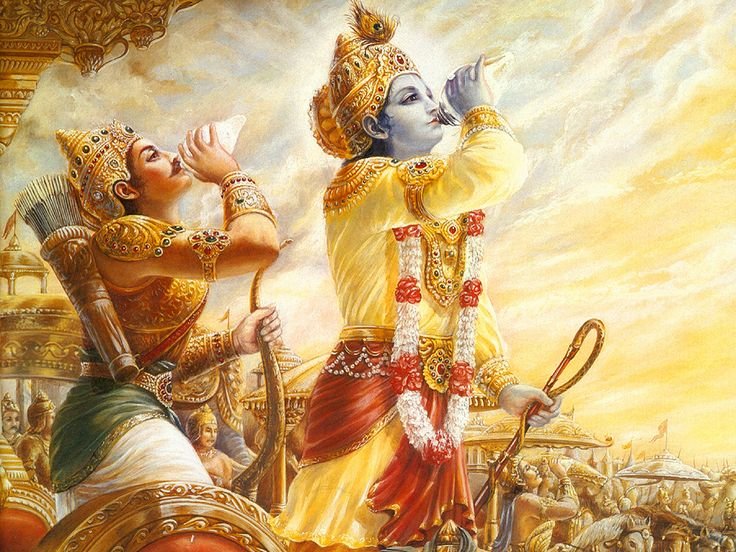
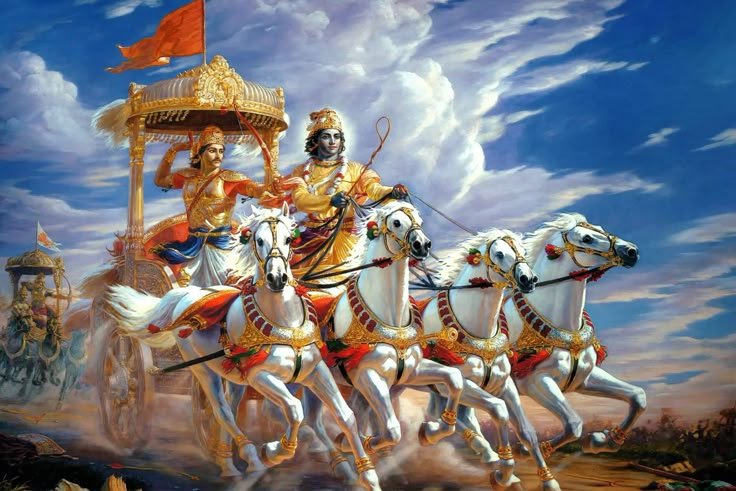
Chapter 1 Arjuna Visada Yoga The first chapter of the Bhagavad Gita – “Arjuna Vishada Yoga” introduces the setup, the setting, the characters and the circumstances that led to the epic battle of the Mahabharata, fought between the Pandavas and the Kauravas. It outlines the reasons that led to the revelation of the Bhagavad Gita. As both armies stand ready for the battle, the mighty warrior Arjuna, on observing the warriors on both sides, becomes increasingly sad and depressed due to the fear of losing his relatives and friends and the consequent sins attributed to killing his own relatives. So, he surrenders to Lord Krishna, seeking a solution. Thus, follows the wisdom of the Bhagavad Gita. Bhagavad Gita 1.1 धृतराष्ट्र उवाच धर्मक्षेत्रे कुरुक्षेत्रे समवेता युयुत्सवः। मामकाः पाण्डवाश्चैव किमकुर्वत सञ्जय।।1.1।। dhṛitarāśhtra uvācha dharma-kṣhetre kuru-kṣhetre samavetā yuyutsavaḥ māmakāḥ pāṇḍavāśhchaiva kimakurvata sañjaya dhṛitarāśhtraḥ uvācha—Dhritarashtra said; dharma-kṣhetre—the land of dharma; kuru-kṣhetre—at Kurukshetra; samavetāḥ—having gathered; yuyutsavaḥ—desiring to fight; māmakāḥ—my sons; pāṇḍavāḥ—the sons of Pandu; cha—and; eva—certainly; kim—what; akurvata—did they do; sañjaya—Sanjay Translation Dhritarashtra said, “What did my people and the sons of Pandu do when they had assembled together, eager for battle, on the holy plain of Kurukshetra, O Sanjaya?” Commentary 1.1 धर्मक्षेत्रे on the holy plain? कुरुक्षेत्रे in Kurukshetra? समवेताः assembled together? युयुत्सवः desirous to fight? मामकाः my people? पाण्डवाः the sons of Pandu? च and? एव also? किम् what? अकुर्वत did do? सञ्जय O Sanjaya.Commentary Dharmakshetra — that place which protects Dharma is Dharmakshetra. Because it was in the land of the Kurus? it was called Kurukshetra. Sanjaya is one wh o has cornered likes and dislikes and who is impartial. Bhagavad Gita 1.2 सञ्जय उवाच दृष्ट्वा तु पाण्डवानीकं व्यूढं दुर्योधनस्तदा। आचार्यमुपसङ्गम्य राजा वचनमब्रवीत्।।1.2।। sañjaya uvācha dṛiṣhṭvā tu pāṇḍavānīkaṁ vyūḍhaṁ duryodhanastadā āchāryamupasaṅgamya rājā vachanamabravīt sanjayaḥ uvācha—Sanjay said; dṛiṣhṭvā—on observing; tu—but; pāṇḍava-anīkam—the Pandava army; vyūḍham—standing in a military formation; duryodhanaḥ—King Duryodhan; tadā—then; āchāryam—teacher; upasaṅgamya—approached; rājā—the king; vachanam—words; abravīt—spoke Translation Sanjaya said: Having seen the army of the Pandavas drawn up in battle array, King Duryodhana approached his teacher, Drona, and spoke these words. Commentary 1.2 दृष्ट्वा having seen? तु indeed? पाण्डवानीकम् the army of the Pandavas? व्यूढम् drawn up in battlearray? दुर्योधनः Duryodhana? तदा then? आचार्यम् the teacher? उपसङ्गम्य having approached? राजा the king? वचनम् speech? अब्रवीत् said.No Commentary. Bhagavad Gita 1.3 पश्यैतां पाण्डुपुत्राणामाचार्य महतीं चमूम्। व्यूढां द्रुपदपुत्रेण तव शिष्येण धीमता।।1.3।। paśhyaitāṁ pāṇḍu-putrāṇām āchārya mahatīṁ chamūm vyūḍhāṁ drupada-putreṇa tava śhiṣhyeṇa dhīmatā paśhya—behold; etām—this; pāṇḍu-putrāṇām—of the sons of Pandu; āchārya—respected teacher; mahatīm—mighty; chamūm—army; vyūḍhām—arrayed in a military formation; drupada-putreṇa—son of Drupad, Dhrishtadyumna; tava—by your; śhiṣhyeṇa—disciple; dhī-matā—intelligent Translation Behold, O Teacher! This mighty army of the sons of Pandu, arrayed by the son of Drupada, thy wise disciple. Commentary 1.3 पश्य behold? एताम् this? पाण्डुपुत्राणाम् of the sons of Pandu? आचार्य O Teacher? महतीम् great? चमूम् army? व्यूढाम् arrayed? द्रुपदपुत्रेण son of Drupada? तव शिष्येण by your disciple? धीमता wise.No Commentary. Bhagavad Gita 1.4 अत्र शूरा महेष्वासा भीमार्जुनसमा युधि। युयुधानो विराटश्च द्रुपदश्च महारथः।।1.4।। atra śhūrā maheṣhvāsā bhīmārjuna-samā yudhi yuyudhāno virāṭaśhcha drupadaśhcha mahā-rathaḥ atra—here; śhūrāḥ—powerful warriors; mahā-iṣhu-āsāḥ—great bowmen; bhīma-arjuna-samāḥ—equal to Bheem and Arjun; yudhi—in military prowess; yuyudhānaḥ—Yuyudhan; virāṭaḥ—Virat; cha—and; drupadaḥ—Drupad; cha—also; mahā-rathaḥ—warriors who could single handedly match the strength of ten thousand ordinary warriors; Translation Here are heroes, mighty archers, equal in battle to Bhima and Arjuna, Yuyudhana (Satyaki), Virata, and Drupada—all mighty warriors. Commentary 1.4 अत्र here? शूराः heroes? महेष्वासाः mighty archers? भीमार्जुनसमाः eal to Bhima and Arjuna? युधि in battle? युयुधानः Yuyudhana? विराटः Virata? च and? द्रुपदः Drupada? च and? महारथः of the great car.Commentary Technically? maharatha means a warrior who is proficient in the science of war and who is able to fight alone with ten thousand archers. Bhagavad Gita 1.5 धृष्टकेतुश्चेकितानः काशिराजश्च वीर्यवान्। पुरुजित्कुन्तिभोजश्च शैब्यश्च नरपुङ्गवः।।1.5।। dhṛiṣhṭaketuśhchekitānaḥ kāśhirājaśhcha vīryavān purujit kuntibhojaśhcha śhaibyaśhcha nara-puṅgavaḥ yudhāmanyuśhcha vikrānta uttamaujāśhcha vīryavān dhṛiṣhṭaketuḥ—Dhrishtaketu; chekitānaḥ—Chekitan; kāśhirājaḥ—Kashiraj; cha—and; vīrya-vān—heroic; purujit—Purujit; kuntibhojaḥ—Kuntibhoj; cha—and; śhaibyaḥ—Shaibya; cha—and; nara-puṅgavaḥ—best of men; yudhāmanyuḥ—Yudhamanyu; cha—and; vikrāntaḥ—courageous; uttamaujāḥ—Uttamauja; cha—and; vīrya-vān—gallant; Translation Dhrishtaketu, Chekitana, the valiant king of Kasi, Purujit, Kuntibhoja, and Saibya—the best of men. Commentary 1.5 धृष्टकेतुः Dhrishtaketu? चेकितानः Chekitana? काशिराजः king of Kasi? च and? वीर्यवान् valiant? पुरुजित् Purujit? कुन्तिभोजः Kuntibhoja? च and? शैब्यः son of Sibi? च and? नरपुङ्गवः the best of men.No Commentary. Bhagavad Gita 1.6 युधामन्युश्च विक्रान्त उत्तमौजाश्च वीर्यवान्। सौभद्रो द्रौपदेयाश्च सर्व एव महारथाः।।1.6।। saubhadro draupadeyāśhcha sarva eva mahā-rathāḥ saubhadraḥ—the son of Subhadra; draupadeyāḥ—the sons of Draupadi; cha—and; sarve—all; eva—indeed; mahā-rathāḥ—warriors who could single handedly match the strength of ten thousand ordinary warriors Translation The strong Yudhamanyu and the brave Uttamaujas, the son of Subhadra (Abhimanyu, the son of Subhadra and Arjuna), and the sons of Draupadi, all of them great charioteers (great heroes).” Commentary 1.6 युधामन्युः Yudhamanyu? च and? विक्रान्तः the strong? उत्तमौजाः Uttamaujas? च and? वीर्यवान् the brave? सौभद्रः the son of Subhadra? द्रौपदेयाः the sons of Draupadi? च and? सर्वे all? एव even? महारथाः great carwarriors.No Commentary. Bhagavad Gita 1.7 अस्माकं तु विशिष्टा ये तान्निबोध द्विजोत्तम। नायका मम सैन्यस्य संज्ञार्थं तान्ब्रवीमि ते।।1.7।। asmākaṁ tu viśhiṣhṭā ye tānnibodha dwijottama nāyakā mama sainyasya sanjñārthaṁ tānbravīmi te asmākam—ours; tu—but; viśhiṣhṭāḥ—special; ye—who; tān—them; nibodha—be informed; dwija-uttama—best of Brahmnis; nāyakāḥ—principal generals; mama—our; sainyasya—of army; sanjñā-artham—for information; tān—them; bravīmi—I recount; te—unto you Translation Know also, O best among the twice-born! the names of those who are the most distinguished amongst ourselves, the leaders of my army; these I name to you for your information. Commentary 1.7 अस्माकम् ours? तु also? विशिष्टाः the best? ये who (those)? तान् those? निबोध know (thou)? द्विजोत्तम (O) best among the twicorn ones? नायकाः the leaders? मम my? सैन्यस्य of the army? संज्ञार्थम् for information? तान् them? ब्रवीमि speak? ते to thee.No Commentary. Bhagavad Gita 1.8 भवान्भीष्मश्च कर्णश्च कृपश्च समितिञ्जयः। अश्वत्थामा विकर्णश्च सौमदत्तिस्तथैव च।।1.8।। bhavānbhīṣhmaśhcha karṇaśhcha kṛipaśhcha samitiñjayaḥ aśhvatthāmā vikarṇaśhcha saumadattis tathaiva cha bhavān—yourself; bhīṣhmaḥ—Bheeshma; cha—and; karṇaḥ—Karna; cha—and; kṛipaḥ—Kripa; cha—and; samitim-jayaḥ—victorious in battle; aśhvatthāmā—Ashvatthama; vikarṇaḥ—Vikarna; cha—and; saumadattiḥ—Bhurishrava; tathā—thus; eva—even; cha—also Translation “Thou thyself, Bhishma, Karna, Kripa, the victorious in war, Asvatthama, Vikarna, and Bhurisrava, the son of Somadatta—all these are ready for battle.” Commentary 1.8 भवान् yourself? भीष्मः Bhishma? च and? कर्णः Karna? च and? कृपः Kripa? च and? समितिञ्जयः

Chapter One Read Post »