














Chapter Ten
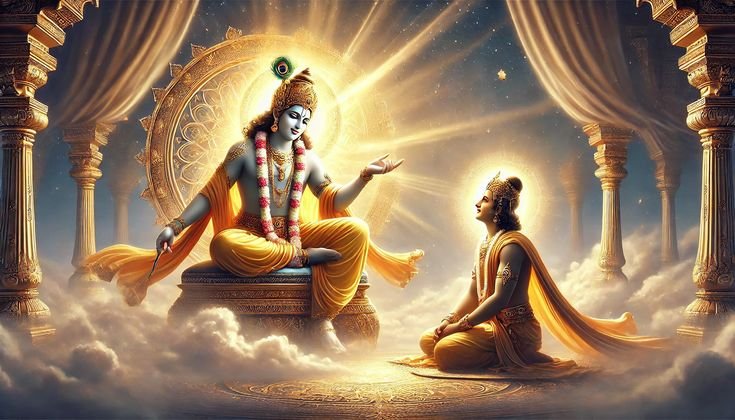
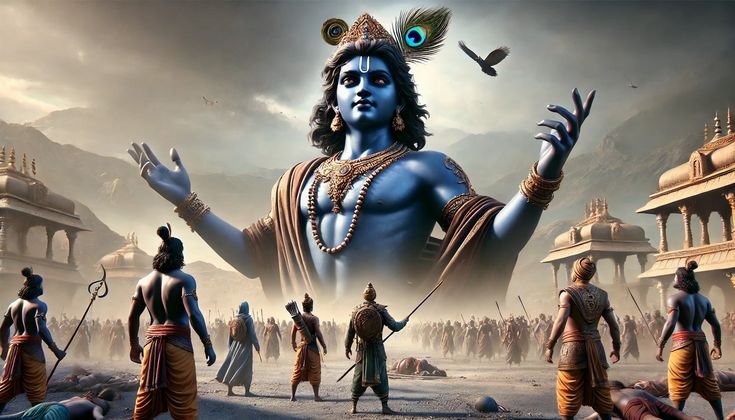
Chapter 10 Vibhooti Yoga The tenth chapter of the Bhagavad Gita is “Vibhooti Yoga”. In this chapter, Krishna reveals Himself as the cause of all causes. He describes His various manifestations and opulences in order to increase Arjuna’s Bhakti. Arjuna is fully convinced of Lord’s paramount position and proclaims him to be the Supreme Personality. He prays to Krishna to describe more of His divine glories which are like nectar to hea Bhagavad Gita 10.1 श्री भगवानुवाच भूय एव महाबाहो श्रृणु मे परमं वचः। यत्तेऽहं प्रीयमाणाय वक्ष्यामि हितकाम्यया।।10.1।। śhrī bhagavān uvācha bhūya eva mahā-bāho śhṛiṇu me paramaṁ vachaḥ yatte ’haṁ prīyamāṇāya vakṣhyāmi hita-kāmyayā śhrī-bhagavān uvācha—the Blessed Lord said; bhūyaḥ—again; eva—verily; mahā-bāho—mighty armed one; śhṛiṇu—hear; me—my; paramam—divine; vachaḥ—teachings; yat—which; te—to you; aham—I; prīyamāṇāya—you are my beloved confidant; vakṣhyāmi—say; hita-kāmyayā—for desiring your welfare Translation The Blessed Lord said, Again, O mighty-armed Arjuna, listen to my supreme word which I will declare to you, who are beloved, for your welfare. Commentary 10.1 भूयः again? एव verily? महाबाहो O mightyarmed? श्रृणु hear? मे My? परमम् supreme? वचः word? यत् which? ते to thee? अहम् I? प्रीयमाणाय who art beloved? वक्ष्यामि (I) will declare? हितकाम्यया wishing (thy) welfare.Commentary I shall repeat what I said before (in the seventh and the ninth discourses). My essential nature and My manifestations have already been pointed out. As it is very difficult to understand the divine nature? I shall describe it once more to you? although it has been described already. I shall tell you of the divine glories and point out in which forms of being I should be thought of.I will speak to you as you are delighted to hear Me. Now your heart is taking delight in Me.The Lord wants to encourage Arjuna and cheer him up and so He Himself comes forward to give instructions to Arjuna even without his reest.Paramam Vachah supreme word. Paramam means supreme? revealing the unsurpassed truth (Niratisaya Vastu which is Brahman).O Arjuna You are immensely delighted with My speech? as if you are drinking the immortalising nectar. Bhagavad Gita 10.2 न मे विदुः सुरगणाः प्रभवं न महर्षयः। अहमादिर्हि देवानां महर्षीणां च सर्वशः।।10.2।। na me viduḥ sura-gaṇāḥ prabhavaṁ na maharṣhayaḥ aham ādir hi devānāṁ maharṣhīṇāṁ cha sarvaśhaḥ na—neither; me—my; viduḥ—know; sura-gaṇāḥ—the celestial gods; prabhavam—origin; na—nor; mahā-ṛiṣhayaḥ—the great sages; aham—I; ādiḥ—the source; hi—certainly; devānām—of the celestial gods; mahā-ṛiṣhīṇām—of the great seers; cha—also; sarvaśhaḥ—in every way Translation Neither the hosts of the gods nor the great sages know My origin; for I am the source of all the gods and the great sages in every way. Commentary 10.2 Commentary Prabhavam Origin. It may also mean great lordly power.Maharshis great sages like Bhrigu.As I am the source of all these gods? sages and living beings? it is very difficult for them to know Me.Sarvasah In every way — not only am I the source of all the gods and the sages but also their efficient cause? their inner ruler and the dispenser or ordainer and the guide of their intellect? etc. Bhagavad Gita 10.3 यो मामजमनादिं च वेत्ति लोकमहेश्वरम्। असम्मूढः स मर्त्येषु सर्वपापैः प्रमुच्यते।।10.3।। yo māmajam anādiṁ cha vetti loka-maheśhvaram asammūḍhaḥ sa martyeṣhu sarva-pāpaiḥ pramuchyate verseyaḥ—who; mām—me; ajam—unborn; anādim—beginningless; cha—and; vetti—know; loka—of the universe; mahā-īśhvaram—the Supreme Lord; asammūḍhaḥ—undeluded; saḥ—they; martyeṣhu—among mortals; sarva-pāpaiḥ—from all evils; pramuchyate—are freed from-3 Translation He who knows Me as unborn and beginningless, as the great Lord of the worlds, he among mortals is undeluded and is liberated from all sins. Commentary 10.3 यः who? माम् Me? अजम् unborn? अनादिम् beginningless? च and? वेत्ति knows? लोकमहेश्वरम् the great Lord of the worlds? असम्मूढः undeluded? सः he? मर्त्येषु amongst mortals? सर्वपापैः from all sins? प्रमुच्यते is liberated. Commentary As the Supreme Being is the cause of all the worlds? He is beginningless. As He is the source of the gods and the great sages? there is no source for His existence. As He is beginningless He is unborn. He is the great Lord of all the worlds .Asammudhah Undeluded. He who has realised that his own innermost Self is not different from the Supreme Self is an undeluded person. Through the removal of ignorance the delusion which is of the form of mutual superimposition between the Self and the not Self is also removed. He is freed from all sins done consciously or unconsciously in the three periods of time.The ignorant man removes his sins through the performance of expiatory acts (Prayaschitta) and enjoyment of the results. But he is not completely freed from all sins because he continues to do sinful actions through the force of evil Samskaras or impressions because he has not eradicated ignorance? the root cause of all sins? and its effect? egoism and superimposition or the feeling of I in the physical body. As he dies? swayed by the forces of evil Samskaras? he engages himself in doing sinful actions in the next birth. But the sage of Selfrealisation is completely liberated from,all sins because ignorance? the root cause of all sins? and its effect? viz.? the mistaken notion that the body is the Self on account of mutual superimposition between the Self and the notSelf? is eradicated in toto along with the Samskaras and all the sins. The Samskaras are burnt completely like roasted seeds. Just as burnt seeds cannot germinate? so also the burnt Samskaras cannot generate further actions or future births.For the following reason also? I am the great Lord of the worlds. Bhagavad Gita 10.4 बुद्धिर्ज्ञानमसंमोहः क्षमा सत्यं दमः शमः। सुखं दुःखं भवोऽभावो भयं चाभयमेव च।।10.4।। buddhir jñānam asammohaḥ kṣhamā satyaṁ damaḥ śhamaḥ sukhaṁ duḥkhaṁ bhavo ’bhāvo bhayaṁ chābhayameva cha buddhiḥ—intellect; jñānam—knowledge; asammohaḥ—clarity of thought; kṣhamā—forgiveness; satyam—truthfulness; damaḥ—control over the senses; śhamaḥ—control of the mind; sukham—joy; duḥkham—sorrow; bhavaḥ—birth; abhāvaḥ—death; bhayam—fear; cha—and; abhayam—courage; eva—certainly; cha—and; Translation Intellect, wisdom, non-delusion, forgiveness, truth, self-restraint, calmness, happiness, pain, existence or birth, non-existence or death, fear, and also fearlessness. Commentary 10.4 बुद्धिः intellect? ज्ञानम् wisdom? असंमोहः nondelusion? क्षमा forgiveness? सत्यम् truth? दमः selfrestraint? शमः calmness? सुखम् happiness? दुःखम् pain? भवः birth or existence? अभावः nonexistence? भयम् fear? च