





Hari Om

Menu

Vishnu Avatar

vishnu avatars bhagavata purana
Vishnu Avatar

Yajna Avatar

History and Origin of Yajna Avatar The Yajna Avatar of Lord Vishnu is linked to the story where the deity took the form of a sacrificial fire or Yajna (ritual sacrifice) to maintain the balance of the universe. According to some legends, this avatar was manifested to restore cosmic order and protect the world from various evils or disruptions. In one story, the sages and rishis were performing a grand Yajna (sacrifice) to appease the gods and to bring peace to the Earth. However, the demons, led by the mighty demon king Vritrasura, obstructed the ritual and created chaos in the celestial realms. To restore balance, Lord Vishnu assumed the form of the Yajna itself, symbolizing the cosmic sacrifice required for the maintenance of universal law and order. The avatar of Yajna is said to have been manifested in a way that embodies the sacrifice and ritual offerings essential for sustaining both the material and spiritual aspects of the universe. Significance of Yajna Avatar Sacrifice for the Greater Good: The Yajna Avatar represents the idea of selfless sacrifice for the greater good of the world. In the Hindu tradition, Yajna is not just an external ritual but a metaphor for the sacrifices made by individuals for the welfare of others. This can be interpreted as the sacrifice of one’s ego, desires, or material attachments in the pursuit of spiritual growth. Cosmic Order (Rta): The act of performing Yajnas is seen as an essential way to maintain cosmic order. The Yajna Avatar of Vishnu is believed to have appeared to reinstate Rta—the divine law or the principle of cosmic harmony. Reinforcement of Dharma: The Yajna Avatar reinforces the idea of Dharma (cosmic law and righteousness). By symbolizing the sacred ritual, Vishnu as Yajna signifies that without adherence to Dharma, the universe would collapse into chaos. Restoration of Peace: Just as the act of a Yajna is meant to bring harmony between the gods and the living world, this Avatar helps restore peace when forces of chaos, such as the demons, upset the balance of the world. Adi Purush is typically meditated upon in deep spiritual practices, where seekers go beyond form (sagun) and connect to the formless divine. You can meditate on Adi Purush using mantras and sacred chants to help your mind transcend ordinary perception. Lessons and Teachings of Yajna Avatar Mantras of the Divine Avatar ॐ ह्लीं नमः यज्ञाय स्वाहा। Om Hleem Namah Yajnaaya Swaha. This is a basic mantra that praises Lord Vishnu in the form of Yajna during rituals. It calls upon the divine presence for the completion of the sacred offering. Aarti of the Divine Avatar ॐ जय श्री विष्णु यज्ञावतार,सर्व संसार में हो निराकार।पार्वती के प्रिय दत्तात्रेय,शरणागत वत्सल कृपाधारे। विष्णु रूप में आकर यज्ञ साधे,दुष्टों को मारे और भक्तों को साधे।यज्ञ के द्वारा जीवन रक्षक,धर्म की शक्ति बढ़ाने वाले। धरती पर आये तुम्हारी कृपा से,सत्य, धर्म के साथ हर कदम बढ़े।यज्ञ में बहे आशीर्वाद की धारा,सभी को मिलें सुख और समृद्धि का सहारा। ॐ जय श्री विष्णु यज्ञावतार,सर्व संसार में हो निराकार।पार्वती के प्रिय दत्तात्रेय,शरणागत वत्सल कृपाधारे। Famous Vishnu Temple
, , ,

Yajna Avatar Read Post »

Lord Dattatreya Story Significance 16 Avatars of Lord Datattreya
Vishnu Avatar

Dattatraya Avatar

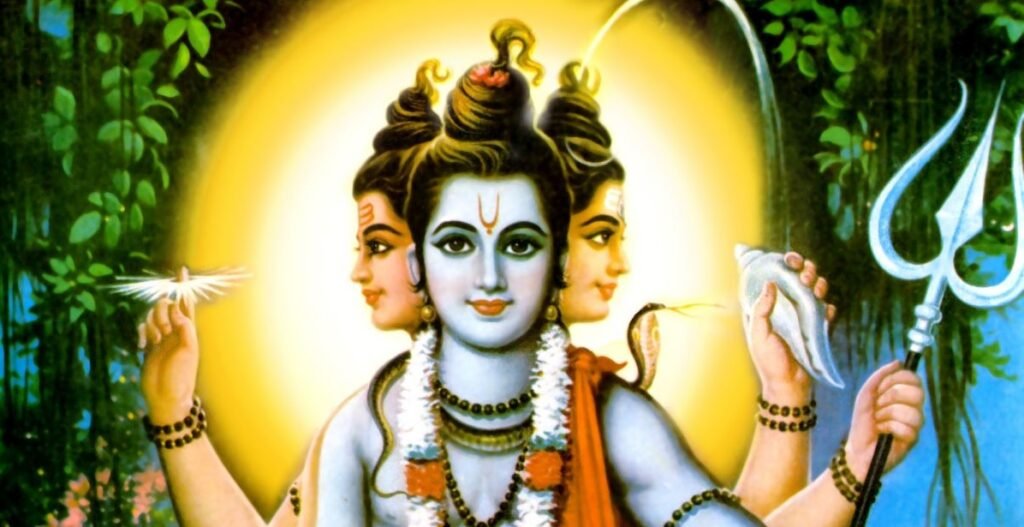
History of Dattatraya Avatar The history of Dattatraya’s avatar is rooted in ancient texts, including the Skanda Purana, Bhavishya Purana, and Dattatraya Ashtakshara Mantra. In some versions of the myth, Lord Vishnu incarnated as Dattatraya to bring peace and harmony to the world, guiding the people through spiritual knowledge and devotion. The name Dattatraya means “one who is given” (Datt = given, Atreya = son of Atri), signifying the divine wisdom that Lord Vishnu bestows on his devotees. Key Points: His divine presence and blessings are sought for spiritual enlightenment and protection from negative forces. Dattatraya is a combination of the three gods of the Trimurti: Brahma, Vishnu, and Shiva. He is considered a guru and spiritual guide who imparts divine knowledge to his followers. Significance of Dattatraya Avatar The Dattatraya Avatar is regarded as a symbol of unity among the three primary deities of Hinduism, Brahma, Vishnu, and Shiva. He represents the balance between creation, preservation, and destruction. The Dattatraya incarnation emphasizes the importance of self-realization, knowledge, and meditation in achieving spiritual progress. In addition, Lord Dattatraya is known for his teachings on the importance of devotion and surrender to the divine will. His story exemplifies the ideal of perfect detachment and renunciation, where he lives a life of simplicity, wisdom, and compassion. The teachings of Dattatraya also include the idea of non-duality (Advaita), where everything in the universe is connected, and the ultimate truth is within oneself. Adi Purush is typically meditated upon in deep spiritual practices, where seekers go beyond form (sagun) and connect to the formless divine. You can meditate on Adi Purush using mantras and sacred chants to help your mind transcend ordinary perception. Teachings of Lord Dattatraya Mantras of the Divine Avatar ॐ श्री दत्तात्रेयाय महादेवाय त्रिवेणी बन्धनं |सर्व पाप विनाशाय सिद्धि मे देहि मे परम्। This mantra is meant for overall spiritual success and the removal of obstacles from one’s path. Aarti of the Divine Avatar ॐ श्री दत्तात्रेयाय नमः। जय दत्तात्रेय महाराज की, जय दत्तात्रेय महाराज की।त्रिमूर्ति के स्वरूप में, भूत-प्रेत के नाशक में।जय दत्तात्रेय महाराज की, जय दत्तात्रेय महाराज की। शिव, विष्णु और ब्रह्मा, सर्व शरण, श्री गुरु दत्त।संतों के दुःख का नाशक, भक्तों के लिए भगवान।जय दत्तात्रेय महाराज की, जय दत्तात्रेय महाराज की। Famous Vishnu Temple

, , ,

Dattatraya Avatar Read Post »

kapila avatar
Vishnu Avatar

Kapila Avatar

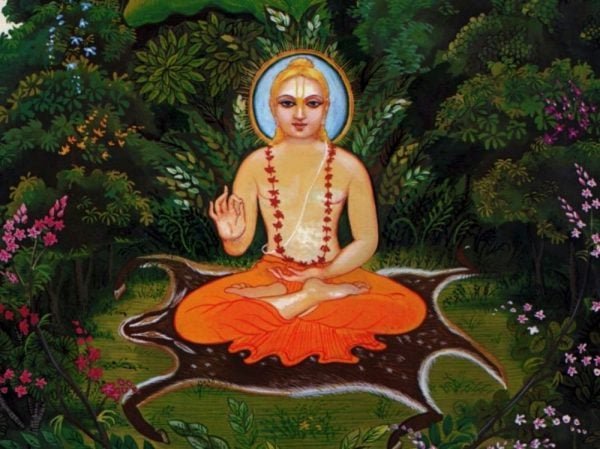
Who is Kapila Muni? Kapila is believed to be an incarnation of Lord Vishnu. He is the father of Sankhya Philosophy, which explains the distinction between Purusha (soul) and Prakriti (matter). He appeared in Satya Yuga as the son of Sage Kardama and Devahuti. Scriptural References Why Did Lord Vishnu Take the Kapila Avatar? To correct the corrupted forms of Sankhya that had become atheistic. To guide seekers toward liberation through analytical understanding. To educate Devahuti and through her, the world, in the way of Jnana Yoga (the path of knowledge). To reveal the nature of soul (Purusha) and its entanglement in material nature (Prakriti). Symbolism of Kapila Avatar Jata (matted hair) and glowing aura symbolize renunciation and spiritual fire. Seated in meditation, often near a fire or surrounded by disciples. Associated with Sankhya and Jnana Yoga, unlike other action-based avatars. Mantras of the Divine Avatar ॐ नमः भगवते कपिलाय महात्मने।ज्ञानवैराग्यरूपाय परब्रह्म स्वरूपिणे॥ Meaning:Salutations to Bhagavan Kapila, the great soul, embodiment of knowledge and renunciation, and the form of the Supreme Truth. Aarti of the Divine Avatar आरती श्री कपिल मुनि की, ज्ञान वैराग्य के दाता।देवहूति के घर प्रकटे, जग में फैलाई ज्योति माता॥ संख्य योग का ज्ञान दिया, आत्म-तत्त्व बतलाया।माया से मुक्त करे जो, मोक्ष मार्ग दिखलाया॥ शांत मुद्रा, जटा मुकुट, तप में लीन शरीर।ज्ञान दीप जलाएं कपिल, नाश करें अंधेर॥ भक्तों को जो मार्ग दिखाएं, मोह मिटाएं सबका।विष्णु रूप में पूजित हों, दे दो दर्शन अपका॥ आरती श्री कपिल मुनि की, ज्ञान वैराग्य के दाता।ध्यान तेरा जो मन में धारे, भवसागर वो तारे॥ Famous Vishnu Temple

, , ,

Kapila Avatar Read Post »

Nara Narayana
Vishnu Avatar

Nara Narayana Avatar

Mythological Background They are the fifth avatar of Vishnu (after the four initial yuga avatars) and were born as sons of Dharma (the god of righteousness) and Murti (an incarnation of Ahimsa or non-violence). They both reside in Badrikashrama (modern Badrinath), performing penance for the welfare of the world. Scriptural References and Historical Background of Nara-Narayana Symbolism and Significance Adi Purush is typically meditated upon in deep spiritual practices, where seekers go beyond form (sagun) and connect to the formless divine. You can meditate on Adi Purush using mantras and sacred chants to help your mind transcend ordinary perception. Historical and Geographical Context: Badarikashrama Mantras of the Divine Avatar ॐ नरा नारायणाय विद्महेधर्मराजाय धीमहितन्नो विष्णुः प्रचोदयात् ॥ Aarti of the Divine Avatar आरती नर-नारायण की कीजै,ध्यान योग तप में लीन रहीजै। बदरिकाश्रम तप की थाती,ऋषियों में जो सबसे ज्ञाती। धर्म के पथ पर जो चलवावे,भक्ति और योग सिखलावे। नर के रूप में मानव प्यारा,नारायण रूप प्रभु दाता हमारा। सत्य अहिंसा का पाठ पढ़ाते,कलियुग में भी राह दिखाते। आरती नर-नारायण की कीजै,मुक्ति मोक्ष सुख सब कुछ दीजै॥ Famous Vishnu Temple

, , ,

Nara Narayana Avatar Read Post »

adi purush ji
Vishnu Avatar

Adi Purush Avatar

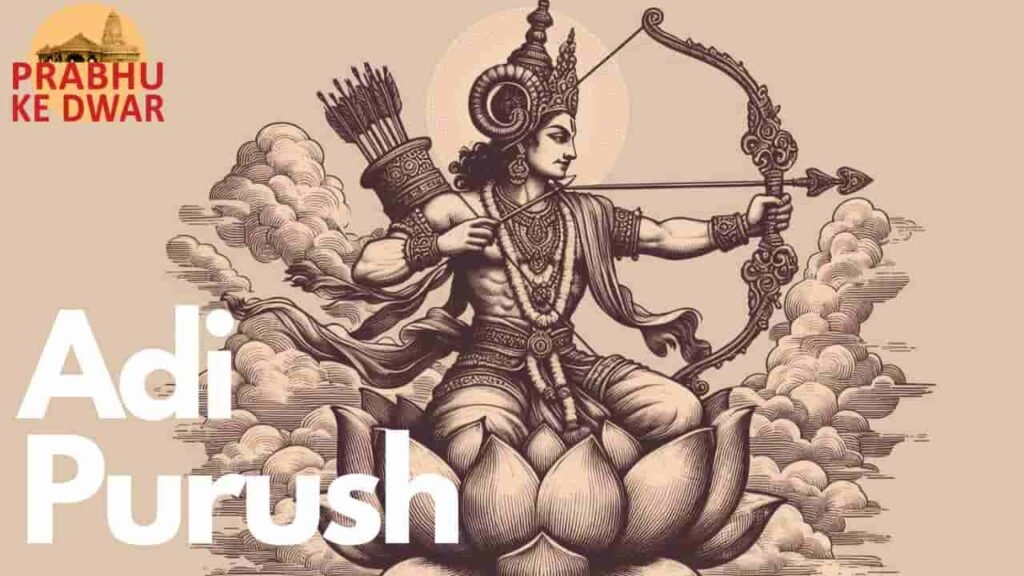
In the Vaishnavite tradition, Adi Purush is sometimes equated with Mahavishnu or Paramatma, who manifests himself in various avatars like Rama, Krishna, Narasimha, etc. before taking form, he exists as the formless divine consciousness. Scriptural References and History Vedas: The concept of Purusha is introduced in the Purusha Sukta of the Rigveda, describing a cosmic being who is both immanent and transcendent. Bhagavata Purana: It elaborates on Mahavishnu as the source from whom Garbhodakasayi Vishnu, Kshirodakasayi Vishnu, and eventually avatars like Krishna emerge. Brahma Samhita (Verse 1): īśvaraḥ paramaḥ kṛṣṇaḥ sac-cid-ānanda-vigrahaḥanādir ādir govindaḥ sarva-kāraṇa-kāraṇam“Krishna, who is known as Govinda, is the Supreme Godhead. He has an eternal, blissful, spiritual body. He is the origin of all. He has no other origin and He is the prime cause of all causes.” This shows Krishna or Vishnu as Adi Purusha, the anadi (without beginning) and sarva-karana-karanam (cause of all causes). Symbolism and Significance Adi Purusha is the unmanifest divine essence that contains within him the blueprint of the universe. He represents timelessness, infinite consciousness, and absolute reality. He is beyond maya (illusion) and prakriti (nature). In many philosophical traditions like Vedanta and Samkhya, Adi Purusha is seen as the pure observer, while Prakriti is the field of action. Together they manifest creation. Adi Purush is typically meditated upon in deep spiritual practices, where seekers go beyond form (sagun) and connect to the formless divine. You can meditate on Adi Purush using mantras and sacred chants to help your mind transcend ordinary perception. Historical and Mythological Context Mantras of the Divine Avatar ॐ आदि पुरुषाय विद्महेपरमात्मने धीमहितन्नो विष्णुः प्रचोदयात् ॥ अर्थ:हम आदि पुरुष को जानते हैं, जो परमात्मा हैं। हम उनके ध्यान में लीन हों। वह भगवान विष्णु हमें प्रबुद्ध करें। Aarti of the Divine Avatar ॐ जय आदि पुरुष हरी, स्वामी जय आदि पुरुष हरी।ब्रह्मा विष्णु महेश्वर, रूप तुम्हारे धरी॥ ॐ जय… सहस्त्र शिर, सहस्त्र चरण, रूप अनंत तुम्हारा।कोटि सूर्य का तेज समाहित, जग में फैला उजियारा॥ ॐ जय… सबका मूल तुम्हीं हो स्वामी, सबमें तुम समाए।अनंत रूप में आए हो, परब्रह्म कहाए॥ ॐ जय… वेद पुराण गाएं गुण तेरे, ऋषि मुनि ध्यान लगाएं।योगी जन समाधि लगाकर, ब्रह्मरूप में समाएं॥ ॐ जय… भक्तों पर कृपा करो स्वामी, दया दृष्टि बनाएं।अज्ञान दूर कर दो प्रभु, आत्मज्ञान दिलवाएं॥ ॐ जय… आरती जो गाए तुम्हारी, मनवांछित फल पाए।मोक्ष द्वार वह पाए निश्चल, हर जन्म सुख पाए॥ ॐ जय… Famous Vishnu Temple

, , ,

Adi Purush Avatar Read Post »

Matsya avatar Vishnu rescuing Vedas from ocean image
Vishnu Avatar, 10 vishnu avatar

Matsya Avatar Avatar

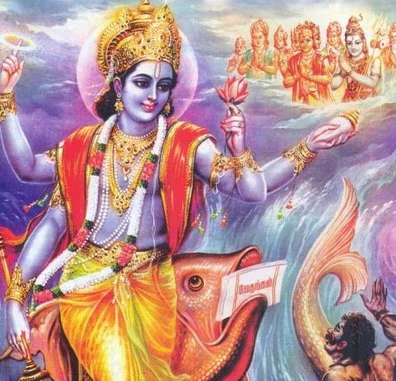
Life Before Matsya Avatar Of Vishnu Long ago, during a time when people had become selfish and immoral, the gods decided to bring order back to the world by making the whole world drown in a flood. Lord Brahma, responsible for recreating the world, worked tirelessly according to the wisdom found in the Vedas, the source of knowledge. However, during his exhausting task, Lord Brahma fell asleep and a demon named Hayagriva, with a horse’s head, was born from his nose. Hayagriva cunningly stole the Vedas from Lord Brahma and escaped. Thankfully, Lord Vishnu noticed the theft and descended to Earth in the form of a small fish known as the Matsya avatar, the first avatar of Vishnu. Why did Vishnu take the Matsya avatar? To retrieve the stolen Vedas and restore balance to the world. He appeared before the great King Vaivasvat Manu, seeking his help and guidance to retrieve the stolen Vedas. Story Of Matsya Avatar Of Vishnu 1. Encounter With King Manu King Manu, a deeply devoted and righteous ruler, was engaged in his spiritual practices near the ocean. As he took some water in his hands, he noticed a tiny fish swimming in them. The fish pleaded with the king to save its life, fearing that it would be devoured by larger creatures. Touched by compassion, the king placed the fish in a small tank within his palace. To his amazement, the fish began to grow rapidly, outgrowing the tank in no time. The king then moved it to a small pond, but the fish continued to grow until even the pond couldn’t contain it. Realizing its extraordinary size, King Manu decided to release the fish into a river, and eventually back into the vast ocean. To his astonishment, the fish revealed itself as Lord Vishnu, the supreme deity, who had taken the form of the fish to test King Manu’s faith and virtue. As King Manu humbly bowed before the divine Matsya, Lord Vishnu disclosed the forthcoming flood and shared his divine wisdom with the king. Preparing And Surviving The Greatest Flood Lord Matsya, the divine fish, advised King Manu to gather representatives from every species of plants and animals, along with the seven great sages, and bring them aboard an ark to save them from the impending destruction caused by the flood. On the seventh day, when the heavy rains and storms arrived, Lord Matsya appeared before the king and instructed him to secure the ark to his horn using the serpent Vasuki as a rope. Lord Matsya shielded the ark from destruction during the cataclysmic flood. While safeguarding the ark and guiding it towards Mount Hemavan, Lord Matsya also defeated the demon Hayagriva and returned the stolen Vedas to Lord Brahma. During the journey, Lord Matsya shared profound wisdom and revealed important truths to the king. Upon reaching Mount Hemavan, Lord Matsya vanished from the earth after instructing King Manu on how to rebuild and govern the new world with a fresh set of rules and moral values. This valuable knowledge became known as Manusmriti – the memories of Manu. Mantras of the Divine Avatar ॐ मत्स्यरूपाय नमः यह मंत्र भगवान विष्णु के मत्स्य अवतार को समर्पित है, जो जल प्रलय के दौरान वेदों की रक्षा और मनु की नाव को सुरक्षित निकालने के लिए प्रसिद्ध है Aarti of the Divine Avatar जय मत्स्य देव, जय जय हरि,सृष्टि के रक्षक, जग के हितकारी।प्रलय काल में, तुमने किया उद्धार,मनु को बचाया, दिया ज्ञान का प्रकाश। शंख, चक्र, गदा, पद्म,धारण किए, रूप अपार।वेद चुराए, दैत्य का वध किया,ज्ञान का भंडार, फिर से दिया।  जय मत्स्य देव, जय जय हरि,भक्तों के रक्षक, संकटहारी।तुम्हारी कृपा, हम पर बनी रहे,दुखों से मुक्ति, हमें मिले। Famous Vishnu Temple

, , ,

Matsya Avatar Avatar Read Post »

The 4 Kumars devotional
Mahatmas, Vishnu Avatar

The 4 Kumars

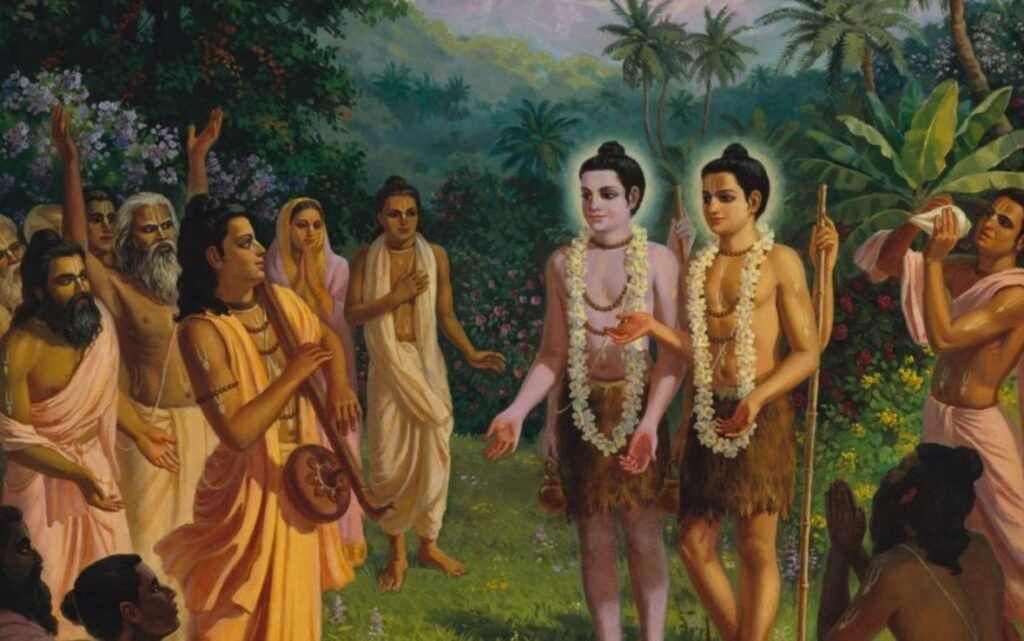
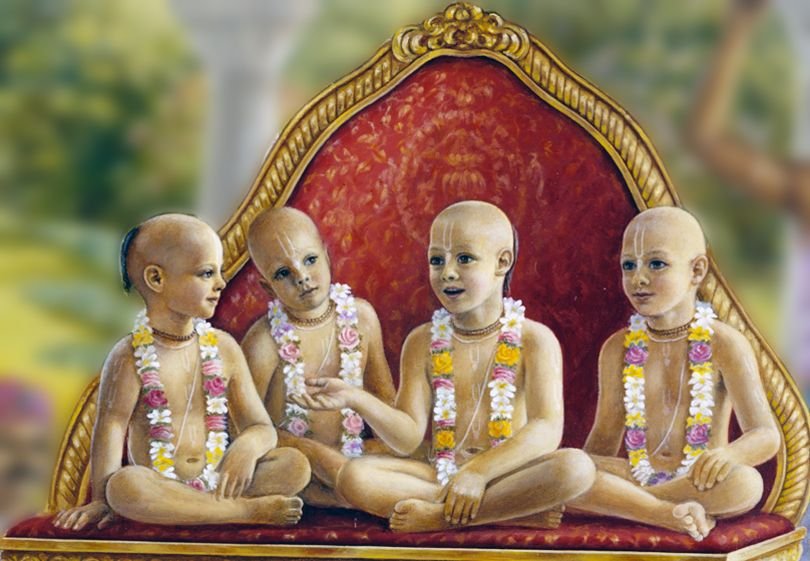
The 4 Kumars – ‘I taught this yoga to My disciples, the four brothers headed by Sanaka’. (In the wallpaper: in the middle Lord Shri Narayana, 4 Kumaras, in the left side Lord Brahma and child Shiva, in the right 4 Kumaras). Four Kumaras.    The Four Kumaras namely: Sanaka, Sanandana, Sanatana, and Sanat Kumara are traditionally the four mind-born sons of Lord Brahma. Famous throughout the Puranic literature, they are found also in the Upanishads. They are renowned yogis, who requested their father for the boon of remaining perpetually five years old. They were created by their father in order to advance creation, however, they chose to undertake lifelong vows of celibacy (brahmacharya). After obtaining initiation into the Shri Gopala Mantra, these four brothers then left meditations into an impersonal God, and realised the truth lies beyond the impersonal, in the Highest Person, the Supreme Lord Shri Krishna. Having obtained His grace and being initiated into Vaishnava tradition, they began to spread the teachings of the path of renounciation. During initiation into this Vaishnava tradition, they received the Shri Shaligrama Shila known as Shri Sarve Svara Bhagavan, which has been passed on from each Guru to disciple since their time. The Supreme Lord Shri Krishna, in His conversation with Uddhava in the 11th Canto of the Bhagavata Purana declares: etavan yoga adisto macchisyaih sanakadibhih – ‘I taught this yoga to My disciples, the four brothers headed by Sanaka’. Having obtained His grace and being initiated into Vaishnava tradition, they began to spread the teachings of the path of renounciation. During initiation into this Vaishnava tradition, they received the Shri Shaligrama Shila known as Shri Sarve Svara Bhagavan, which has been passed on from each Guru to disciple since their time. The Supreme Lord Shri Krishna, in His conversation with Uddhava in the 11th Canto of the Bhagavata Purana declares: etavan yoga adisto macchisyaih sanakadibhih –   During initiation, the most holy 18-syllabled Shri Gopala Mantra was given to them, a fact recorded in the Vishnu Yamala:    This mantra is the Vaidika mantra from the Gopalatapinyupanishad of the Atharva Veda. This is the initiatory mantra still used in the Sampradaya today. Shri Sanat Kumara Samhita is a famous treatise on the worship of Shri Radha Krishna authored by the brothers, and they have also produced the Shri Sanat Kumara Tantra, part of Pancharatra literature. Their teachings can be found throughout all Vedic literature. It is due to the tradition coming into contact with the Four Kumaras that it came to be known as the Sanakadi Sampradaya or the Kumara Sampradaya. A man meets a virtuous person when his ‘good fortune’ arrives and his soul attains enlightenment and his mind becomes pure by the destruction of his ignorance and attachment. When Brahma decided to commence the sequence of creation, he first of all created four Kumaras by just having a wish in his mind. They were Sanaka, Sanandana, Sanatana and Sanatkumara. Brahma had experienced the sight of Lord Vishnu sleeping on the back of  Ananta Shesha after performing penance for thousands of years. Lord Vishnu pleased with his penance gave to him the basic knowledge of the Veda. Only after getting that knowledge, he commenced his creation. When the four Kumaras came into existence, they were all embodiments of pure qualities. They did not have any sign of negative qualities like laziness, sleep etc. Brahma had created these four Kumaras so that they could help in the process of creation. But they refused when they were ordered by Brahma to do so. So these four Kumaras—kumara means unmarried brahmacaris. Because in the beginning Brahma begot so many sons, and each of them were asked to increase the population. Sanaka, Sananda, Sanatana, they were also requested by their father to increase population, but they refused. They said, “No, we are not going to be entangled in these material affairs. We shall remain kumaras, brahmacaris, and preach the glories of Godhead,” by which Brahma became angry. And while he was angry, from his anger Rudra, Siva, was produced frm his forehead. These four Kumaras, as siddhesvaras, had achieved all the yogic perfectional achievements ( siddhis ), and as such they travel in outer space without machines. Shaivas believe that Shiva assumed the form of Dakshinamurti, the great teacher and meditating facing South observing a vow of silence. The four Kumaras approached Shiva for self-realisation. He taught them about the Supreme Reality, Brahman, by making the chin mudra gesture with his hand. The index finger is touched to the thumb, indicating the union of Brahman and jiva. Thus, Shiva made the Kumaras as his disciples. An incident about the meeting of the four Kumaras with Vishnu’s avatar Rama is narrated in the Uttarakanda of the Ramcharitmanas. The Kumaras once stayed in the hermitage of the sage Agastya, who told them about the glory of Rama. So to meet Rama, they went to a forest grove where Rama with his brothers and disciple Hanuman had come. Source: sanskritimagazine

, , ,

The 4 Kumars Read Post »

Sri narada muni
Mahatmas, 10 vishnu avatar, Vishnu Avatar

Sri Narada Muni

Sri Narada Muni Narada also serves as an instigator in Lord Krsna’s pastimes. One example occurs around the time of Krsna’s birth. When the demon Kamsa hears a voice from the sky, telling him that Devaki’s eighth child (Krsna) will kill him, it is Narada who instills Kamsa with fear that any of Devaki’s children might be his enemy. Narada thereby persuades Kamsa to kill all of Devaki’s children. Narada does this to accelerate Krsna’s appearance and enhance Kamsa’s reputation as a demon, causing Krsna to eventually kill him and establish righteousness in society. (This was all done under the Lord’s mysterious internal potency. Later, Lord Krsna brought the children back to life.) Another example of Narada’s instigative powers is seen in his exchange with Princess Rukmini, to whom he elaborately describes Krsna’s unsurpassed beauty and superlative qualities. Upon hearing Narada’s description, Rukmini becomes infatuated with Krsna, giving her heart to Him in total surrender. She is thus unable to marry Sisupala, to whom she was promised. Narada’s “meddling” leads to the unfolding of an important episode in Krsna’s manifest pastimes: Sisupala is humbled, and Krsna kidnaps and marries Rukmini. In the fulfillment of her heart’s desire, Rukmini serves Krsna as His loving wife in the spiritual realm. In yet another important episode, Narada chides Vyasadeva for not getting at the essence of Vedic knowledge in compiling the Vedic literature. Narada tells Vyasadeva that the remedy is to describe in his writing the name, form, fame, and pastimes of Krsna. Vyasadeva does so, the result being the Srimad-Bhagavatam, the cream of ancient India’s scriptural legacy. The Three Lives of Narada Just who is Narada Muni, and what did he go through to become one of the most respected saints in the Vedic tradition?The Srimad-Bhagavatam describes how Narada attained the audience of God and thus became renowned in the Vedic tradition. The story begins with his previous two lifetimes. During the first, his name was Upabarhana, a Gandharva, or singer from a heavenly planet. Upabarhana’s beautiful voice and handsome features made him attractive to women, and he became a playboy, losing his spiritual perspective and falling into materialistic life. Once, Upabarhana attended a festival put on by the prajapatis, residents of higher planets responsible for populating the universe. While performing sankirtana, the congregational chanting of the holy names of the Lord, Upabarhana glorified the demigods. The devotees present took this action as a great offense, because sankirtana is meant for glorifying the Supreme Lord only. The devotees then cursed Upabarhana to be born in his next life as a sudra (laborer) devoid of beauty. Fortunately, whether a saint blesses or curses, the result is the same: the recipient of the saint’s attention advances in God consciousness. That’s what eventually happened to Upabarhana (Narada). When he was born as the son of a maidservant, he was inclined to devotional service and managed to serve the pure devotees of the Lord.Narada’s pious mother had the good fortune to serve traveling mendicants, so five-year-old Narada had the same opportunity. Moreover, he was able to take the remnants of their meals (prasadam) and hear them speak on transcendental subjects. Primarily these two activities, says the Bhagavatam, enabled Narada to move forward in his spiritual life. The traveling mendicants could not find any fault in the little boy. He seemed to be uninterested in playing like other boys; he was not naughty in any way, nor did he speak more than necessary. For all of these reasons, the sages showered their blessings upon him. Narada underwent a vital transformation and became intoxicated with God consciousness. He meditated day and night, then left home after his mother’s death to become a wandering mendicant himself. As Narada traveled, he learned to dedicate every moment to the pursuit of spiritual realization. One day, during Narada’s meditation the Lord appeared within his heart he was able to see the form of God. Tears of love flowed from his eyes as he gazed upon the Lord’s beautiful form. And then the Lord disappeared from his vision. The Bhagavatam describes Narada’s grief-stricken condition and tells us that as much as he tried, he could not regain his vision of God. His realization: God is not at our beck and call. He appears before us by His sweet will, and if He desires to conceal Himself, no amount of meditation or prayer will force Him to show us His beautiful form. As Srila Bhaktisiddhanta Sarasvati Thakura, Srila Prabhupada’s spiritual master, has said, “Don’t ask to see God, but rather act in such a way that God will want to see you.” Narada then heard the Lord’s voice, telling him that it is not possible to see God if one is not completely pure. The Lord told Narada another thing: He had shown Narada His form out of kindness and to increase his longing for Him. The Lord’s enticement worked. Narada now meditated on the form of the Lord more intensely than ever before. His hearing and chanting of the glories of Krsna engulfed his soul, and he became oblivious of the world around him. When the moment of death came, he was ready. “Being freed from all material taints,” Narada told his disciple Vyasadeva, “I met with death just as lightning and illumination occur simultaneously.” The transition was seamless, and when the material world was again created (for the material cosmos manifests in cycles), Narada was born from the creator-god Brahma’s heart, as his most dear son. In this form, Narada had indeed reached perfection. The Bhagavatam tells us that his birth was not forced, as are most births in the material realm, but was completely voluntary: he was born merely to assist the Lord in His mission. Moreover, says the Bhagavatam, his body was just like the Lord’s transcendental and immortal, with no difference between his outer body and the inner animating spark, the soul. Thus, Narada is considered a perfect devotee. His teachings, found throughout the Srimad-Bhagavatam as well as

, , ,

Sri Narada Muni Read Post »

parashurama avatar
10 vishnu avatar, Vishnu Avatar

Parashurama Avatar

Parshuram was the son of Jamadagni and Renuka. Parshuram had received an axe from Lord Shiva after undertaking terrible reparation. Lord Shiva had also taught his methods of warfare and other skills. Born in a Brahmin family, he was unlike the other Brahmins. Instead, Parshuram carried traits of a Kshatriya. He carried a number of Khatriya traits, which included aggression, warfare and valour.  Hence, he is called as a ‘Brahma-Kshatriya’ as he had skills from both the clan. One story associated with Parshuram is that once King Kartavirya Sahasrarjuna and his army forcibly tried to take away Parshuram’s father’s magical cow named Kamdhenu. Being angry and revengeful, he killed the entire army and King Kartavirya. In revenge for their father’s death, the king’s son killed Jamadagni in Parshuram’s absence. Furious and hurt by their act, he went ahead killing all the king’s sons and corrupt Haihaya Kings and warriors on the earth.He conducted the Ashvamedha sacrifice and gave away his entire holdings to the priests who conducted the ritual. Parshuram is also known as immortal, who fought back the advancing ocean, which was going to hit the lands of Kokan and Malabar. The area between Maharashtra and Karnataka is known as ParshuramKshetra. Parshuram was known for his love for righteousness. He was known to be the Guru to Bhishma, Dronacharya and Karna. However, in advance, Parshuram knew that Karna would do injustice to Duryodhan in the Kruskshetra war. So as the duty of a good guru, he decides to teach him the Brahmashastra, but he also cursed Karna that the knowledge will not be any useful to him. According to the folklore, Parshuram gave the Sudharshan chakra to Lord Krishna.  It is believed that the main motto of Vishnu’s sixth incarnation was to free the earth’s burden by assassinating the sinful and irreligious kings who neglected their duties. According to another legend, Parshuram once went to meet Lord Shiva. As he reached the door, Lord Ganesh confronted Parshuram and stopped him from meeting with Lord Shiva. Angry and furious, Parshuram threw the axe given by Lord Shiva on Ganesha. Knowing that the axe was given by Lord Shiva, Ganesha allowed the axe to cut away one of his tusks. Another story mentioned in the Kalki Purana believes that Parshuram still resides on the earth. It states that Parshuram will be the martial guru of Shri Kalki, who is going to be the last avatar of Lord Vishnu. He instructs Kalki to perform a long sacrament to please Lord Shiva. After being pleased Lord Shiva will bless Kalki with the celestial weaponry.

, , ,

Parashurama Avatar Read Post »

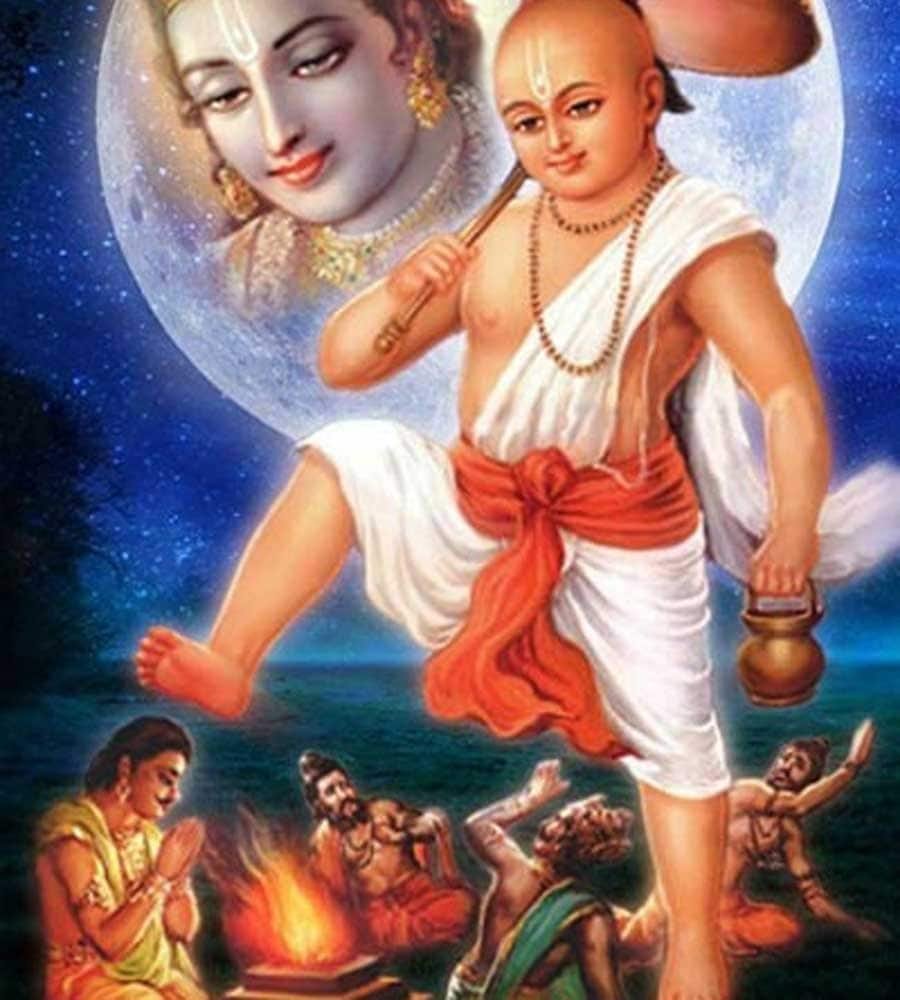
vamana avatar of lord vishnu
10 vishnu avatar, Vishnu Avatar

Vamana Avatar

In the vast pantheon of Hindu mythology, the tale of Lord Vishnu’s avatars is legendary. Known as his ten incarnations, the tenth avatar which is yet to occur, these avatars are believed to be manifested on the earth when in need. Of the ten avatars, the Vamana avatar, also known as the dwarf incarnation, is one known by all. Appearing as a Vamana, a diminutive divine form, on Earth to restore balance and uphold righteousness. Lord Vamana, is known for his great wit and quick thinking. Considered a symbol of humility and power, he is still greatly revered for his wisdom and countenance. Serving as a lesson for how we should not judge things by their appearance, this article will be delving into the Vamana avatar of Vishnu and how Lord Vishnu helped to save the world once again.

, , ,

Vamana Avatar Read Post »