







Hari Om

Menu

Adi Shankaracharya

images 2025 09 19T132457.335
Adi Shankaracharya, ⁠Books by Sri Sathya Sai Baba

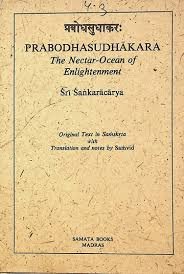
Prabodha Sudhakaram Book

Prabodha Sudhakaram Prabodha Sudhākara, meaning “The Nectar of Enlightenment”, is a unique and profound spiritual text that blends the paths of knowledge (jñāna) and devotion (bhakti). Traditionally attributed to Adi Shankaracharya, this text differs from many of his purely philosophical works by addressing the emotional and devotional aspects of spiritual practice alongside rigorous reasoning. The work consists of 257 Sanskrit verses divided into 19 chapters, written in a poetic and reflective style, aimed at leading the seeker from ignorance (avidyā) to spiritual awakening (prabodha). The text begins by exploring the human condition — why people suffer, what they seek, and where real fulfillment lies. It points out that while all beings seek happiness, they often look for it in impermanent things — wealth, pleasure, status, relationships — all of which inevitably lead to dissatisfaction. True and lasting happiness, the text declares, comes only through Self-realization — the direct knowledge of one’s own eternal, unchanging nature as pure consciousness (Ātman). To help the seeker develop the right mindset, the early chapters of Prabodha Sudhākara focus on detachment (vairāgya) and discrimination (viveka). The text strongly criticizes blind attachment to the body, sensory pleasures, and worldly objects. It uses vivid imagery and logical arguments to show that everything perceived by the senses is fleeting. The body is subject to aging, illness, and death; the mind is unstable; worldly happiness is momentary and dependent. These insights are not meant to create fear, but to generate a deep desire for liberation (mokṣa). The middle chapters guide the seeker inward, toward the nature of the Self. The Self is described as pure awareness, untouched by birth and death, and the witness of all experiences. The text teaches that the Self is neither the body nor the mind, but the unseen seer, the silent presence behind all perception. By turning attention inward, using practices like self-inquiry (ātma-vicāra) and meditation, one can recognize the Self as their true identity. Unlike many jñāna-based texts, Prabodha Sudhākara also emphasizes devotion. It praises surrender to God, especially in the form of Krishna, and encourages the seeker to combine philosophical inquiry with love and humility. This synthesis makes the text accessible to both intellectually inclined seekers and emotionally devotional practitioners. One of the text’s central teachings is that liberation is possible in this life (jīvanmukti). One need not wait for death to attain freedom. When ignorance is destroyed through knowledge and the heart is purified through devotion, the Self shines forth, and the seeker realizes that they have always been free. In conclusion, Prabodha Sudhākara is a luminous work that awakens the spiritual seeker to their true nature. It harmonizes Advaita Vedānta’s deep metaphysical insights with the warmth of devotion, offering a balanced path to liberation. It is ideal for those seeking clarity of mind, purity of heart, and the ultimate goal of life: freedom from suffering and union with the Self.

Prabodha Sudhakaram Book Read Post »
hbv142
Adi Shankaracharya, ⁠Books by Sri Sathya Sai Baba

Sarva Vedanta Sara Samgraha Book

Sarva Vedanta Sara Samgraha Sarva Vedanta Siddhanta Sara Saṅgraha, meaning “A Compilation of the Essence of the Doctrines of All Vedanta”, is a classical Vedānta prakaraṇa grantha attributed to Adi Shankaracharya. It is intended for serious seekers of knowledge, providing a concise yet comprehensive distillation of the essential truths of Advaita Vedānta. The text is composed in Sanskrit, in verse form, and lays out both the sādhana (means) and the phala (fruit) of Vedānta sādhanā (spiritual practice), with emphasis on what qualifications a student must cultivate, how ignorance arises, and how the Self is known. One of the first topics in the work is sadhana catuṣṭayam, or the fourfold qualifications required of a seeker: viveka (discrimination between the real and unreal), vairāgya (dispassion or detachment), śat-sampatti (the six‑fold inner virtues such as self‑control, endurance, faith, etc.), and mumukṣutva (intense desire for liberation). These form the foundation. Without them, mere intellectual understanding does not lead to liberation. The text also discusses nitya‑anitya vastu viveka, the discrimination between what is permanent and what is impermanent. It shows that our attachments to the body, mind, senses, and objects of the world are based on ignorance, because these things are in constant flux. The Self (Ātman) is that which is immutable: aware, pure consciousness, not subject to birth, death, change or decay. Another important theme is vairāgya, dispassion. The text shows how desires, longing, attachment to transient pleasures and fears bind the seeker. Liberation requires that these attachments be loosened, that the seeker turns inward and ceases to depend on external things for happiness. This leads to inner peace. The text examines the nature of avidyā (ignorance) which is the root cause of suffering and bondage. Ignorance is not mere absence of knowledge: it is a misapprehension, a superimposition (adhyāropa) of what is not the Self onto the Self, and subsequent negation (apavāda) to remove the false. Vedānta uses methods like śravaṇa (listening to teachings of scriptures), manana (reflection), and nididhyāsana (deep meditation) to purify the mind and uproot ignorance. Sarva Vedanta Sara Sangraha also addresses the nature of the Self. It emphasizes that the Self is ever‑present, self‑luminous, unborn, undying, not to be taken as body, senses, mind, or intellect. It is both the knower and witness; all other phenomena are known, changing, impermanent. Once ignorance is dispelled, the realization “I am That (Brahman)” dawns—not as an idea, but as direct, unmediated experience. This experience is liberation, freedom from the cycle of birth and death, suffering and fear. The work also points out that rituals, external worship, pilgrimage, vows, mantra, austerities etc., while perhaps beneficial for some, are not sufficient for liberation unless one has the inner qualifications and the correct discrimination. The ultimate realization transcends all forms and rites. Finally, Sarva Vedanta Siddhanta Sara Saṅgraha gives assurance and encouragement to the seeker: once one surrenders the egoistic misidentifications, cultivates the four qualifications, practices discrimination and detachment, then the Self reveals itself. The knower becomes established in knowledge (jñāna‑niṣṭhā), unshaken by duality, abiding in peace, non‐difference, pure awareness. Liberation is natural, immediate, timeless.

Sarva Vedanta Sara Samgraha Book Read Post »

61GAPp0RrbL. UF10001000 QL80
Adi Shankaracharya, ⁠Books by Sri Sathya Sai Baba

Adi Shankaracharya Atma bodha Book

Atma bodha Ātma Bodha, meaning “Self-Knowledge”, is a concise yet profound spiritual text composed by Adi Shankaracharya to guide seekers toward Self-realization. The work consists of 68 verses and serves as an introduction to the essential teachings of Advaita Vedānta, the philosophy of non-duality. Its primary aim is to lead sincere aspirants to the direct experience of the Self (Ātman), which is the only true and permanent reality. Shankara begins by stating that Self-knowledge alone leads to liberation (mokṣa)—not rituals, not external worship, and not scriptural study unless accompanied by deep inquiry and reflection. Just as fire alone can burn wood, knowledge alone destroys ignorance, which is the root cause of all suffering. Without removing ignorance, one remains trapped in the cycle of birth and death (saṁsāra), mistakenly identifying with the body, mind, and ego. The central teaching of Ātma Bodha is that the true Self is pure consciousness—unchanging, eternal, infinite, and unaffected by worldly events. This Self is not the body, mind, or senses, which are merely instruments or coverings (upādhis). Through discrimination (viveka), a seeker learns to distinguish the real (the Self) from the unreal (the non-Self). By negating what is not the Self (neti neti — “not this, not this”), one comes to recognize the Self as the witness of all experiences. Shankara uses simple analogies throughout the text to make abstract ideas relatable. For example: The text emphasizes that liberation is not a future event—it is the recognition of what is already true. The Self is not something to be achieved; it is what we already are. The only obstacle is ignorance (avidyā), and when it is removed through Self-inquiry and meditation, freedom is realized immediately.

Adi Shankaracharya Atma bodha Book Read Post »

nak314 1
Adi Shankaracharya, ⁠Books by Sri Sathya Sai Baba

Adi Shankaracharya Svatma Nirupanam Book

Svatma Nirupanam Svatma Nirūpaṇam (“Demonstration/Discernment of the Self”) is a Vedānta prakaraṇa grantha (treatise) attributed to Adi Śankarācārya, meant to make the subtleties of Advaita Vedānta more accessible to common spiritual seekers. The work consists of 154 verses, each in two half‐lines, of which the first ~103 deal with the teachings of the Guru (the instruction), and the remaining verses with the disciple’s experiences of those teachings. The text begins with an invocation of the Guru, then lays out the qualities required in a disciple: sincerity, detachment, earnestness, faith, discrimination, and so on.Following that, the Guru’s teachings are presented: these concern the nature of the Self (Ātman), its distinction from the body and the senses, its luminous character, beyond perception by the senses, yet self‑evident because it is the light in which all experience takes place. A central theme is the explanation of the Mahāvākya “Tattvamasi” (“That thou art”). This is handled by logically irrefutable statements and illustrations: for example, showing that the Self cannot be the body or senses (since they are changing, perceptible, suffer decay, death, etc.), but must instead be something constant, non‑changing, self‑luminous. Also, the text distinguishes the Self from the five kośas (sheaths) — the physical sheath, vital sheath, mental sheath, intellectual sheath, bliss sheath — showing that none of these coverings are the true Self; the Self is that which witnesses them all. After the teaching portion, the latter part of the text relates the experience of the disciple: what realization feels like, what mental transformations occur, what obstacles are cleared. It describes joy, dispassion, the lifting of ignorance, the removal of fear, identification shift: one no longer sees the body‐mind as the true self, but purely as the witness awareness. There is a flowering of peace, clarity, joy. Throughout, the style is clear, logical, grounded: not excessively technical, but using everyday illustrations; the aim is to help someone starting on the Vedānta path to develop discrimination (viveka) and dispassion (vairāgya), as well as faith and a turning inward. The book is often recommended as an introductory text: it is accessible yet deep, offering a bridge between intellectual understanding and direct inner experience. In sum, Svatma Nirūpaṇam can be seen as a guide that leads the aspirant from the intellectual questioning (“Who am I?”, “What is real?”) through instruction and logical reflection toward realization of the Self—being, awareness, bliss beyond body and senses—culminating in the lived experience of non‐duality. It helps clarify the difference between the transient and the eternal, the seen and the seer, guiding the seeker to rest as the latter. For anyone beginning in Vedānta seriously, this work is of great value: simple, yet capable of transforming one’s view of oneself and the world

Adi Shankaracharya Svatma Nirupanam Book Read Post »

710KlGb9uWL. UF10001000 QL80
Adi Shankaracharya, ⁠Books by Sri Sathya Sai Baba

Adi Shankaracharya Vakya Vritti Book

Vakya Vritti Vākyavṛtti, meaning “Explanation of the [Mahā]vākya,” is a concise but profound Advaita Vedānta text attributed to Adi Shankaracharya. The term vākya refers to a “sentence” or a “declaration,” and in this context, it refers specifically to the Mahāvākyas—the great statements from the Upaniṣads that express the non-dual nature of reality. Vṛtti means “exposition” or “commentary.” Thus, Vākyavṛtti is a detailed explanation of a specific Mahāvākya: “Tat Tvam Asi”—“That Thou Art.” This short work explores the meaning and implication of the statement “Tat Tvam Asi,” which comes from the Chāndogya Upaniṣad. It is one of the key sentences in the Vedāntic tradition, encapsulating the essential teaching of non-duality (Advaita)—that the individual self (tvam) is not different from the absolute reality (tat), or Brahman. The goal of the text is to guide the seeker to the direct realization of this identity and thus attain mokṣa, or liberation from the cycle of birth and death. The format of the Vākyavṛtti is typically a dialogue between a student and a teacher. The student begins with genuine curiosity, asking the teacher to explain the meaning of “Tat Tvam Asi” in a way that leads to understanding, not just of the words, but of the truth they reveal. The teacher responds by systematically breaking down each component of the statement: “Tat” (That), “Tvam” (You), and “Asi” (Are). At first glance, these appear contradictory. Brahman is infinite and all-pervading, while the individual self appears limited and embodied. How can “you” be “That”? To resolve this apparent contradiction, the teacher introduces the method of adhyāropa-apavāda—superimposition and negation. This is a traditional Vedāntic technique where the teacher first uses language and metaphor to point the student toward truth, and then negates limiting concepts to reveal the pure awareness behind all appearances. The text explains that the essential nature of both the individual (jīva) and Brahman is consciousness. The body, senses, and ego are not the true self—they are changing and perishable. But the witness consciousness behind all experience is identical to the limitless consciousness that is Brahman. When this is known—not just intellectually, but intuitively and directly—the illusion of separation disappears, and the seeker attains liberation. In summary, Vākyavṛtti is a brief but powerful Advaita Vedānta text that focuses on the essence of the Upaniṣadic teaching. Through clear dialogue and precise explanation, it reveals the profound truth that you are not a separate being, but one with the infinite consciousness. This realization is the key to true freedom and the end of all suffering.

Adi Shankaracharya Vakya Vritti Book Read Post »

images 2025 09 19T120021.626
Adi Shankaracharya, ⁠Books by Sri Sathya Sai Baba

Adi Shankaracharya Upadesha Sahasri Book

Upadesha Sahasri Upadeśa Sāhasrī, meaning “A Thousand Teachings,” is a classical Advaita Vedānta text composed by Adi Shankaracharya, the great Indian philosopher and spiritual teacher of the 8th century CE. The text is a comprehensive guide to Self-realization (ātma-jñāna) and liberation (mokṣa), emphasizing the non-dual (advaita) nature of reality. It is one of Shankara’s few prose works and is written in both prose and verse, structured in two parts: one primarily theoretical (philosophical) and the other practical (instructional). The central theme of Upadeśa Sāhasrī is that the Self (Ātman) is pure consciousness, identical with Brahman, the ultimate, non-dual reality. This Self is not the body, the mind, or the senses—it is the ever-present, unchanging witness of all experiences. Ignorance (avidyā) of this truth causes bondage, while right knowledge (jñāna) leads to liberation. The text teaches that liberation is not something to be achieved through ritual, devotion, or action (karma), but through self-knowledge alone. Shankara emphasizes that the Guru’s teaching is essential for removing ignorance. A qualified teacher uses scriptural reasoning and personal insight to guide the seeker to the direct recognition that “I am Brahman” (aham brahmāsmi). This is not an intellectual conclusion but an immediate, transformative realization. The process involves śravaṇa (listening to teachings), manana (reflection), and nididhyāsana (deep meditation). Unlike ritualistic or devotional paths, Upadeśa Sāhasrī prioritizes viveka (discrimination between the real and unreal), vairāgya (dispassion), and inner renunciation. It rejects the idea that liberation can be “produced” by action; instead, it is revealed when ignorance is destroyed. The seeker is already free—the task is only to recognize that freedom by removing the mistaken identity with the body and mind. Shankara also refutes other philosophical views, especially those that deny the identity of Ātman and Brahman or propose dualistic understandings of reality. He defends the non-dual vision of the Upaniṣads, asserting that multiplicity is an illusion created by ignorance. The world of change and plurality is mithyā (relatively real) but not ultimately true. Only Brahman, the unchanging, infinite consciousness, is real (satya). What makes Upadeśa Sāhasrī unique is its combination of deep philosophical analysis with practical spiritual guidance. Shankara writes clearly and accessibly, intending to reach sincere seekers who wish to directly know their true nature. He addresses psychological obstacles like doubt, confusion, and attachment, and offers practical methods to overcome them. In conclusion, Upadeśa Sāhasrī is a profound and authoritative text in the Advaita Vedānta tradition. It provides the essential teachings for self-inquiry and realization, affirming that liberation is not a future event but a present truth, awaiting recognition. It continues to inspire seekers across generations to look inward and realize the ultimate non-dual reality: that their very essence is pure, infinite consciousness.

Adi Shankaracharya Upadesha Sahasri Book Read Post »

images 2025 09 19T115201.853
Adi Shankaracharya, ⁠Books by Sri Sathya Sai Baba

Adi Shankaracharya Aparokshanubhuti Book

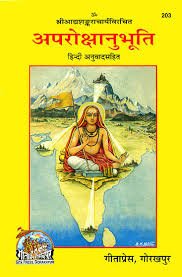
Aparokshanubhuti Aparokṣānubhūti, often translated as Direct Experience of the Self or Immediate Knowledge, is a profound Advaita Vedānta text traditionally attributed to Adi Shankaracharya. The term aparokṣa means “direct” or “immediate,” and anubhūti means “experience” or “realization.” Thus, Aparokṣānubhūti refers to the direct, experiential knowledge of the Self (Ātman)—not merely intellectual understanding or theoretical learning, but the actual realization of one’s true nature beyond all doubt. The central message of the text is that liberation (mokṣa) is not something to be attained in the future or elsewhere—it is the recognition, here and now, of our eternal nature as pure consciousness. The Self is already free, complete, and untouched by the body, mind, or world. However, due to ignorance (avidyā), we mistakenly identify with the body, the ego, and transient mental states. This ignorance creates the illusion of bondage, suffering, and separateness. The purpose of Aparokṣānubhūti is to remove this ignorance through viveka (discrimination), vairāgya (dispassion), and ātma-vicāra (self-inquiry). The text outlines a step-by-step path for the spiritual aspirant. It begins by stressing the importance of discrimination between the real and unreal. The real is that which is unchanging and eternal—namely, the Self. The unreal is everything that changes, including the body, thoughts, emotions, and external world. True knowledge arises when one ceases to identify with the unreal and abides as the real. This leads to dispassion: a natural letting-go of desires and attachments to impermanent things. Another key teaching is the practice of neti-neti (“not this, not this”), a method of negating all that is not the Self. By observing that all objects, thoughts, and sensations come and go, the seeker understands that none of them constitute the true Self. The Self is the silent witness, the unchanging awareness in which all experiences appear and disappear. The more this witnessing consciousness is contemplated, the clearer it becomes that one is not the mind or body, but this ever-present awareness. The text emphasizes that direct experience (aparokṣa) of the Self does not require rituals or external ceremonies. It is gained through knowledge and reflection, especially by meditating on the great Upanishadic statements (mahāvākyas) like “Tat Tvam Asi” (That Thou Art). When the mind is purified and free of distractions, the truth reveals itself spontaneously: “I am pure consciousness, untouched by birth or death.” Ultimately, Aparokṣānubhūti is both a philosophical and practical guide. It blends Advaitic insight with accessible meditative methods, making it especially valuable for modern seekers who want a direct, experiential path to spiritual realization. It assures us that Self-realization is not reserved for the few, but is available to anyone who seeks sincerely, practices discernment, and turns inward.

Adi Shankaracharya Aparokshanubhuti Book Read Post »

images 2025 09 19T113215.943
Adi Shankaracharya, ⁠Books by Sri Sathya Sai Baba

Adi Shankaracharya Vivekacintamani book

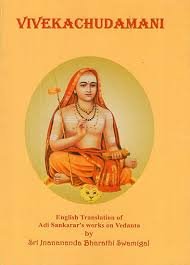
Vivekacintamani Vivekacintāmaṇi, meaning “The Jewel of Discriminative Thought,” is a philosophical treatise that emphasizes the power of viveka, or discernment, in the pursuit of self-realization. Rooted in Vedāntic and spiritual traditions, it teaches that true knowledge arises not merely from external learning but from inner reflection and the ability to distinguish the eternal from the transient. Just as a cintāmaṇi (a mythical wish-fulfilling gem) grants all desires, this “jewel of wisdom” is said to grant the highest knowledge — insight into the Self (Ātman) and liberation (mokṣa). The text encourages seekers to look beyond worldly illusions and sensory distractions, and to turn inward toward the unchanging reality. Through constant reflection, self-inquiry (ātma-vicāra), and disciplined living, one develops the clarity needed to overcome ignorance (avidyā) and realize the unity of the individual soul with the supreme consciousness (Brahman). The teachings of Vivekacintāmaṇi align with the core message of Advaita Vedānta: that liberation comes not from ritual or blind belief, but from knowledge and discrimination. In this way, the work serves as a practical and contemplative guide for spiritual aspirants seeking truth, freedom, and the ultimate fulfillment of life’s purpose. This introspective path begins with viveka—the faculty to distinguish the eternal reality from the transient appearances. In this process, the seeker learns that what is subject to change, decay, or death cannot be the ultimate truth. The world of names and forms is impermanent, but the witness consciousness within—the pure Self—remains untouched, undivided, and eternal. This Self, according to the Advaita Vedānta philosophy that underpins Vivekacintāmaṇi, is none other than Brahman, the ultimate reality. Through sustained inquiry (ātma-vicāra) and meditative introspection, the seeker gradually withdraws attention from the external world and turns inward. As the intellect is purified and the ego dissolves, the truth of non-duality (advaita) shines forth—the realization that the individual self is not separate from the universal Self. Vivekacintāmaṇi thus serves both as a philosophical treatise and a spiritual manual. It does not merely aim to educate the reader with abstract metaphysics, but to transform the way one sees oneself and the world. It encourages detachment, ethical living, mindfulness, and above all, inquiry into “Who am I?” This question, when pursued sincerely, leads to the direct realization that one is not the body, mind, or emotions, but the unchanging witness of all experiences. The “jewel” in the title refers to this supreme knowledge—a wisdom that fulfills the highest human aspiration, akin to how the mythical cintāmaṇi gem fulfills any material desire. However, unlike worldly gains, the fruit of viveka is lasting peace, freedom from suffering, and unity with the source of all existence. In conclusion, Vivekacintāmaṇi is a timeless work that addresses the deepest human longing—for truth, freedom, and self-understanding. It offers a clear and profound method to awaken from ignorance and attain liberation through discriminative reflection. Its teachings are especially relevant for those who seek a path of knowledge and introspection, making it a true “wish-fulfilling jewel” for the sincere spiritual aspirant.

Adi Shankaracharya Vivekacintamani book Read Post »