







































Who is Bhagavan Sri Sathya Sai Baba – Avatar & The Guru
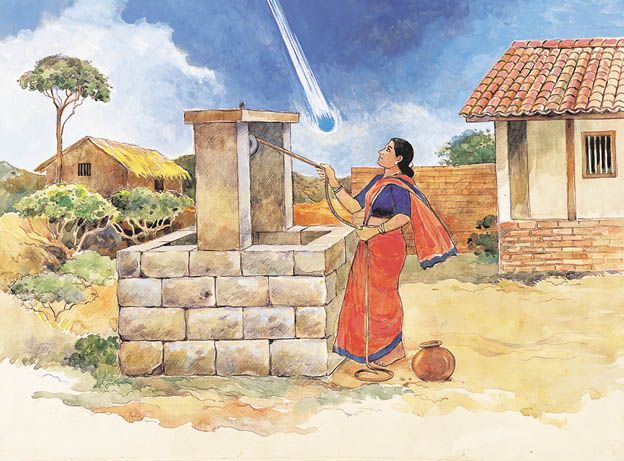
Puttaparthi hamlet, 1926: Eashwaramma (meaning: mother of God) draws water from the well when a big ball of blue light descends towards her and merges into her being.
Startled at what seemed to be a bizarre phenomenon, Eashwaramma fainted, yet that auspicious moment indicated the entry of divine incarnation into her womb.
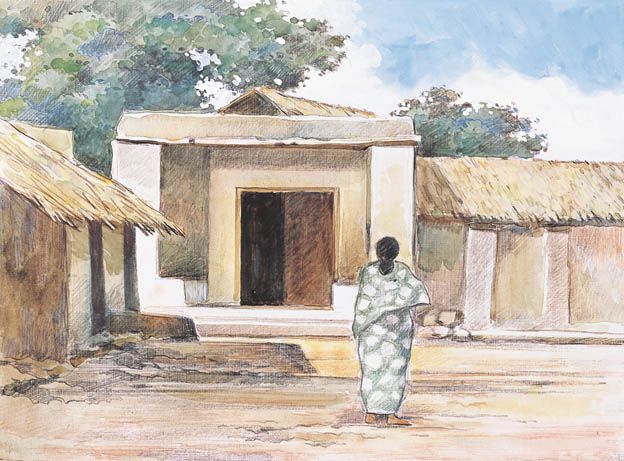
The thatched house in which young Sathyanarayana Raju was born on the morning of 23rd November 1926.
Baba’s father Pedda Venkama Raju had a small shop in the adjacent room.
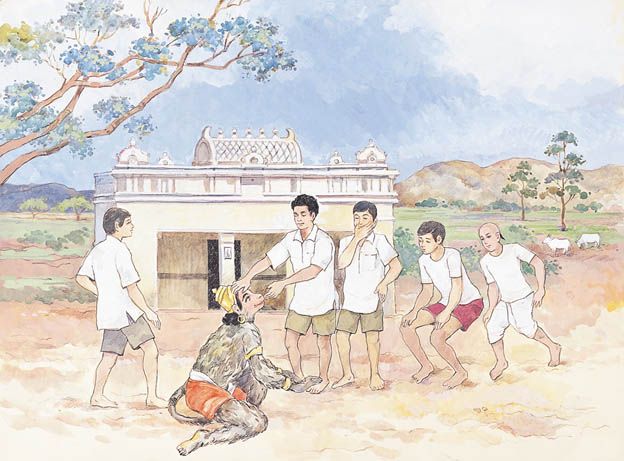
Sathya’s friends witness a huge monkey stopping the young lad from circumambulating the precincts at Hanuman Temple. Only after Sathya came to a halt, did the monkey vanish from the scene.
Later, Sathya revealed that the monkey was indeed Hanuman, the monkey god of treta yuga, who protested that as a devotee and servant, he should go around Lord Rama, who was His Master and Saviour, and not the other way around.
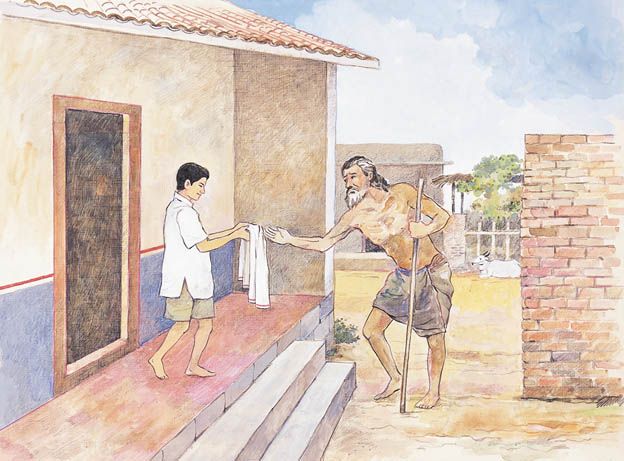
Sathya’s friends witness a huge monkey stopping the young lad from circumambulating the precincts at Hanuman Temple. Only after Sathya came to a halt, did the monkey vanish from the scene.
Later, Sathya revealed that the monkey was indeed Hanuman, the monkey god of treta yuga, who protested that as a devotee and servant, he should go around Lord Rama, who was His Master and Saviour, and not the other way around.
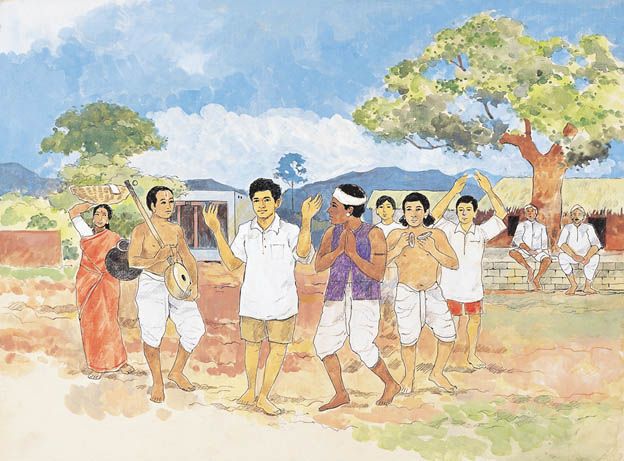
Sathya’s friends witness a huge monkey stopping the young lad from circumambulating the precincts at Hanuman Temple. Only after Sathya came to a halt, did the monkey vanish from the scene.
Later, Sathya revealed that the monkey was indeed Hanuman, the monkey god of treta yuga, who protested that as a devotee and servant, he should go around Lord Rama, who was His Master and Saviour, and not the other way around.
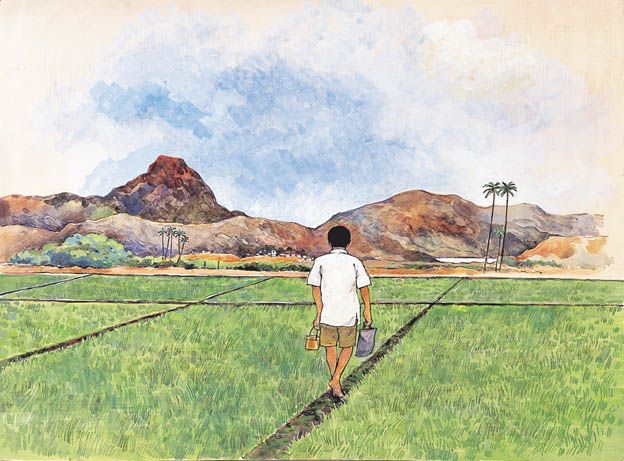
At the age of eight, Sathya had to walk to the neighbouring village of Bukkapatnam, about two and a half miles from Puttaparthi, to pursue His middle school learning.
Starting early, after a meal of cold rice and curds / cooked ragi (maize), rice and chutney, Sathya had to carry the afternoon meal in a bag, and the monsoon season meant wading through neck-deep water, with a school bag on His head.
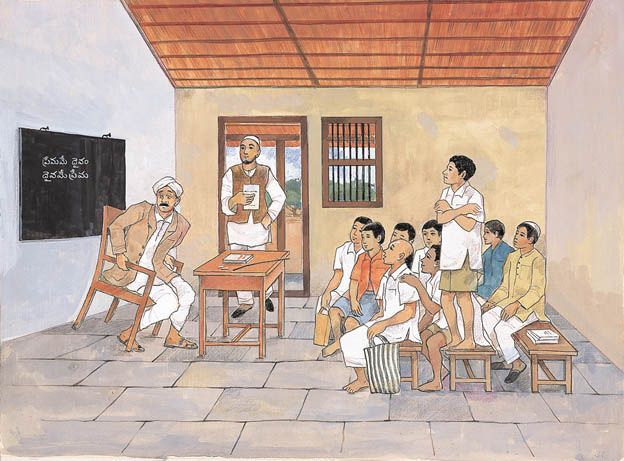
When young Sathya did not write the notes dictated by His teacher Kondappa, only to affirm that He could answer all the questions, Kondappa ordered Him to stand on the bench for three consecutive periods.
English teacher Mehboob Khan, who came in to tutor the pupils for the next hour, explained that Sathya could reply, and requested that He be made to sit down. Kondappa didn’t concur with the advice and tried to get up as the bell rang, only in vain, and got stuck to his chair.
Mehboob Khan commented, “We should never punish people without a reason, even if they are our students. This boy may appear as an ordinary boy, but there is immense divine power in Him. Ask Him to sit down, at least now.” Kondappa soon ordered Sathya to sit down, and the teacher could now get up from his chair.
Baba later remarked that this drama was not staged to humiliate the teacher but to slowly make people aware of His latent divinity.
In the late 1930s, Sathya had to move to Kamalapuram in the neighbouring Cuddapah District with His elder brother Seshama Raju and his sister-in-law’s family. The Raju family felt the education there would bestow on Sathya a better future.
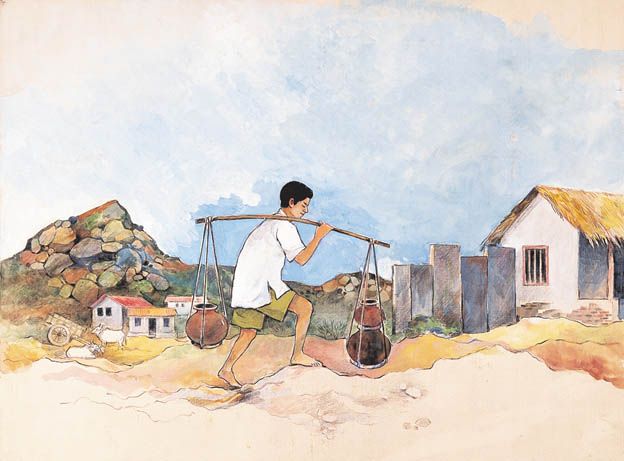
Not happy with the prospect of housing Sathya in their premises, the in-laws put the young boy in charge of several household chores. Sathya took to all tasks silently and cheerfully, including the arduous job of fetching good drinking water from a nearby well.
Little Sathya woke to the bell of a steam engine at 4:00 every morning, carrying two pots full of water, before going to school.
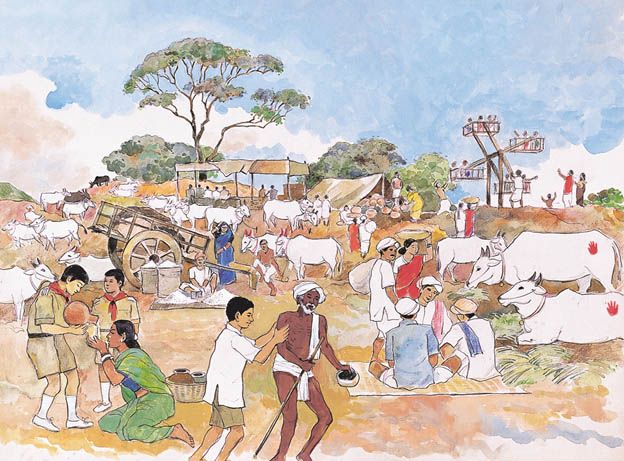
Despite any money to foot the trip expenses to Pushpagiri’s annual cattle fair, Sathya joins the scout boys to render service!
Walking the entire distance on foot, while others reached by bus, the young lad carried out the duties sincerely. Unable to afford the scout uniform, he wore the only piece of clothing he had; living frugally, spending little on food, Sathya skipped many meals and drank water to fill his stomach. The little boy even saved some money to pick up gifts for his family in Kamalapur, yet what awaited him was a severe punishment, for his absence led to a lack of drinking water supply.
Baba later revealed that he deliberately created such painful situations to impart the value of forbearance and equanimity.
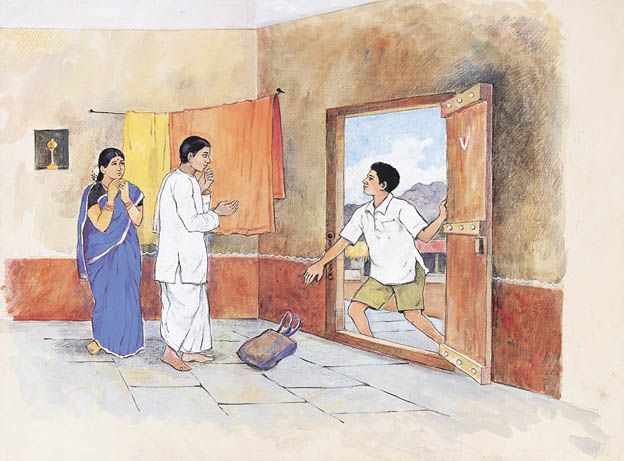
On 20 October 1940, standing in brother Seshama Raju’s doorway, Sathya cast aside His schoolbooks and proclaimed, “I am no longer your Sathya. I am Sai.”
The sister-in-law stood stupefied, blinded by the splendour of Baba's halo.
He addressed her thus: “I am going; I don't belong to you! Maya has gone. My devotees are calling Me; I have My work; I can't stay here any longer."
Despite repeated pleas, Sathya did not step in.
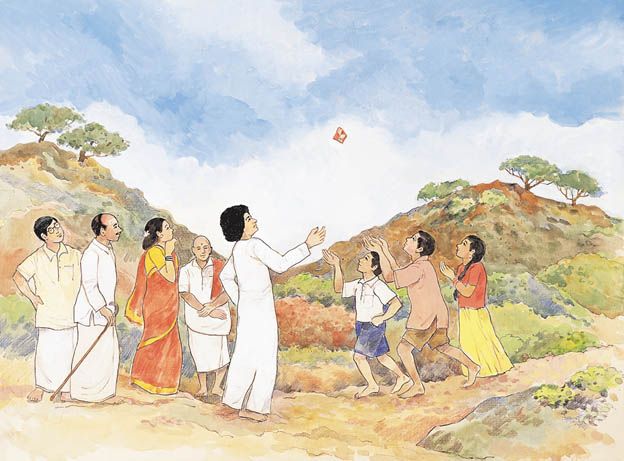
On 23 May 1940, when Sathya gave sugar candy and flowers out of nowhere to His family, and neighbours too rushed in. With a wave of the hand, He gave them each a few goodies.
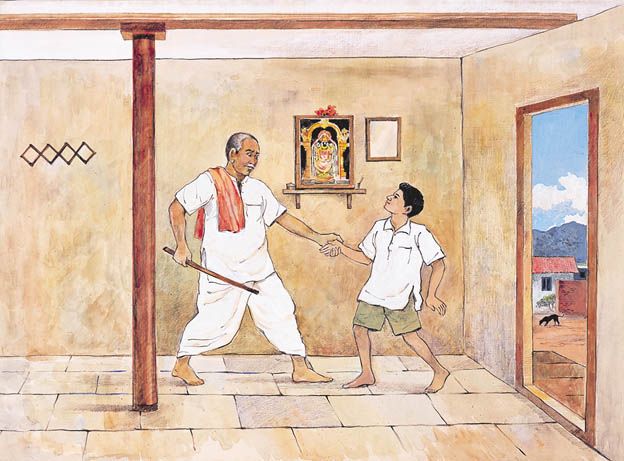
Infuriated by what father Venkama Raju thought was a trick, he decided to put an end right away. Arming himself with a stick, he confronted Sathya: "Are You a God, a ghost or a madcap? Tell me!"
Sathya promptly responded, “I am Sai Baba." Venkama Raju was stunned into silence, as the stick slid from his hands.
Sathya continued, “I belong to Apastamba Sutra; I am of the Bharadwaja Gotra; I am Sai Baba; I have come to ward off all your troubles; keep your houses clean and pure." The elder brother, Seshama Raju went near Him, and asked, "What do You mean by 'Sai Baba'?" He did not reply but only said this much - “Your Venkavadhoota prayed that I will be born in your family. So, I came.”
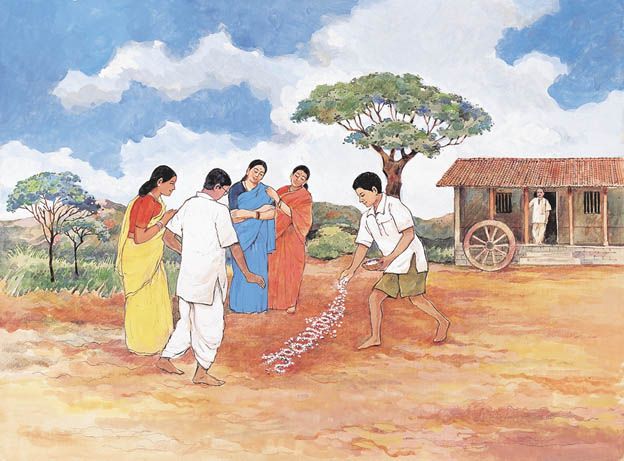
Disbelieving Sathya’s strange claim, a villager challenged him: “If You are Sai Baba, show us some proof now!”
“Yes, I shall. Place those jasmine flowers in My hands”, replied a calm Sathya.
Sathya then threw those flowers on the floor with a quick gesture and said: “Look!”
All those present stood to witness the flowers reading out the Telugu letters: “Sai Baba”.
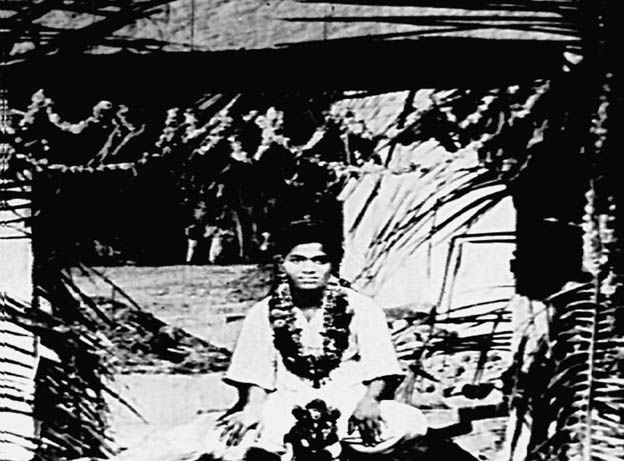
After His Avataric Declaration on the morning of 20 October 1940, Sathya went straight to the garden of Anjaneyulu, an Excise inspector and ardent devotee of Baba.
As he sat on a rock amid trees, word quickly spread gathering a crowd of both mystics and sceptics. The garden soon resonated with the voices of hundreds singing the first prayer that he taught them: ‘Manasa Bhajare Gurucharanam Dustara Bhava Sagara Tharanam’ (Meditate on the Feet of the Guru in thy mind, which will take you across the turbulent sea of Samsara / worldly existence)
A photographer then came to capture a picture of the garlanded young Sai on the rock, and he suggested removing the crude stone that obstructed the view. Baba paid no heed to his request, and the developed photo shows to posterity an image of Shirdi Sai Baba, in place of the stone.
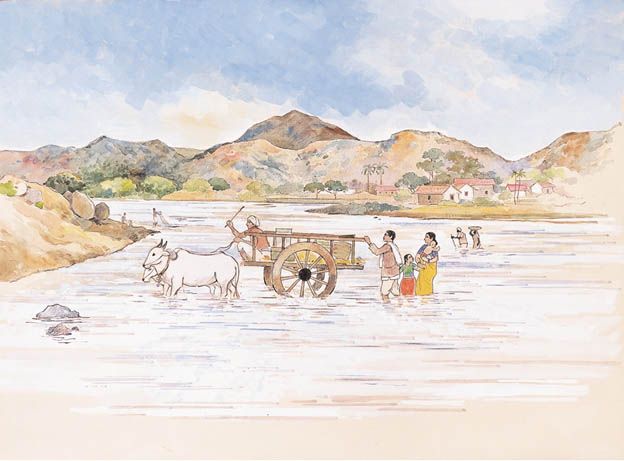
In the early 1940s, Puttaparthi was a small hamlet with just two lanes at right angles, located not far from the Chitravati River. It had an assorted cluster of mud huts, and a few brick-and-mortar houses, and a population of ~200.
With no direct roads, one had to first reach the neighbouring Karnatakanagepalli village, situated on the other side of the Chitravati river, and then cross the river either by a bullock cart or walk across the sand and wade through the water.
Even by 1945, when Baba’s first ashram was inaugurated, travel to Puttaparthi continued to remain difficult.
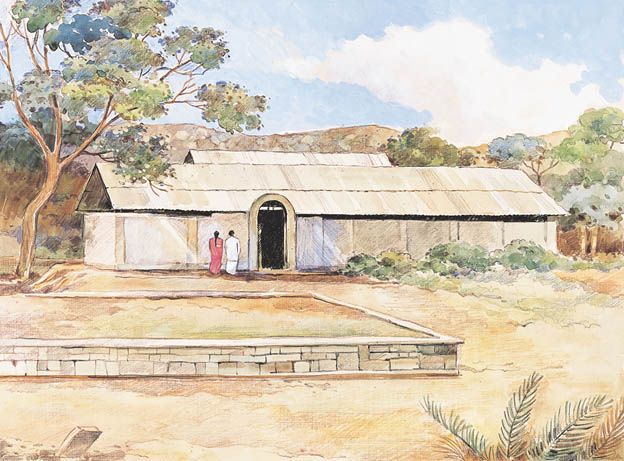
Two widowed, yet generous women Subbamma and Kamalamma were ardent devotees of Baba right from their early years, who decided to formally transfer their vacant land to make it a ‘Sai Baba Matam’ (spiritual headquarters). As Baba did not want to own any property, His father Venkama Raju agreed to act as a land manager, and legal papers were signed.
As the two women did not have enough money to build a house for Baba, others pitched in and a small tin shed with an annexe was constructed for Baba to live in. Inaugurated on 14 December 1945, this was Baba’s first ashram, where He felt far more comfortable, and the ashram functioned as a community, with visitors pouring in from near and far.
This cluster became Baba’s home for five years, with the biggest room as the prayer hall. Behind the large shed in the front were the living quarters, with a well that provided water.
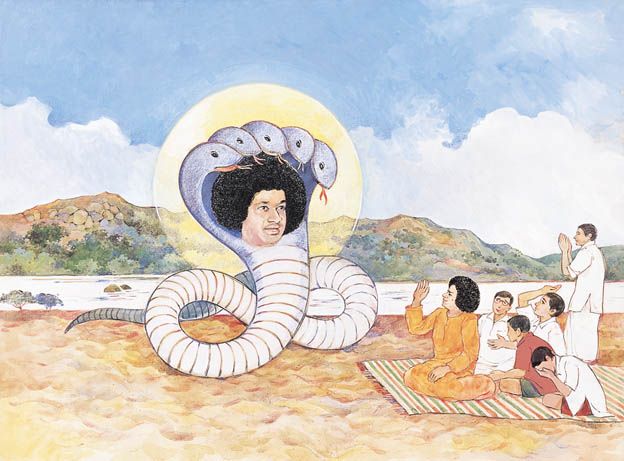
Once when Baba was resting with some devotees on the Chitravati river sands, He announced: ‘Look! Naga Sai is coming!’
The crowd looked on, as a huge yet charming snake was slithering and winding gracefully, in a dancing fit, with a likeness to Adi Sesha, the divine serpent on whom the Trinity Avatar Vishnu reclines.
As it approached closer, its head suddenly transformed into the strikingly beautiful countenance of Baba. Despite the stunning sight, fear struck a chord amidst those assembled, as it came near.
They beseeched Baba’s interference: ‘No Swami, no! Please ask it to go away!’
Looking gently at the snake, He said, ‘Go now, Naga Sai’, making the snake disappear!
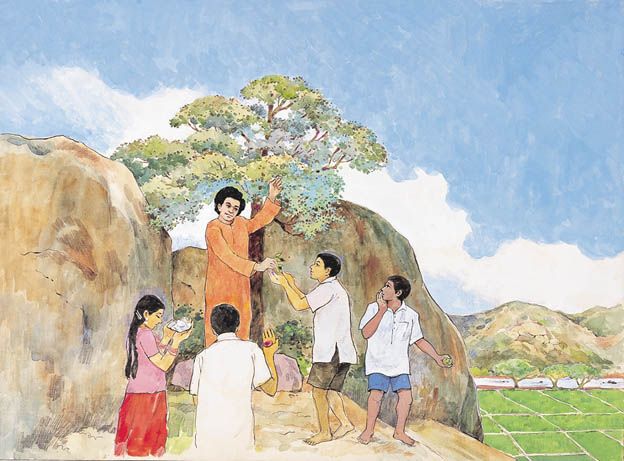
Kalpavriksha [or] Wish-Fulfilling Tree, is a tamarind tree atop a small hill adjoining the Chitravati river, and it bore many a witness to the divine plays of young Sathya.
Baba would pluck a handful of leaves, giving a leaf to each assembled, and asking them to keep their palms closed. As the crowd opened them at His command, they stood to see all kinds of things: sugar candy in one hand, rosary in another, peppermint in the third. On closing and reopening them as per His command, they would see only tamarind leaves; imparting in those assembled, the impermanence of material things.
At other times, Baba used to pluck an apple from one branch, a mango from another, an orange from the third, and pears and figs from a fourth and fifth. It didn’t matter if the fruit was in season or not!
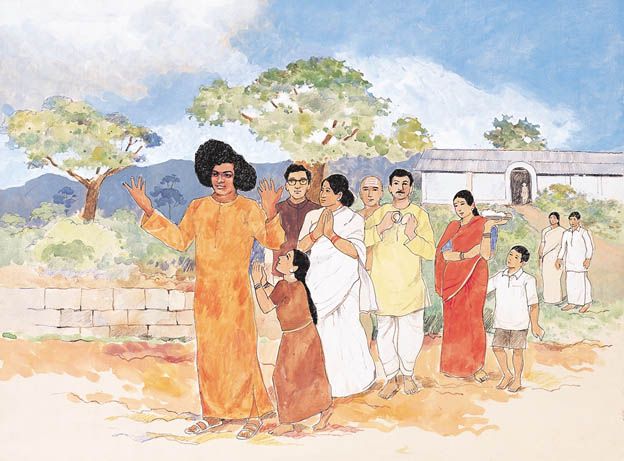
Once Baba announced the arrival of the divine river Ganga to the ashram inmates, and said, “None of you should go even one inch beyond these outstretched hands of Mine. Look there! Ganga is rushing forth!’
The approaching ferocity and high tides along with the roaring noise, scared those around. As it almost touched the hem of Baba’s robe, His extended touch immediately quietened the water beneath His hand, whilst the waters beyond were still frighteningly turbulent.
Sacred items such as flowers, turmeric powder, and kumkum were offered to the river Goddess, and Baba broke the coconuts. ‘We are very happy that you came to visit us. Ganga, now go back please!’ uttered Baba, affectionately patting the waves with both His hands. The river receded completely, and not a drop of water was seen anywhere.
Baba laughed at everyone’s nervous disbelief, and pointed to His feet, on which adorned a garland of jasmine flowers! He picked up the garland, smelt it, and distributed the flowers to everyone. Each jasmine bud was almost the size of a rose, softer than cotton, emanating an ethereal sweet fragrance all around.
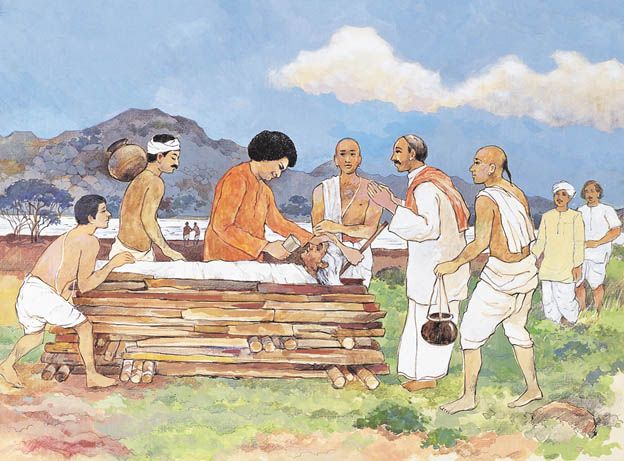
“I will never go back on my word”: Subbamma, an ardent devotee of Baba, had prayed that He be with her in the last moments of her life. However, when her ill health took a turn for the worse, Baba was in Chennai, and she breathed her last.
Questions soon arose about Baba’s absence, even as funeral arrangements were being made.
When Baba arrived a little later, the relatives commented bitterly, “Baba! Subbamma had great hopes till her last moment that You would come and pour a few drops of water in her mouth. Having served You for so long, could You not have fulfilled her desire at least?”
Even as ants were crawling over her lifeless body, Baba announced, “She is not dead. Please remain quiet.” With the tulsi leaves brought by Subbamma’s centenarian mother, Baba called Subbamma.
The devoted woman opened her eyes and held Baba’s hands tightly, as tears of joy and gratitude rolled down. After exchanging some personal words with the risen Subbamma, He poured the basil water into her mouth, and bade her to close her eyes; she breathed her last soon after, leaving everyone wonder-struck.
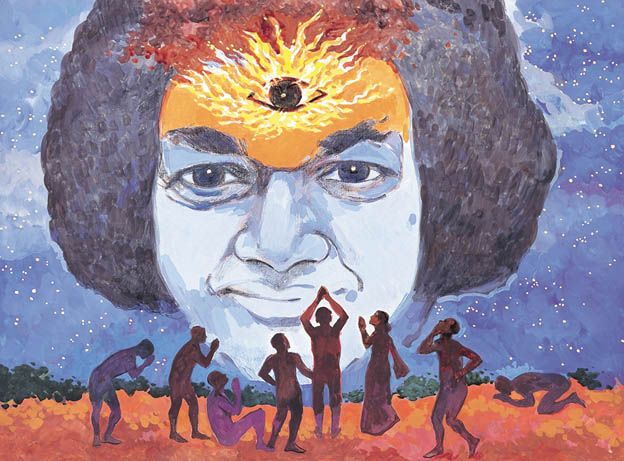
Once Baba decided to reveal the Third Eye to a group of devotees, a gigantic head of Baba stretched across the entire sky, as an orifice appeared on His forehead with fiery sparks rising from the opening.
Onlookers stood dazzled by the sheer brilliance yet fretted about what would happen to their beloved Sai. Soon many fell unconscious, making the rest fearful. As they began to cry, Baba suddenly appeared in their midst, giving them a gentle pat. Confused by this strange experience, and not knowing why people fainted, they hugged Baba and continued to weep.
As few regained consciousness, they gently enquired about Baba’s well-being and patted His face to ensure that He was really amidst them. With a hearty laugh, Baba assured them and applied vibhuti on all their foreheads. The strange experience had made them feel like they were floating on air.
As the out-of-the-world experience remained with the onlookers the next day, Baba informed them that this was a result of their prayers during many past lives. He added this was not even a thousandth part of the third eye’s brilliance, and He had to tone it down so they could withstand the spectacle! As Baba smeared vibhuti again on each forehead, they gained a semblance of normalcy.
On Vaikuntha Ekadashi day, the 14th of December, 1945, a modest first mandir of Baba was inaugurated in Puttaparthi.
Baba delivered the first-ever public discourse in Karur in Tamil Nadu, starting the tradition of instructing through His divine discourses. Bhagawan Baba delivered thousands of divine discourses over the next 63 years.
Foundation laid for Prasanthi Nilayam – the Abode of Highest Peace that would in future become the spiritual capital of the world.
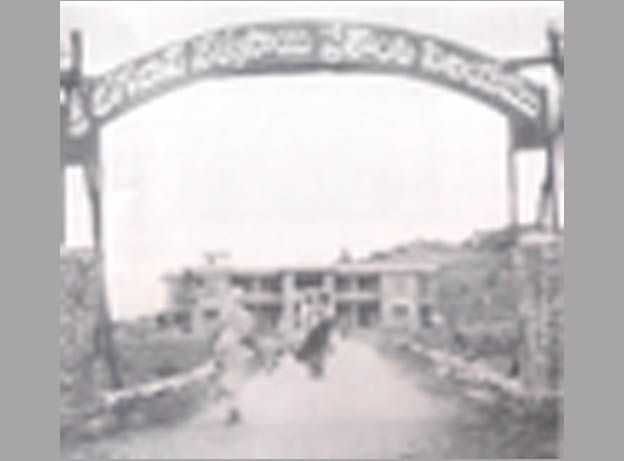
On Baba’s 25th birthday, Prasanthi Nilayam Ashram was inaugurated.
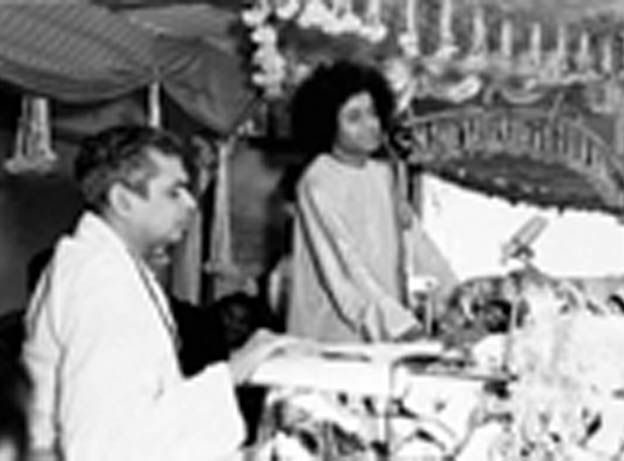
Foundation stone laid. Sri Sathya Sai General Hospital, Prasanthi Nilayam was inaugurated in ‘56, making it the very first medical care facility in the entire region.
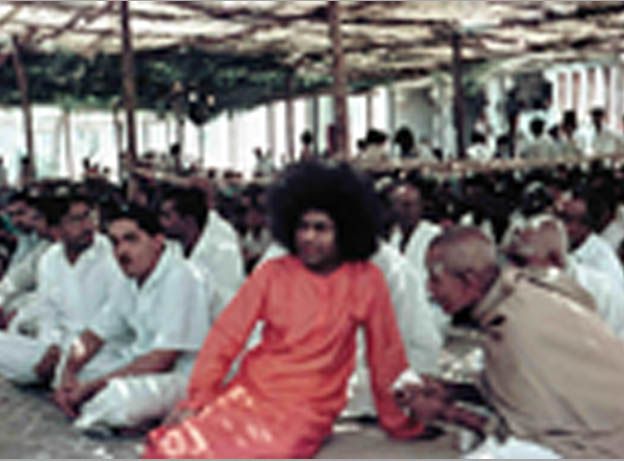
Barely a decade after the fall of British colonialism, Baba presided over the 9th All India Divine Life Convention in Venkatagiri, a landmark event aimed at reviving the glory of Indian culture and spirituality. Swami Satchidananda of the Sivananda Ashram, Rishikesh, was the Organising Secretary.
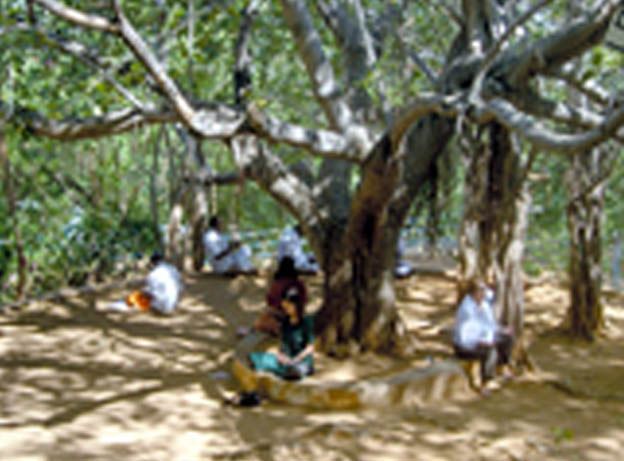
‘Vata Vriksha Sthapana’ - Baba planted a Banyan Tree on a hill behind the Prasanthi Nilayam that would serve the seekers as a sanctum for meditation.
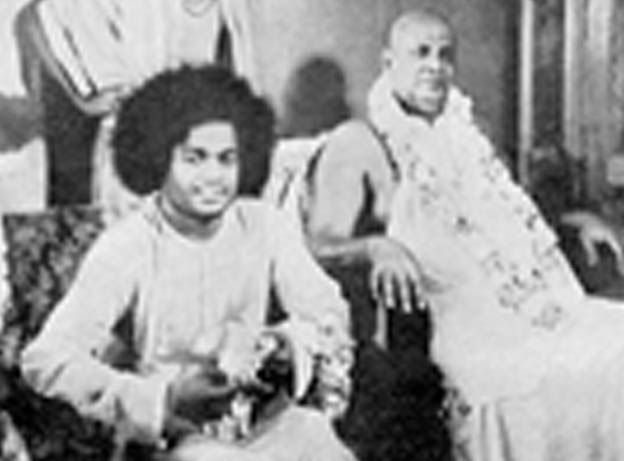
Visit to Rishikesh (Vasishta Guha, Swami Sivananda Ashram), Haridwar, Kashmir.
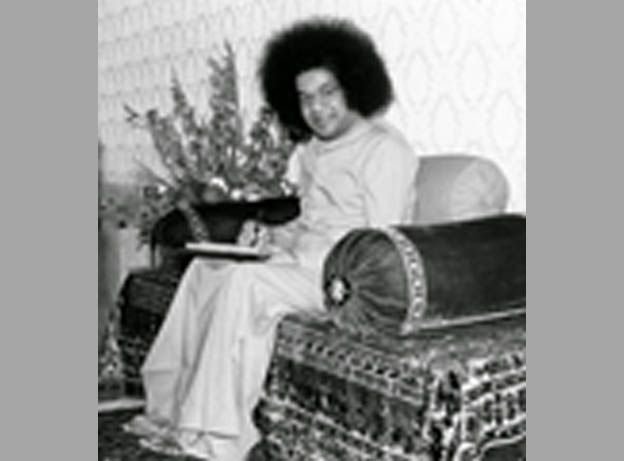
Baba's first published writings began with the launch of Sanathana Sarathi which has served as an elixir to many devotees and readers of His message for decades. The Ashram started publishing its monthly magazine ‘Sanathana Sarathi’ to spread Baba’s message of universal love and selfless service across the country and overseas. Baba wrote 15 series of articles under varied titles including Prema Vahini, Dharma Vahini, Dhyana Vahini, Prasanthi Vahini and Sandeha Nivarini, in Telugu and continued to do so over the next quarter century thereby setting a record of sorts in spiritual journalism.
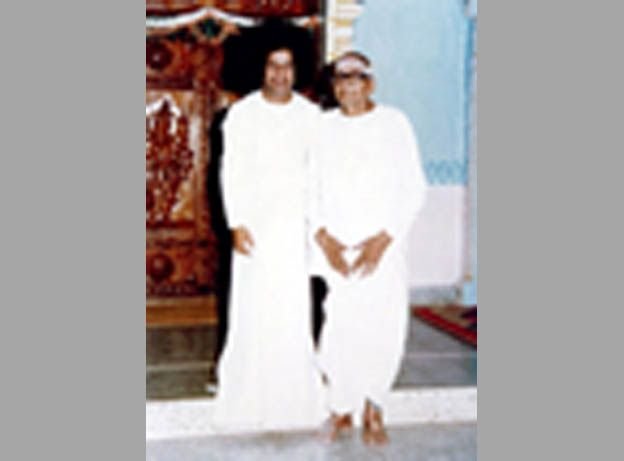
The first volume of Baba’s biography ‘Sathyam Sivam Sundaram’ by noted historian from Mysore University, Professor Narayana Kasturi, was published, offering a well-researched and comprehensive account of Baba’s life till then.
Sri Sathya Sai Baba started the Sri Sathya Sai Seva Organisations, India.
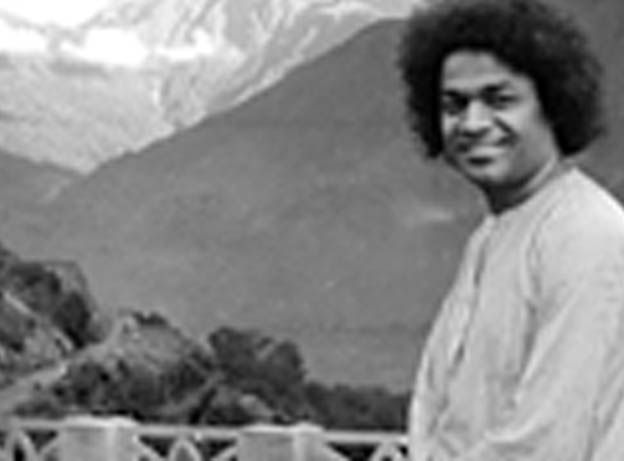
Baba visited the sacred shrine of Badrinath with the then Governor of Uttar Pradesh Sri B. Ramakrishna Rao. During this visit, Baba’s reconsecrated the lingam that was placed in the inner sanctum sanctorum by Jagadguru Adi Shankaracharya many millennia ago.
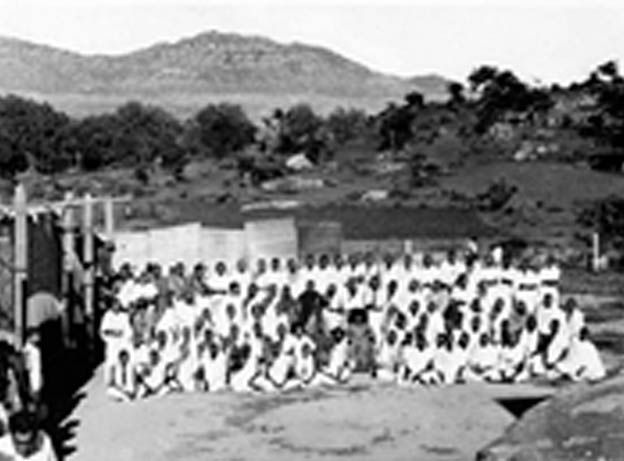
Veda Purusha Jnana Saptaha Yajna was inaugurated during Dasara. Vedic Scholars from across India gave discourses on the universality of the Sanathana Dharma as a harmonious way of life. A scholar from Sorbonne, France named Valestin came to Prashanti Nilayam, was blessed with an interview and was overwhelmed with Baba’s vision for the Vedic way of life.
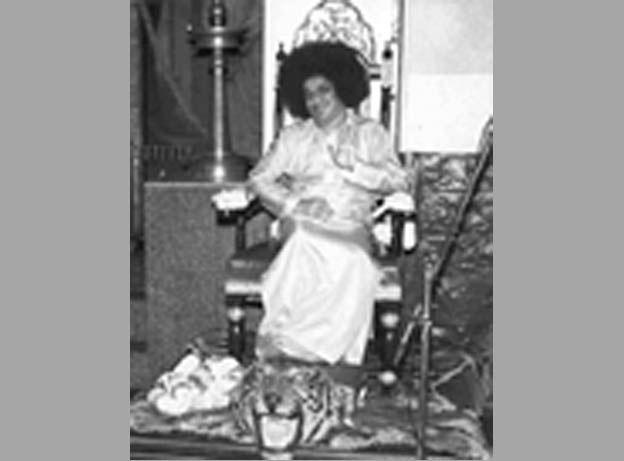
An extraordinary event took place when Baba cured Himself of paralysis, witnessed by hundreds. It was later in the discourse on that day, that Baba revealed the secret of the Triune Sai avatars (Shirdi Sai, Sathya Sai and Prema Sai) and declared that He is Shiva-Shakti Swaroopa.
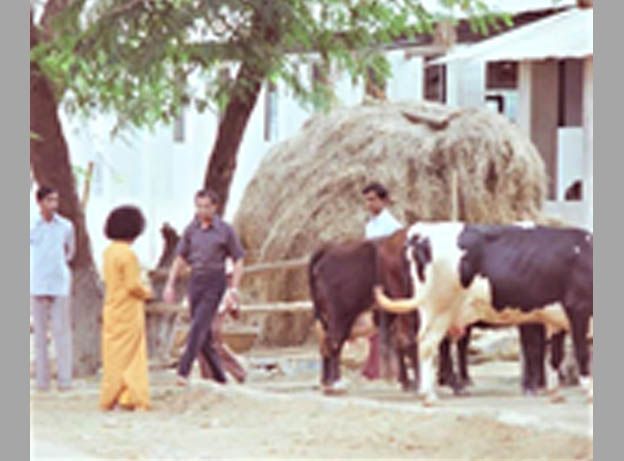
Baba established the Brindavan Ashram in Whitefield, the outskirts of the South Indian city of Bengaluru. This ashram eventually became the second ashram of Sri Sathya Sai Baba after Prasanthi Nilayam, which enshrined the divine atmosphere of the 'Vraj bhoomi' - the land of Lord Krishna.
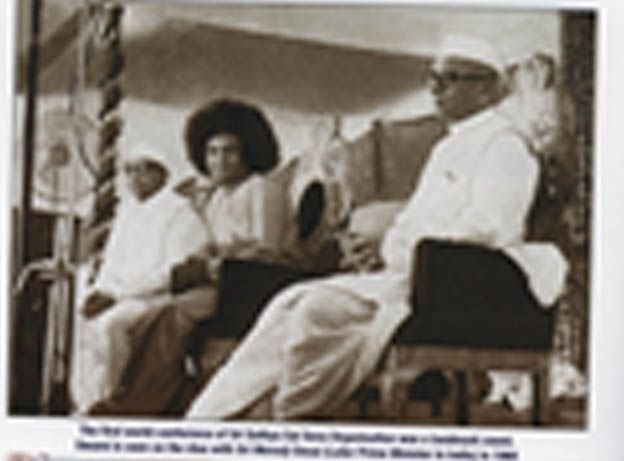
Sri Sathya Sai Baba inaugurated Dharmakshetra, the Sai headquarters at Andheri, Mumbai. The event coincided with The First World Conference of the Sri Sathya Sai Seva Organisations. Devotees from Ceylon, Singapore, Manila, Kuwait, Dubai, Casablanca, Mombasa, Nairobi, Kampala, Arusha and Malta, Hong Kong, Fiji, Tehran, Tokyo, West Indies, Peru, Brazil and the Pacific and Atlantic coasts of America attended.
Baba commenced His first and only international tour to East Africa. Bob Raymer of Los Angeles was part of the entourage along with a few devotees from India.
Sri Sathya Sai College for Women started at Anantapur, Andhra Pradesh, making it the lead college that became part of the Sai university network of campuses.
Sri Sathya Sai Baba started the Mahila Vibhag (Women’s wing) of the Sri Sathya Sai Seva Organisations, India.
Sri Sathya Sai College for Men started at Brindavan, Whitefield, Bengaluru.
Somnath Temple visit and reconsecration of the space by Sri Sathya Sai Baba.

Sri Sathya Sai Central Trust was established for charitable social welfare projects.
The First Summer Course in Indian Culture and Spirituality was held by the instructions of Baba for the youth of the country to propagate the rich values and cultural heritage of India. This was the first of many summer courses that inspired thousands of youth. Baba Himself delivered discourses on various topics clarifying the message of the ancient scriptures of India. Many eminent guest speakers were invited to deliver talks. The students would also participate in rural service activities.
Inauguration of Poorna Chandra Auditorium.
Baba’s Ashram in Hyderabad – Sivam was inaugurated.
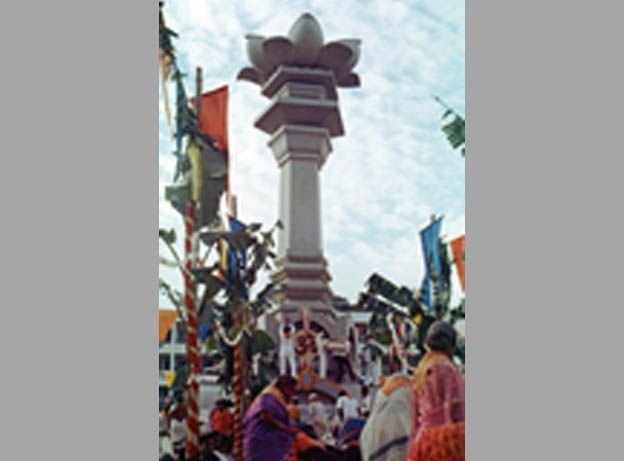
Baba inaugurated the Sarva Dharma Stupa in Prasanthi Nilayam – symbolising the unity of world religions, on the occasion of His 50th Birthday celebrations.
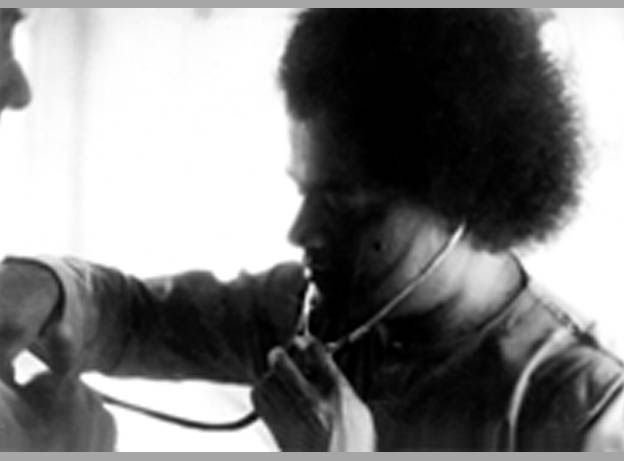
Inauguration of the General Hospital in Whitefield, on the outskirts of the city of Bengaluru.
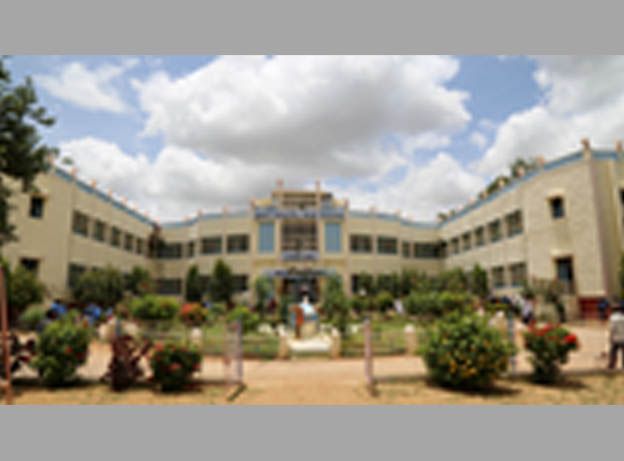
Srimathi Eswaramma High School was inaugurated in Puttaparthi.
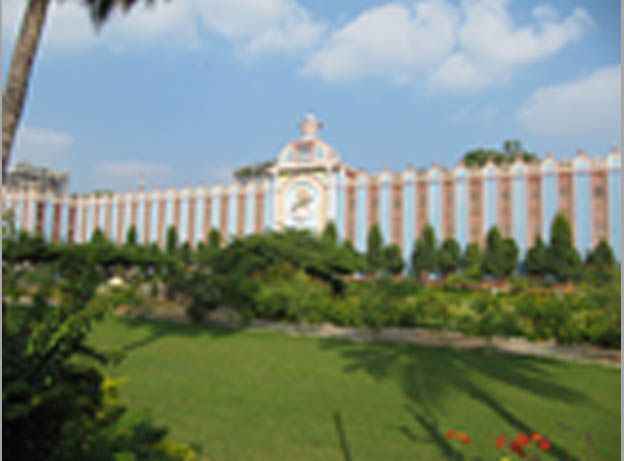
Inauguration of college at Prasanthi Nilayam.
Sri Sathya Sai Baba’s Ashram in Chennai – Sundaram was inaugurated.
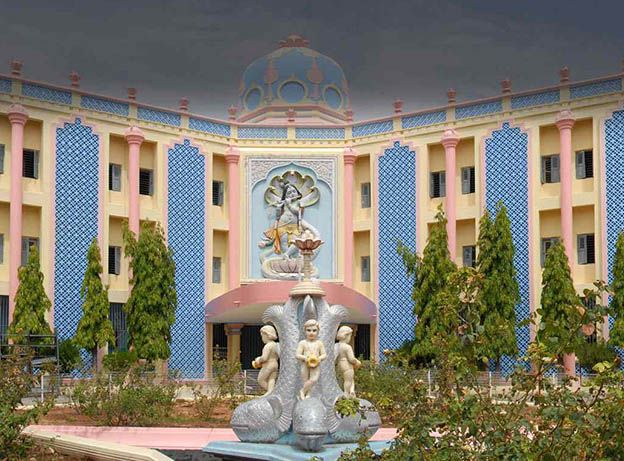
Inauguration of the Sri Sathya Sai Primary School and Higher Secondary School.
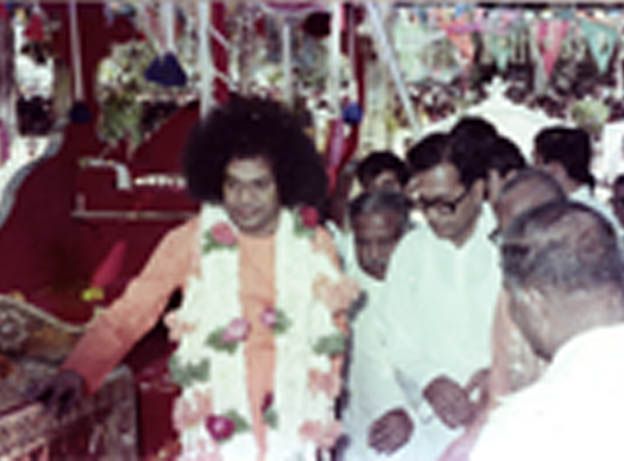
Sri Sathya Sai Institute of Higher Learning (Deemed University) was inaugurated in Prasanthi Nilayam on November 22 in the presence of the then Chief Justice of India, Justice Y.V. Chandrachud and a host of other dignitaries and heads of state.
The Sri Sathya Sai Books and Publications Trust (SSSBPT) was established. Aimed at fostering human values through Baba's noble teachings via various publications spread over different media, SSSBPT has been relentlessly on the task over the past quarter century, serving as a lifeline between Prasanthi Nilayam and the world. (www.sssbpt.org)
Sri Sathya Sai Planetarium was inaugurated at Prasanthi Nilayam.
Sanathana Samskruti – the Eternal Heritage Museum was inaugurated at Prasanthi Nilayam.
Sri Sathya Sai Baba inaugurated the 65-foot-high statue of Hanuman – the acme of devotion on the top of the mountain in the Hill View Stadium at Prasanthi Nilayam on the occasion of the 65th Birthday Celebrations.
Sri Sathya Sai Super Specialty Hospital was inaugurated in Prasanthigram by the then Prime Minister of India Sri P.V. Narasimha Rao.
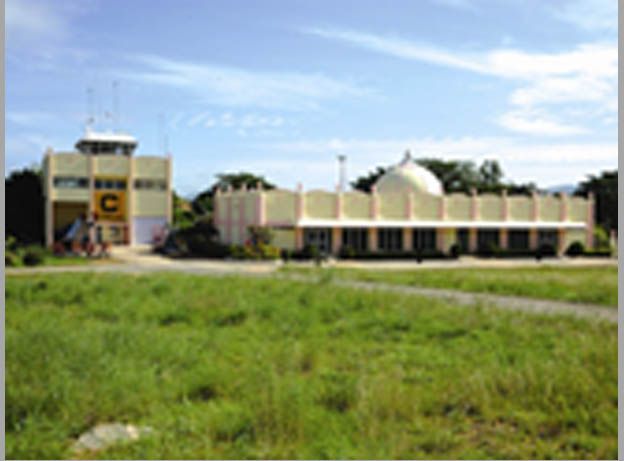
Sri Sathya Sai Airport was inaugurated at Prasanthi Nilayam.
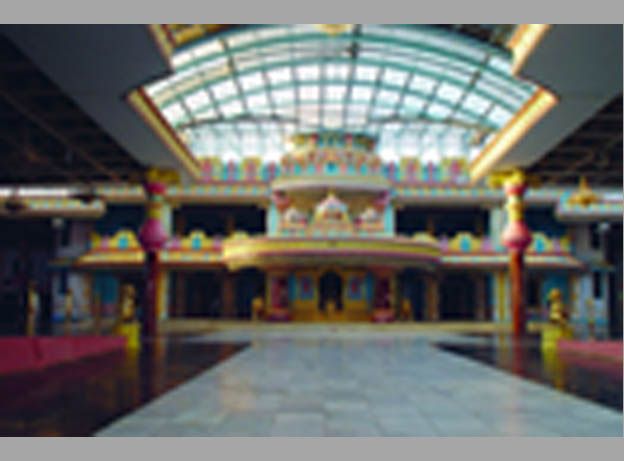
Inauguration of Sai Kulwant Hall in Prasanthi Nilayam to accommodate up to 20,000 devotees at a time for Baba’s daily darshans.
Sri Sathya Sai Drinking Water Supply Project-Anantapur was dedicated to the people of India on the occasion of Baba’s 70th Birthday celebrations by the then President of India Dr. Shankar Dayal Sharma.
The first Sai Youth World Conference at Prasanthi Nilayam was attended by thousands of youth from hundreds of countries. Sai movement is poised for continuity and renewal.
Unity Cup Cricket Match held between India XI against World XI at Hillview Stadium in Prasanthi Nilayam.
Sri Sathya Sai International Centre in New Delhi was inaugurated.
The Sathya Sai Mirpuri College of Music was inaugurated in Prasanthi Nilayam.
Chaitanya Jyoti Museum – a tribute to Bhagawan Baba’s life and message on the occasion of His 75th Birthday celebrations was inaugurated.
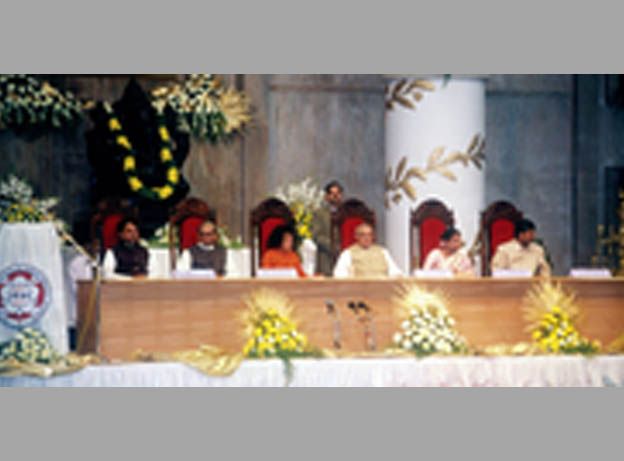
Sri Sathya Sai Super Specialty Hospital at Whitefield, Bengaluru was inaugurated by the then Prime Minister of India, Sri Atal Bihari Vajpayee.
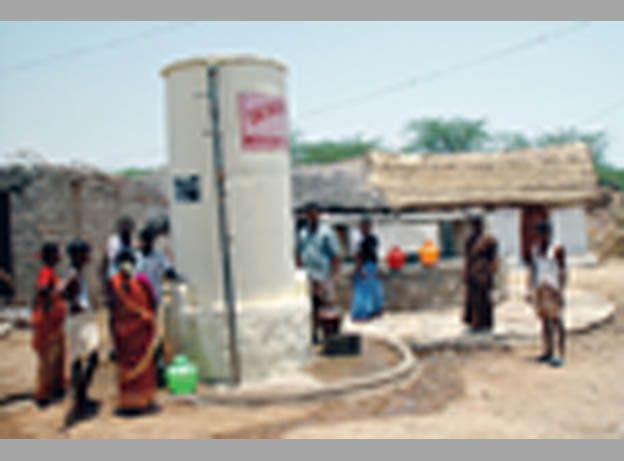
Sri Sathya Sai Water Project was launched in Medak and Mahbubnagar.
Radio Sai Global Harmony was launched from Prasanthi Nilayam to take Baba’s message of love and harmony to the world 24/7 via the internet, satellite radio, and Heart-to-Heart e-journal.
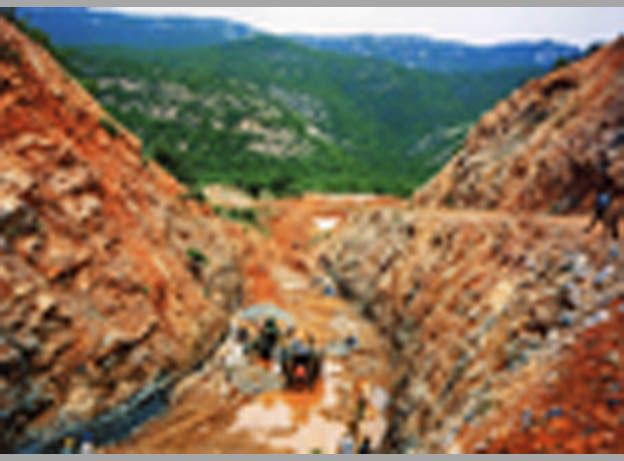
Chennai Water Project launched.
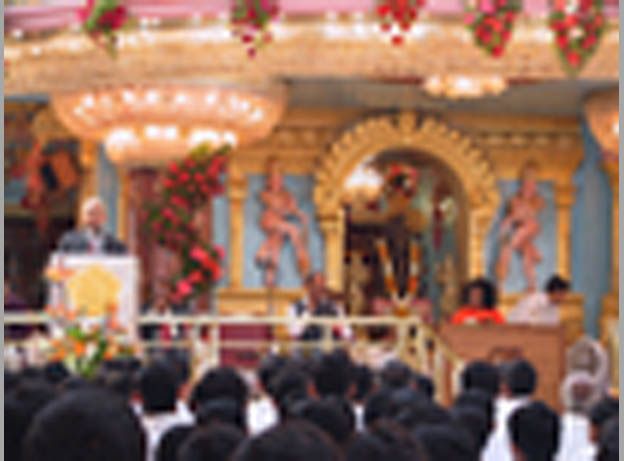
UGC Golden Jubilee Seminar on Ethics and Education held at Prasanthi Nilayam; renowned academics and heads of many universities across India participate in the proceedings in the presence of Baba.
Interfaith Conference, Prasanthi Nilayam
Sri Sathya Sai 8th World Conference on the theme ‘Unity, Purity, Divinity’ held in Prasanthi Nilayam.
Sri Sathya Sai International Centre for Sports and Indoor Stadium was inaugurated by then President of India, Dr. APJ Abdul Kalam.
Ati Rudra Mahayajna conducted at Prasanthi Nilayam by Baba for Universal peace and welfare; installation of the Sayeeshwara Lingam at Prasanthi Nilayam.
Baba visits Chennai, much to the elation of devotees from Tamilnadu.
Ati Rudra Mahayajna for world peace and prosperity conducted in Chennai in the presence of Baba; establishment of Sai Sundareshwara Lingam at Sundaram.
Over 6000 youth from 85 countries attend the Sai World Youth Conference on the theme ‘Ideal Sai Youth – Messengers of Sai Love’ in Prasanthi Nilayam.
Sri Sathya Sai World Education Conference on the theme ‘Sathya Sai Education in Human Values’ was held in Prasanthi Nilayam.
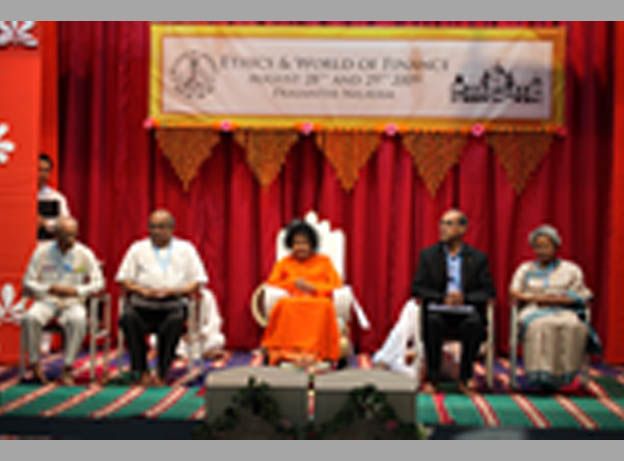
A high-profile conference on Ethics and the World of Finance was held at the Sri Sathya Sai Institute of Higher Learning (SSSIHL) where India’s leading bankers and financial experts participated; Baba addressed the valedictory function of the Conference.
Odisha Housing Project
Sri Sathya Sai 9th World Conference held in Prasanthi Nilayam.
Sri Sathya Sai Baba visits Delhi.
Baba inaugurates Sai Ananda Vilas at Shimla.
The 85th year of Bhagawan Baba’s Divine Advent is celebrated across Bharat and 125 countries. Baba gives His last discourse on the occasion of the 29th Convocation of Sri Sathya Sai Institute of Higher Learning at Prasanthi Nilayam in the presence of the Prime Minister of India, Dr Manmohan Singh and a host of other dignitaries.
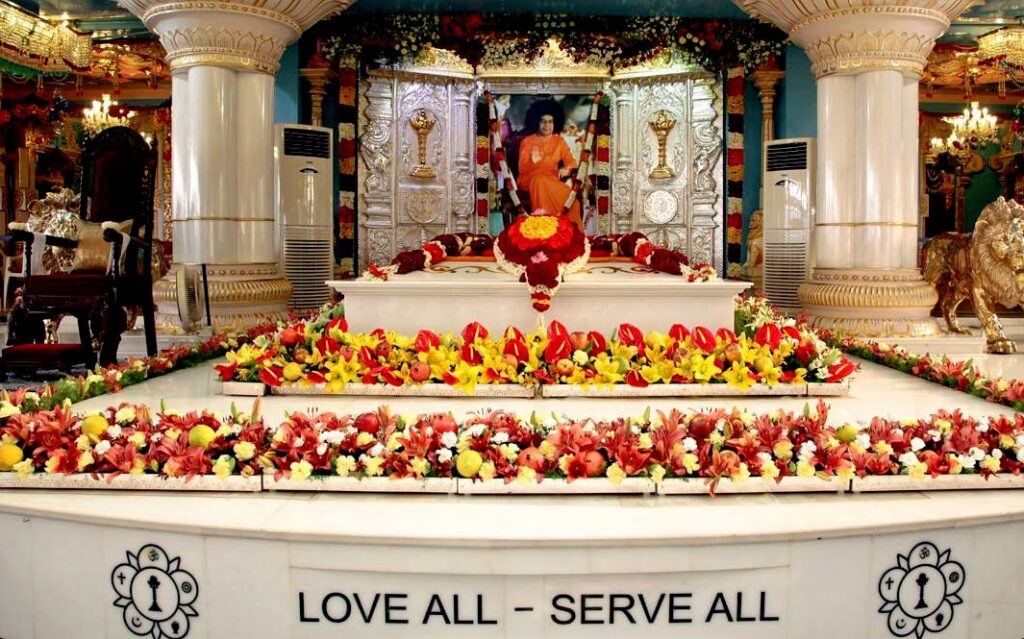
The Eternal merges into Eternity. His legacy of Love and Selfless Service lives on through millions.




