













Hari Om

Menu

February 2026

krishna2
Krishna

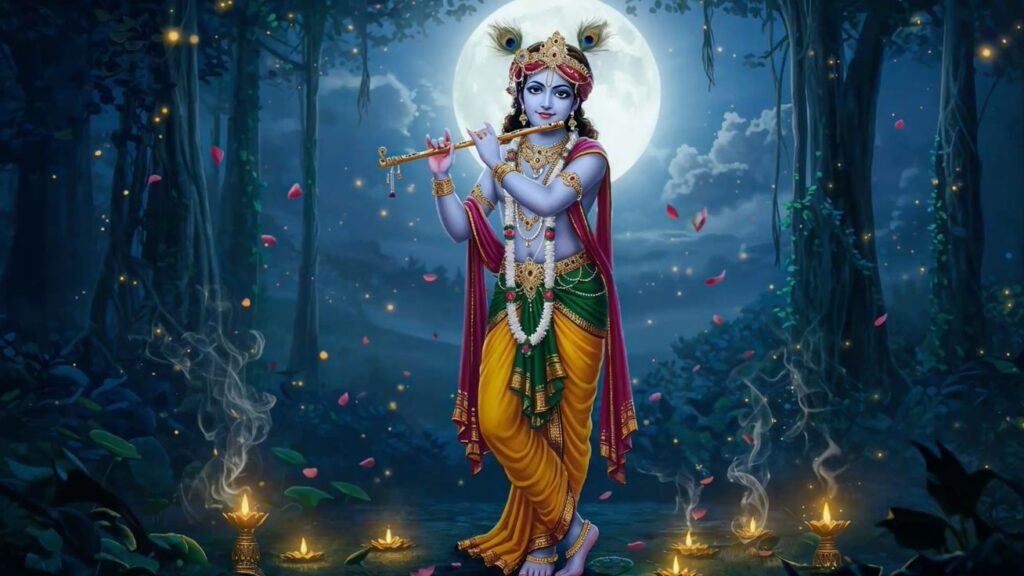
Bala Mukundashtakam

Bala Mukundashtakam करारविन्देन पदारविन्दं मुखारविन्दे विनिवेशयन्तम् ।वटस्य पत्रस्य पुटे शयानं बालं मुकुन्दं मनसा स्मरामि ॥ १॥ karāravindena padāravindaṃ mukhāravinde viniveśayantamvaṭasya patrasya puṭe śayānaṃ bālaṃ mukundaṃ manasā smarāmi My mind remembers that beautiful Bala Mukundam who with his lotus-like hands holds his lotus-like feet and puts the toe in his lotus-like mouth. He rests on the fold of the banyan leaf. My mind remembers that beautiful Bala Mukundam. संहृत्य लोकान्वटपत्रमध्ये शयानमाद्यन्तविहीनरूपम् ।सर्वेश्वरं सर्वहितावतारं बालं मुकुन्दं मनसा स्मरामि ॥ २॥ saṃhṛtya lokān vaṭapatra madhye śayānam ādyanta vihīnarūpamsarveśvaraṃ sarvahitāvatāraṃ bālaṃ mukundaṃ manasā smarāmi My mind remembers that beautiful Bala Mukundam who draws the entire world within the banyan leaf, who rests there in a form without beginning or end, who is the lord of all and whose incarnation is for the welfare of all. इन्दीवरश्यामलकोमलाङ्गं इन्द्रादिदेवार्चितपादपद्मम् ।सन्तानकल्पद्रुममाश्रितानां बालं मुकुन्दं मनसा स्मरामि ॥ ३॥ indīvaraśyāmala komalāṅgaṃ indrādi devārcita pādapadmamsantāna kalpadrumam āśritānāṃ bālaṃ mukundaṃ manasā smarāmi My mind remembers that beautiful Bala Mukundam whose tender body is dark like a blue lotus, whose lotus feet are worshipped by Indra and other gods, and who is the wish-fulfilling tree for those who take refuge in him. लम्बालकं लम्बितहारयष्टिं श‍ृङ्गारलीलाङ्कितदन्तपङ्क्तिम् ।बिंबाधरं चारुविशालनेत्रं बालं मुकुन्दं मनसा स्मरामि ॥ ४॥ lambālakaṃ lambita hārayaṣṭiṃ śṛṅgāra līlāṅkita danta paṅktimbimbādharaṃ cāru viśāla netraṃ bālaṃ mukundaṃ manasā smarāmi My mind remembers that beautiful Bala Mukundam with long curly hair and a hanging garland, whose teeth show a playful charming smile, whose lips are like bimba fruits and whose eyes are wide and beautiful. शिक्ये निधायाद्यपयोदधीनि बहिर्गतायां व्रजनायिकायाम् ।भुक्त्वा यथेष्टं कपटेन सुप्तं बालं मुकुन्दं मनसा स्मरामि ॥ ५॥ śikye nidhāya ādyapayo dadhīni bahirgatāyāṃ vrajanāyikāyāmbhuktvā yatheṣṭaṃ kapaṭena suptaṃ bālaṃ mukundaṃ manasā smarāmi My mind remembers that beautiful Bala Mukundam who steals milk and curd from hanging pots when the women of Vraja go out, eats them to his heart’s content, and then pretends to sleep. कलिन्दजान्तस्थितकालियस्य फणाग्ररङ्गे नटनप्रियन्तम् ।तत्पुच्छहस्तं शरदिन्दुवक्त्रं बालं मुकुन्दं मनसा स्मरामि ॥ ६॥ kalindajā anta sthita kāliyasya phaṇāgra raṅge naṭana priyantamtat puccha hastaṃ śarad indu vaktraṃ bālaṃ mukundaṃ manasā smarāmi My mind remembers that beautiful Bala Mukundam who joyfully danced on the hoods of the Kaliya serpent in the Yamuna river, holding its tail, his face shining like the autumn moon. उलूखले बद्धमुदारशौर्यं उत्तुङ्गयुग्मार्जुन भङ्गलीलम् ।उत्फुल्लपद्मायत चारुनेत्रं बालं मुकुन्दं मनसा स्मरामि ॥ ७॥ ulūkhale baddham udāra śauryaṃ uttuṅga yugma arjuna bhaṅga līlamutphulla padma āyata cāru netraṃ bālaṃ mukundaṃ manasā smarāmi My mind remembers that beautiful Bala Mukundam who, though tied to a mortar, displayed great heroism and uprooted the twin Arjuna trees, his eyes wide and beautiful like fully bloomed lotus petals. आलोक्य मातुर्मुखमादरेण स्तन्यं पिबन्तं सरसीरुहाक्षम् ।सच्चिन्मयं देवमनन्तरूपं बालं मुकुन्दं मनसा स्मरामि ॥ ८॥ ālokya mātur mukham ādareṇa stanyaṃ pibantaṃ sarasīru hākṣamsaccinmayaṃ devam ananta rūpaṃ bālaṃ mukundaṃ manasā smarāmi My mind remembers that beautiful Bala Mukundam who lovingly looks at his mother’s face while drinking her milk, whose eyes are like lotuses, whose divine form is pure consciousness and infinite. इति बालमुकुन्दाष्टकम् सम्पूर्णम् iti bāla mukundāṣṭakam sampūrṇam

Bala Mukundashtakam Read Post »
6df4d7a8c7073cde4d630c87e4251ea3
Puja Vidhi

Deepavali Puja Vidhi

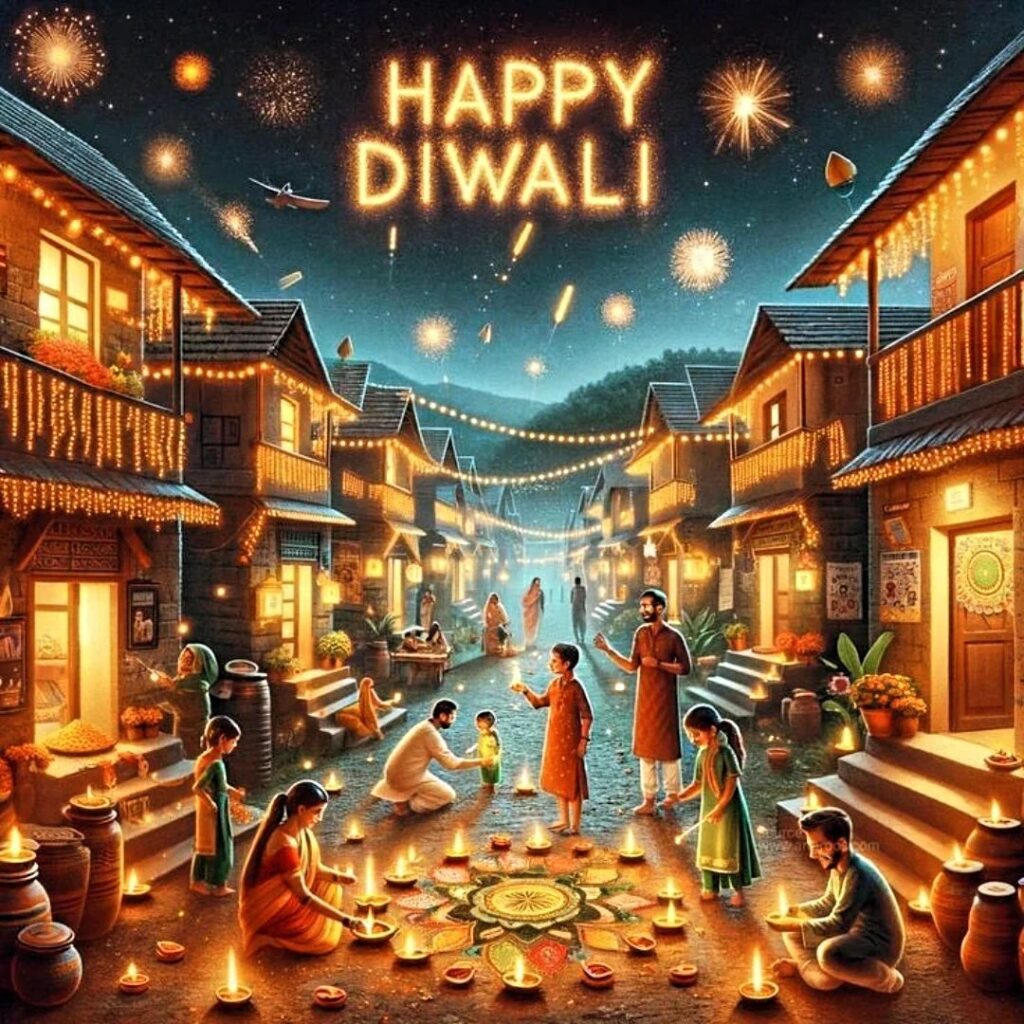
Deepavali Puja Vidhi On Diwali, during Amavasya day, newly installed statues of Lord Ganesha and Shri Lakshmi are worshipped. Apart from Lakshmi-Ganesha Puja, Kuber Puja and Bahi-Khata Puja (बही-खाता पूजा) are also done. On the Diwali Puja day, the full day fast should be observed. The fasting should be either Nirjal (निर्जल) i.e. without the water or Phalahar (फलाहार) i.e. with fruits only or with milk only depending of the body capability and will-power of the person. Diwali Puja should be done at an appropriate Diwali Puja Muhurat while considering fixed Lagna, Pradosh time and Amavasya Tithi. A complete Diwali Puja involves following Puja(s). All above Puja(s) are done with full rituals. As full Diwali Puja might take hours to finish and available Lakshmi Puja Muhurat might be too short to perform all Puja(s), Diwali Puja can begin before Lakshmi Puja Muhurat so that Lakshmi Puja time coincides with the available Muhurat time. The remaining Puja can continue after Lakshmi Puja beyond the Muhurat time.

Deepavali Puja Vidhi Read Post »

krishna5
Krishna

Adau Devaki Devi

Adau Devaki Devi आदौ देवकि देवि गर्भ जननं गोपीगृहे वर्धनंमायापूतन जीवितापहरणं गोवर्धनोद्धारणम् ।कंसच्छेदन कौरवादि हननं कुंतीसुतां पालनंएतद् भागवतं पुराणकथितं श्रीकृष्ण लीलामृतम् ।। ādau devaki devi garbha jananaṃ gopīgṛhe vardhanaṃmāyāpūtana jīvitāpaharaṇaṃ govardhanoddhāraṇam .kaṃsacchedana kauravādi hananaṃ kuṃtīsutāṃ pālanaṃetad bhāgavataṃ purāṇakathitaṃ śrīkṛṣṇa līlāmṛtam .. Commencing with birth from Devaki, growing in the house of gopis, taking away the life of Poothana, lifting the Govardhana, killing Kamsa, annihilating the Kauravas, protecting the sons of Kunti, this is the traditionally related Bhagavata – the nectar of the wonderful and pleasing acts of Sri Krishna. Description Bhagvata in one Stanza

Adau Devaki Devi Read Post »

krishna1
Krishna

Achyutashtakam

Achyutashtakam अच्युतं केशवं रामनारायणं कृष्णदामोदरं वासुदेवं हरिम् ।श्रीधरं माधवं गोपिकावल्लभं जानकीनायकं रामचन्द्रं भजे ॥ १॥ acyutam keśavam rāmanārāyaṇam kṛṣṇadāmodaram vāsudevam harimśrīdharam mādhavam gopikā vallabham jānakī nāyakam rāmacandram bhaje I sing in praise of Ramachandra, who is known as Achyuta (infallible), Keshava, Rama, Narayana, Krishna, Damodara, Vasudeva, Hari, Shridhara, Madhava, Gopikavallabha and Janakinayaka. अच्युतं केशवं सत्यभामाधवं माधवं श्रीधरं राधिकाराधितम् ।इन्दिरामन्दिरं चेतसा सुन्दरं देवकीनन्दनं नन्दनं सन्दधे ॥ २॥ acyutam keśavam satyabhāmādhavam mādhavam śrīdharam rādhikārādhitamindirā mandiram cetasā sundaram devakī nandanam nandanam sandadhe I offer my salutations to Achyuta, known as Keshava, the beloved of Satyabhama, Madhava, Shridhar, worshipped by Radhika, abode of Lakshmi, beautiful in heart, son of Devaki and dear to all. विष्णवे जिष्णवे शङ्खिने चक्रिणे रुक्मिणीरागिणे जानकीजानये ।वल्लवीवल्लभायाऽर्चितायात्मने कंसविध्वंसिने वंशिने ते नमः ॥ ३॥ viṣṇave jiṣṇave śaṅkhine cakriṇe rukmiṇī rāgiṇe jānakī jānayevallavī vallabhāyārcitāyātmane kaṃsa vidhvaṃsine vaṃśine te namaḥ Salutations to Vishnu, the conqueror, holder of conch and discus, beloved of Rukmini, consort of Janaki, beloved of the gopis, destroyer of Kamsa and divine flute-player. कृष्ण गोविन्द हे राम नारायण श्रीपते वासुदेवाजित श्रीनिधे ।अच्युतानन्त हे माधवाधोक्षज द्वारकानायक द्रौपदीरक्षक ॥ ४॥ kṛṣṇa govinda he rāma nārāyaṇa śrīpate vāsudevājita śrīnidheacyutānanta he mādhavādhokṣaja dvārakānāyaka draupadī rakṣaka O Krishna, Govinda, Rama, Narayana, Lord of Lakshmi, eternal Achyuta, Madhava, Adhokshaja, king of Dwaraka and protector of Draupadi. राक्षसक्षोभितः सीतया शोभितो दण्डकारण्यभूपुण्यताकारणः ।लक्ष्मणेनान्वितो वानरैः सेवितोऽगस्त्यसम्पूजितो राघवः पातु माम् ॥ ५॥ rākṣasakṣobhitaḥ sītayā śobhito daṇḍakāraṇya bhū puṇyatā kāraṇaḥlakṣmaṇenānvito vānaraiḥ sevito’gastya sampūjito rāghavaḥ pātu mām May Raghava, destroyer of demons, adorned by Sita, purifier of Dandaka forest, accompanied by Lakshmana and served by vanaras, protect me. धेनुकारिष्टकोऽनिष्टकृद्द्वेषिणां केशिहा कंसहृद्वंशिकावादकः ।पूतनाकोपकः सूरजाखेलनो बालगोपालकः पातु माम् सर्वदा ॥ ६॥ dhenukāriṣṭako’niṣṭa kṛddveṣiṇām keśihā kaṃsa hṛd vaṃśikāvādakaḥpūtanākopakaḥ sūrajā khelano bāla gopālakaḥ pātu mām sarvadā May child Gopala, destroyer of demons, slayer of Kesi and Kamsa, flute-player and protector, save me always. विद्युदुद्योतवत्प्रस्फुरद्वाससं प्रावृडम्भोदवत्प्रोल्लसद्विग्रहम् ।वन्यया मालया शोभितोरःस्थलं लोहिताङ्घ्रिद्वयं वारिजाक्षं भजे ॥ ७॥ vidyududyotavat prasphurad vāsasam prāvṛḍ ambhodavat prollasadvigrahamvanyayā mālayā śobhitoraḥsthalam lohitāṅghridvayam vārijākṣam bhaje I worship the lotus-eyed Lord, radiant like lightning, cloud-hued, adorned with forest garlands and copper-red feet. कुञ्चितैः कुन्तलैर्भ्राजमानाननं रत्नमौलिं लसत्कुण्डलं गण्डयोः ।हारकेयूरकं कङ्कणप्रोज्ज्वलं किङ्किणीमञ्जुलं श्यामलं तं भजे ॥ ८॥ kuñcitaiḥ kuntalair bhrājamānānanam ratna maulim lasat kuṇḍalam gaṇḍayoḥhāra keyūrakam kaṅkaṇa projjvalam kiṅkiṇī mañjulam śyāmalam tam bhaje I worship Shyama, whose face shines with curly locks, jeweled crown, radiant ornaments and melodious anklets. अच्युतस्याष्टकं यः पठेदिष्टदं प्रेमतः प्रत्यहं पुरुषः सस्पृहम् ।वृत्ततः सुन्दरं कर्तृ विश्वम्भरस्तस्य वश्यो हरिर्जायते सत्वरम् ॥ ९॥ acyutasyāṣṭakam yaḥ paṭhed iṣṭadam premataḥ pratyaham puruṣaḥ saspṛhamvṛttataḥ sundaram kartṛ viśvambharas tasya vaśyo harir jāyate satvaram Whoever recites this Achyutashtakam daily with devotion attains the grace of Lord Hari quickly. इति श्रीशङ्कराचार्यविरचितम् अच्युताष्टकं सम्पूर्णम् Achyutashtakam, composed by Sri Adi Shankaracharya, is a devotional hymn praising Lord Krishna and Lord Rama, highlighting the divine names and incarnations of Lord Vishnu.

Achyutashtakam Read Post »

Puja Vidhi

Karwa Chauth Puja Vidhi

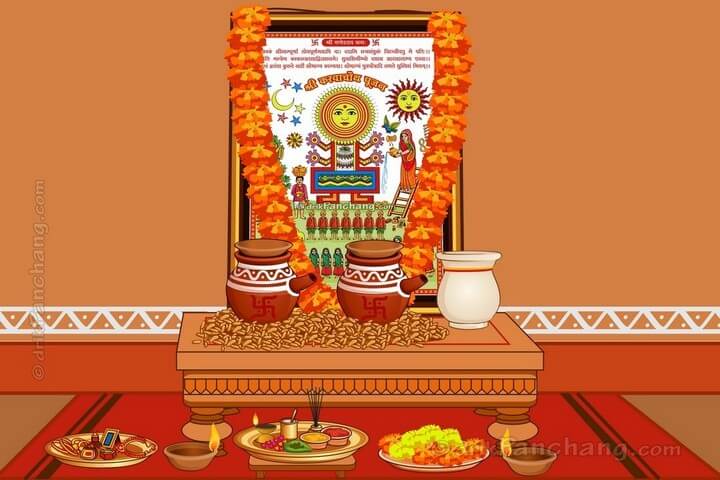
Karwa Chauth Puja Vidhi We would try to keep aside all myths and glamour added to Karwa Chauth rituals mainly by cinema and TV shows. However we recognize and give cinema the due credit to make the day of Karwa Chauth so popular not only in India but also among all Indians across the globe. Our religious books including Dharamasindhu, Nirnayasindhu and Vratraj mention Karwa Chauth as Karak Chaturthi. Both Karak and Karwa refer to small pitcher which is used during Puja and given as charity or Dan for the wellbeing of the family. It is mentioned that only women have the right to perform fasting on Karwa Chauth. The fasting on Karwa Chauth is done not only for well- being and long life of the husband but also for the sons, grandsons, wealth and everlasting prosperity of the family. Karwa Chauth coincides with Sankashti Chaturthi a fasting day observed for Lord Ganesha. However on the day of Karwa Chauth Lord Shiva and His family including Goddess Parvati, Lord Ganesha and Lord Kartikeya are worshipped. Goddess Parvati being Akhand Saubhagyavati is worshipped first during the Puja followed by Lord Shiva, Lord Kartikeya and Lord Ganesha. Women also worship Goddess Gaura and Chauth Mata who represent Goddess Parvati itself on the day of Karwa Chauth. Sankalp On the day of fasting, after taking morning bath women should take the pledge, which is called Sankalp, to keep the fast for the wellbeing of the husband and the family. It is also recited during Sankalp that the fasting would be without any food or the water and the fast would be broken after sighting the moon. The Mantra to chant while taking the pledge – मम सुखसौभाग्य पुत्रपौत्रादि सुस्थिर श्री प्राप्तये करक चतुर्थी व्रतमहं करिष्ये। Translation – It means “I would observe the fasting of Karak Chaturthi for the wellbeing of the husband, sons and grandsons and to gain fixed wealth”. Karwa Chauth Puja According to Vratraj, the best time to perform Karwa Chauth Puja is during Sandhya time which starts after sunset. Hence please note down the city based Karwa Chauth Puja Timings after setting the location for your city. Karwa Chauth Puja is focused to seek blessing of Goddess Parvati. Women either draw Goddess Gaura and Chauth Mata on the wall or use Chauth Mata image on the printed Karwa Chauth Puja Calendar to worship Mata Parvati. Goddess Gaura and Chauth Mata are representations of Goddess Parvati. The Mantra which should be recited during Parvati Puja is – नमः शिवायै शर्वाण्यै सौभाग्यं संतति शुभाम्। प्रयच्छ भक्तियुक्तानां नारीणां हरवल्लभे॥ Translation – It means “O beloved consort of Lord Shiva, please bestow long life of the husband and beautiful sons to your women devotees”. After Goddess Gaura, Lord Shiva, Lord Kartikeya and Lord Ganesha are worshipped. Usually women perform Puja in a group and narrate the Story of Karwa Chauth Mahatamya, known as magnanimous of Karwa Chauth fasting. After Puja, Karwa should be given as charity to the Brahmin or some eligible woman. The Karwa or Karak should be filled with the water or the milk and precious stones or coins should be dropped in it. Karwa should be donated to some Brahmin or Suhagan women. The Mantra which should be chanted while donating Karwa – करकं क्षीरसम्पूर्णा तोयपूर्णमथापि वा। ददामि रत्नसंयुक्तं चिरञ्जीवतु मे पतिः॥ Translation – It means “O milk filled Karwe with precious stones; I donate you, so that my husband is long lived”.

Karwa Chauth Puja Vidhi Read Post »

dee26d5d1188d6683a1a8f4123908d08
Kamadhenu

Sarva Kaama-dudhe Devi

Sarva Kaama-dudhe Devi सर्वकामदुधे देवी सर्वतीर्थाभिषेचनि ।पावनि सुरभिश्रेष्ठे देवी तुभ्यं नमोऽस्तु ते ॥ sarvakāmadudhe devī sarvatīrthābhiṣecani .pāvani surabhiśreṣṭhe devī tubhyaṃ namo’stu te .. O giver of the milk of all wishes, giver of the effects of bathing in all holy waters; O the supreme holy Kamadhenu, O goddess, my salutation to you. Description Prayer to mother cow. This maha matra is dedicated to the divine celestial cow called Kamadhenu, also called as Surabhi and Gomatha. Kamadhenu is believed to be a wish fulfilling celestial cow.

Sarva Kaama-dudhe Devi Read Post »

bhagwan
Ganga mantra

Yamuna Ashtakam

Yamuna Ashtakam मुरारिकायकालिमाललामवारिधारिणीतृणीकृतत्रिविष्टपा त्रिलोकशोकहारिणी ।मनोऽनुकूलकूलकुञ्जपुञ्जधूतदुर्मदाधुनोतु मे मनोमलं कलिन्दनन्दिनी सदा ॥१॥ṃurāri-k͟hāya-k͟hālimā-l̤alāma-Vāri-ḍhārinnīṭrnnī-k͟hrta-ṭrivissttapā ṭri-l̤oka-ṣoka-ḥārinnī |ṃano[ah-ā]nukūla-k͟hūla-k͟hun.ja-Pun.ja-ḍhūta-ḍurmadāḍhunotu ṃe ṃano-ṃalam k͟halinda-ṇandinī Sadā ||1||May Yamunā — who holds water painted by the dark-body of Murāri, who treats the three-worlds as a twig, who absolves the grief of the three-worlds, whose banks have groups of forests which please the mind, who is agitated by haughtiness, and who is the daughter of Kalinda — wash the malice of my mind.मलापहारिवारिपूरभूरिमण्डितामृताभृशं प्रपातकप्रवञ्चनातिपण्डितानिशम् ।सुनन्दनन्दनाङ्गसङ्गरागरञ्जिता हिताधुनोतु मे मनोमलं कलिन्दनन्दिनी सदा ॥२॥ṃala-āpahāri-Vāri-Pūra-Bhūri-ṃannddita-āmrtāBhrśam Prapātaka-Pravan.cana-āti-Pannddita-āniśam |Su-ṇanda-ṇandana-āngga-Sangga-ṟāga-ṟan.jitā ḥitāḍhunotu ṃe ṃano-ṃalam k͟halinda-ṇandinī Sadā ||2||May Yamunā — who is adorned by and full of gigantic whirl-pools which take away dirt, whose water is like nectar, who is agitated fiercely by gusts of wind, who is very wise, who is incessant, who is colored by the shade of togetherness with the son of Nanda (Kṛṣṇa), who is benevolent, and who is the daughter of Kalinda — wash the malice of my mind.लसत्तरङ्गसङ्गधूतभूतजातपातकानवीनमाधुरीधुरीणभक्तिजातचातका ।तटान्तवासदासहंससंसृता हि कामदाधुनोतु मे मनोमलं कलिन्दनन्दिनी सदा ॥३॥l̤asat-ṭarangga-Sangga-ḍhūta-Bhūta-Jāta-Pātakāṇavīna-ṃādhurī-ḍhurīnna-Bhakti-Jāta-Cātakā |ṭatta-ānta-Vāsa-ḍāsa-ḥamsa-Samsrtā ḥi k͟hāma-ḍāḍhunotu ṃe ṃano-ṃalam k͟halinda-ṇandinī Sadā ||3||May Yamunā — with whose shining wave-groups numerous fallen creatures purify, whose banks have various devotees (cātaka) lined up at the pleasant coast, whose coasts are surrounded by swan like devotees, who bestows desires, and who is the daughter of Kalinda — wash the malice of my mind.विहाररासखेदभेदधीरतीरमारुतागता गिरामगोचरे यदीयनीरचारुता ।प्रवाहसाहचर्यपूतमेदिनीनदीनदाधुनोतु मे मनोमलं कलिन्दनन्दिनी सदा ॥४॥Vihāra-ṟāsa-k͟hheda-Bheda-ḍhīra-ṭīra-ṃārutāġatā ġirām-āgocare ẏadīya-ṇīra-Cārutā |Pravāha-Sāhacarya-Pūta-ṃedinī-ṇadī-ṇadāḍhunotu ṃe ṃano-ṃalam k͟halinda-ṇandinī Sadā ||4||May Yamunā — whose banks have pleasant gushy wind to soothe those which are tired of sport, whose beautiful water is beyond the tongue or scope of sense-organs, whose tributaries and coast-soil gets purified by the friendship with Her waters, and who is the daughter of Kalinda — wash the malice of my mind.तरङ्गसङ्गसैकताञ्चितान्तरा सदासिताशरन्निशाकरांशुमञ्जुमञ्जरीसभाजिता ।भवार्चनाय चारुणाम्बुनाधुना विशारदाधुनोतु मे मनोमलं कलिन्दनन्दिनी सदा ॥५॥ṭarangga-Sangga-Saikata-ān.cita-āntarā Sadā-Sitāṣaran-ṇiśā-k͟hara-āmśu-ṃan.ju-ṃan.jarī-Sabhājitā |Bhava-ārcanāya Cārunna-āmbunā-ḍhunā Viśāradāḍhunotu ṃe ṃano-ṃalam k͟halinda-ṇandinī Sadā ||5||May Yamunā — who always appears white due to association of sand particles with Her waves, who is adored by the beautiful collection of cool moonlight-rays, whose vast and beautiful water is meant as an offering for the world, and who is the daughter of Kalinda — wash the malice of my mind.जलान्तकेलिकारिचारुराधिकाङ्गरागिणीस्वभर्तुरन्यदुर्लभाङ्गसङ्गतांशभागिनीस्वदत्तसुप्तसप्तसिन्धुभेदनातिकोविदा ।धुनोतु मे मनोमलं कलिन्दनन्दिनी सदा ॥६॥Jala-ānta-k͟heli-k͟hāri-Cāru-ṟādhika-āngga-ṟāginnīSva-Bhartur-ānya-ḍurlabha-āngga-Sangga-ṭāmśa-BhāginīSva-ḍatta-Supta-Sapta-Sindhu-Bhedana-āti-k͟hovidā |ḍhunotu ṃe ṃano-ṃalam k͟halinda-ṇandinī Sadā ||6||May Yamunā — whose water is mixed with the cosmetics of sporting Rādhikā, who enjoys the continuous touch of Her consort (Kṛṣṇa) which is a luxury for others, who is mighty enough to penetrate the serene seven oceans, and who is the daughter of Kalinda — wash the malice of my mind.जलच्युताच्युताङ्गरागलम्पटालिशालिनीविलोलराधिकाकचान्तचम्पकालिमालिनी ।सदावगाहनावतीर्णभर्तृभृत्यनारदाधुनोतु मे मनोमलं कलिन्दनन्दिनी सदा ॥७॥Jala-Cyuta-ācyuta-āngga-ṟāga-l̤ampatta-āli-ṣālinīVilola-ṟādhikā-k͟haca-ānta-Campaka-āli-ṃālinī |Sada-āvagāhana-āvatīrnna-Bhartr-Bhrtya-ṇāradāḍhunotu ṃe ṃano-ṃalam k͟halinda-ṇandinī Sadā ||7||May Yamunā — who is full of damsels using fallen cosmetics of Acyuta (Kṛṣṇa) in Her water, who has flowers from the braids of vibrant Rādhikā in Her water, who is always taken as support by Nārada and other devotees of Her consort (Kṛṣṇa), and who is the daughter of Kalinda — wash the malice of my mind.सदैव नन्दनन्दकेलिशालिकुञ्जमञ्जुलातटोत्थफुल्लमल्लिकाकदम्बरेणुसूज्ज्वलाजलावगाहिनां नृणां भवाब्धिसिन्धुपारदाधुनोतु मे मनोमलं कलिन्दनन्दिनी सदा ॥८॥Sadai[ā-ĕ]va ṇanda-ṇanda-k͟heli-ṣāli-k͟hun.ja-ṃan.julāṭatto[a-ū]ttha-Phulla-ṃallikā-k͟hadamba-ṟennu-Su-ūjjvalāJala-āvagāhinām ṇrnnām Bhava-ābdhi-Sindhu-Pāradāḍhunotu ṃe ṃano-ṃalam k͟halinda-ṇandinī Sadā ||8||May Yamunā — whose beautiful coast gardens are always full with sports of Kṛṣṇa (dear One of Nanda), who is bright due to fallen flowers of Kadamba and Mallikā trees on Her banks, who crushes the ocean of metempsychosis of those which take a bath in Her water, and who is the daughter of Kalinda — wash the malice of my mind. Description Composed by Sri Adi Shankaracharya. In Yamunastakam’s first eight shlokas, Sri Adi Shankaracharya describes Shri Yamunaji’s eight fold powers, its divine & wonderful idol and her divine qualities. Shri Yamunaji is the daughter of divine Sun. Her purpose for coming to earth from heaven through Kalind mountain is to bless her devotees. Her physical state as a river is also very attractive and charming. She is so kind that she blesses even evil spirited people.

Yamuna Ashtakam Read Post »

cdd952579dc486e2abb62956c4d1c0d1
Ganga mantra

Narmada Ashtakam

Narmada Ashtakam मुरारिकायकालिमाललामवारिधारिणीतृणीकृतत्रिविष्टपा त्रिलोकशोकहारिणी ।मनोऽनुकूलकूलकुञ्जपुञ्जधूतदुर्मदाधुनोतु मे मनोमलं कलिन्दनन्दिनी सदा ॥१॥ murāri-kāya-kālima-lalāma-vāri-dhāriṇītṛṇīkṛta-triviṣṭapā triloka-śoka-hāriṇī ।mano’nukūla-kūla-kuñja-puñja-dhūta-durmadādhunotu me manomalaṃ kalinda-nandinī sadā ॥1॥ May Yamunā—who bears waters darkened by Murāri’s body, who makes the three worlds as insignificant as grass, who removes the sorrow of the three worlds, whose banks delight the mind with clusters of groves, and who is the daughter of Kalinda—wash away the impurity of my mind. मलापहारिवारिपूरभूरिमण्डितामृताभृशं प्रपातकप्रवञ्चनातिपण्डितानिशम् ।सुनन्दनन्दनाङ्गसङ्गरागरञ्जिता हिताधुनोतु मे मनोमलं कलिन्दनन्दिनी सदा ॥२॥ malāpahāri-vāri-pūra-bhūri-maṇḍitāmṛtābhṛśaṃ prapātaka-pravañcanāti-paṇḍitāniśam ।sunanda-nandana-aṅga-saṅga-rāga-rañjitā hitādhunotu me manomalaṃ kalinda-nandinī sadā ॥2॥ May Yamunā—whose abundant waters remove impurities, who is nectar-like, greatly agitated by cascades, ever-wise and unceasing, colored by the loving contact of Nanda’s son (Kṛṣṇa), benevolent, and Kalinda’s daughter—wash away the impurity of my mind. लसत्तरङ्गसङ्गधूतभूतजातपातकानवीनमाधुरीधुरीणभक्तिजातचातका ।तटान्तवासदासहंससंसृता हि कामदाधुनोतु मे मनोमलं कलिन्दनन्दिनी सदा ॥३॥ lasat-taraṅga-saṅga-dhūta-bhūta-jāta-pātakānavīna-mādhurī-dhurīṇa-bhakti-jāta-cātakā ।taṭānta-vāsa-dāsa-haṃsa-saṃsṛtā hi kāmadādhunotu me manomalaṃ kalinda-nandinī sadā ॥3॥ May Yamunā—by whose shining waves the sins of beings are washed away, whose fresh sweetness draws devoted seekers like cātaka birds, whose banks are frequented by swan-like devotees, bestower of desires, and Kalinda’s daughter—wash away the impurity of my mind. विहाररासखेदभेदधीरतीरमारुतागता गिरामगोचरे यदीयनीरचारुता ।प्रवाहसाहचर्यपूतमेदिनीनदीनदाधुनोतु मे मनोमलं कलिन्दनन्दिनी सदा ॥४॥ vihāra-rāsa-kheda-bheda-dhīra-tīra-mārutāgatā girām agocare yadīya-nīra-cārutā ।pravāha-sāhacarya-pūta-medinī-nadī-nadādhunotu me manomalaṃ kalinda-nandinī sadā ॥4॥ May Yamunā—whose cool breezes on the banks soothe those tired of play, whose water’s beauty is beyond words, whose streams purify the earth through their flow, and who is Kalinda’s daughter—wash away the impurity of my mind. तरङ्गसङ्गसैकताञ्चितान्तरा सदासिताशरन्निशाकरांशुमञ्जुमञ्जरीसभाजिता ।भवार्चनाय चारुणाम्बुनाधुना विशारदाधुनोतु मे मनोमलं कलिन्दनन्दिनी सदा ॥५॥ taraṅga-saṅga-saikata-añcita-āntarā sadā sitāśarad-niśākara-aṃśu-mañju-mañjarī-sabhājitā ।bhavārcanāya cāruṇāmbunā dhunā viśāradādhunotu me manomalaṃ kalinda-nandinī sadā ॥5॥ May Yamunā—ever bright with sand stirred by her waves, adorned by gentle clusters of autumn moonbeams, whose beautiful waters are fit for worship, and Kalinda’s daughter—wash away the impurity of my mind. जलान्तकेलिकारिचारुराधिकाङ्गरागिणीस्वभर्तुरन्यदुर्लभाङ्गसङ्गतांशभागिनी ।स्वदत्तसुप्तसप्तसिन्धुभेदनातिकोविदाधुनोतु मे मनोमलं कलिन्दनन्दिनी सदा ॥६॥ jalānta-keli-kāri-cāru-rādhikāṅga-rāgiṇīsva-bhartur anya-durlabha-aṅga-saṅgata-aṃśa-bhāginī ।sva-datta-supta-sapta-sindhu-bhedanāti-kovidādhunotu me manomalaṃ kalinda-nandinī sadā ॥6॥ May Yamunā—whose waters are tinged with the playful cosmetics of Rādhikā, who shares the intimate touch of her Lord (Kṛṣṇa) unattainable to others, who is skilled enough to pierce the seven oceans, and Kalinda’s daughter—wash away the impurity of my mind. जलच्युताच्युताङ्गरागलम्पटालिशालिनीविलोलराधिकाकचान्तचम्पकालिमालिनी ।सदावगाहनावतीर्णभर्तृभृत्यनारदाधुनोतु मे मनोमलं कलिन्दनन्दिनी सदा ॥७॥ jala-cyuta-acyutāṅga-rāga-lampaṭāli-śālinīvilola-rādhikā-kacānta-campakāli-mālinī ।sadā-avagāhana-avatīrṇa-bhartṛ-bhṛtya-nāradādhunotu me manomalaṃ kalinda-nandinī sadā ॥7॥ May Yamunā—filled with maidens bearing fallen cosmetics of Acyuta, adorned with campaka flowers from Rādhikā’s braids, ever resorted to by Nārada and devotees of her Lord, and Kalinda’s daughter—wash away the impurity of my mind. सदैव नन्दनन्दकेलिशालिकुञ्जमञ्जुलातटोत्थफुल्लमल्लिकाकदम्बरेणुसूज्ज्वला ।जलावगाहिनां नृणां भवाब्धिसिन्धुपारदाधुनोतु मे मनोमलं कलिन्दनन्दिनी सदा ॥८॥ sadaiva nanda-nanda-keli-śāli-kuñja-mañjulātaṭottha-phulla-mallikā-kadamba-reṇu-sujjvalā ।jalā-vagāhināṃ nṛṇāṃ bhavābdhi-sindhu-pāradādhunotu me manomalaṃ kalinda-nandinī sadā ॥8॥ May Yamunā—whose lovely groves are ever filled with the sports of Nanda’s son, whose banks glow with fallen jasmine and kadamba pollen, who enables bathers to cross the ocean of worldly existence, and Kalinda’s daughter—wash away the impurity of my mind. Description Composed by Sri Adi Shankaracharya. In Yamunastakam’s first eight shlokas, Sri Adi Shankaracharya describes Shri Yamunaji’s eight fold powers, its divine & wonderful idol and her divine qualities. Shri Yamunaji is the daughter of divine Sun. Her purpose for coming to earth from heaven through Kalind mountain is to bless her devotees. Her physical state as a river is also very attractive and charming. She is so kind that she blesses even evil spirited people.

Narmada Ashtakam Read Post »

Puja Vidhi

Shri Satyanarayana Puja Vidhi

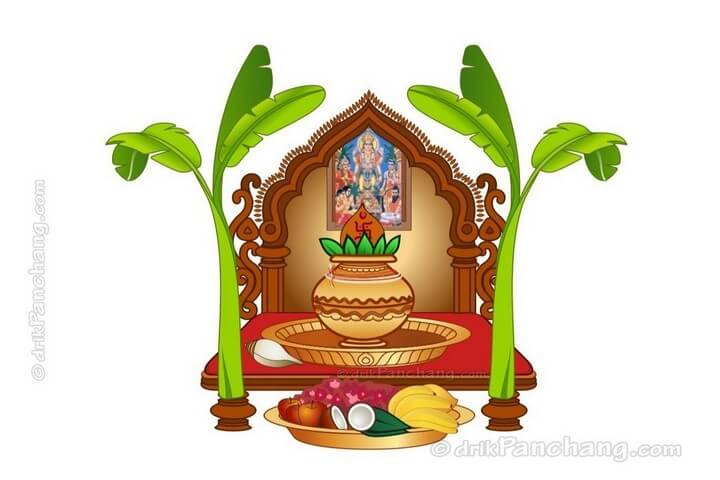
Shri Satyanarayana Puja Vidhi Lord Vishnu is worshipped with all sixteen rituals along with chanting of Puranik Mantras during Satyanarayana Puja and other ocassions related to Lord Vishnu. Worshipping Gods and Goddesses with all 16 rituals is known as Shodashopachara Puja (षोडशोपचार पूजा). 1. Dhyanam (ध्यानम्) Puja should begin with the meditation of Lord Satyanarayan. Dhyana should be done in front of Satyanarayana image or idol in front of you. Following Mantra should be chanted while meditating on Lord Satyanarayan. Shri Satyanarayana Dhyana Mantra ध्यायेत् सत्यं गुणातीतं गुणत्रयसमन्वितम्।लोकनाथं त्रिलोकेशं कौस्तुभाभरणं हरिम्॥नीलवर्णं पीतवस्त्रं श्रीवत्सपदभूषितम्।गोविन्दं गोकुलानन्दं ब्रह्माद्यैरपि पूजितम्॥ Dhyayet Satyam Gunatitam Gunatrayasamanvitam।Lokanatham Trilokesham Kaustubhabharanam Harim॥Nilavarnam Pitavastram Shrivatsapadabhushitam।Govindam Gokulanandam Brahmadyairapi Pujitam॥ 2. Avahanam (आवाहनम्) After Dhyana of Lord Satyanarayan, one should chant following Mantra in front of the Murti, by showing Avahan Mudra (Avahan Mudra is formed by joining both palms and folding both thumbs inwards). दामोदर समागच्छ लक्ष्म्या सह जगत्पते।इमां मया कृतां पूजां गृहाण सुरसत्तम॥ ॐ श्रीलक्ष्मी-सहित-श्रीसत्यनारायणम् आवाहयामि। Damodara Samagachchha Lakshmya Saha Jagatpate।Imam Maya Kritam Pujam Grihana Surasattama॥ Om Shri Lakshmi Sahita Shri Satyanarayanam Avahayami। 3. Asanam (आसनम्) After Lord Satyanarayana has been invoked, take five flowers in Anjali (by joining palm of both hands) and leave them in front of the Murti to offer seat to Lord Satyanarayana while chanting following Mantra. Shri Satyanarayana Asana Mantra नानारत्नसमाकीर्णं कार्तस्वरविभूषितम्।आसनं देवदेवेश! प्रीत्यर्थं प्रतिगृह्यताम्॥ ॐ श्रीसत्यनारायणाय नमः आसनं समर्पयामि। Nanaratna Samakirnam Kartasvaravibhushitam।Asanam Devadevesha! Prityartham Pratigrihyatam॥ Om Shri Satyanarayanaya Namah Asanam Samarpayami। 4. Padyam (पाद्यम्) After Asana offering, offer water to Shri Satyanarayana to wash the feet while chanting following Mantra. Shri Satyanarayana Padya Mantra नारायणः नमस्तेऽस्तु नरकार्णवतारक।पाद्यं गृहाण देवेश! मम सौख्यं विवर्धय॥ ॐ श्रीसत्यनारायणाय नमः पादयोः पाद्यं समर्पयामि। Narayanah Namasteastu Narakarnavataraka।Padyam Grihana Devesha! Mama Saukhyam Vivardhaya॥ Om Shri Satyanarayanaya Namah Padayoh Padyam Samarpayami। 5. Arghyam (अर्घ्यम्) After Padya offering, offer water to Shri Satyanarayana for head Abhishekam while chanting following Mantra. Shri Satyanarayana Arghya Mantra व्यक्ताव्यक्तस्वरूपाय हृषीकपतये नमः।मया निवेदितो भक्त्या अर्घ्योऽयं प्रतिगृह्यताम्॥ ॐ श्रीसत्यनारायणाय नमः अर्घ्यं समर्पयामि। Vyaktavyaktasvarupaya Hrishikapataye Namah।Maya Nivedito Bhaktya Arghyoayam Pratigrihyatam॥ Om Shri Satyanarayanaya Namah Arghyam Samarpayami। 6. Achamaniyam (आचमनीयम्) After Arghya offering, offer water to Shri Satyanarayana for Achamana while chanting following Mantra. Shri Satyanarayana Achamaniya Mantra मन्दाकिन्यास्तु यद्वारि सर्वपापहरं शुभम्।तदिदं कल्पितं देव सम्यगाचम्यतां विभो॥ ॐ श्रीसत्यनारायणाय नमः आचमनीयं समर्पयामि। Mandakinyastu Yadvari Sarvapapa Haram Shubham।Tadidam Kalpitam Deva Samyagachamyatam Vibho॥ Om Shri Satyanarayanaya Namah Achamaniyam Samarpayami। 7. Panchamrita Snanam (पञ्चामृत-स्नानम्) After Achamaniya offering, give a bath with Panchamrita (the mixture of milk, curd, honey, Ghee and sugar) to Shri Satyanarayana while chanting following Mantra. Shri Satyanarayana Panchamrita Snana Mantra स्नानं पञ्चामृतैर्देव गृहाण सुरसत्तम।अनाथनाथसर्वज्ञ गीर्वाणप्रणतप्रिय॥ ॐ श्रीसत्यनारायणाय नमः पञ्चामृतस्नानं समर्पयामि। Snanam Panchamritairdeva Grihana Surasattama।Anathanatha Sarvajna Girvana Pranatapriya॥ Om Shri Satyanarayanaya Namah Panchamrita Snanam Samarpayami। 8. Shuddhodaka Snanam (शुद्धोदक-स्नानम्) After Panchamrita Snana, offer bath to Shri Satyanarayana with pure water while chanting following Mantra. Shri Satyanarayana Shuddhodaka Snana Mantra नानातीर्थसमानीतं सर्वपापहरं शुभम्।तदिदं कल्पितं देव स्नानार्थं प्रतिगृह्यताम्॥ ॐ श्रीसत्यनारायणाय नमः शुद्धोदकस्नानं समर्पयामि। Nanatirthasamanitam Sarvapapa Haram Shubham।Tadidam Kalpitam Deva Snanartham Pratigrihyatam॥ Om Shri Satyanarayanaya Namah Shuddhodaka Snanam Samarpayami। 9. Vastram (वस्त्रम्) After Shuddhodaka Snana, now offer new clothes to Shri Satyanarayana while chanting following Mantra. Shri Satyanarayana Vastra Mantra शीतवातोष्णसंत्राणं लज्जायाः रक्षणं परम्।देहालङ्करणं वस्त्रं प्रीत्यर्थं प्रतिगृह्यताम्॥ ॐ श्रीसत्यनारायणाय नमः वस्त्रयुग्मं समर्पयामि। Shitavatoshna Samtranam Lajjayah Rakshanam Param।Dehalankaranam Vastram Prityartham Pratigrihyatam॥ Om Shri Satyanarayanaya Namah Vastra Yugmam Samarpayami। 10. Yajnopavitam (यज्ञोपवीतम्) After Vastra offering, offer holy thread to Shri Satyanarayana while chanting following Mantra. Shri Satyanarayana Yajnopavita Mantra ब्रह्माविष्णुमहेशेन निर्मितं सूत्रमुत्तमम्।गृहाण भगवन् विष्णो सर्वेष्टफलदो भव॥ ॐ श्रीसत्यनारायणाय नमः यज्ञोपवीतं समर्पयामि। Brahmavishnumaheshena Nirmitam Sutramuttamam।Grihana Bhagawan Vishno Sarveshta Phalado Bhava॥ Om Shri Satyanarayanaya Namah Yajnopavitam Samarpayami। 11. Chandanam (चन्दनम्) After Yajnopavita offering, offer sandalwood paste or powder to Shri Satyanarayana while chanting following Mantra. Shri Satyanarayana Chandana Mantra श्रीखण्डं चन्दनं दिव्यं गन्धाढ्यं सुमनोहरम्।विलेपनं सुरश्रेष्ठ चन्दनं प्रतिगृह्यताम्॥ ॐ श्रीसत्यनारायणाय नमः चन्दनं समर्पयामि। Shrikhandam Chandanam Divyam Gandhadhyam Sumanoharam।Vilepanam Surashreshtha Chandanam Pratigrihyatam॥ Om Shri Satyanarayanaya Namah Chandanam Samarpayami। 12. Pushpani (पुष्पाणि) After Chandan offering, offer flowers to Shri Satyanarayana while chanting following Mantra. Shri Satyanarayana Pushpani Mantra माल्यादीनि सुगन्धीनि मालत्यादीनि वै प्रभो।मया हृतानि पुष्पाणि पूजार्थं प्रतिगृह्यताम्॥ ॐ श्रीसत्यनारायणाय नमः पुष्पाणि समर्पयामि। Malyadini Sugandhini Malatyadini Vai Prabho।Maya Hritani Pushpani Pujartham Pratigrihyatam॥ Om Shri Satyanarayanaya Namah Pushpani Samarpayami। 13. Dhupah (धूपः) After Pushpa offering, offer Dhupa to Shri Satyanarayana while chanting following Mantra. Shri Satyanarayana Dhupa Mantra वनस्पतिरसोद्भूतो गन्धाढ्यो गन्ध उत्तमः।आघ्रेयः सर्वदेवानां धूपोऽयं प्रतिगृह्यताम्॥ ॐ श्रीसत्यनारायणाय नमः धूपम् आघ्रापयामि। Vanaspatirasodbhuto Gandhadhyo Gandha Uttamah।Aghreyah Sarvadevanam Dhupoayam Pratigrihyatam॥ Om Shri Satyanarayanaya Namah Dhupam Aghrapayami। 14. Deepah (दीपः) After Dhupam offering, offer enlightened earthen lamp of pure Ghee to Lord Satyanarayana while chanting following Mantra. Shri Satyanarayana Deepa Mantra साज्यं च वर्तिसंयुक्तं वह्निना दीपितं मया।दीपं गृहाण देवेश मम सौख्यप्रदो भव॥ ॐ श्रीसत्यनारायणाय नमः दीपं दर्शयामि। Sajyam Cha Varti Samyuktam Vahnina Deepitam Maya।Deepam Grihana Devesha Mama Saukhyaprado Bhava॥ Om Shri Satyanarayanaya Namah Deepam Darshayami। 15. Naivedyam (नैवेद्यम्) After Deepam offering, wash your hands and offer Naivedya. It should include different type of fruits and sweets and offer this to Lord Satyanarayana while chanting following Mantra. Shri Satyanarayana Naivedya Mantra घृतपक्वं हविष्यान्नं पायसं च सशर्करम्।नानाविधं च नैवेद्यं गृह्णीष्व सुरसत्तम॥ ॐ श्रीसत्यनारायणाय नमः नैवेद्यं निवेदयामि। Ghritapakvam Havishyannam Payasam Cha Sasharkaram।Nanavidham Cha Naivedyam Grihnishva Surasattama॥ Om Shri Satyanarayanaya Namah Naivedyam Nivedayami। 16. Tambulam (ताम्बूलम्) After offering Naivedyam, offer betel leaf (Tambula) to Lord Satyanarayana while chanting following Mantra. Shri Satyanarayana Tambula Mantra लवङ्गकर्पूरसंयुक्तं ताम्बूलं सुरपूजितम्।एलादिचूर्णसंयुक्तं प्रीत्यर्थं प्रतिगृह्यताम्॥ ॐ श्रीसत्यनारायणाय नमः ताम्बूलं समर्पयामि। Lavangakarpurasamyuktam Tambulam Sura Pujitam।Eladichurna Samyuktam Prityartham Pratigrihyatam॥ Om Shri Satyanarayanaya Namah Tambulam Samarpayami। 17. Phalam (फलम्) After offering Tambulam, offer fruits to Lord Satyanarayana while chanting following Mantra. Shri Satyanarayana Phala Mantra इदं फलं मया देव! स्थापितं पुरतस्तव।तेन मे सफलावाप्तिर्भवेज्जन्मनि जन्मनि॥ ॐ श्रीसत्यनारायणाय नमः फलं समर्पयामि। Idam Phalam Maya Deva! Sthapitam Puratastava।Tena Me Saphalavaptirbhavejjanmani Janmani॥ Om Shri Satyanarayanaya Namah Phalam Samarpayami। 18. Arartikyam (आरार्तिक्यम्) / Aarti (आरती) After offering fruits, offer Aarti with lit camphor in Puja Thali to Lord Satyanarayana while chanting following Mantra. After chanting following Mantra sing Shri Satyanarayana Aarti in praise of Lord Satyanarayan. Shri Satyanarayana Arartikya Mantra चतुर्वर्तिसमायुक्तं गोघृतेन च पूरितम्।आरार्तिक्यमहं कुर्वे पश्य मे वरदो भव॥ ॐ श्रीसत्यनारायणाय नमः मङ्गल-आरार्तिक्यं समर्पयामि। Chaturvarti Samayuktam Goghritena Cha Puritam।Arartikyamaham Kurve Pashya Me Varado Bhava॥ Om Shri Satyanarayanaya Namah Mangala-Arartikyam Samarpayami। 19. Pradakshina (प्रदक्षिणा) After Aarti, now offer symbolic

Shri Satyanarayana Puja Vidhi Read Post »

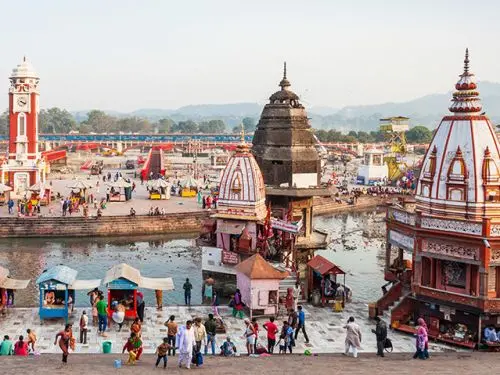
Har Ki Pauri Ganga Temple Haridwar
Ganga mantra

Gange Ca Yamune

Gange Ca Yamune गङ्गे च यमुने चैव गोदावरि सरस्वति ।नर्मदे सिन्धु कावेरि जलेऽस्मिन् संनिधिं कुरु ॥ gaṅge ca yamune caiva godāvari sarasvati .narmade sindhu kāveri jale’smin saṃnidhiṃ kuru .. Ganga, Yamuna, Godavari, Saraswathi, Narmada, Sindhu, Kaveri, May all these have a holy confluence in this water. Description Holy bath. Chant this mantra during bath. As you take bath, you want the waters of the sacred rivers to cleanse you and bless you. It is an expression of gratitude to god for the gift of water.

Gange Ca Yamune Read Post »