













Hari Om

Menu

February 2026

1b88cd9ce76bb5c5747b627ae6ee422a
Puja Vidhi

Pongal Puja Vidhi

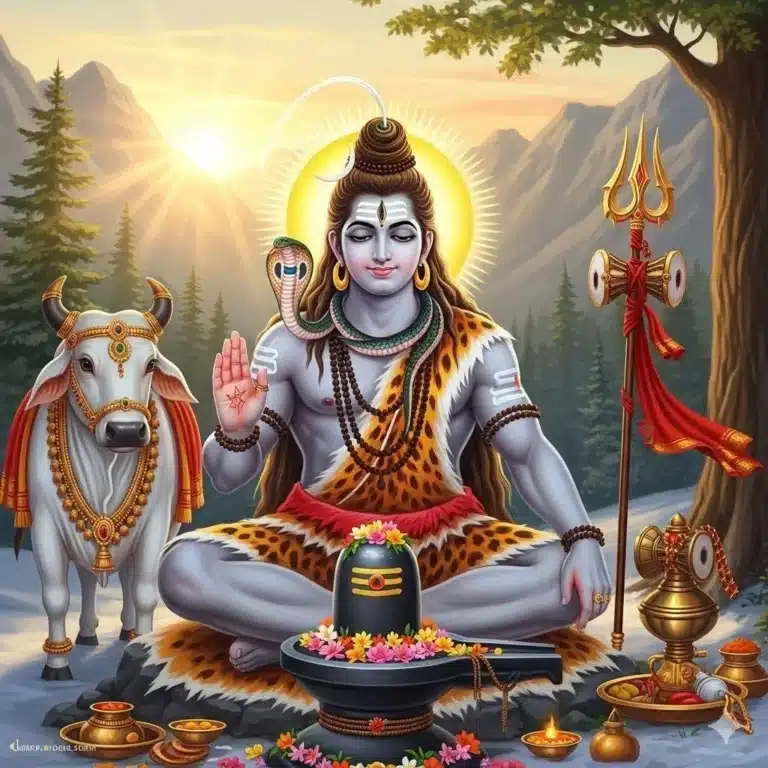
Pongal Puja Vidhi Harvest Festival Celebration (13th to 16th January) 1. The Harvest Festival Pongal is a harvest festival – the Thamil equivalent of Thanksgiving. In an agriculture based civilisation the harvest plays an important part. The farmer cultivating his land depends on cattle, timely rain and the Sun. Once a year, he expresses his gratitude to these during the harvest festival. With the end of the wet month of Margazhi (mid December to mid January) the new Thamil month of Thai heralds a series of festivals. The first day of this month is a festival day known as “Pongal Day”. Pongal means the “boiling over” of milk and rice during the month of Thai. According to the calendar based on the solar system the year is divided into two halves following the apparent movement of the Sun northwards and Southwards. The farmer is termed Uttarayanam and the latter is Dakshinayanam. On the first day of the Thai, the Sun leaves the zodiac sign of Sagittarius and enters that of capricorn, the latter is known as Makaram. The event thus is celebrated as Pongal. The four day celebration of Pongal Marks a period of plenty, peace and happiness. There is a Thamil saying that “Thai peranthal Vali Perakum”. That paraphrased means with the dawn of the month of Thai, there will be peace, happiness, prosperity, brightness and harmony in the life of everyone. It is held to honor the Sun, for a bountiful harvest. Families gather to rejoice and share their joy and their harvests with others. The Sun is offered a “Pongal” of rice and milk. Preparations for this festival start early and the first thing that is always found in Hindu homes before the start of Pongal is the ‘kolam’. This is a form of decoration for the Hindus’ homes. This decorative pattern is made with rice flour & is usually drawn on the floor outside the door. The kolams serve as a symbol of welcoming guests to the entrance of the house. At the center of the Kolam is a lump of cow-dung, which holds a five-petaled pumpkin flower-a symbol of fertility and an offering of love to the presiding deity. The houses are cleaned and decorated to prepare for Pongal. For the festival, the Hindus buy new clothes and the ladies of the households would prepare sweetmeats. There is also a belief in the Hindus that the harvest festival will bring great wealth and goodness to their homes. All the four days of Pongal have their own significance as separate deities are worshiped each day. The first day is celebrated as the Bhoogi Pongal and is usually meant for domestic activities and of being together with the family members. This first day is celebrated in honor of Lord Indra, the supreme ruler of clouds that give rains. The second day is known as ‘Pongal’ the most important day of the entire festival, where prayers are offered to the Sun. On this day, the Sun is given great importance and hence the day is called Surya Pongal. The third day is known as Mattu Pongal, the day of Pongal for cows. The cattle are washed, their horns are painted and covered with shining metal caps. Kaanu Pongal, which falls on the same day as Maatu Pongal, is celebrated by sisters for the welfare of their brothers. This festival is reminiscent of Raksha Bandhan and Bhai Dooj of North India.

Pongal Puja Vidhi Read Post »

099b49a1b6517926b8c1f14375368e89
Puja Vidhi

Nag Panchami Puja Vidhi

Nag Panchami Puja Vidhi Naga Panchami is a sacred Hindu Festival observed on the Shukla Paksha Panchami during the Hindu calendar month of Savan or Shravan. As per the Gregorian calendar, Nag Panchami falls in July or August. It is celebrated two days after Hariyali Teej. Women pray for the well-being of their brothers and families. They worship the Nag Devta (the Lord of Serpents), in temples and sometimes visit Snake pits/holes and offer milk to them. What is Nag Panchami Festival? The term ‘Nag’ means Serpent/snake/Cobra. The term Panchami means the fifth day of either the waxing Moon (Shukla Paksha) or waning Moon (Krishna Paksha), in the Lunar cycle with each phase lasting for 15 days. It is a special day of worshipping Snakes (specifically cobras) by the Hindus. Worshipping nature, and animals is an eternal part of Hindu philosophy. Hindu Deities are mostly associated with an animal as Vahan or vehicle, and these Vahans are respected and worshipped by Hindus. When Is Nag Panchami This Year? Nag Panchami on Monday, August 17, 2026 Nag Panchami Puja Muhurat – 06:20 AM to 08:53 AM Duration – 02 Hours 33 Mins Nag Pancham date in Gujarat – Tuesday, September 1, 2026 Panchami Tithi Begins – 04:52 PM on Aug 16, 2026 Panchami Tithi Ends – 05:00 PM on Aug 17, 2026 Nagpanchami is one of the most popular festivals which is celebrated with great devotion and enthusiasm by the Hindus. On this day, the Snake Lord is worshipped. Devotees perform the traditional ritual of Holy bathing the divine idol of Snake Lord. On this auspicious day one can also witness snake charmers in many places of the country with bamboo baskets with living snakes in it. These snake charmers make the snake dance by playing an instrument called “Been”. Many people gather around the snake charmer and even offer milk to the snake and worship it. Devotees perform Naag Puja of the Ashta Naag devtas. Ashta Naag literally means eight snakes. Given below is a small prayer or mantra which is recited to venerate the Ashta (eight) Naag (snakes). Nag Panchami Mantra Vasuki: Takshaschaiva Kaliyo Manibhadrakah.Airavato Dhritarashtra: Karkotakadhananjay.Etebhayam prayachhanti praninam pranajeevinam.(Bhavishyottara Purana – 32-2-7)(Meaning: Vasuki, Takshaka, Kaliya, Manibhadrak, Airavata, Dhritarashtra, Karkotaka and Dhananjaya – these give fearlessness to beings.) These are the revered 8 snakes. सर्वे नागाः प्रीयन्तां मे ये केचित् पृथ्वीतले।ये च हेलिमरीचिस्था येऽन्तरे दिवि संस्थिताः॥ये नदीषु महानागा ये सरस्वतिगामिनः।ये च वापीतडगेषु तेषु सर्वेषु वै नमः॥ (Sarve nagah preeyanta me ye kechit prithvitale| Ye cha helimareechistha yentare divi sansthitah|| Ye nadeeshu mahaanaga ye saraswatigaminah| Ye cha vaapeetadgeshu teshu sarveshu vae namah||)Meaning of the Mantra: All the snakes who are staying in this world, sky, heaven, sunrays, lakes, wells, ponds etc. bless us, we all bow to you. Information About Nag Panchami: Nag Panchami is a traditional reverence of serpent Gods observed by Hindus throughout India. As per the Hindu calendar, some days are considered significant to worship serpent Gods and Panchami Tithi especially during Shravana month is considered highly auspicious to worship serpent Gods. Nag Panchami is one of those significant days and it observed on Shukla Paksha Panchami during Shravana month. It is believed that any Puja offered to snakes would reach to the serpent Gods. Hence people worship live snakes (especially cobras) on the day as representative of serpents Gods who are venerated and worshipped in Hinduism. Although there are several serpent Gods, following twelve are worshipped during Nag Panchami Puja – Ananta Vasuki Shesha Padma Kambala Karkotaka Ashvatara Dhritarashtra Shankhapala Kaliya Takshaka Pingala Nag Panchami celebrated on the Panchami Tithi of Shukla Paksha in the Hindu month of Shravana. It comes either in July or August. The Nagoba Temple, located in the Nagpur district in Maharastra, is famous for conducting the Nag Panchami Festival. Through this festival, devotees, especially women, seek the blessings of Naga Dev. People ask for his forgiveness, and they pray for attaining happiness and fulfilment for their families. Naga Panchami is also known as Nag Chathruti and Nagil Charithi. There are different names for the occasion in various parts of the country. This year, Nagpanchami will be celebrated on the Monday, August 17, 2026, in the Northern part of India, in states like, Bihar, Uttar Pradesh, Madhya Pradesh and Rajasthan. It is also celebrated on the same day in the western and southern states like, Maharashtra, Andhra Pradesh, Karnataka, Tamil Nadu which follows the Amavasyant Calendar. It is only in Gujarat, that Nag Panchami is observed 15 days later than that of most other states. According to new moon lunar calendar followed in Gujarat, Nag Panchami falls during Krishna Paksha Panchami of Shravana month. Nag Panchami is more popularly known as Nag Pancham in Gujarat and usually observed three days before Krishna Janmashtami festivities. Nag Panchami Puja Vidhi: Mostly people go the temple to perform the Puja. But here is, How to do Nag Panchami Puja at home: Nag Panchami Puja performed on the day of Nag Panchami is highly auspicious and rewarding. The Vedas consider the Nagas (Snakes) very significant and divine. The festival of Nag Panchami is celebrated to offer prayers to the Snakes and Serpents that are associated with the trinity, Brahma, Vishnu, and Mahesh. Bhagwan Vishnu, himself rests on Ananta Shesha, a thousand-hooded Serpent. Bhagwan Shiva always keeps the Snake named Vasuki around His neck. Names of 9 Naag Devatas are Anant, Vasuki, Shesh, Padmanabh, Kambal, Shankhapal, Dhrutrashtra, Takshak, and Kalia if prayed daily in the morning protects you from all evils and helps you become victorious in life. Benefits of this Nag Panchami Puja: Fasting on Nag Panchami (Nag Panchami Vrat Vidhi): Significance Of Milk on Nag Panchami Festival One crucial story that stands relevant about feeding milk to snakes goes back to the Samudra Manthan. In the quest of finding Amrit (divine nectar) by Devas and Asuras, a deadly poison named Halahal erupted from the ocean. It has the power to wipe out the entire universe. Bhagwan Shiva drank the poison for saving the universe. While drinking, some droplets fell on earth, which were consumed by his snakes. The Devtas performed the Ganga Abhishek on Shiva and on the snakes for calming the effect of

Nag Panchami Puja Vidhi Read Post »

f25635a702c83e6586e2c4d221e045f5 1
Muruga

Subramanya Bhujangam

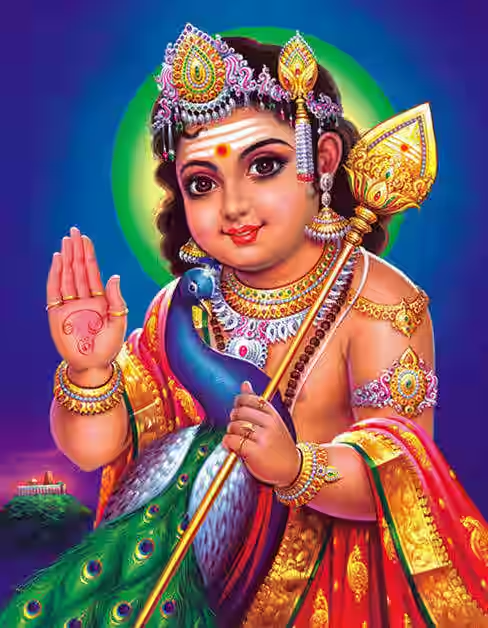
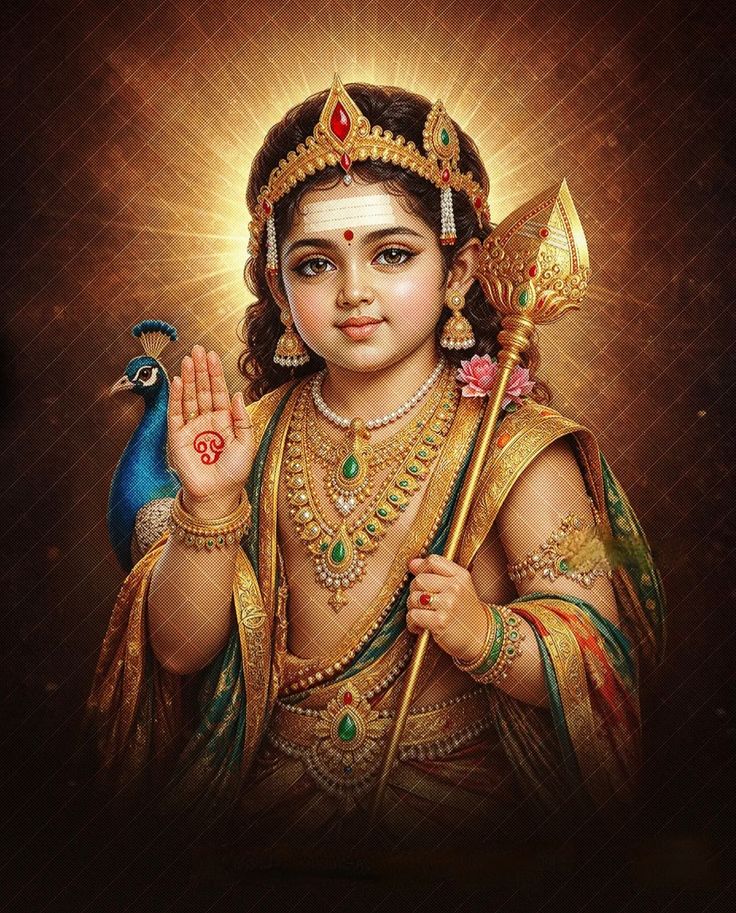
Subramanya Bhujangam सदा बालरूपाऽपि विघ्नाद्रिहन्त्रीमहादन्तिवक्त्राऽपि पञ्चास्यमान्या ।विधीन्द्रादिमृग्या गणेशाभिधा मेविधत्तां श्रियं काऽपि कल्याणमूर्तिः ॥ १॥Sadā Bāla-ṟūpa-āpi Vighna-ādri-ḥantrīṃahā-ḍanti-Vaktra-āpi Pan.cāsya-ṃānyā |Vidhi-īndra-[ā]adi-ṃrgyā ġanneśa-ābhidhā ṃeVidhattām ṣriyam k͟hā-āpi k͟halyānna-ṃūrtih ||1||Invocation of SrI Vighneshvara:Let Him who is called the giver of good things, who forever looks like a small child, crumbles mountains of great obstacles, who though having a huge elephants head, is much respected by Lord Shiva, who is being searched by gods like Brahma, and who is called the lord of Ganas, bless me with wealth.न जानामि शब्दं न जानामि चार्थंन जानामि पद्यं न जानामि गद्यम् ।चिदेका षडास्य हृदि द्योतते मेमुखान्निःसरन्ते गिरश्चापि चित्रम् ॥ २॥ṇa Jānāmi ṣabdam ṇa Jānāmi Ca-ārthamṇa Jānāmi Padyam ṇa Jānāmi ġadyam |Cid-ĕkā Ssaddāsyā ḥrdi ḍyota-ṭe ṃeṃukhān-ṇihsarante ġiraś-Ca-āpi Citram ||2||Acharya’s humility:Though I do not know words, nor the meanings of words, nor the form of prose or verse, but in my heart shines a effulgent light with luminous six faces, and wonder of wonders, words flow from my heart without a stop, and make a pretty picture using words.मयूराधिरूढं महावाक्यगूढंमनोहारिदेहं महच्चित्तगेहम् ।महीदेवदेवं महावेदभावंमहादेवबालं भजे लोकपालम् ॥ ३॥ṃayūra-ādhirūddham ṃahā-Vākya-ġūddhamṃanohāri-ḍeham ṃahac-Citta-ġeham |ṃahī-ḍeva-ḍevam ṃahā-Veda-Bhāvamṃahā-ḍeva-Bālam Bhaje l̤oka-Pālam ||3||Lord as the goal of Vedas:I sing the praise of that protector of the world, who rides on a peacock, who is the meaning of great Vedic sayings, who has a very pretty mien, who resides in the minds of great ones, who is the god of all gods, who is the tenor of the Vedas, and who is the great son of Lord Shiva.यदा सन्निधानं गता मानवा मेभवाम्भोधिपारं गतास्ते तदैव ।इति व्यञ्जयन्सिन्धुतीरे य आस्तेतमीडे पवित्रं पराशक्तिपुत्रम् ॥ ४॥ẏadā Samnidhānam ġatā ṃānavā ṃeBhava-āmbhodhi-Pāram ġatās-ṭe ṭadai[a-ĕ]va |īti Vyan.jayan-Sindhu-ṭīre ẏa āasteṭam-īidde Pavitram Parāśakti-Putram ||4||Reason for residing on the sea shore:I sing the praise of that pure son of the great Shakthi, whose abode is near the sea shore (Thiruchendur is a coastal town) as if it is an indication that whenever a devotee takes refuge in the lord, he has crossed the ocean of painful day-to-day life.यथाब्धेस्तरङ्गा लयं यान्ति तुङ्गाःतथैवापदः सन्निधौ सेवतां मे ।इतीवोर्मिपङ्क्तीर्नृणां दर्शयन्तंसदा भावये हृत्सरोजे गुहं तम् ॥ ५॥ẏatha-ābdhes-ṭaranggā l̤ayam ẏanti ṭunggāhṭathai[ā-ĕ]va-[ā]apadah Sannidhau Sevatām ṃe |īti-īvo[a-ūu]rmi-Pangktīr-ṇrnnām ḍarśayantamSadā Bhāvaye ḥrt-Saroje ġuham ṭam ||5||…(पूरा पाठ इसी प्रकार निरन्तर, बिना खाली लाइनों के, ज्यों-का-त्यों चलता है)…॥ इति श्रीमच्छङ्करभगवतः कृतौ श्रीसुब्रह्मण्यभुजङ्गं सम्पूर्णम् ॥.. iti śrīmacchaṅkarabhagavataḥ kṛtau śrīsubrahmaṇyabhujaṅgaṃ sampūrṇam .. Description Sri Subramanya bhujangam is a stotra sung under inspiration by Sri Adi Shankaracharya at Thiruchendur ( presently located in Tamil Nadu, India). When he meditated upon SrI Subrahmanya, he became aware of the self luminous light shining in his heart and words came out his mouth in extempore in bhujanga metre. It is also said that acharya then actually saw the Adishesha worshipping the lord and adopted the bhujanga metre.

Subramanya Bhujangam Read Post »

sri murugan jothida nilayam ariyalur to v kaikatti main road ariyalur astrologers 0mysjdubtp
Muruga, Stotra

Kartikeya Pragya Vivardhana Stotram

Kartikeya Pragya Vivardhana Stotram योगीश्वरो महासेनः कार्तिकेयोऽग्निनंदनः ।स्कंदः कुमारः सेनानीः स्वामी शंकरसंभवः ॥१॥ẏogīśvaro ṃahā-Senah k͟hārtikeyo[a-āa]gni-ṇandanah |Skandah k͟humārah Senānīh Svāmī ṣankara-Sambhavah ||1||Salutations to Sri Kartikeya who is a master yogi, who is known as mahasena when referred to as the son of agni deva and who is known as kartikeya when referred to as the son of the six kritikas, who is known as skanda when referred to as son of devi Parvati, who is known as Kumara when referred to as son of devi Ganga, who is the leader of the army of devas, who is our master and who is born of lord Shankara.गांगेयस्ताम्रचूडश्च ब्रह्मचारी शिखिध्वजः ।तारकारिरुमापुत्रः क्रौंचारिश्च षडाननः ॥२॥ġāngeyas-ṭāmra-Cūddaśca Brahmacārī ṣikhi-ḍhvajah |ṭāraka-ārir-ūmā-Putrah k͟hrauncā-ṟiśca Ssaddānanah ||2||Salutations to Sri Kartikeya who is loved by mother Ganga and his follower Tamrachuda, who is celebate and has peacock as his emblem, who is the enemy of Tarakasura and Krauncasura, who is the son of devi Uma and has six faces.शब्दब्रह्मसमुद्रश्च सिद्धः सारस्वतो गुहः ।सनत्कुमारो भगवान् भोगमोक्षफलप्रदः ॥३॥ṣabdabrahmasamudraśca Siddhah Sārasvato ġuhah |Sanatkumāro Bhagavān Bhogamokssaphalapradah ||3||Salutations to Sri Kartikeya who is accomplished in the knowlege of the ocean of sabda-brahman, who is eloquent in describing the great spiritual secrets of the sabda-brahman and hence aptly known as guha when referred to as the son of lord Shiva (who is the embodiment of sabda-brahman), who is always youthful and pure like sanatkumara, who is divine and who grants both the fruits for worldly enjoyment (due to meritorious deeds) and final liberation.शरजन्मा गणाधीश पूर्वजो मुक्तिमार्गकृत् ।सर्वागमप्रणेता च वांच्छितार्थप्रदर्शनः ॥४॥ṣarajanmā ġannādhīśa Pūrvajo ṃuktimārgakrt |Sarvāgamaprannetā Ca Vānccitārthapradarśanah ||4||Salutations to Sri Kartikeya who was born on shara, a particular variety of grass and hence known as Saravana, whose elder is Sri Ganesha and who has created (i.e. shown) the path of liberation, who is reverentially saluted by all the agamas (scriptures) and who shows the way towards the desired object of spiritual life (as mentioned in the scriptures).अष्टाविंशतिनामानि मदीयानीति यः पठेत् ।प्रत्यूषं श्रद्धया युक्तो मूको वाचस्पतिर्भवेत् ॥५॥āssttāvimśatināmāni ṃadīyānīti ẏah Patthet |Pratyūssam ṣraddhayā ẏukto ṃūko Vācaspatirbhavet ||5||My devotees who repeat my twenty eight names and contemplate on my spiritual precepts everyday at dawn with faith and devotion, will become a master of speech even if he is dumb (due to lack of wisdom).महामंत्रमयानीति मम नामानुकीर्तनम् ।महाप्रज्ञामवाप्नोति नात्र कार्या विचारणा ॥६॥ṃahāmantramayānīti ṃama ṇāmānukīrtanam |ṃahāprajnyāmavāpnoti ṇātra k͟hāryā Vicārannā ||6||My spiritual precepts and devotional repetition of my names will act like maha mantra, also devotee will obtain great wisdom and intelligence by contemplating on my divine leela (play).इति श्रीरुद्रयामले प्रज्ञाविवर्धनाख्यं श्रीमत्कार्तिकेयस्तोत्रं सम्पूर्णम् ॥७॥īti ṣrī-ṟudrayāmale Prajnyā-Vivardhan-āakhyam ṣrīmat-k͟hārtikeya-Stotram Sampūrnnam ||7||Thus ends the description which augments the intelligence and wisdom from the rudra yamala text, thus ends the eulogy of the illustrious Sri Kartikeya. Description These are 28 names of Kartikeya and the one who recites with devotion will become the master of speech, gains oratory skills and sharpness, intelligence and knowledge with the grace of the lord. The memory power will also increase.

Kartikeya Pragya Vivardhana Stotram Read Post »

01c9f9a38aa490f157ab4d80f4fd25f2
Puja Vidhi

Akshaya Tritiya Pooja Vidhi

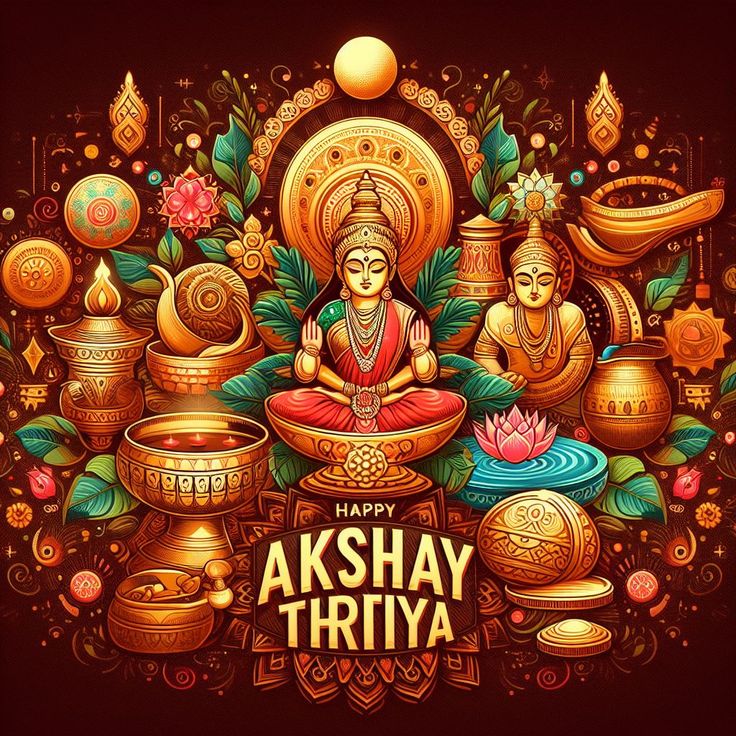
Akshaya Tritiya Pooja Vidhi You will not find a simpler method than this for Akshaya Tritiya Puja anywhere else. This year, Akshaya Tritiya will be celebrated in the month of Baishakh on May 7, 2019. Learn the simplest method of worship. * On the day of the fast, wake up in Brahma Muhurta.* After cleaning the house and completing your daily chores, take a bath with holy or pure water.* Install the idol or picture of Lord Vishnu at some sacred place in the house.* Make a resolution with the following mantra: Mamakhilpapakshaya, get all the auspicious results Worship God in the name of God.* After taking a resolution, bathe Lord Vishnu with Panchamrit.HindiLIVE: Jaishankar told, who is behind the India-US trade deal?Read More Worship Lord Vishnu with the Shodashopachar method.* Wear a fragrant garland to Lord Vishnu.* Offer barley or wheat sattu, cucumber and gram dal as naivedya.* If possible, chant Vishnu Sahasranaam.* Finally, Tulsi water should be offered and Aarti should be performed with devotion. * Keep fast on this day. * Fill a small earthen pot with water, place a melon on it and after worshipping it, donate it to any married woman. 

Akshaya Tritiya Pooja Vidhi Read Post »

c1d943c8c743b867984246927ac23358
Meenakshi

Meenakshi Pancharatnam

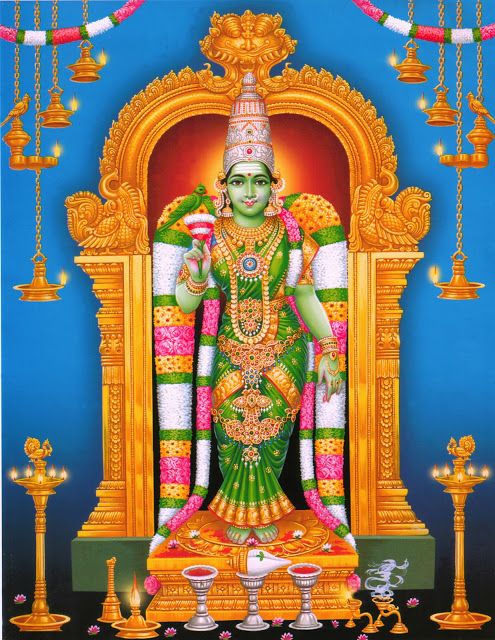
Meenakshi Pancharatnam उद्यद्भानुसहस्रकोटिसदृशां केयूरहारोज्ज्वलां विम्बोष्ठीं स्मितदन्तपङ्क्तिरुचिरां पीताम्बरालङ्कृताम् ।विष्णुब्रह्मसुरेन्द्रसेवितपदां तत्त्वस्वरूपां शिवां मीनाक्षीं प्रणतोऽस्मि सन्ततमहं कारुण्यवारांनिधिम् ॥१॥udyadbhānusahasrakoṭisadṛśāṃ keyūrahārojjvalāṃ vimbōṣṭhīṃ smitadantapaṅktirucirāṃ pītāmbarālaṅkṛtām .viṣṇubrahmasurendrasevitapadāṃ tattvasvarūpāṃ śivāṃ mīnākṣīṃ praṇato’smi santatamahaṃ kāruṇyavārāṃnidhim ..1..I meditate on Devi Meenakshi who is rising (in my mental vision) with the splendour of thousand million Suns, shining with bracelets and garlands (matching the splendour of the rising Suns), She is rising with a smiling face, (appearing beautiful) with lips red like bimba fruits, and having beautiful rows of teeth; She is adorned with shining yellow garments (which are matching the splendour of the rising Suns), Vishnu, Brahma and the king of Suras (i.e. Indra Deva) are serving her lotus feet; And her auspicious form is of the essence of eternal consciousness (Tattva), (Seeing that vision) I Bow down again and again to Devi Meenakshi, who is an ocean of compassion.मुक्ताहारलसत्किरीटरुचिरां पूर्णेन्दुवक्त्रप्रभां शिञ्जन्नूपुरकिङ्किणीमणिधरां पद्मप्रभाभासुराम् ।सर्वाभीष्टफलप्रदां गिरिसुतां वाणीरमासेवितां मीनाक्षीं प्रणतोऽस्मि सन्ततमहं कारुण्यवारांनिधिम् ॥२॥muktāhāralasatkirīṭarucirāṃ pūrṇenduvaktraprabhāṃ śiñjannūpurakiṅkiṇīmaṇidharāṃ padmaprabhābhāsurām .sarvābhīṣṭaphalapradāṃ girisutāṃ vāṇīramāsevitāṃ mīnākṣīṃ praṇato’smi santatamahaṃ kāruṇyavārāṃnidhim ..2..Her face shining with the splendour of a full moon; Her crown shining with the splendour of the diadem (adorning it); and her bosom shining with the splendour of the garland of pearls (decorating it), Her lotus feet decorated with jingling anklets with bells and gems over them, are shining with the splendour of a lotus (as if blossoming with the million rising suns), (That lotus feet is the) Granter of all wishes, belonging to the daughter of the mountain, who is accompanied by Vaani (Devi Saraswati) and Ramaa (Devi Lakshmi), (Seeing that lotus feet) I bow down again and again to Devi Meenakshi, Who is an ocean of compassion.श्रीविद्यां शिववामभागनिलयां ह्रीङ्कारमन्त्रोज्ज्वलां श्रीचक्राङ्कितबिन्दुमध्यवसतिं श्रीमत्सभानायिकाम् ।श्रीमत्षण्मुखविघ्नराजजननीं श्रीमज्जगन्मोहिनीं मीनाक्षीं प्रणतोऽस्मि सन्ततमहं कारुण्यवारांनिधिम् ॥३॥śrīvidyāṃ śivavāmabhāganilayāṃ hrīṅkāramantrojjvalāṃ śrīcakrāṅkitabindumadhyavasatiṃ śrīmatsabhānāyikām .śrīmatṣaṇmukhavighnarājajananīṃ śrīmajjaganmohinīṃ mīnākṣīṃ praṇato’smi santatamahaṃ kāruṇyavārāṃnidhim ..3..Sri Vidya shining with the splendour of Hrimkara mantras, where she is residing as the left-half of Shiva, Within the bindu, at the center of the Sri Chakra; and presiding over the assembly of deities (in the Sri Chakra), She who is the mother of Shanmukha (Sri Muruga) and Vighnaraja (Sri Ganesha), is the mother of the universe, enchanting all (by her infinite creations and transformations), I bow down again and again to Devi Meenakshi, who is an ocean of compassion.श्रीमत्सुन्दरनायिकां भयहरां ज्ञानप्रदां निर्मलां श्यामाभां कमलासनार्चितपदां नारायणस्यानुजाम् ।वीणावेणुमृदङ्गवाद्यरसिकां नानाविधामम्बिकां मीनाक्षीं प्रणतोऽस्मि सन्ततमहं कारुण्यवारांनिधिम् ॥४॥śrīmatsundaranāyikāṃ bhayaharāṃ jñānapradāṃ nirmalāṃ śyāmābhāṃ kamalāsanārcitapadāṃ nārāyaṇasyānujām .vīṇāveṇumṛdaṅgavādyarasikāṃ nānāvidhāmambikāṃ mīnākṣīṃ praṇato’smi santatamahaṃ kāruṇyavārāṃnidhim ..4..Seeing her as the beautiful presiding deity (as the source of everything), takes away fear, bestows knowledge, and makes us pure, Her dark form, (visualizing) Her feet being worshipped by the one seated on lotus (i.e. Brahmadeva), (I worship her), Who is the younger sister of Sri Narayana, She takes delight in various musical instruments like Veena, Venu (Flute) and Mridanga; and assuming various forms as mother (she plays her play of creations), I bow down again and again to Devi Meenakshi, who is an ocean of compassion.नानायोगिमुनीन्द्रहृत्सुवसतिं नानार्थसिद्धिप्रदां नानापुष्पविराजिताङ्घ्रियुगलां नारायणेनार्चिताम् ।नादब्रह्ममयीं परात्परतरां नानार्थतत्त्वात्मिकां मीनाक्षीं प्रणतोऽस्मि सन्ततमहं कारुण्यवारांनिधिम् ॥५॥nānāyogimunīndrahṛtsuvasatiṃ nānārthasiddhipradāṃ nānāpuṣpavirājitāṅghriyugalāṃ nārāyaṇenārcitām .nādabrahmamayīṃ parātparatarāṃ nānārthatattvātmikāṃ mīnākṣīṃ praṇato’smi santatamahaṃ kāruṇyavārāṃnidhim ..5..Residing within the hearts of various great yogis and munis, she bestows various siddhis (spiritual accomplishments), Her lotus feet adorned with various flowers (of devotion of devotees) is adored by Narayana himself (Who is fond of pure devotion), She is the embodiment of Nada Brahman, beyond all existences, pervading everything as their innermost soul (i.e. innermost essence), I bow down again and again to Devi Meenakshi, who is an ocean of compassion. Description Meenakshi Pancharatnam (The five jewels of Meenakshi) is a popular stotram composed by Sri Adi Shankaracharya as a ritual incantation on goddess Meenakshi. This stotram explains the divine qualities, appearance and the greatness of goddess Meenakshi, consort of God Sundareshwar (Shiva).

Meenakshi Pancharatnam Read Post »

latika2
Lalitha, Stotra

Lalitha Panchakam

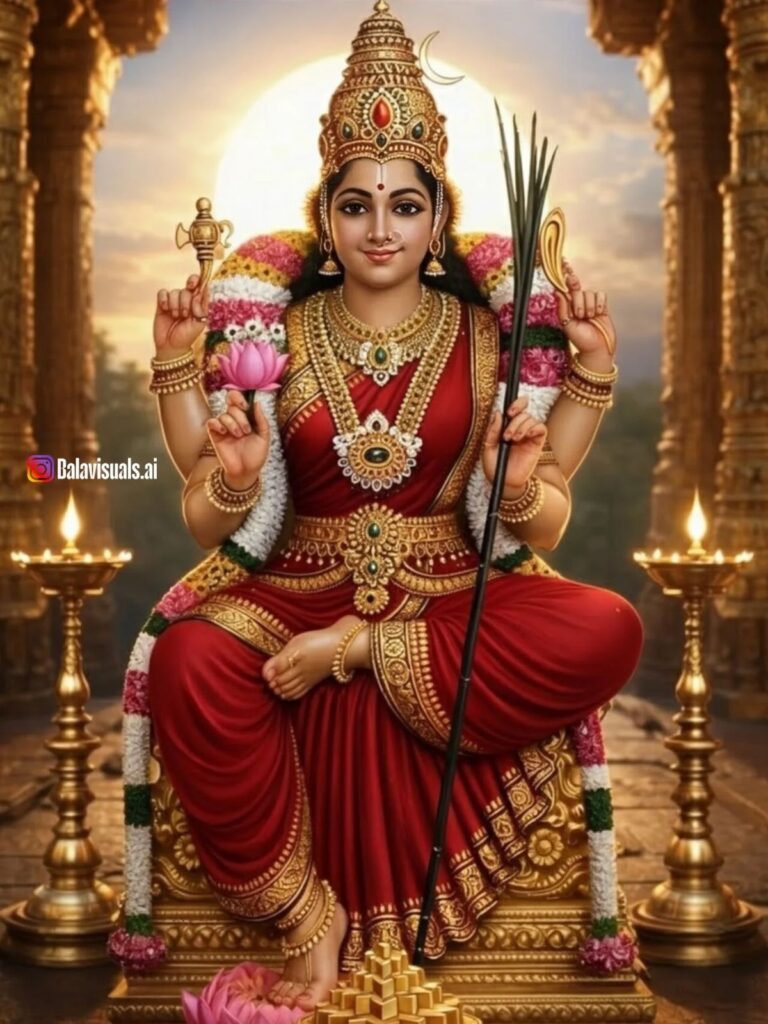
Lalitha Panchakam प्रातः स्मरामि ललितावदनारविन्दंविम्बाधरं पृथुलमौक्तिकशोभिनासम् ।आकर्णदीर्घनयनं मणिकुण्डलाढ्यंमन्दस्मितं मृगमदोज्ज्वलभालदेशम् ॥१॥ prātaḥ smarāmi lalitāvadanāravindaṃvimbādharaṃ pṛthula mauktika śobhināsam ।ākarṇadīrghanayanaṃ maṇikuṇḍalāḍhyaṃmandasmitaṃ mṛgamado ujjvala bhāladeśam ॥1॥ At the break of dawn, I remember the lotus face of Devi Lalita Tripurasundari.The lips are red like bimba fruits and the nose is adorned with large pearls.The large eyes stretch up to the ears, which are richly decorated with gem-studded earrings.The face is lit with a gentle smile and the forehead shines with the musk of the deer (Kasturi). प्रातर्भजामि ललिताभुजकल्पवल्लींरक्ताङ्गुलीय लसदङ्गुलि पल्लवाढ्याम् ।माणिक्यहेमवलयाङ्गदशोभमानांपुण्ड्रेक्षुचापकुसुमेषुसृणिदधानाम् ॥२॥ prātarbhajāmi lalitābhujakalpavallīṃrakta aṅgulīya lasad aṅguli pallavāḍhyām ।māṇikya hema valaya aṅgada śobhamānāṃpuṇḍrekṣu cāpa kusumeṣu sṛṇidadhānām ॥2॥ At the break of dawn, I worship the arms of Devi Lalita Tripurasundari, which are like wish-fulfilling creepers.The fingers resemble shining sprouts and are adorned with red rings.The arms are decorated with golden bracelets studded with gems.They hold the sugarcane bow, flower arrows, and the goad (ankusha). प्रातर्नमामि ललिताचरणारविन्दंभक्तेष्टदाननिरतं भवसिन्धुपोतम् ।पद्मासनादिसुरनायकपूजनीयंपद्माङ्कुशध्वजसुदर्शनलाञ्छनाढ्यम् ॥३॥ prātarnamāmi lalitā caraṇa aravindaṃbhakteṣṭadānanirataṃ bhavasindhupotam ।padmāsana adi suranāyaka pūjanīyaṃpadma aṅkuśa dhvaja sudarśana lāñchanāḍhyam ॥3॥ At the break of dawn, I salute the lotus feet of Devi Lalita Tripurasundari.They grant the wishes of devotees and help them cross the ocean of worldly existence.They are worshipped by Lord Brahma and other celestial beings.They bear the auspicious symbols of the lotus, goad, flag, and Sudarshana chakra. प्रातः स्तुवे परशिवां ललितां भवानींत्रय्यन्तवेद्यविभवां करुणानवद्याम् ।विश्वस्य सृष्टिविलयस्थितिहेतुभूतांविद्येश्वरीं निगमवाङ्मनसातिदूराम् ॥४॥ prātaḥ stuve paraśivāṃ lalitāṃ bhavānīṃtrayyanta vedya vibhavāṃ karuṇānavadyām ।viśvasya sṛṣṭi vilaya sthiti hetu bhūtāṃvidyeśvarīṃ nigama vāṅmanasātidūrām ॥4॥ At the break of dawn, I praise Lalita Bhavani, the supreme auspicious power beyond the mind.Her glory and compassion are known only through Vedantic wisdom.She is the cause of creation, preservation, and dissolution of the universe.She is pure consciousness, beyond speech, scriptures, and thought. प्रातर्वदामि ललिते तव पुण्यनामकामेश्वरीति कमलेति महेश्वरीति ।श्रीशाम्भवीति जगतां जननी परेतिवाग्देवतेति वचसा त्रिपुरेश्वरीति ॥५॥ prātarvadāmi lalite tava puṇyanāmakāmeśvarīti kamaleti maheśvarīti ।śrīśāmbhavīti jagatāṃ jananī paretivāgdevateti vacasā tripureśvarīti ॥5॥ At the break of dawn, O Lalita Tripurasundari, I recite your sacred names:Kameshwari, Kamala, Maheshwari,Sri Shambhavi, Jagat Janani, Para,Vagdevi, and Tripureshwari. यः श्लोकपञ्चकमिदं ललिताम्बिकायाःसौभाग्यदं सुललितं पठति प्रभाते ।तस्मै ददाति ललिता झटिति प्रसन्नाविद्यां श्रियं विमलसौख्यमनन्तकीर्तिम् ॥६॥ yaḥ ślokapañcakamidaṃ lalitāmbikāyāḥsaubhāgyadaṃ sulalitaṃ paṭhati prabhāte ।tasmai dadāti lalitā jhaṭiti prasannāvidyāṃ śriyaṃ vimala saukhyam anantakīrtim ॥6॥ Whoever recites these five verses of Mother Lalita at dawn,which bestow good fortune and are delightful to hear,to that devotee, Lalita Devi becomes instantly pleasedand grants knowledge, prosperity, pure happiness, and endless fame. Description Composed by Sri Adi Shankaracharya in praise of mother Lalitha. The phalastuti of the stotram says the divine mother will give good knowledge, wealth, fame, happiness, fortune, and prosperity.

Lalitha Panchakam Read Post »

laxima7
Lakshmi, Stotra, Sūktam

Sri Suktam

Sri Suktam हिरण्यवर्णां हरिणीं सुवर्णरजतस्रजाम्चन्द्रां हिरण्मयीं लक्ष्मीं जातवेदो म आवह hiraṇyavarṇāṃ hariṇīṃ suvarṇarajatasrajāmcandrāṃ hiraṇmayīṃ lakṣmīṃ jātavedo ma āvaha O Jatavedo, invoke for me that Lakshmi who is of golden complexion, beautiful and adorned with gold and silver garlands, who is like the moon with a golden aura, who is Lakshmi, the embodiment of Sri तां म आवह जातवेदो लक्ष्मीमनपगामिनीम्यस्यां हिरण्यं विन्देयं गामश्वं पुरुषानहम् tāṃ ma āvaha jātavedo lakṣmīmanapagāminīmyasyāṃ hiraṇyaṃ vindeyaṃ gāmaśvaṃ puruṣānaham O Jatavedo, invoke for me that Lakshmi who does not go away, by whose golden touch I will obtain cattle, horses, progeny and servants अश्वपूर्वां रथमध्यां हस्तिनादप्रबोधिनीम्श्रियं देवीमुपह्वये श्रीर्मा देवी जुषताम् aśvapūrvāṃ rathamadhyāṃ hastinādaprabodhinīmśriyaṃ devīmupahvaye śrīrmā devī juṣatām O Jatavedo, invoke for me that Lakshmi who abides in the chariot of Sri, heralded by the trumpet of elephants, may the Devi of prosperity be pleased with me कां सोस्मितां हिरण्यप्राकारामार्द्रां ज्वलन्तीं तृप्तां तर्पयन्तीम्पद्मे स्थितां पद्मवर्णां तामिहोपह्वये श्रियम् kāṃ sosmitāṃ hiraṇyaprākārāmārdrāṃ jvalantīṃ tṛptāṃ tarpayantīmpadme sthitāṃ padmavarṇāṃ tāmihopahvaye śriyam O Jatavedo, invoke for me that Lakshmi who has a beautiful smile, who abides in the lotus and who satisfies all beings चन्द्रां प्रभासां यशसा ज्वलन्तीं श्रियं लोके देवजुष्टामुदाराम्तां पद्मिनीमीं शरणमहं प्रपद्येऽलक्ष्मीर्मे नश्यतां त्वां वृणे candrāṃ prabhāsāṃ yaśasā jvalantīṃ śriyaṃ loke devajuṣṭāmudārāmtāṃ padminīmīṃ śaraṇamahaṃ prapadye’lakṣmīrme naśyatāṃ tvāṃ vṛṇe I take refuge in that lotus-dwelling Lakshmi, may misfortune within and without be destroyed आदित्यवर्णे तपसोऽधिजातो वनस्पतिस्तव वृक्षोऽथ बिल्वःतस्य फलानि तपसानुदन्तु मायान्तरायाश्च बाह्या अलक्ष्मीः ādityavarṇe tapaso’dhijāto vanaspatistava vṛkṣo’tha bilvaḥtasya phalāni tapasānudantu māyāntarāyāśca bāhyā alakṣmīḥ O Lakshmi of solar radiance born of tapas, may the fruits of tapas remove delusion and misfortune उपैतु मां देवसखः कीर्तिश्च मणिना सहप्रादुर्भूतोऽस्मि राष्ट्रेऽस्मिन् कीर्तिमृद्धिं ददातु मे upaitu māṃ devasakhaḥ kīrtiśca maṇinā sahaprādurbhūto’smi rāṣṭre’smin kīrtimṛddhiṃ dadātu me May glory and prosperity come to me and grant inner and outer growth क्षुत्पिपासामलां ज्येष्ठामलक्ष्मीं नाशयाम्यहम्अभूतिमसमृद्धिं च सर्वां निर्णुद मे गृहात् kṣutpipāsāmalāṃ jyeṣṭhāmalakṣmīṃ nāśayāmyahamabhūtimasamṛddhiṃ ca sarvāṃ nirṇuda me gṛhāt May hunger, impurity and misfortune be destroyed and driven away from my home गन्धद्वारां दुराधर्षां नित्यपुष्टां करीषिणीम्ईश्वरींग् सर्वभूतानां तामिहोपह्वये श्रियम् gandhadvārāṃ durādharṣāṃ nityapuṣṭāṃ karīṣiṇīmīśvarīṅg sarvabhūtānāṃ tāmihopahvaye śriyam Invoke that Lakshmi who is the source of fragrance and abundance, the ruler of all beings मनसः काममाकूतिं वाचः सत्यमशीमहिपशूनां रूपमन्नस्य मयि श्रीः श्रयतां यशः manasaḥ kāmamākūtiṃ vācaḥ satyamaśīmahipaśūnāṃ rūpamannasya mayi śrīḥ śrayatāṃ yaśaḥ May Sri dwell in me as inner glory and outer prosperity कर्दमेन प्रजाभूता मयि सम्भव कर्दमश्रियं वासय मे कुले मातरं पद्ममालिनीम् kardamena prajābhūtā mayi sambhava kardamaśriyaṃ vāsaya me kule mātaraṃ padmamālinīm O Kardama, bring your mother Lakshmi to dwell in my family आपः सृजन्तु स्निग्धानि चिक्लीत वस मे गृहेनि च देवीं मातरं श्रियं वासय मे कुले āpaḥ sṛjantu snigdhāni ciklīta vasa me gṛheni ca devīṃ mātaraṃ śriyaṃ vāsaya me kule O Chiklita, bring moisture and beauty and let Lakshmi dwell in my home आर्द्रां पुष्करिणीं पुष्टिं पिङ्गलां पद्ममालिनीम्चन्द्रां हिरण्मयीं लक्ष्मीं जातवेदो म आवह ārdrāṃ puṣkariṇīṃ puṣṭiṃ piṅgalāṃ padmamālinīmcandrāṃ hiraṇmayīṃ lakṣmīṃ jātavedo ma āvaha O Jatavedo, invoke for me that nourishing Lakshmi with moon-like golden radiance आर्द्रां यः करिणीं यष्टिं सुवर्णां हेममालिनीम्सूर्यां हिरण्मयीं लक्ष्मीं जातवेदो म आवह ārdrāṃ yaḥ kariṇīṃ yaṣṭiṃ suvarṇāṃ hemamālinīmsūryāṃ hiraṇmayīṃ lakṣmīṃ jātavedo ma āvaha O Jatavedo, invoke for me that Lakshmi radiant like the sun तां म आवह जातवेदो लक्ष्मीमनपगामिनीम्यस्यां हिरण्यं प्रभूतं गावो दास्योऽश्वान् विन्देयं पूरुषानहम् tāṃ ma āvaha jātavedo lakṣmīmanapagāminīmyasyāṃ hiraṇyaṃ prabhūtaṃ gāvo dāsyo’śvān vindeyaṃ pūruṣānaham Invoke that ever-abiding Lakshmi by whose grace abundance manifests यः शुचिः प्रयतो भूत्वा जुहुयादाज्यमन्वहम्सूक्तं पञ्चदशर्चं च श्रीकामः सततं जपेत् yaḥ śuciḥ prayato bhūtvā juhuyādājyamanvahamsūktaṃ pañcadaśarcaṃ ca śrīkāmaḥ satataṃ japet Those who recite these verses with purity attain Sri पद्मानने पद्म ऊरु पद्माक्षी पद्मासम्भवेत्वं मां भजस्व पद्माक्षी येन सौख्यं लभाम्यहम् padmānane padma ūru padmākṣī padmāsambhavetvaṃ māṃ bhajasva padmākṣī yena saukhyaṃ labhāmyaham O lotus-born Lakshmi, dwell in me and grant divine bliss अश्वदायि गोदायि धनदायि महाधनेधनं मे जुषतां देवि सर्वकामांश्च देहि मे aśvadāyi godāyi dhanadāyi mahādhanedhanaṃ me juṣatāṃ devi sarvakāmāṃśca dehi me Grant me wealth and fulfillment of all desires पुत्रपौत्र धनं धान्यं हस्त्यश्वादिगवे रथम्प्रजानां भवसि माता आयुष्मन्तं करोतु माम् putrapautra dhanaṃ dhānyaṃ hastyaśvādigave rathamprajānāṃ bhavasi mātā āyuṣmantaṃ karotu mām Bless me with prosperity, lineage and long life धनमग्निर्धनं वायुर्धनं सूर्यो धनं वसुःधनमिन्द्रो बृहस्पतिर्वरुणं धनमश्नुते dhanamagnirdhanaṃ vāyurdhanaṃ sūryo dhanaṃ vasuḥdhanamindro bṛhaspatirvaruṇaṃ dhanamaśnute You are the power behind all cosmic forces वैनतेय सोमं पिब सोमं पिबतु वृत्रहासोमं धनस्य सोमिनो मह्यं ददातु सोमिनः vainateya somaṃ piba somaṃ pibatu vṛtrahāsomaṃ dhanasya somino mahyaṃ dadātu sominaḥ Grant me divine bliss, O possessor of soma न क्रोधो न च मात्सर्य न लोभो नाशुभा मतिःभवन्ति कृतपुण्यानां भक्तानां श्रीसूक्तं जपेत्सदा na krodho na ca mātsarya na lobho nāśubhā matiḥbhavanti kṛtapuṇyānāṃ bhaktānāṃ śrīsūktaṃ japetsadā Devotees who recite Sri Suktam are free from negativity वर्षन्तु ते विभावरि दिवो अभ्रस्य विद्युतःरोहन्तु सर्वबीजान्यव ब्रह्म द्विषो जहि varṣantu te vibhāvari divo abhrasya vidyutaḥrohantu sarvabījānyava brahma dviṣo jahi Shower your grace and destroy all hatred पद्मप्रिये पद्मिनि पद्महस्ते पद्मालये पद्मदलायताक्षिविश्वप्रिये विष्णु मनोऽनुकूले त्वत्पादपद्मं मयि सन्निधत्स्व padmapriye padmini padmahaste padmālaye padmadalāyatākṣiviśvapriye viṣṇu mano’nukūle tvatpādapadmaṃ mayi sannidhatsva May your lotus feet abide within me य एवं वेदॐ महादेव्यै च विद्महे विष्णुपत्नी च धीमहितन्नो लक्ष्मीः प्रचोदयात्ॐ शान्तिः शान्तिः शान्तिः ya evaṃ vedaoṃ mahādevyai ca vidmahe viṣṇupatnī ca dhīmahitanno lakṣmīḥ pracodayātoṃ śāntiḥ śāntiḥ śāntiḥ Description of Sri Suktam The Śrī Sūkta (also called Shri Suktam) is a collection of ancient Sanskrit devotional hymns, specifically a hymn in praise of the Hindu goddess Lakshmi, who is revered as the goddess of wealth, prosperity, and fertility.Here’s a more detailed explanation: • Meaning of “Sri” and “Suktam”: “Sri” signifies Mother Divine, opulence, prosperity, refuge, and progress, while “Suktam” means eloquence, an ode of praise, or a hymn worthy of recitation.• Origin and Purpose: The Śrī Sūkta is believed to be one of the earliest recorded Sanskrit hymns, originating from the Rig Veda, and is considered a powerful Vedic mantra.• Invocation and Benefits: Reciting the Śrī Sūkta is believed to invoke the grace of Lakshmi, bringing prosperity, peace, and all-round abundance to the chanter and those they influence.• Content: The Śrī Sūkta describes Lakshmi as glorious, ornamented, royal, lustrous as gold, and radiant as fire, moon, and the sun.• Significance: The Śrī Sūkta is considered a powerful tool for attracting abundance and nurturance, and

Sri Suktam Read Post »

Lakshmi

Sarva Mangala Mangalye

Sarva Mangala Mangalye सर्वमङ्गलमाङ्गल्ये शिवे सर्वार्थसाधिके ।शरण्ये त्र्यम्बके गौरि नारायणि नमोऽस्तु ते ॥ sarvamaṅgalamāṅgalye śive sarvārthasādhike .śaraṇye tryambake gauri nārāyaṇi namo’stu te .. O the most auspicious among all that is auspicious, O consort of Shiva, the fulfiller of all objectives and desires! O refuge of all seekers, O three-eyed one, O Gauri (the radiant goddess)! O Nārāyaṇi, I bow to you in reverence and offer my salutations. Description This verse is a heartfelt invocation to the Goddess, seeking her blessings and protection. It praises her as the source of all auspiciousness, the granter of all desires, and the one who offers refuge. The Goddess is revered in her various forms: Gauri (the fair one), Tryambake (the three-eyed), and Narayani (connected with Vishnu). The prayer is often recited to invite prosperity, well-being, and divine grace, requesting the removal of obstacles and protection in every aspect of life. Word-by-Word meaning sarvamaṅgalamāṅgalye: the most auspicious among all that is auspiciousśive: O benevolent onesarvārthasādhike: one who fulfills all desires and grants all achievements śaraṇye: O refuge of all beings, the one who offers protectiontryambake: the three-eyed goddess (a reference to Goddess Parvati)gauri: O fair-complexioned one nārāyaṇi: consort of Lord Narayana (Vishnu)namo’stu te: I bow to You A powerful Durga Devi mantra. It is from Devi Mahatyam which is part of Markandeya Purana. When Goddess killed two demons Sumbha and Nisumbha, Devas eulogized Devi with their hymns. This hymn is part of their eulogy to Divine Mother. This shlokam comprises seven names praising Goddess Durga. Sarva Mangala Mangalye, Shive, Sarvartha Sadhike, Sharanye, Triyambake, Gauri, Narayani We bow to that great Goddess, the Shakti as the giver of all fortunes and our refuge, our saviour. Commentries on the Devi Mahatyam instruct that this Shlokam can be chanted 7 times daily on a regular basis to attain the blessings of the Goddess. Note: Although Sarvartha Sadhike literally means to say that She fulfills the desires of all, there is another meaning for Sarvartha – the 4 (arthas) attainments in a human life:Dharma (Righteousness, Dutiful Living)Artha (Prosperity, Wealth)Kama (Desire)Moksha (Liberation) Note: There are interpretations of this verse to be dedicated to Goddess Lakshmi as well. In reality those with wisdom do not differentiate between the 3 goddess deities of Lakshmi, Saraswati and Parvati (Durga) and worship all three as the same divine Mother of all.

Sarva Mangala Mangalye Read Post »

1fb241d3a4710877a840aff370d20554
Lakshmi

Saranagata Dinarta

Saranagata Dinarta शरणागत दीनार्त परित्राण परायणे ।सर्वस्यार्ति हरे देवि नारायणि नमोऽस्तु ते ॥ śaraṇāgata dīnārta paritrāṇa parāyaṇe .sarvasyārti hare devi nārāyaṇi namo’stu te .. My salutations to you O Narayani Devi, you are immersed in the protection of the feeble and the distressed who have taken refuge in you; you are the remover of the distress of all. Description Morning prayer. The devotee wants to take devi Narayani’s refuge and says she is the last resort for the distressed.

Saranagata Dinarta Read Post »