Hari Om

Menu

February 2026

72ef54456bbc8da98bfb2105e828933a
Rishis

Bhugurvashista Kraturam

Bhugurvashista Kraturam भूगुर्वसिष्ठः क्रतुरंगिराश्च मनुः पुलस्त्यः पुलहश्च गौतमः ।रैम्यो मरीचिः च्यवनश्च दक्षः कुर्वतु सर्वे मम सुप्रभातम् ।। bhūgurvasiṣṭhaḥ kraturaṃgirāśca manuḥ pulastyaḥ pulahaśca gautamaḥ .raimyo marīciḥ cyavanaśca dakṣaḥ kurvatu sarve mama suprabhātam .. Bhrighu, Vashishta, Kratu, Angira, Manu, Pulasthya, Pulaha, Gautama, Raibhya, Marichi, Chyavana and Daksha – may all of them make mine a good morning. Description Morning prayer to the Planets, Rishis, etc.

Bhugurvashista Kraturam Read Post »

ramsn1
Rishis

Asvatthama Balirvyaso Hanuman

Asvatthama Balirvyaso Hanuman अश्वत्थामा बलिर्व्यासो हनूमांश्च विभीषणः |कृपः परशुरामश्च सप्तैः ते चिरजीविनः || aśvatthāmā balirvyāso hanūmāṃśca vibhīṣaṇaḥ .kṛpaḥ paraśurāmaśca saptaiḥ te cirajīvinaḥ .. The seven eternal beings (immortal ones according to the Vedas) are aśvatthāmā, bali, vyāsa, hanumāna, vibhīṣaṇa, kṛpā and parśurāma. Description Prayer to the Immortals. This is also called Sapta Chiranjeevi Stotram. Chiranjeevi is a combination of chiram, or ‘permanent’, and jīvi, or ‘lived’.The seven Chiranjivis are:– Vyasa, the sage who composed the Mahabharata. He represents erudition and wisdom. He was the son of sage Parashara and his intimate partner Satyawati, a fisherwoman.[3] and great-grandson of the sage Vashishtha. He was born towards the end of Treta Yuga, lived to see the complete Dvapara Yuga, and saw the initial phase of Kali Yuga.– Hanuman, one of the greatest brahmachari, served Rama. He stands for selflessness, courage, devotion, intelligence, strength, celibacy and righteous conduct.– Parashurama, the sixth avatar of Vishnu. He is knowledgeable of all astras, sastras and divine weapons. The Kalki Purana writes that he will reemerge at the end of time to be the martial guru of Kalki. He will then instruct the final Avatar to undertake penance to receive celestial weaponry, required to save mankind at the end time.– Vibhishana, the brother of Ravana. Vibhishana surrendered to Rama before his battle with Ravana. He was later crowned king of Lanka after Ravana was killed by Rama. He stands for righteousness. Vibhishana is not a true Chiranjivi, as his boon of longevity is to remain on the earth only until the end of the Maha Yuga.– Ashwatthama, the son of Drona, a great warrior. Drona did many years of severe penance to please lord Shiva in order to obtain a son who possessed the same valor as Lord Shiva. Ashwatthama is the avatar of one of the eleven Rudras. Ashwatthama and Kripa are believed to be the lone survivors still living who had fought in the Kurukshetra War. He might be immortal but Krishna bestowed upon him a curse that, he would live forever but can neither communicate with anyone nor touch anything, with his body covered with painful sores and ulcers that would never [be] cure[d].– Mahabali was a ruler of demons or asura who existed somewhere around present day Kerala. He was sent into Patal, the underworld by the Vamana avatar of Vishnu.– Kripa, the royal guru of the princes in the Mahabharata. He was adopted by King Shantanu. His sister was Kripi, who married Dronacharya. Together they gave birth to Ashwatthama. He is known for long life because of impartiality among his students and treated them as his own kids. He along with his nephew Ashwatthama are the lone survivors of all warriors who actually fought in Kurukshetra War. What is also interesting to note is that excluding King bali, parśurāma, hanumāna and vibhīṣaṇa were present during the manifesation of Visnu as Lord Rama and vyāsa, kṛpā and aśvatthāmā were present during the incarnation of Sri Krsna.Apart from the seven Chiranjivis above mentioned, there exist other Chiranjivis as well. For instance, Sage Markandeya, who at the age of sixteen was blessed with immortality. Markandeya, Markandeya is an ancient rishi born in the clan of Bhrigu Rishi. The Markandeya Purana especially, comprises a dialogue between Markandeya and a sage called Jaimini, and a number of chapters in the Bhagavata Purana are dedicated to his conversations and prayers. He is also mentioned in the Mahabharata. All chiranjivis are alive just to help Vishnu’s tenth and final avatar or Kalki, to wipe out sinners and restore dharma or righteousness on Earth and open the portal to the next Mahayuga (चतुर्युग) of Surya Savarnika Manavantara or Savarni Manavantara.अश्वत्थामा बलिव्र्यासो हनूमांश्च विभीषण:। कृप: परशुरामश्च सप्तएतै चिरजीविन:॥ सप्तैतान् संस्मरेन्नित्यं मार्कण्डेयमथाष्टमम्। जीवेद्वर्षशतं सोपि सर्वव्याधिविवर्जित॥āśwathāma Balirvyāso ḥanumanśca Vibheeśanaha. k͟hrupaha Parśuramasca Saptaitey chiranjivinaha. Saptaitān Samsmareynnityam ṃarkandeymathāśtamam. Jivedvarśśatam Sopi Sarvavyadhivivarjit..

Asvatthama Balirvyaso Hanuman Read Post »

fb4ec52ae9fe024b1b082c8bab79e7dc
Parvati

Vagarthaviva Sampruktau

Vagarthaviva Sampruktau वागर्थाविव सम्प्रुक्तौ वागर्थप्रतिपत्तयेजगतः पितरौ वन्दे पार्वतीपरमेश्वरौ vāgarthāviva sampruktau vāgarthapratipattayejagataḥ pitarau vande pārvatīparameśvarau I worship Parvati and Parameshwara, the parents of the world, who are inseparable, just like a word and its sense, in order to guide me in acquiring the right understanding of words and their meanings. Alternate meaning when Parvathi Paramaeshvarau is considered as Parvathipa Rameshvaru: Kalidasa is praying to Lord Shiva and Lord Vishnu who are ‘Pitharau’ (fathers) to this Jagath who are inseparable like the word and the meaning. Description This is the opening sloka in divine poet Kalidasa’s Raghuvamsam, a sanskrit epic (Mahākāvya) consisting of 1,564 stanzas describing the lineage of kings of the Raghu dynasty (ancestors of Sri Rama). The literal interpretation of this Shloka is that it is a prayer by Kalidasa, addressed to deities Lord Shiva and Parvathi, seeking their blessings for proficieny in literature as he begins the epic Raghuvamsa. i.e. For the correct grasping of words and their sense I bow to Parvati and Parameshvara who are the parents of the universe and are inseperable like words and their meaning. vāgarthāviva – This compound splits as ‘vaak arthau iva’ . vaak is ‘word’ and artha is ‘meaning’ in this context. The word iva means ‘like’. The meaning of the phrase would be ‘just like the word and its meaning’ samprukthau – sampruktha is ‘blended into one’ or ‘attached’ (to each other) vaagartha – vaak and artha, the word and its meaning prathipaththaye – means ‘in order to acquire’ jagatha – jagath is the world. The Lord (naatha, pathi) of jagath is Jagannaatha or Jagathpath. pitharau – pitha is father. pitharau in this context would be parents vandhe – to salute paarvathi parameshvarau – Paarvathi is Goddess Uma and Parameshwara is Lord Shiva To summarize, Kalidasa prays to the divine parents Paarvathi & Parameshwara who are inseparable like the word and its meaning, in order to guide him in acquiring the power of words and their meanings (literature) as he embarks on the Mahakavya, Raghuvamsa. There is another interpretation at work here in terms of whom Kalidasa was actually praying to. If the final phrase is rearranged a bit, we get the below: paarvathipa rameshvarau Now pa: in Sanskrit can indicate ‘Lord of/Husband of’. Thus paarvathipa can mean Lord Shiva (Husband of Paarvathi). Rameshvara can be split as Ramaa- Ishvara, meaning, the Lord of Ramaa (Goddess Lakshmi) who is Lord Vishnu. Thus this can also mean that Kalidasa is praying to Lord Shiva and Lord Vishnu who are Pitharau (fathers) to this Jagath who are inseparable like the word and the meaning. The audio (click play at the top of the page) renders both these versions!

Vagarthaviva Sampruktau Read Post »

Parvathy
Parvati

Uma Usha Ca Vaidehi

Uma Usha Ca Vaidehi उमा उषा च वैदेही रमा गंगेति पंचकम् ।प्रातरेव स्मरेन्नित्यं सौभाग्यं वर्धते सदा ।। umā uṣā ca vaidehī ramā gaṃgeti paṃcakam .prātareva smarennityaṃ saubhāgyaṃ vardhate sadā .. Meditate upon the five devis- Uma, Usha, Vaidehi, Ramaa, Ganga at dawn and prosperity will grow for ever.

Uma Usha Ca Vaidehi Read Post »

parvati1
Parvati, Stotra

Kamakshi Stotram

Kamakshi Stotram कल्पानोकहपुष्पजालविलसन्नीलालकां मातृकांकान्तां कञ्जदलेक्षणां कलिमलप्रध्वंसिनीं कालिकाम् ।काञ्चीनूपुरहारदामसुभगां काञ्चीपुरीनायिकांकामाक्षीं करिकुम्भसन्निभकुचां वन्दे महेशप्रियाम् ॥ १॥k͟halpa-ānokaha_Pusspa_Jāla_Vilasan-ṇīlā-[ā]lakām ṃātrkāmk͟hāntām k͟han.ja_ḍale[a-īi]kssannām k͟hali_ṃala_Pradhvamsinīm k͟hālikām |k͟hān.cī_ṇūpura_ḥāra_ḍāma_Subhagām k͟hān.cī_Purī_ṇāyikāmk͟hāmākssīm k͟hari_k͟humbha_Sannibha_k͟hucām Vande ṃaheśa_Priyām ||1||(Salutations to devi Kamakshi) who is like the flowers of the wish-fulfilling tree (Kalpataru) shining brightly, with dark locks of hair, and seated as the great mother, who is beautiful with eyes like the lotus petals, and at the same time terrible in the form of devi Kalika, the destroyer of the sins of Kali-Yuga, who is beautifully adorned with girdles, anklets, garlands and wreath, and brings good fortune to all as the goddess of Kanchi puri, whose bosom is beautiful like the forehead of an elephant and is filled with compassion; we extol devi Kamakshi, the beloved of Sri Mahesha.काशाभांशुकभासुरां प्रविलसत्कोशातकीसन्निभांचन्द्रार्कानललोचनां सुरुचिरालङ्कारभूषोज्ज्वलाम् ।ब्रह्मश्रीपतिवासवादिमुनिभिः संसेविताङ्घ्रिद्वयांकामाक्षीं गजराजमन्दगमनां वन्दे महेशप्रियाम् ॥ २॥k͟hāśa-āabhām-ṣuka_Bhāsurām Pravilasat_k͟hośātakī_SannibhāmCandra-ārka-ānala_l̤ocanām Surucira-ālangkāra_Bhūsso[a-ū]jjvalām |Brahma_ṣrīpati_Vāsava-[ā]adi_ṃunibhih Samsevita-āngghri_ḍvayāmk͟hāmākssīm ġaja_ṟāja_ṃanda_ġamanām Vande ṃaheśa_Priyām ||2||(Salutations to devi Kamakshi) who has a green parrot which shines like the colour of the Kasha grass, she herself shining brightly like a moonlit night, whose three eyes are the sun, moon and the fire; and who adorned with radiant Ornaments is blazing luminous, whose holy pair of feet is served by lord Brahma, lord Vishnu, Indra and other devas, as well as the great Sages, whose movement is gentle like the king of elephants; we extol devi Kamakshi, the beloved of Sri Mahesha.ऐं क्लीं सौरिति यां वदन्ति मुनयस्तत्त्वार्थरूपां परांवाचां आदिमकारणं हृदि सदा ध्यायन्ति यां योगिनः ।बालां फालविलोचनां नवजपावर्णां सुषुम्नाश्रितांकामाक्षीं कलितावतंससुभगां वन्दे महेशप्रियाम् ॥ ३॥āim k͟hlīm Saur-īti ẏām Vadanti ṃunayas-ṭattva-ārtha_ṟūpām ParāmVācām āadima_k͟hārannam ḥrdi Sadā ḍhyāyanti ẏām ẏoginah |Bālām Phāla_Vilocanām ṇava_Japā_Varnnām Sussumna-[ā]aśritāmk͟hāmākssīm k͟halita-āvatamsa_Subhagām Vande ṃaheśa_Priyām ||3||(Salutations to devi Kamakshi) whose transcendental absolute form is expressed by the great Sages with the beeja mantras “aim Klim Sauh”, who is the primordial cause of the speech itself, and who is meditated upon by the Yogis in the cave of their hearts, who is worshipped in the form of Bala Tripurasundari (form of a small girl) who is having an eye on her forehead and having the colour of fresh hibiscus flower; she dwells in the Sushumna, who is adorned with garlands and brings good fortune to all; we extol devi Kamakshi, the beloved of Sri Mahesha.यत्पादाम्बुजरेणुलेशं अनिशं लब्ध्वा विधत्ते विधिर्-विश्वं तत् परिपाति विष्णुरखिलं यस्याः प्रसादाच्चिरम् ।रुद्रः संहरति क्षणात् तद् अखिलं यन्मायया मोहितःकामाक्षीं अतिचित्रचारुचरितां वन्दे महेशप्रियाम् ॥ ४॥ẏat_Pāda-āmbuja_ṟennu_l̤eśam āniśam l̤abdhvā Vi-ḍhatte Vidhir_Viśvam ṭat Paripāti Vissnnur-ākhilam ẏasyāh Prasādāc-Ciram |ṟudrah Samharati k͟hssannāt ṭad ākhilam ẏan-ṃāyayā ṃohitahk͟hāmākssīm āti_Citra_Cāru_Caritām Vande ṃaheśa_Priyām ||4||(Salutations to devi Kamakshi) by always taking the dust of whose lotus feet, Sri Brahma creates the world, by whose perennial grace, Sri Vishnu protects the entire world, and Rudra destroys in a moment that whole creation which is deluded by the power of Maya; whose deeds are diverse and lovely; we extol devi Kamakshi, the beloved of Sri Mahesha.सूक्ष्मात् सूक्ष्मतरां सुलक्षिततनुं क्षान्ताक्षरैर्लक्षितांवीक्षाशिक्षितराक्षसां त्रिभुवनक्षेमङ्करीं अक्षयाम् ।साक्षाल्लक्षणलक्षिताक्षरमयीं दाक्षायणीं सक्षिणींकामाक्षीं शुभलक्षणैः सुललितां वन्दे महेशप्रियाम् ॥ ५॥Sūkssmāt Sūkssma_ṭarām Su-l̤akssita_ṭanum k͟hssānta-ākssarair-l̤akssitāmVīkssā_ṣikssita_ṟākssasām ṭri_Bhuvana_k͟hssemangkarīm ākssayām |Sākssāl-l̤akssanna_l̤akssita-ākssara_ṃayīm ḍākssāyannīm Sakssinnīmk͟hāmākssīm ṣubha_l̤akssannaih Su-l̤alitām Vande ṃaheśa_Priyām ||5||(Salutations to devi Kamakshi) whose essence is subtler than the subtlest, whose form is auspicious and imperishable, whose knowledge refines the rakshasas within and brings welfare to the three worlds, who is Dakshayani and the eternal witness, playful and auspicious; we extol devi Kamakshi, the beloved of Sri Mahesha.ओङ्काराङ्गणदीपिकां उपनिषत्प्रासादपारावतीम्आम्नायाम्बुधिचन्द्रिकां अधतमःप्रध्वंसहंसप्रभाम् ।काञ्चीपट्टणपञ्जराऽऽन्तरशुकीं कारुण्यकल्लोलिनींकामाक्षीं शिवकामराजमहिषीं वन्दे महेशप्रियाम् ॥ ६॥ŏngkāra-āngganna_ḍīpikām ūpanissat_Prāsāda_Pārāvatīmāamnāya-āmbudhi_Candrikām ādha_ṭamah_Pradhvamsa_ḥamsa_Prabhām |k͟hān.cī_Pattttanna_Pan.jara-āantara_ṣukīm k͟hārunnya_k͟hallolinīmk͟hāmākssīm ṣiva_k͟hāmarāja_ṃahissīm Vande ṃaheśa_Priyām ||6||(Salutations to devi Kamakshi) who is the lamp of Omkara in the palace of the Upanishads, the light of the Vedas, the swan destroying darkness, the parrot of Kanchi pouring waves of compassion, queen of Shiva; we extol devi Kamakshi, the beloved of Sri Mahesha.ह्रीङ्कारात्मकवर्णमात्रपठनाद् ऐन्द्रीं श्रियं तन्वतींचिन्मात्रां भुवनेश्वरीं अनुदिनं भिक्षाप्रदानक्षमाम् ।विश्वाघौघनिवारिणीं विमलिनीं विश्वम्भरां मातृकांकामाक्षीं परिपूर्णचन्द्रवदनां वन्दे महेशप्रियाम् ॥ ७॥ḥrīngkāra-[ā]atmaka_Varnna_ṃātra_Patthanād āindrīm ṣriyam ṭanvatīmCin-ṃātrām Bhuvaneśvarīm ānudinam Bhikssā_Pradāna_k͟hssamām |Viśva-āghaugha_ṇivārinnīm Vimalinīm Viśvambharām ṃātrkāmk͟hāmākssīm Paripūrnna_Candra_Vadanām Vande ṃaheśa_Priyām ||7||(Salutations to devi Kamakshi) who is expressed by the syllable Hrim, who is Bhuvaneshwari, the pure consciousness, forgiver of sins, sustainer of the world, with a face like the full moon; we extol devi Kamakshi, the beloved of Sri Mahesha.वाग्देवीति च यां वदन्ति मुनयः क्षीराब्धिकन्येति चक्षोणीभृत्तनयेति च श्रुतिगिरो यां आमनन्ति स्फुटम् ।एकानेकफलप्रदां बहुविधाऽऽकारास्तनूस्तन्वतींकामाक्षीं सकलार्तिभञ्जनपरां वन्दे महेशप्रियाम् ॥ ८॥Vāg_ḍevī-[ī]ti Ca ẏām Vadanti ṃunayah k͟hssīra-ābdhi_k͟hanyeti Cak͟hssonnī_Bhrt_ṭanayeti Ca ṣruti_ġiro ẏām āamananti Sphuttam |ĕka-āneka_Phala_Pradām Bahu_Vidha-[ā]akārās-ṭanūs-ṭanvatīmk͟hāmākssīm Sakala-[ā]arti_Bhan.jana_Parām Vande ṃaheśa_Priyām ||8||(Salutations to devi Kamakshi) known as Saraswati, Lakshmi and Sita, the voice of the Shrutis, giver of many fruits, destroyer of all sufferings; we extol devi Kamakshi, the beloved of Sri Mahesha.मायामादिम्कारणं त्रिजगतां आराधिताङ्घ्रिद्वयाम्आनन्दामृतवारिराशिनिलयां विद्यां विपश्चिद्धियाम् ।मायामानुषरूपिणीं मणिलसन्मध्यां महामातृकांकामाक्षीं करिराजमन्दगमनां वन्दे महेशप्रियाम् ॥ ९॥ṃāyām āadim_k͟hārannam ṭri_Jagatām āarādhita-āngghri_ḍvayāmāananda-āmrta_Vāri_ṟāśi_ṇilayām Vidyām Vipaś-Cid_ḍhiyām |ṃāyā_ṃānussa_ṟūpinnīm ṃanni_l̤asan-ṃadhyām ṃahā-ṃātrkāmk͟hāmākssīm k͟hari_ṟāja_ṃanda_ġamanām Vande ṃaheśa_Priyām ||9||(Salutations to devi Kamakshi) the primordial Maya, bliss-abode, supreme knowledge, appearing human by Maya, gentle as the king of elephants; we extol devi Kamakshi, the beloved of Sri Mahesha.कान्ता कामदुघा करीन्द्रगमना कामारिवामाङ्कगाकल्याणी कलितावतारसुभगा कस्तूरिकाचर्चिताकम्पातीररसालमूलनिलया कारुण्यकल्लोलिनीकल्याणानि करोतु मे भगवती काञ्चीपुरीदेवता ॥ १०॥k͟hāntā k͟hāma_dudhā k͟hari-īndra_gamanā k͟hāmāri_vāma-āngka_ġāk͟halyānnī k͟halita-āvatāra_Subhagā k͟hastūrikā_Carcitāk͟hampā_ṭīra_ṟasāla_ṃūla_ṇilayā k͟hārunnya_k͟hallolinīk͟halyānnāni k͟harotu ṃe Bhagavatī k͟hān.cī_Purī ḍevatā ||10||(Salutations to devi Kamakshi) beloved wish-fulfilling mother, gentle as an elephant, consort of Shiva, dwelling on the banks of the Kampa river, overflowing with compassion; may she grant me all auspiciousness.इति श्रीमद् आदिशङ्कराचर्यविरचितं श्री कामाक्षीस्तोत्रं सम्पूर्णम् ।iti śrīmad ādiśaṅkarācaryaviracitaṃ śrī kāmākṣīstotraṃ sampūrṇam . Description Composed by Sri Adi Shankaracharya. Goddess Kamakshi is a form of Tripura Sundari or Parvati or the universal mother goddess. The word is derived from the heritage “Ka” meaning Goddess Saraswati (Goddess of Education), “Ma” meaning Goddess Lakshmi (Goddess of Wealth), “Akshi” meaning Eye. The main abode of Maa Kamakshi is the Kamakshi Amman temple at Kanchipuram. Goddess Kamakshi is considered to be the representation of Shri Vidya – Shri Lalita Maha Tripura sundari – she reigns supreme in Kanchi. The Goddess holds a sugarcane bow on her left upper arm representing the mind of a human being and Lotus, Parrot in her upper right arm- symbols of love.The Goddess also has divine chakras called Pasa (weapon that binds obstacles and ignorance) and Angusa (weapon that steers control and direction) in her arms. Devi Kamakshi Stotra should be read for happiness and prosperity in life.

Kamakshi Stotram Read Post »

parvati1
Parvati

Bhavani Bhujangam

Bhavani Bhujangam षडाधारपङ्केरुहान्तर्विराजत्सुषुम्नान्तरालेऽतितेजोल्लसन्तीम् ।सुधामण्डलं द्रावयन्तीं पिबन्तींसुधामूर्तिमीडेऽचिदानन्दरूपाम् ॥ १॥ṣaḍādhārapaṅkeruhāntarvirājatsuṣumnāntarāle’titejollasantīm .sudhāmaṇḍalaṃ drāvayantīṃ pibantīṃsudhāmūrtimīḍe’cidānandarūpām .. 1..I bow to that embodiment of ambrosia which is Consciousness and Bliss incarnate. It melts the orb of the moon and drinks (the moon-light). It shines with its profuse lustre inside the sushumná located in the lotus of shadádhára.Sushumná : a vein of the body supposed to be one of the passages for the breath.Shadádhára : one of the mystical circles in the body.ज्वलत्कोटिबालार्कभासारुणाङ्गींसुलावण्यशृङ्गारशोभाभिरामाम् ।महापद्मकिञ्जल्कमध्ये विराजत्त्रिकोणे निषण्णां ं भजे श्रीभवानीम् ॥२॥jvalatkoṭibālārkabhāsāruṇāṅgīṃsulāvaṇyaśṛṅgāraśobhābhirāmām .mahāpadmakiñjalkamadhye virājattrikoṇe niṣaṇṇāṃ ṃ bhaje śrībhavānīm ..2..I worship that Goddess Bhavánè who is seated on the triangle which shines in the midst of the filaments of the white lotus. She is extremely beautiful with lovely and charming grace. She has a shining red body similar to that of innumerable rising suns.क्वणत्किङ्किणीनूपुरोद्भासिरत्नप्रभालीढलाक्षार्द्रपादाब्जयुग्मम् ।अजेशाच्युताद्यैः सुरैः सेव्यमानंमहादेवि मन्मूर्ध्नि ते भावयामि ॥ ३॥kvaṇatkiṅkiṇīnūpurodbhāsiratnaprabhālīḍhalākṣārdrapādābjayugmam .ajeśācyutādyaiḥ suraiḥ sevyamānaṃmahādevi manmūrdhni te bhāvayāmi .. 3..Oh! Great Goddess! I contemplate your lotus feet on my head as being served by the celestials such as Brahmá, Achyuta (Vishnu) and others. These feet are wet due to red dye and dazzling with the gems of the anklets jingling with bells.सुषोणाम्बराबद्धनीवीविराजन्महारत्नकाञ्चीकलापं नितम्बम् ।स्फुरद्दक्षिणावर्तनाभिं च तिस्रोवली रम्यते रोमराजिं भजेऽहम् ॥ ४॥suṣoṇāmbarābaddhanīvīvirājanmahāratnakāñcīkalāpaṃ nitambam .sphuraddakṣiṇāvartanābhiṃ ca tisrovalī ramyate romarājiṃ bhaje’ham .. 4..Oh! Mother! I worship your streak of hair on the three folds on the belly, as also the shining naval circling to the right. (I also worship your) hip having the red garment tied around the waist, adorned by the girdle studded with gems and tinkling.लसद्वृत्तमुत्तुङ्गमाणिक्यकुम्भो-पमश्रीस्तनद्वन्द्वमम्बांबुजाक्षीम् ।भजे दुग्ध पूर्णाभिरामं तवेदंमहाहारदीप्तं सदा प्रस्नुतास्यम् ॥ ५॥lasadvṛttamuttuṅgamāṇikyakumbho-pamaśrīstanadvandvamambāmbujākṣīm .bhaje dugdha pūrṇābhirāmaṃ tavedaṃmahāhāradīptaṃ sadā prasnutāsyam .. 5..Oh! Lotus-eyed Mother! I worship your two radiant breasts, round in shape comparable to lofty gem-studded pitchers. They are beautiful and are full with milk. Shining with a breast-lace and oozing at the top, they are beautiful and are full of milk.शिरीषप्रसूनोल्लसद्बाहुदण्डैर्-ज्वलद्बाणकोदण्डपाशाङ्कुशैश्च ।चलत्कङ्कणोदारकेयूरभूषाज्वलद्भिः लसन्तीं भजे श्रीभवानीम् ॥ ६॥śirīṣaprasūnollasadbāhudaṇḍair-jvaladbāṇakodaṇḍapāśāṅkuśaiśca .calatkaṅkaṇodārakeyūrabhūṣājvaladbhiḥ lasantīṃ bhaje śrībhavānīm .. 6..I worship Goddess Bhavánè who glitters with (four) arms delicate like the Sirisha flowers, and which carry arrow, bow, noose and goad and which shine with bangles and bracelets.शरत्पूर्णचन्द्रप्रभापूर्णबिम्बाधरस्मेरवक्त्रारविन्दं सुशंताम्।सुरत्नावलीहारताटङ्कशोभामहा सुप्रसन्नां भजे श्रीभवानीम् ॥ ७॥śaratpūrṇacandraprabhāpūrṇabimbādharasmeravaktrāravindaṃ suśantām.suratnāvalīhāratāṭaṅkaśobhāmahā suprasannāṃ bhaje śrībhavānīm .. 7..I worship Goddess Bhavani who is extremely graceful and tranquil, who has her lotus-face shining like the autumnal full-moon smiling with red bimbha-like lips. She is lustrous with ear-ornaments studded with gems.सुनासापुटं पद्मपत्रायताक्षंयजन्तः श्रियं दानदक्षं कटाक्षम् ।ललाटोल्लसद्गन्धकस्तूरिभूषो- ज्ज्वलद्भिःस्फुरन्तीं भजे श्रीभवानीम् ॥ ८॥sunāsāpuṭaṃ padmapatrāyatākṣaṃyajantaḥ śriyaṃ dānadakṣaṃ kaṭākṣam .lalāṭollasadgandhakastūribhūṣo- jjvaladbhiḥsphurantīṃ bhaje śrībhavānīm .. 8..Oh Mother! I praise your lotus-face which bears musk on the cheeks and forehead, and the nostrils, the beautiful eye-brows and forehead, the lips and the graceful side-glance capable of conferring rewards.चलत्कुण्डलां ते भ्रमद्भृङ्गवृन्दांघनस्निग्धधम्मिल्लभूषोज्ज्वलन्तीम् ।स्फुरन्मौलिमाणिक्यमध्येन्दुरेखाविलासोल्लसद्दिव्यमूर्धानमीडे ॥ ९॥calatkuṇḍalāṃ te bhramadbhṛṅgavṛndāṃghanasnigdhadhammillabhūṣojjvalantīm .sphuranmaulimāṇikyamadhyendurekhāvilāsollasaddivyamūrdhānamīḍe .. 9..I praise your head which is radiant with the crest-jewel and the digit of the moon. It has the swarms of bees swinging inside the moving braids and is shining with the densely set white jasmine flowers.स्फुरत्वम्ब बिम्बस्य मे हृत्सरोजेसदा वाङ्मयं सर्वतेजोमयं च ।इति श्रीभवानिस्वरूपं तदेवंप्रपञ्चात्परं चातिसूक्ष्मं प्रसन्नम् ॥ १०॥sphuratvamba bimbasya me hṛtsarojesadā vāṅmayaṃ sarvatejomayaṃ ca .iti śrībhavānisvarūpaṃ tadevaṃprapañcātparaṃ cātisūkṣmaṃ prasannam .. 10..May this smiling form of yours, Oh! Bhaváni! which is beyond the Universe, very subtle and peaceful shine forth the lotus heart of mine, your child! May the literature in the form of all effulgence also dawn upon me!गणेशाणिमाद्याखिलैः शक्तिवृन्दै-र्स्फुरच्छ्रीमहाचक्रराजोल्लसन्तीम् ।परां राजराजेश्वरीं त्वा भवानींशिवाङ्कोपरिस्थां शिवां भावयेऽहम् ॥ ११॥gaṇeśāṇimādyākhilaiḥ śaktivṛndai-rsphuracchrīmahācakrarājollasantīm .parāṃ rājarājeśvarīṃ tvā bhavānīṃśivāṅkoparisthāṃ śivāṃ bhāvaye’ham .. 11..I contemplate on you Oh! Rajarajeshwari! Traipurè, who are seated on the lap of Lord shiva. You are the highest, are shining in the radiant cakra and are surrounded by all groups of shaktis led by Lord Ganeshá.त्वमर्कस्त्वमग्निस्त्वमिन्दुस्त्वमाप-स्त्वमाकाशभूर्वायवस्त्वं चिदात्मा ।त्वदन्यो न कश्चित्प्रकाशोऽस्ति सर्वंसदानन्दसंवित्स्वरूपं तवेदम् ॥ १२॥tvamarkastvamagnistvamindustvamāpa-stvamākāśabhūrvāyavastvaṃ cidātmā .tvadanyo na kaścitprakāśo’sti sarvaṃsadānandasaṃvitsvarūpaṃ tavedam .. 12..I worship you. You are of the form of blissful knowledge. There is none else in the universe superior to you. You are the sun, the moon, the fire, the water, the sky, the earth, the wind and the mahat.गुरुस्त्वं शिवस्त्वं च शक्तिस्त्वमेवत्वमेवासि माता पिताऽसि त्वमेव ।त्वमेवासि विद्या त्वमेवासि बुद्धि-र्गतिर्मे मतिर्देवि सर्वं त्वमेव ॥ १३॥gurustvaṃ śivastvaṃ ca śaktistvamevatvamevāsi mātā pitā’si tvameva .tvamevāsi vidyā tvamevāsi buddhi-rgatirme matirdevi sarvaṃ tvameva .. 13..Oh! Goddess! You are my preceptor. You are Lord shiva. You are the shakti. You are my mother and father. You are the knowledge. You are my kith and kin. You are my only refuge, thinking and indeed all in all.श्रुतीनामगम्यं सुवेदागमाद्यैर्-महिम्नो न जानाति पारं तवेदम् ।स्तुतिं कर्तुमिच्छामि ते त्वं भवानिक्षमस्वेदमम्ब प्रमुग्धः किलाहम् ॥ १४॥śrutīnāmagamyaṃ suvedāgamādyair-mahimno na jānāti pāraṃ tavedam .stutiṃ kartumicchāmi te tvaṃ bhavānikṣamasvedamamba pramugdhaḥ kilāham .. 14..Oh! Mother Bhavánè! I wish to praise you; Oh! Knower of the Vedas and Ágamas! You are unattainable through scriptures. People do not know the extent of your greatness. You please forgive this act of mine! I am indeed foolish.शरण्ये वरेण्ये सुकारुण्यपूर्णेहिरण्योदराद्यैरगम्येऽतिपुण्ये ।भवारण्यभीतं च मां पाहि भद्रेनमस्ते नमस्ते नमस्ते भवानि ॥ १५॥śaraṇye vareṇye sukāruṇyapūrṇehiraṇyodarādyairagamye’tipuṇye .bhavāraṇyabhītaṃ ca māṃ pāhi bhadrenamaste namaste namaste bhavāni .. 15..Oh! Bhaváni! Salutations to you again and again. Oh! Auspicious one! Oh! my refuge! Oh! Compassion-incarnate! Protect me from the fear of the forest of mundane existence.इमामन्वहं श्रीभवानीभुजङ्ग-स्तुतिर्यः पठेच्छ्रोतुमिच्छेत तस्मै ।स्वकीयं पदं शाश्वतं चैव सारंश्रियं चाष्टसिद्धिं भवानी ददाति ॥ १६॥imāmanvahaṃ śrībhavānībhujaṅga-stutiryaḥ paṭhecchrotumiccheta tasmai .svakīyaṃ padaṃ śāśvataṃ caiva sāraṃśriyaṃ cāṣṭasiddhiṃ bhavānī dadāti .. 16..Whoever reads this meritorious hymn on Bhavánè with devotion, Goddess Bhaváni confers on him prosperity, the eight perfections and her own eternal abode.भवानी भवानी भवानी त्रिवारम्- उदारम् मुदा सर्वदा ये जपन्ति । न शोकम् न मोहम् न पापं न भीतिः कदाचित्कथंचित्कुतश्चज्जनानाम् ॥ १७॥bhavānī bhavānī bhavānī trivāram- udāram mudā sarvadā ye japanti . na śokam na moham na pāpaṃ na bhītiḥ kadācitkathañcitkutaścajjanānām .. 17..Whoever joyfully repeats the name ‘Bhaváni’ thrice will have no grief, no confusion, no sin and no fear at any time.इति श्रीमच्छङ्कराचार्यविरचितं भवानीभुजङ्गप्रयातस्तोत्रं सम्पूर्णम् ॥iti śrīmacchaṅkarācāryaviracitaṃ bhavānībhujaṅgaprayātastotraṃ sampūrṇam ..Parvathy Description Bhavani Bhujanga Stotra is composed by Shri Adi Shankaracharya. He praises the glorious beauty of Bhavani (Goddess Parvati) from head to toe. Bhavānī means the deity who always helps

Bhavani Bhujangam Read Post »

bb37da82e2e64a43803081792d20ac94
Parvati

Bhavani Ashtakam

Bhavani Ashtakam न तातो न माता न बन्धुर्न दातान पुत्रो न पुत्री न भृत्यो न भर्ता ।न जाया न विद्या न वृत्तिर्ममैवगतिस्त्वं गतिस्त्वं त्वमेका भवानि ॥१॥ṇa ṭaato ṇa ṃaataa ṇa Bandhur-ṇa ḍaataaṇa Putro ṇa Putrii ṇa Bhrtyo ṇa Bhartaa |ṇa ñaayaa ṇa Vidyaa ṇa Vrttir-ṃama-īvaṅatis-ṭvam ṅatis-ṭvam ṭvam-ĕkaa BhavaaniNeither the mother nor the father, Neither the relation nor the friend, Neither the son nor the daughter, Neither the servant nor the husband, Neither the wife nor the knowledge, And neither my sole occupation, Are my refuges that I can depend, Oh, Bhavani. So you are my refuge and my only refuge, Bhavani.भवाब्धावपारे महादुःखभीरुपपात प्रकामी प्रलोभी प्रमत्तः ।कुसंसारपाशप्रबद्धः सदाहंगतिस्त्वं गतिस्त्वं त्वमेका भवानि ॥२॥Bhavaabdhaav-āpaare ṃahaa-ḍuhkha-BhiiruPapaata Prakaamii Pralobhii Pramattah |ḵu-ṣamsaara-Paasha-Prabaddhah ṣada-[ā]hamṅatis-ṭvam ṅatis-ṭvam ṭvam-ĕkaa BhavaaniI am in this ocean of birth and death, I am a coward, who dare not face sorrow, I am filled with lust and sin, I am filled with greed and desire, And tied I am, by the this useless life that I lead, So you are my refuge and my only refuge, Bhavani.न जानामि दानं न च ध्यानयोगंन जानामि तन्त्रं न च स्तोत्रमन्त्रम् ।न जानामि पूजां न च न्यासयोगंगतिस्त्वं गतिस्त्वं त्वमेका भवानि ॥३॥ṇa Jānāmi ḍānam ṇa Ca ḍhyāna-ẏogamṇa Jānāmi ṭantram ṇa Ca Stotra-ṃantram |ṇa Jānāmi Pūjām ṇa Ca ṇyāsa-ẏogamġatis-ṭvam ġatis-ṭvam ṭvam-ĕkā BhavāniNeither do I know how to give, Nor do I know how to meditate, Neither do I know thanthra, Nor do I know stanzas of prayer, Neither do I know how to worship, Nor do I know the art of yoga, So you are my refuge and my only refuge, Bhavani.न जानामि पुण्यं न जानामि तीर्थन जानामि मुक्तिं लयं वा कदाचित् ।न जानामि भक्तिं व्रतं वापि मातर्गतिस्त्वं गतिस्त्वं त्वमेका भवानि ॥४॥ṇa Jānāmi Punnyam ṇa Jānāmi ṭīrthaṇa Jānāmi ṃuktim l̤ayam Vā k͟hadācit |ṇa Jānāmi Bhaktim Vratam Vāpi ṃātar-ġatis-ṭvamġatis-ṭvam ġatis-ṭvam ṭvam-ĕkā BhavāniKnow I not how to be righteous, Know I not the way to the places sacred, Know I not methods of salvation, Know I not how to merge my mind with God, Know I not the art of devotion, Know I not how to practice austerities, Oh, mother, So you are my refuge and my only refuge, Bhavani.कुकर्मी कुसङ्गी कुबुद्धिः कुदासःकुलाचारहीनः कदाचारलीनः ।कुदृष्टिः कुवाक्यप्रबन्धः सदाहंगतिस्त्वं गतिस्त्वं त्वमेका भवानि ॥५॥k͟hu-k͟harmī k͟hu-Sanggī k͟hu-Buddhih k͟hudāsahk͟hula-[āa]cāra-ḥīnah k͟hadācāra-l̤īnah |k͟hu-ḍrssttih k͟hu-Vākya-Prabandhah Sada-[ā]hamġatis-ṭvam ġatis-ṭvam ṭvam-ĕkā BhavāniPerform I bad actions, Keep I company of bad ones, Think I bad and sinful thoughts, Serve I bad masters, Belong I to a bad family, Immersed I am in sinful acts, See I with bad intentions, Write I collection of bad words, Always and always, So you are my refuge and my only refuge, Bhavani.प्रजेशं रमेशं महेशं सुरेशंदिनेशं निशीथेश्वरं वा कदाचित् ।न जानामि चान्यत् सदाहं शरण्येगतिस्त्वं गतिस्त्वं त्वमेका भवानि ॥६॥Praje[a-īs]śam ṟame[a-īs]śam ṃahe[a-īs]śam Sure[a-īs]śamḍine[a-īs]śam ṇiśīthe[a-ī]śvaram Vā k͟hadācit |ṇa Jānāmi Cānyat Sada-[ā]ham ṣarannyeġatis-ṭvam ġatis-ṭvam ṭvam-ĕkā BhavāniNeither do I know the creator, Nor the lord of Lakshmi, Neither do I know the lord of all, Nor do I know the lord of devas, Neither do I know the god who makes the day, Nor the god who rules at night, Neither do I know any other gods, Oh, goddess to whom I bow always, So you are my refuge and my only refuge, Bhavani.विवादे विषादे प्रमादे प्रवासेजले चानले पर्वते शत्रुमध्ये ।अरण्ये शरण्ये सदा मां प्रपाहिगतिस्त्वं गतिस्त्वं त्वमेका भवानि ॥७॥Vivāde Vissāde Pramāde PravāseJale Ca-[ā]nale Parvate ṣatru-ṃadhye |ārannye ṣarannye Sadā ṃām Prapāhiġatis-ṭvam ġatis-ṭvam ṭvam-ĕkā BhavāniWhile I am in a heated argument, While I am immersed in sorrow, While I am suffering an accident, While I am traveling far off, While I am in water or fire, While I am on the top of a mountain, While I am surrounded by enemies, And while I am in a deep forest, Oh goddess, I always bow before thee, So you are my refuge and my only refuge, Bhavani.अनाथो दरिद्रो जरारोगयुक्तोमहाक्षीणदीनः सदा जाड्यवक्त्रः ।विपत्तौ प्रविष्टः प्रनष्टः सदाहंगतिस्त्वं गतिस्त्वं त्वमेका भवानि ॥८॥ānātho ḍaridro Jarā-ṟoga-ẏuktoṃahā-k͟hssīnna-ḍīnah Sadā Jāddya-Vaktrah |Vipattau Pravissttah Pranassttah Sadāhamġatis-ṭvam ġatis-ṭvam ṭvam-ĕkā BhavāniWhile being an orphan, While being extremely poor, While affected by disease of old age, While I am terribly tired, While I am in a pitiable state, While I am being swallowed by problems, And while I suffer serious dangers, I always bow before thee, So you are my refuge and only refuge, Bhavani. Description Composed by Sri Adi Shankaracharya. Bhavani Ashtakam is a popular hymn on Goddess Bhavani, who is known for her protection and merciful nature. The Lyrics of this hymn have an in-depth meaning that which explains, I don’t have anyone or anything other than you, the divine mother Bhavani to protect in all difficult situations. Tuljapur is a famous pilgrimage of Devi Bhavani (popularly called as Tulja Bhavani).


Bhavani Ashtakam Read Post »

20091fa80146746e618f701b202f25d8
Parvati

Ahalya Draupadi Sita Tara

Ahalya Draupadi Sita Tara अहल्या द्रौपदी सीता तारा मंडोदरी तथा ।पंचकन्याः स्मरेन्नित्यं महापातकनाशनम् ।। ahalyā draupadī sītā tārā maṃḍodarī tathā .paṃcakanyāḥ smarennityaṃ mahāpātakanāśanam .. Meditate upon the five virtuous devis eternally – Ahalya, Draupadi, Sita, Tara and Mandodari – and all atrocities and sins will be destroyed Description Prayer to Five Devis

Ahalya Draupadi Sita Tara Read Post »

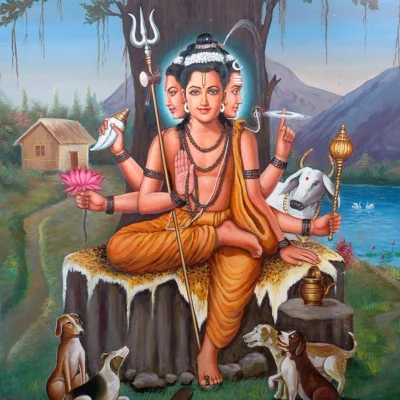
Dattatreya with three heads seated under tree with animals image
Pancha Bhuta

Prithvi Sagandha Sarasa

Prithvi Sagandha Sarasa पृथ्वी सगंधा सरसाः तथाऽपः स्पर्शी च वायु ज्वलितं च तेजः।नभः सशब्दं महता सहैव कुर्वतु सर्वे मम सुप्रभातम् ॥ pṛthvī sagaṃdhā sarasāḥ tathā’paḥ sparśī ca vāyu jvalitaṃ ca tejaḥ.nabhaḥ saśabdaṃ mahatā sahaiva kurvatu sarve mama suprabhātam .. The fragrant earth, the waters of reservoirs, the touch of the wind, the brilliance of the fire and the great voice of the akasa – may all of them make mine a good morning. Description Morning prayer to the Planets, Rishis, etc.

Prithvi Sagandha Sarasa Read Post »

5b255492ae00bcbab82febd75cea5f0a
Pancha Bhuta, Sūktam

Kshetrapati Suktam

Kshetrapati Suktam क्षेत्रस्य पतिना वयं हितेनेव जयामसि ।गामश्वं पोषयित्न्वा स नो मृळातीदृशे ॥१॥k͟hssetrasya Patinā Vayam ḥitene[a-ī]va Jayāmasi |ġām-āśvam Possayitnvā Sa ṇo ṃrllātī-ḍrśe ||1||We invoke the lord of the kshetra (i.e. lord of the field) by whose grace indeed we prosper, may he through his gracious look increase our cattle and horses.क्षेत्रस्य पते मधुमन्तमूर्मिं धेनुरिव पयो अस्मासु धुक्ष्व ।मधुश्चुतं घृतमिव सुपूतमृतस्य नः पतयो मृळयन्तु ॥२॥k͟hssetrasya Pate ṃadhumantam-ūurmim ḍhenur-īva Payo āsmāsu ḍhukssva |ṃadhuś-Cutam ġhrtam-īva Supūtam-ṟtasya ṇah Patayo ṃrllayantu ||2||O lord of the kshetra (field), with the sweet waves of mother nature’s blessings, may you milk our fields like the milk of a cow (i.e. yield abundant harvest), with the sweetness of rita (mother nature’s divine law confering bounty), which falls like clarified butter, may you shed your grace on us.मधुमतीरोषधीर्द्याव आपो मधुमन्नो भवत्वन्तरिक्षम् ।क्षेत्रस्य पतिर्मधुमान्नो अस्त्वरिष्यन्तो अन्वेनं चरेम ॥३॥ṃadhumatīr-ŏssadhīr-ḍyāva āapo ṃadhuman-ṇo Bhavatv[u]-āntarikssam |k͟hssetrasya Patir-ṃadhumān-ṇo āstv[u]-ārissyanto ānvenam Carema ||3||May the plants be sweet (i.e. filled with nature’s purity), may the sky be sweet, may the waters be sweet, and may the space be sweet to us. May the lord of the kshetra be sweet to us, and may we be devoted followers of him.शुनं वाहाः शुनं नरः शुनं कृषतु लाङ्गलम् ।शुनं वरत्रा बध्यन्तां शुनमष्ट्रामुदिङ्गय ॥४॥ṣunam Vāhāh ṣunam ṇarah ṣunam k͟hrssatu l̤ānggalam |ṣunam Varatrā Badhyantām ṣunam-āssttrām-ūdinggaya ||4||May the oxen drawing the plough bring welfare and prosperity to all, may the farmer driving the oxen bring welfare and prosperity to all, may the plough making furrows bring welfare and prosperity to all, may the strap binding the plough bring welfare and prosperity to all, and may the goad swinging towards the oxen bring welfare and prosperity to all.शुनासीराविमां वाचं जुषेथां यद्दिवि चक्रथुः पयः ।तेनेमामुप सिञ्चतम् ॥५॥ṣunā-Sīra-āvi-ṃām Vācam Jussethām ẏad-ḍivi Cakrathuh Payah |ṭena-īmām-ūpa Sin.catam ||5||May Shuna and Shira (deities of the farmers) who created waters (i.e. clouds) in the sky be pleased with our prayers, and by it sprinkle waters in our fields as rains.अर्वाची सुभगे भव सीते वन्दामहे त्वा ।यथा नः सुभगाससि यथा नः सुफलाससि ॥६॥ārvācī Subhage Bhava Sīte Vandāmahe ṭvā |ẏathā ṇah Subhagās-āsi ẏathā ṇah Suphalās-āsi ||6||O devi Sita, turn towards us and be gracious, we extol and worship you, so that you become favourable to us and the source of abundant harvest.इन्द्रः सीतां नि गृह्णातु तां पूषानु यच्छतु ।सा नः पयस्वती दुहामुत्तरामुत्तरां समाम् ॥७॥īndrah Sītām ṇi ġrhnnātu ṭām Pūssānu ẏaccatu |Sā ṇah Payasvatī ḍuhām-ūttarām-ūttarām Samām ||7||May Indra take hold of the furrows, may Pushan sustain them, and may mother earth, rich in milk, yield abundant crops year after year.शुनं नः फाला वि कृषन्तु भूमिं शुनं कीनाशा अभि यन्तु वाहैः ।शुनं पर्जन्यो मधुना पयोभीः शुनासीरा शुनमस्मासु धत्तम् ॥८॥ṣunam ṇah Phālā Vi k͟hrssantu Bhūmim ṣunam k͟hīnāśā ābhi ẏantu Vāhaih |ṣunam Parjanyo ṃadhunā Payobhīh ṣunā-Sīrā ṣunam-āsmāsu ḍhattam ||8||May the ploughshares, the farmers, the oxen, Parjanya (rain god), and Shuna–Shira bestow welfare and prosperity upon us all. Description A farmer’s prayer to god of fields (क्षेत्रपति), from Rigveda (ऋग्वेद) 4.57. The devotee prays for abundant harvest, increase in cattle and horses, good rains. He prays for everybody’s welfare and prosperity.

Kshetrapati Suktam Read Post »