






















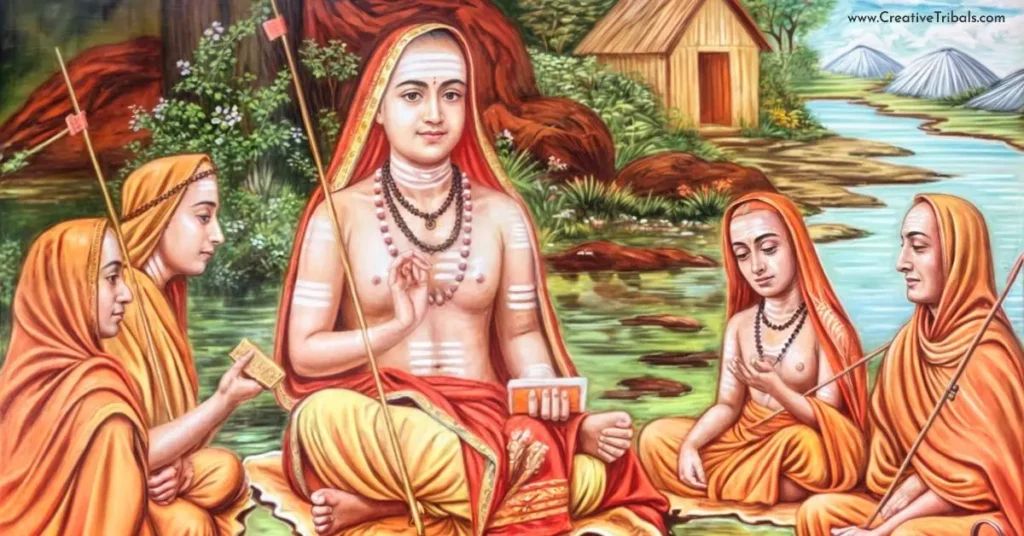
Vakya Vritti
Vākya Vritti ।श्रीः।।।।वाक्यवृत्तिः।।सर्गस्थितिप्रलयहेतुमचिन्त्यशक्तिंविश्वेश्वरं विदितविश्वमनन्तमूर्तिम्।निर्मुक्तबन्धनमपारसुखाम्बुराशिंश्रीवल्लभं विमलबोधघनं नमामि।।1।। ..Śrīḥ….Vākyavṛttiḥ..SargasthitipralayahetumacintyaśaktiṃViśveśvaraṃ viditaviśvamanantamūrtim.NirmuktabandhanamapārasukhāmburāśiṃŚrīvallabhaṃ vimalabodhaghanaṃ namāmi..1.. 1. I bow down to that Pure Consciousness Divine – a shoreless ocean of happiness, which is All-pervading (Vishnu), the Beloved of Shri, the all-knowing Lord of the Universe, assuming endless forms and yet ever-free, having an inscrutable power to become (apparently) the Cause of creation, maintenance, and dissolution of the universe. यस्य प्रसादादहमेव विष्णुर्मय्येव सर्वं परिकल्पितं च।इत्थं विजानामि सदात्मरूपंतस्याङ्घ्रिपद्मं प्रणतोऽस्मि नित्यम्।।2।। Yasya prasādādahameva viṣṇuRmayyeva sarvaṃ parikalpitaṃ ca.Itthaṃ vijānāmi sadātmarūpaṃTasyāṅghripadmaṃ praṇato’smi nityam..2.. 2. Again and again I Prostrate at the feet of my Guru, by whose grace I have come to realise, “I alone am the All-pervading Essence (Vishnu)”, and that “the world of multiplicity is all a super-imposition upon myself.” अनायासेन येनास्मान्मुच्येय भवबन्धनात्।तन्मे संक्षिप्य भगवन्केवलं कृपया वद।।4।। Anāyāsena yenāsmānmucyeya bhavabandhanāt.Tanme saṃkṣipya bhagavankevalaṃ kṛpayā vada..4.. 4. “Merely out of your grace and mercy, holy Teacher, please explain to me briefly the means by which I may easily get liberated from the sorrows of this bondage-to-change”. साध्वी ते वचनव्यक्तिः प्रतिभाति वदामि ते।इदं तदिति विस्पष्टं सावधानमनाः श्रृणु।।5।। Sādhvī te vacanavyaktiḥ pratibhāti vadāmi te.Idaṃ taditi vispaṣṭaṃ sāvadhānamanāḥ śrṛṇu..5.. 5. The teacher said: “Your question is valid, and so very clearly expressed, I shall answer it exhaustively to make it as vivid to you as though you are seeing it near”. तत्त्वमस्यादिवाक्योत्थं यज्जीवपरमात्मनोः।तादात्म्यविषयं ज्ञानं तदिदं मुक्तिसाधनम्।।6।। Tattvamasyādivākyotthaṃ yajjīvaparamātmanoḥ.Tādātmyaviṣayaṃ jñānaṃ tadidaṃ muktisādhanam..6.. 6. Direct knowledge of that total identity between the individual-Self and the Universal-Self, stemming forth from the Vedic statements such as “Thou art that”, etc., is the immediate means to liberation. को जीवः कः परश्चात्मा तादात्म्यं वा कथं तयोः।तत्त्वमस्यादिवाक्यं वा कथं तत्प्रतिपादयेत्।।7।। Ko jīvaḥ kaḥ paraścātmā tādātmyaṃ vā kathaṃ tayoḥ.Tattvamasyādivākyaṃ vā kathaṃ tatpratipādayet..7.. 7. The disciple said: “What is the individualised Self ? What, then, is the Universal Self ? How can they both be identical ? And, how can statements like “That thou art” discuss and prove this identity ?” अत्र ब्रूमः समाधानं कोऽन्यो जीवस्त्वमेव हि।यस्त्वं पृच्छसि मां कोऽहं ब्रह्मैवासि न संशयः।।8।। Atra brūmaḥ samādhānaṃ ko’nyo jīvastvameva hi.Yastvaṃ pṛcchasi māṃ ko’haṃ brahmaivāsi na saṃśayaḥ..8.. 8. The teacher said: “I shall answer your question. Who else can be the individual Self (Jiva) other than yourself, that asks me this question, “Who am I ?”. There is no doubt about it. You alone are the Brahman. पदार्थमेव जानामि नाद्यापि भगवन्स्फुटम्।अहं ब्रह्मेति वाक्यार्थं प्रतिपद्ये कथं वद।।9।। Padārthameva jānāmi nādyāpi bhagavansphuṭam.Ahaṃ brahmeti vākyārthaṃ pratipadye kathaṃ vada..9.. 9. The disciple said: Not even the word meaning do I fully grasp clearly; how can I then comprehend the significance of the sentence, “I am Brahman” ? सत्यमाह भवानत्र विगानं नैव विद्यते।हेतुः पदार्थबोधो हि वाक्यार्थावगतेरिह।।10।। Satyamāha bhavānatra vigānaṃ naiva vidyate.Hetuḥ padārthabodho hi vākyārthāvagateriha..10.. 10. The teacher said: “You have said the truth when you complained that the knowledge and understanding of the meaning of the words employed in a sentence are indeed the cause of the understanding of the full significance of the sentence. And there are no two opinions about it.” अन्तःकरणतद्वृत्तिसाक्षी चैतन्यविग्रहः।आनन्दरूपः सत्यः सन्किं नात्मानं प्रपद्यसे।।11।। Antaḥkaraṇatadvṛttisākṣī caitanyavigrahaḥ.Ānandarūpaḥ satyaḥ sankiṃ nātmānaṃ prapadyase..11.. 11. “Why do you not recognise your own Self, which is an embodiment of Eternal Bliss-Essence, the Witnessing Light that illumines the inner equipments and their functions ?” सत्यानन्दस्वरूपं धीसाक्षिणं ज्ञानविग्रहम्।चिन्तयात्मतया नित्यं त्यक्त्वा देहादिगां धियम्।।12।। Satyānandasvarūpaṃ dhīsākṣiṇaṃ jñānavigraham.Cintayātmatayā nityaṃ tyaktvā dehādigāṃ dhiyam..12.. 12. “Give up the intellectual misconception that the Self is the body, etc., and always meditate upon and think yourself to be the eternal Knowledge-Bliss – the Witness of the intellect – a sheer mass of Pure Knowledge”. रूपादिमान्यतः पिण्डस्ततो नात्मा घटादिवत्।वियदादिमहाभूतविकारत्वाच्च कुम्भवत्।।13।। Rūpādimānyataḥ piṇḍastato nātmā ghaṭādivat.Viyadādimahābhūtavikāratvācca kumbhavat..13.. 13. “The body is not the Self, as like the pot, etc., the body also has form, etc., and again, the body is a modification of the great elements such as Akash, just like the pot”. अनात्मा यदि पिण्डोऽयमुक्तहेतुबलान्मतः।करामलकवत्साक्षादात्मानं प्रतिपादय।।14।। Anātmā yadi piṇḍo’yamuktahetubalānmataḥ.Karāmalakavatsākṣādātmānaṃ pratipādaya..14.. 14. The disciple said: “If, by the strength of these arguments, the gross-body is considered as “not-Self”, then please exhaustively explain and directly indicate the Self – as clearly as a fruit in hand”. घटद्रष्टा घटाद्भिन्नः सर्वथा न घटो यथा।देहद्रष्टा तथा देहो नाहमित्यवधारय।।15।। Ghaṭadraṣṭā ghaṭādbhinnaḥ sarvathā na ghaṭo yathā.Dehadraṣṭā tathā deho nāhamityavadhāraya..15.. 15. The teacher said: “Just as the perceiver of a pot is ever distinctly different from the pot and can never be the pot – so too, you, the perceiver of your body, are distinct from your body and can never be the body – this you firmly ascertain in yourself.” एवमिन्द्रियदृङ् नाहमिन्द्रियाणीति निश्चिनु।मनो बुद्धिस्तथा प्राणो नाहमित्यवधारय।।16।। Evamindriyadṛṅ nāhamindriyāṇīti niścinu.Mano buddhistathā prāṇo nāhamityavadhāraya..16.. 16. “Similarly be sure in yourself that you, the seer of the senses, are not the senses themselves, and ascertain that you are neither the mind, not the intellect, not the vital air (Prana).” संघातोऽपि तथा नाहमिति दृश्यविलक्षणम्।द्रष्टारमनुमानेन निपुणं संप्रधारय।।17।। Saṃghāto’pi tathā nāhamiti dṛśyavilakṣaṇam.Draṣṭāramanumānena nipuṇaṃ saṃpradhāraya..17.. 17. “Similarly be sure that you are not the complex of the gross and the subtle-bodies, and intelligently determine, by inference, that you, the ‘seer’, are entirely distinct from the ‘seen’.” देहेन्द्रियादयो भावा हानादिव्यापृतिक्षमाः।यस्य संनिधिमात्रेण सोऽहमित्यवधारय।।18।। Dehendriyādayo bhāvā hānādivyāpṛtikṣamāḥ.Yasya saṃnidhimātreṇa so’hamityavadhāraya..18.. 18. “’I am He’, the One because of whose presence alone the inert entities like the body and the senses, are able to function through acceptance and rejection”. अनापन्नविकारः सन्नयस्कान्तवदेव यः।बुद्ध्यादींश्चालयेत्प्रत्यक्सोऽहमित्यवधारय।।19।। Anāpannavikāraḥ sannayaskāntavadeva yaḥ.Buddhyādīṃścālayetpratyakso’hamityavadhāraya..19.. 19. “’I am He’, the One changeless, Innermost Self that moves the intellect, etc., as a magnet does the iron filings.” अजडात्मवदाभान्ति यत्सांनिध्याज्जडा अपि।देहेन्द्रियमनःप्राणाः सोऽहमित्यवधारय।।20।। Ajaḍātmavadābhānti yatsāṃnidhyājjaḍā api.Dehendriyamanaḥprāṇāḥ so’hamityavadhāraya..20.. 20. “’I am He’, the One Entity in whose vital presence the body, senses, mind, and Pranas, though inert in themselves, appear to be conscious and dynamic, as though they are the Self.” अगमन्मे मनोऽन्यत्र सांप्रतं च स्थिरीकृतम्।एवं यो वेद धीवृत्तिं सोऽहमित्यवधारय।।21।। Agamanme mano’nyatra sāṃprataṃ ca sthirīkṛtam.Evaṃ yo veda dhīvṛttiṃ so’hamityavadhāraya..21.. 21. “‘He am I’, the One Consciousness, which is the Self that illumines the modifications in my mind such as ‘my mind went elsewhere, however, it has been brought to rest now’, – ‘He am I’ (So’ham).” स्वप्नजागरिते सुप्ति भावाभावौ धियां तथा।यो वेत्त्यविक्रियः साक्षात्सोऽहमित्यवधारय।।22।।