






















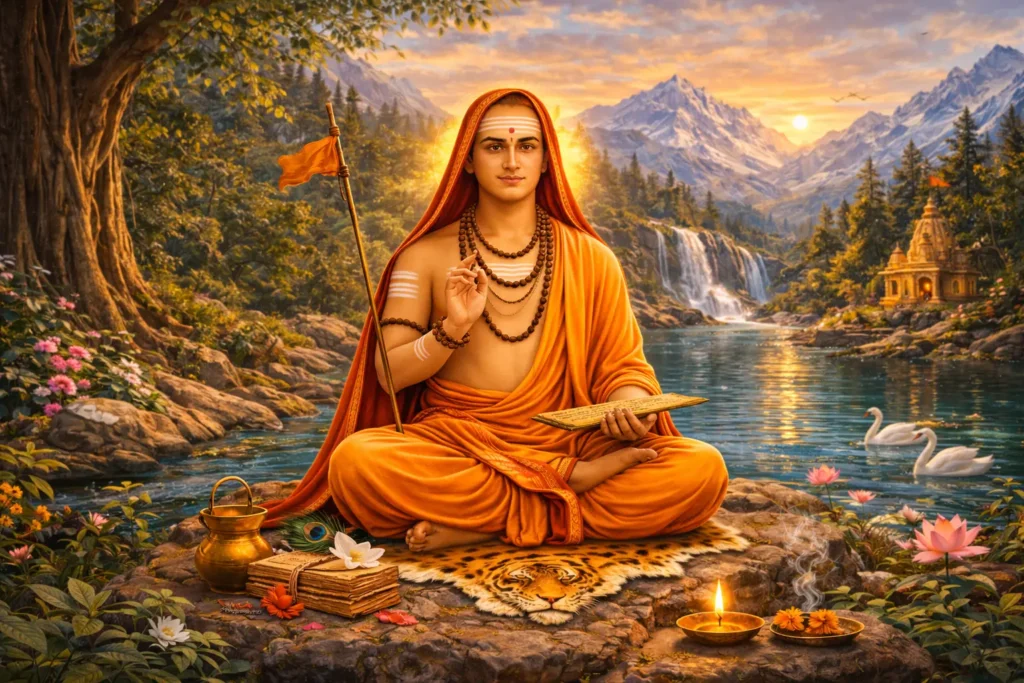
Bhaja Govindam
Bhaja Govindam भज गोविन्दं भज गोविन्दंगोविन्दं भज मूढमते ।सम्प्राप्ते सन्निहिते कालेनहि नहि रक्षति डुक्रिङ्करणे ॥ 1 ॥ bhaja govindaṃ bhaja govindaṃgovindaṃ bhaja mūḍhamate |samprāpte sannihite kālenahi nahi rakṣati ḍukriṅkaraṇe ॥ 1 ॥ Worship Govinda, worship Govinda, worship Govinda, O fool!The rules of grammar will not save you at the time of your death. bhaja — worshipgovindaṁ — Govindamūḍha-mate — dull-minded, foolsaṁprāpte — when you have reached, arrivedsannihite — nearness of, closekāle — end of time, deathnahi — surely not, never, by no meansrakṣati — protects, savesḍukṛñkaraṇe — the grammatical formula मूढ जहीहि धनागमतृष्णांकुरु सद्बुद्धिम् मनसि वितृष्णाम् |यल्लभसे निज कर्मोपात्तंवित्तं तेन विनोदय चित्तम् ‖ 2 ‖ mūḍha jahīhi dhanāgamatṛśhṇāṃkuru sadbuddhim manasi vitṛśhṇām |yallabhase nija karmopāttaṃvittaṃ tena vinodaya chittam ‖ 2 ‖ O fool! Give up your thirst to amass wealth, devote your mind to dispassion and thoughts of the Real. Be content with what comes to you through actions performed by your own work. नारी स्तनभर नाभीदेशंदृष्ट्वा मा गा मोहावेशम् |एतन्मांस वसादि विकारंमनसि विचिन्तया वारं वारम् ‖ 3 ‖ nārī stanabhara nābhīdeśaṃdṛśhṭvā mā gā mohāveśam |etanmāṃsa vasādi vikāraṃmanasi vichintayā vāraṃ vāram ‖ 3 ‖ Do not get drowned in delusion, infatuated with passion and lusty desires, by seeing a woman’s raised breasts and navel. These are nothing but a modification of flesh and fat, and the like. Do not fail to remember this again and again in your mind. नलिनी दलगत जलमति तरलंतद्वज्जीवित मतिशय चपलम् |विद्धि व्याध्यभिमान ग्रस्तंलोकं शोकहतं च समस्तम् ‖ 4 ‖ naḻinī daḻagata jalamati taraḻaṃtadvajjīvita matiśaya chapalam |viddhi vyādhyabhimāna grastaṃlokaṃ śokahataṃ cha samastam ‖ 4 ‖ As water drops on a lotus leaf are unsteady and trembling, in the same way life in this world is exceedingly unsteady and restless. Know that the whole world is full of miseries, afflicted by unhappiness and grief. यावद्-वित्तोपार्जन सक्तःतावन्-निजपरिवारो रक्तः |पश्चाज्जीवति जर्जर देहेवार्तां कोऽपि न पृच्छति गेहे ‖ 5 ‖ yāvad-vittopārjana saktaḥtāvan-nijaparivāro raktaḥ |paśchājjīvati jarjara dehevārtāṃ koapi na pṛcChati gehe ‖ 5 ‖ यावत्-पवनो निवसति देहेतावत्-पृच्छति कुशलं गेहे |गतवति वायौ देहापायेभार्या बिभ्यति तस्मिन् काये ‖ 6 ‖ yāvat-pavano nivasati dehetāvat-pṛchChati kuśalaṃ gehe |gatavati vāyau dehāpāyebhāryā bibhyati tasmin kāye ‖ 6 ‖ When one is alive, his family members enquire kindly about his welfare. But when the life-air stops and the soul departs from the body, even his wife runs away in fear of the corpse बाल स्तावत् क्रीडासक्तःतरुण स्तावत् तरुणीसक्तः |वृद्ध स्तावत्-चिन्तामग्नःपरमे ब्रह्मणि कोऽपि न लग्नः ‖ 7 ‖ bāla stāvat krīḍāsaktaḥtaruṇa stāvat taruṇīsaktaḥ |vṛddha stāvat-chintāmagnaḥparame brahmaṇi koapi na lagnaḥ ‖ 7 ‖ The childhood is lost in attachment to games. The youth is lost in attachment to woman. Old age passes with worry and anxiety, thinking over many things. But there is hardly anyone who wants to be lost (attached) in para-braman, the Supreme Spirit. का ते कान्ता कस्ते पुत्रःसंसारोऽयमतीव विचित्रः |कस्य त्वं वा कुत आयातःतत्वं चिन्तय तदिह भ्रातः ‖ 8 ‖ kā te kāntā kaste putraḥsaṃsāroayamatīva vichitraḥ |kasya tvaṃ vā kuta āyātaḥtatvaṃ chintaya tadiha bhrātaḥ ‖ 8 ‖ Who is your wife? Who is your son? Supremely wonderful is saṁsāra, the circle of birth and death. Of whom are you? From where have you come? Brother, ponder over these concepts सत्सङ्गत्वे निस्सङ्गत्वंनिस्सङ्गत्वे निर्मोहत्वम् |निर्मोहत्वे निश्चलतत्त्वंनिश्चलतत्त्वे जीवन्मुक्तिः ‖ 9 ‖ satsaṅgatve nissaṅgatvaṃnissaṅgatve nirmohatvam |nirmohatve niśchalatattvaṃniśchalatattve jīvanmuktiḥ ‖ 9 ‖ Being in the company of good people (saints) gives rise to non-attachment; from non-attachment comes freedom from delusion, which leads to awareness of reality; understanding of reality gives rise to emancipation leading to the liberation of the soul (jīvan-mukti), while still alive. वयसि गते कः कामविकारःशुष्के नीरे कः कासारः |क्षीणे वित्ते कः परिवारःज्ञाते तत्त्वे कः संसारः ‖ 10 ‖ vayasi gate kaḥ kāmavikāraḥśuśhke nīre kaḥ kāsāraḥ |kśhīṇe vitte kaḥ parivāraḥGYāte tattve kaḥ saṃsāraḥ ‖ 10 ‖ What good is lust when youth has fled? What use is a lake which has no water? Where are the relatives when wealth is gone? What is saṁsāra (transmigratory process), when Truth is known मा कुरु धनजन यौवन गर्वंहरति निमेषात्-कालः सर्वम् |मायामयमिदम्-अखिलं हित्वाब्रह्मपदं त्वं प्रविश विदित्वा ‖ 11 ‖ mā kuru dhanajana yauvana garvaṃharati nimeśhāt-kālaḥ sarvam |māyāmayamidam-akhilaṃ hitvābrahmapadaṃ tvaṃ praviśa viditvā ‖ 11 ‖ Do not take pride in wealth, friends and youth. Each one of these is destroyed within an instant by Time. Free yourself from the illusion of the world of māyā and attain the realm of brahman, timeless truth दिन यामिन्यौ सायं प्रातःशिशिर वसन्तौ पुनरायातः |कालः क्रीडति गच्छत्यायुःतदपि न मुञ्चत्याशावायुः ‖ 12 ‖ dina yāminyau sāyaṃ prātaḥśiśira vasantau punarāyātaḥ |kālaḥ krīḍati gacChatyāyuḥtadapi na muñchatyāśāvāyuḥ ‖ 12 ‖ Day and night, evening and morning, winter and summer come and go again and again. Eternal time plays and life ebbs away, yet one does not let go of the storm of desire. द्वादश मञ्जरिकाभिर शेषःकथितो वैया करणस्यैषः |उपदेशो भूद्-विद्या निपुणैःश्रीमच्छङ्कर भगवच्छरणैः ‖ 13 ‖ dvādaśa mañjarikābhira śeśhaḥkathito vaiyā karaṇasyaiśhaḥ |upadeśo bhūd-vidyā nipuṇaiḥśrīmacChaṅkara bhagavacCharaṇaiḥ ‖ 13 ‖ The bouquet of twelve verses was imparted to a grammarian by the all-knowing Śaṅkara, adored as bhagavat-pāda का ते कान्ता धन गत चिन्तावातुल किं तव नास्ति नियन्ता |त्रिजगति सज्जन सङ्गतिरेकाभवति भवार्णव तरणे नौका ‖ 14 ‖ kā te kāntā dhana gata chintāvātula kiṃ tava nāsti niyantā |trijagati sajjana saṅgatirekābhavati bhavārṇava taraṇe naukā ‖ 14 ‖ O, mad man! Why this engrossment in thoughts of wealth and beloved? Is there no one to guide you? In these thee worlds, only the association with saintly people (satsaṅga) can serve as the boat that can steer cross the ocean of repeated birth and death. (Stanza attributed to Padmapāda.)< जटिलो मुण्डी लुञ्जित केशःकाषायान्बर बहुकृत वेषः |पश्यन्नपि च न पश्यति मूढःउदर निमित्तं बहुकृत वेषः ‖ 15 ‖ jaṭilo muṇḍī luñjita keśaḥkāśhāyānbara bahukṛta veśhaḥ |paśyannapi cha na paśyati mūḍhaḥudara nimittaṃ bahukṛta veśhaḥ ‖ 15 ‖ There are many (ascetics) with matted hair, many with clean shaven heads, many whose hair have been plucked out; some are clothed in orange, yet others parading in various colors -Indeed, these different disguises or apparels are only for their belly’s sake. Seeing the truth revealed before them, still the foolish ones can not see through these many disguises. (Stanza attributed to Totakācārya.) अङ्गं गलितं पलितं मुण्डंदशन विहीनं जातं तुण्डम्