








Hari Om

Menu

February 2026

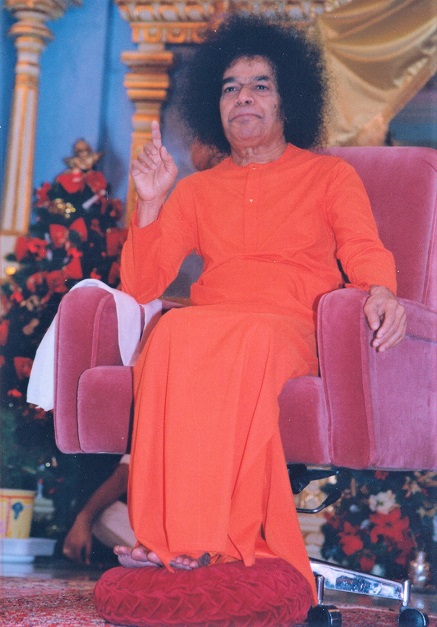
bhagwan Sathya Sai Baba divine message image
Prayers by Bhagavan Sri Sathya Sai Baba

Suprabhatham

Suprabhatham Eshwaramba Suthah Sriman Poorva Sandhya Pravarthathe Utthishta Sathya Sayeesha Karthavyam Daivamanhikam Utthishthothishta Partheesha Utthishta Jagateepathe Utthishta Karunapoorna Lokamangala Siddhaye Chithravathi Thata Vishala Sushantha Soudhe Thishtanthi Sevakajanas Thava Darshanartham Aditya Kanthiranubhathi Samastha Lokan Sri Sathya Sai Bhagawan, Thava Suprabhatham Thvannama Keerthana Rathasthava Divyanama Gayanthi Bhakthi Rasapana Prahrishta Chitthaha Dathum Krupasahitha Darshanamashu Thebhyaha Sri Sathya Sai Bhagawan, Thava Suprabhatham Adaya Divya Kusumani Manoharani Sripada Poojanavidhim Bhavadanghri Moole Karthum Mahothsukathaya Pravishanthi Bhakthaha Sri Sathya Sai Bhagawan, Thava Suprabhatham Deshantharagatha Budhasthava Divyamoorthim Sandarshnabhirathi Samyutha Chitthavruthya Vedokthamantra Patanena Lasanthyajasram Sri Sathya Sai Bhagawan, Thava Suprabhatham Shruthva Thavadbhutha Charithram Akhanda Keerthim Vyaptham Diganthara Vishala Dharathalesmin Jignasuloka Upathishtathi Chashramesmin Sri Sathya Sai Bhagawan, Thava Suprabhatham Sita Sathi Sama Vishuddha Hrudambhujathaha Bahvangana Karagruheetha Supushpa Haraha Sthunvanthi Divyanuthibhih Phanibhooshanam Thvam Sri Sathya Sai Bhagawan, Thava Suprabhatham Suprabhatham Idam Punyam Ye Patanthi Dine Dine The Vishanthi Parandhama Jnana Vijnana Shobhithaha Mangalam Guru Devaya Mangalam Jnana Dayine Mangalam Parthi Vasaya Mangalam Sathya Sayine ‘Su’ means good, auspicious and ‘Prabhath’ means morning. ‘Suprabhatam’ refers to the morning prayers that are chanted in praise of the Lord to awaken the divinity present within each individual. It is the act of dedicating oneself to the Lord and praying for His blessings right at the start of a new day. 1. O Son of Easwaramba! O Resplendent Majestic One! Dawn is heralding in the East. The daily tasks of Divinity, which Thou hast undertaken has to be accomplished, therefore, awake, O Lord Sathya Sai! 2. Awake, Awake, O Lord of Parthi! O Lord of the entire Universe and Mankind! Awake, O Compassionate Lord! So that the world attain auspiciousness, happiness, prosperity, welfare and blessings. 3. In the vast Mansion, full of bliss and tranquility, (Prashanthi Nilayam) on the banks of the river Chitravathi, those anxious to serve Thee are waiting for Thy Darshan. The radiance of the Sun is illumining the World. O Lord Sathya Sai! Blessed by Thy wakefulness, we pray for an auspicious day. 4. Devotees engrossed in singing Thy Glory are happy and blissful, when they taste the nectar of devotion. Kindly shower Thy Grace by granting them Thy Darshan. O Lord Sathya Sai! Blessed by Thy wakefulness, we pray for an auspicious day. 5. Bringing holy flowers with captivating colors and fragrance, for worshipping Thy Lotus Feet, in the form as prescribed by the scriptures, Thy devotees are coming in, with great yearning and enthusiasm. O Lord Sathya Sai! Blessed by Thy wakefulness, we pray for an auspicious day. 6. Wise persons from distant countries, moved by yearning to have Thy Darshan, have come and they are having great delight in reciting constantly mantras of the Vedas. O Lord Sathya Sai! Blessed by Thy wakefulness, we pray for an auspicious day. 7. Hearing Thy marvellous tales and fame that has reached the farthest horizons, earnest seekers of Reality have come to this place and are waiting. O Lord Sathya Sai! Blessed by Thy wakefulness, we pray for an auspicious day. 8. Women devotees, whose (petals of) heart are unattached to the world like Lotus petals (which are unattached to the water in which they grow, even though they cannot survive without water) and are similar to Mother Seetha in virtues and piousness are singing Thy Glory – the Glory of Lord Shiva adorned with Serpent around His neck – through holy hymns holding excellent flower garlands in their hands. O Lord Sathya Sai! Blessed by Thy wakefulness, we pray for an auspicious day. 9. Whoever daily recites this morning awakening Hymn will attain the Highest Abode resplendent with the Supreme intelligence as well as Supreme wisdom. 10. May the divine Guru be auspicious to us; May the Bestower of wisdom be auspicious to us; May the Lord, Who manifested in Parthi be auspicious to us; May Bhagawan Sathya Sai Baba be auspicious to us.

Suprabhatham Read Post »

Swami Sivananda walking with woman holding umbrella.
Swami Sivananda, Yoga of Synthesis

On The Anvil – Sharing the Treasure Divine

On The Anvil – Sharing the Treasure Divine Some Mahatmas spend their whole life in deep study of scriptures and derive great pleasure in hot discussions and arguments on abstruse points of Yoga and Vedanta. Some Yogins struggle with Hatha Yoga exercises with the hope of getting Siddhis. They indulge in practices which torture the body. There are a few who are tempted by the Kundalini Yoga and Tantra Sastra for attaining spiritual powers to perform miracles. Devotees spend all their time in Japa and Kirtan and weep for hours because of their separation from the Lord. In this group, you will find also some educated young persons who spend their whole time in writing thrilling articles and lectures. They plan and prepare for a world-tour. I have great love and reverence for all such Mahatmas for the thorough research they do in various directions. Do they all succeed in attaining perfection? I found that they did not have proper facilities, comforts and conveniences. They lacked guidance from a competent person. They could not be steady and systematic in their Sadhana. The planning and scheming nature in them led them to frequent changes in their daily practices. Either they paid undue attention to their wants or completely ignored their health. They all thought much of the future and aspired for Siddhis, miracles, name and fame. That only fattened their ego. A deep study of the ways of Mahatmas opened my eyes and gave me strength to stick to rigorous Sadhana in the right direction. I felt the Grace of the Lord. I derived strength and guidance from within. I found ways for an all-round development. I had the goal of my life as Self-realisation and determined to spend every bit of my energy and time in study, service and Sadhana. HOW I SYNTHESISED MY SADHANA Service of the sick and the poor and the Mahatmas purifies the heart. This is a field for developing all divine qualities such as compassion, sympathy, mercy, generosity. That helps to destroy the evil qualities and impurities of the mind such as egoism, selfishness, pride, hatred, anger, lust, jealousy, etc. Mahatmas and the poor villagers who were sick did not have proper medical aid. Thousands of pilgrims to Badrinath, Kedarnath also needed medical help. Therefore I started a small dispensary, Satyasevashram, at Lakshmanjhula on the way to Badri-Kedar, and served the devotees with great love and devotion. I arranged special diet for the serious cases and provided milk and other requirements. Spiritual evolution is quicker through service done with proper Bhav and attitude. For maintaining a high standard of health, I practised Asanas, Pranayamas, Mudras and Bandhas. I used to go out for long brisk walks in the evenings. I combined physical exercises such as Dand and Bhaitak also. I paid special attention to simple living, high thinking, light food, deep study, silent meditation and regular prayers. I loved seclusion and observed Mauna. I did not like company and futile talk. From the Ram Ashram Library in Muni-ki-reti I used to get some books for my study and devoted some time to study every day. I kept always a Dictionary by my side and looked up the meaning of difficult words. Rest and relaxation gave me enough strength to carry on intense Sadhana. I moved closely with some Mahatmas but I never indulged in discussion and debates. Self-analysis and introspection were my guide. With a view to devoting more time to prayer and meditation, I moved to the Swargashram. I lived in a small Kutir, 8 feet by 10 feet, with a small verandah in front, and depended on the Kali Kambliwala Kshetra for my food. Now the Kutir is numbered as 111 with some additional rooms by its side. I continued my Sadhana and service to the sick persons of the place. Just for an hour daily, I used to go from Kutir to Kutir to attend to the sick Mahatmas, enquire about their welfare and supply their requirements. I spent much of my time in meditation and practised various kinds of Yogas in my Sadhana, and my experiences have all come out in many of my publications as advice to aspirants. I quickly sent out my thoughts and experiences to help the world and struggling seekers after Truth. It was usual for even great Mahatmas to keep their rare knowledge as a secret and teach only a chosen few. LIFE AT SWARGASHRAM I did not spend much time in cleaning the teeth, washing clothes and bathing. I quickly finished these when I was a bit free from my Sadhana, study and service. I never depended on any one though there were a few disciples who were awaiting opportunities to serve me. I had fixed times for all items of work such as study, writing notes and letters to Sadhakas, exercises, going out for Bhiksha, etc. Gradually people came to me in large numbers. That seriously affected my systematic work. With the permission of the Kshetra people, I fixed up a barbed-wire fencing around my Kutir and locked the gate. Before the visitors, I did not show my erudition by discussing high philosophy at length. I gave some short hints on practical Sadhana and disposed of each of them in five minutes. I kept a sign board at the entrance of my compound: “INTERVIEW-between 4 and 5 p.m.-only for five minutes at a time.” During winter, the devotees were not many. I utilised this time for a brisk walk in the compound, singing Bhajans and songs. For some days, I would not come out of my Kutir. For my food, I used to keep some dry bread, remnants from my daily alms. Thus intense Sadhana was my Goal. My joy was indescribable when I spent hours in the evenings on the sand banks of the Ganga or sitting on a fine rock and gazed at wonderful Nature. I became one with Nature. During this period, I established the Swargashram Sadhu Sangha, to obtain

On The Anvil – Sharing the Treasure Divine Read Post »

Shri Sathya Sai Baba spiritual path image
Prayers by Bhagavan Sri Sathya Sai Baba

Sri Krishnashtakam

Sri Krishnashtakam Vasudēva sutaṃ dēvaṃ kaṃsa cāṇūra mardanam Dēvakī paramānandaṃ kṛṣṇaṃ vandē jagadgurum ॥ Atasī puṣpa saṅkāśam hāranūpura śōbhitam Ratnakaṅkaṇa kēyūraṃ kṛṣṇaṃ vandē jagadgurum ॥ Kuṭilālaka saṃyuktaṃ pūrṇa candra nibhānanam Vilasat kuṇḍaladharaṃ kṛṣṇaṃ vandē jagadgurum ॥ Mandāra gandha saṃyuktaṃ cāruhāsaṃ caturbhujam Barhipiñchāva cūḍāṅgaṃ kṛṣṇaṃ vandē jagadgurum ॥ Utphulla padmapatrākṣaṃ nīlajīmūta sannibham Yādavānāṃ śirōratnaṃ kṛṣṇaṃ vandē jagadgurum ॥ Rukmiṇīkēli saṃyuktaṃ pītāmbara suśōbhitam Avāpta tulasīgandhaṃ kṛṣṇaṃ vandē jagadgurum ॥ Gōpikānāṃ kucadvandva kuṅkumāṅkitavakṣasam Śrīnikētaṃ mahēṣvāsaṃ kṛṣṇaṃ vandē jagadgurum ॥ Śrīvatsāṅkaṃ mahōraskaṃ vanamālā virājitam Śaṅkha cakradharaṃ dēvaṃ kṛṣṇaṃ vandē jagadgurum ॥ Kṛṣṇāṣṭakamidaṃ puṇyaṃ prātarutthāya yaḥ paṭhēt Kōṭi janma kṛtaṃ pāpaṃ smaraṇēna vinaśyati ॥ ——— Krishnashtakam ——— 1. The Lord, the Son of Vasudeva and the vanquisher of Kamsa and Chanura. The supreme bliss of Devaki, salutations to Krishna, the Universal Preceptor. 2. Whose appearance is like that of the Atasi (flax) flower, adorned with garlands, anklets, bracelets and armlets, salutations to Krishna, the Universal Preceptor. 3. The One with curly locks and a face resembling the full-moon, wearing earrings that glitter playfully, salutations to Krishna, the Universal Preceptor. 4. The One with the fragrance of the Mandara flowers, a charming smile and four hands, with a peacock feather adorning the head, salutations to Krishna, the Universal Preceptor. 5. Whose eyes are like a wide-open lotus leaf, who resembles a blue cloud, crest-jewel of the Yadavas, salutations to Krishna, the Universal Preceptor. 6. Playful in the company of Rukmini, He is resplendently dressed in yellow silk, having the fragrance of Tulasi (basil leaves), salutations to Krishna, the Universal Preceptor. 7. One whose chest is smeared by the vermilion that the Gopis apply to theirs. The abode of all wealth & prosperity, the great Archer, salutations to Krishna, the Universal Preceptor. 8. Whose broad chest bears the Srivatsa mark, adorned with a garland of forest flowers, the Lord who bears the conch and discus, salutations to Krishna, the universal preceptor. 9. Whoever, after waking up in the morning, recites this sacred octet on Krishna (Krishnashtakam), through that remembrance, sins accrued over a crore lifetimes shall be destroyed.

Sri Krishnashtakam Read Post »

Sathya Sai Baba seated on divine throne picture
Prayers by Bhagavan Sri Sathya Sai Baba

Sri Guru Paduka Stotram

Sri Guru Paduka Stotram Anantha saṁsāra samudra tāra Naukāyitābhyāṁ guru bhakthi dābhyām | Vairāgya sāmrājyada pūjanābhyāṁ Namō namaḥ śrīguru pādukābhyām || Kavitva vārāśi niśākarābhyāṁ Dourbhāgya dāvām budamālikābhyām | Dūrī kr̥tā namra vipattitābhyāṁ Namō namaḥ śrīguru pādukābhyām || Natā yayōḥ śrīpatitāṁ samīyuḥ Kadācidapyāśu daridra varyāḥ | Mūkāśca vācaspatitāṁ hi tābhyāṁ Namō namaḥ śrīguru pādukābhyām || Nālīkanīkāśa padāhr̥tābhyāṁ Nānā vimōhādi nivārikābhyām | Namajjanābhīṣṭa tatipradābhyāṁ Namō namaḥ śrīguru pādukābhyām || Nr̥pāli mauli vraja ratna kānti- Sarid virājaj jhaṣa kan’yakābhyām | Nr̥patva dābhyāṁ natalōka paṅktēḥ Namō namaḥ śrīguru pādukābhyām || Pāpāndhakārārka paramparābhyāṁ Tāpatrayāhīndra khagēśvarābhyām | Jāḍyābdhi samśōṣaṇa vāḍavābhyāṁ Namō namaḥ śrīguru pādukābhyām || Śamādi ṣaṭka prada vaibhavābhyāṁ Samādhi dāna vrata dīkṣitābhyām | Muktēhē hētusca sthira bhakthi dābhyāṁ Namō namaḥ śrīguru pādukābhyām || Svārcā parāṇām akhilēṣṭa dābhyāṁ Svāhā sahāyākṣa dhurandharābhyām | Svāntāccha bhāva prada pūjanābhyāṁ Namō namaḥ śrīguru pādukābhyām || Kāmādi sarpavraja gārudābhyām Vivēka vairāgya nidhi pradābhyām | Bōdha pradābhyāṁ druta mōkṣadābhyāṁ Namō namaḥ śrīguru pādukābhyām || ——— Guru Paduka Stotram ——— 1. It helps to cross the endless ocean of samsara (worldly existence), becoming a boat, and it confers devotion to the Guru. Worshipping them, one reaches the dominion of renunciation itself. Salutations again and again unto the holy Padukas (sandals) of the Guru. 2. For the surging ocean of knowledge, it is like the full moon. For the fire of misfortunes, it is the cluster of clouds that showers rain. For those who worship them, they remove all adversities. Salutations again and again unto the holy Padukas of the Guru. 3. Prostrating to them, they have become prosperous instantly, even those that were wallowing in poverty. And the mute ones are transformed into eloquent orators. Salutations again and again unto the holy Padukas of the Guru. 4. Attracting one to the (Guru’s) feet that are like a bouquet of lotuses. Removing the multitudes of desires that are born of delusion. They fulfil all the wishes of those that bow in submission. Salutations again and again unto the holy Padukas of the Guru. 5. They shine like the gem that adorns a king’s crown. Like a charming damsel in a fish infested large river. Sovereignty is conferred on the array of devotees that bow before them Salutations again and again unto the holy Padukas of the Guru. 6. They are like the Sun that destroy the endless darkness of sins. To the serpent of the triad miseries (caused by self, others and nature), they are like the King of Birds (Garuda). They are the conflagration that dries up the ocean of ignorance. Salutations again and again unto the holy Padukas of the Guru. 7. They confer the six kinds of prosperity (shat-sampatti) that begins with control of the mind. They are bound by the vow to lead the initiated to Samadhi. They are the source of liberation and conferrers of steady devotion. Salutations again and again unto the holy Padukas of the Guru. 8. They fulfil all wishes of those that are ever ready to serve and focussed on helping the ones in need, And bestow purity of heart when worshipped. Salutations again and again unto the holy Padukas of the Guru. 9. To the serpents of vices led by lust (the six inner enemies), they are like Garuda. They bless with the treasures of discrimination and dispassion. They confer knowledge and instantly grant liberation. Salutations again and again unto the holy Padukas of the Guru.

Sri Guru Paduka Stotram Read Post »

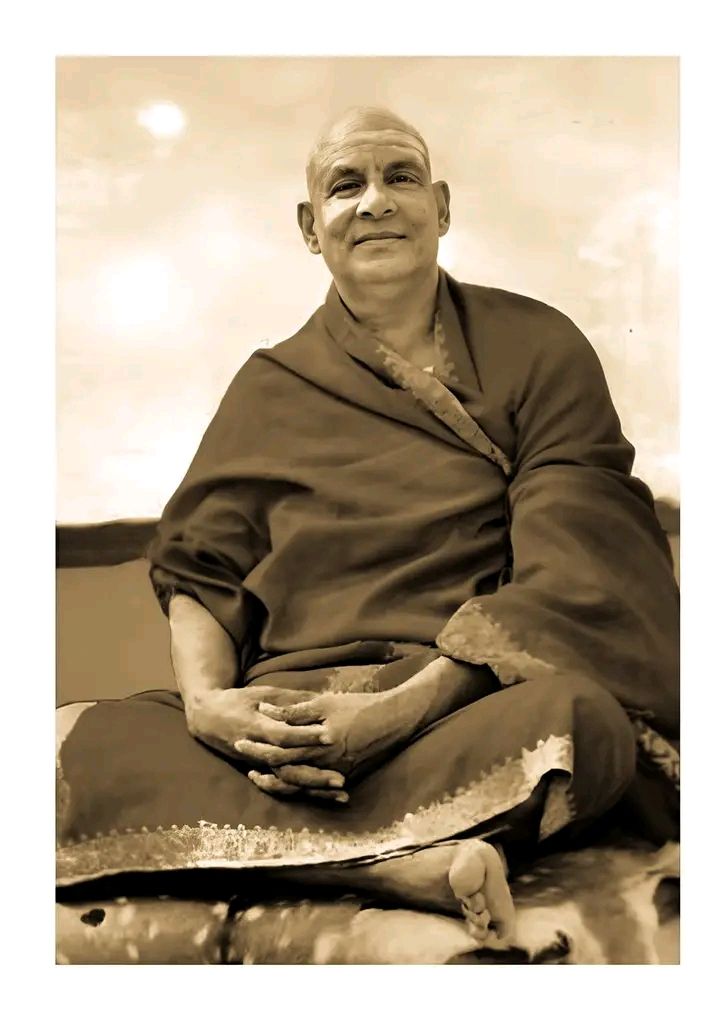
Swami Sivananda Smiling monk sitting cross-legged wrapped in shawl in calm outdoor setting image
Swami Sivananda, Yoga of Synthesis

What Life Has Taught Me

What Life Has Taught Me It was, I should say, by a flash that I came to the conclusion early in my life that human life is not complete with its observable activities and that there is something above human perception controlling and directing all that is visible. I may boldly say that I began to perceive the realities behind what we call life on earth. The unrest and feverish anxiety that characterise man’s ordinary existence here bespeak a higher goal that he has to reach one day or the other. When man gets entangled in selfishness, greed, hatred and lust, he naturally forgets what is beneath his own skin. Materialism and scepticism reign supreme. He gets irritated over little things and begins to fight and quarrel; in short, man becomes miserable. The doctor’s profession gave me ample evidence of the great sufferings of this world. I was blessed with a new vision and perspective. I was deeply convinced that there must be a place-a sweet home of pristine glory, purity and divine splendour-where absolute security, perfect peace and happiness can be enjoyed eternally. Therefore, in conformity with the dictum of the Sruti, I renounced the world-and felt that I now belonged to the whole world. A course of severe self-discipline and penance endowed me with enough strength to move unscathed amidst the vicissitudes of the world-phenomena. And I began to feel the great good it would do to humanity if I could share this new vision with one and all. I called my instrument of work “The Divine Life Society.” Side by side, the stirring events since the advent of the twentieth century, had their effects upon all keen-minded people. The horrors of the past and possible wars, and the consequent suffering, touched the minds of people. It was not difficult to see that the pains of mankind were mostly brought on by its own deeds. To awaken man to his errors and follies, and to make him mend his ways so that he may utilise his life for attaining worthier ends, was felt to be the urgent need of the time. As if in answer to this need, I saw the birth of the Divine Life Mission, with its task of rescuing man from the forces of the lower nature and raising him to the consciousness of his true relationship with the Cosmos. This is the work of rousing the religious consciousness, of bringing man to an awareness of his essential divinity. Not by mere argument or discussion can religion be taught or understood. Not by precepts or canons of teaching alone can you make one religious. It requires a peculiar atonement with one’s vast environment, an ability to feel the deepest as well as the vastest. It requires a genuine sympathy with creation. Religion is living, not speaking or showing. I hold that whatever be one’s religion, whoever be the prophet one adores, whatever be one’s language or country, age or sex, one can be religious provided the true implication of that hallowed term “Tapas,” which essentially means any form of self-control, is made capable of being practised in daily life to the extent possible for one, in the environment and under the circumstances in which one is placed. I hold that real religion is the religion of the heart. The heart must be purified first. Truth, love and purity are the basis of real religion. Control over the baser nature, conquest of the mind, cultivation of virtues, service of humanity, goodwill, fellowship and amity, constitute the fundamentals of true religion. These ideals are included in the principles of the Divine Life Society. And I try to teach them mostly by example, which I consider to be weightier than all precepts. The modern thinker has neither the requisite time nor the patience to perform rigorous Tapas and austere religious practices; and many of these are even being relegated to the level of superstition. In order to give the present generation the benefit of real Tapas in the true religious sense, to reveal to them its real significance, and to convince them of its meaning and efficacy, I hold up my torch of divine life, which is a system of religious life suited to one and all, which can be practised by the recluse and the office-goer alike, which is intelligible to the scholar and the rustic, in its different stages and phases. This is a religion which is not other than what is essential to give true meaning to the daily duties of the human being. The beauty of divine life is its simplicity and applicability to the everyday affairs of the ordinary man. It is immaterial whether one goes to the church or the mosque or the temple for offering one’s prayers, for all sincere prayers are heard by the Divine. The average seeker after Truth is very often deceived by the caprices of his mind. A person who takes to the spiritual path is bewildered before he reaches the end of his journey. He is naturally tempted to relax his efforts half-way. Many are the pitfalls, but those who plod on steadily are sure to reach the goal of life, which is universality of being, knowledge and joy. I have laid great emphasis in all my writings upon the discipline of the turbulent senses, conquest of the mind, purification of the heart, and attainment of inner peace and strength, suited to the different stages in evolution. I have understood that it is the foremost duty of man to learn to give, to give in charity, to give in plenty, to give with love and without expectation of any reward, because one does not lose anything by giving,-on the other hand the giver is given back a thousandfold. Charity is not merely an act of offering certain material goods, for charity is incomplete without charity of disposition, of feeling, and of understanding and knowledge. Charity is self-sacrifice in the different levels of one’s being. Charity

What Life Has Taught Me Read Post »

Shri Sathya Sai Baba serene spiritual blessing image
Prayers by Bhagavan Sri Sathya Sai Baba

Om Sri Sathya Baba Toutoki

Om Sri Sathya Baba Toutoki Om Sri Sathya Baba Toutoki Kami Sai Baba Anata ni Kiesuru Mono wo, Mamaorase Michibiki Tamou, Parthi no Sonshin Om Sri Sathya Sai Baba Yasashii Egao de Hohoemu Manazashi, Nayameru Kora no Chikara Ikitoshi Ikeru Inochi no, Tadashiki Negai wo Mitasu, Shikou no Son Shin Om Sri Sathya Sai Baba Haha nari Chichi nari, Jiai no Buddha nari, Swami Jiai no Buddha nari Uchuu wo Suberu Sai Baba, Om no Sonshin Sai Baba, Eichi no Hikari Om Sri Sathya Sai Baba Kiyoki no Hi wo Douzo Ouke Kudasai, Arathi no Seinaru Hi wo Subete no Kami wa Ai nari, Jiai to Eichi ni Michita, Renge no Miashi ni Kono Hi wo Sasagemasu Narayana Narayana Om, Sathya Narayana Narayana Narayana Om Narayana Narayana Om, Sathya Narayana Narayana Om, Sathya Narayana Narayana Om Om Jai Sadguru Deva 1. Sri Sathya Sai Baba, You are our precious Lord from Parthi who protects and guides. We devote ourselves to You.   2. You look over all living things with oyur kind smile and loving gaze. You fulfill the wishes of the righteous with Your supreme power.   3. Swami, You are Mother, Father, and the love of Buddha. You rule over all the universe with Your wisdom and the eternal Om.   4. Please receive this pure, holy flame in Aarathi. You bless everything with Your love and wisdom. We bow down at Your beautiful lotus feet.   5. Chant the name of Lord Sathya Sai Narayana, Whose Form is Pranava. Victory to Noble Teacher and Supreme Lord Sai, Sathya Sai.

Om Sri Sathya Baba Toutoki Read Post »

Swami Sivananda seated in chair with ornate frame. image
Swami Sivananda, Yoga of Synthesis

How God Care Into My Life

How God Care Into My Life It would be easy to dismiss the question by saying: “Yes, after a prolonged period of intense austerities and meditation, while I was living at Swaragashram and when I had the Darshan and blessings of a number of Maharishis, the Lord appeared before me in the form of Sri Krishna. But that would not be the whole truth, nor a sufficient answer to a question relating to God, who is infinite, unlimited and beyond the reach of speech and mind. Cosmic Consciousness is not an accident or chance. It is the summit, accessible by a thorny path that has steps-slippery steps. I ascended them step by step the hard way; but at every stage I experienced God coming into my life and lifting me easily to the next stage. My father was fond of ceremonial worship in which he was very regular. To my child-mind the image he worshipped was God; and I delighted in helping father in the worship by bringing him flowers and other articles of worship. The deep inner satisfaction that he and I derived from such worship implanted in my heart a strong conviction that God was in such images devoutly worshipped by His devotees. Thus did God first come into my life and place my foot on the first rung of the spiritual ladder. As an adult I was fond of gymnastics and vigorous exercises. I learnt fencing from a teacher who belonged to a low caste. He was a Harijan. I could go to him only for a few days before I was made to understand that it was unbecoming of a caste-Brahmin to play the student to an untouchable. I thought deeply over the matter. One moment I felt that the God whom we worshipped in the image in my father’s worship room had jumped over to the heart of this untouchable. He was my Guru all right. So I immediately went to him with flowers, sweets and clothes and garlanded him, placed flowers at his feet and prostrated myself before him. Thus did God come into my life to remove the veil of caste distinctions. How very valuable this step was I could realise soon after this, for I was to enter the medical profession and serve all, and the persistence of caste distinctions would have made that service a mockery. With this mist cleared by the light of God, it was easy and natural for me to serve everyone. I took keen delight in every kind of service connected with the healing and alleviation of human misery. If there was a good prescription for malaria, I felt that the whole world should know it the next moment. Any knowledge about the prevention of diseases, promotion of health and healing of diseases I was eager to acquire and share with all. Then in Malaya, God came to me in the form of the sick. It is difficult for me now to single out any instance, and perhaps it is unnecessary. Time and space are concepts of the mind and have no meaning in God. I can look back now upon the whole period of my stay in Malaya as a single event in which God came to me in the form of the sick and suffering. People are sick physically and mentally. To some, life is lingering death; and to others, death is more welcome than life; some invite death and commit suicide, unable to face life. The aspiration grew within me that if God had not made this world merely as a hell where wicked people would be thrown to suffer, and if there is (as I intuitively felt there should be) something other than this misery and this helpless existence, it should be known well and experienced. It was at this crucial point in my life that God came to me as a religious mendicant who gave me the first lesson in Vedanta. The positive aspects of life here and the real end and aim of human life were made apparent. This drew me from Malaya to the Himalaya. God now came to me in the form of an all-consuming aspiration to realise Him as the Self of all. Meditation and service went apace; and then came various spiritual experiences. The body, mind and intellect as the limiting adjuncts, vanished, and the whole universe shone as His Light. God then came in the form of this Light in which everything assumed a divine shape and the pain and suffering that seem to haunt everybody appeared to be a mirage, the illusion that ignorance creates on account of low sensual appetites that lurk in man. One more milestone had to be passed in order to know that “everything is Brahman.” Early in 1950-on the 8th of January-the Lord came to me in the form of a half-demented assailant, who disturbed the night Satsang at the Ashram. His attempt failed. I bowed to him, worshipped him and sent him home. Evil exists in order to glorify the good. Evil is a superficial appearance. Beneath its veil the one Self shines in all. A noteworthy fact ought to be mentioned here. In this evolution nothing gained previously was entirely discarded at any later stage. One coalesced into the next, and the Yoga of Synthesis was the fruit. Idol-worship, service of the sick, practice of meditation, the cultivation of cosmic love that transcended the barriers of caste, creed and religion, with the ultimate aim of attaining the state of Cosmic Consciousness, was revealed. This knowledge had to be shared immediately. All this had to become an integral part of my being. The mission had been gathering strength and spreading. It was in 1951 that I undertook the All-India Tour. Then God came to me in His Virat-Swarupa-as multitudes of devotees-eager to listen to the tenets of divine life. At every centre I felt that God spoke through me, and He Himself in His cosmic form spread out

How God Care Into My Life Read Post »

Bhagwan Shri Sathya Sai Baba Blessing Gathering Image
Prayers by Bhagavan Sri Sathya Sai Baba

Om Jai Jagadeesha Harey

Om Jai Jagadeesha Harey Om Jai Jagadeesha Harey Swami Sathya Sai Harey Bhaktha Jana Samrakshaka Bhaktha Jana Samrakshaka Parthi Maheshwara Om Jai Jagadeesha Harey Sashi Vadana Srikara Sarva Prana Pathey Swami Sarva Prana Pathey Aashritha Kalpa Latheeka Aashritha Kalpa Latheeka Aapadh Bandhava Om Jai Jagadeesha Harey Mata Pitha Guru Dhaivamu Mari Anthayu Neevey Swami Mari Anthayu Neevey Naada Brahma Jagan Natha Naada Brahma Jagan Natha Nagendra Shayana Om Jai Jagadeesha Harey Omkaara Roopa Ojaswi Om Sai Mahadeva Sathya Sai Mahadeva Mangala Arathi Anduko Mangala Arathi Anduko Mandhara Giridhari Om Jai Jagadeesha Harey Narayana Narayana Om Sathya Narayana Narayana Narayana Om Narayana Narayana Om Sathya Narayana Narayana Om Sathya Narayana Narayana Om Om Jai Sadguru Deva 1. Victory to Lord of Universe, Lord Sathya Sai, Who destroys grief, evil, and miseries of life and Who guards and protects devotees. Victory to Lord of Lords – Lord of Parthi. 2. O Graceful and Charming as a full moon! O Auspicious One! O Lord Sai! Thou art the Indweller and life-force of all Beings; the wish-fulfilling divine creeper to those who have surrendered to Thee; and kinsman, protector, and friend in times of distress and calamities. Victory to Lord of Universe. 3. O Lord Sai! Thou art Mother, Father, noble Teacher, Supreme Divinity, and everything to us. O Lord Universe! Thou art Primeval Sound and art reclined on coiled serpent. 4. O Splendorous One! O Lord of Lords — Lord Sai! Thy Form is Pranava. We pray Thee to accept the auspicious waving of flame of light (signifying the removal of ignorance). Victory to Thee, O Lord of Universe, Resident of Mandhar mountain – Lord Giridhari. Chant the name of Lord Sathya Sai Narayana, Whose Form is Pranava. Victory to Noble Teacher and Supreme Lord Sai, Sathya Sai.

Om Jai Jagadeesha Harey Read Post »

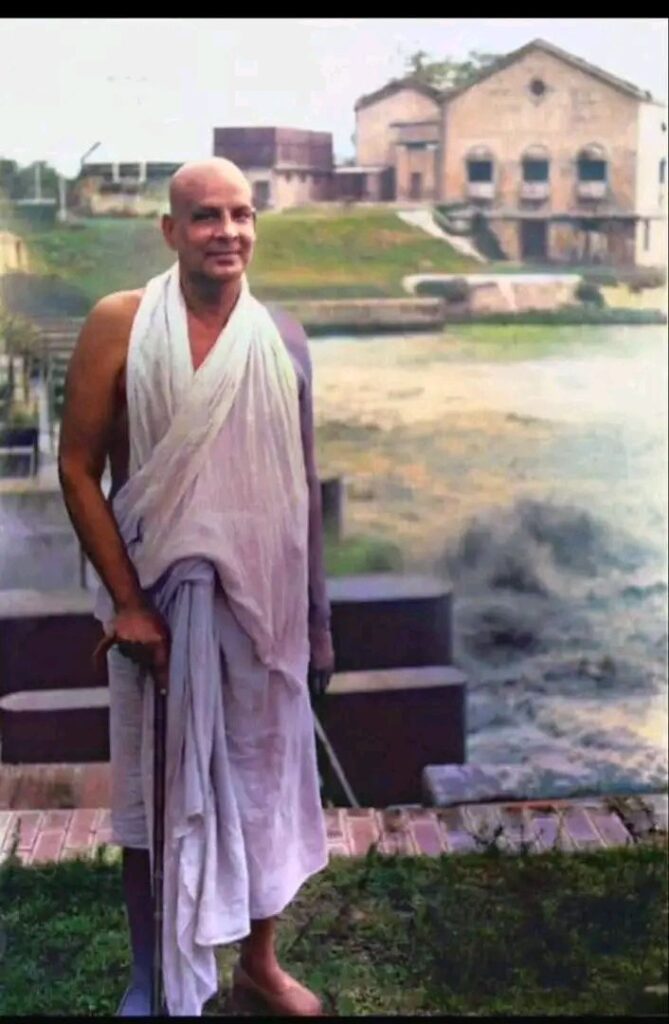
Swami Sivananda Spiritual guru standing near riverside holding walking stick image
Swami Sivananda, Yoga of Synthesis

Sivananda Yoga, Talk-fourth

Sivananda Yoga, Talk-fourth In this Integral Yoga, is these a goal? Is there some way by which I can know, or I can reassure myself that I am on the right path, that I am progressing, that I have nearly reached the goal, that I have reached the goal, or I did reach the goal the day before yesterday! How does one know? How does one ever know whether one is on the right track or not? We never discussed this with Shri Gurudev himself, but on rare occasions he gave some kind of a hint that what is called Self-realisation or enlightenment is neither for the mind to describe nor for speech to describe, that one who has reached Self-realisation is touching Brahman. He didn’t suggest that this is the goal. He didn’t even suggest whether such a person would have special vision or other such phenomena. We started these talks by narrating an incident where Gurudev said, “One who is enlightened or who has Self-knowledge is ever in bliss, and in peace,” which again is not easy to understand. What does peace mean to us? Does peace mean a state of inertness, dullness, stupidity? What is the distinction between tamas and sattva? Once again you are at a loss. Such expressions as, “One must have peace, one must have bliss,” raise more questions than answers. When you forget all this and look at his life, what sort of clue do we get as to the state of a siddha, a perfected, being, one who had reached siddhi? It was obvious that in his case there was this cosmic vision-a vision in which there was no division. What does this mean? Does it mean that a sage does not know that this is a towel and this is a key? Would he try to open his door using a towel, and start wiping himself with a key? What does it mean? There is an expression in the Bhagavad Gita that has been grotesquely interpreted to mean that the sage wouldn’t know the difference between a stone and a nugget of gold. I’m not sure it means that. I’ve watched Shri Gurudev very carefully, and I have seen him pick up clips and pins from the roadside and put them into his bag, and I have at the same time seen that he took theft, cheating, calmly, as though nothing had happened. Great loss meant nothing, but one pin or a clip lying on the roadside had to be picked up. If someone cheated him of ten thousand rupees, that’s all right. So there again, did he walk with his eyes turned into his eyebrows as though he were not interested at all in life? No, he was deeply interested in life, and that again is the Bhagavad Gita’s definition. Saarva bhutahi divata. He would not even allow his own devoted disciples to kill the bugs that were keeping him awake at night. When we were using some insecticide Gurudev said, “No, no, don’t do that, take the can, put it in the forest. Let the bugs go away, but don’t kill them.” So once again we are where we started. What are the signs of enlightenment. Are there any signs at all? What are the signs of total egolessness? Are there any signs at all? If there are signs, they must manifest themselves, and not be produced by the sage. Is that right? ‘If this person is egoless, he is not going to produce signs and proofs for you to admire and give him a testimonial.’ He is not interested in all that. And so, whenever they who were very close to him were watching him, occasionally they would get glimpses of what egolessness may mean. But then before you tried to grasp and admire it, it changed. I don’t know if I must submit for your consideration that the surest sign of an enlightened person is unpredictability, which does not mean that all unpredictable characters are enlightened. There is a description in some scriptures of the sage. “The sage behaves like a child, or a madman or a goblin,” but that does not mean that all madmen are sages. In his case we found this unpredictability. That is, there was no ego-sense to determine or predetermine an action, and direct the action towards the attainment of a certain goal-the people’s admiration, more and more disciples, more and more name, more and more glory, and so on. When that goal is set up, it is easy for you to guide your life in such a way that that goal is reached. There was one swami who didn’t belong to Gurudev’s ashram but stayed there doing tremendous tapasya. What was the goal? He said, “I am going to have rajas and ranis as my disciples. That’s all I want.” He had rajas and ranis as his disciples. He did achieve that! So the goal-oriented practice of austerities, of yoga and meditation is easy. Then it is possible to know that this is the goal and this I have reached. I know also how far I am from that goal and when I have reached that goal. But in this practice of yoga that we have been discussing, whose aim is aimlessness and the total eradication of the ego-sense, what are the signs? Practically none at all. Now comes the crux. Since there are no goals, there is the continuing goal, which is to be vigilantly watchful for any sign of the resurrection of the ego. And here Gurudev used to insist upon this vigilance: be vigilant till the end that the ego does not come up. The ego-sense shouldn’t start to play again, whether that play is superficially diagnosed as worldly or otherworldly, sacred, secular or even spiritual. Spiritual vanity is as good or as bad as vanity of wealth or pedigree. It’s all the same. “I am so and so” is the devil, is the obstacle. Can that

Sivananda Yoga, Talk-fourth Read Post »

Swami Sivananda Black and white photo of guru sitting by river with mountains image
Swami Sivananda, Yoga of Synthesis

Sivananda Yoga, Talk-THREE

Sivananda Yoga, Talk-THREE We have been considering the principal aspects of sadhana as expounded by Gurudev and illustrated in his life. I think we should remind ourselves once again that neither the teachings nor the illustrations in his life could be positively described as “this is it”. Then you miss it-it is neither/nor; it is the extremely subtle middle path. What is considered the middle path is imperceptible and, if we invent a new word, ‘inconceptable.’ Not only imperceptible but it is inconceptable. You cannot form a concept with it. Gurudev had supreme renunciation but not as a concept. Gurudev had the highest form of karma yoga, but not as a concept, not limited to it, not only this. Why do we slip into specialisation instead of following the subtle middle path, the path of neither/nor? Because in this neither/nor yoga, in pursuing this subtle middle path, one has to be constantly vigilant. One little wink or nod and you slip on one side or the other. Of course by God’s grace you wake up and go on, because the subtle middle path is neither this nor that, but something which partakes of both. That is what we have to bear in mind throughout our study of the life as well as teachings of Shri Gurudev. If we forget this, then we become fanatic, and that is almost contrary to what Gurudev was. So far we have gone over his teachings concerning what we call karma yoga and what we call bhakti. And it was pointed out that even the essential raja yoga sadhana of meditation was made to flow on from the bhakti practice of japa. ‘Flow on’ reminds me of a beautiful thought which I would like to share with you. These yogas – karma yoga, bhakti yoga, jnana yoga, and hatha yoga and what have you-these are not separate watertight compartments, but can be compared to the seasons. This is an example which is given in the Yoga Vasishtha. One season flows into the other, it is not as though one fine morning winter comes to an end and spring commences. One season flows, it is an unceasing flow; in the same way one yoga blends into another. Karma yoga blends with bhakti yoga etc. If it does not, there is something wrong somewhere. You are chewing the words, hoping that you might get enlightened or illumined. Gurudev’s as well as Krishna’s is an intelligent practice of yoga, not a bland ritual, not a superstitious, repetitive, mechanical set of practices, nor a set of dogmas to which we could give our intellectual assent-it is intelligence in operation, it is intelligence alive. Previously jnana yoga was isolated from the rest on the understanding that first we practise karma yoga, and once our heart becomes purified, then we go to the temple, and once we develop a little devotion, then we sit down and practise a little raja yoga. All this may take some two hundred years. Never mind, we come back again and again and pursue, and then we will go to the forest, go to a guru and learn the Upanishads from him. The sanyasins in Rishikesh sit and listen to the Upanishads at the feet of Swami Krishnanandaji Maharaj, because Shri Gurudev insisted that these too shall form part of our daily sadhana. This aspect of jnana yoga was introduced into our life as swadhyaya. I don’t know what this word swadhyaya literally means, but to me the first two syllables suggest something. ‘Swa’ means self, ‘dhya’-dhyana or meditation. Maybe it is swadhyaya – someone sitting alone and reading a scripture-I don’t know. It is also possible to see that while I am reading it, there is contemplation. It is not a mechanical reading of the scripture but an intelligent reading of the scripture. Gurudev often repeated, “Study daily a chapter of the Gita”. Why must I go on studying this? We ask this question only when it comes to the Bhagavad Gita or the Upanishads. You do not ask this question when it comes to a physics textbook or Shakespearean drama. We read these again and again; we even memorize them. Why? In order that the message may be inscribed on the tablet of one’s heart. These words are also Gurudev’s. This swadhyaya or daily reading (I’m deliberately avoiding the use of the word study) of the Gita, Ramayana, Upanishads or other scriptures, the Bible or the Koran, is like the continuous flow of a river. You have heard it said that you cannot take a bath in the same water twice. Every moment the water is flowing, as you dip and come up and dip again, it’s fresh water-not the water in which you had your previous dip. Something has happened. Here it’s the other way round. The scripture seems to be the same, but you who read the scripture-you are not the same. You are not the same as you were last year. Something has happened, and therefore keep on reading this and it is possible you will discover that newer and newer facets of meaning are revealed to you. That is the beauty of swadhyaya. That sounds mechanical, perhaps and therefore Gurudev said, swadhyaya is important, but not the mechanical type. Keep your heart open, keep your mind open, be alert and vigilant as you read this, whether you understand the meaning or not. Let your heart be open. How did he achieve that? I was particularly interested in this because as Vaishnava Brahmins of South India we had become accustomed to this routine, mechanical reading of at least Valmiki’s Ramayana. We didn’t read the Gita or the Upanishads. But we were asked to recite at least one chapter of Valmiki’s Ramayana before breakfast, otherwise we wouldn’t get our coffee. I still remember the delightfully jet-age speed with which we read the Ramayana! Why? The mind was on the coffee, not on the Ramayana. We weren’t interested in the Rama story

Sivananda Yoga, Talk-THREE Read Post »